


44145 Résultats
Classification:
dessins
dessins
Actions:
Numéro de référence:
DR1988:0400
Description:
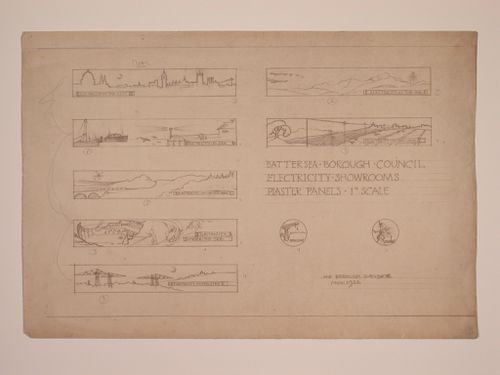
- This reprographic copy shows designs for seven rectangular and two circular plaster panels for the showrooms in Electric House. Each of the rectangular panels highlights a different aspect of electricity consumption. For example, the upper left panel, titled "ELECTRICITY.IN.THE.CITY"; depicts the London skyline at night. - This work is part of an incomplete group of possibly working reprographic copies for Electric House, Battersea Borough, designed by the borough architect, Henry Hyams. The group also includes some reprographic copies which may have been used for publication purposes. - The style of many of these drawings and reprographic copies by Henry Hyams (DR1988:0332 - DR1988:0414) suggests that they were possibly for periodical illustrations. Hyams contributed articles to the periodicals 'The Builder' and 'The Architect'. Two objects in the CCA collections can be directly linked to an article published prior to 1926 in 'The Architect'; a reprographic copy (DR1988:0357) and a drawing (DR1988:0364) (Who's Who in Architecture, 161).
DR1988:0400
Description:
- This reprographic copy shows designs for seven rectangular and two circular plaster panels for the showrooms in Electric House. Each of the rectangular panels highlights a different aspect of electricity consumption. For example, the upper left panel, titled "ELECTRICITY.IN.THE.CITY"; depicts the London skyline at night. - This work is part of an incomplete group of possibly working reprographic copies for Electric House, Battersea Borough, designed by the borough architect, Henry Hyams. The group also includes some reprographic copies which may have been used for publication purposes. - The style of many of these drawings and reprographic copies by Henry Hyams (DR1988:0332 - DR1988:0414) suggests that they were possibly for periodical illustrations. Hyams contributed articles to the periodicals 'The Builder' and 'The Architect'. Two objects in the CCA collections can be directly linked to an article published prior to 1926 in 'The Architect'; a reprographic copy (DR1988:0357) and a drawing (DR1988:0364) (Who's Who in Architecture, 161).
Personnes et institutions:
Sujet:
design d'intérieur
design d'intérieur
Date:
printed November 1926
printed November 1926
Titre:
Designs for plaster panels for showrooms, Electric House, Battersea Borough
Actions:
DR1988:0400
Description:
- This reprographic copy shows designs for seven rectangular and two circular plaster panels for the showrooms in Electric House. Each of the rectangular panels highlights a different aspect of electricity consumption. For example, the upper left panel, titled "ELECTRICITY.IN.THE.CITY"; depicts the London skyline at night. - This work is part of an incomplete group of possibly working reprographic copies for Electric House, Battersea Borough, designed by the borough architect, Henry Hyams. The group also includes some reprographic copies which may have been used for publication purposes. - The style of many of these drawings and reprographic copies by Henry Hyams (DR1988:0332 - DR1988:0414) suggests that they were possibly for periodical illustrations. Hyams contributed articles to the periodicals 'The Builder' and 'The Architect'. Two objects in the CCA collections can be directly linked to an article published prior to 1926 in 'The Architect'; a reprographic copy (DR1988:0357) and a drawing (DR1988:0364) (Who's Who in Architecture, 161).
Designs for plaster panels for showrooms, Electric House, Battersea Borough
Actions:
DR1988:0400
Description:
- This reprographic copy shows designs for seven rectangular and two circular plaster panels for the showrooms in Electric House. Each of the rectangular panels highlights a different aspect of electricity consumption. For example, the upper left panel, titled "ELECTRICITY.IN.THE.CITY"; depicts the London skyline at night. - This work is part of an incomplete group of possibly working reprographic copies for Electric House, Battersea Borough, designed by the borough architect, Henry Hyams. The group also includes some reprographic copies which may have been used for publication purposes. - The style of many of these drawings and reprographic copies by Henry Hyams (DR1988:0332 - DR1988:0414) suggests that they were possibly for periodical illustrations. Hyams contributed articles to the periodicals 'The Builder' and 'The Architect'. Two objects in the CCA collections can be directly linked to an article published prior to 1926 in 'The Architect'; a reprographic copy (DR1988:0357) and a drawing (DR1988:0364) (Who's Who in Architecture, 161).
Classification:
dessins
dessins
Date:
printed November 1926
printed November 1926
Personnes et institutions:
Sujet:
design d'intérieur
design d'intérieur
Classification:
événements
événements
Actions:
Description:
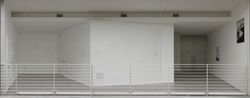
Ce jeudi, Anna Neimark et Andrew Atwood témoignent du travail récent de First Office portant sur des expositions et des présentations, dont une salle de projection temporaire installée au MAK Center for Art and Architecture à Los Angeles. Présentée dans le cadre de Larchitecture présentée, une série du CCA qui porte sur la relation entre architecture et espaces de présentation.
Ce jeudi, Anna Neimark et Andrew Atwood témoignent du travail récent de First Office portant sur des expositions et des présentations, dont une salle de projection temporaire installée au MAK Center for Art and Architecture à Los Angeles. Présentée dans le cadre de Larchitecture présentée, une série du CCA qui porte sur la relation entre architecture et espaces de présentation.
Date:
22 octobre 2015 , 18h
22 octobre 2015 , 18h
Titre:
L'architecture présentée : First Office
Actions:
Description:
Ce jeudi, Anna Neimark et Andrew Atwood témoignent du travail récent de First Office portant sur des expositions et des présentations, dont une salle de projection temporaire installée au MAK Center for Art and Architecture à Los Angeles. Présentée dans le cadre de Larchitecture présentée, une série du CCA qui porte sur la relation entre architecture et espaces de présentation.
L'architecture présentée : First Office
Actions:
Description:
Ce jeudi, Anna Neimark et Andrew Atwood témoignent du travail récent de First Office portant sur des expositions et des présentations, dont une salle de projection temporaire installée au MAK Center for Art and Architecture à Los Angeles. Présentée dans le cadre de Larchitecture présentée, une série du CCA qui porte sur la relation entre architecture et espaces de présentation.
Classification:
événements
événements
Date:
22 octobre 2015
18h
22 octobre 2015
18h
Titre:
Views of Japan
Views of Japan
Actions:
Numéro de référence:
PH1983:0516:001-051
Description:
Felice Beato was one of the first photographers to systematically survey Japan in his 'Photographic Views of Japan with Historical and Descriptive Notes' (1869), containing about one hundred landscapes. This present album does not have a title page but some of the photographs are also found in 'Views of Japan' and another Beato album from the CCA's collection (PH1981:0787:001-093). This present album shows 51 views of Japan in several villages, towns, places and countryside, such as Yokohama, the Tokaido link, Mayonashi, Hakoni, Fusi-Yama, Miyanoshita, Sakawa Nagawa, Gakaiso, Nagasaki, Eiyama, Harra, Omia, Narraiga, Miyanoshita, Tonosawa, Kamakura, Taikeins and Pappenburg. Also shown are peasants, girls, sumotori (wrestlers), northeners, officers, a musician, a doctor and patient, an executioner, firemen, a painter and a priest, etc. Captions with detailed annotations written by Beato's colleagues are pasted on to the facing pages. The photographer Baron Raimund Stillfried who also worked in Japan, acquired the stock and studio of Beato in 1877. A mixture of his own and Beato's work is contained in his subsequent albums, which makes it sometimes difficult to differentiate between a Beato and a Stillfried photograph (cf. Terry Bennett).
PH1983:0516:001-051
Description:
Felice Beato was one of the first photographers to systematically survey Japan in his 'Photographic Views of Japan with Historical and Descriptive Notes' (1869), containing about one hundred landscapes. This present album does not have a title page but some of the photographs are also found in 'Views of Japan' and another Beato album from the CCA's collection (PH1981:0787:001-093). This present album shows 51 views of Japan in several villages, towns, places and countryside, such as Yokohama, the Tokaido link, Mayonashi, Hakoni, Fusi-Yama, Miyanoshita, Sakawa Nagawa, Gakaiso, Nagasaki, Eiyama, Harra, Omia, Narraiga, Miyanoshita, Tonosawa, Kamakura, Taikeins and Pappenburg. Also shown are peasants, girls, sumotori (wrestlers), northeners, officers, a musician, a doctor and patient, an executioner, firemen, a painter and a priest, etc. Captions with detailed annotations written by Beato's colleagues are pasted on to the facing pages. The photographer Baron Raimund Stillfried who also worked in Japan, acquired the stock and studio of Beato in 1877. A mixture of his own and Beato's work is contained in his subsequent albums, which makes it sometimes difficult to differentiate between a Beato and a Stillfried photograph (cf. Terry Bennett).
Personnes et institutions:
Sujet:
architecture
architecture
Date:
ca. 1869
ca. 1869
Titre:
Views of Japan
Actions:
PH1983:0516:001-051
Description:
Felice Beato was one of the first photographers to systematically survey Japan in his 'Photographic Views of Japan with Historical and Descriptive Notes' (1869), containing about one hundred landscapes. This present album does not have a title page but some of the photographs are also found in 'Views of Japan' and another Beato album from the CCA's collection (PH1981:0787:001-093). This present album shows 51 views of Japan in several villages, towns, places and countryside, such as Yokohama, the Tokaido link, Mayonashi, Hakoni, Fusi-Yama, Miyanoshita, Sakawa Nagawa, Gakaiso, Nagasaki, Eiyama, Harra, Omia, Narraiga, Miyanoshita, Tonosawa, Kamakura, Taikeins and Pappenburg. Also shown are peasants, girls, sumotori (wrestlers), northeners, officers, a musician, a doctor and patient, an executioner, firemen, a painter and a priest, etc. Captions with detailed annotations written by Beato's colleagues are pasted on to the facing pages. The photographer Baron Raimund Stillfried who also worked in Japan, acquired the stock and studio of Beato in 1877. A mixture of his own and Beato's work is contained in his subsequent albums, which makes it sometimes difficult to differentiate between a Beato and a Stillfried photograph (cf. Terry Bennett).
Views of Japan
Actions:
PH1983:0516:001-051
Description:
Felice Beato was one of the first photographers to systematically survey Japan in his 'Photographic Views of Japan with Historical and Descriptive Notes' (1869), containing about one hundred landscapes. This present album does not have a title page but some of the photographs are also found in 'Views of Japan' and another Beato album from the CCA's collection (PH1981:0787:001-093). This present album shows 51 views of Japan in several villages, towns, places and countryside, such as Yokohama, the Tokaido link, Mayonashi, Hakoni, Fusi-Yama, Miyanoshita, Sakawa Nagawa, Gakaiso, Nagasaki, Eiyama, Harra, Omia, Narraiga, Miyanoshita, Tonosawa, Kamakura, Taikeins and Pappenburg. Also shown are peasants, girls, sumotori (wrestlers), northeners, officers, a musician, a doctor and patient, an executioner, firemen, a painter and a priest, etc. Captions with detailed annotations written by Beato's colleagues are pasted on to the facing pages. The photographer Baron Raimund Stillfried who also worked in Japan, acquired the stock and studio of Beato in 1877. A mixture of his own and Beato's work is contained in his subsequent albums, which makes it sometimes difficult to differentiate between a Beato and a Stillfried photograph (cf. Terry Bennett).
Date:
ca. 1869
ca. 1869
Personnes et institutions:
Sujet:
architecture
architecture
Classification:
photographies
photographies
Actions:
Numéro de référence:
PH2018:0005:028
Description:
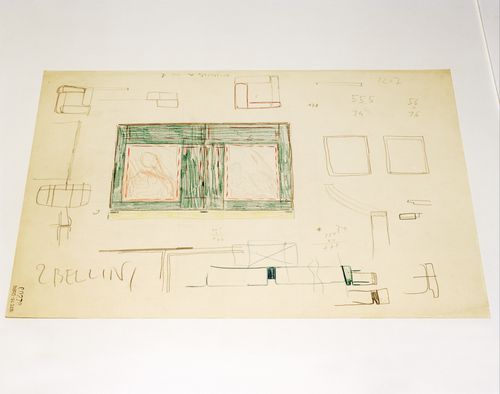
Photograph by Stefano Graziani of the following work: Carlo Scarpa, Castelvecchio Museum, Ala della Reggia, elevation and sketches for the frame of the Madonna with the Child by Giovanni Bellini on the second floor of the Palace, inventory Number: 31805, recto, pastel red, yellow, blue two shades and lilac on cardboard, 316 x 432 mm, 1958-1961, Carlo Scarpa archive, Castevecchio Museum, Verona Questioning Pictures is a 36 photograph project commissioned by Fondazione Prada, Milan. Artist Stefano Graziani investigates archival and conservation systems in a number of museums. Through photographing museum objects, Graziani, focusing on the relationship between photographs, the museum objects and the power structures at play within institutions. The museums include the Canadian Centre for Architecture (CCA) in Montréal, Canada; Sir John Soane’s Museum in London, UK; the Kunstmuseum Basel, Switzerland; Museum Insel Hombroich in Neuss, Germany; the Museo di Castelvecchio in Verona, Italy; and the Plaster Cast Gallery at Museo Canova in Possagno, Italy.
PH2018:0005:028
Description:
Photograph by Stefano Graziani of the following work: Carlo Scarpa, Castelvecchio Museum, Ala della Reggia, elevation and sketches for the frame of the Madonna with the Child by Giovanni Bellini on the second floor of the Palace, inventory Number: 31805, recto, pastel red, yellow, blue two shades and lilac on cardboard, 316 x 432 mm, 1958-1961, Carlo Scarpa archive, Castevecchio Museum, Verona Questioning Pictures is a 36 photograph project commissioned by Fondazione Prada, Milan. Artist Stefano Graziani investigates archival and conservation systems in a number of museums. Through photographing museum objects, Graziani, focusing on the relationship between photographs, the museum objects and the power structures at play within institutions. The museums include the Canadian Centre for Architecture (CCA) in Montréal, Canada; Sir John Soane’s Museum in London, UK; the Kunstmuseum Basel, Switzerland; Museum Insel Hombroich in Neuss, Germany; the Museo di Castelvecchio in Verona, Italy; and the Plaster Cast Gallery at Museo Canova in Possagno, Italy.
Personnes et institutions:
Date:
2017
2017
Titre:
Questioning Pictures: Photograph of elevation and sketches for the frame of the Madonna with the Child by Giovanni Bellini on the second floor of the Castelvecchio Museum by Carlo Scarpa
Actions:
PH2018:0005:028
Description:
Photograph by Stefano Graziani of the following work: Carlo Scarpa, Castelvecchio Museum, Ala della Reggia, elevation and sketches for the frame of the Madonna with the Child by Giovanni Bellini on the second floor of the Palace, inventory Number: 31805, recto, pastel red, yellow, blue two shades and lilac on cardboard, 316 x 432 mm, 1958-1961, Carlo Scarpa archive, Castevecchio Museum, Verona Questioning Pictures is a 36 photograph project commissioned by Fondazione Prada, Milan. Artist Stefano Graziani investigates archival and conservation systems in a number of museums. Through photographing museum objects, Graziani, focusing on the relationship between photographs, the museum objects and the power structures at play within institutions. The museums include the Canadian Centre for Architecture (CCA) in Montréal, Canada; Sir John Soane’s Museum in London, UK; the Kunstmuseum Basel, Switzerland; Museum Insel Hombroich in Neuss, Germany; the Museo di Castelvecchio in Verona, Italy; and the Plaster Cast Gallery at Museo Canova in Possagno, Italy.
Questioning Pictures: Photograph of elevation and sketches for the frame of the Madonna with the Child by Giovanni Bellini on the second floor of the Castelvecchio Museum by Carlo Scarpa
Actions:
PH2018:0005:028
Description:
Photograph by Stefano Graziani of the following work: Carlo Scarpa, Castelvecchio Museum, Ala della Reggia, elevation and sketches for the frame of the Madonna with the Child by Giovanni Bellini on the second floor of the Palace, inventory Number: 31805, recto, pastel red, yellow, blue two shades and lilac on cardboard, 316 x 432 mm, 1958-1961, Carlo Scarpa archive, Castevecchio Museum, Verona Questioning Pictures is a 36 photograph project commissioned by Fondazione Prada, Milan. Artist Stefano Graziani investigates archival and conservation systems in a number of museums. Through photographing museum objects, Graziani, focusing on the relationship between photographs, the museum objects and the power structures at play within institutions. The museums include the Canadian Centre for Architecture (CCA) in Montréal, Canada; Sir John Soane’s Museum in London, UK; the Kunstmuseum Basel, Switzerland; Museum Insel Hombroich in Neuss, Germany; the Museo di Castelvecchio in Verona, Italy; and the Plaster Cast Gallery at Museo Canova in Possagno, Italy.
Classification:
photographies
photographies
Date:
2017
2017
Personnes et institutions:
Classification:
événements
événements
Titre:
Rotor Deconstruction
Rotor Deconstruction
Actions:
Description:
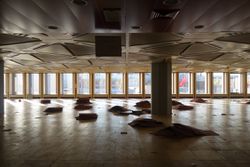
Maarten Gielen présente les activités de Rotor, un groupe d’architectes, de designers et d’autres professionnels intéressés par les flux de matériaux dans l’industrie et la construction. Le groupe travaille en particulier sur les ressources, les déchets, l’utilisation et la réutilisation des matériaux. Rotor diffuse des stratégies innovatrices de récupération et de(...)
Maarten Gielen présente les activités de Rotor, un groupe d’architectes, de designers et d’autres professionnels intéressés par les flux de matériaux dans l’industrie et la construction. Le groupe travaille en particulier sur les ressources, les déchets, l’utilisation et la réutilisation des matériaux. Rotor diffuse des stratégies innovatrices de récupération et de(...)
Date:
4 février 2016
4 février 2016
Titre:
Rotor Deconstruction
Actions:
Description:
Maarten Gielen présente les activités de Rotor, un groupe d’architectes, de designers et d’autres professionnels intéressés par les flux de matériaux dans l’industrie et la construction. Le groupe travaille en particulier sur les ressources, les déchets, l’utilisation et la réutilisation des matériaux. Rotor diffuse des stratégies innovatrices de récupération et de(...)
Rotor Deconstruction
Actions:
Description:
Maarten Gielen présente les activités de Rotor, un groupe d’architectes, de designers et d’autres professionnels intéressés par les flux de matériaux dans l’industrie et la construction. Le groupe travaille en particulier sur les ressources, les déchets, l’utilisation et la réutilisation des matériaux. Rotor diffuse des stratégies innovatrices de récupération et de(...)
Classification:
événements
événements
Date:
4 février 2016
4 février 2016
Niveau de description archivistique:
Sous-série
Sous-série
Numéro de référence:
CI001.S2.D5
Description:
Charles Rohault de Fleury was architect for the Muséum national d'histoire naturelle from 1833 to 1862. His work for the Muséum is represented in the CCA collection by a diverse group of prints and drawings. In addition to documenting his built and unbuilt projects, the inclusion of prints and drawings of museum and zoo buildings by other architects record, if only partially, the resources available to Charles in designing his buildings. This reference material provides insight into the influences on Charles' work as well as the nature of the design process itself. His built works, with the exception of the 1854 addition to the greenhouses, are illustrated in a book of prints with a brief accompanying text - "Muséum d'histoire naturelle: serres chaudes, galeries de minéralogie, etc. etc." (published 1837) (DR1974:0002:004:001; a second copy is held by the CCA library) (1). While prints are included for the Galerie de minéralogie et de géologie, the monkey house and the reservoirs, the majority of the prints are of the greenhouses (serres chaudes) begun 1833 (2). Known for their technological innovations in iron construction, these greenhouses utilized the first multi-storey load-bearing cast-iron façades for the central pavilions as well as space frame roof structures and prefabricated parts. This structural system is well documented in the prints in the CCA collection. The design was apparently inspired by the English greenhouses - a plate of which are included in the book - that Charles saw on a tour of England. The use of prestressed beams and curved roofs in the lateral wings attest to this influence. Charles' greenhouses, in turn, influenced the design of other greenhouses in Europe especially those at the Jardins Botanique in Liège and Ghent, Belgium (3). Although Joseph Paxton saw the greenhouses in 1833, it is unclear if they had an impact on the design of the Crystal Palace constructed 1850-1851 (4). The innovations of Charles' greenhouses continued to be acknowledged into the 20th century. Giedion in "Space, Time and Architecture", while erroneously attributing them to Rouhault (5)(6), refers to the greenhouses as "the prototype of all large iron-framed conservatories" (7). In addition to the greenhouses for the Muséum, the CCA collection includes three proposals (dated 1841) for a private greenhouse designed by Charles Rohault de Fleury (DR1974:0002:002:008 - DR1974:0002:002:013). The designs utilize the same curved roofs as the wings of the greenhouses at the Muséum combined with classically detailed stonework. An different aspect of Charles' work for the Muséum national d'histoire naturelle is represented in the album of unexecuted proposals -the only design drawings for the Muséum in the collection - for a Galerie de zoologie (DR1974:0002:024:001-079). Building on the typology of his earlier classical Galerie de minéralogie et de géologie (constructed 1833 -1841), the proposals, which date from between 1838 and 1862, illustrate a gradual enrichment of Charles' classical architectural vocabulary (8). They vary in their spatial configurations and façade treatments ranging from austere colonnaded designs with little ornament to more elaborate ones with richly encrusted facades, complex rooflines and more dramatic interior spaces characteristic of the Second Empire. The majority of the proposals consist of preliminary drawings illustrating the essential formal, spatial and ornamental aspects of the building. One proposal, dated January 1846, is substantially more developed than the others; in addition to general plans, sections and elevations, more detailed drawings are included for the layout of spaces, the elaboration of the facades, the configuration of the structure and even the designs for the specimen display cases. It is also worth noting that this album includes several plans outlining Rohault de Fleury's ideas for the overall development of the Muséum national d'histoire naturelle. In 1846, an album of prints of the Museo di fiscia e storia naturelle in Florence (DR1974:0002:005:001-018) was presented to Charles by the Grand Duke of Tuscany in response to his request for tracings of that building. These prints were probably used as reference material for the design of the new Galerie de zoologie described above. The portfolio of record drawings (ca. 1862) of the zoos in Antwerp, Brussels, Marseille and Amsterdam (DR1974:0002:018:001-027) is probably a dummy for a publication on zoological gardens as well as background documentation for the renovation and expansion of the zoo at the Muséum national d'histoire naturelle in Paris. Both drawings of the facilities for the animals and visitors and general plans of the zoological gardens are included. The Paris zoo project was apparently never undertaken. (1) These prints were reused in the "Oeuvre de C. Rohault de Fleury, architecte" (published 1884) (DR1974:0002:029:001-044). (2) Rohault de Fleury's greenhouses were destroyed in the Prussian bombardments of 1870. The greenhouses, which now stand in their place, are similar in layout and appearance to the original design, but their structural system is different. (3) John Hix, 'The Glass House' (Cambridge, Mass.: The MIT Press, 1981), p. 115. (4) Ibid., p. 115. (5) This error has been repeated by other authors including Henry-Russell Hitchcock, 'Architecture: Nineteenth and Twentieth Centuries' (Baltimore, Maryland: Penguin Books, 1968), p. 120. (6) Leonardo Benevolo, 'History of Modern Architecture' Volume 1: The tradition of modern architecture (Cambridge, Mass.: The M.I.T. Press, 1971), p. 22. (7) Sigfried Giedion, 'Space, Time and Architecture; the growth of a new tradition' (Cambridge: Harvard University Press, 1941), p. 181. (8) Barry Bergdoll, "Charles Rohault de Fleury: Part two: Muséum d'Histoire Naturelle and Studies on analogous Constructions in Europe", 'CCA Research Report", n.d., p. 1.
CI001.S2.D5
Description:
Charles Rohault de Fleury was architect for the Muséum national d'histoire naturelle from 1833 to 1862. His work for the Muséum is represented in the CCA collection by a diverse group of prints and drawings. In addition to documenting his built and unbuilt projects, the inclusion of prints and drawings of museum and zoo buildings by other architects record, if only partially, the resources available to Charles in designing his buildings. This reference material provides insight into the influences on Charles' work as well as the nature of the design process itself. His built works, with the exception of the 1854 addition to the greenhouses, are illustrated in a book of prints with a brief accompanying text - "Muséum d'histoire naturelle: serres chaudes, galeries de minéralogie, etc. etc." (published 1837) (DR1974:0002:004:001; a second copy is held by the CCA library) (1). While prints are included for the Galerie de minéralogie et de géologie, the monkey house and the reservoirs, the majority of the prints are of the greenhouses (serres chaudes) begun 1833 (2). Known for their technological innovations in iron construction, these greenhouses utilized the first multi-storey load-bearing cast-iron façades for the central pavilions as well as space frame roof structures and prefabricated parts. This structural system is well documented in the prints in the CCA collection. The design was apparently inspired by the English greenhouses - a plate of which are included in the book - that Charles saw on a tour of England. The use of prestressed beams and curved roofs in the lateral wings attest to this influence. Charles' greenhouses, in turn, influenced the design of other greenhouses in Europe especially those at the Jardins Botanique in Liège and Ghent, Belgium (3). Although Joseph Paxton saw the greenhouses in 1833, it is unclear if they had an impact on the design of the Crystal Palace constructed 1850-1851 (4). The innovations of Charles' greenhouses continued to be acknowledged into the 20th century. Giedion in "Space, Time and Architecture", while erroneously attributing them to Rouhault (5)(6), refers to the greenhouses as "the prototype of all large iron-framed conservatories" (7). In addition to the greenhouses for the Muséum, the CCA collection includes three proposals (dated 1841) for a private greenhouse designed by Charles Rohault de Fleury (DR1974:0002:002:008 - DR1974:0002:002:013). The designs utilize the same curved roofs as the wings of the greenhouses at the Muséum combined with classically detailed stonework. An different aspect of Charles' work for the Muséum national d'histoire naturelle is represented in the album of unexecuted proposals -the only design drawings for the Muséum in the collection - for a Galerie de zoologie (DR1974:0002:024:001-079). Building on the typology of his earlier classical Galerie de minéralogie et de géologie (constructed 1833 -1841), the proposals, which date from between 1838 and 1862, illustrate a gradual enrichment of Charles' classical architectural vocabulary (8). They vary in their spatial configurations and façade treatments ranging from austere colonnaded designs with little ornament to more elaborate ones with richly encrusted facades, complex rooflines and more dramatic interior spaces characteristic of the Second Empire. The majority of the proposals consist of preliminary drawings illustrating the essential formal, spatial and ornamental aspects of the building. One proposal, dated January 1846, is substantially more developed than the others; in addition to general plans, sections and elevations, more detailed drawings are included for the layout of spaces, the elaboration of the facades, the configuration of the structure and even the designs for the specimen display cases. It is also worth noting that this album includes several plans outlining Rohault de Fleury's ideas for the overall development of the Muséum national d'histoire naturelle. In 1846, an album of prints of the Museo di fiscia e storia naturelle in Florence (DR1974:0002:005:001-018) was presented to Charles by the Grand Duke of Tuscany in response to his request for tracings of that building. These prints were probably used as reference material for the design of the new Galerie de zoologie described above. The portfolio of record drawings (ca. 1862) of the zoos in Antwerp, Brussels, Marseille and Amsterdam (DR1974:0002:018:001-027) is probably a dummy for a publication on zoological gardens as well as background documentation for the renovation and expansion of the zoo at the Muséum national d'histoire naturelle in Paris. Both drawings of the facilities for the animals and visitors and general plans of the zoological gardens are included. The Paris zoo project was apparently never undertaken. (1) These prints were reused in the "Oeuvre de C. Rohault de Fleury, architecte" (published 1884) (DR1974:0002:029:001-044). (2) Rohault de Fleury's greenhouses were destroyed in the Prussian bombardments of 1870. The greenhouses, which now stand in their place, are similar in layout and appearance to the original design, but their structural system is different. (3) John Hix, 'The Glass House' (Cambridge, Mass.: The MIT Press, 1981), p. 115. (4) Ibid., p. 115. (5) This error has been repeated by other authors including Henry-Russell Hitchcock, 'Architecture: Nineteenth and Twentieth Centuries' (Baltimore, Maryland: Penguin Books, 1968), p. 120. (6) Leonardo Benevolo, 'History of Modern Architecture' Volume 1: The tradition of modern architecture (Cambridge, Mass.: The M.I.T. Press, 1971), p. 22. (7) Sigfried Giedion, 'Space, Time and Architecture; the growth of a new tradition' (Cambridge: Harvard University Press, 1941), p. 181. (8) Barry Bergdoll, "Charles Rohault de Fleury: Part two: Muséum d'Histoire Naturelle and Studies on analogous Constructions in Europe", 'CCA Research Report", n.d., p. 1.
Personnes et institutions:
Date:
[1837-ca. 1862]
[1837-ca. 1862]
Titre:
Muséum nationale d'histoire naturelle
CI001.S2.D5
Description:
Charles Rohault de Fleury was architect for the Muséum national d'histoire naturelle from 1833 to 1862. His work for the Muséum is represented in the CCA collection by a diverse group of prints and drawings. In addition to documenting his built and unbuilt projects, the inclusion of prints and drawings of museum and zoo buildings by other architects record, if only partially, the resources available to Charles in designing his buildings. This reference material provides insight into the influences on Charles' work as well as the nature of the design process itself. His built works, with the exception of the 1854 addition to the greenhouses, are illustrated in a book of prints with a brief accompanying text - "Muséum d'histoire naturelle: serres chaudes, galeries de minéralogie, etc. etc." (published 1837) (DR1974:0002:004:001; a second copy is held by the CCA library) (1). While prints are included for the Galerie de minéralogie et de géologie, the monkey house and the reservoirs, the majority of the prints are of the greenhouses (serres chaudes) begun 1833 (2). Known for their technological innovations in iron construction, these greenhouses utilized the first multi-storey load-bearing cast-iron façades for the central pavilions as well as space frame roof structures and prefabricated parts. This structural system is well documented in the prints in the CCA collection. The design was apparently inspired by the English greenhouses - a plate of which are included in the book - that Charles saw on a tour of England. The use of prestressed beams and curved roofs in the lateral wings attest to this influence. Charles' greenhouses, in turn, influenced the design of other greenhouses in Europe especially those at the Jardins Botanique in Liège and Ghent, Belgium (3). Although Joseph Paxton saw the greenhouses in 1833, it is unclear if they had an impact on the design of the Crystal Palace constructed 1850-1851 (4). The innovations of Charles' greenhouses continued to be acknowledged into the 20th century. Giedion in "Space, Time and Architecture", while erroneously attributing them to Rouhault (5)(6), refers to the greenhouses as "the prototype of all large iron-framed conservatories" (7). In addition to the greenhouses for the Muséum, the CCA collection includes three proposals (dated 1841) for a private greenhouse designed by Charles Rohault de Fleury (DR1974:0002:002:008 - DR1974:0002:002:013). The designs utilize the same curved roofs as the wings of the greenhouses at the Muséum combined with classically detailed stonework. An different aspect of Charles' work for the Muséum national d'histoire naturelle is represented in the album of unexecuted proposals -the only design drawings for the Muséum in the collection - for a Galerie de zoologie (DR1974:0002:024:001-079). Building on the typology of his earlier classical Galerie de minéralogie et de géologie (constructed 1833 -1841), the proposals, which date from between 1838 and 1862, illustrate a gradual enrichment of Charles' classical architectural vocabulary (8). They vary in their spatial configurations and façade treatments ranging from austere colonnaded designs with little ornament to more elaborate ones with richly encrusted facades, complex rooflines and more dramatic interior spaces characteristic of the Second Empire. The majority of the proposals consist of preliminary drawings illustrating the essential formal, spatial and ornamental aspects of the building. One proposal, dated January 1846, is substantially more developed than the others; in addition to general plans, sections and elevations, more detailed drawings are included for the layout of spaces, the elaboration of the facades, the configuration of the structure and even the designs for the specimen display cases. It is also worth noting that this album includes several plans outlining Rohault de Fleury's ideas for the overall development of the Muséum national d'histoire naturelle. In 1846, an album of prints of the Museo di fiscia e storia naturelle in Florence (DR1974:0002:005:001-018) was presented to Charles by the Grand Duke of Tuscany in response to his request for tracings of that building. These prints were probably used as reference material for the design of the new Galerie de zoologie described above. The portfolio of record drawings (ca. 1862) of the zoos in Antwerp, Brussels, Marseille and Amsterdam (DR1974:0002:018:001-027) is probably a dummy for a publication on zoological gardens as well as background documentation for the renovation and expansion of the zoo at the Muséum national d'histoire naturelle in Paris. Both drawings of the facilities for the animals and visitors and general plans of the zoological gardens are included. The Paris zoo project was apparently never undertaken. (1) These prints were reused in the "Oeuvre de C. Rohault de Fleury, architecte" (published 1884) (DR1974:0002:029:001-044). (2) Rohault de Fleury's greenhouses were destroyed in the Prussian bombardments of 1870. The greenhouses, which now stand in their place, are similar in layout and appearance to the original design, but their structural system is different. (3) John Hix, 'The Glass House' (Cambridge, Mass.: The MIT Press, 1981), p. 115. (4) Ibid., p. 115. (5) This error has been repeated by other authors including Henry-Russell Hitchcock, 'Architecture: Nineteenth and Twentieth Centuries' (Baltimore, Maryland: Penguin Books, 1968), p. 120. (6) Leonardo Benevolo, 'History of Modern Architecture' Volume 1: The tradition of modern architecture (Cambridge, Mass.: The M.I.T. Press, 1971), p. 22. (7) Sigfried Giedion, 'Space, Time and Architecture; the growth of a new tradition' (Cambridge: Harvard University Press, 1941), p. 181. (8) Barry Bergdoll, "Charles Rohault de Fleury: Part two: Muséum d'Histoire Naturelle and Studies on analogous Constructions in Europe", 'CCA Research Report", n.d., p. 1.
Muséum nationale d'histoire naturelle
CI001.S2.D5
Description:
Charles Rohault de Fleury was architect for the Muséum national d'histoire naturelle from 1833 to 1862. His work for the Muséum is represented in the CCA collection by a diverse group of prints and drawings. In addition to documenting his built and unbuilt projects, the inclusion of prints and drawings of museum and zoo buildings by other architects record, if only partially, the resources available to Charles in designing his buildings. This reference material provides insight into the influences on Charles' work as well as the nature of the design process itself. His built works, with the exception of the 1854 addition to the greenhouses, are illustrated in a book of prints with a brief accompanying text - "Muséum d'histoire naturelle: serres chaudes, galeries de minéralogie, etc. etc." (published 1837) (DR1974:0002:004:001; a second copy is held by the CCA library) (1). While prints are included for the Galerie de minéralogie et de géologie, the monkey house and the reservoirs, the majority of the prints are of the greenhouses (serres chaudes) begun 1833 (2). Known for their technological innovations in iron construction, these greenhouses utilized the first multi-storey load-bearing cast-iron façades for the central pavilions as well as space frame roof structures and prefabricated parts. This structural system is well documented in the prints in the CCA collection. The design was apparently inspired by the English greenhouses - a plate of which are included in the book - that Charles saw on a tour of England. The use of prestressed beams and curved roofs in the lateral wings attest to this influence. Charles' greenhouses, in turn, influenced the design of other greenhouses in Europe especially those at the Jardins Botanique in Liège and Ghent, Belgium (3). Although Joseph Paxton saw the greenhouses in 1833, it is unclear if they had an impact on the design of the Crystal Palace constructed 1850-1851 (4). The innovations of Charles' greenhouses continued to be acknowledged into the 20th century. Giedion in "Space, Time and Architecture", while erroneously attributing them to Rouhault (5)(6), refers to the greenhouses as "the prototype of all large iron-framed conservatories" (7). In addition to the greenhouses for the Muséum, the CCA collection includes three proposals (dated 1841) for a private greenhouse designed by Charles Rohault de Fleury (DR1974:0002:002:008 - DR1974:0002:002:013). The designs utilize the same curved roofs as the wings of the greenhouses at the Muséum combined with classically detailed stonework. An different aspect of Charles' work for the Muséum national d'histoire naturelle is represented in the album of unexecuted proposals -the only design drawings for the Muséum in the collection - for a Galerie de zoologie (DR1974:0002:024:001-079). Building on the typology of his earlier classical Galerie de minéralogie et de géologie (constructed 1833 -1841), the proposals, which date from between 1838 and 1862, illustrate a gradual enrichment of Charles' classical architectural vocabulary (8). They vary in their spatial configurations and façade treatments ranging from austere colonnaded designs with little ornament to more elaborate ones with richly encrusted facades, complex rooflines and more dramatic interior spaces characteristic of the Second Empire. The majority of the proposals consist of preliminary drawings illustrating the essential formal, spatial and ornamental aspects of the building. One proposal, dated January 1846, is substantially more developed than the others; in addition to general plans, sections and elevations, more detailed drawings are included for the layout of spaces, the elaboration of the facades, the configuration of the structure and even the designs for the specimen display cases. It is also worth noting that this album includes several plans outlining Rohault de Fleury's ideas for the overall development of the Muséum national d'histoire naturelle. In 1846, an album of prints of the Museo di fiscia e storia naturelle in Florence (DR1974:0002:005:001-018) was presented to Charles by the Grand Duke of Tuscany in response to his request for tracings of that building. These prints were probably used as reference material for the design of the new Galerie de zoologie described above. The portfolio of record drawings (ca. 1862) of the zoos in Antwerp, Brussels, Marseille and Amsterdam (DR1974:0002:018:001-027) is probably a dummy for a publication on zoological gardens as well as background documentation for the renovation and expansion of the zoo at the Muséum national d'histoire naturelle in Paris. Both drawings of the facilities for the animals and visitors and general plans of the zoological gardens are included. The Paris zoo project was apparently never undertaken. (1) These prints were reused in the "Oeuvre de C. Rohault de Fleury, architecte" (published 1884) (DR1974:0002:029:001-044). (2) Rohault de Fleury's greenhouses were destroyed in the Prussian bombardments of 1870. The greenhouses, which now stand in their place, are similar in layout and appearance to the original design, but their structural system is different. (3) John Hix, 'The Glass House' (Cambridge, Mass.: The MIT Press, 1981), p. 115. (4) Ibid., p. 115. (5) This error has been repeated by other authors including Henry-Russell Hitchcock, 'Architecture: Nineteenth and Twentieth Centuries' (Baltimore, Maryland: Penguin Books, 1968), p. 120. (6) Leonardo Benevolo, 'History of Modern Architecture' Volume 1: The tradition of modern architecture (Cambridge, Mass.: The M.I.T. Press, 1971), p. 22. (7) Sigfried Giedion, 'Space, Time and Architecture; the growth of a new tradition' (Cambridge: Harvard University Press, 1941), p. 181. (8) Barry Bergdoll, "Charles Rohault de Fleury: Part two: Muséum d'Histoire Naturelle and Studies on analogous Constructions in Europe", 'CCA Research Report", n.d., p. 1.
Niveau de description archivistique:
File 5
File 5
Date:
[1837-ca. 1862]
[1837-ca. 1862]
Personnes et institutions:
Niveau de description archivistique:
Projet
Projet
Numéro de référence:
AP056.S1.1991.PR07
Description:
This project series documents the master plan for the Royal Conservatory of Music in Toronto in 1991. The office identified the project number as 9107. This project consisted of long-range planning for renovations and additions to the music school, located in Victorian-era McMaster Hall on Bloor Street and originally built in 1881. This plan came in preparation of the Conservatory's separation from the University of Toronto in 1987. The program recognized the need for 73,450 square feet of space for the school to carry out its teaching, administrative, public, and performance duties. The building had a basement, six floors above grade and two levels of parking. The work was to focus around public spaces for socialization and to create grand spaces for the performance of music. Smaller teaching and practice rooms, along with administrative spaces, were also to be included. The plan proposed the restoration of McMaster Hall, the restoration of Memorial Hall to the east of the building as a 220-seat recital hall, the creation of a new enclosed courtyard surrounded by cloisters, and renovations to the South Pavilion as a cafe. A new West Wing was also proposed to accommodate teaching and practice areas, while a new East Wing would contain a 550-seat concert hall. These changes were to be carried out in phases, with 3 phases proposed as the most effecient and cost effective. The project is recorded through drawings, presentation paintings, a magazine, and textual records dating from 1991. The drawings include sketches, presentation drawings, plans, elevations and sections. The magazine is a special issue of the Canadian Architect Awards of Excellence, featuring this project, and the textual records present the complete project proposal.
AP056.S1.1991.PR07
Description:
This project series documents the master plan for the Royal Conservatory of Music in Toronto in 1991. The office identified the project number as 9107. This project consisted of long-range planning for renovations and additions to the music school, located in Victorian-era McMaster Hall on Bloor Street and originally built in 1881. This plan came in preparation of the Conservatory's separation from the University of Toronto in 1987. The program recognized the need for 73,450 square feet of space for the school to carry out its teaching, administrative, public, and performance duties. The building had a basement, six floors above grade and two levels of parking. The work was to focus around public spaces for socialization and to create grand spaces for the performance of music. Smaller teaching and practice rooms, along with administrative spaces, were also to be included. The plan proposed the restoration of McMaster Hall, the restoration of Memorial Hall to the east of the building as a 220-seat recital hall, the creation of a new enclosed courtyard surrounded by cloisters, and renovations to the South Pavilion as a cafe. A new West Wing was also proposed to accommodate teaching and practice areas, while a new East Wing would contain a 550-seat concert hall. These changes were to be carried out in phases, with 3 phases proposed as the most effecient and cost effective. The project is recorded through drawings, presentation paintings, a magazine, and textual records dating from 1991. The drawings include sketches, presentation drawings, plans, elevations and sections. The magazine is a special issue of the Canadian Architect Awards of Excellence, featuring this project, and the textual records present the complete project proposal.
Personnes et institutions:
Date:
1991-1997
1991-1997
Titre:
Royal Conservatory of Music, Master Plan, Toronto (1991)
Actions:
AP056.S1.1991.PR07
Description:
This project series documents the master plan for the Royal Conservatory of Music in Toronto in 1991. The office identified the project number as 9107. This project consisted of long-range planning for renovations and additions to the music school, located in Victorian-era McMaster Hall on Bloor Street and originally built in 1881. This plan came in preparation of the Conservatory's separation from the University of Toronto in 1987. The program recognized the need for 73,450 square feet of space for the school to carry out its teaching, administrative, public, and performance duties. The building had a basement, six floors above grade and two levels of parking. The work was to focus around public spaces for socialization and to create grand spaces for the performance of music. Smaller teaching and practice rooms, along with administrative spaces, were also to be included. The plan proposed the restoration of McMaster Hall, the restoration of Memorial Hall to the east of the building as a 220-seat recital hall, the creation of a new enclosed courtyard surrounded by cloisters, and renovations to the South Pavilion as a cafe. A new West Wing was also proposed to accommodate teaching and practice areas, while a new East Wing would contain a 550-seat concert hall. These changes were to be carried out in phases, with 3 phases proposed as the most effecient and cost effective. The project is recorded through drawings, presentation paintings, a magazine, and textual records dating from 1991. The drawings include sketches, presentation drawings, plans, elevations and sections. The magazine is a special issue of the Canadian Architect Awards of Excellence, featuring this project, and the textual records present the complete project proposal.
Royal Conservatory of Music, Master Plan, Toronto (1991)
Actions:
AP056.S1.1991.PR07
Description:
This project series documents the master plan for the Royal Conservatory of Music in Toronto in 1991. The office identified the project number as 9107. This project consisted of long-range planning for renovations and additions to the music school, located in Victorian-era McMaster Hall on Bloor Street and originally built in 1881. This plan came in preparation of the Conservatory's separation from the University of Toronto in 1987. The program recognized the need for 73,450 square feet of space for the school to carry out its teaching, administrative, public, and performance duties. The building had a basement, six floors above grade and two levels of parking. The work was to focus around public spaces for socialization and to create grand spaces for the performance of music. Smaller teaching and practice rooms, along with administrative spaces, were also to be included. The plan proposed the restoration of McMaster Hall, the restoration of Memorial Hall to the east of the building as a 220-seat recital hall, the creation of a new enclosed courtyard surrounded by cloisters, and renovations to the South Pavilion as a cafe. A new West Wing was also proposed to accommodate teaching and practice areas, while a new East Wing would contain a 550-seat concert hall. These changes were to be carried out in phases, with 3 phases proposed as the most effecient and cost effective. The project is recorded through drawings, presentation paintings, a magazine, and textual records dating from 1991. The drawings include sketches, presentation drawings, plans, elevations and sections. The magazine is a special issue of the Canadian Architect Awards of Excellence, featuring this project, and the textual records present the complete project proposal.
Niveau de description archivistique:
Project
Project
Date:
1991-1997
1991-1997
Personnes et institutions:
Classification:
dessins
dessins
Titre:
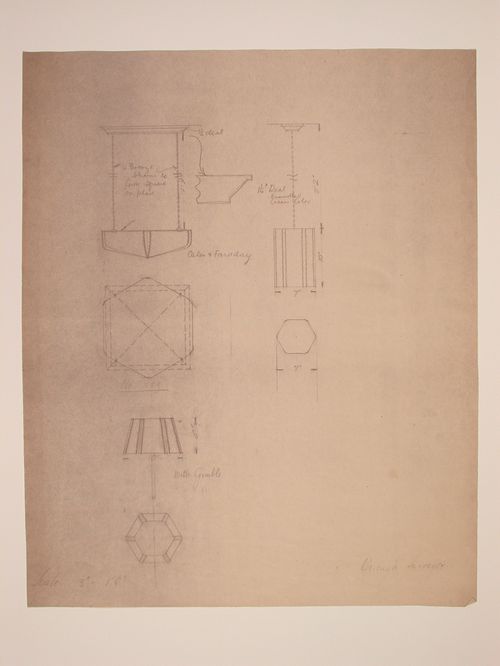
Elevations, plans and a section for three lamps, probably for Electric House, Battersea Borough
Elevations, plans and a section for three lamps, probably for Electric House, Battersea Borough
Actions:
Numéro de référence:
DR1988:0384
Description:
- This reprographic copy shows three lighting fixtures: one lamp and two pendant light fixtures suspended from the ceiling by bronze chains. The designs are probably for Electric House; the CCA collection contains similar designs for showroom light fixtures for Electric House, DR1988:0386 and DR1988:0396, which, like this print, are signed by the Borough Surveyor. - This work is part of an incomplete group of possibly working reprographic copies for Electric House, Battersea Borough, designed by the borough architect, Henry Hyams. The group also includes some reprographic copies which may have been used for publication purposes. - The style of many of these drawings and reprographic copies by Henry Hyams (DR1988:0332 - DR1988:0414) suggests that they were possibly for periodical illustrations. Hyams contributed articles to the periodicals 'The Builder' and 'The Architect'. Two objects in the CCA collections can be directly linked to an article published prior to 1926 in 'The Architect'; a reprographic copy (DR1988:0357) and a drawing (DR1988:0364) (Who's Who in Architecture, 161).
DR1988:0384
Description:
- This reprographic copy shows three lighting fixtures: one lamp and two pendant light fixtures suspended from the ceiling by bronze chains. The designs are probably for Electric House; the CCA collection contains similar designs for showroom light fixtures for Electric House, DR1988:0386 and DR1988:0396, which, like this print, are signed by the Borough Surveyor. - This work is part of an incomplete group of possibly working reprographic copies for Electric House, Battersea Borough, designed by the borough architect, Henry Hyams. The group also includes some reprographic copies which may have been used for publication purposes. - The style of many of these drawings and reprographic copies by Henry Hyams (DR1988:0332 - DR1988:0414) suggests that they were possibly for periodical illustrations. Hyams contributed articles to the periodicals 'The Builder' and 'The Architect'. Two objects in the CCA collections can be directly linked to an article published prior to 1926 in 'The Architect'; a reprographic copy (DR1988:0357) and a drawing (DR1988:0364) (Who's Who in Architecture, 161).
Personnes et institutions:
Sujet:
design d'intérieur
design d'intérieur
Date:
printed late 1926 or 1927
printed late 1926 or 1927
Titre:
Elevations, plans and a section for three lamps, probably for Electric House, Battersea Borough
Actions:
DR1988:0384
Description:
- This reprographic copy shows three lighting fixtures: one lamp and two pendant light fixtures suspended from the ceiling by bronze chains. The designs are probably for Electric House; the CCA collection contains similar designs for showroom light fixtures for Electric House, DR1988:0386 and DR1988:0396, which, like this print, are signed by the Borough Surveyor. - This work is part of an incomplete group of possibly working reprographic copies for Electric House, Battersea Borough, designed by the borough architect, Henry Hyams. The group also includes some reprographic copies which may have been used for publication purposes. - The style of many of these drawings and reprographic copies by Henry Hyams (DR1988:0332 - DR1988:0414) suggests that they were possibly for periodical illustrations. Hyams contributed articles to the periodicals 'The Builder' and 'The Architect'. Two objects in the CCA collections can be directly linked to an article published prior to 1926 in 'The Architect'; a reprographic copy (DR1988:0357) and a drawing (DR1988:0364) (Who's Who in Architecture, 161).
Elevations, plans and a section for three lamps, probably for Electric House, Battersea Borough
Actions:
DR1988:0384
Description:
- This reprographic copy shows three lighting fixtures: one lamp and two pendant light fixtures suspended from the ceiling by bronze chains. The designs are probably for Electric House; the CCA collection contains similar designs for showroom light fixtures for Electric House, DR1988:0386 and DR1988:0396, which, like this print, are signed by the Borough Surveyor. - This work is part of an incomplete group of possibly working reprographic copies for Electric House, Battersea Borough, designed by the borough architect, Henry Hyams. The group also includes some reprographic copies which may have been used for publication purposes. - The style of many of these drawings and reprographic copies by Henry Hyams (DR1988:0332 - DR1988:0414) suggests that they were possibly for periodical illustrations. Hyams contributed articles to the periodicals 'The Builder' and 'The Architect'. Two objects in the CCA collections can be directly linked to an article published prior to 1926 in 'The Architect'; a reprographic copy (DR1988:0357) and a drawing (DR1988:0364) (Who's Who in Architecture, 161).
Classification:
dessins
dessins
Date:
printed late 1926 or 1927
printed late 1926 or 1927
Personnes et institutions:
Sujet:
design d'intérieur
design d'intérieur
Classification:
archives
Niveau de description archivistique:
Fonds
archives
Niveau de description archivistique:
Fonds
Numéro de référence:
AP181
Résumé:
The COOP HIMMELB(L)AU BMW Welt project records, 1994-2007, document the design of the firm’s BMW Welt project, also known as BMW World, in Munich, Germany. The archive consists of approximately 52, 400 born-digital files representing the greater part of the digital archive of the project, as well as 52 of the study models made in the earlier stages of the project.
AP181
Résumé:
The COOP HIMMELB(L)AU BMW Welt project records, 1994-2007, document the design of the firm’s BMW Welt project, also known as BMW World, in Munich, Germany. The archive consists of approximately 52, 400 born-digital files representing the greater part of the digital archive of the project, as well as 52 of the study models made in the earlier stages of the project.
Personnes et institutions:
Date:
1994-2015
1994-2015
Titre:
Documents d’archives de COOP HIMMELB(L)AU pour le projet BMW Welt
Actions:
AP181
Résumé:
The COOP HIMMELB(L)AU BMW Welt project records, 1994-2007, document the design of the firm’s BMW Welt project, also known as BMW World, in Munich, Germany. The archive consists of approximately 52, 400 born-digital files representing the greater part of the digital archive of the project, as well as 52 of the study models made in the earlier stages of the project.
Documents d’archives de COOP HIMMELB(L)AU pour le projet BMW Welt
Actions:
AP181
Résumé:
The COOP HIMMELB(L)AU BMW Welt project records, 1994-2007, document the design of the firm’s BMW Welt project, also known as BMW World, in Munich, Germany. The archive consists of approximately 52, 400 born-digital files representing the greater part of the digital archive of the project, as well as 52 of the study models made in the earlier stages of the project.
Classification:
archives
Niveau de description archivistique:
Fonds
archives
Niveau de description archivistique:
Fonds
Date:
1994-2015
1994-2015
Personnes et institutions:
Niveau de description archivistique:
Projet
Projet
Numéro de référence:
AP075.S1.1997.PR07
Description:
Project series documents Cornelia Hahn Oberlander's landscape project for a condominium tower at 1575, West 6th Avenue, Vancouver, British Columbia. Oberlander worked on this project in the early 2000s with architectural firm Nick Milkovich Architects and Arthur Erickson as design consultant. Oberlander was in charged of designing the landscaping for the courtyard, green roofs and roof decks. Her consists in two half-paving, half-grass areas surronded by concrete planters for the green roof and planting for a sitting area for the courtyard. The project series contains a plan of the courtyard with plant list, a plan of the green roof with plant list, concept notes by Oberlander and financial documents.
AP075.S1.1997.PR07
Description:
Project series documents Cornelia Hahn Oberlander's landscape project for a condominium tower at 1575, West 6th Avenue, Vancouver, British Columbia. Oberlander worked on this project in the early 2000s with architectural firm Nick Milkovich Architects and Arthur Erickson as design consultant. Oberlander was in charged of designing the landscaping for the courtyard, green roofs and roof decks. Her consists in two half-paving, half-grass areas surronded by concrete planters for the green roof and planting for a sitting area for the courtyard. The project series contains a plan of the courtyard with plant list, a plan of the green roof with plant list, concept notes by Oberlander and financial documents.
Personnes et institutions:
Date:
1997-2007
1997-2007
Titre:
1575 West 6th Avenue, Vancouver, British Columbia (1997)
Actions:
AP075.S1.1997.PR07
Description:
Project series documents Cornelia Hahn Oberlander's landscape project for a condominium tower at 1575, West 6th Avenue, Vancouver, British Columbia. Oberlander worked on this project in the early 2000s with architectural firm Nick Milkovich Architects and Arthur Erickson as design consultant. Oberlander was in charged of designing the landscaping for the courtyard, green roofs and roof decks. Her consists in two half-paving, half-grass areas surronded by concrete planters for the green roof and planting for a sitting area for the courtyard. The project series contains a plan of the courtyard with plant list, a plan of the green roof with plant list, concept notes by Oberlander and financial documents.
1575 West 6th Avenue, Vancouver, British Columbia (1997)
Actions:
AP075.S1.1997.PR07
Description:
Project series documents Cornelia Hahn Oberlander's landscape project for a condominium tower at 1575, West 6th Avenue, Vancouver, British Columbia. Oberlander worked on this project in the early 2000s with architectural firm Nick Milkovich Architects and Arthur Erickson as design consultant. Oberlander was in charged of designing the landscaping for the courtyard, green roofs and roof decks. Her consists in two half-paving, half-grass areas surronded by concrete planters for the green roof and planting for a sitting area for the courtyard. The project series contains a plan of the courtyard with plant list, a plan of the green roof with plant list, concept notes by Oberlander and financial documents.
Niveau de description archivistique:
Project
Project
Date:
1997-2007
1997-2007
Personnes et institutions:


