


6038 Résultats
Classification:
photographies
photographies
![Interior view of the Assembly [?] Building showing cars and a train at the loading dock, Ford Motor Company Automobile Assembly Plant, Richmond, California](/img-collection/tEuZunaU9RumM4-yJVS4tye-BQE=/500x375/14060.jpg)
Actions:
Numéro de référence:
PH2000:0231
PH2000:0231
Personnes et institutions:
Sujet:
architecture, design d'intérieur, ingénierie
architecture, design d'intérieur, ingénierie
Date:
between 1908 and 1927
between 1908 and 1927
Classification:
photographies
photographies
Date:
between 1908 and 1927
between 1908 and 1927
Personnes et institutions:
Sujet:
architecture, design d'intérieur, ingénierie
architecture, design d'intérieur, ingénierie
Classification:
photographies
photographies
Actions:
Numéro de référence:
PH2000:0817
PH2000:0817
Personnes et institutions:
Sujet:
architecture, design d'intérieur
architecture, design d'intérieur
Date:
1960
1960
Classification:
photographies
photographies
Date:
1960
1960
Personnes et institutions:
Sujet:
architecture, design d'intérieur
architecture, design d'intérieur
Classification:
photographies
photographies
Actions:
Numéro de référence:
PH1984:0977:410
Description:
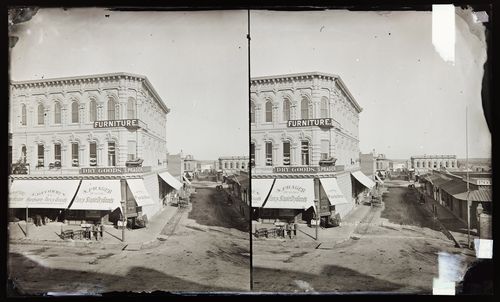
View of three-story building with stores on 204 North Main Street (after 1890 at 304 N. Main Street), Los Angeles, California with signs for S. Prager Dry Goods, The Paradise Dry Goods, Ducommun Hardware and Fancy Goods and a chaise longue, a chair and a bedpost attached to the facade of the second floor advertising a furniture store.
PH1984:0977:410
Description:
View of three-story building with stores on 204 North Main Street (after 1890 at 304 N. Main Street), Los Angeles, California with signs for S. Prager Dry Goods, The Paradise Dry Goods, Ducommun Hardware and Fancy Goods and a chaise longue, a chair and a bedpost attached to the facade of the second floor advertising a furniture store.
Personnes et institutions:
Date:
ca. 1860-1880
ca. 1860-1880
Titre:
Stereograph of the C. Ducommun hardware store and the S. Prager dry good store on 204 North Main Street, Los Angeles, California, United States of America
Actions:
PH1984:0977:410
Description:
View of three-story building with stores on 204 North Main Street (after 1890 at 304 N. Main Street), Los Angeles, California with signs for S. Prager Dry Goods, The Paradise Dry Goods, Ducommun Hardware and Fancy Goods and a chaise longue, a chair and a bedpost attached to the facade of the second floor advertising a furniture store.
Stereograph of the C. Ducommun hardware store and the S. Prager dry good store on 204 North Main Street, Los Angeles, California, United States of America
Actions:
PH1984:0977:410
Description:
View of three-story building with stores on 204 North Main Street (after 1890 at 304 N. Main Street), Los Angeles, California with signs for S. Prager Dry Goods, The Paradise Dry Goods, Ducommun Hardware and Fancy Goods and a chaise longue, a chair and a bedpost attached to the facade of the second floor advertising a furniture store.
Classification:
photographies
photographies
Date:
ca. 1860-1880
ca. 1860-1880
Personnes et institutions:
Classification:
photographies
photographies
Actions:
Numéro de référence:
PH1998:0099:006
PH1998:0099:006
Personnes et institutions:
Sujet:
architecture
architecture
Date:
1966
1966
Classification:
photographies
photographies
Date:
1966
1966
Personnes et institutions:
Sujet:
architecture
architecture
Classification:
photographies
photographies
Actions:
Numéro de référence:
PH2000:0738
PH2000:0738
Personnes et institutions:
Sujet:
architecture
architecture
Date:
1972
1972
Classification:
photographies
photographies
Date:
1972
1972
Personnes et institutions:
Sujet:
architecture
architecture
Classification:
photographies
photographies
Actions:
Numéro de référence:
PH1982:0831
PH1982:0831
Personnes et institutions:
Sujet:
architecture, ingénierie
architecture, ingénierie
Date:
1981
1981
Classification:
photographies
photographies
Date:
1981
1981
Personnes et institutions:
Sujet:
architecture, ingénierie
architecture, ingénierie
Classification:
dessins
dessins

Numéro de référence:
ARCH255190
ARCH255190
Personnes et institutions:
Date:
1985-1986
1985-1986
Classification:
dessins
dessins
Date:
1985-1986
1985-1986
Personnes et institutions:
Classification:
documents textuels
documents textuels
Numéro de référence:
AP082.S1.023
AP082.S1.023
Personnes et institutions:
Date:
1 June 1999
1 June 1999
Classification:
documents textuels
documents textuels
Date:
1 June 1999
1 June 1999
Personnes et institutions:
Classification:
photographies
photographies
Actions:
Numéro de référence:
PH1987:0216
PH1987:0216
Personnes et institutions:
Date:
1906
1906
Classification:
photographies
photographies
Date:
1906
1906
Personnes et institutions:
Classification:
photographies
photographies
Actions:
Numéro de référence:
PH1997:0063
Description:
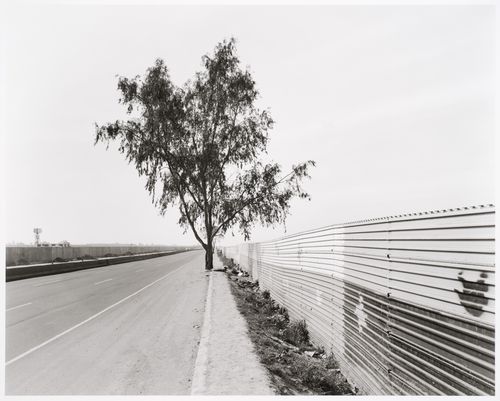
- The series "Running Fence 1997" focuses "on the first 14 miles of the border fence that separates the United States and Mexico, beginning at the Pacific Ocean and ending in the Otay Mountains.... [It] analyzes the "idea" of the border and explores its iconography, the border being a subject that is of extreme importance to the public as the world proceeds towards greater globalization. [Geoffrey] James has written of the project: "[The border fence] was built by the US Army Corps of Engineers in 1994, out of recycled metal landing strip - the most visible symbol of what is known as Operation Gatekeeper. Because the steel sheets are placed in the ground so that their ridges run horizontally, a man can hop over the fence with ease; and no Mexican child ever seems to be impeded from retrieving a soccer ball from US territory. The real barrier to illegal immigration from Mexico into the USA is less visible: hundreds of buried sensors linked to a central computer, nightscopes, helicopters and Border Patrol Agents in white Broncos."" (Evans).
PH1997:0063
Description:
- The series "Running Fence 1997" focuses "on the first 14 miles of the border fence that separates the United States and Mexico, beginning at the Pacific Ocean and ending in the Otay Mountains.... [It] analyzes the "idea" of the border and explores its iconography, the border being a subject that is of extreme importance to the public as the world proceeds towards greater globalization. [Geoffrey] James has written of the project: "[The border fence] was built by the US Army Corps of Engineers in 1994, out of recycled metal landing strip - the most visible symbol of what is known as Operation Gatekeeper. Because the steel sheets are placed in the ground so that their ridges run horizontally, a man can hop over the fence with ease; and no Mexican child ever seems to be impeded from retrieving a soccer ball from US territory. The real barrier to illegal immigration from Mexico into the USA is less visible: hundreds of buried sensors linked to a central computer, nightscopes, helicopters and Border Patrol Agents in white Broncos."" (Evans).
Personnes et institutions:
Sujet:
architecture, ingénierie
architecture, ingénierie
Date:
1997
1997
Titre:
View along a highway leading to the airport in Tijuana, Baja California, Mexico, showing a partial view of the United States-Mexico border fence
Actions:
PH1997:0063
Description:
- The series "Running Fence 1997" focuses "on the first 14 miles of the border fence that separates the United States and Mexico, beginning at the Pacific Ocean and ending in the Otay Mountains.... [It] analyzes the "idea" of the border and explores its iconography, the border being a subject that is of extreme importance to the public as the world proceeds towards greater globalization. [Geoffrey] James has written of the project: "[The border fence] was built by the US Army Corps of Engineers in 1994, out of recycled metal landing strip - the most visible symbol of what is known as Operation Gatekeeper. Because the steel sheets are placed in the ground so that their ridges run horizontally, a man can hop over the fence with ease; and no Mexican child ever seems to be impeded from retrieving a soccer ball from US territory. The real barrier to illegal immigration from Mexico into the USA is less visible: hundreds of buried sensors linked to a central computer, nightscopes, helicopters and Border Patrol Agents in white Broncos."" (Evans).
View along a highway leading to the airport in Tijuana, Baja California, Mexico, showing a partial view of the United States-Mexico border fence
Actions:
PH1997:0063
Description:
- The series "Running Fence 1997" focuses "on the first 14 miles of the border fence that separates the United States and Mexico, beginning at the Pacific Ocean and ending in the Otay Mountains.... [It] analyzes the "idea" of the border and explores its iconography, the border being a subject that is of extreme importance to the public as the world proceeds towards greater globalization. [Geoffrey] James has written of the project: "[The border fence] was built by the US Army Corps of Engineers in 1994, out of recycled metal landing strip - the most visible symbol of what is known as Operation Gatekeeper. Because the steel sheets are placed in the ground so that their ridges run horizontally, a man can hop over the fence with ease; and no Mexican child ever seems to be impeded from retrieving a soccer ball from US territory. The real barrier to illegal immigration from Mexico into the USA is less visible: hundreds of buried sensors linked to a central computer, nightscopes, helicopters and Border Patrol Agents in white Broncos."" (Evans).
Classification:
photographies
photographies
Date:
1997
1997
Personnes et institutions:
Sujet:
architecture, ingénierie
architecture, ingénierie


