


9428 Résultats
Classification:
dessins, oeuvres d'art
dessins, oeuvres d'art
Actions:
Numéro de référence:
DR1974:0002:003:001-105
Description:
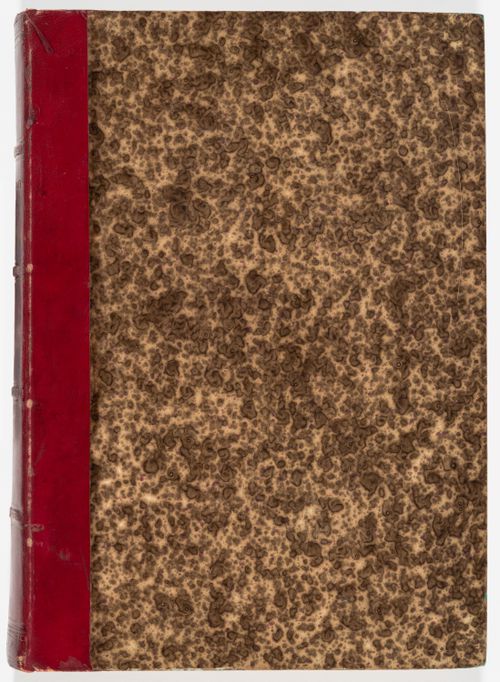
- This album consists primarily of design development drawings and the architect's copies of the working drawings for Hôtel Soltykoff. The hôtel consisted of a single rectangular pavilion with a central porte cochère and a rear courtyard with an outbuilding. The principal façade facing rue Saint-Arnaud (now rue Volney) and the interior were lavishly decorated. The structure of the hôtel consisted of load-bearing masonry combined with cast-iron columns, iron beams, and interior wood framing. The exterior was finished with cut stone. The album contains plans, elevations, details and sections, and full-scale drawings of the architectural elements, ornamentation, as well as joinery. Many of the drawings and transfer lithographs are inscribed with both the date of the drawing/original and the date of contract. Revisions, which are also often dated, have been made either directly on the drawing or on pieces of paper attached to the sheets. Inscriptions indicate that in some cases these revisions were added after the construction of the building. Also included are preliminary drawings (DR1974:0002:003:028 R/V), and detailed interior views, some of which are partially coloured with watercolour (DR1974:0002:003:049, DR1974:0002:003:069, DR1974:0002:003:078). The drawings and transfer lithographs have been grouped, possibly by the compiler of the album, according to the part of the building represented, and by the type of construction: stonework, woodwork, framework, and ironwork. Unbound material inserted into the album includes four large unbound full-scale preliminary sketches for architectural ornament, possibly for Hôtel Soltykoff (DR1974:0002:003:061 - DR1974:0002:003:064) and two drawings for a terrace and staircase, apparently not for Hôtel Soltykoff (DR1974:0002:003:003 and DR1974:0002:003:042).
DR1974:0002:003:001-105
Description:
- This album consists primarily of design development drawings and the architect's copies of the working drawings for Hôtel Soltykoff. The hôtel consisted of a single rectangular pavilion with a central porte cochère and a rear courtyard with an outbuilding. The principal façade facing rue Saint-Arnaud (now rue Volney) and the interior were lavishly decorated. The structure of the hôtel consisted of load-bearing masonry combined with cast-iron columns, iron beams, and interior wood framing. The exterior was finished with cut stone. The album contains plans, elevations, details and sections, and full-scale drawings of the architectural elements, ornamentation, as well as joinery. Many of the drawings and transfer lithographs are inscribed with both the date of the drawing/original and the date of contract. Revisions, which are also often dated, have been made either directly on the drawing or on pieces of paper attached to the sheets. Inscriptions indicate that in some cases these revisions were added after the construction of the building. Also included are preliminary drawings (DR1974:0002:003:028 R/V), and detailed interior views, some of which are partially coloured with watercolour (DR1974:0002:003:049, DR1974:0002:003:069, DR1974:0002:003:078). The drawings and transfer lithographs have been grouped, possibly by the compiler of the album, according to the part of the building represented, and by the type of construction: stonework, woodwork, framework, and ironwork. Unbound material inserted into the album includes four large unbound full-scale preliminary sketches for architectural ornament, possibly for Hôtel Soltykoff (DR1974:0002:003:061 - DR1974:0002:003:064) and two drawings for a terrace and staircase, apparently not for Hôtel Soltykoff (DR1974:0002:003:003 and DR1974:0002:003:042).
Personnes et institutions:
Sujet:
architecture
architecture
Date:
1854-1858, printed 1854-1858
1854-1858, printed 1854-1858
Titre:
Album of prints and drawings for Hôtel Soltykoff, rue Saint-Arnaud, Paris
Actions:
DR1974:0002:003:001-105
Description:
- This album consists primarily of design development drawings and the architect's copies of the working drawings for Hôtel Soltykoff. The hôtel consisted of a single rectangular pavilion with a central porte cochère and a rear courtyard with an outbuilding. The principal façade facing rue Saint-Arnaud (now rue Volney) and the interior were lavishly decorated. The structure of the hôtel consisted of load-bearing masonry combined with cast-iron columns, iron beams, and interior wood framing. The exterior was finished with cut stone. The album contains plans, elevations, details and sections, and full-scale drawings of the architectural elements, ornamentation, as well as joinery. Many of the drawings and transfer lithographs are inscribed with both the date of the drawing/original and the date of contract. Revisions, which are also often dated, have been made either directly on the drawing or on pieces of paper attached to the sheets. Inscriptions indicate that in some cases these revisions were added after the construction of the building. Also included are preliminary drawings (DR1974:0002:003:028 R/V), and detailed interior views, some of which are partially coloured with watercolour (DR1974:0002:003:049, DR1974:0002:003:069, DR1974:0002:003:078). The drawings and transfer lithographs have been grouped, possibly by the compiler of the album, according to the part of the building represented, and by the type of construction: stonework, woodwork, framework, and ironwork. Unbound material inserted into the album includes four large unbound full-scale preliminary sketches for architectural ornament, possibly for Hôtel Soltykoff (DR1974:0002:003:061 - DR1974:0002:003:064) and two drawings for a terrace and staircase, apparently not for Hôtel Soltykoff (DR1974:0002:003:003 and DR1974:0002:003:042).
Album of prints and drawings for Hôtel Soltykoff, rue Saint-Arnaud, Paris
Actions:
DR1974:0002:003:001-105
Description:
- This album consists primarily of design development drawings and the architect's copies of the working drawings for Hôtel Soltykoff. The hôtel consisted of a single rectangular pavilion with a central porte cochère and a rear courtyard with an outbuilding. The principal façade facing rue Saint-Arnaud (now rue Volney) and the interior were lavishly decorated. The structure of the hôtel consisted of load-bearing masonry combined with cast-iron columns, iron beams, and interior wood framing. The exterior was finished with cut stone. The album contains plans, elevations, details and sections, and full-scale drawings of the architectural elements, ornamentation, as well as joinery. Many of the drawings and transfer lithographs are inscribed with both the date of the drawing/original and the date of contract. Revisions, which are also often dated, have been made either directly on the drawing or on pieces of paper attached to the sheets. Inscriptions indicate that in some cases these revisions were added after the construction of the building. Also included are preliminary drawings (DR1974:0002:003:028 R/V), and detailed interior views, some of which are partially coloured with watercolour (DR1974:0002:003:049, DR1974:0002:003:069, DR1974:0002:003:078). The drawings and transfer lithographs have been grouped, possibly by the compiler of the album, according to the part of the building represented, and by the type of construction: stonework, woodwork, framework, and ironwork. Unbound material inserted into the album includes four large unbound full-scale preliminary sketches for architectural ornament, possibly for Hôtel Soltykoff (DR1974:0002:003:061 - DR1974:0002:003:064) and two drawings for a terrace and staircase, apparently not for Hôtel Soltykoff (DR1974:0002:003:003 and DR1974:0002:003:042).
Classification:
dessins, oeuvres d'art
dessins, oeuvres d'art
Date:
1854-1858, printed 1854-1858
1854-1858, printed 1854-1858
Personnes et institutions:
Sujet:
architecture
architecture
Classification:
photographies
photographies
Numéro de référence:
ARCH274184
Description:
Photographic documentation for various projects filed under, "Planning and Urban Design, Including Transportation and Landscape." Contains slides of models, plans, perspective drawings, sites and completed projects where applicable. Includes: Simon Fraser University Master Plan, Burnaby, BC (1963); Village Lake Louise, Banff National Park, AB (1969); West Seattle Freeway, Seattle, WA, with Howard Needles Tammen and Bergendorf (1969); Snauq Harbour, Vancouver, BC (1970); Toronto Transit Study, Toronto, ON (1972); Vancouver Study, Vancouver, BC (1972); Brookswood-Belmont Area Plan, Langley, BC (1973); East End Lake Study, Vancouver, BC (1973); Inner Harbour Development, Victoria, BC (1973); Eglinton West Subway Station, Toronto, ON (1974); University of British Columbia Overpass, Vancouver, BC (1974); Yorkdale Subway Station, Toronto, ON (1974); Fintas Town Centre, Kuwait City, Kuwait (1979); California Plaza Master Plan, Los Angeles, CA (1980); Harbour Steps, Seattle WA, with Clayton R. Joyce (1980); Irvine Coastal Development, Orange County, CA, with POD (1980); King Abdul Aziz University Master Plan, Jeddah, Saudi Arabia, with WZMH (1981); Simon Fraser University Village, Burnaby, BC (1981); Spadina Quay, Toronto, ON (1981); Civic Centre and 5th Hill Metrorail Stations, Los Angeles, CA (1983); East Boston Harborfront Master Plan, Boston, MA (1983); Tanjung Batu Coastal Reserve Master Plan, Bintilu, Sarwak, Malaysia, with Hijjas Kasturi Associates (1983); Centennial Campus Master Plan, North Carolina State University, Raleigh, NC (1985); New Westminister Quay, BC (1987); University Streed Beautification, Seattle, WA (1987); Simon Fraser University Master Plan Review, Burnaby, BC (1989); Pearls of Kuwait, Kuwait (1989); Marathon Lands Study, Vancouver, BC (1989); Bayshore Gardens Competition, Vancouver, BC (1989); Bukit Timah Condominium Development, Singapore (1990); Johor Coastal Development, Johor, Malaysia (1992); Al-Buhariat City, Saudi Arabia (1993).
ARCH274184
Description:
Photographic documentation for various projects filed under, "Planning and Urban Design, Including Transportation and Landscape." Contains slides of models, plans, perspective drawings, sites and completed projects where applicable. Includes: Simon Fraser University Master Plan, Burnaby, BC (1963); Village Lake Louise, Banff National Park, AB (1969); West Seattle Freeway, Seattle, WA, with Howard Needles Tammen and Bergendorf (1969); Snauq Harbour, Vancouver, BC (1970); Toronto Transit Study, Toronto, ON (1972); Vancouver Study, Vancouver, BC (1972); Brookswood-Belmont Area Plan, Langley, BC (1973); East End Lake Study, Vancouver, BC (1973); Inner Harbour Development, Victoria, BC (1973); Eglinton West Subway Station, Toronto, ON (1974); University of British Columbia Overpass, Vancouver, BC (1974); Yorkdale Subway Station, Toronto, ON (1974); Fintas Town Centre, Kuwait City, Kuwait (1979); California Plaza Master Plan, Los Angeles, CA (1980); Harbour Steps, Seattle WA, with Clayton R. Joyce (1980); Irvine Coastal Development, Orange County, CA, with POD (1980); King Abdul Aziz University Master Plan, Jeddah, Saudi Arabia, with WZMH (1981); Simon Fraser University Village, Burnaby, BC (1981); Spadina Quay, Toronto, ON (1981); Civic Centre and 5th Hill Metrorail Stations, Los Angeles, CA (1983); East Boston Harborfront Master Plan, Boston, MA (1983); Tanjung Batu Coastal Reserve Master Plan, Bintilu, Sarwak, Malaysia, with Hijjas Kasturi Associates (1983); Centennial Campus Master Plan, North Carolina State University, Raleigh, NC (1985); New Westminister Quay, BC (1987); University Streed Beautification, Seattle, WA (1987); Simon Fraser University Master Plan Review, Burnaby, BC (1989); Pearls of Kuwait, Kuwait (1989); Marathon Lands Study, Vancouver, BC (1989); Bayshore Gardens Competition, Vancouver, BC (1989); Bukit Timah Condominium Development, Singapore (1990); Johor Coastal Development, Johor, Malaysia (1992); Al-Buhariat City, Saudi Arabia (1993).
Personnes et institutions:
Date:
21 October 1994
21 October 1994
Titre:
Project documentation for presentation purposes for Erickson's planning and urban designs projects
Actions:
ARCH274184
Description:
Photographic documentation for various projects filed under, "Planning and Urban Design, Including Transportation and Landscape." Contains slides of models, plans, perspective drawings, sites and completed projects where applicable. Includes: Simon Fraser University Master Plan, Burnaby, BC (1963); Village Lake Louise, Banff National Park, AB (1969); West Seattle Freeway, Seattle, WA, with Howard Needles Tammen and Bergendorf (1969); Snauq Harbour, Vancouver, BC (1970); Toronto Transit Study, Toronto, ON (1972); Vancouver Study, Vancouver, BC (1972); Brookswood-Belmont Area Plan, Langley, BC (1973); East End Lake Study, Vancouver, BC (1973); Inner Harbour Development, Victoria, BC (1973); Eglinton West Subway Station, Toronto, ON (1974); University of British Columbia Overpass, Vancouver, BC (1974); Yorkdale Subway Station, Toronto, ON (1974); Fintas Town Centre, Kuwait City, Kuwait (1979); California Plaza Master Plan, Los Angeles, CA (1980); Harbour Steps, Seattle WA, with Clayton R. Joyce (1980); Irvine Coastal Development, Orange County, CA, with POD (1980); King Abdul Aziz University Master Plan, Jeddah, Saudi Arabia, with WZMH (1981); Simon Fraser University Village, Burnaby, BC (1981); Spadina Quay, Toronto, ON (1981); Civic Centre and 5th Hill Metrorail Stations, Los Angeles, CA (1983); East Boston Harborfront Master Plan, Boston, MA (1983); Tanjung Batu Coastal Reserve Master Plan, Bintilu, Sarwak, Malaysia, with Hijjas Kasturi Associates (1983); Centennial Campus Master Plan, North Carolina State University, Raleigh, NC (1985); New Westminister Quay, BC (1987); University Streed Beautification, Seattle, WA (1987); Simon Fraser University Master Plan Review, Burnaby, BC (1989); Pearls of Kuwait, Kuwait (1989); Marathon Lands Study, Vancouver, BC (1989); Bayshore Gardens Competition, Vancouver, BC (1989); Bukit Timah Condominium Development, Singapore (1990); Johor Coastal Development, Johor, Malaysia (1992); Al-Buhariat City, Saudi Arabia (1993).
Project documentation for presentation purposes for Erickson's planning and urban designs projects
Actions:
ARCH274184
Description:
Photographic documentation for various projects filed under, "Planning and Urban Design, Including Transportation and Landscape." Contains slides of models, plans, perspective drawings, sites and completed projects where applicable. Includes: Simon Fraser University Master Plan, Burnaby, BC (1963); Village Lake Louise, Banff National Park, AB (1969); West Seattle Freeway, Seattle, WA, with Howard Needles Tammen and Bergendorf (1969); Snauq Harbour, Vancouver, BC (1970); Toronto Transit Study, Toronto, ON (1972); Vancouver Study, Vancouver, BC (1972); Brookswood-Belmont Area Plan, Langley, BC (1973); East End Lake Study, Vancouver, BC (1973); Inner Harbour Development, Victoria, BC (1973); Eglinton West Subway Station, Toronto, ON (1974); University of British Columbia Overpass, Vancouver, BC (1974); Yorkdale Subway Station, Toronto, ON (1974); Fintas Town Centre, Kuwait City, Kuwait (1979); California Plaza Master Plan, Los Angeles, CA (1980); Harbour Steps, Seattle WA, with Clayton R. Joyce (1980); Irvine Coastal Development, Orange County, CA, with POD (1980); King Abdul Aziz University Master Plan, Jeddah, Saudi Arabia, with WZMH (1981); Simon Fraser University Village, Burnaby, BC (1981); Spadina Quay, Toronto, ON (1981); Civic Centre and 5th Hill Metrorail Stations, Los Angeles, CA (1983); East Boston Harborfront Master Plan, Boston, MA (1983); Tanjung Batu Coastal Reserve Master Plan, Bintilu, Sarwak, Malaysia, with Hijjas Kasturi Associates (1983); Centennial Campus Master Plan, North Carolina State University, Raleigh, NC (1985); New Westminister Quay, BC (1987); University Streed Beautification, Seattle, WA (1987); Simon Fraser University Master Plan Review, Burnaby, BC (1989); Pearls of Kuwait, Kuwait (1989); Marathon Lands Study, Vancouver, BC (1989); Bayshore Gardens Competition, Vancouver, BC (1989); Bukit Timah Condominium Development, Singapore (1990); Johor Coastal Development, Johor, Malaysia (1992); Al-Buhariat City, Saudi Arabia (1993).
Classification:
photographies
photographies
Date:
21 October 1994
21 October 1994
Personnes et institutions:
Niveau de description archivistique:
Série(s)
Série(s)
Numéro de référence:
AP193.S1
Description:
Series 1, Water Flux and Scrambled Flat, 2002-2010, documents the conception and evolution of a project that was originally a farm building and later became a geology and glaciology museum and research center focused on the Swiss Alps. The project was never realized. R&Sie(n) conceptualized Scrambled Flat as an experimental farm. The project goal was to reconcile European Union’s agricultural regulations, imposing a separation between animal and human living, to the community of Évolène traditional way of living, contiguously with animals, benefiting from the resources they offer. As conceived, Scrambled Flat creates an environment where fluidity between the existence of the animals and the humans is materialized. The size of the form is also adapted from a typical local rural house and exploits the heat of the animals and the insulation of the hay. For this project, R&Sie(n) approached the mayor of the community with the design proposition. The mayor then called for a competition, while also changing the program to an ecology museum and research center illustrating the local effects of global warming and the thawing of the Alps. R&Sie(n) won the competition with Water Flux, a reinterpretation of Scrambled Flat. The project was intended to uncover and exorcise the anxieties of ecological disaster, and the principle of flux related to seasonal change and, more broadly, climate change. The firm designed rooms that reproduce the geological and meteorological environment of the high mountains making it visible and experimental, offering refrigerated spaces for art installations and scientific demonstrations. The concept was also to build with the use of new technologies such as digital modelling, point scanning, and computer numerical control (CNC), combined with ancient local knowledge of knocking on trees to decide which specific pines have the best wood for construction. The building is designed to be constructed with local lamellar wood milled by nearby CNC. The resulting parts would be used for the structure, the insulation, the waterproofing and both the interior and exterior finishes. The design includes a grille wrapping the building, reproducing the profile of traditional houses and enclosure and making it possible to hold the snow inside a typo-morphological imprint. Therefore, the transformable envelope of the building reacts to the rhythm of the seasons. In the winter, the structure would appear like a solid cut-out of ice and snow, with cavities similar to those found in glaciers. In the summer, it would resemble piles of stones used in these areas to make borders. A small pool would collect rainwater and supply it to an interior artificial snowmaking system designed for the gallery. Transformation of the water is an integral part of the design. The records contain images of plans, sections, details for the structure of the façade, renderings, plans of the engineered structure, and photographs documenting the conception of the models with the CNC machinery. The Rhino 3D modelling files are also part of the records along with AutoCAD models and a video documenting the process. The records contain two physical models: a smaller polymer model at 1:20 scale representing the whole structure of the building, and a larger 1:1 latch wood fragment representing detail of the structure in its integrality.
AP193.S1
Description:
Series 1, Water Flux and Scrambled Flat, 2002-2010, documents the conception and evolution of a project that was originally a farm building and later became a geology and glaciology museum and research center focused on the Swiss Alps. The project was never realized. R&Sie(n) conceptualized Scrambled Flat as an experimental farm. The project goal was to reconcile European Union’s agricultural regulations, imposing a separation between animal and human living, to the community of Évolène traditional way of living, contiguously with animals, benefiting from the resources they offer. As conceived, Scrambled Flat creates an environment where fluidity between the existence of the animals and the humans is materialized. The size of the form is also adapted from a typical local rural house and exploits the heat of the animals and the insulation of the hay. For this project, R&Sie(n) approached the mayor of the community with the design proposition. The mayor then called for a competition, while also changing the program to an ecology museum and research center illustrating the local effects of global warming and the thawing of the Alps. R&Sie(n) won the competition with Water Flux, a reinterpretation of Scrambled Flat. The project was intended to uncover and exorcise the anxieties of ecological disaster, and the principle of flux related to seasonal change and, more broadly, climate change. The firm designed rooms that reproduce the geological and meteorological environment of the high mountains making it visible and experimental, offering refrigerated spaces for art installations and scientific demonstrations. The concept was also to build with the use of new technologies such as digital modelling, point scanning, and computer numerical control (CNC), combined with ancient local knowledge of knocking on trees to decide which specific pines have the best wood for construction. The building is designed to be constructed with local lamellar wood milled by nearby CNC. The resulting parts would be used for the structure, the insulation, the waterproofing and both the interior and exterior finishes. The design includes a grille wrapping the building, reproducing the profile of traditional houses and enclosure and making it possible to hold the snow inside a typo-morphological imprint. Therefore, the transformable envelope of the building reacts to the rhythm of the seasons. In the winter, the structure would appear like a solid cut-out of ice and snow, with cavities similar to those found in glaciers. In the summer, it would resemble piles of stones used in these areas to make borders. A small pool would collect rainwater and supply it to an interior artificial snowmaking system designed for the gallery. Transformation of the water is an integral part of the design. The records contain images of plans, sections, details for the structure of the façade, renderings, plans of the engineered structure, and photographs documenting the conception of the models with the CNC machinery. The Rhino 3D modelling files are also part of the records along with AutoCAD models and a video documenting the process. The records contain two physical models: a smaller polymer model at 1:20 scale representing the whole structure of the building, and a larger 1:1 latch wood fragment representing detail of the structure in its integrality.
Personnes et institutions:
Date:
2002-2010
2002-2010
Titre:
Water Flux and Scrambled Flat
Actions:
AP193.S1
Description:
Series 1, Water Flux and Scrambled Flat, 2002-2010, documents the conception and evolution of a project that was originally a farm building and later became a geology and glaciology museum and research center focused on the Swiss Alps. The project was never realized. R&Sie(n) conceptualized Scrambled Flat as an experimental farm. The project goal was to reconcile European Union’s agricultural regulations, imposing a separation between animal and human living, to the community of Évolène traditional way of living, contiguously with animals, benefiting from the resources they offer. As conceived, Scrambled Flat creates an environment where fluidity between the existence of the animals and the humans is materialized. The size of the form is also adapted from a typical local rural house and exploits the heat of the animals and the insulation of the hay. For this project, R&Sie(n) approached the mayor of the community with the design proposition. The mayor then called for a competition, while also changing the program to an ecology museum and research center illustrating the local effects of global warming and the thawing of the Alps. R&Sie(n) won the competition with Water Flux, a reinterpretation of Scrambled Flat. The project was intended to uncover and exorcise the anxieties of ecological disaster, and the principle of flux related to seasonal change and, more broadly, climate change. The firm designed rooms that reproduce the geological and meteorological environment of the high mountains making it visible and experimental, offering refrigerated spaces for art installations and scientific demonstrations. The concept was also to build with the use of new technologies such as digital modelling, point scanning, and computer numerical control (CNC), combined with ancient local knowledge of knocking on trees to decide which specific pines have the best wood for construction. The building is designed to be constructed with local lamellar wood milled by nearby CNC. The resulting parts would be used for the structure, the insulation, the waterproofing and both the interior and exterior finishes. The design includes a grille wrapping the building, reproducing the profile of traditional houses and enclosure and making it possible to hold the snow inside a typo-morphological imprint. Therefore, the transformable envelope of the building reacts to the rhythm of the seasons. In the winter, the structure would appear like a solid cut-out of ice and snow, with cavities similar to those found in glaciers. In the summer, it would resemble piles of stones used in these areas to make borders. A small pool would collect rainwater and supply it to an interior artificial snowmaking system designed for the gallery. Transformation of the water is an integral part of the design. The records contain images of plans, sections, details for the structure of the façade, renderings, plans of the engineered structure, and photographs documenting the conception of the models with the CNC machinery. The Rhino 3D modelling files are also part of the records along with AutoCAD models and a video documenting the process. The records contain two physical models: a smaller polymer model at 1:20 scale representing the whole structure of the building, and a larger 1:1 latch wood fragment representing detail of the structure in its integrality.
Water Flux and Scrambled Flat
Actions:
AP193.S1
Description:
Series 1, Water Flux and Scrambled Flat, 2002-2010, documents the conception and evolution of a project that was originally a farm building and later became a geology and glaciology museum and research center focused on the Swiss Alps. The project was never realized. R&Sie(n) conceptualized Scrambled Flat as an experimental farm. The project goal was to reconcile European Union’s agricultural regulations, imposing a separation between animal and human living, to the community of Évolène traditional way of living, contiguously with animals, benefiting from the resources they offer. As conceived, Scrambled Flat creates an environment where fluidity between the existence of the animals and the humans is materialized. The size of the form is also adapted from a typical local rural house and exploits the heat of the animals and the insulation of the hay. For this project, R&Sie(n) approached the mayor of the community with the design proposition. The mayor then called for a competition, while also changing the program to an ecology museum and research center illustrating the local effects of global warming and the thawing of the Alps. R&Sie(n) won the competition with Water Flux, a reinterpretation of Scrambled Flat. The project was intended to uncover and exorcise the anxieties of ecological disaster, and the principle of flux related to seasonal change and, more broadly, climate change. The firm designed rooms that reproduce the geological and meteorological environment of the high mountains making it visible and experimental, offering refrigerated spaces for art installations and scientific demonstrations. The concept was also to build with the use of new technologies such as digital modelling, point scanning, and computer numerical control (CNC), combined with ancient local knowledge of knocking on trees to decide which specific pines have the best wood for construction. The building is designed to be constructed with local lamellar wood milled by nearby CNC. The resulting parts would be used for the structure, the insulation, the waterproofing and both the interior and exterior finishes. The design includes a grille wrapping the building, reproducing the profile of traditional houses and enclosure and making it possible to hold the snow inside a typo-morphological imprint. Therefore, the transformable envelope of the building reacts to the rhythm of the seasons. In the winter, the structure would appear like a solid cut-out of ice and snow, with cavities similar to those found in glaciers. In the summer, it would resemble piles of stones used in these areas to make borders. A small pool would collect rainwater and supply it to an interior artificial snowmaking system designed for the gallery. Transformation of the water is an integral part of the design. The records contain images of plans, sections, details for the structure of the façade, renderings, plans of the engineered structure, and photographs documenting the conception of the models with the CNC machinery. The Rhino 3D modelling files are also part of the records along with AutoCAD models and a video documenting the process. The records contain two physical models: a smaller polymer model at 1:20 scale representing the whole structure of the building, and a larger 1:1 latch wood fragment representing detail of the structure in its integrality.
Niveau de description archivistique:
Series
Series
Date:
2002-2010
2002-2010
Personnes et institutions:
Niveau de description archivistique:
Série(s)
Série(s)
Titre:
Olzweg
Olzweg
Numéro de référence:
AP193.S3
Description:
Series 3, Olzweg, 2006, relates to a competition proposal conceptualized in 2006 for an extension to the Fond Régional d’Art Contemporain (FRAC) in Orléans, France. The records contain images of plans, elevations, sections, and renderings of the project and the robot. There are also pictures of the model and an animated rendering of different 3D model views. The FRAC competition sought an emblematic extension that would complement the original 18th century building hosting the collection. R&Sie(n)’s project earned second place in the competition. The project takes its name from Holzwege a book from Heidegger inspired by the paths that winds through the forest. It consists of a labyrinth of recycled glass sticks, which appeared to be “glued” to the existing building and courtyard. The glass comes from recycled bottles provided by the neighborhood inhabitants. R&Sie(n) sees this as a form of criticism of France’s relation to wine consumption through its materialization. The labyrinth is progressively constructed and rearranged by a robotic arm and randomized, interactive software continuously reprogramming its parameters during construction.
AP193.S3
Description:
Series 3, Olzweg, 2006, relates to a competition proposal conceptualized in 2006 for an extension to the Fond Régional d’Art Contemporain (FRAC) in Orléans, France. The records contain images of plans, elevations, sections, and renderings of the project and the robot. There are also pictures of the model and an animated rendering of different 3D model views. The FRAC competition sought an emblematic extension that would complement the original 18th century building hosting the collection. R&Sie(n)’s project earned second place in the competition. The project takes its name from Holzwege a book from Heidegger inspired by the paths that winds through the forest. It consists of a labyrinth of recycled glass sticks, which appeared to be “glued” to the existing building and courtyard. The glass comes from recycled bottles provided by the neighborhood inhabitants. R&Sie(n) sees this as a form of criticism of France’s relation to wine consumption through its materialization. The labyrinth is progressively constructed and rearranged by a robotic arm and randomized, interactive software continuously reprogramming its parameters during construction.
Personnes et institutions:
Date:
2006
2006
Titre:
Olzweg
Actions:
AP193.S3
Description:
Series 3, Olzweg, 2006, relates to a competition proposal conceptualized in 2006 for an extension to the Fond Régional d’Art Contemporain (FRAC) in Orléans, France. The records contain images of plans, elevations, sections, and renderings of the project and the robot. There are also pictures of the model and an animated rendering of different 3D model views. The FRAC competition sought an emblematic extension that would complement the original 18th century building hosting the collection. R&Sie(n)’s project earned second place in the competition. The project takes its name from Holzwege a book from Heidegger inspired by the paths that winds through the forest. It consists of a labyrinth of recycled glass sticks, which appeared to be “glued” to the existing building and courtyard. The glass comes from recycled bottles provided by the neighborhood inhabitants. R&Sie(n) sees this as a form of criticism of France’s relation to wine consumption through its materialization. The labyrinth is progressively constructed and rearranged by a robotic arm and randomized, interactive software continuously reprogramming its parameters during construction.
Olzweg
Actions:
AP193.S3
Description:
Series 3, Olzweg, 2006, relates to a competition proposal conceptualized in 2006 for an extension to the Fond Régional d’Art Contemporain (FRAC) in Orléans, France. The records contain images of plans, elevations, sections, and renderings of the project and the robot. There are also pictures of the model and an animated rendering of different 3D model views. The FRAC competition sought an emblematic extension that would complement the original 18th century building hosting the collection. R&Sie(n)’s project earned second place in the competition. The project takes its name from Holzwege a book from Heidegger inspired by the paths that winds through the forest. It consists of a labyrinth of recycled glass sticks, which appeared to be “glued” to the existing building and courtyard. The glass comes from recycled bottles provided by the neighborhood inhabitants. R&Sie(n) sees this as a form of criticism of France’s relation to wine consumption through its materialization. The labyrinth is progressively constructed and rearranged by a robotic arm and randomized, interactive software continuously reprogramming its parameters during construction.
Niveau de description archivistique:
Series
Series
Date:
2006
2006
Personnes et institutions:
Niveau de description archivistique:
Série(s)
Série(s)
Titre:
Une architecture des humeurs
Une architecture des humeurs
Numéro de référence:
AP193.S4
Description:
Series 4, Une architecture des humeurs, 2008-2011, documents the conception and the presentation of exhibition and project Une architecture des humeurs. Presented at Le laboratoire art gallery in Paris between January and May 2010, Une architecture des humeurs is a conceptual, unbuilt, residential urban structure based on a potential future in which contemporary science reads human physiology and chemical balance. The idea is to acquire a chemistry of the “humors”, or the moods and temperament, of future purchasers. Taken as input, the information generates a diversity of habitable morphologies and relationships between them. With this process, the project attempts to make palpable and graspable, through technologies, the emotions of the participants captured via the chemistry of their body. The goal is to gather information on their capacity of adaptation, their level of sympathy and empathy while confronted to a situation or an environment. This information is then analyzed by computational, mathematical, and machinist procedures. This leads to the design and production of an urban structure submitted to the improbable and uncertain protocols produced by emotions, also creating aggregations and layouts that rearticulate the links between the individual and the collective. These structures are calculated following simultaneously incremental and recursive structural optimization protocols resulting in the physicality and morphology of architecture. The layout of the residential units and the structural trajectories are conceived and developed as posterior to the constructs supporting social life and not as an a priori. The structure of each components of the urban structure is generated by a secretion and weaving machine called Viab02. The machine is the second prototype of VIAB which was developed with Robotics Research Lab of the University of Southern California and takes its name from the terms viability and variability. With a process similar to contour crafting, the machine produces bio-cement, a mix between cement and bio-resin, giving form to the adapted residential structures. The records consist largely of images detailing the creative process of the firm, photographs of the exhibition, and 3D models. It also contains animated renderings representing the machine in action and sequences of the construction of the building or the structure. The records include a video orienting the project into François Roche theoretical stance, research as speculation, that can be summarize as the use of technological tools to take a critical and political position through esthetic in order to open new lines of thoughts. AP193.S2 contains updated previous version of the VIAB machine
AP193.S4
Description:
Series 4, Une architecture des humeurs, 2008-2011, documents the conception and the presentation of exhibition and project Une architecture des humeurs. Presented at Le laboratoire art gallery in Paris between January and May 2010, Une architecture des humeurs is a conceptual, unbuilt, residential urban structure based on a potential future in which contemporary science reads human physiology and chemical balance. The idea is to acquire a chemistry of the “humors”, or the moods and temperament, of future purchasers. Taken as input, the information generates a diversity of habitable morphologies and relationships between them. With this process, the project attempts to make palpable and graspable, through technologies, the emotions of the participants captured via the chemistry of their body. The goal is to gather information on their capacity of adaptation, their level of sympathy and empathy while confronted to a situation or an environment. This information is then analyzed by computational, mathematical, and machinist procedures. This leads to the design and production of an urban structure submitted to the improbable and uncertain protocols produced by emotions, also creating aggregations and layouts that rearticulate the links between the individual and the collective. These structures are calculated following simultaneously incremental and recursive structural optimization protocols resulting in the physicality and morphology of architecture. The layout of the residential units and the structural trajectories are conceived and developed as posterior to the constructs supporting social life and not as an a priori. The structure of each components of the urban structure is generated by a secretion and weaving machine called Viab02. The machine is the second prototype of VIAB which was developed with Robotics Research Lab of the University of Southern California and takes its name from the terms viability and variability. With a process similar to contour crafting, the machine produces bio-cement, a mix between cement and bio-resin, giving form to the adapted residential structures. The records consist largely of images detailing the creative process of the firm, photographs of the exhibition, and 3D models. It also contains animated renderings representing the machine in action and sequences of the construction of the building or the structure. The records include a video orienting the project into François Roche theoretical stance, research as speculation, that can be summarize as the use of technological tools to take a critical and political position through esthetic in order to open new lines of thoughts. AP193.S2 contains updated previous version of the VIAB machine
Personnes et institutions:
Date:
2008-2011
2008-2011
Titre:
Une architecture des humeurs
Actions:
AP193.S4
Description:
Series 4, Une architecture des humeurs, 2008-2011, documents the conception and the presentation of exhibition and project Une architecture des humeurs. Presented at Le laboratoire art gallery in Paris between January and May 2010, Une architecture des humeurs is a conceptual, unbuilt, residential urban structure based on a potential future in which contemporary science reads human physiology and chemical balance. The idea is to acquire a chemistry of the “humors”, or the moods and temperament, of future purchasers. Taken as input, the information generates a diversity of habitable morphologies and relationships between them. With this process, the project attempts to make palpable and graspable, through technologies, the emotions of the participants captured via the chemistry of their body. The goal is to gather information on their capacity of adaptation, their level of sympathy and empathy while confronted to a situation or an environment. This information is then analyzed by computational, mathematical, and machinist procedures. This leads to the design and production of an urban structure submitted to the improbable and uncertain protocols produced by emotions, also creating aggregations and layouts that rearticulate the links between the individual and the collective. These structures are calculated following simultaneously incremental and recursive structural optimization protocols resulting in the physicality and morphology of architecture. The layout of the residential units and the structural trajectories are conceived and developed as posterior to the constructs supporting social life and not as an a priori. The structure of each components of the urban structure is generated by a secretion and weaving machine called Viab02. The machine is the second prototype of VIAB which was developed with Robotics Research Lab of the University of Southern California and takes its name from the terms viability and variability. With a process similar to contour crafting, the machine produces bio-cement, a mix between cement and bio-resin, giving form to the adapted residential structures. The records consist largely of images detailing the creative process of the firm, photographs of the exhibition, and 3D models. It also contains animated renderings representing the machine in action and sequences of the construction of the building or the structure. The records include a video orienting the project into François Roche theoretical stance, research as speculation, that can be summarize as the use of technological tools to take a critical and political position through esthetic in order to open new lines of thoughts. AP193.S2 contains updated previous version of the VIAB machine
Une architecture des humeurs
Actions:
AP193.S4
Description:
Series 4, Une architecture des humeurs, 2008-2011, documents the conception and the presentation of exhibition and project Une architecture des humeurs. Presented at Le laboratoire art gallery in Paris between January and May 2010, Une architecture des humeurs is a conceptual, unbuilt, residential urban structure based on a potential future in which contemporary science reads human physiology and chemical balance. The idea is to acquire a chemistry of the “humors”, or the moods and temperament, of future purchasers. Taken as input, the information generates a diversity of habitable morphologies and relationships between them. With this process, the project attempts to make palpable and graspable, through technologies, the emotions of the participants captured via the chemistry of their body. The goal is to gather information on their capacity of adaptation, their level of sympathy and empathy while confronted to a situation or an environment. This information is then analyzed by computational, mathematical, and machinist procedures. This leads to the design and production of an urban structure submitted to the improbable and uncertain protocols produced by emotions, also creating aggregations and layouts that rearticulate the links between the individual and the collective. These structures are calculated following simultaneously incremental and recursive structural optimization protocols resulting in the physicality and morphology of architecture. The layout of the residential units and the structural trajectories are conceived and developed as posterior to the constructs supporting social life and not as an a priori. The structure of each components of the urban structure is generated by a secretion and weaving machine called Viab02. The machine is the second prototype of VIAB which was developed with Robotics Research Lab of the University of Southern California and takes its name from the terms viability and variability. With a process similar to contour crafting, the machine produces bio-cement, a mix between cement and bio-resin, giving form to the adapted residential structures. The records consist largely of images detailing the creative process of the firm, photographs of the exhibition, and 3D models. It also contains animated renderings representing the machine in action and sequences of the construction of the building or the structure. The records include a video orienting the project into François Roche theoretical stance, research as speculation, that can be summarize as the use of technological tools to take a critical and political position through esthetic in order to open new lines of thoughts. AP193.S2 contains updated previous version of the VIAB machine
Niveau de description archivistique:
Series
Series
Date:
2008-2011
2008-2011
Personnes et institutions:
Quantité:
4 portfolio(s)
4 portfolio(s)
Actions:
Numéro de référence:
DR1974:0002:036:001-016
Description:
- This group of portfolios and manuscripts contains drawings, prints and documents relating to four early projects for opera houses: projects from 1846 and 1847 for a new opera house for the Académie royale de musique; the unexecuted project of 1838-1840 for the Théâtre Royal Italien and surrounding infrastructure on the site of the Ministère des Affaires Étrangères and the Hôtel du Timbre; and proposed or completed alterations to an existing opera house, Salle Le Peletier, home to the Académie impériale de musique. An unrelated project for a proposed Grande Halles is also included in the group. - Charles Rohault de Fleury proposed two projects for a new opera house for the Académie royale de musique, in 1846 and 1847. An individual loose drawing included in this group, DR1974:0002:036:013, is possibly another proposal for a new opera house. - Four manuscripts (DR1974:0002:036:006:001-006, DR1974:0002:036:007:001-013, DR1974:0002:036:008:001-004, DR1974:0002:036:016:001-007 R/V) document an unexecuted project of 1838-1840 for the Théâtre Royal Italien and surrounding houses on a site occupied by the Ministère des Affaires Étrangères and the Hôtel du Timbre. - Portfolio DR1974:0002:036:014:001-022 contains drawings and transfer lithographs of plans, elevations and sections for the proposed alterations and/or record drawings for/of Salle Le Peletier. - A manuscript and drawing (DR1974:0002:036:015:001 and DR1974:0002:036:015:002) relating to a proposal for the construction of a Grande Halle near the Seine and the Hôtel de ville are stored in a brown folder with inscriptions relating to the Théâtre Royal Italien. - A manuscript and drawing (DR1974:0002:036:015:001 and DR1974:0002:036:015:002) relating to a proposal for the construction of a Grande Halle near the Seine and the Hôtel de ville are stored in a brown folder with inscriptions relating to the Théâtre Royal Italien.
DR1974:0002:036:001-016
Description:
- This group of portfolios and manuscripts contains drawings, prints and documents relating to four early projects for opera houses: projects from 1846 and 1847 for a new opera house for the Académie royale de musique; the unexecuted project of 1838-1840 for the Théâtre Royal Italien and surrounding infrastructure on the site of the Ministère des Affaires Étrangères and the Hôtel du Timbre; and proposed or completed alterations to an existing opera house, Salle Le Peletier, home to the Académie impériale de musique. An unrelated project for a proposed Grande Halles is also included in the group. - Charles Rohault de Fleury proposed two projects for a new opera house for the Académie royale de musique, in 1846 and 1847. An individual loose drawing included in this group, DR1974:0002:036:013, is possibly another proposal for a new opera house. - Four manuscripts (DR1974:0002:036:006:001-006, DR1974:0002:036:007:001-013, DR1974:0002:036:008:001-004, DR1974:0002:036:016:001-007 R/V) document an unexecuted project of 1838-1840 for the Théâtre Royal Italien and surrounding houses on a site occupied by the Ministère des Affaires Étrangères and the Hôtel du Timbre. - Portfolio DR1974:0002:036:014:001-022 contains drawings and transfer lithographs of plans, elevations and sections for the proposed alterations and/or record drawings for/of Salle Le Peletier. - A manuscript and drawing (DR1974:0002:036:015:001 and DR1974:0002:036:015:002) relating to a proposal for the construction of a Grande Halle near the Seine and the Hôtel de ville are stored in a brown folder with inscriptions relating to the Théâtre Royal Italien. - A manuscript and drawing (DR1974:0002:036:015:001 and DR1974:0002:036:015:002) relating to a proposal for the construction of a Grande Halle near the Seine and the Hôtel de ville are stored in a brown folder with inscriptions relating to the Théâtre Royal Italien.
Personnes et institutions:
Sujet:
architecture, design d'intérieur
architecture, design d'intérieur
Date:
1834-1854
1834-1854
Titre:
Four portfolios of drawings, prints and manuscripts for opera houses for the Théâtre Royal Italien Opera Company, the Académie royale de musique, and for renovations to Salle Le Peletier for the Académie impériale de musique, Paris
Actions:
DR1974:0002:036:001-016
Description:
- This group of portfolios and manuscripts contains drawings, prints and documents relating to four early projects for opera houses: projects from 1846 and 1847 for a new opera house for the Académie royale de musique; the unexecuted project of 1838-1840 for the Théâtre Royal Italien and surrounding infrastructure on the site of the Ministère des Affaires Étrangères and the Hôtel du Timbre; and proposed or completed alterations to an existing opera house, Salle Le Peletier, home to the Académie impériale de musique. An unrelated project for a proposed Grande Halles is also included in the group. - Charles Rohault de Fleury proposed two projects for a new opera house for the Académie royale de musique, in 1846 and 1847. An individual loose drawing included in this group, DR1974:0002:036:013, is possibly another proposal for a new opera house. - Four manuscripts (DR1974:0002:036:006:001-006, DR1974:0002:036:007:001-013, DR1974:0002:036:008:001-004, DR1974:0002:036:016:001-007 R/V) document an unexecuted project of 1838-1840 for the Théâtre Royal Italien and surrounding houses on a site occupied by the Ministère des Affaires Étrangères and the Hôtel du Timbre. - Portfolio DR1974:0002:036:014:001-022 contains drawings and transfer lithographs of plans, elevations and sections for the proposed alterations and/or record drawings for/of Salle Le Peletier. - A manuscript and drawing (DR1974:0002:036:015:001 and DR1974:0002:036:015:002) relating to a proposal for the construction of a Grande Halle near the Seine and the Hôtel de ville are stored in a brown folder with inscriptions relating to the Théâtre Royal Italien. - A manuscript and drawing (DR1974:0002:036:015:001 and DR1974:0002:036:015:002) relating to a proposal for the construction of a Grande Halle near the Seine and the Hôtel de ville are stored in a brown folder with inscriptions relating to the Théâtre Royal Italien.
Four portfolios of drawings, prints and manuscripts for opera houses for the Théâtre Royal Italien Opera Company, the Académie royale de musique, and for renovations to Salle Le Peletier for the Académie impériale de musique, Paris
Actions:
DR1974:0002:036:001-016
Description:
- This group of portfolios and manuscripts contains drawings, prints and documents relating to four early projects for opera houses: projects from 1846 and 1847 for a new opera house for the Académie royale de musique; the unexecuted project of 1838-1840 for the Théâtre Royal Italien and surrounding infrastructure on the site of the Ministère des Affaires Étrangères and the Hôtel du Timbre; and proposed or completed alterations to an existing opera house, Salle Le Peletier, home to the Académie impériale de musique. An unrelated project for a proposed Grande Halles is also included in the group. - Charles Rohault de Fleury proposed two projects for a new opera house for the Académie royale de musique, in 1846 and 1847. An individual loose drawing included in this group, DR1974:0002:036:013, is possibly another proposal for a new opera house. - Four manuscripts (DR1974:0002:036:006:001-006, DR1974:0002:036:007:001-013, DR1974:0002:036:008:001-004, DR1974:0002:036:016:001-007 R/V) document an unexecuted project of 1838-1840 for the Théâtre Royal Italien and surrounding houses on a site occupied by the Ministère des Affaires Étrangères and the Hôtel du Timbre. - Portfolio DR1974:0002:036:014:001-022 contains drawings and transfer lithographs of plans, elevations and sections for the proposed alterations and/or record drawings for/of Salle Le Peletier. - A manuscript and drawing (DR1974:0002:036:015:001 and DR1974:0002:036:015:002) relating to a proposal for the construction of a Grande Halle near the Seine and the Hôtel de ville are stored in a brown folder with inscriptions relating to the Théâtre Royal Italien. - A manuscript and drawing (DR1974:0002:036:015:001 and DR1974:0002:036:015:002) relating to a proposal for the construction of a Grande Halle near the Seine and the Hôtel de ville are stored in a brown folder with inscriptions relating to the Théâtre Royal Italien.
Quantité:
4 portfolio(s)
4 portfolio(s)
Date:
1834-1854
1834-1854
Personnes et institutions:
Sujet:
architecture, design d'intérieur
architecture, design d'intérieur
Niveau de description archivistique:
Série(s)
Série(s)
Titre:
OCEAN North reference files
OCEAN North reference files
Numéro de référence:
AP198.S2
Description:
Series consists of reference documentation in the form of portfolios of selected materials from various OCEAN North projects. It is likely that Kivi Sotamaa did not contribute to all of the included projects. For the most part, records are images of work done with CAD software: preliminary drawings; fully developed plans and renderings of buildings; landscapes; and installations. Images also include digitized photographs of models and installations. Content from AP198.S2.001 – OCEAN North Portfolio 1999 consists primarily of this type of visual material and is organized per project. Additionally, a few textual records describe some of the projects. There are two versions of a general presentation document in Pagemaker. Content from AP198.S2.002 – OCEAN North Press CD 2000 is organized into three sections: “about'OCEANnorth”, “OCEANnorth_Essays”, and “OCEANnorth_Projects”. This last directory is further organized by year and by project, each project having a text and an image sub-directory. Overall, there are 48 textual records describing the network, its vision and its projects, alongside more than 200 raster images. The Jyväskylä Music and Arts Centre competition entry was not included in this project selection. The following projects are documented in this series: - Töölö Football Stadium, an international architectural competition entry. See also Series 1 for more records on this project. - Jyväskylä Music and Arts Centre, an international architectural competition entry. See also Series 1 for more records on this project. - Extraterrains, a furniture design project. - Finnish Embassy in Canberra, an international architectural competition entry. - Habitare Pavilion (1996 and 1997), exhibitions installations. - Chamberworks, an architectural installation for an exhibition. - a-drift NYT Time Capsule, a competition entry for a time capsule for the New York Times. - Synthetic Landscape Pavilion and Phases 1, 2 and 3, a landscape design. - Sandefjord Hotel, preliminary design. - Landscraper, design study for an exhibition. - IntenCities, multidisciplinary installation project. - Barbican’s Valo exhibition design. - Constantini (sic) Museum, a building design for a competition. - Kyoto, a study of urban design. - Jeil’s Hospital, a building design. - Urban Surfaces exhibition. Source: Ateljié Sotamaa. “Portfolio.” Accessed February 2018, http://portfolio.sotamaa.net/ FRAC, “Catalog, OCEAN.” Accessed February 2018, http://www.archilab.org/public/2000/catalog/ocean/oceanen.htm OCEAN CN Consultancy Network, “Projects.” Accessed February 2018, http://ocean-cn.org/projects/
AP198.S2
Description:
Series consists of reference documentation in the form of portfolios of selected materials from various OCEAN North projects. It is likely that Kivi Sotamaa did not contribute to all of the included projects. For the most part, records are images of work done with CAD software: preliminary drawings; fully developed plans and renderings of buildings; landscapes; and installations. Images also include digitized photographs of models and installations. Content from AP198.S2.001 – OCEAN North Portfolio 1999 consists primarily of this type of visual material and is organized per project. Additionally, a few textual records describe some of the projects. There are two versions of a general presentation document in Pagemaker. Content from AP198.S2.002 – OCEAN North Press CD 2000 is organized into three sections: “about'OCEANnorth”, “OCEANnorth_Essays”, and “OCEANnorth_Projects”. This last directory is further organized by year and by project, each project having a text and an image sub-directory. Overall, there are 48 textual records describing the network, its vision and its projects, alongside more than 200 raster images. The Jyväskylä Music and Arts Centre competition entry was not included in this project selection. The following projects are documented in this series: - Töölö Football Stadium, an international architectural competition entry. See also Series 1 for more records on this project. - Jyväskylä Music and Arts Centre, an international architectural competition entry. See also Series 1 for more records on this project. - Extraterrains, a furniture design project. - Finnish Embassy in Canberra, an international architectural competition entry. - Habitare Pavilion (1996 and 1997), exhibitions installations. - Chamberworks, an architectural installation for an exhibition. - a-drift NYT Time Capsule, a competition entry for a time capsule for the New York Times. - Synthetic Landscape Pavilion and Phases 1, 2 and 3, a landscape design. - Sandefjord Hotel, preliminary design. - Landscraper, design study for an exhibition. - IntenCities, multidisciplinary installation project. - Barbican’s Valo exhibition design. - Constantini (sic) Museum, a building design for a competition. - Kyoto, a study of urban design. - Jeil’s Hospital, a building design. - Urban Surfaces exhibition. Source: Ateljié Sotamaa. “Portfolio.” Accessed February 2018, http://portfolio.sotamaa.net/ FRAC, “Catalog, OCEAN.” Accessed February 2018, http://www.archilab.org/public/2000/catalog/ocean/oceanen.htm OCEAN CN Consultancy Network, “Projects.” Accessed February 2018, http://ocean-cn.org/projects/
Personnes et institutions:
Date:
1997-2000
1997-2000
Titre:
OCEAN North reference files
Actions:
AP198.S2
Description:
Series consists of reference documentation in the form of portfolios of selected materials from various OCEAN North projects. It is likely that Kivi Sotamaa did not contribute to all of the included projects. For the most part, records are images of work done with CAD software: preliminary drawings; fully developed plans and renderings of buildings; landscapes; and installations. Images also include digitized photographs of models and installations. Content from AP198.S2.001 – OCEAN North Portfolio 1999 consists primarily of this type of visual material and is organized per project. Additionally, a few textual records describe some of the projects. There are two versions of a general presentation document in Pagemaker. Content from AP198.S2.002 – OCEAN North Press CD 2000 is organized into three sections: “about'OCEANnorth”, “OCEANnorth_Essays”, and “OCEANnorth_Projects”. This last directory is further organized by year and by project, each project having a text and an image sub-directory. Overall, there are 48 textual records describing the network, its vision and its projects, alongside more than 200 raster images. The Jyväskylä Music and Arts Centre competition entry was not included in this project selection. The following projects are documented in this series: - Töölö Football Stadium, an international architectural competition entry. See also Series 1 for more records on this project. - Jyväskylä Music and Arts Centre, an international architectural competition entry. See also Series 1 for more records on this project. - Extraterrains, a furniture design project. - Finnish Embassy in Canberra, an international architectural competition entry. - Habitare Pavilion (1996 and 1997), exhibitions installations. - Chamberworks, an architectural installation for an exhibition. - a-drift NYT Time Capsule, a competition entry for a time capsule for the New York Times. - Synthetic Landscape Pavilion and Phases 1, 2 and 3, a landscape design. - Sandefjord Hotel, preliminary design. - Landscraper, design study for an exhibition. - IntenCities, multidisciplinary installation project. - Barbican’s Valo exhibition design. - Constantini (sic) Museum, a building design for a competition. - Kyoto, a study of urban design. - Jeil’s Hospital, a building design. - Urban Surfaces exhibition. Source: Ateljié Sotamaa. “Portfolio.” Accessed February 2018, http://portfolio.sotamaa.net/ FRAC, “Catalog, OCEAN.” Accessed February 2018, http://www.archilab.org/public/2000/catalog/ocean/oceanen.htm OCEAN CN Consultancy Network, “Projects.” Accessed February 2018, http://ocean-cn.org/projects/
OCEAN North reference files
Actions:
AP198.S2
Description:
Series consists of reference documentation in the form of portfolios of selected materials from various OCEAN North projects. It is likely that Kivi Sotamaa did not contribute to all of the included projects. For the most part, records are images of work done with CAD software: preliminary drawings; fully developed plans and renderings of buildings; landscapes; and installations. Images also include digitized photographs of models and installations. Content from AP198.S2.001 – OCEAN North Portfolio 1999 consists primarily of this type of visual material and is organized per project. Additionally, a few textual records describe some of the projects. There are two versions of a general presentation document in Pagemaker. Content from AP198.S2.002 – OCEAN North Press CD 2000 is organized into three sections: “about'OCEANnorth”, “OCEANnorth_Essays”, and “OCEANnorth_Projects”. This last directory is further organized by year and by project, each project having a text and an image sub-directory. Overall, there are 48 textual records describing the network, its vision and its projects, alongside more than 200 raster images. The Jyväskylä Music and Arts Centre competition entry was not included in this project selection. The following projects are documented in this series: - Töölö Football Stadium, an international architectural competition entry. See also Series 1 for more records on this project. - Jyväskylä Music and Arts Centre, an international architectural competition entry. See also Series 1 for more records on this project. - Extraterrains, a furniture design project. - Finnish Embassy in Canberra, an international architectural competition entry. - Habitare Pavilion (1996 and 1997), exhibitions installations. - Chamberworks, an architectural installation for an exhibition. - a-drift NYT Time Capsule, a competition entry for a time capsule for the New York Times. - Synthetic Landscape Pavilion and Phases 1, 2 and 3, a landscape design. - Sandefjord Hotel, preliminary design. - Landscraper, design study for an exhibition. - IntenCities, multidisciplinary installation project. - Barbican’s Valo exhibition design. - Constantini (sic) Museum, a building design for a competition. - Kyoto, a study of urban design. - Jeil’s Hospital, a building design. - Urban Surfaces exhibition. Source: Ateljié Sotamaa. “Portfolio.” Accessed February 2018, http://portfolio.sotamaa.net/ FRAC, “Catalog, OCEAN.” Accessed February 2018, http://www.archilab.org/public/2000/catalog/ocean/oceanen.htm OCEAN CN Consultancy Network, “Projects.” Accessed February 2018, http://ocean-cn.org/projects/
Niveau de description archivistique:
Series
Series
Date:
1997-2000
1997-2000
Personnes et institutions:
Classification:
archives
Niveau de description archivistique:
Fonds
archives
Niveau de description archivistique:
Fonds
Numéro de référence:
AP184
Résumé:
The Asymptote Architecture New York Stock Exchange project records, 1990 - 2009, document the firm’s work on three major projects for the New York Stock Exchange (NYSE), in collaboration with the Securities Industry Automation Corporation (SIAC): the Three Dimensional Trading Floor (3DTF), MarkeTrac/OrderTrac, and the Advanced Trading Floor Operations Center. The majority of the records date from 1998 to 2004, and include textual, born-digital, audiovisual and over-sized materials.
AP184
Résumé:
The Asymptote Architecture New York Stock Exchange project records, 1990 - 2009, document the firm’s work on three major projects for the New York Stock Exchange (NYSE), in collaboration with the Securities Industry Automation Corporation (SIAC): the Three Dimensional Trading Floor (3DTF), MarkeTrac/OrderTrac, and the Advanced Trading Floor Operations Center. The majority of the records date from 1998 to 2004, and include textual, born-digital, audiovisual and over-sized materials.
Personnes et institutions:
Date:
1991-2009
1991-2009
Titre:
Documents d’archives de Asymptote Architecture pour le projet New York Stock Exchange
Actions:
AP184
Résumé:
The Asymptote Architecture New York Stock Exchange project records, 1990 - 2009, document the firm’s work on three major projects for the New York Stock Exchange (NYSE), in collaboration with the Securities Industry Automation Corporation (SIAC): the Three Dimensional Trading Floor (3DTF), MarkeTrac/OrderTrac, and the Advanced Trading Floor Operations Center. The majority of the records date from 1998 to 2004, and include textual, born-digital, audiovisual and over-sized materials.
Documents d’archives de Asymptote Architecture pour le projet New York Stock Exchange
Actions:
AP184
Résumé:
The Asymptote Architecture New York Stock Exchange project records, 1990 - 2009, document the firm’s work on three major projects for the New York Stock Exchange (NYSE), in collaboration with the Securities Industry Automation Corporation (SIAC): the Three Dimensional Trading Floor (3DTF), MarkeTrac/OrderTrac, and the Advanced Trading Floor Operations Center. The majority of the records date from 1998 to 2004, and include textual, born-digital, audiovisual and over-sized materials.
Classification:
archives
Niveau de description archivistique:
Fonds
archives
Niveau de description archivistique:
Fonds
Date:
1991-2009
1991-2009
Personnes et institutions:
Classification:
dessins, oeuvres d'art
Quantité:
32 drawing(s)
dessins, oeuvres d'art
Quantité:
32 drawing(s)
Numéro de référence:
DR1986:0379-0413
Description:
- This group of drawings and prints for Château de Marcoussis (designed by Charles Rohault de Fleury in 1862-1863), and for later additions to the château by Rohault de Fleury and other architects, is composed mostly of design development and presentation drawings and transfer lithographs - mainly plans and elevations. Three wash drawings and 13 transfer lithographs, some coloured with wash, are for the château as constructed and are mostly dated June 1863 (drawings: DR1986:0380, DR1986:0382, DR1986:0383; transfer lithographs: DR1986:0387 - DR1986:0389, DR1986:0397 - DR1986:0407). Drawings for two unexecuted designs for the château are included: the first is dated 3 May 1862, and possibly 23 May 1862 (DR1986:0379, DR1986:0393, DR1986:394), and the second 15 May 1862 (DR1986:0395 and DR1986:0396). Three untitled drawings may also be designs for Château Marcoussis, although the inscription "1er projet" in conjunction with the later date of April 1863, suggests that they are perhaps for a different unidentified project (DR1986:0390 - DR1986:0392). A proposal for a tower addition by Rohault de Fleury is dated 1 April 1864 (DR1986:0381). This tower also appears on a plan of Château Marcoussis by an unknown hand (DR1986:0408). A land survey for part of the château's park is signed and stamped by the landscape architect, L.L. Le Breton, whose stamp also appears on a drainage plan for the château (DR1986:0409 and DR1986:0397 R). Also included are a proposal for a winter garden for Château Marcoussis designed by Geriche (DR1986:0384), an unattributed project for modifications to the winter garden (DR1986:0385), and plans for an unidentified house (DR1986:0412 and DR1986:0413). Folder DR1986:0386 and mounts DR1986:0410 and DR1986:0411 were acquired with this group. All three objects are inscribed with titles, and those on the mounts indicate the existence of two drawings that were not acquired with the group: "Marcoussis / Mr le Mis de la Baume" (DR1986:0410) and "Escalier au tourelle / (projet) / 1900" (DR1986:0411). The inscribed title which figures on the verso of mount DR1986:0410 indicates that it was at one time used as a folder: "Château de Marcoussis / projets d'agrandissement / et de constructions".
DR1986:0379-0413
Description:
- This group of drawings and prints for Château de Marcoussis (designed by Charles Rohault de Fleury in 1862-1863), and for later additions to the château by Rohault de Fleury and other architects, is composed mostly of design development and presentation drawings and transfer lithographs - mainly plans and elevations. Three wash drawings and 13 transfer lithographs, some coloured with wash, are for the château as constructed and are mostly dated June 1863 (drawings: DR1986:0380, DR1986:0382, DR1986:0383; transfer lithographs: DR1986:0387 - DR1986:0389, DR1986:0397 - DR1986:0407). Drawings for two unexecuted designs for the château are included: the first is dated 3 May 1862, and possibly 23 May 1862 (DR1986:0379, DR1986:0393, DR1986:394), and the second 15 May 1862 (DR1986:0395 and DR1986:0396). Three untitled drawings may also be designs for Château Marcoussis, although the inscription "1er projet" in conjunction with the later date of April 1863, suggests that they are perhaps for a different unidentified project (DR1986:0390 - DR1986:0392). A proposal for a tower addition by Rohault de Fleury is dated 1 April 1864 (DR1986:0381). This tower also appears on a plan of Château Marcoussis by an unknown hand (DR1986:0408). A land survey for part of the château's park is signed and stamped by the landscape architect, L.L. Le Breton, whose stamp also appears on a drainage plan for the château (DR1986:0409 and DR1986:0397 R). Also included are a proposal for a winter garden for Château Marcoussis designed by Geriche (DR1986:0384), an unattributed project for modifications to the winter garden (DR1986:0385), and plans for an unidentified house (DR1986:0412 and DR1986:0413). Folder DR1986:0386 and mounts DR1986:0410 and DR1986:0411 were acquired with this group. All three objects are inscribed with titles, and those on the mounts indicate the existence of two drawings that were not acquired with the group: "Marcoussis / Mr le Mis de la Baume" (DR1986:0410) and "Escalier au tourelle / (projet) / 1900" (DR1986:0411). The inscribed title which figures on the verso of mount DR1986:0410 indicates that it was at one time used as a folder: "Château de Marcoussis / projets d'agrandissement / et de constructions".
Personnes et institutions:
Sujet:
architecture, architecture de paysage, design d'intérieur
architecture, architecture de paysage, design d'intérieur
Date:
prints executed in 1863
prints executed in 1863
Titre:
Drawings and prints for Château de Marcoussis, France
Actions:
DR1986:0379-0413
Description:
- This group of drawings and prints for Château de Marcoussis (designed by Charles Rohault de Fleury in 1862-1863), and for later additions to the château by Rohault de Fleury and other architects, is composed mostly of design development and presentation drawings and transfer lithographs - mainly plans and elevations. Three wash drawings and 13 transfer lithographs, some coloured with wash, are for the château as constructed and are mostly dated June 1863 (drawings: DR1986:0380, DR1986:0382, DR1986:0383; transfer lithographs: DR1986:0387 - DR1986:0389, DR1986:0397 - DR1986:0407). Drawings for two unexecuted designs for the château are included: the first is dated 3 May 1862, and possibly 23 May 1862 (DR1986:0379, DR1986:0393, DR1986:394), and the second 15 May 1862 (DR1986:0395 and DR1986:0396). Three untitled drawings may also be designs for Château Marcoussis, although the inscription "1er projet" in conjunction with the later date of April 1863, suggests that they are perhaps for a different unidentified project (DR1986:0390 - DR1986:0392). A proposal for a tower addition by Rohault de Fleury is dated 1 April 1864 (DR1986:0381). This tower also appears on a plan of Château Marcoussis by an unknown hand (DR1986:0408). A land survey for part of the château's park is signed and stamped by the landscape architect, L.L. Le Breton, whose stamp also appears on a drainage plan for the château (DR1986:0409 and DR1986:0397 R). Also included are a proposal for a winter garden for Château Marcoussis designed by Geriche (DR1986:0384), an unattributed project for modifications to the winter garden (DR1986:0385), and plans for an unidentified house (DR1986:0412 and DR1986:0413). Folder DR1986:0386 and mounts DR1986:0410 and DR1986:0411 were acquired with this group. All three objects are inscribed with titles, and those on the mounts indicate the existence of two drawings that were not acquired with the group: "Marcoussis / Mr le Mis de la Baume" (DR1986:0410) and "Escalier au tourelle / (projet) / 1900" (DR1986:0411). The inscribed title which figures on the verso of mount DR1986:0410 indicates that it was at one time used as a folder: "Château de Marcoussis / projets d'agrandissement / et de constructions".
Drawings and prints for Château de Marcoussis, France
Actions:
DR1986:0379-0413
Description:
- This group of drawings and prints for Château de Marcoussis (designed by Charles Rohault de Fleury in 1862-1863), and for later additions to the château by Rohault de Fleury and other architects, is composed mostly of design development and presentation drawings and transfer lithographs - mainly plans and elevations. Three wash drawings and 13 transfer lithographs, some coloured with wash, are for the château as constructed and are mostly dated June 1863 (drawings: DR1986:0380, DR1986:0382, DR1986:0383; transfer lithographs: DR1986:0387 - DR1986:0389, DR1986:0397 - DR1986:0407). Drawings for two unexecuted designs for the château are included: the first is dated 3 May 1862, and possibly 23 May 1862 (DR1986:0379, DR1986:0393, DR1986:394), and the second 15 May 1862 (DR1986:0395 and DR1986:0396). Three untitled drawings may also be designs for Château Marcoussis, although the inscription "1er projet" in conjunction with the later date of April 1863, suggests that they are perhaps for a different unidentified project (DR1986:0390 - DR1986:0392). A proposal for a tower addition by Rohault de Fleury is dated 1 April 1864 (DR1986:0381). This tower also appears on a plan of Château Marcoussis by an unknown hand (DR1986:0408). A land survey for part of the château's park is signed and stamped by the landscape architect, L.L. Le Breton, whose stamp also appears on a drainage plan for the château (DR1986:0409 and DR1986:0397 R). Also included are a proposal for a winter garden for Château Marcoussis designed by Geriche (DR1986:0384), an unattributed project for modifications to the winter garden (DR1986:0385), and plans for an unidentified house (DR1986:0412 and DR1986:0413). Folder DR1986:0386 and mounts DR1986:0410 and DR1986:0411 were acquired with this group. All three objects are inscribed with titles, and those on the mounts indicate the existence of two drawings that were not acquired with the group: "Marcoussis / Mr le Mis de la Baume" (DR1986:0410) and "Escalier au tourelle / (projet) / 1900" (DR1986:0411). The inscribed title which figures on the verso of mount DR1986:0410 indicates that it was at one time used as a folder: "Château de Marcoussis / projets d'agrandissement / et de constructions".
Classification:
dessins, oeuvres d'art
Quantité:
32 drawing(s)
dessins, oeuvres d'art
Quantité:
32 drawing(s)
Date:
prints executed in 1863
prints executed in 1863
Personnes et institutions:
Sujet:
architecture, architecture de paysage, design d'intérieur
architecture, architecture de paysage, design d'intérieur
Niveau de description archivistique:
Série(s)
Série(s)
Numéro de référence:
AP193.S2
Description:
Series 2, I’ve heard about and Hypnosis chamber, 2004-2006, relates to the conception of the urban structure “I’ve heard about”. The records contain algorithmically-generated images, renderings, pictures of models and exhibitions. There are also photographs of the contour crafting process, 3D models and animated renderings illustrating the construction process of the structure. The project is a conceptual, unbuilt project that is meant to be a habitable organism, an adaptive landscape in a constant state of evolution. By means of transitory scenarios in which the operational mode is entropy and uncertainty, it develops open algorithms based on growth scripts permeable not only to human expressions, but also to the most discrete data such as the chemical emissions (for example due to stress or anxiety) of those who inhabit it. The chemical information is harvested through nanoreceptors feeding the VIAB machine with information. This biostructure becomes the visible part of human contingencies and their negotiation in real time. The structure is conceptualized to be in constant construction through the VIAB machine which is also a constituent of the structure itself. It secretes fiber cement, shaping the landscape where it is located and through which it moves. It generates the reticular structure using a process modelled on contour crafting. The VIAB machine was developed with Robotics Research Lab of the University of Southern California and takes its name from the terms viability and variability. R&Sie(n) considers that due to its mode of emergence “I’ve heard about” fabrication is not subjugated to any political power. Hypnosis chamber is a component of “I’ve heard about”. It consists of an indoor chamber, which was realized as a full-scale sample constructed through automated machinery. The chamber is situated as a part of the whole urban structure presented by “I’ve heard about,” and its goal is to immerse the audience into the project, into a fictional environment only reachable by hypnosis. In this context, hypnosis is a way to help citizens escape from their social condition and experience the new condition of citizenship imagined in “I’ve heard about”, where democracy is re-evaluated as a process of self-determination. Both parts of the projects were shown in contemporary art museums. First at Musée d’art de la ville de Paris in Paris (2005), the Hypnotic chamber is permanently on view at Towada Art Center in Towanda, Japan. AP193.S4 contains a video orienting the project into François Roche theoretical stance, research as speculation, that can be summarize as the use of technological tools to take a critical and political position through esthetic in order to open new lines of thoughts. AP193.S4 contains an updated version of the VIAB machine
AP193.S2
Description:
Series 2, I’ve heard about and Hypnosis chamber, 2004-2006, relates to the conception of the urban structure “I’ve heard about”. The records contain algorithmically-generated images, renderings, pictures of models and exhibitions. There are also photographs of the contour crafting process, 3D models and animated renderings illustrating the construction process of the structure. The project is a conceptual, unbuilt project that is meant to be a habitable organism, an adaptive landscape in a constant state of evolution. By means of transitory scenarios in which the operational mode is entropy and uncertainty, it develops open algorithms based on growth scripts permeable not only to human expressions, but also to the most discrete data such as the chemical emissions (for example due to stress or anxiety) of those who inhabit it. The chemical information is harvested through nanoreceptors feeding the VIAB machine with information. This biostructure becomes the visible part of human contingencies and their negotiation in real time. The structure is conceptualized to be in constant construction through the VIAB machine which is also a constituent of the structure itself. It secretes fiber cement, shaping the landscape where it is located and through which it moves. It generates the reticular structure using a process modelled on contour crafting. The VIAB machine was developed with Robotics Research Lab of the University of Southern California and takes its name from the terms viability and variability. R&Sie(n) considers that due to its mode of emergence “I’ve heard about” fabrication is not subjugated to any political power. Hypnosis chamber is a component of “I’ve heard about”. It consists of an indoor chamber, which was realized as a full-scale sample constructed through automated machinery. The chamber is situated as a part of the whole urban structure presented by “I’ve heard about,” and its goal is to immerse the audience into the project, into a fictional environment only reachable by hypnosis. In this context, hypnosis is a way to help citizens escape from their social condition and experience the new condition of citizenship imagined in “I’ve heard about”, where democracy is re-evaluated as a process of self-determination. Both parts of the projects were shown in contemporary art museums. First at Musée d’art de la ville de Paris in Paris (2005), the Hypnotic chamber is permanently on view at Towada Art Center in Towanda, Japan. AP193.S4 contains a video orienting the project into François Roche theoretical stance, research as speculation, that can be summarize as the use of technological tools to take a critical and political position through esthetic in order to open new lines of thoughts. AP193.S4 contains an updated version of the VIAB machine
Personnes et institutions:
Date:
2004-2006
2004-2006
Titre:
I’ve heard about and Hypnosis chamber
Actions:
AP193.S2
Description:
Series 2, I’ve heard about and Hypnosis chamber, 2004-2006, relates to the conception of the urban structure “I’ve heard about”. The records contain algorithmically-generated images, renderings, pictures of models and exhibitions. There are also photographs of the contour crafting process, 3D models and animated renderings illustrating the construction process of the structure. The project is a conceptual, unbuilt project that is meant to be a habitable organism, an adaptive landscape in a constant state of evolution. By means of transitory scenarios in which the operational mode is entropy and uncertainty, it develops open algorithms based on growth scripts permeable not only to human expressions, but also to the most discrete data such as the chemical emissions (for example due to stress or anxiety) of those who inhabit it. The chemical information is harvested through nanoreceptors feeding the VIAB machine with information. This biostructure becomes the visible part of human contingencies and their negotiation in real time. The structure is conceptualized to be in constant construction through the VIAB machine which is also a constituent of the structure itself. It secretes fiber cement, shaping the landscape where it is located and through which it moves. It generates the reticular structure using a process modelled on contour crafting. The VIAB machine was developed with Robotics Research Lab of the University of Southern California and takes its name from the terms viability and variability. R&Sie(n) considers that due to its mode of emergence “I’ve heard about” fabrication is not subjugated to any political power. Hypnosis chamber is a component of “I’ve heard about”. It consists of an indoor chamber, which was realized as a full-scale sample constructed through automated machinery. The chamber is situated as a part of the whole urban structure presented by “I’ve heard about,” and its goal is to immerse the audience into the project, into a fictional environment only reachable by hypnosis. In this context, hypnosis is a way to help citizens escape from their social condition and experience the new condition of citizenship imagined in “I’ve heard about”, where democracy is re-evaluated as a process of self-determination. Both parts of the projects were shown in contemporary art museums. First at Musée d’art de la ville de Paris in Paris (2005), the Hypnotic chamber is permanently on view at Towada Art Center in Towanda, Japan. AP193.S4 contains a video orienting the project into François Roche theoretical stance, research as speculation, that can be summarize as the use of technological tools to take a critical and political position through esthetic in order to open new lines of thoughts. AP193.S4 contains an updated version of the VIAB machine
I’ve heard about and Hypnosis chamber
Actions:
AP193.S2
Description:
Series 2, I’ve heard about and Hypnosis chamber, 2004-2006, relates to the conception of the urban structure “I’ve heard about”. The records contain algorithmically-generated images, renderings, pictures of models and exhibitions. There are also photographs of the contour crafting process, 3D models and animated renderings illustrating the construction process of the structure. The project is a conceptual, unbuilt project that is meant to be a habitable organism, an adaptive landscape in a constant state of evolution. By means of transitory scenarios in which the operational mode is entropy and uncertainty, it develops open algorithms based on growth scripts permeable not only to human expressions, but also to the most discrete data such as the chemical emissions (for example due to stress or anxiety) of those who inhabit it. The chemical information is harvested through nanoreceptors feeding the VIAB machine with information. This biostructure becomes the visible part of human contingencies and their negotiation in real time. The structure is conceptualized to be in constant construction through the VIAB machine which is also a constituent of the structure itself. It secretes fiber cement, shaping the landscape where it is located and through which it moves. It generates the reticular structure using a process modelled on contour crafting. The VIAB machine was developed with Robotics Research Lab of the University of Southern California and takes its name from the terms viability and variability. R&Sie(n) considers that due to its mode of emergence “I’ve heard about” fabrication is not subjugated to any political power. Hypnosis chamber is a component of “I’ve heard about”. It consists of an indoor chamber, which was realized as a full-scale sample constructed through automated machinery. The chamber is situated as a part of the whole urban structure presented by “I’ve heard about,” and its goal is to immerse the audience into the project, into a fictional environment only reachable by hypnosis. In this context, hypnosis is a way to help citizens escape from their social condition and experience the new condition of citizenship imagined in “I’ve heard about”, where democracy is re-evaluated as a process of self-determination. Both parts of the projects were shown in contemporary art museums. First at Musée d’art de la ville de Paris in Paris (2005), the Hypnotic chamber is permanently on view at Towada Art Center in Towanda, Japan. AP193.S4 contains a video orienting the project into François Roche theoretical stance, research as speculation, that can be summarize as the use of technological tools to take a critical and political position through esthetic in order to open new lines of thoughts. AP193.S4 contains an updated version of the VIAB machine
Niveau de description archivistique:
Series
Series
Date:
2004-2006
2004-2006
Personnes et institutions:


