


1902 Résultats
Classification:
périodiques
périodiques
Titre:
Cabinet 30: The Underground
Cabinet 30: The Underground
Actions:
Prix:
$13.00
(disponible en magasin)
Résumé:
Site of hidden infrastructure, source of material and energy, home to clandestine activity, buried landscape of darkness and silence: the physical and emotional space of the underground is at once prosaic and uncanny, rich with both functional potential and metaphorical meaning. Cabinet issue 30, with its special section on The Underground, features Irene Cheng on Thomas(...)
$13.00
(disponible en magasin)
Résumé:
Site of hidden infrastructure, source of material and energy, home to clandestine activity, buried landscape of darkness and silence: the physical and emotional space of the underground is at once prosaic and uncanny, rich with both functional potential and metaphorical meaning. Cabinet issue 30, with its special section on The Underground, features Irene Cheng on Thomas(...)
Titre:
Cabinet 30: The Underground
Actions:
Prix:
$13.00
(disponible en magasin)
Résumé:
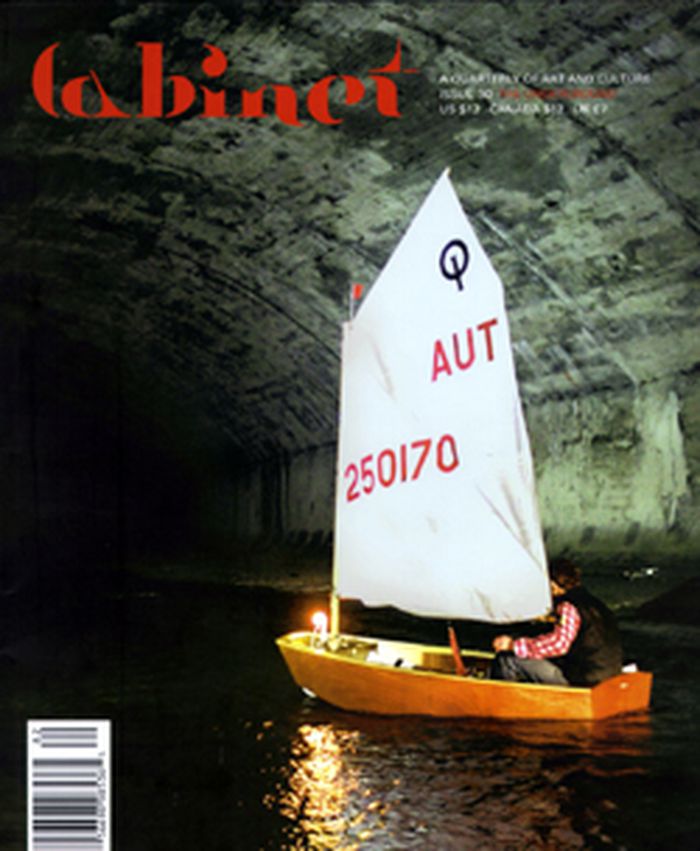
Site of hidden infrastructure, source of material and energy, home to clandestine activity, buried landscape of darkness and silence: the physical and emotional space of the underground is at once prosaic and uncanny, rich with both functional potential and metaphorical meaning. Cabinet issue 30, with its special section on The Underground, features Irene Cheng on Thomas W. Knox's 1876 book Underground, or Life Below the Surface and the vogue for underground tourism; an interview with Michel Siffre, a scientist who spent six months isolated in utter darkness in a cave; Jeffrey Kastner on the metaphor of the mole in revolutionary texts; and essays on the evolution of the mining industry, subterranean storage and political resistance movements. Elsewhere in the issue: Christopher Turner on the history of Day-glo; Christine Wertheim on the fabricated Australian Modernist poet Ern Malley; Tirdad Zolghadr on in-flight magazines; and Moyra Davey on the color maroon. This issue also features artist projects by Josiah McElheny and San Keller.
Cabinet 30: The Underground
Actions:
Prix:
$13.00
(disponible en magasin)
Résumé:
Site of hidden infrastructure, source of material and energy, home to clandestine activity, buried landscape of darkness and silence: the physical and emotional space of the underground is at once prosaic and uncanny, rich with both functional potential and metaphorical meaning. Cabinet issue 30, with its special section on The Underground, features Irene Cheng on Thomas W. Knox's 1876 book Underground, or Life Below the Surface and the vogue for underground tourism; an interview with Michel Siffre, a scientist who spent six months isolated in utter darkness in a cave; Jeffrey Kastner on the metaphor of the mole in revolutionary texts; and essays on the evolution of the mining industry, subterranean storage and political resistance movements. Elsewhere in the issue: Christopher Turner on the history of Day-glo; Christine Wertheim on the fabricated Australian Modernist poet Ern Malley; Tirdad Zolghadr on in-flight magazines; and Moyra Davey on the color maroon. This issue also features artist projects by Josiah McElheny and San Keller.
Classification:
périodiques
périodiques
Publication:
septembre 2008, Brooklyn
septembre 2008, Brooklyn
Sujet:
Revues
Revues
Classification:
périodiques
périodiques
Actions:
Prix:
$35.00
(disponible sur commande)
Résumé:
Once there was life without books. It’s hard to imagine what that must have been like: an age of stories and knowledge of the world which stretched no farther than a day’s walk. The introduction of the written source constituted nothing less than the creation of a time and space capsule. The story, the idea, insight, knowledge were suddenly free of their messenger and(...)
$35.00
(disponible sur commande)
Résumé:
Once there was life without books. It’s hard to imagine what that must have been like: an age of stories and knowledge of the world which stretched no farther than a day’s walk. The introduction of the written source constituted nothing less than the creation of a time and space capsule. The story, the idea, insight, knowledge were suddenly free of their messenger and(...)
Titre:
Volume 15 Destination Library
Actions:
Prix:
$35.00
(disponible sur commande)
Résumé:
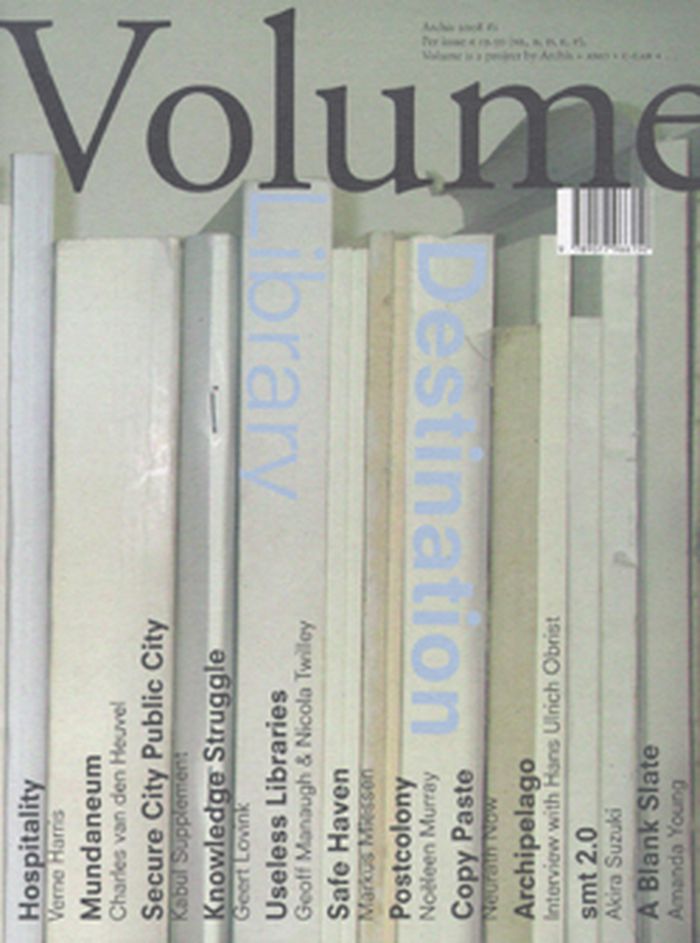
Once there was life without books. It’s hard to imagine what that must have been like: an age of stories and knowledge of the world which stretched no farther than a day’s walk. The introduction of the written source constituted nothing less than the creation of a time and space capsule. The story, the idea, insight, knowledge were suddenly free of their messenger and were all able to bridge distances, able to surface, vanish and reappear. Just as there was a time before the book, there will also be a time after it. In this issue ‘The Last Book’ project is taken up, but as to the consequences of publishing exclusively online – the loss of filters such as the publisher, editor and publication costs – we can only guess. Yet it is clear that our centuries old house of knowledge is undergoing a fundamental renovation, beginning with the solid base of the library.
Volume 15 Destination Library
Actions:
Prix:
$35.00
(disponible sur commande)
Résumé:
Once there was life without books. It’s hard to imagine what that must have been like: an age of stories and knowledge of the world which stretched no farther than a day’s walk. The introduction of the written source constituted nothing less than the creation of a time and space capsule. The story, the idea, insight, knowledge were suddenly free of their messenger and were all able to bridge distances, able to surface, vanish and reappear. Just as there was a time before the book, there will also be a time after it. In this issue ‘The Last Book’ project is taken up, but as to the consequences of publishing exclusively online – the loss of filters such as the publisher, editor and publication costs – we can only guess. Yet it is clear that our centuries old house of knowledge is undergoing a fundamental renovation, beginning with the solid base of the library.
Classification:
périodiques
périodiques
Publication:
mai 2008, Amsterdam
mai 2008, Amsterdam
Sujet:
Revues
Revues
Classification:
livres
livres
Actions:
Prix:
$30.95
(disponible sur commande)
Résumé:
Explicit sexual imagery has erupted in every medium and on every surface. While some react to it by pointing and laughing, hardly anyone has stopped to seriously consider its impact. Behind this phenomenon lies the normalization of pornography, which along with the complete turnaround in social attitudes to it, has been one of the most momentous developments in(...)
$30.95
(disponible sur commande)
Résumé:
Explicit sexual imagery has erupted in every medium and on every surface. While some react to it by pointing and laughing, hardly anyone has stopped to seriously consider its impact. Behind this phenomenon lies the normalization of pornography, which along with the complete turnaround in social attitudes to it, has been one of the most momentous developments in(...)
Titre:
Designing pornotopia : travels in visual culture
Actions:
Prix:
$30.95
(disponible sur commande)
Résumé:
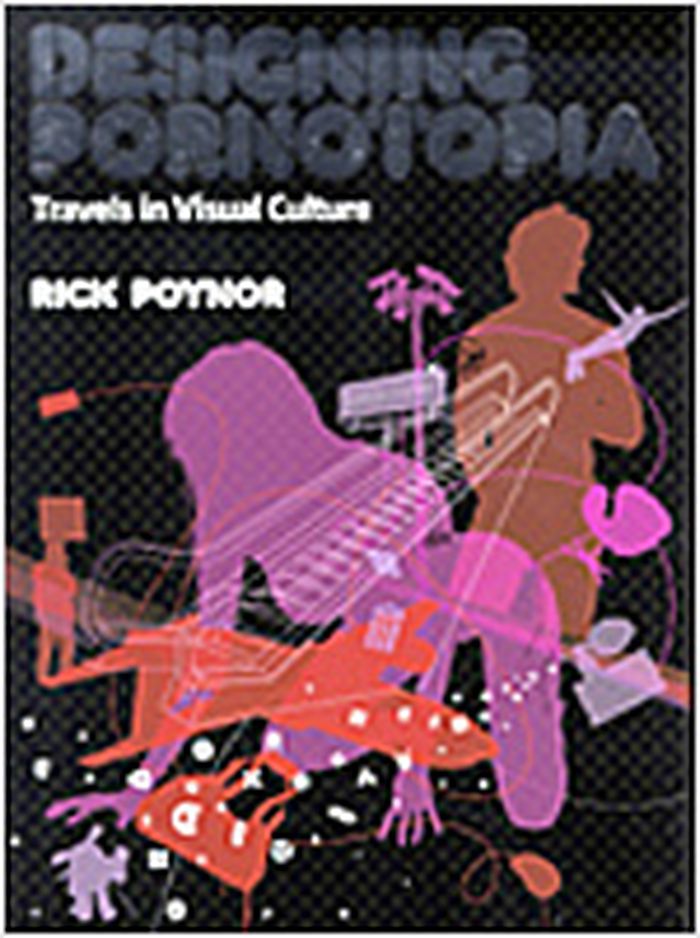
Explicit sexual imagery has erupted in every medium and on every surface. While some react to it by pointing and laughing, hardly anyone has stopped to seriously consider its impact. Behind this phenomenon lies the normalization of pornography, which along with the complete turnaround in social attitudes to it, has been one of the most momentous developments in contemporary life. In "Designing pornotopia", Rick Poynor explores recent advertising and design and the invasion of sexual imagery into everyday life, revealing how advertising walks the fine line between prudish and vulgar imagery. Developing the discussion of Poynor's previous anthology, "Obey the giant", "Designing pornotopia" covers a wide area of subjects, from magazines, billboard advertising, branding, illustration, photography, tattoos, and music graphics to architecture and includes interviews with architect Rem Koolhaas and maverick American graphic designer and performance artist Elliott Earls. Along the way Poynor reassesses the early work of Peter Saville and tracks the unstoppable rise of Stefan Sagmeister, among others.
Designing pornotopia : travels in visual culture
Actions:
Prix:
$30.95
(disponible sur commande)
Résumé:
Explicit sexual imagery has erupted in every medium and on every surface. While some react to it by pointing and laughing, hardly anyone has stopped to seriously consider its impact. Behind this phenomenon lies the normalization of pornography, which along with the complete turnaround in social attitudes to it, has been one of the most momentous developments in contemporary life. In "Designing pornotopia", Rick Poynor explores recent advertising and design and the invasion of sexual imagery into everyday life, revealing how advertising walks the fine line between prudish and vulgar imagery. Developing the discussion of Poynor's previous anthology, "Obey the giant", "Designing pornotopia" covers a wide area of subjects, from magazines, billboard advertising, branding, illustration, photography, tattoos, and music graphics to architecture and includes interviews with architect Rem Koolhaas and maverick American graphic designer and performance artist Elliott Earls. Along the way Poynor reassesses the early work of Peter Saville and tracks the unstoppable rise of Stefan Sagmeister, among others.
Classification:
livres
livres
Publication:
août 2006, New York
août 2006, New York
Classification:
livres
livres
Actions:
Prix:
$45.95
(disponible sur commande)
Résumé:
Partout sur la surface de la terre, la culture matérielle et les représentations des hommes ont marché d’un même pas pour aménager les terroirs, structurer les espaces et donner jour à une architecture. Par leur nombre encore réduit comme par la limitation de leurs moyens techniques, les groupes humains qui se sont succédé sur la terre ont marqué l’espace, rares sont(...)
$45.95
(disponible sur commande)
Résumé:
Partout sur la surface de la terre, la culture matérielle et les représentations des hommes ont marché d’un même pas pour aménager les terroirs, structurer les espaces et donner jour à une architecture. Par leur nombre encore réduit comme par la limitation de leurs moyens techniques, les groupes humains qui se sont succédé sur la terre ont marqué l’espace, rares sont(...)
Titre:
Paysage modes d'emploi : pour une histoire des cultures de l'aménagement
Actions:
Prix:
$45.95
(disponible sur commande)
Résumé:
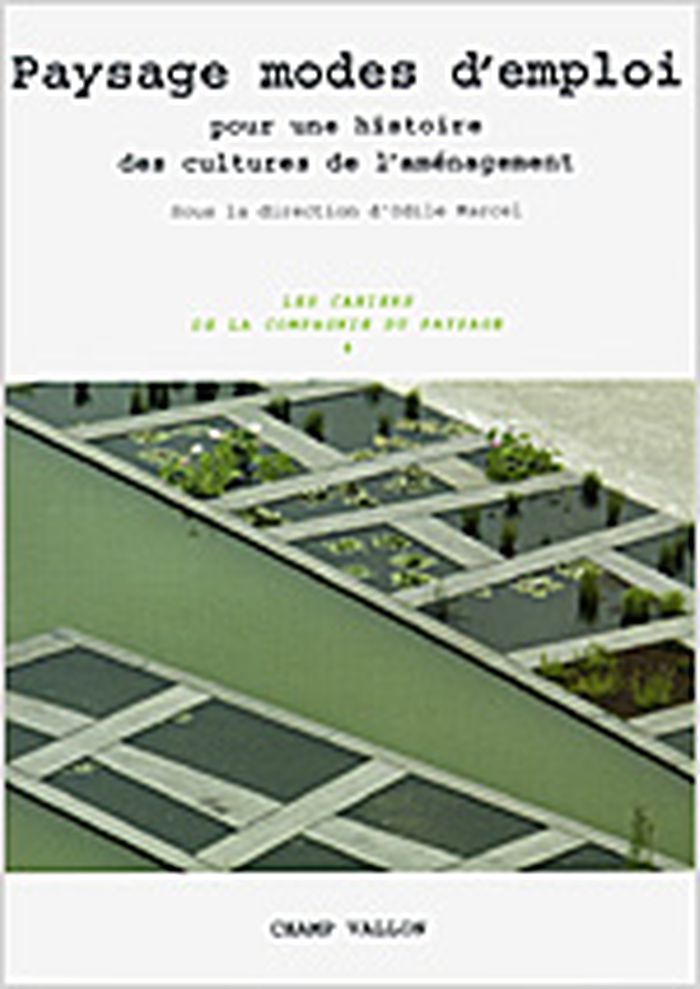
Partout sur la surface de la terre, la culture matérielle et les représentations des hommes ont marché d’un même pas pour aménager les terroirs, structurer les espaces et donner jour à une architecture. Par leur nombre encore réduit comme par la limitation de leurs moyens techniques, les groupes humains qui se sont succédé sur la terre ont marqué l’espace, rares sont ceux qui auront dévasté leur territoire au point de menacer la vie autrement qu’à une échelle locale. Emblème des multiples attentes de nos sociétés, la catégorie de paysage pose qu’il est temps que l’anthropisation généralisée du milieu terrestre se fasse sous le signe d’une culture de l’aménagement, c’est-à-dire d’un projet concerté équilibrant de façon prudente l’urgence du besoin avec la limite des ressources et se souciant de leur juste répartition. Les beaux paysages de demain sauront-ils donner une mesure à l’instinct de prédation aussi bien qu’à l’envie du futile, incarneront-ils une responsabilité face à la question des valeurs?
Paysage modes d'emploi : pour une histoire des cultures de l'aménagement
Actions:
Prix:
$45.95
(disponible sur commande)
Résumé:
Partout sur la surface de la terre, la culture matérielle et les représentations des hommes ont marché d’un même pas pour aménager les terroirs, structurer les espaces et donner jour à une architecture. Par leur nombre encore réduit comme par la limitation de leurs moyens techniques, les groupes humains qui se sont succédé sur la terre ont marqué l’espace, rares sont ceux qui auront dévasté leur territoire au point de menacer la vie autrement qu’à une échelle locale. Emblème des multiples attentes de nos sociétés, la catégorie de paysage pose qu’il est temps que l’anthropisation généralisée du milieu terrestre se fasse sous le signe d’une culture de l’aménagement, c’est-à-dire d’un projet concerté équilibrant de façon prudente l’urgence du besoin avec la limite des ressources et se souciant de leur juste répartition. Les beaux paysages de demain sauront-ils donner une mesure à l’instinct de prédation aussi bien qu’à l’envie du futile, incarneront-ils une responsabilité face à la question des valeurs?
Classification:
livres
livres
Publication:
juin 2006, Seyssel
juin 2006, Seyssel
Sujet:
Théorie du paysage
Théorie du paysage
Classification:
périodiques
périodiques
Actions:
Prix:
$52.00
(disponible en magasin)
Résumé:
When Ansgar Schulz first visits Adorf, a small town in Saxony, it is raining. For centuries, freshwater pearl mussels have been fished from the Elster river here; a local heritage museum earmarked for expansion documents their rich history. Watching rainwater trace its way across the existing roofs, the architect imagines the same for the facade of the new building. With(...)
$52.00
(disponible en magasin)
Résumé:
When Ansgar Schulz first visits Adorf, a small town in Saxony, it is raining. For centuries, freshwater pearl mussels have been fished from the Elster river here; a local heritage museum earmarked for expansion documents their rich history. Watching rainwater trace its way across the existing roofs, the architect imagines the same for the facade of the new building. With(...)
Titre:
Detail 7/8 2026: Solid construction
Actions:
Prix:
$52.00
(disponible en magasin)
Résumé:
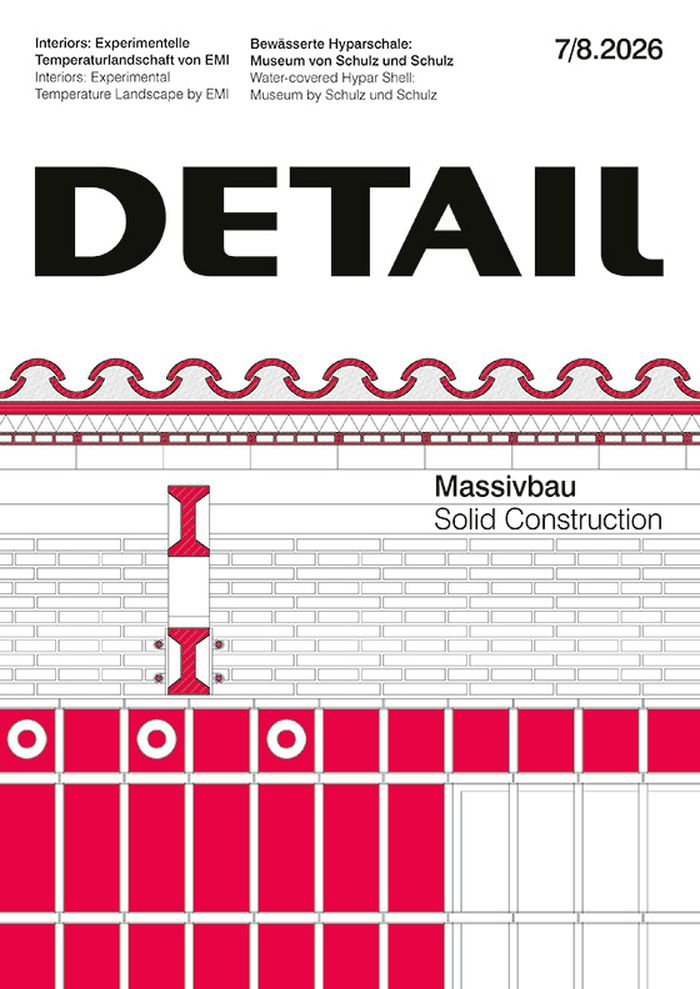
When Ansgar Schulz first visits Adorf, a small town in Saxony, it is raining. For centuries, freshwater pearl mussels have been fished from the Elster river here; a local heritage museum earmarked for expansion documents their rich history. Watching rainwater trace its way across the existing roofs, the architect imagines the same for the facade of the new building. With its double-curved canopy, the Mother-of-Pearl Museum connects two existing structures. Clad in waterproof concrete, the building lets water run quietly down its surface – as if it were always meant to. Outside, the performative detail becomes a sensory echo of the pearl mussels inside. Solid construction is associated with weight, permanence, and immobility. This issue argues otherwise. Hand-pressed bricks, wax-treated rammed earth composed of demolition material, cyclopean concrete from limestone and rubble, hemp lime as a renewable material for the future – each detail explores what masonry can do when it is rethought. Does the heaviest building material have the lightest future?
Detail 7/8 2026: Solid construction
Actions:
Prix:
$52.00
(disponible en magasin)
Résumé:
When Ansgar Schulz first visits Adorf, a small town in Saxony, it is raining. For centuries, freshwater pearl mussels have been fished from the Elster river here; a local heritage museum earmarked for expansion documents their rich history. Watching rainwater trace its way across the existing roofs, the architect imagines the same for the facade of the new building. With its double-curved canopy, the Mother-of-Pearl Museum connects two existing structures. Clad in waterproof concrete, the building lets water run quietly down its surface – as if it were always meant to. Outside, the performative detail becomes a sensory echo of the pearl mussels inside. Solid construction is associated with weight, permanence, and immobility. This issue argues otherwise. Hand-pressed bricks, wax-treated rammed earth composed of demolition material, cyclopean concrete from limestone and rubble, hemp lime as a renewable material for the future – each detail explores what masonry can do when it is rethought. Does the heaviest building material have the lightest future?
Classification:
périodiques
périodiques
Publication:
juillet 2026
juillet 2026
Sujet:
Revues
Revues
Classification:
livres
livres

Actions:
Prix:
$69.95
(disponible sur commande)
Résumé:
Depuis la découverte de la caverne, les hommes n’ont cessé d’utiliser les formations géologiques qu’offre notre planète. Il a fallu cependant attendre une date récente pour que des avancées dans le domaine de l’ingénierie structurelle permettent de considérer la surface de la terre comme un élément architectural à part entière. La prise de conscience de la raréfaction des(...)
$69.95
(disponible sur commande)
Résumé:
Depuis la découverte de la caverne, les hommes n’ont cessé d’utiliser les formations géologiques qu’offre notre planète. Il a fallu cependant attendre une date récente pour que des avancées dans le domaine de l’ingénierie structurelle permettent de considérer la surface de la terre comme un élément architectural à part entière. La prise de conscience de la raréfaction des(...)
Titre:
Lignes d'horizon : l'architecture et son site
Actions:
Prix:
$69.95
(disponible sur commande)
Résumé:
Depuis la découverte de la caverne, les hommes n’ont cessé d’utiliser les formations géologiques qu’offre notre planète. Il a fallu cependant attendre une date récente pour que des avancées dans le domaine de l’ingénierie structurelle permettent de considérer la surface de la terre comme un élément architectural à part entière. La prise de conscience de la raréfaction des ressources naturelles et l’influence grandissante des architectes paysagistes ont également incité certains créateurs parmi les plus prestigieux à inventer des formes qui s’intègrent à la topographie naturelle d’un lieu, la déploient, la subliment et à créer ce que l’on pourrait appeler des gratteterre en opposition aux gratte-ciel. Du terminal de tramway de Zaha Hadid en France à la bibliothèque d’Alexandrie de Snøhetta en Egypte, de la maison nichée dans une colline du Pays de Galles de Future Systems au Spencer Theatre d’Antoine Predock aux Etats- Unis, les cinquante projets présentés dans ce livre révèlent l’importance de cette nouvelle voie architecturale.
Lignes d'horizon : l'architecture et son site
Actions:
Prix:
$69.95
(disponible sur commande)
Résumé:
Depuis la découverte de la caverne, les hommes n’ont cessé d’utiliser les formations géologiques qu’offre notre planète. Il a fallu cependant attendre une date récente pour que des avancées dans le domaine de l’ingénierie structurelle permettent de considérer la surface de la terre comme un élément architectural à part entière. La prise de conscience de la raréfaction des ressources naturelles et l’influence grandissante des architectes paysagistes ont également incité certains créateurs parmi les plus prestigieux à inventer des formes qui s’intègrent à la topographie naturelle d’un lieu, la déploient, la subliment et à créer ce que l’on pourrait appeler des gratteterre en opposition aux gratte-ciel. Du terminal de tramway de Zaha Hadid en France à la bibliothèque d’Alexandrie de Snøhetta en Egypte, de la maison nichée dans une colline du Pays de Galles de Future Systems au Spencer Theatre d’Antoine Predock aux Etats- Unis, les cinquante projets présentés dans ce livre révèlent l’importance de cette nouvelle voie architecturale.
Classification:
livres
livres
Publication:
novembre 2002, Paris
novembre 2002, Paris
Classification:
livres
livres
Actions:
Prix:
$71.95
(disponible en magasin)
Résumé:
Detailing architect Florian Beigel's prize-winning land reclamation project, this book is a study of urban planning typology and the derivation of an urban land-use concept plan based thereon including solutions to environmental issues. Florian Beigel and the Architecture Research Unit were invited by the Provincial Government of Jeollabukdo, Korea in 2008, along with(...)
$71.95
(disponible en magasin)
Résumé:
Detailing architect Florian Beigel's prize-winning land reclamation project, this book is a study of urban planning typology and the derivation of an urban land-use concept plan based thereon including solutions to environmental issues. Florian Beigel and the Architecture Research Unit were invited by the Provincial Government of Jeollabukdo, Korea in 2008, along with(...)
Titre:
Architecture as city: Saemangeum island city
Actions:
Prix:
$71.95
(disponible en magasin)
Résumé:
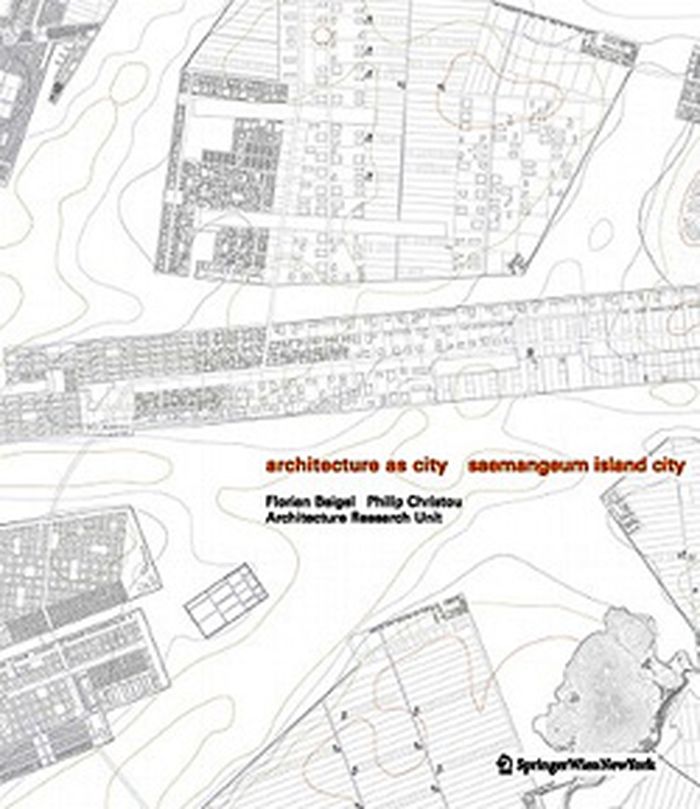
Detailing architect Florian Beigel's prize-winning land reclamation project, this book is a study of urban planning typology and the derivation of an urban land-use concept plan based thereon including solutions to environmental issues. Florian Beigel and the Architecture Research Unit were invited by the Provincial Government of Jeollabukdo, Korea in 2008, along with seven other teams to participate in an international ideas competition to develop urban design proposals for the Saemangeum land reclamation project. Saemangeum Island City comprises a surface area of some 400 km^2, more than a quarter of the area of Greater London (which is approx. 1.570 km^2). The design project by ARU / London Metropolitan University was declared one of three winning competition proposals and selected to be part of the main exhibition at the 2010 Venice Biennale. The urban land-use concept plan begins with a phased landscape infrastructure design of 8 new islands with a highly remarkable solution as to environmental issues.
Architecture as city: Saemangeum island city
Actions:
Prix:
$71.95
(disponible en magasin)
Résumé:
Detailing architect Florian Beigel's prize-winning land reclamation project, this book is a study of urban planning typology and the derivation of an urban land-use concept plan based thereon including solutions to environmental issues. Florian Beigel and the Architecture Research Unit were invited by the Provincial Government of Jeollabukdo, Korea in 2008, along with seven other teams to participate in an international ideas competition to develop urban design proposals for the Saemangeum land reclamation project. Saemangeum Island City comprises a surface area of some 400 km^2, more than a quarter of the area of Greater London (which is approx. 1.570 km^2). The design project by ARU / London Metropolitan University was declared one of three winning competition proposals and selected to be part of the main exhibition at the 2010 Venice Biennale. The urban land-use concept plan begins with a phased landscape infrastructure design of 8 new islands with a highly remarkable solution as to environmental issues.
Classification:
livres
livres
Publication:
octobre 2010
octobre 2010
Sujet:
Paysages urbains
Paysages urbains
Classification:
livres
livres
Titre:
Transbordeur, no. 3
Transbordeur, no. 3
Actions:
Prix:
$54.95
(disponible sur commande)
Résumé:
Durant plusieurs décennies et avant l’avènement de l’électronique, la photographie a suscité les espoirs d’une relève du papier comme support d’accumulation et de diffusion du savoir. Dans ce mouvement d’accélération et d’automatisation de sa diffusion, la photographie a été amenée à dépasser l’opération élémentaire d’enregistrement mimétique du monde pour devenir un(...)
$54.95
(disponible sur commande)
Résumé:
Durant plusieurs décennies et avant l’avènement de l’électronique, la photographie a suscité les espoirs d’une relève du papier comme support d’accumulation et de diffusion du savoir. Dans ce mouvement d’accélération et d’automatisation de sa diffusion, la photographie a été amenée à dépasser l’opération élémentaire d’enregistrement mimétique du monde pour devenir un(...)
Titre:
Transbordeur, no. 3
Actions:
Prix:
$54.95
(disponible sur commande)
Résumé:
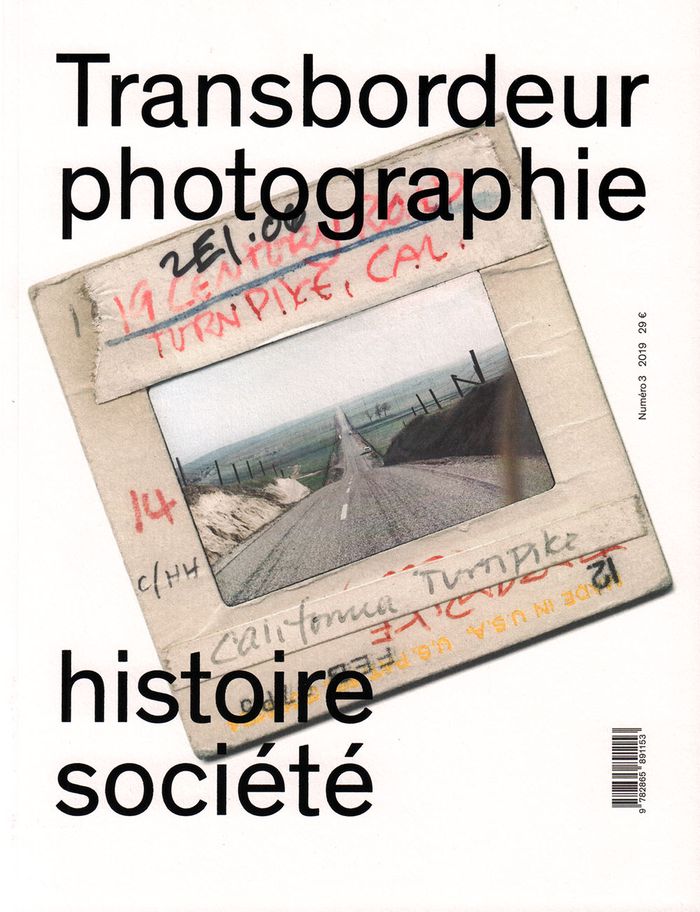
Durant plusieurs décennies et avant l’avènement de l’électronique, la photographie a suscité les espoirs d’une relève du papier comme support d’accumulation et de diffusion du savoir. Dans ce mouvement d’accélération et d’automatisation de sa diffusion, la photographie a été amenée à dépasser l’opération élémentaire d’enregistrement mimétique du monde pour devenir un médium hybride englobant à la fois l’enregistrement de l’image et le traitement des données relatives à celle-ci. Son statut s’en est trouvé profondément redéfini : de surface servant de support matériel à l’image latente, la photographie est devenue interface à travers laquelle cette même image se trouve non seulement fixée, mais encore augmentée de toutes sortes de renseignements – chronologiques, géographiques, techniques – qui lui permettent de se donner à voir comme information. Revenir sur son histoire oubliée, « chaînon manquant » entre l’ère du livre et la culture numérique, s’avère essentiel pour saisir les fondements de la « société de l’information » contemporaine et des digital humanities.
Transbordeur, no. 3
Actions:
Prix:
$54.95
(disponible sur commande)
Résumé:
Durant plusieurs décennies et avant l’avènement de l’électronique, la photographie a suscité les espoirs d’une relève du papier comme support d’accumulation et de diffusion du savoir. Dans ce mouvement d’accélération et d’automatisation de sa diffusion, la photographie a été amenée à dépasser l’opération élémentaire d’enregistrement mimétique du monde pour devenir un médium hybride englobant à la fois l’enregistrement de l’image et le traitement des données relatives à celle-ci. Son statut s’en est trouvé profondément redéfini : de surface servant de support matériel à l’image latente, la photographie est devenue interface à travers laquelle cette même image se trouve non seulement fixée, mais encore augmentée de toutes sortes de renseignements – chronologiques, géographiques, techniques – qui lui permettent de se donner à voir comme information. Revenir sur son histoire oubliée, « chaînon manquant » entre l’ère du livre et la culture numérique, s’avère essentiel pour saisir les fondements de la « société de l’information » contemporaine et des digital humanities.
Classification:
livres
livres
Publication:
mars 2019
mars 2019
Sujet:
Théorie de la photographie
Théorie de la photographie
Classification:
livres
livres
Titre:
Shomei Tomatsu
Shomei Tomatsu
Actions:
Prix:
$92.50
(disponible sur commande)
Résumé:
Casting a cold eye on postwar Japan, the raw, grainy and impressionistic photography of Shomei Tomatsu practically defined Japanese photography in the second half of the 20th century, greatly influencing Daido Moriyama, Nobuyoshi Araki and Takuma Nakihara. His best-known images are his portraits of people and street scenes from the 1950s, when the country struggled to(...)
$92.50
(disponible sur commande)
Résumé:
Casting a cold eye on postwar Japan, the raw, grainy and impressionistic photography of Shomei Tomatsu practically defined Japanese photography in the second half of the 20th century, greatly influencing Daido Moriyama, Nobuyoshi Araki and Takuma Nakihara. His best-known images are his portraits of people and street scenes from the 1950s, when the country struggled to(...)
Titre:
Shomei Tomatsu
Actions:
Prix:
$92.50
(disponible sur commande)
Résumé:
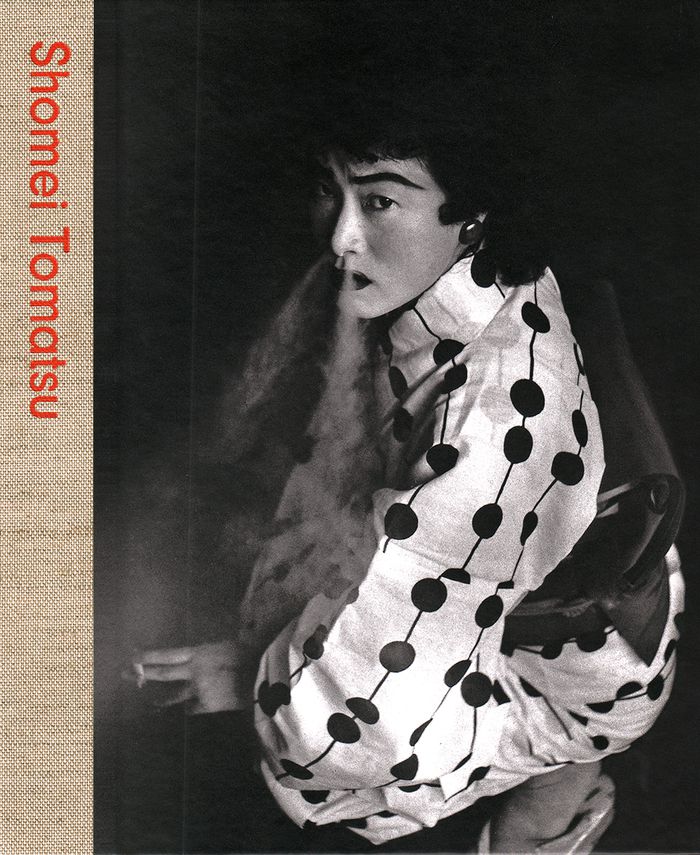
Casting a cold eye on postwar Japan, the raw, grainy and impressionistic photography of Shomei Tomatsu practically defined Japanese photography in the second half of the 20th century, greatly influencing Daido Moriyama, Nobuyoshi Araki and Takuma Nakihara. His best-known images are his portraits of people and street scenes from the 1950s, when the country struggled to recover from World War II and US military presence was ubiquitous; his photographs of 1960s Japan; and throughout his career, his images of Okinawa, where he died in 2012. Tomatsu's most famous single photograph is probably Melted Bottle, Nagasaki, 1961, which depicts a beer bottle rendered grotesquely biomorphic by the nuclear blast that devastated Nagasaki on August 9, 1945. The American photographer and writer Leo Rubinfien described Tomatsu's Nagasaki images as "sad, haggard facts," noting that "beneath the surface there was a grief so great that any overt expression of sympathy would have been an insult."
Shomei Tomatsu
Actions:
Prix:
$92.50
(disponible sur commande)
Résumé:
Casting a cold eye on postwar Japan, the raw, grainy and impressionistic photography of Shomei Tomatsu practically defined Japanese photography in the second half of the 20th century, greatly influencing Daido Moriyama, Nobuyoshi Araki and Takuma Nakihara. His best-known images are his portraits of people and street scenes from the 1950s, when the country struggled to recover from World War II and US military presence was ubiquitous; his photographs of 1960s Japan; and throughout his career, his images of Okinawa, where he died in 2012. Tomatsu's most famous single photograph is probably Melted Bottle, Nagasaki, 1961, which depicts a beer bottle rendered grotesquely biomorphic by the nuclear blast that devastated Nagasaki on August 9, 1945. The American photographer and writer Leo Rubinfien described Tomatsu's Nagasaki images as "sad, haggard facts," noting that "beneath the surface there was a grief so great that any overt expression of sympathy would have been an insult."
Classification:
livres
livres
Publication:
septembre 2018
septembre 2018
Sujet:
Monographies photo
Monographies photo
Classification:
périodiques
périodiques
Titre:
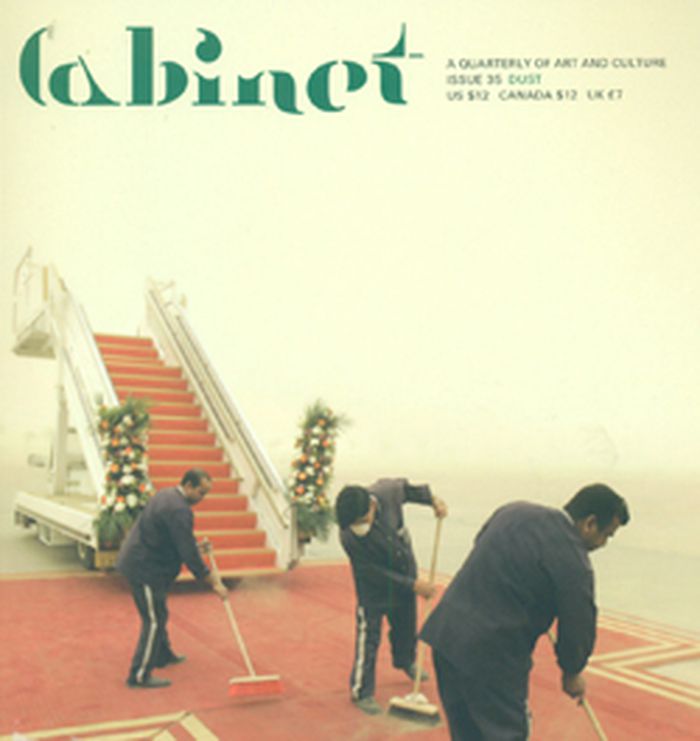
Cabinet 35: dust
Cabinet 35: dust
Actions:
Prix:
$14.00
(disponible en magasin)
Résumé:
Dust is everywhere, a perennial presence in the corners of culture. Dust can be deathly (domestic dust is mostly desiccated human skin), deadly (poisonous dust is the product of industry and war) or beautiful (the dusty matte surface of make-up, a light dusting applied by the confectioner, glittering motes caught in a sunbeam). In British English, "dust" is another name(...)
$14.00
(disponible en magasin)
Résumé:
Dust is everywhere, a perennial presence in the corners of culture. Dust can be deathly (domestic dust is mostly desiccated human skin), deadly (poisonous dust is the product of industry and war) or beautiful (the dusty matte surface of make-up, a light dusting applied by the confectioner, glittering motes caught in a sunbeam). In British English, "dust" is another name(...)
Sujet:
Revues
Revues
Publication:
décembre 2009
décembre 2009
Titre:
Cabinet 35: dust
Actions:
Prix:
$14.00
(disponible en magasin)
Résumé:
Dust is everywhere, a perennial presence in the corners of culture. Dust can be deathly (domestic dust is mostly desiccated human skin), deadly (poisonous dust is the product of industry and war) or beautiful (the dusty matte surface of make-up, a light dusting applied by the confectioner, glittering motes caught in a sunbeam). In British English, "dust" is another name for dirt, or matter in the wrong place, implying that it can be moved from one spot to another, but never--as with matter or metaphor--completely eradicated. Cabinet 35 examines dust's ubiquity. Features include Steven Connor on the manifold forms and patterns of magic dust; Brian Dillon on Proust's vacuum cleaner; and Valerie Smith and Matt Mullican on marble dust drawings. Elsewhere in the issue, Steve Reinke catalogues untimely deaths; Helen Polson muses over the fate of lost teeth; Jeff Dolven reviews Conlon Nancarrow's compositions for musical machines; and Margaret Wertheim takes on the mathematical structure known as E8.
Cabinet 35: dust
Actions:
Prix:
$14.00
(disponible en magasin)
Résumé:
Dust is everywhere, a perennial presence in the corners of culture. Dust can be deathly (domestic dust is mostly desiccated human skin), deadly (poisonous dust is the product of industry and war) or beautiful (the dusty matte surface of make-up, a light dusting applied by the confectioner, glittering motes caught in a sunbeam). In British English, "dust" is another name for dirt, or matter in the wrong place, implying that it can be moved from one spot to another, but never--as with matter or metaphor--completely eradicated. Cabinet 35 examines dust's ubiquity. Features include Steven Connor on the manifold forms and patterns of magic dust; Brian Dillon on Proust's vacuum cleaner; and Valerie Smith and Matt Mullican on marble dust drawings. Elsewhere in the issue, Steve Reinke catalogues untimely deaths; Helen Polson muses over the fate of lost teeth; Jeff Dolven reviews Conlon Nancarrow's compositions for musical machines; and Margaret Wertheim takes on the mathematical structure known as E8.
Classification:
périodiques
périodiques
Publication:
décembre 2009
décembre 2009
Sujet:
Revues
Revues


