


33494 Résultats
Classification:
événements
événements
Titre:
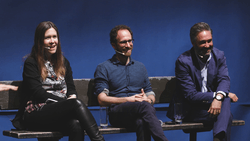
À bas les parcs?
À bas les parcs?
Actions:
Description:
Les parcs sont-ils néfastes ? Ces bouts de terrain et maigres plans d’eau que nous séquestrons répondent à un besoin confus de « nature ». Ils contribuent sans doute à notre bonne santé, mais ne servent-ils pas aussi à excuser nos mauvaises habitudes? Les parcs ne sont pas anodins. Dans les villes, les parcs sont des actifs immobiliers et des « commodités » urbaines(...)
Les parcs sont-ils néfastes ? Ces bouts de terrain et maigres plans d’eau que nous séquestrons répondent à un besoin confus de « nature ». Ils contribuent sans doute à notre bonne santé, mais ne servent-ils pas aussi à excuser nos mauvaises habitudes? Les parcs ne sont pas anodins. Dans les villes, les parcs sont des actifs immobiliers et des « commodités » urbaines(...)
Date:
25 mai 2017
25 mai 2017
Titre:
À bas les parcs?
Actions:
Description:
Les parcs sont-ils néfastes ? Ces bouts de terrain et maigres plans d’eau que nous séquestrons répondent à un besoin confus de « nature ». Ils contribuent sans doute à notre bonne santé, mais ne servent-ils pas aussi à excuser nos mauvaises habitudes? Les parcs ne sont pas anodins. Dans les villes, les parcs sont des actifs immobiliers et des « commodités » urbaines(...)
À bas les parcs?
Actions:
Description:
Les parcs sont-ils néfastes ? Ces bouts de terrain et maigres plans d’eau que nous séquestrons répondent à un besoin confus de « nature ». Ils contribuent sans doute à notre bonne santé, mais ne servent-ils pas aussi à excuser nos mauvaises habitudes? Les parcs ne sont pas anodins. Dans les villes, les parcs sont des actifs immobiliers et des « commodités » urbaines(...)
Classification:
événements
événements
Date:
25 mai 2017
25 mai 2017
Classification:
recherche
recherche
Titre:
Chercheurs en résidence 2005
Chercheurs en résidence 2005
Actions:
Description:
Paolo Amaldi, Université catholique de Louvain (UCL), Louvain-La-Neuve, Belgique Sujet : Analyse du rapport entre espace architectural et instrument de représentation dans l’oeuvre de Mies van der Rohe Jean-François Bédard, Paris Program, Columbia University, New York, États-Unis Sujet : Honnêteté and the Grotesque: a Study of the Album by Gilles-Marie Oppenord(...)
Paolo Amaldi, Université catholique de Louvain (UCL), Louvain-La-Neuve, Belgique Sujet : Analyse du rapport entre espace architectural et instrument de représentation dans l’oeuvre de Mies van der Rohe Jean-François Bédard, Paris Program, Columbia University, New York, États-Unis Sujet : Honnêteté and the Grotesque: a Study of the Album by Gilles-Marie Oppenord(...)
Date:
3 janvier 2005 au 30 septembre 2005
3 janvier 2005 au 30 septembre 2005
Titre:
Chercheurs en résidence 2005
Actions:
Description:
Paolo Amaldi, Université catholique de Louvain (UCL), Louvain-La-Neuve, Belgique Sujet : Analyse du rapport entre espace architectural et instrument de représentation dans l’oeuvre de Mies van der Rohe Jean-François Bédard, Paris Program, Columbia University, New York, États-Unis Sujet : Honnêteté and the Grotesque: a Study of the Album by Gilles-Marie Oppenord(...)
Chercheurs en résidence 2005
Actions:
Description:
Paolo Amaldi, Université catholique de Louvain (UCL), Louvain-La-Neuve, Belgique Sujet : Analyse du rapport entre espace architectural et instrument de représentation dans l’oeuvre de Mies van der Rohe Jean-François Bédard, Paris Program, Columbia University, New York, États-Unis Sujet : Honnêteté and the Grotesque: a Study of the Album by Gilles-Marie Oppenord(...)
Classification:
recherche
recherche
Date:
3 janvier 2005 au
30 septembre 2005
3 janvier 2005 au
30 septembre 2005
Niveau de description archivistique:
Projet
Projet
Actions:
Numéro de référence:
CI005.S1.1936.PR3
Description:
Construction for the transatlantic ocean liner, S.S. Nieuw Amsterdam – an initiative of the Holland-America Line – began in 1936 and was completed by May 1938. After the death of a leading figure of the Brinkman & Van der Vlugt architectural firm, the director of the Holland-American Line contracted the interior design to several architects, each working in partnership with artists. Oud was responsible for designing the First Class Swimming Pool and Second Class Tourist Lounge and Smoking Room. Oud outfitted the Second Class lounge with a rug, wooden furniture and a parquet dance floor; at one end of the room he set a stage, grand piano, and projection booth. The Smoking Room featured cork floors, panelled walls and a long reading table. The Smoking Room featured club chairs in brown leather and wooden chairs (Taverne et al. 2001, 389-392). Project series includes plans for the Tourist Lounge, and photographs of its interior.
CI005.S1.1936.PR3
Description:
Construction for the transatlantic ocean liner, S.S. Nieuw Amsterdam – an initiative of the Holland-America Line – began in 1936 and was completed by May 1938. After the death of a leading figure of the Brinkman & Van der Vlugt architectural firm, the director of the Holland-American Line contracted the interior design to several architects, each working in partnership with artists. Oud was responsible for designing the First Class Swimming Pool and Second Class Tourist Lounge and Smoking Room. Oud outfitted the Second Class lounge with a rug, wooden furniture and a parquet dance floor; at one end of the room he set a stage, grand piano, and projection booth. The Smoking Room featured cork floors, panelled walls and a long reading table. The Smoking Room featured club chairs in brown leather and wooden chairs (Taverne et al. 2001, 389-392). Project series includes plans for the Tourist Lounge, and photographs of its interior.
Personnes et institutions:
Date:
1936-1938
1936-1938
Titre:
Interior of the S.S. Nieuw Amsterdam (1936-1938)
Actions:
CI005.S1.1936.PR3
Description:
Construction for the transatlantic ocean liner, S.S. Nieuw Amsterdam – an initiative of the Holland-America Line – began in 1936 and was completed by May 1938. After the death of a leading figure of the Brinkman & Van der Vlugt architectural firm, the director of the Holland-American Line contracted the interior design to several architects, each working in partnership with artists. Oud was responsible for designing the First Class Swimming Pool and Second Class Tourist Lounge and Smoking Room. Oud outfitted the Second Class lounge with a rug, wooden furniture and a parquet dance floor; at one end of the room he set a stage, grand piano, and projection booth. The Smoking Room featured cork floors, panelled walls and a long reading table. The Smoking Room featured club chairs in brown leather and wooden chairs (Taverne et al. 2001, 389-392). Project series includes plans for the Tourist Lounge, and photographs of its interior.
Interior of the S.S. Nieuw Amsterdam (1936-1938)
Actions:
CI005.S1.1936.PR3
Description:
Construction for the transatlantic ocean liner, S.S. Nieuw Amsterdam – an initiative of the Holland-America Line – began in 1936 and was completed by May 1938. After the death of a leading figure of the Brinkman & Van der Vlugt architectural firm, the director of the Holland-American Line contracted the interior design to several architects, each working in partnership with artists. Oud was responsible for designing the First Class Swimming Pool and Second Class Tourist Lounge and Smoking Room. Oud outfitted the Second Class lounge with a rug, wooden furniture and a parquet dance floor; at one end of the room he set a stage, grand piano, and projection booth. The Smoking Room featured cork floors, panelled walls and a long reading table. The Smoking Room featured club chairs in brown leather and wooden chairs (Taverne et al. 2001, 389-392). Project series includes plans for the Tourist Lounge, and photographs of its interior.
Niveau de description archivistique:
project
project
Date:
1936-1938
1936-1938
Personnes et institutions:
Niveau de description archivistique:
Projet
Projet
Actions:
Numéro de référence:
CI005.S1.1937.PR1
Description:
In 1937, the Bataafsche Import Maatschappij (The Batavian Import Company), established a building programme for new headquarters within The Hague. The company wished to create office space for 600 employees. The company invited competition entries from four architects, including Oud. Oud's design was approved in 1939 and included a rectangular block of rooms oriented around a central corridor with office spaces separated by partitions. The building was surrounded by a garden. Oud also created designs for a possible future expansion and later designed office furnishings. While construction was interrupted by the war, the company proceeded with minimum construction until its restoration and continued expansion. Oud assisted with restoration after its bombing by Allied forces in 1945. The erected building was criticised for its traditional decorative patterns (Taverne et al. 2001, 411-414). Project series includes plans for the Shell Building, as well as a photograph of the building facades and one of the furniture.
CI005.S1.1937.PR1
Description:
In 1937, the Bataafsche Import Maatschappij (The Batavian Import Company), established a building programme for new headquarters within The Hague. The company wished to create office space for 600 employees. The company invited competition entries from four architects, including Oud. Oud's design was approved in 1939 and included a rectangular block of rooms oriented around a central corridor with office spaces separated by partitions. The building was surrounded by a garden. Oud also created designs for a possible future expansion and later designed office furnishings. While construction was interrupted by the war, the company proceeded with minimum construction until its restoration and continued expansion. Oud assisted with restoration after its bombing by Allied forces in 1945. The erected building was criticised for its traditional decorative patterns (Taverne et al. 2001, 411-414). Project series includes plans for the Shell Building, as well as a photograph of the building facades and one of the furniture.
Personnes et institutions:
Date:
1937-1942
1937-1942
Titre:
Head Office of the Bataafsche Import Maatschappij (Shell Building), The Hague, Netherlands (1937-1942)
Actions:
CI005.S1.1937.PR1
Description:
In 1937, the Bataafsche Import Maatschappij (The Batavian Import Company), established a building programme for new headquarters within The Hague. The company wished to create office space for 600 employees. The company invited competition entries from four architects, including Oud. Oud's design was approved in 1939 and included a rectangular block of rooms oriented around a central corridor with office spaces separated by partitions. The building was surrounded by a garden. Oud also created designs for a possible future expansion and later designed office furnishings. While construction was interrupted by the war, the company proceeded with minimum construction until its restoration and continued expansion. Oud assisted with restoration after its bombing by Allied forces in 1945. The erected building was criticised for its traditional decorative patterns (Taverne et al. 2001, 411-414). Project series includes plans for the Shell Building, as well as a photograph of the building facades and one of the furniture.
Head Office of the Bataafsche Import Maatschappij (Shell Building), The Hague, Netherlands (1937-1942)
Actions:
CI005.S1.1937.PR1
Description:
In 1937, the Bataafsche Import Maatschappij (The Batavian Import Company), established a building programme for new headquarters within The Hague. The company wished to create office space for 600 employees. The company invited competition entries from four architects, including Oud. Oud's design was approved in 1939 and included a rectangular block of rooms oriented around a central corridor with office spaces separated by partitions. The building was surrounded by a garden. Oud also created designs for a possible future expansion and later designed office furnishings. While construction was interrupted by the war, the company proceeded with minimum construction until its restoration and continued expansion. Oud assisted with restoration after its bombing by Allied forces in 1945. The erected building was criticised for its traditional decorative patterns (Taverne et al. 2001, 411-414). Project series includes plans for the Shell Building, as well as a photograph of the building facades and one of the furniture.
Niveau de description archivistique:
project
project
Date:
1937-1942
1937-1942
Personnes et institutions:
Niveau de description archivistique:
Projet
Projet
Numéro de référence:
AP144.S2.D13
Description:
File documents a project for an arts centre at Bennington College, Vermont. It was designed by the Chicago-based firm of Robertson Ward Jr., F.A.I.A. for whom Price was a consultant while he worked on other projects in Detroit (see Detroit Think Grid, 1954-1968, AP144.S2.D73). Design requirements specified that no metal or rubber materials be used, and Price collaborated on the development of custom structural wood connectors. Architectural working drawings show Phase 1 of the project for a two-storey studio (1970). Later structural drawings, created in collaboration with Chicago consulting engineers, The Engineers Collaborative, show both a visual arts building and a performing arts building. Material in this file was produced between 1970 and 1973. All drawings are stamped and signed by Robertson Ward. Jr., registered architect, State of Vermont. Information on attribution based on the content of the file and on notes by Howard Shubert, CCA Curator of Prints and Drawings, in conversation with Cedric Price. File contains working drawings.
AP144.S2.D13
Description:
File documents a project for an arts centre at Bennington College, Vermont. It was designed by the Chicago-based firm of Robertson Ward Jr., F.A.I.A. for whom Price was a consultant while he worked on other projects in Detroit (see Detroit Think Grid, 1954-1968, AP144.S2.D73). Design requirements specified that no metal or rubber materials be used, and Price collaborated on the development of custom structural wood connectors. Architectural working drawings show Phase 1 of the project for a two-storey studio (1970). Later structural drawings, created in collaboration with Chicago consulting engineers, The Engineers Collaborative, show both a visual arts building and a performing arts building. Material in this file was produced between 1970 and 1973. All drawings are stamped and signed by Robertson Ward. Jr., registered architect, State of Vermont. Information on attribution based on the content of the file and on notes by Howard Shubert, CCA Curator of Prints and Drawings, in conversation with Cedric Price. File contains working drawings.
Personnes et institutions:
Date:
1970-1973
1970-1973
Titre:
Bennington College Arts Centre
Actions:
AP144.S2.D13
Description:
File documents a project for an arts centre at Bennington College, Vermont. It was designed by the Chicago-based firm of Robertson Ward Jr., F.A.I.A. for whom Price was a consultant while he worked on other projects in Detroit (see Detroit Think Grid, 1954-1968, AP144.S2.D73). Design requirements specified that no metal or rubber materials be used, and Price collaborated on the development of custom structural wood connectors. Architectural working drawings show Phase 1 of the project for a two-storey studio (1970). Later structural drawings, created in collaboration with Chicago consulting engineers, The Engineers Collaborative, show both a visual arts building and a performing arts building. Material in this file was produced between 1970 and 1973. All drawings are stamped and signed by Robertson Ward. Jr., registered architect, State of Vermont. Information on attribution based on the content of the file and on notes by Howard Shubert, CCA Curator of Prints and Drawings, in conversation with Cedric Price. File contains working drawings.
Bennington College Arts Centre
Actions:
AP144.S2.D13
Description:
File documents a project for an arts centre at Bennington College, Vermont. It was designed by the Chicago-based firm of Robertson Ward Jr., F.A.I.A. for whom Price was a consultant while he worked on other projects in Detroit (see Detroit Think Grid, 1954-1968, AP144.S2.D73). Design requirements specified that no metal or rubber materials be used, and Price collaborated on the development of custom structural wood connectors. Architectural working drawings show Phase 1 of the project for a two-storey studio (1970). Later structural drawings, created in collaboration with Chicago consulting engineers, The Engineers Collaborative, show both a visual arts building and a performing arts building. Material in this file was produced between 1970 and 1973. All drawings are stamped and signed by Robertson Ward. Jr., registered architect, State of Vermont. Information on attribution based on the content of the file and on notes by Howard Shubert, CCA Curator of Prints and Drawings, in conversation with Cedric Price. File contains working drawings.
Niveau de description archivistique:
File 13
File 13
Date:
1970-1973
1970-1973
Personnes et institutions:
Niveau de description archivistique:
Série(s)
Série(s)
Titre:
Architectural projects
Architectural projects
Numéro de référence:
AP004.S1
Description:
The Architectural projects series documents 33 projects that reflect A.D. Thacker's work as an architect. The series primarily consist of drawings depicting structures that Thacker designed after beginning his own practice in 1926 until his death in 1938, but also includes some work from 1913. However, many of the drawings and documentation within the series are not dated. The drawings include elevation, perspective and plan proposals and occasionally occaisionally studies. In addition to the drawings, the series also contains documentation of the drawings - including reprographic copies, photographs, and some textual material. The projects are largely situated in Quebec and include locations such as Hampstead, Westmount, Kanawá:ke, Dundee, Valois, Morin Heights, Chambly, and Halifax, Nova Scotia. *CONTENT WARNING* The united church project in Kanawá:ke (AP004.S1.D4) was associated with the Federal Indian Day School system established by the Canadian government with the aid of various religious organizations. See the project series for additional information. Please take care in consulting these records and seek help when needed.
AP004.S1
Description:
The Architectural projects series documents 33 projects that reflect A.D. Thacker's work as an architect. The series primarily consist of drawings depicting structures that Thacker designed after beginning his own practice in 1926 until his death in 1938, but also includes some work from 1913. However, many of the drawings and documentation within the series are not dated. The drawings include elevation, perspective and plan proposals and occasionally occaisionally studies. In addition to the drawings, the series also contains documentation of the drawings - including reprographic copies, photographs, and some textual material. The projects are largely situated in Quebec and include locations such as Hampstead, Westmount, Kanawá:ke, Dundee, Valois, Morin Heights, Chambly, and Halifax, Nova Scotia. *CONTENT WARNING* The united church project in Kanawá:ke (AP004.S1.D4) was associated with the Federal Indian Day School system established by the Canadian government with the aid of various religious organizations. See the project series for additional information. Please take care in consulting these records and seek help when needed.
Personnes et institutions:
Date:
1913-1944
1913-1944
Titre:
Architectural projects
Actions:
AP004.S1
Description:
The Architectural projects series documents 33 projects that reflect A.D. Thacker's work as an architect. The series primarily consist of drawings depicting structures that Thacker designed after beginning his own practice in 1926 until his death in 1938, but also includes some work from 1913. However, many of the drawings and documentation within the series are not dated. The drawings include elevation, perspective and plan proposals and occasionally occaisionally studies. In addition to the drawings, the series also contains documentation of the drawings - including reprographic copies, photographs, and some textual material. The projects are largely situated in Quebec and include locations such as Hampstead, Westmount, Kanawá:ke, Dundee, Valois, Morin Heights, Chambly, and Halifax, Nova Scotia. *CONTENT WARNING* The united church project in Kanawá:ke (AP004.S1.D4) was associated with the Federal Indian Day School system established by the Canadian government with the aid of various religious organizations. See the project series for additional information. Please take care in consulting these records and seek help when needed.
Architectural projects
Actions:
AP004.S1
Description:
The Architectural projects series documents 33 projects that reflect A.D. Thacker's work as an architect. The series primarily consist of drawings depicting structures that Thacker designed after beginning his own practice in 1926 until his death in 1938, but also includes some work from 1913. However, many of the drawings and documentation within the series are not dated. The drawings include elevation, perspective and plan proposals and occasionally occaisionally studies. In addition to the drawings, the series also contains documentation of the drawings - including reprographic copies, photographs, and some textual material. The projects are largely situated in Quebec and include locations such as Hampstead, Westmount, Kanawá:ke, Dundee, Valois, Morin Heights, Chambly, and Halifax, Nova Scotia. *CONTENT WARNING* The united church project in Kanawá:ke (AP004.S1.D4) was associated with the Federal Indian Day School system established by the Canadian government with the aid of various religious organizations. See the project series for additional information. Please take care in consulting these records and seek help when needed.
Niveau de description archivistique:
Series
Series
Date:
1913-1944
1913-1944
Personnes et institutions:
Niveau de description archivistique:
Projet
Projet
Numéro de référence:
AP207.S1.1968.PR01
Description:
This project series documents Diaologo Pettena-Arnolfo, an installation conceived by Pettena in 1968 for the "Premio Masaccio" (the "Masaccio Prize") exhibition in San Giovanni Valdarno. The exhibition was presented at the Palazzo Comunale, attributed to the Renaissance architect Arnolfo di Cambio. The installation closed off all open spaces in the portico of the Palazzo Comunale to create a new exhibition space. The "Premio Masaccio" exhibition was displayed in this new temporary gallery. Pettena "used the color black inside to create an abstract environment for the exhibition works while, on the outside, he drew large, diagonal black and silvers stripes on panels, as a deliberate contrast to the old city monument". [1] The project series contains a project description in Italian, photographs of the installation seen both from the outside and inside, and a perspective drawing showing the front facade of the Palazzo Comunale. Source: [1] Marco Scotini, editor. Non-conscious architecture: Gianni Pettena, Sternberg Press, 2018, 235 pages. p. 106.
AP207.S1.1968.PR01
Description:
This project series documents Diaologo Pettena-Arnolfo, an installation conceived by Pettena in 1968 for the "Premio Masaccio" (the "Masaccio Prize") exhibition in San Giovanni Valdarno. The exhibition was presented at the Palazzo Comunale, attributed to the Renaissance architect Arnolfo di Cambio. The installation closed off all open spaces in the portico of the Palazzo Comunale to create a new exhibition space. The "Premio Masaccio" exhibition was displayed in this new temporary gallery. Pettena "used the color black inside to create an abstract environment for the exhibition works while, on the outside, he drew large, diagonal black and silvers stripes on panels, as a deliberate contrast to the old city monument". [1] The project series contains a project description in Italian, photographs of the installation seen both from the outside and inside, and a perspective drawing showing the front facade of the Palazzo Comunale. Source: [1] Marco Scotini, editor. Non-conscious architecture: Gianni Pettena, Sternberg Press, 2018, 235 pages. p. 106.
Personnes et institutions:
Date:
circa 1968-2015
circa 1968-2015
Titre:
Dialogo Pettena-Arnolfo [Pettena-Arnolfo Dialogue] (1968)
Actions:
AP207.S1.1968.PR01
Description:
This project series documents Diaologo Pettena-Arnolfo, an installation conceived by Pettena in 1968 for the "Premio Masaccio" (the "Masaccio Prize") exhibition in San Giovanni Valdarno. The exhibition was presented at the Palazzo Comunale, attributed to the Renaissance architect Arnolfo di Cambio. The installation closed off all open spaces in the portico of the Palazzo Comunale to create a new exhibition space. The "Premio Masaccio" exhibition was displayed in this new temporary gallery. Pettena "used the color black inside to create an abstract environment for the exhibition works while, on the outside, he drew large, diagonal black and silvers stripes on panels, as a deliberate contrast to the old city monument". [1] The project series contains a project description in Italian, photographs of the installation seen both from the outside and inside, and a perspective drawing showing the front facade of the Palazzo Comunale. Source: [1] Marco Scotini, editor. Non-conscious architecture: Gianni Pettena, Sternberg Press, 2018, 235 pages. p. 106.
Dialogo Pettena-Arnolfo [Pettena-Arnolfo Dialogue] (1968)
Actions:
AP207.S1.1968.PR01
Description:
This project series documents Diaologo Pettena-Arnolfo, an installation conceived by Pettena in 1968 for the "Premio Masaccio" (the "Masaccio Prize") exhibition in San Giovanni Valdarno. The exhibition was presented at the Palazzo Comunale, attributed to the Renaissance architect Arnolfo di Cambio. The installation closed off all open spaces in the portico of the Palazzo Comunale to create a new exhibition space. The "Premio Masaccio" exhibition was displayed in this new temporary gallery. Pettena "used the color black inside to create an abstract environment for the exhibition works while, on the outside, he drew large, diagonal black and silvers stripes on panels, as a deliberate contrast to the old city monument". [1] The project series contains a project description in Italian, photographs of the installation seen both from the outside and inside, and a perspective drawing showing the front facade of the Palazzo Comunale. Source: [1] Marco Scotini, editor. Non-conscious architecture: Gianni Pettena, Sternberg Press, 2018, 235 pages. p. 106.
Niveau de description archivistique:
Project
Project
Date:
circa 1968-2015
circa 1968-2015
Personnes et institutions:
Niveau de description archivistique:
Projet
Projet
Titre:
Laundry (1969)
Laundry (1969)
Numéro de référence:
AP207.S1.1969.PR02
Description:
This project series documents Pettena's installation "Laundry" realized in the context of the Campo Urbano, a series of artistic events staged during a day at the Piazza del Duomo, in the historic centre of Como, in Italy, on the 21st of September 1969. Pettena was one of the forty artists, musicians, architects and art critics invited to the event [2]. For his installation, "Pettena chose to hang out washing on clothes lines, with the aim of underlining the difference between the appearance of a city and the experience of living in it." [2]. The project series contains photographs of the installation at the Piazza del Duomo, in Como, sketches of the installation, and a project description in English and Italian. Sources: [1] Radical Pedagogies, https://radical-pedagogies.com/search-cases/i05-campo-urbano/ (last accessed 4 November 2019) [2] Gianni Pettena website, https://www.giannipettena.it/italiano/opere-1/inst-laundry-1969-1/ (last accessed 4 November 2019)
AP207.S1.1969.PR02
Description:
This project series documents Pettena's installation "Laundry" realized in the context of the Campo Urbano, a series of artistic events staged during a day at the Piazza del Duomo, in the historic centre of Como, in Italy, on the 21st of September 1969. Pettena was one of the forty artists, musicians, architects and art critics invited to the event [2]. For his installation, "Pettena chose to hang out washing on clothes lines, with the aim of underlining the difference between the appearance of a city and the experience of living in it." [2]. The project series contains photographs of the installation at the Piazza del Duomo, in Como, sketches of the installation, and a project description in English and Italian. Sources: [1] Radical Pedagogies, https://radical-pedagogies.com/search-cases/i05-campo-urbano/ (last accessed 4 November 2019) [2] Gianni Pettena website, https://www.giannipettena.it/italiano/opere-1/inst-laundry-1969-1/ (last accessed 4 November 2019)
Personnes et institutions:
Date:
circa 1969-2017
circa 1969-2017
Titre:
Laundry (1969)
Actions:
AP207.S1.1969.PR02
Description:
This project series documents Pettena's installation "Laundry" realized in the context of the Campo Urbano, a series of artistic events staged during a day at the Piazza del Duomo, in the historic centre of Como, in Italy, on the 21st of September 1969. Pettena was one of the forty artists, musicians, architects and art critics invited to the event [2]. For his installation, "Pettena chose to hang out washing on clothes lines, with the aim of underlining the difference between the appearance of a city and the experience of living in it." [2]. The project series contains photographs of the installation at the Piazza del Duomo, in Como, sketches of the installation, and a project description in English and Italian. Sources: [1] Radical Pedagogies, https://radical-pedagogies.com/search-cases/i05-campo-urbano/ (last accessed 4 November 2019) [2] Gianni Pettena website, https://www.giannipettena.it/italiano/opere-1/inst-laundry-1969-1/ (last accessed 4 November 2019)
Laundry (1969)
Actions:
AP207.S1.1969.PR02
Description:
This project series documents Pettena's installation "Laundry" realized in the context of the Campo Urbano, a series of artistic events staged during a day at the Piazza del Duomo, in the historic centre of Como, in Italy, on the 21st of September 1969. Pettena was one of the forty artists, musicians, architects and art critics invited to the event [2]. For his installation, "Pettena chose to hang out washing on clothes lines, with the aim of underlining the difference between the appearance of a city and the experience of living in it." [2]. The project series contains photographs of the installation at the Piazza del Duomo, in Como, sketches of the installation, and a project description in English and Italian. Sources: [1] Radical Pedagogies, https://radical-pedagogies.com/search-cases/i05-campo-urbano/ (last accessed 4 November 2019) [2] Gianni Pettena website, https://www.giannipettena.it/italiano/opere-1/inst-laundry-1969-1/ (last accessed 4 November 2019)
Niveau de description archivistique:
Project
Project
Date:
circa 1969-2017
circa 1969-2017
Personnes et institutions:
Niveau de description archivistique:
Sous-série
Sous-série
Numéro de référence:
AP207.S2.SS10
Description:
The sub-series documents the exhibition and the related publication "Olmsted: L'origine del parco urbano e del parco naturale contemporaneo" curated by Pettena. The exhibition was presented at the Uffizi Gallery in Florence, in 1996. The exhibition, dedicated to American landscape architect Frederick Law Olmsted, is the result of several years of Pettena's research on landscape architecture and how urban parks symbolized social changes in the second half of the 19th century. This sub-series contains research material such as notes by Pettena, information on Olmsted's landscape projects, publications on Olmsted, and leaflets and ephemera from other exhibitions or events on Olmsted. The research material also contains correspondence of Gianni Pettena with experts on Olmsted or with the Frederick Law Olmsted Association. Also included, are documents related to the planning and the production of the exhibition and the related publication, such as correspondence, exhibition programs, strategic program, summaries of the exhibition's themes, object lists, and budget and draft texts for the publication.
AP207.S2.SS10
Description:
The sub-series documents the exhibition and the related publication "Olmsted: L'origine del parco urbano e del parco naturale contemporaneo" curated by Pettena. The exhibition was presented at the Uffizi Gallery in Florence, in 1996. The exhibition, dedicated to American landscape architect Frederick Law Olmsted, is the result of several years of Pettena's research on landscape architecture and how urban parks symbolized social changes in the second half of the 19th century. This sub-series contains research material such as notes by Pettena, information on Olmsted's landscape projects, publications on Olmsted, and leaflets and ephemera from other exhibitions or events on Olmsted. The research material also contains correspondence of Gianni Pettena with experts on Olmsted or with the Frederick Law Olmsted Association. Also included, are documents related to the planning and the production of the exhibition and the related publication, such as correspondence, exhibition programs, strategic program, summaries of the exhibition's themes, object lists, and budget and draft texts for the publication.
Personnes et institutions:
Date:
1991-1996
1991-1996
Titre:
Olmsted: L'origine del parco urbano e del parco naturale contemporaneo (1996)
Actions:
AP207.S2.SS10
Description:
The sub-series documents the exhibition and the related publication "Olmsted: L'origine del parco urbano e del parco naturale contemporaneo" curated by Pettena. The exhibition was presented at the Uffizi Gallery in Florence, in 1996. The exhibition, dedicated to American landscape architect Frederick Law Olmsted, is the result of several years of Pettena's research on landscape architecture and how urban parks symbolized social changes in the second half of the 19th century. This sub-series contains research material such as notes by Pettena, information on Olmsted's landscape projects, publications on Olmsted, and leaflets and ephemera from other exhibitions or events on Olmsted. The research material also contains correspondence of Gianni Pettena with experts on Olmsted or with the Frederick Law Olmsted Association. Also included, are documents related to the planning and the production of the exhibition and the related publication, such as correspondence, exhibition programs, strategic program, summaries of the exhibition's themes, object lists, and budget and draft texts for the publication.
Olmsted: L'origine del parco urbano e del parco naturale contemporaneo (1996)
Actions:
AP207.S2.SS10
Description:
The sub-series documents the exhibition and the related publication "Olmsted: L'origine del parco urbano e del parco naturale contemporaneo" curated by Pettena. The exhibition was presented at the Uffizi Gallery in Florence, in 1996. The exhibition, dedicated to American landscape architect Frederick Law Olmsted, is the result of several years of Pettena's research on landscape architecture and how urban parks symbolized social changes in the second half of the 19th century. This sub-series contains research material such as notes by Pettena, information on Olmsted's landscape projects, publications on Olmsted, and leaflets and ephemera from other exhibitions or events on Olmsted. The research material also contains correspondence of Gianni Pettena with experts on Olmsted or with the Frederick Law Olmsted Association. Also included, are documents related to the planning and the production of the exhibition and the related publication, such as correspondence, exhibition programs, strategic program, summaries of the exhibition's themes, object lists, and budget and draft texts for the publication.
Niveau de description archivistique:
Subseries
Subseries
Date:
1991-1996
1991-1996
Personnes et institutions:
Niveau de description archivistique:
Projet
Projet
Numéro de référence:
AP178.S1.2005.PR05
Description:
This project series documents the Instalação na Exposição "Entrez Lentement" per il Salone del Mobile in Milan. While the records were held in the office’s archives this installation was assigned the label "outro" in place of the usual project number, to designate that it was work done for an exhibition. The office assigned the date 2005 for this installation. This project consisted of an exhibition installation at the 2005 edition of the famed Salone del Mobile Milano (Milan Furniture Fair). The Salone del Mobile exhibition, entitled "Entrez Lentement," invited eight architects to build installations related to famous architectural projects. Siza's work spoke to Oscar Neimeyer's personal home, Casa das Canoas in Rio de Janeiro. He designed two organic white forms and a curved yellow chaise lounge that related to the curved forms present in the original home. Documenting this project are sketches, a plan, and the exhibition space layout of the Salone. These materials date from 2004.
AP178.S1.2005.PR05
Description:
This project series documents the Instalação na Exposição "Entrez Lentement" per il Salone del Mobile in Milan. While the records were held in the office’s archives this installation was assigned the label "outro" in place of the usual project number, to designate that it was work done for an exhibition. The office assigned the date 2005 for this installation. This project consisted of an exhibition installation at the 2005 edition of the famed Salone del Mobile Milano (Milan Furniture Fair). The Salone del Mobile exhibition, entitled "Entrez Lentement," invited eight architects to build installations related to famous architectural projects. Siza's work spoke to Oscar Neimeyer's personal home, Casa das Canoas in Rio de Janeiro. He designed two organic white forms and a curved yellow chaise lounge that related to the curved forms present in the original home. Documenting this project are sketches, a plan, and the exhibition space layout of the Salone. These materials date from 2004.
Personnes et institutions:
Date:
2004
2004
Titre:
Instalação na Exposição "Entrez Lentement" per il Salone del Mobile [Installation for the "Entrez Lentement" exhibition at the Salone de Mobile], Milan (2005)
Actions:
AP178.S1.2005.PR05
Description:
This project series documents the Instalação na Exposição "Entrez Lentement" per il Salone del Mobile in Milan. While the records were held in the office’s archives this installation was assigned the label "outro" in place of the usual project number, to designate that it was work done for an exhibition. The office assigned the date 2005 for this installation. This project consisted of an exhibition installation at the 2005 edition of the famed Salone del Mobile Milano (Milan Furniture Fair). The Salone del Mobile exhibition, entitled "Entrez Lentement," invited eight architects to build installations related to famous architectural projects. Siza's work spoke to Oscar Neimeyer's personal home, Casa das Canoas in Rio de Janeiro. He designed two organic white forms and a curved yellow chaise lounge that related to the curved forms present in the original home. Documenting this project are sketches, a plan, and the exhibition space layout of the Salone. These materials date from 2004.
Instalação na Exposição "Entrez Lentement" per il Salone del Mobile [Installation for the "Entrez Lentement" exhibition at the Salone de Mobile], Milan (2005)
Actions:
AP178.S1.2005.PR05
Description:
This project series documents the Instalação na Exposição "Entrez Lentement" per il Salone del Mobile in Milan. While the records were held in the office’s archives this installation was assigned the label "outro" in place of the usual project number, to designate that it was work done for an exhibition. The office assigned the date 2005 for this installation. This project consisted of an exhibition installation at the 2005 edition of the famed Salone del Mobile Milano (Milan Furniture Fair). The Salone del Mobile exhibition, entitled "Entrez Lentement," invited eight architects to build installations related to famous architectural projects. Siza's work spoke to Oscar Neimeyer's personal home, Casa das Canoas in Rio de Janeiro. He designed two organic white forms and a curved yellow chaise lounge that related to the curved forms present in the original home. Documenting this project are sketches, a plan, and the exhibition space layout of the Salone. These materials date from 2004.
Niveau de description archivistique:
Project
Project
Date:
2004
2004
Personnes et institutions:


