


18393 Résultats
Classification:
photographies
photographies
Actions:
Numéro de référence:
PH1989:0001:007
PH1989:0001:007
Personnes et institutions:
Date:
1880-1883
1880-1883
Classification:
photographies
photographies
Date:
1880-1883
1880-1883
Personnes et institutions:
Classification:
photographies
photographies
Actions:
Numéro de référence:
PH1984:0977:465
Description:
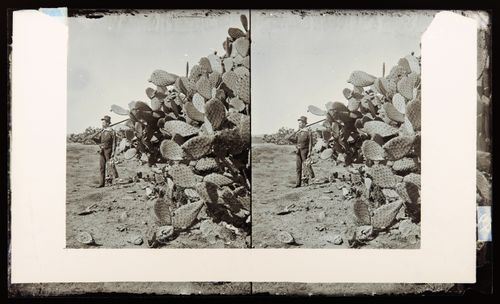
Man holding gun and two desert hares, posing in front of several prickly pear cacti.
PH1984:0977:465
Description:
Man holding gun and two desert hares, posing in front of several prickly pear cacti.
Personnes et institutions:
Date:
ca. 1860-1880
ca. 1860-1880
Titre:
Stereograph of man with gun and two desert hares posing in front of gaint prickly pear cactus, California, United States of America
Actions:
PH1984:0977:465
Description:
Man holding gun and two desert hares, posing in front of several prickly pear cacti.
Stereograph of man with gun and two desert hares posing in front of gaint prickly pear cactus, California, United States of America
Actions:
PH1984:0977:465
Description:
Man holding gun and two desert hares, posing in front of several prickly pear cacti.
Classification:
photographies
photographies
Date:
ca. 1860-1880
ca. 1860-1880
Personnes et institutions:
Classification:
photographies
photographies
Actions:
Numéro de référence:
PH2004:0029
PH2004:0029
Personnes et institutions:
Sujet:
architecture
architecture
Date:
1938
1938
Classification:
photographies
photographies
Date:
1938
1938
Personnes et institutions:
Sujet:
architecture
architecture
Classification:
photographies
photographies
Actions:
Numéro de référence:
PH1989:0151
Description:
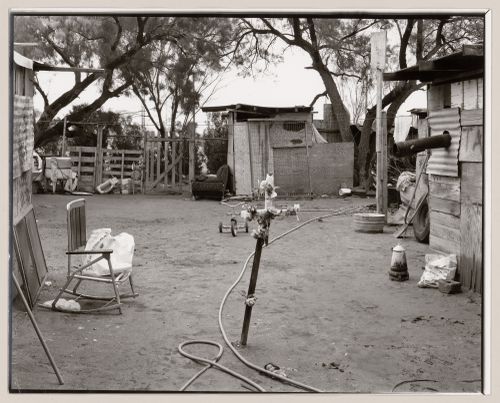
One of a series of forty-four photographs of the Yaqui community of Old Pascua by Lorne Greenberg. The photographs document the relationship of household and church in the Yaqui community. The photographs were exhibited at the Arizona State Museum in 1983. The CCA collection includes ten photographs from the series (PH1989:0147 - PH1989:0156). In 1978, the San Ignacio Yaqui Council applied for Community Development Block Grants (CDBG), which had been established by the United States Government in 1974. The community first received CDBG funding in 1979/1980. Since that time, most of the owner-occupied houses in Pascua Village have been torn down and new homes have been built.
PH1989:0151
Description:
One of a series of forty-four photographs of the Yaqui community of Old Pascua by Lorne Greenberg. The photographs document the relationship of household and church in the Yaqui community. The photographs were exhibited at the Arizona State Museum in 1983. The CCA collection includes ten photographs from the series (PH1989:0147 - PH1989:0156). In 1978, the San Ignacio Yaqui Council applied for Community Development Block Grants (CDBG), which had been established by the United States Government in 1974. The community first received CDBG funding in 1979/1980. Since that time, most of the owner-occupied houses in Pascua Village have been torn down and new homes have been built.
Personnes et institutions:
Sujet:
architecture
architecture
Date:
1981
1981
Titre:
View of cross decorated with flowers in yard, Old Pascua, Tucson, Arizona, United States (from a series documenting the Yaqui community of Old Pascua)
Actions:
PH1989:0151
Description:
One of a series of forty-four photographs of the Yaqui community of Old Pascua by Lorne Greenberg. The photographs document the relationship of household and church in the Yaqui community. The photographs were exhibited at the Arizona State Museum in 1983. The CCA collection includes ten photographs from the series (PH1989:0147 - PH1989:0156). In 1978, the San Ignacio Yaqui Council applied for Community Development Block Grants (CDBG), which had been established by the United States Government in 1974. The community first received CDBG funding in 1979/1980. Since that time, most of the owner-occupied houses in Pascua Village have been torn down and new homes have been built.
View of cross decorated with flowers in yard, Old Pascua, Tucson, Arizona, United States (from a series documenting the Yaqui community of Old Pascua)
Actions:
PH1989:0151
Description:
One of a series of forty-four photographs of the Yaqui community of Old Pascua by Lorne Greenberg. The photographs document the relationship of household and church in the Yaqui community. The photographs were exhibited at the Arizona State Museum in 1983. The CCA collection includes ten photographs from the series (PH1989:0147 - PH1989:0156). In 1978, the San Ignacio Yaqui Council applied for Community Development Block Grants (CDBG), which had been established by the United States Government in 1974. The community first received CDBG funding in 1979/1980. Since that time, most of the owner-occupied houses in Pascua Village have been torn down and new homes have been built.
Classification:
photographies
photographies
Date:
1981
1981
Personnes et institutions:
Sujet:
architecture
architecture
Classification:
photographies
photographies
Actions:
Numéro de référence:
PH1999:0038:008
PH1999:0038:008
Personnes et institutions:
Sujet:
architecture
architecture
Date:
1963
1963
Classification:
photographies
photographies
Date:
1963
1963
Personnes et institutions:
Sujet:
architecture
architecture
Classification:
photographies
photographies
Actions:
Numéro de référence:
PH1999:0043:004
PH1999:0043:004
Personnes et institutions:
Sujet:
architecture
architecture
Date:
1978
1978
Classification:
photographies
photographies
Date:
1978
1978
Personnes et institutions:
Sujet:
architecture
architecture
Classification:
photographies
photographies
Actions:
Numéro de référence:
PH1982:0020:003
PH1982:0020:003
Personnes et institutions:
Date:
between 1975 and 1976
between 1975 and 1976
Classification:
photographies
photographies
Date:
between 1975 and 1976
between 1975 and 1976
Personnes et institutions:
Classification:
photographies
photographies
Actions:
Numéro de référence:
PH1997:0063
Description:
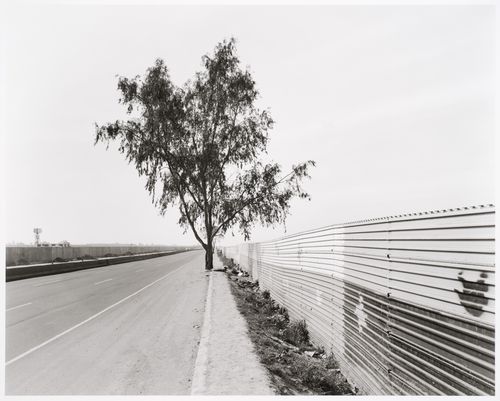
- The series "Running Fence 1997" focuses "on the first 14 miles of the border fence that separates the United States and Mexico, beginning at the Pacific Ocean and ending in the Otay Mountains.... [It] analyzes the "idea" of the border and explores its iconography, the border being a subject that is of extreme importance to the public as the world proceeds towards greater globalization. [Geoffrey] James has written of the project: "[The border fence] was built by the US Army Corps of Engineers in 1994, out of recycled metal landing strip - the most visible symbol of what is known as Operation Gatekeeper. Because the steel sheets are placed in the ground so that their ridges run horizontally, a man can hop over the fence with ease; and no Mexican child ever seems to be impeded from retrieving a soccer ball from US territory. The real barrier to illegal immigration from Mexico into the USA is less visible: hundreds of buried sensors linked to a central computer, nightscopes, helicopters and Border Patrol Agents in white Broncos."" (Evans).
PH1997:0063
Description:
- The series "Running Fence 1997" focuses "on the first 14 miles of the border fence that separates the United States and Mexico, beginning at the Pacific Ocean and ending in the Otay Mountains.... [It] analyzes the "idea" of the border and explores its iconography, the border being a subject that is of extreme importance to the public as the world proceeds towards greater globalization. [Geoffrey] James has written of the project: "[The border fence] was built by the US Army Corps of Engineers in 1994, out of recycled metal landing strip - the most visible symbol of what is known as Operation Gatekeeper. Because the steel sheets are placed in the ground so that their ridges run horizontally, a man can hop over the fence with ease; and no Mexican child ever seems to be impeded from retrieving a soccer ball from US territory. The real barrier to illegal immigration from Mexico into the USA is less visible: hundreds of buried sensors linked to a central computer, nightscopes, helicopters and Border Patrol Agents in white Broncos."" (Evans).
Personnes et institutions:
Sujet:
architecture, ingénierie
architecture, ingénierie
Date:
1997
1997
Titre:
View along a highway leading to the airport in Tijuana, Baja California, Mexico, showing a partial view of the United States-Mexico border fence
Actions:
PH1997:0063
Description:
- The series "Running Fence 1997" focuses "on the first 14 miles of the border fence that separates the United States and Mexico, beginning at the Pacific Ocean and ending in the Otay Mountains.... [It] analyzes the "idea" of the border and explores its iconography, the border being a subject that is of extreme importance to the public as the world proceeds towards greater globalization. [Geoffrey] James has written of the project: "[The border fence] was built by the US Army Corps of Engineers in 1994, out of recycled metal landing strip - the most visible symbol of what is known as Operation Gatekeeper. Because the steel sheets are placed in the ground so that their ridges run horizontally, a man can hop over the fence with ease; and no Mexican child ever seems to be impeded from retrieving a soccer ball from US territory. The real barrier to illegal immigration from Mexico into the USA is less visible: hundreds of buried sensors linked to a central computer, nightscopes, helicopters and Border Patrol Agents in white Broncos."" (Evans).
View along a highway leading to the airport in Tijuana, Baja California, Mexico, showing a partial view of the United States-Mexico border fence
Actions:
PH1997:0063
Description:
- The series "Running Fence 1997" focuses "on the first 14 miles of the border fence that separates the United States and Mexico, beginning at the Pacific Ocean and ending in the Otay Mountains.... [It] analyzes the "idea" of the border and explores its iconography, the border being a subject that is of extreme importance to the public as the world proceeds towards greater globalization. [Geoffrey] James has written of the project: "[The border fence] was built by the US Army Corps of Engineers in 1994, out of recycled metal landing strip - the most visible symbol of what is known as Operation Gatekeeper. Because the steel sheets are placed in the ground so that their ridges run horizontally, a man can hop over the fence with ease; and no Mexican child ever seems to be impeded from retrieving a soccer ball from US territory. The real barrier to illegal immigration from Mexico into the USA is less visible: hundreds of buried sensors linked to a central computer, nightscopes, helicopters and Border Patrol Agents in white Broncos."" (Evans).
Classification:
photographies
photographies
Date:
1997
1997
Personnes et institutions:
Sujet:
architecture, ingénierie
architecture, ingénierie
Classification:
photographies
photographies
Actions:
Numéro de référence:
PH1984:0977:199
Description:
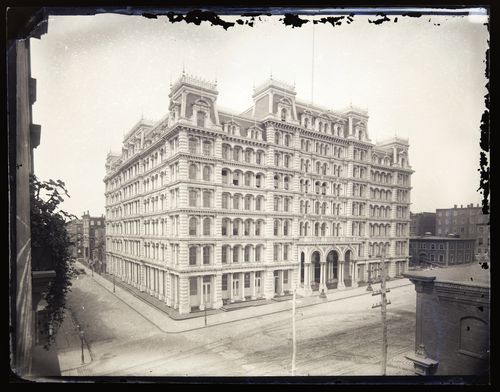
Former Park Avenue Hotel by John Kellum (architect)
PH1984:0977:199
Description:
Former Park Avenue Hotel by John Kellum (architect)
Personnes et institutions:
Date:
ca. 1860-1880
ca. 1860-1880
Titre:
View of Park Avenue Hotel, 33rd and 4th Avenue (now Park Avenue), New York, New York, United States of America (demolished 1927)
Actions:
PH1984:0977:199
Description:
Former Park Avenue Hotel by John Kellum (architect)
View of Park Avenue Hotel, 33rd and 4th Avenue (now Park Avenue), New York, New York, United States of America (demolished 1927)
Actions:
PH1984:0977:199
Description:
Former Park Avenue Hotel by John Kellum (architect)
Classification:
photographies
photographies
Date:
ca. 1860-1880
ca. 1860-1880
Personnes et institutions:
Classification:
photographies
photographies
Actions:
Numéro de référence:
PH2001:0141
PH2001:0141
Personnes et institutions:
Sujet:
architecture
architecture
Date:
1974
1974
Classification:
photographies
photographies
Date:
1974
1974
Personnes et institutions:
Sujet:
architecture
architecture


