


1914 Résultats
Classification:
livres
livres
Prix:
$45.95
(disponible sur commande)
Résumé:
Cell phones and E-mail, home shopping and the Internet - "old" industrial societies have been turning into globally connected information societies on the sly. At the same time, the population is tending to retreat into its own four walls. Yet - or maybe for this reason - public urban spaces are becoming more and more important, having lost none of their significance as(...)
$45.95
(disponible sur commande)
Résumé:
Cell phones and E-mail, home shopping and the Internet - "old" industrial societies have been turning into globally connected information societies on the sly. At the same time, the population is tending to retreat into its own four walls. Yet - or maybe for this reason - public urban spaces are becoming more and more important, having lost none of their significance as(...)
Sujet:
Théorie de l’urbanisme
Théorie de l’urbanisme
Publication:
janvier 1900, Ostfildern-Ruit
janvier 1900, Ostfildern-Ruit
Titre:
No art = no city! : urban utopias in contemporary art
Actions:
Prix:
$45.95
(disponible sur commande)
Résumé:
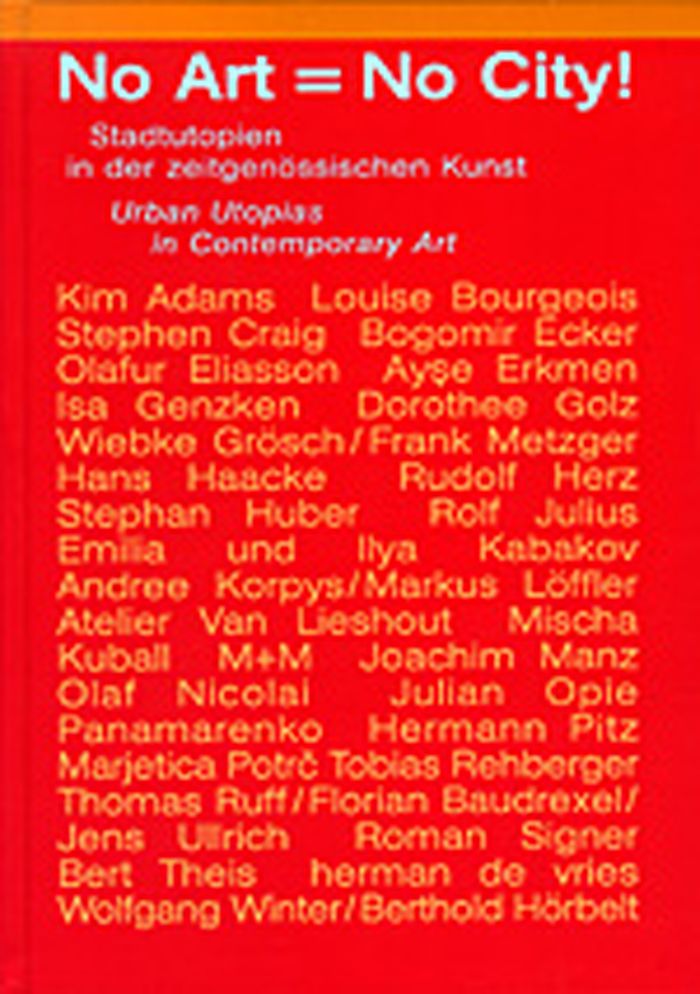
Cell phones and E-mail, home shopping and the Internet - "old" industrial societies have been turning into globally connected information societies on the sly. At the same time, the population is tending to retreat into its own four walls. Yet - or maybe for this reason - public urban spaces are becoming more and more important, having lost none of their significance as interfaces of human communication. This catalogue is published in conjunction with the thirtieth anniversary of the Bremen program for public art. It features over thirty artists who have confronted urban and social aspects of the city and developed their own personal visions, utopias and fantasies of a life in and with the city. Artists featured: Kim Adams, Louise Bourgeois, Stephen Craig, Bogomir Ecker, Olafur Eliasson, Ayse Erkmen, Isa Genzken, Dorothee Golz, Wiebke Grösch/Frank Metzger, Hans Haacke, Rudolf Herz, Stephan Huber, Rolf Julius, Emilia und Ilya Kabakov, Andree Korpys/Markus Löffler, Mischa Kuball, Atelier Van Lieshout, M+M, Joachim Manz, Olaf Nicolai, Julian Opie, Panamarenko, Hermann Pitz, Marjetica Potrc, Tobias Rehberger, Thomas Ruff/Florian Baudrexel/Jens Ullrich, Roman Signer, Bert Theis, herman de vries, Wolfgang Winter/Berthold Hörbelt
No art = no city! : urban utopias in contemporary art
Actions:
Prix:
$45.95
(disponible sur commande)
Résumé:
Cell phones and E-mail, home shopping and the Internet - "old" industrial societies have been turning into globally connected information societies on the sly. At the same time, the population is tending to retreat into its own four walls. Yet - or maybe for this reason - public urban spaces are becoming more and more important, having lost none of their significance as interfaces of human communication. This catalogue is published in conjunction with the thirtieth anniversary of the Bremen program for public art. It features over thirty artists who have confronted urban and social aspects of the city and developed their own personal visions, utopias and fantasies of a life in and with the city. Artists featured: Kim Adams, Louise Bourgeois, Stephen Craig, Bogomir Ecker, Olafur Eliasson, Ayse Erkmen, Isa Genzken, Dorothee Golz, Wiebke Grösch/Frank Metzger, Hans Haacke, Rudolf Herz, Stephan Huber, Rolf Julius, Emilia und Ilya Kabakov, Andree Korpys/Markus Löffler, Mischa Kuball, Atelier Van Lieshout, M+M, Joachim Manz, Olaf Nicolai, Julian Opie, Panamarenko, Hermann Pitz, Marjetica Potrc, Tobias Rehberger, Thomas Ruff/Florian Baudrexel/Jens Ullrich, Roman Signer, Bert Theis, herman de vries, Wolfgang Winter/Berthold Hörbelt
Classification:
livres
livres
Publication:
janvier 1900, Ostfildern-Ruit
janvier 1900, Ostfildern-Ruit
Sujet:
Théorie de l’urbanisme
Théorie de l’urbanisme
Classification:
livres
livres
Actions:
Prix:
$45.00
(disponible sur commande)
Résumé:
As the world’s population swells and the need for sustainable ways of living grows ever more urgent and obvious, prefabricated architecture has taken center stage. Even before our current predicaments, the mass-produced, factory-made home had a distinguished history, having served as a vital precept in the development of Modern architecture. Today, with the digital(...)
$45.00
(disponible sur commande)
Résumé:
As the world’s population swells and the need for sustainable ways of living grows ever more urgent and obvious, prefabricated architecture has taken center stage. Even before our current predicaments, the mass-produced, factory-made home had a distinguished history, having served as a vital precept in the development of Modern architecture. Today, with the digital(...)
Sujet:
Architecture préfabriquée
Architecture préfabriquée
Publication:
août 2008, New York
août 2008, New York
Titre:
Home delivery, fabricating the modern dwelling
Actions:
Prix:
$45.00
(disponible sur commande)
Résumé:
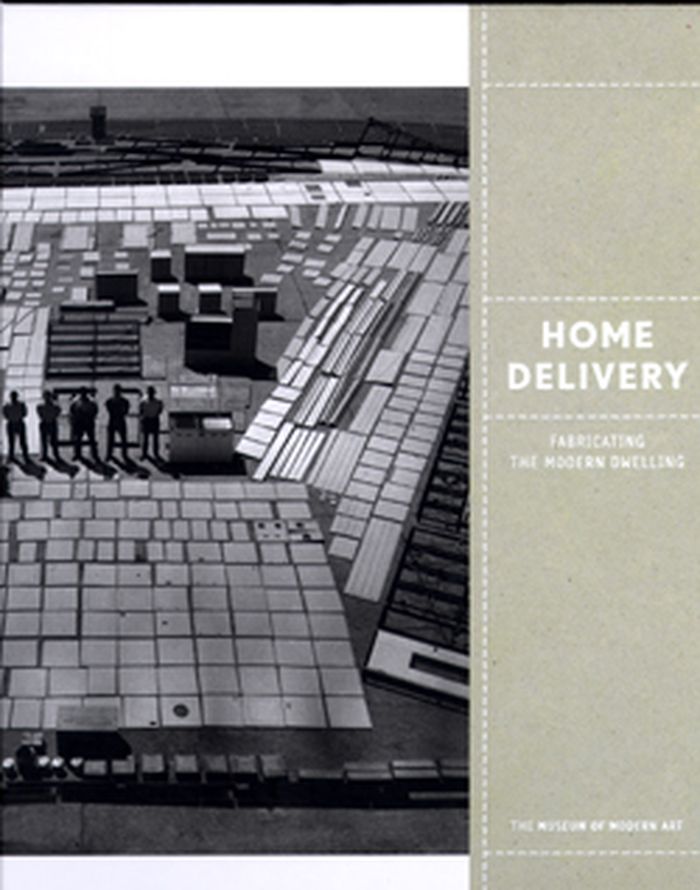
As the world’s population swells and the need for sustainable ways of living grows ever more urgent and obvious, prefabricated architecture has taken center stage. Even before our current predicaments, the mass-produced, factory-made home had a distinguished history, having served as a vital precept in the development of Modern architecture. Today, with the digital revolution reorganizing the relationship between drafting board and factory, it continues to spur innovative manufacturing and design, and its potential has clearly not yet come to fruition. Home Delivery traces the history of prefabrication in architecture, from its early roots in colonial cottages though the work of such figures as Jean Prouvé and Buckminster Fuller, and mass-produced variants such as the Lustron house, to a group of full-scale contemporary houses commissioned specifically for the MoMA exhibition that this book accompanies. In addition to an introductory essay by Barry Bergdoll, Chief Curator in the Museum’s Department of Architecture and Design, this volume contains essays on prefabricated housing in Japan and in Nordic countries by Ken Tadashi Oshima and Rasmus Waern, respectively. It also includes focused texts on approximately 40 historical projects and five commissions, as well as a bibliography.
Home delivery, fabricating the modern dwelling
Actions:
Prix:
$45.00
(disponible sur commande)
Résumé:
As the world’s population swells and the need for sustainable ways of living grows ever more urgent and obvious, prefabricated architecture has taken center stage. Even before our current predicaments, the mass-produced, factory-made home had a distinguished history, having served as a vital precept in the development of Modern architecture. Today, with the digital revolution reorganizing the relationship between drafting board and factory, it continues to spur innovative manufacturing and design, and its potential has clearly not yet come to fruition. Home Delivery traces the history of prefabrication in architecture, from its early roots in colonial cottages though the work of such figures as Jean Prouvé and Buckminster Fuller, and mass-produced variants such as the Lustron house, to a group of full-scale contemporary houses commissioned specifically for the MoMA exhibition that this book accompanies. In addition to an introductory essay by Barry Bergdoll, Chief Curator in the Museum’s Department of Architecture and Design, this volume contains essays on prefabricated housing in Japan and in Nordic countries by Ken Tadashi Oshima and Rasmus Waern, respectively. It also includes focused texts on approximately 40 historical projects and five commissions, as well as a bibliography.
Classification:
livres
livres
Publication:
août 2008, New York
août 2008, New York
Sujet:
Architecture préfabriquée
Architecture préfabriquée
Classification:
livres
livres
Titre:
Des mots qui font la ville
Des mots qui font la ville
Actions:
Prix:
$43.95
(disponible sur commande)
Résumé:
La ville est notre horizon commun. En France, par exemple, quatre-vingts pour cent de la population vivent ou travaillent dans un territoire urbain. Mais, plus essentiel encore, la ville concentre les enjeux sociaux, économiques, politiques... ainsi que les interactions et les interventions volontaires d'une multiplicité d'acteurs qui la transforment à un rythme soutenu,(...)
$43.95
(disponible sur commande)
Résumé:
La ville est notre horizon commun. En France, par exemple, quatre-vingts pour cent de la population vivent ou travaillent dans un territoire urbain. Mais, plus essentiel encore, la ville concentre les enjeux sociaux, économiques, politiques... ainsi que les interactions et les interventions volontaires d'une multiplicité d'acteurs qui la transforment à un rythme soutenu,(...)
Titre:
Des mots qui font la ville
Actions:
Prix:
$43.95
(disponible sur commande)
Résumé:
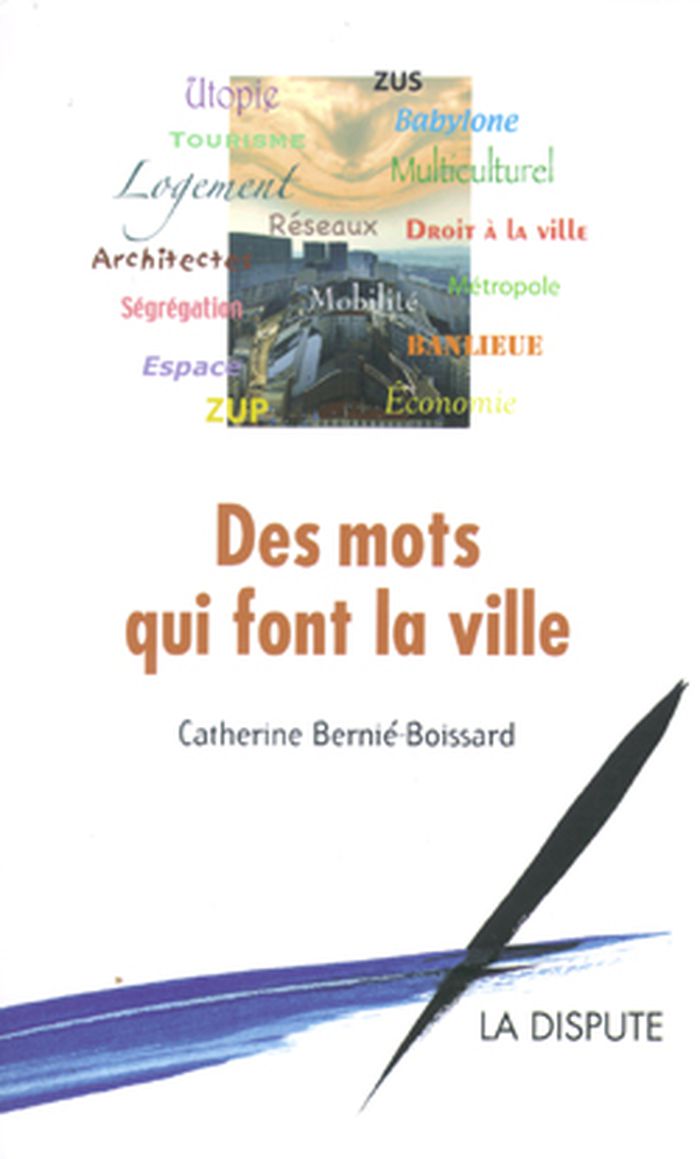
La ville est notre horizon commun. En France, par exemple, quatre-vingts pour cent de la population vivent ou travaillent dans un territoire urbain. Mais, plus essentiel encore, la ville concentre les enjeux sociaux, économiques, politiques... ainsi que les interactions et les interventions volontaires d'une multiplicité d'acteurs qui la transforment à un rythme soutenu, et avec elle la société dans son ensemble. Au point que les mots qui désignent la ville sous les rapports les plus divers, ne servent pas seulement à parler d'elle, ils la modifient - ils la font-, jour après jour, en informant notre pensée. Dans ce livre, Catherine Bernié-Boissard s'attache à définir quelques-uns des mots les plus employés pour commenter le fait urbain, à retracer leur histoire, à en restituer la pluralité de sens, à mettre au jour les intentions qui ont présidé à leur création ou à leur utilisation à de nouvelles fins. Au fil des trente articles qui composent l'ouvrage le lecteur découvrira sans aucun doute nombre de perspectives nouvelles sur un objet si familier que nous avons souvent peine à l'appréhender dans toute son ampleur et toute sa complexité.
Des mots qui font la ville
Actions:
Prix:
$43.95
(disponible sur commande)
Résumé:
La ville est notre horizon commun. En France, par exemple, quatre-vingts pour cent de la population vivent ou travaillent dans un territoire urbain. Mais, plus essentiel encore, la ville concentre les enjeux sociaux, économiques, politiques... ainsi que les interactions et les interventions volontaires d'une multiplicité d'acteurs qui la transforment à un rythme soutenu, et avec elle la société dans son ensemble. Au point que les mots qui désignent la ville sous les rapports les plus divers, ne servent pas seulement à parler d'elle, ils la modifient - ils la font-, jour après jour, en informant notre pensée. Dans ce livre, Catherine Bernié-Boissard s'attache à définir quelques-uns des mots les plus employés pour commenter le fait urbain, à retracer leur histoire, à en restituer la pluralité de sens, à mettre au jour les intentions qui ont présidé à leur création ou à leur utilisation à de nouvelles fins. Au fil des trente articles qui composent l'ouvrage le lecteur découvrira sans aucun doute nombre de perspectives nouvelles sur un objet si familier que nous avons souvent peine à l'appréhender dans toute son ampleur et toute sa complexité.
Classification:
livres
livres
Publication:
avril 2008, Paris
avril 2008, Paris
Sujet:
Théorie de l’architecture
Théorie de l’architecture
Classification:
livres
livres
Prix:
$61.50
(disponible sur commande)
Résumé:
With the ever-increasing growth of the world’s population, there is a universal need for development that can sustain humanity, in settlements of all sizes, without the depletion of our environmental heritage. For this to be effective it is essential that local, national and international frameworks be set up to ensure the application and utilisation of sustainable(...)
$61.50
(disponible sur commande)
Résumé:
With the ever-increasing growth of the world’s population, there is a universal need for development that can sustain humanity, in settlements of all sizes, without the depletion of our environmental heritage. For this to be effective it is essential that local, national and international frameworks be set up to ensure the application and utilisation of sustainable(...)
Titre:
Sustainable place : a place of sustainable development
Actions:
Prix:
$61.50
(disponible sur commande)
Résumé:
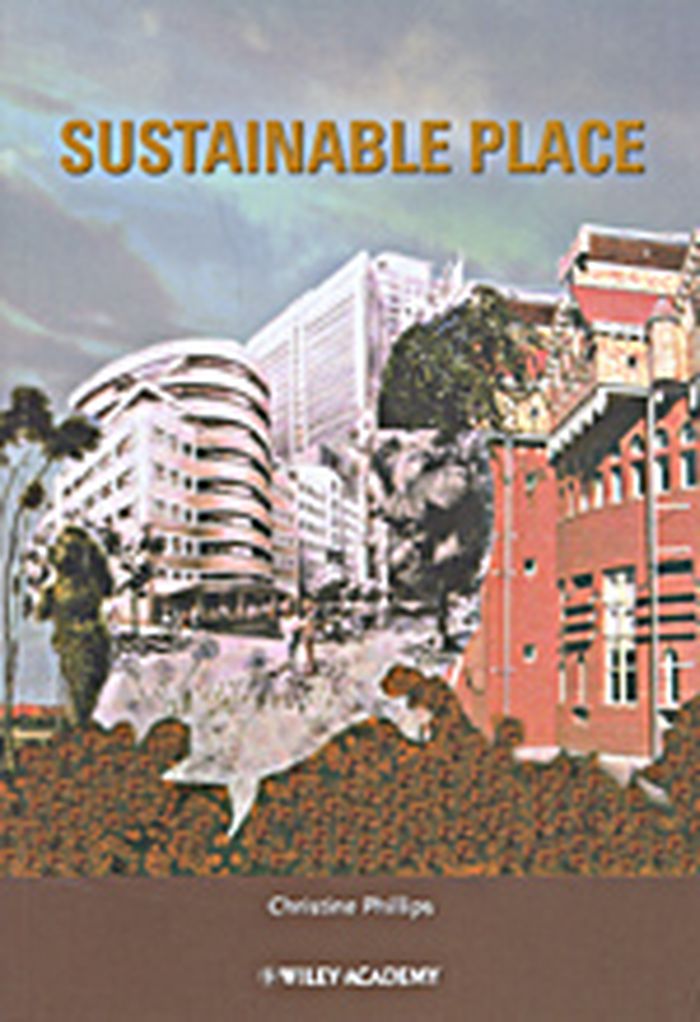
With the ever-increasing growth of the world’s population, there is a universal need for development that can sustain humanity, in settlements of all sizes, without the depletion of our environmental heritage. For this to be effective it is essential that local, national and international frameworks be set up to ensure the application and utilisation of sustainable development objectives. This book addresses the concept of sustainable place. It looks at the distinctive features of place associated with man’s interaction with landscape, architecture and master planning and investigates the potential of these features to form the constituent parts of a framework of assessment. It outlines a framework for determining the energy and environmental capabilities of a locality for sustainable development in consideration of its social, economic, political and cultural prerequisites – a framework that may be applied locally but that also bears a direct relationship to national and international concerns for sustainability. Sustainable Place puts forward the potential elements of an aesthetic for sustainability which may be used anywhere in the world, to facilitate human progress whilst avoiding the disastrous environmental consequences that ill-considered development too often entails.
Sustainable place : a place of sustainable development
Actions:
Prix:
$61.50
(disponible sur commande)
Résumé:
With the ever-increasing growth of the world’s population, there is a universal need for development that can sustain humanity, in settlements of all sizes, without the depletion of our environmental heritage. For this to be effective it is essential that local, national and international frameworks be set up to ensure the application and utilisation of sustainable development objectives. This book addresses the concept of sustainable place. It looks at the distinctive features of place associated with man’s interaction with landscape, architecture and master planning and investigates the potential of these features to form the constituent parts of a framework of assessment. It outlines a framework for determining the energy and environmental capabilities of a locality for sustainable development in consideration of its social, economic, political and cultural prerequisites – a framework that may be applied locally but that also bears a direct relationship to national and international concerns for sustainability. Sustainable Place puts forward the potential elements of an aesthetic for sustainability which may be used anywhere in the world, to facilitate human progress whilst avoiding the disastrous environmental consequences that ill-considered development too often entails.
Classification:
livres
livres
Publication:
février 2003, Chichester
février 2003, Chichester
Sujet:
Architecture écologique
Architecture écologique
Classification:
livres
livres
Prix:
$37.95
(disponible sur commande)
Résumé:
The passage of time and the reality of an aging survivor population have made it increasingly urgent to document and give expression to testimony, experience, and memory of the Holocaust. At the same time, artists have struggled to find a language to describe and retell a legacy often considered "unimaginable." Contrary to those who insist that the Holocaust defies(...)
$37.95
(disponible sur commande)
Résumé:
The passage of time and the reality of an aging survivor population have made it increasingly urgent to document and give expression to testimony, experience, and memory of the Holocaust. At the same time, artists have struggled to find a language to describe and retell a legacy often considered "unimaginable." Contrary to those who insist that the Holocaust defies(...)
Sujet:
Théorie de l’architecture
Théorie de l’architecture
Publication:
décembre 2002, Bloomington and Indianapolis
décembre 2002, Bloomington and Indianapolis
Titre:
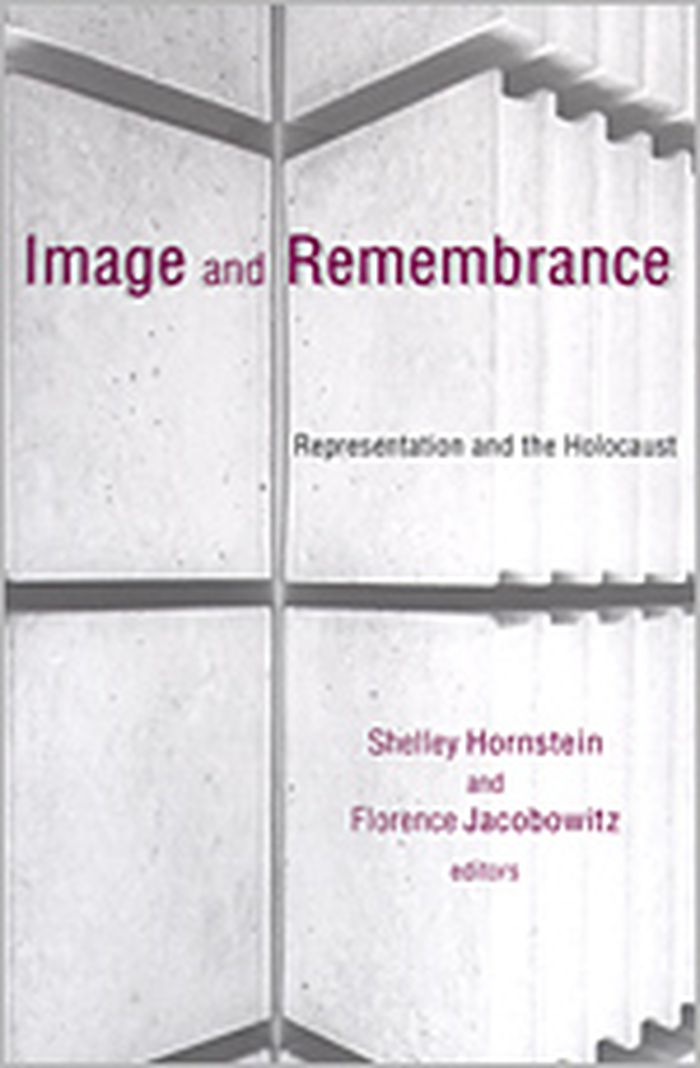
Image and remembrance : representation and the Holocaust
Actions:
Prix:
$37.95
(disponible sur commande)
Résumé:
The passage of time and the reality of an aging survivor population have made it increasingly urgent to document and give expression to testimony, experience, and memory of the Holocaust. At the same time, artists have struggled to find a language to describe and retell a legacy often considered "unimaginable." Contrary to those who insist that the Holocaust defies representation, Image and Remembrance demonstrates that artistic representations are central to the practice of remembrance and commemoration. Including essays on representations of the Holocaust in film, architecture, painting, photography, memorials, and monuments, this thought-provoking volume considers ways in which visual artists have given form to the experience of the Holocaust and addresses the role that imagination plays in shaping historical memory. Among works discussed are Daniel Libeskind's Jewish Museum in Berlin, Rachel Whiteread's Holocaust Memorial in Vienna, Morris Louis's series of paintings Charred Journal, photographer Shimon Attie's Writing on the Wall, and Mikael Levin's series Untitled. Image and Remembrance provides a thoughtful site for personal reflection and commemoration as well as a context for reconsidering the processes of art making and the cultural significance of artistic images.
Image and remembrance : representation and the Holocaust
Actions:
Prix:
$37.95
(disponible sur commande)
Résumé:
The passage of time and the reality of an aging survivor population have made it increasingly urgent to document and give expression to testimony, experience, and memory of the Holocaust. At the same time, artists have struggled to find a language to describe and retell a legacy often considered "unimaginable." Contrary to those who insist that the Holocaust defies representation, Image and Remembrance demonstrates that artistic representations are central to the practice of remembrance and commemoration. Including essays on representations of the Holocaust in film, architecture, painting, photography, memorials, and monuments, this thought-provoking volume considers ways in which visual artists have given form to the experience of the Holocaust and addresses the role that imagination plays in shaping historical memory. Among works discussed are Daniel Libeskind's Jewish Museum in Berlin, Rachel Whiteread's Holocaust Memorial in Vienna, Morris Louis's series of paintings Charred Journal, photographer Shimon Attie's Writing on the Wall, and Mikael Levin's series Untitled. Image and Remembrance provides a thoughtful site for personal reflection and commemoration as well as a context for reconsidering the processes of art making and the cultural significance of artistic images.
Classification:
livres
livres
Publication:
décembre 2002, Bloomington and Indianapolis
décembre 2002, Bloomington and Indianapolis
Sujet:
Théorie de l’architecture
Théorie de l’architecture
Classification:
livres
livres
Actions:
Prix:
$15.00
(disponible sur commande)
Résumé:
Alors que le système touristique recouvre aujourd’hui la planète et s’étend du domicile jusqu’à la destination, il est permis de se demander si le voyage peut encore dépasser le tourisme. Le tourisme est une des industries ayant connu l’essor le plus important ces dernières décennies. Pratiquée par une infime partie de la population mondiale, cette activité n’est pas(...)
$15.00
(disponible sur commande)
Résumé:
Alors que le système touristique recouvre aujourd’hui la planète et s’étend du domicile jusqu’à la destination, il est permis de se demander si le voyage peut encore dépasser le tourisme. Le tourisme est une des industries ayant connu l’essor le plus important ces dernières décennies. Pratiquée par une infime partie de la population mondiale, cette activité n’est pas(...)
Titre:
La vraie vie est ici : voyager encore ?
Actions:
Prix:
$15.00
(disponible sur commande)
Résumé:
Alors que le système touristique recouvre aujourd’hui la planète et s’étend du domicile jusqu’à la destination, il est permis de se demander si le voyage peut encore dépasser le tourisme. Le tourisme est une des industries ayant connu l’essor le plus important ces dernières décennies. Pratiquée par une infime partie de la population mondiale, cette activité n’est pas sans effets délétères sur les populations, les paysages, les territoires, même dans ses incarnations les plus « vertes » et « responsables ». Est-ce à dire qu’il faudrait dans ces conditions aller jusqu’à cesser de voyager? C’est à cette vaste réflexion que nous convie Rodolphe Christin dans ce court et percutant essai. Dans la foulée des différents écrits qu’il a publiés sur ce thème au fil des ans, et pour faire suite à la critique implacable du tourisme qu’il livrait dans son « Manuel de l’antitourisme » (Écosociété, 2017), l’auteur poursuit ici sa réflexion en abordant la question du voyage en lui-même et de ses possibilités dans le monde d’aujourd’hui. Une manière de répondre par la bande à l’opposition voyage/tourisme qui revient inévitablement dans les débats que soulèvent ces thèmes.
La vraie vie est ici : voyager encore ?
Actions:
Prix:
$15.00
(disponible sur commande)
Résumé:
Alors que le système touristique recouvre aujourd’hui la planète et s’étend du domicile jusqu’à la destination, il est permis de se demander si le voyage peut encore dépasser le tourisme. Le tourisme est une des industries ayant connu l’essor le plus important ces dernières décennies. Pratiquée par une infime partie de la population mondiale, cette activité n’est pas sans effets délétères sur les populations, les paysages, les territoires, même dans ses incarnations les plus « vertes » et « responsables ». Est-ce à dire qu’il faudrait dans ces conditions aller jusqu’à cesser de voyager? C’est à cette vaste réflexion que nous convie Rodolphe Christin dans ce court et percutant essai. Dans la foulée des différents écrits qu’il a publiés sur ce thème au fil des ans, et pour faire suite à la critique implacable du tourisme qu’il livrait dans son « Manuel de l’antitourisme » (Écosociété, 2017), l’auteur poursuit ici sa réflexion en abordant la question du voyage en lui-même et de ses possibilités dans le monde d’aujourd’hui. Une manière de répondre par la bande à l’opposition voyage/tourisme qui revient inévitablement dans les débats que soulèvent ces thèmes.
Classification:
livres
livres
Publication:
mars 2020
mars 2020
Sujet:
Trajets
Trajets
Classification:
livres
livres
Titre:
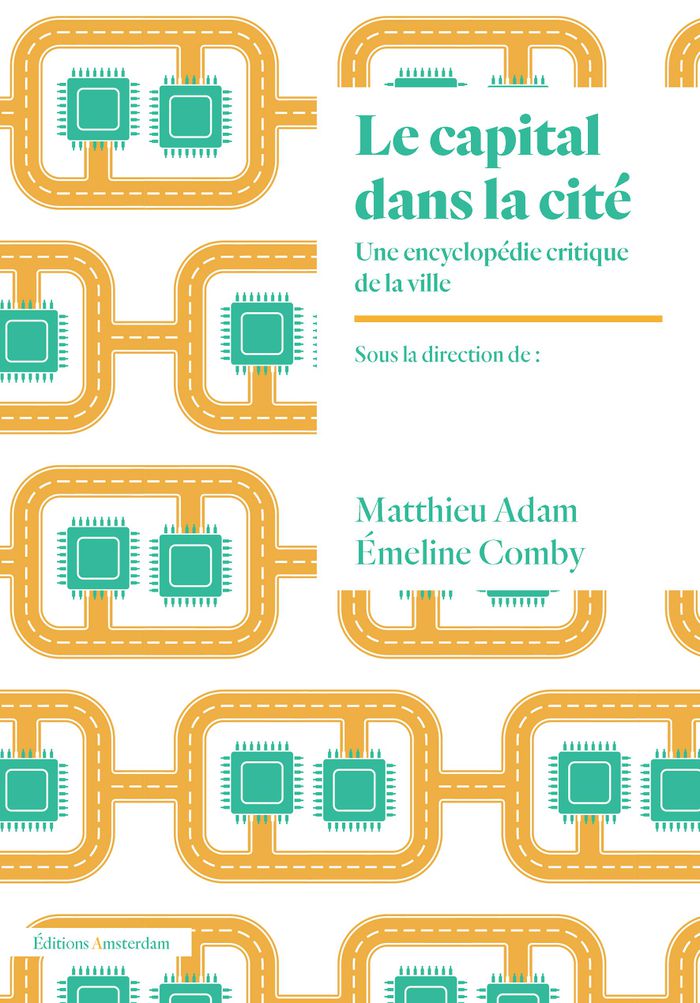
Le capital dans la cité
Le capital dans la cité
Actions:
Prix:
$47.95
(disponible sur commande)
Résumé:
Parce qu’il s’est immiscé dans les moindres recoins des sociétés contemporaines, le capitalisme a bouleversé le visage des villes telles que nous les connaissons. La concentration de la population mondiale dans des agglomérations désormais gérées comme des entreprises fait de la construction de l’espace urbain un observatoire privilégié tant des logiques managériales et(...)
$47.95
(disponible sur commande)
Résumé:
Parce qu’il s’est immiscé dans les moindres recoins des sociétés contemporaines, le capitalisme a bouleversé le visage des villes telles que nous les connaissons. La concentration de la population mondiale dans des agglomérations désormais gérées comme des entreprises fait de la construction de l’espace urbain un observatoire privilégié tant des logiques managériales et(...)
Titre:
Le capital dans la cité
Actions:
Prix:
$47.95
(disponible sur commande)
Résumé:
Parce qu’il s’est immiscé dans les moindres recoins des sociétés contemporaines, le capitalisme a bouleversé le visage des villes telles que nous les connaissons. La concentration de la population mondiale dans des agglomérations désormais gérées comme des entreprises fait de la construction de l’espace urbain un observatoire privilégié tant des logiques managériales et financières que de la production des inégalités sociales et spatiales. De l’adaptation au changement climatique à la Smart City en passant par le zonage logistique et l’économie de plateformes, cette encyclopédie critique propose une cartographie inédite de la ville contemporaine, qui invite concevoir l’espace comme un rapport social et donc comme un lieu de lutte. Présentant de riches enquêtes empiriques menées aux quatre coins du globe, ses entrées exposent de manière thématique les principaux enjeux auxquels sont confrontées des populations marginalisées à la fois d’un point de vue matériel et dans les processus de décisions qui affectent leur vie quotidienne. La démarche suivie, qui associe à ce réquisitoire implacable l’esquisse systématique de voies alternatives, argumente de manière actuelle et accessible en faveur de la défense renouvelée d’un « droit à la ville ».
Le capital dans la cité
Actions:
Prix:
$47.95
(disponible sur commande)
Résumé:
Parce qu’il s’est immiscé dans les moindres recoins des sociétés contemporaines, le capitalisme a bouleversé le visage des villes telles que nous les connaissons. La concentration de la population mondiale dans des agglomérations désormais gérées comme des entreprises fait de la construction de l’espace urbain un observatoire privilégié tant des logiques managériales et financières que de la production des inégalités sociales et spatiales. De l’adaptation au changement climatique à la Smart City en passant par le zonage logistique et l’économie de plateformes, cette encyclopédie critique propose une cartographie inédite de la ville contemporaine, qui invite concevoir l’espace comme un rapport social et donc comme un lieu de lutte. Présentant de riches enquêtes empiriques menées aux quatre coins du globe, ses entrées exposent de manière thématique les principaux enjeux auxquels sont confrontées des populations marginalisées à la fois d’un point de vue matériel et dans les processus de décisions qui affectent leur vie quotidienne. La démarche suivie, qui associe à ce réquisitoire implacable l’esquisse systématique de voies alternatives, argumente de manière actuelle et accessible en faveur de la défense renouvelée d’un « droit à la ville ».
Classification:
livres
livres
Publication:
novembre 2020
novembre 2020
Sujet:
Théorie de l’urbanisme
Théorie de l’urbanisme
Classification:
livres
livres
Actions:
Prix:
$39.95
(disponible en magasin)
Résumé:
Unpublished photographs taken by Josef Albers during his travels to Mexico with Anni in the 1930s and 50s. Josef and Anni Albers began their travels to Mexico in 1935, drawn to a country very unlike the United States. They were not in search of the exotic but rather of the traces of ancient pre-Colombian civilisations (the Mayans and the Aztecs) and testimonies of the(...)
$39.95
(disponible en magasin)
Résumé:
Unpublished photographs taken by Josef Albers during his travels to Mexico with Anni in the 1930s and 50s. Josef and Anni Albers began their travels to Mexico in 1935, drawn to a country very unlike the United States. They were not in search of the exotic but rather of the traces of ancient pre-Colombian civilisations (the Mayans and the Aztecs) and testimonies of the(...)
Titre:
Messico 1935/1956: Josef Albers
Actions:
Prix:
$39.95
(disponible en magasin)
Résumé:
Unpublished photographs taken by Josef Albers during his travels to Mexico with Anni in the 1930s and 50s. Josef and Anni Albers began their travels to Mexico in 1935, drawn to a country very unlike the United States. They were not in search of the exotic but rather of the traces of ancient pre-Colombian civilisations (the Mayans and the Aztecs) and testimonies of the everyday lives of a population that was very poor yet full of vitality. Dressed in dark colours and donning a large black hat, Albers was a non-professional photographer with the gaze of an architect, as may be noted from the great sense of composition and the search for geometries which he digs out even from the millenary archaeological findings. These photographs have never previously been published in Italy, and contribute to depicting the figure of one of the greatest innovators of the art and culture of the twentieth century, who to this day still has a lot to teach us. The volume also features an introduction by Brenda Danilowitz, curator and head of the Josef and Anni Albers Foundation, as well as an essay by Luca Galofaro, architect (LSGMA) and curator (CAMPO, Rome).
Messico 1935/1956: Josef Albers
Actions:
Prix:
$39.95
(disponible en magasin)
Résumé:
Unpublished photographs taken by Josef Albers during his travels to Mexico with Anni in the 1930s and 50s. Josef and Anni Albers began their travels to Mexico in 1935, drawn to a country very unlike the United States. They were not in search of the exotic but rather of the traces of ancient pre-Colombian civilisations (the Mayans and the Aztecs) and testimonies of the everyday lives of a population that was very poor yet full of vitality. Dressed in dark colours and donning a large black hat, Albers was a non-professional photographer with the gaze of an architect, as may be noted from the great sense of composition and the search for geometries which he digs out even from the millenary archaeological findings. These photographs have never previously been published in Italy, and contribute to depicting the figure of one of the greatest innovators of the art and culture of the twentieth century, who to this day still has a lot to teach us. The volume also features an introduction by Brenda Danilowitz, curator and head of the Josef and Anni Albers Foundation, as well as an essay by Luca Galofaro, architect (LSGMA) and curator (CAMPO, Rome).
Classification:
livres
livres
Publication:
mars 2021
mars 2021
Sujet:
Monographies photo
Monographies photo
Classification:
livres
livres
Actions:
Prix:
$70.00
(disponible sur commande)
Résumé:
Inspired by the rise of environmental psychology and increasing support for behavioral research after the Second World War, new initiatives at the federal, state, and local levels looked to influence the human psyche through form, or elicit desired behaviors with environmental incentives, implementing what Joy Knoblauch calls 'psychological functionalism.' Recruited by(...)
$70.00
(disponible sur commande)
Résumé:
Inspired by the rise of environmental psychology and increasing support for behavioral research after the Second World War, new initiatives at the federal, state, and local levels looked to influence the human psyche through form, or elicit desired behaviors with environmental incentives, implementing what Joy Knoblauch calls 'psychological functionalism.' Recruited by(...)
Titre:
The architecture of good behaviour
Actions:
Prix:
$70.00
(disponible sur commande)
Résumé:
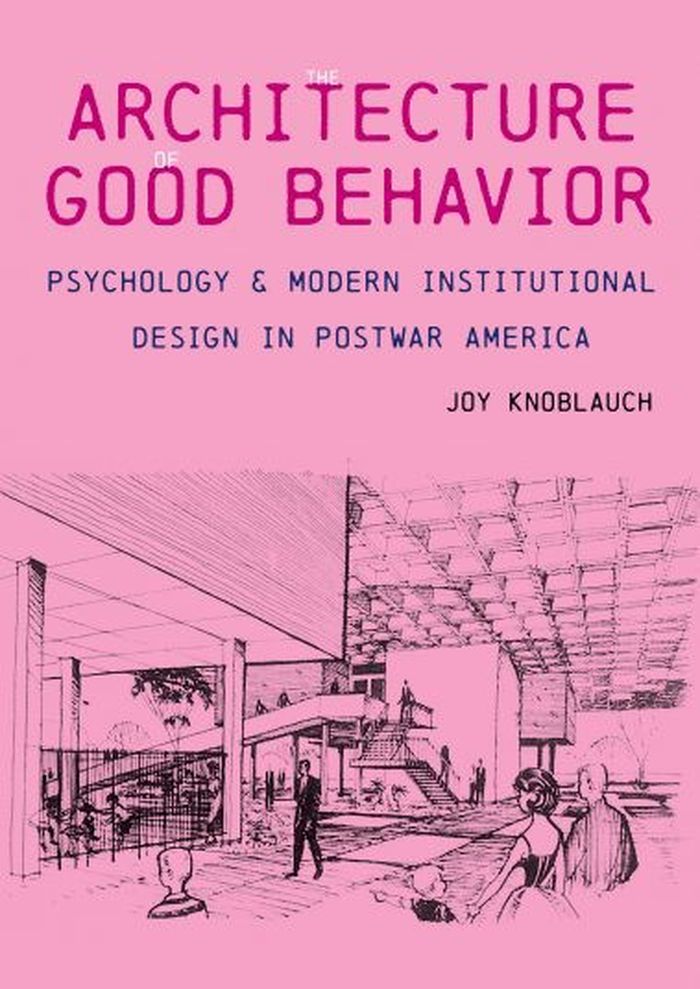
Inspired by the rise of environmental psychology and increasing support for behavioral research after the Second World War, new initiatives at the federal, state, and local levels looked to influence the human psyche through form, or elicit desired behaviors with environmental incentives, implementing what Joy Knoblauch calls 'psychological functionalism.' Recruited by federal construction and research programs for institutional reform and expansion — which included hospitals, mental health centers, prisons, and public housing—architects theorized new ways to control behavior and make it more functional by exercising soft power, or power through persuasion, with their designs. In the 1960s – 1970s era of anti-institutional sentiment, they hoped to offer an enlightened, palatable, more humane solution to larger social problems related to health, mental health, justice, and security of the population by applying psychological expertise to institutional design. In turn, Knoblauch argues, architects gained new roles as researchers, organizers, and writers while theories of confinement, territory, and surveillance proliferated. 'The Architecture of Good Behavior' explores psychological functionalism as a political tool and the architectural projects funded by a postwar nation in its efforts to govern, exert control over, and ultimately pacify its patients, prisoners, and residents.
The architecture of good behaviour
Actions:
Prix:
$70.00
(disponible sur commande)
Résumé:
Inspired by the rise of environmental psychology and increasing support for behavioral research after the Second World War, new initiatives at the federal, state, and local levels looked to influence the human psyche through form, or elicit desired behaviors with environmental incentives, implementing what Joy Knoblauch calls 'psychological functionalism.' Recruited by federal construction and research programs for institutional reform and expansion — which included hospitals, mental health centers, prisons, and public housing—architects theorized new ways to control behavior and make it more functional by exercising soft power, or power through persuasion, with their designs. In the 1960s – 1970s era of anti-institutional sentiment, they hoped to offer an enlightened, palatable, more humane solution to larger social problems related to health, mental health, justice, and security of the population by applying psychological expertise to institutional design. In turn, Knoblauch argues, architects gained new roles as researchers, organizers, and writers while theories of confinement, territory, and surveillance proliferated. 'The Architecture of Good Behavior' explores psychological functionalism as a political tool and the architectural projects funded by a postwar nation in its efforts to govern, exert control over, and ultimately pacify its patients, prisoners, and residents.
Classification:
livres
livres
Publication:
juin 2020
juin 2020
Sujet:
Théorie de l’architecture
Théorie de l’architecture
Classification:
livres
livres
Actions:
Prix:
$32.95
(disponible sur commande)
Résumé:
How did a First World urban population come to imagine itself as part of a global anti-colonial movement? This book tackles this and other paradoxes created by the surprising power and influence of Third World decolonization on political activism in 1960s Montreal. In a brilliant history of a turbulent time and place, Mills pulls back the curtain on the decade's(...)
$32.95
(disponible sur commande)
Résumé:
How did a First World urban population come to imagine itself as part of a global anti-colonial movement? This book tackles this and other paradoxes created by the surprising power and influence of Third World decolonization on political activism in 1960s Montreal. In a brilliant history of a turbulent time and place, Mills pulls back the curtain on the decade's(...)
Titre:
The empire within: postcolonial thought and political activism in Sixties Montréal
Actions:
Prix:
$32.95
(disponible sur commande)
Résumé:
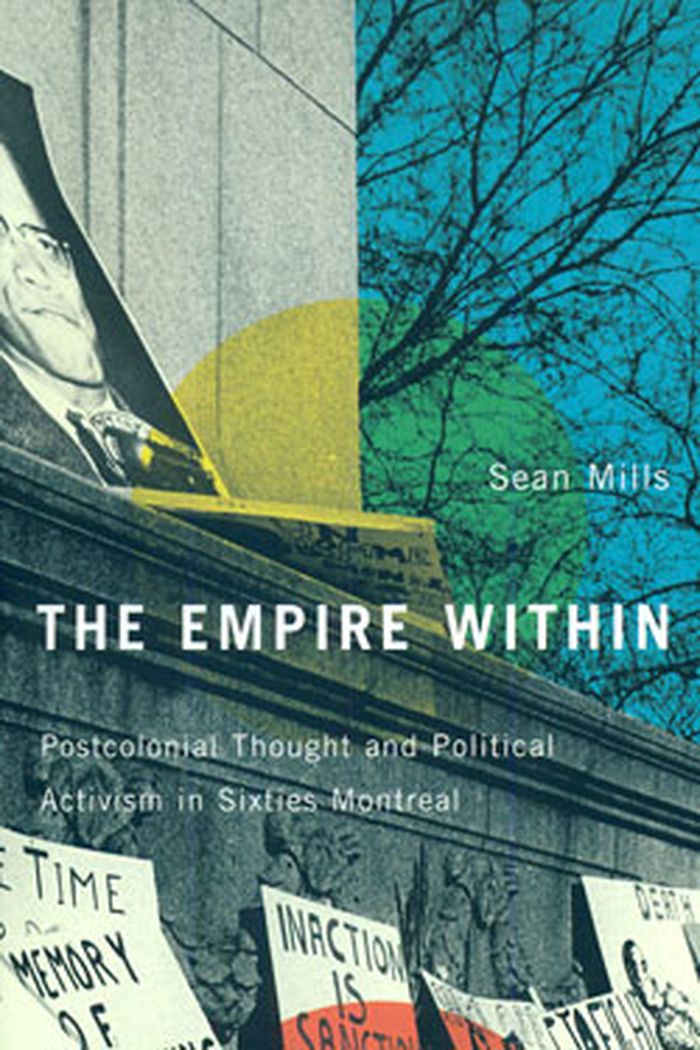
How did a First World urban population come to imagine itself as part of a global anti-colonial movement? This book tackles this and other paradoxes created by the surprising power and influence of Third World decolonization on political activism in 1960s Montreal. In a brilliant history of a turbulent time and place, Mills pulls back the curtain on the decade's activists and intellectuals, showing their engagement both with each other and with people from around the world. He demonstrates how activists of different backgrounds and with different political aims drew on ideas of decolonization to rethink the meanings attached to the politics of sex, race, and class and to imagine themselves as part of a broad transnational movement of anti-colonial and anti-imperialist resistance. The temporary unity forged around ideas of decolonization came undone in the 1970s, however, as many were forced to come to terms with the contradictions and ambiguities of applying ideas of decolonization in Quebec. From linguistic debates to labour unions, and from the political activities of citizens in the city's poorest neighbourhoods to its Caribbean intellectuals, this publication is a political tour of Montreal that reconsiders the meaning and legacy of the city's dissident traditions. It is also a fascinating chapter in the history of postcolonial thought.
The empire within: postcolonial thought and political activism in Sixties Montréal
Actions:
Prix:
$32.95
(disponible sur commande)
Résumé:
How did a First World urban population come to imagine itself as part of a global anti-colonial movement? This book tackles this and other paradoxes created by the surprising power and influence of Third World decolonization on political activism in 1960s Montreal. In a brilliant history of a turbulent time and place, Mills pulls back the curtain on the decade's activists and intellectuals, showing their engagement both with each other and with people from around the world. He demonstrates how activists of different backgrounds and with different political aims drew on ideas of decolonization to rethink the meanings attached to the politics of sex, race, and class and to imagine themselves as part of a broad transnational movement of anti-colonial and anti-imperialist resistance. The temporary unity forged around ideas of decolonization came undone in the 1970s, however, as many were forced to come to terms with the contradictions and ambiguities of applying ideas of decolonization in Quebec. From linguistic debates to labour unions, and from the political activities of citizens in the city's poorest neighbourhoods to its Caribbean intellectuals, this publication is a political tour of Montreal that reconsiders the meaning and legacy of the city's dissident traditions. It is also a fascinating chapter in the history of postcolonial thought.
Classification:
livres
livres
Publication:
août 2010
août 2010
Sujet:
Architecture de Montréal
Architecture de Montréal


