


1912 Résultats
Classification:
livres
livres
Actions:
Exemplaires:
Description:
ix, 276 pages : illustrations (some color), maps ; 27 cm
Description:
ix, 276 pages : illustrations (some color), maps ; 27 cm
Auteur:
Sujet:
Publication:
New York : Weatherhill, 1995.
New York : Weatherhill, 1995.
Titre:
Meiji revisited : the sites of Victorian Japan / by Dallas Finn.
Actions:
Exemplaires:
Description:
ix, 276 pages : illustrations (some color), maps ; 27 cm
Meiji revisited : the sites of Victorian Japan / by Dallas Finn.
Actions:
Exemplaires:
Description:
ix, 276 pages : illustrations (some color), maps ; 27 cm
Classification:
livres
livres
Publication:
New York : Weatherhill, 1995.
New York : Weatherhill, 1995.
Auteur:
Sujet:
Classification:
livres
livres
Actions:
Prix:
$79.00
(disponible sur commande)
Résumé:
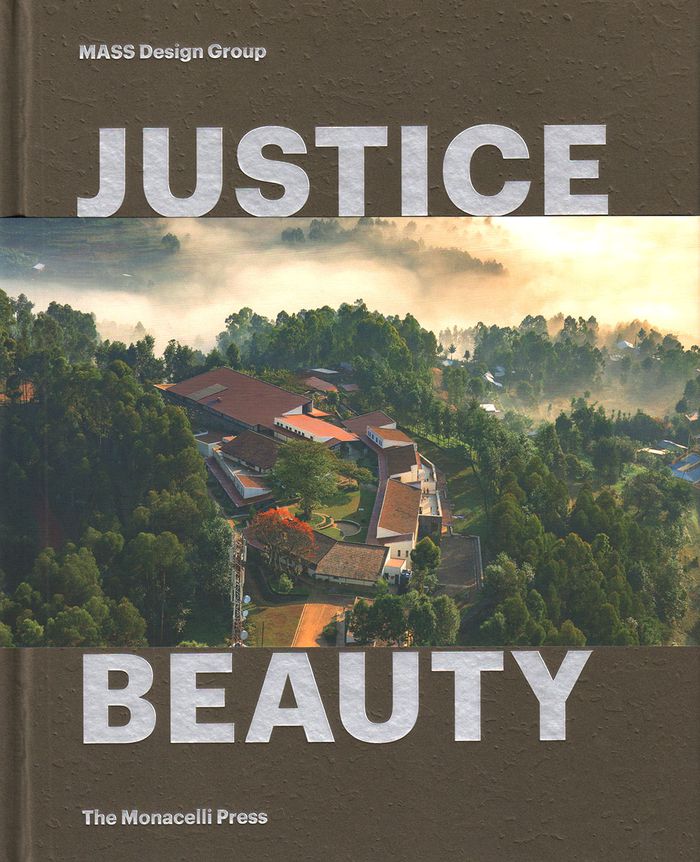
Founded in 2008, MASS Design Group collaborated with Partners In Health and the Rwanda Ministry of Health to design and build the Butaro District Hospital in Rwanda, a masterwork of architecture that also uniquely serves a community in need. Since then, MASS has grown into a dynamic collaborative of architects, planners, engineers, filmmakers, researchers, and public(...)
$79.00
(disponible sur commande)
Résumé:
Founded in 2008, MASS Design Group collaborated with Partners In Health and the Rwanda Ministry of Health to design and build the Butaro District Hospital in Rwanda, a masterwork of architecture that also uniquely serves a community in need. Since then, MASS has grown into a dynamic collaborative of architects, planners, engineers, filmmakers, researchers, and public(...)
Titre:
Justice is beauty: MASS design group
Actions:
Prix:
$79.00
(disponible sur commande)
Résumé:
Founded in 2008, MASS Design Group collaborated with Partners In Health and the Rwanda Ministry of Health to design and build the Butaro District Hospital in Rwanda, a masterwork of architecture that also uniquely serves a community in need. Since then, MASS has grown into a dynamic collaborative of architects, planners, engineers, filmmakers, researchers, and public health professionals working in more than a dozen countries in the fields of design, research, policy, education, and strategic planning.
Justice is beauty: MASS design group
Actions:
Prix:
$79.00
(disponible sur commande)
Résumé:
Founded in 2008, MASS Design Group collaborated with Partners In Health and the Rwanda Ministry of Health to design and build the Butaro District Hospital in Rwanda, a masterwork of architecture that also uniquely serves a community in need. Since then, MASS has grown into a dynamic collaborative of architects, planners, engineers, filmmakers, researchers, and public health professionals working in more than a dozen countries in the fields of design, research, policy, education, and strategic planning.
Classification:
livres
livres
Publication:
décembre 2019
décembre 2019
Sujet:
Architecture, monographies
Architecture, monographies
Classification:
livres
livres
Titre:
Ad Astra
Ad Astra
Actions:
Prix:
$50.00
(disponible en magasin)
Résumé:
''Ad Astra'' is an artist book created as part of a public art project commissioned for the medical library of the University of Montreal Health Center (CHUM), in Montréal, Quebec. Involving the arts, science, and public participation, ''Ad Astra'' consists of an archive of messages that are poetically sent to the stars and to the future. The messages, collected from the(...)
$50.00
(disponible en magasin)
Résumé:
''Ad Astra'' is an artist book created as part of a public art project commissioned for the medical library of the University of Montreal Health Center (CHUM), in Montréal, Quebec. Involving the arts, science, and public participation, ''Ad Astra'' consists of an archive of messages that are poetically sent to the stars and to the future. The messages, collected from the(...)
Publication:
septembre 2021
septembre 2021
Titre:
Ad Astra
Actions:
Prix:
$50.00
(disponible en magasin)
Résumé:
''Ad Astra'' is an artist book created as part of a public art project commissioned for the medical library of the University of Montreal Health Center (CHUM), in Montréal, Quebec. Involving the arts, science, and public participation, ''Ad Astra'' consists of an archive of messages that are poetically sent to the stars and to the future. The messages, collected from the hospital community, are transformed by means of a collaboration between art and neuroscience to generate astral images, and ultimately, a collective artwork representing a collection of prayers, hopes and fears. Rooted in deep human experiences,''Ad Astra'' gives voice to the range of emotions and the cycle of life and death that the hospital context is witness to daily. In compliment to the permanent multimedia artwork installed in the library, the book presents a tightly knit set of relationships among the various elements that compose the project, including messages, portraits, neurological diagrams, video-stills, citations, and texts. An introductory essay by Claire Moeder creatively illuminates the core interests of the project while the graphic design by Criterium echoes the installation with material means. The book is a nomadic archive and tactile object that was created to travel beyond the primary site of medical library, and ultimately towards the stars.
Ad Astra
Actions:
Prix:
$50.00
(disponible en magasin)
Résumé:
''Ad Astra'' is an artist book created as part of a public art project commissioned for the medical library of the University of Montreal Health Center (CHUM), in Montréal, Quebec. Involving the arts, science, and public participation, ''Ad Astra'' consists of an archive of messages that are poetically sent to the stars and to the future. The messages, collected from the hospital community, are transformed by means of a collaboration between art and neuroscience to generate astral images, and ultimately, a collective artwork representing a collection of prayers, hopes and fears. Rooted in deep human experiences,''Ad Astra'' gives voice to the range of emotions and the cycle of life and death that the hospital context is witness to daily. In compliment to the permanent multimedia artwork installed in the library, the book presents a tightly knit set of relationships among the various elements that compose the project, including messages, portraits, neurological diagrams, video-stills, citations, and texts. An introductory essay by Claire Moeder creatively illuminates the core interests of the project while the graphic design by Criterium echoes the installation with material means. The book is a nomadic archive and tactile object that was created to travel beyond the primary site of medical library, and ultimately towards the stars.
Classification:
livres
livres
Publication:
septembre 2021
septembre 2021
Classification:
livres
livres
Actions:
Exemplaires:
Description:
xiii, 344 pages : illustrations ; 26 cm
Description:
xiii, 344 pages : illustrations ; 26 cm
Auteur:
Sujet:
Publication:
New York : Oxford University Press, 1997.
New York : Oxford University Press, 1997.
Titre:
The fate of the English country house / David Littlejohn ; photographs by Sheila Littlejohn.
Actions:
Exemplaires:
Description:
xiii, 344 pages : illustrations ; 26 cm
The fate of the English country house / David Littlejohn ; photographs by Sheila Littlejohn.
Actions:
Exemplaires:
Description:
xiii, 344 pages : illustrations ; 26 cm
Classification:
livres
livres
Publication:
New York : Oxford University Press, 1997.
New York : Oxford University Press, 1997.
Auteur:
Sujet:
Classification:
livres
livres
Actions:
Exemplaires:
Description:
287 pages : illustrations (some color), color chart, facsimiles (some color), maps (some color) ; 25 x 30 cm
Description:
287 pages : illustrations (some color), color chart, facsimiles (some color), maps (some color) ; 25 x 30 cm
Auteur:
Sujet:
Publication:
Zurich, Switzerland : Park Books, [2025], ©2025
Zurich, Switzerland : Park Books, [2025], ©2025
Titre:
Living cities : three centuries of park systems / Matthew Skjonsberg.
Actions:
Exemplaires:
Description:
287 pages : illustrations (some color), color chart, facsimiles (some color), maps (some color) ; 25 x 30 cm
Living cities : three centuries of park systems / Matthew Skjonsberg.
Actions:
Exemplaires:
Description:
287 pages : illustrations (some color), color chart, facsimiles (some color), maps (some color) ; 25 x 30 cm
Classification:
livres
livres
Publication:
Zurich, Switzerland : Park Books, [2025], ©2025
Zurich, Switzerland : Park Books, [2025], ©2025
Auteur:
Sujet:
Classification:
livres
livres
Actions:
Prix:
$43.99
(disponible en magasin)
Résumé:
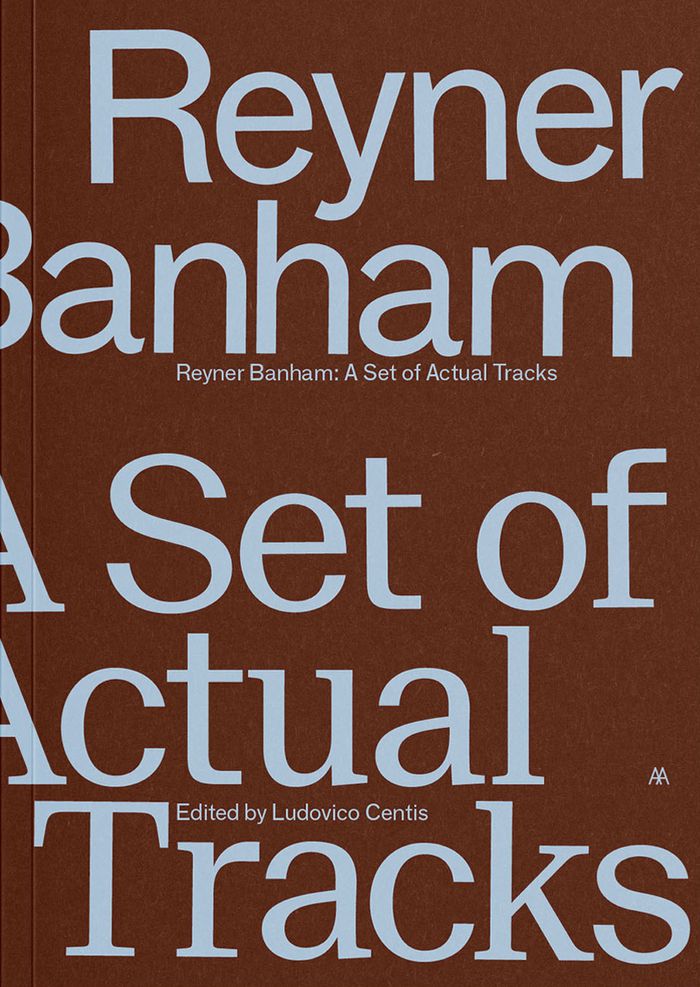
''A Set of Actual Tracks'' brings a contemporary critical lens to the work of Reyner Banham, one of the most prescient architectural and design critics of the 20th century. Sixteen of the acerbic historian’s essays and book chapters have been selected by the book’s contributors, ranging from classics such as “The Great Gizmo” to lesser-known texts, such as “The Wall,” an(...)
$43.99
(disponible en magasin)
Résumé:
''A Set of Actual Tracks'' brings a contemporary critical lens to the work of Reyner Banham, one of the most prescient architectural and design critics of the 20th century. Sixteen of the acerbic historian’s essays and book chapters have been selected by the book’s contributors, ranging from classics such as “The Great Gizmo” to lesser-known texts, such as “The Wall,” an(...)
Titre:
Reyner Banham: A set of actual tracks
Actions:
Prix:
$43.99
(disponible en magasin)
Résumé:
''A Set of Actual Tracks'' brings a contemporary critical lens to the work of Reyner Banham, one of the most prescient architectural and design critics of the 20th century. Sixteen of the acerbic historian’s essays and book chapters have been selected by the book’s contributors, ranging from classics such as “The Great Gizmo” to lesser-known texts, such as “The Wall,” an intimate confession he penned at the hospital shortly before his death. Each is accompanied by a contemporary response that contextualises Banham’s text, drawing out reflections on what the critic’s work means today.
Reyner Banham: A set of actual tracks
Actions:
Prix:
$43.99
(disponible en magasin)
Résumé:
''A Set of Actual Tracks'' brings a contemporary critical lens to the work of Reyner Banham, one of the most prescient architectural and design critics of the 20th century. Sixteen of the acerbic historian’s essays and book chapters have been selected by the book’s contributors, ranging from classics such as “The Great Gizmo” to lesser-known texts, such as “The Wall,” an intimate confession he penned at the hospital shortly before his death. Each is accompanied by a contemporary response that contextualises Banham’s text, drawing out reflections on what the critic’s work means today.
Classification:
livres
livres
Publication:
mars 2025
mars 2025
Sujet:
Théorie de l’architecture
Théorie de l’architecture
Classification:
livres
livres
Prix:
$48.95
(disponible sur commande)
Résumé:
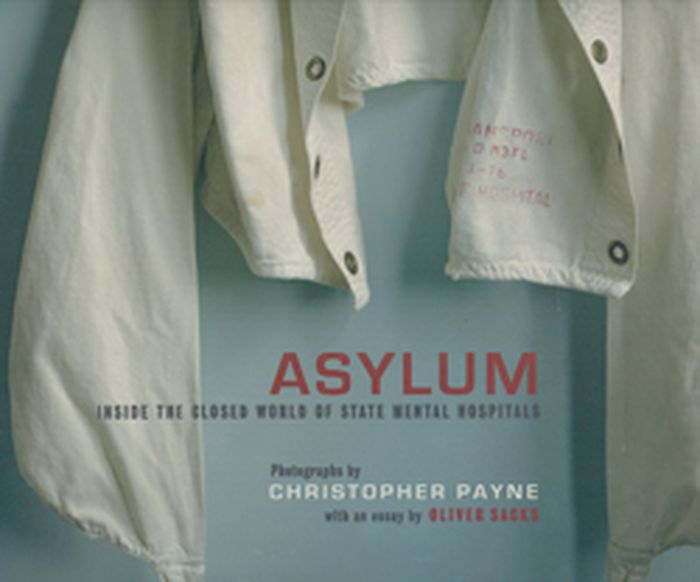
For more than half the nation's history, vast mental hospitals were a prominent feature of the American landscape. From the mid-nineteenth century to the early twentieth, over 250 institutions for the insane were built throughout the United States; by 1948, they housed more than a half million patients. Architect and photographer Christopher Payne spent six years(...)
$48.95
(disponible sur commande)
Résumé:
For more than half the nation's history, vast mental hospitals were a prominent feature of the American landscape. From the mid-nineteenth century to the early twentieth, over 250 institutions for the insane were built throughout the United States; by 1948, they housed more than a half million patients. Architect and photographer Christopher Payne spent six years(...)
Publication:
septembre 2009
septembre 2009
Titre:
Asylum, inside the closed world of state mental hospitals
Actions:
Prix:
$48.95
(disponible sur commande)
Résumé:
For more than half the nation's history, vast mental hospitals were a prominent feature of the American landscape. From the mid-nineteenth century to the early twentieth, over 250 institutions for the insane were built throughout the United States; by 1948, they housed more than a half million patients. Architect and photographer Christopher Payne spent six years documenting the decay of state mental hospitals like these, visiting seventy institutions in thirty states.
Asylum, inside the closed world of state mental hospitals
Actions:
Prix:
$48.95
(disponible sur commande)
Résumé:
For more than half the nation's history, vast mental hospitals were a prominent feature of the American landscape. From the mid-nineteenth century to the early twentieth, over 250 institutions for the insane were built throughout the United States; by 1948, they housed more than a half million patients. Architect and photographer Christopher Payne spent six years documenting the decay of state mental hospitals like these, visiting seventy institutions in thirty states.
Classification:
livres
livres
Publication:
septembre 2009
septembre 2009
Classification:
livres
livres
Prix:
$52.00
(disponible en magasin)
Résumé:
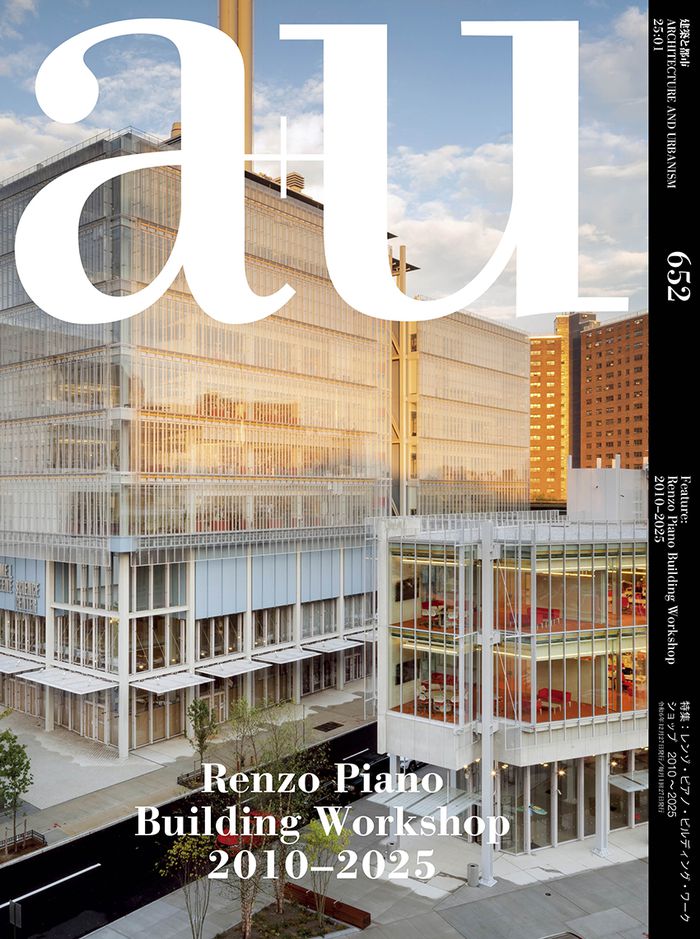
No. 652 of ''a+u'' showcases 25 projects by Renzo Piano Building Workshop from 2010–2025, revealing how RPBW’s Genoa and Paris offices adapt to diverse urban contexts. Whether working in historic cities like London and Istanbul or creating new landmarks, RPBW emphasizes human experience through structural lightness and environmental integration. The solarpunk spirit that(...)
$52.00
(disponible en magasin)
Résumé:
No. 652 of ''a+u'' showcases 25 projects by Renzo Piano Building Workshop from 2010–2025, revealing how RPBW’s Genoa and Paris offices adapt to diverse urban contexts. Whether working in historic cities like London and Istanbul or creating new landmarks, RPBW emphasizes human experience through structural lightness and environmental integration. The solarpunk spirit that(...)
Titre:
A+U 652 25:01 Renzo Piano Buidling Workshop 2010-2025
Actions:
Prix:
$52.00
(disponible en magasin)
Résumé:
No. 652 of ''a+u'' showcases 25 projects by Renzo Piano Building Workshop from 2010–2025, revealing how RPBW’s Genoa and Paris offices adapt to diverse urban contexts. Whether working in historic cities like London and Istanbul or creating new landmarks, RPBW emphasizes human experience through structural lightness and environmental integration. The solarpunk spirit that has distinguished RPBW over the years comes through in humanist projects like Uganda's Children's Surgical Hospital, combining rammed-earth construction with solar technology. Monumental institutions such as the cliff-like Stavros Niarchos Foundation Cultural Center in Athens demonstrate an analytical approach to site-specific challenges.
A+U 652 25:01 Renzo Piano Buidling Workshop 2010-2025
Actions:
Prix:
$52.00
(disponible en magasin)
Résumé:
No. 652 of ''a+u'' showcases 25 projects by Renzo Piano Building Workshop from 2010–2025, revealing how RPBW’s Genoa and Paris offices adapt to diverse urban contexts. Whether working in historic cities like London and Istanbul or creating new landmarks, RPBW emphasizes human experience through structural lightness and environmental integration. The solarpunk spirit that has distinguished RPBW over the years comes through in humanist projects like Uganda's Children's Surgical Hospital, combining rammed-earth construction with solar technology. Monumental institutions such as the cliff-like Stavros Niarchos Foundation Cultural Center in Athens demonstrate an analytical approach to site-specific challenges.
Classification:
livres
livres
Publication:
juillet 2025
juillet 2025
Sujet:
Revues
Revues
Classification:
livres
livres

Actions:
Prix:
$43.99
(disponible sur commande)
Résumé:
Presented in the order in which they were built, the selected buildings include the unusual, the fantastic, the spectacular, the utilitarian and the enchanting, each one offering a fascinating glimpse into the past of the British people. In telling the stories of how the buildings came to be, how they were used and how they were adapted by subsequent generations, this(...)
$43.99
(disponible sur commande)
Résumé:
Presented in the order in which they were built, the selected buildings include the unusual, the fantastic, the spectacular, the utilitarian and the enchanting, each one offering a fascinating glimpse into the past of the British people. In telling the stories of how the buildings came to be, how they were used and how they were adapted by subsequent generations, this(...)
Titre:
Landmarks: a history of Britain in 50 buildings
Actions:
Prix:
$43.99
(disponible sur commande)
Résumé:
Presented in the order in which they were built, the selected buildings include the unusual, the fantastic, the spectacular, the utilitarian and the enchanting, each one offering a fascinating glimpse into the past of the British people. In telling the stories of how the buildings came to be, how they were used and how they were adapted by subsequent generations, this book brings history to life through the evidence in the buildings our ancestors have left behind. Examples include a 15th-century inn in Suffolk, an Elizabethan hospital in Yorkshire, a lighthouse on Lundy and an Italianate railway station.
Landmarks: a history of Britain in 50 buildings
Actions:
Prix:
$43.99
(disponible sur commande)
Résumé:
Presented in the order in which they were built, the selected buildings include the unusual, the fantastic, the spectacular, the utilitarian and the enchanting, each one offering a fascinating glimpse into the past of the British people. In telling the stories of how the buildings came to be, how they were used and how they were adapted by subsequent generations, this book brings history to life through the evidence in the buildings our ancestors have left behind. Examples include a 15th-century inn in Suffolk, an Elizabethan hospital in Yorkshire, a lighthouse on Lundy and an Italianate railway station.
Classification:
livres
livres
Publication:
octobre 2015
octobre 2015
Classification:
livres
livres
Actions:
Exemplaires:
Description:
280 pages plates, portraits, facsimiles 20 cm
Description:
280 pages plates, portraits, facsimiles 20 cm
Auteur:
Sujet:
Publication:
Montréal, Les Frères des écoles chrétiennes, 1947.
Montréal, Les Frères des écoles chrétiennes, 1947.
Titre:
Monsieur de La Dauversière, fondateur de Montréal et des Religieuses hospitalières de S.-Joseph, 1597-1659.
Actions:
Exemplaires:
Description:
280 pages plates, portraits, facsimiles 20 cm
Monsieur de La Dauversière, fondateur de Montréal et des Religieuses hospitalières de S.-Joseph, 1597-1659.
Actions:
Exemplaires:
Description:
280 pages plates, portraits, facsimiles 20 cm
Classification:
livres
livres
Publication:
Montréal, Les Frères des écoles chrétiennes, 1947.
Montréal, Les Frères des écoles chrétiennes, 1947.
Auteur:
Sujet:


