


195 Résultats
Classification:
livres
livres
Prix:
$38.95
(disponible sur commande)
Résumé:
«Le journal est un imprimé ; l'affiche est un acte. Un acte vaut mieux que l'écrit». Affiche-Action se propose d'explorer les pratiques politiques à travers l'affiche, trop souvent assimilée depuis le début du XXe siècle à la propagande par l'image. N'oublions pas qu'il s'agit aussi d'un écrit, coulé dans des polices de caractères, conçu pour être public. Outil de(...)
$38.95
(disponible sur commande)
Résumé:
«Le journal est un imprimé ; l'affiche est un acte. Un acte vaut mieux que l'écrit». Affiche-Action se propose d'explorer les pratiques politiques à travers l'affiche, trop souvent assimilée depuis le début du XXe siècle à la propagande par l'image. N'oublions pas qu'il s'agit aussi d'un écrit, coulé dans des polices de caractères, conçu pour être public. Outil de(...)
Publication:
janvier 2013
janvier 2013
Titre:
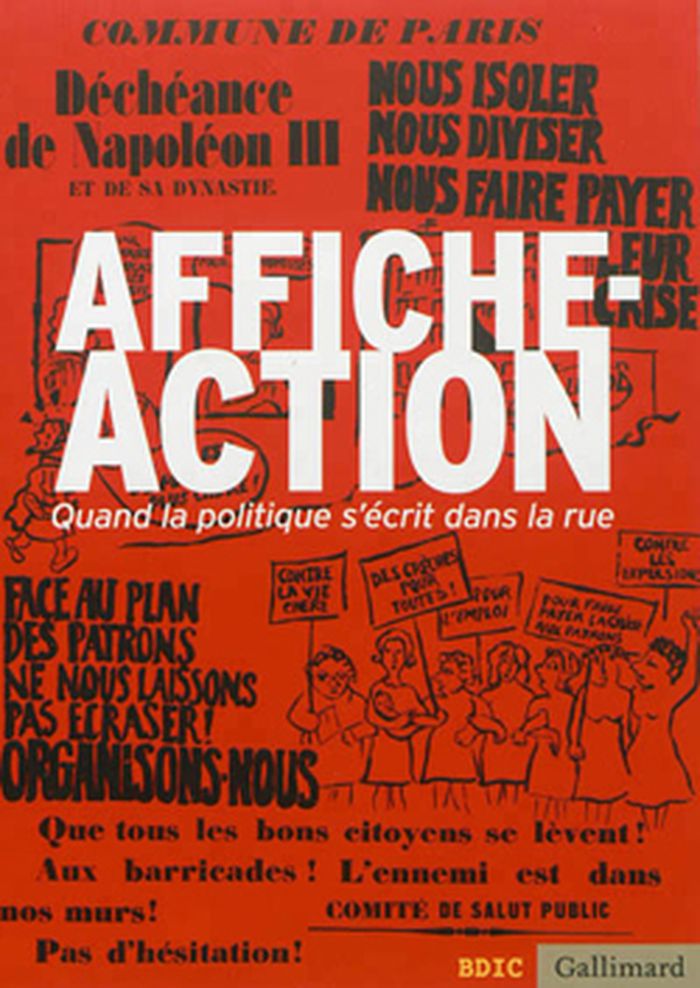
Affiche-action : quand la politique s'écrit dans la rue
Actions:
Prix:
$38.95
(disponible sur commande)
Résumé:
«Le journal est un imprimé ; l'affiche est un acte. Un acte vaut mieux que l'écrit». Affiche-Action se propose d'explorer les pratiques politiques à travers l'affiche, trop souvent assimilée depuis le début du XXe siècle à la propagande par l'image. N'oublions pas qu'il s'agit aussi d'un écrit, coulé dans des polices de caractères, conçu pour être public. Outil de gouvernement efficace en temps d'urgence et de crise, l'affiche devient un média privilégié pour débattre, proposer, s'opposer ou résister. La Commune de Paris s'impose comme un moment clé de cette histoire, intimement liée à celle des démocraties, depuis la Révolution française, où une pluie d'opinions s'expose dans la ville, jusqu'aux révolutions actuelles, où Internet porte la rue.
Affiche-action : quand la politique s'écrit dans la rue
Actions:
Prix:
$38.95
(disponible sur commande)
Résumé:
«Le journal est un imprimé ; l'affiche est un acte. Un acte vaut mieux que l'écrit». Affiche-Action se propose d'explorer les pratiques politiques à travers l'affiche, trop souvent assimilée depuis le début du XXe siècle à la propagande par l'image. N'oublions pas qu'il s'agit aussi d'un écrit, coulé dans des polices de caractères, conçu pour être public. Outil de gouvernement efficace en temps d'urgence et de crise, l'affiche devient un média privilégié pour débattre, proposer, s'opposer ou résister. La Commune de Paris s'impose comme un moment clé de cette histoire, intimement liée à celle des démocraties, depuis la Révolution française, où une pluie d'opinions s'expose dans la ville, jusqu'aux révolutions actuelles, où Internet porte la rue.
Classification:
livres
livres
Publication:
janvier 2013
janvier 2013
Classification:
livres
livres
Prix:
$21.00
(disponible sur commande)
Résumé:
Taking Henri Lefebvres 1967 essay, The Right to the City, as his jumping-off point, Harvey (Social Justice and the City) examines real estate booms and busts and predation on vulnerable populations; commodification of culture; neo-liberal capitalist dominance; and urban uprisings, from the Paris Commune to the massive 2006 protest against U.S. anti-immigrant policies to(...)
$21.00
(disponible sur commande)
Résumé:
Taking Henri Lefebvres 1967 essay, The Right to the City, as his jumping-off point, Harvey (Social Justice and the City) examines real estate booms and busts and predation on vulnerable populations; commodification of culture; neo-liberal capitalist dominance; and urban uprisings, from the Paris Commune to the massive 2006 protest against U.S. anti-immigrant policies to(...)
Titre:
Rebel cities : from the right to the city to the urban revolution
Actions:
Prix:
$21.00
(disponible sur commande)
Résumé:
Taking Henri Lefebvres 1967 essay, The Right to the City, as his jumping-off point, Harvey (Social Justice and the City) examines real estate booms and busts and predation on vulnerable populations; commodification of culture; neo-liberal capitalist dominance; and urban uprisings, from the Paris Commune to the massive 2006 protest against U.S. anti-immigrant policies to urbanized peasants and mineworkers in El Alto, Bolivia, who organized themselves and instigated a progressive Bolivian government. He asks: Is there something about the urban process and the urban experience... under capitalism, that, in itself, has the potential to ground anti-capitalist struggles?
Rebel cities : from the right to the city to the urban revolution
Actions:
Prix:
$21.00
(disponible sur commande)
Résumé:
Taking Henri Lefebvres 1967 essay, The Right to the City, as his jumping-off point, Harvey (Social Justice and the City) examines real estate booms and busts and predation on vulnerable populations; commodification of culture; neo-liberal capitalist dominance; and urban uprisings, from the Paris Commune to the massive 2006 protest against U.S. anti-immigrant policies to urbanized peasants and mineworkers in El Alto, Bolivia, who organized themselves and instigated a progressive Bolivian government. He asks: Is there something about the urban process and the urban experience... under capitalism, that, in itself, has the potential to ground anti-capitalist struggles?
Classification:
livres
livres
Publication:
avril 2012
avril 2012
Sujet:
Théorie de l’urbanisme
Théorie de l’urbanisme
Classification:
livres
livres

Titre:
L'herbier Vilmorin
L'herbier Vilmorin
Actions:
Prix:
$49.95
(disponible sur commande)
Résumé:
L'épopée de la famille Vilmorin commence avant la Révolution française. Philippe de Vilmorin, fils d'agriculteur, se passionne pour les plantes et invente en plein Paris le commerce scientifique des graines. Pendant plus de 200 ans et sur six générations, la famille est à la pointe de la recherche agronomique et horticole en France. Pour leurs travaux et par passion pour(...)
$49.95
(disponible sur commande)
Résumé:
L'épopée de la famille Vilmorin commence avant la Révolution française. Philippe de Vilmorin, fils d'agriculteur, se passionne pour les plantes et invente en plein Paris le commerce scientifique des graines. Pendant plus de 200 ans et sur six générations, la famille est à la pointe de la recherche agronomique et horticole en France. Pour leurs travaux et par passion pour(...)
Titre:
L'herbier Vilmorin
Actions:
Prix:
$49.95
(disponible sur commande)
Résumé:
L'épopée de la famille Vilmorin commence avant la Révolution française. Philippe de Vilmorin, fils d'agriculteur, se passionne pour les plantes et invente en plein Paris le commerce scientifique des graines. Pendant plus de 200 ans et sur six générations, la famille est à la pointe de la recherche agronomique et horticole en France. Pour leurs travaux et par passion pour les végétaux, elle constitue un herbier étonnant, le seul du genre arrivé jusqu'à nous. Cet herbier témoigne de l'activité industrielle et scientifique autour de la sélection des semences. Il a bien failli disparaître à la fin du siècle dernier mais l'enthousiasme des Verriérois l'a sorti de l'anonymat. La commune de Verrières-le-Buisson, terre des Vilmorin de 1815 à 1966 s'est attachée à valoriser ce patrimoine exceptionnel. En 2006, «l'herbier Roger de Vilmorin » qui comprend quelque 50 000 planches botaniques, dont un herbier dédié à Parmentier, une importante collection de blé, des aquarelles du Japon, un album d'iconographie de légumes… a été classé Monument historique.
L'herbier Vilmorin
Actions:
Prix:
$49.95
(disponible sur commande)
Résumé:
L'épopée de la famille Vilmorin commence avant la Révolution française. Philippe de Vilmorin, fils d'agriculteur, se passionne pour les plantes et invente en plein Paris le commerce scientifique des graines. Pendant plus de 200 ans et sur six générations, la famille est à la pointe de la recherche agronomique et horticole en France. Pour leurs travaux et par passion pour les végétaux, elle constitue un herbier étonnant, le seul du genre arrivé jusqu'à nous. Cet herbier témoigne de l'activité industrielle et scientifique autour de la sélection des semences. Il a bien failli disparaître à la fin du siècle dernier mais l'enthousiasme des Verriérois l'a sorti de l'anonymat. La commune de Verrières-le-Buisson, terre des Vilmorin de 1815 à 1966 s'est attachée à valoriser ce patrimoine exceptionnel. En 2006, «l'herbier Roger de Vilmorin » qui comprend quelque 50 000 planches botaniques, dont un herbier dédié à Parmentier, une importante collection de blé, des aquarelles du Japon, un album d'iconographie de légumes… a été classé Monument historique.
Classification:
livres
livres
Publication:
février 2016
février 2016
Sujet:
Jardins
Jardins
Classification:
livres
livres
Prix:
$25.95
(disponible sur commande)
Résumé:
Long before Occupy, cities were the subject of much utopian thinking. They are the centers of capital accumulation as well as of revolutionary politics, where deeper currents of social and political change rise to the surface. Do the financiers and developers control access to urban resources or do the people? Who dictates the quality and organization of daily life?(...)
$25.95
(disponible sur commande)
Résumé:
Long before Occupy, cities were the subject of much utopian thinking. They are the centers of capital accumulation as well as of revolutionary politics, where deeper currents of social and political change rise to the surface. Do the financiers and developers control access to urban resources or do the people? Who dictates the quality and organization of daily life?(...)
Titre:
Rebel cities: from the right to the city to the urban revolution
Actions:
Prix:
$25.95
(disponible sur commande)
Résumé:
Long before Occupy, cities were the subject of much utopian thinking. They are the centers of capital accumulation as well as of revolutionary politics, where deeper currents of social and political change rise to the surface. Do the financiers and developers control access to urban resources or do the people? Who dictates the quality and organization of daily life? "Rebel Cities" places the city at the heart of both capital and class struggles, looking at locations ranging from Johannesburg to Mumbai, from New York City to São Paulo. Drawing on the Paris Commune as well as Occupy Wall Street and the London Riots, Harvey asks how cities might be reorganized in more socially just and ecologically sane ways—and how they can become the focus for anti-capitalist resistance.
Rebel cities: from the right to the city to the urban revolution
Actions:
Prix:
$25.95
(disponible sur commande)
Résumé:
Long before Occupy, cities were the subject of much utopian thinking. They are the centers of capital accumulation as well as of revolutionary politics, where deeper currents of social and political change rise to the surface. Do the financiers and developers control access to urban resources or do the people? Who dictates the quality and organization of daily life? "Rebel Cities" places the city at the heart of both capital and class struggles, looking at locations ranging from Johannesburg to Mumbai, from New York City to São Paulo. Drawing on the Paris Commune as well as Occupy Wall Street and the London Riots, Harvey asks how cities might be reorganized in more socially just and ecologically sane ways—and how they can become the focus for anti-capitalist resistance.
Classification:
livres
livres
Publication:
mars 2019
mars 2019
Sujet:
Théorie de l’urbanisme
Théorie de l’urbanisme
Classification:
livres
livres
Actions:
Prix:
$48.99
(disponible sur commande)
Résumé:
Reinhold Martin and Claire Zimmerman bring together essays from an array of scholars exploring the troubled relationship between architecture and antidemocratic politics. Comprising detailed case studies throughout the world spanning from the early nineteenth century to the present, "Architecture against Democracy" analyzes crucial occasions when the built environment has(...)
$48.99
(disponible sur commande)
Résumé:
Reinhold Martin and Claire Zimmerman bring together essays from an array of scholars exploring the troubled relationship between architecture and antidemocratic politics. Comprising detailed case studies throughout the world spanning from the early nineteenth century to the present, "Architecture against Democracy" analyzes crucial occasions when the built environment has(...)
Titre:
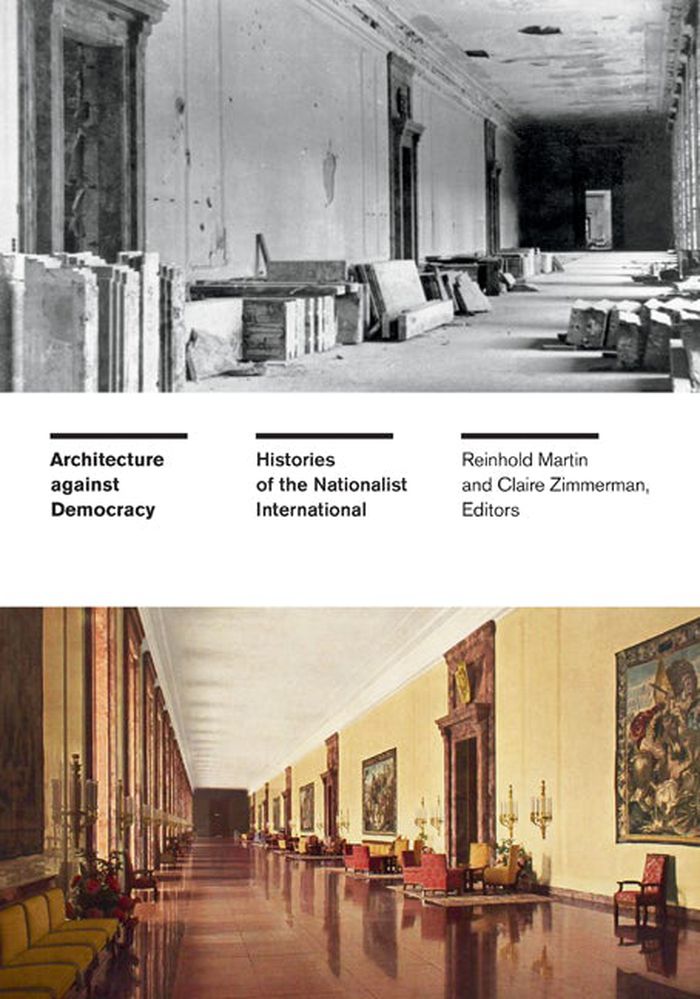
Architecture against democracy: histories of the nationalist international
Actions:
Prix:
$48.99
(disponible sur commande)
Résumé:
Reinhold Martin and Claire Zimmerman bring together essays from an array of scholars exploring the troubled relationship between architecture and antidemocratic politics. Comprising detailed case studies throughout the world spanning from the early nineteenth century to the present, "Architecture against Democracy" analyzes crucial occasions when the built environment has been harnessed as an instrument of authoritarian power. Alongside chapters focusing on paradigmatic episodes from twentieth-century German and Italian fascism, the contributors examine historic and contemporary events and subjects that are organized thematically, including the founding of the Smithsonian Institution, Ellis Island infrastructure, the aftermath of the Paris Commune, Cold War West Germany and Iraq, Frank Lloyd Wright’s domestic architecture, and Istanbul’s Taksim Square. Through the range and depth of these accounts, "Architecture against Democracy" presents a selective overview of antidemocratic processes as they unfold in the built environment throughout Western modernity, offering an architectural history of the recent "nationalist international."
Architecture against democracy: histories of the nationalist international
Actions:
Prix:
$48.99
(disponible sur commande)
Résumé:
Reinhold Martin and Claire Zimmerman bring together essays from an array of scholars exploring the troubled relationship between architecture and antidemocratic politics. Comprising detailed case studies throughout the world spanning from the early nineteenth century to the present, "Architecture against Democracy" analyzes crucial occasions when the built environment has been harnessed as an instrument of authoritarian power. Alongside chapters focusing on paradigmatic episodes from twentieth-century German and Italian fascism, the contributors examine historic and contemporary events and subjects that are organized thematically, including the founding of the Smithsonian Institution, Ellis Island infrastructure, the aftermath of the Paris Commune, Cold War West Germany and Iraq, Frank Lloyd Wright’s domestic architecture, and Istanbul’s Taksim Square. Through the range and depth of these accounts, "Architecture against Democracy" presents a selective overview of antidemocratic processes as they unfold in the built environment throughout Western modernity, offering an architectural history of the recent "nationalist international."
Classification:
livres
livres
Publication:
avril 2024
avril 2024
Sujet:
Théorie de l’architecture
Théorie de l’architecture


