


1914 Résultats
Classification:
périodiques
périodiques
Actions:
Prix:
$16.95
(disponible en magasin)
Résumé:
With this issue, the funambulist offers a critique of their own framework of knowledge production. The concept of “Global South” has been turned into a handy word to lazily designate two-thirds of the world’s earthly area and 90% of its population, thus flattening the millions of specificities that characterize this grouping. It also often embodies an entity that only(...)
$16.95
(disponible en magasin)
Résumé:
With this issue, the funambulist offers a critique of their own framework of knowledge production. The concept of “Global South” has been turned into a handy word to lazily designate two-thirds of the world’s earthly area and 90% of its population, thus flattening the millions of specificities that characterize this grouping. It also often embodies an entity that only(...)
Titre:
The Funambulist 66: Beyond the global South
Actions:
Prix:
$16.95
(disponible en magasin)
Résumé:
With this issue, the funambulist offers a critique of their own framework of knowledge production. The concept of “Global South” has been turned into a handy word to lazily designate two-thirds of the world’s earthly area and 90% of its population, thus flattening the millions of specificities that characterize this grouping. It also often embodies an entity that only exists dependent on its alter ego, the Global North. As such, it denies any form of agency to the peoples designated as “the South” independently from their relationship to the “North,” as we examine in the case of the war in the eastern Congo (Josaphat Musamba). The South/North binary also designates borders as lines (rather than as regimes operating on both sides of these lines) and essentializes the difference between sides. Can Blackness and Indigeneity in Abya Yala be read without a fundamental split at the settler colonial line that separates North and Central-South Americas (Ashley Ngozi Agbasoga)? Can 20th century Korea’s history show us that the line that currently separates the north (usually presented as part of the Global South) and the south (usually presented as part of the Global North) particularly illustrates the North/South framework’s lack of complexity (Lina Eunji Chang and Andrei-Sergei Kim)? What kind of colonial violence the Non-Aligned Movement invisibilizes in West Papua (Quito Swan), in Kashmir (Choakkeladd) or Western Sahara (Buhari Lehbib) and, in contrast, what kind of solidarities it allowed from Yugoslavia (Dubravka Sekulic and Sanja Horvatincic)? And, crucially, how can we honor the complexity of politics by being able to hold two contradictory truths together as Micol Meghnagi reminds us in the context of Gaddafi’s Libya and Pan-Arabism.
The Funambulist 66: Beyond the global South
Actions:
Prix:
$16.95
(disponible en magasin)
Résumé:
With this issue, the funambulist offers a critique of their own framework of knowledge production. The concept of “Global South” has been turned into a handy word to lazily designate two-thirds of the world’s earthly area and 90% of its population, thus flattening the millions of specificities that characterize this grouping. It also often embodies an entity that only exists dependent on its alter ego, the Global North. As such, it denies any form of agency to the peoples designated as “the South” independently from their relationship to the “North,” as we examine in the case of the war in the eastern Congo (Josaphat Musamba). The South/North binary also designates borders as lines (rather than as regimes operating on both sides of these lines) and essentializes the difference between sides. Can Blackness and Indigeneity in Abya Yala be read without a fundamental split at the settler colonial line that separates North and Central-South Americas (Ashley Ngozi Agbasoga)? Can 20th century Korea’s history show us that the line that currently separates the north (usually presented as part of the Global South) and the south (usually presented as part of the Global North) particularly illustrates the North/South framework’s lack of complexity (Lina Eunji Chang and Andrei-Sergei Kim)? What kind of colonial violence the Non-Aligned Movement invisibilizes in West Papua (Quito Swan), in Kashmir (Choakkeladd) or Western Sahara (Buhari Lehbib) and, in contrast, what kind of solidarities it allowed from Yugoslavia (Dubravka Sekulic and Sanja Horvatincic)? And, crucially, how can we honor the complexity of politics by being able to hold two contradictory truths together as Micol Meghnagi reminds us in the context of Gaddafi’s Libya and Pan-Arabism.
Classification:
périodiques
périodiques
Publication:
juillet 2026
juillet 2026
Sujet:
Revues
Revues
Classification:
livres
livres
Prix:
$46.95
(disponible sur commande)
Résumé:
This book tells the story of a prime example of bottom-up development-aid based on pragmatism and with the goal of self-empowerment in construction. The new education center of Advan FC on the island of Madagascar is a prime example of a bottom-up development-aid project based on pragmatism and with the goal of self-empowerment. When Viktor Bänziger, who runs a bar in(...)
$46.95
(disponible sur commande)
Résumé:
This book tells the story of a prime example of bottom-up development-aid based on pragmatism and with the goal of self-empowerment in construction. The new education center of Advan FC on the island of Madagascar is a prime example of a bottom-up development-aid project based on pragmatism and with the goal of self-empowerment. When Viktor Bänziger, who runs a bar in(...)
Titre:
A home for Advan FC: Handbook for a Madagascan Building
Actions:
Prix:
$46.95
(disponible sur commande)
Résumé:
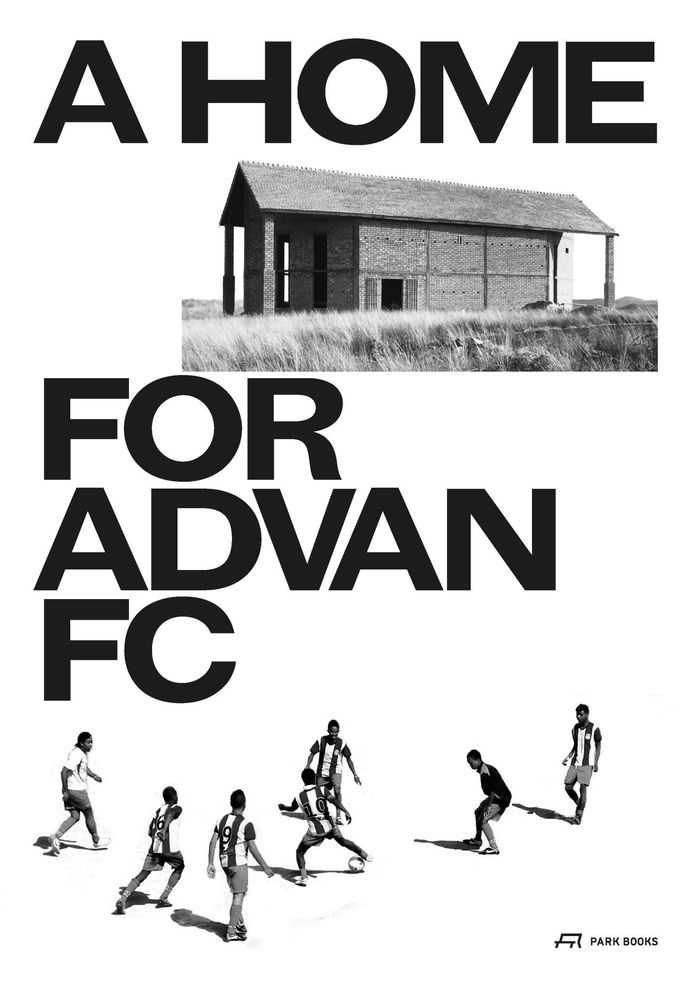
This book tells the story of a prime example of bottom-up development-aid based on pragmatism and with the goal of self-empowerment in construction. The new education center of Advan FC on the island of Madagascar is a prime example of a bottom-up development-aid project based on pragmatism and with the goal of self-empowerment. When Viktor Bänziger, who runs a bar in the heart of Zurich, visited Madagascar as a tourist in 2015, he was struck by the severe poverty and difficult living conditions of the local population and decided to act. In close collaboration with Zurich-based architect Nele Dechmann and the president of Advan FC, Titus Solohery Andriamananjara, the project for a new soccer field and surrounding buildings was developed. The complex, which is soundly based on local building knowledge and construction methods, gives local children the opportunity to develop their soccer skills and, more importantly, to receive minimal reading and writing lessons after training and to have meals together. The remote location in Madagascar’s mountains and the tight budget suggested a simple typology that conveys a common architectural language despite the different uses of individual buildings. A key part of the entire concept is a simple manual for the actual construction that leaves many decisions and responsibilities to the local community. Documenting the architecture of Advan FC’s education center and its construction process in rich detail through photographs and plans, this book tells the story of an extraordinary participative undertaking of people originating from deeply differing cultural and socioeconomic backgrounds. It introduces a model of potentially universal usage anywhere in the world in which the continuous exchange of knowledge between a project’s participants demonstrates an inspiring alternative to conventional international collaborations.
A home for Advan FC: Handbook for a Madagascan Building
Actions:
Prix:
$46.95
(disponible sur commande)
Résumé:
This book tells the story of a prime example of bottom-up development-aid based on pragmatism and with the goal of self-empowerment in construction. The new education center of Advan FC on the island of Madagascar is a prime example of a bottom-up development-aid project based on pragmatism and with the goal of self-empowerment. When Viktor Bänziger, who runs a bar in the heart of Zurich, visited Madagascar as a tourist in 2015, he was struck by the severe poverty and difficult living conditions of the local population and decided to act. In close collaboration with Zurich-based architect Nele Dechmann and the president of Advan FC, Titus Solohery Andriamananjara, the project for a new soccer field and surrounding buildings was developed. The complex, which is soundly based on local building knowledge and construction methods, gives local children the opportunity to develop their soccer skills and, more importantly, to receive minimal reading and writing lessons after training and to have meals together. The remote location in Madagascar’s mountains and the tight budget suggested a simple typology that conveys a common architectural language despite the different uses of individual buildings. A key part of the entire concept is a simple manual for the actual construction that leaves many decisions and responsibilities to the local community. Documenting the architecture of Advan FC’s education center and its construction process in rich detail through photographs and plans, this book tells the story of an extraordinary participative undertaking of people originating from deeply differing cultural and socioeconomic backgrounds. It introduces a model of potentially universal usage anywhere in the world in which the continuous exchange of knowledge between a project’s participants demonstrates an inspiring alternative to conventional international collaborations.
Classification:
livres
livres
Publication:
mai 2022
mai 2022
Sujet:
Architecture, monographies
Architecture, monographies
Classification:
périodiques
périodiques
Actions:
Prix:
$71.50
(disponible sur commande)
Résumé:
A ‘Pacific’ century, an Asian century or a Chinese century? On the threshold between the 20th and the 21st century, the transit from the Atlantic to the Pacific is forecasted by all; the move from America to Asia is noticed by many; and the replacement of the United States by China is feared by some: the awakening of the dragon provokes both wonder and distrust. After the(...)
$71.50
(disponible sur commande)
Résumé:
A ‘Pacific’ century, an Asian century or a Chinese century? On the threshold between the 20th and the 21st century, the transit from the Atlantic to the Pacific is forecasted by all; the move from America to Asia is noticed by many; and the replacement of the United States by China is feared by some: the awakening of the dragon provokes both wonder and distrust. After the(...)
Titre:
AV Monografias / Monographs 109-110 (2004) : China boom, growth unlimited
Actions:
Prix:
$71.50
(disponible sur commande)
Résumé:
A ‘Pacific’ century, an Asian century or a Chinese century? On the threshold between the 20th and the 21st century, the transit from the Atlantic to the Pacific is forecasted by all; the move from America to Asia is noticed by many; and the replacement of the United States by China is feared by some: the awakening of the dragon provokes both wonder and distrust. After the reforms of Deng Xiaoping in 1978, in the last 25 years China has grown at a rate of 9 percent; in this period, its GNP has tripled, and the percentage of population living in cities has doubled, exceeding 40%. Fueled by exports, and backed by the postotalitarian protectionism of a single-party government, the stunning growth of China has not yet created global companies – the Sony or Hyundai that led the Japanese or Korean booms – but its large oil firms (PetroChina, Sinopec, CNOOC) try to find in several continents the energy needed by the world’s second importer; its technological companies (from Lenovo, that has purchased a division of IBM, to Huawei, that has created in Shenzhen a Silicon Valley-style campus, Doric Disney designs included) make up for scarce innovation with low labor costs; and its new breed of fancy millionaires, who build chateaux or buy French cosmetic brands, spearhead a large consumerist middle class, supplying a strong domestic demand that adds to the thrust of foreign markets. China’s unequal growth does not appear to be a large risk: the differences in income are similar to those of the US, and the contrast between the wealthy coast and the rural inland – where most upheavals have started, from Boxers to communists – is blurred as the development of Shanghai extends upriver along the Yangtze corridor, and as Hong Kong’s dynamism expands in concentric waves over the superregion of Guangdong, from that Pearl River Delta known as ‘the factory of the world’. More dangerous seem to be the weakness of the financial system, the persistence of administrative corruption and the scarcity of energy resources, the supply of which is being secured by heavy investments on the military, something that upsets its neighbors – Japan and Taiwan most of all, but also Korea and another awakening giant, India –, its competitors, and even the US, that urges its European allies to maintain the arms ban on China. On top of all this, in a country that has reached 1,300 million inhabitants in 2005, is the demographic scenario created by the single child policy and the accelerated ageing of the population, with an increasing number of 4+2+1 families, where now there are four grandparents and two parents satisfying the needs of a little emperor, but where in just 30 years a single adult will have to take care of six retirees. This huge economic and social transformation has expressed itself via an unprecedented urban explosion, shaped by titanic public works – large dams and suspended bridges, elevated highways and submarine tunnels – and with the foreseeable devastating impact on the environment and cultural heritage. The building frenzy that has attracted so many foreign architects to China – initially for technically complex or symbolically significant works, like some of the skyscrapers of Shanghai or the olympic projects in Beijing, but now more often for urban plans or conventional commercial developments – receives, according to The Economist, the added boost of a real-estate bubble that feeds on hot money placing its bets on the yuan’s revaluation. This process has turned some districts of Shanghai such as Pudong or Puxi into the most sought-after office areas in the world, and has caused in cities like Beijing an increasing decay of its architectural legacy, which barely respects World Heritage sites (The Great Wall, the Forbidden City, the Summer Palace, the Ming Imperial Tombs and the Temple of Heaven), besieged already by a unanimous tide of trivial constructions.
AV Monografias / Monographs 109-110 (2004) : China boom, growth unlimited
Actions:
Prix:
$71.50
(disponible sur commande)
Résumé:
A ‘Pacific’ century, an Asian century or a Chinese century? On the threshold between the 20th and the 21st century, the transit from the Atlantic to the Pacific is forecasted by all; the move from America to Asia is noticed by many; and the replacement of the United States by China is feared by some: the awakening of the dragon provokes both wonder and distrust. After the reforms of Deng Xiaoping in 1978, in the last 25 years China has grown at a rate of 9 percent; in this period, its GNP has tripled, and the percentage of population living in cities has doubled, exceeding 40%. Fueled by exports, and backed by the postotalitarian protectionism of a single-party government, the stunning growth of China has not yet created global companies – the Sony or Hyundai that led the Japanese or Korean booms – but its large oil firms (PetroChina, Sinopec, CNOOC) try to find in several continents the energy needed by the world’s second importer; its technological companies (from Lenovo, that has purchased a division of IBM, to Huawei, that has created in Shenzhen a Silicon Valley-style campus, Doric Disney designs included) make up for scarce innovation with low labor costs; and its new breed of fancy millionaires, who build chateaux or buy French cosmetic brands, spearhead a large consumerist middle class, supplying a strong domestic demand that adds to the thrust of foreign markets. China’s unequal growth does not appear to be a large risk: the differences in income are similar to those of the US, and the contrast between the wealthy coast and the rural inland – where most upheavals have started, from Boxers to communists – is blurred as the development of Shanghai extends upriver along the Yangtze corridor, and as Hong Kong’s dynamism expands in concentric waves over the superregion of Guangdong, from that Pearl River Delta known as ‘the factory of the world’. More dangerous seem to be the weakness of the financial system, the persistence of administrative corruption and the scarcity of energy resources, the supply of which is being secured by heavy investments on the military, something that upsets its neighbors – Japan and Taiwan most of all, but also Korea and another awakening giant, India –, its competitors, and even the US, that urges its European allies to maintain the arms ban on China. On top of all this, in a country that has reached 1,300 million inhabitants in 2005, is the demographic scenario created by the single child policy and the accelerated ageing of the population, with an increasing number of 4+2+1 families, where now there are four grandparents and two parents satisfying the needs of a little emperor, but where in just 30 years a single adult will have to take care of six retirees. This huge economic and social transformation has expressed itself via an unprecedented urban explosion, shaped by titanic public works – large dams and suspended bridges, elevated highways and submarine tunnels – and with the foreseeable devastating impact on the environment and cultural heritage. The building frenzy that has attracted so many foreign architects to China – initially for technically complex or symbolically significant works, like some of the skyscrapers of Shanghai or the olympic projects in Beijing, but now more often for urban plans or conventional commercial developments – receives, according to The Economist, the added boost of a real-estate bubble that feeds on hot money placing its bets on the yuan’s revaluation. This process has turned some districts of Shanghai such as Pudong or Puxi into the most sought-after office areas in the world, and has caused in cities like Beijing an increasing decay of its architectural legacy, which barely respects World Heritage sites (The Great Wall, the Forbidden City, the Summer Palace, the Ming Imperial Tombs and the Temple of Heaven), besieged already by a unanimous tide of trivial constructions.
Classification:
périodiques
périodiques
Publication:
août 2005, Madrid
août 2005, Madrid
Sujet:
Revues
Revues
Classification:
livres
livres
Titre:
Key urban housing of the twentieth century : plans, sections, and elevations / Hilary French.
Key urban housing of the twentieth century : plans, sections, and elevations / Hilary French.
Actions:
Exemplaires:
Description:
240 pages : illustrations (chiefly color), plans (some color), maps ; 29 cm + 1 CD-ROM (4 3/4 in.)
Description:
240 pages : illustrations (chiefly color), plans (some color), maps ; 29 cm + 1 CD-ROM (4 3/4 in.)
Auteur:
Sujet:
Publication:
New York : W.W. Norton, 2008.
New York : W.W. Norton, 2008.
Titre:
Key urban housing of the twentieth century : plans, sections, and elevations / Hilary French.
Actions:
Exemplaires:
Description:
240 pages : illustrations (chiefly color), plans (some color), maps ; 29 cm + 1 CD-ROM (4 3/4 in.)
Key urban housing of the twentieth century : plans, sections, and elevations / Hilary French.
Actions:
Exemplaires:
Description:
240 pages : illustrations (chiefly color), plans (some color), maps ; 29 cm + 1 CD-ROM (4 3/4 in.)
Classification:
livres
livres
Publication:
New York : W.W. Norton, 2008.
New York : W.W. Norton, 2008.
Auteur:
Sujet:
Classification:
livres
livres

Prix:
$59.95
(disponible sur commande)
Résumé:
Cet ouvrage retrace l'histoire méconnue d'un secteur du logement populaire à Paris : les «garnis», à savoir les maisons et hôtels meublés à destination des salariés modestes et des ouvriers. Certains drames de l'année 2005 (incendie de l'hôtel Paris-Opéra : 25 morts) ont de nouveau attiré l'attention sur les rares hôtels meublés qui subsistent aujourd'hui, vétustes et(...)
$59.95
(disponible sur commande)
Résumé:
Cet ouvrage retrace l'histoire méconnue d'un secteur du logement populaire à Paris : les «garnis», à savoir les maisons et hôtels meublés à destination des salariés modestes et des ouvriers. Certains drames de l'année 2005 (incendie de l'hôtel Paris-Opéra : 25 morts) ont de nouveau attiré l'attention sur les rares hôtels meublés qui subsistent aujourd'hui, vétustes et(...)
Sujet:
Théorie de l’urbanisme
Théorie de l’urbanisme
Publication:
juin 2007, Grâne
juin 2007, Grâne
Titre:
Une chambre en ville : hôtels meublés et garnis à Paris, 1860-1990
Actions:
Prix:
$59.95
(disponible sur commande)
Résumé:
Cet ouvrage retrace l'histoire méconnue d'un secteur du logement populaire à Paris : les «garnis», à savoir les maisons et hôtels meublés à destination des salariés modestes et des ouvriers. Certains drames de l'année 2005 (incendie de l'hôtel Paris-Opéra : 25 morts) ont de nouveau attiré l'attention sur les rares hôtels meublés qui subsistent aujourd'hui, vétustes et surpeuplés, signe de la pénurie de logements pour les plus démunis. Or, jadis, ces établissements pullulaient dans Paris : près de 10000 logeurs en 1880, et près de 200 000 personnes logées ; au tout début des années 1930, avant la crise économique, près de 350 000 Parisiens (11 % de la population de la capitale !) ne vivaient pas dans leurs meubles. Le migrant d'origine provinciale ou étrangère venant à Paris pour travailler s'installait tout naturellement à l'hôtel. Avoir une chambre en ville, c'était le gage banal d'une indépendance minimum. Cette fonction de sas valait surtout pour les hommes; les femmes, à leur arrivée à Paris, occupaient plutôt des emplois où elles étaient nourries et logées. Avec la crise économique des années 1930, le secteur commença un lent déclin. Au moment de la crise du logement des années 1950, l'hôtel meublé retrouva un second souffle. Le déclin s'accéléra ensuite dans les années 1960. Le garni était devenu dans l'opinion et pour l'État synonyme de taudis et de logement insalubre, destructeur de la famille et de la morale et une partie de ses habitants put accéder au logement social de masse. Subsistèrent longtemps des formes particulières d'accueil des plus pauvres : vieilles maisons insalubres du centre et des faubourgs, bidonvilles, foyers de travailleurs, cités de transit... Rôle rempli auparavant - et souvent infiniment mieux - par le garni. Maintenus en vie comme substitut dérisoire au logement social déficient, ou bien transformés en «résidences sociales», les hôtels sont aujourd'hui bien loin de leur rôle ancien d'habitat de transition entre migration et intégration en ville. Leur survivance, signe de la misère des temps, est aussi le gage du maintien des plus pauvres dans la ville.
Une chambre en ville : hôtels meublés et garnis à Paris, 1860-1990
Actions:
Prix:
$59.95
(disponible sur commande)
Résumé:
Cet ouvrage retrace l'histoire méconnue d'un secteur du logement populaire à Paris : les «garnis», à savoir les maisons et hôtels meublés à destination des salariés modestes et des ouvriers. Certains drames de l'année 2005 (incendie de l'hôtel Paris-Opéra : 25 morts) ont de nouveau attiré l'attention sur les rares hôtels meublés qui subsistent aujourd'hui, vétustes et surpeuplés, signe de la pénurie de logements pour les plus démunis. Or, jadis, ces établissements pullulaient dans Paris : près de 10000 logeurs en 1880, et près de 200 000 personnes logées ; au tout début des années 1930, avant la crise économique, près de 350 000 Parisiens (11 % de la population de la capitale !) ne vivaient pas dans leurs meubles. Le migrant d'origine provinciale ou étrangère venant à Paris pour travailler s'installait tout naturellement à l'hôtel. Avoir une chambre en ville, c'était le gage banal d'une indépendance minimum. Cette fonction de sas valait surtout pour les hommes; les femmes, à leur arrivée à Paris, occupaient plutôt des emplois où elles étaient nourries et logées. Avec la crise économique des années 1930, le secteur commença un lent déclin. Au moment de la crise du logement des années 1950, l'hôtel meublé retrouva un second souffle. Le déclin s'accéléra ensuite dans les années 1960. Le garni était devenu dans l'opinion et pour l'État synonyme de taudis et de logement insalubre, destructeur de la famille et de la morale et une partie de ses habitants put accéder au logement social de masse. Subsistèrent longtemps des formes particulières d'accueil des plus pauvres : vieilles maisons insalubres du centre et des faubourgs, bidonvilles, foyers de travailleurs, cités de transit... Rôle rempli auparavant - et souvent infiniment mieux - par le garni. Maintenus en vie comme substitut dérisoire au logement social déficient, ou bien transformés en «résidences sociales», les hôtels sont aujourd'hui bien loin de leur rôle ancien d'habitat de transition entre migration et intégration en ville. Leur survivance, signe de la misère des temps, est aussi le gage du maintien des plus pauvres dans la ville.
Classification:
livres
livres
Publication:
juin 2007, Grâne
juin 2007, Grâne
Sujet:
Théorie de l’urbanisme
Théorie de l’urbanisme
Classification:
livres
livres
Actions:
Prix:
$30.00
(disponible sur commande)
Résumé:
Du Plan Nord à Énergie-Est, en passant par la construction d’un méga-barrage hydroélectrique ou de vastes projets de condos à flanc de montagne, le concept d’acceptabilité sociale est au coeur des débats sociaux et politiques entourant tous les projets de développement d’envergure depuis une dizaine d’années. Si tout le monde en parle, la définition du concept ne fait pas(...)
$30.00
(disponible sur commande)
Résumé:
Du Plan Nord à Énergie-Est, en passant par la construction d’un méga-barrage hydroélectrique ou de vastes projets de condos à flanc de montagne, le concept d’acceptabilité sociale est au coeur des débats sociaux et politiques entourant tous les projets de développement d’envergure depuis une dizaine d’années. Si tout le monde en parle, la définition du concept ne fait pas(...)
Publication:
avril 2017
avril 2017
Titre:
Acceptabilité sociale : sans oui, c'est non
Actions:
Prix:
$30.00
(disponible sur commande)
Résumé:
Du Plan Nord à Énergie-Est, en passant par la construction d’un méga-barrage hydroélectrique ou de vastes projets de condos à flanc de montagne, le concept d’acceptabilité sociale est au coeur des débats sociaux et politiques entourant tous les projets de développement d’envergure depuis une dizaine d’années. Si tout le monde en parle, la définition du concept ne fait pas l’unanimité. Pour les uns, l’acceptabilité sociale émane d’un jargon de décideurs et de technocrates qui ne savent plus quoi inventer pour envelopper de flou ce qui est imposé à la population. Pour les autres, c’est un concept fourre-tout qui ouvre la porte à tout et son contraire. Dans le discours public, toutefois, tout se passe comme si l’utilisation de l’acceptabilité sociale répondait au principe de base de la novlangue de Gorge Orwell dans son roman 1984: elle évacue les nuances et tend à réduire les éléments du débat à des dichotomies qui renforcent le pouvoir des élites en place, du type « vous êtes pour ou vous êtes contre ». Le concept d’acceptabilité sociale n’est inscrit dans aucune loi, ni québécoise ni canadienne, ce qui complique encore plus les choses. Avec rigueur et une bonne dose d’humour, Marie-Ève Maillé et Pierre Battelier nous invitent à un exercice de déconstruction des 10 dichotomies présentes dans le discours entourant l’acceptabilité sociale: 1) les promoteurs et les opposants; 2) les « pour » et les « contre »; 3) les faits des experts et l’opinion des citoyens; 4) la rigueur et les émotions; 5) la pertinence de la majorité et la futilité de la minorité; 6) le conflit et la paix sociale; 7) Des hommes et d’autres hommes; 8) ce qui se compte et ce qui compte; 9) les gens concernés et les opportunistes; 10) l’égoïste et le bon citoyen. Tous les chapitres commencent par une introduction exagérément cynique où un certain discours dominant est caricaturé, parfois malicieusement et toujours avec beaucoup d’humour.
Acceptabilité sociale : sans oui, c'est non
Actions:
Prix:
$30.00
(disponible sur commande)
Résumé:
Du Plan Nord à Énergie-Est, en passant par la construction d’un méga-barrage hydroélectrique ou de vastes projets de condos à flanc de montagne, le concept d’acceptabilité sociale est au coeur des débats sociaux et politiques entourant tous les projets de développement d’envergure depuis une dizaine d’années. Si tout le monde en parle, la définition du concept ne fait pas l’unanimité. Pour les uns, l’acceptabilité sociale émane d’un jargon de décideurs et de technocrates qui ne savent plus quoi inventer pour envelopper de flou ce qui est imposé à la population. Pour les autres, c’est un concept fourre-tout qui ouvre la porte à tout et son contraire. Dans le discours public, toutefois, tout se passe comme si l’utilisation de l’acceptabilité sociale répondait au principe de base de la novlangue de Gorge Orwell dans son roman 1984: elle évacue les nuances et tend à réduire les éléments du débat à des dichotomies qui renforcent le pouvoir des élites en place, du type « vous êtes pour ou vous êtes contre ». Le concept d’acceptabilité sociale n’est inscrit dans aucune loi, ni québécoise ni canadienne, ce qui complique encore plus les choses. Avec rigueur et une bonne dose d’humour, Marie-Ève Maillé et Pierre Battelier nous invitent à un exercice de déconstruction des 10 dichotomies présentes dans le discours entourant l’acceptabilité sociale: 1) les promoteurs et les opposants; 2) les « pour » et les « contre »; 3) les faits des experts et l’opinion des citoyens; 4) la rigueur et les émotions; 5) la pertinence de la majorité et la futilité de la minorité; 6) le conflit et la paix sociale; 7) Des hommes et d’autres hommes; 8) ce qui se compte et ce qui compte; 9) les gens concernés et les opportunistes; 10) l’égoïste et le bon citoyen. Tous les chapitres commencent par une introduction exagérément cynique où un certain discours dominant est caricaturé, parfois malicieusement et toujours avec beaucoup d’humour.
Classification:
livres
livres
Publication:
avril 2017
avril 2017
Classification:
livres
livres

Titre:
Alphabet city 10 : suspects
Alphabet city 10 : suspects
Actions:
Prix:
$18.95
(disponible en magasin)
Résumé:
What is the condition of the suspect in a post-9/11 world? Do perpetual detention, ubiquitous surveillance cameras, and the legal apparatus of the USA Patriot Act target suspects accurately or generate suspicion indiscriminately? "Suspect", the latest in a series from Alphabet City and the first in its new format of topical book-length magazines, gathers hard evidence(...)
$18.95
(disponible en magasin)
Résumé:
What is the condition of the suspect in a post-9/11 world? Do perpetual detention, ubiquitous surveillance cameras, and the legal apparatus of the USA Patriot Act target suspects accurately or generate suspicion indiscriminately? "Suspect", the latest in a series from Alphabet City and the first in its new format of topical book-length magazines, gathers hard evidence(...)
Titre:
Alphabet city 10 : suspects
Actions:
Prix:
$18.95
(disponible en magasin)
Résumé:
What is the condition of the suspect in a post-9/11 world? Do perpetual detention, ubiquitous surveillance cameras, and the legal apparatus of the USA Patriot Act target suspects accurately or generate suspicion indiscriminately? "Suspect", the latest in a series from Alphabet City and the first in its new format of topical book-length magazines, gathers hard evidence about the fate of the suspect in a culture of suspicion with contributions from writers, artists, and filmmakers. Their testimony takes a multiplicity of forms and formats. Among them:a 24-page color comic by graphic novelist Joey Dubuc asks the reader to make narrative choices in a web of surveillance, suspicion, and fear. Harper's contributor Mark Kingwell observes that while suspicion tries to isolate the suspect, in fact we are all the suspect. Slavoj Zizek reflects on the new cultural status of the suspect after Abu Ghraib. Philosopher George Bragues argues that even as the United Nations looks for ways to discipline "suspect nations," it simply cannot succeed under current international conditions. Alphabet City editor John Knechtel interviews Naomi Klein, author of No Logo, about the legal and political strategies of the Bush administration. Sylwia Chrostowska describes what happens, in the the 1970 Italian film Investigation of a Citizen Above Suspicion, when a corrupt official investigates himself. Screenwriter Timothy Stock and illustrator Warren Heise create a documentary in comic form about Critical Ensemble artist Steve Kurtz, charged under the bioterrorism provisions of the Patriot Act. Novelist Camilla Gibb portrays, in "Things Collapse," the terrifying effects of a "separating sickness" of unknown origin, which perhaps exists only in the fears of the population it strikes. And novelist Diana Fitzgerald Bryden follows her character Rafa Ahmed, a PFLP hijacker from the 1970s, as, many years later, she is to appear at a peace conference. Filmmaker Patricia Rozema, director of Mansfield Park and other films, contributes a 16-page film-in-a-book, "Suspect." Suspect is a non-partisan handbook on the mechanisms and machinations of suspicion for the twenty-first century national security state.
Alphabet city 10 : suspects
Actions:
Prix:
$18.95
(disponible en magasin)
Résumé:
What is the condition of the suspect in a post-9/11 world? Do perpetual detention, ubiquitous surveillance cameras, and the legal apparatus of the USA Patriot Act target suspects accurately or generate suspicion indiscriminately? "Suspect", the latest in a series from Alphabet City and the first in its new format of topical book-length magazines, gathers hard evidence about the fate of the suspect in a culture of suspicion with contributions from writers, artists, and filmmakers. Their testimony takes a multiplicity of forms and formats. Among them:a 24-page color comic by graphic novelist Joey Dubuc asks the reader to make narrative choices in a web of surveillance, suspicion, and fear. Harper's contributor Mark Kingwell observes that while suspicion tries to isolate the suspect, in fact we are all the suspect. Slavoj Zizek reflects on the new cultural status of the suspect after Abu Ghraib. Philosopher George Bragues argues that even as the United Nations looks for ways to discipline "suspect nations," it simply cannot succeed under current international conditions. Alphabet City editor John Knechtel interviews Naomi Klein, author of No Logo, about the legal and political strategies of the Bush administration. Sylwia Chrostowska describes what happens, in the the 1970 Italian film Investigation of a Citizen Above Suspicion, when a corrupt official investigates himself. Screenwriter Timothy Stock and illustrator Warren Heise create a documentary in comic form about Critical Ensemble artist Steve Kurtz, charged under the bioterrorism provisions of the Patriot Act. Novelist Camilla Gibb portrays, in "Things Collapse," the terrifying effects of a "separating sickness" of unknown origin, which perhaps exists only in the fears of the population it strikes. And novelist Diana Fitzgerald Bryden follows her character Rafa Ahmed, a PFLP hijacker from the 1970s, as, many years later, she is to appear at a peace conference. Filmmaker Patricia Rozema, director of Mansfield Park and other films, contributes a 16-page film-in-a-book, "Suspect." Suspect is a non-partisan handbook on the mechanisms and machinations of suspicion for the twenty-first century national security state.
Classification:
livres
livres
Publication:
octobre 2005, Cambridge, London
octobre 2005, Cambridge, London
Sujet:
petits formats
petits formats
Classification:
périodiques
périodiques
Actions:
Prix:
$16.95
(disponible en magasin)
Résumé:
Dans ce numéro, le Funambuliste propose une critique de leur propre cadre de production des connaissances. Ils ont constaté à quel point le concept de « Sud global » s’est transformé en un terme commode permettant de désigner sans plus de réflexion les deux tiers de la superficie terrestre et 90 % de la population mondiale, effaçant ainsi les millions de spécificités qui(...)
$16.95
(disponible en magasin)
Résumé:
Dans ce numéro, le Funambuliste propose une critique de leur propre cadre de production des connaissances. Ils ont constaté à quel point le concept de « Sud global » s’est transformé en un terme commode permettant de désigner sans plus de réflexion les deux tiers de la superficie terrestre et 90 % de la population mondiale, effaçant ainsi les millions de spécificités qui(...)
Titre:
The Funambulist 66 : Au-delà du sud global
Actions:
Prix:
$16.95
(disponible en magasin)
Résumé:
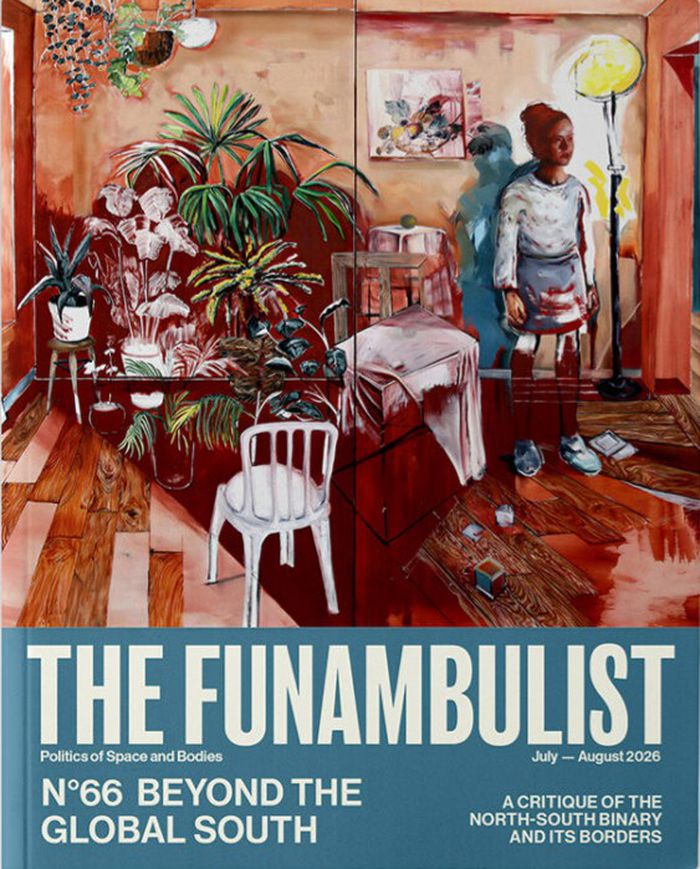
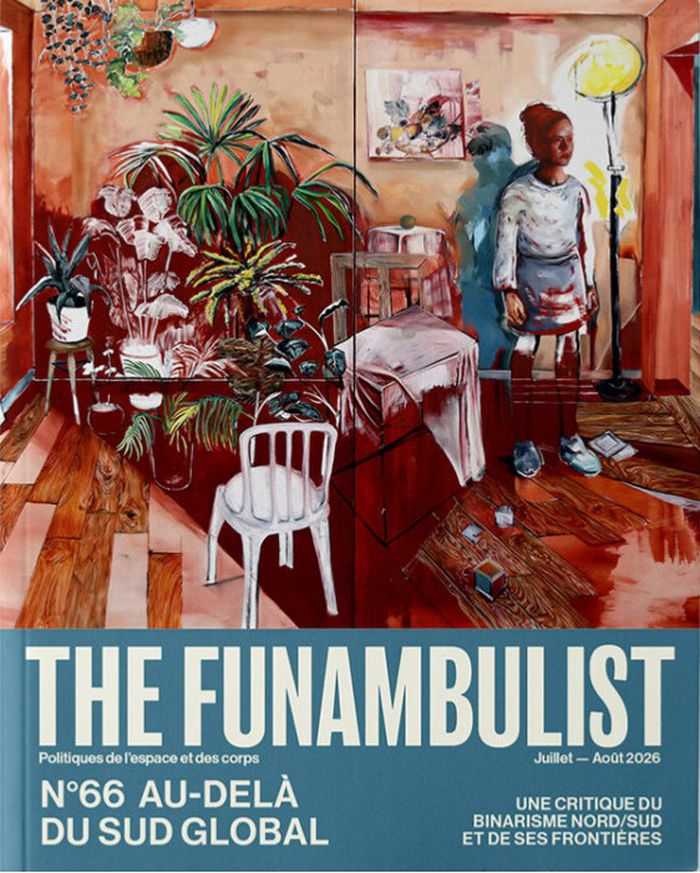
Dans ce numéro, le Funambuliste propose une critique de leur propre cadre de production des connaissances. Ils ont constaté à quel point le concept de « Sud global » s’est transformé en un terme commode permettant de désigner sans plus de réflexion les deux tiers de la superficie terrestre et 90 % de la population mondiale, effaçant ainsi les millions de spécificités qui caractérisent ce regroupement. Il incarne également souvent une entité qui n’existe qu’en dépendance de son alter ego, le Nord global. À ce titre, il nie toute forme d’agentivité aux peuples désignés comme « le Sud » indépendamment de leur relation au « Nord », comme nous l’examinons dans le cas de la guerre dans l’est du Congo (Josaphat Musamba). Le binarisme Sud/Nord désigne également les frontières comme des lignes (plutôt que comme des régimes opérant de part et d’autre de ces lignes) et essentialise la différence entre les deux côtés. Peut-on appréhender la noirceur et l’autochtonie en Abya Yala sans une scission fondamentale au niveau de la ligne coloniale qui sépare l’Amérique du Nord de l’Amérique centrale et du Sud (Ashley Ngozi Agbasoga) ? L’histoire de la Corée du 20e siècle peut-elle nous montrer que la ligne qui sépare actuellement le Nord (généralement présenté comme faisant partie du Sud global) et le Sud (généralement présenté comme faisant partie du Nord global) illustre particulièrement le manque de complexité du cadre Nord/Sud (Lina Eunji Chang et Andrei-Sergei Kim) ? Quel type de violence coloniale le Mouvement des pays non alignés rend-il invisible en Papouasie occidentale (Quito Swan), au Cachemire (Choakkeladd) ou au Sahara occidental (Buhari Lehbib) et, à l’inverse, quel type de solidarités a-t-il permis depuis la Yougoslavie (Dubravka Sekulic et Sanja Horvatincic) ? Et, surtout, comment pouvons-nous rendre justice à la complexité de nos politiques en étant capables de concilier deux vérités contradictoires, comme nous le rappelle Micol Meghnagi dans le contexte de la Libye de Kadhafi et du panarabisme ? Quant à l’illustration de couverture, il s’agit d’une peinture de l’artiste parisienne guyanaise Johanna Mirabel.
The Funambulist 66 : Au-delà du sud global
Actions:
Prix:
$16.95
(disponible en magasin)
Résumé:
Dans ce numéro, le Funambuliste propose une critique de leur propre cadre de production des connaissances. Ils ont constaté à quel point le concept de « Sud global » s’est transformé en un terme commode permettant de désigner sans plus de réflexion les deux tiers de la superficie terrestre et 90 % de la population mondiale, effaçant ainsi les millions de spécificités qui caractérisent ce regroupement. Il incarne également souvent une entité qui n’existe qu’en dépendance de son alter ego, le Nord global. À ce titre, il nie toute forme d’agentivité aux peuples désignés comme « le Sud » indépendamment de leur relation au « Nord », comme nous l’examinons dans le cas de la guerre dans l’est du Congo (Josaphat Musamba). Le binarisme Sud/Nord désigne également les frontières comme des lignes (plutôt que comme des régimes opérant de part et d’autre de ces lignes) et essentialise la différence entre les deux côtés. Peut-on appréhender la noirceur et l’autochtonie en Abya Yala sans une scission fondamentale au niveau de la ligne coloniale qui sépare l’Amérique du Nord de l’Amérique centrale et du Sud (Ashley Ngozi Agbasoga) ? L’histoire de la Corée du 20e siècle peut-elle nous montrer que la ligne qui sépare actuellement le Nord (généralement présenté comme faisant partie du Sud global) et le Sud (généralement présenté comme faisant partie du Nord global) illustre particulièrement le manque de complexité du cadre Nord/Sud (Lina Eunji Chang et Andrei-Sergei Kim) ? Quel type de violence coloniale le Mouvement des pays non alignés rend-il invisible en Papouasie occidentale (Quito Swan), au Cachemire (Choakkeladd) ou au Sahara occidental (Buhari Lehbib) et, à l’inverse, quel type de solidarités a-t-il permis depuis la Yougoslavie (Dubravka Sekulic et Sanja Horvatincic) ? Et, surtout, comment pouvons-nous rendre justice à la complexité de nos politiques en étant capables de concilier deux vérités contradictoires, comme nous le rappelle Micol Meghnagi dans le contexte de la Libye de Kadhafi et du panarabisme ? Quant à l’illustration de couverture, il s’agit d’une peinture de l’artiste parisienne guyanaise Johanna Mirabel.
Classification:
périodiques
périodiques
Publication:
juillet 2026
juillet 2026
Sujet:
Revues
Revues
Classification:
livres
livres
Actions:
Prix:
$36.00
(disponible en magasin)
Résumé:
Synanthropes have always been an immutable part of the tapestry of our lives. They are the reason we hear birdsong in the morning and skittering throughout the day, and why we take such pains to fix lids to our garbage cans. But they are so much more than that, too: epidemic vectors, churners of soil, ecosystem evolvers, spiritual lodestars, and, sometimes, sharp-toothed(...)
$36.00
(disponible en magasin)
Résumé:
Synanthropes have always been an immutable part of the tapestry of our lives. They are the reason we hear birdsong in the morning and skittering throughout the day, and why we take such pains to fix lids to our garbage cans. But they are so much more than that, too: epidemic vectors, churners of soil, ecosystem evolvers, spiritual lodestars, and, sometimes, sharp-toothed(...)
Titre:
Our wild familiars: How animals are adapting to cities and reshaping the natural world
Actions:
Prix:
$36.00
(disponible en magasin)
Résumé:
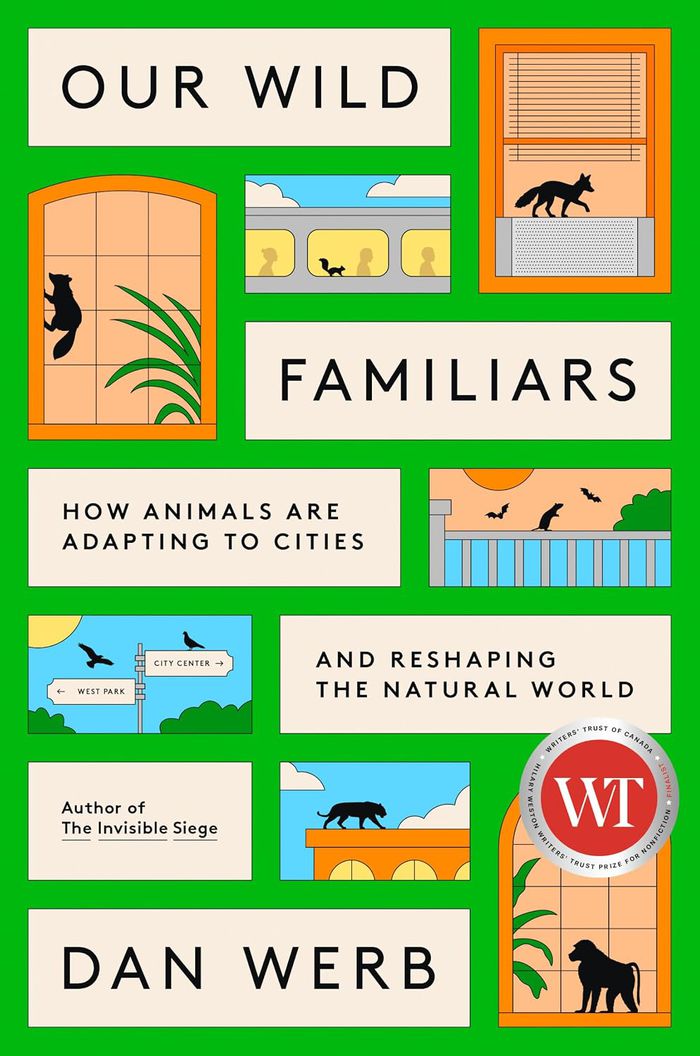
Synanthropes have always been an immutable part of the tapestry of our lives. They are the reason we hear birdsong in the morning and skittering throughout the day, and why we take such pains to fix lids to our garbage cans. But they are so much more than that, too: epidemic vectors, churners of soil, ecosystem evolvers, spiritual lodestars, and, sometimes, sharp-toothed marauders making their way through our most intimate spaces with cruel intent. But beyond their quotidian impact on our lives, synanthropes have a critical part to play in how our communities are shaped and how sustainably they function. These creatures are ambassadors from nature, arbiters of our planet’s future, and a key influence on our species’ ongoing evolution; and recently, something essential has shifted with them. We are in a fraught era of environmental disruption, habitat destruction, and human population expansion that is ravaging formerly wild and untouched habitats. That’s caused us to become ever more inundated with synanthropes, which are bringing delight, chaos and danger to our doorstep. These species, so long dismissed, are forcing us to reckon with them—from the hundreds of thousands of raccoons in urban spaces that spread our refuse no matter how many “raccoon-proof” bags and bins we invent, to the invasive kudzu plants that grow a foot a day, enveloping houses, telephone poles, trees, and any other structures into their green abyss. Now, as urban spaces increasingly become wild spaces, we have a choice: continue to resist them by any means necessary, or take the opportunity to promote a more harmonious coexistence. Through vivid storytelling, ''Our Wild Familiars'' brings to spectacular life the world’s most successful synanthropes, from bats, raccoons, and crows, to some of its weirdest, including the Giant Pacific Octopus. Acting as a guide to the curious, Werb reveals how the cracks in our millennia-long efforts to shield ourselves against the outside world might just lead us to a new and necessary balance with nature—or to an ever more savage future.
Our wild familiars: How animals are adapting to cities and reshaping the natural world
Actions:
Prix:
$36.00
(disponible en magasin)
Résumé:
Synanthropes have always been an immutable part of the tapestry of our lives. They are the reason we hear birdsong in the morning and skittering throughout the day, and why we take such pains to fix lids to our garbage cans. But they are so much more than that, too: epidemic vectors, churners of soil, ecosystem evolvers, spiritual lodestars, and, sometimes, sharp-toothed marauders making their way through our most intimate spaces with cruel intent. But beyond their quotidian impact on our lives, synanthropes have a critical part to play in how our communities are shaped and how sustainably they function. These creatures are ambassadors from nature, arbiters of our planet’s future, and a key influence on our species’ ongoing evolution; and recently, something essential has shifted with them. We are in a fraught era of environmental disruption, habitat destruction, and human population expansion that is ravaging formerly wild and untouched habitats. That’s caused us to become ever more inundated with synanthropes, which are bringing delight, chaos and danger to our doorstep. These species, so long dismissed, are forcing us to reckon with them—from the hundreds of thousands of raccoons in urban spaces that spread our refuse no matter how many “raccoon-proof” bags and bins we invent, to the invasive kudzu plants that grow a foot a day, enveloping houses, telephone poles, trees, and any other structures into their green abyss. Now, as urban spaces increasingly become wild spaces, we have a choice: continue to resist them by any means necessary, or take the opportunity to promote a more harmonious coexistence. Through vivid storytelling, ''Our Wild Familiars'' brings to spectacular life the world’s most successful synanthropes, from bats, raccoons, and crows, to some of its weirdest, including the Giant Pacific Octopus. Acting as a guide to the curious, Werb reveals how the cracks in our millennia-long efforts to shield ourselves against the outside world might just lead us to a new and necessary balance with nature—or to an ever more savage future.
Classification:
livres
livres
Publication:
juillet 2026
juillet 2026
Sujet:
Faune et flore
Faune et flore
Classification:
livres
livres

Prix:
$39.99
(disponible sur commande)
Résumé:
The National Mall in Washington, D.C., has held an important place in the American psyche since the early nineteenth century. Home to monuments and museums dedicated to the ideals upon which the United States rests, the Mall serves as a gathering place for public protest and celebration. But as the nation ages and the population diversifies, demands for additional(...)
$39.99
(disponible sur commande)
Résumé:
The National Mall in Washington, D.C., has held an important place in the American psyche since the early nineteenth century. Home to monuments and museums dedicated to the ideals upon which the United States rests, the Mall serves as a gathering place for public protest and celebration. But as the nation ages and the population diversifies, demands for additional(...)
Sujet:
Théorie de l’urbanisme
Théorie de l’urbanisme
Publication:
avril 2008, Baltimore
avril 2008, Baltimore
Titre:
The national mail: rethinking Washington's monumental core
Actions:
Prix:
$39.99
(disponible sur commande)
Résumé:
The National Mall in Washington, D.C., has held an important place in the American psyche since the early nineteenth century. Home to monuments and museums dedicated to the ideals upon which the United States rests, the Mall serves as a gathering place for public protest and celebration. But as the nation ages and the population diversifies, demands for additional structures and uses have sparked debates over the Mall's future and the necessity of preserving its legacy and the vision of its designers. The National Mall addresses these issues with a novel and compelling collection of essays, the work of leading design professionals, historians, and social scientists. Supplemented by eye-catching illustrations and photographs, this cross-disciplinary examination follows the discussion over the Mall's design and use, from its conceptual origins as part of Pierre Charles L'Enfant's vision for the capital to the 1902 McMillan Plan to the present day and beyond. It assesses how architectural, societal, and political changes have altered the park-like space between the Capitol and the Lincoln Memorial and explores the influence that disparate interest groups and creeping corporatism have already had on -- and are likely to exert upon -- America's public square. The National Mall presents an overarching account of how a democratic society plans, creates, and expands a national ceremonial space, opening the way for a broadly based inquiry into the Mall as it was, is, and will become. Urban planners, architectural and design historians, and engaged citizens will be challenged and well served by the thoughtful essays collected by Nathan Glazer and Cynthia R. Field. Nathan Glazer is an emeritus professor of sociology and education at Harvard University. He is the author or editor of many books on public policy and urban problems, among them The Public Face of Architecture and From a Cause to a Style: Modernist Architecture's Encounter with the American City. Cynthia R. Field is the architectural historian emerita at the Smithsonian Institution and a faculty member at the Corcoran College of Art. She is the coauthor of The Castle: An Illustrated History of the Smithsonian Building.
The national mail: rethinking Washington's monumental core
Actions:
Prix:
$39.99
(disponible sur commande)
Résumé:
The National Mall in Washington, D.C., has held an important place in the American psyche since the early nineteenth century. Home to monuments and museums dedicated to the ideals upon which the United States rests, the Mall serves as a gathering place for public protest and celebration. But as the nation ages and the population diversifies, demands for additional structures and uses have sparked debates over the Mall's future and the necessity of preserving its legacy and the vision of its designers. The National Mall addresses these issues with a novel and compelling collection of essays, the work of leading design professionals, historians, and social scientists. Supplemented by eye-catching illustrations and photographs, this cross-disciplinary examination follows the discussion over the Mall's design and use, from its conceptual origins as part of Pierre Charles L'Enfant's vision for the capital to the 1902 McMillan Plan to the present day and beyond. It assesses how architectural, societal, and political changes have altered the park-like space between the Capitol and the Lincoln Memorial and explores the influence that disparate interest groups and creeping corporatism have already had on -- and are likely to exert upon -- America's public square. The National Mall presents an overarching account of how a democratic society plans, creates, and expands a national ceremonial space, opening the way for a broadly based inquiry into the Mall as it was, is, and will become. Urban planners, architectural and design historians, and engaged citizens will be challenged and well served by the thoughtful essays collected by Nathan Glazer and Cynthia R. Field. Nathan Glazer is an emeritus professor of sociology and education at Harvard University. He is the author or editor of many books on public policy and urban problems, among them The Public Face of Architecture and From a Cause to a Style: Modernist Architecture's Encounter with the American City. Cynthia R. Field is the architectural historian emerita at the Smithsonian Institution and a faculty member at the Corcoran College of Art. She is the coauthor of The Castle: An Illustrated History of the Smithsonian Building.
Classification:
livres
livres
Publication:
avril 2008, Baltimore
avril 2008, Baltimore
Sujet:
Théorie de l’urbanisme
Théorie de l’urbanisme


