


2092 Résultats
Classification:
livres
livres
Actions:
Prix:
$26.50
(disponible sur commande)
Résumé:
Matsutake is the most valuable mushroom in the world — and a weed that grows in human-disturbed forests across the Northern Hemisphere. Anna Lowenhaupt Tsing’s account of these sought-after fungi offers insights into areas far beyond just mushrooms and addresses a crucial question: What manages to live in the ruins we have made? 'The Mushroom at the End of the World'(...)
$26.50
(disponible sur commande)
Résumé:
Matsutake is the most valuable mushroom in the world — and a weed that grows in human-disturbed forests across the Northern Hemisphere. Anna Lowenhaupt Tsing’s account of these sought-after fungi offers insights into areas far beyond just mushrooms and addresses a crucial question: What manages to live in the ruins we have made? 'The Mushroom at the End of the World'(...)
Publication:
juin 2021
juin 2021
Titre:
The mushroom at the end of the world, second edition
Actions:
Prix:
$26.50
(disponible sur commande)
Résumé:
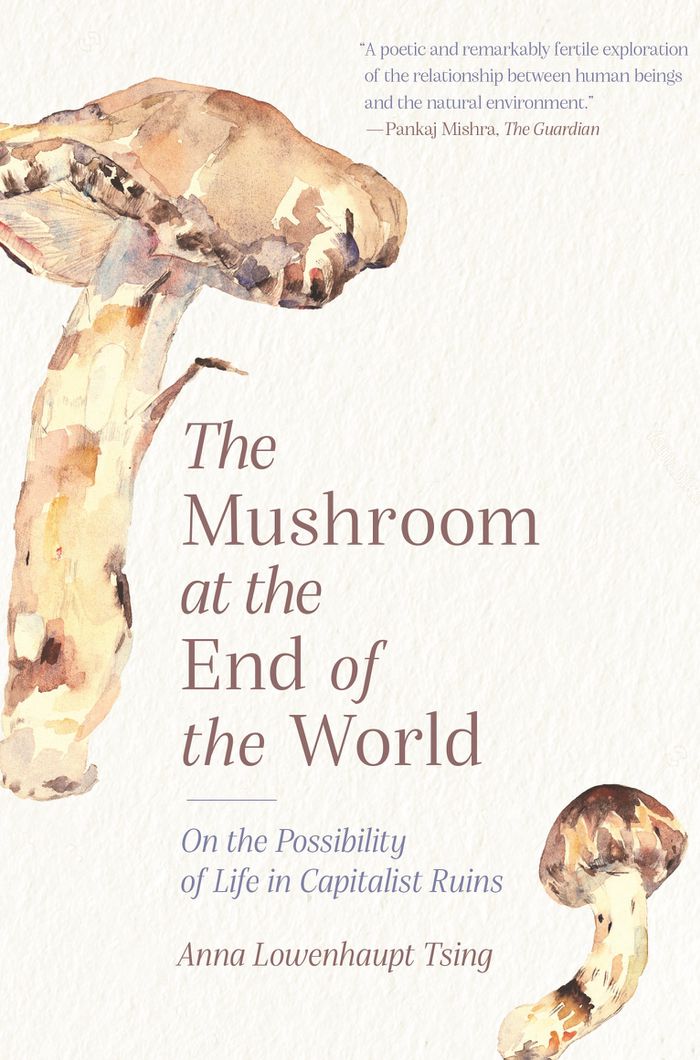
Matsutake is the most valuable mushroom in the world — and a weed that grows in human-disturbed forests across the Northern Hemisphere. Anna Lowenhaupt Tsing’s account of these sought-after fungi offers insights into areas far beyond just mushrooms and addresses a crucial question: What manages to live in the ruins we have made? 'The Mushroom at the End of the World' explores the unexpected corners of matsutake commerce, where we encounter Japanese gourmets, capitalist traders, Hmong jungle fighters, Finnish nature guides, and more. These companions lead us into fungal ecologies and forest histories to better understand the promise of cohabitation in a time of massive human devastation. The book delves into the relationship between capitalist destruction and collaborative survival within multispecies landscapes, the prerequisite for continuing life on earth.
The mushroom at the end of the world, second edition
Actions:
Prix:
$26.50
(disponible sur commande)
Résumé:
Matsutake is the most valuable mushroom in the world — and a weed that grows in human-disturbed forests across the Northern Hemisphere. Anna Lowenhaupt Tsing’s account of these sought-after fungi offers insights into areas far beyond just mushrooms and addresses a crucial question: What manages to live in the ruins we have made? 'The Mushroom at the End of the World' explores the unexpected corners of matsutake commerce, where we encounter Japanese gourmets, capitalist traders, Hmong jungle fighters, Finnish nature guides, and more. These companions lead us into fungal ecologies and forest histories to better understand the promise of cohabitation in a time of massive human devastation. The book delves into the relationship between capitalist destruction and collaborative survival within multispecies landscapes, the prerequisite for continuing life on earth.
Classification:
livres
livres
Publication:
juin 2021
juin 2021
Classification:
livres
livres
Prix:
$94.95
(disponible sur commande)
Résumé:
Part design manifesto, part personal diary, and part manual for future sustainable living, this book aims to replace rampant consumerism with a more thoughtful design, a new state of being for living sustainably and in harmony with the rhythms of the planet. It is the tale of one woman's odyssey living alone in the jungle finding true meaning in life and manifesting its(...)
$94.95
(disponible sur commande)
Résumé:
Part design manifesto, part personal diary, and part manual for future sustainable living, this book aims to replace rampant consumerism with a more thoughtful design, a new state of being for living sustainably and in harmony with the rhythms of the planet. It is the tale of one woman's odyssey living alone in the jungle finding true meaning in life and manifesting its(...)
Titre:
Haute couture architecture: the art of living without walls
Actions:
Prix:
$94.95
(disponible sur commande)
Résumé:
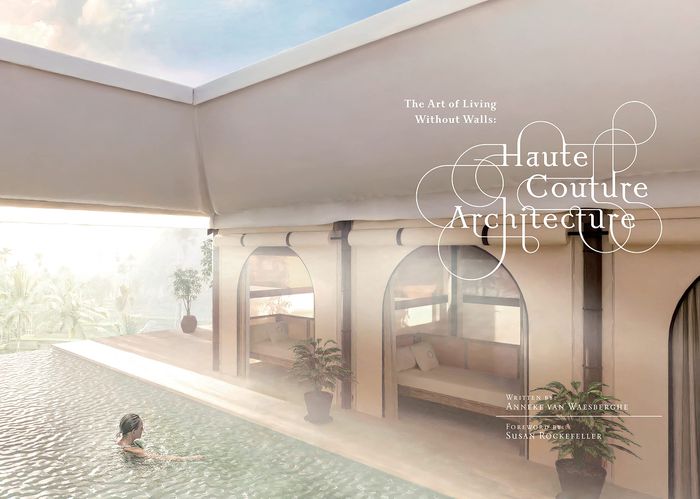
Part design manifesto, part personal diary, and part manual for future sustainable living, this book aims to replace rampant consumerism with a more thoughtful design, a new state of being for living sustainably and in harmony with the rhythms of the planet. It is the tale of one woman's odyssey living alone in the jungle finding true meaning in life and manifesting its beauty into a way of sustainable living that may set a blueprint for our future existence on Earth. The author leads readers to encounter a new paradigm by showing the luxury of simplicity and the beauty of small things. With our consumer way of living and doing things and how the world is evolving, the pace we follow as consumers rather than humans has become outdated.
Haute couture architecture: the art of living without walls
Actions:
Prix:
$94.95
(disponible sur commande)
Résumé:
Part design manifesto, part personal diary, and part manual for future sustainable living, this book aims to replace rampant consumerism with a more thoughtful design, a new state of being for living sustainably and in harmony with the rhythms of the planet. It is the tale of one woman's odyssey living alone in the jungle finding true meaning in life and manifesting its beauty into a way of sustainable living that may set a blueprint for our future existence on Earth. The author leads readers to encounter a new paradigm by showing the luxury of simplicity and the beauty of small things. With our consumer way of living and doing things and how the world is evolving, the pace we follow as consumers rather than humans has become outdated.
Classification:
livres
livres
Publication:
janvier 2022
janvier 2022
Sujet:
Architecture, monographies
Architecture, monographies
Classification:
livres
livres

Prix:
$25.50
(disponible sur commande)
Résumé:
This book is a stunning journey through Sápmi and includes in-depth interviews with Sámi artists, activists, and scholars boldly standing up for the rights of their people. In this illustrated work, Gabriel Kuhn, author of over a dozen books and interpreter of global social justice movements, aims to raise awareness of the ongoing fight of the Sámi for justice and(...)
$25.50
(disponible sur commande)
Résumé:
This book is a stunning journey through Sápmi and includes in-depth interviews with Sámi artists, activists, and scholars boldly standing up for the rights of their people. In this illustrated work, Gabriel Kuhn, author of over a dozen books and interpreter of global social justice movements, aims to raise awareness of the ongoing fight of the Sámi for justice and(...)
Titre:
Liberating Sapmi: Indigenous resistance in Europe's Far North
Actions:
Prix:
$25.50
(disponible sur commande)
Résumé:
This book is a stunning journey through Sápmi and includes in-depth interviews with Sámi artists, activists, and scholars boldly standing up for the rights of their people. In this illustrated work, Gabriel Kuhn, author of over a dozen books and interpreter of global social justice movements, aims to raise awareness of the ongoing fight of the Sámi for justice and self-determination. The first accessible English-language introduction to the history of the Sámi people and the first account that focuses on their political resistance, this provocative work gives irrefutable evidence of the important role the Sámi play in the resistance of indigenous people against an economic and political system whose power to destroy all life on earth has reached a scale unprecedented in the history of humanity.
Liberating Sapmi: Indigenous resistance in Europe's Far North
Actions:
Prix:
$25.50
(disponible sur commande)
Résumé:
This book is a stunning journey through Sápmi and includes in-depth interviews with Sámi artists, activists, and scholars boldly standing up for the rights of their people. In this illustrated work, Gabriel Kuhn, author of over a dozen books and interpreter of global social justice movements, aims to raise awareness of the ongoing fight of the Sámi for justice and self-determination. The first accessible English-language introduction to the history of the Sámi people and the first account that focuses on their political resistance, this provocative work gives irrefutable evidence of the important role the Sámi play in the resistance of indigenous people against an economic and political system whose power to destroy all life on earth has reached a scale unprecedented in the history of humanity.
Classification:
livres
livres
Publication:
mars 2020
mars 2020
Sujet:
Autochtone
Autochtone
Classification:
livres
livres
Titre:
I want to be an astronaut
I want to be an astronaut
Actions:
Prix:
$9.25
(disponible sur commande)
Résumé:
Up into the shy goes the space shuttle. Into orbit, the astronauts get a taste of ready-to-eat food, experience zero gravity, go for space walks, and even fix a satellite. It's fun to fly aboard the shuttle...and then come back to earth. A young girl declares her longing to fly on the shuttle into outer space.' The familiar acts of eating, sleeping, and working become(...)
$9.25
(disponible sur commande)
Résumé:
Up into the shy goes the space shuttle. Into orbit, the astronauts get a taste of ready-to-eat food, experience zero gravity, go for space walks, and even fix a satellite. It's fun to fly aboard the shuttle...and then come back to earth. A young girl declares her longing to fly on the shuttle into outer space.' The familiar acts of eating, sleeping, and working become(...)
Titre:
I want to be an astronaut
Actions:
Prix:
$9.25
(disponible sur commande)
Résumé:
Up into the shy goes the space shuttle. Into orbit, the astronauts get a taste of ready-to-eat food, experience zero gravity, go for space walks, and even fix a satellite. It's fun to fly aboard the shuttle...and then come back to earth. A young girl declares her longing to fly on the shuttle into outer space.' The familiar acts of eating, sleeping, and working become intense and special as she and the rest of the crew go about their business. The illustrations positively glow in this simple, lyrical picture book that will have nearly everyone off and flying.' -SLJ. Notable Children's Book of 1988 (ALA) 1988 Fanfare Honor List (The Horn Book) Best Illustrated Children's Books of 1988 (NYT) Oustanding Science Trade Books for Children 1988 (NSTA/CBC.
I want to be an astronaut
Actions:
Prix:
$9.25
(disponible sur commande)
Résumé:
Up into the shy goes the space shuttle. Into orbit, the astronauts get a taste of ready-to-eat food, experience zero gravity, go for space walks, and even fix a satellite. It's fun to fly aboard the shuttle...and then come back to earth. A young girl declares her longing to fly on the shuttle into outer space.' The familiar acts of eating, sleeping, and working become intense and special as she and the rest of the crew go about their business. The illustrations positively glow in this simple, lyrical picture book that will have nearly everyone off and flying.' -SLJ. Notable Children's Book of 1988 (ALA) 1988 Fanfare Honor List (The Horn Book) Best Illustrated Children's Books of 1988 (NYT) Oustanding Science Trade Books for Children 1988 (NSTA/CBC.
Classification:
livres
livres
Publication:
novembre 1992
novembre 1992
Sujet:
Expositions en cours
Expositions en cours
Classification:
livres
livres

Titre:
Weeds
Weeds
Actions:
Prix:
$34.00
(disponible sur commande)
Résumé:
We spray them, pluck them, and bury them under mulch; and we curse their resilience when they spring back into place. To most of us, weeds are a nuisance, not worth the dirt they are growing in. But the fact is weeds are a plant just like any other, and it is only we who designate them as a weed or not, as a plant we will dote over or one we will tear out of the earth(...)
$34.00
(disponible sur commande)
Résumé:
We spray them, pluck them, and bury them under mulch; and we curse their resilience when they spring back into place. To most of us, weeds are a nuisance, not worth the dirt they are growing in. But the fact is weeds are a plant just like any other, and it is only we who designate them as a weed or not, as a plant we will dote over or one we will tear out of the earth(...)
Titre:
Weeds
Actions:
Prix:
$34.00
(disponible sur commande)
Résumé:
We spray them, pluck them, and bury them under mulch; and we curse their resilience when they spring back into place. To most of us, weeds are a nuisance, not worth the dirt they are growing in. But the fact is weeds are a plant just like any other, and it is only we who designate them as a weed or not, as a plant we will dote over or one we will tear out of the earth with abandon. And as Nina Edwards shows in this history, that designation is constantly changing. Balancing popular history with botanical science, she tells the story of the lowly, but proud, weed, a story that is just as much about the kinds of attitudes we foster toward the plants we grow and those we try to suppress.
Weeds
Actions:
Prix:
$34.00
(disponible sur commande)
Résumé:
We spray them, pluck them, and bury them under mulch; and we curse their resilience when they spring back into place. To most of us, weeds are a nuisance, not worth the dirt they are growing in. But the fact is weeds are a plant just like any other, and it is only we who designate them as a weed or not, as a plant we will dote over or one we will tear out of the earth with abandon. And as Nina Edwards shows in this history, that designation is constantly changing. Balancing popular history with botanical science, she tells the story of the lowly, but proud, weed, a story that is just as much about the kinds of attitudes we foster toward the plants we grow and those we try to suppress.
Classification:
livres
livres
Publication:
mai 2015
mai 2015
Sujet:
Théorie du paysage
Théorie du paysage
Classification:
livres
livres

Actions:
Prix:
$72.50
(disponible sur commande)
Résumé:
Hippie Modernism examines the art, architecture and design of the counterculture of the 1960s and early 1970s. The catalogue surveys the radical experiments that challenged societal norms while proposing new kinds of technological, ecological and political utopia. It includes the counter-design proposals of Victor Papanek and the anti-design polemics of Global Tools; the(...)
$72.50
(disponible sur commande)
Résumé:
Hippie Modernism examines the art, architecture and design of the counterculture of the 1960s and early 1970s. The catalogue surveys the radical experiments that challenged societal norms while proposing new kinds of technological, ecological and political utopia. It includes the counter-design proposals of Victor Papanek and the anti-design polemics of Global Tools; the(...)
Titre:
Hippie modernism: the struggle for utopia
Actions:
Prix:
$72.50
(disponible sur commande)
Résumé:
Hippie Modernism examines the art, architecture and design of the counterculture of the 1960s and early 1970s. The catalogue surveys the radical experiments that challenged societal norms while proposing new kinds of technological, ecological and political utopia. It includes the counter-design proposals of Victor Papanek and the anti-design polemics of Global Tools; the radical architectural visions of Archigram, Superstudio, Haus-Rucker-Co and ONYX; the installations of Ken Isaacs, Joan Hills, Mark Boyle, Hélio Oiticica and Neville D'Almeida; the experimental films of Jordan Belson, Bruce Conner and John Whitney; posters and prints by Emory Douglas, Corita Kent and Victor Moscoso; documentation of performances by the Diggers and the Cockettes; publications such as Oz and The Whole Earth Catalog; books by Marshall McLuhan and Buckminster Fuller; and much more.
Hippie modernism: the struggle for utopia
Actions:
Prix:
$72.50
(disponible sur commande)
Résumé:
Hippie Modernism examines the art, architecture and design of the counterculture of the 1960s and early 1970s. The catalogue surveys the radical experiments that challenged societal norms while proposing new kinds of technological, ecological and political utopia. It includes the counter-design proposals of Victor Papanek and the anti-design polemics of Global Tools; the radical architectural visions of Archigram, Superstudio, Haus-Rucker-Co and ONYX; the installations of Ken Isaacs, Joan Hills, Mark Boyle, Hélio Oiticica and Neville D'Almeida; the experimental films of Jordan Belson, Bruce Conner and John Whitney; posters and prints by Emory Douglas, Corita Kent and Victor Moscoso; documentation of performances by the Diggers and the Cockettes; publications such as Oz and The Whole Earth Catalog; books by Marshall McLuhan and Buckminster Fuller; and much more.
Classification:
livres
livres
Publication:
novembre 2015
novembre 2015
Sujet:
Architecture expérimentale
Architecture expérimentale
Classification:
livres
livres
Titre:
Visual encounters in the study of rural childhoods / edited by April Mandrona and Claudia Mitchell.
Visual encounters in the study of rural childhoods / edited by April Mandrona and Claudia Mitchell.
Actions:
Exemplaires:
Description:
xiv, 253 pages ; 23 cm
Description:
xiv, 253 pages ; 23 cm
Auteur:
Sujet:
Publication:
New Brunswick, New Jersey : Rutgers University Press, [2018]
New Brunswick, New Jersey : Rutgers University Press, [2018]
Titre:
Visual encounters in the study of rural childhoods / edited by April Mandrona and Claudia Mitchell.
Actions:
Exemplaires:
Description:
xiv, 253 pages ; 23 cm
Visual encounters in the study of rural childhoods / edited by April Mandrona and Claudia Mitchell.
Actions:
Exemplaires:
Description:
xiv, 253 pages ; 23 cm
Classification:
livres
livres
Publication:
New Brunswick, New Jersey : Rutgers University Press, [2018]
New Brunswick, New Jersey : Rutgers University Press, [2018]
Auteur:
Sujet:
Classification:
livres
livres

Actions:
Prix:
$67.50
(disponible sur commande)
Résumé:
Widely regarded as one of the most influential figures in the history of his medium, Robert Frank broke new ground with his candid, poignant images of American life in the mid-20th century. Published on the occasion of the exhibition at Pace in New York, and in celebration of the centennial of Frank’s birth, "Robert Frank: Hope makes visions" presents an in-depth look at(...)
$67.50
(disponible sur commande)
Résumé:
Widely regarded as one of the most influential figures in the history of his medium, Robert Frank broke new ground with his candid, poignant images of American life in the mid-20th century. Published on the occasion of the exhibition at Pace in New York, and in celebration of the centennial of Frank’s birth, "Robert Frank: Hope makes visions" presents an in-depth look at(...)
Titre:
Robert Frank: Hope makes visions
Actions:
Prix:
$67.50
(disponible sur commande)
Résumé:
Widely regarded as one of the most influential figures in the history of his medium, Robert Frank broke new ground with his candid, poignant images of American life in the mid-20th century. Published on the occasion of the exhibition at Pace in New York, and in celebration of the centennial of Frank’s birth, "Robert Frank: Hope makes visions" presents an in-depth look at the photographer and filmmaker’s process across various media. Through a selection of his lesser-known photographs, collages, sketches and maquettes from 1955 to 2016, a new portrait of the artist emerges, one that shows his commitment to growth and experimentation throughout his career. With a new text by Ocean Vuong, author of the award-winning "On Earth we're briefly gorgeous" (2019), this volume is a sensitive homage to a canonical artist.
Robert Frank: Hope makes visions
Actions:
Prix:
$67.50
(disponible sur commande)
Résumé:
Widely regarded as one of the most influential figures in the history of his medium, Robert Frank broke new ground with his candid, poignant images of American life in the mid-20th century. Published on the occasion of the exhibition at Pace in New York, and in celebration of the centennial of Frank’s birth, "Robert Frank: Hope makes visions" presents an in-depth look at the photographer and filmmaker’s process across various media. Through a selection of his lesser-known photographs, collages, sketches and maquettes from 1955 to 2016, a new portrait of the artist emerges, one that shows his commitment to growth and experimentation throughout his career. With a new text by Ocean Vuong, author of the award-winning "On Earth we're briefly gorgeous" (2019), this volume is a sensitive homage to a canonical artist.
Classification:
livres
livres
Publication:
février 2025
février 2025
Sujet:
Monographies photo
Monographies photo
Classification:
livres
livres

Titre:
Idea 311: Sound cosmography
Idea 311: Sound cosmography
Actions:
Prix:
$45.00
(disponible sur commande)
Résumé:
Special Feature: Sound Cosmography Response in Silence: on the way to ECM covers; "the heaven is round and the earth is square" The world of Kohei Sugiura's record jackets; datamatics = C4I + data.series--a project by Ryoji Ikeda; Karlheinz Stockhausen's original drawings: between sound and sight; Emotions and Expressions--Works of Hidetoshi Mito; When Pigs Design(...)
$45.00
(disponible sur commande)
Résumé:
Special Feature: Sound Cosmography Response in Silence: on the way to ECM covers; "the heaven is round and the earth is square" The world of Kohei Sugiura's record jackets; datamatics = C4I + data.series--a project by Ryoji Ikeda; Karlheinz Stockhausen's original drawings: between sound and sight; Emotions and Expressions--Works of Hidetoshi Mito; When Pigs Design(...)
Titre:
Idea 311: Sound cosmography
Actions:
Prix:
$45.00
(disponible sur commande)
Résumé:
Special Feature: Sound Cosmography Response in Silence: on the way to ECM covers; "the heaven is round and the earth is square" The world of Kohei Sugiura's record jackets; datamatics = C4I + data.series--a project by Ryoji Ikeda; Karlheinz Stockhausen's original drawings: between sound and sight; Emotions and Expressions--Works of Hidetoshi Mito; When Pigs Design Vol.32 by Kyoichi Tsuzuki "Tempting 4 color process prints--City Heaven, the printed cosmos of 2500gram"; Typography Review vol. 9 "The Origins and Historical Changes of the Shueitai Typeface" Text by Taro Yamamoto, Design by Yoshihisa Shirai,Typeset by Akira Okayasu / Kuni Metal--Design of the new special paper by GRAPH; Variations on a Silence:Project for a Recycling Plant; News + Information / Shinro Ohtake Original Serial Poster; 2nd Impact; Part 12, Side A: 'Office Room', Side B: 'What's already there'
Idea 311: Sound cosmography
Actions:
Prix:
$45.00
(disponible sur commande)
Résumé:
Special Feature: Sound Cosmography Response in Silence: on the way to ECM covers; "the heaven is round and the earth is square" The world of Kohei Sugiura's record jackets; datamatics = C4I + data.series--a project by Ryoji Ikeda; Karlheinz Stockhausen's original drawings: between sound and sight; Emotions and Expressions--Works of Hidetoshi Mito; When Pigs Design Vol.32 by Kyoichi Tsuzuki "Tempting 4 color process prints--City Heaven, the printed cosmos of 2500gram"; Typography Review vol. 9 "The Origins and Historical Changes of the Shueitai Typeface" Text by Taro Yamamoto, Design by Yoshihisa Shirai,Typeset by Akira Okayasu / Kuni Metal--Design of the new special paper by GRAPH; Variations on a Silence:Project for a Recycling Plant; News + Information / Shinro Ohtake Original Serial Poster; 2nd Impact; Part 12, Side A: 'Office Room', Side B: 'What's already there'
Classification:
livres
livres
Publication:
juillet 2005, Tokyo
juillet 2005, Tokyo
Classification:
livres
livres
Actions:
Prix:
$42.00
(disponible sur commande)
Résumé:
Profit is the original genius of homo sapiens, who learned how to unleash the energy stored in wood, exploit the land, and refashion ecosystems. As civilization developed, we found more and more ways of extracting surplus value from the earth, often deploying brutally effective methods to discipline people to do the work needed. Historian Mark Stoll explains how(...)
$42.00
(disponible sur commande)
Résumé:
Profit is the original genius of homo sapiens, who learned how to unleash the energy stored in wood, exploit the land, and refashion ecosystems. As civilization developed, we found more and more ways of extracting surplus value from the earth, often deploying brutally effective methods to discipline people to do the work needed. Historian Mark Stoll explains how(...)
Titre:
Profit: an environmental history
Actions:
Prix:
$42.00
(disponible sur commande)
Résumé:
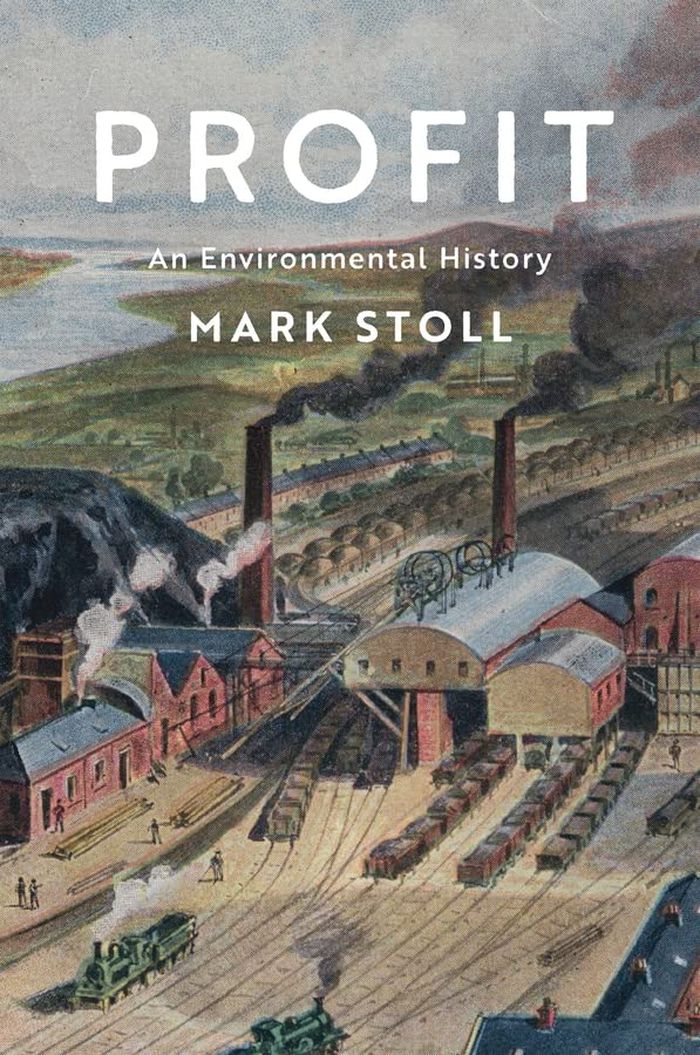
Profit is the original genius of homo sapiens, who learned how to unleash the energy stored in wood, exploit the land, and refashion ecosystems. As civilization developed, we found more and more ways of extracting surplus value from the earth, often deploying brutally effective methods to discipline people to do the work needed. Historian Mark Stoll explains how capitalism supercharged this process and traces its many environmental consequences. The financial innovations of medieval Italy created trade networks that, with the European discovery of the Americas, made possible vast profits and sweeping cultural changes, to the detriment of millions of slaves and indigenous Americans; the industrial age united the world in trade and led to an energy revolution that changed lives everywhere. But when efficient production left society awash in goods, a new sort of capitalism, predicated on endless individual consumption, took its place.
Profit: an environmental history
Actions:
Prix:
$42.00
(disponible sur commande)
Résumé:
Profit is the original genius of homo sapiens, who learned how to unleash the energy stored in wood, exploit the land, and refashion ecosystems. As civilization developed, we found more and more ways of extracting surplus value from the earth, often deploying brutally effective methods to discipline people to do the work needed. Historian Mark Stoll explains how capitalism supercharged this process and traces its many environmental consequences. The financial innovations of medieval Italy created trade networks that, with the European discovery of the Americas, made possible vast profits and sweeping cultural changes, to the detriment of millions of slaves and indigenous Americans; the industrial age united the world in trade and led to an energy revolution that changed lives everywhere. But when efficient production left society awash in goods, a new sort of capitalism, predicated on endless individual consumption, took its place.
Classification:
livres
livres
Publication:
janvier 2023
janvier 2023


