


44163 Résultats
Classification:
événements
événements
Actions:
Description:
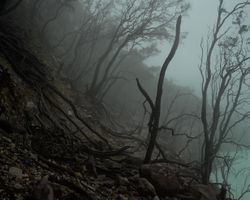
Lors de cette causerie, le photographe Bas Princen parlera de l’état d’avancement du projet 17 volcans, et évoquera les résonances existant entre les travaux de Franz Wilhelm Junghuhn, les œuvres de photographes néerlandais du début du XXe siècle (comme van Nieuwenhuis) à Java, ainsi que sa propre pratique. Si la découverte de nouveaux lieux semble impossible aujourd’hui,(...)
Lors de cette causerie, le photographe Bas Princen parlera de l’état d’avancement du projet 17 volcans, et évoquera les résonances existant entre les travaux de Franz Wilhelm Junghuhn, les œuvres de photographes néerlandais du début du XXe siècle (comme van Nieuwenhuis) à Java, ainsi que sa propre pratique. Si la découverte de nouveaux lieux semble impossible aujourd’hui,(...)
Date:
15 octobre 2016, 15h
15 octobre 2016, 15h
Titre:
Bas Princen : balades à dos de volcan
Actions:
Description:
Lors de cette causerie, le photographe Bas Princen parlera de l’état d’avancement du projet 17 volcans, et évoquera les résonances existant entre les travaux de Franz Wilhelm Junghuhn, les œuvres de photographes néerlandais du début du XXe siècle (comme van Nieuwenhuis) à Java, ainsi que sa propre pratique. Si la découverte de nouveaux lieux semble impossible aujourd’hui,(...)
Bas Princen : balades à dos de volcan
Actions:
Description:
Lors de cette causerie, le photographe Bas Princen parlera de l’état d’avancement du projet 17 volcans, et évoquera les résonances existant entre les travaux de Franz Wilhelm Junghuhn, les œuvres de photographes néerlandais du début du XXe siècle (comme van Nieuwenhuis) à Java, ainsi que sa propre pratique. Si la découverte de nouveaux lieux semble impossible aujourd’hui,(...)
Classification:
événements
événements
Date:
15 octobre 2016
15h
15 octobre 2016
15h
Classification:
événements
événements
Actions:
Description:
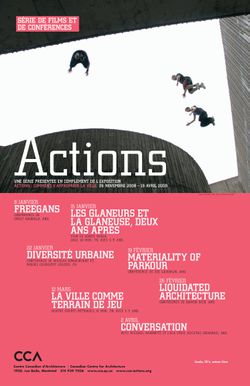
Michael Rakowitz, artiste basé à Chicago, discute avec Luca Stasi de Recetas Urbanas de leurs projets divers. Les œuvres de Michael Rakowitz explorent les concepts de l’habitat nomade et de l’appropriation urbaine, tandis que ceux de Recetas Urbanas proposent des stratégies de logement et de rénovation urbaine en tirant parti de certains vides juridiques pour pratiquer(...)
Michael Rakowitz, artiste basé à Chicago, discute avec Luca Stasi de Recetas Urbanas de leurs projets divers. Les œuvres de Michael Rakowitz explorent les concepts de l’habitat nomade et de l’appropriation urbaine, tandis que ceux de Recetas Urbanas proposent des stratégies de logement et de rénovation urbaine en tirant parti de certains vides juridiques pour pratiquer(...)
Localisation:
Théâtre Paul-Desmarais
Théâtre Paul-Desmarais
Date:
2 avril 2009
2 avril 2009
Titre:
Michael Rakowitz et Luca Stasi de Recetas Urbanas
Actions:
Description:
Michael Rakowitz, artiste basé à Chicago, discute avec Luca Stasi de Recetas Urbanas de leurs projets divers. Les œuvres de Michael Rakowitz explorent les concepts de l’habitat nomade et de l’appropriation urbaine, tandis que ceux de Recetas Urbanas proposent des stratégies de logement et de rénovation urbaine en tirant parti de certains vides juridiques pour pratiquer(...)
Michael Rakowitz et Luca Stasi de Recetas Urbanas
Actions:
Description:
Michael Rakowitz, artiste basé à Chicago, discute avec Luca Stasi de Recetas Urbanas de leurs projets divers. Les œuvres de Michael Rakowitz explorent les concepts de l’habitat nomade et de l’appropriation urbaine, tandis que ceux de Recetas Urbanas proposent des stratégies de logement et de rénovation urbaine en tirant parti de certains vides juridiques pour pratiquer(...)
Classification:
événements
événements
Date:
2 avril 2009
2 avril 2009
Localisation:
Théâtre Paul-Desmarais
Théâtre Paul-Desmarais
Classification:
dessins, photographies
dessins, photographies
Numéro de référence:
DR2012:0011:032
Description:
Ring binder containing drawings, photographs, reprographic copies, stats of architectural, art, and graphic design work, and a watercolour related to Melvin Charney's activities as a student at McGill University, and include the following early projects: - Kitchen details for Mr. and Mrs. A. Zion (1 stat); - Design of vol. 2, no. 2 of YES: A Creative Quarterly (1 copy); - Small weekend house (3 stats); - Curb-service restaurant, for summer use only, on a Laurentian road (2 stat); - Studio-house in the Laurentian mountains (2 stats); - Apartment house to complete an existing pattern of older garden apartments (3 stats); - Community library for the Town of Mount Royal (6 stats); - Motel near the St. Lawrence River (2 stats); - Child centre (3 stats); - Building for the Province of Quebec Architects Association (4 stats); - Cloverdale shopping centre (1 stat); - Morse Jewellers (4 stats); - Steinberg's supermarket, Montreal North; - Reinforced concrete canopy, Molson Stadium (1 sketch, 1 photograph, 1 stat); - Town of Dorval subdivision proposal (1 stat); - Ottawa City Hall, study of lighting of areas in the building (1 stat); - Entrance vestibule, 1552 St. Matthew Street, Montreal (1 stat).
DR2012:0011:032
Description:
Ring binder containing drawings, photographs, reprographic copies, stats of architectural, art, and graphic design work, and a watercolour related to Melvin Charney's activities as a student at McGill University, and include the following early projects: - Kitchen details for Mr. and Mrs. A. Zion (1 stat); - Design of vol. 2, no. 2 of YES: A Creative Quarterly (1 copy); - Small weekend house (3 stats); - Curb-service restaurant, for summer use only, on a Laurentian road (2 stat); - Studio-house in the Laurentian mountains (2 stats); - Apartment house to complete an existing pattern of older garden apartments (3 stats); - Community library for the Town of Mount Royal (6 stats); - Motel near the St. Lawrence River (2 stats); - Child centre (3 stats); - Building for the Province of Quebec Architects Association (4 stats); - Cloverdale shopping centre (1 stat); - Morse Jewellers (4 stats); - Steinberg's supermarket, Montreal North; - Reinforced concrete canopy, Molson Stadium (1 sketch, 1 photograph, 1 stat); - Town of Dorval subdivision proposal (1 stat); - Ottawa City Hall, study of lighting of areas in the building (1 stat); - Entrance vestibule, 1552 St. Matthew Street, Montreal (1 stat).
Personnes et institutions:
Date:
1955-1957
1955-1957
Titre:
Portfolio for application to the graduate program at Yale University
Actions:
DR2012:0011:032
Description:
Ring binder containing drawings, photographs, reprographic copies, stats of architectural, art, and graphic design work, and a watercolour related to Melvin Charney's activities as a student at McGill University, and include the following early projects: - Kitchen details for Mr. and Mrs. A. Zion (1 stat); - Design of vol. 2, no. 2 of YES: A Creative Quarterly (1 copy); - Small weekend house (3 stats); - Curb-service restaurant, for summer use only, on a Laurentian road (2 stat); - Studio-house in the Laurentian mountains (2 stats); - Apartment house to complete an existing pattern of older garden apartments (3 stats); - Community library for the Town of Mount Royal (6 stats); - Motel near the St. Lawrence River (2 stats); - Child centre (3 stats); - Building for the Province of Quebec Architects Association (4 stats); - Cloverdale shopping centre (1 stat); - Morse Jewellers (4 stats); - Steinberg's supermarket, Montreal North; - Reinforced concrete canopy, Molson Stadium (1 sketch, 1 photograph, 1 stat); - Town of Dorval subdivision proposal (1 stat); - Ottawa City Hall, study of lighting of areas in the building (1 stat); - Entrance vestibule, 1552 St. Matthew Street, Montreal (1 stat).
Portfolio for application to the graduate program at Yale University
Actions:
DR2012:0011:032
Description:
Ring binder containing drawings, photographs, reprographic copies, stats of architectural, art, and graphic design work, and a watercolour related to Melvin Charney's activities as a student at McGill University, and include the following early projects: - Kitchen details for Mr. and Mrs. A. Zion (1 stat); - Design of vol. 2, no. 2 of YES: A Creative Quarterly (1 copy); - Small weekend house (3 stats); - Curb-service restaurant, for summer use only, on a Laurentian road (2 stat); - Studio-house in the Laurentian mountains (2 stats); - Apartment house to complete an existing pattern of older garden apartments (3 stats); - Community library for the Town of Mount Royal (6 stats); - Motel near the St. Lawrence River (2 stats); - Child centre (3 stats); - Building for the Province of Quebec Architects Association (4 stats); - Cloverdale shopping centre (1 stat); - Morse Jewellers (4 stats); - Steinberg's supermarket, Montreal North; - Reinforced concrete canopy, Molson Stadium (1 sketch, 1 photograph, 1 stat); - Town of Dorval subdivision proposal (1 stat); - Ottawa City Hall, study of lighting of areas in the building (1 stat); - Entrance vestibule, 1552 St. Matthew Street, Montreal (1 stat).
Classification:
dessins, photographies
dessins, photographies
Date:
1955-1957
1955-1957
Personnes et institutions:
Actions:
Numéro de référence:
PH1979:0548
Description:
This album bears a title page as follows (glued to the inside cover): Grand Architectural Panorama of London. Regent Street to Westminster Abbey. From original drawings made expressly for the work by R. Sandeman, architect, and executed on wood by George C. Leighton. London: published by I. Writelaw, 188, Fleet Street; Sold by Simpkin, Marshall, & Co. Stationers' Hall Court; and to be had of all booksellers. Printed by Leightons and Taylor, 10, Lamb's Conduit Street, 1849. A folded panoramic engraved view begins at left with St. Margaret Church and Westminster Abbey and continues to All Soul's Church. In between, are depicted monuments, buildings, shops, companies, streets, horses, carriages and people, through the following streets : Great George Street; Upper Class Street; Parliament Street; Downing Street; Spring Gardens/Charing Cross; Trafalgar Square/Spring Gardens; Warwick Street; Cockspur Street; Duke of York's Monument, Waterloo Place; Charles Street; Jermyn Street; Piccadilly Regent Circus; Vine Street; Swallow Street; Vigo Street; Leicester Street; New Burlington Street; Conduit Street; Madox Street; Hanover Street; Princes' Street; Oxford Street; Great Castle Street; Margaret Street; Mortimer Street; Langham Place and Portland Place.
PH1979:0548
Description:
This album bears a title page as follows (glued to the inside cover): Grand Architectural Panorama of London. Regent Street to Westminster Abbey. From original drawings made expressly for the work by R. Sandeman, architect, and executed on wood by George C. Leighton. London: published by I. Writelaw, 188, Fleet Street; Sold by Simpkin, Marshall, & Co. Stationers' Hall Court; and to be had of all booksellers. Printed by Leightons and Taylor, 10, Lamb's Conduit Street, 1849. A folded panoramic engraved view begins at left with St. Margaret Church and Westminster Abbey and continues to All Soul's Church. In between, are depicted monuments, buildings, shops, companies, streets, horses, carriages and people, through the following streets : Great George Street; Upper Class Street; Parliament Street; Downing Street; Spring Gardens/Charing Cross; Trafalgar Square/Spring Gardens; Warwick Street; Cockspur Street; Duke of York's Monument, Waterloo Place; Charles Street; Jermyn Street; Piccadilly Regent Circus; Vine Street; Swallow Street; Vigo Street; Leicester Street; New Burlington Street; Conduit Street; Madox Street; Hanover Street; Princes' Street; Oxford Street; Great Castle Street; Margaret Street; Mortimer Street; Langham Place and Portland Place.
Personnes et institutions:
Sujet:
architecture, topographique, urbanisme
architecture, topographique, urbanisme
Date:
1849
1849
Titre:
Grand Architectural Panorama of London. Regent Street to Westminster Abbey
Actions:
PH1979:0548
Description:
This album bears a title page as follows (glued to the inside cover): Grand Architectural Panorama of London. Regent Street to Westminster Abbey. From original drawings made expressly for the work by R. Sandeman, architect, and executed on wood by George C. Leighton. London: published by I. Writelaw, 188, Fleet Street; Sold by Simpkin, Marshall, & Co. Stationers' Hall Court; and to be had of all booksellers. Printed by Leightons and Taylor, 10, Lamb's Conduit Street, 1849. A folded panoramic engraved view begins at left with St. Margaret Church and Westminster Abbey and continues to All Soul's Church. In between, are depicted monuments, buildings, shops, companies, streets, horses, carriages and people, through the following streets : Great George Street; Upper Class Street; Parliament Street; Downing Street; Spring Gardens/Charing Cross; Trafalgar Square/Spring Gardens; Warwick Street; Cockspur Street; Duke of York's Monument, Waterloo Place; Charles Street; Jermyn Street; Piccadilly Regent Circus; Vine Street; Swallow Street; Vigo Street; Leicester Street; New Burlington Street; Conduit Street; Madox Street; Hanover Street; Princes' Street; Oxford Street; Great Castle Street; Margaret Street; Mortimer Street; Langham Place and Portland Place.
Grand Architectural Panorama of London. Regent Street to Westminster Abbey
Actions:
PH1979:0548
Description:
This album bears a title page as follows (glued to the inside cover): Grand Architectural Panorama of London. Regent Street to Westminster Abbey. From original drawings made expressly for the work by R. Sandeman, architect, and executed on wood by George C. Leighton. London: published by I. Writelaw, 188, Fleet Street; Sold by Simpkin, Marshall, & Co. Stationers' Hall Court; and to be had of all booksellers. Printed by Leightons and Taylor, 10, Lamb's Conduit Street, 1849. A folded panoramic engraved view begins at left with St. Margaret Church and Westminster Abbey and continues to All Soul's Church. In between, are depicted monuments, buildings, shops, companies, streets, horses, carriages and people, through the following streets : Great George Street; Upper Class Street; Parliament Street; Downing Street; Spring Gardens/Charing Cross; Trafalgar Square/Spring Gardens; Warwick Street; Cockspur Street; Duke of York's Monument, Waterloo Place; Charles Street; Jermyn Street; Piccadilly Regent Circus; Vine Street; Swallow Street; Vigo Street; Leicester Street; New Burlington Street; Conduit Street; Madox Street; Hanover Street; Princes' Street; Oxford Street; Great Castle Street; Margaret Street; Mortimer Street; Langham Place and Portland Place.
Date:
1849
1849
Personnes et institutions:
Sujet:
architecture, topographique, urbanisme
architecture, topographique, urbanisme
Classification:
dessins, documents textuels, photographies
dessins, documents textuels, photographies
Numéro de référence:
DR1988:0015:001-029
Description:
Part of a miscellaneous group of visual and textual documents collected by Oswald Mathias Ungers, apparently to represent the work of artists/architects in Die gläserne Kette. Primarily formal studies and other material relating to projects for buildings but also includes biographical material. Includes 17 drawings, 12 photographs, 9 prints, and 4 sheets of text. Most of the drawings are studies of architectonic massing of forms, a few are identified by project name, such as "Das Maler Haus" (the Painter's house) and the Christian Science Cathedral. Design of the subject of the photograph, drawing, or reproduction is attributed to Carl Krayl, following Ungers's attributions, unless otherwise stated. Many of the works in this group are inscribed with the name "Krayl" in blue ball-point pen; this might be the hand-writing of Frau L. Krayl who wrote the note on DR1988:0015:026 R/V. The photographs DR1988:0015:001 to DR1988:0015:006 are of the same model. Tim Benson has suggested that the model is a competition entry for changes to Alexanderplatz, Berlin (Shubert). DR1988:0015:007 to DR1988:0015:009 illustrate different views of the same plaster model. DR1988:0015:010 appears to be a photograph of a model for "Das Maler Haus", which is represented by the prints DR1988:0015:024 and DR1988:0015:025.
DR1988:0015:001-029
Description:
Part of a miscellaneous group of visual and textual documents collected by Oswald Mathias Ungers, apparently to represent the work of artists/architects in Die gläserne Kette. Primarily formal studies and other material relating to projects for buildings but also includes biographical material. Includes 17 drawings, 12 photographs, 9 prints, and 4 sheets of text. Most of the drawings are studies of architectonic massing of forms, a few are identified by project name, such as "Das Maler Haus" (the Painter's house) and the Christian Science Cathedral. Design of the subject of the photograph, drawing, or reproduction is attributed to Carl Krayl, following Ungers's attributions, unless otherwise stated. Many of the works in this group are inscribed with the name "Krayl" in blue ball-point pen; this might be the hand-writing of Frau L. Krayl who wrote the note on DR1988:0015:026 R/V. The photographs DR1988:0015:001 to DR1988:0015:006 are of the same model. Tim Benson has suggested that the model is a competition entry for changes to Alexanderplatz, Berlin (Shubert). DR1988:0015:007 to DR1988:0015:009 illustrate different views of the same plaster model. DR1988:0015:010 appears to be a photograph of a model for "Das Maler Haus", which is represented by the prints DR1988:0015:024 and DR1988:0015:025.
Personnes et institutions:
Date:
circa 1918-1945
circa 1918-1945
Titre:
Material from Carl Krayl mostly for Die gläserne Kette
Actions:
DR1988:0015:001-029
Description:
Part of a miscellaneous group of visual and textual documents collected by Oswald Mathias Ungers, apparently to represent the work of artists/architects in Die gläserne Kette. Primarily formal studies and other material relating to projects for buildings but also includes biographical material. Includes 17 drawings, 12 photographs, 9 prints, and 4 sheets of text. Most of the drawings are studies of architectonic massing of forms, a few are identified by project name, such as "Das Maler Haus" (the Painter's house) and the Christian Science Cathedral. Design of the subject of the photograph, drawing, or reproduction is attributed to Carl Krayl, following Ungers's attributions, unless otherwise stated. Many of the works in this group are inscribed with the name "Krayl" in blue ball-point pen; this might be the hand-writing of Frau L. Krayl who wrote the note on DR1988:0015:026 R/V. The photographs DR1988:0015:001 to DR1988:0015:006 are of the same model. Tim Benson has suggested that the model is a competition entry for changes to Alexanderplatz, Berlin (Shubert). DR1988:0015:007 to DR1988:0015:009 illustrate different views of the same plaster model. DR1988:0015:010 appears to be a photograph of a model for "Das Maler Haus", which is represented by the prints DR1988:0015:024 and DR1988:0015:025.
Material from Carl Krayl mostly for Die gläserne Kette
Actions:
DR1988:0015:001-029
Description:
Part of a miscellaneous group of visual and textual documents collected by Oswald Mathias Ungers, apparently to represent the work of artists/architects in Die gläserne Kette. Primarily formal studies and other material relating to projects for buildings but also includes biographical material. Includes 17 drawings, 12 photographs, 9 prints, and 4 sheets of text. Most of the drawings are studies of architectonic massing of forms, a few are identified by project name, such as "Das Maler Haus" (the Painter's house) and the Christian Science Cathedral. Design of the subject of the photograph, drawing, or reproduction is attributed to Carl Krayl, following Ungers's attributions, unless otherwise stated. Many of the works in this group are inscribed with the name "Krayl" in blue ball-point pen; this might be the hand-writing of Frau L. Krayl who wrote the note on DR1988:0015:026 R/V. The photographs DR1988:0015:001 to DR1988:0015:006 are of the same model. Tim Benson has suggested that the model is a competition entry for changes to Alexanderplatz, Berlin (Shubert). DR1988:0015:007 to DR1988:0015:009 illustrate different views of the same plaster model. DR1988:0015:010 appears to be a photograph of a model for "Das Maler Haus", which is represented by the prints DR1988:0015:024 and DR1988:0015:025.
Classification:
dessins, documents textuels, photographies
dessins, documents textuels, photographies
Date:
circa 1918-1945
circa 1918-1945
Personnes et institutions:
Niveau de description archivistique:
Projet
Projet
Numéro de référence:
AP206.S1.2000.PR01
Description:
This project series documents buildings for the Guru Jambheshwar University of Science and Technology in Hisar, India around 2000. The project consisted of the design of many new campus buildings, including the Administrative Block, offices, Health Centre, student and employee hostels, professors' houses and VIP houses, the Teaching Block, cafeteria, library, and University Works buildings. The University, previously known as Punjab Agricultural University, was established in 1995 by the Haryana state government and had a campus that sprawled over 372 acres. By 2007, around 200 acres had been developed with buildings and landscaping. Prakash had previously worked on projects for this campus, formerly known as the Punjab Agricultural University, in the 1960s. This project series contains the records for three buildings: the library, the Health Centre, and the Sports Hall. The library was notable for it's round shape, large entrance arch and domed skylight ceiling. The materials also emphasize the development of a large mural in the library depicting the astrological signs. The Health Centre was a diamond shaped building with an outdoor courtyard at its centre. The Sports Hall was a rectangular building with a trussed roof consisting primarily of an open, multipurpose space. This project is recorded through drawings, photographs of the finished buildings, and textual records dating from 2000-2007. The drawings are largely originals and include plans, sections, elevations, perspectives and details. The textual records consist of correspondence and a brochure on the campus construction program.
AP206.S1.2000.PR01
Description:
This project series documents buildings for the Guru Jambheshwar University of Science and Technology in Hisar, India around 2000. The project consisted of the design of many new campus buildings, including the Administrative Block, offices, Health Centre, student and employee hostels, professors' houses and VIP houses, the Teaching Block, cafeteria, library, and University Works buildings. The University, previously known as Punjab Agricultural University, was established in 1995 by the Haryana state government and had a campus that sprawled over 372 acres. By 2007, around 200 acres had been developed with buildings and landscaping. Prakash had previously worked on projects for this campus, formerly known as the Punjab Agricultural University, in the 1960s. This project series contains the records for three buildings: the library, the Health Centre, and the Sports Hall. The library was notable for it's round shape, large entrance arch and domed skylight ceiling. The materials also emphasize the development of a large mural in the library depicting the astrological signs. The Health Centre was a diamond shaped building with an outdoor courtyard at its centre. The Sports Hall was a rectangular building with a trussed roof consisting primarily of an open, multipurpose space. This project is recorded through drawings, photographs of the finished buildings, and textual records dating from 2000-2007. The drawings are largely originals and include plans, sections, elevations, perspectives and details. The textual records consist of correspondence and a brochure on the campus construction program.
Personnes et institutions:
Date:
2000-2007
2000-2007
Titre:
Guru Jambheshwar University of Science and Technology, Hisar, India (2000-2004)
Actions:
AP206.S1.2000.PR01
Description:
This project series documents buildings for the Guru Jambheshwar University of Science and Technology in Hisar, India around 2000. The project consisted of the design of many new campus buildings, including the Administrative Block, offices, Health Centre, student and employee hostels, professors' houses and VIP houses, the Teaching Block, cafeteria, library, and University Works buildings. The University, previously known as Punjab Agricultural University, was established in 1995 by the Haryana state government and had a campus that sprawled over 372 acres. By 2007, around 200 acres had been developed with buildings and landscaping. Prakash had previously worked on projects for this campus, formerly known as the Punjab Agricultural University, in the 1960s. This project series contains the records for three buildings: the library, the Health Centre, and the Sports Hall. The library was notable for it's round shape, large entrance arch and domed skylight ceiling. The materials also emphasize the development of a large mural in the library depicting the astrological signs. The Health Centre was a diamond shaped building with an outdoor courtyard at its centre. The Sports Hall was a rectangular building with a trussed roof consisting primarily of an open, multipurpose space. This project is recorded through drawings, photographs of the finished buildings, and textual records dating from 2000-2007. The drawings are largely originals and include plans, sections, elevations, perspectives and details. The textual records consist of correspondence and a brochure on the campus construction program.
Guru Jambheshwar University of Science and Technology, Hisar, India (2000-2004)
Actions:
AP206.S1.2000.PR01
Description:
This project series documents buildings for the Guru Jambheshwar University of Science and Technology in Hisar, India around 2000. The project consisted of the design of many new campus buildings, including the Administrative Block, offices, Health Centre, student and employee hostels, professors' houses and VIP houses, the Teaching Block, cafeteria, library, and University Works buildings. The University, previously known as Punjab Agricultural University, was established in 1995 by the Haryana state government and had a campus that sprawled over 372 acres. By 2007, around 200 acres had been developed with buildings and landscaping. Prakash had previously worked on projects for this campus, formerly known as the Punjab Agricultural University, in the 1960s. This project series contains the records for three buildings: the library, the Health Centre, and the Sports Hall. The library was notable for it's round shape, large entrance arch and domed skylight ceiling. The materials also emphasize the development of a large mural in the library depicting the astrological signs. The Health Centre was a diamond shaped building with an outdoor courtyard at its centre. The Sports Hall was a rectangular building with a trussed roof consisting primarily of an open, multipurpose space. This project is recorded through drawings, photographs of the finished buildings, and textual records dating from 2000-2007. The drawings are largely originals and include plans, sections, elevations, perspectives and details. The textual records consist of correspondence and a brochure on the campus construction program.
Niveau de description archivistique:
Project
Project
Date:
2000-2007
2000-2007
Personnes et institutions:
Classification:
expositions
expositions
Actions:
Description:
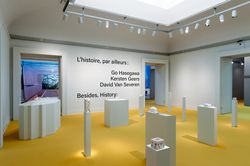
Quel rôle l’histoire a-t-elle à jouer dans la pratique architecturale contemporaine? Plutôt que d’adopter une position postmoderne ou d’évoquer des débats anciens et des formes architecturales historiques, Go Hasegawa, Kersten Geers et David Van Severen abordent dans leur travail les problématiques actuelles dans un esprit de dialogue avec l’histoire. Même si les(...)
Quel rôle l’histoire a-t-elle à jouer dans la pratique architecturale contemporaine? Plutôt que d’adopter une position postmoderne ou d’évoquer des débats anciens et des formes architecturales historiques, Go Hasegawa, Kersten Geers et David Van Severen abordent dans leur travail les problématiques actuelles dans un esprit de dialogue avec l’histoire. Même si les(...)
Localisation:
Salles principales Mot(s)-clé(s):
L’histoire, par ailleurs, Go Hasegawa, Kersten Geers, David Van Severen, Office, KGDVS, Bas Princen
Salles principales Mot(s)-clé(s):
L’histoire, par ailleurs, Go Hasegawa, Kersten Geers, David Van Severen, Office, KGDVS, Bas Princen
Date:
10 mai 2017 au 15 octobre 2017
10 mai 2017 au 15 octobre 2017
Titre:
L’histoire, par ailleurs : Go Hasegawa, Kersten Geers, David Van Severen
Actions:
Description:
Quel rôle l’histoire a-t-elle à jouer dans la pratique architecturale contemporaine? Plutôt que d’adopter une position postmoderne ou d’évoquer des débats anciens et des formes architecturales historiques, Go Hasegawa, Kersten Geers et David Van Severen abordent dans leur travail les problématiques actuelles dans un esprit de dialogue avec l’histoire. Même si les(...)
L’histoire, par ailleurs : Go Hasegawa, Kersten Geers, David Van Severen
Actions:
Description:
Quel rôle l’histoire a-t-elle à jouer dans la pratique architecturale contemporaine? Plutôt que d’adopter une position postmoderne ou d’évoquer des débats anciens et des formes architecturales historiques, Go Hasegawa, Kersten Geers et David Van Severen abordent dans leur travail les problématiques actuelles dans un esprit de dialogue avec l’histoire. Même si les(...)
Classification:
expositions
expositions
Date:
10 mai 2017 au
15 octobre 2017
10 mai 2017 au
15 octobre 2017
Localisation:
Salles principales Mot(s)-clé(s):
L’histoire, par ailleurs, Go Hasegawa, Kersten Geers, David Van Severen, Office, KGDVS, Bas Princen
Salles principales Mot(s)-clé(s):
L’histoire, par ailleurs, Go Hasegawa, Kersten Geers, David Van Severen, Office, KGDVS, Bas Princen
Classification:
expositions
expositions
Actions:
Description:
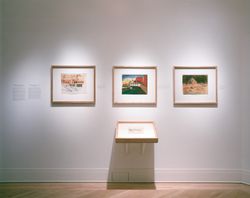
En observant les dessins de Louis Kahn, on note que sa recherche de la monumentalité abstraite, plus intense dans ses réalisations des années 60, était déjà présente des décennies auparavant dans ses nombreux dessins, croquis de voyage et paysages. Les études, croquis de voyage et paysages présentés dans l’exposition – notamment ses paysages intimistes de la Gaspésie où(...)
En observant les dessins de Louis Kahn, on note que sa recherche de la monumentalité abstraite, plus intense dans ses réalisations des années 60, était déjà présente des décennies auparavant dans ses nombreux dessins, croquis de voyage et paysages. Les études, croquis de voyage et paysages présentés dans l’exposition – notamment ses paysages intimistes de la Gaspésie où(...)
Localisation:
Salle octogonale
Salle octogonale
Date:
19 mai 1993 au 29 août 1993
19 mai 1993 au 29 août 1993
Titre:
Une odyssée architecturale : les croquis de voyage de Louis I. Kahn
Actions:
Description:
En observant les dessins de Louis Kahn, on note que sa recherche de la monumentalité abstraite, plus intense dans ses réalisations des années 60, était déjà présente des décennies auparavant dans ses nombreux dessins, croquis de voyage et paysages. Les études, croquis de voyage et paysages présentés dans l’exposition – notamment ses paysages intimistes de la Gaspésie où(...)
Une odyssée architecturale : les croquis de voyage de Louis I. Kahn
Actions:
Description:
En observant les dessins de Louis Kahn, on note que sa recherche de la monumentalité abstraite, plus intense dans ses réalisations des années 60, était déjà présente des décennies auparavant dans ses nombreux dessins, croquis de voyage et paysages. Les études, croquis de voyage et paysages présentés dans l’exposition – notamment ses paysages intimistes de la Gaspésie où(...)
Classification:
expositions
expositions
Date:
19 mai 1993 au
29 août 1993
19 mai 1993 au
29 août 1993
Localisation:
Salle octogonale
Salle octogonale
Classification:
archives
Niveau de description archivistique:
Fonds
archives
Niveau de description archivistique:
Fonds
Titre:
Fonds Paul-Philippe Cret
Fonds Paul-Philippe Cret
Numéro de référence:
AP031
Résumé:
Paul-Philippe Cret fonds, 1907-1950, documents Cret’s project for the International Bureau of American Republics (Pan American Union Building) in Washington D.C. (1907 – 1950). The fond is comprised of drawings showing plans, elevations, wiring and plumbing diagrams, and furniture layout.
AP031
Résumé:
Paul-Philippe Cret fonds, 1907-1950, documents Cret’s project for the International Bureau of American Republics (Pan American Union Building) in Washington D.C. (1907 – 1950). The fond is comprised of drawings showing plans, elevations, wiring and plumbing diagrams, and furniture layout.
Personnes et institutions:
Date:
circa 1907-1950
circa 1907-1950
Titre:
Fonds Paul-Philippe Cret
Actions:
AP031
Résumé:
Paul-Philippe Cret fonds, 1907-1950, documents Cret’s project for the International Bureau of American Republics (Pan American Union Building) in Washington D.C. (1907 – 1950). The fond is comprised of drawings showing plans, elevations, wiring and plumbing diagrams, and furniture layout.
Fonds Paul-Philippe Cret
Actions:
AP031
Résumé:
Paul-Philippe Cret fonds, 1907-1950, documents Cret’s project for the International Bureau of American Republics (Pan American Union Building) in Washington D.C. (1907 – 1950). The fond is comprised of drawings showing plans, elevations, wiring and plumbing diagrams, and furniture layout.
Classification:
archives
Niveau de description archivistique:
Fonds
archives
Niveau de description archivistique:
Fonds
Date:
circa 1907-1950
circa 1907-1950
Personnes et institutions:
Classification:
photographies
photographies
Numéro de référence:
AP075.S4.SS2.005
Description:
Original folder entitled "PHILADELPHIA (COLLECTED WORKS) / 1947-1951".
AP075.S4.SS2.005
Description:
Original folder entitled "PHILADELPHIA (COLLECTED WORKS) / 1947-1951".
Personnes et institutions:
Date:
1947-1951
1947-1951
Titre:
Research documentation on urbanisme and planning in Philadelphia
Actions:
AP075.S4.SS2.005
Description:
Original folder entitled "PHILADELPHIA (COLLECTED WORKS) / 1947-1951".
Research documentation on urbanisme and planning in Philadelphia
Actions:
AP075.S4.SS2.005
Description:
Original folder entitled "PHILADELPHIA (COLLECTED WORKS) / 1947-1951".
Classification:
photographies
photographies
Date:
1947-1951
1947-1951
Personnes et institutions:


