


2036 Résultats
Classification:
livres
livres
Actions:
Prix:
$64.95
(disponible sur commande)
Résumé:
An exploration of the art and writing of Louise Bourgeois through the lens of her relationship with Freudian psychoanalysis. From 1952 to 1985, Louise Bourgeois (1911–2010) underwent extensive Freudian analysis that probed her family history, marriage, motherhood, and artistic ambition—and generated inspiration for her artwork. Examining the impact of psychoanalysis on(...)
$64.95
(disponible sur commande)
Résumé:
An exploration of the art and writing of Louise Bourgeois through the lens of her relationship with Freudian psychoanalysis. From 1952 to 1985, Louise Bourgeois (1911–2010) underwent extensive Freudian analysis that probed her family history, marriage, motherhood, and artistic ambition—and generated inspiration for her artwork. Examining the impact of psychoanalysis on(...)
Titre:
Louise Bourgeois: Freud's daughter
Actions:
Prix:
$64.95
(disponible sur commande)
Résumé:
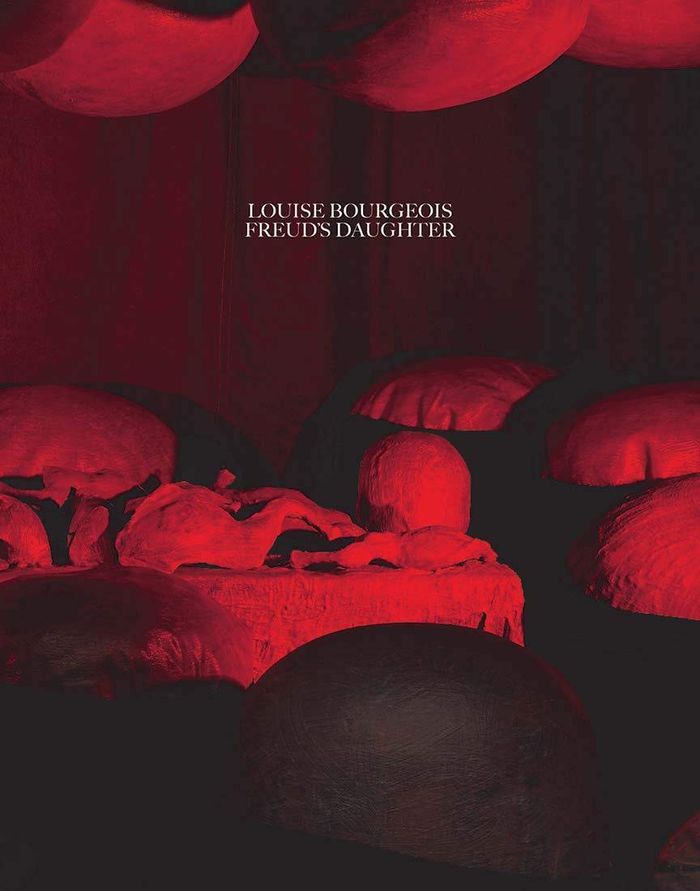
An exploration of the art and writing of Louise Bourgeois through the lens of her relationship with Freudian psychoanalysis. From 1952 to 1985, Louise Bourgeois (1911–2010) underwent extensive Freudian analysis that probed her family history, marriage, motherhood, and artistic ambition—and generated inspiration for her artwork. Examining the impact of psychoanalysis on Bourgeois’s work, this volume offers insight into her creative process. Philip Larratt-Smith, Bourgeois’s literary archivist, provides an overview of the artist’s life and work and the ways in which the psychoanalytic process informed her artistic practice. An essay by Juliet Mitchell offers a cutting-edge feminist psychoanalyst’s viewpoint on the artist’s long and complex relationship with therapy. In addition, a short text written by Bourgeois (first published in 1991) addresses Freud’s own relationship to art and artists. Featuring excerpts from Bourgeois’s copious diaries, rarely seen notebook pages, and archival family photographs, Louise Bourgeois, "Freud’s daughter" opens exciting new avenues for understanding an innovative, influential, and groundbreaking artist whose wide-ranging work includes not only renowned large-scale sculptures but also a plethora of paintings and prints.
Louise Bourgeois: Freud's daughter
Actions:
Prix:
$64.95
(disponible sur commande)
Résumé:
An exploration of the art and writing of Louise Bourgeois through the lens of her relationship with Freudian psychoanalysis. From 1952 to 1985, Louise Bourgeois (1911–2010) underwent extensive Freudian analysis that probed her family history, marriage, motherhood, and artistic ambition—and generated inspiration for her artwork. Examining the impact of psychoanalysis on Bourgeois’s work, this volume offers insight into her creative process. Philip Larratt-Smith, Bourgeois’s literary archivist, provides an overview of the artist’s life and work and the ways in which the psychoanalytic process informed her artistic practice. An essay by Juliet Mitchell offers a cutting-edge feminist psychoanalyst’s viewpoint on the artist’s long and complex relationship with therapy. In addition, a short text written by Bourgeois (first published in 1991) addresses Freud’s own relationship to art and artists. Featuring excerpts from Bourgeois’s copious diaries, rarely seen notebook pages, and archival family photographs, Louise Bourgeois, "Freud’s daughter" opens exciting new avenues for understanding an innovative, influential, and groundbreaking artist whose wide-ranging work includes not only renowned large-scale sculptures but also a plethora of paintings and prints.
Classification:
livres
livres
Publication:
juin 2021
juin 2021
Classification:
livres
livres
Actions:
Prix:
$59.95
(disponible sur commande)
Résumé:
Quelles seraient les conséquences, dans l’espace urbain, de l’abolition de la voiture? « Post-car world » tente de répondre à cette question dans le contexte de la descente énergétique, à l’heure où la mobilité des personnes, des biens ainsi que du vivant représente le thème clé autour duquel reconfigurer le monde urbain. La question s’impose par son urgence dans la(...)
$59.95
(disponible sur commande)
Résumé:
Quelles seraient les conséquences, dans l’espace urbain, de l’abolition de la voiture? « Post-car world » tente de répondre à cette question dans le contexte de la descente énergétique, à l’heure où la mobilité des personnes, des biens ainsi que du vivant représente le thème clé autour duquel reconfigurer le monde urbain. La question s’impose par son urgence dans la(...)
Titre:
Post-car world : Futurs de la ville-territoire
Actions:
Prix:
$59.95
(disponible sur commande)
Résumé:
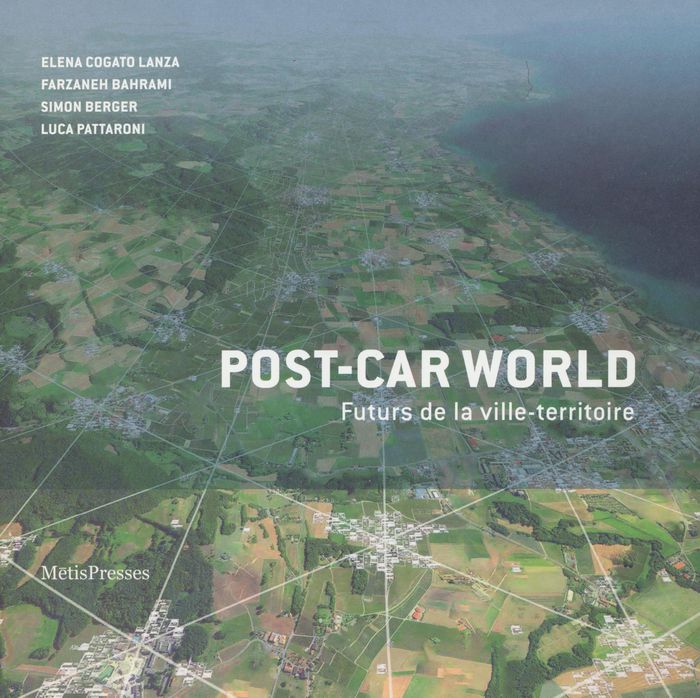
Quelles seraient les conséquences, dans l’espace urbain, de l’abolition de la voiture? « Post-car world » tente de répondre à cette question dans le contexte de la descente énergétique, à l’heure où la mobilité des personnes, des biens ainsi que du vivant représente le thème clé autour duquel reconfigurer le monde urbain. La question s’impose par son urgence dans la ville-territoire – soit la ville dispersée, à basse densité bâtie –, encore largement dépendante de l’usage de la voiture et oubliée des mesures favorisant les mobilités alternatives, engagées en revanche dans les villes denses. En prenant comme cas d’étude la métropole lémanique entre Genève et Lausanne, les auteurs développent une exploration à la fois cartographique, sociologique, historique, photographique et projectuelle de cette ville-territoire, visant à détecter ses potentiels de changement. En considérant la ville comme un palimpseste issu d’un processus d’incessantes modifications, une approche sociologique et une approche de recherche by design s’associent ici pour renverser le paradigme urbano-fonctionnel actuel et faire émerger différents futurs par les entrelacs des structures et restes matériels, des pratiques et des imaginaires sociaux.
Post-car world : Futurs de la ville-territoire
Actions:
Prix:
$59.95
(disponible sur commande)
Résumé:
Quelles seraient les conséquences, dans l’espace urbain, de l’abolition de la voiture? « Post-car world » tente de répondre à cette question dans le contexte de la descente énergétique, à l’heure où la mobilité des personnes, des biens ainsi que du vivant représente le thème clé autour duquel reconfigurer le monde urbain. La question s’impose par son urgence dans la ville-territoire – soit la ville dispersée, à basse densité bâtie –, encore largement dépendante de l’usage de la voiture et oubliée des mesures favorisant les mobilités alternatives, engagées en revanche dans les villes denses. En prenant comme cas d’étude la métropole lémanique entre Genève et Lausanne, les auteurs développent une exploration à la fois cartographique, sociologique, historique, photographique et projectuelle de cette ville-territoire, visant à détecter ses potentiels de changement. En considérant la ville comme un palimpseste issu d’un processus d’incessantes modifications, une approche sociologique et une approche de recherche by design s’associent ici pour renverser le paradigme urbano-fonctionnel actuel et faire émerger différents futurs par les entrelacs des structures et restes matériels, des pratiques et des imaginaires sociaux.
Classification:
livres
livres
Publication:
mai 2021
mai 2021
Sujet:
Théorie de l’urbanisme
Théorie de l’urbanisme
Classification:
livres
livres
Actions:
Prix:
$24.99
(disponible en magasin)
Résumé:
Les villes du monde sont confrontées à une tension persistante entre l'attrait de la mondialisation et les besoins des citoyen.ne.s. Les partis politiques conventionnels présentent des solutions banales qui répondent aux intérêts des entreprises. Parallèlement, les citoyen.ne.s, dans les cafés, les salles de réunion, dans la rue et maintenant dans les forums virtuels,(...)
$24.99
(disponible en magasin)
Résumé:
Les villes du monde sont confrontées à une tension persistante entre l'attrait de la mondialisation et les besoins des citoyen.ne.s. Les partis politiques conventionnels présentent des solutions banales qui répondent aux intérêts des entreprises. Parallèlement, les citoyen.ne.s, dans les cafés, les salles de réunion, dans la rue et maintenant dans les forums virtuels,(...)
Publication:
septembre 2021
septembre 2021
Titre:
Politique urbaine à Montréal: un guide de citoyen-ne
Actions:
Prix:
$24.99
(disponible en magasin)
Résumé:
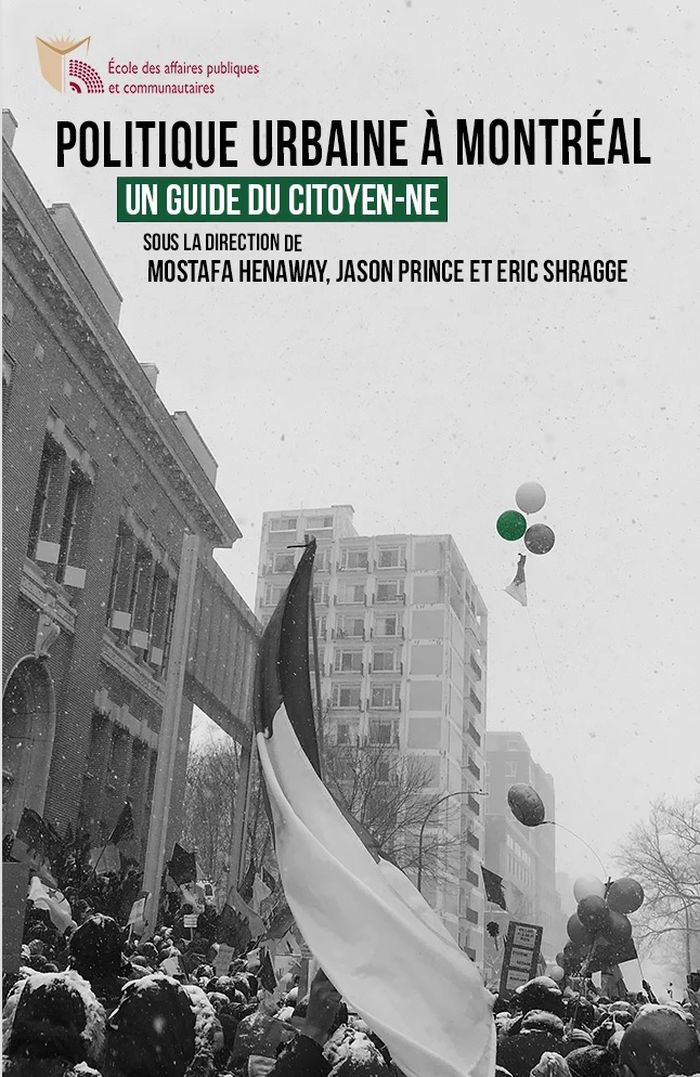
Les villes du monde sont confrontées à une tension persistante entre l'attrait de la mondialisation et les besoins des citoyen.ne.s. Les partis politiques conventionnels présentent des solutions banales qui répondent aux intérêts des entreprises. Parallèlement, les citoyen.ne.s, dans les cafés, les salles de réunion, dans la rue et maintenant dans les forums virtuels, relèvent le défi d'imaginer une politique municipale nouvelle et radicale à partir de la base. Ce livre explore l'avenir des mouvements citoyen.ne.s de Montréal à un moment défini par les menaces de pandémie, d'austérité, de spéculation et d'insécurité du logement, et de racisme. Il associe une analyse contemporaine à une exploration de la riche histoire municipale de Montréal. Les éditeurs de ''Un guide du citoyen-ne'' ont réuni plus d'une vingtaine de militant.e.s, d'urbanistes et de penseur.euse.s pour aborder les principaux problèmes auxquels les Montréalais.e.s sont confrontés et proposer des alternatives dans une perspective citoyenne. Les mouvements municipaux de partout verront leurs propres luttes reflétées dans ce guide et y trouveront une inspiration pour le débat et l'action.
Politique urbaine à Montréal: un guide de citoyen-ne
Actions:
Prix:
$24.99
(disponible en magasin)
Résumé:
Les villes du monde sont confrontées à une tension persistante entre l'attrait de la mondialisation et les besoins des citoyen.ne.s. Les partis politiques conventionnels présentent des solutions banales qui répondent aux intérêts des entreprises. Parallèlement, les citoyen.ne.s, dans les cafés, les salles de réunion, dans la rue et maintenant dans les forums virtuels, relèvent le défi d'imaginer une politique municipale nouvelle et radicale à partir de la base. Ce livre explore l'avenir des mouvements citoyen.ne.s de Montréal à un moment défini par les menaces de pandémie, d'austérité, de spéculation et d'insécurité du logement, et de racisme. Il associe une analyse contemporaine à une exploration de la riche histoire municipale de Montréal. Les éditeurs de ''Un guide du citoyen-ne'' ont réuni plus d'une vingtaine de militant.e.s, d'urbanistes et de penseur.euse.s pour aborder les principaux problèmes auxquels les Montréalais.e.s sont confrontés et proposer des alternatives dans une perspective citoyenne. Les mouvements municipaux de partout verront leurs propres luttes reflétées dans ce guide et y trouveront une inspiration pour le débat et l'action.
Classification:
livres
livres
Publication:
septembre 2021
septembre 2021
Classification:
livres
livres
Prix:
$164.95
(disponible sur commande)
Résumé:
Les architectures légères contemporaines explorent la modularité, la construction participative ou la miniaturisation. Elles se fondent sur la conviction que construire, en conscience, plus léger réclame moins de matière, utilise moins de ressource, produit moins de déchets, demande moins de temps de montage, nécessite moins d’espace, requiert de façon exponentielle moins(...)
$164.95
(disponible sur commande)
Résumé:
Les architectures légères contemporaines explorent la modularité, la construction participative ou la miniaturisation. Elles se fondent sur la conviction que construire, en conscience, plus léger réclame moins de matière, utilise moins de ressource, produit moins de déchets, demande moins de temps de montage, nécessite moins d’espace, requiert de façon exponentielle moins(...)
Titre:
L'empreinte d'un habitat : construire léger et décarboné
Actions:
Prix:
$164.95
(disponible sur commande)
Résumé:
Les architectures légères contemporaines explorent la modularité, la construction participative ou la miniaturisation. Elles se fondent sur la conviction que construire, en conscience, plus léger réclame moins de matière, utilise moins de ressource, produit moins de déchets, demande moins de temps de montage, nécessite moins d’espace, requiert de façon exponentielle moins d’énergie, réduit symétriquement l’empreinte carbone de la construction d’un habitat. Cette étude menée sur une trentaine de projets internationaux révèle le potentiel et la diversité des systèmes constructifs développés. Elle témoigne de la capacité de ces architectures à s’adapter aux techniques et attentes de leur temps. Chaque exploration relue dans son contexte historique à partir d’archives reflète une démarche, une technique et un mode d’habiter. Redessiné et décomposé selon un protocole développé pour cette manifestation par l’agence Philippe Rizzotti Architecte et le laboratoire IBI de l’ETH Zürich, le corpus dévoile des correspondances, des qualités partagées. Cet inventaire permet de quantifier les constructions, comparer les matériaux, analyser les assemblages et classer tout ou partie pour faire émerger des logiques adaptables demain.
L'empreinte d'un habitat : construire léger et décarboné
Actions:
Prix:
$164.95
(disponible sur commande)
Résumé:
Les architectures légères contemporaines explorent la modularité, la construction participative ou la miniaturisation. Elles se fondent sur la conviction que construire, en conscience, plus léger réclame moins de matière, utilise moins de ressource, produit moins de déchets, demande moins de temps de montage, nécessite moins d’espace, requiert de façon exponentielle moins d’énergie, réduit symétriquement l’empreinte carbone de la construction d’un habitat. Cette étude menée sur une trentaine de projets internationaux révèle le potentiel et la diversité des systèmes constructifs développés. Elle témoigne de la capacité de ces architectures à s’adapter aux techniques et attentes de leur temps. Chaque exploration relue dans son contexte historique à partir d’archives reflète une démarche, une technique et un mode d’habiter. Redessiné et décomposé selon un protocole développé pour cette manifestation par l’agence Philippe Rizzotti Architecte et le laboratoire IBI de l’ETH Zürich, le corpus dévoile des correspondances, des qualités partagées. Cet inventaire permet de quantifier les constructions, comparer les matériaux, analyser les assemblages et classer tout ou partie pour faire émerger des logiques adaptables demain.
Classification:
livres
livres
Publication:
janvier 2022
janvier 2022
Sujet:
Architecture écologique
Architecture écologique
Classification:
livres
livres
Actions:
Prix:
$170.00
(disponible sur commande)
Résumé:
For Richard Tuttle, the object, as well as the work, is intended for communication. Where others find in history answers to the questions objects pose, Tuttle instead finds the questions that drive his art—asking us to think about what objects mean, and how. This is the first publication to explore the influential American artist’s object collection and the cards on which(...)
$170.00
(disponible sur commande)
Résumé:
For Richard Tuttle, the object, as well as the work, is intended for communication. Where others find in history answers to the questions objects pose, Tuttle instead finds the questions that drive his art—asking us to think about what objects mean, and how. This is the first publication to explore the influential American artist’s object collection and the cards on which(...)
Titre:
Richard Tuttle: What is the object
Actions:
Prix:
$170.00
(disponible sur commande)
Résumé:
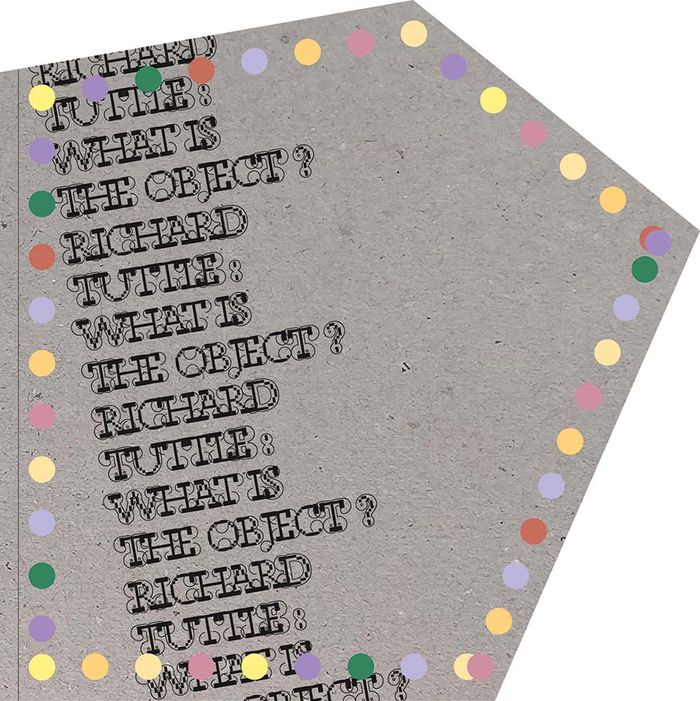
For Richard Tuttle, the object, as well as the work, is intended for communication. Where others find in history answers to the questions objects pose, Tuttle instead finds the questions that drive his art—asking us to think about what objects mean, and how. This is the first publication to explore the influential American artist’s object collection and the cards on which he has recorded his thoughts about these items over the past five decades. Designed by the Belgian book artist Luc Derycke as a ''book as object,'' the volume carries forth the challenging question of the meaning of objects. It includes an interview with Tuttle, an analysis of objects in poetic nonfiction by Renee Gladman, and an essay about Tuttle’s art as the pursuit of a kind of philosophical exploration by Peter N. Miller, as well as poems by Tuttle and a short, surrealist tale about the artist’s objects. Tuttle’s objects and index cards are beautifully photographed throughout by Bruce M. White in this lavishly illustrated volume.
Richard Tuttle: What is the object
Actions:
Prix:
$170.00
(disponible sur commande)
Résumé:
For Richard Tuttle, the object, as well as the work, is intended for communication. Where others find in history answers to the questions objects pose, Tuttle instead finds the questions that drive his art—asking us to think about what objects mean, and how. This is the first publication to explore the influential American artist’s object collection and the cards on which he has recorded his thoughts about these items over the past five decades. Designed by the Belgian book artist Luc Derycke as a ''book as object,'' the volume carries forth the challenging question of the meaning of objects. It includes an interview with Tuttle, an analysis of objects in poetic nonfiction by Renee Gladman, and an essay about Tuttle’s art as the pursuit of a kind of philosophical exploration by Peter N. Miller, as well as poems by Tuttle and a short, surrealist tale about the artist’s objects. Tuttle’s objects and index cards are beautifully photographed throughout by Bruce M. White in this lavishly illustrated volume.
Classification:
livres
livres
Publication:
avril 2022
avril 2022
Classification:
livres
livres
Actions:
Prix:
$34.95
(disponible sur commande)
Résumé:
Do Glaciers Listen? explores the conflicting depictions of glaciers to show how natural and cultural histories are objectively entangled in the Mount Saint Elias ranges. This rugged area, where Alaska, British Columbia, and the Yukon Territory now meet, underwent significant geophysical change in the late eighteenth and nineteenth centuries, which coincided with dramatic(...)
$34.95
(disponible sur commande)
Résumé:
Do Glaciers Listen? explores the conflicting depictions of glaciers to show how natural and cultural histories are objectively entangled in the Mount Saint Elias ranges. This rugged area, where Alaska, British Columbia, and the Yukon Territory now meet, underwent significant geophysical change in the late eighteenth and nineteenth centuries, which coincided with dramatic(...)
Titre:
Do glaciers listen? Local knowledge, colonial encounters, and social imagination
Actions:
Prix:
$34.95
(disponible sur commande)
Résumé:
Do Glaciers Listen? explores the conflicting depictions of glaciers to show how natural and cultural histories are objectively entangled in the Mount Saint Elias ranges. This rugged area, where Alaska, British Columbia, and the Yukon Territory now meet, underwent significant geophysical change in the late eighteenth and nineteenth centuries, which coincided with dramatic social upheaval resulting from European exploration and increased travel and trade among Aboriginal peoples. European visitors brought with them varying conceptions of nature as sublime, as spiritual, or as a resource for human progress. They saw glaciers as inanimate, subject to empirical investigation and measurement. Aboriginal oral histories, conversely, described glaciers as sentient, animate, and quick to respond to human behaviour. In each case, however, the experiences and ideas surrounding glaciers were incorporated into interpretations of social relations. Focusing on these contrasting views during the late stages of the Little Ice Age (1550-1900), Cruikshank demonstrates how local knowledge is produced, rather than discovered, through colonial encounters, and how it often conjoins social and biophysical processes. She then traces how the divergent views weave through contemporary debates about cultural meanings as well as current discussions about protected areas, parks, and the new World Heritage site.
Do glaciers listen? Local knowledge, colonial encounters, and social imagination
Actions:
Prix:
$34.95
(disponible sur commande)
Résumé:
Do Glaciers Listen? explores the conflicting depictions of glaciers to show how natural and cultural histories are objectively entangled in the Mount Saint Elias ranges. This rugged area, where Alaska, British Columbia, and the Yukon Territory now meet, underwent significant geophysical change in the late eighteenth and nineteenth centuries, which coincided with dramatic social upheaval resulting from European exploration and increased travel and trade among Aboriginal peoples. European visitors brought with them varying conceptions of nature as sublime, as spiritual, or as a resource for human progress. They saw glaciers as inanimate, subject to empirical investigation and measurement. Aboriginal oral histories, conversely, described glaciers as sentient, animate, and quick to respond to human behaviour. In each case, however, the experiences and ideas surrounding glaciers were incorporated into interpretations of social relations. Focusing on these contrasting views during the late stages of the Little Ice Age (1550-1900), Cruikshank demonstrates how local knowledge is produced, rather than discovered, through colonial encounters, and how it often conjoins social and biophysical processes. She then traces how the divergent views weave through contemporary debates about cultural meanings as well as current discussions about protected areas, parks, and the new World Heritage site.
Classification:
livres
livres
Publication:
avril 2006
avril 2006
Sujet:
Théorie de l’architecture
Théorie de l’architecture
Classification:
livres
livres
Titre:
Aalto and America
Aalto and America
Actions:
Prix:
$79.95
(disponible sur commande)
Résumé:
The internationally renowned Finnish architect and designer Alvar Aalto (1898-1976) created several landmarks of modern design in the United States. The first, the Finland Pavilion at the New York World's Fair in 1939, introduced his pioneering style to the country and established his reputation among his American peers. Subsequent designs produced in the United States(...)
$79.95
(disponible sur commande)
Résumé:
The internationally renowned Finnish architect and designer Alvar Aalto (1898-1976) created several landmarks of modern design in the United States. The first, the Finland Pavilion at the New York World's Fair in 1939, introduced his pioneering style to the country and established his reputation among his American peers. Subsequent designs produced in the United States(...)
Titre:
Aalto and America
Actions:
Prix:
$79.95
(disponible sur commande)
Résumé:
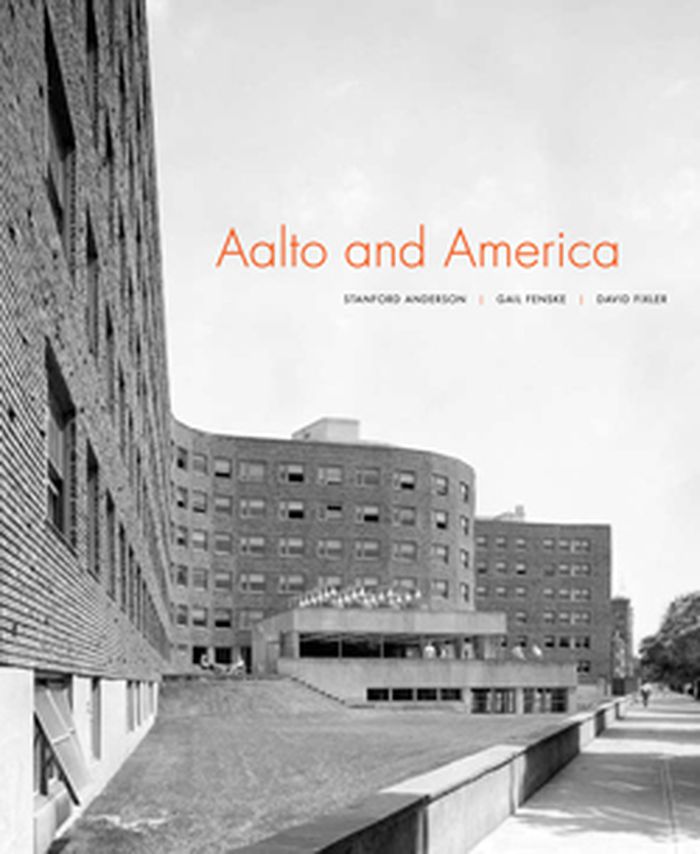
The internationally renowned Finnish architect and designer Alvar Aalto (1898-1976) created several landmarks of modern design in the United States. The first, the Finland Pavilion at the New York World's Fair in 1939, introduced his pioneering style to the country and established his reputation among his American peers. Subsequent designs produced in the United States marked major turning points in his evolving position as an architect. His commissioned project for the Massachusetts Institute of Technology's Baker House dormitory (completed 1949) features an undulating facade of red brick, a material that references the building's Boston surroundings. Aalto's fan-shaped plan for the Mount Angel Abbey Library (completed 1970) in St. Benedict, Oregon, his consummate exploration of the library type, capitalizes on the local terrain and the use of natural light. Aalto's designs had a lasting impact on American modernism, but his experiences in America also profoundly influenced his own stylistic development. Aalto and America is a detailed survey of this beneficial relationship, with contributions by fifteen experts who explore these key designs in relation to larger themes in international politics, architectural culture, housing research, and modern criticism and design.
Aalto and America
Actions:
Prix:
$79.95
(disponible sur commande)
Résumé:
The internationally renowned Finnish architect and designer Alvar Aalto (1898-1976) created several landmarks of modern design in the United States. The first, the Finland Pavilion at the New York World's Fair in 1939, introduced his pioneering style to the country and established his reputation among his American peers. Subsequent designs produced in the United States marked major turning points in his evolving position as an architect. His commissioned project for the Massachusetts Institute of Technology's Baker House dormitory (completed 1949) features an undulating facade of red brick, a material that references the building's Boston surroundings. Aalto's fan-shaped plan for the Mount Angel Abbey Library (completed 1970) in St. Benedict, Oregon, his consummate exploration of the library type, capitalizes on the local terrain and the use of natural light. Aalto's designs had a lasting impact on American modernism, but his experiences in America also profoundly influenced his own stylistic development. Aalto and America is a detailed survey of this beneficial relationship, with contributions by fifteen experts who explore these key designs in relation to larger themes in international politics, architectural culture, housing research, and modern criticism and design.
Classification:
livres
livres
Publication:
octobre 2011
octobre 2011
Sujet:
Architecture, monographies
Architecture, monographies
Classification:
livres
livres
Titre:
Omon Ra
Omon Ra
Actions:
Prix:
$15.00
(disponible sur commande)
Résumé:
A rising star in the Russian literary firmament Pelevin, winner of the 1993 Russian Booker Prize for short stories, has written a parody of life under Communism refracted through the prism of the Soviet space program. This clever parable about a young cosmonaut ordered to make the ultimate sacrifice? Killing himself after secretly piloting a supposedly unmanned lunar(...)
$15.00
(disponible sur commande)
Résumé:
A rising star in the Russian literary firmament Pelevin, winner of the 1993 Russian Booker Prize for short stories, has written a parody of life under Communism refracted through the prism of the Soviet space program. This clever parable about a young cosmonaut ordered to make the ultimate sacrifice? Killing himself after secretly piloting a supposedly unmanned lunar(...)
Titre:
Omon Ra
Actions:
Prix:
$15.00
(disponible sur commande)
Résumé:
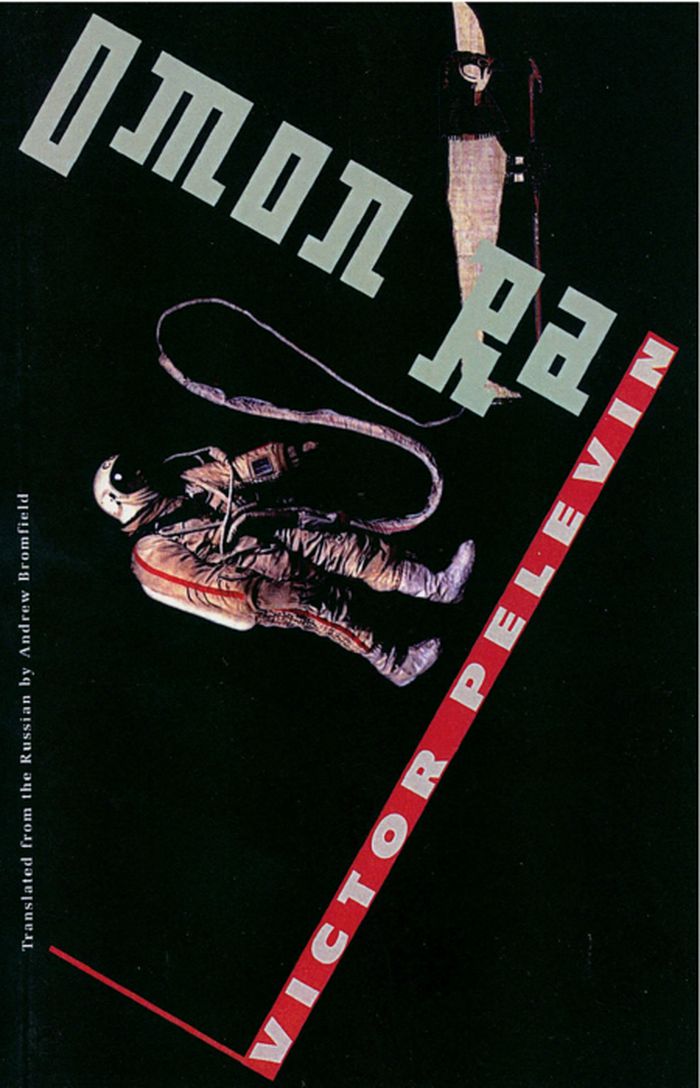
A rising star in the Russian literary firmament Pelevin, winner of the 1993 Russian Booker Prize for short stories, has written a parody of life under Communism refracted through the prism of the Soviet space program. This clever parable about a young cosmonaut ordered to make the ultimate sacrifice? Killing himself after secretly piloting a supposedly unmanned lunar expedition? is sprinkled with throwaway gags, absurdist humor and wickedly ironic touches, as well as with the eerie beauty of space exploration. Obsessed with space travel since early childhood, Omon Krivomazov identifies with Ra, the ancient Egyptian falcon-headed sun god, a fixation that reflects his desire to escape the gray conformity of Soviet life and his yearning for a soul. Omon learns that more than 100 of his fellow cosmonauts have already been sacrificed as guinea pigs after taking part in supposedly automated, manless launches. Pelevin portrays the Russian space program as a vast propaganda enterprise, a distraction to paper over the tawdriness and fear of everyday life. Many allusions will be lost on American readers. And, in light of the truth-is-stranger-than-fiction state of contemporary Russian society, some of the Soviet-era satire seems oddly tame.
Omon Ra
Actions:
Prix:
$15.00
(disponible sur commande)
Résumé:
A rising star in the Russian literary firmament Pelevin, winner of the 1993 Russian Booker Prize for short stories, has written a parody of life under Communism refracted through the prism of the Soviet space program. This clever parable about a young cosmonaut ordered to make the ultimate sacrifice? Killing himself after secretly piloting a supposedly unmanned lunar expedition? is sprinkled with throwaway gags, absurdist humor and wickedly ironic touches, as well as with the eerie beauty of space exploration. Obsessed with space travel since early childhood, Omon Krivomazov identifies with Ra, the ancient Egyptian falcon-headed sun god, a fixation that reflects his desire to escape the gray conformity of Soviet life and his yearning for a soul. Omon learns that more than 100 of his fellow cosmonauts have already been sacrificed as guinea pigs after taking part in supposedly automated, manless launches. Pelevin portrays the Russian space program as a vast propaganda enterprise, a distraction to paper over the tawdriness and fear of everyday life. Many allusions will be lost on American readers. And, in light of the truth-is-stranger-than-fiction state of contemporary Russian society, some of the Soviet-era satire seems oddly tame.
Classification:
livres
livres
Publication:
février 1998
février 1998
Sujet:
Architecture et l'imaginaire
Architecture et l'imaginaire
Classification:
livres
livres
Actions:
Prix:
$65.00
(disponible sur commande)
Résumé:
This groundbreaking exploration of appropriation and institutional critique assembles a wide variety of artists and mediums to offer new insight and make unprecedented connections. Exploring two parallel strands of post-conceptual art, Take It or Leave It highlights artists known for their use of appropriation and those who engage in "institutional critique." Focusing on(...)
$65.00
(disponible sur commande)
Résumé:
This groundbreaking exploration of appropriation and institutional critique assembles a wide variety of artists and mediums to offer new insight and make unprecedented connections. Exploring two parallel strands of post-conceptual art, Take It or Leave It highlights artists known for their use of appropriation and those who engage in "institutional critique." Focusing on(...)
Publication:
mars 2014
mars 2014
Titre:
Take it or leave it: institution, image, ideology
Actions:
Prix:
$65.00
(disponible sur commande)
Résumé:
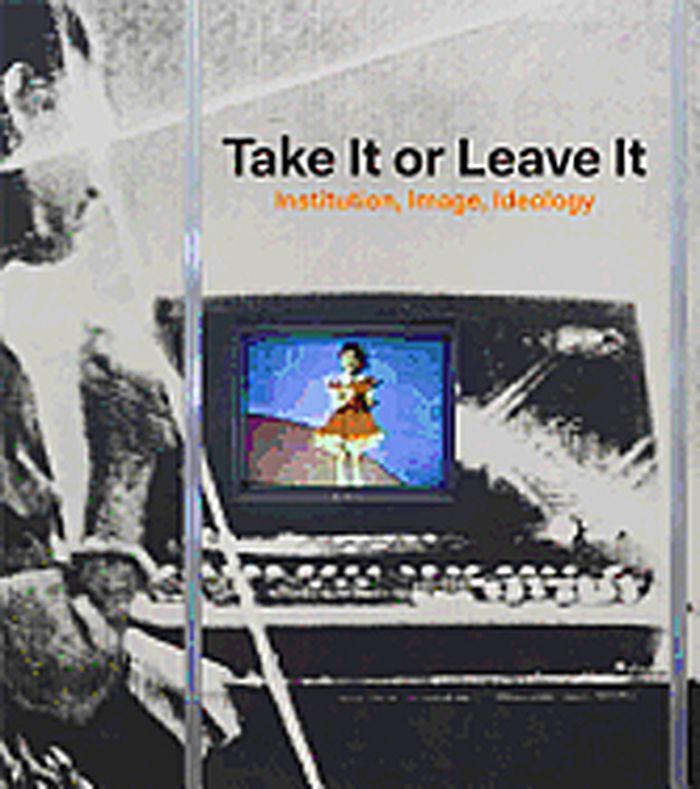
This groundbreaking exploration of appropriation and institutional critique assembles a wide variety of artists and mediums to offer new insight and make unprecedented connections. Exploring two parallel strands of post-conceptual art, Take It or Leave It highlights artists known for their use of appropriation and those who engage in "institutional critique." Focusing on American artists who emerged from the late 1970s to the early 1990s, the book highlights dynamic practices in a variety of media: from performance to photography; video to installation; painting to writing. Artists as wide-ranging in approach as Dara Birnbaum, Mark Dion, Robert Gober, Barbara Kruger, Zoe Leonard, Glenn Ligon, Adrian Piper, Stephen Prina, and Fred Wilson are examined within the context of the larger culture— from the political landscape to design strategies in advertising. Essays by curators Anne Ellegood and Johanna Burton as well as scholars George Baker, Julia Bryan-Wilson, Gavin Butt, and Darby English explore the historical and current terrain of appropriation and institutional critique, while pursuing topics including the downtown music scene in New York in the '80s, new strategies of painting, and theories of race after identity politics' heyday.
Take it or leave it: institution, image, ideology
Actions:
Prix:
$65.00
(disponible sur commande)
Résumé:
This groundbreaking exploration of appropriation and institutional critique assembles a wide variety of artists and mediums to offer new insight and make unprecedented connections. Exploring two parallel strands of post-conceptual art, Take It or Leave It highlights artists known for their use of appropriation and those who engage in "institutional critique." Focusing on American artists who emerged from the late 1970s to the early 1990s, the book highlights dynamic practices in a variety of media: from performance to photography; video to installation; painting to writing. Artists as wide-ranging in approach as Dara Birnbaum, Mark Dion, Robert Gober, Barbara Kruger, Zoe Leonard, Glenn Ligon, Adrian Piper, Stephen Prina, and Fred Wilson are examined within the context of the larger culture— from the political landscape to design strategies in advertising. Essays by curators Anne Ellegood and Johanna Burton as well as scholars George Baker, Julia Bryan-Wilson, Gavin Butt, and Darby English explore the historical and current terrain of appropriation and institutional critique, while pursuing topics including the downtown music scene in New York in the '80s, new strategies of painting, and theories of race after identity politics' heyday.
Classification:
livres
livres
Publication:
mars 2014
mars 2014
Classification:
livres
livres
Prix:
$37.00
(disponible en magasin)
Résumé:
The Walker Art Center recently opened its expanded space, which includes a new theatre, a new restaurant, and more galleries, but is best known for being Herzog & de Meuron’s first public building in the United States. The project drew national coverage from media including 'The New York Times'. 'Expanding the Center' caters to and piques public interest in the building(...)
$37.00
(disponible en magasin)
Résumé:
The Walker Art Center recently opened its expanded space, which includes a new theatre, a new restaurant, and more galleries, but is best known for being Herzog & de Meuron’s first public building in the United States. The project drew national coverage from media including 'The New York Times'. 'Expanding the Center' caters to and piques public interest in the building(...)
Sujet:
Architecture, monographies
Architecture, monographies
Publication:
septembre 2005, Minneapolis
septembre 2005, Minneapolis
Titre:
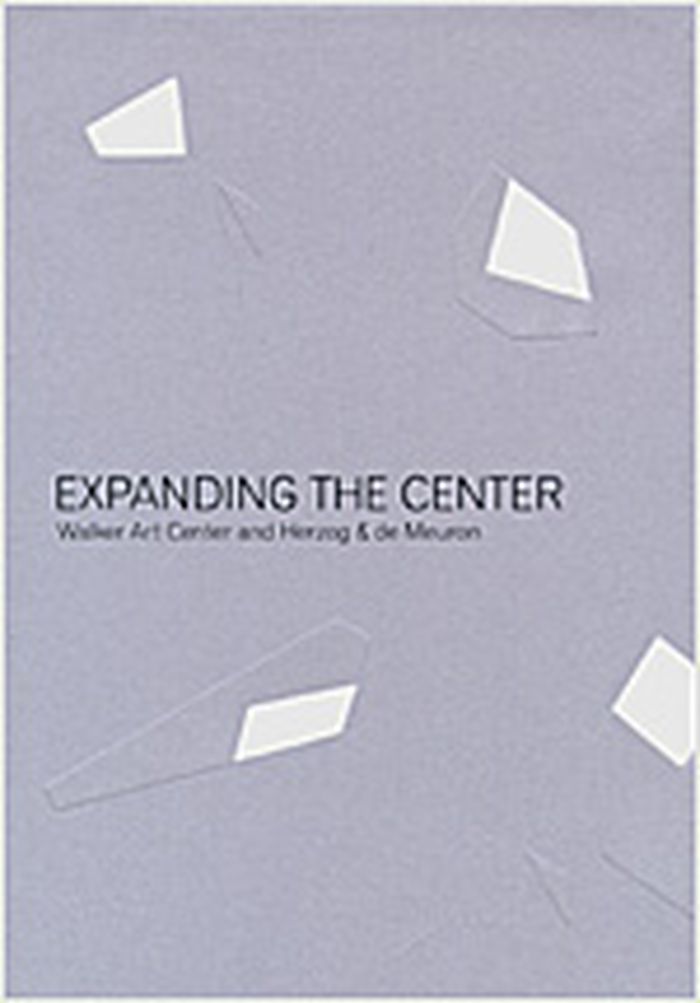
Expanding the Center : Walker Art Center and Herzog & de Meuron
Actions:
Prix:
$37.00
(disponible en magasin)
Résumé:
The Walker Art Center recently opened its expanded space, which includes a new theatre, a new restaurant, and more galleries, but is best known for being Herzog & de Meuron’s first public building in the United States. The project drew national coverage from media including 'The New York Times'. 'Expanding the Center' caters to and piques public interest in the building with a generous selection of images, including sketches, renderings, and photographs of the construction process and the completed work. Herzog & de Meuron’s shimmering but grounded design mirrors the textures and shades of the Walker’s original space, and an institutional philosophy based in innovation and risk-taking, the exploration of alternative approaches to learning, the experimental use of technologies to communicate information, and the design of spaces to enhance a variety of museum experiences. The book is organized around the decisions and actions of the architects, builders, Walker staff and the audience - i.e. designing, constructing, unveiling, staging, gathering, patterning, framing, collecting - and highlights the thinking that led to the visible form of the Center as well as the innovative projects and initiatives that give it its inimitable character.
Expanding the Center : Walker Art Center and Herzog & de Meuron
Actions:
Prix:
$37.00
(disponible en magasin)
Résumé:
The Walker Art Center recently opened its expanded space, which includes a new theatre, a new restaurant, and more galleries, but is best known for being Herzog & de Meuron’s first public building in the United States. The project drew national coverage from media including 'The New York Times'. 'Expanding the Center' caters to and piques public interest in the building with a generous selection of images, including sketches, renderings, and photographs of the construction process and the completed work. Herzog & de Meuron’s shimmering but grounded design mirrors the textures and shades of the Walker’s original space, and an institutional philosophy based in innovation and risk-taking, the exploration of alternative approaches to learning, the experimental use of technologies to communicate information, and the design of spaces to enhance a variety of museum experiences. The book is organized around the decisions and actions of the architects, builders, Walker staff and the audience - i.e. designing, constructing, unveiling, staging, gathering, patterning, framing, collecting - and highlights the thinking that led to the visible form of the Center as well as the innovative projects and initiatives that give it its inimitable character.
Classification:
livres
livres
Publication:
septembre 2005, Minneapolis
septembre 2005, Minneapolis
Sujet:
Architecture, monographies
Architecture, monographies


