


2095 Résultats
Classification:
livres
livres
Actions:
Prix:
$90.00
(disponible sur commande)
Résumé:
Elegant and magnificent, conservatories reveal fascinating social, cultural, botanical, and engineering advances as they have evolved across history. First appearing in the eighteenth century as simple structures designed to protect fruit trees and other delicate plants from harsh European winters, conservatories became grand glass houses that spread across the European(...)
$90.00
(disponible sur commande)
Résumé:
Elegant and magnificent, conservatories reveal fascinating social, cultural, botanical, and engineering advances as they have evolved across history. First appearing in the eighteenth century as simple structures designed to protect fruit trees and other delicate plants from harsh European winters, conservatories became grand glass houses that spread across the European(...)
Titre:
The conservatory: gardens under glass
Actions:
Prix:
$90.00
(disponible sur commande)
Résumé:
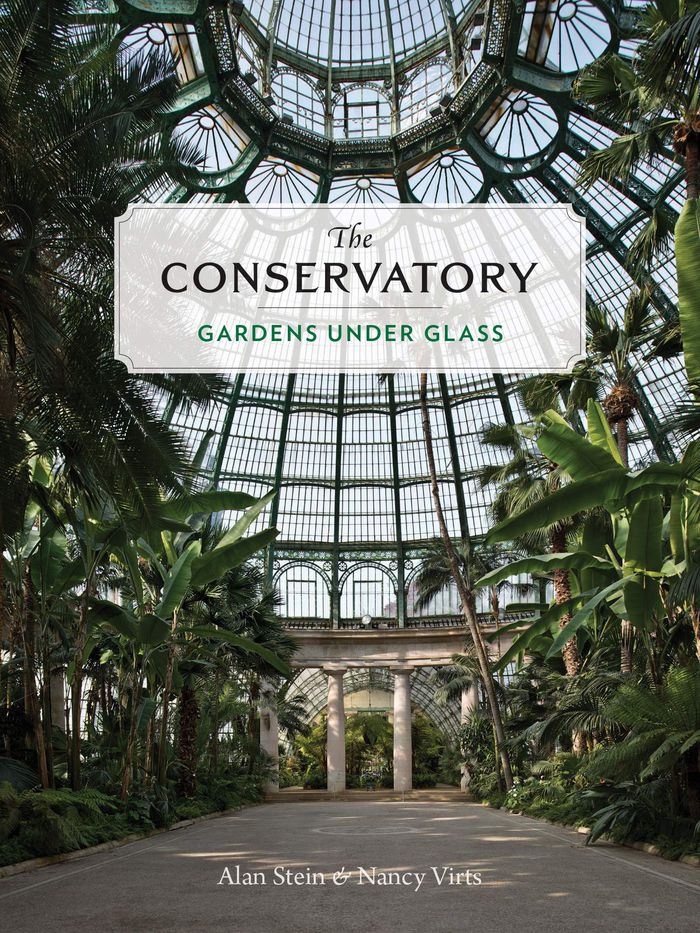
Elegant and magnificent, conservatories reveal fascinating social, cultural, botanical, and engineering advances as they have evolved across history. First appearing in the eighteenth century as simple structures designed to protect fruit trees and other delicate plants from harsh European winters, conservatories became grand glass houses that spread across the European continent, to the Americas, and ultimately around the world. Through archival and contemporary photographs, drawings of landmark structures, and accessible text, ''The Conservatory'' celebrates the patrons and designers who advanced the technology and architectural majesty of these light-filled structures. The importance of conservatories continues to grow with efforts to conserve phenomenal plants and their environments.
The conservatory: gardens under glass
Actions:
Prix:
$90.00
(disponible sur commande)
Résumé:
Elegant and magnificent, conservatories reveal fascinating social, cultural, botanical, and engineering advances as they have evolved across history. First appearing in the eighteenth century as simple structures designed to protect fruit trees and other delicate plants from harsh European winters, conservatories became grand glass houses that spread across the European continent, to the Americas, and ultimately around the world. Through archival and contemporary photographs, drawings of landmark structures, and accessible text, ''The Conservatory'' celebrates the patrons and designers who advanced the technology and architectural majesty of these light-filled structures. The importance of conservatories continues to grow with efforts to conserve phenomenal plants and their environments.
Classification:
livres
livres
Publication:
octobre 2020
octobre 2020
Sujet:
Jardins
Jardins
Classification:
livres
livres
Titre:
Munari Pop-up (Italian)
Munari Pop-up (Italian)
Actions:
Prix:
$36.95
(disponible en magasin)
Résumé:
''Travel sculptures started off as small sculptures (some even pocket sized) to carry with you, or so you could take part of your own culture to an anonymous hotel room. Later they were turned into 'travel sculptures' five or six metres tall and made of steel. One of these was seen for a few months in Cesenatico, another one in Naples along the seafront. Others are(...)
$36.95
(disponible en magasin)
Résumé:
''Travel sculptures started off as small sculptures (some even pocket sized) to carry with you, or so you could take part of your own culture to an anonymous hotel room. Later they were turned into 'travel sculptures' five or six metres tall and made of steel. One of these was seen for a few months in Cesenatico, another one in Naples along the seafront. Others are(...)
Titre:
Munari Pop-up (Italian)
Actions:
Prix:
$36.95
(disponible en magasin)
Résumé:
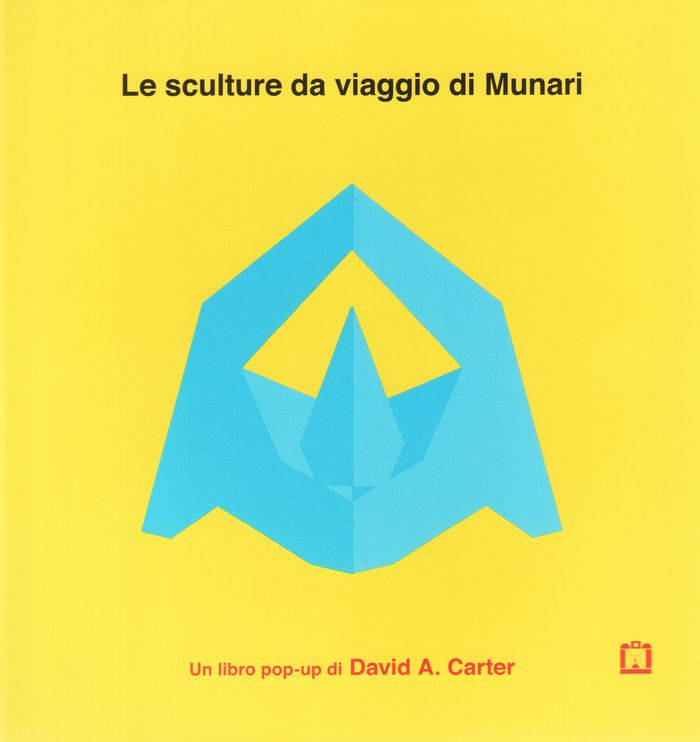
''Travel sculptures started off as small sculptures (some even pocket sized) to carry with you, or so you could take part of your own culture to an anonymous hotel room. Later they were turned into 'travel sculptures' five or six metres tall and made of steel. One of these was seen for a few months in Cesenatico, another one in Naples along the seafront. Others are sleeping among huge trees in the Alto Adige region.'' – Bruno Munari, A collective exhibition. This is how Bruno Munari described his ''travel sculptures'', which inspired American illustrator and designer David A. Carter for his pop-up book ''Le sculture da viaggio di Munari.''
Munari Pop-up (Italian)
Actions:
Prix:
$36.95
(disponible en magasin)
Résumé:
''Travel sculptures started off as small sculptures (some even pocket sized) to carry with you, or so you could take part of your own culture to an anonymous hotel room. Later they were turned into 'travel sculptures' five or six metres tall and made of steel. One of these was seen for a few months in Cesenatico, another one in Naples along the seafront. Others are sleeping among huge trees in the Alto Adige region.'' – Bruno Munari, A collective exhibition. This is how Bruno Munari described his ''travel sculptures'', which inspired American illustrator and designer David A. Carter for his pop-up book ''Le sculture da viaggio di Munari.''
Classification:
livres
livres
Publication:
novembre 2019
novembre 2019
Sujet:
Pop Up
Pop Up
Classification:
livres
livres
Actions:
Prix:
$36.00
(disponible sur commande)
Résumé:
Arne Jacobsen (1902-1971) was concerned with every detail of the environments he designed, from the basic structure right down to the door handles. When he designed St Catherine's College for Oxford University in 1960, even the height of the cedar trees he planted and the varieties of fish he installed in the ponds were of urgent concern; there was no place, in Jacobsen's(...)
$36.00
(disponible sur commande)
Résumé:
Arne Jacobsen (1902-1971) was concerned with every detail of the environments he designed, from the basic structure right down to the door handles. When he designed St Catherine's College for Oxford University in 1960, even the height of the cedar trees he planted and the varieties of fish he installed in the ponds were of urgent concern; there was no place, in Jacobsen's(...)
Titre:
Arne Jacobsen: Objects and furniture design
Actions:
Prix:
$36.00
(disponible sur commande)
Résumé:
Arne Jacobsen (1902-1971) was concerned with every detail of the environments he designed, from the basic structure right down to the door handles. When he designed St Catherine's College for Oxford University in 1960, even the height of the cedar trees he planted and the varieties of fish he installed in the ponds were of urgent concern; there was no place, in Jacobsen's thinking, where architecture left off and design took over, and today he is equally famed for his achievements in both domains. In the realm of furniture design, such creations as the Egg, Series 7, Ant and Swan chairs have become icons of Danish design.
Arne Jacobsen: Objects and furniture design
Actions:
Prix:
$36.00
(disponible sur commande)
Résumé:
Arne Jacobsen (1902-1971) was concerned with every detail of the environments he designed, from the basic structure right down to the door handles. When he designed St Catherine's College for Oxford University in 1960, even the height of the cedar trees he planted and the varieties of fish he installed in the ponds were of urgent concern; there was no place, in Jacobsen's thinking, where architecture left off and design took over, and today he is equally famed for his achievements in both domains. In the realm of furniture design, such creations as the Egg, Series 7, Ant and Swan chairs have become icons of Danish design.
Classification:
livres
livres
Publication:
octobre 2008
octobre 2008
Sujet:
Design, monographies
Design, monographies
Classification:
livres
livres
Actions:
Prix:
$92.00
(disponible sur commande)
Résumé:
‘Where I Find Myself’ is the first major single book retrospective of one of America’s leading photographers. As the title indicates, it is organized in inverse chronological order and spans the photographer's whole career to date. It covers all of Meyerowitz’s great projects: his work inspired by the artist Morandi, his work on trees, his exclusive coverage of Ground(...)
$92.00
(disponible sur commande)
Résumé:
‘Where I Find Myself’ is the first major single book retrospective of one of America’s leading photographers. As the title indicates, it is organized in inverse chronological order and spans the photographer's whole career to date. It covers all of Meyerowitz’s great projects: his work inspired by the artist Morandi, his work on trees, his exclusive coverage of Ground(...)
Titre:
Joel Meyerowitz: Where I find myself
Actions:
Prix:
$92.00
(disponible sur commande)
Résumé:
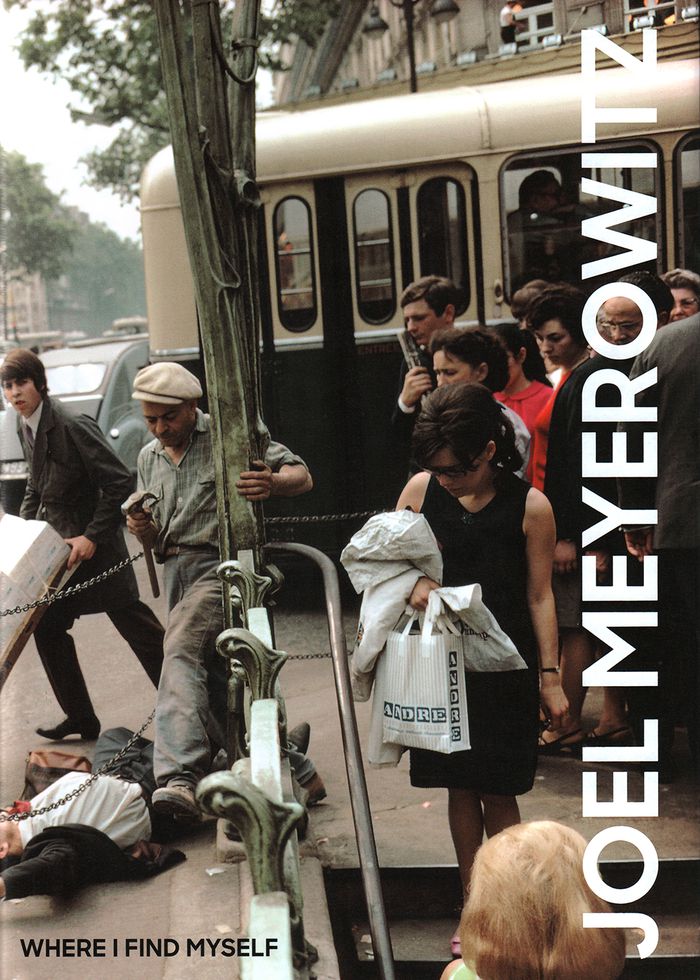
‘Where I Find Myself’ is the first major single book retrospective of one of America’s leading photographers. As the title indicates, it is organized in inverse chronological order and spans the photographer's whole career to date. It covers all of Meyerowitz’s great projects: his work inspired by the artist Morandi, his work on trees, his exclusive coverage of Ground Zero, his trips in the footsteps of Robert Frank across the US, his experiments comparing colour and black and white pictures, and of course his iconic street photography work. The text is all by Joel Meyerowitz himself and the book coincides with a major retrospective show in Berlin
Joel Meyerowitz: Where I find myself
Actions:
Prix:
$92.00
(disponible sur commande)
Résumé:
‘Where I Find Myself’ is the first major single book retrospective of one of America’s leading photographers. As the title indicates, it is organized in inverse chronological order and spans the photographer's whole career to date. It covers all of Meyerowitz’s great projects: his work inspired by the artist Morandi, his work on trees, his exclusive coverage of Ground Zero, his trips in the footsteps of Robert Frank across the US, his experiments comparing colour and black and white pictures, and of course his iconic street photography work. The text is all by Joel Meyerowitz himself and the book coincides with a major retrospective show in Berlin
Classification:
livres
livres
Publication:
mars 2018
mars 2018
Sujet:
Monographies photo
Monographies photo
Classification:
livres
livres

Titre:
No pasa nada
No pasa nada
Actions:
Prix:
$55.00
(disponible en magasin)
Résumé:
This publication comprises 45 paintings made during the confinement months of April and May 2020 at Casa Franco in Guadalajara (Mexico), which was built in 1929 by Luis Barragán. Jean-Baptiste Bernadet used material that was easy to find, gouache on hardboard, and painted as slowly as possible to keep himself busy for 8 weeks, trying to reflect the beauty of his(...)
$55.00
(disponible en magasin)
Résumé:
This publication comprises 45 paintings made during the confinement months of April and May 2020 at Casa Franco in Guadalajara (Mexico), which was built in 1929 by Luis Barragán. Jean-Baptiste Bernadet used material that was easy to find, gouache on hardboard, and painted as slowly as possible to keep himself busy for 8 weeks, trying to reflect the beauty of his(...)
Titre:
No pasa nada
Actions:
Prix:
$55.00
(disponible en magasin)
Résumé:
This publication comprises 45 paintings made during the confinement months of April and May 2020 at Casa Franco in Guadalajara (Mexico), which was built in 1929 by Luis Barragán. Jean-Baptiste Bernadet used material that was easy to find, gouache on hardboard, and painted as slowly as possible to keep himself busy for 8 weeks, trying to reflect the beauty of his surroundings, the suspension of time, the epic sunrises and sunsets, the choir of birds singing at dawn, the colours and textures of the walls, the blooming trees, the bike rides under a hard, uncompromising sun, the peaceful nights of rest in loving arms.
No pasa nada
Actions:
Prix:
$55.00
(disponible en magasin)
Résumé:
This publication comprises 45 paintings made during the confinement months of April and May 2020 at Casa Franco in Guadalajara (Mexico), which was built in 1929 by Luis Barragán. Jean-Baptiste Bernadet used material that was easy to find, gouache on hardboard, and painted as slowly as possible to keep himself busy for 8 weeks, trying to reflect the beauty of his surroundings, the suspension of time, the epic sunrises and sunsets, the choir of birds singing at dawn, the colours and textures of the walls, the blooming trees, the bike rides under a hard, uncompromising sun, the peaceful nights of rest in loving arms.
Classification:
livres
livres
Publication:
février 2022
février 2022
Classification:
livres
livres
Titre:
Patterns embedded
Patterns embedded
Actions:
Prix:
$49.95
(disponible en magasin)
Résumé:
Marcelo Spina and Georgina Huljich are principals of the office PATTERNS founded in Los Angeles in 1999. The research and collaborative based approach of the practice seeks to move between digital and material expressions. This publication describes its form-making as “Driven by digital techniques and advanced computation“. In addition to their research, built projects(...)
$49.95
(disponible en magasin)
Résumé:
Marcelo Spina and Georgina Huljich are principals of the office PATTERNS founded in Los Angeles in 1999. The research and collaborative based approach of the practice seeks to move between digital and material expressions. This publication describes its form-making as “Driven by digital techniques and advanced computation“. In addition to their research, built projects(...)
Titre:
Patterns embedded
Actions:
Prix:
$49.95
(disponible en magasin)
Résumé:
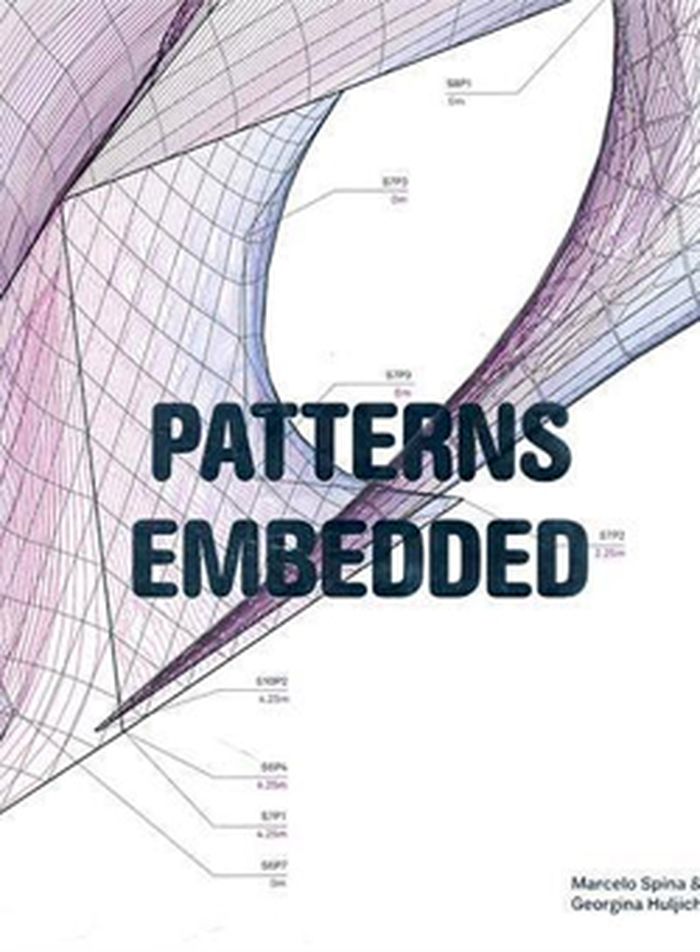
Marcelo Spina and Georgina Huljich are principals of the office PATTERNS founded in Los Angeles in 1999. The research and collaborative based approach of the practice seeks to move between digital and material expressions. This publication describes its form-making as “Driven by digital techniques and advanced computation“. In addition to their research, built projects include Prism Contemporary Art in West Hollywood, FYF Residence and Jujuy Redux both in Rosario (Argentina) and Fluid Core Yard in Chengdu, the Skopje Concert Hall, the Vestbanen KulturAtrium in Oslo, and the Fake Plastic Trees in the Schindler House in Hollywood, Essays by Spina and Huljich, John McMorrough, Todd Gannon, and Marcelyn Gow.
Patterns embedded
Actions:
Prix:
$49.95
(disponible en magasin)
Résumé:
Marcelo Spina and Georgina Huljich are principals of the office PATTERNS founded in Los Angeles in 1999. The research and collaborative based approach of the practice seeks to move between digital and material expressions. This publication describes its form-making as “Driven by digital techniques and advanced computation“. In addition to their research, built projects include Prism Contemporary Art in West Hollywood, FYF Residence and Jujuy Redux both in Rosario (Argentina) and Fluid Core Yard in Chengdu, the Skopje Concert Hall, the Vestbanen KulturAtrium in Oslo, and the Fake Plastic Trees in the Schindler House in Hollywood, Essays by Spina and Huljich, John McMorrough, Todd Gannon, and Marcelyn Gow.
Classification:
livres
livres
Publication:
mai 2012
mai 2012
Sujet:
Architecture, monographies
Architecture, monographies
Classification:
livres
livres
Titre:
Susanne Bürner : leaves
Susanne Bürner : leaves
Actions:
Prix:
$22.95
(disponible en magasin)
Résumé:
«Leaves» a été tourné dans un parc public de Londres. Le film a pour sujet une prairie entourée d'arbres. Susanne Bürner a conçu une brochure de feuilles volantes indiquant la nature de ce spectacle. L'ouvrage reproduit des réflexions et des textes critiques qui engendrent un léger glissement entre des formats, la peinture, le cinéma et le paysage. “Leaves” was shot(...)
$22.95
(disponible en magasin)
Résumé:
«Leaves» a été tourné dans un parc public de Londres. Le film a pour sujet une prairie entourée d'arbres. Susanne Bürner a conçu une brochure de feuilles volantes indiquant la nature de ce spectacle. L'ouvrage reproduit des réflexions et des textes critiques qui engendrent un léger glissement entre des formats, la peinture, le cinéma et le paysage. “Leaves” was shot(...)
Titre:
Susanne Bürner : leaves
Actions:
Prix:
$22.95
(disponible en magasin)
Résumé:
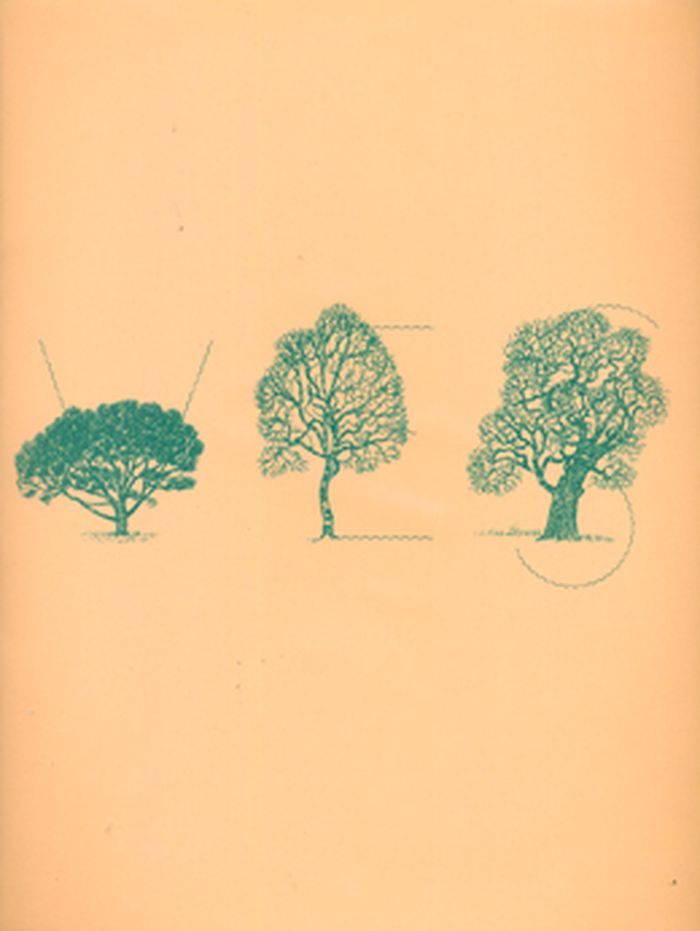
«Leaves» a été tourné dans un parc public de Londres. Le film a pour sujet une prairie entourée d'arbres. Susanne Bürner a conçu une brochure de feuilles volantes indiquant la nature de ce spectacle. L'ouvrage reproduit des réflexions et des textes critiques qui engendrent un léger glissement entre des formats, la peinture, le cinéma et le paysage. “Leaves” was shot in a public park in London. The video shows a meadow surrounded by trees as its theatrical protagonist. Susanne Bürner has conceived a publication of lose leaves in the nature of this spectacle. The publication provides reference material shifting between different formats, between, painting, film and landscape.
Susanne Bürner : leaves
Actions:
Prix:
$22.95
(disponible en magasin)
Résumé:
«Leaves» a été tourné dans un parc public de Londres. Le film a pour sujet une prairie entourée d'arbres. Susanne Bürner a conçu une brochure de feuilles volantes indiquant la nature de ce spectacle. L'ouvrage reproduit des réflexions et des textes critiques qui engendrent un léger glissement entre des formats, la peinture, le cinéma et le paysage. “Leaves” was shot in a public park in London. The video shows a meadow surrounded by trees as its theatrical protagonist. Susanne Bürner has conceived a publication of lose leaves in the nature of this spectacle. The publication provides reference material shifting between different formats, between, painting, film and landscape.
Classification:
livres
livres
Publication:
avril 2011
avril 2011
Classification:
livres
livres

Titre:
Superquadra
Superquadra
Actions:
Prix:
$42.95
(disponible en magasin)
Résumé:
Brasilia is best known for the grandeur of its Monumental Axis. It connects two wings with the so-called Residential Axis. This is a twelve kilometre expressway lined with large residential blocks, which are named Superquadras. All Superquadras have a distinct configuration, with an average of eleven residential buildings raised on pilotis, large greenbelts and regular(...)
$42.95
(disponible en magasin)
Résumé:
Brasilia is best known for the grandeur of its Monumental Axis. It connects two wings with the so-called Residential Axis. This is a twelve kilometre expressway lined with large residential blocks, which are named Superquadras. All Superquadras have a distinct configuration, with an average of eleven residential buildings raised on pilotis, large greenbelts and regular(...)
Titre:
Superquadra
Actions:
Prix:
$42.95
(disponible en magasin)
Résumé:
Brasilia is best known for the grandeur of its Monumental Axis. It connects two wings with the so-called Residential Axis. This is a twelve kilometre expressway lined with large residential blocks, which are named Superquadras. All Superquadras have a distinct configuration, with an average of eleven residential buildings raised on pilotis, large greenbelts and regular rows of trees alongside the entire periphery of the Superquadras. For all buildings, referred to as slabs, a height limit of six floors was set. Between one Superquadra and the next there is an Entrequadra.These are reserved for recreational areas. This book documents many of these buildings and shows its specific architectural rhythm.
Superquadra
Actions:
Prix:
$42.95
(disponible en magasin)
Résumé:
Brasilia is best known for the grandeur of its Monumental Axis. It connects two wings with the so-called Residential Axis. This is a twelve kilometre expressway lined with large residential blocks, which are named Superquadras. All Superquadras have a distinct configuration, with an average of eleven residential buildings raised on pilotis, large greenbelts and regular rows of trees alongside the entire periphery of the Superquadras. For all buildings, referred to as slabs, a height limit of six floors was set. Between one Superquadra and the next there is an Entrequadra.These are reserved for recreational areas. This book documents many of these buildings and shows its specific architectural rhythm.
Classification:
livres
livres
Publication:
avril 2010
avril 2010
Sujet:
Logements collectifs
Logements collectifs
Classification:
livres
livres
Actions:
Prix:
$115.00
(disponible sur commande)
Résumé:
In his Habitat series, Olaf Otto Becker (born 1959) presents idyllic dreamlike places—paradisical tableaus from the jungles of Malaysia and Indonesia. Even the temperate rainforest of Redwood National Parks in California seems reassuringly intact: the mammoth trees are surviving thanks to rigorous conservation measures. By contrast, in the second half of his series Becker(...)
$115.00
(disponible sur commande)
Résumé:
In his Habitat series, Olaf Otto Becker (born 1959) presents idyllic dreamlike places—paradisical tableaus from the jungles of Malaysia and Indonesia. Even the temperate rainforest of Redwood National Parks in California seems reassuringly intact: the mammoth trees are surviving thanks to rigorous conservation measures. By contrast, in the second half of his series Becker(...)
Titre:
Olaf Otto Becker: reading the landscape
Actions:
Prix:
$115.00
(disponible sur commande)
Résumé:
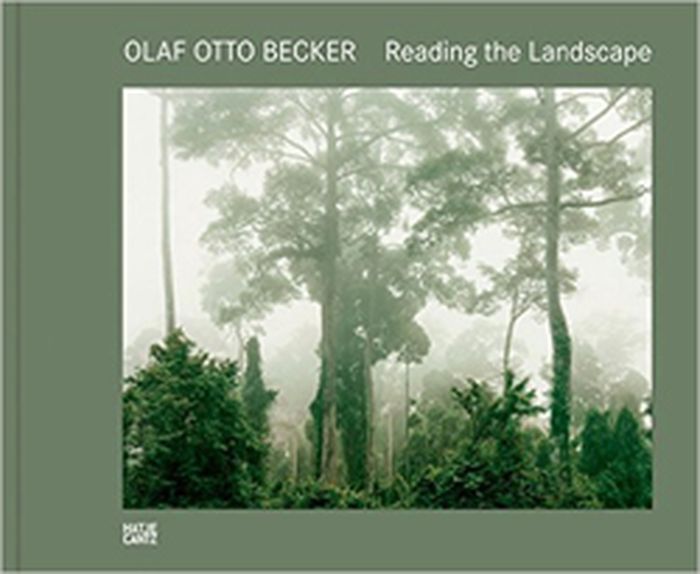
In his Habitat series, Olaf Otto Becker (born 1959) presents idyllic dreamlike places—paradisical tableaus from the jungles of Malaysia and Indonesia. Even the temperate rainforest of Redwood National Parks in California seems reassuringly intact: the mammoth trees are surviving thanks to rigorous conservation measures. By contrast, in the second half of his series Becker shows what happens across the globe when international corporations clear large tracts of land and giant areas of barren, treeless terrain result. Erosion also does its work, and no life can survive in these places. In the final section, Becker presents the artificial "forests" conceived by various international architects to insert greenery into urban space.
Olaf Otto Becker: reading the landscape
Actions:
Prix:
$115.00
(disponible sur commande)
Résumé:
In his Habitat series, Olaf Otto Becker (born 1959) presents idyllic dreamlike places—paradisical tableaus from the jungles of Malaysia and Indonesia. Even the temperate rainforest of Redwood National Parks in California seems reassuringly intact: the mammoth trees are surviving thanks to rigorous conservation measures. By contrast, in the second half of his series Becker shows what happens across the globe when international corporations clear large tracts of land and giant areas of barren, treeless terrain result. Erosion also does its work, and no life can survive in these places. In the final section, Becker presents the artificial "forests" conceived by various international architects to insert greenery into urban space.
Classification:
livres
livres
Publication:
février 2015
février 2015
Sujet:
Monographies photo
Monographies photo
Classification:
livres
livres
Titre:
Bark
Bark
Actions:
Prix:
$23.00
(disponible sur commande)
Résumé:
On a visit to Auschwitz-Birkenau, Georges Didi-Huberman tears three pieces of bark from birch trees on the edge of the site. Looking at these pieces after his return home, he sees them as letters, a flood, a path, time, memory, flesh. The bark serves as a springboard to Didi-Huberman’s meditations on his visit, recorded in this spare, poetic, and powerful book. Bark is a(...)
$23.00
(disponible sur commande)
Résumé:
On a visit to Auschwitz-Birkenau, Georges Didi-Huberman tears three pieces of bark from birch trees on the edge of the site. Looking at these pieces after his return home, he sees them as letters, a flood, a path, time, memory, flesh. The bark serves as a springboard to Didi-Huberman’s meditations on his visit, recorded in this spare, poetic, and powerful book. Bark is a(...)
Titre:
Bark
Actions:
Prix:
$23.00
(disponible sur commande)
Résumé:
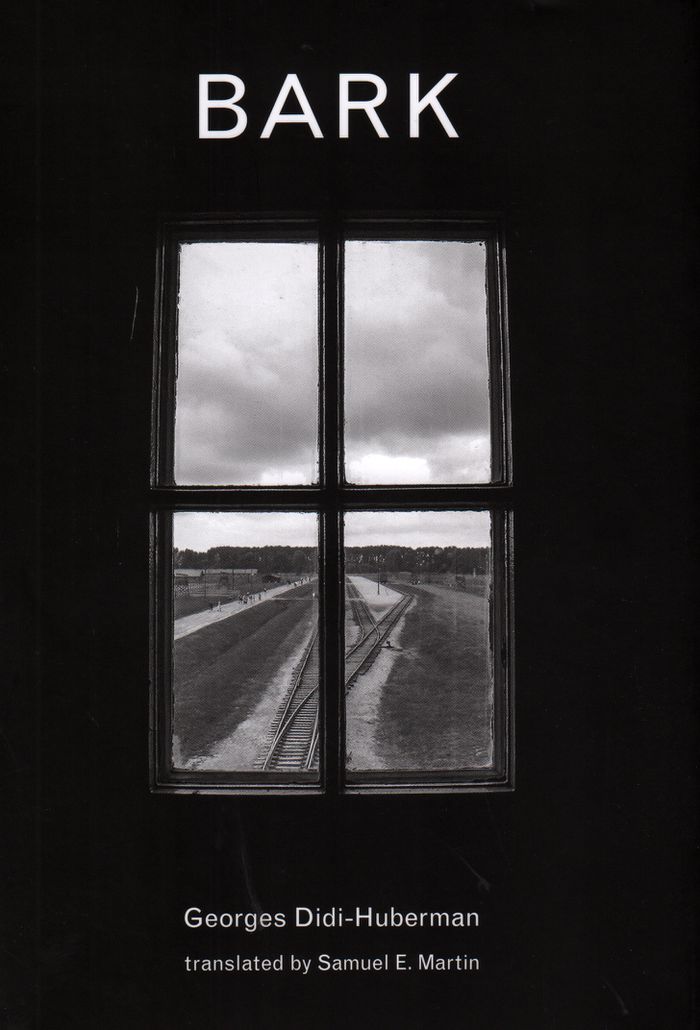
On a visit to Auschwitz-Birkenau, Georges Didi-Huberman tears three pieces of bark from birch trees on the edge of the site. Looking at these pieces after his return home, he sees them as letters, a flood, a path, time, memory, flesh. The bark serves as a springboard to Didi-Huberman’s meditations on his visit, recorded in this spare, poetic, and powerful book. Bark is a personal account, drawing not on the theoretical apparatus of scholarship but on Didi-Huberman’s own history, memory, and knowledge. The text proceeds as a series of reflections, accompanied by Didi-Huberman’s photographs of the visit. The photographs are not meant to be art—Didi-Huberman confesses that he “photographed practically everything without looking”—but approach it nevertheless. Didi-Huberman tells us that his grandparents died at Auschwitz, but his account is more universal than biographical. As he walks from place to place, he observes that in German birches are birken; Birkenau designates the meadow where the birches grow. Didi-Huberman sees and photographs the “reconstructed” execution wall; the floors of the crematorium, forgotten witnesses to killing; and the birch trees, lovely but also resembling prison bars. Taking his own photographs, he thinks of the famous photographs taken in 1944 by a member of the Sonderkommando, the only photographic documentation of the camp before the Germans destroyed it, hoping to hide the evidence of their crimes. Didi-Huberman notices a “bizarre proliferation of white flowers on the exact spot of the cremation pits.” The dead are not departed.
Bark
Actions:
Prix:
$23.00
(disponible sur commande)
Résumé:
On a visit to Auschwitz-Birkenau, Georges Didi-Huberman tears three pieces of bark from birch trees on the edge of the site. Looking at these pieces after his return home, he sees them as letters, a flood, a path, time, memory, flesh. The bark serves as a springboard to Didi-Huberman’s meditations on his visit, recorded in this spare, poetic, and powerful book. Bark is a personal account, drawing not on the theoretical apparatus of scholarship but on Didi-Huberman’s own history, memory, and knowledge. The text proceeds as a series of reflections, accompanied by Didi-Huberman’s photographs of the visit. The photographs are not meant to be art—Didi-Huberman confesses that he “photographed practically everything without looking”—but approach it nevertheless. Didi-Huberman tells us that his grandparents died at Auschwitz, but his account is more universal than biographical. As he walks from place to place, he observes that in German birches are birken; Birkenau designates the meadow where the birches grow. Didi-Huberman sees and photographs the “reconstructed” execution wall; the floors of the crematorium, forgotten witnesses to killing; and the birch trees, lovely but also resembling prison bars. Taking his own photographs, he thinks of the famous photographs taken in 1944 by a member of the Sonderkommando, the only photographic documentation of the camp before the Germans destroyed it, hoping to hide the evidence of their crimes. Didi-Huberman notices a “bizarre proliferation of white flowers on the exact spot of the cremation pits.” The dead are not departed.
Classification:
livres
livres
Publication:
octobre 2017
octobre 2017
Sujet:
Théorie/ philosophie
Théorie/ philosophie


