


30 Résultats
Classification:
livres
livres
Titre:
Susanne Kriemann: Duskdust
Susanne Kriemann: Duskdust
Actions:
Prix:
$36.00
(disponible en magasin)
Résumé:
Duskdust is an artist book by Susanne Kriemann. It takes as its starting point the former industrial site of limestone mining at Furilden peninsula on the northeastern coast of Gotland, Sweden’s biggest island. It is informed by the artist’s ongoing preoccupation with photography, labor, and archaeology and includes photographs taken during her residencies and site(...)
$36.00
(disponible en magasin)
Résumé:
Duskdust is an artist book by Susanne Kriemann. It takes as its starting point the former industrial site of limestone mining at Furilden peninsula on the northeastern coast of Gotland, Sweden’s biggest island. It is informed by the artist’s ongoing preoccupation with photography, labor, and archaeology and includes photographs taken during her residencies and site(...)
Titre:
Susanne Kriemann: Duskdust
Actions:
Prix:
$36.00
(disponible en magasin)
Résumé:
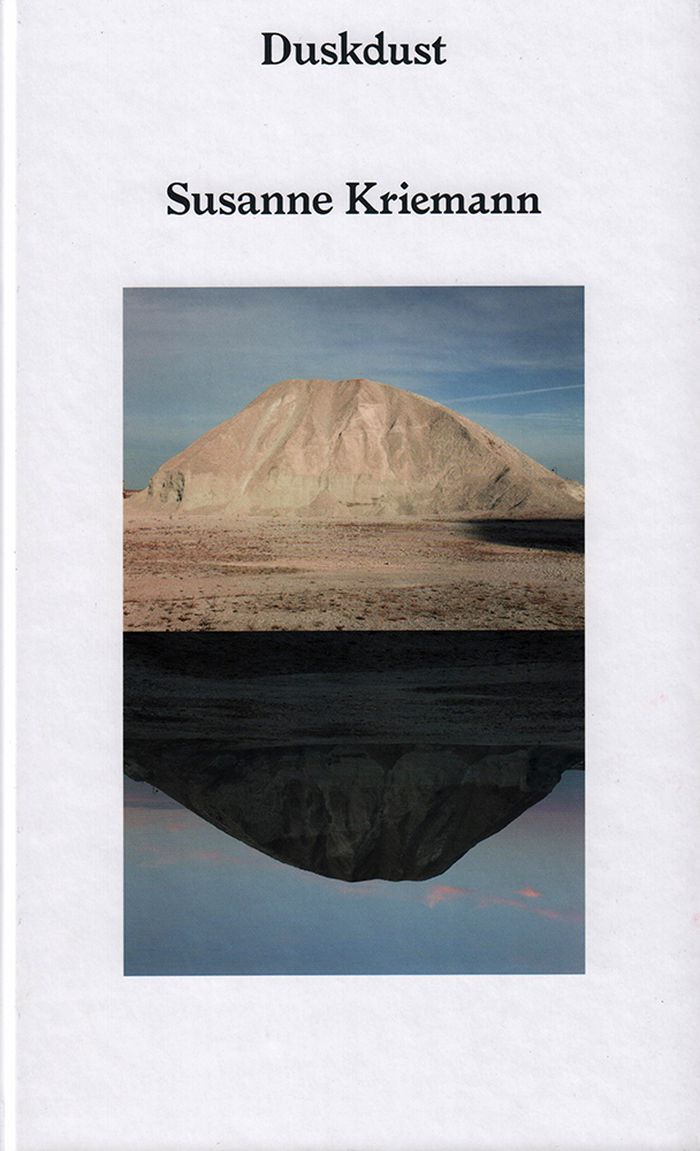
Duskdust is an artist book by Susanne Kriemann. It takes as its starting point the former industrial site of limestone mining at Furilden peninsula on the northeastern coast of Gotland, Sweden’s biggest island. It is informed by the artist’s ongoing preoccupation with photography, labor, and archaeology and includes photographs taken during her residencies and site visits, archival material as well as text contributions by invited authors.
Susanne Kriemann: Duskdust
Actions:
Prix:
$36.00
(disponible en magasin)
Résumé:
Duskdust is an artist book by Susanne Kriemann. It takes as its starting point the former industrial site of limestone mining at Furilden peninsula on the northeastern coast of Gotland, Sweden’s biggest island. It is informed by the artist’s ongoing preoccupation with photography, labor, and archaeology and includes photographs taken during her residencies and site visits, archival material as well as text contributions by invited authors.
Classification:
livres
livres
Publication:
avril 2016
avril 2016
Sujet:
Monographies photo
Monographies photo
Classification:
livres
livres
Actions:
Prix:
$45.00
(disponible en magasin)
Résumé:
Gessenwiese and Kanigsberg form part of a landscape that has been in a process of constant change since 1946. The overburden from the mining industry created radioactive spoil heaps and lakes that are being rehabilitated by various means: plants growing on Gessenwiese accumulate contaminants from the soil. Textiles are used to slowly dry out the lakes and bind the(...)
$45.00
(disponible en magasin)
Résumé:
Gessenwiese and Kanigsberg form part of a landscape that has been in a process of constant change since 1946. The overburden from the mining industry created radioactive spoil heaps and lakes that are being rehabilitated by various means: plants growing on Gessenwiese accumulate contaminants from the soil. Textiles are used to slowly dry out the lakes and bind the(...)
Titre:
Susanne Kriemann: Ge(ssenwiese), K(anigsberg)
Actions:
Prix:
$45.00
(disponible en magasin)
Résumé:
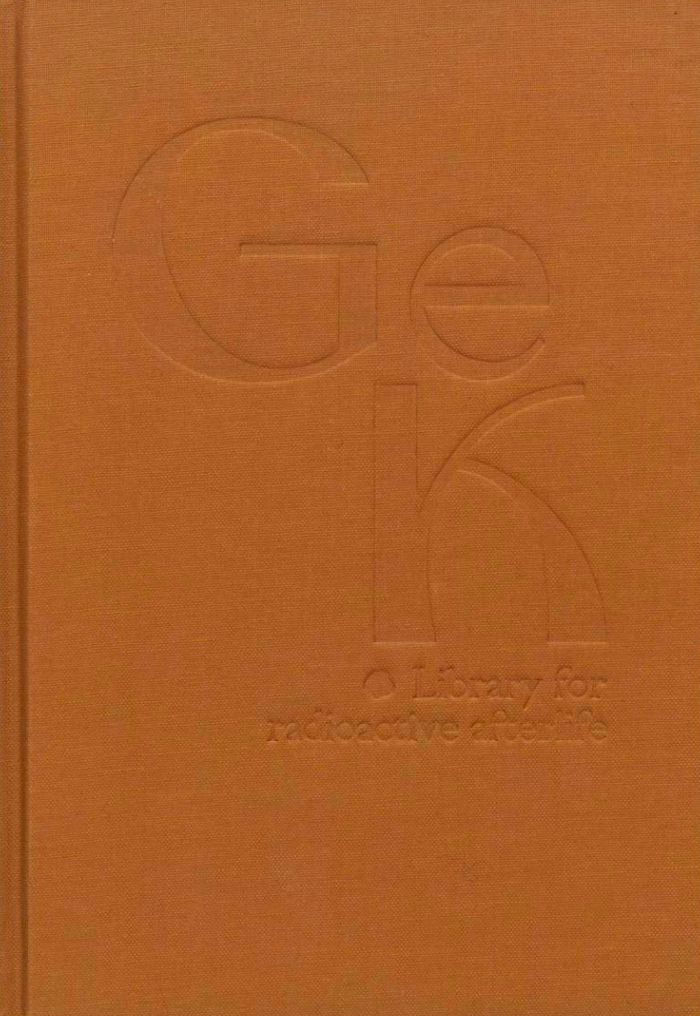
Gessenwiese and Kanigsberg form part of a landscape that has been in a process of constant change since 1946. The overburden from the mining industry created radioactive spoil heaps and lakes that are being rehabilitated by various means: plants growing on Gessenwiese accumulate contaminants from the soil. Textiles are used to slowly dry out the lakes and bind the radioactive dust. The banked mounds are returned to the earth bit by bit. These continual changes to the volumes in the landscape and their afterlife are the conceptual starting point for "G(essenwiese) K(anigsberg)." In recent years, Susanne Kriemann has developed a radically expanded idea of photography that investigates new systems for registering events and geological periods.
Susanne Kriemann: Ge(ssenwiese), K(anigsberg)
Actions:
Prix:
$45.00
(disponible en magasin)
Résumé:
Gessenwiese and Kanigsberg form part of a landscape that has been in a process of constant change since 1946. The overburden from the mining industry created radioactive spoil heaps and lakes that are being rehabilitated by various means: plants growing on Gessenwiese accumulate contaminants from the soil. Textiles are used to slowly dry out the lakes and bind the radioactive dust. The banked mounds are returned to the earth bit by bit. These continual changes to the volumes in the landscape and their afterlife are the conceptual starting point for "G(essenwiese) K(anigsberg)." In recent years, Susanne Kriemann has developed a radically expanded idea of photography that investigates new systems for registering events and geological periods.
Classification:
livres
livres
Publication:
avril 2020
avril 2020
Sujet:
Monographies photo
Monographies photo
Classification:
livres
livres
Titre:
Susanne Kriemann
Susanne Kriemann
Actions:
Prix:
$29.95
(disponible sur commande)
Résumé:
In her photographic projects, Susanne Kriemann takes a research-oriented approach: dealing with archival and forgotten documents in particular is a central aspect to her work. The found photo material then frequently serves as a starting point for her own images. Formal or thematic analogies generate multifaceted layers of association, which address the circumstances in(...)
$29.95
(disponible sur commande)
Résumé:
In her photographic projects, Susanne Kriemann takes a research-oriented approach: dealing with archival and forgotten documents in particular is a central aspect to her work. The found photo material then frequently serves as a starting point for her own images. Formal or thematic analogies generate multifaceted layers of association, which address the circumstances in(...)
Titre:
Susanne Kriemann
Actions:
Prix:
$29.95
(disponible sur commande)
Résumé:
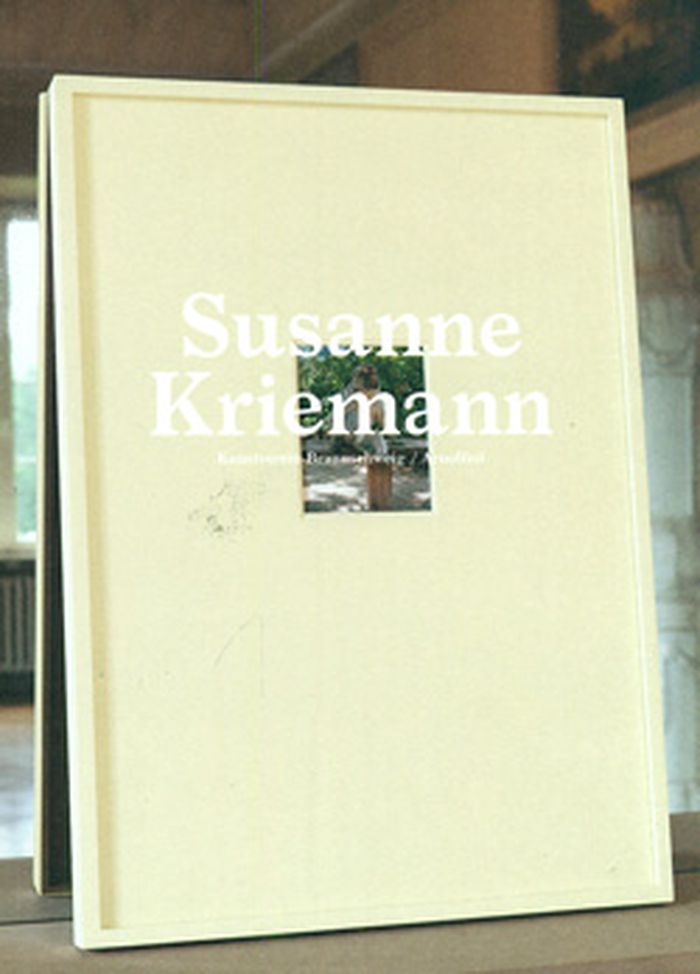
In her photographic projects, Susanne Kriemann takes a research-oriented approach: dealing with archival and forgotten documents in particular is a central aspect to her work. The found photo material then frequently serves as a starting point for her own images. Formal or thematic analogies generate multifaceted layers of association, which address the circumstances in which the historical images were produced, their preservation, as well as their link to the present day—and always also examine her own medium of photography.
Susanne Kriemann
Actions:
Prix:
$29.95
(disponible sur commande)
Résumé:
In her photographic projects, Susanne Kriemann takes a research-oriented approach: dealing with archival and forgotten documents in particular is a central aspect to her work. The found photo material then frequently serves as a starting point for her own images. Formal or thematic analogies generate multifaceted layers of association, which address the circumstances in which the historical images were produced, their preservation, as well as their link to the present day—and always also examine her own medium of photography.
Classification:
livres
livres
Publication:
juillet 2014
juillet 2014
Sujet:
Monographies photo
Monographies photo
Classification:
livres
livres
Actions:
Prix:
$40.00
(disponible sur commande)
Résumé:
Susanne Kriemann's artist’s book "P(ech) B(lende), library for radioactive afterlife" looks at the political and actual invisibility of the highly radioactive mineral pitchblende (uraninite). From 1946 to 1989 pitchblende was mined in the Erzgebirge (Ore) Mountains in an area contained within the former GDR and was an important component in the USSR’s nuclear arsenal. The(...)
$40.00
(disponible sur commande)
Résumé:
Susanne Kriemann's artist’s book "P(ech) B(lende), library for radioactive afterlife" looks at the political and actual invisibility of the highly radioactive mineral pitchblende (uraninite). From 1946 to 1989 pitchblende was mined in the Erzgebirge (Ore) Mountains in an area contained within the former GDR and was an important component in the USSR’s nuclear arsenal. The(...)
Titre:
Susanne Kriemann: P(ech) B(blende). Library for radioactive afterlife
Actions:
Prix:
$40.00
(disponible sur commande)
Résumé:
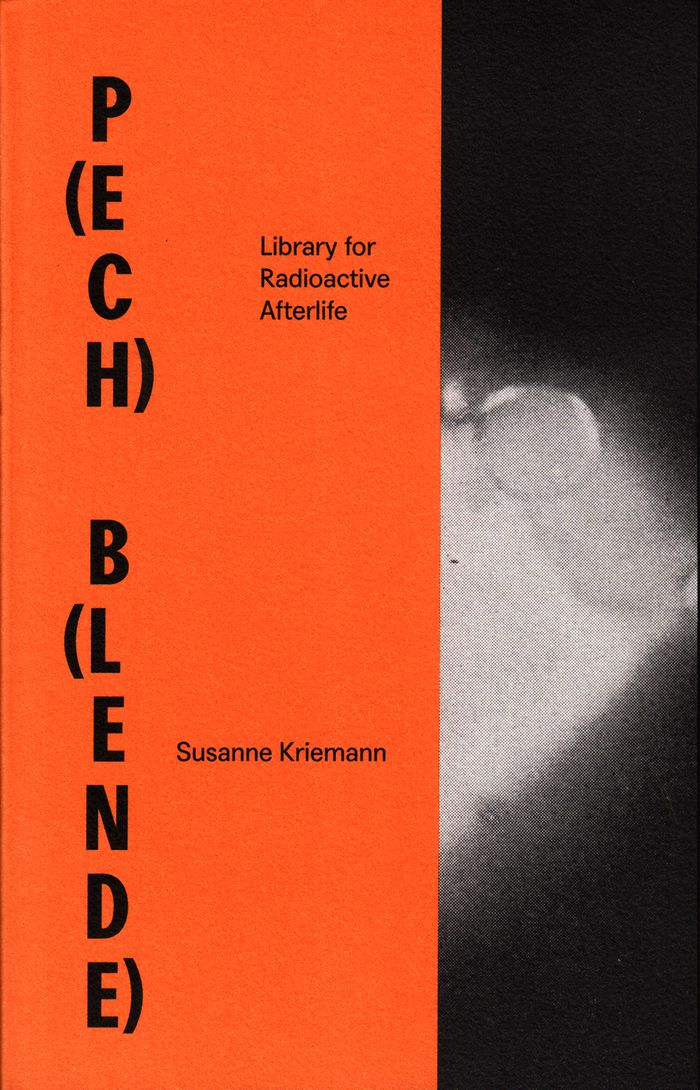
Susanne Kriemann's artist’s book "P(ech) B(lende), library for radioactive afterlife" looks at the political and actual invisibility of the highly radioactive mineral pitchblende (uraninite). From 1946 to 1989 pitchblende was mined in the Erzgebirge (Ore) Mountains in an area contained within the former GDR and was an important component in the USSR’s nuclear arsenal. The publication brings together seven texts viewing the subject with a literary eye through the lens of media theory. All the texts deal with the documentation of radioactive materials, their effects, and afterlife. The book P(ech) B(lende) ties in with Kriemann’s exhibition Pechblende (Chapter 1) at the Ernst Schering Foundation in Berlin (17, March to 5, June 2016). The work was previously on show at Prefix ICA in Toronto under the title Pechblende (Prologue).
Susanne Kriemann: P(ech) B(blende). Library for radioactive afterlife
Actions:
Prix:
$40.00
(disponible sur commande)
Résumé:
Susanne Kriemann's artist’s book "P(ech) B(lende), library for radioactive afterlife" looks at the political and actual invisibility of the highly radioactive mineral pitchblende (uraninite). From 1946 to 1989 pitchblende was mined in the Erzgebirge (Ore) Mountains in an area contained within the former GDR and was an important component in the USSR’s nuclear arsenal. The publication brings together seven texts viewing the subject with a literary eye through the lens of media theory. All the texts deal with the documentation of radioactive materials, their effects, and afterlife. The book P(ech) B(lende) ties in with Kriemann’s exhibition Pechblende (Chapter 1) at the Ernst Schering Foundation in Berlin (17, March to 5, June 2016). The work was previously on show at Prefix ICA in Toronto under the title Pechblende (Prologue).
Classification:
livres
livres
Publication:
octobre 2017
octobre 2017
Sujet:
Monographies photo
Monographies photo
Classification:
livres
livres
Titre:
Susanne Kriemann: one day
Susanne Kriemann: one day
Actions:
Prix:
$40.00
(disponible en magasin)
Résumé:
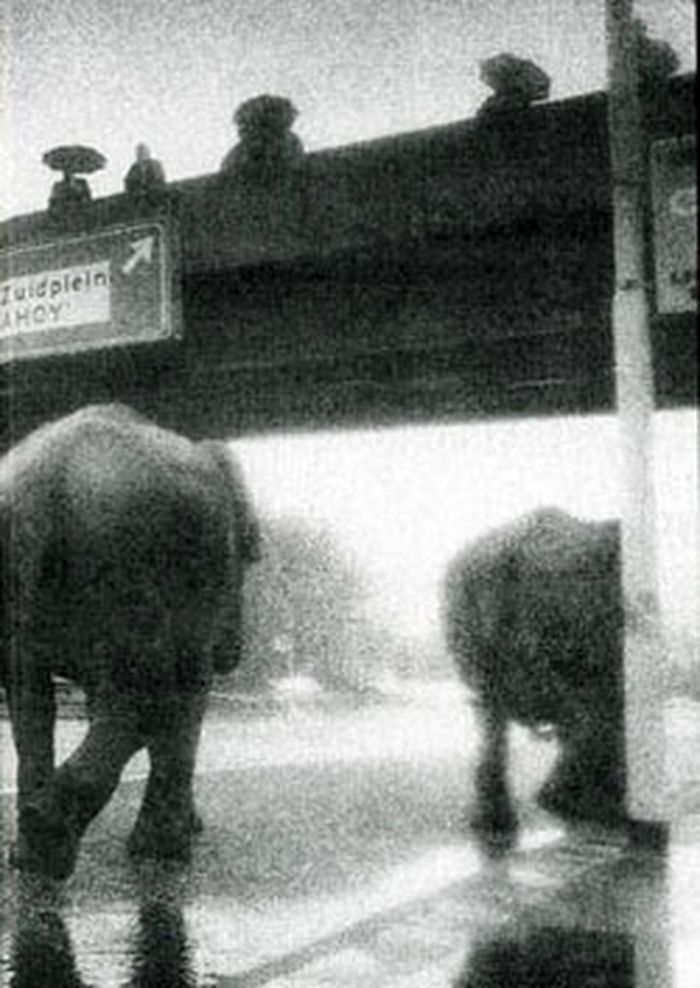
‘One Day’ is the third book in a series of Witte de With in which the city of Rotterdam is portrayed by an artist. In order to make a portrait of the city Susanne Kriemann collected as many books as possible, published after the devastating air raids of the German Luftwaffe in 1940 on Rotterdam. From these books she selected 115 images and arranged these in a structure(...)
$40.00
(disponible en magasin)
Résumé:
‘One Day’ is the third book in a series of Witte de With in which the city of Rotterdam is portrayed by an artist. In order to make a portrait of the city Susanne Kriemann collected as many books as possible, published after the devastating air raids of the German Luftwaffe in 1940 on Rotterdam. From these books she selected 115 images and arranged these in a structure(...)
Publication:
juillet 2011
juillet 2011
Titre:
Susanne Kriemann: one day
Actions:
Prix:
$40.00
(disponible en magasin)
Résumé:
‘One Day’ is the third book in a series of Witte de With in which the city of Rotterdam is portrayed by an artist. In order to make a portrait of the city Susanne Kriemann collected as many books as possible, published after the devastating air raids of the German Luftwaffe in 1940 on Rotterdam. From these books she selected 115 images and arranged these in a structure that is radical as well as ordinary.
Susanne Kriemann: one day
Actions:
Prix:
$40.00
(disponible en magasin)
Résumé:
‘One Day’ is the third book in a series of Witte de With in which the city of Rotterdam is portrayed by an artist. In order to make a portrait of the city Susanne Kriemann collected as many books as possible, published after the devastating air raids of the German Luftwaffe in 1940 on Rotterdam. From these books she selected 115 images and arranged these in a structure that is radical as well as ordinary.
Classification:
livres
livres
Publication:
juillet 2011
juillet 2011
Classification:
livres
livres
Description:
1 online resource
Auteur:
Sujet:
Publication:
[Place of publication not identified] : meson press, 2026.
[Place of publication not identified] : meson press, 2026.
Titre:
From Debris to Sediment: Unearthing Imperial Geology.
Actions:
Description:
1 online resource
From Debris to Sediment: Unearthing Imperial Geology.
Actions:
Description:
1 online resource
Classification:
livres
livres
Publication:
[Place of publication not identified] : meson press, 2026.
[Place of publication not identified] : meson press, 2026.
Auteur:
Sujet:
Classification:
livres
livres
Actions:
Prix:
$21.00
(disponible sur commande)
Résumé:
This book can be read as an inventory of the trajectory that Kriemann pursued in relation to archaeology, to the artefact, to the image of the individual at work and the idea of the desert as a symbol of the modern desire to create an empty slate, a tabula rasa. Material from Agatha Christie’s photographic archives is related to photographs that Kriemann produced of the(...)
$21.00
(disponible sur commande)
Résumé:
This book can be read as an inventory of the trajectory that Kriemann pursued in relation to archaeology, to the artefact, to the image of the individual at work and the idea of the desert as a symbol of the modern desire to create an empty slate, a tabula rasa. Material from Agatha Christie’s photographic archives is related to photographs that Kriemann produced of the(...)
Titre:
Ashes and broken brickwork of a logical theory
Actions:
Prix:
$21.00
(disponible sur commande)
Résumé:
This book can be read as an inventory of the trajectory that Kriemann pursued in relation to archaeology, to the artefact, to the image of the individual at work and the idea of the desert as a symbol of the modern desire to create an empty slate, a tabula rasa. Material from Agatha Christie’s photographic archives is related to photographs that Kriemann produced of the Syrian Desert and archaeological sites in Mesopotamia.
Ashes and broken brickwork of a logical theory
Actions:
Prix:
$21.00
(disponible sur commande)
Résumé:
This book can be read as an inventory of the trajectory that Kriemann pursued in relation to archaeology, to the artefact, to the image of the individual at work and the idea of the desert as a symbol of the modern desire to create an empty slate, a tabula rasa. Material from Agatha Christie’s photographic archives is related to photographs that Kriemann produced of the Syrian Desert and archaeological sites in Mesopotamia.
Classification:
livres
livres
Publication:
mai 2010
mai 2010
Classification:
livres
livres
Prix:
$70.00
(disponible sur commande)
Résumé:
Unknown lady in the radiation protection department, puddle, dancing couple in costume, damage to a waste drum, retiree send-off, lead shielding, burnt-out glovebox, scorpion with microchip—these are all captions to photographs of Germany’s first major nuclear research facility. In 1957, professional photographers began to make an on-site record of procedures at the(...)
$70.00
(disponible sur commande)
Résumé:
Unknown lady in the radiation protection department, puddle, dancing couple in costume, damage to a waste drum, retiree send-off, lead shielding, burnt-out glovebox, scorpion with microchip—these are all captions to photographs of Germany’s first major nuclear research facility. In 1957, professional photographers began to make an on-site record of procedures at the(...)
Titre:
10% : Das bildarchiv eines kernforschungszentrums betreffend
Actions:
Prix:
$70.00
(disponible sur commande)
Résumé:
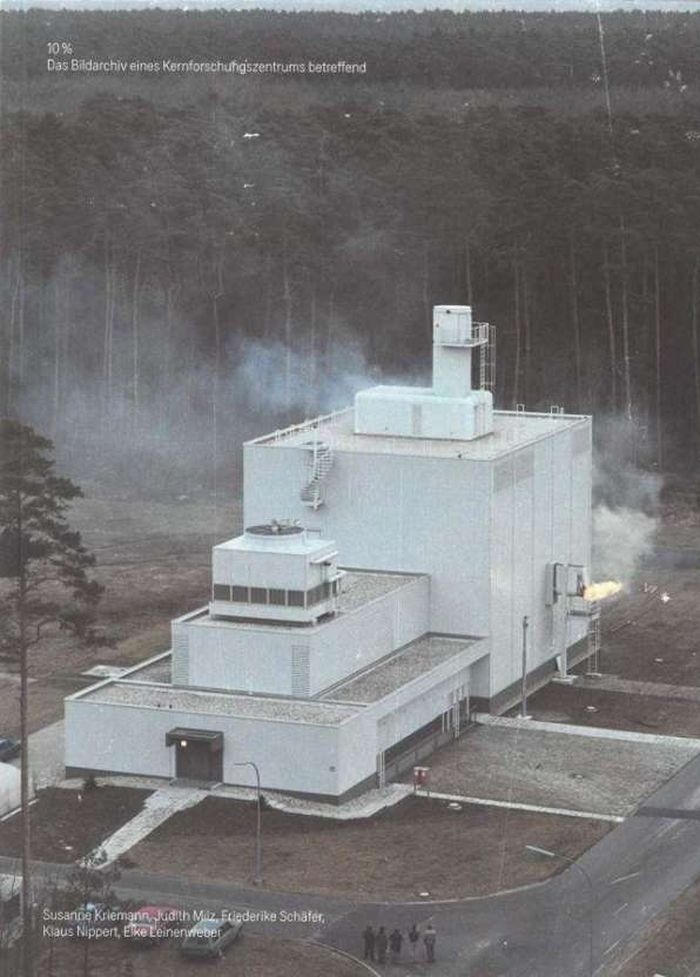
Unknown lady in the radiation protection department, puddle, dancing couple in costume, damage to a waste drum, retiree send-off, lead shielding, burnt-out glovebox, scorpion with microchip—these are all captions to photographs of Germany’s first major nuclear research facility. In 1957, professional photographers began to make an on-site record of procedures at the Kernforschungszentrum Karlsruhe (KfK, Karlsruhe Nuclear Research Center). In 2017, the decision was made to digitize ten percent of this image archive. Based on current concerns regarding the whereabouts of contaminated nuclear waste, the publication brings together over thirty perspectives from the fields of art, sociology, politics, and science as well as accounts of people who were directly involved with the facility. ''10%: Concerning the image archive of a nuclear research center'' sets out to delineate and visualize the afterlife of nuclear research. German edition.
10% : Das bildarchiv eines kernforschungszentrums betreffend
Actions:
Prix:
$70.00
(disponible sur commande)
Résumé:
Unknown lady in the radiation protection department, puddle, dancing couple in costume, damage to a waste drum, retiree send-off, lead shielding, burnt-out glovebox, scorpion with microchip—these are all captions to photographs of Germany’s first major nuclear research facility. In 1957, professional photographers began to make an on-site record of procedures at the Kernforschungszentrum Karlsruhe (KfK, Karlsruhe Nuclear Research Center). In 2017, the decision was made to digitize ten percent of this image archive. Based on current concerns regarding the whereabouts of contaminated nuclear waste, the publication brings together over thirty perspectives from the fields of art, sociology, politics, and science as well as accounts of people who were directly involved with the facility. ''10%: Concerning the image archive of a nuclear research center'' sets out to delineate and visualize the afterlife of nuclear research. German edition.
Classification:
livres
livres
Publication:
novembre 2021
novembre 2021
Sujet:
Monographies photo
Monographies photo
Classification:
livres
livres
Actions:
Exemplaires:
Description:
175 pages : illustrations ; 25 cm
Description:
175 pages : illustrations ; 25 cm
Auteur:
Sujet:
Publication:
Leipzig : Spector Books OHG, 2022., ©2022
Leipzig : Spector Books OHG, 2022., ©2022
Titre:
Mining photography : the ecological footprint of image production / edited by Boaz Levin, Esther Ruelfs, Tulga Beyerle.
Actions:
Exemplaires:
Description:
175 pages : illustrations ; 25 cm
Mining photography : the ecological footprint of image production / edited by Boaz Levin, Esther Ruelfs, Tulga Beyerle.
Actions:
Exemplaires:
Description:
175 pages : illustrations ; 25 cm
Classification:
livres
livres
Publication:
Leipzig : Spector Books OHG, 2022., ©2022
Leipzig : Spector Books OHG, 2022., ©2022
Auteur:
Sujet:
Classification:
livres
livres
Titre:
Mining photography
Mining photography
Actions:
Prix:
$63.00
(disponible sur commande)
Résumé:
Photography has always depended on the extraction and exploitation of so-called natural raw materials. Having started out using copper, coal, silver, and paper—the raw materials of analogue image production in the nineteenth and twentieth centuries—photography now relies, in the age of the smartphone, on rare earths and metals like coltan, cobalt, and europium. The(...)
$63.00
(disponible sur commande)
Résumé:
Photography has always depended on the extraction and exploitation of so-called natural raw materials. Having started out using copper, coal, silver, and paper—the raw materials of analogue image production in the nineteenth and twentieth centuries—photography now relies, in the age of the smartphone, on rare earths and metals like coltan, cobalt, and europium. The(...)
Publication:
mars 2023
mars 2023
Titre:
Mining photography
Actions:
Prix:
$63.00
(disponible sur commande)
Résumé:
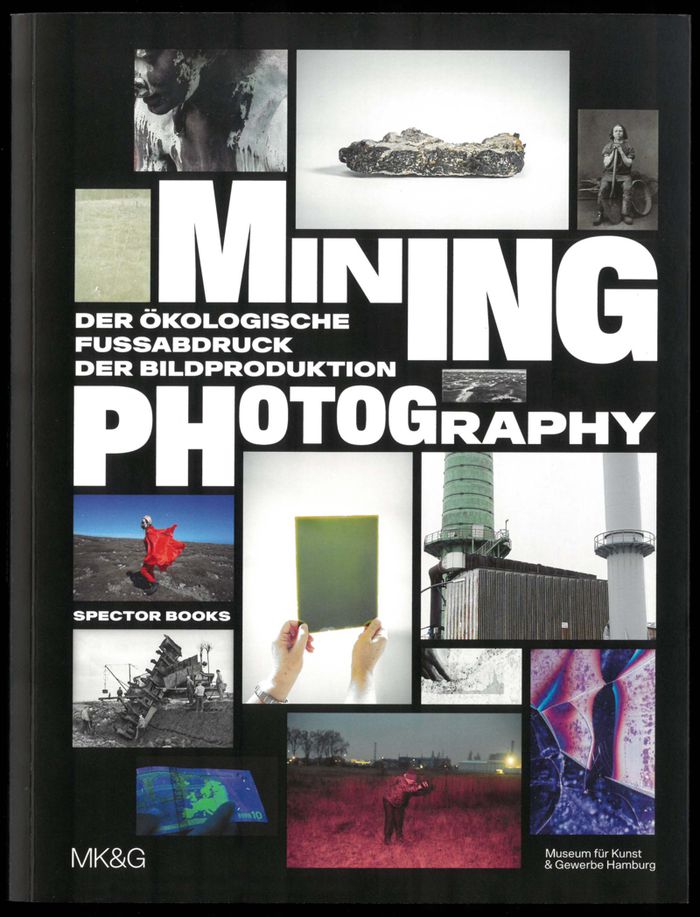
Photography has always depended on the extraction and exploitation of so-called natural raw materials. Having started out using copper, coal, silver, and paper—the raw materials of analogue image production in the nineteenth and twentieth centuries—photography now relies, in the age of the smartphone, on rare earths and metals like coltan, cobalt, and europium. The exhibition focuses on the history of key raw materials utilized in photography and establishes a connection between the history of their extraction, their disposal, and climate change. Looking at historical and contemporary works, it tells the story of photography as a history of industrial production and demonstrates that the medium is deeply implicated in human-induced changes to nature. The exhibition shows contemporary works by a range of photographers and artists, including Ignacio Acosta, Lisa Barnard, F Cartier, Susanne Kriemann, Mary Mattingly, Daphné Nan Le Sergent, Lisa Rave, Alison Rossiter, Metabolic Studio’s Optics Division, Robert Smithson, Simon Starling, Anaïs Tondeur, James Welling, Noa Yafe and Tobias Zielony, along with historical works by Eduard Christian Arning, Hermann Biow, Oscar and Theodor Hofmeister, Jürgen Friedrich Mahrt, Hermann Reichling, and others, and historical material from the Agfa Foto-Historama in Leverkusen, the Eastman Kodak Archive in Rochester and the FOMU Photo Museum in Antwerp as well as mineral samples collected by Alexander von Humboldt from the collection of the Museum für Naturkunde, Berlin.
Mining photography
Actions:
Prix:
$63.00
(disponible sur commande)
Résumé:
Photography has always depended on the extraction and exploitation of so-called natural raw materials. Having started out using copper, coal, silver, and paper—the raw materials of analogue image production in the nineteenth and twentieth centuries—photography now relies, in the age of the smartphone, on rare earths and metals like coltan, cobalt, and europium. The exhibition focuses on the history of key raw materials utilized in photography and establishes a connection between the history of their extraction, their disposal, and climate change. Looking at historical and contemporary works, it tells the story of photography as a history of industrial production and demonstrates that the medium is deeply implicated in human-induced changes to nature. The exhibition shows contemporary works by a range of photographers and artists, including Ignacio Acosta, Lisa Barnard, F Cartier, Susanne Kriemann, Mary Mattingly, Daphné Nan Le Sergent, Lisa Rave, Alison Rossiter, Metabolic Studio’s Optics Division, Robert Smithson, Simon Starling, Anaïs Tondeur, James Welling, Noa Yafe and Tobias Zielony, along with historical works by Eduard Christian Arning, Hermann Biow, Oscar and Theodor Hofmeister, Jürgen Friedrich Mahrt, Hermann Reichling, and others, and historical material from the Agfa Foto-Historama in Leverkusen, the Eastman Kodak Archive in Rochester and the FOMU Photo Museum in Antwerp as well as mineral samples collected by Alexander von Humboldt from the collection of the Museum für Naturkunde, Berlin.
Classification:
livres
livres
Publication:
mars 2023
mars 2023


