


582 Résultats
Niveau de description archivistique:
Projet
Projet
Numéro de référence:
AP173.S2.2007.D2
Description:
Series documents Lars Spuybroek's project for the invited competition for the Joe and Joey in the Netherlands, a design development for an interactive public artwork for the Province of South-Holland, Kunstbouw. Material in this series was produced around 2007. The series contains textual records, including presentation booklets for the project, sketches and a presentation drawing. This project may also include digital design material, which has yet to be processed and which will available for consultation in 2017.
AP173.S2.2007.D2
Description:
Series documents Lars Spuybroek's project for the invited competition for the Joe and Joey in the Netherlands, a design development for an interactive public artwork for the Province of South-Holland, Kunstbouw. Material in this series was produced around 2007. The series contains textual records, including presentation booklets for the project, sketches and a presentation drawing. This project may also include digital design material, which has yet to be processed and which will available for consultation in 2017.
Personnes et institutions:
Date:
ca. 2007
ca. 2007
Titre:
Joe and Joey, Netherlands (2007)
Actions:
AP173.S2.2007.D2
Description:
Series documents Lars Spuybroek's project for the invited competition for the Joe and Joey in the Netherlands, a design development for an interactive public artwork for the Province of South-Holland, Kunstbouw. Material in this series was produced around 2007. The series contains textual records, including presentation booklets for the project, sketches and a presentation drawing. This project may also include digital design material, which has yet to be processed and which will available for consultation in 2017.
Joe and Joey, Netherlands (2007)
Actions:
AP173.S2.2007.D2
Description:
Series documents Lars Spuybroek's project for the invited competition for the Joe and Joey in the Netherlands, a design development for an interactive public artwork for the Province of South-Holland, Kunstbouw. Material in this series was produced around 2007. The series contains textual records, including presentation booklets for the project, sketches and a presentation drawing. This project may also include digital design material, which has yet to be processed and which will available for consultation in 2017.
Niveau de description archivistique:
Project
Project
Date:
ca. 2007
ca. 2007
Personnes et institutions:
Niveau de description archivistique:
Projet
Projet
Numéro de référence:
AP173.S2.2008.D3
Description:
Series documents Lars Spuybroek's project for the invited competition for the Psycho-Magnetic Aerial in Dordrecht, Netherlands, a design development for an interactive public artwork for the City of Dordrecht. Lars Spuybroek won the First prize for his project. Material in this series was produced around 2008. The series contains a presentation booklet for the project. This project may also include digital design material, which has yet to be processed and which will available for consultation in 2017.
AP173.S2.2008.D3
Description:
Series documents Lars Spuybroek's project for the invited competition for the Psycho-Magnetic Aerial in Dordrecht, Netherlands, a design development for an interactive public artwork for the City of Dordrecht. Lars Spuybroek won the First prize for his project. Material in this series was produced around 2008. The series contains a presentation booklet for the project. This project may also include digital design material, which has yet to be processed and which will available for consultation in 2017.
Personnes et institutions:
Date:
ca. 2008
ca. 2008
Titre:
Psycho-Magnetic Aerial, Dordrecht, Netherlands (2008)
Actions:
AP173.S2.2008.D3
Description:
Series documents Lars Spuybroek's project for the invited competition for the Psycho-Magnetic Aerial in Dordrecht, Netherlands, a design development for an interactive public artwork for the City of Dordrecht. Lars Spuybroek won the First prize for his project. Material in this series was produced around 2008. The series contains a presentation booklet for the project. This project may also include digital design material, which has yet to be processed and which will available for consultation in 2017.
Psycho-Magnetic Aerial, Dordrecht, Netherlands (2008)
Actions:
AP173.S2.2008.D3
Description:
Series documents Lars Spuybroek's project for the invited competition for the Psycho-Magnetic Aerial in Dordrecht, Netherlands, a design development for an interactive public artwork for the City of Dordrecht. Lars Spuybroek won the First prize for his project. Material in this series was produced around 2008. The series contains a presentation booklet for the project. This project may also include digital design material, which has yet to be processed and which will available for consultation in 2017.
Niveau de description archivistique:
Project
Project
Date:
ca. 2008
ca. 2008
Personnes et institutions:
Classification:
archives
Niveau de description archivistique:
Fonds
archives
Niveau de description archivistique:
Fonds
Numéro de référence:
AP170
Résumé:
The Mark Goulthorpe HypoSurface project records, 1990-2014, document the design development, technical implementation, exhibition, and marketing of various iterations of the HypoSurface wall. The wall has a “skin” divided up into pixel-like metallic facets manipulated by a network of actuating pistons in order to create images, texts and patterns in dynamic relief. Sensors allow people near the wall to influence its movement. The records include approximately 62,700 digital files, 3 folders of textual documents, and 44 prototype pieces, and a working HypoSurface wall module.
AP170
Résumé:
The Mark Goulthorpe HypoSurface project records, 1990-2014, document the design development, technical implementation, exhibition, and marketing of various iterations of the HypoSurface wall. The wall has a “skin” divided up into pixel-like metallic facets manipulated by a network of actuating pistons in order to create images, texts and patterns in dynamic relief. Sensors allow people near the wall to influence its movement. The records include approximately 62,700 digital files, 3 folders of textual documents, and 44 prototype pieces, and a working HypoSurface wall module.
Personnes et institutions:
Date:
1990 - 2014
1990 - 2014
Titre:
Mark Goulthorpe Hyposurface project records
Actions:
AP170
Résumé:
The Mark Goulthorpe HypoSurface project records, 1990-2014, document the design development, technical implementation, exhibition, and marketing of various iterations of the HypoSurface wall. The wall has a “skin” divided up into pixel-like metallic facets manipulated by a network of actuating pistons in order to create images, texts and patterns in dynamic relief. Sensors allow people near the wall to influence its movement. The records include approximately 62,700 digital files, 3 folders of textual documents, and 44 prototype pieces, and a working HypoSurface wall module.
Mark Goulthorpe Hyposurface project records
Actions:
AP170
Résumé:
The Mark Goulthorpe HypoSurface project records, 1990-2014, document the design development, technical implementation, exhibition, and marketing of various iterations of the HypoSurface wall. The wall has a “skin” divided up into pixel-like metallic facets manipulated by a network of actuating pistons in order to create images, texts and patterns in dynamic relief. Sensors allow people near the wall to influence its movement. The records include approximately 62,700 digital files, 3 folders of textual documents, and 44 prototype pieces, and a working HypoSurface wall module.
Classification:
archives
Niveau de description archivistique:
Fonds
archives
Niveau de description archivistique:
Fonds
Date:
1990 - 2014
1990 - 2014
Personnes et institutions:
Niveau de description archivistique:
Projet
Projet
Numéro de référence:
AP164.S1.1997.D2
Description:
The project series documents the competition entry for an interactive centre and an ecomuseum in La Cabrera, Spain, designed by Abalos & Herreros and Angel Jaramillo (Sanchez?). The project was submitted to the competition for the Centro Comarcal de las Humanidades y de las Ciencias de la Cabrera (Regional Center for Humanities and Sciences), organised by the La Cabrera City Council in 1997. The firm's entry finished in third place. Their project included an auditorium, a museum, a library, and activity rooms. The firm identified this project as number 101. Documenting the project are photographic materials and a few printouts.
AP164.S1.1997.D2
Description:
The project series documents the competition entry for an interactive centre and an ecomuseum in La Cabrera, Spain, designed by Abalos & Herreros and Angel Jaramillo (Sanchez?). The project was submitted to the competition for the Centro Comarcal de las Humanidades y de las Ciencias de la Cabrera (Regional Center for Humanities and Sciences), organised by the La Cabrera City Council in 1997. The firm's entry finished in third place. Their project included an auditorium, a museum, a library, and activity rooms. The firm identified this project as number 101. Documenting the project are photographic materials and a few printouts.
Personnes et institutions:
Date:
circa 1997
circa 1997
Titre:
Centro interactivo y ecomuseo de La Cabrera, Madrid, Spain (1997)
Actions:
AP164.S1.1997.D2
Description:
The project series documents the competition entry for an interactive centre and an ecomuseum in La Cabrera, Spain, designed by Abalos & Herreros and Angel Jaramillo (Sanchez?). The project was submitted to the competition for the Centro Comarcal de las Humanidades y de las Ciencias de la Cabrera (Regional Center for Humanities and Sciences), organised by the La Cabrera City Council in 1997. The firm's entry finished in third place. Their project included an auditorium, a museum, a library, and activity rooms. The firm identified this project as number 101. Documenting the project are photographic materials and a few printouts.
Centro interactivo y ecomuseo de La Cabrera, Madrid, Spain (1997)
Actions:
AP164.S1.1997.D2
Description:
The project series documents the competition entry for an interactive centre and an ecomuseum in La Cabrera, Spain, designed by Abalos & Herreros and Angel Jaramillo (Sanchez?). The project was submitted to the competition for the Centro Comarcal de las Humanidades y de las Ciencias de la Cabrera (Regional Center for Humanities and Sciences), organised by the La Cabrera City Council in 1997. The firm's entry finished in third place. Their project included an auditorium, a museum, a library, and activity rooms. The firm identified this project as number 101. Documenting the project are photographic materials and a few printouts.
Niveau de description archivistique:
Project
Project
Date:
circa 1997
circa 1997
Personnes et institutions:
Niveau de description archivistique:
Projet
Projet
Numéro de référence:
AP056.S1.2000.PR06
Description:
This project series documents the design for McGill University and Génome Québec Innovation Centre in Montréal from 2000-2002. The office identified the project number as 2000-25. "This project was conceived to act as a networking site for research initiatives in the fields of genomics and proteomics. It accommodated five distinct research groups within a 92,000 square-foot facility: the Montreal Genome Centre, the Montreal Proteomics Centre, the Génome Québec Expertise Centre, the Montreal Bone Research Centre, and 5 bio-business incubators. The plan balanced specialized laboratory and office space with three key interactive spaces – the public passage through the building which linked the city to the campus, the atrium which provided an interactive social space for the facility, and the teleconference room. The laboratories, where raw data was gathered, were located on the east, while the bioinformatics offices for data analysis were located on the west. The intent was to create a building that acted as an instrument for knowledge, and to position the public spaces strategically and symbolically as reminders that the work of science was directly connected to humanity."[1] The project is recorded through drawings dating from around 2002. These are mostly original drawings and include sketches, plans, sections, elevations, perspectives, and details. [1]"McGill University and Génome Québec Innovation Centre." KPMB. Accessed July 2019. http://www.kpmb.com/project/mcgill-university-and-genome-quebec-innovation-centre/
AP056.S1.2000.PR06
Description:
This project series documents the design for McGill University and Génome Québec Innovation Centre in Montréal from 2000-2002. The office identified the project number as 2000-25. "This project was conceived to act as a networking site for research initiatives in the fields of genomics and proteomics. It accommodated five distinct research groups within a 92,000 square-foot facility: the Montreal Genome Centre, the Montreal Proteomics Centre, the Génome Québec Expertise Centre, the Montreal Bone Research Centre, and 5 bio-business incubators. The plan balanced specialized laboratory and office space with three key interactive spaces – the public passage through the building which linked the city to the campus, the atrium which provided an interactive social space for the facility, and the teleconference room. The laboratories, where raw data was gathered, were located on the east, while the bioinformatics offices for data analysis were located on the west. The intent was to create a building that acted as an instrument for knowledge, and to position the public spaces strategically and symbolically as reminders that the work of science was directly connected to humanity."[1] The project is recorded through drawings dating from around 2002. These are mostly original drawings and include sketches, plans, sections, elevations, perspectives, and details. [1]"McGill University and Génome Québec Innovation Centre." KPMB. Accessed July 2019. http://www.kpmb.com/project/mcgill-university-and-genome-quebec-innovation-centre/
Personnes et institutions:
Date:
circa 2002
circa 2002
Titre:
McGill University and Génome Québec Innovation Centre, Montréal (2000-2002)
Actions:
AP056.S1.2000.PR06
Description:
This project series documents the design for McGill University and Génome Québec Innovation Centre in Montréal from 2000-2002. The office identified the project number as 2000-25. "This project was conceived to act as a networking site for research initiatives in the fields of genomics and proteomics. It accommodated five distinct research groups within a 92,000 square-foot facility: the Montreal Genome Centre, the Montreal Proteomics Centre, the Génome Québec Expertise Centre, the Montreal Bone Research Centre, and 5 bio-business incubators. The plan balanced specialized laboratory and office space with three key interactive spaces – the public passage through the building which linked the city to the campus, the atrium which provided an interactive social space for the facility, and the teleconference room. The laboratories, where raw data was gathered, were located on the east, while the bioinformatics offices for data analysis were located on the west. The intent was to create a building that acted as an instrument for knowledge, and to position the public spaces strategically and symbolically as reminders that the work of science was directly connected to humanity."[1] The project is recorded through drawings dating from around 2002. These are mostly original drawings and include sketches, plans, sections, elevations, perspectives, and details. [1]"McGill University and Génome Québec Innovation Centre." KPMB. Accessed July 2019. http://www.kpmb.com/project/mcgill-university-and-genome-quebec-innovation-centre/
McGill University and Génome Québec Innovation Centre, Montréal (2000-2002)
Actions:
AP056.S1.2000.PR06
Description:
This project series documents the design for McGill University and Génome Québec Innovation Centre in Montréal from 2000-2002. The office identified the project number as 2000-25. "This project was conceived to act as a networking site for research initiatives in the fields of genomics and proteomics. It accommodated five distinct research groups within a 92,000 square-foot facility: the Montreal Genome Centre, the Montreal Proteomics Centre, the Génome Québec Expertise Centre, the Montreal Bone Research Centre, and 5 bio-business incubators. The plan balanced specialized laboratory and office space with three key interactive spaces – the public passage through the building which linked the city to the campus, the atrium which provided an interactive social space for the facility, and the teleconference room. The laboratories, where raw data was gathered, were located on the east, while the bioinformatics offices for data analysis were located on the west. The intent was to create a building that acted as an instrument for knowledge, and to position the public spaces strategically and symbolically as reminders that the work of science was directly connected to humanity."[1] The project is recorded through drawings dating from around 2002. These are mostly original drawings and include sketches, plans, sections, elevations, perspectives, and details. [1]"McGill University and Génome Québec Innovation Centre." KPMB. Accessed July 2019. http://www.kpmb.com/project/mcgill-university-and-genome-quebec-innovation-centre/
Niveau de description archivistique:
Project
Project
Date:
circa 2002
circa 2002
Personnes et institutions:
Classification:
événements
événements
Actions:
Description:
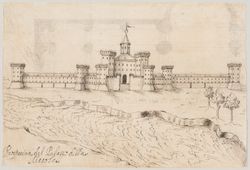
Architecte et ingénieur en hydraulique, Luca Danese est actif dans le nord-est de l’Italie durant la première moitié du XVIIe siècle. Sa carrière, bien qu’ancrée dans la géographie particulière du delta du Pô, sera influencée et façonnée par l’hydropolitique plus large du gouvernement papal, occupé à transformer l’infrastructure hydraulique de Rome. C’est aussi l’époque(...)
Architecte et ingénieur en hydraulique, Luca Danese est actif dans le nord-est de l’Italie durant la première moitié du XVIIe siècle. Sa carrière, bien qu’ancrée dans la géographie particulière du delta du Pô, sera influencée et façonnée par l’hydropolitique plus large du gouvernement papal, occupé à transformer l’infrastructure hydraulique de Rome. C’est aussi l’époque(...)
Localisation:
Salle d'étude Mot(s)-clé(s):
chercheur en résidence 2023, séminaire, recherche, Andrea Bagnato, Luca Danese, Italie, XVIIe siècle, hydropolitique, eau
Salle d'étude Mot(s)-clé(s):
chercheur en résidence 2023, séminaire, recherche, Andrea Bagnato, Luca Danese, Italie, XVIIe siècle, hydropolitique, eau
Date:
6 juillet, 18 h
6 juillet, 18 h
Titre:
Séminaire de chercheur en résidence : Andrea Bagnato
Actions:
Description:
Architecte et ingénieur en hydraulique, Luca Danese est actif dans le nord-est de l’Italie durant la première moitié du XVIIe siècle. Sa carrière, bien qu’ancrée dans la géographie particulière du delta du Pô, sera influencée et façonnée par l’hydropolitique plus large du gouvernement papal, occupé à transformer l’infrastructure hydraulique de Rome. C’est aussi l’époque(...)
Séminaire de chercheur en résidence : Andrea Bagnato
Actions:
Description:
Architecte et ingénieur en hydraulique, Luca Danese est actif dans le nord-est de l’Italie durant la première moitié du XVIIe siècle. Sa carrière, bien qu’ancrée dans la géographie particulière du delta du Pô, sera influencée et façonnée par l’hydropolitique plus large du gouvernement papal, occupé à transformer l’infrastructure hydraulique de Rome. C’est aussi l’époque(...)
Classification:
événements
événements
Date:
6 juillet
18 h
6 juillet
18 h
Localisation:
Salle d'étude Mot(s)-clé(s):
chercheur en résidence 2023, séminaire, recherche, Andrea Bagnato, Luca Danese, Italie, XVIIe siècle, hydropolitique, eau
Salle d'étude Mot(s)-clé(s):
chercheur en résidence 2023, séminaire, recherche, Andrea Bagnato, Luca Danese, Italie, XVIIe siècle, hydropolitique, eau
Niveau de description archivistique:
Série(s)
Série(s)
Numéro de référence:
AP170.S1
Description:
Series 1, Design, prototypes, and related documentation, 1996 - 2006, documents the conceptualization, design, and testing of the HypoSurface project. This includes approximately 2,200 digital design files, a three-square metre Hyposurface wall module, 44 prototype pieces, and a small amount of textual documentation. The digital files in this series contain the bulk of the documentation on the conceptualization and design of the Hyposurface project. Much of this material is richly visual, including still and video concept renderings; images, animations, and drawings of related projects like HypoStage, HypoFloor, HypoFlex, and HypoVoxel; and drawings for prototype “squids” (actuators with rubber covering). The digital files also include material that is more textual in nature, particularly the administrative files for the project, a technical dossier, as well as patent documentation (relating to the physical textual documentation).Notably, the digital materials also include interactive software, called the Aegis Simulator, which allows the user to interact with a rendering of the HypoSurface wall, mimicking the wall’s real-life behavior. Digital formats in this series reflect the range of CAD, still image, and textual documentation present. Notably, there are a significant number of CAD formats present, including AutoCAD, 3DM, DIFF, and IGES formats, consisting of almost 400 total files. The physical component of this series contains a functional three-square metre HypoSurface wall module, as well as 44 other assorted prototype pieces. The prototypes include eight surface pieces in both metal and rubber, two sample actuators, and thirty-four smaller, miscellaneous pieces.
AP170.S1
Description:
Series 1, Design, prototypes, and related documentation, 1996 - 2006, documents the conceptualization, design, and testing of the HypoSurface project. This includes approximately 2,200 digital design files, a three-square metre Hyposurface wall module, 44 prototype pieces, and a small amount of textual documentation. The digital files in this series contain the bulk of the documentation on the conceptualization and design of the Hyposurface project. Much of this material is richly visual, including still and video concept renderings; images, animations, and drawings of related projects like HypoStage, HypoFloor, HypoFlex, and HypoVoxel; and drawings for prototype “squids” (actuators with rubber covering). The digital files also include material that is more textual in nature, particularly the administrative files for the project, a technical dossier, as well as patent documentation (relating to the physical textual documentation).Notably, the digital materials also include interactive software, called the Aegis Simulator, which allows the user to interact with a rendering of the HypoSurface wall, mimicking the wall’s real-life behavior. Digital formats in this series reflect the range of CAD, still image, and textual documentation present. Notably, there are a significant number of CAD formats present, including AutoCAD, 3DM, DIFF, and IGES formats, consisting of almost 400 total files. The physical component of this series contains a functional three-square metre HypoSurface wall module, as well as 44 other assorted prototype pieces. The prototypes include eight surface pieces in both metal and rubber, two sample actuators, and thirty-four smaller, miscellaneous pieces.
Personnes et institutions:
Date:
1996 - 2012
1996 - 2012
Titre:
Design, prototypes, and related documentation
Actions:
AP170.S1
Description:
Series 1, Design, prototypes, and related documentation, 1996 - 2006, documents the conceptualization, design, and testing of the HypoSurface project. This includes approximately 2,200 digital design files, a three-square metre Hyposurface wall module, 44 prototype pieces, and a small amount of textual documentation. The digital files in this series contain the bulk of the documentation on the conceptualization and design of the Hyposurface project. Much of this material is richly visual, including still and video concept renderings; images, animations, and drawings of related projects like HypoStage, HypoFloor, HypoFlex, and HypoVoxel; and drawings for prototype “squids” (actuators with rubber covering). The digital files also include material that is more textual in nature, particularly the administrative files for the project, a technical dossier, as well as patent documentation (relating to the physical textual documentation).Notably, the digital materials also include interactive software, called the Aegis Simulator, which allows the user to interact with a rendering of the HypoSurface wall, mimicking the wall’s real-life behavior. Digital formats in this series reflect the range of CAD, still image, and textual documentation present. Notably, there are a significant number of CAD formats present, including AutoCAD, 3DM, DIFF, and IGES formats, consisting of almost 400 total files. The physical component of this series contains a functional three-square metre HypoSurface wall module, as well as 44 other assorted prototype pieces. The prototypes include eight surface pieces in both metal and rubber, two sample actuators, and thirty-four smaller, miscellaneous pieces.
Design, prototypes, and related documentation
Actions:
AP170.S1
Description:
Series 1, Design, prototypes, and related documentation, 1996 - 2006, documents the conceptualization, design, and testing of the HypoSurface project. This includes approximately 2,200 digital design files, a three-square metre Hyposurface wall module, 44 prototype pieces, and a small amount of textual documentation. The digital files in this series contain the bulk of the documentation on the conceptualization and design of the Hyposurface project. Much of this material is richly visual, including still and video concept renderings; images, animations, and drawings of related projects like HypoStage, HypoFloor, HypoFlex, and HypoVoxel; and drawings for prototype “squids” (actuators with rubber covering). The digital files also include material that is more textual in nature, particularly the administrative files for the project, a technical dossier, as well as patent documentation (relating to the physical textual documentation).Notably, the digital materials also include interactive software, called the Aegis Simulator, which allows the user to interact with a rendering of the HypoSurface wall, mimicking the wall’s real-life behavior. Digital formats in this series reflect the range of CAD, still image, and textual documentation present. Notably, there are a significant number of CAD formats present, including AutoCAD, 3DM, DIFF, and IGES formats, consisting of almost 400 total files. The physical component of this series contains a functional three-square metre HypoSurface wall module, as well as 44 other assorted prototype pieces. The prototypes include eight surface pieces in both metal and rubber, two sample actuators, and thirty-four smaller, miscellaneous pieces.
Niveau de description archivistique:
Series
Series
Date:
1996 - 2012
1996 - 2012
Personnes et institutions:
Niveau de description archivistique:
Série(s)
Série(s)
Titre:
Promotional materials
Promotional materials
Numéro de référence:
AP170.S4
Description:
Series 4, Promotional materials, 1998 – 2007, documents how the firm presented and marketed Hyposurface, It consists of more than 5000 digital files, the bulk of which date from 2004 -- 2007. This series chiefly includes materials for publication, the press, and presentations, as well as a small amount of files related to the dECOi portfolio and Hyposurface website. Notably, there is also an interactive CD-ROM presenting the HypoSurface project. Roughly half the files in this series are raster images, including TIF, GIF, EXIF, JPEG and Windows Bitmap formats. There are also includes nearly 1,000 Aegis pattern files, about 300 files in audiovisual formats, as well as a very small number of textual and CAD formats.
AP170.S4
Description:
Series 4, Promotional materials, 1998 – 2007, documents how the firm presented and marketed Hyposurface, It consists of more than 5000 digital files, the bulk of which date from 2004 -- 2007. This series chiefly includes materials for publication, the press, and presentations, as well as a small amount of files related to the dECOi portfolio and Hyposurface website. Notably, there is also an interactive CD-ROM presenting the HypoSurface project. Roughly half the files in this series are raster images, including TIF, GIF, EXIF, JPEG and Windows Bitmap formats. There are also includes nearly 1,000 Aegis pattern files, about 300 files in audiovisual formats, as well as a very small number of textual and CAD formats.
Personnes et institutions:
Date:
1998 - 2007
1998 - 2007
Titre:
Promotional materials
Actions:
AP170.S4
Description:
Series 4, Promotional materials, 1998 – 2007, documents how the firm presented and marketed Hyposurface, It consists of more than 5000 digital files, the bulk of which date from 2004 -- 2007. This series chiefly includes materials for publication, the press, and presentations, as well as a small amount of files related to the dECOi portfolio and Hyposurface website. Notably, there is also an interactive CD-ROM presenting the HypoSurface project. Roughly half the files in this series are raster images, including TIF, GIF, EXIF, JPEG and Windows Bitmap formats. There are also includes nearly 1,000 Aegis pattern files, about 300 files in audiovisual formats, as well as a very small number of textual and CAD formats.
Promotional materials
Actions:
AP170.S4
Description:
Series 4, Promotional materials, 1998 – 2007, documents how the firm presented and marketed Hyposurface, It consists of more than 5000 digital files, the bulk of which date from 2004 -- 2007. This series chiefly includes materials for publication, the press, and presentations, as well as a small amount of files related to the dECOi portfolio and Hyposurface website. Notably, there is also an interactive CD-ROM presenting the HypoSurface project. Roughly half the files in this series are raster images, including TIF, GIF, EXIF, JPEG and Windows Bitmap formats. There are also includes nearly 1,000 Aegis pattern files, about 300 files in audiovisual formats, as well as a very small number of textual and CAD formats.
Niveau de description archivistique:
Series
Series
Date:
1998 - 2007
1998 - 2007
Personnes et institutions:
Niveau de description archivistique:
Sous-série
Sous-série
Titre:
Virtools files
Virtools files
Numéro de référence:
AP167.S1.SS3
Description:
Sub-series 3, Virtools files, 1995—2013, contains files generated and coordinated by Virtools, a 3D visualization software used to make the Muscle move, respond to users, and play sound. It includes Virtools files, HTML files, audiovisual files (MP3s, WAVs and MPEGs), JPEGs, and applications. There are also a small number of CAD files, including 3DS, Maya, and AutoCad formats. The Virtools proprietary formats include composition files (.cmo), player files (.vmo), object files (.nmo) and scripts files (.nms). Virtools object files and scripts files may be combined and saved as composition files using Virtools Dev, CAD-like software that also coordinates sound and movement. (Virtools Dev is located in file AP167.S1.SS3.002, Virtools software and NSA Muscle composition and player files.) From Virtools Dev, a composition file can be exported to HTML or a player file. The HTML exports no longer work due to a missing JavaScript plugin. Player files and composition files can be played back in the Virtools player; the player also allows the user to interact with player files and behaves much like a video game interface. See file AP167.S1.SS3.008, NSA Muscle interface. Of note, the Virtools player file containing the NSA Muscle interface used at the Architecture non standard exhibition at the Centre George Pompidou is located in this sub-series. See item muscle.bat in file AP167.S1.SS3.008, NSA Muscle interface. There are also a number of other Virtools player files that allow the user to alter and interact with a virtual representation of a structure, which demonstrate ONL’s experimentation with the intersection of architecture and video game design. See file AP 167.S1.SS3.001, Early Virtools experimentation and architecture games.
AP167.S1.SS3
Description:
Sub-series 3, Virtools files, 1995—2013, contains files generated and coordinated by Virtools, a 3D visualization software used to make the Muscle move, respond to users, and play sound. It includes Virtools files, HTML files, audiovisual files (MP3s, WAVs and MPEGs), JPEGs, and applications. There are also a small number of CAD files, including 3DS, Maya, and AutoCad formats. The Virtools proprietary formats include composition files (.cmo), player files (.vmo), object files (.nmo) and scripts files (.nms). Virtools object files and scripts files may be combined and saved as composition files using Virtools Dev, CAD-like software that also coordinates sound and movement. (Virtools Dev is located in file AP167.S1.SS3.002, Virtools software and NSA Muscle composition and player files.) From Virtools Dev, a composition file can be exported to HTML or a player file. The HTML exports no longer work due to a missing JavaScript plugin. Player files and composition files can be played back in the Virtools player; the player also allows the user to interact with player files and behaves much like a video game interface. See file AP167.S1.SS3.008, NSA Muscle interface. Of note, the Virtools player file containing the NSA Muscle interface used at the Architecture non standard exhibition at the Centre George Pompidou is located in this sub-series. See item muscle.bat in file AP167.S1.SS3.008, NSA Muscle interface. There are also a number of other Virtools player files that allow the user to alter and interact with a virtual representation of a structure, which demonstrate ONL’s experimentation with the intersection of architecture and video game design. See file AP 167.S1.SS3.001, Early Virtools experimentation and architecture games.
Personnes et institutions:
Date:
1995-2013
1995-2013
Titre:
Virtools files
Actions:
AP167.S1.SS3
Description:
Sub-series 3, Virtools files, 1995—2013, contains files generated and coordinated by Virtools, a 3D visualization software used to make the Muscle move, respond to users, and play sound. It includes Virtools files, HTML files, audiovisual files (MP3s, WAVs and MPEGs), JPEGs, and applications. There are also a small number of CAD files, including 3DS, Maya, and AutoCad formats. The Virtools proprietary formats include composition files (.cmo), player files (.vmo), object files (.nmo) and scripts files (.nms). Virtools object files and scripts files may be combined and saved as composition files using Virtools Dev, CAD-like software that also coordinates sound and movement. (Virtools Dev is located in file AP167.S1.SS3.002, Virtools software and NSA Muscle composition and player files.) From Virtools Dev, a composition file can be exported to HTML or a player file. The HTML exports no longer work due to a missing JavaScript plugin. Player files and composition files can be played back in the Virtools player; the player also allows the user to interact with player files and behaves much like a video game interface. See file AP167.S1.SS3.008, NSA Muscle interface. Of note, the Virtools player file containing the NSA Muscle interface used at the Architecture non standard exhibition at the Centre George Pompidou is located in this sub-series. See item muscle.bat in file AP167.S1.SS3.008, NSA Muscle interface. There are also a number of other Virtools player files that allow the user to alter and interact with a virtual representation of a structure, which demonstrate ONL’s experimentation with the intersection of architecture and video game design. See file AP 167.S1.SS3.001, Early Virtools experimentation and architecture games.
Virtools files
Actions:
AP167.S1.SS3
Description:
Sub-series 3, Virtools files, 1995—2013, contains files generated and coordinated by Virtools, a 3D visualization software used to make the Muscle move, respond to users, and play sound. It includes Virtools files, HTML files, audiovisual files (MP3s, WAVs and MPEGs), JPEGs, and applications. There are also a small number of CAD files, including 3DS, Maya, and AutoCad formats. The Virtools proprietary formats include composition files (.cmo), player files (.vmo), object files (.nmo) and scripts files (.nms). Virtools object files and scripts files may be combined and saved as composition files using Virtools Dev, CAD-like software that also coordinates sound and movement. (Virtools Dev is located in file AP167.S1.SS3.002, Virtools software and NSA Muscle composition and player files.) From Virtools Dev, a composition file can be exported to HTML or a player file. The HTML exports no longer work due to a missing JavaScript plugin. Player files and composition files can be played back in the Virtools player; the player also allows the user to interact with player files and behaves much like a video game interface. See file AP167.S1.SS3.008, NSA Muscle interface. Of note, the Virtools player file containing the NSA Muscle interface used at the Architecture non standard exhibition at the Centre George Pompidou is located in this sub-series. See item muscle.bat in file AP167.S1.SS3.008, NSA Muscle interface. There are also a number of other Virtools player files that allow the user to alter and interact with a virtual representation of a structure, which demonstrate ONL’s experimentation with the intersection of architecture and video game design. See file AP 167.S1.SS3.001, Early Virtools experimentation and architecture games.
Niveau de description archivistique:
Subseries
Subseries
Date:
1995-2013
1995-2013
Personnes et institutions:
Classification:
photographies
photographies
Numéro de référence:
ARCH280297
Description:
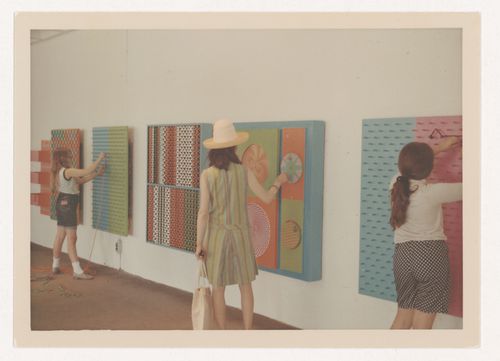
photograph of children playing with interactive panels
ARCH280297
Description:
photograph of children playing with interactive panels
Personnes et institutions:
Date:
ca. 1967
ca. 1967
Titre:
View of childen playing at Children's Creative Centre Playground, Canadian Federal Pavilion, Expo '67, Montréal, Québec
Actions:
ARCH280297
Description:
photograph of children playing with interactive panels
View of childen playing at Children's Creative Centre Playground, Canadian Federal Pavilion, Expo '67, Montréal, Québec
Actions:
ARCH280297
Description:
photograph of children playing with interactive panels
Classification:
photographies
photographies
Date:
ca. 1967
ca. 1967
Personnes et institutions:


