


178 Résultats
Classification:
expositions
expositions
Actions:
Description:
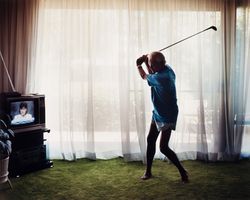
Nous tendons aujourd’hui à percevoir les banlieues comme informes, vacantes ou non durables, comparées à la densité sociale et à l’activité économique des villes. Sur les traces de… The Suburbs se penche sur la culture suburbaine des cinquante dernières années et présente des images tirées de la Collection du CCA, réalisés par des photographes à la fois attirés et rebutés(...)
Nous tendons aujourd’hui à percevoir les banlieues comme informes, vacantes ou non durables, comparées à la densité sociale et à l’activité économique des villes. Sur les traces de… The Suburbs se penche sur la culture suburbaine des cinquante dernières années et présente des images tirées de la Collection du CCA, réalisés par des photographes à la fois attirés et rebutés(...)
Localisation:
Vitrines
Vitrines
Date:
16 février 2012 au 10 juin 2012
16 février 2012 au 10 juin 2012
Titre:
Sur les traces de… The Suburbs
Actions:
Description:
Nous tendons aujourd’hui à percevoir les banlieues comme informes, vacantes ou non durables, comparées à la densité sociale et à l’activité économique des villes. Sur les traces de… The Suburbs se penche sur la culture suburbaine des cinquante dernières années et présente des images tirées de la Collection du CCA, réalisés par des photographes à la fois attirés et rebutés(...)
Sur les traces de… The Suburbs
Actions:
Description:
Nous tendons aujourd’hui à percevoir les banlieues comme informes, vacantes ou non durables, comparées à la densité sociale et à l’activité économique des villes. Sur les traces de… The Suburbs se penche sur la culture suburbaine des cinquante dernières années et présente des images tirées de la Collection du CCA, réalisés par des photographes à la fois attirés et rebutés(...)
Classification:
expositions
expositions
Date:
16 février 2012 au
10 juin 2012
16 février 2012 au
10 juin 2012
Localisation:
Vitrines
Vitrines
Niveau de description archivistique:
Projet
Projet
Titre:
Tumbleweeds Catcher (1972)
Tumbleweeds Catcher (1972)
Numéro de référence:
AP207.S1.1972.PR03
Description:
The project series documents "Tumbleweeds Catcher", an installation by Pettena and a group of his students from the University of Utah, in Salt Lake City, in 1972. The installation consisted of a tower-scaffold built on a vacant lot near the city centre and covered with mesh so it could capture the tumbleweeds blown by the wind. Through this installation Pettena's intention was to "highlight the 'work of the land', the tumbleweeds moved by the wind and intercepted by the mesh of the tower, 'naturalize' it, contaminate it, thereby embodying the revenge of nature over urbanized space." [1] A second edition was later presented at the Utah Museum of Contemporary Art in Salt Lake City in 2013. The project series contains photographs of the installation in 1972 and 2013, and drawings and sketches of the tower. Source: [1] Marco Scotini, editor. Non-conscious architecture: Gianni Pettena, Sternberg Press, 2018, 235 pages. p. 162.
AP207.S1.1972.PR03
Description:
The project series documents "Tumbleweeds Catcher", an installation by Pettena and a group of his students from the University of Utah, in Salt Lake City, in 1972. The installation consisted of a tower-scaffold built on a vacant lot near the city centre and covered with mesh so it could capture the tumbleweeds blown by the wind. Through this installation Pettena's intention was to "highlight the 'work of the land', the tumbleweeds moved by the wind and intercepted by the mesh of the tower, 'naturalize' it, contaminate it, thereby embodying the revenge of nature over urbanized space." [1] A second edition was later presented at the Utah Museum of Contemporary Art in Salt Lake City in 2013. The project series contains photographs of the installation in 1972 and 2013, and drawings and sketches of the tower. Source: [1] Marco Scotini, editor. Non-conscious architecture: Gianni Pettena, Sternberg Press, 2018, 235 pages. p. 162.
Personnes et institutions:
Date:
circa 1972-2017
circa 1972-2017
Titre:
Tumbleweeds Catcher (1972)
Actions:
AP207.S1.1972.PR03
Description:
The project series documents "Tumbleweeds Catcher", an installation by Pettena and a group of his students from the University of Utah, in Salt Lake City, in 1972. The installation consisted of a tower-scaffold built on a vacant lot near the city centre and covered with mesh so it could capture the tumbleweeds blown by the wind. Through this installation Pettena's intention was to "highlight the 'work of the land', the tumbleweeds moved by the wind and intercepted by the mesh of the tower, 'naturalize' it, contaminate it, thereby embodying the revenge of nature over urbanized space." [1] A second edition was later presented at the Utah Museum of Contemporary Art in Salt Lake City in 2013. The project series contains photographs of the installation in 1972 and 2013, and drawings and sketches of the tower. Source: [1] Marco Scotini, editor. Non-conscious architecture: Gianni Pettena, Sternberg Press, 2018, 235 pages. p. 162.
Tumbleweeds Catcher (1972)
Actions:
AP207.S1.1972.PR03
Description:
The project series documents "Tumbleweeds Catcher", an installation by Pettena and a group of his students from the University of Utah, in Salt Lake City, in 1972. The installation consisted of a tower-scaffold built on a vacant lot near the city centre and covered with mesh so it could capture the tumbleweeds blown by the wind. Through this installation Pettena's intention was to "highlight the 'work of the land', the tumbleweeds moved by the wind and intercepted by the mesh of the tower, 'naturalize' it, contaminate it, thereby embodying the revenge of nature over urbanized space." [1] A second edition was later presented at the Utah Museum of Contemporary Art in Salt Lake City in 2013. The project series contains photographs of the installation in 1972 and 2013, and drawings and sketches of the tower. Source: [1] Marco Scotini, editor. Non-conscious architecture: Gianni Pettena, Sternberg Press, 2018, 235 pages. p. 162.
Niveau de description archivistique:
Project
Project
Date:
circa 1972-2017
circa 1972-2017
Personnes et institutions:
Classification:
cartes
cartes
Numéro de référence:
CD035.S1.1979.PR01.006
Description:
Documents previously stored in a box labelled "BEEKER / OUAGA / SDAV 2000 / HASKOOING" / 1983-1985". Includes maps for the aerial photographs shoots, maps of vacants and occupied lots and maps of infrastructure for wateraccess and electricity.
CD035.S1.1979.PR01.006
Description:
Documents previously stored in a box labelled "BEEKER / OUAGA / SDAV 2000 / HASKOOING" / 1983-1985". Includes maps for the aerial photographs shoots, maps of vacants and occupied lots and maps of infrastructure for wateraccess and electricity.
Personnes et institutions:
Date:
2000
2000
Titre:
Survey maps of the Ouagadougou area, Burkina Faso
Actions:
CD035.S1.1979.PR01.006
Description:
Documents previously stored in a box labelled "BEEKER / OUAGA / SDAV 2000 / HASKOOING" / 1983-1985". Includes maps for the aerial photographs shoots, maps of vacants and occupied lots and maps of infrastructure for wateraccess and electricity.
Survey maps of the Ouagadougou area, Burkina Faso
Actions:
CD035.S1.1979.PR01.006
Description:
Documents previously stored in a box labelled "BEEKER / OUAGA / SDAV 2000 / HASKOOING" / 1983-1985". Includes maps for the aerial photographs shoots, maps of vacants and occupied lots and maps of infrastructure for wateraccess and electricity.
Classification:
cartes
cartes
Date:
2000
2000
Personnes et institutions:
Niveau de description archivistique:
Projet
Projet
Titre:
Bar Braque
Bar Braque
Numéro de référence:
AP066.S2.D5
Description:
Le dossier documente le projet de construction du Bar Braque, siuté au 980 est, rue Rachel, à Montréal, Québec. Le budget aloué pour ce projet était de 200 000$. Aussi, le projet s'est mérité le Prix d'excellence de l'ordre des architectes du Québec, distinction en architecture, en 1983. Le dossier contient des dessins, des documents textuels, des reprographies, des photographies, des négatifs, des diapositives, des panneaux et un photomontage. Description du projet par l'architecte: "Le bar Braque, du 980 est, rue Rachel à Montréal est un projet d'insertion d'une construction sur un site rendu vacant à la suite d'un feu, il y a plusieurs années. Une construction neuve a permis d'envisager le projet comme un geste entier d'intégration à la rue et à la ville. Les études de façade témoignent de la volonté de réaliser une architecture interprétative du caractère commercial montréalais. On peut y voir les liens fragiles qu'elle établit avec les voisines et simultanément l'importance qu'elle s'accorde par rapport à elles. Aussi, tente-t-elle de vibrer aux textures et aux couleurs préviliégiées des matériaux aptes à assumer les rôles commerciaux et culturels du lieu : bar dans la ville." Jacques Rousseau, Section A, nº 5-6, vol. 2, janvier 1985, p. 12-13.
AP066.S2.D5
Description:
Le dossier documente le projet de construction du Bar Braque, siuté au 980 est, rue Rachel, à Montréal, Québec. Le budget aloué pour ce projet était de 200 000$. Aussi, le projet s'est mérité le Prix d'excellence de l'ordre des architectes du Québec, distinction en architecture, en 1983. Le dossier contient des dessins, des documents textuels, des reprographies, des photographies, des négatifs, des diapositives, des panneaux et un photomontage. Description du projet par l'architecte: "Le bar Braque, du 980 est, rue Rachel à Montréal est un projet d'insertion d'une construction sur un site rendu vacant à la suite d'un feu, il y a plusieurs années. Une construction neuve a permis d'envisager le projet comme un geste entier d'intégration à la rue et à la ville. Les études de façade témoignent de la volonté de réaliser une architecture interprétative du caractère commercial montréalais. On peut y voir les liens fragiles qu'elle établit avec les voisines et simultanément l'importance qu'elle s'accorde par rapport à elles. Aussi, tente-t-elle de vibrer aux textures et aux couleurs préviliégiées des matériaux aptes à assumer les rôles commerciaux et culturels du lieu : bar dans la ville." Jacques Rousseau, Section A, nº 5-6, vol. 2, janvier 1985, p. 12-13.
Personnes et institutions:
Date:
1981-1983
1981-1983
Titre:
Bar Braque
Actions:
AP066.S2.D5
Description:
Le dossier documente le projet de construction du Bar Braque, siuté au 980 est, rue Rachel, à Montréal, Québec. Le budget aloué pour ce projet était de 200 000$. Aussi, le projet s'est mérité le Prix d'excellence de l'ordre des architectes du Québec, distinction en architecture, en 1983. Le dossier contient des dessins, des documents textuels, des reprographies, des photographies, des négatifs, des diapositives, des panneaux et un photomontage. Description du projet par l'architecte: "Le bar Braque, du 980 est, rue Rachel à Montréal est un projet d'insertion d'une construction sur un site rendu vacant à la suite d'un feu, il y a plusieurs années. Une construction neuve a permis d'envisager le projet comme un geste entier d'intégration à la rue et à la ville. Les études de façade témoignent de la volonté de réaliser une architecture interprétative du caractère commercial montréalais. On peut y voir les liens fragiles qu'elle établit avec les voisines et simultanément l'importance qu'elle s'accorde par rapport à elles. Aussi, tente-t-elle de vibrer aux textures et aux couleurs préviliégiées des matériaux aptes à assumer les rôles commerciaux et culturels du lieu : bar dans la ville." Jacques Rousseau, Section A, nº 5-6, vol. 2, janvier 1985, p. 12-13.
Bar Braque
Actions:
AP066.S2.D5
Description:
Le dossier documente le projet de construction du Bar Braque, siuté au 980 est, rue Rachel, à Montréal, Québec. Le budget aloué pour ce projet était de 200 000$. Aussi, le projet s'est mérité le Prix d'excellence de l'ordre des architectes du Québec, distinction en architecture, en 1983. Le dossier contient des dessins, des documents textuels, des reprographies, des photographies, des négatifs, des diapositives, des panneaux et un photomontage. Description du projet par l'architecte: "Le bar Braque, du 980 est, rue Rachel à Montréal est un projet d'insertion d'une construction sur un site rendu vacant à la suite d'un feu, il y a plusieurs années. Une construction neuve a permis d'envisager le projet comme un geste entier d'intégration à la rue et à la ville. Les études de façade témoignent de la volonté de réaliser une architecture interprétative du caractère commercial montréalais. On peut y voir les liens fragiles qu'elle établit avec les voisines et simultanément l'importance qu'elle s'accorde par rapport à elles. Aussi, tente-t-elle de vibrer aux textures et aux couleurs préviliégiées des matériaux aptes à assumer les rôles commerciaux et culturels du lieu : bar dans la ville." Jacques Rousseau, Section A, nº 5-6, vol. 2, janvier 1985, p. 12-13.
Niveau de description archivistique:
Projet
Projet
Date:
1981-1983
1981-1983
Personnes et institutions:
Classification:
articles
articles
Actions:
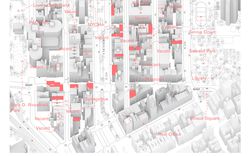
Entretien de Jack Self avec Hilary Sample sur la façon dont les architectes peuvent répondre aux nouvelles dynamiques urbaines du commerce en détail
Titre:
Du fait de sa simple existence, le commerce de détail est civique et politique
Entretien de Jack Self avec Hilary Sample sur la façon dont les architectes peuvent répondre aux nouvelles dynamiques urbaines du commerce en détail
Actions:
Du fait de sa simple existence, le commerce de détail est civique et politique
Entretien de Jack Self avec Hilary Sample sur la façon dont les architectes peuvent répondre aux nouvelles dynamiques urbaines du commerce en détail
Actions:
Classification:
articles
articles
Publié:
9 janvier 2023
9 janvier 2023
Classification:
articles
articles
Titre:
Définition d'une vacance
Définition d'une vacance
Actions:
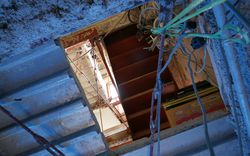
Rafico Ruiz invite Maurice Cox et Mio Tsuneyama à redéfinir la vacance comme une condition générative
Titre:
Définition d'une vacance
Rafico Ruiz invite Maurice Cox et Mio Tsuneyama à redéfinir la vacance comme une condition générative
Actions:
Définition d'une vacance
Rafico Ruiz invite Maurice Cox et Mio Tsuneyama à redéfinir la vacance comme une condition générative
Actions:
Niveau de description archivistique:
Projet
Projet
Titre:
Miragaia, Porto
Miragaia, Porto
Numéro de référence:
CD034.S1.1975.PR01
Description:
This project series contains reproductions of drawings and panels displayed in the exhibit to document the neighbourhood Miragaia, in Porto Portugal. The exhibit text explained that: ... although the Miragaia project was never built, its seminal and programmatic character contributed significantly to the development of the SAAL Process. The project architect Fernando Távora first worked on the Barredo Neighbourhood ― a very poor area in the Porto's historic centre ― as an architect and teacher at the city's School of Fine Arts, and the Miragaia project built on this research, demonstrating a knowledge of and sensitivity to both the physical terrain and the social landscape of Porto, presenting a nuanced view of life in an urban space. Despite the strengths of the plan, the city council's policy on Porto's historic centre subsequently did not include Távora's project for Miragaia. Nonetheless, in the seriousness of its design and the depth of knowledge that it displayed, the project was a significant attempt to recover and rationalize Miragaia's vacant riverside zone. The highly developed nature of the proposal, its level of surgical precision, and Fernando Távora's thoughtful notes reveal a great deal about SAAL, its structure, its relationship with residents, and the overall model for urban intervention. (The SAAL Process, Housing in Portugal 1974–76) Fernando Távora worked for SAAL/North with Antónia Nolo, Bernardo Ferrão, Gil Carneiro, Joaquim Jordão, Jorge Barros, Manuel Campos, Pedro Paredes and the residents' association Miragaia, that was founded on March 30th, 1976. The project was for 900 dwellings, but none were built. The operation began in June 1975. This project series contains reproductions of design development drawings, presentation panels, site plans and a study of a logo. The original drawings and panels were produced from 1975 to 1977 and were reproduced in 2015 for the exhibit.
CD034.S1.1975.PR01
Description:
This project series contains reproductions of drawings and panels displayed in the exhibit to document the neighbourhood Miragaia, in Porto Portugal. The exhibit text explained that: ... although the Miragaia project was never built, its seminal and programmatic character contributed significantly to the development of the SAAL Process. The project architect Fernando Távora first worked on the Barredo Neighbourhood ― a very poor area in the Porto's historic centre ― as an architect and teacher at the city's School of Fine Arts, and the Miragaia project built on this research, demonstrating a knowledge of and sensitivity to both the physical terrain and the social landscape of Porto, presenting a nuanced view of life in an urban space. Despite the strengths of the plan, the city council's policy on Porto's historic centre subsequently did not include Távora's project for Miragaia. Nonetheless, in the seriousness of its design and the depth of knowledge that it displayed, the project was a significant attempt to recover and rationalize Miragaia's vacant riverside zone. The highly developed nature of the proposal, its level of surgical precision, and Fernando Távora's thoughtful notes reveal a great deal about SAAL, its structure, its relationship with residents, and the overall model for urban intervention. (The SAAL Process, Housing in Portugal 1974–76) Fernando Távora worked for SAAL/North with Antónia Nolo, Bernardo Ferrão, Gil Carneiro, Joaquim Jordão, Jorge Barros, Manuel Campos, Pedro Paredes and the residents' association Miragaia, that was founded on March 30th, 1976. The project was for 900 dwellings, but none were built. The operation began in June 1975. This project series contains reproductions of design development drawings, presentation panels, site plans and a study of a logo. The original drawings and panels were produced from 1975 to 1977 and were reproduced in 2015 for the exhibit.
Personnes et institutions:
Date:
1975-1977
1975-1977
Titre:
Miragaia, Porto
Actions:
CD034.S1.1975.PR01
Description:
This project series contains reproductions of drawings and panels displayed in the exhibit to document the neighbourhood Miragaia, in Porto Portugal. The exhibit text explained that: ... although the Miragaia project was never built, its seminal and programmatic character contributed significantly to the development of the SAAL Process. The project architect Fernando Távora first worked on the Barredo Neighbourhood ― a very poor area in the Porto's historic centre ― as an architect and teacher at the city's School of Fine Arts, and the Miragaia project built on this research, demonstrating a knowledge of and sensitivity to both the physical terrain and the social landscape of Porto, presenting a nuanced view of life in an urban space. Despite the strengths of the plan, the city council's policy on Porto's historic centre subsequently did not include Távora's project for Miragaia. Nonetheless, in the seriousness of its design and the depth of knowledge that it displayed, the project was a significant attempt to recover and rationalize Miragaia's vacant riverside zone. The highly developed nature of the proposal, its level of surgical precision, and Fernando Távora's thoughtful notes reveal a great deal about SAAL, its structure, its relationship with residents, and the overall model for urban intervention. (The SAAL Process, Housing in Portugal 1974–76) Fernando Távora worked for SAAL/North with Antónia Nolo, Bernardo Ferrão, Gil Carneiro, Joaquim Jordão, Jorge Barros, Manuel Campos, Pedro Paredes and the residents' association Miragaia, that was founded on March 30th, 1976. The project was for 900 dwellings, but none were built. The operation began in June 1975. This project series contains reproductions of design development drawings, presentation panels, site plans and a study of a logo. The original drawings and panels were produced from 1975 to 1977 and were reproduced in 2015 for the exhibit.
Miragaia, Porto
Actions:
CD034.S1.1975.PR01
Description:
This project series contains reproductions of drawings and panels displayed in the exhibit to document the neighbourhood Miragaia, in Porto Portugal. The exhibit text explained that: ... although the Miragaia project was never built, its seminal and programmatic character contributed significantly to the development of the SAAL Process. The project architect Fernando Távora first worked on the Barredo Neighbourhood ― a very poor area in the Porto's historic centre ― as an architect and teacher at the city's School of Fine Arts, and the Miragaia project built on this research, demonstrating a knowledge of and sensitivity to both the physical terrain and the social landscape of Porto, presenting a nuanced view of life in an urban space. Despite the strengths of the plan, the city council's policy on Porto's historic centre subsequently did not include Távora's project for Miragaia. Nonetheless, in the seriousness of its design and the depth of knowledge that it displayed, the project was a significant attempt to recover and rationalize Miragaia's vacant riverside zone. The highly developed nature of the proposal, its level of surgical precision, and Fernando Távora's thoughtful notes reveal a great deal about SAAL, its structure, its relationship with residents, and the overall model for urban intervention. (The SAAL Process, Housing in Portugal 1974–76) Fernando Távora worked for SAAL/North with Antónia Nolo, Bernardo Ferrão, Gil Carneiro, Joaquim Jordão, Jorge Barros, Manuel Campos, Pedro Paredes and the residents' association Miragaia, that was founded on March 30th, 1976. The project was for 900 dwellings, but none were built. The operation began in June 1975. This project series contains reproductions of design development drawings, presentation panels, site plans and a study of a logo. The original drawings and panels were produced from 1975 to 1977 and were reproduced in 2015 for the exhibit.
Niveau de description archivistique:
Project
Project
Date:
1975-1977
1975-1977
Personnes et institutions:
Niveau de description archivistique:
Projet
Projet
Titre:
IBA
IBA
Numéro de référence:
AP143.S4.D32
Description:
File documents the partially executed project for the Restricted International Competition "South Friedrichstadt as a Place to Live and Work," West Berlin (now Berlin), West Germany (now in Germany). Material in this file was produced between 1980 and 1988. File documents the design for one of four urban blocks in the area of the Kochstrasse and Friedrichstrasse, Berlin. The competition required the preservation of three existing structures and the construction of mixed-used buildings on vacant lots. The architect develops an overall strategy to occupy the urban block by extending the geometry of the three existing buildings onto the site (DR1991:0018:002; DR1991:0018:004-006), on which he overlays what he calls the "Mercator grid", an orthogonal grid oriented according to the compass (DR1991:0018:016). The "el structures" used by Eisenman in House X, House 11a, and the Cannaregio project reappear in plan, and later as forms emerging from the square compartments delimited by the "Mercator grid", this time developed three-dimensionally (House X, 1975-1977, DR1994:0138:001-1546; House 11a, 1978, DR1994:0139:001-303; Cannaregio project, 1978, DR1991:0017:001-094). After finalizing the urban concept, Eisenman concentrates his efforts on the planning of individual buildings, developing the massing of the building facing Kochstrasse in a series of axonometrics (DR1991:0018:088-092), sections (DR1991:0018:088) and facade studies (DR1991:0018:204-210). A series of scrolled drawings study the L-shaped elements and thin slabs with characteristically gridded surfaces found in House X (DR1991:0018:204 and DR1991:0018:209-210). File contains record drawings, conceptual drawings, design development drawings, schematic drawings, competition drawings, presentation drawings, photographic material, and textual records.
AP143.S4.D32
Description:
File documents the partially executed project for the Restricted International Competition "South Friedrichstadt as a Place to Live and Work," West Berlin (now Berlin), West Germany (now in Germany). Material in this file was produced between 1980 and 1988. File documents the design for one of four urban blocks in the area of the Kochstrasse and Friedrichstrasse, Berlin. The competition required the preservation of three existing structures and the construction of mixed-used buildings on vacant lots. The architect develops an overall strategy to occupy the urban block by extending the geometry of the three existing buildings onto the site (DR1991:0018:002; DR1991:0018:004-006), on which he overlays what he calls the "Mercator grid", an orthogonal grid oriented according to the compass (DR1991:0018:016). The "el structures" used by Eisenman in House X, House 11a, and the Cannaregio project reappear in plan, and later as forms emerging from the square compartments delimited by the "Mercator grid", this time developed three-dimensionally (House X, 1975-1977, DR1994:0138:001-1546; House 11a, 1978, DR1994:0139:001-303; Cannaregio project, 1978, DR1991:0017:001-094). After finalizing the urban concept, Eisenman concentrates his efforts on the planning of individual buildings, developing the massing of the building facing Kochstrasse in a series of axonometrics (DR1991:0018:088-092), sections (DR1991:0018:088) and facade studies (DR1991:0018:204-210). A series of scrolled drawings study the L-shaped elements and thin slabs with characteristically gridded surfaces found in House X (DR1991:0018:204 and DR1991:0018:209-210). File contains record drawings, conceptual drawings, design development drawings, schematic drawings, competition drawings, presentation drawings, photographic material, and textual records.
Personnes et institutions:
Date:
1980-1988
1980-1988
Titre:
IBA
Actions:
AP143.S4.D32
Description:
File documents the partially executed project for the Restricted International Competition "South Friedrichstadt as a Place to Live and Work," West Berlin (now Berlin), West Germany (now in Germany). Material in this file was produced between 1980 and 1988. File documents the design for one of four urban blocks in the area of the Kochstrasse and Friedrichstrasse, Berlin. The competition required the preservation of three existing structures and the construction of mixed-used buildings on vacant lots. The architect develops an overall strategy to occupy the urban block by extending the geometry of the three existing buildings onto the site (DR1991:0018:002; DR1991:0018:004-006), on which he overlays what he calls the "Mercator grid", an orthogonal grid oriented according to the compass (DR1991:0018:016). The "el structures" used by Eisenman in House X, House 11a, and the Cannaregio project reappear in plan, and later as forms emerging from the square compartments delimited by the "Mercator grid", this time developed three-dimensionally (House X, 1975-1977, DR1994:0138:001-1546; House 11a, 1978, DR1994:0139:001-303; Cannaregio project, 1978, DR1991:0017:001-094). After finalizing the urban concept, Eisenman concentrates his efforts on the planning of individual buildings, developing the massing of the building facing Kochstrasse in a series of axonometrics (DR1991:0018:088-092), sections (DR1991:0018:088) and facade studies (DR1991:0018:204-210). A series of scrolled drawings study the L-shaped elements and thin slabs with characteristically gridded surfaces found in House X (DR1991:0018:204 and DR1991:0018:209-210). File contains record drawings, conceptual drawings, design development drawings, schematic drawings, competition drawings, presentation drawings, photographic material, and textual records.
IBA
Actions:
AP143.S4.D32
Description:
File documents the partially executed project for the Restricted International Competition "South Friedrichstadt as a Place to Live and Work," West Berlin (now Berlin), West Germany (now in Germany). Material in this file was produced between 1980 and 1988. File documents the design for one of four urban blocks in the area of the Kochstrasse and Friedrichstrasse, Berlin. The competition required the preservation of three existing structures and the construction of mixed-used buildings on vacant lots. The architect develops an overall strategy to occupy the urban block by extending the geometry of the three existing buildings onto the site (DR1991:0018:002; DR1991:0018:004-006), on which he overlays what he calls the "Mercator grid", an orthogonal grid oriented according to the compass (DR1991:0018:016). The "el structures" used by Eisenman in House X, House 11a, and the Cannaregio project reappear in plan, and later as forms emerging from the square compartments delimited by the "Mercator grid", this time developed three-dimensionally (House X, 1975-1977, DR1994:0138:001-1546; House 11a, 1978, DR1994:0139:001-303; Cannaregio project, 1978, DR1991:0017:001-094). After finalizing the urban concept, Eisenman concentrates his efforts on the planning of individual buildings, developing the massing of the building facing Kochstrasse in a series of axonometrics (DR1991:0018:088-092), sections (DR1991:0018:088) and facade studies (DR1991:0018:204-210). A series of scrolled drawings study the L-shaped elements and thin slabs with characteristically gridded surfaces found in House X (DR1991:0018:204 and DR1991:0018:209-210). File contains record drawings, conceptual drawings, design development drawings, schematic drawings, competition drawings, presentation drawings, photographic material, and textual records.
Niveau de description archivistique:
File 32
File 32
Date:
1980-1988
1980-1988
Personnes et institutions:
Niveau de description archivistique:
Projet
Projet
Numéro de référence:
AP178.S1.1979.PR02
Description:
The project series documents the 1979 design entry for the Görlitzer Bad swimming pool. While the records were held in the office’s archives this project was assigned the number 48/70; in the past the office identified the project as number 159. The office assigned the date 1979 for this project. This project was submitted to the International Architectural Exhibition Berlin competition (International Bauaustellung, IBA, circa 1979-1987), an urban renewal strategy for West Berlin, Germany. Siza would later submit proposals to the IBA for Block 70 and 89 (Fränkelufer residential complex), Block 121 (Bonjour Tristesse), Block 11-12 (Kottbusser Damm), Monument to Gestapo victims Prinz- Albrecht-Palais, and a proposal for the Kulturforum. The Görlitzer Bad swimming pool was Siza's first international project and first competition. Preceding the IBA competition, Siza attended the 1976 International Design Zentrum (IDZ) symposium in Berlin, "Stadtstruktur-Stadtgestalt". Brigitte Fleck, responsible for national and international architecture competitions for the Senate of Berlin (1971-1985), invited Siza to participate in the IBA competition to design the swimming pool for Kreuzberg. Fleck had heard of Siza’s participation in the IDZ symposium and became interested in Siza’s work with the Servicio Ambulatorio de Apio Lokal (SAAL). By this time Siza’s work with SAAL had been published in the December 1976 and March 1978 publications of the Lotus International Quarterly Architectural Review (numbers 13 and 18). Fleck felt that Siza's work with SAAL would be relevant to the IBA. In 1979, Siza entered his design for the Görlitzer Bad swimming pool to be built on a vacant area on the east side of Kreuzberg. The design for the pool was strongly opposed by the public because the dome over the main swimming pool was said to resemble a mosque. This area of Kreuzberg was largely populated by Turkish Muslims and there was hostility towards this immigrant community. Although Siza’s entry went through the first round of the IBA competition, it did not win the competition and was only awarded a special prize. The project series contains sketches and studies, as well as conceptual and design development drawings of elevations, site plans, and floor plans. Documentation for the competition includes site plans for the competition and a strata plan. The photographs, negatives, contact sheets, and slides mostly document the model and drawings for the project.
AP178.S1.1979.PR02
Description:
The project series documents the 1979 design entry for the Görlitzer Bad swimming pool. While the records were held in the office’s archives this project was assigned the number 48/70; in the past the office identified the project as number 159. The office assigned the date 1979 for this project. This project was submitted to the International Architectural Exhibition Berlin competition (International Bauaustellung, IBA, circa 1979-1987), an urban renewal strategy for West Berlin, Germany. Siza would later submit proposals to the IBA for Block 70 and 89 (Fränkelufer residential complex), Block 121 (Bonjour Tristesse), Block 11-12 (Kottbusser Damm), Monument to Gestapo victims Prinz- Albrecht-Palais, and a proposal for the Kulturforum. The Görlitzer Bad swimming pool was Siza's first international project and first competition. Preceding the IBA competition, Siza attended the 1976 International Design Zentrum (IDZ) symposium in Berlin, "Stadtstruktur-Stadtgestalt". Brigitte Fleck, responsible for national and international architecture competitions for the Senate of Berlin (1971-1985), invited Siza to participate in the IBA competition to design the swimming pool for Kreuzberg. Fleck had heard of Siza’s participation in the IDZ symposium and became interested in Siza’s work with the Servicio Ambulatorio de Apio Lokal (SAAL). By this time Siza’s work with SAAL had been published in the December 1976 and March 1978 publications of the Lotus International Quarterly Architectural Review (numbers 13 and 18). Fleck felt that Siza's work with SAAL would be relevant to the IBA. In 1979, Siza entered his design for the Görlitzer Bad swimming pool to be built on a vacant area on the east side of Kreuzberg. The design for the pool was strongly opposed by the public because the dome over the main swimming pool was said to resemble a mosque. This area of Kreuzberg was largely populated by Turkish Muslims and there was hostility towards this immigrant community. Although Siza’s entry went through the first round of the IBA competition, it did not win the competition and was only awarded a special prize. The project series contains sketches and studies, as well as conceptual and design development drawings of elevations, site plans, and floor plans. Documentation for the competition includes site plans for the competition and a strata plan. The photographs, negatives, contact sheets, and slides mostly document the model and drawings for the project.
Personnes et institutions:
Date:
1978-1979
1978-1979
Titre:
Piscina de "Görlitzer Bad" Kreuzberg, Berlim Oeste [Görlitzer Bad swimming pool], Berlin, Germany (1978-1979)
Actions:
AP178.S1.1979.PR02
Description:
The project series documents the 1979 design entry for the Görlitzer Bad swimming pool. While the records were held in the office’s archives this project was assigned the number 48/70; in the past the office identified the project as number 159. The office assigned the date 1979 for this project. This project was submitted to the International Architectural Exhibition Berlin competition (International Bauaustellung, IBA, circa 1979-1987), an urban renewal strategy for West Berlin, Germany. Siza would later submit proposals to the IBA for Block 70 and 89 (Fränkelufer residential complex), Block 121 (Bonjour Tristesse), Block 11-12 (Kottbusser Damm), Monument to Gestapo victims Prinz- Albrecht-Palais, and a proposal for the Kulturforum. The Görlitzer Bad swimming pool was Siza's first international project and first competition. Preceding the IBA competition, Siza attended the 1976 International Design Zentrum (IDZ) symposium in Berlin, "Stadtstruktur-Stadtgestalt". Brigitte Fleck, responsible for national and international architecture competitions for the Senate of Berlin (1971-1985), invited Siza to participate in the IBA competition to design the swimming pool for Kreuzberg. Fleck had heard of Siza’s participation in the IDZ symposium and became interested in Siza’s work with the Servicio Ambulatorio de Apio Lokal (SAAL). By this time Siza’s work with SAAL had been published in the December 1976 and March 1978 publications of the Lotus International Quarterly Architectural Review (numbers 13 and 18). Fleck felt that Siza's work with SAAL would be relevant to the IBA. In 1979, Siza entered his design for the Görlitzer Bad swimming pool to be built on a vacant area on the east side of Kreuzberg. The design for the pool was strongly opposed by the public because the dome over the main swimming pool was said to resemble a mosque. This area of Kreuzberg was largely populated by Turkish Muslims and there was hostility towards this immigrant community. Although Siza’s entry went through the first round of the IBA competition, it did not win the competition and was only awarded a special prize. The project series contains sketches and studies, as well as conceptual and design development drawings of elevations, site plans, and floor plans. Documentation for the competition includes site plans for the competition and a strata plan. The photographs, negatives, contact sheets, and slides mostly document the model and drawings for the project.
Piscina de "Görlitzer Bad" Kreuzberg, Berlim Oeste [Görlitzer Bad swimming pool], Berlin, Germany (1978-1979)
Actions:
AP178.S1.1979.PR02
Description:
The project series documents the 1979 design entry for the Görlitzer Bad swimming pool. While the records were held in the office’s archives this project was assigned the number 48/70; in the past the office identified the project as number 159. The office assigned the date 1979 for this project. This project was submitted to the International Architectural Exhibition Berlin competition (International Bauaustellung, IBA, circa 1979-1987), an urban renewal strategy for West Berlin, Germany. Siza would later submit proposals to the IBA for Block 70 and 89 (Fränkelufer residential complex), Block 121 (Bonjour Tristesse), Block 11-12 (Kottbusser Damm), Monument to Gestapo victims Prinz- Albrecht-Palais, and a proposal for the Kulturforum. The Görlitzer Bad swimming pool was Siza's first international project and first competition. Preceding the IBA competition, Siza attended the 1976 International Design Zentrum (IDZ) symposium in Berlin, "Stadtstruktur-Stadtgestalt". Brigitte Fleck, responsible for national and international architecture competitions for the Senate of Berlin (1971-1985), invited Siza to participate in the IBA competition to design the swimming pool for Kreuzberg. Fleck had heard of Siza’s participation in the IDZ symposium and became interested in Siza’s work with the Servicio Ambulatorio de Apio Lokal (SAAL). By this time Siza’s work with SAAL had been published in the December 1976 and March 1978 publications of the Lotus International Quarterly Architectural Review (numbers 13 and 18). Fleck felt that Siza's work with SAAL would be relevant to the IBA. In 1979, Siza entered his design for the Görlitzer Bad swimming pool to be built on a vacant area on the east side of Kreuzberg. The design for the pool was strongly opposed by the public because the dome over the main swimming pool was said to resemble a mosque. This area of Kreuzberg was largely populated by Turkish Muslims and there was hostility towards this immigrant community. Although Siza’s entry went through the first round of the IBA competition, it did not win the competition and was only awarded a special prize. The project series contains sketches and studies, as well as conceptual and design development drawings of elevations, site plans, and floor plans. Documentation for the competition includes site plans for the competition and a strata plan. The photographs, negatives, contact sheets, and slides mostly document the model and drawings for the project.
Niveau de description archivistique:
Project
Project
Date:
1978-1979
1978-1979
Personnes et institutions:
Classification:
archives
Niveau de description archivistique:
Fonds
archives
Niveau de description archivistique:
Fonds
Numéro de référence:
AP195
Résumé:
The Zaha Hadid Architects Phaeno Science Centre project records, 1996-2015, consist of approximately 43,800 digital files that document the design and construction of an interactive science museum in Wolfsburg, Germany. Materials related to presentations, publications, events, and the press are also represented. Formats include chiefly CAD files, especially plotter files and AutoCAD drawings, though related text documents and images are also represented. The majority of the records date from 2000 to 2006.
AP195
Résumé:
The Zaha Hadid Architects Phaeno Science Centre project records, 1996-2015, consist of approximately 43,800 digital files that document the design and construction of an interactive science museum in Wolfsburg, Germany. Materials related to presentations, publications, events, and the press are also represented. Formats include chiefly CAD files, especially plotter files and AutoCAD drawings, though related text documents and images are also represented. The majority of the records date from 2000 to 2006.
Personnes et institutions:
Date:
1996 - 2015
1996 - 2015
Titre:
Documents d’archives de Zaha Hadid Architects pour le projet Phaeno Science Centre
Actions:
AP195
Résumé:
The Zaha Hadid Architects Phaeno Science Centre project records, 1996-2015, consist of approximately 43,800 digital files that document the design and construction of an interactive science museum in Wolfsburg, Germany. Materials related to presentations, publications, events, and the press are also represented. Formats include chiefly CAD files, especially plotter files and AutoCAD drawings, though related text documents and images are also represented. The majority of the records date from 2000 to 2006.
Documents d’archives de Zaha Hadid Architects pour le projet Phaeno Science Centre
Actions:
AP195
Résumé:
The Zaha Hadid Architects Phaeno Science Centre project records, 1996-2015, consist of approximately 43,800 digital files that document the design and construction of an interactive science museum in Wolfsburg, Germany. Materials related to presentations, publications, events, and the press are also represented. Formats include chiefly CAD files, especially plotter files and AutoCAD drawings, though related text documents and images are also represented. The majority of the records date from 2000 to 2006.
Classification:
archives
Niveau de description archivistique:
Fonds
archives
Niveau de description archivistique:
Fonds
Date:
1996 - 2015
1996 - 2015
Personnes et institutions:


