


257 Résultats
Classification:
livres
livres
Actions:
Exemplaires:
Description:
8 volumes : illustrations (some color), maps, portrait, charts (tables), plates ; 26 cm
Description:
8 volumes : illustrations (some color), maps, portrait, charts (tables), plates ; 26 cm
Auteur:
Sujet:
Publication:
Oxford University, London, Great Britain : Clarendon Press, 1954-1984., ©1954-1984
Oxford University, London, Great Britain : Clarendon Press, 1954-1984., ©1954-1984
Titre:
A history of technology / edited by Charles Singer [and others].
Actions:
Exemplaires:
Description:
8 volumes : illustrations (some color), maps, portrait, charts (tables), plates ; 26 cm
A history of technology / edited by Charles Singer [and others].
Actions:
Exemplaires:
Description:
8 volumes : illustrations (some color), maps, portrait, charts (tables), plates ; 26 cm
Classification:
livres
livres
Publication:
Oxford University, London, Great Britain : Clarendon Press, 1954-1984., ©1954-1984
Oxford University, London, Great Britain : Clarendon Press, 1954-1984., ©1954-1984
Auteur:
Sujet:
Classification:
livres
livres
Actions:
Prix:
$46.95
(disponible en magasin)
Résumé:
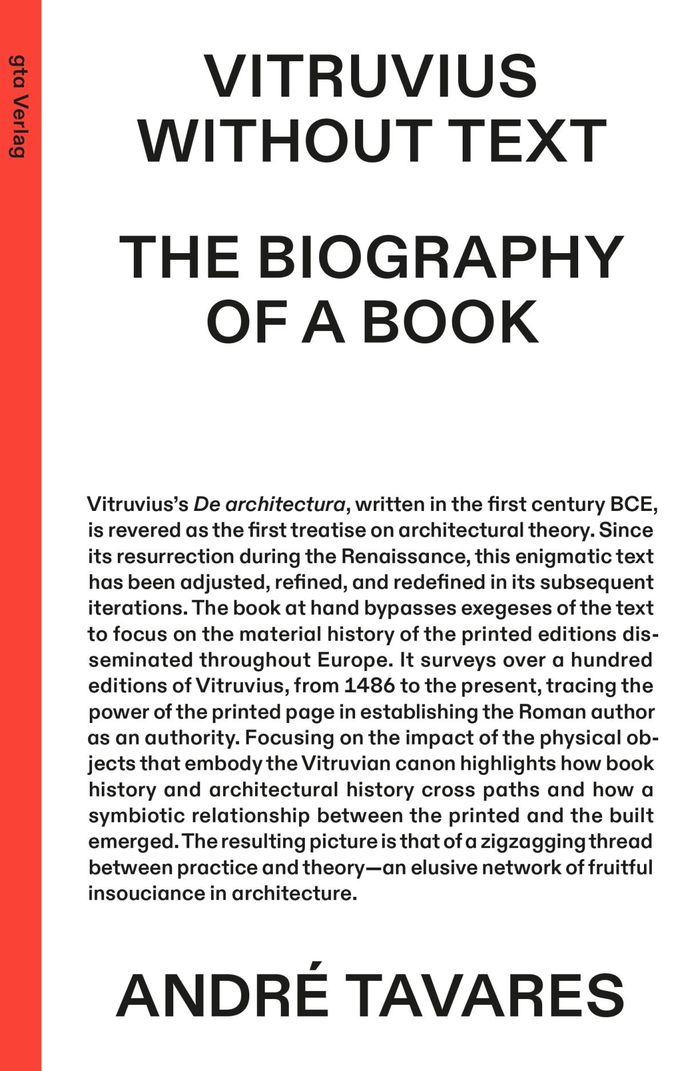
''De architectura'', written by Vitruvius in the first century BCE, is revered as the first treatise on architectural theory. Since its Renaissance resurrection, the enigmatic text has been adapted, refined, and redefined in subsequent iterations. ''Vitruvius without text'' bypasses critical interpretations to focus on the material history of the printed editions that(...)
$46.95
(disponible en magasin)
Résumé:
''De architectura'', written by Vitruvius in the first century BCE, is revered as the first treatise on architectural theory. Since its Renaissance resurrection, the enigmatic text has been adapted, refined, and redefined in subsequent iterations. ''Vitruvius without text'' bypasses critical interpretations to focus on the material history of the printed editions that(...)
Titre:
Vitruvius without text: the biography of a book
Actions:
Prix:
$46.95
(disponible en magasin)
Résumé:
''De architectura'', written by Vitruvius in the first century BCE, is revered as the first treatise on architectural theory. Since its Renaissance resurrection, the enigmatic text has been adapted, refined, and redefined in subsequent iterations. ''Vitruvius without text'' bypasses critical interpretations to focus on the material history of the printed editions that appeared throughout Europe. It surveys over 100 editions from 1486 to the present, tracing the power of the printed page in establishing the Roman author as an authority. By focusing on the impact of the physical objects of the Vitruvian canon, it highlights how the history of printing and architecture intersect to form a symbiotic relationship.
Vitruvius without text: the biography of a book
Actions:
Prix:
$46.95
(disponible en magasin)
Résumé:
''De architectura'', written by Vitruvius in the first century BCE, is revered as the first treatise on architectural theory. Since its Renaissance resurrection, the enigmatic text has been adapted, refined, and redefined in subsequent iterations. ''Vitruvius without text'' bypasses critical interpretations to focus on the material history of the printed editions that appeared throughout Europe. It surveys over 100 editions from 1486 to the present, tracing the power of the printed page in establishing the Roman author as an authority. By focusing on the impact of the physical objects of the Vitruvian canon, it highlights how the history of printing and architecture intersect to form a symbiotic relationship.
Classification:
livres
livres
Publication:
juillet 2022
juillet 2022
Sujet:
Théorie de l’architecture
Théorie de l’architecture
Classification:
livres
livres
Actions:
Prix:
$46.95
(disponible sur commande)
Résumé:
Scolari's illustrated studies show that illusionistic perspective is not the only, or even the best, representation of objects in history; parallel projection, for example, preserves in scale the actual measurements of objects it represents, avoiding the distortions of one-point perspective. Scolari analyzes the use of nonperspectival representations in pre-Renaissance(...)
$46.95
(disponible sur commande)
Résumé:
Scolari's illustrated studies show that illusionistic perspective is not the only, or even the best, representation of objects in history; parallel projection, for example, preserves in scale the actual measurements of objects it represents, avoiding the distortions of one-point perspective. Scolari analyzes the use of nonperspectival representations in pre-Renaissance(...)
Titre:
Oblique drawing : a history of anti-perspective
Actions:
Prix:
$46.95
(disponible sur commande)
Résumé:
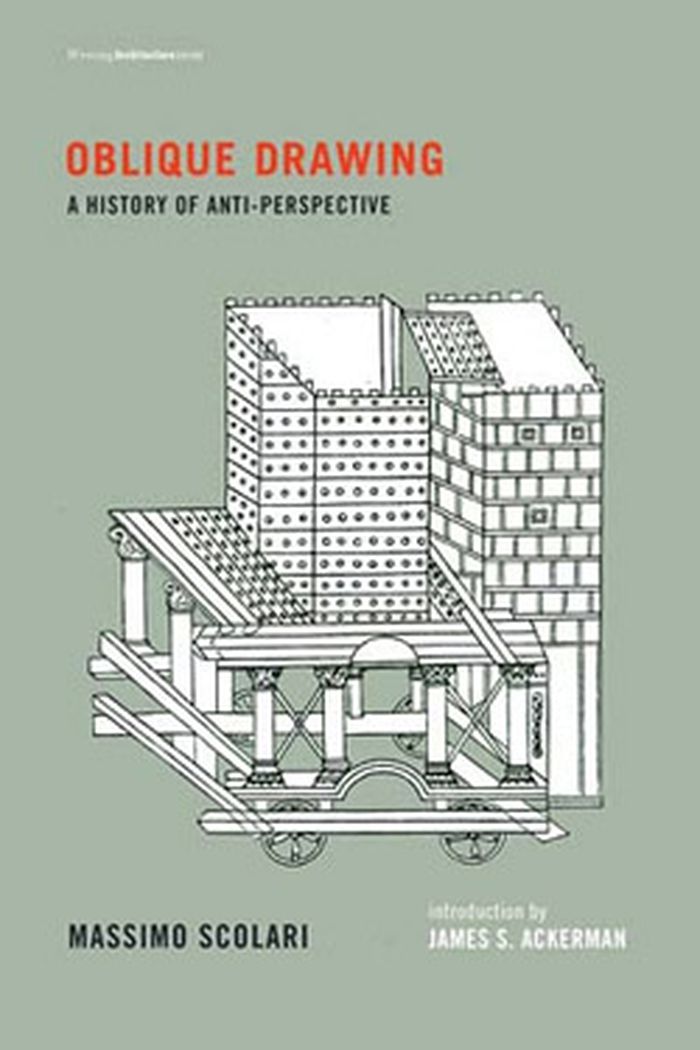
Scolari's illustrated studies show that illusionistic perspective is not the only, or even the best, representation of objects in history; parallel projection, for example, preserves in scale the actual measurements of objects it represents, avoiding the distortions of one-point perspective. Scolari analyzes the use of nonperspectival representations in pre-Renaissance images of machines and military hardware, architectural models and drawings, and illustrations of geometrical solids. He challenges Panofsky's theory of Pompeiian perspective and explains the difficulties encountered by the Chinese when they viewed Jesuit missionaries' perspectival religious images. Scolari demonstrates the diversity of representational forms devised through the centuries, and shows how each one reveals something that is lacking in the others.
Oblique drawing : a history of anti-perspective
Actions:
Prix:
$46.95
(disponible sur commande)
Résumé:
Scolari's illustrated studies show that illusionistic perspective is not the only, or even the best, representation of objects in history; parallel projection, for example, preserves in scale the actual measurements of objects it represents, avoiding the distortions of one-point perspective. Scolari analyzes the use of nonperspectival representations in pre-Renaissance images of machines and military hardware, architectural models and drawings, and illustrations of geometrical solids. He challenges Panofsky's theory of Pompeiian perspective and explains the difficulties encountered by the Chinese when they viewed Jesuit missionaries' perspectival religious images. Scolari demonstrates the diversity of representational forms devised through the centuries, and shows how each one reveals something that is lacking in the others.
Classification:
livres
livres
Publication:
septembre 2012
septembre 2012
Sujet:
Théorie de l’architecture
Théorie de l’architecture
Classification:
livres
livres
Titre:
Rewriting Alberti
Rewriting Alberti
Actions:
Prix:
$45.95
(disponible en magasin)
Résumé:
Much has been written about Renaissance architect Leon Battista Alberti’s mantra of part-to-whole as one of the continuing conditions of architecture. While this underlying thesis has often been repeated in the annals of architectural history and theory, architects have rarely questioned the idea. In ''Rewriting Alberti'', architect Peter Eisenman suggests, however, that(...)
$45.95
(disponible en magasin)
Résumé:
Much has been written about Renaissance architect Leon Battista Alberti’s mantra of part-to-whole as one of the continuing conditions of architecture. While this underlying thesis has often been repeated in the annals of architectural history and theory, architects have rarely questioned the idea. In ''Rewriting Alberti'', architect Peter Eisenman suggests, however, that(...)
Sujet:
Théorie de l’architecture
Théorie de l’architecture
Publication:
octobre 2025
octobre 2025
Titre:
Rewriting Alberti
Actions:
Prix:
$45.95
(disponible en magasin)
Résumé:
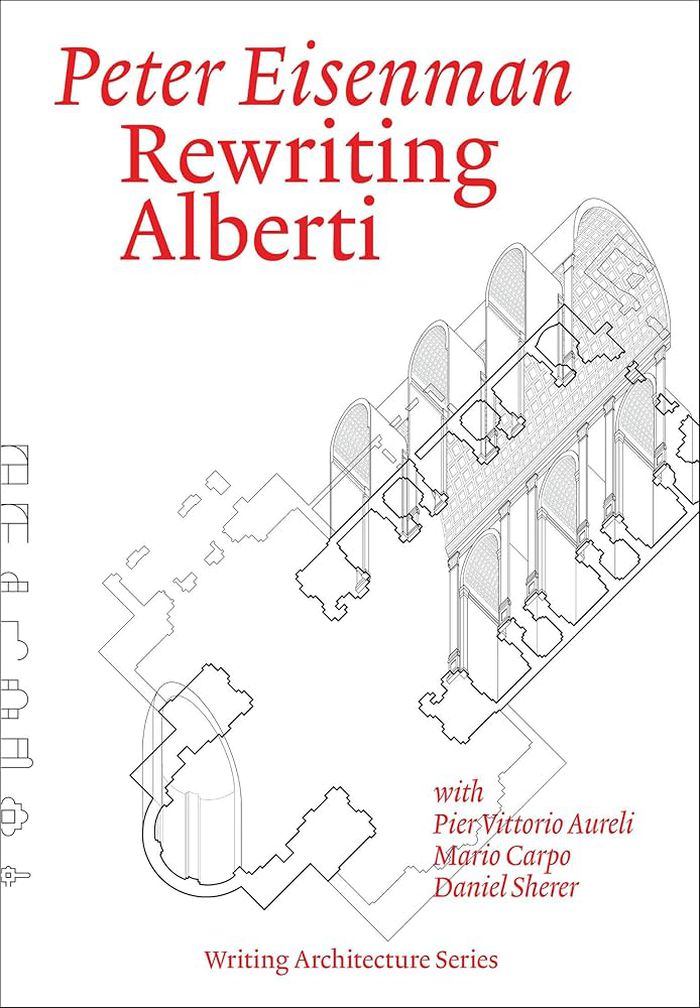
Much has been written about Renaissance architect Leon Battista Alberti’s mantra of part-to-whole as one of the continuing conditions of architecture. While this underlying thesis has often been repeated in the annals of architectural history and theory, architects have rarely questioned the idea. In ''Rewriting Alberti'', architect Peter Eisenman suggests, however, that Alberti provoked a radical discourse beyond the part-to-whole dialogue featured in his Ten Books of Architecture. Eisenman’s in-depth analysis of Alberti’s five built works reveals a disjunction between the architect’s buildings and theoretical writings, suggesting a new relationship of form to meaning based on the fragmentation of homogeneous space. ''Rewriting Alberti'' includes contributions by Pier Vittorio Aureli, Mario Carpo, and Daniel Sherer. Carpo, an architectural historian and critic, theorizes that Alberti’s work initiated an idea of the discipline as a notational system akin to contemporary computational logics. By way of comparison, Sherer, an architectural historian, reconsiders critic Manfredo Tafuri’s readings of Alberti, and architect and theorist Aureli draws on Alberti to propose another idea of the architectural “project.”
Rewriting Alberti
Actions:
Prix:
$45.95
(disponible en magasin)
Résumé:
Much has been written about Renaissance architect Leon Battista Alberti’s mantra of part-to-whole as one of the continuing conditions of architecture. While this underlying thesis has often been repeated in the annals of architectural history and theory, architects have rarely questioned the idea. In ''Rewriting Alberti'', architect Peter Eisenman suggests, however, that Alberti provoked a radical discourse beyond the part-to-whole dialogue featured in his Ten Books of Architecture. Eisenman’s in-depth analysis of Alberti’s five built works reveals a disjunction between the architect’s buildings and theoretical writings, suggesting a new relationship of form to meaning based on the fragmentation of homogeneous space. ''Rewriting Alberti'' includes contributions by Pier Vittorio Aureli, Mario Carpo, and Daniel Sherer. Carpo, an architectural historian and critic, theorizes that Alberti’s work initiated an idea of the discipline as a notational system akin to contemporary computational logics. By way of comparison, Sherer, an architectural historian, reconsiders critic Manfredo Tafuri’s readings of Alberti, and architect and theorist Aureli draws on Alberti to propose another idea of the architectural “project.”
Classification:
livres
livres
Publication:
octobre 2025
octobre 2025
Sujet:
Théorie de l’architecture
Théorie de l’architecture
Classification:
périodiques
périodiques
Actions:
Prix:
$50.00
(disponible sur commande)
Résumé:
For centuries, architectural theory, discourse and agency have been based on diurnal and solar paradigms. References to night in Vitruvius’s De architectura are few, and the same absence is notable in Renaissance treatises by Alberti or Palladio. It was not until the 19th and 20th centuries that the invention and institutionalization of artificial light in private and(...)
$50.00
(disponible sur commande)
Résumé:
For centuries, architectural theory, discourse and agency have been based on diurnal and solar paradigms. References to night in Vitruvius’s De architectura are few, and the same absence is notable in Renaissance treatises by Alberti or Palladio. It was not until the 19th and 20th centuries that the invention and institutionalization of artificial light in private and(...)
Publication:
juillet 2024
juillet 2024
Titre:
Nocturnal history of architecture. Column issue 2
Actions:
Prix:
$50.00
(disponible sur commande)
Résumé:
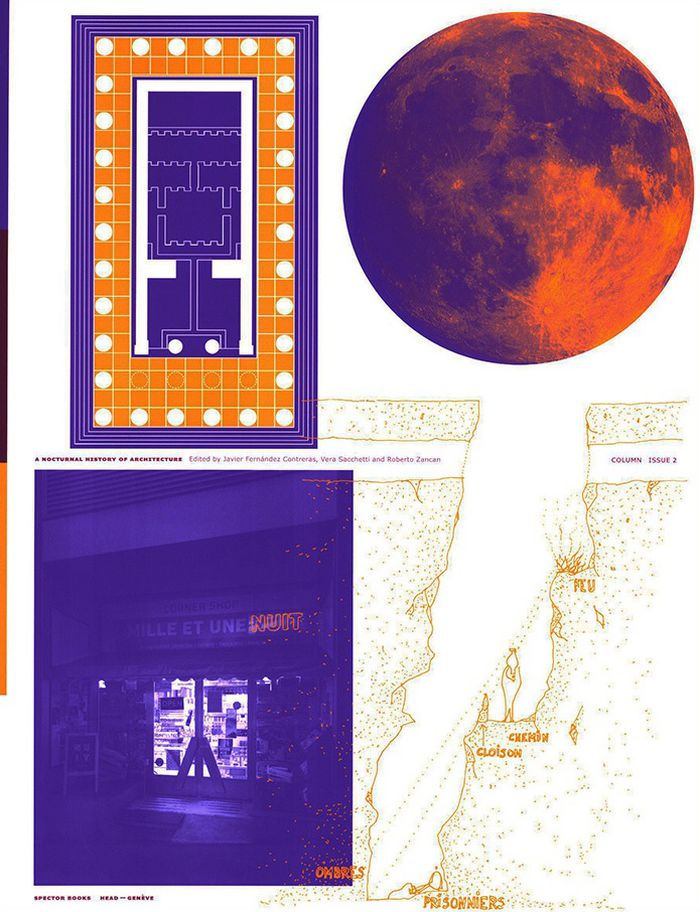
For centuries, architectural theory, discourse and agency have been based on diurnal and solar paradigms. References to night in Vitruvius’s De architectura are few, and the same absence is notable in Renaissance treatises by Alberti or Palladio. It was not until the 19th and 20th centuries that the invention and institutionalization of artificial light in private and public spaces gradually transformed conceptions of night in the architectural discipline. This volume offers the first attempt at a nocturnal history of architecture. What emerges from the studies is the thesis that the identity of human beings—across time and their domestic, professional and cultural spaces—is powerfully determined by the parameters of nighttime. By analyzing and studying "night scenes," this book reveals how the night is a laboratory for the development of new forms of conceptualizing space and, ultimately, of living.
Nocturnal history of architecture. Column issue 2
Actions:
Prix:
$50.00
(disponible sur commande)
Résumé:
For centuries, architectural theory, discourse and agency have been based on diurnal and solar paradigms. References to night in Vitruvius’s De architectura are few, and the same absence is notable in Renaissance treatises by Alberti or Palladio. It was not until the 19th and 20th centuries that the invention and institutionalization of artificial light in private and public spaces gradually transformed conceptions of night in the architectural discipline. This volume offers the first attempt at a nocturnal history of architecture. What emerges from the studies is the thesis that the identity of human beings—across time and their domestic, professional and cultural spaces—is powerfully determined by the parameters of nighttime. By analyzing and studying "night scenes," this book reveals how the night is a laboratory for the development of new forms of conceptualizing space and, ultimately, of living.
Classification:
périodiques
périodiques
Publication:
juillet 2024
juillet 2024
Classification:
livres
livres
Actions:
Prix:
$65.00
(disponible sur commande)
Résumé:
Joseph Rykwert, a professor of architecture at the University of Pennsylvania, has contributed to the body of work about architecture a wide-ranging study of the use of the human figure in the discipline, particularly in columns. Rykwert plunges deep into architectural history, tracing the development of the classic orders from Greece to Rome and on through the(...)
$65.00
(disponible sur commande)
Résumé:
Joseph Rykwert, a professor of architecture at the University of Pennsylvania, has contributed to the body of work about architecture a wide-ranging study of the use of the human figure in the discipline, particularly in columns. Rykwert plunges deep into architectural history, tracing the development of the classic orders from Greece to Rome and on through the(...)
Titre:
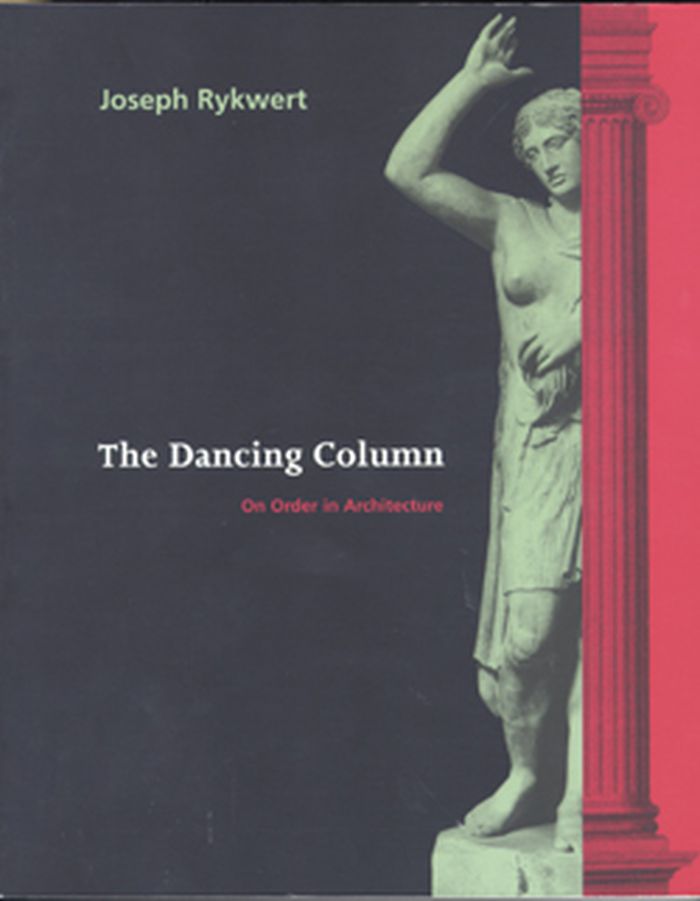
The dancing column: on order in architecture
Actions:
Prix:
$65.00
(disponible sur commande)
Résumé:
Joseph Rykwert, a professor of architecture at the University of Pennsylvania, has contributed to the body of work about architecture a wide-ranging study of the use of the human figure in the discipline, particularly in columns. Rykwert plunges deep into architectural history, tracing the development of the classic orders from Greece to Rome and on through the Renaissance in France and Italy. He says the relationship between the human body and architecture is "deeply ingrained in all recorded architectural thinking." He especially sees a close tie between the body and the column, the essential building block of architectural order.
The dancing column: on order in architecture
Actions:
Prix:
$65.00
(disponible sur commande)
Résumé:
Joseph Rykwert, a professor of architecture at the University of Pennsylvania, has contributed to the body of work about architecture a wide-ranging study of the use of the human figure in the discipline, particularly in columns. Rykwert plunges deep into architectural history, tracing the development of the classic orders from Greece to Rome and on through the Renaissance in France and Italy. He says the relationship between the human body and architecture is "deeply ingrained in all recorded architectural thinking." He especially sees a close tie between the body and the column, the essential building block of architectural order.
Classification:
livres
livres
Publication:
avril 1998, Cambridge, London
avril 1998, Cambridge, London
Sujet:
Théorie de l’architecture
Théorie de l’architecture
Classification:
livres
livres
Actions:
Prix:
$37.95
(disponible sur commande)
Résumé:
Chora 7, the final volume in the Chora series, includes fifteen essays on architectural topics from around the world (France, Greece, Iran, Italy, Korea, and the United States) and from diverse cultures (antiquity, Renaissance Italy, early modern France, and the past hundred years). Thematically, they bring original approaches to human experience, theatre, architectural(...)
$37.95
(disponible sur commande)
Résumé:
Chora 7, the final volume in the Chora series, includes fifteen essays on architectural topics from around the world (France, Greece, Iran, Italy, Korea, and the United States) and from diverse cultures (antiquity, Renaissance Italy, early modern France, and the past hundred years). Thematically, they bring original approaches to human experience, theatre, architectural(...)
Sujet:
Théorie de l’architecture
Théorie de l’architecture
Publication:
février 2016
février 2016
Titre:
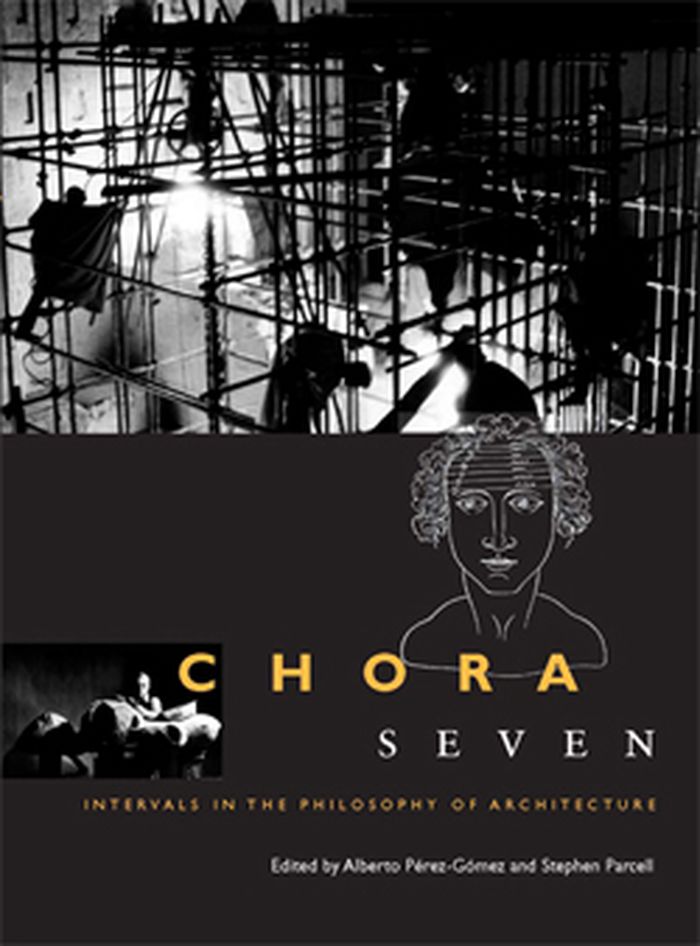
Chora 7: intervals in the philosophy of architecture
Actions:
Prix:
$37.95
(disponible sur commande)
Résumé:
Chora 7, the final volume in the Chora series, includes fifteen essays on architectural topics from around the world (France, Greece, Iran, Italy, Korea, and the United States) and from diverse cultures (antiquity, Renaissance Italy, early modern France, and the past hundred years). Thematically, they bring original approaches to human experience, theatre, architectural creation, and historical origins. Readers will also gain insights into theoretical and practical work by architects and artists such as Leon Battista Alberti, Peter Brook, Douglas Darden, Filarete, Andy Goldsworthy, Anselm Kiefer, Frederick Kiesler, Claude-Nicolas Ledoux, and Peter Zumthor.
Chora 7: intervals in the philosophy of architecture
Actions:
Prix:
$37.95
(disponible sur commande)
Résumé:
Chora 7, the final volume in the Chora series, includes fifteen essays on architectural topics from around the world (France, Greece, Iran, Italy, Korea, and the United States) and from diverse cultures (antiquity, Renaissance Italy, early modern France, and the past hundred years). Thematically, they bring original approaches to human experience, theatre, architectural creation, and historical origins. Readers will also gain insights into theoretical and practical work by architects and artists such as Leon Battista Alberti, Peter Brook, Douglas Darden, Filarete, Andy Goldsworthy, Anselm Kiefer, Frederick Kiesler, Claude-Nicolas Ledoux, and Peter Zumthor.
Classification:
livres
livres
Publication:
février 2016
février 2016
Sujet:
Théorie de l’architecture
Théorie de l’architecture
Classification:
livres
livres
Actions:
Prix:
$68.95
(disponible sur commande)
Résumé:
This collection contains studies written by art historian James Ackerman over the past decade. Whereas Ackerman’s earlier work assumed a development of the arts as they responded to social, economic, political, and cultural change, his recent work reflects the poststructural critique of the presumption of progress that characterized Renaissance and modernist history and(...)
$68.95
(disponible sur commande)
Résumé:
This collection contains studies written by art historian James Ackerman over the past decade. Whereas Ackerman’s earlier work assumed a development of the arts as they responded to social, economic, political, and cultural change, his recent work reflects the poststructural critique of the presumption of progress that characterized Renaissance and modernist history and(...)
Sujet:
Théorie de l’architecture
Théorie de l’architecture
Publication:
novembre 2001, Cambridge, Mass.
novembre 2001, Cambridge, Mass.
Titre:
Origins, imitation, conventions : representation in the visual arts
Actions:
Prix:
$68.95
(disponible sur commande)
Résumé:
This collection contains studies written by art historian James Ackerman over the past decade. Whereas Ackerman’s earlier work assumed a development of the arts as they responded to social, economic, political, and cultural change, his recent work reflects the poststructural critique of the presumption of progress that characterized Renaissance and modernist history and criticism. In this book he explores the tension between the authority of the past--which may act not only as a restraint but as a challenge and stimulus--and the potentially liberating gift of invention. He examines the ways in which artists and writers on art have related to ancestors and to established modes of representation, as well as to contemporary experiences. The "origins" studied here include the earliest art history and criticism; the beginnings of architectural drawing in the Middle Ages and Renaissance; Leonardo Da Vinci’s sketches for churches, the first in the Renaissance to propose supporting domes on sculpted walls and piers; and the first architectural photographs. "Imitation" refers to artistic achievements that in part depended on the imitation of forms established in practices outside the fine arts, such as ancient Roman rhetoric and print media. "Conventions," like language, facilitate communication between the artist and viewer, but are both more universal (understood across cultures) and more fixed (resisting variation that might diminish their clarity). The three categories are closely linked throughout the book, as most acts of representation partake to some degree of all three.
Origins, imitation, conventions : representation in the visual arts
Actions:
Prix:
$68.95
(disponible sur commande)
Résumé:
This collection contains studies written by art historian James Ackerman over the past decade. Whereas Ackerman’s earlier work assumed a development of the arts as they responded to social, economic, political, and cultural change, his recent work reflects the poststructural critique of the presumption of progress that characterized Renaissance and modernist history and criticism. In this book he explores the tension between the authority of the past--which may act not only as a restraint but as a challenge and stimulus--and the potentially liberating gift of invention. He examines the ways in which artists and writers on art have related to ancestors and to established modes of representation, as well as to contemporary experiences. The "origins" studied here include the earliest art history and criticism; the beginnings of architectural drawing in the Middle Ages and Renaissance; Leonardo Da Vinci’s sketches for churches, the first in the Renaissance to propose supporting domes on sculpted walls and piers; and the first architectural photographs. "Imitation" refers to artistic achievements that in part depended on the imitation of forms established in practices outside the fine arts, such as ancient Roman rhetoric and print media. "Conventions," like language, facilitate communication between the artist and viewer, but are both more universal (understood across cultures) and more fixed (resisting variation that might diminish their clarity). The three categories are closely linked throughout the book, as most acts of representation partake to some degree of all three.
Classification:
livres
livres
Publication:
novembre 2001, Cambridge, Mass.
novembre 2001, Cambridge, Mass.
Sujet:
Théorie de l’architecture
Théorie de l’architecture
Classification:
livres
livres
Prix:
$52.50
(disponible sur commande)
Résumé:
In "The Building in the Text", Roy Eriksen shows that Renaissance writers conceived of their texts in accordance with architectural principles. His approach opens the way to wide-ranging discussions of the structure and meaning of a variety of literary texts and also provides new insights into the famed architectural ekphrases of Alberti and Vasari. Analyzing such(...)
$52.50
(disponible sur commande)
Résumé:
In "The Building in the Text", Roy Eriksen shows that Renaissance writers conceived of their texts in accordance with architectural principles. His approach opens the way to wide-ranging discussions of the structure and meaning of a variety of literary texts and also provides new insights into the famed architectural ekphrases of Alberti and Vasari. Analyzing such(...)
Titre:
The building in the text : Alberti to Shakespeare and Milton
Actions:
Prix:
$52.50
(disponible sur commande)
Résumé:
In "The Building in the Text", Roy Eriksen shows that Renaissance writers conceived of their texts in accordance with architectural principles. His approach opens the way to wide-ranging discussions of the structure and meaning of a variety of literary texts and also provides new insights into the famed architectural ekphrases of Alberti and Vasari. Analyzing such words as "plot," "topos," "fabrica," and "stanza," Eriksen discloses the fundamental spatial symmetries and complexities in the writings of Ariosto, Shakespeare, and Milton, among other major figures. Ultimately, his book uncovers and clarifies a tradition of literary architecture that is rooted in antiquity and based on correspondences regarded as ordering principles of the cosmos.
The building in the text : Alberti to Shakespeare and Milton
Actions:
Prix:
$52.50
(disponible sur commande)
Résumé:
In "The Building in the Text", Roy Eriksen shows that Renaissance writers conceived of their texts in accordance with architectural principles. His approach opens the way to wide-ranging discussions of the structure and meaning of a variety of literary texts and also provides new insights into the famed architectural ekphrases of Alberti and Vasari. Analyzing such words as "plot," "topos," "fabrica," and "stanza," Eriksen discloses the fundamental spatial symmetries and complexities in the writings of Ariosto, Shakespeare, and Milton, among other major figures. Ultimately, his book uncovers and clarifies a tradition of literary architecture that is rooted in antiquity and based on correspondences regarded as ordering principles of the cosmos.
Classification:
livres
livres
Publication:
janvier 1900, University Park
janvier 1900, University Park
Sujet:
Théorie de l’architecture
Théorie de l’architecture
Classification:
livres
livres
Titre:
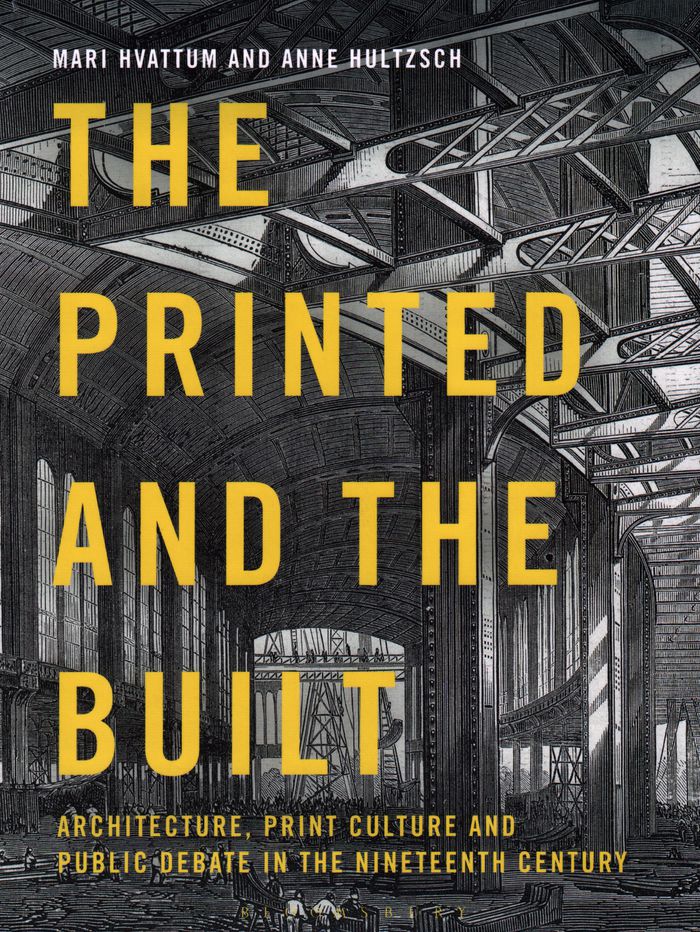
The printed and the built: architecture, print culture and public debate in the nineteenth century
The printed and the built: architecture, print culture and public debate in the nineteenth century
Actions:
Prix:
$49.95
(disponible sur commande)
Résumé:
This publication explores the intricate relationship between architecture and printed media in the fast-changing nineteenth century. Publication history is a rapidly expanding scholarly field which has profoundly influenced architectural history in recent years. Yet, while groundbreaking work has been done on architecture and printing in the Renaissance, the(...)
$49.95
(disponible sur commande)
Résumé:
This publication explores the intricate relationship between architecture and printed media in the fast-changing nineteenth century. Publication history is a rapidly expanding scholarly field which has profoundly influenced architectural history in recent years. Yet, while groundbreaking work has been done on architecture and printing in the Renaissance, the(...)
Titre:
The printed and the built: architecture, print culture and public debate in the nineteenth century
Actions:
Prix:
$49.95
(disponible sur commande)
Résumé:
This publication explores the intricate relationship between architecture and printed media in the fast-changing nineteenth century. Publication history is a rapidly expanding scholarly field which has profoundly influenced architectural history in recent years. Yet, while groundbreaking work has been done on architecture and printing in the Renaissance, the Enlightenment, and the twentieth century, the nineteenth century has received little attention. This is the omission that 'The Printed and the Built' seeks to address, thus filling a significant gap in the understanding of architecture's cultural history.
The printed and the built: architecture, print culture and public debate in the nineteenth century
Actions:
Prix:
$49.95
(disponible sur commande)
Résumé:
This publication explores the intricate relationship between architecture and printed media in the fast-changing nineteenth century. Publication history is a rapidly expanding scholarly field which has profoundly influenced architectural history in recent years. Yet, while groundbreaking work has been done on architecture and printing in the Renaissance, the Enlightenment, and the twentieth century, the nineteenth century has received little attention. This is the omission that 'The Printed and the Built' seeks to address, thus filling a significant gap in the understanding of architecture's cultural history.
Classification:
livres
livres
Publication:
juin 2018
juin 2018
Sujet:
Théorie de l’architecture
Théorie de l’architecture


