


240 Résultats
Classification:
livres
livres
Actions:
Prix:
$49.00
(disponible sur commande)
Résumé:
At the beginning of the economic crisis in 2007, housing became a central commodity in the short-circuit system of mortgages granted to private individuals and businesses. In the aftermath of the crisis, and in the wake of the COVID-19 Pandemic, housing—as a right, in its most radical form—re-emerged due to local housing, migration, and health emergencies. In light of an(...)
$49.00
(disponible sur commande)
Résumé:
At the beginning of the economic crisis in 2007, housing became a central commodity in the short-circuit system of mortgages granted to private individuals and businesses. In the aftermath of the crisis, and in the wake of the COVID-19 Pandemic, housing—as a right, in its most radical form—re-emerged due to local housing, migration, and health emergencies. In light of an(...)
Titre:
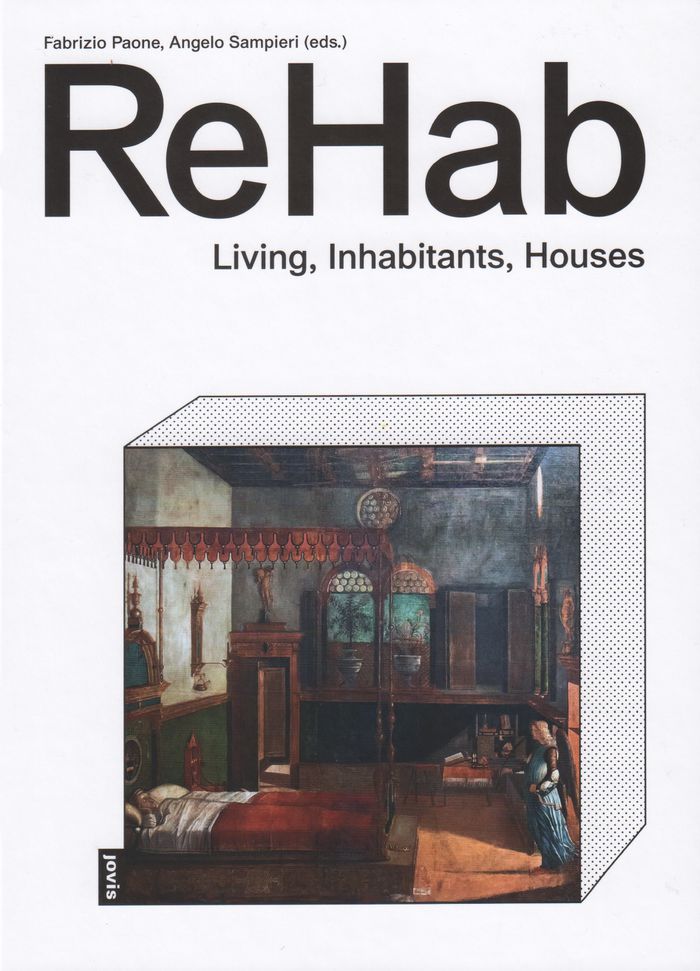
Rehab: Living, inhabitants, houses
Actions:
Prix:
$49.00
(disponible sur commande)
Résumé:
At the beginning of the economic crisis in 2007, housing became a central commodity in the short-circuit system of mortgages granted to private individuals and businesses. In the aftermath of the crisis, and in the wake of the COVID-19 Pandemic, housing—as a right, in its most radical form—re-emerged due to local housing, migration, and health emergencies. In light of an eclipse of a general discourse on housing, a new secular and international ethics arose, both foreign and superior to nation states. This book returns to a broader notion of housing: using metaphors of sanitary and salvific reinstatement, it retrieves case studies from the 1950s for re-conceptualizing the housing question in contemporary architecture and visual arts.
Rehab: Living, inhabitants, houses
Actions:
Prix:
$49.00
(disponible sur commande)
Résumé:
At the beginning of the economic crisis in 2007, housing became a central commodity in the short-circuit system of mortgages granted to private individuals and businesses. In the aftermath of the crisis, and in the wake of the COVID-19 Pandemic, housing—as a right, in its most radical form—re-emerged due to local housing, migration, and health emergencies. In light of an eclipse of a general discourse on housing, a new secular and international ethics arose, both foreign and superior to nation states. This book returns to a broader notion of housing: using metaphors of sanitary and salvific reinstatement, it retrieves case studies from the 1950s for re-conceptualizing the housing question in contemporary architecture and visual arts.
Classification:
livres
livres
Publication:
septembre 2022
septembre 2022
Sujet:
Logements collectifs
Logements collectifs
Classification:
livres
livres
Titre:
Lo-TEK Water : a field guide for TEKnology / Julia Watson ; foreword, Dr. Lyla June Johnston.
Lo-TEK Water : a field guide for TEKnology / Julia Watson ; foreword, Dr. Lyla June Johnston.
Actions:
Exemplaires:
Description:
557 pages : illustrations (some color), maps ; 25 cm
Description:
557 pages : illustrations (some color), maps ; 25 cm
Auteur:
Sujet:
Publication:
Cologne : Taschen, 2025.
Cologne : Taschen, 2025.
Titre:
Lo-TEK Water : a field guide for TEKnology / Julia Watson ; foreword, Dr. Lyla June Johnston.
Actions:
Exemplaires:
Description:
557 pages : illustrations (some color), maps ; 25 cm
Lo-TEK Water : a field guide for TEKnology / Julia Watson ; foreword, Dr. Lyla June Johnston.
Actions:
Exemplaires:
Description:
557 pages : illustrations (some color), maps ; 25 cm
Classification:
livres
livres
Publication:
Cologne : Taschen, 2025.
Cologne : Taschen, 2025.
Auteur:
Sujet:
Classification:
livres
livres
Titre:
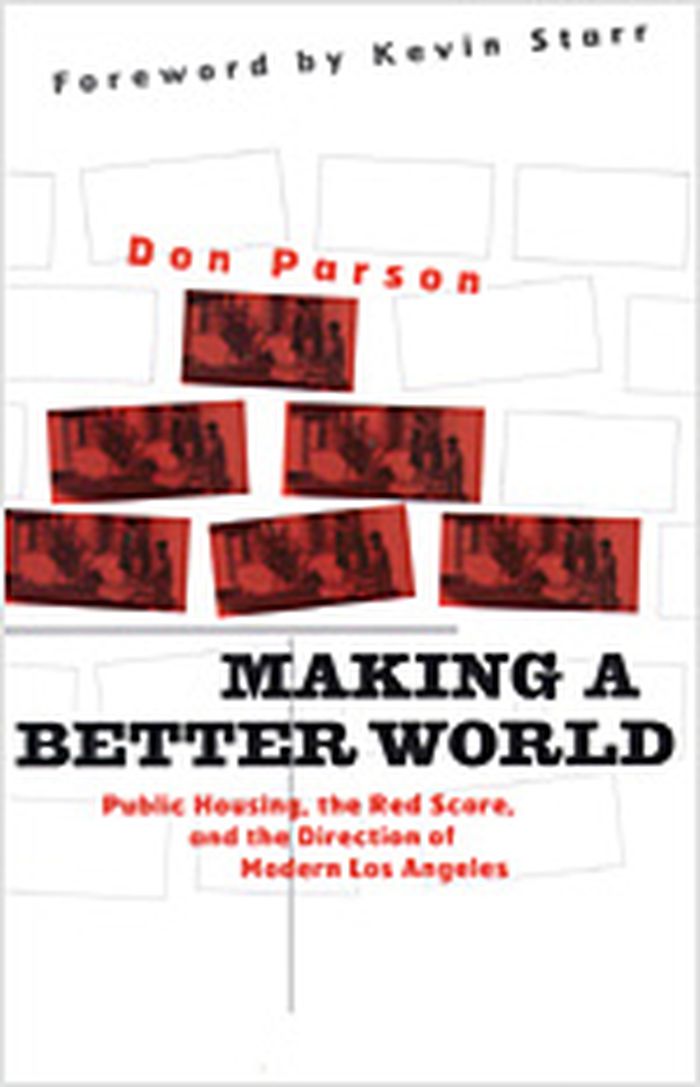
Making a better world : public housing, the Red Scare, and the direction of modern Los Angeles
Making a better world : public housing, the Red Scare, and the direction of modern Los Angeles
Actions:
Prix:
$29.95
(disponible sur commande)
Résumé:
During the 1990s, Los Angeles - like many other cities across America - began demolishing public housing projects that had come to symbolize decades of failed urban policies. But public housing was not always regarded with such disdain. In the years surrounding World War II, it had been a popular New Deal program, viewed as a force for positive social change and supported(...)
$29.95
(disponible sur commande)
Résumé:
During the 1990s, Los Angeles - like many other cities across America - began demolishing public housing projects that had come to symbolize decades of failed urban policies. But public housing was not always regarded with such disdain. In the years surrounding World War II, it had been a popular New Deal program, viewed as a force for positive social change and supported(...)
Titre:
Making a better world : public housing, the Red Scare, and the direction of modern Los Angeles
Actions:
Prix:
$29.95
(disponible sur commande)
Résumé:
During the 1990s, Los Angeles - like many other cities across America - began demolishing public housing projects that had come to symbolize decades of failed urban policies. But public housing was not always regarded with such disdain. In the years surrounding World War II, it had been a popular New Deal program, viewed as a force for positive social change and supported by a broad coalition of civic, labor, religious, and community organizations. Socially conscious architects and planners developed innovative and livable projects that embodied the latest theories in urban design. With sharp historical perspective, "Making a better world" traces the rise and fall of a public housing ethic in Los Angeles and its impact on the city’s built environment. In the caustic political atmosphere of Joseph McCarthy’s America, public housing opponents accused the city’s housing authority of communist infiltration, effectively eliminating the left from debates over the city’s development. In place of public housing, conservative forces promoted a pro-private growth agenda that redefined urban renewal and reshaped modern Los Angeles. No conventional public housing projects have been constructed in Los Angeles since 1955. In this era of skyrocketing housing prices, especially in urban areas, Don Parson’s examination not only gives us the recent history of a city but also opens up a new debate on a current national crisis in providing shelter for low-income Americans. Foreword by Kevin Starr.
Making a better world : public housing, the Red Scare, and the direction of modern Los Angeles
Actions:
Prix:
$29.95
(disponible sur commande)
Résumé:
During the 1990s, Los Angeles - like many other cities across America - began demolishing public housing projects that had come to symbolize decades of failed urban policies. But public housing was not always regarded with such disdain. In the years surrounding World War II, it had been a popular New Deal program, viewed as a force for positive social change and supported by a broad coalition of civic, labor, religious, and community organizations. Socially conscious architects and planners developed innovative and livable projects that embodied the latest theories in urban design. With sharp historical perspective, "Making a better world" traces the rise and fall of a public housing ethic in Los Angeles and its impact on the city’s built environment. In the caustic political atmosphere of Joseph McCarthy’s America, public housing opponents accused the city’s housing authority of communist infiltration, effectively eliminating the left from debates over the city’s development. In place of public housing, conservative forces promoted a pro-private growth agenda that redefined urban renewal and reshaped modern Los Angeles. No conventional public housing projects have been constructed in Los Angeles since 1955. In this era of skyrocketing housing prices, especially in urban areas, Don Parson’s examination not only gives us the recent history of a city but also opens up a new debate on a current national crisis in providing shelter for low-income Americans. Foreword by Kevin Starr.
Classification:
livres
livres
Publication:
janvier 2005, Minneapolis
janvier 2005, Minneapolis
Sujet:
Théorie de l’urbanisme
Théorie de l’urbanisme
Classification:
livres
livres
Actions:
Exemplaires:
Description:
431 pages : illustrations (chiefly color), facsimiles, plans, portraits ; 30 cm
Description:
431 pages : illustrations (chiefly color), facsimiles, plans, portraits ; 30 cm
Auteur:
Sujet:
Publication:
Paris : Galerie Patrick Seguin, ©2014.
Paris : Galerie Patrick Seguin, ©2014.
Titre:
Le Corbusier, Pierre Jeanneret : Chandigarh, India, 1951-66 / [texts, Hélène Bauchet-Cauquil, Françoise-Claire Prodhon, Patrick Seguin ; project director, Michael Roy ; English translation, John Tittensor, Jeremy Harrison].
Actions:
Exemplaires:
Description:
431 pages : illustrations (chiefly color), facsimiles, plans, portraits ; 30 cm
Le Corbusier, Pierre Jeanneret : Chandigarh, India, 1951-66 / [texts, Hélène Bauchet-Cauquil, Françoise-Claire Prodhon, Patrick Seguin ; project director, Michael Roy ; English translation, John Tittensor, Jeremy Harrison].
Actions:
Exemplaires:
Description:
431 pages : illustrations (chiefly color), facsimiles, plans, portraits ; 30 cm
Classification:
livres
livres
Publication:
Paris : Galerie Patrick Seguin, ©2014.
Paris : Galerie Patrick Seguin, ©2014.
Auteur:
Sujet:
Classification:
livres
livres
Actions:
Prix:
$26.00
(disponible sur commande)
Résumé:
Shaped by immigration, globalization, and demographics, our hub cities demonstrate what's best about Canada: our commitment to education, tolerance, culture, and innovation. Since the early 1990s, however, troubling trends have threatened to undermine our much-envied quality of life. Large urban centres are experiencing a widening gap between rich and poor, mounting(...)
$26.00
(disponible sur commande)
Résumé:
Shaped by immigration, globalization, and demographics, our hub cities demonstrate what's best about Canada: our commitment to education, tolerance, culture, and innovation. Since the early 1990s, however, troubling trends have threatened to undermine our much-envied quality of life. Large urban centres are experiencing a widening gap between rich and poor, mounting(...)
Titre:
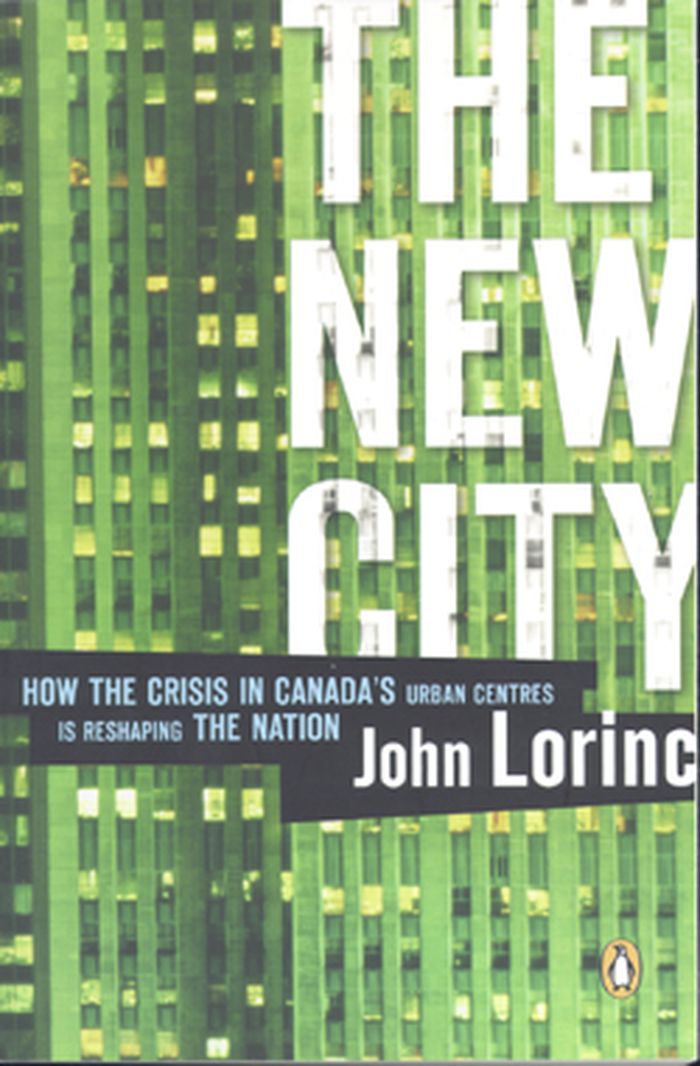
The New City: how the crisis in Canada's urban centres is reshaping the nation
Actions:
Prix:
$26.00
(disponible sur commande)
Résumé:
Shaped by immigration, globalization, and demographics, our hub cities demonstrate what's best about Canada: our commitment to education, tolerance, culture, and innovation. Since the early 1990s, however, troubling trends have threatened to undermine our much-envied quality of life. Large urban centres are experiencing a widening gap between rich and poor, mounting levels of violence, and sprawl-induced health and environmental damage. Well-trained immigrants struggle to find suitable jobs and decent housing, while big-city schools suffer from underfunding. Local governments lack the resources and political clout to act decisively. In The New City, award-winning urban affairs writer John Lorinc offers a compelling vision of how to make Canada's metropolitan centres sustainable, livable, and competitive in a world dominated by powerful mega-cities. Incisive and broad-ranging, this is a timely reminder that all Canadians must confront urban issues if the country is to succeed in the tumultuous economy of the 21st century.
The New City: how the crisis in Canada's urban centres is reshaping the nation
Actions:
Prix:
$26.00
(disponible sur commande)
Résumé:
Shaped by immigration, globalization, and demographics, our hub cities demonstrate what's best about Canada: our commitment to education, tolerance, culture, and innovation. Since the early 1990s, however, troubling trends have threatened to undermine our much-envied quality of life. Large urban centres are experiencing a widening gap between rich and poor, mounting levels of violence, and sprawl-induced health and environmental damage. Well-trained immigrants struggle to find suitable jobs and decent housing, while big-city schools suffer from underfunding. Local governments lack the resources and political clout to act decisively. In The New City, award-winning urban affairs writer John Lorinc offers a compelling vision of how to make Canada's metropolitan centres sustainable, livable, and competitive in a world dominated by powerful mega-cities. Incisive and broad-ranging, this is a timely reminder that all Canadians must confront urban issues if the country is to succeed in the tumultuous economy of the 21st century.
Classification:
livres
livres
Publication:
mars 2006, Toronto
mars 2006, Toronto
Sujet:
Théorie de l’urbanisme
Théorie de l’urbanisme
Classification:
livres
livres

Actions:
Prix:
$60.00
(disponible sur commande)
Résumé:
This book is a study of architectural infrastructure for state-provided accommodation for refugees in Germany. During the so called European migrant crisis from 2015 on Germany got known for its ''welcome culture'' towards refugees. Since 2015 millions of refugees have arrived to the country and the state has had to react quickly trying to provide sufficient housing for(...)
$60.00
(disponible sur commande)
Résumé:
This book is a study of architectural infrastructure for state-provided accommodation for refugees in Germany. During the so called European migrant crisis from 2015 on Germany got known for its ''welcome culture'' towards refugees. Since 2015 millions of refugees have arrived to the country and the state has had to react quickly trying to provide sufficient housing for(...)
Titre:
Arriving: About the architecture of refugee accommodation in Germany
Actions:
Prix:
$60.00
(disponible sur commande)
Résumé:
This book is a study of architectural infrastructure for state-provided accommodation for refugees in Germany. During the so called European migrant crisis from 2015 on Germany got known for its ''welcome culture'' towards refugees. Since 2015 millions of refugees have arrived to the country and the state has had to react quickly trying to provide sufficient housing for the immigrants. In the fast paced urban planning process material and immaterial borders are created, making it challenging for the refugees to settle. Through photographic documentation, aerial views and official documents of regulations regarding refugee housing complexes the book raises a questions about the architecture’s impairing effects for refugees integration to German society.
Arriving: About the architecture of refugee accommodation in Germany
Actions:
Prix:
$60.00
(disponible sur commande)
Résumé:
This book is a study of architectural infrastructure for state-provided accommodation for refugees in Germany. During the so called European migrant crisis from 2015 on Germany got known for its ''welcome culture'' towards refugees. Since 2015 millions of refugees have arrived to the country and the state has had to react quickly trying to provide sufficient housing for the immigrants. In the fast paced urban planning process material and immaterial borders are created, making it challenging for the refugees to settle. Through photographic documentation, aerial views and official documents of regulations regarding refugee housing complexes the book raises a questions about the architecture’s impairing effects for refugees integration to German society.
Classification:
livres
livres
Publication:
mai 2022
mai 2022
Sujet:
Logements collectifs
Logements collectifs
Classification:
livres
livres
Titre:
Sociable cities : the 21st-century reinvention of the garden city / Peter Hall and Colin Ward.
Sociable cities : the 21st-century reinvention of the garden city / Peter Hall and Colin Ward.
Actions:
Exemplaires:
Description:
x, 270 pages ; 26 cm.
Description:
x, 270 pages ; 26 cm.
Auteur:
Sujet:
Publication:
Abingdon, Oxfordshire ; New York : Routledge, 2014., ©2014
Abingdon, Oxfordshire ; New York : Routledge, 2014., ©2014
Titre:
Sociable cities : the 21st-century reinvention of the garden city / Peter Hall and Colin Ward.
Actions:
Exemplaires:
Description:
x, 270 pages ; 26 cm.
Sociable cities : the 21st-century reinvention of the garden city / Peter Hall and Colin Ward.
Actions:
Exemplaires:
Description:
x, 270 pages ; 26 cm.
Classification:
livres
livres
Publication:
Abingdon, Oxfordshire ; New York : Routledge, 2014., ©2014
Abingdon, Oxfordshire ; New York : Routledge, 2014., ©2014
Auteur:
Sujet:
Classification:
livres
livres
Actions:
Prix:
$35.00
(disponible sur commande)
Résumé:
Forecolosed: Rehousing the American Dream is an exploration of new architectural possibilities for American cities and suburbs in the aftermath of the recent foreclosure crisis in the United States. During the summer of 2011, five interdisciplinary teams of architects, urban planners, ecologists, engineers and landscape designers were enlisted by The Museum of Modern(...)
$35.00
(disponible sur commande)
Résumé:
Forecolosed: Rehousing the American Dream is an exploration of new architectural possibilities for American cities and suburbs in the aftermath of the recent foreclosure crisis in the United States. During the summer of 2011, five interdisciplinary teams of architects, urban planners, ecologists, engineers and landscape designers were enlisted by The Museum of Modern(...)
Titre:
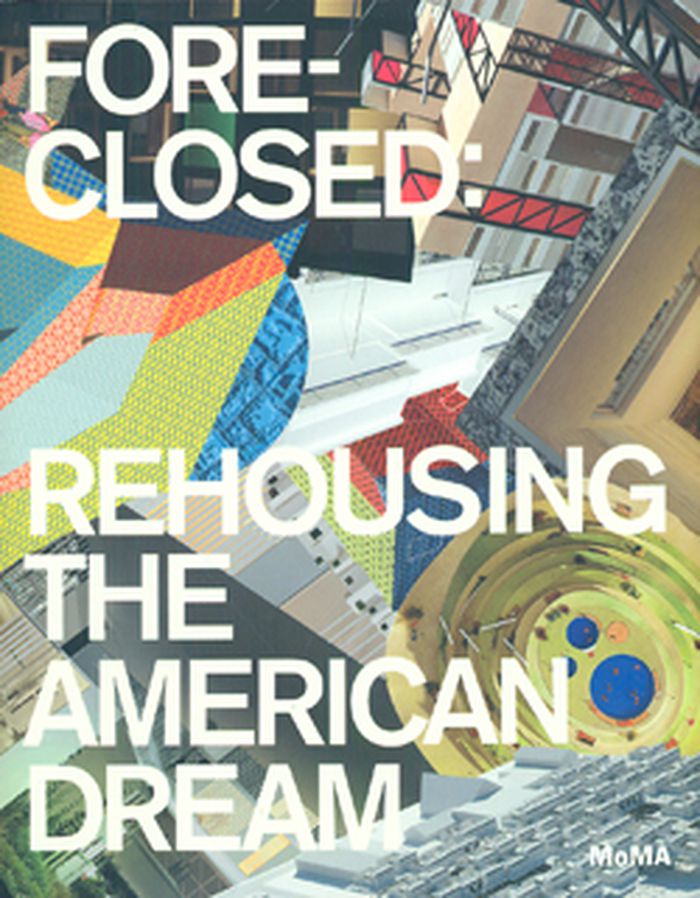
Foreclosed: rehousing the American dream
Actions:
Prix:
$35.00
(disponible sur commande)
Résumé:
Forecolosed: Rehousing the American Dream is an exploration of new architectural possibilities for American cities and suburbs in the aftermath of the recent foreclosure crisis in the United States. During the summer of 2011, five interdisciplinary teams of architects, urban planners, ecologists, engineers and landscape designers were enlisted by The Museum of Modern Art, New York, and MoMA PS1 to envision new housing infrastructures that could catalyze urban transformation, particularly in the country’s suburbs. Drawing on ideas proposed in The Buell Hypothesis, a research publication prepared by the Temple Hoyne Buell Center for the Study of American Architecture at Columbia University, each team focused on a specific location within a “megaregion” to come up with inventive solutions for the future of housing and cities. This publication presents each of these proposals (exhibited at MoMA in Spring 2012) in detail, through photographs, drawings and renderings as well as interviews with the team leaders. Foreclosedexamines the relationship between land, infrastructure and urban form, exploring potential futures for America’s extended metropolises.
Foreclosed: rehousing the American dream
Actions:
Prix:
$35.00
(disponible sur commande)
Résumé:
Forecolosed: Rehousing the American Dream is an exploration of new architectural possibilities for American cities and suburbs in the aftermath of the recent foreclosure crisis in the United States. During the summer of 2011, five interdisciplinary teams of architects, urban planners, ecologists, engineers and landscape designers were enlisted by The Museum of Modern Art, New York, and MoMA PS1 to envision new housing infrastructures that could catalyze urban transformation, particularly in the country’s suburbs. Drawing on ideas proposed in The Buell Hypothesis, a research publication prepared by the Temple Hoyne Buell Center for the Study of American Architecture at Columbia University, each team focused on a specific location within a “megaregion” to come up with inventive solutions for the future of housing and cities. This publication presents each of these proposals (exhibited at MoMA in Spring 2012) in detail, through photographs, drawings and renderings as well as interviews with the team leaders. Foreclosedexamines the relationship between land, infrastructure and urban form, exploring potential futures for America’s extended metropolises.
Classification:
livres
livres
Publication:
mars 2012
mars 2012
Sujet:
Logements collectifs
Logements collectifs
Classification:
livres
livres
Actions:
Prix:
$41.95
(disponible sur commande)
Résumé:
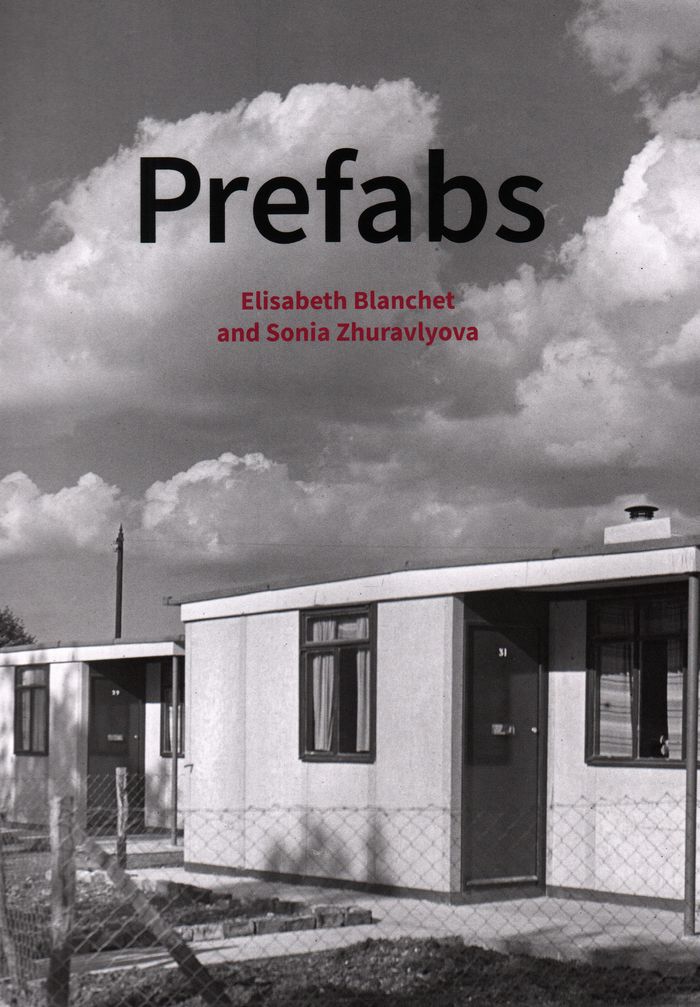
The authors look at the success of post-war prefab housing in the wider context of British social housing. The book also looks at architectural innovation and imaginative design in the field of prefabrication and clever solutions being put forward to solve the housing crisis of today.
$41.95
(disponible sur commande)
Résumé:
The authors look at the success of post-war prefab housing in the wider context of British social housing. The book also looks at architectural innovation and imaginative design in the field of prefabrication and clever solutions being put forward to solve the housing crisis of today.
Sujet:
Architecture préfabriquée
Architecture préfabriquée
Publication:
septembre 2018
septembre 2018
Titre:
Prefabs: a social and architectural history
Actions:
Prix:
$41.95
(disponible sur commande)
Résumé:
The authors look at the success of post-war prefab housing in the wider context of British social housing. The book also looks at architectural innovation and imaginative design in the field of prefabrication and clever solutions being put forward to solve the housing crisis of today.
Prefabs: a social and architectural history
Actions:
Prix:
$41.95
(disponible sur commande)
Résumé:
The authors look at the success of post-war prefab housing in the wider context of British social housing. The book also looks at architectural innovation and imaginative design in the field of prefabrication and clever solutions being put forward to solve the housing crisis of today.
Classification:
livres
livres
Publication:
septembre 2018
septembre 2018
Sujet:
Architecture préfabriquée
Architecture préfabriquée
Classification:
livres
livres
Titre:
306090 14: Making a case
306090 14: Making a case
Actions:
Prix:
$28.95
(disponible sur commande)
Résumé:
Making a Case focuses on contemporary housing in the United States and the future of the American home. Like the Case Study program after World War II, it seizes on a critical moment in the history of America as a time to reinvent the single-family dwelling unit-post-crisis rather than post-war. The crisis in this case is the collapse of the housing bubble, with its(...)
$28.95
(disponible sur commande)
Résumé:
Making a Case focuses on contemporary housing in the United States and the future of the American home. Like the Case Study program after World War II, it seizes on a critical moment in the history of America as a time to reinvent the single-family dwelling unit-post-crisis rather than post-war. The crisis in this case is the collapse of the housing bubble, with its(...)
Titre:
306090 14: Making a case
Actions:
Prix:
$28.95
(disponible sur commande)
Résumé:
Making a Case focuses on contemporary housing in the United States and the future of the American home. Like the Case Study program after World War II, it seizes on a critical moment in the history of America as a time to reinvent the single-family dwelling unit-post-crisis rather than post-war. The crisis in this case is the collapse of the housing bubble, with its partnering causes and aftershocks: the reality of less oil, the urge to reurbanize, and the results of economic reorganization. Organized in two sections, design cases and commentary, this periodical draws together international contributors from a variety of disciplines to address this critical moment for housing in America.
306090 14: Making a case
Actions:
Prix:
$28.95
(disponible sur commande)
Résumé:
Making a Case focuses on contemporary housing in the United States and the future of the American home. Like the Case Study program after World War II, it seizes on a critical moment in the history of America as a time to reinvent the single-family dwelling unit-post-crisis rather than post-war. The crisis in this case is the collapse of the housing bubble, with its partnering causes and aftershocks: the reality of less oil, the urge to reurbanize, and the results of economic reorganization. Organized in two sections, design cases and commentary, this periodical draws together international contributors from a variety of disciplines to address this critical moment for housing in America.
Classification:
livres
livres
Publication:
février 2012
février 2012
Sujet:
Revues
Revues


