


2036 Résultats
Classification:
livres
livres
Actions:
Prix:
$45.95
(disponible sur commande)
Résumé:
This book consists of two parts. Within each chapter, the left-hand page shows the work of an artist and the right-hand page that of an architect. This device of presenting the work in pairs has been contrived to emphasize the remarkable degree of correspondence between art and architecture and to highlight the common conceptual and physical qualities of(...)
$45.95
(disponible sur commande)
Résumé:
This book consists of two parts. Within each chapter, the left-hand page shows the work of an artist and the right-hand page that of an architect. This device of presenting the work in pairs has been contrived to emphasize the remarkable degree of correspondence between art and architecture and to highlight the common conceptual and physical qualities of(...)
Sujet:
Théorie de l’architecture
Théorie de l’architecture
Publication:
novembre 1999, Barcelona
novembre 1999, Barcelona
Titre:
Art and architecture : new affinities
Actions:
Prix:
$45.95
(disponible sur commande)
Résumé:
This book consists of two parts. Within each chapter, the left-hand page shows the work of an artist and the right-hand page that of an architect. This device of presenting the work in pairs has been contrived to emphasize the remarkable degree of correspondence between art and architecture and to highlight the common conceptual and physical qualities of the projects. Throughout, designers, landscape architects and lighting engineers are included in the architectural category, as their working structures, contractually defined to provide a quantifiable design service to the client, are alike. The works are assembled according to their design concept and arranged in eight sections, which identify the most important characteristics of each project. 'Barometer' focuses on the connection of the work to its natural environment, and 'Passage' investigates the relationship of space perception to physical movement. 'Reflection' looks at the suggestive power of the double image, and 'Light' compiles examples of the material quality of luminous matter. The manipulation of our habitual point of view is the subject of the chapter called 'Observation', while 'Excavation', as the title suggests, deals with the exploration of negative space. The 'Sound' chapter reviews the pervasive presence of resonant structures, and 'Memory' is dedicated to the physicality of our recollections.
Art and architecture : new affinities
Actions:
Prix:
$45.95
(disponible sur commande)
Résumé:
This book consists of two parts. Within each chapter, the left-hand page shows the work of an artist and the right-hand page that of an architect. This device of presenting the work in pairs has been contrived to emphasize the remarkable degree of correspondence between art and architecture and to highlight the common conceptual and physical qualities of the projects. Throughout, designers, landscape architects and lighting engineers are included in the architectural category, as their working structures, contractually defined to provide a quantifiable design service to the client, are alike. The works are assembled according to their design concept and arranged in eight sections, which identify the most important characteristics of each project. 'Barometer' focuses on the connection of the work to its natural environment, and 'Passage' investigates the relationship of space perception to physical movement. 'Reflection' looks at the suggestive power of the double image, and 'Light' compiles examples of the material quality of luminous matter. The manipulation of our habitual point of view is the subject of the chapter called 'Observation', while 'Excavation', as the title suggests, deals with the exploration of negative space. The 'Sound' chapter reviews the pervasive presence of resonant structures, and 'Memory' is dedicated to the physicality of our recollections.
Classification:
livres
livres
Publication:
novembre 1999, Barcelona
novembre 1999, Barcelona
Sujet:
Théorie de l’architecture
Théorie de l’architecture
Classification:
livres
livres
Actions:
Prix:
$79.00
(disponible sur commande)
Résumé:
Bridget Riley’s paintings are developed carefully over time, the result of methodically working through pictorial variables such as color, tone, scale, and rhythm. Studies are central to this process, allowing Riley to concentrate on the analysis and synthesis that lie at the heart of her working practice. This volume illustrates the thinking that goes into Riley’s work(...)
$79.00
(disponible sur commande)
Résumé:
Bridget Riley’s paintings are developed carefully over time, the result of methodically working through pictorial variables such as color, tone, scale, and rhythm. Studies are central to this process, allowing Riley to concentrate on the analysis and synthesis that lie at the heart of her working practice. This volume illustrates the thinking that goes into Riley’s work(...)
Titre:
Bridget Riley: Working drawings
Actions:
Prix:
$79.00
(disponible sur commande)
Résumé:
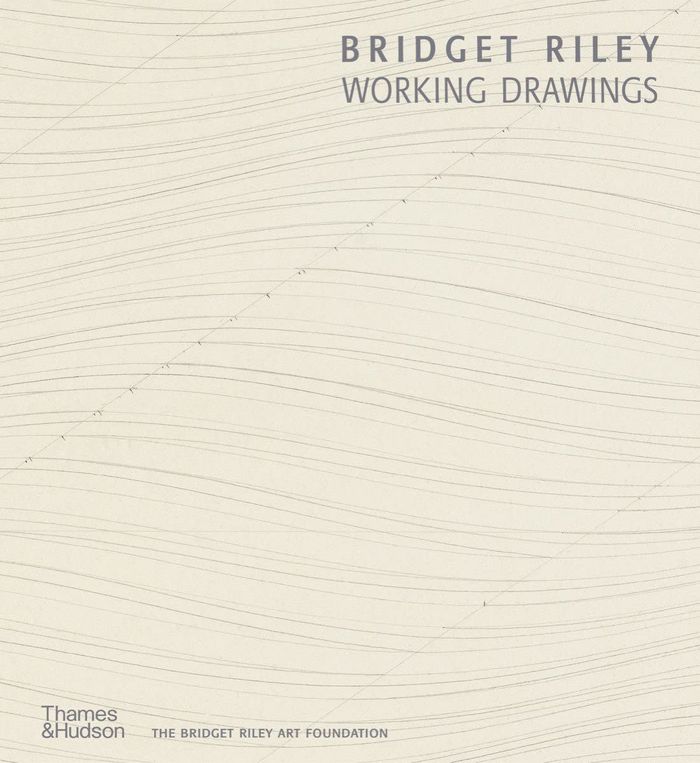
Bridget Riley’s paintings are developed carefully over time, the result of methodically working through pictorial variables such as color, tone, scale, and rhythm. Studies are central to this process, allowing Riley to concentrate on the analysis and synthesis that lie at the heart of her working practice. This volume illustrates the thinking that goes into Riley’s work through a selection of over 150 drawings, colour analyses, notations, scale studies, and cartoons. The selection spans most of Riley’s working life, tracing the origins and evolving nature of her remarkable body of work. Riley’s beginnings are also documented through selected childhood drawings, work made during and immediately following her studies at Goldsmiths’ College and the Royal College of Art, and her early explorations into abstraction. The artist’s working method is brought into high relief in a newly commissioned conversation with Riley and Sir John Leighton, Director of the National Galleries of Scotland. The text explores the cardinal moments in the artist’s practice and the impulses that bring her work into existence. The volume also includes four texts dedicated to Riley’s studies and practice written by the artist, art historians, curators, and museum directors, which shed further light on the enduring role of drawing and the process of exploration central to her work.
Bridget Riley: Working drawings
Actions:
Prix:
$79.00
(disponible sur commande)
Résumé:
Bridget Riley’s paintings are developed carefully over time, the result of methodically working through pictorial variables such as color, tone, scale, and rhythm. Studies are central to this process, allowing Riley to concentrate on the analysis and synthesis that lie at the heart of her working practice. This volume illustrates the thinking that goes into Riley’s work through a selection of over 150 drawings, colour analyses, notations, scale studies, and cartoons. The selection spans most of Riley’s working life, tracing the origins and evolving nature of her remarkable body of work. Riley’s beginnings are also documented through selected childhood drawings, work made during and immediately following her studies at Goldsmiths’ College and the Royal College of Art, and her early explorations into abstraction. The artist’s working method is brought into high relief in a newly commissioned conversation with Riley and Sir John Leighton, Director of the National Galleries of Scotland. The text explores the cardinal moments in the artist’s practice and the impulses that bring her work into existence. The volume also includes four texts dedicated to Riley’s studies and practice written by the artist, art historians, curators, and museum directors, which shed further light on the enduring role of drawing and the process of exploration central to her work.
Classification:
livres
livres
Publication:
janvier 2022
janvier 2022
Classification:
livres
livres
Actions:
Prix:
$48.95
(disponible sur commande)
Résumé:
When the automobile was first introduced, few Americans predicted its fundamental impact, not only on how people would travel, but on the American landscape itself. Instead of reducing the amount of wheeled transport on public roads, the advent of mass-produced cars caused congestion, at the curb and in the right-of-way, from small midwestern farm towns to New York,(...)
$48.95
(disponible sur commande)
Résumé:
When the automobile was first introduced, few Americans predicted its fundamental impact, not only on how people would travel, but on the American landscape itself. Instead of reducing the amount of wheeled transport on public roads, the advent of mass-produced cars caused congestion, at the curb and in the right-of-way, from small midwestern farm towns to New York,(...)
Sujet:
Théorie de l’urbanisme
Théorie de l’urbanisme
Publication:
juin 2004, Charlottesville
juin 2004, Charlottesville
Titre:
Lots of parking : land use in a car culture
Actions:
Prix:
$48.95
(disponible sur commande)
Résumé:
When the automobile was first introduced, few Americans predicted its fundamental impact, not only on how people would travel, but on the American landscape itself. Instead of reducing the amount of wheeled transport on public roads, the advent of mass-produced cars caused congestion, at the curb and in the right-of-way, from small midwestern farm towns to New York, Chicago, Detroit, and Los Angeles. "Lots of Parking" examines a neglected aspect of this rise of the automobile: the impact on America not of cars in motion but of cars at rest. While most studies have tended to focus on highway construction and engineering improvements to accommodate increasing flow and the desire for speed, John A. Jakle and Keith A. Sculle examine a fundamental feature of the urban, and suburban, scene — the parking lot. Their lively and exhaustive exploration traces the history of parking from the curbside to the rise of public and commercial parking lots and garages and the concomitant demolition of the old pedestrian-oriented urban infrastructure. In an accessible style enhanced by a range of interesting and unusual illustrations, Jakle and Sculle discuss the role of parking in downtown revitalization efforts and, by contrast, its role in the promotion of outlying suburban shopping districts and its incorporation into our neighbourhoods and residences.
Lots of parking : land use in a car culture
Actions:
Prix:
$48.95
(disponible sur commande)
Résumé:
When the automobile was first introduced, few Americans predicted its fundamental impact, not only on how people would travel, but on the American landscape itself. Instead of reducing the amount of wheeled transport on public roads, the advent of mass-produced cars caused congestion, at the curb and in the right-of-way, from small midwestern farm towns to New York, Chicago, Detroit, and Los Angeles. "Lots of Parking" examines a neglected aspect of this rise of the automobile: the impact on America not of cars in motion but of cars at rest. While most studies have tended to focus on highway construction and engineering improvements to accommodate increasing flow and the desire for speed, John A. Jakle and Keith A. Sculle examine a fundamental feature of the urban, and suburban, scene — the parking lot. Their lively and exhaustive exploration traces the history of parking from the curbside to the rise of public and commercial parking lots and garages and the concomitant demolition of the old pedestrian-oriented urban infrastructure. In an accessible style enhanced by a range of interesting and unusual illustrations, Jakle and Sculle discuss the role of parking in downtown revitalization efforts and, by contrast, its role in the promotion of outlying suburban shopping districts and its incorporation into our neighbourhoods and residences.
Classification:
livres
livres
Publication:
juin 2004, Charlottesville
juin 2004, Charlottesville
Sujet:
Théorie de l’urbanisme
Théorie de l’urbanisme
Classification:
livres
livres

Titre:
Shelter cookbook
Shelter cookbook
Actions:
Prix:
$55.00
(disponible en magasin)
Résumé:
DIY architect, publisher and pioneer of the self-build movement, Lloyd Kahn (born 1935) is a legend of the American counterculture. Influenced by Buckminster Fuller, in 1968 Kahn started building geodesic domes, and was an editor for Stewart Brand’s Whole Earth Catalog. In 1970 Kahn published his first book, Domebook One, followed the next year by the bestselling Domebook(...)
$55.00
(disponible en magasin)
Résumé:
DIY architect, publisher and pioneer of the self-build movement, Lloyd Kahn (born 1935) is a legend of the American counterculture. Influenced by Buckminster Fuller, in 1968 Kahn started building geodesic domes, and was an editor for Stewart Brand’s Whole Earth Catalog. In 1970 Kahn published his first book, Domebook One, followed the next year by the bestselling Domebook(...)
Sujet:
Théorie de l’architecture
Théorie de l’architecture
Publication:
décembre 2025
décembre 2025
Titre:
Shelter cookbook
Actions:
Prix:
$55.00
(disponible en magasin)
Résumé:
DIY architect, publisher and pioneer of the self-build movement, Lloyd Kahn (born 1935) is a legend of the American counterculture. Influenced by Buckminster Fuller, in 1968 Kahn started building geodesic domes, and was an editor for Stewart Brand’s Whole Earth Catalog. In 1970 Kahn published his first book, Domebook One, followed the next year by the bestselling Domebook 2. In 1971, he bought land in Bolinas and built a geodesic dome (later to be featured in Life magazine), but he soon pursued other ways to build, resulting in the classic 1973 book "Shelter." Kahn published numerous self-build books over the ensuing decades, most recently "Tiny Homes on the Move" (2014). "Shelter Cookbook" is an exploration of Kahn’s now iconic publications by the Swiss architect Leopold Banchini (born 1981) - whose practice makes emphatic use of DIY architecture culture- and the German author and curator Lukas Feireiss (born 1977). It relates Kahn’s building philosophy to contemporary practices, recording Banchini and Feireiss’ personal search for unexpected relationships between historical documents and contemporary architectural projects. The large-format volume includes interviews, photospreads and archival material on self-building, and also includes a mycological investigation. "Shelter Cookbook" will inspire architects, designers, artists and counterculture cognoscenti alike with its positive vision of the possibilities and legacy of the self-build movement.
Shelter cookbook
Actions:
Prix:
$55.00
(disponible en magasin)
Résumé:
DIY architect, publisher and pioneer of the self-build movement, Lloyd Kahn (born 1935) is a legend of the American counterculture. Influenced by Buckminster Fuller, in 1968 Kahn started building geodesic domes, and was an editor for Stewart Brand’s Whole Earth Catalog. In 1970 Kahn published his first book, Domebook One, followed the next year by the bestselling Domebook 2. In 1971, he bought land in Bolinas and built a geodesic dome (later to be featured in Life magazine), but he soon pursued other ways to build, resulting in the classic 1973 book "Shelter." Kahn published numerous self-build books over the ensuing decades, most recently "Tiny Homes on the Move" (2014). "Shelter Cookbook" is an exploration of Kahn’s now iconic publications by the Swiss architect Leopold Banchini (born 1981) - whose practice makes emphatic use of DIY architecture culture- and the German author and curator Lukas Feireiss (born 1977). It relates Kahn’s building philosophy to contemporary practices, recording Banchini and Feireiss’ personal search for unexpected relationships between historical documents and contemporary architectural projects. The large-format volume includes interviews, photospreads and archival material on self-building, and also includes a mycological investigation. "Shelter Cookbook" will inspire architects, designers, artists and counterculture cognoscenti alike with its positive vision of the possibilities and legacy of the self-build movement.
Classification:
livres
livres
Publication:
décembre 2025
décembre 2025
Sujet:
Théorie de l’architecture
Théorie de l’architecture
Classification:
livres
livres
Actions:
Prix:
$19.95
(disponible sur commande)
Résumé:
This collection boasts four superb animated films about the universe and the evolution of comets and stars: Comet: A description of the general phenomenon of comets, and the radical transformations they undergo as they approach the sun. Superb drawings re-create the intergalactic universe with impact and accuracy. Particular attention is given to Halley's comet, which(...)
$19.95
(disponible sur commande)
Résumé:
This collection boasts four superb animated films about the universe and the evolution of comets and stars: Comet: A description of the general phenomenon of comets, and the radical transformations they undergo as they approach the sun. Superb drawings re-create the intergalactic universe with impact and accuracy. Particular attention is given to Halley's comet, which(...)
Publication:
novembre 2009
novembre 2009
Titre:
The wonders of earth and space 2
Actions:
Prix:
$19.95
(disponible sur commande)
Résumé:
This collection boasts four superb animated films about the universe and the evolution of comets and stars: Comet: A description of the general phenomenon of comets, and the radical transformations they undergo as they approach the sun. Superb drawings re-create the intergalactic universe with impact and accuracy. Particular attention is given to Halley's comet, which reappears every seventy-six years (12 min. 18 sec.); Fields of Space: An exploration of the fourth state of matter, the plasma that fills the infinite void between stars and galaxies. Single atoms in space, or planets as large as the sun, are each seen to have their own magnetic fields, attracting to themselves streams of invisible particles (18 min. 38 sec.); Starlife traces the evolution of a star from its birth in the depths of a black nebula to its final extinction. Animated drawings are amplified by a dense narrative describing the differing evolutionary processes followed by stars of different masses. The film touches on the creation of elements in the core of stars, red giants, bursters, space-time relationships, and black holes (19 min. 58 sec.); and Universe: A picture of the universe as it would appear to a voyager through space. Realistic animation takes you into far regions of space past Moon, Sun, and Milky Way into galaxies yet unfathomed (28 min. 53 sec.).
The wonders of earth and space 2
Actions:
Prix:
$19.95
(disponible sur commande)
Résumé:
This collection boasts four superb animated films about the universe and the evolution of comets and stars: Comet: A description of the general phenomenon of comets, and the radical transformations they undergo as they approach the sun. Superb drawings re-create the intergalactic universe with impact and accuracy. Particular attention is given to Halley's comet, which reappears every seventy-six years (12 min. 18 sec.); Fields of Space: An exploration of the fourth state of matter, the plasma that fills the infinite void between stars and galaxies. Single atoms in space, or planets as large as the sun, are each seen to have their own magnetic fields, attracting to themselves streams of invisible particles (18 min. 38 sec.); Starlife traces the evolution of a star from its birth in the depths of a black nebula to its final extinction. Animated drawings are amplified by a dense narrative describing the differing evolutionary processes followed by stars of different masses. The film touches on the creation of elements in the core of stars, red giants, bursters, space-time relationships, and black holes (19 min. 58 sec.); and Universe: A picture of the universe as it would appear to a voyager through space. Realistic animation takes you into far regions of space past Moon, Sun, and Milky Way into galaxies yet unfathomed (28 min. 53 sec.).
Classification:
livres
livres
Publication:
novembre 2009
novembre 2009
Classification:
livres
livres
Actions:
Prix:
$37.50
(disponible sur commande)
Résumé:
"Maps of the imagination" takes us on a magic carpet ride over terrain both familiar and exotic. Using the map as metaphor, Peter Turchi considers writing as a combination of exploration and presentation. He compares the way a writer leads a reader through the imaginary world of a story, novel, or poem to the way a mapmaker charts the physical world. "To ask for a map,"(...)
$37.50
(disponible sur commande)
Résumé:
"Maps of the imagination" takes us on a magic carpet ride over terrain both familiar and exotic. Using the map as metaphor, Peter Turchi considers writing as a combination of exploration and presentation. He compares the way a writer leads a reader through the imaginary world of a story, novel, or poem to the way a mapmaker charts the physical world. "To ask for a map,"(...)
Titre:
Maps of the imagination : the writer as cartographer
Actions:
Prix:
$37.50
(disponible sur commande)
Résumé:
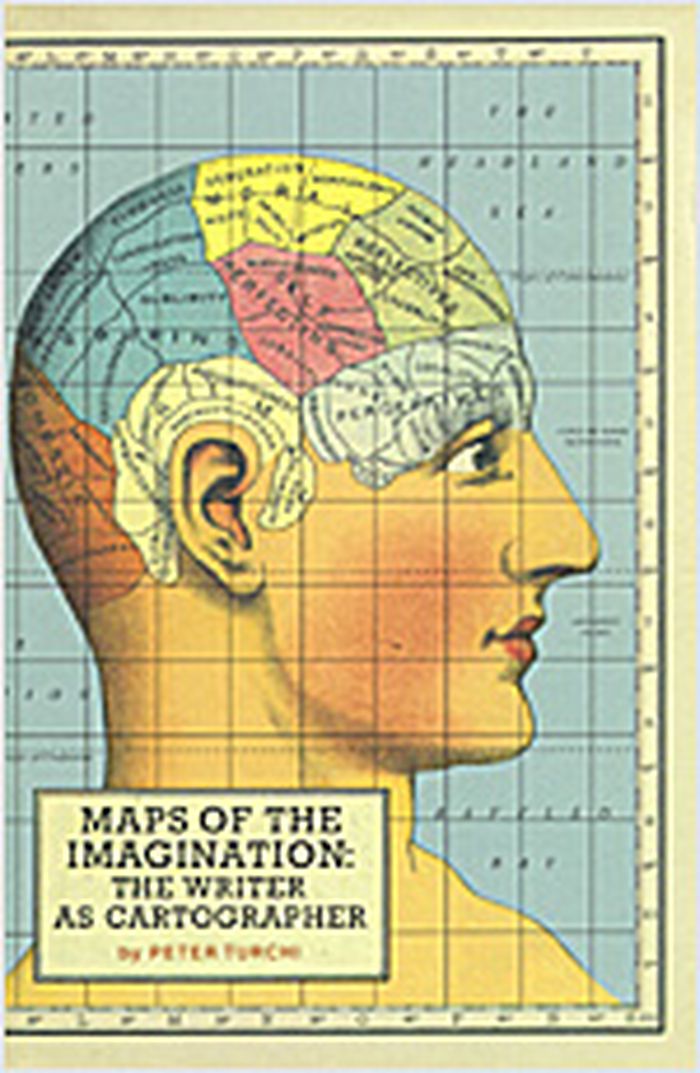
"Maps of the imagination" takes us on a magic carpet ride over terrain both familiar and exotic. Using the map as metaphor, Peter Turchi considers writing as a combination of exploration and presentation. He compares the way a writer leads a reader through the imaginary world of a story, novel, or poem to the way a mapmaker charts the physical world. "To ask for a map," says Turchi, "is to say, 'Tell me a story.' " The author looks at how mapmakers and writers deal with blank space and the blank page; the conventions they use (both the ones readers recognize and those that often go unnoticed) or consciously disregard; the role of geometry in maps and the parallel role of form in writing; how both maps and writing serve to re-create an individual's view of the world; and the artist's delicate balance of intuition with intention. The ancient Greeks, German globe makers, and British cartographers join forces with the Marx Brothers, NASA, and Roadrunner cartoons to shed light on the strategies of writers as diverse as Sappho, Ernest Hemingway, Virginia Woolf, Vladimir Nabokov, Italo Calvino, Don DeLillo, and Heather McHugh. A combination of history, critical cartography, personal essay, and practical guide to writing, "Maps of the imagination" is a book for writers, for readers, and for anyone interested in creativity.
Maps of the imagination : the writer as cartographer
Actions:
Prix:
$37.50
(disponible sur commande)
Résumé:
"Maps of the imagination" takes us on a magic carpet ride over terrain both familiar and exotic. Using the map as metaphor, Peter Turchi considers writing as a combination of exploration and presentation. He compares the way a writer leads a reader through the imaginary world of a story, novel, or poem to the way a mapmaker charts the physical world. "To ask for a map," says Turchi, "is to say, 'Tell me a story.' " The author looks at how mapmakers and writers deal with blank space and the blank page; the conventions they use (both the ones readers recognize and those that often go unnoticed) or consciously disregard; the role of geometry in maps and the parallel role of form in writing; how both maps and writing serve to re-create an individual's view of the world; and the artist's delicate balance of intuition with intention. The ancient Greeks, German globe makers, and British cartographers join forces with the Marx Brothers, NASA, and Roadrunner cartoons to shed light on the strategies of writers as diverse as Sappho, Ernest Hemingway, Virginia Woolf, Vladimir Nabokov, Italo Calvino, Don DeLillo, and Heather McHugh. A combination of history, critical cartography, personal essay, and practical guide to writing, "Maps of the imagination" is a book for writers, for readers, and for anyone interested in creativity.
Classification:
livres
livres
Publication:
octobre 2004, San Antonio
octobre 2004, San Antonio
Sujet:
Architecture et l'imaginaire
Architecture et l'imaginaire
Classification:
livres
livres
Actions:
Prix:
$26.00
(disponible sur commande)
Résumé:
"Bodyline" is a visual essay on the human body, approaches its subject in a spirit both playful and seriously experimental. Organised by themes in turn figurative and abstract, organic, and mechanical, immaterial, "Bodyline" contains not one predictable image of the body. Instead it uses diffracted views to conjure seven alternative visions of the flesh in the age of(...)
$26.00
(disponible sur commande)
Résumé:
"Bodyline" is a visual essay on the human body, approaches its subject in a spirit both playful and seriously experimental. Organised by themes in turn figurative and abstract, organic, and mechanical, immaterial, "Bodyline" contains not one predictable image of the body. Instead it uses diffracted views to conjure seven alternative visions of the flesh in the age of(...)
Sujet:
Théorie de l’architecture
Théorie de l’architecture
Publication:
janvier 1900, London
janvier 1900, London
Titre:
Bodyline : the end of our meta-mechanical body
Actions:
Prix:
$26.00
(disponible sur commande)
Résumé:
"Bodyline" is a visual essay on the human body, approaches its subject in a spirit both playful and seriously experimental. Organised by themes in turn figurative and abstract, organic, and mechanical, immaterial, "Bodyline" contains not one predictable image of the body. Instead it uses diffracted views to conjure seven alternative visions of the flesh in the age of meta-mechanical reproduction, reconstructing the human physique by means of synthetic images, clothing patterns and technical blueprints. As such, "Bodyline" is a much about perception and delineation as it is about the body. The book is devided into three chapters loosely based on Robert Hughe's "Nothing if not critical". Here, through, the original categories are reversed : "Ancestors" explores the latest paradigms of virtual bodies, the computer-generated meshes of the gaming industry, which are also figurative; "Moderns", which constitutes the book's central exploration, features twentieth-century micro-narratives of pattern and garnment in which the body is already all but unrecognisable; and "Contemporaries" celebrates the reflections of self-portraiture through the projective network of Mongean geometry. The seven images of the body contained in this book - "Ectopic birth" (Nazila Maghzian), "How tall am I?" (Sharon Givony), "Vital points" (Eiichi Matsuda), "Inside out" (Kun-Min Kim), "Growth and decay" (Lawrence Ler), "Tiny deaths" (Carolin Hinne) and "10 years after" (Ema Bonifacio) - are accompagned by concise, literary texts.
Bodyline : the end of our meta-mechanical body
Actions:
Prix:
$26.00
(disponible sur commande)
Résumé:
"Bodyline" is a visual essay on the human body, approaches its subject in a spirit both playful and seriously experimental. Organised by themes in turn figurative and abstract, organic, and mechanical, immaterial, "Bodyline" contains not one predictable image of the body. Instead it uses diffracted views to conjure seven alternative visions of the flesh in the age of meta-mechanical reproduction, reconstructing the human physique by means of synthetic images, clothing patterns and technical blueprints. As such, "Bodyline" is a much about perception and delineation as it is about the body. The book is devided into three chapters loosely based on Robert Hughe's "Nothing if not critical". Here, through, the original categories are reversed : "Ancestors" explores the latest paradigms of virtual bodies, the computer-generated meshes of the gaming industry, which are also figurative; "Moderns", which constitutes the book's central exploration, features twentieth-century micro-narratives of pattern and garnment in which the body is already all but unrecognisable; and "Contemporaries" celebrates the reflections of self-portraiture through the projective network of Mongean geometry. The seven images of the body contained in this book - "Ectopic birth" (Nazila Maghzian), "How tall am I?" (Sharon Givony), "Vital points" (Eiichi Matsuda), "Inside out" (Kun-Min Kim), "Growth and decay" (Lawrence Ler), "Tiny deaths" (Carolin Hinne) and "10 years after" (Ema Bonifacio) - are accompagned by concise, literary texts.
Classification:
livres
livres
Publication:
janvier 1900, London
janvier 1900, London
Sujet:
Théorie de l’architecture
Théorie de l’architecture
Classification:
livres
livres
Actions:
Prix:
$22.50
(disponible en magasin)
Résumé:
A revelatory conversation between two major figures in visual culture. What is a singular object? An idea, a building, a color, a sentiment, a human being. Each in turn comes under scrutiny in this exhilarating dialogue between two of the most interesting thinkers working in philosophy and architecture today. From such singular objects, Jean Baudrillard and Jean Nouvel(...)
$22.50
(disponible en magasin)
Résumé:
A revelatory conversation between two major figures in visual culture. What is a singular object? An idea, a building, a color, a sentiment, a human being. Each in turn comes under scrutiny in this exhilarating dialogue between two of the most interesting thinkers working in philosophy and architecture today. From such singular objects, Jean Baudrillard and Jean Nouvel(...)
Sujet:
Théorie de l’architecture
Théorie de l’architecture
Publication:
octobre 2005, Minneapolis, London
octobre 2005, Minneapolis, London
Titre:
Jean Baudrillard and Jean Nouvel : the singular objects of architecture
Actions:
Prix:
$22.50
(disponible en magasin)
Résumé:
A revelatory conversation between two major figures in visual culture. What is a singular object? An idea, a building, a color, a sentiment, a human being. Each in turn comes under scrutiny in this exhilarating dialogue between two of the most interesting thinkers working in philosophy and architecture today. From such singular objects, Jean Baudrillard and Jean Nouvel move on to fundamental problems of politics, identity, and aesthetics as their exchange becomes an imaginative exploration of the possibilities of modern architecture and the future of modern life. Among the topics the two speakers take up are the city of tomorrow and the ideal of transparency, the gentrification of New York City and Frank Gehry's Guggenheim museum in Bilbao. As Nouvel prompts Baudrillard to reflect on some of his signature concepts (the virtual, transparency, fatal strategies, oblivion, and seduction, among others), the confrontation between such philosophical concerns and the specificity of architecture gives rise to novel and striking formulations-and a new way of establishing and understanding the connections between the practitioner and the philosopher, the object and the idea. This wide-ranging conversation builds a bridge between the fields of architecture and philosophy. At the same time it offers readers an intimate view of the meeting of objects and ideas in which the imagined, constructed, and inhabited environment is endlessly changing, forever evolving.
Jean Baudrillard and Jean Nouvel : the singular objects of architecture
Actions:
Prix:
$22.50
(disponible en magasin)
Résumé:
A revelatory conversation between two major figures in visual culture. What is a singular object? An idea, a building, a color, a sentiment, a human being. Each in turn comes under scrutiny in this exhilarating dialogue between two of the most interesting thinkers working in philosophy and architecture today. From such singular objects, Jean Baudrillard and Jean Nouvel move on to fundamental problems of politics, identity, and aesthetics as their exchange becomes an imaginative exploration of the possibilities of modern architecture and the future of modern life. Among the topics the two speakers take up are the city of tomorrow and the ideal of transparency, the gentrification of New York City and Frank Gehry's Guggenheim museum in Bilbao. As Nouvel prompts Baudrillard to reflect on some of his signature concepts (the virtual, transparency, fatal strategies, oblivion, and seduction, among others), the confrontation between such philosophical concerns and the specificity of architecture gives rise to novel and striking formulations-and a new way of establishing and understanding the connections between the practitioner and the philosopher, the object and the idea. This wide-ranging conversation builds a bridge between the fields of architecture and philosophy. At the same time it offers readers an intimate view of the meeting of objects and ideas in which the imagined, constructed, and inhabited environment is endlessly changing, forever evolving.
Classification:
livres
livres
Publication:
octobre 2005, Minneapolis, London
octobre 2005, Minneapolis, London
Sujet:
Théorie de l’architecture
Théorie de l’architecture
Classification:
livres
livres
Actions:
Prix:
$31.00
(disponible sur commande)
Résumé:
As with the compass needle, so people have always been most powerfully attracted northwards; everyone carries within them their own concept of north. The Idea of North is a study, ranging widely in time and place, of some of the ways in which these ideas have found expression. Peter Davidson explores the topography of north as represented in images and literature, taking(...)
$31.00
(disponible sur commande)
Résumé:
As with the compass needle, so people have always been most powerfully attracted northwards; everyone carries within them their own concept of north. The Idea of North is a study, ranging widely in time and place, of some of the ways in which these ideas have found expression. Peter Davidson explores the topography of north as represented in images and literature, taking(...)
Titre:
The idea of north, 2nd edition
Actions:
Prix:
$31.00
(disponible sur commande)
Résumé:
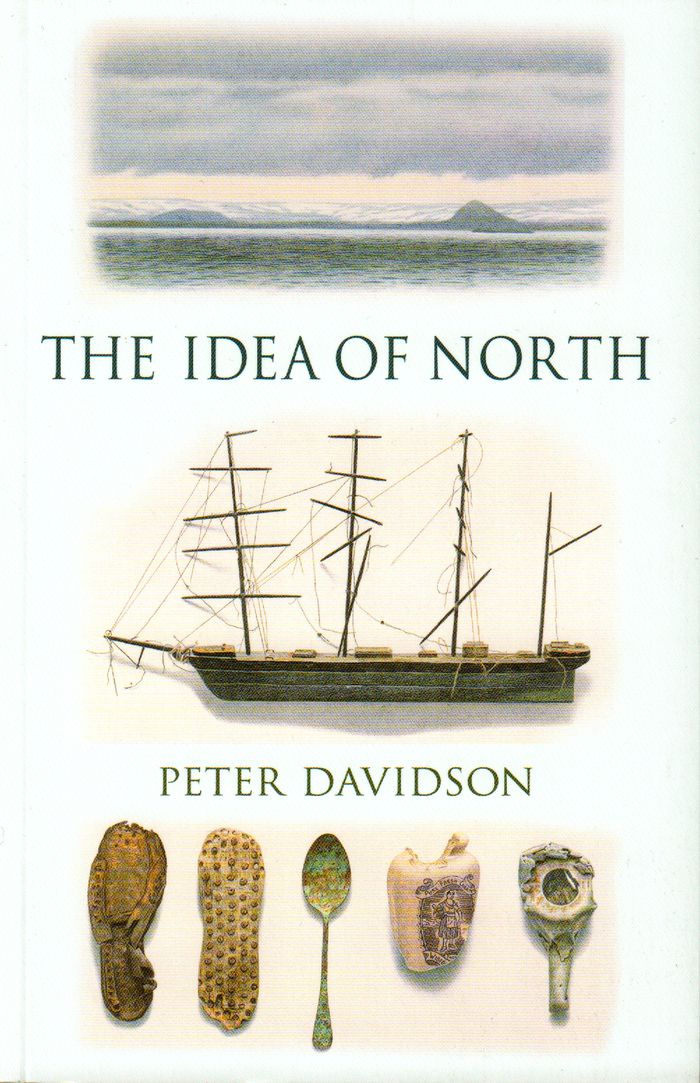
As with the compass needle, so people have always been most powerfully attracted northwards; everyone carries within them their own concept of north. The Idea of North is a study, ranging widely in time and place, of some of the ways in which these ideas have found expression. Peter Davidson explores the topography of north as represented in images and literature, taking in Netherlandic winter paintings of the Renaissance, German Romantic landscapes, Scandinavian Biedermeyer and twentieth-century topographical painting and printmaking. He examines a bewildering diversity of mythologies and imaginings of north, including The Snow Queen; Scandinavian Sagas; ghost-stories; Moomintrolls, Arctic exploration; the fictitious snowy kingdoms of Zembla and Naboland; Nabokov's nostalgias; Baltic midsummer; rooms in winter light; compasses and star-stones; hoar-frost; ice; and glass. The book also traces a northward journey, describing northern rural England, industrial sites, and the long emptiness of the borders, Scotland and the Highlands. He looks at the region far north of Scotland, then moves to the Northern Netherlands and Scandinavia to explore their identifiable northernness.The last visited place is Iceland, identified by W. H. Auden and Louis McNeice in 1936 as 'furthest, most remote, most distant, most northerly'. An engaging meditation on solitude, absence and stillness, The Idea of North shows north to be a goal rather than a destination, a place of revelation that is always somewhere ultimate and austere.
The idea of north, 2nd edition
Actions:
Prix:
$31.00
(disponible sur commande)
Résumé:
As with the compass needle, so people have always been most powerfully attracted northwards; everyone carries within them their own concept of north. The Idea of North is a study, ranging widely in time and place, of some of the ways in which these ideas have found expression. Peter Davidson explores the topography of north as represented in images and literature, taking in Netherlandic winter paintings of the Renaissance, German Romantic landscapes, Scandinavian Biedermeyer and twentieth-century topographical painting and printmaking. He examines a bewildering diversity of mythologies and imaginings of north, including The Snow Queen; Scandinavian Sagas; ghost-stories; Moomintrolls, Arctic exploration; the fictitious snowy kingdoms of Zembla and Naboland; Nabokov's nostalgias; Baltic midsummer; rooms in winter light; compasses and star-stones; hoar-frost; ice; and glass. The book also traces a northward journey, describing northern rural England, industrial sites, and the long emptiness of the borders, Scotland and the Highlands. He looks at the region far north of Scotland, then moves to the Northern Netherlands and Scandinavia to explore their identifiable northernness.The last visited place is Iceland, identified by W. H. Auden and Louis McNeice in 1936 as 'furthest, most remote, most distant, most northerly'. An engaging meditation on solitude, absence and stillness, The Idea of North shows north to be a goal rather than a destination, a place of revelation that is always somewhere ultimate and austere.
Classification:
livres
livres
Publication:
juin 2016
juin 2016
Sujet:
Théorie de l’architecture
Théorie de l’architecture
Classification:
livres
livres
Prix:
$51.00
(disponible sur commande)
Résumé:
Between 1998 and 2005, the Structural Engineers Association of New York, along with the Museum of Modern Art's Department of Architecture and Design and the School of Architecture at both Princeton University and MIT, co-sponsored a lecture series in honor of the renowned Spanish and Mexican structural engineer Felix Candela, who led the early exploration of concrete(...)
$51.00
(disponible sur commande)
Résumé:
Between 1998 and 2005, the Structural Engineers Association of New York, along with the Museum of Modern Art's Department of Architecture and Design and the School of Architecture at both Princeton University and MIT, co-sponsored a lecture series in honor of the renowned Spanish and Mexican structural engineer Felix Candela, who led the early exploration of concrete(...)
Titre:
Seven structural engineers: the Felix Candela lectures
Actions:
Prix:
$51.00
(disponible sur commande)
Résumé:
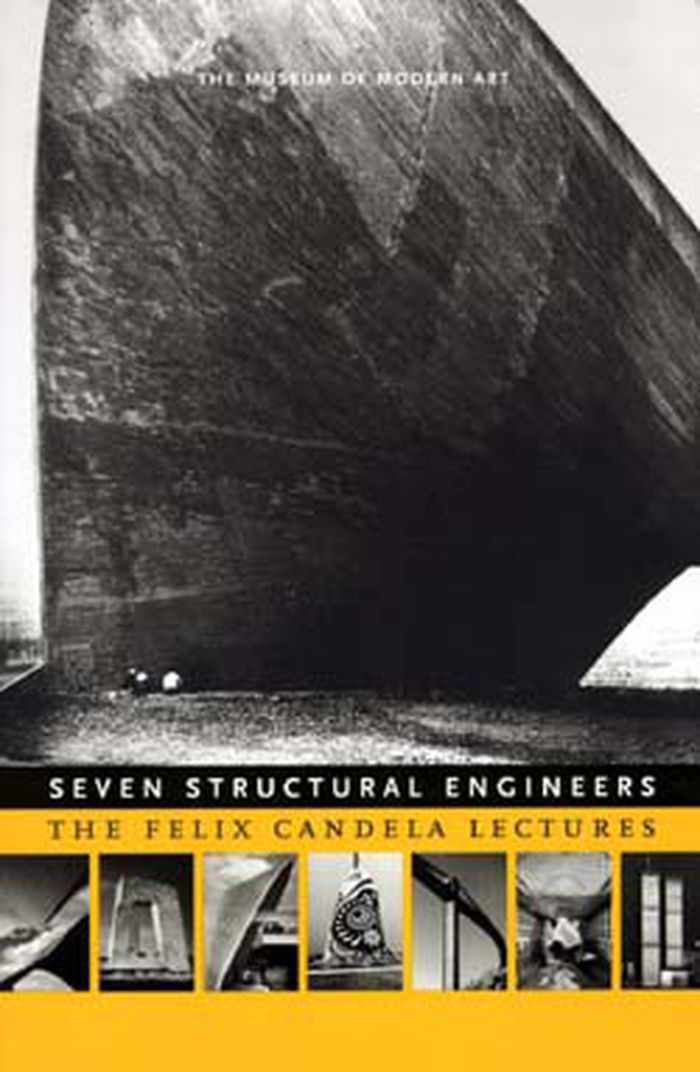
Between 1998 and 2005, the Structural Engineers Association of New York, along with the Museum of Modern Art's Department of Architecture and Design and the School of Architecture at both Princeton University and MIT, co-sponsored a lecture series in honor of the renowned Spanish and Mexican structural engineer Felix Candela, who led the early exploration of concrete shell structures. These lectures are now available in the format of this book: discussed is the work of the Uruguayan engineer Eladio Dieste, who pioneered the use of thin, light-filled shell structures in masonry. Cecil Balmond recounts his collaboration with architects Rem Koolhaas and Daniel Libeskind. The Swiss bridge designer Christian Menn discusses his iconic long-span prestressed concrete bridges, including the new Charles River Bridge in Boston. Leslie E. Robertson, who is especially known for his work on the structural design of the World Trade Center complex with Minoru Yamasaki, discusses this design along with many other projects. Mamoru Kawaguchi recounts his own work in fabric structures and his collaboration with architects Kenzo Tange and Arata Isozaki. Joerg Schlaich talks about his creative collaboration with Frank Gehry. Heinz Isler's contribution is in the aerea of freeform concrete shell constructions. David Billington and Maria Garlock recount the work of master builders Anton Tedesko, Pier Luigi Nervi, Felix Candela, and Heinz Isler.
Seven structural engineers: the Felix Candela lectures
Actions:
Prix:
$51.00
(disponible sur commande)
Résumé:
Between 1998 and 2005, the Structural Engineers Association of New York, along with the Museum of Modern Art's Department of Architecture and Design and the School of Architecture at both Princeton University and MIT, co-sponsored a lecture series in honor of the renowned Spanish and Mexican structural engineer Felix Candela, who led the early exploration of concrete shell structures. These lectures are now available in the format of this book: discussed is the work of the Uruguayan engineer Eladio Dieste, who pioneered the use of thin, light-filled shell structures in masonry. Cecil Balmond recounts his collaboration with architects Rem Koolhaas and Daniel Libeskind. The Swiss bridge designer Christian Menn discusses his iconic long-span prestressed concrete bridges, including the new Charles River Bridge in Boston. Leslie E. Robertson, who is especially known for his work on the structural design of the World Trade Center complex with Minoru Yamasaki, discusses this design along with many other projects. Mamoru Kawaguchi recounts his own work in fabric structures and his collaboration with architects Kenzo Tange and Arata Isozaki. Joerg Schlaich talks about his creative collaboration with Frank Gehry. Heinz Isler's contribution is in the aerea of freeform concrete shell constructions. David Billington and Maria Garlock recount the work of master builders Anton Tedesko, Pier Luigi Nervi, Felix Candela, and Heinz Isler.
Classification:
livres
livres
Publication:
mai 2006, New York
mai 2006, New York
Sujet:
Structures d’ingénierie
Structures d’ingénierie


