


2059 Résultats
Classification:
livres
livres
Actions:
Prix:
$18.95
(disponible sur commande)
Résumé:
Artifacts (including works of architecture) play dual roles; they simultaneously perform functions and carry meaning. Columns support roofs, but while the sturdy Tuscan and Doric types traditionally signify masculinity, the slim and elegant Ionic and Corinthian kinds read as feminine. Words are often inscribed on objects. (On a door: "push" or "pull.") Today, information(...)
$18.95
(disponible sur commande)
Résumé:
Artifacts (including works of architecture) play dual roles; they simultaneously perform functions and carry meaning. Columns support roofs, but while the sturdy Tuscan and Doric types traditionally signify masculinity, the slim and elegant Ionic and Corinthian kinds read as feminine. Words are often inscribed on objects. (On a door: "push" or "pull.") Today, information(...)
Titre:
World's greatest architect: making, meaning, and network culture: 0
Actions:
Prix:
$18.95
(disponible sur commande)
Résumé:
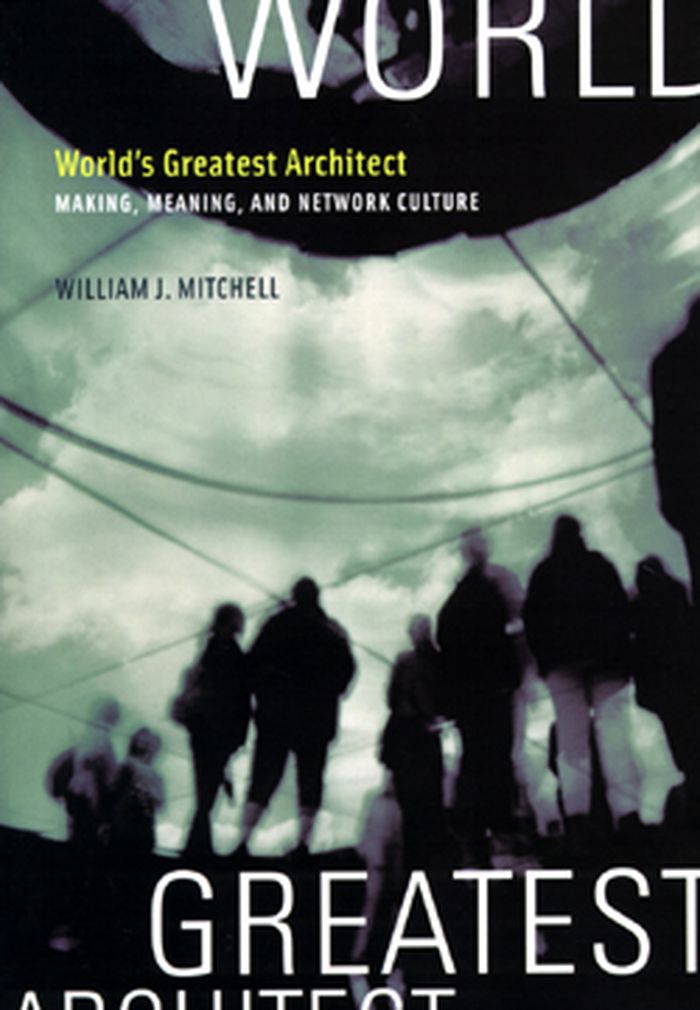
Artifacts (including works of architecture) play dual roles; they simultaneously perform functions and carry meaning. Columns support roofs, but while the sturdy Tuscan and Doric types traditionally signify masculinity, the slim and elegant Ionic and Corinthian kinds read as feminine. Words are often inscribed on objects. (On a door: "push" or "pull.") Today, information is digitally encoded (dematerialized) and displayed (rematerialized) to become part of many different objects, at one moment appearing on a laptop screen and at another, perhaps, on a building facade (as in Times Square). Well-designed artifacts succeed in being both useful and meaningful. In "World's Greatest Architect", William Mitchell offers a series of snapshots - short essays and analyses - that examine the systems of function and meaning currently operating in our buildings, cities, and global networks.In his writing, Mitchell makes connections that aren't necessarily obvious but are always illuminating, moving in one essay from Bush-Cheney's abuse of language to Robert Venturi's argument against rigid ideology and in favor of graceful pragmatism. He traces the evolution of Las Vegas from Sin/Sign City to family-friendly resort and residential real estate boomtown. A purchase of chips leads not only to a complementary purchase of beer but to thoughts of Eames chairs (like Pringles) and Gehry (fun to imitate with tortilla chips in refried beans). As for who the world's greatest architect might be, here's a hint: he's also the oldest.
World's greatest architect: making, meaning, and network culture: 0
Actions:
Prix:
$18.95
(disponible sur commande)
Résumé:
Artifacts (including works of architecture) play dual roles; they simultaneously perform functions and carry meaning. Columns support roofs, but while the sturdy Tuscan and Doric types traditionally signify masculinity, the slim and elegant Ionic and Corinthian kinds read as feminine. Words are often inscribed on objects. (On a door: "push" or "pull.") Today, information is digitally encoded (dematerialized) and displayed (rematerialized) to become part of many different objects, at one moment appearing on a laptop screen and at another, perhaps, on a building facade (as in Times Square). Well-designed artifacts succeed in being both useful and meaningful. In "World's Greatest Architect", William Mitchell offers a series of snapshots - short essays and analyses - that examine the systems of function and meaning currently operating in our buildings, cities, and global networks.In his writing, Mitchell makes connections that aren't necessarily obvious but are always illuminating, moving in one essay from Bush-Cheney's abuse of language to Robert Venturi's argument against rigid ideology and in favor of graceful pragmatism. He traces the evolution of Las Vegas from Sin/Sign City to family-friendly resort and residential real estate boomtown. A purchase of chips leads not only to a complementary purchase of beer but to thoughts of Eames chairs (like Pringles) and Gehry (fun to imitate with tortilla chips in refried beans). As for who the world's greatest architect might be, here's a hint: he's also the oldest.
Classification:
livres
livres
Publication:
septembre 2008, Boston
septembre 2008, Boston
Sujet:
Théorie de l’architecture
Théorie de l’architecture
Classification:
livres
livres
Actions:
Prix:
$50.00
(disponible sur commande)
Résumé:
With "Edens lost & found", filmmakers Harry Wiland and Dale Bell herald a sea change in the relationship between ordinary citizens, environmental groups, and government. From across America they gather evidence of a new spirit of cooperation among neighbors, planners, architects and builders, city officials, and government agencies. Indeed, as urban issues have become(...)
$50.00
(disponible sur commande)
Résumé:
With "Edens lost & found", filmmakers Harry Wiland and Dale Bell herald a sea change in the relationship between ordinary citizens, environmental groups, and government. From across America they gather evidence of a new spirit of cooperation among neighbors, planners, architects and builders, city officials, and government agencies. Indeed, as urban issues have become(...)
Sujet:
Paysages urbains
Paysages urbains
Publication:
mai 2006, White River Junction
mai 2006, White River Junction
Titre:
Edens lost and found : how ordinary citizens are restoring our great American cities
Actions:
Prix:
$50.00
(disponible sur commande)
Résumé:
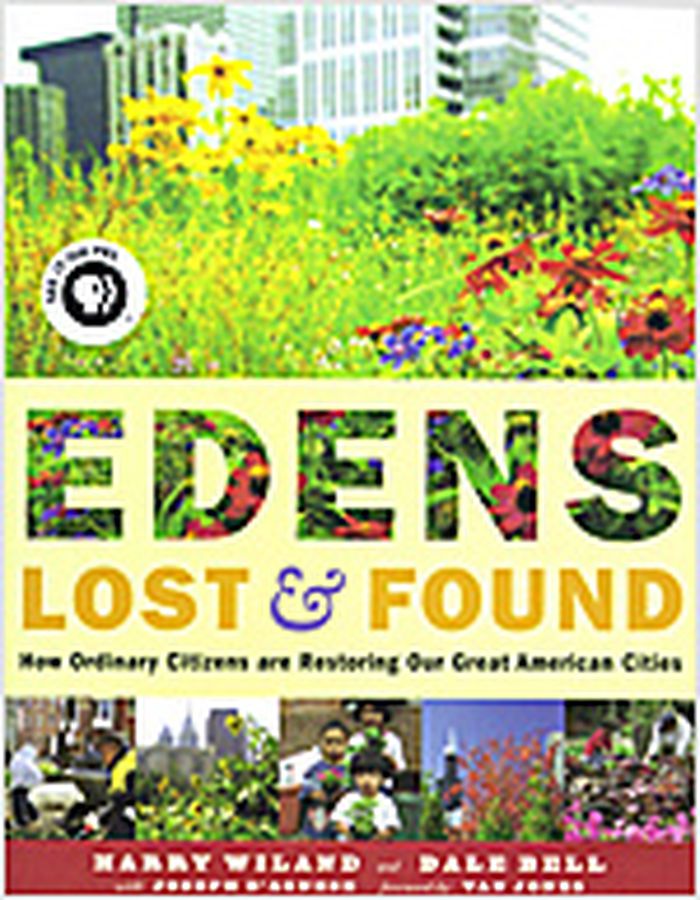
With "Edens lost & found", filmmakers Harry Wiland and Dale Bell herald a sea change in the relationship between ordinary citizens, environmental groups, and government. From across America they gather evidence of a new spirit of cooperation among neighbors, planners, architects and builders, city officials, and government agencies. Indeed, as urban issues have become undeniably urgent problems that demand answers, people from disparate backgrounds and political leanings are joining forces to recast life in American cities. As citizens take action where government has failed, they are finding support, encouragement, and help from their neighbors. Conversely, as progressive-minded government agencies and organizations explore nontraditional solutions, an energized community rallies to the cause. Neither exclusively top-down, nor grass roots, we are in the midst of an unprecedented movement that unites efforts from every quarter in a common cause. Focusing on Chicago, Los Angeles, Philadelphia, and Seattle-four cities that face vastly different challenges-"Edens lost & found" highlights the remarkable power of hope, pride, ingenuity, and chutzpah that characterize this era of collaboration. Bioengineering concepts-now increasingly understood by many to offer the most effective, cost-efficient solutions-are playing a central role. Working with-rather than in opposition to-nature is leading to such innovations as rooftop and urban gardens, restored parks, transformed vacant lots, the re-greening of city streets, and eco-friendly watershed management. Edens Lost & Found shows how working to reshape the land also transforms the relationships people have to one another.
Edens lost and found : how ordinary citizens are restoring our great American cities
Actions:
Prix:
$50.00
(disponible sur commande)
Résumé:
With "Edens lost & found", filmmakers Harry Wiland and Dale Bell herald a sea change in the relationship between ordinary citizens, environmental groups, and government. From across America they gather evidence of a new spirit of cooperation among neighbors, planners, architects and builders, city officials, and government agencies. Indeed, as urban issues have become undeniably urgent problems that demand answers, people from disparate backgrounds and political leanings are joining forces to recast life in American cities. As citizens take action where government has failed, they are finding support, encouragement, and help from their neighbors. Conversely, as progressive-minded government agencies and organizations explore nontraditional solutions, an energized community rallies to the cause. Neither exclusively top-down, nor grass roots, we are in the midst of an unprecedented movement that unites efforts from every quarter in a common cause. Focusing on Chicago, Los Angeles, Philadelphia, and Seattle-four cities that face vastly different challenges-"Edens lost & found" highlights the remarkable power of hope, pride, ingenuity, and chutzpah that characterize this era of collaboration. Bioengineering concepts-now increasingly understood by many to offer the most effective, cost-efficient solutions-are playing a central role. Working with-rather than in opposition to-nature is leading to such innovations as rooftop and urban gardens, restored parks, transformed vacant lots, the re-greening of city streets, and eco-friendly watershed management. Edens Lost & Found shows how working to reshape the land also transforms the relationships people have to one another.
Classification:
livres
livres
Publication:
mai 2006, White River Junction
mai 2006, White River Junction
Sujet:
Paysages urbains
Paysages urbains
Classification:
livres
livres
Titre:
Black landscapes matter
Black landscapes matter
Actions:
Prix:
$47.95
(disponible sur commande)
Résumé:
The question "Do black landscapes matter?" cuts deep to the core of American history. From the plantations of slavery to contemporary segregated cities, from freedman villages to northern migrations for freedom, the nation’s landscape bears the detritus of diverse origins. Black landscapes matter because they tell the truth. In this vital new collection, acclaimed(...)
$47.95
(disponible sur commande)
Résumé:
The question "Do black landscapes matter?" cuts deep to the core of American history. From the plantations of slavery to contemporary segregated cities, from freedman villages to northern migrations for freedom, the nation’s landscape bears the detritus of diverse origins. Black landscapes matter because they tell the truth. In this vital new collection, acclaimed(...)
Titre:
Black landscapes matter
Actions:
Prix:
$47.95
(disponible sur commande)
Résumé:
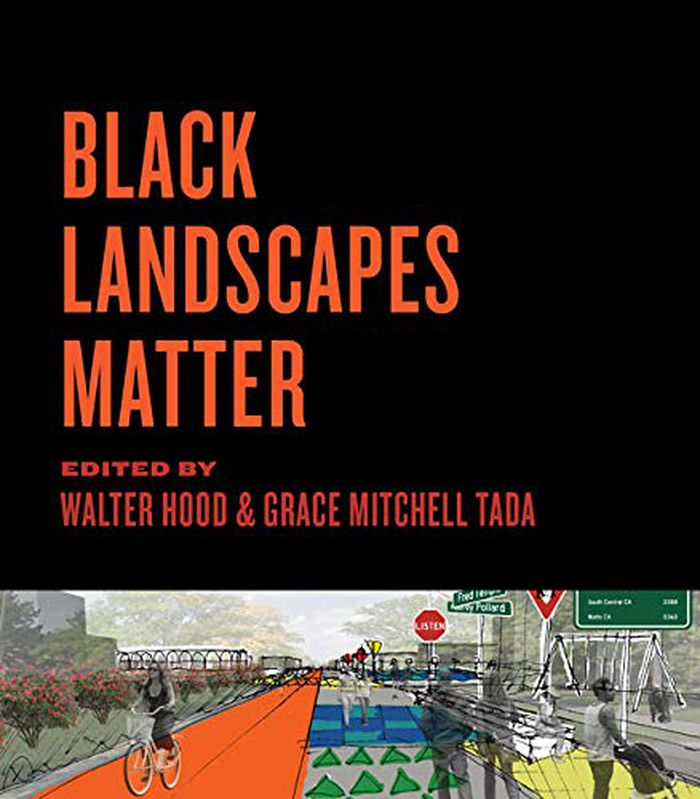
The question "Do black landscapes matter?" cuts deep to the core of American history. From the plantations of slavery to contemporary segregated cities, from freedman villages to northern migrations for freedom, the nation’s landscape bears the detritus of diverse origins. Black landscapes matter because they tell the truth. In this vital new collection, acclaimed landscape designer and public artist Walter Hood assembles a group of notable landscape architecture and planning professionals and scholars to probe how race, memory, and meaning intersect in the American landscape. Essayists examine a variety of U.S. places— ranging from New Orleans and Charlotte to Milwaukee and Detroit— exposing racism endemic in the built environment and acknowledging the widespread erasure of black geographies and cultural landscapes. Through a combination of case studies, critiques, and calls to action, contributors reveal the deficient, normative portrayals of landscape that affect communities of color and question how public design and preservation efforts can support people in these places. In a culture in which historical omissions and specious narratives routinely provoke disinvestment in minority communities, creative solutions by designers, planners, artists, and residents are necessary to activate them in novel ways. Black people have built and shaped the American landscape in ways that can never be fully known. ''Black landscapes matter'' is a timely and necessary reminder that without recognizing and reconciling these histories and spaces, America’s past and future cannot be understood.
Black landscapes matter
Actions:
Prix:
$47.95
(disponible sur commande)
Résumé:
The question "Do black landscapes matter?" cuts deep to the core of American history. From the plantations of slavery to contemporary segregated cities, from freedman villages to northern migrations for freedom, the nation’s landscape bears the detritus of diverse origins. Black landscapes matter because they tell the truth. In this vital new collection, acclaimed landscape designer and public artist Walter Hood assembles a group of notable landscape architecture and planning professionals and scholars to probe how race, memory, and meaning intersect in the American landscape. Essayists examine a variety of U.S. places— ranging from New Orleans and Charlotte to Milwaukee and Detroit— exposing racism endemic in the built environment and acknowledging the widespread erasure of black geographies and cultural landscapes. Through a combination of case studies, critiques, and calls to action, contributors reveal the deficient, normative portrayals of landscape that affect communities of color and question how public design and preservation efforts can support people in these places. In a culture in which historical omissions and specious narratives routinely provoke disinvestment in minority communities, creative solutions by designers, planners, artists, and residents are necessary to activate them in novel ways. Black people have built and shaped the American landscape in ways that can never be fully known. ''Black landscapes matter'' is a timely and necessary reminder that without recognizing and reconciling these histories and spaces, America’s past and future cannot be understood.
Classification:
livres
livres
Publication:
novembre 2020
novembre 2020
Sujet:
Théorie du paysage
Théorie du paysage
Classification:
livres
livres
Titre:
Habiter autrement
Habiter autrement
Actions:
Prix:
$54.95
(disponible sur commande)
Résumé:
« Habiter autrement » propose d'explorer d'autres façons d'habiter, plus ouvertes, plus libres, plus permissives. Plus ou moins radicales, ces maisons, ou plutôt devrait-on dire ces lieux de vie, recourent à l'architecture pour habiter autrement. Ces réalisations ont choisi de sortir des organisations et morphologies traditionnelles mais aussi des pièces classiques pour(...)
$54.95
(disponible sur commande)
Résumé:
« Habiter autrement » propose d'explorer d'autres façons d'habiter, plus ouvertes, plus libres, plus permissives. Plus ou moins radicales, ces maisons, ou plutôt devrait-on dire ces lieux de vie, recourent à l'architecture pour habiter autrement. Ces réalisations ont choisi de sortir des organisations et morphologies traditionnelles mais aussi des pièces classiques pour(...)
Titre:
Habiter autrement
Actions:
Prix:
$54.95
(disponible sur commande)
Résumé:
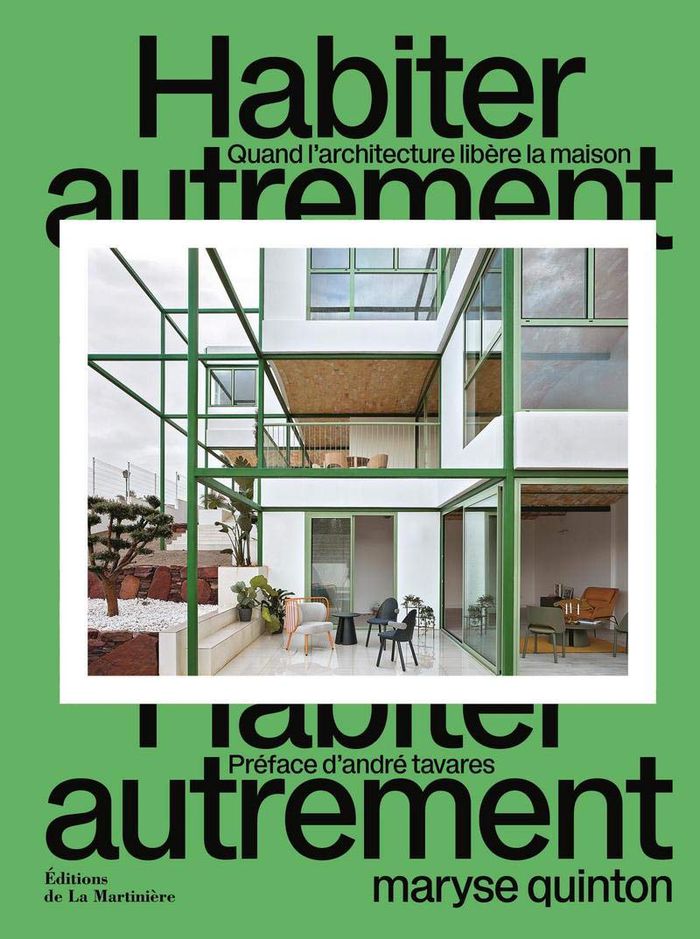
« Habiter autrement » propose d'explorer d'autres façons d'habiter, plus ouvertes, plus libres, plus permissives. Plus ou moins radicales, ces maisons, ou plutôt devrait-on dire ces lieux de vie, recourent à l'architecture pour habiter autrement. Ces réalisations ont choisi de sortir des organisations et morphologies traditionnelles mais aussi des pièces classiques pour laisser place à l'indétermination. Cet acte de réinventer l'habitat passe par l'architecture et l'expérimentation pour concevoir des modèles moins formatés. Des espaces non attribués, mixant les usages, ouverts à l'imagination. La possibilité de multiplier les fonctions dans un même lieu. Comment l'architecture peut-elle être le support de la vie, sans en restreindre la liberté ? Voilà la question posée par les architectes qui s'aventurent hors des sentiers battus. D'une petite maison à faible budget à une luxueuse villa : tous les cas de figure peuvent se prêter au jeu, pourvu qu'il y ait la volonté de sortir des schémas de pensée classiques. Le livre présente une vingtaine de maisons dans le monde en racontant leur histoire. Car le point de départ est bien souvent une rencontre entre des clients désireux de changer de paradigme et des architectes engagés dans l'expérimentation. Des maisons-outils qui prennent vie et sens avec leurs usagers. Il donne la parole aux architectes, aux usagers, des regards croisés et nourris par une approche également sociologique pour comprendre ces nouveaux modes de vie qui font écho à notre époque.
Habiter autrement
Actions:
Prix:
$54.95
(disponible sur commande)
Résumé:
« Habiter autrement » propose d'explorer d'autres façons d'habiter, plus ouvertes, plus libres, plus permissives. Plus ou moins radicales, ces maisons, ou plutôt devrait-on dire ces lieux de vie, recourent à l'architecture pour habiter autrement. Ces réalisations ont choisi de sortir des organisations et morphologies traditionnelles mais aussi des pièces classiques pour laisser place à l'indétermination. Cet acte de réinventer l'habitat passe par l'architecture et l'expérimentation pour concevoir des modèles moins formatés. Des espaces non attribués, mixant les usages, ouverts à l'imagination. La possibilité de multiplier les fonctions dans un même lieu. Comment l'architecture peut-elle être le support de la vie, sans en restreindre la liberté ? Voilà la question posée par les architectes qui s'aventurent hors des sentiers battus. D'une petite maison à faible budget à une luxueuse villa : tous les cas de figure peuvent se prêter au jeu, pourvu qu'il y ait la volonté de sortir des schémas de pensée classiques. Le livre présente une vingtaine de maisons dans le monde en racontant leur histoire. Car le point de départ est bien souvent une rencontre entre des clients désireux de changer de paradigme et des architectes engagés dans l'expérimentation. Des maisons-outils qui prennent vie et sens avec leurs usagers. Il donne la parole aux architectes, aux usagers, des regards croisés et nourris par une approche également sociologique pour comprendre ces nouveaux modes de vie qui font écho à notre époque.
Classification:
livres
livres
Publication:
avril 2021
avril 2021
Sujet:
Architecture résidentielle
Architecture résidentielle
Classification:
livres
livres

Actions:
Prix:
$44.95
(disponible sur commande)
Résumé:
Based on the popular online photo series and now published in print for the first time, ''The debt project'' collects 99 portraits of debt across the United States, featuring people of all different backgrounds and stories, to recontextualize an often stigmatized experience. In 2013, Brittany Powell made the difficult decision to file for bankruptcy for her photography(...)
$44.95
(disponible sur commande)
Résumé:
Based on the popular online photo series and now published in print for the first time, ''The debt project'' collects 99 portraits of debt across the United States, featuring people of all different backgrounds and stories, to recontextualize an often stigmatized experience. In 2013, Brittany Powell made the difficult decision to file for bankruptcy for her photography(...)
Titre:
The debt project: 99 portraits across America
Actions:
Prix:
$44.95
(disponible sur commande)
Résumé:
Based on the popular online photo series and now published in print for the first time, ''The debt project'' collects 99 portraits of debt across the United States, featuring people of all different backgrounds and stories, to recontextualize an often stigmatized experience. In 2013, Brittany Powell made the difficult decision to file for bankruptcy for her photography business. In the years following the 2008 economic collapse, she found herself in a significant amount of debt, a position many Americans across the country still share, a common yet isolating and private experience often steeped in shame. Her personal experience, bolstered by the We Are the 99% slogan that came out of the Occupy movement, brought her to start The Debt Project, an exploration of the role debt and finance plays in our personal identity and social structure. This book presents an intimate look into 99 different lives: each shares an arrestingly honest portrait in the person’s home, surrounded by all their belongings, accompanied by a handwritten note of the amount of debt that person is in and the story behind the numbers. ''The debt project,'' with a foreword by writer and filmmaker Astra Taylor plus resources at the back of the book to support people in debt, examines the social and personal hold financial debt has on us and invites others into a private world, while at the same empowering people to share their stories and overcome the shame they may feel.
The debt project: 99 portraits across America
Actions:
Prix:
$44.95
(disponible sur commande)
Résumé:
Based on the popular online photo series and now published in print for the first time, ''The debt project'' collects 99 portraits of debt across the United States, featuring people of all different backgrounds and stories, to recontextualize an often stigmatized experience. In 2013, Brittany Powell made the difficult decision to file for bankruptcy for her photography business. In the years following the 2008 economic collapse, she found herself in a significant amount of debt, a position many Americans across the country still share, a common yet isolating and private experience often steeped in shame. Her personal experience, bolstered by the We Are the 99% slogan that came out of the Occupy movement, brought her to start The Debt Project, an exploration of the role debt and finance plays in our personal identity and social structure. This book presents an intimate look into 99 different lives: each shares an arrestingly honest portrait in the person’s home, surrounded by all their belongings, accompanied by a handwritten note of the amount of debt that person is in and the story behind the numbers. ''The debt project,'' with a foreword by writer and filmmaker Astra Taylor plus resources at the back of the book to support people in debt, examines the social and personal hold financial debt has on us and invites others into a private world, while at the same empowering people to share their stories and overcome the shame they may feel.
Classification:
livres
livres
Publication:
octobre 2020
octobre 2020
Sujet:
Monographies photo
Monographies photo
Classification:
livres
livres
Titre:
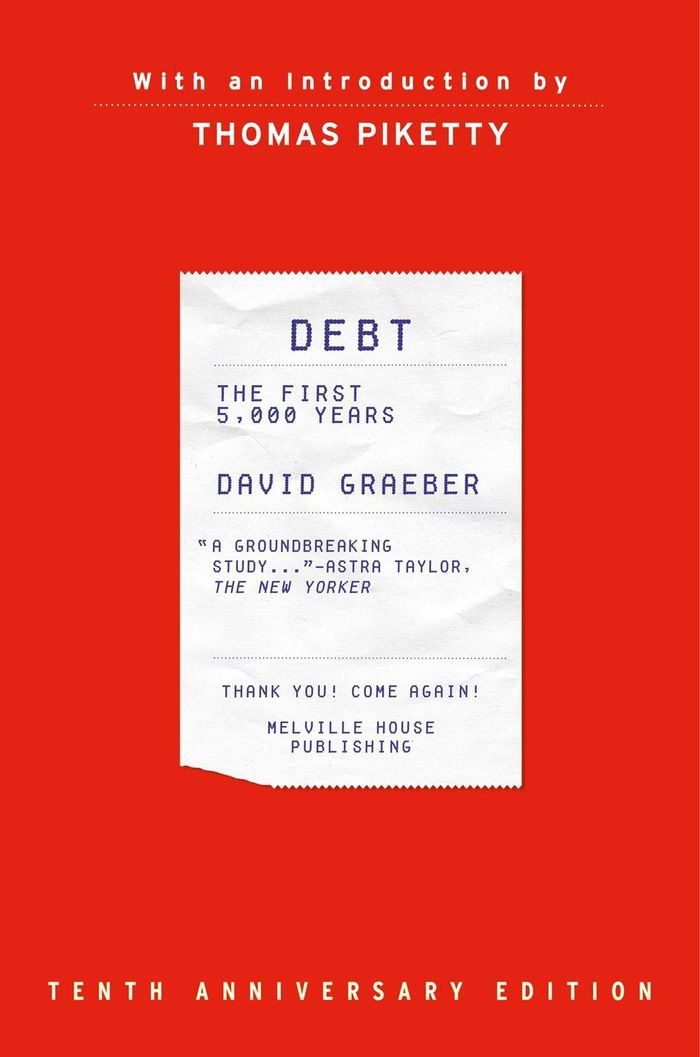
Debt: The first 5,000 years
Debt: The first 5,000 years
Actions:
Prix:
$29.99
(disponible sur commande)
Résumé:
Before there was money, there was debt. Every economics textbook says the same thing: Money was invented to replace onerous and complicated barter systems—to relieve ancient people from having to haul their goods to market. The problem with this version of history? There’s not a shred of evidence to support it. Here anthropologist David Graeber presents a stunning(...)
$29.99
(disponible sur commande)
Résumé:
Before there was money, there was debt. Every economics textbook says the same thing: Money was invented to replace onerous and complicated barter systems—to relieve ancient people from having to haul their goods to market. The problem with this version of history? There’s not a shred of evidence to support it. Here anthropologist David Graeber presents a stunning(...)
Titre:
Debt: The first 5,000 years
Actions:
Prix:
$29.99
(disponible sur commande)
Résumé:
Before there was money, there was debt. Every economics textbook says the same thing: Money was invented to replace onerous and complicated barter systems—to relieve ancient people from having to haul their goods to market. The problem with this version of history? There’s not a shred of evidence to support it. Here anthropologist David Graeber presents a stunning reversal of conventional wisdom. He shows that for more than 5,000 years, since the beginnings of the first agrarian empires, humans have used elaborate credit systems to buy and sell goods—that is, long before the invention of coins or cash. It is in this era, Graeber argues, that we also first encounter a society divided into debtors and creditors. Graeber shows that arguments about debt and debt forgiveness have been at the center of political debates from Italy to China, as well as sparking innumerable insurrections. He also brilliantly demonstrates that the language of the ancient works of law and religion (words like ''guilt,'' ''sin,'' and ''redemption'') derive in large part from ancient debates about debt, and shape even our most basic ideas of right and wrong. We are still fighting these battles today without knowing it. ''Debt: The first 5,000 years'' is a fascinating chronicle of this little known history—as well as how it has defined human history. It shows how debt has defined our human past, and what that means for our economic future.
Debt: The first 5,000 years
Actions:
Prix:
$29.99
(disponible sur commande)
Résumé:
Before there was money, there was debt. Every economics textbook says the same thing: Money was invented to replace onerous and complicated barter systems—to relieve ancient people from having to haul their goods to market. The problem with this version of history? There’s not a shred of evidence to support it. Here anthropologist David Graeber presents a stunning reversal of conventional wisdom. He shows that for more than 5,000 years, since the beginnings of the first agrarian empires, humans have used elaborate credit systems to buy and sell goods—that is, long before the invention of coins or cash. It is in this era, Graeber argues, that we also first encounter a society divided into debtors and creditors. Graeber shows that arguments about debt and debt forgiveness have been at the center of political debates from Italy to China, as well as sparking innumerable insurrections. He also brilliantly demonstrates that the language of the ancient works of law and religion (words like ''guilt,'' ''sin,'' and ''redemption'') derive in large part from ancient debates about debt, and shape even our most basic ideas of right and wrong. We are still fighting these battles today without knowing it. ''Debt: The first 5,000 years'' is a fascinating chronicle of this little known history—as well as how it has defined human history. It shows how debt has defined our human past, and what that means for our economic future.
Classification:
livres
livres
Publication:
octobre 2014
octobre 2014
Sujet:
Théorie/ philosophie
Théorie/ philosophie
Classification:
livres
livres
Actions:
Prix:
$41.00
(disponible sur commande)
Résumé:
Before there was money, there was debt. Every economics textbook says the same thing: Money was invented to replace onerous and complicated barter systems—to relieve ancient people from having to haul their goods to market. The problem with this version of history? There’s not a shred of evidence to support it. Here anthropologist David Graeber presents a stunning(...)
$41.00
(disponible sur commande)
Résumé:
Before there was money, there was debt. Every economics textbook says the same thing: Money was invented to replace onerous and complicated barter systems—to relieve ancient people from having to haul their goods to market. The problem with this version of history? There’s not a shred of evidence to support it. Here anthropologist David Graeber presents a stunning(...)
Titre:
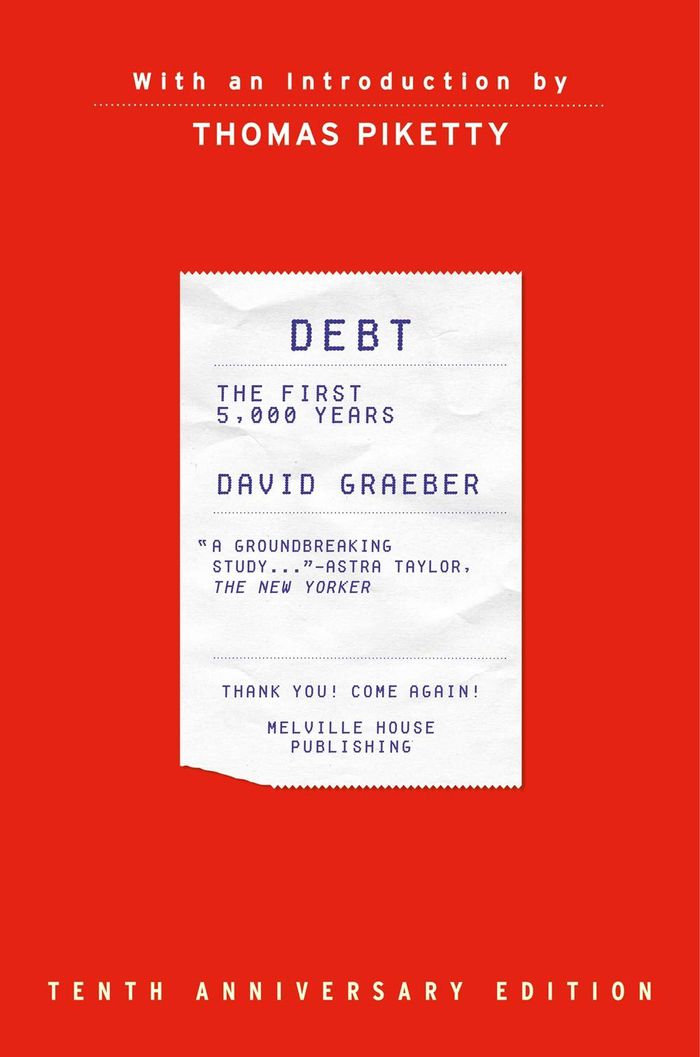
Debt: The first 5,000 years, updated and expanded
Actions:
Prix:
$41.00
(disponible sur commande)
Résumé:
Before there was money, there was debt. Every economics textbook says the same thing: Money was invented to replace onerous and complicated barter systems—to relieve ancient people from having to haul their goods to market. The problem with this version of history? There’s not a shred of evidence to support it. Here anthropologist David Graeber presents a stunning reversal of conventional wisdom. He shows that for more than 5,000 years, since the beginnings of the first agrarian empires, humans have used elaborate credit systems to buy and sell goods—that is, long before the invention of coins or cash. It is in this era, Graeber argues, that we also first encounter a society divided into debtors and creditors. Graeber shows that arguments about debt and debt forgiveness have been at the center of political debates from Italy to China, as well as sparking innumerable insurrections. He also brilliantly demonstrates that the language of the ancient works of law and religion (words like ''guilt,'' ''sin,'' and ''redemption'') derive in large part from ancient debates about debt, and shape even our most basic ideas of right and wrong. We are still fighting these battles today without knowing it. ''Debt: The first 5,000 years'' is a fascinating chronicle of this little known history—as well as how it has defined human history. It shows how debt has defined our human past, and what that means for our economic future.
Debt: The first 5,000 years, updated and expanded
Actions:
Prix:
$41.00
(disponible sur commande)
Résumé:
Before there was money, there was debt. Every economics textbook says the same thing: Money was invented to replace onerous and complicated barter systems—to relieve ancient people from having to haul their goods to market. The problem with this version of history? There’s not a shred of evidence to support it. Here anthropologist David Graeber presents a stunning reversal of conventional wisdom. He shows that for more than 5,000 years, since the beginnings of the first agrarian empires, humans have used elaborate credit systems to buy and sell goods—that is, long before the invention of coins or cash. It is in this era, Graeber argues, that we also first encounter a society divided into debtors and creditors. Graeber shows that arguments about debt and debt forgiveness have been at the center of political debates from Italy to China, as well as sparking innumerable insurrections. He also brilliantly demonstrates that the language of the ancient works of law and religion (words like ''guilt,'' ''sin,'' and ''redemption'') derive in large part from ancient debates about debt, and shape even our most basic ideas of right and wrong. We are still fighting these battles today without knowing it. ''Debt: The first 5,000 years'' is a fascinating chronicle of this little known history—as well as how it has defined human history. It shows how debt has defined our human past, and what that means for our economic future.
Classification:
livres
livres
Publication:
juin 2021
juin 2021
Sujet:
Théorie/ philosophie
Théorie/ philosophie
Classification:
livres
livres

Actions:
Prix:
$41.95
(disponible sur commande)
Résumé:
Propaganda art—whether a depiction of joyous workers in the style of socialist realism or a film directed by Steve Bannon—delivers a message. But, as Jonas Staal argues in this illuminating and timely book, propaganda does not merely make a political point; it aims to construct reality itself. Political regimes have shaped our world according to their interests and(...)
$41.95
(disponible sur commande)
Résumé:
Propaganda art—whether a depiction of joyous workers in the style of socialist realism or a film directed by Steve Bannon—delivers a message. But, as Jonas Staal argues in this illuminating and timely book, propaganda does not merely make a political point; it aims to construct reality itself. Political regimes have shaped our world according to their interests and(...)
Titre:
Propaganda art in the 21st century
Actions:
Prix:
$41.95
(disponible sur commande)
Résumé:
Propaganda art—whether a depiction of joyous workers in the style of socialist realism or a film directed by Steve Bannon—delivers a message. But, as Jonas Staal argues in this illuminating and timely book, propaganda does not merely make a political point; it aims to construct reality itself. Political regimes have shaped our world according to their interests and ideology; today, popular mass movements push back by constructing other worlds with their own propagandas. Staal shows that propaganda is not a relic of a totalitarian past but occurs today even in liberal democracies. He considers different historical forms of propaganda art, from avant-garde to totalitarian and modernist, and he investigates the us versus them dichotomy promoted in War on Terror propaganda art—describing, among other things, a fictional scenario from the Department of Homeland Security, acted out in real time, and military training via videogame. He discusses artistic and cultural productions developed by such popular mass movements of the twenty-first century as the Occupy, activism by and in support of undocumented migrants and refugees, and struggles for liberation in such countries as Mali and Syria. Staal, both a scholar of propaganda and a self-described propaganda artist, proposes a new model of emancipatory propaganda art—one that acknowledges the relation between art and power and takes both an aesthetic and a political position in the practice of world-making.
Propaganda art in the 21st century
Actions:
Prix:
$41.95
(disponible sur commande)
Résumé:
Propaganda art—whether a depiction of joyous workers in the style of socialist realism or a film directed by Steve Bannon—delivers a message. But, as Jonas Staal argues in this illuminating and timely book, propaganda does not merely make a political point; it aims to construct reality itself. Political regimes have shaped our world according to their interests and ideology; today, popular mass movements push back by constructing other worlds with their own propagandas. Staal shows that propaganda is not a relic of a totalitarian past but occurs today even in liberal democracies. He considers different historical forms of propaganda art, from avant-garde to totalitarian and modernist, and he investigates the us versus them dichotomy promoted in War on Terror propaganda art—describing, among other things, a fictional scenario from the Department of Homeland Security, acted out in real time, and military training via videogame. He discusses artistic and cultural productions developed by such popular mass movements of the twenty-first century as the Occupy, activism by and in support of undocumented migrants and refugees, and struggles for liberation in such countries as Mali and Syria. Staal, both a scholar of propaganda and a self-described propaganda artist, proposes a new model of emancipatory propaganda art—one that acknowledges the relation between art and power and takes both an aesthetic and a political position in the practice of world-making.
Classification:
livres
livres
Publication:
septembre 2019
septembre 2019
Sujet:
Théorie de l’art
Théorie de l’art
Classification:
livres
livres
Actions:
Prix:
$48.00
(disponible sur commande)
Résumé:
The Space Race was an exhilirating moment in history, alternately frighten-ing, thrilling, awe-inspiring, and ultimately, sublime. Its most enigmatic element was the competition. The Soviets seemed less technologically sophisticated (at least from the American perspective) but in fact won many of the races: first satellite to orbit the earth; first man in space; first(...)
$48.00
(disponible sur commande)
Résumé:
The Space Race was an exhilirating moment in history, alternately frighten-ing, thrilling, awe-inspiring, and ultimately, sublime. Its most enigmatic element was the competition. The Soviets seemed less technologically sophisticated (at least from the American perspective) but in fact won many of the races: first satellite to orbit the earth; first man in space; first(...)
Titre:
Kosmos: a portrait of the Russian Space Age
Actions:
Prix:
$48.00
(disponible sur commande)
Résumé:
The Space Race was an exhilirating moment in history, alternately frighten-ing, thrilling, awe-inspiring, and ultimately, sublime. Its most enigmatic element was the competition. The Soviets seemed less technologically sophisticated (at least from the American perspective) but in fact won many of the races: first satellite to orbit the earth; first man in space; first unmanned landings on Mars, Venus, and the Moon; first woman in space; most powerful rockets; and, until its recent fiery death, the most long-lived space station to name but a few. The inherent contradictions of the age--the mixture of technologies high and low, of nostalgia and progress, of pathos and promise--are revealed in Kosmos, Adam Bartos's astonishing photographic survey of the Soviet space program. Bartos' fascination with this subject led him to seek out places like the bedroom where Yuri Gagarian slept the night before his history-making flight into space, located in the Baiknour Cosmodrome, the one-time top-secret space complex in the Kazakh desert. Bartos also takes us inside the cockpit of the Merkur space capsule, used to ferry crew members and supplies to the super-secret Almaz orbital space stations, and behind the changing screens cosmonauts used before being fitted for their space suits at Zvezda, the chief manufacturer of Soviet life-support systems. In total, Kosmos presents over 100 of Bartos's photographs, rich with the incongruities of the history, science, culture, and politics of the Space Age.
Kosmos: a portrait of the Russian Space Age
Actions:
Prix:
$48.00
(disponible sur commande)
Résumé:
The Space Race was an exhilirating moment in history, alternately frighten-ing, thrilling, awe-inspiring, and ultimately, sublime. Its most enigmatic element was the competition. The Soviets seemed less technologically sophisticated (at least from the American perspective) but in fact won many of the races: first satellite to orbit the earth; first man in space; first unmanned landings on Mars, Venus, and the Moon; first woman in space; most powerful rockets; and, until its recent fiery death, the most long-lived space station to name but a few. The inherent contradictions of the age--the mixture of technologies high and low, of nostalgia and progress, of pathos and promise--are revealed in Kosmos, Adam Bartos's astonishing photographic survey of the Soviet space program. Bartos' fascination with this subject led him to seek out places like the bedroom where Yuri Gagarian slept the night before his history-making flight into space, located in the Baiknour Cosmodrome, the one-time top-secret space complex in the Kazakh desert. Bartos also takes us inside the cockpit of the Merkur space capsule, used to ferry crew members and supplies to the super-secret Almaz orbital space stations, and behind the changing screens cosmonauts used before being fitted for their space suits at Zvezda, the chief manufacturer of Soviet life-support systems. In total, Kosmos presents over 100 of Bartos's photographs, rich with the incongruities of the history, science, culture, and politics of the Space Age.
Classification:
livres
livres
Publication:
novembre 2001
novembre 2001
Sujet:
Monographies photo
Monographies photo
Classification:
livres
livres
Actions:
Exemplaires:
Description:
1 vol. (425 p.) : Ill. en noir et blanc, plans, coupes, photogr. ; 27 cm.
Description:
1 vol. (425 p.) : Ill. en noir et blanc, plans, coupes, photogr. ; 27 cm.
Auteur:
Sujet:
Publication:
Antony : Editions du Moniteur, DL 2023.
Antony : Editions du Moniteur, DL 2023.
Titre:
La réhabilitation des structures des bâtiments anciens : Matériaux, calculs, diagnostic et réhabilitation / Alain Popinet.
Actions:
Exemplaires:
Description:
1 vol. (425 p.) : Ill. en noir et blanc, plans, coupes, photogr. ; 27 cm.
La réhabilitation des structures des bâtiments anciens : Matériaux, calculs, diagnostic et réhabilitation / Alain Popinet.
Actions:
Exemplaires:
Description:
1 vol. (425 p.) : Ill. en noir et blanc, plans, coupes, photogr. ; 27 cm.
Classification:
livres
livres
Publication:
Antony : Editions du Moniteur, DL 2023.
Antony : Editions du Moniteur, DL 2023.
Auteur:
Sujet:


