


44174 Résultats
Classification:
événements
événements
Titre:
Adieu, Mel
Adieu, Mel
Actions:
Description:
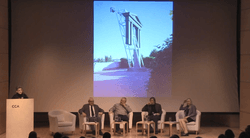
Dans une conversation sur la vie et la carrière de l’artiste-architecte feu Melvin Charney, le CCA rend hommage à son l’oeuvre. Décédé le 17 septembre 2012, Charney était un ami proche du CCA dans la mesure où il a conçu et élaboré son jardin de sculpture. Pour lui rendre hommage, George Baird, Serge Carreau, Odile Decq, Alan J. Knight et Gwendolyn Owens analysent son(...)
Dans une conversation sur la vie et la carrière de l’artiste-architecte feu Melvin Charney, le CCA rend hommage à son l’oeuvre. Décédé le 17 septembre 2012, Charney était un ami proche du CCA dans la mesure où il a conçu et élaboré son jardin de sculpture. Pour lui rendre hommage, George Baird, Serge Carreau, Odile Decq, Alan J. Knight et Gwendolyn Owens analysent son(...)
Localisation:
Théâtre Paul-Desmarais
Théâtre Paul-Desmarais
Date:
23 janvier 2013 , 18h
23 janvier 2013 , 18h
Titre:
Adieu, Mel
Actions:
Description:
Dans une conversation sur la vie et la carrière de l’artiste-architecte feu Melvin Charney, le CCA rend hommage à son l’oeuvre. Décédé le 17 septembre 2012, Charney était un ami proche du CCA dans la mesure où il a conçu et élaboré son jardin de sculpture. Pour lui rendre hommage, George Baird, Serge Carreau, Odile Decq, Alan J. Knight et Gwendolyn Owens analysent son(...)
Adieu, Mel
Actions:
Description:
Dans une conversation sur la vie et la carrière de l’artiste-architecte feu Melvin Charney, le CCA rend hommage à son l’oeuvre. Décédé le 17 septembre 2012, Charney était un ami proche du CCA dans la mesure où il a conçu et élaboré son jardin de sculpture. Pour lui rendre hommage, George Baird, Serge Carreau, Odile Decq, Alan J. Knight et Gwendolyn Owens analysent son(...)
Classification:
événements
événements
Date:
23 janvier 2013
18h
23 janvier 2013
18h
Localisation:
Théâtre Paul-Desmarais
Théâtre Paul-Desmarais
Classification:
expositions
expositions
Actions:
Description:
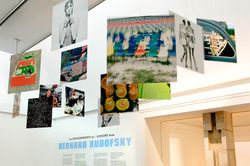
Les enseignements de Bernard Rudofsky est la première rétrospective qui examine la vie et l’œuvre de l’architecte, designer et critique controversé, dont les constructions, les expositions et les concepts de mode ont remis en question les idées mêmes de confort et de culture dans le monde occidental. L’exposition jette un regard sur la diversité des contributions d’un(...)
Les enseignements de Bernard Rudofsky est la première rétrospective qui examine la vie et l’œuvre de l’architecte, designer et critique controversé, dont les constructions, les expositions et les concepts de mode ont remis en question les idées mêmes de confort et de culture dans le monde occidental. L’exposition jette un regard sur la diversité des contributions d’un(...)
Localisation:
Salles principales
Salles principales
Date:
4 juillet 2007 au 30 septembre 2007
4 juillet 2007 au 30 septembre 2007
Titre:
Les enseignements de Bernard Rudofsky
Actions:
Description:
Les enseignements de Bernard Rudofsky est la première rétrospective qui examine la vie et l’œuvre de l’architecte, designer et critique controversé, dont les constructions, les expositions et les concepts de mode ont remis en question les idées mêmes de confort et de culture dans le monde occidental. L’exposition jette un regard sur la diversité des contributions d’un(...)
Les enseignements de Bernard Rudofsky
Actions:
Description:
Les enseignements de Bernard Rudofsky est la première rétrospective qui examine la vie et l’œuvre de l’architecte, designer et critique controversé, dont les constructions, les expositions et les concepts de mode ont remis en question les idées mêmes de confort et de culture dans le monde occidental. L’exposition jette un regard sur la diversité des contributions d’un(...)
Classification:
expositions
expositions
Date:
4 juillet 2007 au
30 septembre 2007
4 juillet 2007 au
30 septembre 2007
Localisation:
Salles principales
Salles principales
Classification:
événements
événements

Titre:
L'enseignement de… São Paulo
L'enseignement de… São Paulo
Actions:
Description:
Angelo Bucci, architecte et professeur à l’Université de São Paulo au Brésil, aborde les questions de la violence et de l’environnement en évolution à São Paulo, en quête de nouvelles formes urbaines. À São Paulo, la violence peut être vue comme gâchant l’expérience de la ville et, par conséquent, sapant la raison d’être du travail de l’architecte. La conférence porte sur(...)
Angelo Bucci, architecte et professeur à l’Université de São Paulo au Brésil, aborde les questions de la violence et de l’environnement en évolution à São Paulo, en quête de nouvelles formes urbaines. À São Paulo, la violence peut être vue comme gâchant l’expérience de la ville et, par conséquent, sapant la raison d’être du travail de l’architecte. La conférence porte sur(...)
Date:
22 avril 2010
22 avril 2010
Titre:
L'enseignement de… São Paulo
Actions:
Description:
Angelo Bucci, architecte et professeur à l’Université de São Paulo au Brésil, aborde les questions de la violence et de l’environnement en évolution à São Paulo, en quête de nouvelles formes urbaines. À São Paulo, la violence peut être vue comme gâchant l’expérience de la ville et, par conséquent, sapant la raison d’être du travail de l’architecte. La conférence porte sur(...)
L'enseignement de… São Paulo
Actions:
Description:
Angelo Bucci, architecte et professeur à l’Université de São Paulo au Brésil, aborde les questions de la violence et de l’environnement en évolution à São Paulo, en quête de nouvelles formes urbaines. À São Paulo, la violence peut être vue comme gâchant l’expérience de la ville et, par conséquent, sapant la raison d’être du travail de l’architecte. La conférence porte sur(...)
Classification:
événements
événements
Date:
22 avril 2010
22 avril 2010
Niveau de description archivistique:
Série(s)
Série(s)
Numéro de référence:
AP170.S2
Description:
Series 2, Software and related documentation, 1990 – 2014, contains unique iterations of the ACDC, Aegis, and HypoSurface software, and contains roughly 45,000 digital files. The bulk of the files date from approximately 2000 – 2001. This series chiefly consists of the materials received from Xavier Robitaille. This includes a virtual machine and DOS emulator for Aegis HypoSurface, as well as ACDC and Aegis Simulator software for Microsoft DOS and Win32 for Hyposurface installations. There is also a small amount of email correspondence in MBOX format between Robitaille, Mark Goulthorpe, and other project members documenting their work on the project. Additionally, there are two computer backups in this series. One is for Goulthorpe’s computer. The files from the disk image were carved out and only unique files were kept. It includes his files for the Aegis HypoSurface project and reflects his working environment. The second backup is a disk image of Paul Steenhuisen’s Mac G5 computer. The Mac G5 computer is a clone of an earlier G4, and is included with the archive to allow demonstration of the interactive logic that was developed through CeBIT, the International Manufacturers Technology Show (IMTS), and the Biotechnology Industry Organization (BIO) conference at the Boston Convention Centre, including an interactive soundscape piece executed by artist Paul Steenhuisen. The G5 has a copy of FIELD, the user interface software developed for HypoSurface 2 and HypoSurface 3. The files from this computer were processed and made available in Series 3: Projects and events, and Series 4: Promotional materials. The disk image of the internal hard drive was retained in case future emulation is necessary. Because much of this series is software, roughly 42,000 files are or relate to executable programs. Formats for these materials are largely Java source code and Java object code, but also include HTML, plain text files, Aegis pattern files, and some unidentified formats. The remaining files in this series are chiefly vector and raster images referenced in the software. Notably, the Steenhuisen disk image is approximately 250 GB, and represents the largest part of this series. This series overlaps significantly with Series 3: Projects and events. This series contains software generally, while Series 3 contains any software related to a specific project or event.
AP170.S2
Description:
Series 2, Software and related documentation, 1990 – 2014, contains unique iterations of the ACDC, Aegis, and HypoSurface software, and contains roughly 45,000 digital files. The bulk of the files date from approximately 2000 – 2001. This series chiefly consists of the materials received from Xavier Robitaille. This includes a virtual machine and DOS emulator for Aegis HypoSurface, as well as ACDC and Aegis Simulator software for Microsoft DOS and Win32 for Hyposurface installations. There is also a small amount of email correspondence in MBOX format between Robitaille, Mark Goulthorpe, and other project members documenting their work on the project. Additionally, there are two computer backups in this series. One is for Goulthorpe’s computer. The files from the disk image were carved out and only unique files were kept. It includes his files for the Aegis HypoSurface project and reflects his working environment. The second backup is a disk image of Paul Steenhuisen’s Mac G5 computer. The Mac G5 computer is a clone of an earlier G4, and is included with the archive to allow demonstration of the interactive logic that was developed through CeBIT, the International Manufacturers Technology Show (IMTS), and the Biotechnology Industry Organization (BIO) conference at the Boston Convention Centre, including an interactive soundscape piece executed by artist Paul Steenhuisen. The G5 has a copy of FIELD, the user interface software developed for HypoSurface 2 and HypoSurface 3. The files from this computer were processed and made available in Series 3: Projects and events, and Series 4: Promotional materials. The disk image of the internal hard drive was retained in case future emulation is necessary. Because much of this series is software, roughly 42,000 files are or relate to executable programs. Formats for these materials are largely Java source code and Java object code, but also include HTML, plain text files, Aegis pattern files, and some unidentified formats. The remaining files in this series are chiefly vector and raster images referenced in the software. Notably, the Steenhuisen disk image is approximately 250 GB, and represents the largest part of this series. This series overlaps significantly with Series 3: Projects and events. This series contains software generally, while Series 3 contains any software related to a specific project or event.
Personnes et institutions:
Date:
1990 - 2014
1990 - 2014
Titre:
Software and related documentation
Actions:
AP170.S2
Description:
Series 2, Software and related documentation, 1990 – 2014, contains unique iterations of the ACDC, Aegis, and HypoSurface software, and contains roughly 45,000 digital files. The bulk of the files date from approximately 2000 – 2001. This series chiefly consists of the materials received from Xavier Robitaille. This includes a virtual machine and DOS emulator for Aegis HypoSurface, as well as ACDC and Aegis Simulator software for Microsoft DOS and Win32 for Hyposurface installations. There is also a small amount of email correspondence in MBOX format between Robitaille, Mark Goulthorpe, and other project members documenting their work on the project. Additionally, there are two computer backups in this series. One is for Goulthorpe’s computer. The files from the disk image were carved out and only unique files were kept. It includes his files for the Aegis HypoSurface project and reflects his working environment. The second backup is a disk image of Paul Steenhuisen’s Mac G5 computer. The Mac G5 computer is a clone of an earlier G4, and is included with the archive to allow demonstration of the interactive logic that was developed through CeBIT, the International Manufacturers Technology Show (IMTS), and the Biotechnology Industry Organization (BIO) conference at the Boston Convention Centre, including an interactive soundscape piece executed by artist Paul Steenhuisen. The G5 has a copy of FIELD, the user interface software developed for HypoSurface 2 and HypoSurface 3. The files from this computer were processed and made available in Series 3: Projects and events, and Series 4: Promotional materials. The disk image of the internal hard drive was retained in case future emulation is necessary. Because much of this series is software, roughly 42,000 files are or relate to executable programs. Formats for these materials are largely Java source code and Java object code, but also include HTML, plain text files, Aegis pattern files, and some unidentified formats. The remaining files in this series are chiefly vector and raster images referenced in the software. Notably, the Steenhuisen disk image is approximately 250 GB, and represents the largest part of this series. This series overlaps significantly with Series 3: Projects and events. This series contains software generally, while Series 3 contains any software related to a specific project or event.
Software and related documentation
Actions:
AP170.S2
Description:
Series 2, Software and related documentation, 1990 – 2014, contains unique iterations of the ACDC, Aegis, and HypoSurface software, and contains roughly 45,000 digital files. The bulk of the files date from approximately 2000 – 2001. This series chiefly consists of the materials received from Xavier Robitaille. This includes a virtual machine and DOS emulator for Aegis HypoSurface, as well as ACDC and Aegis Simulator software for Microsoft DOS and Win32 for Hyposurface installations. There is also a small amount of email correspondence in MBOX format between Robitaille, Mark Goulthorpe, and other project members documenting their work on the project. Additionally, there are two computer backups in this series. One is for Goulthorpe’s computer. The files from the disk image were carved out and only unique files were kept. It includes his files for the Aegis HypoSurface project and reflects his working environment. The second backup is a disk image of Paul Steenhuisen’s Mac G5 computer. The Mac G5 computer is a clone of an earlier G4, and is included with the archive to allow demonstration of the interactive logic that was developed through CeBIT, the International Manufacturers Technology Show (IMTS), and the Biotechnology Industry Organization (BIO) conference at the Boston Convention Centre, including an interactive soundscape piece executed by artist Paul Steenhuisen. The G5 has a copy of FIELD, the user interface software developed for HypoSurface 2 and HypoSurface 3. The files from this computer were processed and made available in Series 3: Projects and events, and Series 4: Promotional materials. The disk image of the internal hard drive was retained in case future emulation is necessary. Because much of this series is software, roughly 42,000 files are or relate to executable programs. Formats for these materials are largely Java source code and Java object code, but also include HTML, plain text files, Aegis pattern files, and some unidentified formats. The remaining files in this series are chiefly vector and raster images referenced in the software. Notably, the Steenhuisen disk image is approximately 250 GB, and represents the largest part of this series. This series overlaps significantly with Series 3: Projects and events. This series contains software generally, while Series 3 contains any software related to a specific project or event.
Niveau de description archivistique:
Series
Series
Date:
1990 - 2014
1990 - 2014
Personnes et institutions:
Niveau de description archivistique:
Projet
Projet
Numéro de référence:
AP018.S1.1972.PR18
Description:
This project series documents the design and construction of a library and an addition to city hall in Fredericton, New Brunswick from 1972-1975. The office identified the project number as 7226. This project consisted of two distinct parts; a public library constructed at the corners of Campbell and Carleton Streets, and an addition to city hall whose original building was constructed at the corners of Queen and York Streets around 1875. These two buildings were located two blocks from one another, but a master plan for the project shows that the separating streets would be removed in favour of a pedestrian friendly landscape. Both buildings were located next to the St. John River. For this project, Parkin Architects Planners partnered with architectural firm Graham Napier Associates to form the joint venture referred to as Graham Parkin Architects Engineers Planners. The brick-clad addition to city hall nearly doubled the square footage of the ground and first floors. The original city hall was four levels and the addition was two, with a mechanical penthouse on top. The new areas included departmental offices such as planning, engineering and sewage, a drafting room, conference room, and reception, among others. The library consisted of a two-storey, brick-clad building that was approximately 24,000 square feet in size with a 16 car parking lot. The ground floor included reception and exhibit areas, stacks, administration offices, bookmobiles, and staff lockers, while the second level had stacks and reading areas, audiovisual areas and a staff work room and break room. The library also had a mechanical penthouse on top. The project is recorded through drawings, including mounted presentation boards, photographic materials and textual records dating from 1972-1978. The drawings consist of original sketches, plans, sections, elevations and details of both city hall and the library, and some drawings used for construction. There are also drawings of the original city hall, first drafted around 1875. The photographs show existing buildings and the construction progress of the project. The textual records consist of correspondence, conference reports, interoffice letters, specifications, consultancy documentation, a soil investigation, research and drawing transmittal records. File AP018.S1.1972.PR18.020 contains an index to the textual materials, which was created by the office.
AP018.S1.1972.PR18
Description:
This project series documents the design and construction of a library and an addition to city hall in Fredericton, New Brunswick from 1972-1975. The office identified the project number as 7226. This project consisted of two distinct parts; a public library constructed at the corners of Campbell and Carleton Streets, and an addition to city hall whose original building was constructed at the corners of Queen and York Streets around 1875. These two buildings were located two blocks from one another, but a master plan for the project shows that the separating streets would be removed in favour of a pedestrian friendly landscape. Both buildings were located next to the St. John River. For this project, Parkin Architects Planners partnered with architectural firm Graham Napier Associates to form the joint venture referred to as Graham Parkin Architects Engineers Planners. The brick-clad addition to city hall nearly doubled the square footage of the ground and first floors. The original city hall was four levels and the addition was two, with a mechanical penthouse on top. The new areas included departmental offices such as planning, engineering and sewage, a drafting room, conference room, and reception, among others. The library consisted of a two-storey, brick-clad building that was approximately 24,000 square feet in size with a 16 car parking lot. The ground floor included reception and exhibit areas, stacks, administration offices, bookmobiles, and staff lockers, while the second level had stacks and reading areas, audiovisual areas and a staff work room and break room. The library also had a mechanical penthouse on top. The project is recorded through drawings, including mounted presentation boards, photographic materials and textual records dating from 1972-1978. The drawings consist of original sketches, plans, sections, elevations and details of both city hall and the library, and some drawings used for construction. There are also drawings of the original city hall, first drafted around 1875. The photographs show existing buildings and the construction progress of the project. The textual records consist of correspondence, conference reports, interoffice letters, specifications, consultancy documentation, a soil investigation, research and drawing transmittal records. File AP018.S1.1972.PR18.020 contains an index to the textual materials, which was created by the office.
Personnes et institutions:
Date:
circa 1972-1978
circa 1972-1978
Titre:
City Hall and Library Facilities, Fredericton, New Brunswick (1972-1975)
Actions:
AP018.S1.1972.PR18
Description:
This project series documents the design and construction of a library and an addition to city hall in Fredericton, New Brunswick from 1972-1975. The office identified the project number as 7226. This project consisted of two distinct parts; a public library constructed at the corners of Campbell and Carleton Streets, and an addition to city hall whose original building was constructed at the corners of Queen and York Streets around 1875. These two buildings were located two blocks from one another, but a master plan for the project shows that the separating streets would be removed in favour of a pedestrian friendly landscape. Both buildings were located next to the St. John River. For this project, Parkin Architects Planners partnered with architectural firm Graham Napier Associates to form the joint venture referred to as Graham Parkin Architects Engineers Planners. The brick-clad addition to city hall nearly doubled the square footage of the ground and first floors. The original city hall was four levels and the addition was two, with a mechanical penthouse on top. The new areas included departmental offices such as planning, engineering and sewage, a drafting room, conference room, and reception, among others. The library consisted of a two-storey, brick-clad building that was approximately 24,000 square feet in size with a 16 car parking lot. The ground floor included reception and exhibit areas, stacks, administration offices, bookmobiles, and staff lockers, while the second level had stacks and reading areas, audiovisual areas and a staff work room and break room. The library also had a mechanical penthouse on top. The project is recorded through drawings, including mounted presentation boards, photographic materials and textual records dating from 1972-1978. The drawings consist of original sketches, plans, sections, elevations and details of both city hall and the library, and some drawings used for construction. There are also drawings of the original city hall, first drafted around 1875. The photographs show existing buildings and the construction progress of the project. The textual records consist of correspondence, conference reports, interoffice letters, specifications, consultancy documentation, a soil investigation, research and drawing transmittal records. File AP018.S1.1972.PR18.020 contains an index to the textual materials, which was created by the office.
City Hall and Library Facilities, Fredericton, New Brunswick (1972-1975)
Actions:
AP018.S1.1972.PR18
Description:
This project series documents the design and construction of a library and an addition to city hall in Fredericton, New Brunswick from 1972-1975. The office identified the project number as 7226. This project consisted of two distinct parts; a public library constructed at the corners of Campbell and Carleton Streets, and an addition to city hall whose original building was constructed at the corners of Queen and York Streets around 1875. These two buildings were located two blocks from one another, but a master plan for the project shows that the separating streets would be removed in favour of a pedestrian friendly landscape. Both buildings were located next to the St. John River. For this project, Parkin Architects Planners partnered with architectural firm Graham Napier Associates to form the joint venture referred to as Graham Parkin Architects Engineers Planners. The brick-clad addition to city hall nearly doubled the square footage of the ground and first floors. The original city hall was four levels and the addition was two, with a mechanical penthouse on top. The new areas included departmental offices such as planning, engineering and sewage, a drafting room, conference room, and reception, among others. The library consisted of a two-storey, brick-clad building that was approximately 24,000 square feet in size with a 16 car parking lot. The ground floor included reception and exhibit areas, stacks, administration offices, bookmobiles, and staff lockers, while the second level had stacks and reading areas, audiovisual areas and a staff work room and break room. The library also had a mechanical penthouse on top. The project is recorded through drawings, including mounted presentation boards, photographic materials and textual records dating from 1972-1978. The drawings consist of original sketches, plans, sections, elevations and details of both city hall and the library, and some drawings used for construction. There are also drawings of the original city hall, first drafted around 1875. The photographs show existing buildings and the construction progress of the project. The textual records consist of correspondence, conference reports, interoffice letters, specifications, consultancy documentation, a soil investigation, research and drawing transmittal records. File AP018.S1.1972.PR18.020 contains an index to the textual materials, which was created by the office.
Niveau de description archivistique:
Project
Project
Date:
circa 1972-1978
circa 1972-1978
Personnes et institutions:
Classification:
photographies
photographies
Actions:
Numéro de référence:
PH2016:0100:026
Description:
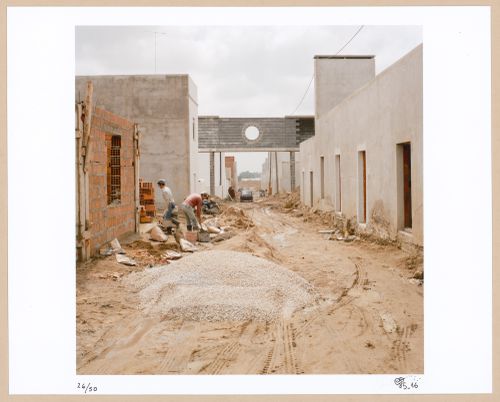
The image shows two construction workers on the site of a residential complex in development.
PH2016:0100:026
Description:
The image shows two construction workers on the site of a residential complex in development.
Personnes et institutions:
Date:
1985-1996
1985-1996
Titre:
View of the Quinta da Malagueira (Malagueira Residential District) during construction, Évora, Portugal
Actions:
PH2016:0100:026
Description:
The image shows two construction workers on the site of a residential complex in development.
View of the Quinta da Malagueira (Malagueira Residential District) during construction, Évora, Portugal
Actions:
PH2016:0100:026
Description:
The image shows two construction workers on the site of a residential complex in development.
Classification:
photographies
photographies
Date:
1985-1996
1985-1996
Personnes et institutions:
Classification:
pages web
pages web
Titre:
Regarder de plus près
Regarder de plus près
Actions:
Résumé:
La collection de dessins et d’estampes au CCA révèle des idées d’architecture, le processus de réflexion des architectes et le contexte dans lequel se produit leur travail.
Titre:
Regarder de plus près
Actions:
Résumé:
Regarder de plus près
Actions:
Résumé:
La collection de dessins et d’estampes au CCA révèle des idées d’architecture, le processus de réflexion des architectes et le contexte dans lequel se produit leur travail.
Classification:
pages web
pages web
Classification:
événements
événements
Description:
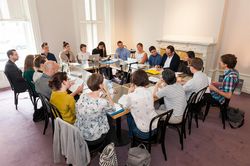
Le séminaire Outils d’aujourdhui est une partie intégrale du Programme du CCA pour les doctorants. Nous invitons des chercheurs à ouvrir leurs boîtes à outils, à partager des approches et des défis méthodologiques, et à discuter de concepts clés dans les débats contemporains en architecture et disciplines connexes. En 2016, Outils d’aujourdhui aborde les “Mots-clés pour(...)
Le séminaire Outils d’aujourdhui est une partie intégrale du Programme du CCA pour les doctorants. Nous invitons des chercheurs à ouvrir leurs boîtes à outils, à partager des approches et des défis méthodologiques, et à discuter de concepts clés dans les débats contemporains en architecture et disciplines connexes. En 2016, Outils d’aujourdhui aborde les “Mots-clés pour(...)
Date:
27 juin 2016 au 30 juin 2016
27 juin 2016 au 30 juin 2016
Titre:
Outils d’aujourd’hui : Mots-clés pour l’environnement
Actions:
Description:
Le séminaire Outils d’aujourdhui est une partie intégrale du Programme du CCA pour les doctorants. Nous invitons des chercheurs à ouvrir leurs boîtes à outils, à partager des approches et des défis méthodologiques, et à discuter de concepts clés dans les débats contemporains en architecture et disciplines connexes. En 2016, Outils d’aujourdhui aborde les “Mots-clés pour(...)
Outils d’aujourd’hui : Mots-clés pour l’environnement
Actions:
Description:
Le séminaire Outils d’aujourdhui est une partie intégrale du Programme du CCA pour les doctorants. Nous invitons des chercheurs à ouvrir leurs boîtes à outils, à partager des approches et des défis méthodologiques, et à discuter de concepts clés dans les débats contemporains en architecture et disciplines connexes. En 2016, Outils d’aujourdhui aborde les “Mots-clés pour(...)
Classification:
événements
événements
Date:
27 juin 2016 au
30 juin 2016
27 juin 2016 au
30 juin 2016
Classification:
expositions
expositions
Actions:
Description:
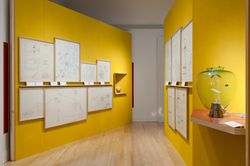
L’exposition Des pièces à ne manquer revendique l’importance de l’acte d’habiter et constitue, pour cette raison, une collection d’espaces domestiques (porches, cuisines, chambres, penderies, salles à manger, cours, jardins, vestibules, séjours, bureaux, coins de détente et salles d’eau) réinventés par deux architectes très différents, Umberto Riva à Milan et Bijoy Jain à(...)
L’exposition Des pièces à ne manquer revendique l’importance de l’acte d’habiter et constitue, pour cette raison, une collection d’espaces domestiques (porches, cuisines, chambres, penderies, salles à manger, cours, jardins, vestibules, séjours, bureaux, coins de détente et salles d’eau) réinventés par deux architectes très différents, Umberto Riva à Milan et Bijoy Jain à(...)
Localisation:
Salles principales
Salles principales
Date:
4 novembre 2014 au 19 avril 2015
4 novembre 2014 au 19 avril 2015
Titre:
Des pièces à ne pas manquer
Actions:
Description:
L’exposition Des pièces à ne manquer revendique l’importance de l’acte d’habiter et constitue, pour cette raison, une collection d’espaces domestiques (porches, cuisines, chambres, penderies, salles à manger, cours, jardins, vestibules, séjours, bureaux, coins de détente et salles d’eau) réinventés par deux architectes très différents, Umberto Riva à Milan et Bijoy Jain à(...)
Des pièces à ne pas manquer
Actions:
Description:
L’exposition Des pièces à ne manquer revendique l’importance de l’acte d’habiter et constitue, pour cette raison, une collection d’espaces domestiques (porches, cuisines, chambres, penderies, salles à manger, cours, jardins, vestibules, séjours, bureaux, coins de détente et salles d’eau) réinventés par deux architectes très différents, Umberto Riva à Milan et Bijoy Jain à(...)
Classification:
expositions
expositions
Date:
4 novembre 2014 au
19 avril 2015
4 novembre 2014 au
19 avril 2015
Localisation:
Salles principales
Salles principales
Classification:
documents textuels
documents textuels
Numéro de référence:
PHCON2002:0016:006:046
Description:
Letter includes a list of works sold from the "Caribbean Orange Series".
PHCON2002:0016:006:046
Description:
Letter includes a list of works sold from the "Caribbean Orange Series".
Personnes et institutions:
Date:
23 and 24 May 1978
23 and 24 May 1978
Titre:
Letter from Donald Young and Rhona Hoffman to Gordon Matta-Clark
Actions:
PHCON2002:0016:006:046
Description:
Letter includes a list of works sold from the "Caribbean Orange Series".
Letter from Donald Young and Rhona Hoffman to Gordon Matta-Clark
Actions:
PHCON2002:0016:006:046
Description:
Letter includes a list of works sold from the "Caribbean Orange Series".
Classification:
documents textuels
documents textuels
Date:
23 and 24 May 1978
23 and 24 May 1978
Personnes et institutions:


