


2036 Résultats
Classification:
livres
livres
Actions:
Exemplaires:
Description:
372 pages : illustrations, maps, plans ; 24 cm
Description:
372 pages : illustrations, maps, plans ; 24 cm
Auteur:
Sujet:
Publication:
Limoges : PULIM ; Paris : Geuthner, [2006], ©2006
Limoges : PULIM ; Paris : Geuthner, [2006], ©2006
Titre:
Lire l'espace, comprendre l'architecture : essais sémiotiques / Manar Hammad.
Actions:
Exemplaires:
Description:
372 pages : illustrations, maps, plans ; 24 cm
Lire l'espace, comprendre l'architecture : essais sémiotiques / Manar Hammad.
Actions:
Exemplaires:
Description:
372 pages : illustrations, maps, plans ; 24 cm
Classification:
livres
livres
Publication:
Limoges : PULIM ; Paris : Geuthner, [2006], ©2006
Limoges : PULIM ; Paris : Geuthner, [2006], ©2006
Auteur:
Sujet:
Classification:
audio
audio
Actions:
Description:
1 online resource.
Auteur:
Sujet:
Publication:
[Place of publication not identified] : Lateral Addition, 2018.
[Place of publication not identified] : Lateral Addition, 2018.
Classification:
audio
audio
Publication:
[Place of publication not identified] : Lateral Addition, 2018.
[Place of publication not identified] : Lateral Addition, 2018.
Auteur:
Sujet:
Classification:
livres
livres
Actions:
Prix:
$102.00
(disponible sur commande)
Résumé:
Richard Misrach is among the most influential, prolific, and internationally recognized photographers working today. Best known for his epic ongoing project, Desert Cantos-an extensive and unique photographic exploration of place-Misrach consistently addresses political and social issues through the adaptation of different photographic strategies, even as he expands(...)
$102.00
(disponible sur commande)
Résumé:
Richard Misrach is among the most influential, prolific, and internationally recognized photographers working today. Best known for his epic ongoing project, Desert Cantos-an extensive and unique photographic exploration of place-Misrach consistently addresses political and social issues through the adaptation of different photographic strategies, even as he expands(...)
Titre:
Richard Misrach : chronologies
Actions:
Prix:
$102.00
(disponible sur commande)
Résumé:
Richard Misrach is among the most influential, prolific, and internationally recognized photographers working today. Best known for his epic ongoing project, Desert Cantos-an extensive and unique photographic exploration of place-Misrach consistently addresses political and social issues through the adaptation of different photographic strategies, even as he expands notions of traditional landscape practice, and builds a complex and poignant document of American culture. His subjects have included manmade floods and fires, military bombing ranges, mass graves of dead animals, sublime night skies, and details of paintings housed in the museums of the Southwest. In one recent series, "On the beach"-which was inspired by Nevil Shute’s postapocalyptic novel of the 1950s-Misrach’s color photographs deal with the human figure seen at a distance on an unspecified beach or in the water, observed from an unsettling and difficult-to-identify point of view located high above. Misrach’s newest publication, "Chronologies" is a compelling study of the photographer’s process over the past 30 years. Stripped of their original context, the photographs-presented in chronological order-illuminate how the photographer thinks and works. Through fits and starts, reiterations and detours, the work evolves and matures, weaving in and out of the series for which Misrach has become known. Side-by-side, classic images and never-before-seen pictures flesh out the photographer’s logic and complicate it at the same time. Ultimately, "Chronologies" is about time: the span of thirty years, the importance of time in each photograph, the chronology of a life within its time, and the book itself as a timepiece.
Richard Misrach : chronologies
Actions:
Prix:
$102.00
(disponible sur commande)
Résumé:
Richard Misrach is among the most influential, prolific, and internationally recognized photographers working today. Best known for his epic ongoing project, Desert Cantos-an extensive and unique photographic exploration of place-Misrach consistently addresses political and social issues through the adaptation of different photographic strategies, even as he expands notions of traditional landscape practice, and builds a complex and poignant document of American culture. His subjects have included manmade floods and fires, military bombing ranges, mass graves of dead animals, sublime night skies, and details of paintings housed in the museums of the Southwest. In one recent series, "On the beach"-which was inspired by Nevil Shute’s postapocalyptic novel of the 1950s-Misrach’s color photographs deal with the human figure seen at a distance on an unspecified beach or in the water, observed from an unsettling and difficult-to-identify point of view located high above. Misrach’s newest publication, "Chronologies" is a compelling study of the photographer’s process over the past 30 years. Stripped of their original context, the photographs-presented in chronological order-illuminate how the photographer thinks and works. Through fits and starts, reiterations and detours, the work evolves and matures, weaving in and out of the series for which Misrach has become known. Side-by-side, classic images and never-before-seen pictures flesh out the photographer’s logic and complicate it at the same time. Ultimately, "Chronologies" is about time: the span of thirty years, the importance of time in each photograph, the chronology of a life within its time, and the book itself as a timepiece.
Classification:
livres
livres
Publication:
novembre 2005, New York
novembre 2005, New York
Sujet:
Monographies photo
Monographies photo
Classification:
livres
livres
Titre:
Robert Adams : turning back
Robert Adams : turning back
Actions:
Prix:
$56.95
(disponible sur commande)
Résumé:
"Turning back: a photographic journal of re-exploration" is published to coincide with the bicentennial of the Lewis and Clark expedition. The narrative begins at the Pacific ocean and moves eastward through what was formerly one of the world’s great rain forests. Photographs at the center of the book report on the forest’s destruction. Elsewhere they trace a search for(...)
$56.95
(disponible sur commande)
Résumé:
"Turning back: a photographic journal of re-exploration" is published to coincide with the bicentennial of the Lewis and Clark expedition. The narrative begins at the Pacific ocean and moves eastward through what was formerly one of the world’s great rain forests. Photographs at the center of the book report on the forest’s destruction. Elsewhere they trace a search for(...)
Titre:
Robert Adams : turning back
Actions:
Prix:
$56.95
(disponible sur commande)
Résumé:
"Turning back: a photographic journal of re-exploration" is published to coincide with the bicentennial of the Lewis and Clark expedition. The narrative begins at the Pacific ocean and moves eastward through what was formerly one of the world’s great rain forests. Photographs at the center of the book report on the forest’s destruction. Elsewhere they trace a search for hope. Two hundred years ago, Lewis and Clark reported finding in the American Northwest a vast forest of ancient evergreens. In "Turning back", Robert Adams looks again at the region’s trees, discovering evidence both of America’s failure and of a continuing promise. President Jefferson’s primary charge to Lewis and Clark was to prepare the way for American commerce. Today, historians still speculate about why, upon his return, Lewis lapsed into depression and apparently committed suicide. "Going east," Adams suggests, "was more difficult than going west." So then, what is the future? "Turning back" documents two kinds of predictive evidence. On the one hand we observe the results of greed so unrestrained that they are indistinguishable from those of nihilism. On the other we see what still lives, whether by our design or neglect, or Providence; in these 164 pictures the tone is celebratory, as in a prayer book. From coastal landscapes populated with tourists to timber clear-cutting and small family farms in eastern Oregon, here we reflect on what was lost, what is retained, and what we value both regionally and as a people with a common history.
Robert Adams : turning back
Actions:
Prix:
$56.95
(disponible sur commande)
Résumé:
"Turning back: a photographic journal of re-exploration" is published to coincide with the bicentennial of the Lewis and Clark expedition. The narrative begins at the Pacific ocean and moves eastward through what was formerly one of the world’s great rain forests. Photographs at the center of the book report on the forest’s destruction. Elsewhere they trace a search for hope. Two hundred years ago, Lewis and Clark reported finding in the American Northwest a vast forest of ancient evergreens. In "Turning back", Robert Adams looks again at the region’s trees, discovering evidence both of America’s failure and of a continuing promise. President Jefferson’s primary charge to Lewis and Clark was to prepare the way for American commerce. Today, historians still speculate about why, upon his return, Lewis lapsed into depression and apparently committed suicide. "Going east," Adams suggests, "was more difficult than going west." So then, what is the future? "Turning back" documents two kinds of predictive evidence. On the one hand we observe the results of greed so unrestrained that they are indistinguishable from those of nihilism. On the other we see what still lives, whether by our design or neglect, or Providence; in these 164 pictures the tone is celebratory, as in a prayer book. From coastal landscapes populated with tourists to timber clear-cutting and small family farms in eastern Oregon, here we reflect on what was lost, what is retained, and what we value both regionally and as a people with a common history.
Classification:
livres
livres
Publication:
mai 2005, New York
mai 2005, New York
Sujet:
Monographies photo
Monographies photo
Classification:
livres
livres

Titre:
Italia in Miniatura
Italia in Miniatura
Actions:
Prix:
$90.00
(disponible en magasin)
Résumé:
Between the late 1970s and mid-1980s, Luigi Ghirri made a series of photographs meditating on the landscape of his native Italy, all within the grounds of a single theme park in Rimini, Emilia-Romagna. The popular tourist destination Italia in Miniatura presents scale models of Italy’s major natural and architectural landmarks, brought together in surreal proximity.(...)
$90.00
(disponible en magasin)
Résumé:
Between the late 1970s and mid-1980s, Luigi Ghirri made a series of photographs meditating on the landscape of his native Italy, all within the grounds of a single theme park in Rimini, Emilia-Romagna. The popular tourist destination Italia in Miniatura presents scale models of Italy’s major natural and architectural landmarks, brought together in surreal proximity.(...)
Titre:
Italia in Miniatura
Actions:
Prix:
$90.00
(disponible en magasin)
Résumé:
Between the late 1970s and mid-1980s, Luigi Ghirri made a series of photographs meditating on the landscape of his native Italy, all within the grounds of a single theme park in Rimini, Emilia-Romagna. The popular tourist destination Italia in Miniatura presents scale models of Italy’s major natural and architectural landmarks, brought together in surreal proximity. Ghirri photographed this fabricated world with a characteristic sensitivity for visual coincidence and irony, illusion and reality, ambiguity and artifice. Reflecting on photography’s own processes of shrinking and representing, these images are among Ghirri’s most distinctive, playful, and conceptually compelling. This new book presents the entirety of Ghirri’s In Scala series, expanded with numerous previously unseen images, and places them in conversation with work by the park’s founder and designer, Ivo Rambaldi. Rambaldi’s maps, sketches, collages, and reference images, made on exhaustive research trips across Italy, offer an analogous exploration of the possibilities and paradoxes of miniaturisation. Their frank functionality resonates with Ghirri’s embrace of the perspective and tools of the ama-teur. From the dialogue between these meticulous works of representation and fabrication we discover the possibility that, in Ghirri’s words, "Perhaps it’s in this very space, one of total fiction, that truth is concealed." This publication is brought together by curators Ilaria Campioli, Joan Fontcuberta, and Matteo Guidi, and includes new essays by the curators and by author Simon Garfield. It is completed by a series of images by photographer and theorist Joan Fontcuberta in response to Ghirri’s and Rambaldi’s encounters with the park.
Italia in Miniatura
Actions:
Prix:
$90.00
(disponible en magasin)
Résumé:
Between the late 1970s and mid-1980s, Luigi Ghirri made a series of photographs meditating on the landscape of his native Italy, all within the grounds of a single theme park in Rimini, Emilia-Romagna. The popular tourist destination Italia in Miniatura presents scale models of Italy’s major natural and architectural landmarks, brought together in surreal proximity. Ghirri photographed this fabricated world with a characteristic sensitivity for visual coincidence and irony, illusion and reality, ambiguity and artifice. Reflecting on photography’s own processes of shrinking and representing, these images are among Ghirri’s most distinctive, playful, and conceptually compelling. This new book presents the entirety of Ghirri’s In Scala series, expanded with numerous previously unseen images, and places them in conversation with work by the park’s founder and designer, Ivo Rambaldi. Rambaldi’s maps, sketches, collages, and reference images, made on exhaustive research trips across Italy, offer an analogous exploration of the possibilities and paradoxes of miniaturisation. Their frank functionality resonates with Ghirri’s embrace of the perspective and tools of the ama-teur. From the dialogue between these meticulous works of representation and fabrication we discover the possibility that, in Ghirri’s words, "Perhaps it’s in this very space, one of total fiction, that truth is concealed." This publication is brought together by curators Ilaria Campioli, Joan Fontcuberta, and Matteo Guidi, and includes new essays by the curators and by author Simon Garfield. It is completed by a series of images by photographer and theorist Joan Fontcuberta in response to Ghirri’s and Rambaldi’s encounters with the park.
Classification:
livres
livres
Publication:
janvier 2024
janvier 2024
Sujet:
Monographies photo
Monographies photo
Classification:
livres
livres
Titre:
Massive change
Massive change
Actions:
Prix:
$39.95
(disponible sur commande)
Résumé:
"Massive Change" is a modern illustrated primer on the new inventions, technologies, and events that are affecting the human race worldwide. The book is a part of a broader research project by Bruce Mau Design intended to provoke debate and discussion about the future of design culture, broadly defined as the “familiar objects and techniques that are transforming our(...)
$39.95
(disponible sur commande)
Résumé:
"Massive Change" is a modern illustrated primer on the new inventions, technologies, and events that are affecting the human race worldwide. The book is a part of a broader research project by Bruce Mau Design intended to provoke debate and discussion about the future of design culture, broadly defined as the “familiar objects and techniques that are transforming our(...)
Publication:
novembre 2004, New York
novembre 2004, New York
Titre:
Massive change
Actions:
Prix:
$39.95
(disponible sur commande)
Résumé:
"Massive Change" is a modern illustrated primer on the new inventions, technologies, and events that are affecting the human race worldwide. The book is a part of a broader research project by Bruce Mau Design intended to provoke debate and discussion about the future of design culture, broadly defined as the “familiar objects and techniques that are transforming our lives.” In essays, interviews, and provocative imagery aimed at a broad audience, "Massive Change" explores the changing force of design in the contemporary world, and in doing so expands the definition of design to include the built environment, transportation technologies, revolutionary materials, energy and information systems, and living organisms. The book is divided into 11 heavily illustrated sections covering major areas of change in contemporary society — such as urbanism and architecture, the military, health and living, and wealth and politics. Each section intersperses intriguing documentary images with a general introductory essay, extended captions, and interviews with leading thinkers, including engineers, designers, philosophers, scientists, architects, artists, and writers. Concluding the book is a graphic timeline of significant inventions and world events from 10,000 B.C. to the present. "Massive Change" is a well designed, intelligent, visually provocative exploration of the myriad subjects percolating through popular culture: those we read about in magazines and on Web sites but rarely understand in any meaningful way. It poses the question: “Now that the human race can do almost anything, what will we do next?” Accompanies the internationally touring exhibition produced by Bruce Mau and his Institute without Borders.
Massive change
Actions:
Prix:
$39.95
(disponible sur commande)
Résumé:
"Massive Change" is a modern illustrated primer on the new inventions, technologies, and events that are affecting the human race worldwide. The book is a part of a broader research project by Bruce Mau Design intended to provoke debate and discussion about the future of design culture, broadly defined as the “familiar objects and techniques that are transforming our lives.” In essays, interviews, and provocative imagery aimed at a broad audience, "Massive Change" explores the changing force of design in the contemporary world, and in doing so expands the definition of design to include the built environment, transportation technologies, revolutionary materials, energy and information systems, and living organisms. The book is divided into 11 heavily illustrated sections covering major areas of change in contemporary society — such as urbanism and architecture, the military, health and living, and wealth and politics. Each section intersperses intriguing documentary images with a general introductory essay, extended captions, and interviews with leading thinkers, including engineers, designers, philosophers, scientists, architects, artists, and writers. Concluding the book is a graphic timeline of significant inventions and world events from 10,000 B.C. to the present. "Massive Change" is a well designed, intelligent, visually provocative exploration of the myriad subjects percolating through popular culture: those we read about in magazines and on Web sites but rarely understand in any meaningful way. It poses the question: “Now that the human race can do almost anything, what will we do next?” Accompanies the internationally touring exhibition produced by Bruce Mau and his Institute without Borders.
Classification:
livres
livres
Publication:
novembre 2004, New York
novembre 2004, New York
Classification:
livres
livres
Actions:
Prix:
$42.00
(disponible sur commande)
Résumé:
Born in Estonia 1901 and brought to America in 1906, the architect Louis Kahn grew up in poverty in Philadelphia. By the time of his mysterious death in 1974, he was widely recognized as one of the greatest architects of his era. Yet this enormous reputation was based on only a handful of masterpieces, all built during the last fifteen years of his life. Wendy Lesser’s(...)
$42.00
(disponible sur commande)
Résumé:
Born in Estonia 1901 and brought to America in 1906, the architect Louis Kahn grew up in poverty in Philadelphia. By the time of his mysterious death in 1974, he was widely recognized as one of the greatest architects of his era. Yet this enormous reputation was based on only a handful of masterpieces, all built during the last fifteen years of his life. Wendy Lesser’s(...)
Titre:
You say to brick: the life of Louis Kahn
Actions:
Prix:
$42.00
(disponible sur commande)
Résumé:
Born in Estonia 1901 and brought to America in 1906, the architect Louis Kahn grew up in poverty in Philadelphia. By the time of his mysterious death in 1974, he was widely recognized as one of the greatest architects of his era. Yet this enormous reputation was based on only a handful of masterpieces, all built during the last fifteen years of his life. Wendy Lesser’s You Say to Brick: The Life of Louis Kahn is a major exploration of the architect’s life and work. Kahn, perhaps more than any other twentieth-century American architect, was a “public” architect. Rather than focusing on corporate commissions, he devoted himself to designing research facilities, government centers, museums, libraries, and other structures that would serve the public good. But this warm, captivating person, beloved by students and admired by colleagues, was also a secretive man hiding under a series of masks. Kahn himself, however, is not the only complex subject that comes vividly to life in these pages. His signature achievements—like the Salk Institute in La Jolla, the National Assembly Building of Bangladesh, and the Indian Institute of Management in Ahmedabad—can at first seem as enigmatic and beguiling as the man who designed them. In attempts to describe these structures, we are often forced to speak in contradictions and paradoxes: structures that seem at once unmistakably modern and ancient; enormous built spaces that offer a sense of intimate containment; designs in which light itself seems tangible, a raw material as tactile as travertine or Kahn’s beloved concrete.
You say to brick: the life of Louis Kahn
Actions:
Prix:
$42.00
(disponible sur commande)
Résumé:
Born in Estonia 1901 and brought to America in 1906, the architect Louis Kahn grew up in poverty in Philadelphia. By the time of his mysterious death in 1974, he was widely recognized as one of the greatest architects of his era. Yet this enormous reputation was based on only a handful of masterpieces, all built during the last fifteen years of his life. Wendy Lesser’s You Say to Brick: The Life of Louis Kahn is a major exploration of the architect’s life and work. Kahn, perhaps more than any other twentieth-century American architect, was a “public” architect. Rather than focusing on corporate commissions, he devoted himself to designing research facilities, government centers, museums, libraries, and other structures that would serve the public good. But this warm, captivating person, beloved by students and admired by colleagues, was also a secretive man hiding under a series of masks. Kahn himself, however, is not the only complex subject that comes vividly to life in these pages. His signature achievements—like the Salk Institute in La Jolla, the National Assembly Building of Bangladesh, and the Indian Institute of Management in Ahmedabad—can at first seem as enigmatic and beguiling as the man who designed them. In attempts to describe these structures, we are often forced to speak in contradictions and paradoxes: structures that seem at once unmistakably modern and ancient; enormous built spaces that offer a sense of intimate containment; designs in which light itself seems tangible, a raw material as tactile as travertine or Kahn’s beloved concrete.
Classification:
livres
livres
Publication:
mars 2017
mars 2017
Sujet:
Architecture, monographies
Architecture, monographies
Classification:
livres
livres
Titre:
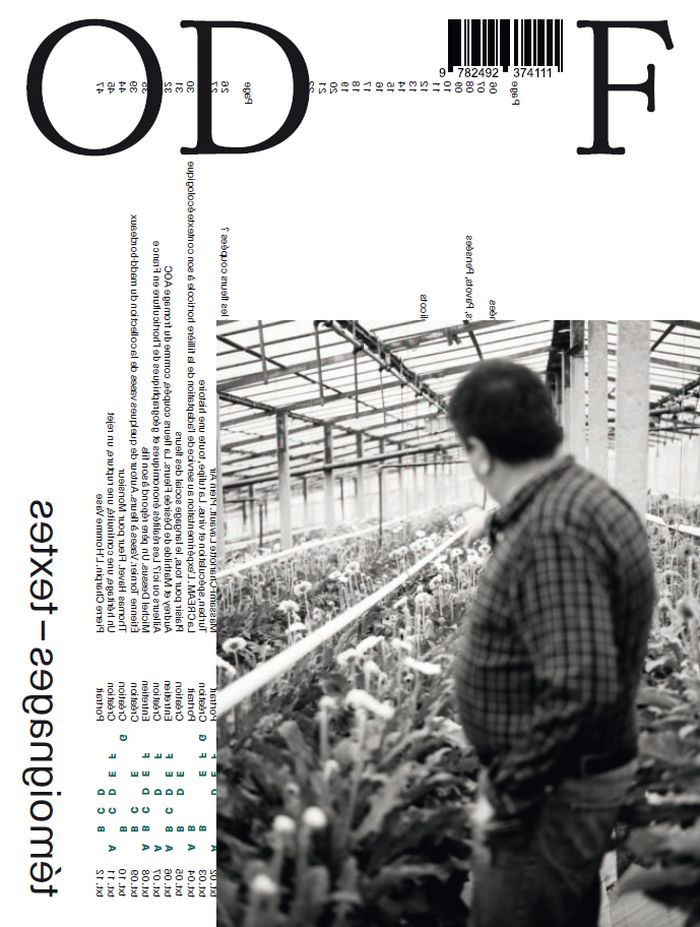
Offrir des fleurs
Offrir des fleurs
Actions:
Prix:
$39.95
(disponible sur commande)
Résumé:
L'ouvrage présente un travail autour de l'exposition Offrir des Fleurs dans le cadre de la Bourse Agora du Curateur (Agora du Design). Ceci n'est pas un catalogue. Cet ouvrage est pensé comme un outil de lecture, une continuité avec l'exposition. Cette base de données est une proposition curatoriale, axée sur une recherche rassemblant des témoignages, des textes, des(...)
$39.95
(disponible sur commande)
Résumé:
L'ouvrage présente un travail autour de l'exposition Offrir des Fleurs dans le cadre de la Bourse Agora du Curateur (Agora du Design). Ceci n'est pas un catalogue. Cet ouvrage est pensé comme un outil de lecture, une continuité avec l'exposition. Cette base de données est une proposition curatoriale, axée sur une recherche rassemblant des témoignages, des textes, des(...)
Publication:
mars 2021
mars 2021
Titre:
Offrir des fleurs
Actions:
Prix:
$39.95
(disponible sur commande)
Résumé:
L'ouvrage présente un travail autour de l'exposition Offrir des Fleurs dans le cadre de la Bourse Agora du Curateur (Agora du Design). Ceci n'est pas un catalogue. Cet ouvrage est pensé comme un outil de lecture, une continuité avec l'exposition. Cette base de données est une proposition curatoriale, axée sur une recherche rassemblant des témoignages, des textes, des entretiens, des photographies et des objets. Et si offrir des fleurs permettait de parler de design autrement ? Cette exploration curatoriale met en avant un format d'exposition capable de recevoir un contenu sensible, celui de témoignages (tmg.) relatant cette action. Du point de vue du donneur ou du receveur, ce contenu est le centre de notre attention. Ces derniers forment le noyau dur de l'exposition et de ce catalogue. À travers cette récolte variée, nous pouvons déchiffrer des systématismes, regroupés. Le panel d'acteurs est le plus large possible : classes sociales, cultures et professions confondues, interrogé entre décembre 2020 et mars 2021. Nous l'avons complété d'une recherche de contenus et d'objets relatant une dimension affective et d'échange représentant la fleur ou sa production (obj. – timbres, cartes et monnaie), ainsi qu'un reportage photographique (img. – photographies) et d'un ensemble de textes et d'entretiens (txt. – entretiens et commandes), auprès de producteurs, transformateurs de la fleur, mais aussi de curateurs et de designers. Un travail de retranscriptions met en corrélation des moments / histoires communes et leurs différences. Cette récolte permet de constituer des sujets (suj.) emboîtés où chacun des éléments de cette base de données prennent sens. Cette réponse curatoriale se veut être non circonscrite, ouverte et surtout non exhaustive.
Offrir des fleurs
Actions:
Prix:
$39.95
(disponible sur commande)
Résumé:
L'ouvrage présente un travail autour de l'exposition Offrir des Fleurs dans le cadre de la Bourse Agora du Curateur (Agora du Design). Ceci n'est pas un catalogue. Cet ouvrage est pensé comme un outil de lecture, une continuité avec l'exposition. Cette base de données est une proposition curatoriale, axée sur une recherche rassemblant des témoignages, des textes, des entretiens, des photographies et des objets. Et si offrir des fleurs permettait de parler de design autrement ? Cette exploration curatoriale met en avant un format d'exposition capable de recevoir un contenu sensible, celui de témoignages (tmg.) relatant cette action. Du point de vue du donneur ou du receveur, ce contenu est le centre de notre attention. Ces derniers forment le noyau dur de l'exposition et de ce catalogue. À travers cette récolte variée, nous pouvons déchiffrer des systématismes, regroupés. Le panel d'acteurs est le plus large possible : classes sociales, cultures et professions confondues, interrogé entre décembre 2020 et mars 2021. Nous l'avons complété d'une recherche de contenus et d'objets relatant une dimension affective et d'échange représentant la fleur ou sa production (obj. – timbres, cartes et monnaie), ainsi qu'un reportage photographique (img. – photographies) et d'un ensemble de textes et d'entretiens (txt. – entretiens et commandes), auprès de producteurs, transformateurs de la fleur, mais aussi de curateurs et de designers. Un travail de retranscriptions met en corrélation des moments / histoires communes et leurs différences. Cette récolte permet de constituer des sujets (suj.) emboîtés où chacun des éléments de cette base de données prennent sens. Cette réponse curatoriale se veut être non circonscrite, ouverte et surtout non exhaustive.
Classification:
livres
livres
Publication:
mars 2021
mars 2021
Classification:
livres
livres
Prix:
$18.75
(disponible sur commande)
Résumé:
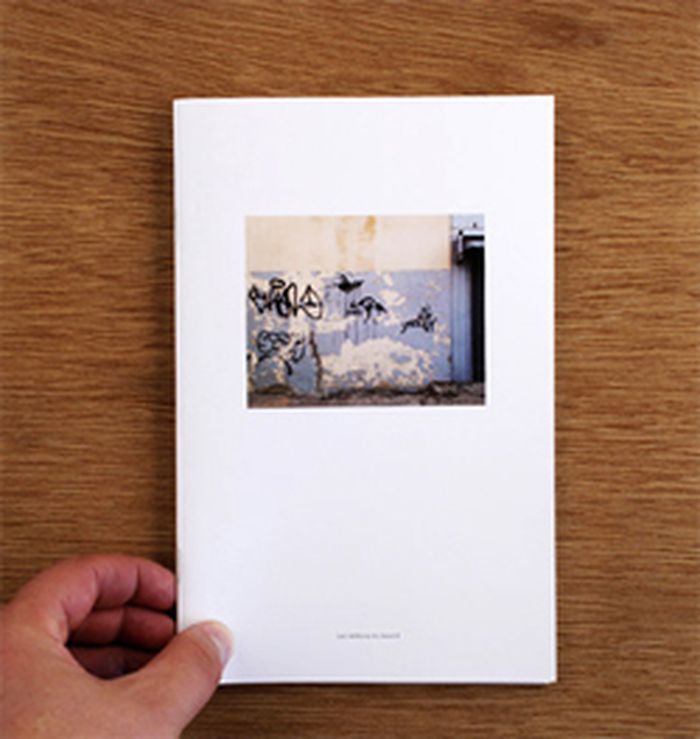
Le livre Ces oiseaux noirs présente un projet photographique explorant le paysage urbain du quartier Saint-Henri à Montréal. Cette exploration prend sa source dans la découverte de certains oiseaux noirs peints sur la surface des murs des rues et ruelles de ce quartier. Marque singulière au milieu des nombreux graffitis présents dans le paysage urbain, la peinture(...)
$18.75
(disponible sur commande)
Résumé:
Le livre Ces oiseaux noirs présente un projet photographique explorant le paysage urbain du quartier Saint-Henri à Montréal. Cette exploration prend sa source dans la découverte de certains oiseaux noirs peints sur la surface des murs des rues et ruelles de ce quartier. Marque singulière au milieu des nombreux graffitis présents dans le paysage urbain, la peinture(...)
Titre:
Louis Perreault : Ces oiseaux noirs / Rechercher St-Henri
Actions:
Prix:
$18.75
(disponible sur commande)
Résumé:
Le livre Ces oiseaux noirs présente un projet photographique explorant le paysage urbain du quartier Saint-Henri à Montréal. Cette exploration prend sa source dans la découverte de certains oiseaux noirs peints sur la surface des murs des rues et ruelles de ce quartier. Marque singulière au milieu des nombreux graffitis présents dans le paysage urbain, la peinture dégoulinante des oiseaux noirs a poussé le photographe Louis Perreault à partir à la recherche de leur créateur. S'en est suivi une quête qui amena le photographe à marcher chaque rue du quartier, photographiant au passage les lieux, les gens et les signes visuels distinctifs du territoire parcouru. Or, alors que la série d’images présente cette quête d'une manière plus ou moins chronologique, un récit de production accompagnant les images vient ajouter un aspect narratif au projet. À mesure que le lecteur découvre les images, il peut aussi suivre le parcours de réflexion suivi par l'artiste. Par cette cohabitation entre le récit et les images à caractère documentaire, Louis désire affirmer que bien que les images puissent « parler par elles-mêmes », elles sont toujours produites dans un contexte participant à la création du sens et de l'interprétation. Ce contexte, ici, devient une partie intégrante du travail, au même titre que les images elles-mêmes. Le récit raconte à la fois le parcours du photographe à travers le quartier, ses rencontres au fil des explorations et le développement d’une réflexion tentant de trouver une manière d’aborder des lieux sans nécessairement en exclure les éléments marginaux et discrets. Ainsi, ce récit oscille entre l’essai et la narration et il constitue, avec les images, un projet de recherche à la fois artistique et intellectuel.
Louis Perreault : Ces oiseaux noirs / Rechercher St-Henri
Actions:
Prix:
$18.75
(disponible sur commande)
Résumé:
Le livre Ces oiseaux noirs présente un projet photographique explorant le paysage urbain du quartier Saint-Henri à Montréal. Cette exploration prend sa source dans la découverte de certains oiseaux noirs peints sur la surface des murs des rues et ruelles de ce quartier. Marque singulière au milieu des nombreux graffitis présents dans le paysage urbain, la peinture dégoulinante des oiseaux noirs a poussé le photographe Louis Perreault à partir à la recherche de leur créateur. S'en est suivi une quête qui amena le photographe à marcher chaque rue du quartier, photographiant au passage les lieux, les gens et les signes visuels distinctifs du territoire parcouru. Or, alors que la série d’images présente cette quête d'une manière plus ou moins chronologique, un récit de production accompagnant les images vient ajouter un aspect narratif au projet. À mesure que le lecteur découvre les images, il peut aussi suivre le parcours de réflexion suivi par l'artiste. Par cette cohabitation entre le récit et les images à caractère documentaire, Louis désire affirmer que bien que les images puissent « parler par elles-mêmes », elles sont toujours produites dans un contexte participant à la création du sens et de l'interprétation. Ce contexte, ici, devient une partie intégrante du travail, au même titre que les images elles-mêmes. Le récit raconte à la fois le parcours du photographe à travers le quartier, ses rencontres au fil des explorations et le développement d’une réflexion tentant de trouver une manière d’aborder des lieux sans nécessairement en exclure les éléments marginaux et discrets. Ainsi, ce récit oscille entre l’essai et la narration et il constitue, avec les images, un projet de recherche à la fois artistique et intellectuel.
Classification:
livres
livres
Publication:
novembre 2012
novembre 2012
Sujet:
Consignation
Consignation
Classification:
livres
livres
Prix:
$42.00
(disponible sur commande)
Résumé:
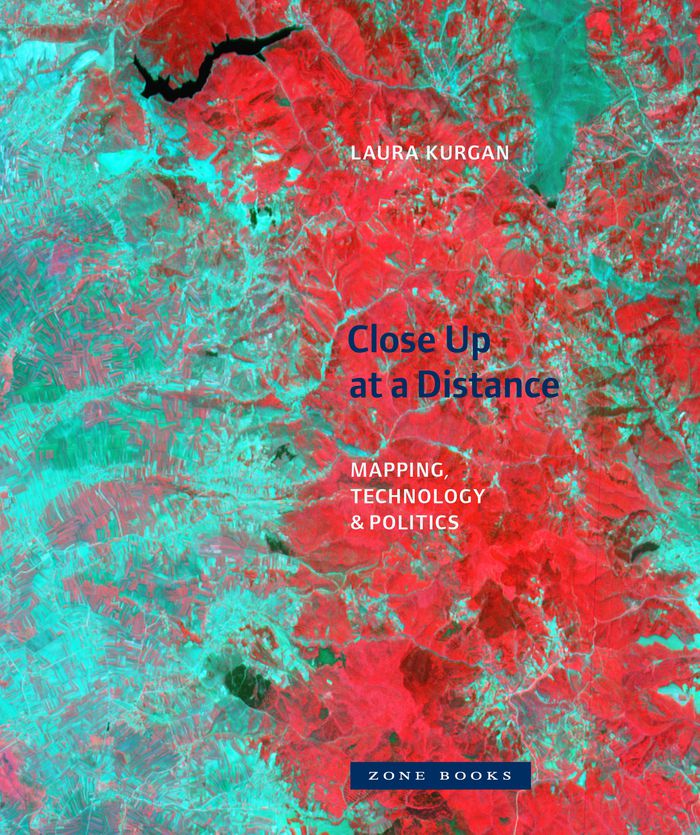
The past two decades have seen revolutionary shifts in our ability to navigate, inhabit, and define the spatial realm. The data flows that condition much of our lives now regularly include Global Positioning System (GPS) readings and satellite images of a quality once reserved for a few militaries and intelligence agencies, and powerful geographic information system (GIS)(...)
$42.00
(disponible sur commande)
Résumé:
The past two decades have seen revolutionary shifts in our ability to navigate, inhabit, and define the spatial realm. The data flows that condition much of our lives now regularly include Global Positioning System (GPS) readings and satellite images of a quality once reserved for a few militaries and intelligence agencies, and powerful geographic information system (GIS)(...)
Titre:
Close up at a distance: mapping, technology and politics
Actions:
Prix:
$42.00
(disponible sur commande)
Résumé:
The past two decades have seen revolutionary shifts in our ability to navigate, inhabit, and define the spatial realm. The data flows that condition much of our lives now regularly include Global Positioning System (GPS) readings and satellite images of a quality once reserved for a few militaries and intelligence agencies, and powerful geographic information system (GIS) software is now commonplace. These new technologies have raised fundamental questions about the intersection between physical space and its representation, virtual space and its realization. In ''Close up at a distance,'' Laura Kurgan offers a theoretical account of these new digital technologies of location and a series of practical experiments in making maps and images with spatial data. Neither simply useful tools nor objects of wonder or anxiety, the technologies of GPS, GIS, and satellite imagery become, in this book, the subject and the medium of a critical exploration. ''Close up at a distance'' records situations of intense conflict and struggle, on the one hand, and fundamental transformations in our ways of seeing and of experiencing space, on the other. Kurgan maps and theorizes mass graves, incarceration patterns, disappearing forests, and currency flows in a series of cases that range from Kuwait (1991) to Kosovo (1999), New York (2001) to Indonesia (2010). Using digital spatial hardware and software designed for military and governmental use in reconnaissance, secrecy, monitoring, ballistics, the census, and national security, Kurgan engages and confronts the politics and complexities of these technologies and their uses. At the intersection of art, architecture, activism, and geography, she uncovers, in her essays and projects, the opacities inherent in the recording of information and data and reimagines the spaces they have opened up.
Close up at a distance: mapping, technology and politics
Actions:
Prix:
$42.00
(disponible sur commande)
Résumé:
The past two decades have seen revolutionary shifts in our ability to navigate, inhabit, and define the spatial realm. The data flows that condition much of our lives now regularly include Global Positioning System (GPS) readings and satellite images of a quality once reserved for a few militaries and intelligence agencies, and powerful geographic information system (GIS) software is now commonplace. These new technologies have raised fundamental questions about the intersection between physical space and its representation, virtual space and its realization. In ''Close up at a distance,'' Laura Kurgan offers a theoretical account of these new digital technologies of location and a series of practical experiments in making maps and images with spatial data. Neither simply useful tools nor objects of wonder or anxiety, the technologies of GPS, GIS, and satellite imagery become, in this book, the subject and the medium of a critical exploration. ''Close up at a distance'' records situations of intense conflict and struggle, on the one hand, and fundamental transformations in our ways of seeing and of experiencing space, on the other. Kurgan maps and theorizes mass graves, incarceration patterns, disappearing forests, and currency flows in a series of cases that range from Kuwait (1991) to Kosovo (1999), New York (2001) to Indonesia (2010). Using digital spatial hardware and software designed for military and governmental use in reconnaissance, secrecy, monitoring, ballistics, the census, and national security, Kurgan engages and confronts the politics and complexities of these technologies and their uses. At the intersection of art, architecture, activism, and geography, she uncovers, in her essays and projects, the opacities inherent in the recording of information and data and reimagines the spaces they have opened up.
Classification:
livres
livres
Publication:
octobre 2022
octobre 2022
Sujet:
Théorie de l’architecture
Théorie de l’architecture


