


2091 Résultats
Classification:
livres
livres
Actions:
Prix:
$84.00
(disponible en magasin)
Résumé:
Beatrice Minda examines private interiors in the context of historical events in her work. In Myanmar, which was isolated for decades by a rigid military dictatorship, she photographed houses and living spaces in both cities and remote regions. She captured the traces of the inhabitants’ lives and the signs of change. In 'Dark Whispers' the ambivalent aspects of the(...)
$84.00
(disponible en magasin)
Résumé:
Beatrice Minda examines private interiors in the context of historical events in her work. In Myanmar, which was isolated for decades by a rigid military dictatorship, she photographed houses and living spaces in both cities and remote regions. She captured the traces of the inhabitants’ lives and the signs of change. In 'Dark Whispers' the ambivalent aspects of the(...)
Titre:
Beatrice Minda: Dark whispers
Actions:
Prix:
$84.00
(disponible en magasin)
Résumé:
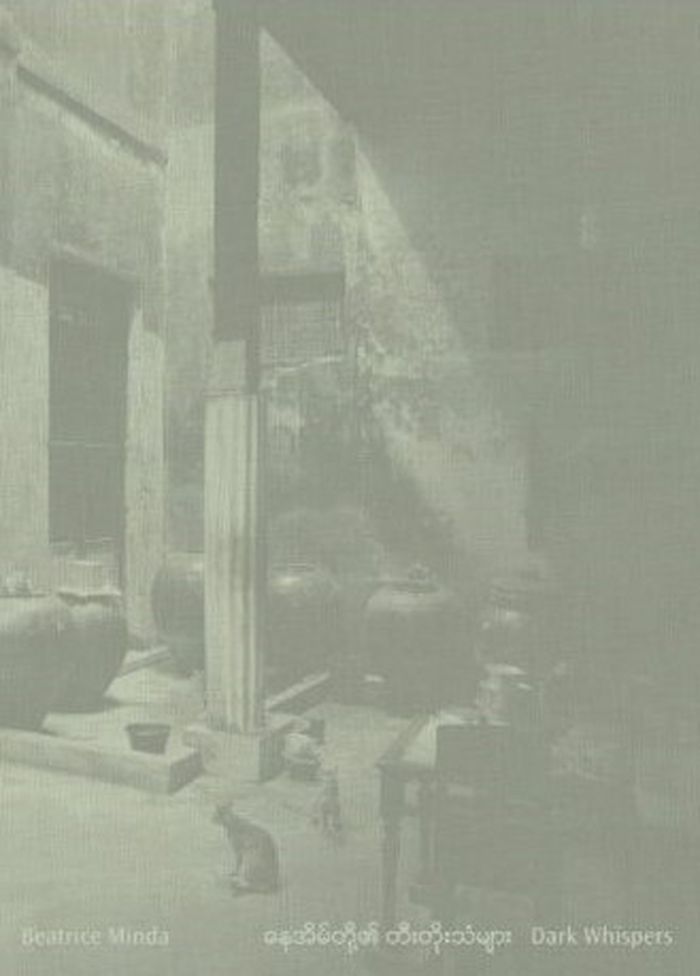
Beatrice Minda examines private interiors in the context of historical events in her work. In Myanmar, which was isolated for decades by a rigid military dictatorship, she photographed houses and living spaces in both cities and remote regions. She captured the traces of the inhabitants’ lives and the signs of change. In 'Dark Whispers' the ambivalent aspects of the British colonial period and its consequences are reflected and illuminated by short texts on the history of the houses as well as historical photographs. Minda’s photographs focus on the atmospheres of past lives and the forms of representation with which the inhabitants once sought to fulfill themselves. Often they are objects that have remained untouched for decades and bear witness to the cosmos of a vanished world. But there are also large gaps between then and now. An uncanny emptiness animates these spaces. Dark whispers echo through them — a memento mori to the many unspoken words of Burmese history.
Beatrice Minda: Dark whispers
Actions:
Prix:
$84.00
(disponible en magasin)
Résumé:
Beatrice Minda examines private interiors in the context of historical events in her work. In Myanmar, which was isolated for decades by a rigid military dictatorship, she photographed houses and living spaces in both cities and remote regions. She captured the traces of the inhabitants’ lives and the signs of change. In 'Dark Whispers' the ambivalent aspects of the British colonial period and its consequences are reflected and illuminated by short texts on the history of the houses as well as historical photographs. Minda’s photographs focus on the atmospheres of past lives and the forms of representation with which the inhabitants once sought to fulfill themselves. Often they are objects that have remained untouched for decades and bear witness to the cosmos of a vanished world. But there are also large gaps between then and now. An uncanny emptiness animates these spaces. Dark whispers echo through them — a memento mori to the many unspoken words of Burmese history.
Classification:
livres
livres
Publication:
avril 2021
avril 2021
Sujet:
Monographies photo
Monographies photo
Classification:
livres
livres
Actions:
Prix:
$44.95
(disponible sur commande)
Résumé:
“Soft power” emerged as a concept in the late twentieth century to describe international relations based not on military or economic strength, but on influence. While the resources of “hard power” are tangible—force and finance—soft power resources include ideas, knowledge, values, and culture, as well as the ability to persuade. This volume discusses soft power from the(...)
$44.95
(disponible sur commande)
Résumé:
“Soft power” emerged as a concept in the late twentieth century to describe international relations based not on military or economic strength, but on influence. While the resources of “hard power” are tangible—force and finance—soft power resources include ideas, knowledge, values, and culture, as well as the ability to persuade. This volume discusses soft power from the(...)
Titre:
Cities, museums and soft power
Actions:
Prix:
$44.95
(disponible sur commande)
Résumé:
“Soft power” emerged as a concept in the late twentieth century to describe international relations based not on military or economic strength, but on influence. While the resources of “hard power” are tangible—force and finance—soft power resources include ideas, knowledge, values, and culture, as well as the ability to persuade. This volume discusses soft power from the vantage point of museums and demonstrates how they are quietly changing the world. With contributions by thirteen experts from ten countries, Cities, Museums and Soft Power reveals the world’s 80,000 museums to be sleeping giants. Two major characteristics of soft power—the rise of cities and the role of civil society—are pushing museums from the margins toward the center as these institutions serve as education hubs, employers, magnets for creative industries, and engines of economic development. Meanwhile, the growth of technological networks and connectivity has enabled this soft power to spread even farther and deeper across the Internet and groups of people. Whether cozy and local or internationally renowned, museums possess a cultural strength that extends far beyond their walls.
Cities, museums and soft power
Actions:
Prix:
$44.95
(disponible sur commande)
Résumé:
“Soft power” emerged as a concept in the late twentieth century to describe international relations based not on military or economic strength, but on influence. While the resources of “hard power” are tangible—force and finance—soft power resources include ideas, knowledge, values, and culture, as well as the ability to persuade. This volume discusses soft power from the vantage point of museums and demonstrates how they are quietly changing the world. With contributions by thirteen experts from ten countries, Cities, Museums and Soft Power reveals the world’s 80,000 museums to be sleeping giants. Two major characteristics of soft power—the rise of cities and the role of civil society—are pushing museums from the margins toward the center as these institutions serve as education hubs, employers, magnets for creative industries, and engines of economic development. Meanwhile, the growth of technological networks and connectivity has enabled this soft power to spread even farther and deeper across the Internet and groups of people. Whether cozy and local or internationally renowned, museums possess a cultural strength that extends far beyond their walls.
Classification:
livres
livres
Publication:
août 2015
août 2015
Sujet:
Muséologie
Muséologie
Classification:
livres
livres
Actions:
Prix:
$87.00
(disponible sur commande)
Résumé:
On 4 May 1968, a few hours after angry student protesters in Paris had caused the Sorbonne to be evacuated, the exhibition ''50 Years Bauhaus'' opened at the Württembergischer Kunstverein. Conceived by Herbert Bayer, Ludwig Grote, Hans Maria Wingler and Dieter Honisch, the then director of the Kunstverein, the show is still regarded as the most influential post-war(...)
$87.00
(disponible sur commande)
Résumé:
On 4 May 1968, a few hours after angry student protesters in Paris had caused the Sorbonne to be evacuated, the exhibition ''50 Years Bauhaus'' opened at the Württembergischer Kunstverein. Conceived by Herbert Bayer, Ludwig Grote, Hans Maria Wingler and Dieter Honisch, the then director of the Kunstverein, the show is still regarded as the most influential post-war(...)
Publication:
septembre 2023
septembre 2023
Titre:
50 Years after 50 Years of the Bauhaus
Actions:
Prix:
$87.00
(disponible sur commande)
Résumé:
On 4 May 1968, a few hours after angry student protesters in Paris had caused the Sorbonne to be evacuated, the exhibition ''50 Years Bauhaus'' opened at the Württembergischer Kunstverein. Conceived by Herbert Bayer, Ludwig Grote, Hans Maria Wingler and Dieter Honisch, the then director of the Kunstverein, the show is still regarded as the most influential post-war exhibition on the Bauhaus. Fifty years after the opening of '50 Years Bauhaus'', the Württembergischer Kunstverein undertook a critical re-reading of the 1968 exhibition, with a particular focus on the ambiguous relationship that various prominent members of the Bauhaus had with National Socialism and the murky connections between the art avant-gardes and the military-industrial complex. While the 1968 exhibition historicized the reception of the Bauhaus, reducing it to West Germany and the US, the publication 50 Years After 50 Years of the Bauhaus reflects on the famous school in the context of artistic movements like the International Movement for an Imaginist Bauhaus and the Situationist International.
50 Years after 50 Years of the Bauhaus
Actions:
Prix:
$87.00
(disponible sur commande)
Résumé:
On 4 May 1968, a few hours after angry student protesters in Paris had caused the Sorbonne to be evacuated, the exhibition ''50 Years Bauhaus'' opened at the Württembergischer Kunstverein. Conceived by Herbert Bayer, Ludwig Grote, Hans Maria Wingler and Dieter Honisch, the then director of the Kunstverein, the show is still regarded as the most influential post-war exhibition on the Bauhaus. Fifty years after the opening of '50 Years Bauhaus'', the Württembergischer Kunstverein undertook a critical re-reading of the 1968 exhibition, with a particular focus on the ambiguous relationship that various prominent members of the Bauhaus had with National Socialism and the murky connections between the art avant-gardes and the military-industrial complex. While the 1968 exhibition historicized the reception of the Bauhaus, reducing it to West Germany and the US, the publication 50 Years After 50 Years of the Bauhaus reflects on the famous school in the context of artistic movements like the International Movement for an Imaginist Bauhaus and the Situationist International.
Classification:
livres
livres
Publication:
septembre 2023
septembre 2023
Classification:
livres
livres
Actions:
Prix:
$41.95
(disponible sur commande)
Résumé:
Jacopo de' Barbari's "View of Venice," a woodcut first printed in the year 1500, presents a bird's-eye portrait of Venice at its peak as an international hub of trade, art, and culture. An artistic and cartographic masterpiece of the Renaissance, the View depicts Venice as a vibrant, waterborne city interconnected by canals and bridges and filled with ornate buildings,(...)
$41.95
(disponible sur commande)
Résumé:
Jacopo de' Barbari's "View of Venice," a woodcut first printed in the year 1500, presents a bird's-eye portrait of Venice at its peak as an international hub of trade, art, and culture. An artistic and cartographic masterpiece of the Renaissance, the View depicts Venice as a vibrant, waterborne city interconnected by canals and bridges and filled with ornate buildings,(...)
Titre:
A view of Venice: Portrait of a Renaissance city
Actions:
Prix:
$41.95
(disponible sur commande)
Résumé:
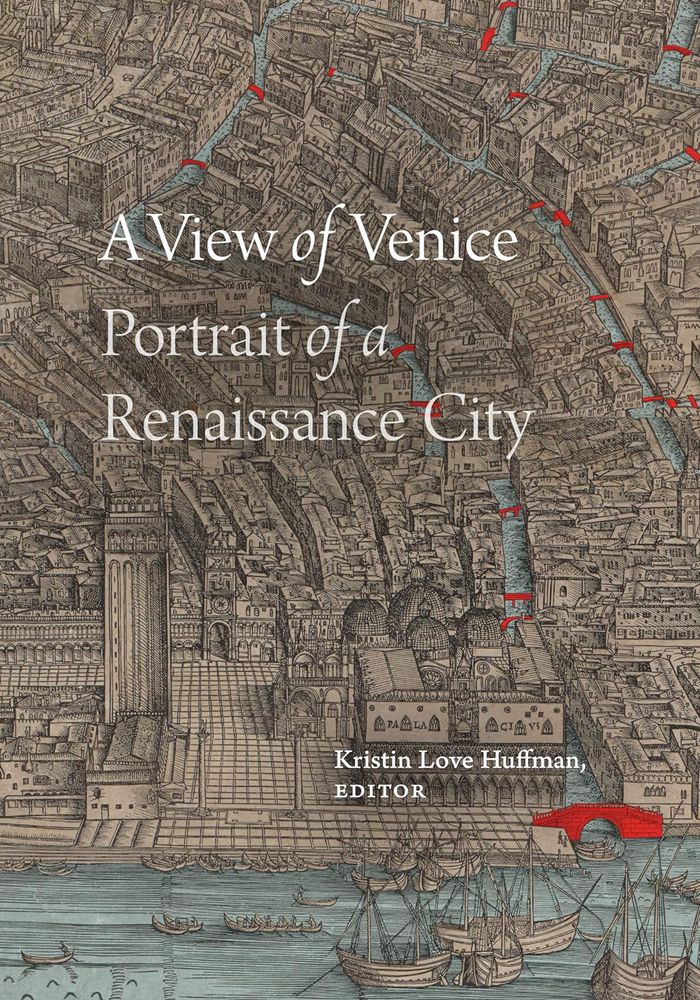
Jacopo de' Barbari's "View of Venice," a woodcut first printed in the year 1500, presents a bird's-eye portrait of Venice at its peak as an international hub of trade, art, and culture. An artistic and cartographic masterpiece of the Renaissance, the View depicts Venice as a vibrant, waterborne city interconnected by canals and bridges and filled with ornate buildings, elaborate gardens, and seafaring vessels. The contributors to "A view of Venice: Portrait of a Renaissance city" draw on a high-resolution digital scan of the over nine-foot-wide composite print to examine the complexities of this extraordinary woodcut and portrayal of early modern Venetian life. The essays show how the View constitutes an advanced material artifact of artistic, humanist, and scientific culture. They also outline the ways the print reveals information about the city's economic and military power, religious and social infrastructures, and cosmopolitan residents. Featuring methodological advancements in the digital humanities, "A view of Venice" highlights the reality and myths of a topographically unique, mystical city and its place in the world.
A view of Venice: Portrait of a Renaissance city
Actions:
Prix:
$41.95
(disponible sur commande)
Résumé:
Jacopo de' Barbari's "View of Venice," a woodcut first printed in the year 1500, presents a bird's-eye portrait of Venice at its peak as an international hub of trade, art, and culture. An artistic and cartographic masterpiece of the Renaissance, the View depicts Venice as a vibrant, waterborne city interconnected by canals and bridges and filled with ornate buildings, elaborate gardens, and seafaring vessels. The contributors to "A view of Venice: Portrait of a Renaissance city" draw on a high-resolution digital scan of the over nine-foot-wide composite print to examine the complexities of this extraordinary woodcut and portrayal of early modern Venetian life. The essays show how the View constitutes an advanced material artifact of artistic, humanist, and scientific culture. They also outline the ways the print reveals information about the city's economic and military power, religious and social infrastructures, and cosmopolitan residents. Featuring methodological advancements in the digital humanities, "A view of Venice" highlights the reality and myths of a topographically unique, mystical city and its place in the world.
Classification:
livres
livres
Publication:
janvier 2024
janvier 2024
Sujet:
Théorie de l’art
Théorie de l’art
Classification:
livres
livres
Actions:
Prix:
$44.95
(disponible sur commande)
Résumé:
This book is a real first in the world of architecture publishing. It is the first time that the work of Donald Judd has been fully expounded in an architectural context. As one of the most important exponents of American minimal art, Donald Judd (1928–1994) has exerted a lasting influence in the field of architecture. Among the lesser-known aspects of his work is a(...)
$44.95
(disponible sur commande)
Résumé:
This book is a real first in the world of architecture publishing. It is the first time that the work of Donald Judd has been fully expounded in an architectural context. As one of the most important exponents of American minimal art, Donald Judd (1928–1994) has exerted a lasting influence in the field of architecture. Among the lesser-known aspects of his work is a(...)
Sujet:
Architecture, monographies
Architecture, monographies
Publication:
septembre 2007, Basel, Boston, Berlin
septembre 2007, Basel, Boston, Berlin
Titre:
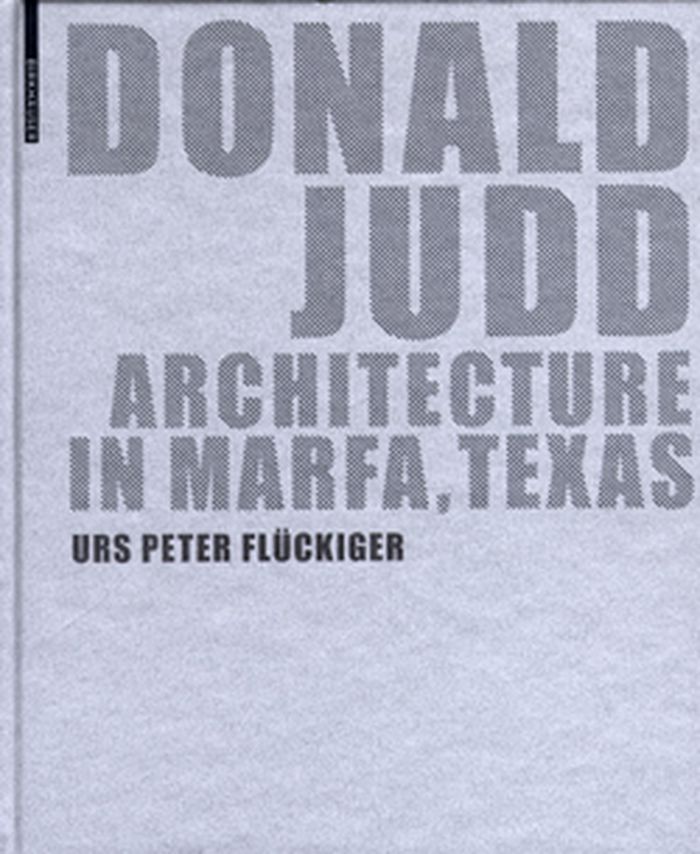
Donald Judd : Architecture in Marfa, Texas
Actions:
Prix:
$44.95
(disponible sur commande)
Résumé:
This book is a real first in the world of architecture publishing. It is the first time that the work of Donald Judd has been fully expounded in an architectural context. As one of the most important exponents of American minimal art, Donald Judd (1928–1994) has exerted a lasting influence in the field of architecture. Among the lesser-known aspects of his work is a large collection of architectural designs that explore the relationship between architecture and art. Of special importance for Judd’s work in this field is a former military fort in Marfa, Texas, part of which he purchased and then, beginning in 1971, transformed into one of the largest existing ensembles of contemporary art. The Marfa buildings have for the first time been carefully measured and drawn to scale by the author and his students. Using standard CAD drawings together with historical and contemporary photographs, this volume illustrates Judd’s architectural alterations to the buildings in Marfa, and discusses and describes them in its accompanying text. The result is an invaluable source of inspiration for contemporary architecture.
Donald Judd : Architecture in Marfa, Texas
Actions:
Prix:
$44.95
(disponible sur commande)
Résumé:
This book is a real first in the world of architecture publishing. It is the first time that the work of Donald Judd has been fully expounded in an architectural context. As one of the most important exponents of American minimal art, Donald Judd (1928–1994) has exerted a lasting influence in the field of architecture. Among the lesser-known aspects of his work is a large collection of architectural designs that explore the relationship between architecture and art. Of special importance for Judd’s work in this field is a former military fort in Marfa, Texas, part of which he purchased and then, beginning in 1971, transformed into one of the largest existing ensembles of contemporary art. The Marfa buildings have for the first time been carefully measured and drawn to scale by the author and his students. Using standard CAD drawings together with historical and contemporary photographs, this volume illustrates Judd’s architectural alterations to the buildings in Marfa, and discusses and describes them in its accompanying text. The result is an invaluable source of inspiration for contemporary architecture.
Classification:
livres
livres
Publication:
septembre 2007, Basel, Boston, Berlin
septembre 2007, Basel, Boston, Berlin
Sujet:
Architecture, monographies
Architecture, monographies
Classification:
livres
livres
Actions:
Prix:
$39.99
(disponible en magasin)
Résumé:
In 1664, England decided to invade the Dutch-controlled city of New Amsterdam on Manhattan Island. Charles II and his brother, the Duke of York, had dreams of empire, and their archrivals, the Dutch, were in the way. But Richard Nicolls, the military officer who led the English flotilla bent on destruction, changed his strategy once he encountered Peter Stuyvesant, New(...)
$39.99
(disponible en magasin)
Résumé:
In 1664, England decided to invade the Dutch-controlled city of New Amsterdam on Manhattan Island. Charles II and his brother, the Duke of York, had dreams of empire, and their archrivals, the Dutch, were in the way. But Richard Nicolls, the military officer who led the English flotilla bent on destruction, changed his strategy once he encountered Peter Stuyvesant, New(...)
Titre:
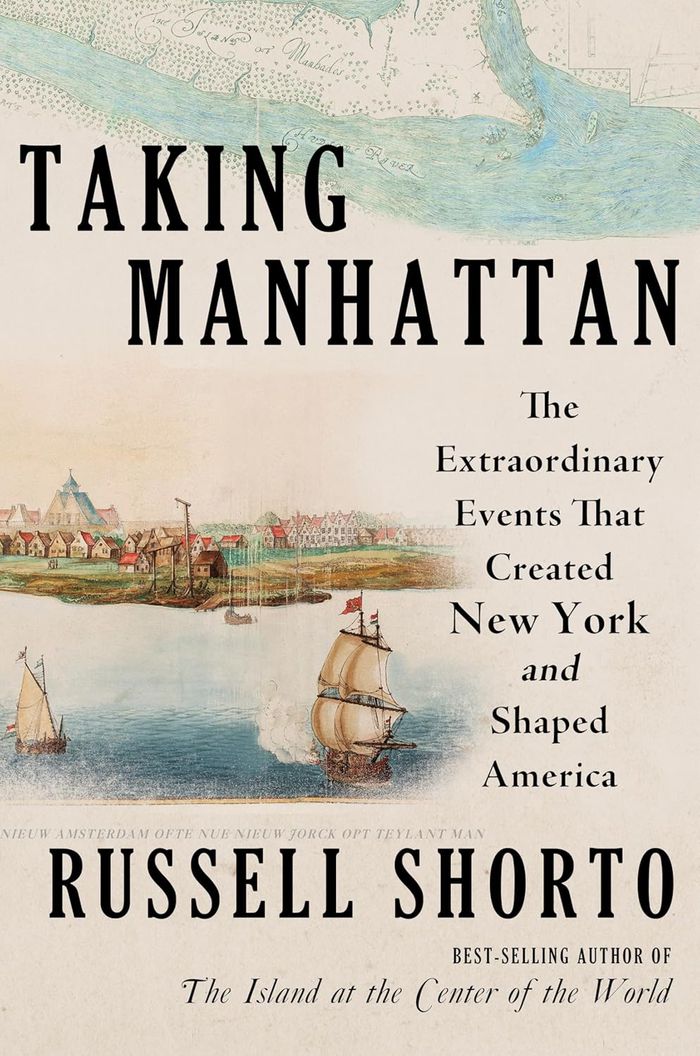
Taking Manhattan: The extraordinary events that created New York and shaped America
Actions:
Prix:
$39.99
(disponible en magasin)
Résumé:
In 1664, England decided to invade the Dutch-controlled city of New Amsterdam on Manhattan Island. Charles II and his brother, the Duke of York, had dreams of empire, and their archrivals, the Dutch, were in the way. But Richard Nicolls, the military officer who led the English flotilla bent on destruction, changed his strategy once he encountered Peter Stuyvesant, New Netherland’s canny director general. Bristling with vibrant characters, "Taking Manhattan" reveals the founding of New York to be an invention, the result of creative negotiations that would blend the multiethnic, capitalistic society of New Amsterdam with the power of the rising English empire. But the birth of what might be termed the first modern city is also a story of the brutal dispossession of Native Americans and of the roots of American slavery. The book draws from newly translated materials and illuminates neglected histories—of religious refugees, Indigenous tribes, and free and enslaved Africans. "Taking Manhattan" tells the riveting story of the birth of New York City as a center of capitalism and pluralism, a foundation from which America would rise.
Taking Manhattan: The extraordinary events that created New York and shaped America
Actions:
Prix:
$39.99
(disponible en magasin)
Résumé:
In 1664, England decided to invade the Dutch-controlled city of New Amsterdam on Manhattan Island. Charles II and his brother, the Duke of York, had dreams of empire, and their archrivals, the Dutch, were in the way. But Richard Nicolls, the military officer who led the English flotilla bent on destruction, changed his strategy once he encountered Peter Stuyvesant, New Netherland’s canny director general. Bristling with vibrant characters, "Taking Manhattan" reveals the founding of New York to be an invention, the result of creative negotiations that would blend the multiethnic, capitalistic society of New Amsterdam with the power of the rising English empire. But the birth of what might be termed the first modern city is also a story of the brutal dispossession of Native Americans and of the roots of American slavery. The book draws from newly translated materials and illuminates neglected histories—of religious refugees, Indigenous tribes, and free and enslaved Africans. "Taking Manhattan" tells the riveting story of the birth of New York City as a center of capitalism and pluralism, a foundation from which America would rise.
Classification:
livres
livres
Publication:
mars 2025
mars 2025
Classification:
livres
livres
Actions:
Prix:
$22.99
(disponible sur commande)
Résumé:
"Thinking after Gaza" means recognizing the collapse of universal reason and democracy, the humanistic values that were the famed—and fragile—promise of modernity. But it also means searching for ways to escape the grim future awaiting those born in this disenchanted century: this century that promises to be the last, in which thought has lost all political power and the(...)
$22.99
(disponible sur commande)
Résumé:
"Thinking after Gaza" means recognizing the collapse of universal reason and democracy, the humanistic values that were the famed—and fragile—promise of modernity. But it also means searching for ways to escape the grim future awaiting those born in this disenchanted century: this century that promises to be the last, in which thought has lost all political power and the(...)
Titre:
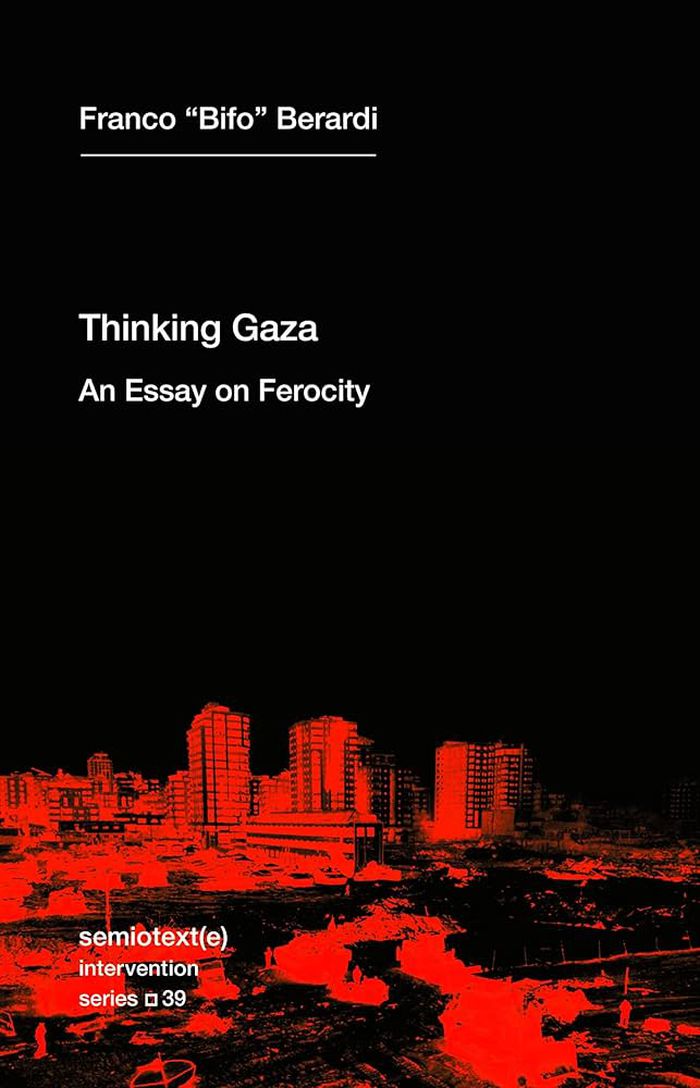
Thinking Gaza: An essay on ferocity
Actions:
Prix:
$22.99
(disponible sur commande)
Résumé:
"Thinking after Gaza" means recognizing the collapse of universal reason and democracy, the humanistic values that were the famed—and fragile—promise of modernity. But it also means searching for ways to escape the grim future awaiting those born in this disenchanted century: this century that promises to be the last, in which thought has lost all political power and the survival instinct struggles to withstand the ferocity of techno-military extermination machines. To the generation born in the twilight of Western civilization, we owe this last act of thinking, so as to imagine the desertion of our barbaric present, along pathways that have yet to be illuminated. The latest essay by renowned Italian autonomist theorist Franco “Bifo” Berardi, ''Thinking Gaza'' is a reflection on the multivalent consequences—political, philosophical, civilizational—of the current genocide in Gaza and the West Bank. Bearing sober witness to the conditions on the ground in the Occupied Territories, while tracking the “ferocious optimism” that has replaced Enlightenment ideals, this book is addressed not only to activists but also to pacifist philosophers, historians, and theologians.
Thinking Gaza: An essay on ferocity
Actions:
Prix:
$22.99
(disponible sur commande)
Résumé:
"Thinking after Gaza" means recognizing the collapse of universal reason and democracy, the humanistic values that were the famed—and fragile—promise of modernity. But it also means searching for ways to escape the grim future awaiting those born in this disenchanted century: this century that promises to be the last, in which thought has lost all political power and the survival instinct struggles to withstand the ferocity of techno-military extermination machines. To the generation born in the twilight of Western civilization, we owe this last act of thinking, so as to imagine the desertion of our barbaric present, along pathways that have yet to be illuminated. The latest essay by renowned Italian autonomist theorist Franco “Bifo” Berardi, ''Thinking Gaza'' is a reflection on the multivalent consequences—political, philosophical, civilizational—of the current genocide in Gaza and the West Bank. Bearing sober witness to the conditions on the ground in the Occupied Territories, while tracking the “ferocious optimism” that has replaced Enlightenment ideals, this book is addressed not only to activists but also to pacifist philosophers, historians, and theologians.
Classification:
livres
livres
Publication:
mars 2026
mars 2026
Sujet:
Théorie/ philosophie
Théorie/ philosophie
Classification:
livres
livres
Actions:
Prix:
$80.95
(disponible sur commande)
Résumé:
In late 20th century urban Europe, a great many landmarks of industrial, merchant and military activity were abandoned and fell into disuse. No longer limited to a specific use or content, these 'available' structures could be adapted to house a wide range of cultural projects. The modular nature of the buildings enabled them to be transformed and utilized for(...)
$80.95
(disponible sur commande)
Résumé:
In late 20th century urban Europe, a great many landmarks of industrial, merchant and military activity were abandoned and fell into disuse. No longer limited to a specific use or content, these 'available' structures could be adapted to house a wide range of cultural projects. The modular nature of the buildings enabled them to be transformed and utilized for(...)
Sujet:
Structures d’ingénierie
Structures d’ingénierie
Publication:
avril 2002, Basel / Berlin / Boston
avril 2002, Basel / Berlin / Boston
Titre:
Factories : conversions for urban culture
Actions:
Prix:
$80.95
(disponible sur commande)
Résumé:
In late 20th century urban Europe, a great many landmarks of industrial, merchant and military activity were abandoned and fell into disuse. No longer limited to a specific use or content, these 'available' structures could be adapted to house a wide range of cultural projects. The modular nature of the buildings enabled them to be transformed and utilized for experimentation, artistic creation and the blending of people and cultures. An international team of photographers and authors including artists, sociologists and exhibition designers have come together to present a striking visual portrayal of industrial buildings - some typical, some extraordinary - which have all been converted into cultural buildings. Amongst the projects are Ateneu Popular in Barcelona, the City Arts Centre in Dublin, the WUK in Vienna, and the Kaapelitehdas in Helsinki. Further examples have been taken from Belgium, Denmark, Germany, France, Great Britain, Italy, the Netherlands, Sweden, and Slovenia. The wide variety of uses featured in this book clearly show that architecture has a significant role to play in an urban life beyond the monotony of commerce.
Factories : conversions for urban culture
Actions:
Prix:
$80.95
(disponible sur commande)
Résumé:
In late 20th century urban Europe, a great many landmarks of industrial, merchant and military activity were abandoned and fell into disuse. No longer limited to a specific use or content, these 'available' structures could be adapted to house a wide range of cultural projects. The modular nature of the buildings enabled them to be transformed and utilized for experimentation, artistic creation and the blending of people and cultures. An international team of photographers and authors including artists, sociologists and exhibition designers have come together to present a striking visual portrayal of industrial buildings - some typical, some extraordinary - which have all been converted into cultural buildings. Amongst the projects are Ateneu Popular in Barcelona, the City Arts Centre in Dublin, the WUK in Vienna, and the Kaapelitehdas in Helsinki. Further examples have been taken from Belgium, Denmark, Germany, France, Great Britain, Italy, the Netherlands, Sweden, and Slovenia. The wide variety of uses featured in this book clearly show that architecture has a significant role to play in an urban life beyond the monotony of commerce.
Classification:
livres
livres
Publication:
avril 2002, Basel / Berlin / Boston
avril 2002, Basel / Berlin / Boston
Sujet:
Structures d’ingénierie
Structures d’ingénierie
Classification:
livres
livres
Prix:
$29.95
(disponible sur commande)
Résumé:
The Cold War was the war that never happened. Nonetheless, it spurred the most significant buildup of military contingency this country has ever known: from the bunkers of Greenbrier, West Virginia, to the "proving grounds" of Nevada, where entire cities were built only to be vaporized. The Cold War was waged on a territory that knew no boundaries but left few traces.(...)
$29.95
(disponible sur commande)
Résumé:
The Cold War was the war that never happened. Nonetheless, it spurred the most significant buildup of military contingency this country has ever known: from the bunkers of Greenbrier, West Virginia, to the "proving grounds" of Nevada, where entire cities were built only to be vaporized. The Cold War was waged on a territory that knew no boundaries but left few traces.(...)
Titre:
Survival city : adventures among the ruins of atomic America
Actions:
Prix:
$29.95
(disponible sur commande)
Résumé:
The Cold War was the war that never happened. Nonetheless, it spurred the most significant buildup of military contingency this country has ever known: from the bunkers of Greenbrier, West Virginia, to the "proving grounds" of Nevada, where entire cities were built only to be vaporized. The Cold War was waged on a territory that knew no boundaries but left few traces. In this fascinating--and at turns frightening and comical--travelogue to the hidden battlefields of the Cold War, Tom Vanderbilt travels the Interstate (itself a product of the Cold War) to uncover the sites of Cold War architecture and reflect on their lasting heritage. In the process, Vanderbilt shows us what the Cold War landscape looked like, how architecture tried to adapt to the threat of mass destruction, how cities coped with the knowledge that they were nuclear targets, and finally what remains of the Cold War theater today, both its visible and invisible legacies. Ultimately, Vanderbilt gives us a deep look into our cultural soul, the dreams and fears that drove us for the last half of the 20th century.
Survival city : adventures among the ruins of atomic America
Actions:
Prix:
$29.95
(disponible sur commande)
Résumé:
The Cold War was the war that never happened. Nonetheless, it spurred the most significant buildup of military contingency this country has ever known: from the bunkers of Greenbrier, West Virginia, to the "proving grounds" of Nevada, where entire cities were built only to be vaporized. The Cold War was waged on a territory that knew no boundaries but left few traces. In this fascinating--and at turns frightening and comical--travelogue to the hidden battlefields of the Cold War, Tom Vanderbilt travels the Interstate (itself a product of the Cold War) to uncover the sites of Cold War architecture and reflect on their lasting heritage. In the process, Vanderbilt shows us what the Cold War landscape looked like, how architecture tried to adapt to the threat of mass destruction, how cities coped with the knowledge that they were nuclear targets, and finally what remains of the Cold War theater today, both its visible and invisible legacies. Ultimately, Vanderbilt gives us a deep look into our cultural soul, the dreams and fears that drove us for the last half of the 20th century.
Classification:
livres
livres
Publication:
mars 2002, New York
mars 2002, New York
Sujet:
Théorie de l’architecture
Théorie de l’architecture
Classification:
livres
livres
Actions:
Prix:
$27.95
(disponible sur commande)
Résumé:
When World War II came along, the American military found itself in need of a prefabricated, lightweight shelter that could be easily shipped and quickly assembled. The quonset hut, that sliced tube of corrugated metal, was the answer. Over a hundred thousand were produced as part of the war effort. In its aftermath, even more were built and existing huts were adapted to(...)
$27.95
(disponible sur commande)
Résumé:
When World War II came along, the American military found itself in need of a prefabricated, lightweight shelter that could be easily shipped and quickly assembled. The quonset hut, that sliced tube of corrugated metal, was the answer. Over a hundred thousand were produced as part of the war effort. In its aftermath, even more were built and existing huts were adapted to(...)
Titre:
Quonset hut : metal living for a modern age
Actions:
Prix:
$27.95
(disponible sur commande)
Résumé:
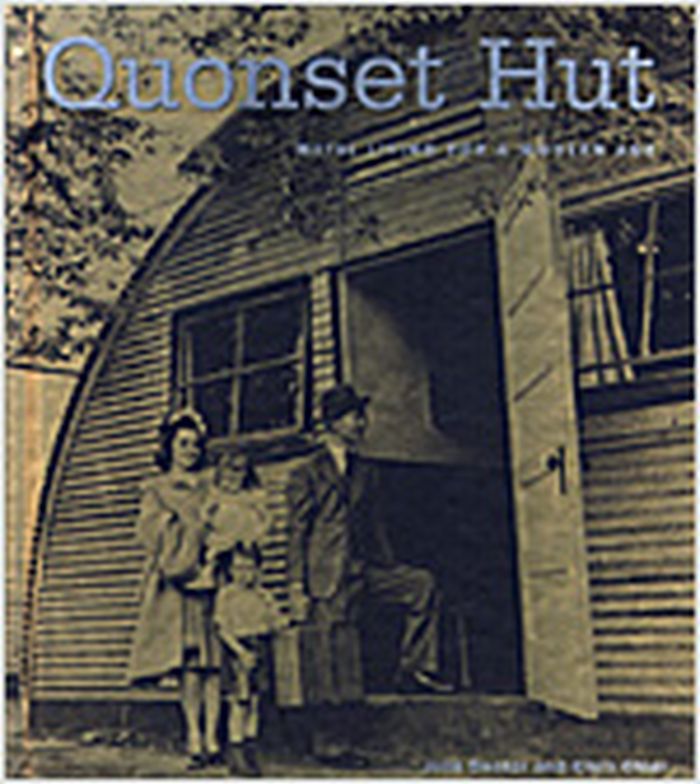
When World War II came along, the American military found itself in need of a prefabricated, lightweight shelter that could be easily shipped and quickly assembled. The quonset hut, that sliced tube of corrugated metal, was the answer. Over a hundred thousand were produced as part of the war effort. In its aftermath, even more were built and existing huts were adapted to house the postwar population boom. Of course, it couldn't last: the American desire for permanence meant decay and neglect for many of these rough-and-ready shelters and quickie warehouses. But in the midst of its almost tragic tale of extinction, the quonset hut has emerged as an unexpected icon of Americana and an oasis of architectural imagination. Travel the back roads of America and you will find the quonset's distinctive shape enclosing everything from houses of worship to houses of pancakes. "Quonset Hut" tells the story of this unique architectural phenomena, from its birth during WWII as a mass-production shelter to its new status as an icon of American pragmatism, ingenuity, perseverance, and individuality.
Quonset hut : metal living for a modern age
Actions:
Prix:
$27.95
(disponible sur commande)
Résumé:
When World War II came along, the American military found itself in need of a prefabricated, lightweight shelter that could be easily shipped and quickly assembled. The quonset hut, that sliced tube of corrugated metal, was the answer. Over a hundred thousand were produced as part of the war effort. In its aftermath, even more were built and existing huts were adapted to house the postwar population boom. Of course, it couldn't last: the American desire for permanence meant decay and neglect for many of these rough-and-ready shelters and quickie warehouses. But in the midst of its almost tragic tale of extinction, the quonset hut has emerged as an unexpected icon of Americana and an oasis of architectural imagination. Travel the back roads of America and you will find the quonset's distinctive shape enclosing everything from houses of worship to houses of pancakes. "Quonset Hut" tells the story of this unique architectural phenomena, from its birth during WWII as a mass-production shelter to its new status as an icon of American pragmatism, ingenuity, perseverance, and individuality.
Classification:
livres
livres
Publication:
août 2005, New York
août 2005, New York
Sujet:
livres soldés
livres soldés


