


2095 Résultats
Classification:
livres
livres
Prix:
$40.95
(disponible sur commande)
Résumé:
"Patterned Ground" unravels the entangled relationships between nature and culture. Around 100 entries by leading names in new geography and related disciplines focus on various ‘objects’ in the landscape – from beaches to battlefields, bees to horses, police stations to post-offices, trees to tractors. Each piece, written by an expert in the field, explores the way in(...)
$40.95
(disponible sur commande)
Résumé:
"Patterned Ground" unravels the entangled relationships between nature and culture. Around 100 entries by leading names in new geography and related disciplines focus on various ‘objects’ in the landscape – from beaches to battlefields, bees to horses, police stations to post-offices, trees to tractors. Each piece, written by an expert in the field, explores the way in(...)
Sujet:
Théorie de l’urbanisme
Théorie de l’urbanisme
Publication:
mars 2004, London
mars 2004, London
Titre:
Patterned ground : entanglements of nature and culture
Actions:
Prix:
$40.95
(disponible sur commande)
Résumé:
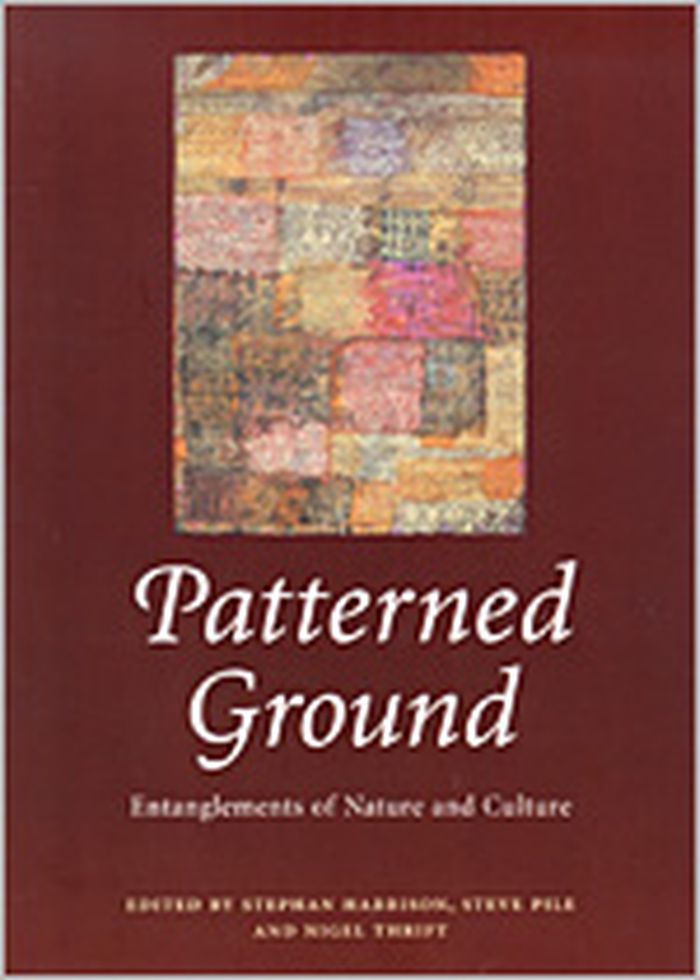
"Patterned Ground" unravels the entangled relationships between nature and culture. Around 100 entries by leading names in new geography and related disciplines focus on various ‘objects’ in the landscape – from beaches to battlefields, bees to horses, police stations to post-offices, trees to tractors. Each piece, written by an expert in the field, explores the way in which we understand that object and its relationship to the world around it. This book is neither encyclopædia nor dictionary, but a knowledgeable and impassioned engagement with the world. In this sense, it chimes with earlier experiments in understanding the earth and its landscapes, whether these endeavours have been conducted within the sciences, the social sciences or the arts. "Patterned Ground" backtracks from familiar and obvious ways of seeing patterns in the world, and discovers it anew. In this way, it opens up new possibilities for thinking about the relationships between ourselves, objects and the ground on which we walk.
Patterned ground : entanglements of nature and culture
Actions:
Prix:
$40.95
(disponible sur commande)
Résumé:
"Patterned Ground" unravels the entangled relationships between nature and culture. Around 100 entries by leading names in new geography and related disciplines focus on various ‘objects’ in the landscape – from beaches to battlefields, bees to horses, police stations to post-offices, trees to tractors. Each piece, written by an expert in the field, explores the way in which we understand that object and its relationship to the world around it. This book is neither encyclopædia nor dictionary, but a knowledgeable and impassioned engagement with the world. In this sense, it chimes with earlier experiments in understanding the earth and its landscapes, whether these endeavours have been conducted within the sciences, the social sciences or the arts. "Patterned Ground" backtracks from familiar and obvious ways of seeing patterns in the world, and discovers it anew. In this way, it opens up new possibilities for thinking about the relationships between ourselves, objects and the ground on which we walk.
Classification:
livres
livres
Publication:
mars 2004, London
mars 2004, London
Sujet:
Théorie de l’urbanisme
Théorie de l’urbanisme
Classification:
livres
livres
Actions:
Prix:
$78.00
(disponible sur commande)
Résumé:
This book presents innovative examples of hidden architecture: buildings that are designed to disappear into their surroundings or hide in plain sight. In the city, hidden buildings are often designed to provide the occupants with privacy and protection from the busy world outside or they can be incorporated into the streetscape to free up space for public use. In the(...)
$78.00
(disponible sur commande)
Résumé:
This book presents innovative examples of hidden architecture: buildings that are designed to disappear into their surroundings or hide in plain sight. In the city, hidden buildings are often designed to provide the occupants with privacy and protection from the busy world outside or they can be incorporated into the streetscape to free up space for public use. In the(...)
Titre:
Hidden architecture: buildings that blend in
Actions:
Prix:
$78.00
(disponible sur commande)
Résumé:
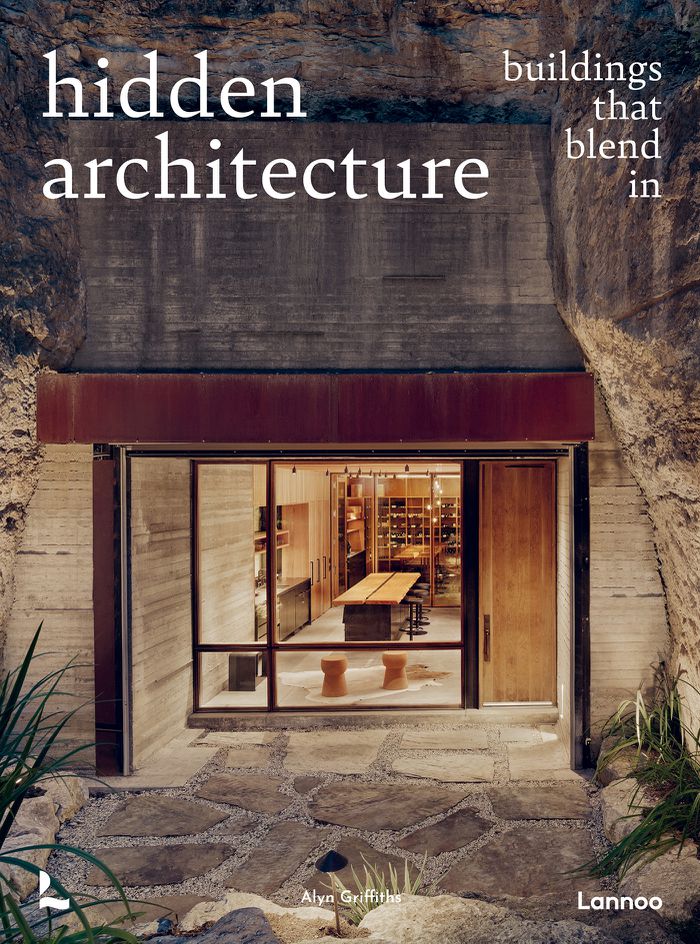
This book presents innovative examples of hidden architecture: buildings that are designed to disappear into their surroundings or hide in plain sight. In the city, hidden buildings are often designed to provide the occupants with privacy and protection from the busy world outside or they can be incorporated into the streetscape to free up space for public use. In the countryside, buildings should not spoil a scenic landscape, so they can be designed to become a part of it. Buildings can be buried underground, hidden amongst trees, covered with greenery or even sunk into the sea. They can be clad in mirrors to reflect their surroundings, disappear beneath an urban plaza or be hidden from view on top of another building. Each of these imaginative solutions offers a way for architecture to blend in rather than stand out. ''Hidden architecture'' tells the stories of projects from around the world that are cleverly disguised but still beautifully detailed and outstanding in their execution.
Hidden architecture: buildings that blend in
Actions:
Prix:
$78.00
(disponible sur commande)
Résumé:
This book presents innovative examples of hidden architecture: buildings that are designed to disappear into their surroundings or hide in plain sight. In the city, hidden buildings are often designed to provide the occupants with privacy and protection from the busy world outside or they can be incorporated into the streetscape to free up space for public use. In the countryside, buildings should not spoil a scenic landscape, so they can be designed to become a part of it. Buildings can be buried underground, hidden amongst trees, covered with greenery or even sunk into the sea. They can be clad in mirrors to reflect their surroundings, disappear beneath an urban plaza or be hidden from view on top of another building. Each of these imaginative solutions offers a way for architecture to blend in rather than stand out. ''Hidden architecture'' tells the stories of projects from around the world that are cleverly disguised but still beautifully detailed and outstanding in their execution.
Classification:
livres
livres
Publication:
octobre 2022
octobre 2022
Sujet:
Architecture contemporaine
Architecture contemporaine
Classification:
livres
livres
Titre:
Greening the city
Greening the city
Actions:
Prix:
$54.00
(disponible sur commande)
Résumé:
This collection brings a unified focus to new research that is expanding the boundaries of our understanding of people's relationship to their built and 'natural' environments. In its own way, each essay raises the same question: What is the nature of nature in the city and how has it changed over the past century? Together, these essays open a new frontier of(...)
$54.00
(disponible sur commande)
Résumé:
This collection brings a unified focus to new research that is expanding the boundaries of our understanding of people's relationship to their built and 'natural' environments. In its own way, each essay raises the same question: What is the nature of nature in the city and how has it changed over the past century? Together, these essays open a new frontier of(...)
Titre:
Greening the city
Actions:
Prix:
$54.00
(disponible sur commande)
Résumé:
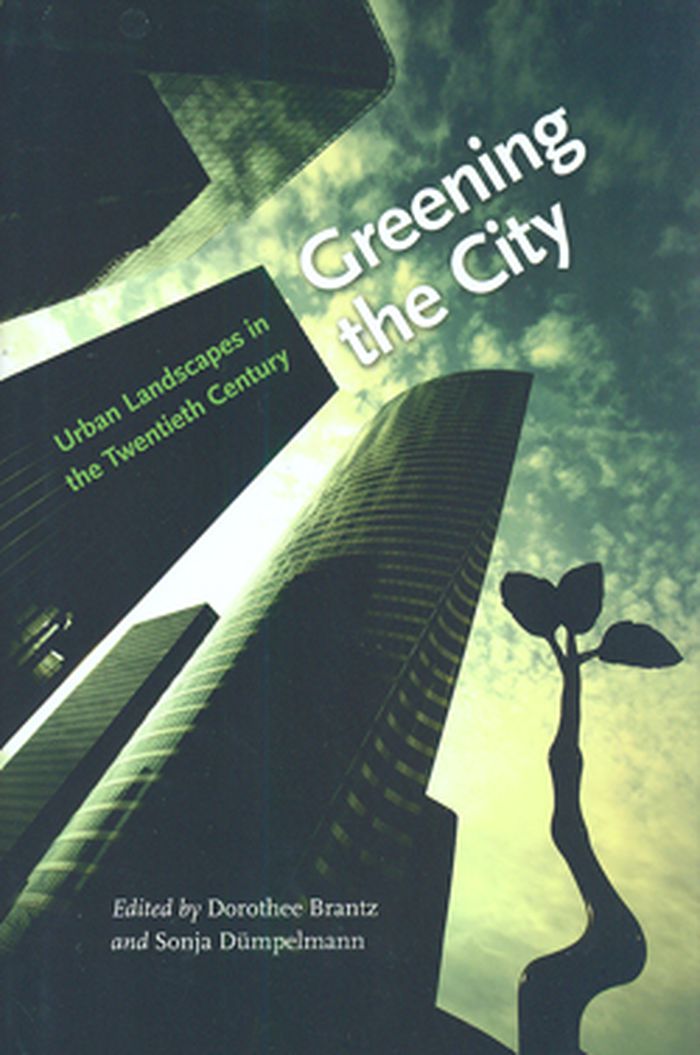
This collection brings a unified focus to new research that is expanding the boundaries of our understanding of people's relationship to their built and 'natural' environments. In its own way, each essay raises the same question: What is the nature of nature in the city and how has it changed over the past century? Together, these essays open a new frontier of scholarship."Greening the City" has the potential of rising to a level of seminal influence. The modern city is not only pavement and concrete. Parks, gardens, trees, and other plants are an integral part of the urban environment.Often the focal points of social movements and political interests, green spaces represent far more than simply an effort to balance the man-made with the natural. A city's history with - and approach to - its parks and gardens reveals much about its workings and the forces acting upon it. Our green spaces offer a unique and valuable window on the history of city life.
Greening the city
Actions:
Prix:
$54.00
(disponible sur commande)
Résumé:
This collection brings a unified focus to new research that is expanding the boundaries of our understanding of people's relationship to their built and 'natural' environments. In its own way, each essay raises the same question: What is the nature of nature in the city and how has it changed over the past century? Together, these essays open a new frontier of scholarship."Greening the City" has the potential of rising to a level of seminal influence. The modern city is not only pavement and concrete. Parks, gardens, trees, and other plants are an integral part of the urban environment.Often the focal points of social movements and political interests, green spaces represent far more than simply an effort to balance the man-made with the natural. A city's history with - and approach to - its parks and gardens reveals much about its workings and the forces acting upon it. Our green spaces offer a unique and valuable window on the history of city life.
Classification:
livres
livres
Publication:
août 2011
août 2011
Sujet:
Théorie de l’urbanisme
Théorie de l’urbanisme
Classification:
livres
livres
Prix:
$31.95
(disponible sur commande)
Résumé:
The number one cause of global warming is architecture - the buildings. Buildings are responsible for 40% of the Co2 that is emitted into the atmosphere. The architects must take this responsibility and move from geopolitics towards biosphere politics. This publication is a real test of how this can be achieved. The context for the intervention is an existing historic(...)
$31.95
(disponible sur commande)
Résumé:
The number one cause of global warming is architecture - the buildings. Buildings are responsible for 40% of the Co2 that is emitted into the atmosphere. The architects must take this responsibility and move from geopolitics towards biosphere politics. This publication is a real test of how this can be achieved. The context for the intervention is an existing historic(...)
Titre:
Cloud 9: a green new deal, from geopolitics to biosphere politics
Actions:
Prix:
$31.95
(disponible sur commande)
Résumé:
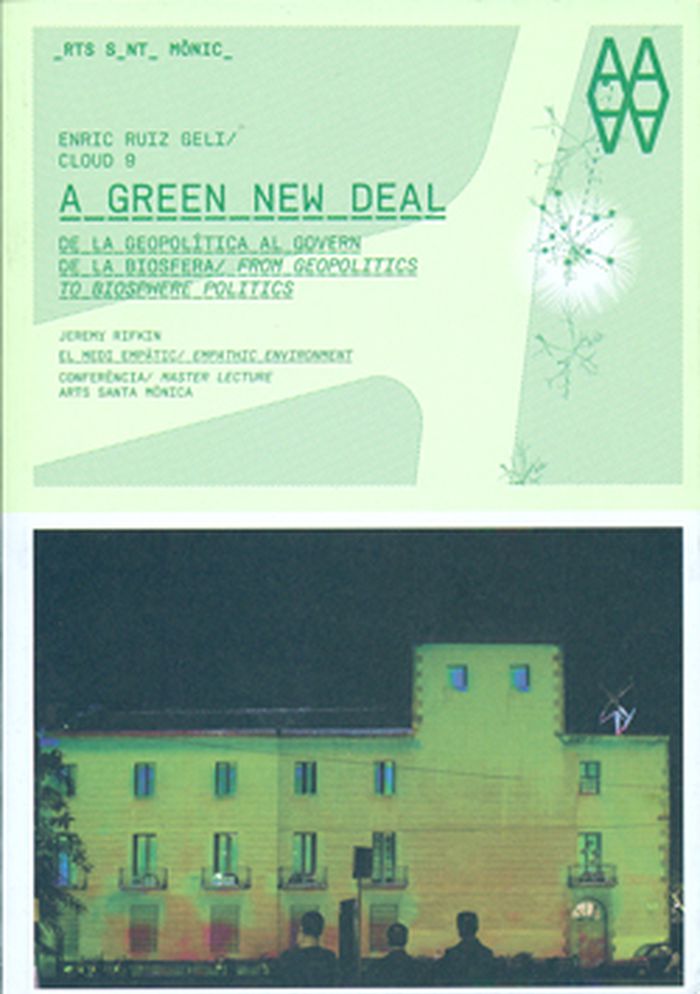
The number one cause of global warming is architecture - the buildings. Buildings are responsible for 40% of the Co2 that is emitted into the atmosphere. The architects must take this responsibility and move from geopolitics towards biosphere politics. This publication is a real test of how this can be achieved. The context for the intervention is an existing historic building in Barcelona, the Centre of Arts Santa Monica; a building to explore the Third Industrial Revolution as the potential of a transformation towards an empathic architecture. Nature should let us show the path. Cloud 9 equipped the trees in front of Arts Santa Monica with sensors that capture data on temperature, humidity and light energy to inform the building. The intervention is an installation on the facade that produces energy from the environment, like the sun and wind. It is an additional skin which allows control of natural light and regulates solar radiation.
Cloud 9: a green new deal, from geopolitics to biosphere politics
Actions:
Prix:
$31.95
(disponible sur commande)
Résumé:
The number one cause of global warming is architecture - the buildings. Buildings are responsible for 40% of the Co2 that is emitted into the atmosphere. The architects must take this responsibility and move from geopolitics towards biosphere politics. This publication is a real test of how this can be achieved. The context for the intervention is an existing historic building in Barcelona, the Centre of Arts Santa Monica; a building to explore the Third Industrial Revolution as the potential of a transformation towards an empathic architecture. Nature should let us show the path. Cloud 9 equipped the trees in front of Arts Santa Monica with sensors that capture data on temperature, humidity and light energy to inform the building. The intervention is an installation on the facade that produces energy from the environment, like the sun and wind. It is an additional skin which allows control of natural light and regulates solar radiation.
Classification:
livres
livres
Publication:
novembre 2010
novembre 2010
Sujet:
Architecture écologique
Architecture écologique
Classification:
livres
livres
Actions:
Prix:
$22.50
(disponible sur commande)
Résumé:
Collaboration with the greatest botanists of his time, an instinctive humanitarianism, and a natural ingenuity in landscape design combined to make Thomas Jefferson a pioneer in American landscape architecture. Frederick D. Nichols and Ralph E. Griswold, in this close study of Jefferson’s many notes, letters, and sketches, present a clear and detailed interpretation of(...)
$22.50
(disponible sur commande)
Résumé:
Collaboration with the greatest botanists of his time, an instinctive humanitarianism, and a natural ingenuity in landscape design combined to make Thomas Jefferson a pioneer in American landscape architecture. Frederick D. Nichols and Ralph E. Griswold, in this close study of Jefferson’s many notes, letters, and sketches, present a clear and detailed interpretation of(...)
Publication:
juin 2003, Charlottesville
juin 2003, Charlottesville
Titre:
Thomas Jefferson, landscape architect
Actions:
Prix:
$22.50
(disponible sur commande)
Résumé:
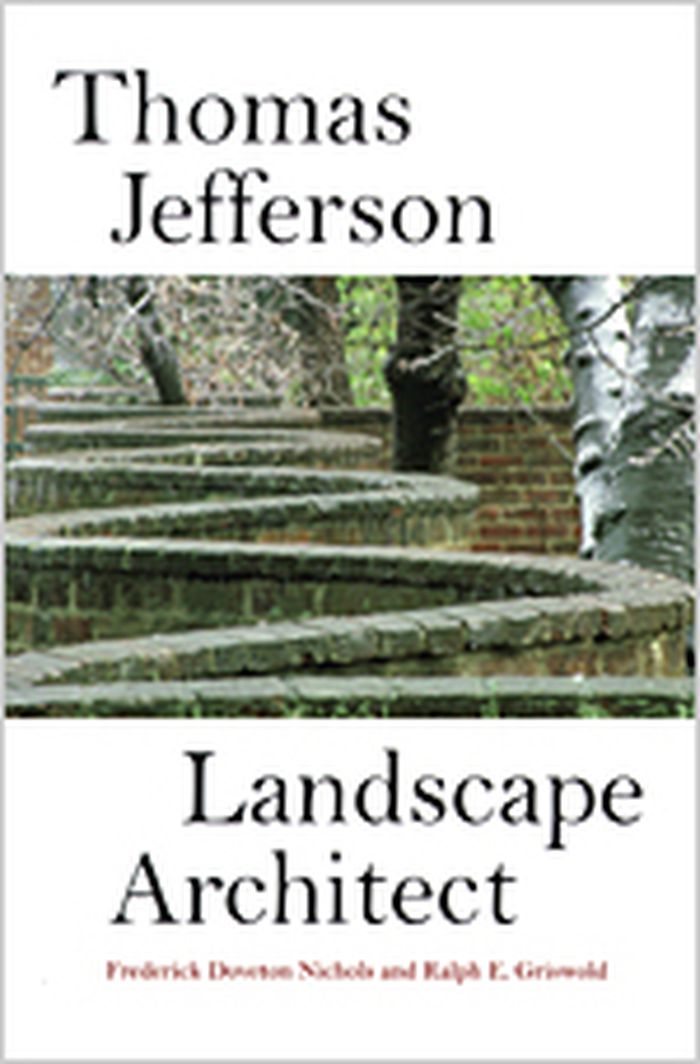
Collaboration with the greatest botanists of his time, an instinctive humanitarianism, and a natural ingenuity in landscape design combined to make Thomas Jefferson a pioneer in American landscape architecture. Frederick D. Nichols and Ralph E. Griswold, in this close study of Jefferson’s many notes, letters, and sketches, present a clear and detailed interpretation of his extraordinary accomplishments in the field. "Thomas Jefferson, Landscape Architect" investigates the many influences on — and of — the Jeffersonian legacy in architecture. Jefferson’s personality, friendships, and convictions, complemented by his extensive reading and travels, clearly influenced his architectural work. His fresh approach to incorporating foreign elements into domestic designs, his revolutionary approach to relating the house to the surrounding land, and his profound influences on the architectural character of the District of Columbia are just a few of Jefferson’s contributions to the American landscape. Eighteenth- and nineteenth-century maps, plans, and drawings, as well as pictures of the species of trees that Jefferson used for his designs, generously illustrate the engaging narrative in "Thomas Jefferson, Landscape Architect".
Thomas Jefferson, landscape architect
Actions:
Prix:
$22.50
(disponible sur commande)
Résumé:
Collaboration with the greatest botanists of his time, an instinctive humanitarianism, and a natural ingenuity in landscape design combined to make Thomas Jefferson a pioneer in American landscape architecture. Frederick D. Nichols and Ralph E. Griswold, in this close study of Jefferson’s many notes, letters, and sketches, present a clear and detailed interpretation of his extraordinary accomplishments in the field. "Thomas Jefferson, Landscape Architect" investigates the many influences on — and of — the Jeffersonian legacy in architecture. Jefferson’s personality, friendships, and convictions, complemented by his extensive reading and travels, clearly influenced his architectural work. His fresh approach to incorporating foreign elements into domestic designs, his revolutionary approach to relating the house to the surrounding land, and his profound influences on the architectural character of the District of Columbia are just a few of Jefferson’s contributions to the American landscape. Eighteenth- and nineteenth-century maps, plans, and drawings, as well as pictures of the species of trees that Jefferson used for his designs, generously illustrate the engaging narrative in "Thomas Jefferson, Landscape Architect".
Classification:
livres
livres
Publication:
juin 2003, Charlottesville
juin 2003, Charlottesville
Classification:
livres
livres
Actions:
Prix:
$78.00
(disponible sur commande)
Résumé:
Alberto Ponis "Costruire nella Natura" ("Building in Nature") analyses 22 buildings, highlighting the importance of drawing and photography as the first act of design, as in the Genius Loci series in which he photographed Sardinian vernacular architecture. This publication aims primarily to analyse of Alberto Ponis's work as a whole, including single-family houses and(...)
$78.00
(disponible sur commande)
Résumé:
Alberto Ponis "Costruire nella Natura" ("Building in Nature") analyses 22 buildings, highlighting the importance of drawing and photography as the first act of design, as in the Genius Loci series in which he photographed Sardinian vernacular architecture. This publication aims primarily to analyse of Alberto Ponis's work as a whole, including single-family houses and(...)
Titre:
Alberto Ponis: Costruire nella Natura
Actions:
Prix:
$78.00
(disponible sur commande)
Résumé:
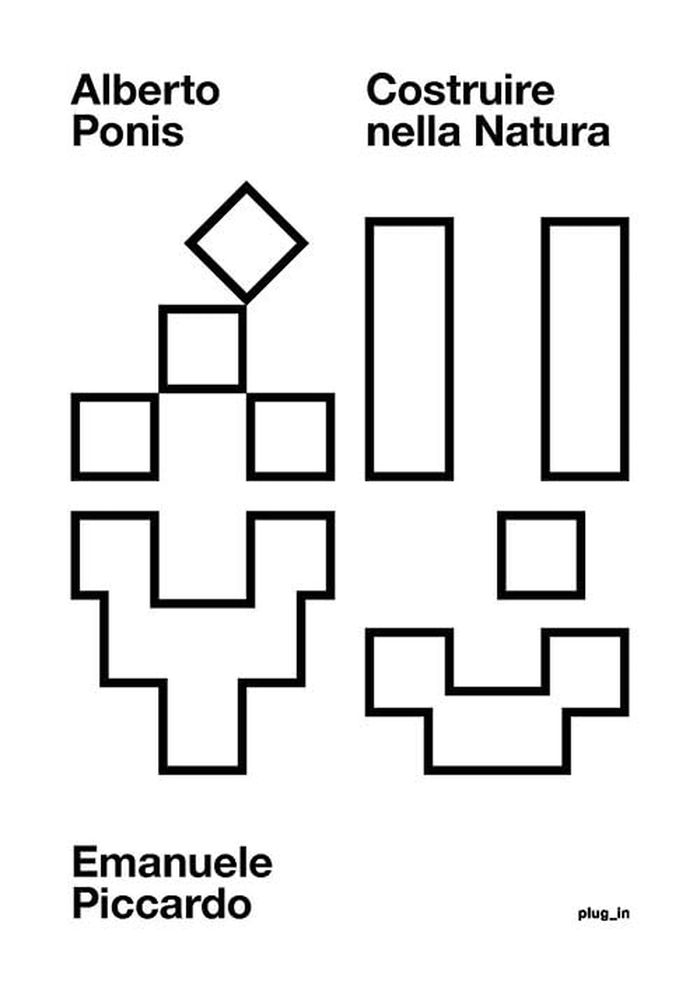
Alberto Ponis "Costruire nella Natura" ("Building in Nature") analyses 22 buildings, highlighting the importance of drawing and photography as the first act of design, as in the Genius Loci series in which he photographed Sardinian vernacular architecture. This publication aims primarily to analyse of Alberto Ponis's work as a whole, including single-family houses and collective houses built in Palau and Costa Paradiso, investigating the relationship with the natural site formed by granite rocks, strawberry trees and holm oaks. These elements become part of the architecture, generating its form. Meticulous work in the Ponis Archive has revealed little-known materials, such as slides of trips to America to visit the Sea Ranch and the architecture of Louis Kahn; visits to Ronchamp and La Tourette and the architecture of Arno Jacobsen and Alvar Aalto. But above all, his letters with clients, the photographs Ponis took of his houses, the sketchbooks during site inspections, the Thought notes, his design vocabulary that he continually defined over time, right down to his "pictorial obsessions" for the Nervi marina and Bonifacio.
Alberto Ponis: Costruire nella Natura
Actions:
Prix:
$78.00
(disponible sur commande)
Résumé:
Alberto Ponis "Costruire nella Natura" ("Building in Nature") analyses 22 buildings, highlighting the importance of drawing and photography as the first act of design, as in the Genius Loci series in which he photographed Sardinian vernacular architecture. This publication aims primarily to analyse of Alberto Ponis's work as a whole, including single-family houses and collective houses built in Palau and Costa Paradiso, investigating the relationship with the natural site formed by granite rocks, strawberry trees and holm oaks. These elements become part of the architecture, generating its form. Meticulous work in the Ponis Archive has revealed little-known materials, such as slides of trips to America to visit the Sea Ranch and the architecture of Louis Kahn; visits to Ronchamp and La Tourette and the architecture of Arno Jacobsen and Alvar Aalto. But above all, his letters with clients, the photographs Ponis took of his houses, the sketchbooks during site inspections, the Thought notes, his design vocabulary that he continually defined over time, right down to his "pictorial obsessions" for the Nervi marina and Bonifacio.
Classification:
livres
livres
Publication:
décembre 2024
décembre 2024
Sujet:
Architecture, monographies
Architecture, monographies
Classification:
livres
livres
Titre:
That house that Max built
That house that Max built
Actions:
Prix:
$22.99
(disponible sur commande)
Résumé:
Having worked construction for many years, author and illustrator Maxwell Newhouse shows young readers step-by-step how houses are built in this captivating picture book. From drawing up the plans to excavating the site to laying the foundation, the unique and colorful paintings move through the seasons as Max builds the house of his dreams. Watch the framing crew as they(...)
$22.99
(disponible sur commande)
Résumé:
Having worked construction for many years, author and illustrator Maxwell Newhouse shows young readers step-by-step how houses are built in this captivating picture book. From drawing up the plans to excavating the site to laying the foundation, the unique and colorful paintings move through the seasons as Max builds the house of his dreams. Watch the framing crew as they(...)
Titre:
That house that Max built
Actions:
Prix:
$22.99
(disponible sur commande)
Résumé:
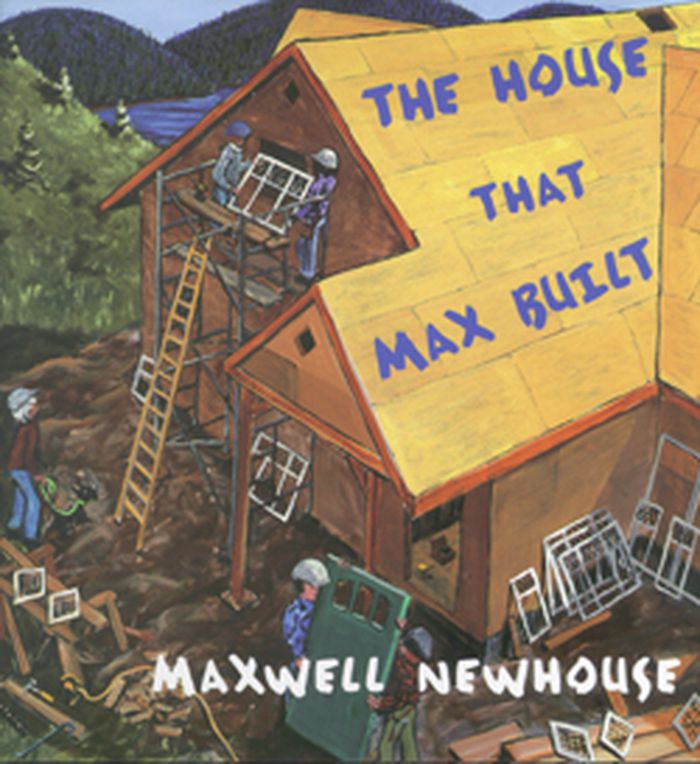
Having worked construction for many years, author and illustrator Maxwell Newhouse shows young readers step-by-step how houses are built in this captivating picture book. From drawing up the plans to excavating the site to laying the foundation, the unique and colorful paintings move through the seasons as Max builds the house of his dreams. Watch the framing crew as they build a floor frame to hold the house, raise the walls into place, and make the roof frame. See them install the windows and doors, bricklayers build the outside walls with bricks and mortar, and roofers nail the shingles into place. Follow the plumber as he puts in the water lines, the electrician as he installs the wiring, and the drywaller as he places wallboard on the inside walls. Along come the tile setter, floor layer, cabinetmaker, and painter, who all do their part to make Max’s house beautiful as his mischievous little dog romps through the pages. Finally, when the property has been landscaped with plants, trees, grass, and stones, Max moves into his beloved new home.
That house that Max built
Actions:
Prix:
$22.99
(disponible sur commande)
Résumé:
Having worked construction for many years, author and illustrator Maxwell Newhouse shows young readers step-by-step how houses are built in this captivating picture book. From drawing up the plans to excavating the site to laying the foundation, the unique and colorful paintings move through the seasons as Max builds the house of his dreams. Watch the framing crew as they build a floor frame to hold the house, raise the walls into place, and make the roof frame. See them install the windows and doors, bricklayers build the outside walls with bricks and mortar, and roofers nail the shingles into place. Follow the plumber as he puts in the water lines, the electrician as he installs the wiring, and the drywaller as he places wallboard on the inside walls. Along come the tile setter, floor layer, cabinetmaker, and painter, who all do their part to make Max’s house beautiful as his mischievous little dog romps through the pages. Finally, when the property has been landscaped with plants, trees, grass, and stones, Max moves into his beloved new home.
Classification:
livres
livres
Publication:
avril 2008, Toronto
avril 2008, Toronto
Sujet:
Littérature jeunesse
Littérature jeunesse
Classification:
livres
livres
Titre:
Paris
Paris
Actions:
Prix:
$66.95
(disponible sur commande)
Résumé:
Michael Wolf achieved fame when he won the 2005 World Press Photo with his China, Factory of the World project, and the 2010 World Press Photo with Tokyo Compression. The present book offers his personal take on the French capital. Singling out typical architectural features of the Parisian landscape he renders the seemingly banal immortal. Roofs, chimneys, and lights(...)
$66.95
(disponible sur commande)
Résumé:
Michael Wolf achieved fame when he won the 2005 World Press Photo with his China, Factory of the World project, and the 2010 World Press Photo with Tokyo Compression. The present book offers his personal take on the French capital. Singling out typical architectural features of the Parisian landscape he renders the seemingly banal immortal. Roofs, chimneys, and lights(...)
Titre:
Paris
Actions:
Prix:
$66.95
(disponible sur commande)
Résumé:
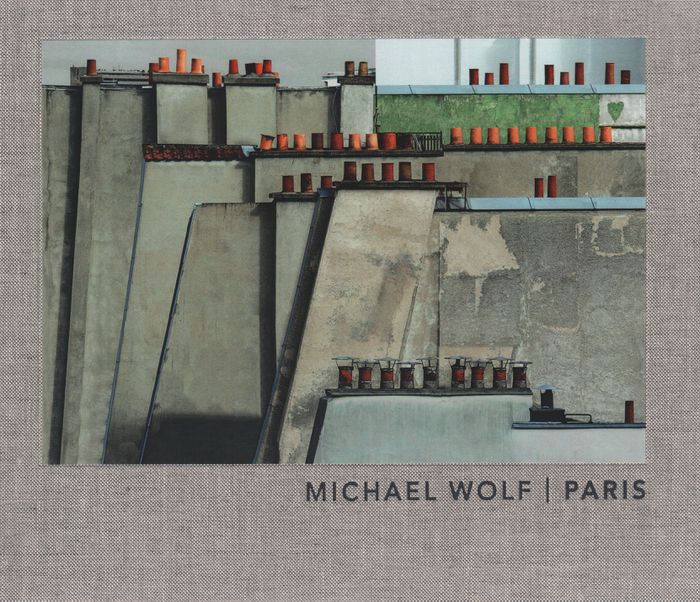
Michael Wolf achieved fame when he won the 2005 World Press Photo with his China, Factory of the World project, and the 2010 World Press Photo with Tokyo Compression. The present book offers his personal take on the French capital. Singling out typical architectural features of the Parisian landscape he renders the seemingly banal immortal. Roofs, chimneys, and lights provide the pictures with rhythm, with their colors, shapes, and above all their volumes. Wolf invites the reader to enter his highly distinctive visual world and let his gaze follow the snaking lines of walls and gutters, dwelling on unexpected details lovingly picked out. The photographer's underlying desire is to encourage us to consider the environmental and architectural context that provides a framework for all these rigorously rectangular features. This dreamlike journey into a Paris viewed from the rooftops is underlined in the second part of the book. The shadows of trees decorate the façades of various buildings, creating a visual poetry and prompting an intimate dialogue where, in the absence of all human presence, nature and architecture blend into one another.
Paris
Actions:
Prix:
$66.95
(disponible sur commande)
Résumé:
Michael Wolf achieved fame when he won the 2005 World Press Photo with his China, Factory of the World project, and the 2010 World Press Photo with Tokyo Compression. The present book offers his personal take on the French capital. Singling out typical architectural features of the Parisian landscape he renders the seemingly banal immortal. Roofs, chimneys, and lights provide the pictures with rhythm, with their colors, shapes, and above all their volumes. Wolf invites the reader to enter his highly distinctive visual world and let his gaze follow the snaking lines of walls and gutters, dwelling on unexpected details lovingly picked out. The photographer's underlying desire is to encourage us to consider the environmental and architectural context that provides a framework for all these rigorously rectangular features. This dreamlike journey into a Paris viewed from the rooftops is underlined in the second part of the book. The shadows of trees decorate the façades of various buildings, creating a visual poetry and prompting an intimate dialogue where, in the absence of all human presence, nature and architecture blend into one another.
Classification:
livres
livres
Publication:
janvier 2020
janvier 2020
Sujet:
Monographies photo
Monographies photo
Classification:
livres
livres
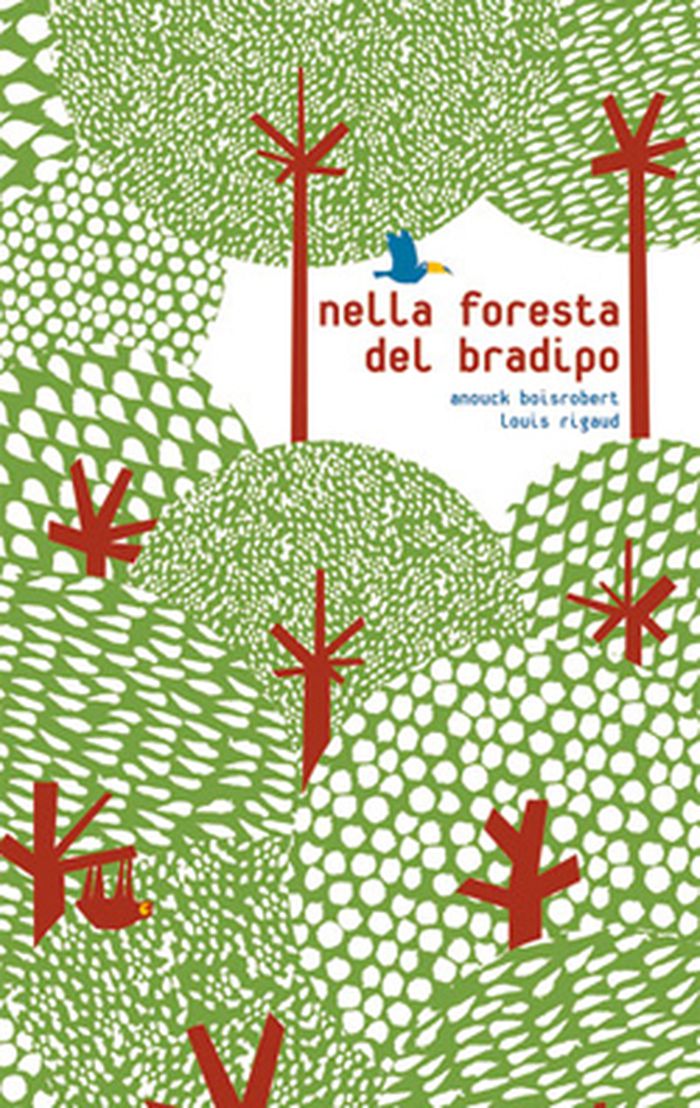
Titre:
Nella foresta del bradipo
Nella foresta del bradipo
Actions:
Prix:
$29.95
(disponible sur commande)
Résumé:
In the mild, humid climate of the Amazon forest, the sloth spends its entire life wrapped round the same tree, impassive and untouched by the light and sounds around it. It sleeps on regardless of the sudden arrival of the deforestation machinery: caterpillars, trucks, excavators and mechanical shears that rumble through the forest, scaring off all the other animals.The(...)
$29.95
(disponible sur commande)
Résumé:
In the mild, humid climate of the Amazon forest, the sloth spends its entire life wrapped round the same tree, impassive and untouched by the light and sounds around it. It sleeps on regardless of the sudden arrival of the deforestation machinery: caterpillars, trucks, excavators and mechanical shears that rumble through the forest, scaring off all the other animals.The(...)
Sujet:
Littérature jeunesse
Littérature jeunesse
Publication:
février 2011
février 2011
Titre:
Nella foresta del bradipo
Actions:
Prix:
$29.95
(disponible sur commande)
Résumé:
In the mild, humid climate of the Amazon forest, the sloth spends its entire life wrapped round the same tree, impassive and untouched by the light and sounds around it. It sleeps on regardless of the sudden arrival of the deforestation machinery: caterpillars, trucks, excavators and mechanical shears that rumble through the forest, scaring off all the other animals.The book tells the story of the sloth and its proverbial slowness, which is now placing it in danger from man’s short-sighted and tragic encroachment. Fourteen pop-up pages examine the gradual erosion of the Amazon forest. As we leaf through the pages, animals and trees appear before our eyes and in our hands, as if we were in a natural environment that is constantly changing. This book was printed with environmentally friendly soy ink on paper from responsible forests. Every year 13 million hectares of forest disappear. 90% of the deforestation is illegal and is threatening the survival of numerous species, including the Brazilian three-toed sloth. However, there is still time to prevent this destruction.
Nella foresta del bradipo
Actions:
Prix:
$29.95
(disponible sur commande)
Résumé:
In the mild, humid climate of the Amazon forest, the sloth spends its entire life wrapped round the same tree, impassive and untouched by the light and sounds around it. It sleeps on regardless of the sudden arrival of the deforestation machinery: caterpillars, trucks, excavators and mechanical shears that rumble through the forest, scaring off all the other animals.The book tells the story of the sloth and its proverbial slowness, which is now placing it in danger from man’s short-sighted and tragic encroachment. Fourteen pop-up pages examine the gradual erosion of the Amazon forest. As we leaf through the pages, animals and trees appear before our eyes and in our hands, as if we were in a natural environment that is constantly changing. This book was printed with environmentally friendly soy ink on paper from responsible forests. Every year 13 million hectares of forest disappear. 90% of the deforestation is illegal and is threatening the survival of numerous species, including the Brazilian three-toed sloth. However, there is still time to prevent this destruction.
Classification:
livres
livres
Publication:
février 2011
février 2011
Sujet:
Littérature jeunesse
Littérature jeunesse
Classification:
livres
livres

Prix:
$60.00
(disponible sur commande)
Résumé:
In this walking meditation, forest ranger and writer William Tweed takes us to California’s spectacular High Sierra to discover a new vision for american national parks as they approach their 100th anniversary facing dramatic changes. Tweed, who worked among the Sierra Nevada’s big peaks and big trees for more than thirty years, has now hiked more than 200 miles along(...)
$60.00
(disponible sur commande)
Résumé:
In this walking meditation, forest ranger and writer William Tweed takes us to California’s spectacular High Sierra to discover a new vision for american national parks as they approach their 100th anniversary facing dramatic changes. Tweed, who worked among the Sierra Nevada’s big peaks and big trees for more than thirty years, has now hiked more than 200 miles along(...)
Titre:
Uncertain path : a search for the future of national parks
Actions:
Prix:
$60.00
(disponible sur commande)
Résumé:
In this walking meditation, forest ranger and writer William Tweed takes us to California’s spectacular High Sierra to discover a new vision for american national parks as they approach their 100th anniversary facing dramatic changes. Tweed, who worked among the Sierra Nevada’s big peaks and big trees for more than thirty years, has now hiked more than 200 miles along California’s John Muir Trail in a personal search for answers : How do we address the climate change we are seeing even now — in melting glaciers in Glacier National Park, changing rainy seasons on Mt Rainer, and more fire in the West’s iconic parks. Should we intervene where we can to preserve biodiversity? Should the parks merely become ecosystem museums that exhibit famous landscapes and species? Tweed weaves his experiences along this high-altitude trail together with reflections on the people and ideas that created the parks and on their status and meaning today. Asking how we can make these magnificent parks relevant for the next generation, Tweed’s journey ultimately shows why we must do just that.
Uncertain path : a search for the future of national parks
Actions:
Prix:
$60.00
(disponible sur commande)
Résumé:
In this walking meditation, forest ranger and writer William Tweed takes us to California’s spectacular High Sierra to discover a new vision for american national parks as they approach their 100th anniversary facing dramatic changes. Tweed, who worked among the Sierra Nevada’s big peaks and big trees for more than thirty years, has now hiked more than 200 miles along California’s John Muir Trail in a personal search for answers : How do we address the climate change we are seeing even now — in melting glaciers in Glacier National Park, changing rainy seasons on Mt Rainer, and more fire in the West’s iconic parks. Should we intervene where we can to preserve biodiversity? Should the parks merely become ecosystem museums that exhibit famous landscapes and species? Tweed weaves his experiences along this high-altitude trail together with reflections on the people and ideas that created the parks and on their status and meaning today. Asking how we can make these magnificent parks relevant for the next generation, Tweed’s journey ultimately shows why we must do just that.
Classification:
livres
livres
Publication:
octobre 2010
octobre 2010
Sujet:
Théorie du paysage
Théorie du paysage


