


2092 Résultats
Classification:
livres
livres
Titre:
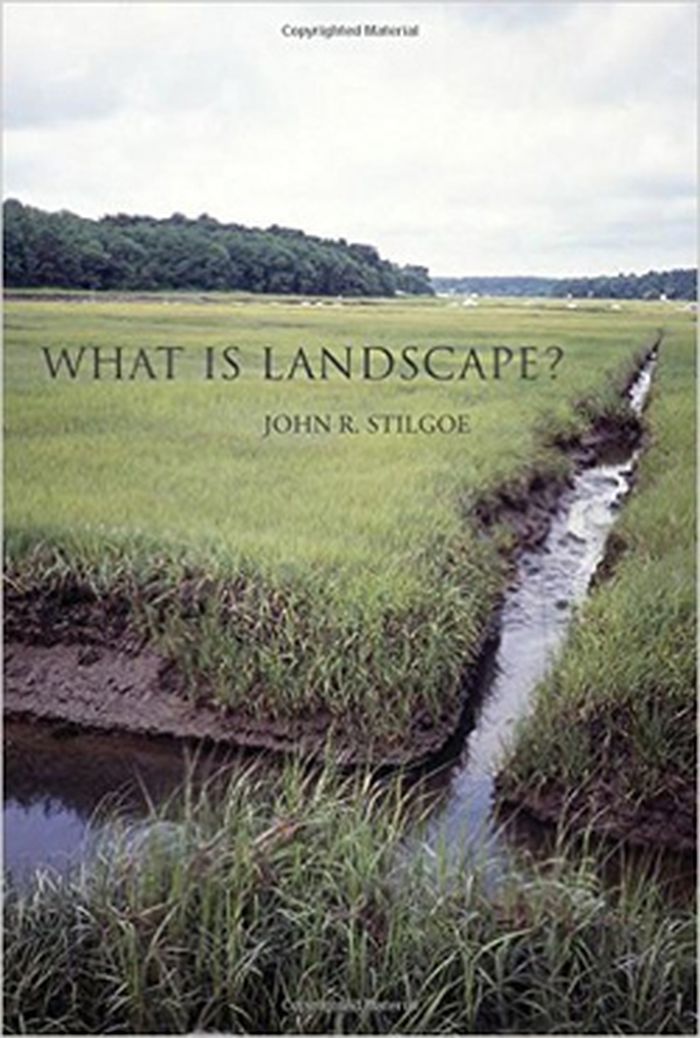
What is landscape?
What is landscape?
Actions:
Prix:
$29.50
(disponible sur commande)
Résumé:
Landscape, John Stilgoe tells us, is a noun. From the old Frisian language (once spoken in coastal parts of the Netherlands and Germany), it meant shoveled land: landschop. Sixteenth-century Englishmen misheard or mispronounced this as landskep, which became landskip, then landscape, designating the surface of the earth shaped for human habitation. In What Is Landscape?(...)
$29.50
(disponible sur commande)
Résumé:
Landscape, John Stilgoe tells us, is a noun. From the old Frisian language (once spoken in coastal parts of the Netherlands and Germany), it meant shoveled land: landschop. Sixteenth-century Englishmen misheard or mispronounced this as landskep, which became landskip, then landscape, designating the surface of the earth shaped for human habitation. In What Is Landscape?(...)
Titre:
What is landscape?
Actions:
Prix:
$29.50
(disponible sur commande)
Résumé:
Landscape, John Stilgoe tells us, is a noun. From the old Frisian language (once spoken in coastal parts of the Netherlands and Germany), it meant shoveled land: landschop. Sixteenth-century Englishmen misheard or mispronounced this as landskep, which became landskip, then landscape, designating the surface of the earth shaped for human habitation. In What Is Landscape? Stilgoe maps the discovery of landscape by putting words to things, zeroing in on landscape’s essence but also leading sideways expeditions through such sources as children’s picture books, folklore, deeds, antique terminology, out-of-print dictionaries, and conversations with locals. (“What is that?” “Well, it’s not really a slough, not really, it’s a bayou . . .”) He offers a written narrative lexicon of landscape as word, concept, and path to discoveries. What Is Landscape? is an invitation to walk, to notice, to ask: to see a sandcastle with a pinwheel at the beach and think of Dutch windmills—icons of triumph, markers of territory won from the sea; to walk in the woods and be amused by the Elizabethans’ misuse of the Latin silvaticus (people of the woods) to coin the word savages; to see in a suburban front lawn a representation of the meadow of a medieval freehold.
What is landscape?
Actions:
Prix:
$29.50
(disponible sur commande)
Résumé:
Landscape, John Stilgoe tells us, is a noun. From the old Frisian language (once spoken in coastal parts of the Netherlands and Germany), it meant shoveled land: landschop. Sixteenth-century Englishmen misheard or mispronounced this as landskep, which became landskip, then landscape, designating the surface of the earth shaped for human habitation. In What Is Landscape? Stilgoe maps the discovery of landscape by putting words to things, zeroing in on landscape’s essence but also leading sideways expeditions through such sources as children’s picture books, folklore, deeds, antique terminology, out-of-print dictionaries, and conversations with locals. (“What is that?” “Well, it’s not really a slough, not really, it’s a bayou . . .”) He offers a written narrative lexicon of landscape as word, concept, and path to discoveries. What Is Landscape? is an invitation to walk, to notice, to ask: to see a sandcastle with a pinwheel at the beach and think of Dutch windmills—icons of triumph, markers of territory won from the sea; to walk in the woods and be amused by the Elizabethans’ misuse of the Latin silvaticus (people of the woods) to coin the word savages; to see in a suburban front lawn a representation of the meadow of a medieval freehold.
Classification:
livres
livres
Publication:
août 2015
août 2015
Sujet:
Théorie du paysage
Théorie du paysage
Classification:
livres
livres
Actions:
Prix:
$44.95
(disponible sur commande)
Résumé:
Green design is the major architectural movement of our time. Throughout the world architects are producing sustainable buildings in an attempt to preserve the environment and our globe's natural resources. However, current strategies for forming sustainable solutions are typically too general and fail to take advantage of critical geographical, environmental, and(...)
$44.95
(disponible sur commande)
Résumé:
Green design is the major architectural movement of our time. Throughout the world architects are producing sustainable buildings in an attempt to preserve the environment and our globe's natural resources. However, current strategies for forming sustainable solutions are typically too general and fail to take advantage of critical geographical, environmental, and(...)
Titre:
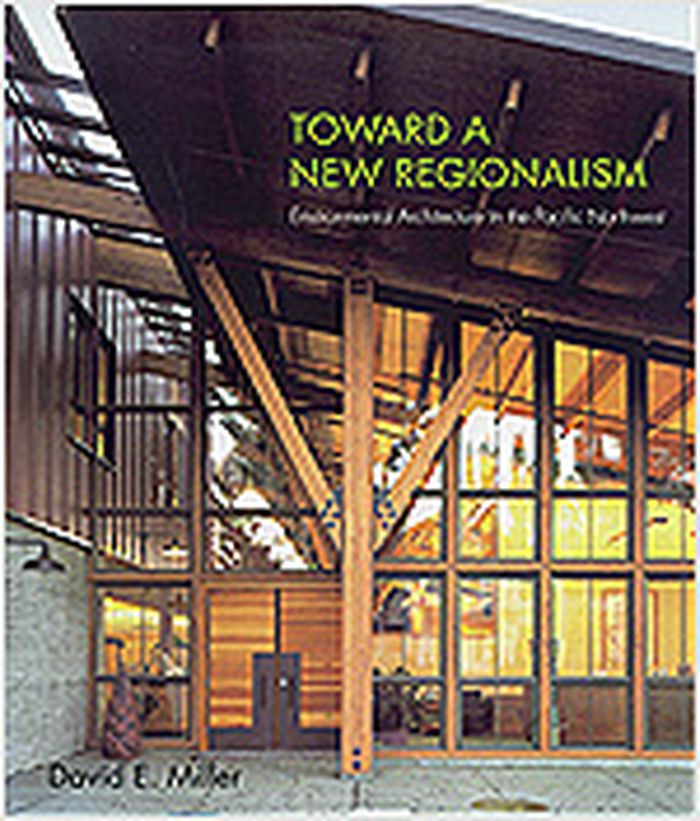
Towards a new regionalism : environmental architecture in the Pacific northwest
Actions:
Prix:
$44.95
(disponible sur commande)
Résumé:
Green design is the major architectural movement of our time. Throughout the world architects are producing sustainable buildings in an attempt to preserve the environment and our globe's natural resources. However, current strategies for forming sustainable solutions are typically too general and fail to take advantage of critical geographical, environmental, and cultural factors particular to a specific place. By focusing on the Pacific northwest, this book provides essential lessons to architects and students on how sustainable architecture can and should be shaped by the unique conditions of a region. Pacific northwest regionalism has consistently supported an architecture aimed at environmental needs and priorities. This book illuminates the history of a "green trail" in the work of key architects of the northwest. It discusses environmental strategies that work in the region, organized according to nature's most basic elements - earth, air, water, and fire - and their underlying principles and forces. The book focuses on technologies, materials, and methods, with a final section that examines thirteen exceptional northwest buildings in detail and in light of their contributions to sustainable architecture. Critical case studies by northwest architects illustrate some of the best environmental design work in North America. Notable architects from Seattle, Portland, and British Columbia are included. These projects feature innovative design in water and site stewardship, intelligent technologies, passive energy strategies, ecologically sound building materials, and environmentally sensitive energy management systems.
Towards a new regionalism : environmental architecture in the Pacific northwest
Actions:
Prix:
$44.95
(disponible sur commande)
Résumé:
Green design is the major architectural movement of our time. Throughout the world architects are producing sustainable buildings in an attempt to preserve the environment and our globe's natural resources. However, current strategies for forming sustainable solutions are typically too general and fail to take advantage of critical geographical, environmental, and cultural factors particular to a specific place. By focusing on the Pacific northwest, this book provides essential lessons to architects and students on how sustainable architecture can and should be shaped by the unique conditions of a region. Pacific northwest regionalism has consistently supported an architecture aimed at environmental needs and priorities. This book illuminates the history of a "green trail" in the work of key architects of the northwest. It discusses environmental strategies that work in the region, organized according to nature's most basic elements - earth, air, water, and fire - and their underlying principles and forces. The book focuses on technologies, materials, and methods, with a final section that examines thirteen exceptional northwest buildings in detail and in light of their contributions to sustainable architecture. Critical case studies by northwest architects illustrate some of the best environmental design work in North America. Notable architects from Seattle, Portland, and British Columbia are included. These projects feature innovative design in water and site stewardship, intelligent technologies, passive energy strategies, ecologically sound building materials, and environmentally sensitive energy management systems.
Classification:
livres
livres
Publication:
juillet 2005, Seattle, London
juillet 2005, Seattle, London
Sujet:
Architecture écologique
Architecture écologique
Classification:
livres
livres
Titre:
Tools n° 05 : To Spin
Tools n° 05 : To Spin
Actions:
Prix:
$49.95
(disponible en magasin)
Résumé:
Le cinquième numéro de la revue annuelle qui s'attache à valoriser les savoir-faire et la technique dans le design, l'artisanat ou l'industrie, se penche sur le geste de tourner. Le monde tourne, et avec lui, tout ce qui est à sa surface : vous, moi, les arbres, la mer, les montagnes. On a beau se bercer de l'illusion que tout est immobile, la réalité, c'est qu'on est(...)
$49.95
(disponible en magasin)
Résumé:
Le cinquième numéro de la revue annuelle qui s'attache à valoriser les savoir-faire et la technique dans le design, l'artisanat ou l'industrie, se penche sur le geste de tourner. Le monde tourne, et avec lui, tout ce qui est à sa surface : vous, moi, les arbres, la mer, les montagnes. On a beau se bercer de l'illusion que tout est immobile, la réalité, c'est qu'on est(...)
Titre:
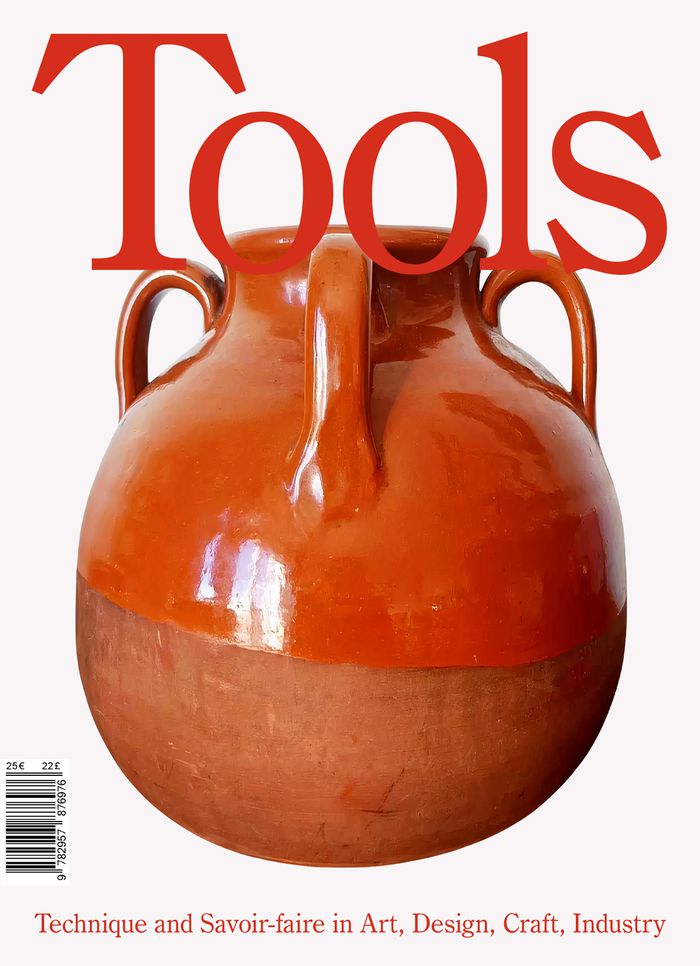
Tools n° 05 : To Spin
Actions:
Prix:
$49.95
(disponible en magasin)
Résumé:
Le cinquième numéro de la revue annuelle qui s'attache à valoriser les savoir-faire et la technique dans le design, l'artisanat ou l'industrie, se penche sur le geste de tourner. Le monde tourne, et avec lui, tout ce qui est à sa surface : vous, moi, les arbres, la mer, les montagnes. On a beau se bercer de l'illusion que tout est immobile, la réalité, c'est qu'on est perpétuellement en mouvement. La planète fait des tours sur elle-même, elle tourne autour du soleil, et nous, là, au moment où je vous parle, on est en quelque sorte le produit de cette rotation : c'est grâce au cycle des jours, des saisons et des années que notre planète offre les conditions favorables à la vie. / The fifth issue of the annual magazine that promotes know-how and technique in design, craft or industry looks at the act of spinning. The world is spinning, and so is everything on it: you and me, the trees, the oceans, and the mountains. We may have deluded ourselves into thinking everything is stationary, but the reality is that we're perpetually in motion. The planet is spinning around its axis and orbiting around the sun, and in a way, at this very moment, we are all products of rotation: life on Earth is only possible because of the cycles of days, seasons, and years.
Tools n° 05 : To Spin
Actions:
Prix:
$49.95
(disponible en magasin)
Résumé:
Le cinquième numéro de la revue annuelle qui s'attache à valoriser les savoir-faire et la technique dans le design, l'artisanat ou l'industrie, se penche sur le geste de tourner. Le monde tourne, et avec lui, tout ce qui est à sa surface : vous, moi, les arbres, la mer, les montagnes. On a beau se bercer de l'illusion que tout est immobile, la réalité, c'est qu'on est perpétuellement en mouvement. La planète fait des tours sur elle-même, elle tourne autour du soleil, et nous, là, au moment où je vous parle, on est en quelque sorte le produit de cette rotation : c'est grâce au cycle des jours, des saisons et des années que notre planète offre les conditions favorables à la vie. / The fifth issue of the annual magazine that promotes know-how and technique in design, craft or industry looks at the act of spinning. The world is spinning, and so is everything on it: you and me, the trees, the oceans, and the mountains. We may have deluded ourselves into thinking everything is stationary, but the reality is that we're perpetually in motion. The planet is spinning around its axis and orbiting around the sun, and in a way, at this very moment, we are all products of rotation: life on Earth is only possible because of the cycles of days, seasons, and years.
Classification:
livres
livres
Publication:
février 2025
février 2025
Sujet:
Revues
Revues
Classification:
périodiques
périodiques
Titre:
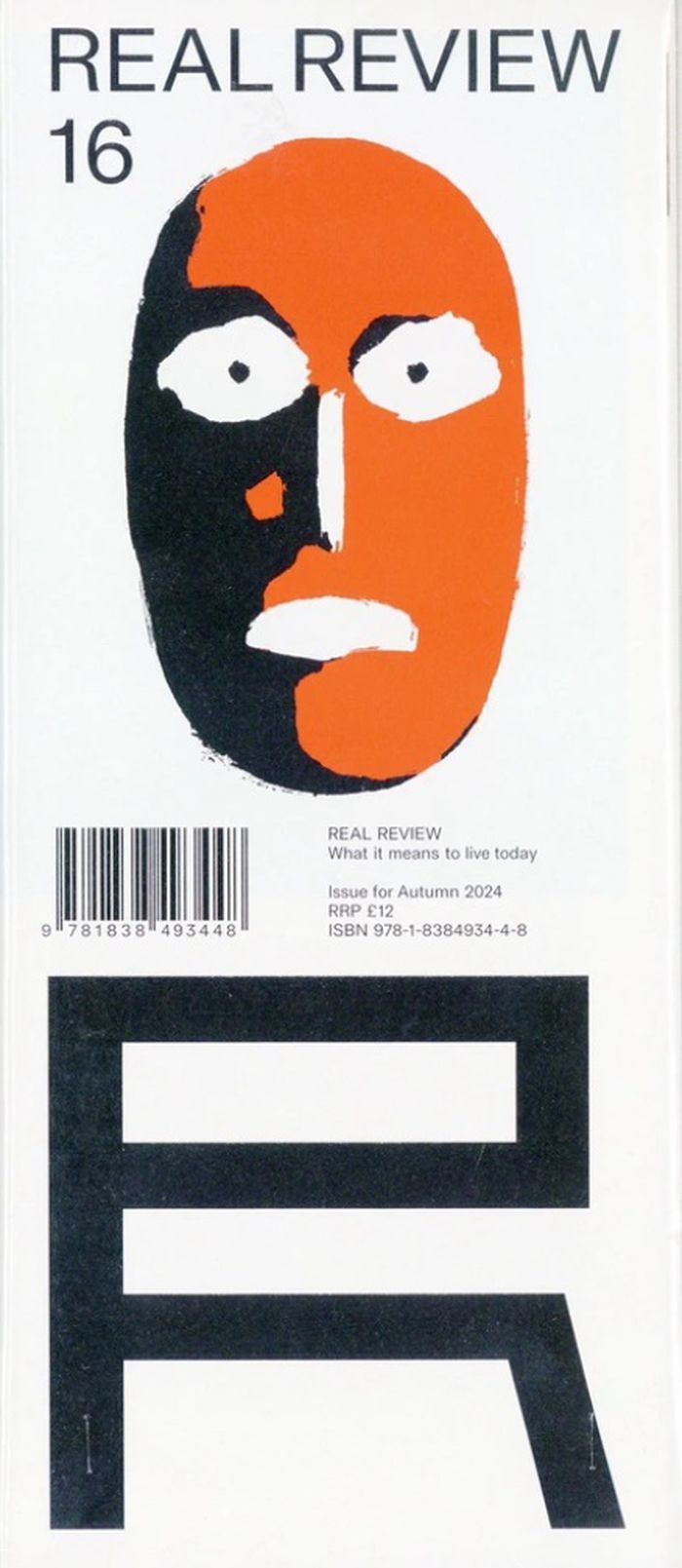
Real Review 16 Autumn 2024
Real Review 16 Autumn 2024
Actions:
Prix:
$26.00
(disponible en magasin)
Résumé:
There is no snow on Mount Fuji. Any hack will tell you the phase change is here, the restructuring of the world is underway. That would be a relief, like a broken fever. But they are wrong. We are still waiting. This period is merely the static on the skin, the rising pressure and building tension before the impending climax of a deluge. We live under a lavender sky,(...)
$26.00
(disponible en magasin)
Résumé:
There is no snow on Mount Fuji. Any hack will tell you the phase change is here, the restructuring of the world is underway. That would be a relief, like a broken fever. But they are wrong. We are still waiting. This period is merely the static on the skin, the rising pressure and building tension before the impending climax of a deluge. We live under a lavender sky,(...)
Titre:
Real Review 16 Autumn 2024
Actions:
Prix:
$26.00
(disponible en magasin)
Résumé:
There is no snow on Mount Fuji. Any hack will tell you the phase change is here, the restructuring of the world is underway. That would be a relief, like a broken fever. But they are wrong. We are still waiting. This period is merely the static on the skin, the rising pressure and building tension before the impending climax of a deluge. We live under a lavender sky, silver and green; this is the time of unsettled air, heavy with that metallic smell of the earth. Soon the wind will awake, driving the rain forward like a cloud of smoke. The tremendous powers by which our lives are encompassed are stirring. How can we prepare for this transformation? We interview professor Jonathan White on the future as a political idea. Artist Dozie Kanu presents a flyer for higher education, while Opioid Crisis Lookbook speculates on semiotics. Peter Saville reviews the mood with Jack Self, who reviews voice notes, moral killing, and the Star Trek universe. Isabelle Bucklow binge-watches tech demos. Satoshi Fujiwara captures law enforcement hardware. Ruba Al-Sweel reviews the non-commercial image, while Martina Rocca and Izzy Farmiloe review the production of culture. Carmen Winant documents the last safe abortion, Felix Mcnamara writes notes on minutiae, John Sunyer attends a run club, plus much more.
Real Review 16 Autumn 2024
Actions:
Prix:
$26.00
(disponible en magasin)
Résumé:
There is no snow on Mount Fuji. Any hack will tell you the phase change is here, the restructuring of the world is underway. That would be a relief, like a broken fever. But they are wrong. We are still waiting. This period is merely the static on the skin, the rising pressure and building tension before the impending climax of a deluge. We live under a lavender sky, silver and green; this is the time of unsettled air, heavy with that metallic smell of the earth. Soon the wind will awake, driving the rain forward like a cloud of smoke. The tremendous powers by which our lives are encompassed are stirring. How can we prepare for this transformation? We interview professor Jonathan White on the future as a political idea. Artist Dozie Kanu presents a flyer for higher education, while Opioid Crisis Lookbook speculates on semiotics. Peter Saville reviews the mood with Jack Self, who reviews voice notes, moral killing, and the Star Trek universe. Isabelle Bucklow binge-watches tech demos. Satoshi Fujiwara captures law enforcement hardware. Ruba Al-Sweel reviews the non-commercial image, while Martina Rocca and Izzy Farmiloe review the production of culture. Carmen Winant documents the last safe abortion, Felix Mcnamara writes notes on minutiae, John Sunyer attends a run club, plus much more.
Classification:
périodiques
périodiques
Publication:
mars 2025
mars 2025
Sujet:
Revues
Revues
Classification:
livres
livres
Actions:
Prix:
$84.00
(disponible sur commande)
Résumé:
After a century largely dominated by discussions of space and form, there is now renewed interest in the material and tectonic aspects of architecture. This illustrated book takes a detailed and timely look at the importance of materials in architecture, focusing particularly on modern and contemporary buildings. Richard Weston begins with a brief cultural history of(...)
$84.00
(disponible sur commande)
Résumé:
After a century largely dominated by discussions of space and form, there is now renewed interest in the material and tectonic aspects of architecture. This illustrated book takes a detailed and timely look at the importance of materials in architecture, focusing particularly on modern and contemporary buildings. Richard Weston begins with a brief cultural history of(...)
Titre:
Materials, form and architecture
Actions:
Prix:
$84.00
(disponible sur commande)
Résumé:
After a century largely dominated by discussions of space and form, there is now renewed interest in the material and tectonic aspects of architecture. This illustrated book takes a detailed and timely look at the importance of materials in architecture, focusing particularly on modern and contemporary buildings. Richard Weston begins with a brief cultural history of major building materials--such as timber, earth, stone, steel, and glass--exploring how they have been produced, considered, worked, and used in a variety of buildings and cultures. He then explores the ways that architects, theorists, and critics have articulated the relationship between materials and architectural forms and spaces throughout modern history. Other featured topics include the importance of place, time, junctions, finish, and meaning; the proposition that in an increasingly global and virtual world, many architects emphasize the material qualities of buildings to ensure a heightened sense of reality; and a comprehensive survey of current and prospective developments in materials, from refinements of such familiar materials as fiber-reinforced concrete and “intelligent” glass to new synthetic compounds and working methods. Together, these varied perspectives on the material art of building offer insights into the impact that the type and treatment of materials has on how buildings can be constructed and designed, how they function, and how they fare over time.
Materials, form and architecture
Actions:
Prix:
$84.00
(disponible sur commande)
Résumé:
After a century largely dominated by discussions of space and form, there is now renewed interest in the material and tectonic aspects of architecture. This illustrated book takes a detailed and timely look at the importance of materials in architecture, focusing particularly on modern and contemporary buildings. Richard Weston begins with a brief cultural history of major building materials--such as timber, earth, stone, steel, and glass--exploring how they have been produced, considered, worked, and used in a variety of buildings and cultures. He then explores the ways that architects, theorists, and critics have articulated the relationship between materials and architectural forms and spaces throughout modern history. Other featured topics include the importance of place, time, junctions, finish, and meaning; the proposition that in an increasingly global and virtual world, many architects emphasize the material qualities of buildings to ensure a heightened sense of reality; and a comprehensive survey of current and prospective developments in materials, from refinements of such familiar materials as fiber-reinforced concrete and “intelligent” glass to new synthetic compounds and working methods. Together, these varied perspectives on the material art of building offer insights into the impact that the type and treatment of materials has on how buildings can be constructed and designed, how they function, and how they fare over time.
Classification:
livres
livres
Publication:
septembre 2003, New Haven
septembre 2003, New Haven
Sujet:
Matériaux et éclairage
Matériaux et éclairage
Classification:
livres
livres
Titre:
Mesozoic Park, Terry Munro
Mesozoic Park, Terry Munro
Actions:
Prix:
$34.95
(disponible en magasin)
Résumé:
"Mesozoic Park" is an intriguing series of photographs documenting the construction of a (pseudo) prehistoric landscape in Calgary, Canada in the early 1980s. The history of photography has been dominated by the landscape: from its state as a pristine natural phenomenon, to its altered forms, and then to the manufactured, of which the city's Prehistoric Park is a prime(...)
$34.95
(disponible en magasin)
Résumé:
"Mesozoic Park" is an intriguing series of photographs documenting the construction of a (pseudo) prehistoric landscape in Calgary, Canada in the early 1980s. The history of photography has been dominated by the landscape: from its state as a pristine natural phenomenon, to its altered forms, and then to the manufactured, of which the city's Prehistoric Park is a prime(...)
Titre:
Mesozoic Park, Terry Munro
Actions:
Prix:
$34.95
(disponible en magasin)
Résumé:
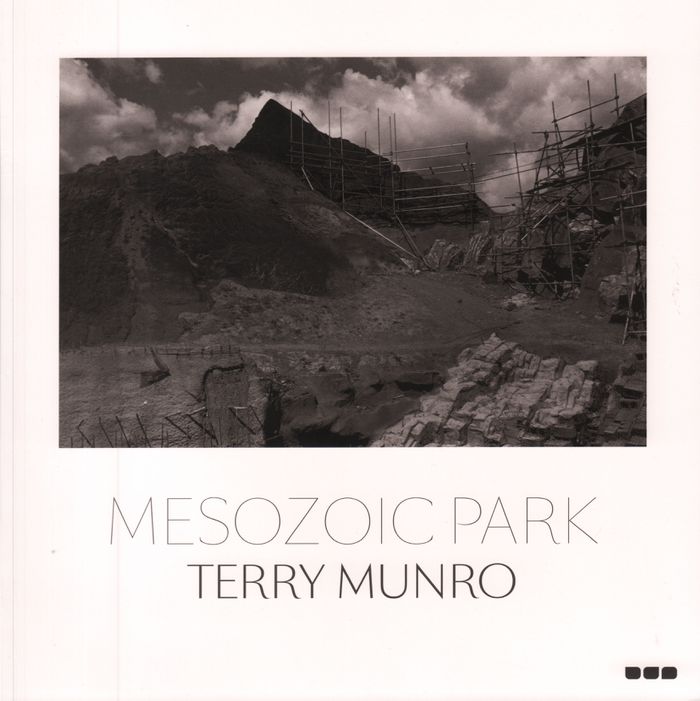
"Mesozoic Park" is an intriguing series of photographs documenting the construction of a (pseudo) prehistoric landscape in Calgary, Canada in the early 1980s. The history of photography has been dominated by the landscape: from its state as a pristine natural phenomenon, to its altered forms, and then to the manufactured, of which the city's Prehistoric Park is a prime example. The site includes multiple geologic structures that humans have built to mimic nature. The images in the monograph address the illusions that humanity creates for itself, as in our increasing quest to find substitutes for 'the real'. The simulated environment in Mesozoic Park focuses on the earth and landscape as packaging or amusement, and more importantly, as a site for social and political inquiry. The black and white photographs, printed in duotone, document a geological dream world in which a 'primordial' landscape has been cleverly designed and programmed for an artificial visitor experience. By exploring the park in great detail, Munro offers privileged access to what we never get to see: the construction of a facsimile panorama that will provide visitors with the illusion of time travel. The real and false are confused, no longer relevant in this walk through a purported 65 million year-old landscape. The book also contains photographs which show the artificial human construct in 2018.
Mesozoic Park, Terry Munro
Actions:
Prix:
$34.95
(disponible en magasin)
Résumé:
"Mesozoic Park" is an intriguing series of photographs documenting the construction of a (pseudo) prehistoric landscape in Calgary, Canada in the early 1980s. The history of photography has been dominated by the landscape: from its state as a pristine natural phenomenon, to its altered forms, and then to the manufactured, of which the city's Prehistoric Park is a prime example. The site includes multiple geologic structures that humans have built to mimic nature. The images in the monograph address the illusions that humanity creates for itself, as in our increasing quest to find substitutes for 'the real'. The simulated environment in Mesozoic Park focuses on the earth and landscape as packaging or amusement, and more importantly, as a site for social and political inquiry. The black and white photographs, printed in duotone, document a geological dream world in which a 'primordial' landscape has been cleverly designed and programmed for an artificial visitor experience. By exploring the park in great detail, Munro offers privileged access to what we never get to see: the construction of a facsimile panorama that will provide visitors with the illusion of time travel. The real and false are confused, no longer relevant in this walk through a purported 65 million year-old landscape. The book also contains photographs which show the artificial human construct in 2018.
Classification:
livres
livres
Publication:
janvier 2020
janvier 2020
Sujet:
Monographies photo
Monographies photo
Classification:
livres
livres
Titre:
Shelter cookbook
Shelter cookbook
Actions:
Prix:
$55.00
(disponible en magasin)
Résumé:
DIY architect, publisher and pioneer of the self-build movement, Lloyd Kahn (born 1935) is a legend of the American counterculture. Influenced by Buckminster Fuller, in 1968 Kahn started building geodesic domes, and was an editor for Stewart Brand’s Whole Earth Catalog. In 1970 Kahn published his first book, Domebook One, followed the next year by the bestselling Domebook(...)
$55.00
(disponible en magasin)
Résumé:
DIY architect, publisher and pioneer of the self-build movement, Lloyd Kahn (born 1935) is a legend of the American counterculture. Influenced by Buckminster Fuller, in 1968 Kahn started building geodesic domes, and was an editor for Stewart Brand’s Whole Earth Catalog. In 1970 Kahn published his first book, Domebook One, followed the next year by the bestselling Domebook(...)
Sujet:
Théorie de l’architecture
Théorie de l’architecture
Publication:
décembre 2025
décembre 2025
Titre:
Shelter cookbook
Actions:
Prix:
$55.00
(disponible en magasin)
Résumé:
DIY architect, publisher and pioneer of the self-build movement, Lloyd Kahn (born 1935) is a legend of the American counterculture. Influenced by Buckminster Fuller, in 1968 Kahn started building geodesic domes, and was an editor for Stewart Brand’s Whole Earth Catalog. In 1970 Kahn published his first book, Domebook One, followed the next year by the bestselling Domebook 2. In 1971, he bought land in Bolinas and built a geodesic dome (later to be featured in Life magazine), but he soon pursued other ways to build, resulting in the classic 1973 book "Shelter." Kahn published numerous self-build books over the ensuing decades, most recently "Tiny Homes on the Move" (2014). "Shelter Cookbook" is an exploration of Kahn’s now iconic publications by the Swiss architect Leopold Banchini (born 1981) - whose practice makes emphatic use of DIY architecture culture- and the German author and curator Lukas Feireiss (born 1977). It relates Kahn’s building philosophy to contemporary practices, recording Banchini and Feireiss’ personal search for unexpected relationships between historical documents and contemporary architectural projects. The large-format volume includes interviews, photospreads and archival material on self-building, and also includes a mycological investigation. "Shelter Cookbook" will inspire architects, designers, artists and counterculture cognoscenti alike with its positive vision of the possibilities and legacy of the self-build movement.
Shelter cookbook
Actions:
Prix:
$55.00
(disponible en magasin)
Résumé:
DIY architect, publisher and pioneer of the self-build movement, Lloyd Kahn (born 1935) is a legend of the American counterculture. Influenced by Buckminster Fuller, in 1968 Kahn started building geodesic domes, and was an editor for Stewart Brand’s Whole Earth Catalog. In 1970 Kahn published his first book, Domebook One, followed the next year by the bestselling Domebook 2. In 1971, he bought land in Bolinas and built a geodesic dome (later to be featured in Life magazine), but he soon pursued other ways to build, resulting in the classic 1973 book "Shelter." Kahn published numerous self-build books over the ensuing decades, most recently "Tiny Homes on the Move" (2014). "Shelter Cookbook" is an exploration of Kahn’s now iconic publications by the Swiss architect Leopold Banchini (born 1981) - whose practice makes emphatic use of DIY architecture culture- and the German author and curator Lukas Feireiss (born 1977). It relates Kahn’s building philosophy to contemporary practices, recording Banchini and Feireiss’ personal search for unexpected relationships between historical documents and contemporary architectural projects. The large-format volume includes interviews, photospreads and archival material on self-building, and also includes a mycological investigation. "Shelter Cookbook" will inspire architects, designers, artists and counterculture cognoscenti alike with its positive vision of the possibilities and legacy of the self-build movement.
Classification:
livres
livres
Publication:
décembre 2025
décembre 2025
Sujet:
Théorie de l’architecture
Théorie de l’architecture
Classification:
livres
livres
Titre:
Roman Signer
Roman Signer
Actions:
Prix:
$59.95
(disponible sur commande)
Résumé:
Since the mid 1970s Roman Signer has examined the forces of the elements – air, fire, earth and water – in a combination of performance (documented by photography and video) and sculpture (the physical remains of his acts). With a Dadaist love for the absurd, his artworks include Race (1981), in which the artist races a rocket across a field (hopelessly behind from the(...)
$59.95
(disponible sur commande)
Résumé:
Since the mid 1970s Roman Signer has examined the forces of the elements – air, fire, earth and water – in a combination of performance (documented by photography and video) and sculpture (the physical remains of his acts). With a Dadaist love for the absurd, his artworks include Race (1981), in which the artist races a rocket across a field (hopelessly behind from the(...)
Publication:
juin 2006, London
juin 2006, London
Titre:
Roman Signer
Actions:
Prix:
$59.95
(disponible sur commande)
Résumé:
Since the mid 1970s Roman Signer has examined the forces of the elements – air, fire, earth and water – in a combination of performance (documented by photography and video) and sculpture (the physical remains of his acts). With a Dadaist love for the absurd, his artworks include Race (1981), in which the artist races a rocket across a field (hopelessly behind from the outset, the artist loses by nearly the entire length); Action at Hotel Weissbad (1992), in which an ordinary table is shot out a hotel window, the resulting photographs showing a table flying incongruously over a sleepy Swiss village; Power of Rain (1974), in which rainwater gathers slowly in a funnel until its force shatters a block of plaster; and Bicycle with Rockets (1991), the photographs of which show a fiery bicycle flying through the gallery like a demon comet. Often Signer will exhibit in the gallery the remains of an event not witnessed by the public, such as four empty barrels and a violently splattered wall, the remains of an explosion of paint in the gallery space (Portrait Gallery, 1993), or four sand piles with perfectly round craters on each, the neat result of four simultaneous explosions at their peaks (Cones of Sand, 1988). Roman Signer’s work has been exhibited at major venues across Europe and North America, as well as important international exhibitions such as Documenta 8 (1987), Skulptur Projekte in Munster (1997) and the 48th Venice Biennale (1999), in which he represented Switzerland.
Roman Signer
Actions:
Prix:
$59.95
(disponible sur commande)
Résumé:
Since the mid 1970s Roman Signer has examined the forces of the elements – air, fire, earth and water – in a combination of performance (documented by photography and video) and sculpture (the physical remains of his acts). With a Dadaist love for the absurd, his artworks include Race (1981), in which the artist races a rocket across a field (hopelessly behind from the outset, the artist loses by nearly the entire length); Action at Hotel Weissbad (1992), in which an ordinary table is shot out a hotel window, the resulting photographs showing a table flying incongruously over a sleepy Swiss village; Power of Rain (1974), in which rainwater gathers slowly in a funnel until its force shatters a block of plaster; and Bicycle with Rockets (1991), the photographs of which show a fiery bicycle flying through the gallery like a demon comet. Often Signer will exhibit in the gallery the remains of an event not witnessed by the public, such as four empty barrels and a violently splattered wall, the remains of an explosion of paint in the gallery space (Portrait Gallery, 1993), or four sand piles with perfectly round craters on each, the neat result of four simultaneous explosions at their peaks (Cones of Sand, 1988). Roman Signer’s work has been exhibited at major venues across Europe and North America, as well as important international exhibitions such as Documenta 8 (1987), Skulptur Projekte in Munster (1997) and the 48th Venice Biennale (1999), in which he represented Switzerland.
Classification:
livres
livres
Publication:
juin 2006, London
juin 2006, London
Classification:
livres
livres
Titre:
Cockroach
Cockroach
Actions:
Prix:
$25.00
(disponible sur commande)
Résumé:
The cockroach could not have scuttled along, almost unchanged, for two hundred and fifty million years – some two hundred and forty-nine before man evolved – unless it was doing something right. It would be fascinating as well as instructive to have access to the cockroach’s own record of its life on earth, to know its point of view on evolution and species domination(...)
$25.00
(disponible sur commande)
Résumé:
The cockroach could not have scuttled along, almost unchanged, for two hundred and fifty million years – some two hundred and forty-nine before man evolved – unless it was doing something right. It would be fascinating as well as instructive to have access to the cockroach’s own record of its life on earth, to know its point of view on evolution and species domination(...)
Titre:
Cockroach
Actions:
Prix:
$25.00
(disponible sur commande)
Résumé:
The cockroach could not have scuttled along, almost unchanged, for two hundred and fifty million years – some two hundred and forty-nine before man evolved – unless it was doing something right. It would be fascinating as well as instructive to have access to the cockroach’s own record of its life on earth, to know its point of view on evolution and species domination over the millennia. Such chronicles would perhaps radically alter our perceptions of the dinosaur’s span and importance – and that of our own development and significance. We might learn that throughout all these aeons, the dominant life form has been, if not the cockroach itself, then certainly the insect. Attempts to chronicle the cockroach’s intellectual and emotional life have been made only within the last century when a scientist titled his essay on the cockroach ‘The Intellectual and Emotional World of the Cockroach’, and artists as radically different as Franz Kafka and Don Marquis created equally memorable cockroach protagonists. At least since Classical Greece, authors have brought cockroach characters into the foreground to speak for the weak and downtrodden, the outsiders, those forced to survive on the underside of dominant human cultures. Cockroaches have become the subjects of songs (La Cucaracha), have competed in ‘roachraces’ and have even ended up in recipes. In this accessible, sympathetic and often humorous book, Marion Copeland examines the natural history, symbolism and cultural significance of this poorly understood and much-maligned insect.
Cockroach
Actions:
Prix:
$25.00
(disponible sur commande)
Résumé:
The cockroach could not have scuttled along, almost unchanged, for two hundred and fifty million years – some two hundred and forty-nine before man evolved – unless it was doing something right. It would be fascinating as well as instructive to have access to the cockroach’s own record of its life on earth, to know its point of view on evolution and species domination over the millennia. Such chronicles would perhaps radically alter our perceptions of the dinosaur’s span and importance – and that of our own development and significance. We might learn that throughout all these aeons, the dominant life form has been, if not the cockroach itself, then certainly the insect. Attempts to chronicle the cockroach’s intellectual and emotional life have been made only within the last century when a scientist titled his essay on the cockroach ‘The Intellectual and Emotional World of the Cockroach’, and artists as radically different as Franz Kafka and Don Marquis created equally memorable cockroach protagonists. At least since Classical Greece, authors have brought cockroach characters into the foreground to speak for the weak and downtrodden, the outsiders, those forced to survive on the underside of dominant human cultures. Cockroaches have become the subjects of songs (La Cucaracha), have competed in ‘roachraces’ and have even ended up in recipes. In this accessible, sympathetic and often humorous book, Marion Copeland examines the natural history, symbolism and cultural significance of this poorly understood and much-maligned insect.
Classification:
livres
livres
Publication:
janvier 1900, London
janvier 1900, London
Sujet:
Faune et flore
Faune et flore
Classification:
livres
livres
Titre:
AD Space architecture
AD Space architecture
Actions:
Prix:
$54.99
(disponible en magasin)
Résumé:
This Architectural Design title poses a unique challenge to architects. It incites designers to respond to the limitless potential that outer space presents at the beginning of the third millennium. No longer man's final frontier restricted to the activities of government space agencies, the extraterrestial environment is soon to be opened up by private enterprises and(...)
$54.99
(disponible en magasin)
Résumé:
This Architectural Design title poses a unique challenge to architects. It incites designers to respond to the limitless potential that outer space presents at the beginning of the third millennium. No longer man's final frontier restricted to the activities of government space agencies, the extraterrestial environment is soon to be opened up by private enterprises and(...)
Titre:
AD Space architecture
Actions:
Prix:
$54.99
(disponible en magasin)
Résumé:
This Architectural Design title poses a unique challenge to architects. It incites designers to respond to the limitless potential that outer space presents at the beginning of the third millennium. No longer man's final frontier restricted to the activities of government space agencies, the extraterrestial environment is soon to be opened up by private enterprises and individuals. Featured work, by those such as WAT, Shimizu Systems and the X-Prize contenders, prove that entrepreneurial companies are already producing independent pioneering designs for the first tourists. Contributing specialists from a wide range of disciplines endorse these developments: the engineer David Ashford describes the viability of developing commercial passenger planes for space tourism within decades and the economist Patrick Collins analyses the commercial rewards to be reaped from outer space. The social, legal and scientific effects of creating what could ultimately be an unlimited ecological zone beyond Earth are explored further. Just how far reaching the effects will be for the practice of architecture is suggested both by John Zukowsky's comprehensive overview of space architecture and Ted Krueger, who organised an architectural workshop with NASA. This is not, however, to overlook space's artistic impact on architectural design in the latter 20th century. Space Architecture also recognises the seductive power that high-technology space imagery has had for contemporary architects and their debt to film and TV, as well as cult figures such as David Bowie.
AD Space architecture
Actions:
Prix:
$54.99
(disponible en magasin)
Résumé:
This Architectural Design title poses a unique challenge to architects. It incites designers to respond to the limitless potential that outer space presents at the beginning of the third millennium. No longer man's final frontier restricted to the activities of government space agencies, the extraterrestial environment is soon to be opened up by private enterprises and individuals. Featured work, by those such as WAT, Shimizu Systems and the X-Prize contenders, prove that entrepreneurial companies are already producing independent pioneering designs for the first tourists. Contributing specialists from a wide range of disciplines endorse these developments: the engineer David Ashford describes the viability of developing commercial passenger planes for space tourism within decades and the economist Patrick Collins analyses the commercial rewards to be reaped from outer space. The social, legal and scientific effects of creating what could ultimately be an unlimited ecological zone beyond Earth are explored further. Just how far reaching the effects will be for the practice of architecture is suggested both by John Zukowsky's comprehensive overview of space architecture and Ted Krueger, who organised an architectural workshop with NASA. This is not, however, to overlook space's artistic impact on architectural design in the latter 20th century. Space Architecture also recognises the seductive power that high-technology space imagery has had for contemporary architects and their debt to film and TV, as well as cult figures such as David Bowie.
Classification:
livres
livres
Publication:
mars 2000
mars 2000


