


13023 Résultats
Classification:
documents textuels
documents textuels
Numéro de référence:
ARCH257679
Description:
pages for promotional book: Baldwin Residence, Bayles Residence, B.C Government Complex and Court House, Berlitz Alteration, Begg Building, Boultbee Residence, Chess Residence, Canadian Pavilion Tokyo, Camberra, Danto Residence, Dyde Residence, Erickson Residence, Expo '67, Grauer Cabana, Kitsilano Museum Complex, Laxton residence, Lindenfield Garden, Massey Residence, Townhouse Development, SFU, Smith Residence, University of Victoria, Weston Residence, W-H Pudifoot
ARCH257679
Description:
pages for promotional book: Baldwin Residence, Bayles Residence, B.C Government Complex and Court House, Berlitz Alteration, Begg Building, Boultbee Residence, Chess Residence, Canadian Pavilion Tokyo, Camberra, Danto Residence, Dyde Residence, Erickson Residence, Expo '67, Grauer Cabana, Kitsilano Museum Complex, Laxton residence, Lindenfield Garden, Massey Residence, Townhouse Development, SFU, Smith Residence, University of Victoria, Weston Residence, W-H Pudifoot
Personnes et institutions:
Titre:
Pages a promotional book showing various projects
Actions:
ARCH257679
Description:
pages for promotional book: Baldwin Residence, Bayles Residence, B.C Government Complex and Court House, Berlitz Alteration, Begg Building, Boultbee Residence, Chess Residence, Canadian Pavilion Tokyo, Camberra, Danto Residence, Dyde Residence, Erickson Residence, Expo '67, Grauer Cabana, Kitsilano Museum Complex, Laxton residence, Lindenfield Garden, Massey Residence, Townhouse Development, SFU, Smith Residence, University of Victoria, Weston Residence, W-H Pudifoot
Pages a promotional book showing various projects
Actions:
ARCH257679
Description:
pages for promotional book: Baldwin Residence, Bayles Residence, B.C Government Complex and Court House, Berlitz Alteration, Begg Building, Boultbee Residence, Chess Residence, Canadian Pavilion Tokyo, Camberra, Danto Residence, Dyde Residence, Erickson Residence, Expo '67, Grauer Cabana, Kitsilano Museum Complex, Laxton residence, Lindenfield Garden, Massey Residence, Townhouse Development, SFU, Smith Residence, University of Victoria, Weston Residence, W-H Pudifoot
Classification:
documents textuels
documents textuels
Personnes et institutions:
Classification:
photographies
photographies
Actions:
Numéro de référence:
PH1997:0058
Description:
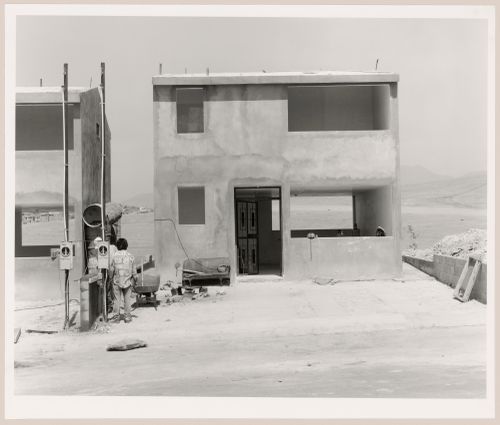
- The series "Running Fence 1997" focuses "on the first 14 miles of the border fence that separates the United States and Mexico, beginning at the Pacific Ocean and ending in the Otay Mountains.... [It] analyzes the "idea" of the border and explores its iconography, the border being a subject that is of extreme importance to the public as the world proceeds towards greater globalization. [Geoffrey] James has written of the project: "[The border fence] was built by the US Army Corps of Engineers in 1994, out of recycled metal landing strip - the most visible symbol of what is known as Operation Gatekeeper. Because the steel sheets are placed in the ground so that their ridges run horizontally, a man can hop over the fence with ease; and no Mexican child ever seems to be impeded from retrieving a soccer ball from US territory. The real barrier to illegal immigration from Mexico into the USA is less visible: hundreds of buried sensors linked to a central computer, nightscopes, helicopters and Border Patrol Agents in white Broncos."" (Evans).
PH1997:0058
Description:
- The series "Running Fence 1997" focuses "on the first 14 miles of the border fence that separates the United States and Mexico, beginning at the Pacific Ocean and ending in the Otay Mountains.... [It] analyzes the "idea" of the border and explores its iconography, the border being a subject that is of extreme importance to the public as the world proceeds towards greater globalization. [Geoffrey] James has written of the project: "[The border fence] was built by the US Army Corps of Engineers in 1994, out of recycled metal landing strip - the most visible symbol of what is known as Operation Gatekeeper. Because the steel sheets are placed in the ground so that their ridges run horizontally, a man can hop over the fence with ease; and no Mexican child ever seems to be impeded from retrieving a soccer ball from US territory. The real barrier to illegal immigration from Mexico into the USA is less visible: hundreds of buried sensors linked to a central computer, nightscopes, helicopters and Border Patrol Agents in white Broncos."" (Evans).
Personnes et institutions:
Sujet:
architecture, ingénierie
architecture, ingénierie
Date:
1997
1997
Titre:
View of houses under construction, Mesa de Otay, Tijuana, Baja California, Mexico
Actions:
PH1997:0058
Description:
- The series "Running Fence 1997" focuses "on the first 14 miles of the border fence that separates the United States and Mexico, beginning at the Pacific Ocean and ending in the Otay Mountains.... [It] analyzes the "idea" of the border and explores its iconography, the border being a subject that is of extreme importance to the public as the world proceeds towards greater globalization. [Geoffrey] James has written of the project: "[The border fence] was built by the US Army Corps of Engineers in 1994, out of recycled metal landing strip - the most visible symbol of what is known as Operation Gatekeeper. Because the steel sheets are placed in the ground so that their ridges run horizontally, a man can hop over the fence with ease; and no Mexican child ever seems to be impeded from retrieving a soccer ball from US territory. The real barrier to illegal immigration from Mexico into the USA is less visible: hundreds of buried sensors linked to a central computer, nightscopes, helicopters and Border Patrol Agents in white Broncos."" (Evans).
View of houses under construction, Mesa de Otay, Tijuana, Baja California, Mexico
Actions:
PH1997:0058
Description:
- The series "Running Fence 1997" focuses "on the first 14 miles of the border fence that separates the United States and Mexico, beginning at the Pacific Ocean and ending in the Otay Mountains.... [It] analyzes the "idea" of the border and explores its iconography, the border being a subject that is of extreme importance to the public as the world proceeds towards greater globalization. [Geoffrey] James has written of the project: "[The border fence] was built by the US Army Corps of Engineers in 1994, out of recycled metal landing strip - the most visible symbol of what is known as Operation Gatekeeper. Because the steel sheets are placed in the ground so that their ridges run horizontally, a man can hop over the fence with ease; and no Mexican child ever seems to be impeded from retrieving a soccer ball from US territory. The real barrier to illegal immigration from Mexico into the USA is less visible: hundreds of buried sensors linked to a central computer, nightscopes, helicopters and Border Patrol Agents in white Broncos."" (Evans).
Classification:
photographies
photographies
Date:
1997
1997
Personnes et institutions:
Sujet:
architecture, ingénierie
architecture, ingénierie
Classification:
dessins
dessins
Actions:
Numéro de référence:
DR1987:0310
Description:
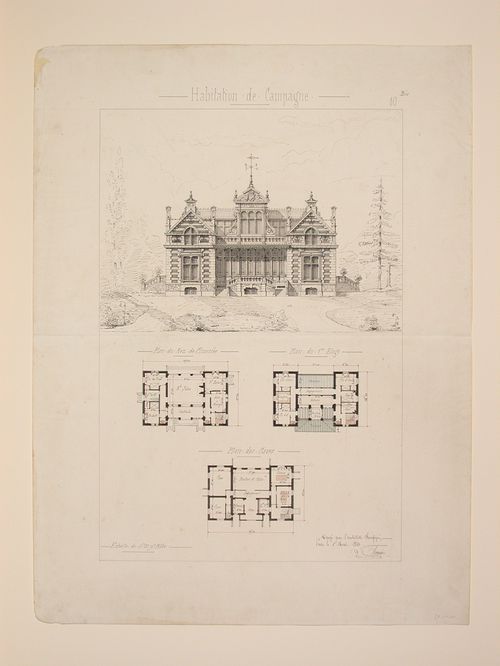
- These plans, section and elevation show a house with a mansard roof. The brick and stone exterior has French revival style details such as quoining and classically articulated window mouldings. Several panelled room interiors are visible in the section. The rendering shows the house set in a country landscape.
DR1987:0310
Description:
- These plans, section and elevation show a house with a mansard roof. The brick and stone exterior has French revival style details such as quoining and classically articulated window mouldings. Several panelled room interiors are visible in the section. The rendering shows the house set in a country landscape.
Personnes et institutions:
Sujet:
architecture
architecture
Date:
10 March 1860
10 March 1860
Titre:
Rendered elevation, section, and plans for a "Residence Bourgeoise" in the countryside
Actions:
DR1987:0310
Description:
- These plans, section and elevation show a house with a mansard roof. The brick and stone exterior has French revival style details such as quoining and classically articulated window mouldings. Several panelled room interiors are visible in the section. The rendering shows the house set in a country landscape.
Rendered elevation, section, and plans for a "Residence Bourgeoise" in the countryside
Actions:
DR1987:0310
Description:
- These plans, section and elevation show a house with a mansard roof. The brick and stone exterior has French revival style details such as quoining and classically articulated window mouldings. Several panelled room interiors are visible in the section. The rendering shows the house set in a country landscape.
Classification:
dessins
dessins
Date:
10 March 1860
10 March 1860
Personnes et institutions:
Sujet:
architecture
architecture
Classification:
dessins
dessins
Numéro de référence:
DR2012:0012:002
Description:
Includes plans and axonometric drawings for the project "Une construction a l'Estrie", in relation to an installation of the project at the Centre culturel de l'Université Sherbrooke. Material was originally housed in a tube labelled "Installation Drawings: Université de Sherbrooke 1985".
DR2012:0012:002
Description:
Includes plans and axonometric drawings for the project "Une construction a l'Estrie", in relation to an installation of the project at the Centre culturel de l'Université Sherbrooke. Material was originally housed in a tube labelled "Installation Drawings: Université de Sherbrooke 1985".
Personnes et institutions:
Date:
1984-1985
1984-1985
Titre:
Plans and axonometric drawings, A Sherbrooke construction
Actions:
DR2012:0012:002
Description:
Includes plans and axonometric drawings for the project "Une construction a l'Estrie", in relation to an installation of the project at the Centre culturel de l'Université Sherbrooke. Material was originally housed in a tube labelled "Installation Drawings: Université de Sherbrooke 1985".
Plans and axonometric drawings, A Sherbrooke construction
Actions:
DR2012:0012:002
Description:
Includes plans and axonometric drawings for the project "Une construction a l'Estrie", in relation to an installation of the project at the Centre culturel de l'Université Sherbrooke. Material was originally housed in a tube labelled "Installation Drawings: Université de Sherbrooke 1985".
Classification:
dessins
dessins
Date:
1984-1985
1984-1985
Personnes et institutions:
Classification:
dessins
dessins
Actions:
Numéro de référence:
DR1994:0011:002 R/V
Description:
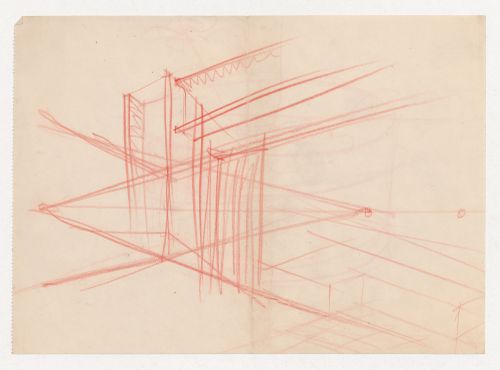
- Group DR1994:0011:001 R/V - DR1994:0011:030 includes three sketches (DR1994:0011:001 R/V - DR1994:0011:002 R/V and DR1994:0011:030), 24 pages of notes (DR1994:0011:003 - DR1994:0011:026), two sketchbooks (DR1994:0011:027:001-035 and DR1994:0011:028:001-008 R/V), and the envelope in which these materials were housed at acquisition (DR1994:0011:029). The sketches are for various subjects including I-beams (DR1994:0011:001 R/V), a column-to-beam connection and an unidentified building (DR1994:0011:002 R/V), and a sketch plan of Mies' 1928-1929 design for the Friedrichstrasse office building in Berlin (DR1994:0011:030). Notes DR1994:0011:003 - DR1994:0011:024 are written in German and are generally illegible. Many changes have been made to the notes, and some sheets appear to have been reordered or struck out. Some of the notes may be about urban planning. The number in the upper left corner of sheets DR1994:0011:010, DR1994:0011:012-016 and DR1994:0011:020-021 may indicate the order of the topics dealt with in the notes. Notes DR1994:0011:025 are illegible. Notes DR1994:0011:026 are written in English, and may be notes of a lecture. The notes in sketchbook DR1994:0011:027:001-035 are written in German, are generally illegible, and are usually written in point form or sometimes as lists. Chicago is mentioned on several of the sheets. There is a shift in the clarity of the handwriting halfway through the sketchbook and some of the notes in the latter half may relate to Mies' readings of philosophy. Some of the notes in sketchbook DR1994:0028:001-008 R/V are written in German and some in English. The first and second pages of the sketchbook describe measurements for addresses on the campus of IIT, as well as for the Power Plant. The last three pages of the sketchbook discuss the architectural education programm at IIT and an exhibition of student work.
DR1994:0011:002 R/V
Description:
- Group DR1994:0011:001 R/V - DR1994:0011:030 includes three sketches (DR1994:0011:001 R/V - DR1994:0011:002 R/V and DR1994:0011:030), 24 pages of notes (DR1994:0011:003 - DR1994:0011:026), two sketchbooks (DR1994:0011:027:001-035 and DR1994:0011:028:001-008 R/V), and the envelope in which these materials were housed at acquisition (DR1994:0011:029). The sketches are for various subjects including I-beams (DR1994:0011:001 R/V), a column-to-beam connection and an unidentified building (DR1994:0011:002 R/V), and a sketch plan of Mies' 1928-1929 design for the Friedrichstrasse office building in Berlin (DR1994:0011:030). Notes DR1994:0011:003 - DR1994:0011:024 are written in German and are generally illegible. Many changes have been made to the notes, and some sheets appear to have been reordered or struck out. Some of the notes may be about urban planning. The number in the upper left corner of sheets DR1994:0011:010, DR1994:0011:012-016 and DR1994:0011:020-021 may indicate the order of the topics dealt with in the notes. Notes DR1994:0011:025 are illegible. Notes DR1994:0011:026 are written in English, and may be notes of a lecture. The notes in sketchbook DR1994:0011:027:001-035 are written in German, are generally illegible, and are usually written in point form or sometimes as lists. Chicago is mentioned on several of the sheets. There is a shift in the clarity of the handwriting halfway through the sketchbook and some of the notes in the latter half may relate to Mies' readings of philosophy. Some of the notes in sketchbook DR1994:0028:001-008 R/V are written in German and some in English. The first and second pages of the sketchbook describe measurements for addresses on the campus of IIT, as well as for the Power Plant. The last three pages of the sketchbook discuss the architectural education programm at IIT and an exhibition of student work.
Personnes et institutions:
Sujet:
architecture
architecture
Date:
1944-1965
1944-1965
Titre:
Sketch of a container with a plant; verso: Perspective sketch, possibly for a column to beam connection, and axonometric sketch for an unidentified building
Actions:
DR1994:0011:002 R/V
Description:
- Group DR1994:0011:001 R/V - DR1994:0011:030 includes three sketches (DR1994:0011:001 R/V - DR1994:0011:002 R/V and DR1994:0011:030), 24 pages of notes (DR1994:0011:003 - DR1994:0011:026), two sketchbooks (DR1994:0011:027:001-035 and DR1994:0011:028:001-008 R/V), and the envelope in which these materials were housed at acquisition (DR1994:0011:029). The sketches are for various subjects including I-beams (DR1994:0011:001 R/V), a column-to-beam connection and an unidentified building (DR1994:0011:002 R/V), and a sketch plan of Mies' 1928-1929 design for the Friedrichstrasse office building in Berlin (DR1994:0011:030). Notes DR1994:0011:003 - DR1994:0011:024 are written in German and are generally illegible. Many changes have been made to the notes, and some sheets appear to have been reordered or struck out. Some of the notes may be about urban planning. The number in the upper left corner of sheets DR1994:0011:010, DR1994:0011:012-016 and DR1994:0011:020-021 may indicate the order of the topics dealt with in the notes. Notes DR1994:0011:025 are illegible. Notes DR1994:0011:026 are written in English, and may be notes of a lecture. The notes in sketchbook DR1994:0011:027:001-035 are written in German, are generally illegible, and are usually written in point form or sometimes as lists. Chicago is mentioned on several of the sheets. There is a shift in the clarity of the handwriting halfway through the sketchbook and some of the notes in the latter half may relate to Mies' readings of philosophy. Some of the notes in sketchbook DR1994:0028:001-008 R/V are written in German and some in English. The first and second pages of the sketchbook describe measurements for addresses on the campus of IIT, as well as for the Power Plant. The last three pages of the sketchbook discuss the architectural education programm at IIT and an exhibition of student work.
Sketch of a container with a plant; verso: Perspective sketch, possibly for a column to beam connection, and axonometric sketch for an unidentified building
Actions:
DR1994:0011:002 R/V
Description:
- Group DR1994:0011:001 R/V - DR1994:0011:030 includes three sketches (DR1994:0011:001 R/V - DR1994:0011:002 R/V and DR1994:0011:030), 24 pages of notes (DR1994:0011:003 - DR1994:0011:026), two sketchbooks (DR1994:0011:027:001-035 and DR1994:0011:028:001-008 R/V), and the envelope in which these materials were housed at acquisition (DR1994:0011:029). The sketches are for various subjects including I-beams (DR1994:0011:001 R/V), a column-to-beam connection and an unidentified building (DR1994:0011:002 R/V), and a sketch plan of Mies' 1928-1929 design for the Friedrichstrasse office building in Berlin (DR1994:0011:030). Notes DR1994:0011:003 - DR1994:0011:024 are written in German and are generally illegible. Many changes have been made to the notes, and some sheets appear to have been reordered or struck out. Some of the notes may be about urban planning. The number in the upper left corner of sheets DR1994:0011:010, DR1994:0011:012-016 and DR1994:0011:020-021 may indicate the order of the topics dealt with in the notes. Notes DR1994:0011:025 are illegible. Notes DR1994:0011:026 are written in English, and may be notes of a lecture. The notes in sketchbook DR1994:0011:027:001-035 are written in German, are generally illegible, and are usually written in point form or sometimes as lists. Chicago is mentioned on several of the sheets. There is a shift in the clarity of the handwriting halfway through the sketchbook and some of the notes in the latter half may relate to Mies' readings of philosophy. Some of the notes in sketchbook DR1994:0028:001-008 R/V are written in German and some in English. The first and second pages of the sketchbook describe measurements for addresses on the campus of IIT, as well as for the Power Plant. The last three pages of the sketchbook discuss the architectural education programm at IIT and an exhibition of student work.
Classification:
dessins
dessins
Date:
1944-1965
1944-1965
Personnes et institutions:
Sujet:
architecture
architecture
Classification:
photographies
photographies
Numéro de référence:
ARCH280844
Description:
Group consists of photographs of gouvernements housings in Chandigarh, India, including photographs of a House Type 2-J single-storey and a photograph of the private residence of Mr Gautam Sahgal.
ARCH280844
Description:
Group consists of photographs of gouvernements housings in Chandigarh, India, including photographs of a House Type 2-J single-storey and a photograph of the private residence of Mr Gautam Sahgal.
Personnes et institutions:
Date:
s.d.
s.d.
Titre:
Photographs of governement housings and a private residence in Chandigarh, India
Actions:
ARCH280844
Description:
Group consists of photographs of gouvernements housings in Chandigarh, India, including photographs of a House Type 2-J single-storey and a photograph of the private residence of Mr Gautam Sahgal.
Photographs of governement housings and a private residence in Chandigarh, India
Actions:
ARCH280844
Description:
Group consists of photographs of gouvernements housings in Chandigarh, India, including photographs of a House Type 2-J single-storey and a photograph of the private residence of Mr Gautam Sahgal.
Classification:
photographies
photographies
Date:
s.d.
s.d.
Personnes et institutions:
Classification:
photographies
photographies
Numéro de référence:
ARCH402401
Description:
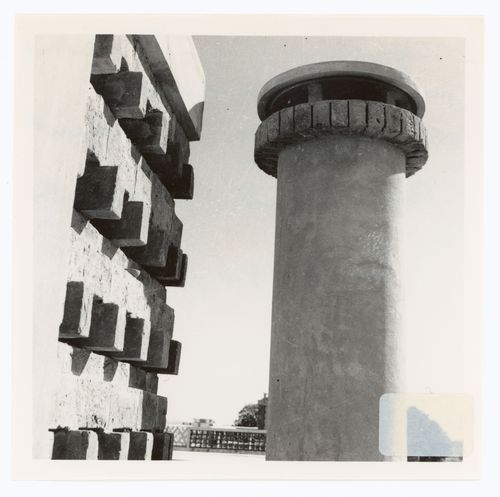
Similar chimneys were used, by example, for House Type 2-J, Sector 2 and House Type 4-J, Sector 5, both designed by Pierre Jeanneret. Further investigation is required.
ARCH402401
Description:
Similar chimneys were used, by example, for House Type 2-J, Sector 2 and House Type 4-J, Sector 5, both designed by Pierre Jeanneret. Further investigation is required.
Personnes et institutions:
Date:
1957
1957
Titre:
Detail view of a chimney and jali, possibly in Chandigarh, India
Actions:
ARCH402401
Description:
Similar chimneys were used, by example, for House Type 2-J, Sector 2 and House Type 4-J, Sector 5, both designed by Pierre Jeanneret. Further investigation is required.
Detail view of a chimney and jali, possibly in Chandigarh, India
Actions:
ARCH402401
Description:
Similar chimneys were used, by example, for House Type 2-J, Sector 2 and House Type 4-J, Sector 5, both designed by Pierre Jeanneret. Further investigation is required.
Classification:
photographies
photographies
Date:
1957
1957
Personnes et institutions:
Classification:
photographies
photographies
Actions:
Numéro de référence:
PH1980:0817:031
Description:
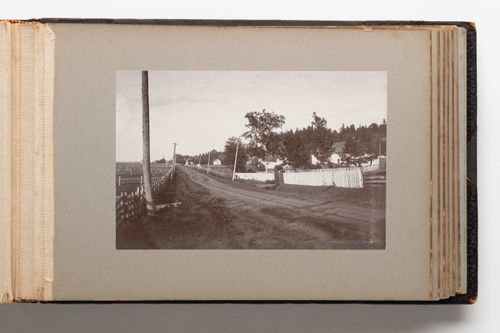
Photograph depicts a unpaved roadway in the countryside fences along both sides. Electric utility poles line the road and a deep ditch runs along the right side of the road. Houses are set back from the road along the right and the property on the lefthand side appears to be divided for farming. A church steeple is visible in the far background of the image at centre.
PH1980:0817:031
Description:
Photograph depicts a unpaved roadway in the countryside fences along both sides. Electric utility poles line the road and a deep ditch runs along the right side of the road. Houses are set back from the road along the right and the property on the lefthand side appears to be divided for farming. A church steeple is visible in the far background of the image at centre.
Personnes et institutions:
Date:
1889-1896
1889-1896
Titre:
View along a rural roadway in Quebec, Canada
Actions:
PH1980:0817:031
Description:
Photograph depicts a unpaved roadway in the countryside fences along both sides. Electric utility poles line the road and a deep ditch runs along the right side of the road. Houses are set back from the road along the right and the property on the lefthand side appears to be divided for farming. A church steeple is visible in the far background of the image at centre.
View along a rural roadway in Quebec, Canada
Actions:
PH1980:0817:031
Description:
Photograph depicts a unpaved roadway in the countryside fences along both sides. Electric utility poles line the road and a deep ditch runs along the right side of the road. Houses are set back from the road along the right and the property on the lefthand side appears to be divided for farming. A church steeple is visible in the far background of the image at centre.
Classification:
photographies
photographies
Date:
1889-1896
1889-1896
Personnes et institutions:
Classification:
documents textuels
documents textuels
Numéro de référence:
AP197.S1.SS9.002
Description:
This box is comprised of notes, drafts, articles, interviews, conference addresses by Kenneth Frampton. The materials are organized alphabetically by either title or the architect's last name, from A-FO. Subjects and architects explored in these texts include: the Patkau Architects's Agosta House; Tadao Ando; Demetri and Suzana Antonakakis; ULM; architectural design; architecture as a humanistic discipline; architecture vs. art; Hannah Arendt; Wiel Arets; Emre Arolat; the avant-garde; Barcelona; basque architecture; Anatole de Baudot; Salvatore Bisogni; Mario Botta; the British Library; Angelo Bucci; William Butterfield; James Carpenter; la Casa Cooper; Alan Colquhuon; Casco Centrale; Charles Correa; constructivism; Czech architecture; the Duetsche Werkbund; developments in contemporary architecture; architectural education; Peter Eisenman; Shushei Endo; English architecture; and Arthur Erikson.
AP197.S1.SS9.002
Description:
This box is comprised of notes, drafts, articles, interviews, conference addresses by Kenneth Frampton. The materials are organized alphabetically by either title or the architect's last name, from A-FO. Subjects and architects explored in these texts include: the Patkau Architects's Agosta House; Tadao Ando; Demetri and Suzana Antonakakis; ULM; architectural design; architecture as a humanistic discipline; architecture vs. art; Hannah Arendt; Wiel Arets; Emre Arolat; the avant-garde; Barcelona; basque architecture; Anatole de Baudot; Salvatore Bisogni; Mario Botta; the British Library; Angelo Bucci; William Butterfield; James Carpenter; la Casa Cooper; Alan Colquhuon; Casco Centrale; Charles Correa; constructivism; Czech architecture; the Duetsche Werkbund; developments in contemporary architecture; architectural education; Peter Eisenman; Shushei Endo; English architecture; and Arthur Erikson.
Personnes et institutions:
Date:
1965-2015
1965-2015
Titre:
Kenneth Frampton texts, articles and notes A-FO
Actions:
AP197.S1.SS9.002
Description:
This box is comprised of notes, drafts, articles, interviews, conference addresses by Kenneth Frampton. The materials are organized alphabetically by either title or the architect's last name, from A-FO. Subjects and architects explored in these texts include: the Patkau Architects's Agosta House; Tadao Ando; Demetri and Suzana Antonakakis; ULM; architectural design; architecture as a humanistic discipline; architecture vs. art; Hannah Arendt; Wiel Arets; Emre Arolat; the avant-garde; Barcelona; basque architecture; Anatole de Baudot; Salvatore Bisogni; Mario Botta; the British Library; Angelo Bucci; William Butterfield; James Carpenter; la Casa Cooper; Alan Colquhuon; Casco Centrale; Charles Correa; constructivism; Czech architecture; the Duetsche Werkbund; developments in contemporary architecture; architectural education; Peter Eisenman; Shushei Endo; English architecture; and Arthur Erikson.
Kenneth Frampton texts, articles and notes A-FO
Actions:
AP197.S1.SS9.002
Description:
This box is comprised of notes, drafts, articles, interviews, conference addresses by Kenneth Frampton. The materials are organized alphabetically by either title or the architect's last name, from A-FO. Subjects and architects explored in these texts include: the Patkau Architects's Agosta House; Tadao Ando; Demetri and Suzana Antonakakis; ULM; architectural design; architecture as a humanistic discipline; architecture vs. art; Hannah Arendt; Wiel Arets; Emre Arolat; the avant-garde; Barcelona; basque architecture; Anatole de Baudot; Salvatore Bisogni; Mario Botta; the British Library; Angelo Bucci; William Butterfield; James Carpenter; la Casa Cooper; Alan Colquhuon; Casco Centrale; Charles Correa; constructivism; Czech architecture; the Duetsche Werkbund; developments in contemporary architecture; architectural education; Peter Eisenman; Shushei Endo; English architecture; and Arthur Erikson.
Classification:
documents textuels
documents textuels
Date:
1965-2015
1965-2015
Personnes et institutions:
Classification:
photographies
photographies
Actions:
Numéro de référence:
PH1997:0057
Description:
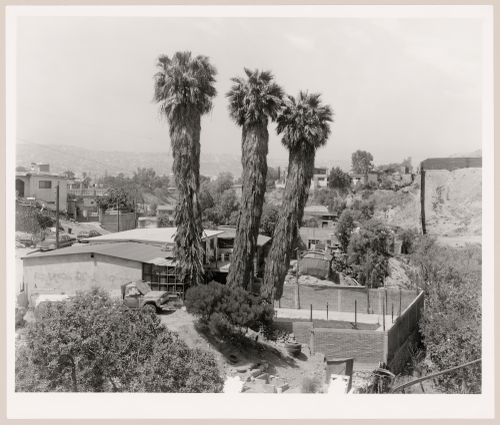
- The series "Running Fence 1997" focuses "on the first 14 miles of the border fence that separates the United States and Mexico, beginning at the Pacific Ocean and ending in the Otay Mountains.... [It] analyzes the "idea" of the border and explores its iconography, the border being a subject that is of extreme importance to the public as the world proceeds towards greater globalization. [Geoffrey] James has written of the project: "[The border fence] was built by the US Army Corps of Engineers in 1994, out of recycled metal landing strip - the most visible symbol of what is known as Operation Gatekeeper. Because the steel sheets are placed in the ground so that their ridges run horizontally, a man can hop over the fence with ease; and no Mexican child ever seems to be impeded from retrieving a soccer ball from US territory. The real barrier to illegal immigration from Mexico into the USA is less visible: hundreds of buried sensors linked to a central computer, nightscopes, helicopters and Border Patrol Agents in white Broncos."" (Evans).
PH1997:0057
Description:
- The series "Running Fence 1997" focuses "on the first 14 miles of the border fence that separates the United States and Mexico, beginning at the Pacific Ocean and ending in the Otay Mountains.... [It] analyzes the "idea" of the border and explores its iconography, the border being a subject that is of extreme importance to the public as the world proceeds towards greater globalization. [Geoffrey] James has written of the project: "[The border fence] was built by the US Army Corps of Engineers in 1994, out of recycled metal landing strip - the most visible symbol of what is known as Operation Gatekeeper. Because the steel sheets are placed in the ground so that their ridges run horizontally, a man can hop over the fence with ease; and no Mexican child ever seems to be impeded from retrieving a soccer ball from US territory. The real barrier to illegal immigration from Mexico into the USA is less visible: hundreds of buried sensors linked to a central computer, nightscopes, helicopters and Border Patrol Agents in white Broncos."" (Evans).
Personnes et institutions:
Sujet:
architecture, ingénierie
architecture, ingénierie
Date:
1997
1997
Titre:
View of Colonia Libertad with trees and houses in the foreground and showing a partial view of the United States-Mexico border fence in the centre right, San Diego County, California, United States, and Colonia Libertad, Tijuana, Baja California, Mexico
Actions:
PH1997:0057
Description:
- The series "Running Fence 1997" focuses "on the first 14 miles of the border fence that separates the United States and Mexico, beginning at the Pacific Ocean and ending in the Otay Mountains.... [It] analyzes the "idea" of the border and explores its iconography, the border being a subject that is of extreme importance to the public as the world proceeds towards greater globalization. [Geoffrey] James has written of the project: "[The border fence] was built by the US Army Corps of Engineers in 1994, out of recycled metal landing strip - the most visible symbol of what is known as Operation Gatekeeper. Because the steel sheets are placed in the ground so that their ridges run horizontally, a man can hop over the fence with ease; and no Mexican child ever seems to be impeded from retrieving a soccer ball from US territory. The real barrier to illegal immigration from Mexico into the USA is less visible: hundreds of buried sensors linked to a central computer, nightscopes, helicopters and Border Patrol Agents in white Broncos."" (Evans).
View of Colonia Libertad with trees and houses in the foreground and showing a partial view of the United States-Mexico border fence in the centre right, San Diego County, California, United States, and Colonia Libertad, Tijuana, Baja California, Mexico
Actions:
PH1997:0057
Description:
- The series "Running Fence 1997" focuses "on the first 14 miles of the border fence that separates the United States and Mexico, beginning at the Pacific Ocean and ending in the Otay Mountains.... [It] analyzes the "idea" of the border and explores its iconography, the border being a subject that is of extreme importance to the public as the world proceeds towards greater globalization. [Geoffrey] James has written of the project: "[The border fence] was built by the US Army Corps of Engineers in 1994, out of recycled metal landing strip - the most visible symbol of what is known as Operation Gatekeeper. Because the steel sheets are placed in the ground so that their ridges run horizontally, a man can hop over the fence with ease; and no Mexican child ever seems to be impeded from retrieving a soccer ball from US territory. The real barrier to illegal immigration from Mexico into the USA is less visible: hundreds of buried sensors linked to a central computer, nightscopes, helicopters and Border Patrol Agents in white Broncos."" (Evans).
Classification:
photographies
photographies
Date:
1997
1997
Personnes et institutions:
Sujet:
architecture, ingénierie
architecture, ingénierie


