


4309 Résultats
Niveau de description archivistique:
Sous-série
Sous-série
Numéro de référence:
AP156.S5.SS2
Description:
La sous-série documente les photographies sélectionnées pour une exposition présentée à Chandigarh et à Lausanne en 2005. La sous-série inclut des photographies de la vie quotidienne, de résidences privées et gouvernementales, des écoles, de l'Université du Panjab, du Capitol, de divers bâtiments et installation et de maquettes. Le matériel dans cette sous-série a été produit entre 1951 and 1965. La sous-série contient des photographies montées sur aluminum. Sub-serie documents photographs selected for an exhibition presented at Chandigarh and Lausanne in 2005. The sub-series includes photographs of everyday life, private and government residences, schools, the Panjab University, the Capitol Complex, various buildings and installations and models. The material in this sub-series was produced between 1951 and 1965. The sub-series contains photographs mounted on aluminum.
AP156.S5.SS2
Description:
La sous-série documente les photographies sélectionnées pour une exposition présentée à Chandigarh et à Lausanne en 2005. La sous-série inclut des photographies de la vie quotidienne, de résidences privées et gouvernementales, des écoles, de l'Université du Panjab, du Capitol, de divers bâtiments et installation et de maquettes. Le matériel dans cette sous-série a été produit entre 1951 and 1965. La sous-série contient des photographies montées sur aluminum. Sub-serie documents photographs selected for an exhibition presented at Chandigarh and Lausanne in 2005. The sub-series includes photographs of everyday life, private and government residences, schools, the Panjab University, the Capitol Complex, various buildings and installations and models. The material in this sub-series was produced between 1951 and 1965. The sub-series contains photographs mounted on aluminum.
Personnes et institutions:
Date:
between 1951 and 1965
between 1951 and 1965
Titre:
Photographies pour une exposition à Chandigarh et à Lausanne, 2005 = Photographs for an exhibition at Chandigarh and Lausanne, 2005
Actions:
AP156.S5.SS2
Description:
La sous-série documente les photographies sélectionnées pour une exposition présentée à Chandigarh et à Lausanne en 2005. La sous-série inclut des photographies de la vie quotidienne, de résidences privées et gouvernementales, des écoles, de l'Université du Panjab, du Capitol, de divers bâtiments et installation et de maquettes. Le matériel dans cette sous-série a été produit entre 1951 and 1965. La sous-série contient des photographies montées sur aluminum. Sub-serie documents photographs selected for an exhibition presented at Chandigarh and Lausanne in 2005. The sub-series includes photographs of everyday life, private and government residences, schools, the Panjab University, the Capitol Complex, various buildings and installations and models. The material in this sub-series was produced between 1951 and 1965. The sub-series contains photographs mounted on aluminum.
Photographies pour une exposition à Chandigarh et à Lausanne, 2005 = Photographs for an exhibition at Chandigarh and Lausanne, 2005
Actions:
AP156.S5.SS2
Description:
La sous-série documente les photographies sélectionnées pour une exposition présentée à Chandigarh et à Lausanne en 2005. La sous-série inclut des photographies de la vie quotidienne, de résidences privées et gouvernementales, des écoles, de l'Université du Panjab, du Capitol, de divers bâtiments et installation et de maquettes. Le matériel dans cette sous-série a été produit entre 1951 and 1965. La sous-série contient des photographies montées sur aluminum. Sub-serie documents photographs selected for an exhibition presented at Chandigarh and Lausanne in 2005. The sub-series includes photographs of everyday life, private and government residences, schools, the Panjab University, the Capitol Complex, various buildings and installations and models. The material in this sub-series was produced between 1951 and 1965. The sub-series contains photographs mounted on aluminum.
Niveau de description archivistique:
Sous-série 2
Sous-série 2
Date:
between 1951 and 1965
between 1951 and 1965
Personnes et institutions:
Classification:
archives
Niveau de description archivistique:
Fonds
archives
Niveau de description archivistique:
Fonds
Titre:
Fonds Peter Rose
Fonds Peter Rose
Numéro de référence:
AP046
Résumé:
The Peter Rose fonds, documents the design and construction of the Canadian Centre for Architecture (1989) and a design for the redevelopment of the Old Port of Montréal, Master Plan (1992) by architect Peter Rose. Both projects include drawings, textual records, models and photographs.
AP046
Résumé:
The Peter Rose fonds, documents the design and construction of the Canadian Centre for Architecture (1989) and a design for the redevelopment of the Old Port of Montréal, Master Plan (1992) by architect Peter Rose. Both projects include drawings, textual records, models and photographs.
Personnes et institutions:
Date:
1983-1989
1983-1989
Titre:
Fonds Peter Rose
Actions:
AP046
Résumé:
The Peter Rose fonds, documents the design and construction of the Canadian Centre for Architecture (1989) and a design for the redevelopment of the Old Port of Montréal, Master Plan (1992) by architect Peter Rose. Both projects include drawings, textual records, models and photographs.
Fonds Peter Rose
Actions:
AP046
Résumé:
The Peter Rose fonds, documents the design and construction of the Canadian Centre for Architecture (1989) and a design for the redevelopment of the Old Port of Montréal, Master Plan (1992) by architect Peter Rose. Both projects include drawings, textual records, models and photographs.
Classification:
archives
Niveau de description archivistique:
Fonds
archives
Niveau de description archivistique:
Fonds
Date:
1983-1989
1983-1989
Personnes et institutions:
Niveau de description archivistique:
Projet
Projet
Titre:
Clay House (1972)
Clay House (1972)
Numéro de référence:
AP207.S1.1972.PR02
Description:
The project series documents "Clay House", an installation undertaken by Pettena and a group of his students from the University of Utah, in Salt Lake City, in 1972. It consisted of covering an entire inhabited house with clay located in a middle-class neighbourhood of Salt Lake City. The installation "was another study on the “working” of material, or rather a statement on the re-naturalization of denatured places and materials [...]." It also transformed the house by changing its colour from the other houses in the area, "all devitalized by the anonymity as well as the uniformity of their coloring." [2] The project series contains photographs of the residence before being covered in clay, a photograph of Pettena's team working at covering the house with clay, photographs of the finished installation, and a photograph of the model. The project series also contains drawings for the installation, and a drawing showing four stages of the installation. Source: [1] [2] Gianni Pettena website, https://www.giannipettena.it/italiano/opere-1/nat-clay-house-1972-1/ (last accessed 11 November 2019)
AP207.S1.1972.PR02
Description:
The project series documents "Clay House", an installation undertaken by Pettena and a group of his students from the University of Utah, in Salt Lake City, in 1972. It consisted of covering an entire inhabited house with clay located in a middle-class neighbourhood of Salt Lake City. The installation "was another study on the “working” of material, or rather a statement on the re-naturalization of denatured places and materials [...]." It also transformed the house by changing its colour from the other houses in the area, "all devitalized by the anonymity as well as the uniformity of their coloring." [2] The project series contains photographs of the residence before being covered in clay, a photograph of Pettena's team working at covering the house with clay, photographs of the finished installation, and a photograph of the model. The project series also contains drawings for the installation, and a drawing showing four stages of the installation. Source: [1] [2] Gianni Pettena website, https://www.giannipettena.it/italiano/opere-1/nat-clay-house-1972-1/ (last accessed 11 November 2019)
Personnes et institutions:
Date:
circa 1972-2016
circa 1972-2016
Titre:
Clay House (1972)
Actions:
AP207.S1.1972.PR02
Description:
The project series documents "Clay House", an installation undertaken by Pettena and a group of his students from the University of Utah, in Salt Lake City, in 1972. It consisted of covering an entire inhabited house with clay located in a middle-class neighbourhood of Salt Lake City. The installation "was another study on the “working” of material, or rather a statement on the re-naturalization of denatured places and materials [...]." It also transformed the house by changing its colour from the other houses in the area, "all devitalized by the anonymity as well as the uniformity of their coloring." [2] The project series contains photographs of the residence before being covered in clay, a photograph of Pettena's team working at covering the house with clay, photographs of the finished installation, and a photograph of the model. The project series also contains drawings for the installation, and a drawing showing four stages of the installation. Source: [1] [2] Gianni Pettena website, https://www.giannipettena.it/italiano/opere-1/nat-clay-house-1972-1/ (last accessed 11 November 2019)
Clay House (1972)
Actions:
AP207.S1.1972.PR02
Description:
The project series documents "Clay House", an installation undertaken by Pettena and a group of his students from the University of Utah, in Salt Lake City, in 1972. It consisted of covering an entire inhabited house with clay located in a middle-class neighbourhood of Salt Lake City. The installation "was another study on the “working” of material, or rather a statement on the re-naturalization of denatured places and materials [...]." It also transformed the house by changing its colour from the other houses in the area, "all devitalized by the anonymity as well as the uniformity of their coloring." [2] The project series contains photographs of the residence before being covered in clay, a photograph of Pettena's team working at covering the house with clay, photographs of the finished installation, and a photograph of the model. The project series also contains drawings for the installation, and a drawing showing four stages of the installation. Source: [1] [2] Gianni Pettena website, https://www.giannipettena.it/italiano/opere-1/nat-clay-house-1972-1/ (last accessed 11 November 2019)
Niveau de description archivistique:
Project
Project
Date:
circa 1972-2016
circa 1972-2016
Personnes et institutions:
Classification:
photographies
photographies
Numéro de référence:
ARCH269549
Description:
Group consists of photographs by Pierre Jeanneret of some of the Panjab University's buildings in sector 14 in Chandigarh, India, including the Gandhi Bhawan, some Colleges’ buildings, students’ residences designed by Pierre Jeanneret.
ARCH269549
Description:
Group consists of photographs by Pierre Jeanneret of some of the Panjab University's buildings in sector 14 in Chandigarh, India, including the Gandhi Bhawan, some Colleges’ buildings, students’ residences designed by Pierre Jeanneret.
Personnes et institutions:
Date:
ca. 1955-1965
ca. 1955-1965
Titre:
Photographs of the Panjab University in Chandigarh, India
Actions:
ARCH269549
Description:
Group consists of photographs by Pierre Jeanneret of some of the Panjab University's buildings in sector 14 in Chandigarh, India, including the Gandhi Bhawan, some Colleges’ buildings, students’ residences designed by Pierre Jeanneret.
Photographs of the Panjab University in Chandigarh, India
Actions:
ARCH269549
Description:
Group consists of photographs by Pierre Jeanneret of some of the Panjab University's buildings in sector 14 in Chandigarh, India, including the Gandhi Bhawan, some Colleges’ buildings, students’ residences designed by Pierre Jeanneret.
Classification:
photographies
photographies
Date:
ca. 1955-1965
ca. 1955-1965
Personnes et institutions:
Niveau de description archivistique:
Sous-série
Sous-série
Titre:
Chandigarh = Chandigarh
Chandigarh = Chandigarh
Numéro de référence:
AP156.S4.SS5
Description:
La sous-série documente les photographies de Chandigarh, en Inde, prises par Pierre Jeanneret et d'autres photographes entre 1950 et les années 1970s. La sous-série inclut, entre autres, des photographies des résidences privées et gouvernementales, des écoles, de l'Université du Panjab et du Capitol. Le matérieal dans cette sous-série a été produit entre 1950 et le milieu des années 1970s. La sous-série contient des photographies. Sub-series documents the photographs of Chandigarh, in India, taken by Pierre Jeanneret and other photographers between 1950 and the 1970s. The sub-series includes, amongst other things, photographs of private and governmental residences, schools, the Panjab University and the Capitol. The material in this sub-series was produced between 1950 and the middle of the 1970s. The sub-series contains photographs.
AP156.S4.SS5
Description:
La sous-série documente les photographies de Chandigarh, en Inde, prises par Pierre Jeanneret et d'autres photographes entre 1950 et les années 1970s. La sous-série inclut, entre autres, des photographies des résidences privées et gouvernementales, des écoles, de l'Université du Panjab et du Capitol. Le matérieal dans cette sous-série a été produit entre 1950 et le milieu des années 1970s. La sous-série contient des photographies. Sub-series documents the photographs of Chandigarh, in India, taken by Pierre Jeanneret and other photographers between 1950 and the 1970s. The sub-series includes, amongst other things, photographs of private and governmental residences, schools, the Panjab University and the Capitol. The material in this sub-series was produced between 1950 and the middle of the 1970s. The sub-series contains photographs.
Personnes et institutions:
Date:
1950-1970s
1950-1970s
Titre:
Chandigarh = Chandigarh
Actions:
AP156.S4.SS5
Description:
La sous-série documente les photographies de Chandigarh, en Inde, prises par Pierre Jeanneret et d'autres photographes entre 1950 et les années 1970s. La sous-série inclut, entre autres, des photographies des résidences privées et gouvernementales, des écoles, de l'Université du Panjab et du Capitol. Le matérieal dans cette sous-série a été produit entre 1950 et le milieu des années 1970s. La sous-série contient des photographies. Sub-series documents the photographs of Chandigarh, in India, taken by Pierre Jeanneret and other photographers between 1950 and the 1970s. The sub-series includes, amongst other things, photographs of private and governmental residences, schools, the Panjab University and the Capitol. The material in this sub-series was produced between 1950 and the middle of the 1970s. The sub-series contains photographs.
Chandigarh = Chandigarh
Actions:
AP156.S4.SS5
Description:
La sous-série documente les photographies de Chandigarh, en Inde, prises par Pierre Jeanneret et d'autres photographes entre 1950 et les années 1970s. La sous-série inclut, entre autres, des photographies des résidences privées et gouvernementales, des écoles, de l'Université du Panjab et du Capitol. Le matérieal dans cette sous-série a été produit entre 1950 et le milieu des années 1970s. La sous-série contient des photographies. Sub-series documents the photographs of Chandigarh, in India, taken by Pierre Jeanneret and other photographers between 1950 and the 1970s. The sub-series includes, amongst other things, photographs of private and governmental residences, schools, the Panjab University and the Capitol. The material in this sub-series was produced between 1950 and the middle of the 1970s. The sub-series contains photographs.
Niveau de description archivistique:
Sous-série 5
Sous-série 5
Date:
1950-1970s
1950-1970s
Personnes et institutions:
Classification:
événements
événements
Actions:
Description:
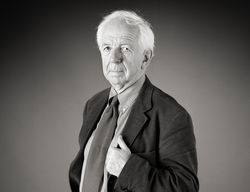
Hubert Damisch, chercheur principal et boursier Mellon au CCA en 2003-2004, examine la conséquence qu’aura, pour l’avenir de la pensée structurale, l’édifice-nuage Blur. Créé par la firme d’architectes new-yorkais Diller + Scofidio sur le lac de Neuchâtel en Suisse, cet édifice est la plus récente et radicale expression d’un désir de fluidité et d’évanescence en(...)
Hubert Damisch, chercheur principal et boursier Mellon au CCA en 2003-2004, examine la conséquence qu’aura, pour l’avenir de la pensée structurale, l’édifice-nuage Blur. Créé par la firme d’architectes new-yorkais Diller + Scofidio sur le lac de Neuchâtel en Suisse, cet édifice est la plus récente et radicale expression d’un désir de fluidité et d’évanescence en(...)
Localisation:
Théâtre Paul-Desmarais
Théâtre Paul-Desmarais
Date:
8 mai 2003
8 mai 2003
Titre:
Hubert Damisch : Effacer l’architecture?
Actions:
Description:
Hubert Damisch, chercheur principal et boursier Mellon au CCA en 2003-2004, examine la conséquence qu’aura, pour l’avenir de la pensée structurale, l’édifice-nuage Blur. Créé par la firme d’architectes new-yorkais Diller + Scofidio sur le lac de Neuchâtel en Suisse, cet édifice est la plus récente et radicale expression d’un désir de fluidité et d’évanescence en(...)
Hubert Damisch : Effacer l’architecture?
Actions:
Description:
Hubert Damisch, chercheur principal et boursier Mellon au CCA en 2003-2004, examine la conséquence qu’aura, pour l’avenir de la pensée structurale, l’édifice-nuage Blur. Créé par la firme d’architectes new-yorkais Diller + Scofidio sur le lac de Neuchâtel en Suisse, cet édifice est la plus récente et radicale expression d’un désir de fluidité et d’évanescence en(...)
Classification:
événements
événements
Date:
8 mai 2003
8 mai 2003
Localisation:
Théâtre Paul-Desmarais
Théâtre Paul-Desmarais
Classification:
archives
Niveau de description archivistique:
Fonds
archives
Niveau de description archivistique:
Fonds
Titre:
Fonds Wayfarers' Chapel
Fonds Wayfarers' Chapel
Numéro de référence:
AP151
Résumé:
The Wayfarers' Chapel fonds documents Lloyd Wright's design of this executed project, its additions, as well as related unbuilt projects. The fonds contains over 300 drawings and reprographic copies and 1.7 l.m. of textual records, including correspondence and photographs. Material in the fonds was produced between 1937 and 1979.
AP151
Résumé:
The Wayfarers' Chapel fonds documents Lloyd Wright's design of this executed project, its additions, as well as related unbuilt projects. The fonds contains over 300 drawings and reprographic copies and 1.7 l.m. of textual records, including correspondence and photographs. Material in the fonds was produced between 1937 and 1979.
Personnes et institutions:
Date:
1937-1979
1937-1979
Titre:
Fonds Wayfarers' Chapel
Actions:
AP151
Résumé:
The Wayfarers' Chapel fonds documents Lloyd Wright's design of this executed project, its additions, as well as related unbuilt projects. The fonds contains over 300 drawings and reprographic copies and 1.7 l.m. of textual records, including correspondence and photographs. Material in the fonds was produced between 1937 and 1979.
Fonds Wayfarers' Chapel
Actions:
AP151
Résumé:
The Wayfarers' Chapel fonds documents Lloyd Wright's design of this executed project, its additions, as well as related unbuilt projects. The fonds contains over 300 drawings and reprographic copies and 1.7 l.m. of textual records, including correspondence and photographs. Material in the fonds was produced between 1937 and 1979.
Classification:
archives
Niveau de description archivistique:
Fonds
archives
Niveau de description archivistique:
Fonds
Date:
1937-1979
1937-1979
Personnes et institutions:
Classification:
photographies
photographies
Numéro de référence:
ARCH275908
Description:
Documentation of several residences, including early projects such as Filberg House (1958), Boultbee House renovations (1960) and Graham House (1963) and mid-career projects such as Hilborn House (1970) and Hwang House (1980).
ARCH275908
Description:
Documentation of several residences, including early projects such as Filberg House (1958), Boultbee House renovations (1960) and Graham House (1963) and mid-career projects such as Hilborn House (1970) and Hwang House (1980).
Personnes et institutions:
Date:
1960-1980
1960-1980
Titre:
Documentation on various residential projects
Actions:
ARCH275908
Description:
Documentation of several residences, including early projects such as Filberg House (1958), Boultbee House renovations (1960) and Graham House (1963) and mid-career projects such as Hilborn House (1970) and Hwang House (1980).
Documentation on various residential projects
Actions:
ARCH275908
Description:
Documentation of several residences, including early projects such as Filberg House (1958), Boultbee House renovations (1960) and Graham House (1963) and mid-career projects such as Hilborn House (1970) and Hwang House (1980).
Classification:
photographies
photographies
Date:
1960-1980
1960-1980
Personnes et institutions:
Classification:
photographies
photographies
Numéro de référence:
AP140.S2.SS1.D28.P8
Description:
views of working and publication drawings, as well as views of drawings (not otherwise present in the project documents), including working drawings and design development and presentation drawings for the earlier phase of the planning of the residences
AP140.S2.SS1.D28.P8
Description:
views of working and publication drawings, as well as views of drawings (not otherwise present in the project documents), including working drawings and design development and presentation drawings for the earlier phase of the planning of the residences
Personnes et institutions:
Titre:
Views of working and publication drawings
Actions:
AP140.S2.SS1.D28.P8
Description:
views of working and publication drawings, as well as views of drawings (not otherwise present in the project documents), including working drawings and design development and presentation drawings for the earlier phase of the planning of the residences
Views of working and publication drawings
Actions:
AP140.S2.SS1.D28.P8
Description:
views of working and publication drawings, as well as views of drawings (not otherwise present in the project documents), including working drawings and design development and presentation drawings for the earlier phase of the planning of the residences
Classification:
photographies
photographies
Personnes et institutions:
Classification:
archives
Niveau de description archivistique:
Fonds
archives
Niveau de description archivistique:
Fonds
Titre:
Fonds Roland Dumais
Fonds Roland Dumais
Numéro de référence:
AP005
Résumé:
The Roland Dumais fonds, 1930-1975, documents architect Roland Dumais’s design and construction of over 500 built projects in Québec. In addition to documenting Dumais’s professional career (1935-1971), the fonds includes materials relating to the everyday administration of Dumais’s architectural firm (1941-1977) as well as materials pertaining to his personal life (1932-1982). Materials in this fonds consist of approximately 12 400 drawings (including reprographic copies), 126 photographic materials, 10.33 l.m. of textual records, 5 models, and 3 reels of 16 mm film.
AP005
Résumé:
The Roland Dumais fonds, 1930-1975, documents architect Roland Dumais’s design and construction of over 500 built projects in Québec. In addition to documenting Dumais’s professional career (1935-1971), the fonds includes materials relating to the everyday administration of Dumais’s architectural firm (1941-1977) as well as materials pertaining to his personal life (1932-1982). Materials in this fonds consist of approximately 12 400 drawings (including reprographic copies), 126 photographic materials, 10.33 l.m. of textual records, 5 models, and 3 reels of 16 mm film.
Personnes et institutions:
Date:
1930-1975
1930-1975
Titre:
Fonds Roland Dumais
Actions:
AP005
Résumé:
The Roland Dumais fonds, 1930-1975, documents architect Roland Dumais’s design and construction of over 500 built projects in Québec. In addition to documenting Dumais’s professional career (1935-1971), the fonds includes materials relating to the everyday administration of Dumais’s architectural firm (1941-1977) as well as materials pertaining to his personal life (1932-1982). Materials in this fonds consist of approximately 12 400 drawings (including reprographic copies), 126 photographic materials, 10.33 l.m. of textual records, 5 models, and 3 reels of 16 mm film.
Fonds Roland Dumais
Actions:
AP005
Résumé:
The Roland Dumais fonds, 1930-1975, documents architect Roland Dumais’s design and construction of over 500 built projects in Québec. In addition to documenting Dumais’s professional career (1935-1971), the fonds includes materials relating to the everyday administration of Dumais’s architectural firm (1941-1977) as well as materials pertaining to his personal life (1932-1982). Materials in this fonds consist of approximately 12 400 drawings (including reprographic copies), 126 photographic materials, 10.33 l.m. of textual records, 5 models, and 3 reels of 16 mm film.
Classification:
archives
Niveau de description archivistique:
Fonds
archives
Niveau de description archivistique:
Fonds
Date:
1930-1975
1930-1975
Personnes et institutions:


