


890 Résultats
Niveau de description archivistique:
Série(s)
Série(s)
Titre:
Projects and events
Projects and events
Numéro de référence:
AP170.S3
Description:
Series 3, Projects and events, 1992 – 2014, documents each major installation of the Hyposurface project and consists of more than 10,000 digital files. These files include exhibition layout planning, Aegis simulator software demonstrating Hyposurface, event photographs and video, and ACDC and Aegis software related to specific events. This series also includes the majority of the material Paul Steenhuisen G5 Mac computer and the related Hyposurface audio installations. The bulk of the materials dates from 2000 – 2007. Events represented include Venice Biennale (Venice, 2000); CeBIT Technology Fair (Hannover, Germany, 2002); International Manufacturing Technology Show (IMTS, Chicago, 2006); BIO exhibition (Boston, 2007); and the Canadian Centre for Architecture (Montreal, 2013-2014). This series also contains a number of unidentified projects, including projects in Brisbane, Australia; Amsterdam, the Netherlands; and possibly Russia and Spain. There is also video documentation related to a Hyposurface proposal for BMW, as well as what appears to be a tour of Kuka Robotics staff through dECOi’s laboratory. This series contains nearly 3100 Aegis pattern files, which are identifiable by their file extension (.aeg). An additional 3100 files are plain text files, executable files, or an unidentified format, and appear to relate to other dECOi software. This series notably contains more than 2000 audio files related to the Paul Steenhuisen installations. The rest of the series contains largely still images and video, as well as a small number of AutoCAD and Rhino files. This series overlaps with Series 2: Software and related documentation. This series contains only software related to a specific project or event, while Series 2 contains software generally related to Hyposurface.
AP170.S3
Description:
Series 3, Projects and events, 1992 – 2014, documents each major installation of the Hyposurface project and consists of more than 10,000 digital files. These files include exhibition layout planning, Aegis simulator software demonstrating Hyposurface, event photographs and video, and ACDC and Aegis software related to specific events. This series also includes the majority of the material Paul Steenhuisen G5 Mac computer and the related Hyposurface audio installations. The bulk of the materials dates from 2000 – 2007. Events represented include Venice Biennale (Venice, 2000); CeBIT Technology Fair (Hannover, Germany, 2002); International Manufacturing Technology Show (IMTS, Chicago, 2006); BIO exhibition (Boston, 2007); and the Canadian Centre for Architecture (Montreal, 2013-2014). This series also contains a number of unidentified projects, including projects in Brisbane, Australia; Amsterdam, the Netherlands; and possibly Russia and Spain. There is also video documentation related to a Hyposurface proposal for BMW, as well as what appears to be a tour of Kuka Robotics staff through dECOi’s laboratory. This series contains nearly 3100 Aegis pattern files, which are identifiable by their file extension (.aeg). An additional 3100 files are plain text files, executable files, or an unidentified format, and appear to relate to other dECOi software. This series notably contains more than 2000 audio files related to the Paul Steenhuisen installations. The rest of the series contains largely still images and video, as well as a small number of AutoCAD and Rhino files. This series overlaps with Series 2: Software and related documentation. This series contains only software related to a specific project or event, while Series 2 contains software generally related to Hyposurface.
Personnes et institutions:
Date:
1992 - 2014
1992 - 2014
Titre:
Projects and events
Actions:
AP170.S3
Description:
Series 3, Projects and events, 1992 – 2014, documents each major installation of the Hyposurface project and consists of more than 10,000 digital files. These files include exhibition layout planning, Aegis simulator software demonstrating Hyposurface, event photographs and video, and ACDC and Aegis software related to specific events. This series also includes the majority of the material Paul Steenhuisen G5 Mac computer and the related Hyposurface audio installations. The bulk of the materials dates from 2000 – 2007. Events represented include Venice Biennale (Venice, 2000); CeBIT Technology Fair (Hannover, Germany, 2002); International Manufacturing Technology Show (IMTS, Chicago, 2006); BIO exhibition (Boston, 2007); and the Canadian Centre for Architecture (Montreal, 2013-2014). This series also contains a number of unidentified projects, including projects in Brisbane, Australia; Amsterdam, the Netherlands; and possibly Russia and Spain. There is also video documentation related to a Hyposurface proposal for BMW, as well as what appears to be a tour of Kuka Robotics staff through dECOi’s laboratory. This series contains nearly 3100 Aegis pattern files, which are identifiable by their file extension (.aeg). An additional 3100 files are plain text files, executable files, or an unidentified format, and appear to relate to other dECOi software. This series notably contains more than 2000 audio files related to the Paul Steenhuisen installations. The rest of the series contains largely still images and video, as well as a small number of AutoCAD and Rhino files. This series overlaps with Series 2: Software and related documentation. This series contains only software related to a specific project or event, while Series 2 contains software generally related to Hyposurface.
Projects and events
Actions:
AP170.S3
Description:
Series 3, Projects and events, 1992 – 2014, documents each major installation of the Hyposurface project and consists of more than 10,000 digital files. These files include exhibition layout planning, Aegis simulator software demonstrating Hyposurface, event photographs and video, and ACDC and Aegis software related to specific events. This series also includes the majority of the material Paul Steenhuisen G5 Mac computer and the related Hyposurface audio installations. The bulk of the materials dates from 2000 – 2007. Events represented include Venice Biennale (Venice, 2000); CeBIT Technology Fair (Hannover, Germany, 2002); International Manufacturing Technology Show (IMTS, Chicago, 2006); BIO exhibition (Boston, 2007); and the Canadian Centre for Architecture (Montreal, 2013-2014). This series also contains a number of unidentified projects, including projects in Brisbane, Australia; Amsterdam, the Netherlands; and possibly Russia and Spain. There is also video documentation related to a Hyposurface proposal for BMW, as well as what appears to be a tour of Kuka Robotics staff through dECOi’s laboratory. This series contains nearly 3100 Aegis pattern files, which are identifiable by their file extension (.aeg). An additional 3100 files are plain text files, executable files, or an unidentified format, and appear to relate to other dECOi software. This series notably contains more than 2000 audio files related to the Paul Steenhuisen installations. The rest of the series contains largely still images and video, as well as a small number of AutoCAD and Rhino files. This series overlaps with Series 2: Software and related documentation. This series contains only software related to a specific project or event, while Series 2 contains software generally related to Hyposurface.
Niveau de description archivistique:
Series
Series
Date:
1992 - 2014
1992 - 2014
Personnes et institutions:
Classification:
dessins
dessins
Actions:
Numéro de référence:
DR1980:0060:001
Description:
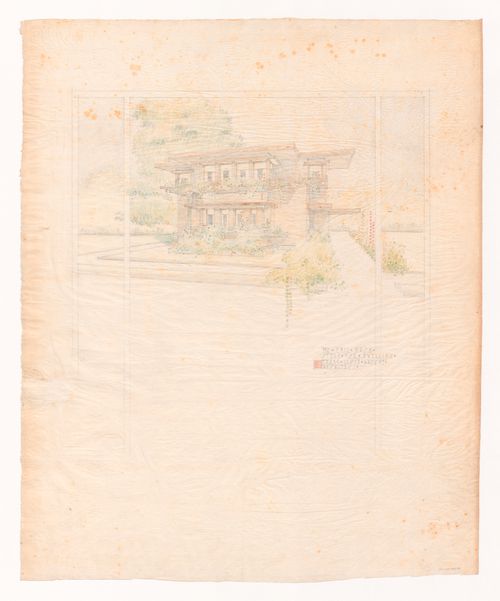
- This perspective drawing, with the plans for the first (DR1980:0060:002) and second (DR1980:0060:003) floors, form a set of early presentation drawings. According to David De Long, the scale is probably 1/4" = 1' (see object file). The house is presented as if seen from behind a window across the street. De Long also notes that this drawing does not show the low wall and the garden court indicated in the plans shown in Hitchcock; that the CCA drawing portrays a less cubic house than the photograph of the building in Hitchcock due to the former's higher point of view; and that the front windows in the drawing extend down to a sill slightly higher than that which supports the plants whereas they stop short of halfway down to the "plant" sill in the finished house.
DR1980:0060:001
Description:
- This perspective drawing, with the plans for the first (DR1980:0060:002) and second (DR1980:0060:003) floors, form a set of early presentation drawings. According to David De Long, the scale is probably 1/4" = 1' (see object file). The house is presented as if seen from behind a window across the street. De Long also notes that this drawing does not show the low wall and the garden court indicated in the plans shown in Hitchcock; that the CCA drawing portrays a less cubic house than the photograph of the building in Hitchcock due to the former's higher point of view; and that the front windows in the drawing extend down to a sill slightly higher than that which supports the plants whereas they stop short of halfway down to the "plant" sill in the finished house.
Personnes et institutions:
Sujet:
architecture
architecture
Date:
1915
1915
Titre:
Exterior perspective for the street facade for Emil Bach House, Chicago, Illinois
Actions:
DR1980:0060:001
Description:
- This perspective drawing, with the plans for the first (DR1980:0060:002) and second (DR1980:0060:003) floors, form a set of early presentation drawings. According to David De Long, the scale is probably 1/4" = 1' (see object file). The house is presented as if seen from behind a window across the street. De Long also notes that this drawing does not show the low wall and the garden court indicated in the plans shown in Hitchcock; that the CCA drawing portrays a less cubic house than the photograph of the building in Hitchcock due to the former's higher point of view; and that the front windows in the drawing extend down to a sill slightly higher than that which supports the plants whereas they stop short of halfway down to the "plant" sill in the finished house.
Exterior perspective for the street facade for Emil Bach House, Chicago, Illinois
Actions:
DR1980:0060:001
Description:
- This perspective drawing, with the plans for the first (DR1980:0060:002) and second (DR1980:0060:003) floors, form a set of early presentation drawings. According to David De Long, the scale is probably 1/4" = 1' (see object file). The house is presented as if seen from behind a window across the street. De Long also notes that this drawing does not show the low wall and the garden court indicated in the plans shown in Hitchcock; that the CCA drawing portrays a less cubic house than the photograph of the building in Hitchcock due to the former's higher point of view; and that the front windows in the drawing extend down to a sill slightly higher than that which supports the plants whereas they stop short of halfway down to the "plant" sill in the finished house.
Classification:
dessins
dessins
Date:
1915
1915
Personnes et institutions:
Sujet:
architecture
architecture
Niveau de description archivistique:
Série(s)
Série(s)
Titre:
Architectural projects
Architectural projects
Numéro de référence:
AP178.S1
Description:
Series AP178.S1 is the largest series of the Álvaro Siza fonds and documents over 200 of Siza’s built and unbuilt architectural projects. The series is divided into project series which are arranged chronologically by project year. Presently, materials in this series range from 1958-2012. The CCA will also receive materials documenting Siza’s more recent work in future additions. Documenting the projects are conceptual, design, presentation, and working drawings, as well as photographic materials, textual documentation, and models. Although the drawings for each project have been identified, Siza often sketches or doodles on textual documentation, such as minutes of meetings or notes. When possible, folders that include textual documents with sketches or doodles have been identified. Amounts and types of materials vary from project to project. Project documentation is usually in Portuguese, with some exceptions including French, English, German, and Dutch. Most project series include sketches, studies, and working drawings. Other drawings included are site plans, floor plans, topographic surveys, elevations, sections, as well as technical and mechanical details. Also documenting the projects are photographic materials and textual documentation, such as correspondence, building programs, contracts, notes, and other working details. Photographic materials found within this archive are slides, negatives, photomontages and photographs of project sites and models.The photomontages were often used to study the function of the project site. To fully understand Siza’s methodology, sketchbooks (Series AP178.S2) should be viewed alongside the project drawings, when possible. Each project series description highlights sketchbooks in series AP178.S2 which contain related sketches. It is important to note that not all projects are represented in the sketchbooks in Series AP178.S2. Moreover, project series descriptions only list related sketchbooks when sketches have been positively identified as related to the corresponding project. The Siza fonds will be processed in four phases. The materials processed in the first, second, and third phases are architectural projects from the 1950’s, 1960’s, and 1970’s; urban planning projects; Reconstrução do Chiado; Berlin projects submitted to the IBA competition; cultural institutions; individual houses; and the Plano de urbanização Deelgebied 5 Schilderswijk-West in The Hague. Among The Hague and the Berlin projects are the Punt en Komma social housing, Bonjour Tristesse, and the Residential settlement in Schilderswijk. This series is better understood in the context of how the records for architectural projects were arranged by Siza’s office. Earlier projects were initially numbered by Siza’s office and then received new project numbers by the office archivist, who joined the office in the 1990s. Project files have been kept in the order in which they were received by the CCA, which is how they were arranged by the office archivist. The project numbers and dates assigned by Siza’s office archivist are included in the descriptions for each project and form the basis for the arrangement of this series. The office archivist numbered projects consecutively by decade, for instance, 58/80 was the 58th project during the 1980s. Numbers which were included in square brackets, ex. [14]/75, show that the project was not a ‘full’ project and contains a small amount of documentation. When projects are followed by a letter (A, B, C) this signifies a project is connected to the first. When the project number is followed by a number (1, 2, 3) this signifies a separate building within a larger project. For the purposes of arrangement, project numbers that were assigned a letter or number are arranged as sub-series of the related project series. Exceptions to this numbering convention are projects 23/60, 25/60, 28/60, 33/60, 34/60 and 35/60. These projects were not in the office’s original project list and were not officially considered projects. The office archivist assembled documentation related to these projects and assigned them numbers. In the early 2000s a large number of photographic materials were gathered together by the office archivist from various correspondence files for a digitization project initiated by the office. These materials remained housed together as a photograph collection in the office. Not all of these materials were digitized by the office. Those that were digitized were assigned numbers which have been identified in the file descriptions. It is important to note that several photographic materials were left with the textual documentation or drawings. When this is the case they are identified in the file description. There are also several panoramic photomontages which were created by either gluing or taping several photographs together to make panoramas of project sites.
AP178.S1
Description:
Series AP178.S1 is the largest series of the Álvaro Siza fonds and documents over 200 of Siza’s built and unbuilt architectural projects. The series is divided into project series which are arranged chronologically by project year. Presently, materials in this series range from 1958-2012. The CCA will also receive materials documenting Siza’s more recent work in future additions. Documenting the projects are conceptual, design, presentation, and working drawings, as well as photographic materials, textual documentation, and models. Although the drawings for each project have been identified, Siza often sketches or doodles on textual documentation, such as minutes of meetings or notes. When possible, folders that include textual documents with sketches or doodles have been identified. Amounts and types of materials vary from project to project. Project documentation is usually in Portuguese, with some exceptions including French, English, German, and Dutch. Most project series include sketches, studies, and working drawings. Other drawings included are site plans, floor plans, topographic surveys, elevations, sections, as well as technical and mechanical details. Also documenting the projects are photographic materials and textual documentation, such as correspondence, building programs, contracts, notes, and other working details. Photographic materials found within this archive are slides, negatives, photomontages and photographs of project sites and models.The photomontages were often used to study the function of the project site. To fully understand Siza’s methodology, sketchbooks (Series AP178.S2) should be viewed alongside the project drawings, when possible. Each project series description highlights sketchbooks in series AP178.S2 which contain related sketches. It is important to note that not all projects are represented in the sketchbooks in Series AP178.S2. Moreover, project series descriptions only list related sketchbooks when sketches have been positively identified as related to the corresponding project. The Siza fonds will be processed in four phases. The materials processed in the first, second, and third phases are architectural projects from the 1950’s, 1960’s, and 1970’s; urban planning projects; Reconstrução do Chiado; Berlin projects submitted to the IBA competition; cultural institutions; individual houses; and the Plano de urbanização Deelgebied 5 Schilderswijk-West in The Hague. Among The Hague and the Berlin projects are the Punt en Komma social housing, Bonjour Tristesse, and the Residential settlement in Schilderswijk. This series is better understood in the context of how the records for architectural projects were arranged by Siza’s office. Earlier projects were initially numbered by Siza’s office and then received new project numbers by the office archivist, who joined the office in the 1990s. Project files have been kept in the order in which they were received by the CCA, which is how they were arranged by the office archivist. The project numbers and dates assigned by Siza’s office archivist are included in the descriptions for each project and form the basis for the arrangement of this series. The office archivist numbered projects consecutively by decade, for instance, 58/80 was the 58th project during the 1980s. Numbers which were included in square brackets, ex. [14]/75, show that the project was not a ‘full’ project and contains a small amount of documentation. When projects are followed by a letter (A, B, C) this signifies a project is connected to the first. When the project number is followed by a number (1, 2, 3) this signifies a separate building within a larger project. For the purposes of arrangement, project numbers that were assigned a letter or number are arranged as sub-series of the related project series. Exceptions to this numbering convention are projects 23/60, 25/60, 28/60, 33/60, 34/60 and 35/60. These projects were not in the office’s original project list and were not officially considered projects. The office archivist assembled documentation related to these projects and assigned them numbers. In the early 2000s a large number of photographic materials were gathered together by the office archivist from various correspondence files for a digitization project initiated by the office. These materials remained housed together as a photograph collection in the office. Not all of these materials were digitized by the office. Those that were digitized were assigned numbers which have been identified in the file descriptions. It is important to note that several photographic materials were left with the textual documentation or drawings. When this is the case they are identified in the file description. There are also several panoramic photomontages which were created by either gluing or taping several photographs together to make panoramas of project sites.
Personnes et institutions:
Date:
1948-2012
1948-2012
Titre:
Architectural projects
Actions:
AP178.S1
Description:
Series AP178.S1 is the largest series of the Álvaro Siza fonds and documents over 200 of Siza’s built and unbuilt architectural projects. The series is divided into project series which are arranged chronologically by project year. Presently, materials in this series range from 1958-2012. The CCA will also receive materials documenting Siza’s more recent work in future additions. Documenting the projects are conceptual, design, presentation, and working drawings, as well as photographic materials, textual documentation, and models. Although the drawings for each project have been identified, Siza often sketches or doodles on textual documentation, such as minutes of meetings or notes. When possible, folders that include textual documents with sketches or doodles have been identified. Amounts and types of materials vary from project to project. Project documentation is usually in Portuguese, with some exceptions including French, English, German, and Dutch. Most project series include sketches, studies, and working drawings. Other drawings included are site plans, floor plans, topographic surveys, elevations, sections, as well as technical and mechanical details. Also documenting the projects are photographic materials and textual documentation, such as correspondence, building programs, contracts, notes, and other working details. Photographic materials found within this archive are slides, negatives, photomontages and photographs of project sites and models.The photomontages were often used to study the function of the project site. To fully understand Siza’s methodology, sketchbooks (Series AP178.S2) should be viewed alongside the project drawings, when possible. Each project series description highlights sketchbooks in series AP178.S2 which contain related sketches. It is important to note that not all projects are represented in the sketchbooks in Series AP178.S2. Moreover, project series descriptions only list related sketchbooks when sketches have been positively identified as related to the corresponding project. The Siza fonds will be processed in four phases. The materials processed in the first, second, and third phases are architectural projects from the 1950’s, 1960’s, and 1970’s; urban planning projects; Reconstrução do Chiado; Berlin projects submitted to the IBA competition; cultural institutions; individual houses; and the Plano de urbanização Deelgebied 5 Schilderswijk-West in The Hague. Among The Hague and the Berlin projects are the Punt en Komma social housing, Bonjour Tristesse, and the Residential settlement in Schilderswijk. This series is better understood in the context of how the records for architectural projects were arranged by Siza’s office. Earlier projects were initially numbered by Siza’s office and then received new project numbers by the office archivist, who joined the office in the 1990s. Project files have been kept in the order in which they were received by the CCA, which is how they were arranged by the office archivist. The project numbers and dates assigned by Siza’s office archivist are included in the descriptions for each project and form the basis for the arrangement of this series. The office archivist numbered projects consecutively by decade, for instance, 58/80 was the 58th project during the 1980s. Numbers which were included in square brackets, ex. [14]/75, show that the project was not a ‘full’ project and contains a small amount of documentation. When projects are followed by a letter (A, B, C) this signifies a project is connected to the first. When the project number is followed by a number (1, 2, 3) this signifies a separate building within a larger project. For the purposes of arrangement, project numbers that were assigned a letter or number are arranged as sub-series of the related project series. Exceptions to this numbering convention are projects 23/60, 25/60, 28/60, 33/60, 34/60 and 35/60. These projects were not in the office’s original project list and were not officially considered projects. The office archivist assembled documentation related to these projects and assigned them numbers. In the early 2000s a large number of photographic materials were gathered together by the office archivist from various correspondence files for a digitization project initiated by the office. These materials remained housed together as a photograph collection in the office. Not all of these materials were digitized by the office. Those that were digitized were assigned numbers which have been identified in the file descriptions. It is important to note that several photographic materials were left with the textual documentation or drawings. When this is the case they are identified in the file description. There are also several panoramic photomontages which were created by either gluing or taping several photographs together to make panoramas of project sites.
Architectural projects
Actions:
AP178.S1
Description:
Series AP178.S1 is the largest series of the Álvaro Siza fonds and documents over 200 of Siza’s built and unbuilt architectural projects. The series is divided into project series which are arranged chronologically by project year. Presently, materials in this series range from 1958-2012. The CCA will also receive materials documenting Siza’s more recent work in future additions. Documenting the projects are conceptual, design, presentation, and working drawings, as well as photographic materials, textual documentation, and models. Although the drawings for each project have been identified, Siza often sketches or doodles on textual documentation, such as minutes of meetings or notes. When possible, folders that include textual documents with sketches or doodles have been identified. Amounts and types of materials vary from project to project. Project documentation is usually in Portuguese, with some exceptions including French, English, German, and Dutch. Most project series include sketches, studies, and working drawings. Other drawings included are site plans, floor plans, topographic surveys, elevations, sections, as well as technical and mechanical details. Also documenting the projects are photographic materials and textual documentation, such as correspondence, building programs, contracts, notes, and other working details. Photographic materials found within this archive are slides, negatives, photomontages and photographs of project sites and models.The photomontages were often used to study the function of the project site. To fully understand Siza’s methodology, sketchbooks (Series AP178.S2) should be viewed alongside the project drawings, when possible. Each project series description highlights sketchbooks in series AP178.S2 which contain related sketches. It is important to note that not all projects are represented in the sketchbooks in Series AP178.S2. Moreover, project series descriptions only list related sketchbooks when sketches have been positively identified as related to the corresponding project. The Siza fonds will be processed in four phases. The materials processed in the first, second, and third phases are architectural projects from the 1950’s, 1960’s, and 1970’s; urban planning projects; Reconstrução do Chiado; Berlin projects submitted to the IBA competition; cultural institutions; individual houses; and the Plano de urbanização Deelgebied 5 Schilderswijk-West in The Hague. Among The Hague and the Berlin projects are the Punt en Komma social housing, Bonjour Tristesse, and the Residential settlement in Schilderswijk. This series is better understood in the context of how the records for architectural projects were arranged by Siza’s office. Earlier projects were initially numbered by Siza’s office and then received new project numbers by the office archivist, who joined the office in the 1990s. Project files have been kept in the order in which they were received by the CCA, which is how they were arranged by the office archivist. The project numbers and dates assigned by Siza’s office archivist are included in the descriptions for each project and form the basis for the arrangement of this series. The office archivist numbered projects consecutively by decade, for instance, 58/80 was the 58th project during the 1980s. Numbers which were included in square brackets, ex. [14]/75, show that the project was not a ‘full’ project and contains a small amount of documentation. When projects are followed by a letter (A, B, C) this signifies a project is connected to the first. When the project number is followed by a number (1, 2, 3) this signifies a separate building within a larger project. For the purposes of arrangement, project numbers that were assigned a letter or number are arranged as sub-series of the related project series. Exceptions to this numbering convention are projects 23/60, 25/60, 28/60, 33/60, 34/60 and 35/60. These projects were not in the office’s original project list and were not officially considered projects. The office archivist assembled documentation related to these projects and assigned them numbers. In the early 2000s a large number of photographic materials were gathered together by the office archivist from various correspondence files for a digitization project initiated by the office. These materials remained housed together as a photograph collection in the office. Not all of these materials were digitized by the office. Those that were digitized were assigned numbers which have been identified in the file descriptions. It is important to note that several photographic materials were left with the textual documentation or drawings. When this is the case they are identified in the file description. There are also several panoramic photomontages which were created by either gluing or taping several photographs together to make panoramas of project sites.
Niveau de description archivistique:
Series
Series
Date:
1948-2012
1948-2012
Personnes et institutions:
Niveau de description archivistique:
Série(s)
Série(s)
Titre:
OCEAN reference files
OCEAN reference files
Numéro de référence:
AP194.S2
Description:
Series consist of records associated with different projects devised by OCEAN and OCEAN North prior to 1999 and retained as reference material by Johan Bettum, who did not collaborate on every project. Records occasionally include some photographs, but for the most part are images from work done with CAD software. These include plans, diagrams, renderings and views (sections, perspectives) of buildings, landscapes, exhibition scenography, and exhibited items. The amount and type of materials varies largely between projects. Files were transferred to CCA on a CD and their timestamps suggests that materials were copied for reference purpose in the first few months of 1998. The CD cover bears the date of June 3rd 1999. Projects date from 1994 to 1998. Projects included in the reference files are: Barbican, London (OCEAN Helsinki): likely an exhibition design. Museum, Buenos Aires (OCEAN U.K., 1997): a building design for a competition. Finnish Embassy, Canberra (OCEAN Oslo & Helsinki, 1996): an international architectural competition entry. Helsinki Nightclub (OCEAN Helsinki): a building design. Jeil’s Hospital, Seoul (OCEAN U.K., 1996): a building design. Jyväskylä Music and Arts Center (OCEAN Oslo & Helsinki, 1997): an international architectural competition entry. See also Series 1 for more records on this project. Lasipalatsi Media Square (OCEAN U.K.): a landscape design. Synthetic Landscape I-II, Oslo (OCEAN Oslo, 1995-1996): a landscape design. See also Series 1 for more records on this research project. Surfscape, Helsinki (OCEAN Helsinki, 1997): sculpture for an exhibition. Töölö Football Stadium, Hels. (OCEAN Oslo & Helsinki, 1997): an international architectural competition entry. See also Series 1 for more records on this project. Urban Surfaces, Oslo (OCEAN, 1997-1998): photographs of an exhibition. Source: Ateljié Sotamaa. “Portfolio.” Accessed November 2017, http://portfolio.sotamaa.net/ OCEAN design Research Association, “Exhibitions.” Accessed November 2017, http://www.ocean-designresearch.net/index.php/exhibitions-mainmenu-120/list-of-exhibitions FRAC, “Catalog, OCEAN.” Accessed November 2017, http://www.archilab.org/public/2000/catalog/ocean/oceanen.htm OCEAN CN Consultancy Network, “Projects.” Accessed November 2017, http://ocean-cn.org/projects/
AP194.S2
Description:
Series consist of records associated with different projects devised by OCEAN and OCEAN North prior to 1999 and retained as reference material by Johan Bettum, who did not collaborate on every project. Records occasionally include some photographs, but for the most part are images from work done with CAD software. These include plans, diagrams, renderings and views (sections, perspectives) of buildings, landscapes, exhibition scenography, and exhibited items. The amount and type of materials varies largely between projects. Files were transferred to CCA on a CD and their timestamps suggests that materials were copied for reference purpose in the first few months of 1998. The CD cover bears the date of June 3rd 1999. Projects date from 1994 to 1998. Projects included in the reference files are: Barbican, London (OCEAN Helsinki): likely an exhibition design. Museum, Buenos Aires (OCEAN U.K., 1997): a building design for a competition. Finnish Embassy, Canberra (OCEAN Oslo & Helsinki, 1996): an international architectural competition entry. Helsinki Nightclub (OCEAN Helsinki): a building design. Jeil’s Hospital, Seoul (OCEAN U.K., 1996): a building design. Jyväskylä Music and Arts Center (OCEAN Oslo & Helsinki, 1997): an international architectural competition entry. See also Series 1 for more records on this project. Lasipalatsi Media Square (OCEAN U.K.): a landscape design. Synthetic Landscape I-II, Oslo (OCEAN Oslo, 1995-1996): a landscape design. See also Series 1 for more records on this research project. Surfscape, Helsinki (OCEAN Helsinki, 1997): sculpture for an exhibition. Töölö Football Stadium, Hels. (OCEAN Oslo & Helsinki, 1997): an international architectural competition entry. See also Series 1 for more records on this project. Urban Surfaces, Oslo (OCEAN, 1997-1998): photographs of an exhibition. Source: Ateljié Sotamaa. “Portfolio.” Accessed November 2017, http://portfolio.sotamaa.net/ OCEAN design Research Association, “Exhibitions.” Accessed November 2017, http://www.ocean-designresearch.net/index.php/exhibitions-mainmenu-120/list-of-exhibitions FRAC, “Catalog, OCEAN.” Accessed November 2017, http://www.archilab.org/public/2000/catalog/ocean/oceanen.htm OCEAN CN Consultancy Network, “Projects.” Accessed November 2017, http://ocean-cn.org/projects/
Personnes et institutions:
Date:
1998
1998
Titre:
OCEAN reference files
Actions:
AP194.S2
Description:
Series consist of records associated with different projects devised by OCEAN and OCEAN North prior to 1999 and retained as reference material by Johan Bettum, who did not collaborate on every project. Records occasionally include some photographs, but for the most part are images from work done with CAD software. These include plans, diagrams, renderings and views (sections, perspectives) of buildings, landscapes, exhibition scenography, and exhibited items. The amount and type of materials varies largely between projects. Files were transferred to CCA on a CD and their timestamps suggests that materials were copied for reference purpose in the first few months of 1998. The CD cover bears the date of June 3rd 1999. Projects date from 1994 to 1998. Projects included in the reference files are: Barbican, London (OCEAN Helsinki): likely an exhibition design. Museum, Buenos Aires (OCEAN U.K., 1997): a building design for a competition. Finnish Embassy, Canberra (OCEAN Oslo & Helsinki, 1996): an international architectural competition entry. Helsinki Nightclub (OCEAN Helsinki): a building design. Jeil’s Hospital, Seoul (OCEAN U.K., 1996): a building design. Jyväskylä Music and Arts Center (OCEAN Oslo & Helsinki, 1997): an international architectural competition entry. See also Series 1 for more records on this project. Lasipalatsi Media Square (OCEAN U.K.): a landscape design. Synthetic Landscape I-II, Oslo (OCEAN Oslo, 1995-1996): a landscape design. See also Series 1 for more records on this research project. Surfscape, Helsinki (OCEAN Helsinki, 1997): sculpture for an exhibition. Töölö Football Stadium, Hels. (OCEAN Oslo & Helsinki, 1997): an international architectural competition entry. See also Series 1 for more records on this project. Urban Surfaces, Oslo (OCEAN, 1997-1998): photographs of an exhibition. Source: Ateljié Sotamaa. “Portfolio.” Accessed November 2017, http://portfolio.sotamaa.net/ OCEAN design Research Association, “Exhibitions.” Accessed November 2017, http://www.ocean-designresearch.net/index.php/exhibitions-mainmenu-120/list-of-exhibitions FRAC, “Catalog, OCEAN.” Accessed November 2017, http://www.archilab.org/public/2000/catalog/ocean/oceanen.htm OCEAN CN Consultancy Network, “Projects.” Accessed November 2017, http://ocean-cn.org/projects/
OCEAN reference files
Actions:
AP194.S2
Description:
Series consist of records associated with different projects devised by OCEAN and OCEAN North prior to 1999 and retained as reference material by Johan Bettum, who did not collaborate on every project. Records occasionally include some photographs, but for the most part are images from work done with CAD software. These include plans, diagrams, renderings and views (sections, perspectives) of buildings, landscapes, exhibition scenography, and exhibited items. The amount and type of materials varies largely between projects. Files were transferred to CCA on a CD and their timestamps suggests that materials were copied for reference purpose in the first few months of 1998. The CD cover bears the date of June 3rd 1999. Projects date from 1994 to 1998. Projects included in the reference files are: Barbican, London (OCEAN Helsinki): likely an exhibition design. Museum, Buenos Aires (OCEAN U.K., 1997): a building design for a competition. Finnish Embassy, Canberra (OCEAN Oslo & Helsinki, 1996): an international architectural competition entry. Helsinki Nightclub (OCEAN Helsinki): a building design. Jeil’s Hospital, Seoul (OCEAN U.K., 1996): a building design. Jyväskylä Music and Arts Center (OCEAN Oslo & Helsinki, 1997): an international architectural competition entry. See also Series 1 for more records on this project. Lasipalatsi Media Square (OCEAN U.K.): a landscape design. Synthetic Landscape I-II, Oslo (OCEAN Oslo, 1995-1996): a landscape design. See also Series 1 for more records on this research project. Surfscape, Helsinki (OCEAN Helsinki, 1997): sculpture for an exhibition. Töölö Football Stadium, Hels. (OCEAN Oslo & Helsinki, 1997): an international architectural competition entry. See also Series 1 for more records on this project. Urban Surfaces, Oslo (OCEAN, 1997-1998): photographs of an exhibition. Source: Ateljié Sotamaa. “Portfolio.” Accessed November 2017, http://portfolio.sotamaa.net/ OCEAN design Research Association, “Exhibitions.” Accessed November 2017, http://www.ocean-designresearch.net/index.php/exhibitions-mainmenu-120/list-of-exhibitions FRAC, “Catalog, OCEAN.” Accessed November 2017, http://www.archilab.org/public/2000/catalog/ocean/oceanen.htm OCEAN CN Consultancy Network, “Projects.” Accessed November 2017, http://ocean-cn.org/projects/
Niveau de description archivistique:
Series
Series
Date:
1998
1998
Personnes et institutions:
Classification:
archives
Niveau de description archivistique:
Fonds
archives
Niveau de description archivistique:
Fonds
Titre:
Fonds Gene Summers
Fonds Gene Summers
Numéro de référence:
AP114
Résumé:
The Gene Summers fonds documents primarily the later part of Gene Summers' career as an architect, developer, artist and art collector. Summer's early work with the Office of Mies van der Rohe and C.F. Murphy Associates is summarily represented by notes, sketches and photographs.
AP114
Résumé:
The Gene Summers fonds documents primarily the later part of Gene Summers' career as an architect, developer, artist and art collector. Summer's early work with the Office of Mies van der Rohe and C.F. Murphy Associates is summarily represented by notes, sketches and photographs.
Personnes et institutions:
Date:
1957 - 2004
1957 - 2004
Titre:
Fonds Gene Summers
Actions:
AP114
Résumé:
The Gene Summers fonds documents primarily the later part of Gene Summers' career as an architect, developer, artist and art collector. Summer's early work with the Office of Mies van der Rohe and C.F. Murphy Associates is summarily represented by notes, sketches and photographs.
Fonds Gene Summers
Actions:
AP114
Résumé:
The Gene Summers fonds documents primarily the later part of Gene Summers' career as an architect, developer, artist and art collector. Summer's early work with the Office of Mies van der Rohe and C.F. Murphy Associates is summarily represented by notes, sketches and photographs.
Classification:
archives
Niveau de description archivistique:
Fonds
archives
Niveau de description archivistique:
Fonds
Date:
1957 - 2004
1957 - 2004
Personnes et institutions:
Classification:
oeuvres d'art
oeuvres d'art
Actions:
Numéro de référence:
DR1987:0344
Description:
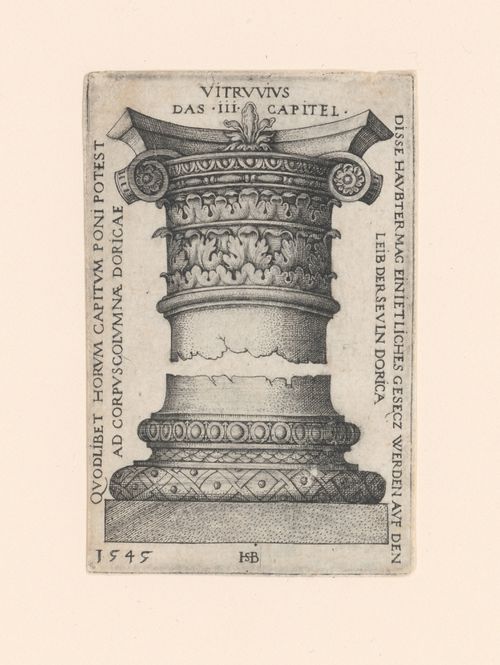
- This engraving depicts a design for an order of architecture showing the capital and the base. Although the inscriptions refer to "This engraving depicts a dORICA[E]", this looks more like a variation on the composite order. - This print is one of a set of four prints of capitals and bases which were engraved by Hans Sebald Beham. Patricia Condon suggests that these prints were made for a general audience rather than for architects ('Ornament and Architecture', 29). Three of the prints in the CCA collection are from the collection of the Ducs d'Arenburg, while the provenance of the fourth print, DR1987:0342, is unknown.
DR1987:0344
Description:
- This engraving depicts a design for an order of architecture showing the capital and the base. Although the inscriptions refer to "This engraving depicts a dORICA[E]", this looks more like a variation on the composite order. - This print is one of a set of four prints of capitals and bases which were engraved by Hans Sebald Beham. Patricia Condon suggests that these prints were made for a general audience rather than for architects ('Ornament and Architecture', 29). Three of the prints in the CCA collection are from the collection of the Ducs d'Arenburg, while the provenance of the fourth print, DR1987:0342, is unknown.
Personnes et institutions:
Sujet:
architecture
architecture
Date:
1545
1545
Titre:
Design for the capital and base of a column
Actions:
DR1987:0344
Description:
- This engraving depicts a design for an order of architecture showing the capital and the base. Although the inscriptions refer to "This engraving depicts a dORICA[E]", this looks more like a variation on the composite order. - This print is one of a set of four prints of capitals and bases which were engraved by Hans Sebald Beham. Patricia Condon suggests that these prints were made for a general audience rather than for architects ('Ornament and Architecture', 29). Three of the prints in the CCA collection are from the collection of the Ducs d'Arenburg, while the provenance of the fourth print, DR1987:0342, is unknown.
Design for the capital and base of a column
Actions:
DR1987:0344
Description:
- This engraving depicts a design for an order of architecture showing the capital and the base. Although the inscriptions refer to "This engraving depicts a dORICA[E]", this looks more like a variation on the composite order. - This print is one of a set of four prints of capitals and bases which were engraved by Hans Sebald Beham. Patricia Condon suggests that these prints were made for a general audience rather than for architects ('Ornament and Architecture', 29). Three of the prints in the CCA collection are from the collection of the Ducs d'Arenburg, while the provenance of the fourth print, DR1987:0342, is unknown.
Classification:
oeuvres d'art
oeuvres d'art
Date:
1545
1545
Personnes et institutions:
Sujet:
architecture
architecture
Classification:
oeuvres d'art
oeuvres d'art
Actions:
Numéro de référence:
DR1987:0345
Description:
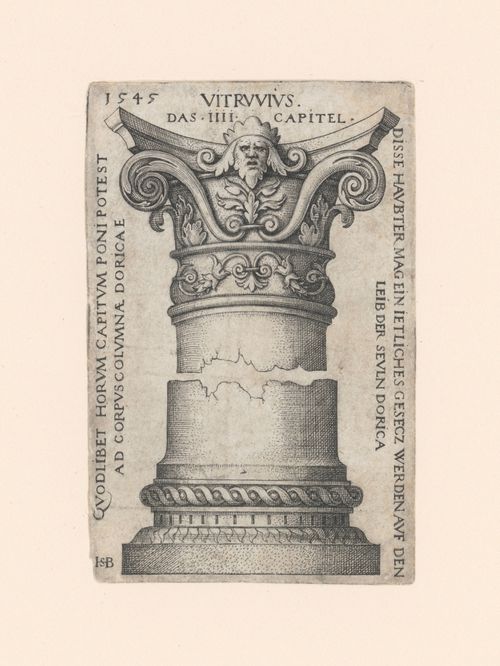
- This engraving depicts a design for an order of architecture showing the capital and the base. Although the inscriptions refer to "This engraving depicts a dORICA[E]", this is not one of the traditional orders of architecture. - This print is one of a set of four prints of capitals and bases which were engraved by Hans Sebald Beham. Patricia Condon suggests that these prints were made for a general audience rather than for architects ('Ornament and Architecture', 29). Three of the prints in the CCA collection are from the collection of the Ducs d'Arenburg, while the provenance of the fourth print, DR1987:0342, is unknown.
DR1987:0345
Description:
- This engraving depicts a design for an order of architecture showing the capital and the base. Although the inscriptions refer to "This engraving depicts a dORICA[E]", this is not one of the traditional orders of architecture. - This print is one of a set of four prints of capitals and bases which were engraved by Hans Sebald Beham. Patricia Condon suggests that these prints were made for a general audience rather than for architects ('Ornament and Architecture', 29). Three of the prints in the CCA collection are from the collection of the Ducs d'Arenburg, while the provenance of the fourth print, DR1987:0342, is unknown.
Personnes et institutions:
Sujet:
architecture
architecture
Date:
1545
1545
Titre:
Design for the capital and base of a column
Actions:
DR1987:0345
Description:
- This engraving depicts a design for an order of architecture showing the capital and the base. Although the inscriptions refer to "This engraving depicts a dORICA[E]", this is not one of the traditional orders of architecture. - This print is one of a set of four prints of capitals and bases which were engraved by Hans Sebald Beham. Patricia Condon suggests that these prints were made for a general audience rather than for architects ('Ornament and Architecture', 29). Three of the prints in the CCA collection are from the collection of the Ducs d'Arenburg, while the provenance of the fourth print, DR1987:0342, is unknown.
Design for the capital and base of a column
Actions:
DR1987:0345
Description:
- This engraving depicts a design for an order of architecture showing the capital and the base. Although the inscriptions refer to "This engraving depicts a dORICA[E]", this is not one of the traditional orders of architecture. - This print is one of a set of four prints of capitals and bases which were engraved by Hans Sebald Beham. Patricia Condon suggests that these prints were made for a general audience rather than for architects ('Ornament and Architecture', 29). Three of the prints in the CCA collection are from the collection of the Ducs d'Arenburg, while the provenance of the fourth print, DR1987:0342, is unknown.
Classification:
oeuvres d'art
oeuvres d'art
Date:
1545
1545
Personnes et institutions:
Sujet:
architecture
architecture
Classification:
archives
Niveau de description archivistique:
Fonds
archives
Niveau de description archivistique:
Fonds
Numéro de référence:
AP190
Résumé:
The Preston Scott Cohen Eyebeam project records, 2001-2016, consist of 281 digital files that document the architect’s competition entry for the Eyebeam Atelier Museum in New York City, developed in 2001. The archive includes 154 digital models in Rhinoceros, 30 digital models in STL, approximately 90 digital images, one video, and a number of Illustrator, Photoshop, PDF, and Microsoft Word files.
AP190
Résumé:
The Preston Scott Cohen Eyebeam project records, 2001-2016, consist of 281 digital files that document the architect’s competition entry for the Eyebeam Atelier Museum in New York City, developed in 2001. The archive includes 154 digital models in Rhinoceros, 30 digital models in STL, approximately 90 digital images, one video, and a number of Illustrator, Photoshop, PDF, and Microsoft Word files.
Personnes et institutions:
Date:
2001-2016
2001-2016
Titre:
Documents d’archives de Preston Scott Cohen pour le projet Eyebeam
Actions:
AP190
Résumé:
The Preston Scott Cohen Eyebeam project records, 2001-2016, consist of 281 digital files that document the architect’s competition entry for the Eyebeam Atelier Museum in New York City, developed in 2001. The archive includes 154 digital models in Rhinoceros, 30 digital models in STL, approximately 90 digital images, one video, and a number of Illustrator, Photoshop, PDF, and Microsoft Word files.
Documents d’archives de Preston Scott Cohen pour le projet Eyebeam
Actions:
AP190
Résumé:
The Preston Scott Cohen Eyebeam project records, 2001-2016, consist of 281 digital files that document the architect’s competition entry for the Eyebeam Atelier Museum in New York City, developed in 2001. The archive includes 154 digital models in Rhinoceros, 30 digital models in STL, approximately 90 digital images, one video, and a number of Illustrator, Photoshop, PDF, and Microsoft Word files.
Classification:
archives
Niveau de description archivistique:
Fonds
archives
Niveau de description archivistique:
Fonds
Date:
2001-2016
2001-2016
Personnes et institutions:
Classification:
oeuvres d'art
oeuvres d'art
Actions:
Numéro de référence:
DR1987:0343
Description:
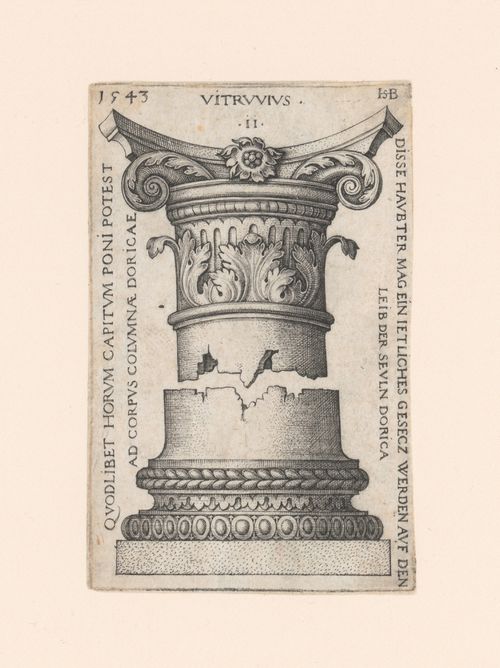
- This engraving depicts a design for an order of architecture showing the capital and the base. Although the inscriptions refer to "This engraving depicts a dORICA[E]", this column looks more like a variation on the composite order. - This print is one of a set of four prints of capitals and bases which were engraved by Hans Sebald Beham. Patricia Condon suggests that these prints were made for a general audience rather than for architects ('Ornament and Architecture', 29). Three of the prints in the CCA collection are from the collection of the Ducs d'Arenburg, while the provenance of the fourth print, DR1987:0342, is unknown.
DR1987:0343
Description:
- This engraving depicts a design for an order of architecture showing the capital and the base. Although the inscriptions refer to "This engraving depicts a dORICA[E]", this column looks more like a variation on the composite order. - This print is one of a set of four prints of capitals and bases which were engraved by Hans Sebald Beham. Patricia Condon suggests that these prints were made for a general audience rather than for architects ('Ornament and Architecture', 29). Three of the prints in the CCA collection are from the collection of the Ducs d'Arenburg, while the provenance of the fourth print, DR1987:0342, is unknown.
Personnes et institutions:
Sujet:
architecture
architecture
Date:
1543
1543
Titre:
Design for the capital and base of a column
Actions:
DR1987:0343
Description:
- This engraving depicts a design for an order of architecture showing the capital and the base. Although the inscriptions refer to "This engraving depicts a dORICA[E]", this column looks more like a variation on the composite order. - This print is one of a set of four prints of capitals and bases which were engraved by Hans Sebald Beham. Patricia Condon suggests that these prints were made for a general audience rather than for architects ('Ornament and Architecture', 29). Three of the prints in the CCA collection are from the collection of the Ducs d'Arenburg, while the provenance of the fourth print, DR1987:0342, is unknown.
Design for the capital and base of a column
Actions:
DR1987:0343
Description:
- This engraving depicts a design for an order of architecture showing the capital and the base. Although the inscriptions refer to "This engraving depicts a dORICA[E]", this column looks more like a variation on the composite order. - This print is one of a set of four prints of capitals and bases which were engraved by Hans Sebald Beham. Patricia Condon suggests that these prints were made for a general audience rather than for architects ('Ornament and Architecture', 29). Three of the prints in the CCA collection are from the collection of the Ducs d'Arenburg, while the provenance of the fourth print, DR1987:0342, is unknown.
Classification:
oeuvres d'art
oeuvres d'art
Date:
1543
1543
Personnes et institutions:
Sujet:
architecture
architecture
Classification:
archives
Niveau de description archivistique:
Fonds
archives
Niveau de description archivistique:
Fonds
Numéro de référence:
AP181
Résumé:
The COOP HIMMELB(L)AU BMW Welt project records, 1994-2007, document the design of the firm’s BMW Welt project, also known as BMW World, in Munich, Germany. The archive consists of approximately 52, 400 born-digital files representing the greater part of the digital archive of the project, as well as 52 of the study models made in the earlier stages of the project.
AP181
Résumé:
The COOP HIMMELB(L)AU BMW Welt project records, 1994-2007, document the design of the firm’s BMW Welt project, also known as BMW World, in Munich, Germany. The archive consists of approximately 52, 400 born-digital files representing the greater part of the digital archive of the project, as well as 52 of the study models made in the earlier stages of the project.
Personnes et institutions:
Date:
1994-2015
1994-2015
Titre:
Documents d’archives de COOP HIMMELB(L)AU pour le projet BMW Welt
Actions:
AP181
Résumé:
The COOP HIMMELB(L)AU BMW Welt project records, 1994-2007, document the design of the firm’s BMW Welt project, also known as BMW World, in Munich, Germany. The archive consists of approximately 52, 400 born-digital files representing the greater part of the digital archive of the project, as well as 52 of the study models made in the earlier stages of the project.
Documents d’archives de COOP HIMMELB(L)AU pour le projet BMW Welt
Actions:
AP181
Résumé:
The COOP HIMMELB(L)AU BMW Welt project records, 1994-2007, document the design of the firm’s BMW Welt project, also known as BMW World, in Munich, Germany. The archive consists of approximately 52, 400 born-digital files representing the greater part of the digital archive of the project, as well as 52 of the study models made in the earlier stages of the project.
Classification:
archives
Niveau de description archivistique:
Fonds
archives
Niveau de description archivistique:
Fonds
Date:
1994-2015
1994-2015
Personnes et institutions:


