


6925 Résultats
Niveau de description archivistique:
Série(s)
Série(s)
Titre:
Une architecture des humeurs
Une architecture des humeurs
Numéro de référence:
AP193.S4
Description:
Series 4, Une architecture des humeurs, 2008-2011, documents the conception and the presentation of exhibition and project Une architecture des humeurs. Presented at Le laboratoire art gallery in Paris between January and May 2010, Une architecture des humeurs is a conceptual, unbuilt, residential urban structure based on a potential future in which contemporary science reads human physiology and chemical balance. The idea is to acquire a chemistry of the “humors”, or the moods and temperament, of future purchasers. Taken as input, the information generates a diversity of habitable morphologies and relationships between them. With this process, the project attempts to make palpable and graspable, through technologies, the emotions of the participants captured via the chemistry of their body. The goal is to gather information on their capacity of adaptation, their level of sympathy and empathy while confronted to a situation or an environment. This information is then analyzed by computational, mathematical, and machinist procedures. This leads to the design and production of an urban structure submitted to the improbable and uncertain protocols produced by emotions, also creating aggregations and layouts that rearticulate the links between the individual and the collective. These structures are calculated following simultaneously incremental and recursive structural optimization protocols resulting in the physicality and morphology of architecture. The layout of the residential units and the structural trajectories are conceived and developed as posterior to the constructs supporting social life and not as an a priori. The structure of each components of the urban structure is generated by a secretion and weaving machine called Viab02. The machine is the second prototype of VIAB which was developed with Robotics Research Lab of the University of Southern California and takes its name from the terms viability and variability. With a process similar to contour crafting, the machine produces bio-cement, a mix between cement and bio-resin, giving form to the adapted residential structures. The records consist largely of images detailing the creative process of the firm, photographs of the exhibition, and 3D models. It also contains animated renderings representing the machine in action and sequences of the construction of the building or the structure. The records include a video orienting the project into François Roche theoretical stance, research as speculation, that can be summarize as the use of technological tools to take a critical and political position through esthetic in order to open new lines of thoughts. AP193.S2 contains updated previous version of the VIAB machine
AP193.S4
Description:
Series 4, Une architecture des humeurs, 2008-2011, documents the conception and the presentation of exhibition and project Une architecture des humeurs. Presented at Le laboratoire art gallery in Paris between January and May 2010, Une architecture des humeurs is a conceptual, unbuilt, residential urban structure based on a potential future in which contemporary science reads human physiology and chemical balance. The idea is to acquire a chemistry of the “humors”, or the moods and temperament, of future purchasers. Taken as input, the information generates a diversity of habitable morphologies and relationships between them. With this process, the project attempts to make palpable and graspable, through technologies, the emotions of the participants captured via the chemistry of their body. The goal is to gather information on their capacity of adaptation, their level of sympathy and empathy while confronted to a situation or an environment. This information is then analyzed by computational, mathematical, and machinist procedures. This leads to the design and production of an urban structure submitted to the improbable and uncertain protocols produced by emotions, also creating aggregations and layouts that rearticulate the links between the individual and the collective. These structures are calculated following simultaneously incremental and recursive structural optimization protocols resulting in the physicality and morphology of architecture. The layout of the residential units and the structural trajectories are conceived and developed as posterior to the constructs supporting social life and not as an a priori. The structure of each components of the urban structure is generated by a secretion and weaving machine called Viab02. The machine is the second prototype of VIAB which was developed with Robotics Research Lab of the University of Southern California and takes its name from the terms viability and variability. With a process similar to contour crafting, the machine produces bio-cement, a mix between cement and bio-resin, giving form to the adapted residential structures. The records consist largely of images detailing the creative process of the firm, photographs of the exhibition, and 3D models. It also contains animated renderings representing the machine in action and sequences of the construction of the building or the structure. The records include a video orienting the project into François Roche theoretical stance, research as speculation, that can be summarize as the use of technological tools to take a critical and political position through esthetic in order to open new lines of thoughts. AP193.S2 contains updated previous version of the VIAB machine
Personnes et institutions:
Date:
2008-2011
2008-2011
Titre:
Une architecture des humeurs
Actions:
AP193.S4
Description:
Series 4, Une architecture des humeurs, 2008-2011, documents the conception and the presentation of exhibition and project Une architecture des humeurs. Presented at Le laboratoire art gallery in Paris between January and May 2010, Une architecture des humeurs is a conceptual, unbuilt, residential urban structure based on a potential future in which contemporary science reads human physiology and chemical balance. The idea is to acquire a chemistry of the “humors”, or the moods and temperament, of future purchasers. Taken as input, the information generates a diversity of habitable morphologies and relationships between them. With this process, the project attempts to make palpable and graspable, through technologies, the emotions of the participants captured via the chemistry of their body. The goal is to gather information on their capacity of adaptation, their level of sympathy and empathy while confronted to a situation or an environment. This information is then analyzed by computational, mathematical, and machinist procedures. This leads to the design and production of an urban structure submitted to the improbable and uncertain protocols produced by emotions, also creating aggregations and layouts that rearticulate the links between the individual and the collective. These structures are calculated following simultaneously incremental and recursive structural optimization protocols resulting in the physicality and morphology of architecture. The layout of the residential units and the structural trajectories are conceived and developed as posterior to the constructs supporting social life and not as an a priori. The structure of each components of the urban structure is generated by a secretion and weaving machine called Viab02. The machine is the second prototype of VIAB which was developed with Robotics Research Lab of the University of Southern California and takes its name from the terms viability and variability. With a process similar to contour crafting, the machine produces bio-cement, a mix between cement and bio-resin, giving form to the adapted residential structures. The records consist largely of images detailing the creative process of the firm, photographs of the exhibition, and 3D models. It also contains animated renderings representing the machine in action and sequences of the construction of the building or the structure. The records include a video orienting the project into François Roche theoretical stance, research as speculation, that can be summarize as the use of technological tools to take a critical and political position through esthetic in order to open new lines of thoughts. AP193.S2 contains updated previous version of the VIAB machine
Une architecture des humeurs
Actions:
AP193.S4
Description:
Series 4, Une architecture des humeurs, 2008-2011, documents the conception and the presentation of exhibition and project Une architecture des humeurs. Presented at Le laboratoire art gallery in Paris between January and May 2010, Une architecture des humeurs is a conceptual, unbuilt, residential urban structure based on a potential future in which contemporary science reads human physiology and chemical balance. The idea is to acquire a chemistry of the “humors”, or the moods and temperament, of future purchasers. Taken as input, the information generates a diversity of habitable morphologies and relationships between them. With this process, the project attempts to make palpable and graspable, through technologies, the emotions of the participants captured via the chemistry of their body. The goal is to gather information on their capacity of adaptation, their level of sympathy and empathy while confronted to a situation or an environment. This information is then analyzed by computational, mathematical, and machinist procedures. This leads to the design and production of an urban structure submitted to the improbable and uncertain protocols produced by emotions, also creating aggregations and layouts that rearticulate the links between the individual and the collective. These structures are calculated following simultaneously incremental and recursive structural optimization protocols resulting in the physicality and morphology of architecture. The layout of the residential units and the structural trajectories are conceived and developed as posterior to the constructs supporting social life and not as an a priori. The structure of each components of the urban structure is generated by a secretion and weaving machine called Viab02. The machine is the second prototype of VIAB which was developed with Robotics Research Lab of the University of Southern California and takes its name from the terms viability and variability. With a process similar to contour crafting, the machine produces bio-cement, a mix between cement and bio-resin, giving form to the adapted residential structures. The records consist largely of images detailing the creative process of the firm, photographs of the exhibition, and 3D models. It also contains animated renderings representing the machine in action and sequences of the construction of the building or the structure. The records include a video orienting the project into François Roche theoretical stance, research as speculation, that can be summarize as the use of technological tools to take a critical and political position through esthetic in order to open new lines of thoughts. AP193.S2 contains updated previous version of the VIAB machine
Niveau de description archivistique:
Series
Series
Date:
2008-2011
2008-2011
Personnes et institutions:
Classification:
articles
articles

Titre:
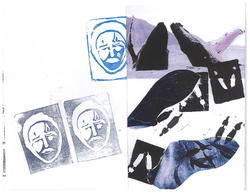
L'esprit de Cornelia
L'esprit de Cornelia
Actions:
Mot(s)-clé(s):
Cornelia Hahn Oberlander, Martien de Vletter, paysage, terrain de jeux, Robson Square, toits verts, jardin, environnement
Cornelia Hahn Oberlander, Martien de Vletter, paysage, terrain de jeux, Robson Square, toits verts, jardin, environnement
Publié:
25 mai 2021
25 mai 2021
Classification:
événements
événements
Date:
4 juin 2023, 13h à 16h
4 juin 2023, 13h à 16h
Classification:
événements
événements
Date:
4 juin 2023
13h à 16h
4 juin 2023
13h à 16h
Niveau de description archivistique:
Projet
Projet
Titre:
BTDB Computer
BTDB Computer
Numéro de référence:
AP144.S2.D70
Description:
File documents the executed project for an office building to house the computer facilities of the British Transport Docks Board (BTDB) at Bulls Bridge and Hayes Road, in Southall, Ealing, England. The building has few doors and no corridors, rooms for computers, data control and preparation, and offices for engineers, programmers, and analysts. The client anticipated a 20% expansion of facilities during the life-cycle of the building and Cedric Price developed designs for "expanding" the building without interrupting computer services which were to run 24 hours a day. Design included interior walls that can be dismounted and reinstalled, a raised flexible floor system, and an exterior cladding system that allowed for an interchange between opaque and transparent panels. Existing conditions material includes an ordinance survey (1963) and floor plans for an unidentified building. Design development and working drawings include site plans, floor plans, sections, elevations, and construction details. The plans show: circulation patterns and relationships between areas; a series of alternate floor plans for computer room expansion; connections between original and expanded services; the computer room and equipment; furniture layout; framing and structure; and plans for acoustic and visual barriers. Also included are axonometric drawings of the phased development/expansion of the structure; design validation charts which measure projected "required" design elements against observation and investigation; environmental control charts exploring alternate proposals for illumination, ventilation, air, temperature, and acoustic control of certain areas, and diagrammatic sections showing environmental controls for air intake, returns and circulation; project requirements charts; project task sequencing diagrams; perspective drawings; elevations and sections for an illuminated sign; and details and wall sections for the exterior cladding. Twenty-nine individual and 60 sets of reprographic copies are stamped "issued contractor". Material for publication includes: details, site plans, floor plans and exterior elevations, b/w post-construction photographs, and a photo collage. Some material from this file was published in: Price, Cedric, "ECHOES: Environment Controlled Human Operational Enclosed Spaces", 'Architectural Design' (October 1969), 547-552; "Cedric Price Supplement No. 2", 'Architectural Design', vol. 41, (January 1971), 25; Price, Cedric, 'Cedric Price-Works II' (London: Architectural Press, 1984), 72, 82-83, 112, 113. Material in this file was produced between 1966 and 1984, but predominantly between 1968 and 1973. Sandy Brown appears as the acoustics consultant and Zisman, Bowyer & Partners appear as the services consultants in this file. File contains design development drawings, working drawings, reference drawings, photographic materials, and textual records.
AP144.S2.D70
Description:
File documents the executed project for an office building to house the computer facilities of the British Transport Docks Board (BTDB) at Bulls Bridge and Hayes Road, in Southall, Ealing, England. The building has few doors and no corridors, rooms for computers, data control and preparation, and offices for engineers, programmers, and analysts. The client anticipated a 20% expansion of facilities during the life-cycle of the building and Cedric Price developed designs for "expanding" the building without interrupting computer services which were to run 24 hours a day. Design included interior walls that can be dismounted and reinstalled, a raised flexible floor system, and an exterior cladding system that allowed for an interchange between opaque and transparent panels. Existing conditions material includes an ordinance survey (1963) and floor plans for an unidentified building. Design development and working drawings include site plans, floor plans, sections, elevations, and construction details. The plans show: circulation patterns and relationships between areas; a series of alternate floor plans for computer room expansion; connections between original and expanded services; the computer room and equipment; furniture layout; framing and structure; and plans for acoustic and visual barriers. Also included are axonometric drawings of the phased development/expansion of the structure; design validation charts which measure projected "required" design elements against observation and investigation; environmental control charts exploring alternate proposals for illumination, ventilation, air, temperature, and acoustic control of certain areas, and diagrammatic sections showing environmental controls for air intake, returns and circulation; project requirements charts; project task sequencing diagrams; perspective drawings; elevations and sections for an illuminated sign; and details and wall sections for the exterior cladding. Twenty-nine individual and 60 sets of reprographic copies are stamped "issued contractor". Material for publication includes: details, site plans, floor plans and exterior elevations, b/w post-construction photographs, and a photo collage. Some material from this file was published in: Price, Cedric, "ECHOES: Environment Controlled Human Operational Enclosed Spaces", 'Architectural Design' (October 1969), 547-552; "Cedric Price Supplement No. 2", 'Architectural Design', vol. 41, (January 1971), 25; Price, Cedric, 'Cedric Price-Works II' (London: Architectural Press, 1984), 72, 82-83, 112, 113. Material in this file was produced between 1966 and 1984, but predominantly between 1968 and 1973. Sandy Brown appears as the acoustics consultant and Zisman, Bowyer & Partners appear as the services consultants in this file. File contains design development drawings, working drawings, reference drawings, photographic materials, and textual records.
Personnes et institutions:
Date:
1966-1984, predominant 1968-1973
1966-1984, predominant 1968-1973
Titre:
BTDB Computer
Actions:
AP144.S2.D70
Description:
File documents the executed project for an office building to house the computer facilities of the British Transport Docks Board (BTDB) at Bulls Bridge and Hayes Road, in Southall, Ealing, England. The building has few doors and no corridors, rooms for computers, data control and preparation, and offices for engineers, programmers, and analysts. The client anticipated a 20% expansion of facilities during the life-cycle of the building and Cedric Price developed designs for "expanding" the building without interrupting computer services which were to run 24 hours a day. Design included interior walls that can be dismounted and reinstalled, a raised flexible floor system, and an exterior cladding system that allowed for an interchange between opaque and transparent panels. Existing conditions material includes an ordinance survey (1963) and floor plans for an unidentified building. Design development and working drawings include site plans, floor plans, sections, elevations, and construction details. The plans show: circulation patterns and relationships between areas; a series of alternate floor plans for computer room expansion; connections between original and expanded services; the computer room and equipment; furniture layout; framing and structure; and plans for acoustic and visual barriers. Also included are axonometric drawings of the phased development/expansion of the structure; design validation charts which measure projected "required" design elements against observation and investigation; environmental control charts exploring alternate proposals for illumination, ventilation, air, temperature, and acoustic control of certain areas, and diagrammatic sections showing environmental controls for air intake, returns and circulation; project requirements charts; project task sequencing diagrams; perspective drawings; elevations and sections for an illuminated sign; and details and wall sections for the exterior cladding. Twenty-nine individual and 60 sets of reprographic copies are stamped "issued contractor". Material for publication includes: details, site plans, floor plans and exterior elevations, b/w post-construction photographs, and a photo collage. Some material from this file was published in: Price, Cedric, "ECHOES: Environment Controlled Human Operational Enclosed Spaces", 'Architectural Design' (October 1969), 547-552; "Cedric Price Supplement No. 2", 'Architectural Design', vol. 41, (January 1971), 25; Price, Cedric, 'Cedric Price-Works II' (London: Architectural Press, 1984), 72, 82-83, 112, 113. Material in this file was produced between 1966 and 1984, but predominantly between 1968 and 1973. Sandy Brown appears as the acoustics consultant and Zisman, Bowyer & Partners appear as the services consultants in this file. File contains design development drawings, working drawings, reference drawings, photographic materials, and textual records.
BTDB Computer
Actions:
AP144.S2.D70
Description:
File documents the executed project for an office building to house the computer facilities of the British Transport Docks Board (BTDB) at Bulls Bridge and Hayes Road, in Southall, Ealing, England. The building has few doors and no corridors, rooms for computers, data control and preparation, and offices for engineers, programmers, and analysts. The client anticipated a 20% expansion of facilities during the life-cycle of the building and Cedric Price developed designs for "expanding" the building without interrupting computer services which were to run 24 hours a day. Design included interior walls that can be dismounted and reinstalled, a raised flexible floor system, and an exterior cladding system that allowed for an interchange between opaque and transparent panels. Existing conditions material includes an ordinance survey (1963) and floor plans for an unidentified building. Design development and working drawings include site plans, floor plans, sections, elevations, and construction details. The plans show: circulation patterns and relationships between areas; a series of alternate floor plans for computer room expansion; connections between original and expanded services; the computer room and equipment; furniture layout; framing and structure; and plans for acoustic and visual barriers. Also included are axonometric drawings of the phased development/expansion of the structure; design validation charts which measure projected "required" design elements against observation and investigation; environmental control charts exploring alternate proposals for illumination, ventilation, air, temperature, and acoustic control of certain areas, and diagrammatic sections showing environmental controls for air intake, returns and circulation; project requirements charts; project task sequencing diagrams; perspective drawings; elevations and sections for an illuminated sign; and details and wall sections for the exterior cladding. Twenty-nine individual and 60 sets of reprographic copies are stamped "issued contractor". Material for publication includes: details, site plans, floor plans and exterior elevations, b/w post-construction photographs, and a photo collage. Some material from this file was published in: Price, Cedric, "ECHOES: Environment Controlled Human Operational Enclosed Spaces", 'Architectural Design' (October 1969), 547-552; "Cedric Price Supplement No. 2", 'Architectural Design', vol. 41, (January 1971), 25; Price, Cedric, 'Cedric Price-Works II' (London: Architectural Press, 1984), 72, 82-83, 112, 113. Material in this file was produced between 1966 and 1984, but predominantly between 1968 and 1973. Sandy Brown appears as the acoustics consultant and Zisman, Bowyer & Partners appear as the services consultants in this file. File contains design development drawings, working drawings, reference drawings, photographic materials, and textual records.
Niveau de description archivistique:
File 70
File 70
Date:
1966-1984, predominant 1968-1973
1966-1984, predominant 1968-1973
Personnes et institutions:
Classification:
archives
Niveau de description archivistique:
Fonds
archives
Niveau de description archivistique:
Fonds
Numéro de référence:
AP184
Résumé:
The Asymptote Architecture New York Stock Exchange project records, 1990 - 2009, document the firm’s work on three major projects for the New York Stock Exchange (NYSE), in collaboration with the Securities Industry Automation Corporation (SIAC): the Three Dimensional Trading Floor (3DTF), MarkeTrac/OrderTrac, and the Advanced Trading Floor Operations Center. The majority of the records date from 1998 to 2004, and include textual, born-digital, audiovisual and over-sized materials.
AP184
Résumé:
The Asymptote Architecture New York Stock Exchange project records, 1990 - 2009, document the firm’s work on three major projects for the New York Stock Exchange (NYSE), in collaboration with the Securities Industry Automation Corporation (SIAC): the Three Dimensional Trading Floor (3DTF), MarkeTrac/OrderTrac, and the Advanced Trading Floor Operations Center. The majority of the records date from 1998 to 2004, and include textual, born-digital, audiovisual and over-sized materials.
Personnes et institutions:
Date:
1991-2009
1991-2009
Titre:
Documents d’archives de Asymptote Architecture pour le projet New York Stock Exchange
Actions:
AP184
Résumé:
The Asymptote Architecture New York Stock Exchange project records, 1990 - 2009, document the firm’s work on three major projects for the New York Stock Exchange (NYSE), in collaboration with the Securities Industry Automation Corporation (SIAC): the Three Dimensional Trading Floor (3DTF), MarkeTrac/OrderTrac, and the Advanced Trading Floor Operations Center. The majority of the records date from 1998 to 2004, and include textual, born-digital, audiovisual and over-sized materials.
Documents d’archives de Asymptote Architecture pour le projet New York Stock Exchange
Actions:
AP184
Résumé:
The Asymptote Architecture New York Stock Exchange project records, 1990 - 2009, document the firm’s work on three major projects for the New York Stock Exchange (NYSE), in collaboration with the Securities Industry Automation Corporation (SIAC): the Three Dimensional Trading Floor (3DTF), MarkeTrac/OrderTrac, and the Advanced Trading Floor Operations Center. The majority of the records date from 1998 to 2004, and include textual, born-digital, audiovisual and over-sized materials.
Classification:
archives
Niveau de description archivistique:
Fonds
archives
Niveau de description archivistique:
Fonds
Date:
1991-2009
1991-2009
Personnes et institutions:
Classification:
pages web
pages web
Titre:
Territoires vivants
Territoires vivants
Actions:
Résumé:
Des engagements et projets à long terme qui ont comme objectifs de fournir un soutien et des ressources aux communautés et aux chercheurs autochtones pour étudier l’environnement bâti, et de remodeler notre propre compréhension du travail que nous faisons en tant qu’institution coloniale cherchant à repousser les limites de la pensée architecturale.
Titre:
Territoires vivants
Actions:
Résumé:
Territoires vivants
Actions:
Résumé:
Des engagements et projets à long terme qui ont comme objectifs de fournir un soutien et des ressources aux communautés et aux chercheurs autochtones pour étudier l’environnement bâti, et de remodeler notre propre compréhension du travail que nous faisons en tant qu’institution coloniale cherchant à repousser les limites de la pensée architecturale.
Classification:
pages web
pages web
Classification:
expositions
expositions
Titre:
Sensations urbaines
Sensations urbaines
Actions:
Description:
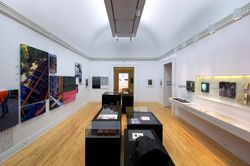
Sensations urbaines explore les perceptions et phénomènes urbains traditionnellement négligés, réprimés ou même dépréciés. Récusant la domination de l’impression visuelle dans l’environnement urbain, l’exposition, qui propose une réinterprétation des qualités latentes de la ville, offre une analyse complexe des commodités, des systèmes de communication et des dimensions(...)
Sensations urbaines explore les perceptions et phénomènes urbains traditionnellement négligés, réprimés ou même dépréciés. Récusant la domination de l’impression visuelle dans l’environnement urbain, l’exposition, qui propose une réinterprétation des qualités latentes de la ville, offre une analyse complexe des commodités, des systèmes de communication et des dimensions(...)
Localisation:
Salles principales
Salles principales
Date:
26 octobre 2005 au 10 septembre 2006
26 octobre 2005 au 10 septembre 2006
Titre:
Sensations urbaines
Actions:
Description:
Sensations urbaines explore les perceptions et phénomènes urbains traditionnellement négligés, réprimés ou même dépréciés. Récusant la domination de l’impression visuelle dans l’environnement urbain, l’exposition, qui propose une réinterprétation des qualités latentes de la ville, offre une analyse complexe des commodités, des systèmes de communication et des dimensions(...)
Sensations urbaines
Actions:
Description:
Sensations urbaines explore les perceptions et phénomènes urbains traditionnellement négligés, réprimés ou même dépréciés. Récusant la domination de l’impression visuelle dans l’environnement urbain, l’exposition, qui propose une réinterprétation des qualités latentes de la ville, offre une analyse complexe des commodités, des systèmes de communication et des dimensions(...)
Classification:
expositions
expositions
Date:
26 octobre 2005 au
10 septembre 2006
26 octobre 2005 au
10 septembre 2006
Localisation:
Salles principales
Salles principales
Niveau de description archivistique:
Série(s)
Série(s)
Numéro de référence:
AP193.S2
Description:
Series 2, I’ve heard about and Hypnosis chamber, 2004-2006, relates to the conception of the urban structure “I’ve heard about”. The records contain algorithmically-generated images, renderings, pictures of models and exhibitions. There are also photographs of the contour crafting process, 3D models and animated renderings illustrating the construction process of the structure. The project is a conceptual, unbuilt project that is meant to be a habitable organism, an adaptive landscape in a constant state of evolution. By means of transitory scenarios in which the operational mode is entropy and uncertainty, it develops open algorithms based on growth scripts permeable not only to human expressions, but also to the most discrete data such as the chemical emissions (for example due to stress or anxiety) of those who inhabit it. The chemical information is harvested through nanoreceptors feeding the VIAB machine with information. This biostructure becomes the visible part of human contingencies and their negotiation in real time. The structure is conceptualized to be in constant construction through the VIAB machine which is also a constituent of the structure itself. It secretes fiber cement, shaping the landscape where it is located and through which it moves. It generates the reticular structure using a process modelled on contour crafting. The VIAB machine was developed with Robotics Research Lab of the University of Southern California and takes its name from the terms viability and variability. R&Sie(n) considers that due to its mode of emergence “I’ve heard about” fabrication is not subjugated to any political power. Hypnosis chamber is a component of “I’ve heard about”. It consists of an indoor chamber, which was realized as a full-scale sample constructed through automated machinery. The chamber is situated as a part of the whole urban structure presented by “I’ve heard about,” and its goal is to immerse the audience into the project, into a fictional environment only reachable by hypnosis. In this context, hypnosis is a way to help citizens escape from their social condition and experience the new condition of citizenship imagined in “I’ve heard about”, where democracy is re-evaluated as a process of self-determination. Both parts of the projects were shown in contemporary art museums. First at Musée d’art de la ville de Paris in Paris (2005), the Hypnotic chamber is permanently on view at Towada Art Center in Towanda, Japan. AP193.S4 contains a video orienting the project into François Roche theoretical stance, research as speculation, that can be summarize as the use of technological tools to take a critical and political position through esthetic in order to open new lines of thoughts. AP193.S4 contains an updated version of the VIAB machine
AP193.S2
Description:
Series 2, I’ve heard about and Hypnosis chamber, 2004-2006, relates to the conception of the urban structure “I’ve heard about”. The records contain algorithmically-generated images, renderings, pictures of models and exhibitions. There are also photographs of the contour crafting process, 3D models and animated renderings illustrating the construction process of the structure. The project is a conceptual, unbuilt project that is meant to be a habitable organism, an adaptive landscape in a constant state of evolution. By means of transitory scenarios in which the operational mode is entropy and uncertainty, it develops open algorithms based on growth scripts permeable not only to human expressions, but also to the most discrete data such as the chemical emissions (for example due to stress or anxiety) of those who inhabit it. The chemical information is harvested through nanoreceptors feeding the VIAB machine with information. This biostructure becomes the visible part of human contingencies and their negotiation in real time. The structure is conceptualized to be in constant construction through the VIAB machine which is also a constituent of the structure itself. It secretes fiber cement, shaping the landscape where it is located and through which it moves. It generates the reticular structure using a process modelled on contour crafting. The VIAB machine was developed with Robotics Research Lab of the University of Southern California and takes its name from the terms viability and variability. R&Sie(n) considers that due to its mode of emergence “I’ve heard about” fabrication is not subjugated to any political power. Hypnosis chamber is a component of “I’ve heard about”. It consists of an indoor chamber, which was realized as a full-scale sample constructed through automated machinery. The chamber is situated as a part of the whole urban structure presented by “I’ve heard about,” and its goal is to immerse the audience into the project, into a fictional environment only reachable by hypnosis. In this context, hypnosis is a way to help citizens escape from their social condition and experience the new condition of citizenship imagined in “I’ve heard about”, where democracy is re-evaluated as a process of self-determination. Both parts of the projects were shown in contemporary art museums. First at Musée d’art de la ville de Paris in Paris (2005), the Hypnotic chamber is permanently on view at Towada Art Center in Towanda, Japan. AP193.S4 contains a video orienting the project into François Roche theoretical stance, research as speculation, that can be summarize as the use of technological tools to take a critical and political position through esthetic in order to open new lines of thoughts. AP193.S4 contains an updated version of the VIAB machine
Personnes et institutions:
Date:
2004-2006
2004-2006
Titre:
I’ve heard about and Hypnosis chamber
Actions:
AP193.S2
Description:
Series 2, I’ve heard about and Hypnosis chamber, 2004-2006, relates to the conception of the urban structure “I’ve heard about”. The records contain algorithmically-generated images, renderings, pictures of models and exhibitions. There are also photographs of the contour crafting process, 3D models and animated renderings illustrating the construction process of the structure. The project is a conceptual, unbuilt project that is meant to be a habitable organism, an adaptive landscape in a constant state of evolution. By means of transitory scenarios in which the operational mode is entropy and uncertainty, it develops open algorithms based on growth scripts permeable not only to human expressions, but also to the most discrete data such as the chemical emissions (for example due to stress or anxiety) of those who inhabit it. The chemical information is harvested through nanoreceptors feeding the VIAB machine with information. This biostructure becomes the visible part of human contingencies and their negotiation in real time. The structure is conceptualized to be in constant construction through the VIAB machine which is also a constituent of the structure itself. It secretes fiber cement, shaping the landscape where it is located and through which it moves. It generates the reticular structure using a process modelled on contour crafting. The VIAB machine was developed with Robotics Research Lab of the University of Southern California and takes its name from the terms viability and variability. R&Sie(n) considers that due to its mode of emergence “I’ve heard about” fabrication is not subjugated to any political power. Hypnosis chamber is a component of “I’ve heard about”. It consists of an indoor chamber, which was realized as a full-scale sample constructed through automated machinery. The chamber is situated as a part of the whole urban structure presented by “I’ve heard about,” and its goal is to immerse the audience into the project, into a fictional environment only reachable by hypnosis. In this context, hypnosis is a way to help citizens escape from their social condition and experience the new condition of citizenship imagined in “I’ve heard about”, where democracy is re-evaluated as a process of self-determination. Both parts of the projects were shown in contemporary art museums. First at Musée d’art de la ville de Paris in Paris (2005), the Hypnotic chamber is permanently on view at Towada Art Center in Towanda, Japan. AP193.S4 contains a video orienting the project into François Roche theoretical stance, research as speculation, that can be summarize as the use of technological tools to take a critical and political position through esthetic in order to open new lines of thoughts. AP193.S4 contains an updated version of the VIAB machine
I’ve heard about and Hypnosis chamber
Actions:
AP193.S2
Description:
Series 2, I’ve heard about and Hypnosis chamber, 2004-2006, relates to the conception of the urban structure “I’ve heard about”. The records contain algorithmically-generated images, renderings, pictures of models and exhibitions. There are also photographs of the contour crafting process, 3D models and animated renderings illustrating the construction process of the structure. The project is a conceptual, unbuilt project that is meant to be a habitable organism, an adaptive landscape in a constant state of evolution. By means of transitory scenarios in which the operational mode is entropy and uncertainty, it develops open algorithms based on growth scripts permeable not only to human expressions, but also to the most discrete data such as the chemical emissions (for example due to stress or anxiety) of those who inhabit it. The chemical information is harvested through nanoreceptors feeding the VIAB machine with information. This biostructure becomes the visible part of human contingencies and their negotiation in real time. The structure is conceptualized to be in constant construction through the VIAB machine which is also a constituent of the structure itself. It secretes fiber cement, shaping the landscape where it is located and through which it moves. It generates the reticular structure using a process modelled on contour crafting. The VIAB machine was developed with Robotics Research Lab of the University of Southern California and takes its name from the terms viability and variability. R&Sie(n) considers that due to its mode of emergence “I’ve heard about” fabrication is not subjugated to any political power. Hypnosis chamber is a component of “I’ve heard about”. It consists of an indoor chamber, which was realized as a full-scale sample constructed through automated machinery. The chamber is situated as a part of the whole urban structure presented by “I’ve heard about,” and its goal is to immerse the audience into the project, into a fictional environment only reachable by hypnosis. In this context, hypnosis is a way to help citizens escape from their social condition and experience the new condition of citizenship imagined in “I’ve heard about”, where democracy is re-evaluated as a process of self-determination. Both parts of the projects were shown in contemporary art museums. First at Musée d’art de la ville de Paris in Paris (2005), the Hypnotic chamber is permanently on view at Towada Art Center in Towanda, Japan. AP193.S4 contains a video orienting the project into François Roche theoretical stance, research as speculation, that can be summarize as the use of technological tools to take a critical and political position through esthetic in order to open new lines of thoughts. AP193.S4 contains an updated version of the VIAB machine
Niveau de description archivistique:
Series
Series
Date:
2004-2006
2004-2006
Personnes et institutions:
Classification:
archives
Niveau de description archivistique:
Fonds
archives
Niveau de description archivistique:
Fonds
Numéro de référence:
AP168
Résumé:
The Neil Denari Interrupted Projections project records, 1994-2004 (predominant 1994-1996), document the development and installation of Denari’s show “Interrupted Projections” at Gallery MA in Tokyo, Japan. The archive consists of original born-digital files and a small amount of physical material, including drawings, transparencies, slides, and promotional materials.
AP168
Résumé:
The Neil Denari Interrupted Projections project records, 1994-2004 (predominant 1994-1996), document the development and installation of Denari’s show “Interrupted Projections” at Gallery MA in Tokyo, Japan. The archive consists of original born-digital files and a small amount of physical material, including drawings, transparencies, slides, and promotional materials.
Personnes et institutions:
Date:
1994-2004
1994-2004
Titre:
Documents d’archives de Neil Denari pour le projet Interrupted Projections
Actions:
AP168
Résumé:
The Neil Denari Interrupted Projections project records, 1994-2004 (predominant 1994-1996), document the development and installation of Denari’s show “Interrupted Projections” at Gallery MA in Tokyo, Japan. The archive consists of original born-digital files and a small amount of physical material, including drawings, transparencies, slides, and promotional materials.
Documents d’archives de Neil Denari pour le projet Interrupted Projections
Actions:
AP168
Résumé:
The Neil Denari Interrupted Projections project records, 1994-2004 (predominant 1994-1996), document the development and installation of Denari’s show “Interrupted Projections” at Gallery MA in Tokyo, Japan. The archive consists of original born-digital files and a small amount of physical material, including drawings, transparencies, slides, and promotional materials.
Classification:
archives
Niveau de description archivistique:
Fonds
archives
Niveau de description archivistique:
Fonds
Date:
1994-2004
1994-2004
Personnes et institutions:
Classification:
expositions
expositions
Actions:
Description:
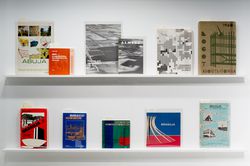
À la suite de la Seconde Guerre mondiale, le besoin urgent de reconstruire les villes, ainsi que la croissance soudaine de la population, conduit les instances publiques à assumer un rôle de plus en plus important dans la conception et la construction de l’environnement urbain. Sous différents régimes politiques, de grands aménagements urbains et même des villes entières(...)
À la suite de la Seconde Guerre mondiale, le besoin urgent de reconstruire les villes, ainsi que la croissance soudaine de la population, conduit les instances publiques à assumer un rôle de plus en plus important dans la conception et la construction de l’environnement urbain. Sous différents régimes politiques, de grands aménagements urbains et même des villes entières(...)
Localisation:
Vitrines
Vitrines
Date:
12 décembre 2013 au 15 juin 2014
12 décembre 2013 au 15 juin 2014
Titre:
Vieux livres nouvelles villes
Actions:
Description:
À la suite de la Seconde Guerre mondiale, le besoin urgent de reconstruire les villes, ainsi que la croissance soudaine de la population, conduit les instances publiques à assumer un rôle de plus en plus important dans la conception et la construction de l’environnement urbain. Sous différents régimes politiques, de grands aménagements urbains et même des villes entières(...)
Vieux livres nouvelles villes
Actions:
Description:
À la suite de la Seconde Guerre mondiale, le besoin urgent de reconstruire les villes, ainsi que la croissance soudaine de la population, conduit les instances publiques à assumer un rôle de plus en plus important dans la conception et la construction de l’environnement urbain. Sous différents régimes politiques, de grands aménagements urbains et même des villes entières(...)
Classification:
expositions
expositions
Date:
12 décembre 2013 au
15 juin 2014
12 décembre 2013 au
15 juin 2014
Localisation:
Vitrines
Vitrines


