


2140 Résultats
Classification:
livres
livres
Actions:
Prix:
$84.00
(disponible sur commande)
Résumé:
Otto Neurath’s famous "Modern man in the making," first published by Alfred A. Knopf in 1939, captures and describes the state of the world in the 1930s by using text and figurative illustrations. From 1925 on, Neurath and his team had worked on a new visual language termed "Isotype" (International System of Typographic Picture Education). At a time that saw new mass(...)
$84.00
(disponible sur commande)
Résumé:
Otto Neurath’s famous "Modern man in the making," first published by Alfred A. Knopf in 1939, captures and describes the state of the world in the 1930s by using text and figurative illustrations. From 1925 on, Neurath and his team had worked on a new visual language termed "Isotype" (International System of Typographic Picture Education). At a time that saw new mass(...)
Titre:
Modern man in the making. Facsimile
Actions:
Prix:
$84.00
(disponible sur commande)
Résumé:
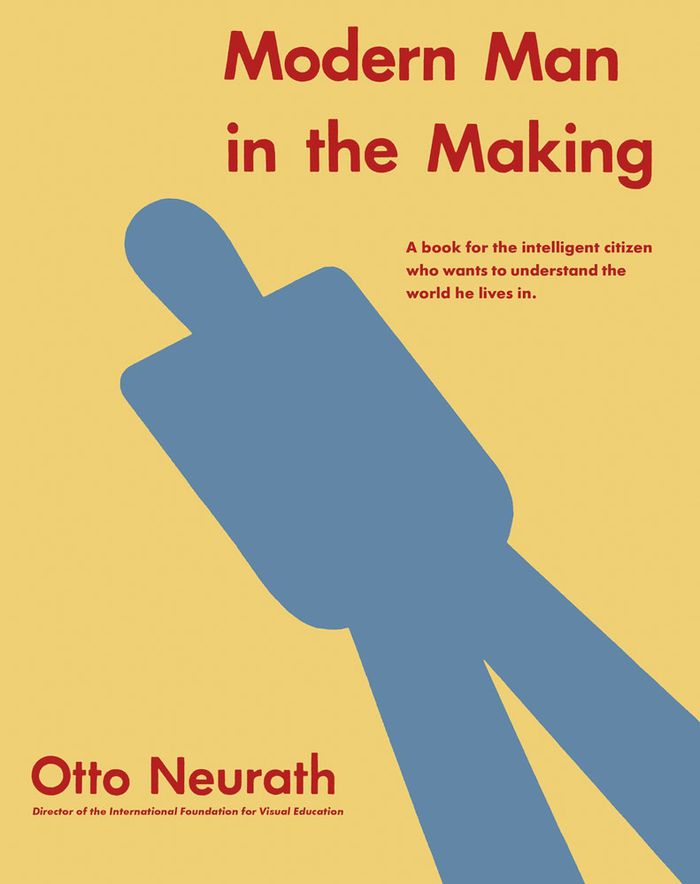
Otto Neurath’s famous "Modern man in the making," first published by Alfred A. Knopf in 1939, captures and describes the state of the world in the 1930s by using text and figurative illustrations. From 1925 on, Neurath and his team had worked on a new visual language termed "Isotype" (International System of Typographic Picture Education). At a time that saw new mass media making hitherto unthinkable amounts of information available, Neurath felt the need for a systematic visualization explaining facts, statistical data and comparative numbers in simple ways. The book can be seen as one of the most influential predecessors of today’s infographics. In the visuals, each symbol and color represents a certain group of objects or people, often compared repetitively over a certain time span. The topics covered in the book include diverse social issues of the time like mortality, health, employment, trade, education, mobility, migration and demographics. "Modern man in the making" shows Neurath’s democratic endeavor to make knowledge intelligible and available to all. It is a reminder of graphic art’s ability to inform and create context instead of presenting aesthetic qualities only. The book has inspired generations of designers and has led to sometimes peculiar imitations and further developments.
Modern man in the making. Facsimile
Actions:
Prix:
$84.00
(disponible sur commande)
Résumé:
Otto Neurath’s famous "Modern man in the making," first published by Alfred A. Knopf in 1939, captures and describes the state of the world in the 1930s by using text and figurative illustrations. From 1925 on, Neurath and his team had worked on a new visual language termed "Isotype" (International System of Typographic Picture Education). At a time that saw new mass media making hitherto unthinkable amounts of information available, Neurath felt the need for a systematic visualization explaining facts, statistical data and comparative numbers in simple ways. The book can be seen as one of the most influential predecessors of today’s infographics. In the visuals, each symbol and color represents a certain group of objects or people, often compared repetitively over a certain time span. The topics covered in the book include diverse social issues of the time like mortality, health, employment, trade, education, mobility, migration and demographics. "Modern man in the making" shows Neurath’s democratic endeavor to make knowledge intelligible and available to all. It is a reminder of graphic art’s ability to inform and create context instead of presenting aesthetic qualities only. The book has inspired generations of designers and has led to sometimes peculiar imitations and further developments.
Classification:
livres
livres
Publication:
avril 2024
avril 2024
Classification:
livres
livres
Actions:
Prix:
$49.00
(disponible sur commande)
Résumé:
The analysis of sanitary spaces and places dedicated to personal care, as in a privacy observatory, helps with the in-depth assessment of social changes, allowing us to determine how the lives of users can be improved, how conflicts of use in public places can be resolved between populations of different sexes and ages, and how the quality of public and private health can(...)
$49.00
(disponible sur commande)
Résumé:
The analysis of sanitary spaces and places dedicated to personal care, as in a privacy observatory, helps with the in-depth assessment of social changes, allowing us to determine how the lives of users can be improved, how conflicts of use in public places can be resolved between populations of different sexes and ages, and how the quality of public and private health can(...)
Publication:
janvier 2023
janvier 2023
Titre:
Intimacy exposed: toilets, bathrooms, restrooms
Actions:
Prix:
$49.00
(disponible sur commande)
Résumé:
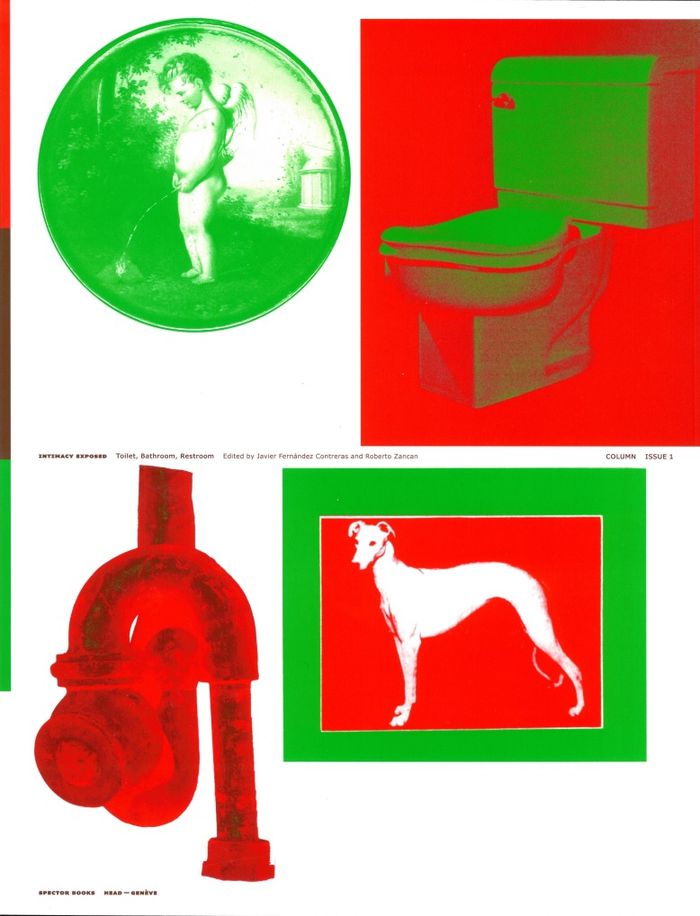
The analysis of sanitary spaces and places dedicated to personal care, as in a privacy observatory, helps with the in-depth assessment of social changes, allowing us to determine how the lives of users can be improved, how conflicts of use in public places can be resolved between populations of different sexes and ages, and how the quality of public and private health can be enhanced. Observing these issues pushes us to explore the forms and meanings of bathrooms and private spaces in relation to their different functions, including those of transgressive and informal meeting places and spaces of inevitable and forced social coexistence. This book constitutes a new step in this field of research, presenting a series of scientific and artistic interventions that proves the diverse range of uses to which ''wet rooms'' can be put in social life, the evolution of the use of furniture, and the new meanings of details and objects in domestic bathrooms and public toilets. The texts, largely written for the 2018 symposium ''Intimacy Exposed: Toilet, Bathroom, Restroom'' (organized by the Department of Interior Architecture at HEAD – Genève) present a practice-based study of the recent past of modernist technologies and a vision of the future of personal and collective practices regarding the realm of the toilet.
Intimacy exposed: toilets, bathrooms, restrooms
Actions:
Prix:
$49.00
(disponible sur commande)
Résumé:
The analysis of sanitary spaces and places dedicated to personal care, as in a privacy observatory, helps with the in-depth assessment of social changes, allowing us to determine how the lives of users can be improved, how conflicts of use in public places can be resolved between populations of different sexes and ages, and how the quality of public and private health can be enhanced. Observing these issues pushes us to explore the forms and meanings of bathrooms and private spaces in relation to their different functions, including those of transgressive and informal meeting places and spaces of inevitable and forced social coexistence. This book constitutes a new step in this field of research, presenting a series of scientific and artistic interventions that proves the diverse range of uses to which ''wet rooms'' can be put in social life, the evolution of the use of furniture, and the new meanings of details and objects in domestic bathrooms and public toilets. The texts, largely written for the 2018 symposium ''Intimacy Exposed: Toilet, Bathroom, Restroom'' (organized by the Department of Interior Architecture at HEAD – Genève) present a practice-based study of the recent past of modernist technologies and a vision of the future of personal and collective practices regarding the realm of the toilet.
Classification:
livres
livres
Publication:
janvier 2023
janvier 2023
Classification:
livres
livres
Titre:
City cycling
City cycling
Actions:
Prix:
$31.95
(disponible sur commande)
Résumé:
Bicycling in cities is booming, for many reasons: health and environmental benefits, time and cost savings, more and better bike lanes and paths, innovative bike sharing programs, and the sheer fun of riding. City Cycling offers a guide to this urban cycling, with the goal of promoting cycling as sustainable urban transportation available to everyone. It reports on(...)
$31.95
(disponible sur commande)
Résumé:
Bicycling in cities is booming, for many reasons: health and environmental benefits, time and cost savings, more and better bike lanes and paths, innovative bike sharing programs, and the sheer fun of riding. City Cycling offers a guide to this urban cycling, with the goal of promoting cycling as sustainable urban transportation available to everyone. It reports on(...)
Titre:
City cycling
Actions:
Prix:
$31.95
(disponible sur commande)
Résumé:
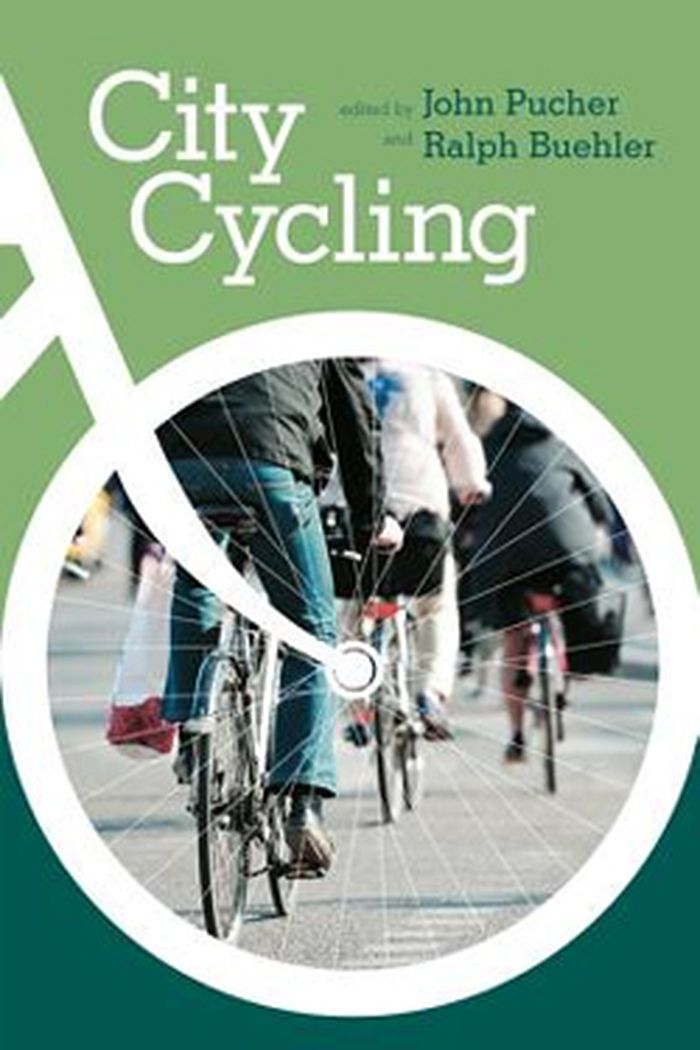
Bicycling in cities is booming, for many reasons: health and environmental benefits, time and cost savings, more and better bike lanes and paths, innovative bike sharing programs, and the sheer fun of riding. City Cycling offers a guide to this urban cycling, with the goal of promoting cycling as sustainable urban transportation available to everyone. It reports on cycling trends and policies in cities in North America, Europe, and Australia, and offers information on such topics as cycling safety, cycling infrastructure provisions including bikeways and bike parking, the wide range of bike designs and bike equipment, integration of cycling with public transportation, and promoting cycling for women and children. The chapters describe ways to make city cycling feasible, convenient, and safe for commutes to work and school, shopping trips, visits, and other daily transportation needs. The book also offers detailed examinations and illustrations of cycling conditions in different urban environments: small cities (including Davis, California, and Delft, the Netherlands), large cities (including Sydney, Chicago, Toronto and Berlin), and "megacities" (London, New York, Paris, and Tokyo). These chapters offer a closer look at how cities both with and without historical cycling cultures have developed cycling programs over time. The book makes clear that successful promotion of city cycling depends on coordinating infrastructure, programs, and government policies.
City cycling
Actions:
Prix:
$31.95
(disponible sur commande)
Résumé:
Bicycling in cities is booming, for many reasons: health and environmental benefits, time and cost savings, more and better bike lanes and paths, innovative bike sharing programs, and the sheer fun of riding. City Cycling offers a guide to this urban cycling, with the goal of promoting cycling as sustainable urban transportation available to everyone. It reports on cycling trends and policies in cities in North America, Europe, and Australia, and offers information on such topics as cycling safety, cycling infrastructure provisions including bikeways and bike parking, the wide range of bike designs and bike equipment, integration of cycling with public transportation, and promoting cycling for women and children. The chapters describe ways to make city cycling feasible, convenient, and safe for commutes to work and school, shopping trips, visits, and other daily transportation needs. The book also offers detailed examinations and illustrations of cycling conditions in different urban environments: small cities (including Davis, California, and Delft, the Netherlands), large cities (including Sydney, Chicago, Toronto and Berlin), and "megacities" (London, New York, Paris, and Tokyo). These chapters offer a closer look at how cities both with and without historical cycling cultures have developed cycling programs over time. The book makes clear that successful promotion of city cycling depends on coordinating infrastructure, programs, and government policies.
Classification:
livres
livres
Publication:
novembre 2012
novembre 2012
Classification:
livres
livres

Actions:
Prix:
$43.95
(disponible sur commande)
Résumé:
Over the past twenty years, an abundance of art forms have emerged that use aesthetics to affect social dynamics. These works are often produced by collectives or come out of a community context; they emphasize participation, dialogue, and action, and appear in situations ranging from theater to activism to urban planning to visual art to health care. Engaged with the(...)
$43.95
(disponible sur commande)
Résumé:
Over the past twenty years, an abundance of art forms have emerged that use aesthetics to affect social dynamics. These works are often produced by collectives or come out of a community context; they emphasize participation, dialogue, and action, and appear in situations ranging from theater to activism to urban planning to visual art to health care. Engaged with the(...)
Titre:
Living as form : socially engaged art from 1991-2011
Actions:
Prix:
$43.95
(disponible sur commande)
Résumé:
Over the past twenty years, an abundance of art forms have emerged that use aesthetics to affect social dynamics. These works are often produced by collectives or come out of a community context; they emphasize participation, dialogue, and action, and appear in situations ranging from theater to activism to urban planning to visual art to health care. Engaged with the texture of living, these art works often blur the line between art and life. This book offers the first global portrait of a complex and exciting mode of cultural production — one that has virtually redefined contemporary art practice. This publication grew out of a major exhibition at Creative Time in New York City. Like the exhibition, the book is a landmark survey of more than 100 projects selected by a thirty-person curatorial advisory team; each project is documented by a selection of color images. The artists include the Danish collective Superflex, who empower communities to challenge corporate interest; Turner Prize nominee Jeremy Deller, creator of socially and politically charged performance works; Women on Waves, who provide abortion services and information to women in regions where the procedure is illegal; and Santiágo Cirugeda, an architect who builds temporary structures to solve housing problems.
Living as form : socially engaged art from 1991-2011
Actions:
Prix:
$43.95
(disponible sur commande)
Résumé:
Over the past twenty years, an abundance of art forms have emerged that use aesthetics to affect social dynamics. These works are often produced by collectives or come out of a community context; they emphasize participation, dialogue, and action, and appear in situations ranging from theater to activism to urban planning to visual art to health care. Engaged with the texture of living, these art works often blur the line between art and life. This book offers the first global portrait of a complex and exciting mode of cultural production — one that has virtually redefined contemporary art practice. This publication grew out of a major exhibition at Creative Time in New York City. Like the exhibition, the book is a landmark survey of more than 100 projects selected by a thirty-person curatorial advisory team; each project is documented by a selection of color images. The artists include the Danish collective Superflex, who empower communities to challenge corporate interest; Turner Prize nominee Jeremy Deller, creator of socially and politically charged performance works; Women on Waves, who provide abortion services and information to women in regions where the procedure is illegal; and Santiágo Cirugeda, an architect who builds temporary structures to solve housing problems.
Classification:
livres
livres
Publication:
mars 2012
mars 2012
Classification:
livres
livres

Titre:
Planet of slums
Planet of slums
Actions:
Prix:
$25.00
(disponible sur commande)
Résumé:
Urban theorist Davis takes a global approach to documenting the astonishing depth of squalid poverty that dominates the lives of the planet's increasingly urban population, detailing poor urban communities from Cape Town and Caracas to Casablanca and Khartoum. Davis argues health, justice and social issues associated with gargantuan slums (the largest, in Mexico City, has(...)
$25.00
(disponible sur commande)
Résumé:
Urban theorist Davis takes a global approach to documenting the astonishing depth of squalid poverty that dominates the lives of the planet's increasingly urban population, detailing poor urban communities from Cape Town and Caracas to Casablanca and Khartoum. Davis argues health, justice and social issues associated with gargantuan slums (the largest, in Mexico City, has(...)
Titre:
Planet of slums
Actions:
Prix:
$25.00
(disponible sur commande)
Résumé:
Urban theorist Davis takes a global approach to documenting the astonishing depth of squalid poverty that dominates the lives of the planet's increasingly urban population, detailing poor urban communities from Cape Town and Caracas to Casablanca and Khartoum. Davis argues health, justice and social issues associated with gargantuan slums (the largest, in Mexico City, has an estimated population of 4 million) get overlooked in world politics: "The demonizing rhetorics of the various international 'wars' on terrorism, drugs, and crime are so much semantic apartheid: they construct epistemological walls around gecekondus, favelas, and chawls that disable any honest debate about the daily violence of economic exclusion." Though Davis focuses on individual communities, he presents statistics showing the skyrocketing population and number of "megaslums" (informally, "stinking mountains of shit" or, formally, "when shanty-towns and squatter communities merge in continuous belts of informal housing and poverty, usually on the urban periphery") since the 1960s. Layered over the hard numbers are a fascinating grid of specific area studies and sub-topics ranging from how the Olympics has spurred the forceful relocation of thousands (and, sometimes, hundreds of thousands) of the urban poor, to the conversion of formerly second world countries to third world status. Davis paints a bleak picture of the upward trend in urbanization and maintains a stark outlook for slum-dwellers' futures
Planet of slums
Actions:
Prix:
$25.00
(disponible sur commande)
Résumé:
Urban theorist Davis takes a global approach to documenting the astonishing depth of squalid poverty that dominates the lives of the planet's increasingly urban population, detailing poor urban communities from Cape Town and Caracas to Casablanca and Khartoum. Davis argues health, justice and social issues associated with gargantuan slums (the largest, in Mexico City, has an estimated population of 4 million) get overlooked in world politics: "The demonizing rhetorics of the various international 'wars' on terrorism, drugs, and crime are so much semantic apartheid: they construct epistemological walls around gecekondus, favelas, and chawls that disable any honest debate about the daily violence of economic exclusion." Though Davis focuses on individual communities, he presents statistics showing the skyrocketing population and number of "megaslums" (informally, "stinking mountains of shit" or, formally, "when shanty-towns and squatter communities merge in continuous belts of informal housing and poverty, usually on the urban periphery") since the 1960s. Layered over the hard numbers are a fascinating grid of specific area studies and sub-topics ranging from how the Olympics has spurred the forceful relocation of thousands (and, sometimes, hundreds of thousands) of the urban poor, to the conversion of formerly second world countries to third world status. Davis paints a bleak picture of the upward trend in urbanization and maintains a stark outlook for slum-dwellers' futures
Classification:
livres
livres
Publication:
août 2007, London New York
août 2007, London New York
Sujet:
Théorie de l’urbanisme
Théorie de l’urbanisme
Classification:
livres
livres
Prix:
$34.95
(disponible en magasin)
Résumé:
National historic sites commemorate decisive moments in the making of Canada. But seen through an environmental lens, these sites become artifacts of a bigger story: the occupation and transformation of nature into nation. In an age of pressing discussions about environmental sustainability, there is a growing need to know more about the history of our relationship with(...)
$34.95
(disponible en magasin)
Résumé:
National historic sites commemorate decisive moments in the making of Canada. But seen through an environmental lens, these sites become artifacts of a bigger story: the occupation and transformation of nature into nation. In an age of pressing discussions about environmental sustainability, there is a growing need to know more about the history of our relationship with(...)
Titre:
Nature, place, and story: rethinking historic sites in Canada
Actions:
Prix:
$34.95
(disponible en magasin)
Résumé:
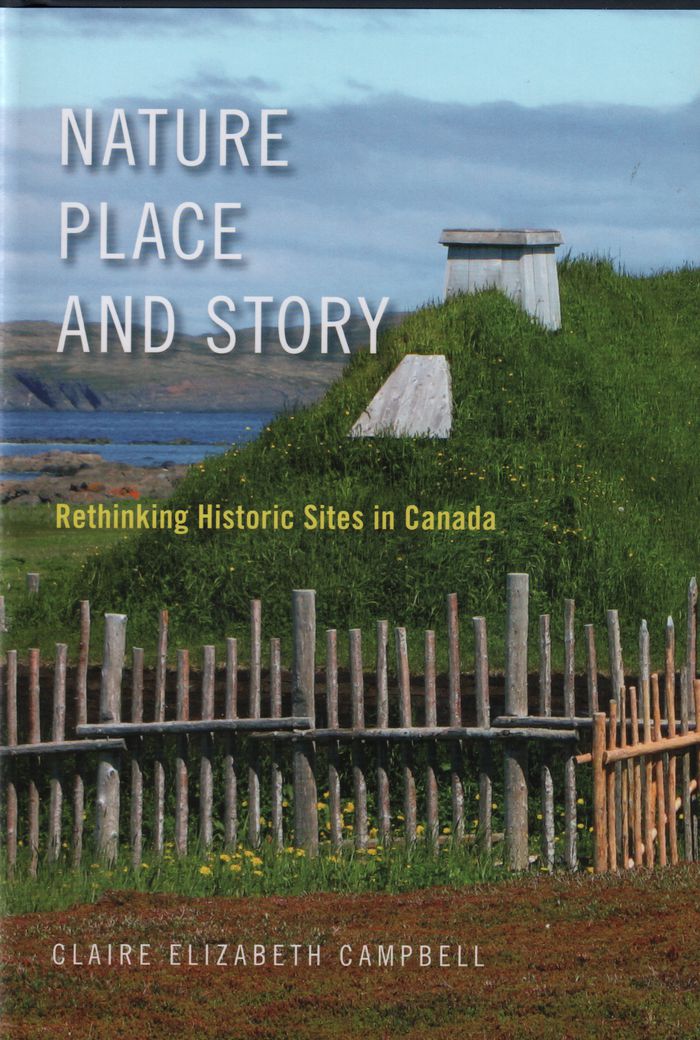
National historic sites commemorate decisive moments in the making of Canada. But seen through an environmental lens, these sites become artifacts of a bigger story: the occupation and transformation of nature into nation. In an age of pressing discussions about environmental sustainability, there is a growing need to know more about the history of our relationship with the natural world and what lessons these places of public history, regional identity, and national narrative can teach us. "Nature, place, and story" provides new interpretations for five of Canada’s largest and most iconic historic sites (two of which are UNESCO World Heritage Sites): L’Anse aux Meadows, Newfoundland; Grand Pré, Nova Scotia; Fort William, Ontario; the Forks of the Red River, Manitoba; and the Bar U Ranch, Alberta. At each location, Claire Campbell rewrites public history as environmental history, revealing the country’s debt to the power and fragility of the natural world, and the relevance of the past to understanding climate change, agricultural sustainability, wilderness protection, urban reclamation, and fossil fuel extraction. From the medieval Atlantic to modern ranchlands, environmental history speaks directly to contemporary questions about the health of Canada’s habitat. Bringing together public and environmental history in an entirely new way, "Nature, place, and story" is a lively and ambitious call for a fresh perspective on natural heritage.
Nature, place, and story: rethinking historic sites in Canada
Actions:
Prix:
$34.95
(disponible en magasin)
Résumé:
National historic sites commemorate decisive moments in the making of Canada. But seen through an environmental lens, these sites become artifacts of a bigger story: the occupation and transformation of nature into nation. In an age of pressing discussions about environmental sustainability, there is a growing need to know more about the history of our relationship with the natural world and what lessons these places of public history, regional identity, and national narrative can teach us. "Nature, place, and story" provides new interpretations for five of Canada’s largest and most iconic historic sites (two of which are UNESCO World Heritage Sites): L’Anse aux Meadows, Newfoundland; Grand Pré, Nova Scotia; Fort William, Ontario; the Forks of the Red River, Manitoba; and the Bar U Ranch, Alberta. At each location, Claire Campbell rewrites public history as environmental history, revealing the country’s debt to the power and fragility of the natural world, and the relevance of the past to understanding climate change, agricultural sustainability, wilderness protection, urban reclamation, and fossil fuel extraction. From the medieval Atlantic to modern ranchlands, environmental history speaks directly to contemporary questions about the health of Canada’s habitat. Bringing together public and environmental history in an entirely new way, "Nature, place, and story" is a lively and ambitious call for a fresh perspective on natural heritage.
Classification:
livres
livres
Publication:
août 2017
août 2017
Sujet:
Architecture du Canada
Architecture du Canada
Classification:
livres
livres
Actions:
Prix:
$52.00
(disponible sur commande)
Résumé:
Getting the picture, constructing (and deconstructing) the picture, finding the picture, viewing the picture, being in the picture , changing the pictures --these are all phrases that apply to the fascinating world of 'putting people in the picture' in visual research within the Social Sciences. Putting People in the Picture: Visual Methodologies for Social Change focuses(...)
$52.00
(disponible sur commande)
Résumé:
Getting the picture, constructing (and deconstructing) the picture, finding the picture, viewing the picture, being in the picture , changing the pictures --these are all phrases that apply to the fascinating world of 'putting people in the picture' in visual research within the Social Sciences. Putting People in the Picture: Visual Methodologies for Social Change focuses(...)
Sujet:
Théorie de la photographie
Théorie de la photographie
Publication:
mai 2008, Rotterdam
mai 2008, Rotterdam
Titre:
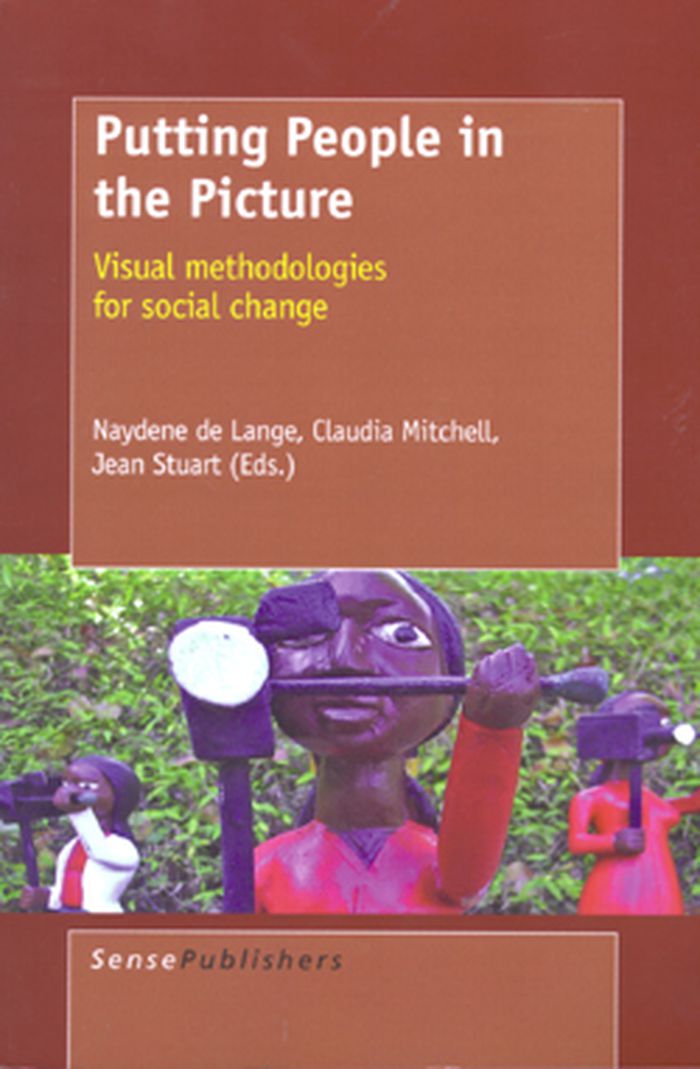
Putting people in the picture: visual methodologies for social change
Actions:
Prix:
$52.00
(disponible sur commande)
Résumé:
Getting the picture, constructing (and deconstructing) the picture, finding the picture, viewing the picture, being in the picture , changing the pictures --these are all phrases that apply to the fascinating world of 'putting people in the picture' in visual research within the Social Sciences. Putting People in the Picture: Visual Methodologies for Social Change focuses on the ways in which researchers, practitioners and activists are using such techniques as photo voice, collaborative video, drawings and other visual and arts-based tools as modes of inquiry, as modes of representation and as modes of disseminating findings in social research. The various chapters address methodological, analytical, interpretive, aesthetic, technical and ethical concerns in using visual methodologies in work with young people, teachers, community health care workers -- and even the self-as-researcher. The range of issues addressed in the work is broad, and includes work in the areas of HIV & AIDS, schooling, poverty, gender violence, race, and children's visions for the future. While the studies are situated within a variety of social contexts, the focus is primarily on work in Southern Africa. The book takes up some of the theoretical and practical challenges offered by Visual Sociology, Image- based Research, Media Studies, Rural Development, and Community-based and Participatory Research, and in so doing offers audiences an array of visual approaches to studying and bringing about social change.
Putting people in the picture: visual methodologies for social change
Actions:
Prix:
$52.00
(disponible sur commande)
Résumé:
Getting the picture, constructing (and deconstructing) the picture, finding the picture, viewing the picture, being in the picture , changing the pictures --these are all phrases that apply to the fascinating world of 'putting people in the picture' in visual research within the Social Sciences. Putting People in the Picture: Visual Methodologies for Social Change focuses on the ways in which researchers, practitioners and activists are using such techniques as photo voice, collaborative video, drawings and other visual and arts-based tools as modes of inquiry, as modes of representation and as modes of disseminating findings in social research. The various chapters address methodological, analytical, interpretive, aesthetic, technical and ethical concerns in using visual methodologies in work with young people, teachers, community health care workers -- and even the self-as-researcher. The range of issues addressed in the work is broad, and includes work in the areas of HIV & AIDS, schooling, poverty, gender violence, race, and children's visions for the future. While the studies are situated within a variety of social contexts, the focus is primarily on work in Southern Africa. The book takes up some of the theoretical and practical challenges offered by Visual Sociology, Image- based Research, Media Studies, Rural Development, and Community-based and Participatory Research, and in so doing offers audiences an array of visual approaches to studying and bringing about social change.
Classification:
livres
livres
Publication:
mai 2008, Rotterdam
mai 2008, Rotterdam
Sujet:
Théorie de la photographie
Théorie de la photographie
Classification:
livres
livres
Actions:
Prix:
$23.95
(disponible sur commande)
Résumé:
More than ever, architectural design is seen as a means to promote commercial goals rather than as an end in itself. Frank Gehry’s Guggenheim Museum in Bilbao, for example, simply cannot be considered apart from its intended role as a catalyst for the economic revitalization of Bilbao and its ability to attract tourist dollars, regardless of its architectural merits. A(...)
$23.95
(disponible sur commande)
Résumé:
More than ever, architectural design is seen as a means to promote commercial goals rather than as an end in itself. Frank Gehry’s Guggenheim Museum in Bilbao, for example, simply cannot be considered apart from its intended role as a catalyst for the economic revitalization of Bilbao and its ability to attract tourist dollars, regardless of its architectural merits. A(...)
Sujet:
Théorie de l’architecture
Théorie de l’architecture
Publication:
novembre 2005, Minneapolis, London
novembre 2005, Minneapolis, London
Titre:
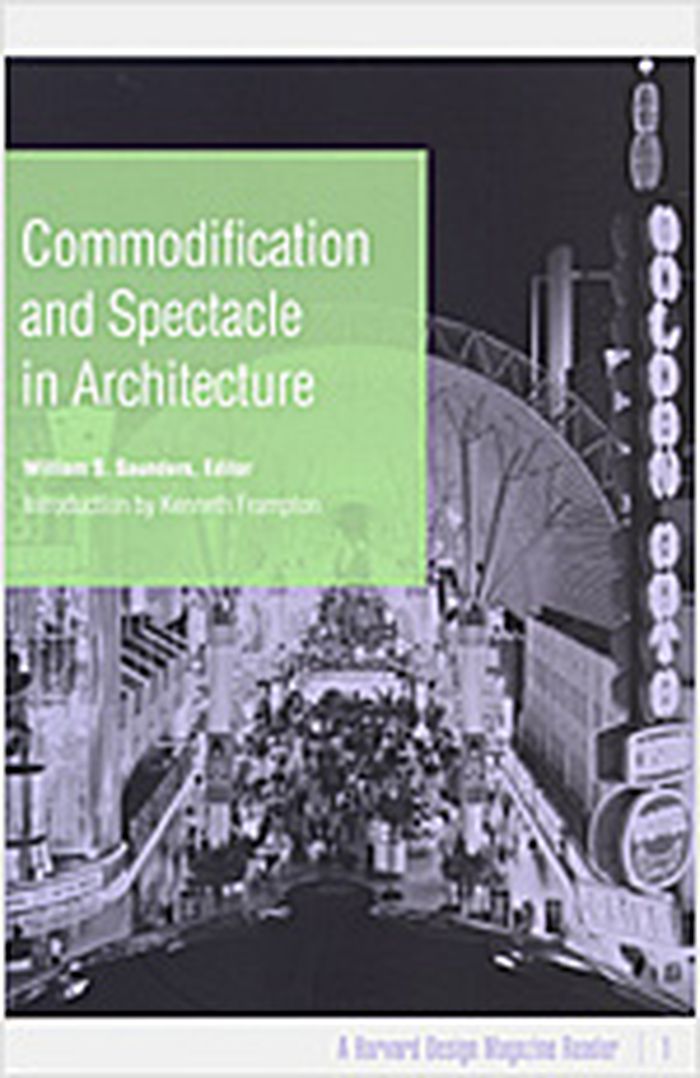
Commodification and spectacle in architecture
Actions:
Prix:
$23.95
(disponible sur commande)
Résumé:
More than ever, architectural design is seen as a means to promote commercial goals rather than as an end in itself. Frank Gehry’s Guggenheim Museum in Bilbao, for example, simply cannot be considered apart from its intended role as a catalyst for the economic revitalization of Bilbao and its ability to attract tourist dollars, regardless of its architectural merits. A built environment intended to seduce consumers is more likely to offer instant gratification than to invite independent thought and reflection. But how harmful, if at all, is this unprecedented commercialization of architecture? Framed with an introduction by Kenneth Frampton, the contributions to "Commodification and spectacle in architecture" stake out a variety of positions in the debate over the extent to which it is possible—or desirable—to escape from, resist, or suggest plausible alternatives to the dominant culture of consumer capitalism. Rejecting any dreamy nostalgia for an idealized present or past in which design is completely divorced from commerce—and, in some cases, celebrating the pleasures of spectacle—the individual essays range from indictments of particular architects and critiques of the profession to broader concerns about what the phenomenon of commodification means for the practice of democracy and the health of society. Bringing together an impressive and varied group of critics and practitioners, "Commodification and spectacle in architecture" will help to sharpen the discussion of how design can respond to our hypercommodified culture.
Commodification and spectacle in architecture
Actions:
Prix:
$23.95
(disponible sur commande)
Résumé:
More than ever, architectural design is seen as a means to promote commercial goals rather than as an end in itself. Frank Gehry’s Guggenheim Museum in Bilbao, for example, simply cannot be considered apart from its intended role as a catalyst for the economic revitalization of Bilbao and its ability to attract tourist dollars, regardless of its architectural merits. A built environment intended to seduce consumers is more likely to offer instant gratification than to invite independent thought and reflection. But how harmful, if at all, is this unprecedented commercialization of architecture? Framed with an introduction by Kenneth Frampton, the contributions to "Commodification and spectacle in architecture" stake out a variety of positions in the debate over the extent to which it is possible—or desirable—to escape from, resist, or suggest plausible alternatives to the dominant culture of consumer capitalism. Rejecting any dreamy nostalgia for an idealized present or past in which design is completely divorced from commerce—and, in some cases, celebrating the pleasures of spectacle—the individual essays range from indictments of particular architects and critiques of the profession to broader concerns about what the phenomenon of commodification means for the practice of democracy and the health of society. Bringing together an impressive and varied group of critics and practitioners, "Commodification and spectacle in architecture" will help to sharpen the discussion of how design can respond to our hypercommodified culture.
Classification:
livres
livres
Publication:
novembre 2005, Minneapolis, London
novembre 2005, Minneapolis, London
Sujet:
Théorie de l’architecture
Théorie de l’architecture
Classification:
livres
livres

Actions:
Prix:
$44.95
(disponible sur commande)
Résumé:
"Worldchanging : a User's guide for the 21st century " proposes innovative solutions, ideas and inventions emerging today for building a sustainable, livable, prosperous future. From consumer consciousness to a new vision for industry; non-toxic homes to refugee shelters; microfinance to effective philanthropy; socially responsible investing to starting a green business;(...)
$44.95
(disponible sur commande)
Résumé:
"Worldchanging : a User's guide for the 21st century " proposes innovative solutions, ideas and inventions emerging today for building a sustainable, livable, prosperous future. From consumer consciousness to a new vision for industry; non-toxic homes to refugee shelters; microfinance to effective philanthropy; socially responsible investing to starting a green business;(...)
Titre:
Worldchanging : a user's guide for the 21st century
Actions:
Prix:
$44.95
(disponible sur commande)
Résumé:
"Worldchanging : a User's guide for the 21st century " proposes innovative solutions, ideas and inventions emerging today for building a sustainable, livable, prosperous future. From consumer consciousness to a new vision for industry; non-toxic homes to refugee shelters; microfinance to effective philanthropy; socially responsible investing to starting a green business; citizen media to human rights; ecological economics to climate change, this is a comprehensive, cutting-edge overview. The book contains 7 sections which include those topics - from eco-building to responsible shopping, political action to humanitarian relief : stuff : green design, biomimicry, sustainable food, clothing, trade and technology ; shelter : green building and landscaping, clean energy, water, disaster relief and humanitarian design ; cities : smart growth, sustainable communities, transportation, greening infrastructure, product-service systems, leapfrogging and megacity challenges ; community : education, women's rights, public health, holistic approaches to community development, South-South science, social entrepreneurship and micro-lending, and philanthropy ; business : socially responsible investment, worldchanging start-ups, ecological economics, corporate social responsibility and green business ; politics : networked politics, new media, transparency, human rights, non-violent revolution and peacemaking ; planet : big picture -- everything from placing oneself in a bioregion to climate foresight to environmental history to green space exploration. Brought together by Alex Steffen, co-founder of the web site Worldchanging.com, this team of writers includes Cameron Sinclair, founder of Architecture for Humanity, Geekcorps founder Ethan Zuckerman, sustainable food expert Anna Lappé, and many others. With foreword by Al Gore. Design by Sagmeister.
Worldchanging : a user's guide for the 21st century
Actions:
Prix:
$44.95
(disponible sur commande)
Résumé:
"Worldchanging : a User's guide for the 21st century " proposes innovative solutions, ideas and inventions emerging today for building a sustainable, livable, prosperous future. From consumer consciousness to a new vision for industry; non-toxic homes to refugee shelters; microfinance to effective philanthropy; socially responsible investing to starting a green business; citizen media to human rights; ecological economics to climate change, this is a comprehensive, cutting-edge overview. The book contains 7 sections which include those topics - from eco-building to responsible shopping, political action to humanitarian relief : stuff : green design, biomimicry, sustainable food, clothing, trade and technology ; shelter : green building and landscaping, clean energy, water, disaster relief and humanitarian design ; cities : smart growth, sustainable communities, transportation, greening infrastructure, product-service systems, leapfrogging and megacity challenges ; community : education, women's rights, public health, holistic approaches to community development, South-South science, social entrepreneurship and micro-lending, and philanthropy ; business : socially responsible investment, worldchanging start-ups, ecological economics, corporate social responsibility and green business ; politics : networked politics, new media, transparency, human rights, non-violent revolution and peacemaking ; planet : big picture -- everything from placing oneself in a bioregion to climate foresight to environmental history to green space exploration. Brought together by Alex Steffen, co-founder of the web site Worldchanging.com, this team of writers includes Cameron Sinclair, founder of Architecture for Humanity, Geekcorps founder Ethan Zuckerman, sustainable food expert Anna Lappé, and many others. With foreword by Al Gore. Design by Sagmeister.
Classification:
livres
livres
Publication:
janvier 2007, New York
janvier 2007, New York
Sujet:
Architecture écologique
Architecture écologique
Classification:
livres
livres
Actions:
Prix:
$89.99
(disponible sur commande)
Résumé:
Written by the chair of the LEED-Neighborhood Development (LEED-ND) initiative, Sustainable Urbanism: Urban Design with Nature is both an urgent call to action and a comprehensive introduction to "sustainable urbanism"--the emerging and growing design reform movement that combines the creation and enhancement of walkable and diverse places with the need to build(...)
$89.99
(disponible sur commande)
Résumé:
Written by the chair of the LEED-Neighborhood Development (LEED-ND) initiative, Sustainable Urbanism: Urban Design with Nature is both an urgent call to action and a comprehensive introduction to "sustainable urbanism"--the emerging and growing design reform movement that combines the creation and enhancement of walkable and diverse places with the need to build(...)
Titre:
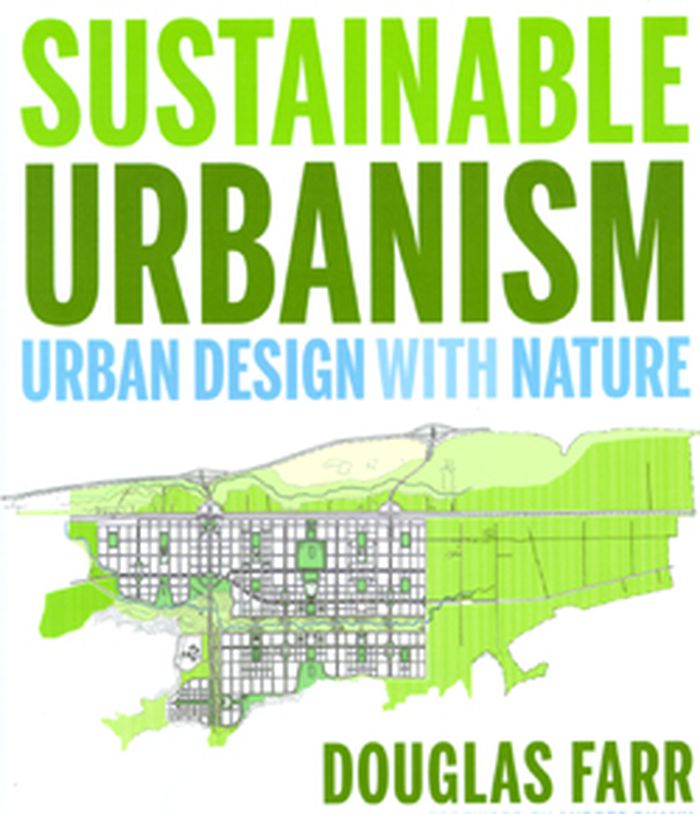
Sustainable urbanism: urban design with nature
Actions:
Prix:
$89.99
(disponible sur commande)
Résumé:
Written by the chair of the LEED-Neighborhood Development (LEED-ND) initiative, Sustainable Urbanism: Urban Design with Nature is both an urgent call to action and a comprehensive introduction to "sustainable urbanism"--the emerging and growing design reform movement that combines the creation and enhancement of walkable and diverse places with the need to build high-performance infrastructure and buildings. Providing a historic perspective on the standards and regulations that got us to where we are today in terms of urban lifestyle and attempts at reform, Douglas Farr makes a powerful case for sustainable urbanism, showing where we went wrong, and where we need to go. He then explains how to implement sustainable urbanism through leadership and communication in cities, communities, and neighborhoods. Essays written by Farr and others delve into such issues as: Increasing sustainability through density. Integrating transportation and land use. Creating sustainable neighborhoods, including housing, car-free areas, locally-owned stores, walkable neighborhoods, and universal accessibility. The health and environmental benefits of linking humans to nature, including walk-to open spaces, neighborhood stormwater systems and waste treatment, and food production. High performance buildings and district energy systems. Enriching the argument are in-depth case studies in sustainable urbanism, from BedZED in London, England and Newington in Sydney, Australia, to New Railroad Square in Santa Rosa, California and Dongtan, Shanghai, China. An epilogue looks to the future of sustainable urbanism over the next 200 years.
Sustainable urbanism: urban design with nature
Actions:
Prix:
$89.99
(disponible sur commande)
Résumé:
Written by the chair of the LEED-Neighborhood Development (LEED-ND) initiative, Sustainable Urbanism: Urban Design with Nature is both an urgent call to action and a comprehensive introduction to "sustainable urbanism"--the emerging and growing design reform movement that combines the creation and enhancement of walkable and diverse places with the need to build high-performance infrastructure and buildings. Providing a historic perspective on the standards and regulations that got us to where we are today in terms of urban lifestyle and attempts at reform, Douglas Farr makes a powerful case for sustainable urbanism, showing where we went wrong, and where we need to go. He then explains how to implement sustainable urbanism through leadership and communication in cities, communities, and neighborhoods. Essays written by Farr and others delve into such issues as: Increasing sustainability through density. Integrating transportation and land use. Creating sustainable neighborhoods, including housing, car-free areas, locally-owned stores, walkable neighborhoods, and universal accessibility. The health and environmental benefits of linking humans to nature, including walk-to open spaces, neighborhood stormwater systems and waste treatment, and food production. High performance buildings and district energy systems. Enriching the argument are in-depth case studies in sustainable urbanism, from BedZED in London, England and Newington in Sydney, Australia, to New Railroad Square in Santa Rosa, California and Dongtan, Shanghai, China. An epilogue looks to the future of sustainable urbanism over the next 200 years.
Classification:
livres
livres
Publication:
novembre 2007, Hoboken, New Jersey
novembre 2007, Hoboken, New Jersey
Sujet:
Théorie de l’urbanisme
Théorie de l’urbanisme


