


44178 Résultats
Classification:
expositions
expositions
Actions:
Description:
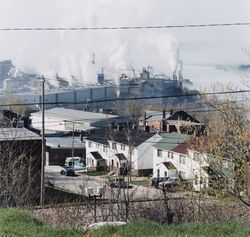
Les nouvelles villes industrielles créées par l’entreprise privée au début du siècle témoignent de la confluence des forces économiques, sociales et politiques qui façonnent les formes urbaines. Construites rapidement et à grands frais, ces villes font l’objet d’un planning systématique, en réponse à des objectifs de rendement industriel nécessitant une forme de contrôle(...)
Les nouvelles villes industrielles créées par l’entreprise privée au début du siècle témoignent de la confluence des forces économiques, sociales et politiques qui façonnent les formes urbaines. Construites rapidement et à grands frais, ces villes font l’objet d’un planning systématique, en réponse à des objectifs de rendement industriel nécessitant une forme de contrôle(...)
Localisation:
Salles principales
Salles principales
Date:
6 mars 1996 au 26 mai 1996
6 mars 1996 au 26 mai 1996
Titre:
Énergie et aménagement : les villes industrielles planifiées du Québec, 1890-1950
Actions:
Description:
Les nouvelles villes industrielles créées par l’entreprise privée au début du siècle témoignent de la confluence des forces économiques, sociales et politiques qui façonnent les formes urbaines. Construites rapidement et à grands frais, ces villes font l’objet d’un planning systématique, en réponse à des objectifs de rendement industriel nécessitant une forme de contrôle(...)
Énergie et aménagement : les villes industrielles planifiées du Québec, 1890-1950
Actions:
Description:
Les nouvelles villes industrielles créées par l’entreprise privée au début du siècle témoignent de la confluence des forces économiques, sociales et politiques qui façonnent les formes urbaines. Construites rapidement et à grands frais, ces villes font l’objet d’un planning systématique, en réponse à des objectifs de rendement industriel nécessitant une forme de contrôle(...)
Classification:
expositions
expositions
Date:
6 mars 1996 au
26 mai 1996
6 mars 1996 au
26 mai 1996
Localisation:
Salles principales
Salles principales
Classification:
expositions
expositions
Actions:
Description:
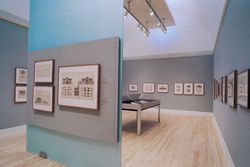
Comme directeur des Bâtiments du Bade, un petit État du sud-ouest de l’Allemagne, Friedrich Weinbrenner (1766-1826) aura la chance peu commune de pouvoir créer à Karlsruhe, sa ville natale, l’un des ensembles architecturaux les plus homogènes qui soit. L’exposition met en lumière l’influence des réformes scientifiques et administratives sur l’architecture urbaine et(...)
Comme directeur des Bâtiments du Bade, un petit État du sud-ouest de l’Allemagne, Friedrich Weinbrenner (1766-1826) aura la chance peu commune de pouvoir créer à Karlsruhe, sa ville natale, l’un des ensembles architecturaux les plus homogènes qui soit. L’exposition met en lumière l’influence des réformes scientifiques et administratives sur l’architecture urbaine et(...)
Localisation:
Salles principales
Salles principales
Date:
31 janvier 1990 au 18 mars 1990
31 janvier 1990 au 18 mars 1990
Titre:
Friedrich Weinbrenner, l'architecte de Karlsruhe
Actions:
Description:
Comme directeur des Bâtiments du Bade, un petit État du sud-ouest de l’Allemagne, Friedrich Weinbrenner (1766-1826) aura la chance peu commune de pouvoir créer à Karlsruhe, sa ville natale, l’un des ensembles architecturaux les plus homogènes qui soit. L’exposition met en lumière l’influence des réformes scientifiques et administratives sur l’architecture urbaine et(...)
Friedrich Weinbrenner, l'architecte de Karlsruhe
Actions:
Description:
Comme directeur des Bâtiments du Bade, un petit État du sud-ouest de l’Allemagne, Friedrich Weinbrenner (1766-1826) aura la chance peu commune de pouvoir créer à Karlsruhe, sa ville natale, l’un des ensembles architecturaux les plus homogènes qui soit. L’exposition met en lumière l’influence des réformes scientifiques et administratives sur l’architecture urbaine et(...)
Classification:
expositions
expositions
Date:
31 janvier 1990 au
18 mars 1990
31 janvier 1990 au
18 mars 1990
Localisation:
Salles principales
Salles principales
Classification:
photographies
photographies
Actions:
Numéro de référence:
PH1983:0042.06:002
Description:
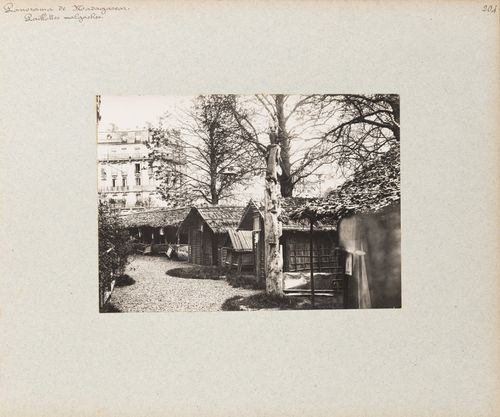
According to Paul Gers, these structures were transported to the exhibition from Madagascar. Malagasy people who had been brought to Paris to be part of the exhibition at the Pavillon de Madagascar lived and worked in these structures during the day.
PH1983:0042.06:002
Description:
According to Paul Gers, these structures were transported to the exhibition from Madagascar. Malagasy people who had been brought to Paris to be part of the exhibition at the Pavillon de Madagascar lived and worked in these structures during the day.
Personnes et institutions:
Date:
1900
1900
Titre:
View of Malagasy houses with thatched roofs on grounds of Pavillon de Madagascar, Exposition universelle, 1900, Paris, France
Actions:
PH1983:0042.06:002
Description:
According to Paul Gers, these structures were transported to the exhibition from Madagascar. Malagasy people who had been brought to Paris to be part of the exhibition at the Pavillon de Madagascar lived and worked in these structures during the day.
View of Malagasy houses with thatched roofs on grounds of Pavillon de Madagascar, Exposition universelle, 1900, Paris, France
Actions:
PH1983:0042.06:002
Description:
According to Paul Gers, these structures were transported to the exhibition from Madagascar. Malagasy people who had been brought to Paris to be part of the exhibition at the Pavillon de Madagascar lived and worked in these structures during the day.
Classification:
photographies
photographies
Date:
1900
1900
Personnes et institutions:
Classification:
dessins
dessins
Actions:
Numéro de référence:
DR1989:0015:059
Description:
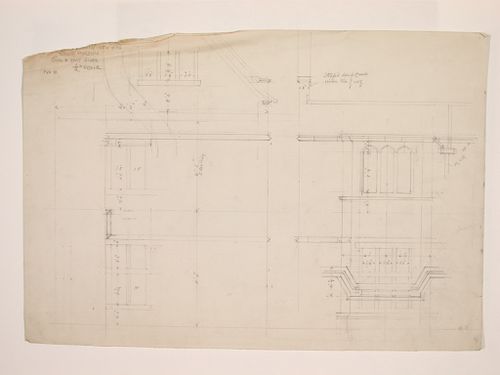
- Three drawings appear on this sheet: an elevation at the left and a plan and elevation for the first-floor windows at the right. The first is a west elevation, as can be seen in comparison with DR1989:0015:057. The last two drawings are window studies for the first floor on the south side. At the u.l. the word "EAST" of the subtitle "SOUTH & EAST SIDES" has been crossed out and reinscribed "West", lightly in graphite. - This work is part of a group of drawings and reprographic prints of drawings for St. Peter's Home, Woking, and St. Peter's Convent, Woking, from the offices of John Loughborough Pearson and Frank Loughborough Pearson (DR1989:0015:011 - DR1989:0015:085 R/V). Composed of contract and working drawings including plans, site plans, sections, and elevations dated between 1881 and 1936, these drawings were sold at auction by the convent along with those for the older institution of St. Peter's Home, Kilburn (DR1989:0015:001 - DR1989:0015:010). Both St. Peter's Home, Kilburn, and St. Peter's Home, Woking were commissioned from John Loughborough Pearson by Benjamin Lancaster. The alterations to the Home at Kilburn were commissioned on behalf of Lancaster's wife, who founded the home and a lay nursing order which ran it. The institution at Woking was founded by Lancaster as a home for incurables in 1882 and dedicated to the memory of his deceased wife (Quiney 67-68, 254-255, and 284). It was probably first known as St. Peter's Home, Woking, not becoming a convent until ca. 1934.
DR1989:0015:059
Description:
- Three drawings appear on this sheet: an elevation at the left and a plan and elevation for the first-floor windows at the right. The first is a west elevation, as can be seen in comparison with DR1989:0015:057. The last two drawings are window studies for the first floor on the south side. At the u.l. the word "EAST" of the subtitle "SOUTH & EAST SIDES" has been crossed out and reinscribed "West", lightly in graphite. - This work is part of a group of drawings and reprographic prints of drawings for St. Peter's Home, Woking, and St. Peter's Convent, Woking, from the offices of John Loughborough Pearson and Frank Loughborough Pearson (DR1989:0015:011 - DR1989:0015:085 R/V). Composed of contract and working drawings including plans, site plans, sections, and elevations dated between 1881 and 1936, these drawings were sold at auction by the convent along with those for the older institution of St. Peter's Home, Kilburn (DR1989:0015:001 - DR1989:0015:010). Both St. Peter's Home, Kilburn, and St. Peter's Home, Woking were commissioned from John Loughborough Pearson by Benjamin Lancaster. The alterations to the Home at Kilburn were commissioned on behalf of Lancaster's wife, who founded the home and a lay nursing order which ran it. The institution at Woking was founded by Lancaster as a home for incurables in 1882 and dedicated to the memory of his deceased wife (Quiney 67-68, 254-255, and 284). It was probably first known as St. Peter's Home, Woking, not becoming a convent until ca. 1934.
Personnes et institutions:
Sujet:
architecture
architecture
Date:
1926 ?
1926 ?
Titre:
St. Peter's Home, Woking: West and south elevations for the north portion of the new wing, including detailed window studies with a plan of the moulding
Actions:
DR1989:0015:059
Description:
- Three drawings appear on this sheet: an elevation at the left and a plan and elevation for the first-floor windows at the right. The first is a west elevation, as can be seen in comparison with DR1989:0015:057. The last two drawings are window studies for the first floor on the south side. At the u.l. the word "EAST" of the subtitle "SOUTH & EAST SIDES" has been crossed out and reinscribed "West", lightly in graphite. - This work is part of a group of drawings and reprographic prints of drawings for St. Peter's Home, Woking, and St. Peter's Convent, Woking, from the offices of John Loughborough Pearson and Frank Loughborough Pearson (DR1989:0015:011 - DR1989:0015:085 R/V). Composed of contract and working drawings including plans, site plans, sections, and elevations dated between 1881 and 1936, these drawings were sold at auction by the convent along with those for the older institution of St. Peter's Home, Kilburn (DR1989:0015:001 - DR1989:0015:010). Both St. Peter's Home, Kilburn, and St. Peter's Home, Woking were commissioned from John Loughborough Pearson by Benjamin Lancaster. The alterations to the Home at Kilburn were commissioned on behalf of Lancaster's wife, who founded the home and a lay nursing order which ran it. The institution at Woking was founded by Lancaster as a home for incurables in 1882 and dedicated to the memory of his deceased wife (Quiney 67-68, 254-255, and 284). It was probably first known as St. Peter's Home, Woking, not becoming a convent until ca. 1934.
St. Peter's Home, Woking: West and south elevations for the north portion of the new wing, including detailed window studies with a plan of the moulding
Actions:
DR1989:0015:059
Description:
- Three drawings appear on this sheet: an elevation at the left and a plan and elevation for the first-floor windows at the right. The first is a west elevation, as can be seen in comparison with DR1989:0015:057. The last two drawings are window studies for the first floor on the south side. At the u.l. the word "EAST" of the subtitle "SOUTH & EAST SIDES" has been crossed out and reinscribed "West", lightly in graphite. - This work is part of a group of drawings and reprographic prints of drawings for St. Peter's Home, Woking, and St. Peter's Convent, Woking, from the offices of John Loughborough Pearson and Frank Loughborough Pearson (DR1989:0015:011 - DR1989:0015:085 R/V). Composed of contract and working drawings including plans, site plans, sections, and elevations dated between 1881 and 1936, these drawings were sold at auction by the convent along with those for the older institution of St. Peter's Home, Kilburn (DR1989:0015:001 - DR1989:0015:010). Both St. Peter's Home, Kilburn, and St. Peter's Home, Woking were commissioned from John Loughborough Pearson by Benjamin Lancaster. The alterations to the Home at Kilburn were commissioned on behalf of Lancaster's wife, who founded the home and a lay nursing order which ran it. The institution at Woking was founded by Lancaster as a home for incurables in 1882 and dedicated to the memory of his deceased wife (Quiney 67-68, 254-255, and 284). It was probably first known as St. Peter's Home, Woking, not becoming a convent until ca. 1934.
Classification:
dessins
dessins
Date:
1926 ?
1926 ?
Personnes et institutions:
Sujet:
architecture
architecture
Niveau de description archivistique:
Projet
Projet
Titre:
Generator
Generator
Numéro de référence:
AP144.S2.D100
Description:
File documents Generator, an unexecuted project for the Gilman Paper Company, at the White Oak Plantation, in Yulee, Florida. After an initial investigation Cedric Price proposed a complex that could accommodate company activities, cultural events, and artist residencies and would provide "a menu of items for individual and group demands of space, control, containment and delight. A place to work, create, think, and stare." ('Architectural Review', Jan. 1980, 16). The design called for timber-framed structures with variable infill panels and cladding, along with screens, to be placed on a grid of concrete pads by cranes with the help of computers in response to users' needs. Conceptual, schematic and design development drawings show grid placement, site layout, landscaping, designs for cubes and components, proposed activities, axonometric views, and design notes with sketches. Development sketches, site plans, and charts include site analysis examining future growth, activity charts, shadow study plans, and axonometric details. Drawings of the structures include: plans, elevations, details, and perspective views for cubes, screens, and cladding; shadow studies for cube variations; and axonometric views of cube arrangements. Other drawings include: site plans and sections; landscaping and parking layouts; plans for circulation patterns; drawings for boardwalks; and electrical and drainage plans. Charts study design validity, activities, networks, project feasibility, component life-cycle, and cube and component placement/construction sequencing. Computer generated printouts by John Frazer, et al show perspective views of cubes from various viewpoints. Two sets of annotated reprographic copies show details for a typical cube and the foundation. Presentation and publication materials include: photographs and reprographic copies of design models; coloured reprographic copies of computer parts and facilities; a coloured air-brushed rendering of cubes and screens by "Jeremie '77"; two perspective renderings; and reprographic copies made from published material. Some material in this file was published in 'Building Design', 23 February 1979; 'Building Design', 9 November 1979; 'Architectural Review' (January 1980), 16-17; 'L'Architecture d'Aujourd'hui', December 1980; 'Techniques et Architecture', December 1980; 'Design', January 1981; 'New Scientist', 19 March 1981; 'Schemes: Cedric Price' (ex. cat.; London: Waddington Galleries, 1981); 'Cedric Price-Works II' (London: Architectural Press, 1984), 90, 92-97. Material in this file was produced between 1959 and 1995, but predominantly between 1976 and 1980. Main consultants for Generator in the United Kingdom include Felix J. Samuely & Partners, consulting engineers; Baker, Wilkins and Smith, quantity surveyors; John Frazer, computer modelling and systems; Sandy Brown Associates, acoustic consultants. Main consultants in the United States include Marvin Boutwell; Law Engineering Testing Company as consulting engineers; and WTCA; Robertson Ward Jr., as architects. Computer printouts in group DR1995:0280:538-552 in Generator (AP144.S2.D100) are attributed to John and Julia Frazer, Art and Design Research, Ulster Polytechnic and the Department of Architecture, Liverpool Polytechnic. Some material in group DR1995:0280:567-576 is attributed to Felix J. Samuely & Partners. File contains conceptual drawings, design, development drawings, presentation drawings, photographic materials, boxes, an artefact, models, and textual records.
AP144.S2.D100
Description:
File documents Generator, an unexecuted project for the Gilman Paper Company, at the White Oak Plantation, in Yulee, Florida. After an initial investigation Cedric Price proposed a complex that could accommodate company activities, cultural events, and artist residencies and would provide "a menu of items for individual and group demands of space, control, containment and delight. A place to work, create, think, and stare." ('Architectural Review', Jan. 1980, 16). The design called for timber-framed structures with variable infill panels and cladding, along with screens, to be placed on a grid of concrete pads by cranes with the help of computers in response to users' needs. Conceptual, schematic and design development drawings show grid placement, site layout, landscaping, designs for cubes and components, proposed activities, axonometric views, and design notes with sketches. Development sketches, site plans, and charts include site analysis examining future growth, activity charts, shadow study plans, and axonometric details. Drawings of the structures include: plans, elevations, details, and perspective views for cubes, screens, and cladding; shadow studies for cube variations; and axonometric views of cube arrangements. Other drawings include: site plans and sections; landscaping and parking layouts; plans for circulation patterns; drawings for boardwalks; and electrical and drainage plans. Charts study design validity, activities, networks, project feasibility, component life-cycle, and cube and component placement/construction sequencing. Computer generated printouts by John Frazer, et al show perspective views of cubes from various viewpoints. Two sets of annotated reprographic copies show details for a typical cube and the foundation. Presentation and publication materials include: photographs and reprographic copies of design models; coloured reprographic copies of computer parts and facilities; a coloured air-brushed rendering of cubes and screens by "Jeremie '77"; two perspective renderings; and reprographic copies made from published material. Some material in this file was published in 'Building Design', 23 February 1979; 'Building Design', 9 November 1979; 'Architectural Review' (January 1980), 16-17; 'L'Architecture d'Aujourd'hui', December 1980; 'Techniques et Architecture', December 1980; 'Design', January 1981; 'New Scientist', 19 March 1981; 'Schemes: Cedric Price' (ex. cat.; London: Waddington Galleries, 1981); 'Cedric Price-Works II' (London: Architectural Press, 1984), 90, 92-97. Material in this file was produced between 1959 and 1995, but predominantly between 1976 and 1980. Main consultants for Generator in the United Kingdom include Felix J. Samuely & Partners, consulting engineers; Baker, Wilkins and Smith, quantity surveyors; John Frazer, computer modelling and systems; Sandy Brown Associates, acoustic consultants. Main consultants in the United States include Marvin Boutwell; Law Engineering Testing Company as consulting engineers; and WTCA; Robertson Ward Jr., as architects. Computer printouts in group DR1995:0280:538-552 in Generator (AP144.S2.D100) are attributed to John and Julia Frazer, Art and Design Research, Ulster Polytechnic and the Department of Architecture, Liverpool Polytechnic. Some material in group DR1995:0280:567-576 is attributed to Felix J. Samuely & Partners. File contains conceptual drawings, design, development drawings, presentation drawings, photographic materials, boxes, an artefact, models, and textual records.
Personnes et institutions:
Date:
1959-1995, predominant 1976-1980
1959-1995, predominant 1976-1980
Titre:
Generator
Actions:
AP144.S2.D100
Description:
File documents Generator, an unexecuted project for the Gilman Paper Company, at the White Oak Plantation, in Yulee, Florida. After an initial investigation Cedric Price proposed a complex that could accommodate company activities, cultural events, and artist residencies and would provide "a menu of items for individual and group demands of space, control, containment and delight. A place to work, create, think, and stare." ('Architectural Review', Jan. 1980, 16). The design called for timber-framed structures with variable infill panels and cladding, along with screens, to be placed on a grid of concrete pads by cranes with the help of computers in response to users' needs. Conceptual, schematic and design development drawings show grid placement, site layout, landscaping, designs for cubes and components, proposed activities, axonometric views, and design notes with sketches. Development sketches, site plans, and charts include site analysis examining future growth, activity charts, shadow study plans, and axonometric details. Drawings of the structures include: plans, elevations, details, and perspective views for cubes, screens, and cladding; shadow studies for cube variations; and axonometric views of cube arrangements. Other drawings include: site plans and sections; landscaping and parking layouts; plans for circulation patterns; drawings for boardwalks; and electrical and drainage plans. Charts study design validity, activities, networks, project feasibility, component life-cycle, and cube and component placement/construction sequencing. Computer generated printouts by John Frazer, et al show perspective views of cubes from various viewpoints. Two sets of annotated reprographic copies show details for a typical cube and the foundation. Presentation and publication materials include: photographs and reprographic copies of design models; coloured reprographic copies of computer parts and facilities; a coloured air-brushed rendering of cubes and screens by "Jeremie '77"; two perspective renderings; and reprographic copies made from published material. Some material in this file was published in 'Building Design', 23 February 1979; 'Building Design', 9 November 1979; 'Architectural Review' (January 1980), 16-17; 'L'Architecture d'Aujourd'hui', December 1980; 'Techniques et Architecture', December 1980; 'Design', January 1981; 'New Scientist', 19 March 1981; 'Schemes: Cedric Price' (ex. cat.; London: Waddington Galleries, 1981); 'Cedric Price-Works II' (London: Architectural Press, 1984), 90, 92-97. Material in this file was produced between 1959 and 1995, but predominantly between 1976 and 1980. Main consultants for Generator in the United Kingdom include Felix J. Samuely & Partners, consulting engineers; Baker, Wilkins and Smith, quantity surveyors; John Frazer, computer modelling and systems; Sandy Brown Associates, acoustic consultants. Main consultants in the United States include Marvin Boutwell; Law Engineering Testing Company as consulting engineers; and WTCA; Robertson Ward Jr., as architects. Computer printouts in group DR1995:0280:538-552 in Generator (AP144.S2.D100) are attributed to John and Julia Frazer, Art and Design Research, Ulster Polytechnic and the Department of Architecture, Liverpool Polytechnic. Some material in group DR1995:0280:567-576 is attributed to Felix J. Samuely & Partners. File contains conceptual drawings, design, development drawings, presentation drawings, photographic materials, boxes, an artefact, models, and textual records.
Generator
Actions:
AP144.S2.D100
Description:
File documents Generator, an unexecuted project for the Gilman Paper Company, at the White Oak Plantation, in Yulee, Florida. After an initial investigation Cedric Price proposed a complex that could accommodate company activities, cultural events, and artist residencies and would provide "a menu of items for individual and group demands of space, control, containment and delight. A place to work, create, think, and stare." ('Architectural Review', Jan. 1980, 16). The design called for timber-framed structures with variable infill panels and cladding, along with screens, to be placed on a grid of concrete pads by cranes with the help of computers in response to users' needs. Conceptual, schematic and design development drawings show grid placement, site layout, landscaping, designs for cubes and components, proposed activities, axonometric views, and design notes with sketches. Development sketches, site plans, and charts include site analysis examining future growth, activity charts, shadow study plans, and axonometric details. Drawings of the structures include: plans, elevations, details, and perspective views for cubes, screens, and cladding; shadow studies for cube variations; and axonometric views of cube arrangements. Other drawings include: site plans and sections; landscaping and parking layouts; plans for circulation patterns; drawings for boardwalks; and electrical and drainage plans. Charts study design validity, activities, networks, project feasibility, component life-cycle, and cube and component placement/construction sequencing. Computer generated printouts by John Frazer, et al show perspective views of cubes from various viewpoints. Two sets of annotated reprographic copies show details for a typical cube and the foundation. Presentation and publication materials include: photographs and reprographic copies of design models; coloured reprographic copies of computer parts and facilities; a coloured air-brushed rendering of cubes and screens by "Jeremie '77"; two perspective renderings; and reprographic copies made from published material. Some material in this file was published in 'Building Design', 23 February 1979; 'Building Design', 9 November 1979; 'Architectural Review' (January 1980), 16-17; 'L'Architecture d'Aujourd'hui', December 1980; 'Techniques et Architecture', December 1980; 'Design', January 1981; 'New Scientist', 19 March 1981; 'Schemes: Cedric Price' (ex. cat.; London: Waddington Galleries, 1981); 'Cedric Price-Works II' (London: Architectural Press, 1984), 90, 92-97. Material in this file was produced between 1959 and 1995, but predominantly between 1976 and 1980. Main consultants for Generator in the United Kingdom include Felix J. Samuely & Partners, consulting engineers; Baker, Wilkins and Smith, quantity surveyors; John Frazer, computer modelling and systems; Sandy Brown Associates, acoustic consultants. Main consultants in the United States include Marvin Boutwell; Law Engineering Testing Company as consulting engineers; and WTCA; Robertson Ward Jr., as architects. Computer printouts in group DR1995:0280:538-552 in Generator (AP144.S2.D100) are attributed to John and Julia Frazer, Art and Design Research, Ulster Polytechnic and the Department of Architecture, Liverpool Polytechnic. Some material in group DR1995:0280:567-576 is attributed to Felix J. Samuely & Partners. File contains conceptual drawings, design, development drawings, presentation drawings, photographic materials, boxes, an artefact, models, and textual records.
Niveau de description archivistique:
File 100
File 100
Date:
1959-1995, predominant 1976-1980
1959-1995, predominant 1976-1980
Personnes et institutions:
Classification:
documents textuels
documents textuels
Actions:
Numéro de référence:
DR2007:0016
Description:
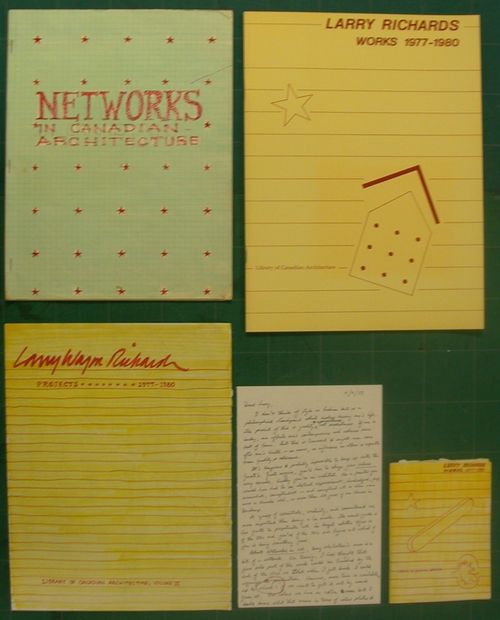
Cover studies and two mock-ups for a proposed book, Networks in Canadian Architecture, eventually published as Larry Richards Works, 1977-1980 (Tech-Press, Halifax, 1980); colour marker on paper. The CCA has three projects in its collections that were published in Larry Richards Works, 1977-1980: Post Cards, The Halifax People's Network, and Lyons Tower.
DR2007:0016
Description:
Cover studies and two mock-ups for a proposed book, Networks in Canadian Architecture, eventually published as Larry Richards Works, 1977-1980 (Tech-Press, Halifax, 1980); colour marker on paper. The CCA has three projects in its collections that were published in Larry Richards Works, 1977-1980: Post Cards, The Halifax People's Network, and Lyons Tower.
Personnes et institutions:
Date:
1977-1980
1977-1980
Titre:
Studies for Networks in Canadian Architecture (later, Larry Richards Works, 1977-1980)
Actions:
DR2007:0016
Description:
Cover studies and two mock-ups for a proposed book, Networks in Canadian Architecture, eventually published as Larry Richards Works, 1977-1980 (Tech-Press, Halifax, 1980); colour marker on paper. The CCA has three projects in its collections that were published in Larry Richards Works, 1977-1980: Post Cards, The Halifax People's Network, and Lyons Tower.
Studies for Networks in Canadian Architecture (later, Larry Richards Works, 1977-1980)
Actions:
DR2007:0016
Description:
Cover studies and two mock-ups for a proposed book, Networks in Canadian Architecture, eventually published as Larry Richards Works, 1977-1980 (Tech-Press, Halifax, 1980); colour marker on paper. The CCA has three projects in its collections that were published in Larry Richards Works, 1977-1980: Post Cards, The Halifax People's Network, and Lyons Tower.
Classification:
documents textuels
documents textuels
Date:
1977-1980
1977-1980
Personnes et institutions:
Classification:
événements
événements
Titre:
L’enseignement de… Astana
L’enseignement de… Astana
Actions:
Description:
Jeffrey Inaba est le principal architecte de la firme INABA, établie à Los Angeles. Il examine le cas d’Astana, centre urbain et capitale du Kazakhstan. Dans ce pays qui se classe au 9e rang des plus vastes pays du monde, seulement 16 millions d’habitants occupent le territoire. Riche en réserves pétrolières et gazières tout en jouissant d’une situation géographique(...)
Jeffrey Inaba est le principal architecte de la firme INABA, établie à Los Angeles. Il examine le cas d’Astana, centre urbain et capitale du Kazakhstan. Dans ce pays qui se classe au 9e rang des plus vastes pays du monde, seulement 16 millions d’habitants occupent le territoire. Riche en réserves pétrolières et gazières tout en jouissant d’une situation géographique(...)
Localisation:
Théâtre Paul-Desmarais
Théâtre Paul-Desmarais
Date:
19 avril 2007 , 19h
19 avril 2007 , 19h
Titre:
L’enseignement de… Astana
Actions:
Description:
Jeffrey Inaba est le principal architecte de la firme INABA, établie à Los Angeles. Il examine le cas d’Astana, centre urbain et capitale du Kazakhstan. Dans ce pays qui se classe au 9e rang des plus vastes pays du monde, seulement 16 millions d’habitants occupent le territoire. Riche en réserves pétrolières et gazières tout en jouissant d’une situation géographique(...)
L’enseignement de… Astana
Actions:
Description:
Jeffrey Inaba est le principal architecte de la firme INABA, établie à Los Angeles. Il examine le cas d’Astana, centre urbain et capitale du Kazakhstan. Dans ce pays qui se classe au 9e rang des plus vastes pays du monde, seulement 16 millions d’habitants occupent le territoire. Riche en réserves pétrolières et gazières tout en jouissant d’une situation géographique(...)
Classification:
événements
événements
Date:
19 avril 2007
19h
19 avril 2007
19h
Localisation:
Théâtre Paul-Desmarais
Théâtre Paul-Desmarais
Classification:
dessins
dessins
Actions:
Numéro de référence:
DR1989:0015:064
Description:
- The format and date of this drawing for the dormitory of St. Peter's Convent, Woking, correspond to the basement plan of DR1989:0015:065. Both are drawn on tracing paper, and supplement the more extensive ground plan, DR1989:0015:079, which is also dated May 1934. The entire design was radically changed by December 1934, as indicated by later plans, DR1989:0015:069 - DR1989:0015:070. - This work is part of a group of drawings and reprographic prints of drawings for St. Peter's Home, Woking, and St. Peter's Convent, Woking, from the offices of John Loughborough Pearson and Frank Loughborough Pearson (DR1989:0015:011 - DR1989:0015:085 R/V). Composed of contract and working drawings including plans, site plans, sections, and elevations dated between 1881 and 1936, these drawings were sold at auction by the convent along with those for the older institution of St. Peter's Home, Kilburn (DR1989:0015:001 - DR1989:0015:010). Both St. Peter's Home, Kilburn, and St. Peter's Home, Woking were commissioned from John Loughborough Pearson by Benjamin Lancaster. The alterations to the Home at Kilburn were commissioned on behalf of Lancaster's wife, who founded the home and a lay nursing order which ran it. The institution at Woking was founded by Lancaster as a home for incurables in 1882 and dedicated to the memory of his deceased wife (Quiney 67-68, 254-255, and 284). It was probably first known as St. Peter's Home, Woking, not becoming a convent until ca. 1934.
DR1989:0015:064
Description:
- The format and date of this drawing for the dormitory of St. Peter's Convent, Woking, correspond to the basement plan of DR1989:0015:065. Both are drawn on tracing paper, and supplement the more extensive ground plan, DR1989:0015:079, which is also dated May 1934. The entire design was radically changed by December 1934, as indicated by later plans, DR1989:0015:069 - DR1989:0015:070. - This work is part of a group of drawings and reprographic prints of drawings for St. Peter's Home, Woking, and St. Peter's Convent, Woking, from the offices of John Loughborough Pearson and Frank Loughborough Pearson (DR1989:0015:011 - DR1989:0015:085 R/V). Composed of contract and working drawings including plans, site plans, sections, and elevations dated between 1881 and 1936, these drawings were sold at auction by the convent along with those for the older institution of St. Peter's Home, Kilburn (DR1989:0015:001 - DR1989:0015:010). Both St. Peter's Home, Kilburn, and St. Peter's Home, Woking were commissioned from John Loughborough Pearson by Benjamin Lancaster. The alterations to the Home at Kilburn were commissioned on behalf of Lancaster's wife, who founded the home and a lay nursing order which ran it. The institution at Woking was founded by Lancaster as a home for incurables in 1882 and dedicated to the memory of his deceased wife (Quiney 67-68, 254-255, and 284). It was probably first known as St. Peter's Home, Woking, not becoming a convent until ca. 1934.
Personnes et institutions:
Sujet:
architecture
architecture
Date:
1934
1934
Titre:
St. Peter's Convent, Woking: First floor plan of the convent dormitory
Actions:
DR1989:0015:064
Description:
- The format and date of this drawing for the dormitory of St. Peter's Convent, Woking, correspond to the basement plan of DR1989:0015:065. Both are drawn on tracing paper, and supplement the more extensive ground plan, DR1989:0015:079, which is also dated May 1934. The entire design was radically changed by December 1934, as indicated by later plans, DR1989:0015:069 - DR1989:0015:070. - This work is part of a group of drawings and reprographic prints of drawings for St. Peter's Home, Woking, and St. Peter's Convent, Woking, from the offices of John Loughborough Pearson and Frank Loughborough Pearson (DR1989:0015:011 - DR1989:0015:085 R/V). Composed of contract and working drawings including plans, site plans, sections, and elevations dated between 1881 and 1936, these drawings were sold at auction by the convent along with those for the older institution of St. Peter's Home, Kilburn (DR1989:0015:001 - DR1989:0015:010). Both St. Peter's Home, Kilburn, and St. Peter's Home, Woking were commissioned from John Loughborough Pearson by Benjamin Lancaster. The alterations to the Home at Kilburn were commissioned on behalf of Lancaster's wife, who founded the home and a lay nursing order which ran it. The institution at Woking was founded by Lancaster as a home for incurables in 1882 and dedicated to the memory of his deceased wife (Quiney 67-68, 254-255, and 284). It was probably first known as St. Peter's Home, Woking, not becoming a convent until ca. 1934.
St. Peter's Convent, Woking: First floor plan of the convent dormitory
Actions:
DR1989:0015:064
Description:
- The format and date of this drawing for the dormitory of St. Peter's Convent, Woking, correspond to the basement plan of DR1989:0015:065. Both are drawn on tracing paper, and supplement the more extensive ground plan, DR1989:0015:079, which is also dated May 1934. The entire design was radically changed by December 1934, as indicated by later plans, DR1989:0015:069 - DR1989:0015:070. - This work is part of a group of drawings and reprographic prints of drawings for St. Peter's Home, Woking, and St. Peter's Convent, Woking, from the offices of John Loughborough Pearson and Frank Loughborough Pearson (DR1989:0015:011 - DR1989:0015:085 R/V). Composed of contract and working drawings including plans, site plans, sections, and elevations dated between 1881 and 1936, these drawings were sold at auction by the convent along with those for the older institution of St. Peter's Home, Kilburn (DR1989:0015:001 - DR1989:0015:010). Both St. Peter's Home, Kilburn, and St. Peter's Home, Woking were commissioned from John Loughborough Pearson by Benjamin Lancaster. The alterations to the Home at Kilburn were commissioned on behalf of Lancaster's wife, who founded the home and a lay nursing order which ran it. The institution at Woking was founded by Lancaster as a home for incurables in 1882 and dedicated to the memory of his deceased wife (Quiney 67-68, 254-255, and 284). It was probably first known as St. Peter's Home, Woking, not becoming a convent until ca. 1934.
Classification:
dessins
dessins
Date:
1934
1934
Personnes et institutions:
Sujet:
architecture
architecture
Classification:
dessins
dessins
Actions:
Numéro de référence:
DR1989:0015:065
Description:
- The format and date of this drawing for the dormitory of St. Peter's Convent, Woking, correspond to the basement plan of DR1989:0015:065. Both are drawn on tracing paper, and supplement the more extensive ground plan, DR1989:0015:079, which is also dated May 1934. The entire design was radically changed by December 1934, as indicated by later plans, DR1989:0015:069 - DR1989:0015:070. - This work is part of a group of drawings and reprographic prints of drawings for St. Peter's Home, Woking, and St. Peter's Convent, Woking, from the offices of John Loughborough Pearson and Frank Loughborough Pearson (DR1989:0015:011 - DR1989:0015:085 R/V). Composed of contract and working drawings including plans, site plans, sections, and elevations dated between 1881 and 1936, these drawings were sold at auction by the convent along with those for the older institution of St. Peter's Home, Kilburn (DR1989:0015:001 - DR1989:0015:010). Both St. Peter's Home, Kilburn, and St. Peter's Home, Woking were commissioned from John Loughborough Pearson by Benjamin Lancaster. The alterations to the Home at Kilburn were commissioned on behalf of Lancaster's wife, who founded the home and a lay nursing order which ran it. The institution at Woking was founded by Lancaster as a home for incurables in 1882 and dedicated to the memory of his deceased wife (Quiney 67-68, 254-255, and 284). It was probably first known as St. Peter's Home, Woking, not becoming a convent until ca. 1934.
DR1989:0015:065
Description:
- The format and date of this drawing for the dormitory of St. Peter's Convent, Woking, correspond to the basement plan of DR1989:0015:065. Both are drawn on tracing paper, and supplement the more extensive ground plan, DR1989:0015:079, which is also dated May 1934. The entire design was radically changed by December 1934, as indicated by later plans, DR1989:0015:069 - DR1989:0015:070. - This work is part of a group of drawings and reprographic prints of drawings for St. Peter's Home, Woking, and St. Peter's Convent, Woking, from the offices of John Loughborough Pearson and Frank Loughborough Pearson (DR1989:0015:011 - DR1989:0015:085 R/V). Composed of contract and working drawings including plans, site plans, sections, and elevations dated between 1881 and 1936, these drawings were sold at auction by the convent along with those for the older institution of St. Peter's Home, Kilburn (DR1989:0015:001 - DR1989:0015:010). Both St. Peter's Home, Kilburn, and St. Peter's Home, Woking were commissioned from John Loughborough Pearson by Benjamin Lancaster. The alterations to the Home at Kilburn were commissioned on behalf of Lancaster's wife, who founded the home and a lay nursing order which ran it. The institution at Woking was founded by Lancaster as a home for incurables in 1882 and dedicated to the memory of his deceased wife (Quiney 67-68, 254-255, and 284). It was probably first known as St. Peter's Home, Woking, not becoming a convent until ca. 1934.
Personnes et institutions:
Sujet:
architecture
architecture
Date:
1934
1934
Titre:
St. Peter's Convent, Woking: Basement plan of the convent dormitory
Actions:
DR1989:0015:065
Description:
- The format and date of this drawing for the dormitory of St. Peter's Convent, Woking, correspond to the basement plan of DR1989:0015:065. Both are drawn on tracing paper, and supplement the more extensive ground plan, DR1989:0015:079, which is also dated May 1934. The entire design was radically changed by December 1934, as indicated by later plans, DR1989:0015:069 - DR1989:0015:070. - This work is part of a group of drawings and reprographic prints of drawings for St. Peter's Home, Woking, and St. Peter's Convent, Woking, from the offices of John Loughborough Pearson and Frank Loughborough Pearson (DR1989:0015:011 - DR1989:0015:085 R/V). Composed of contract and working drawings including plans, site plans, sections, and elevations dated between 1881 and 1936, these drawings were sold at auction by the convent along with those for the older institution of St. Peter's Home, Kilburn (DR1989:0015:001 - DR1989:0015:010). Both St. Peter's Home, Kilburn, and St. Peter's Home, Woking were commissioned from John Loughborough Pearson by Benjamin Lancaster. The alterations to the Home at Kilburn were commissioned on behalf of Lancaster's wife, who founded the home and a lay nursing order which ran it. The institution at Woking was founded by Lancaster as a home for incurables in 1882 and dedicated to the memory of his deceased wife (Quiney 67-68, 254-255, and 284). It was probably first known as St. Peter's Home, Woking, not becoming a convent until ca. 1934.
St. Peter's Convent, Woking: Basement plan of the convent dormitory
Actions:
DR1989:0015:065
Description:
- The format and date of this drawing for the dormitory of St. Peter's Convent, Woking, correspond to the basement plan of DR1989:0015:065. Both are drawn on tracing paper, and supplement the more extensive ground plan, DR1989:0015:079, which is also dated May 1934. The entire design was radically changed by December 1934, as indicated by later plans, DR1989:0015:069 - DR1989:0015:070. - This work is part of a group of drawings and reprographic prints of drawings for St. Peter's Home, Woking, and St. Peter's Convent, Woking, from the offices of John Loughborough Pearson and Frank Loughborough Pearson (DR1989:0015:011 - DR1989:0015:085 R/V). Composed of contract and working drawings including plans, site plans, sections, and elevations dated between 1881 and 1936, these drawings were sold at auction by the convent along with those for the older institution of St. Peter's Home, Kilburn (DR1989:0015:001 - DR1989:0015:010). Both St. Peter's Home, Kilburn, and St. Peter's Home, Woking were commissioned from John Loughborough Pearson by Benjamin Lancaster. The alterations to the Home at Kilburn were commissioned on behalf of Lancaster's wife, who founded the home and a lay nursing order which ran it. The institution at Woking was founded by Lancaster as a home for incurables in 1882 and dedicated to the memory of his deceased wife (Quiney 67-68, 254-255, and 284). It was probably first known as St. Peter's Home, Woking, not becoming a convent until ca. 1934.
Classification:
dessins
dessins
Date:
1934
1934
Personnes et institutions:
Sujet:
architecture
architecture
Classification:
livres
livres
Numéro de référence:
ARCH267684
Description:
Memorandums concerning works of art with plans (elevations, details and sections) for St. Augustine's Church in Saint-Bruno-de-Montarville, Québec.
ARCH267684
Description:
Memorandums concerning works of art with plans (elevations, details and sections) for St. Augustine's Church in Saint-Bruno-de-Montarville, Québec.
Personnes et institutions:
Date:
1966
1966
Titre:
Memorandums concerning works of art
Actions:
ARCH267684
Description:
Memorandums concerning works of art with plans (elevations, details and sections) for St. Augustine's Church in Saint-Bruno-de-Montarville, Québec.
Memorandums concerning works of art
Actions:
ARCH267684
Description:
Memorandums concerning works of art with plans (elevations, details and sections) for St. Augustine's Church in Saint-Bruno-de-Montarville, Québec.
Classification:
livres
livres
Date:
1966
1966
Personnes et institutions:


