


2162 Résultats
Classification:
livres
livres
Prix:
$33.95
(disponible sur commande)
Résumé:
A manifesto for the Open City: vibrant, disordered, adaptable. In 1970 Richard Sennett published the ground breaking ''The uses of disorder,'' that the ideal of a planned and ordered city was flawed, likely to produce a fragile, restrictive urban environment. Fifty years later, Sennett returns to these still fertile ideas and alongside campaigner and architect, Pablo(...)
$33.95
(disponible sur commande)
Résumé:
A manifesto for the Open City: vibrant, disordered, adaptable. In 1970 Richard Sennett published the ground breaking ''The uses of disorder,'' that the ideal of a planned and ordered city was flawed, likely to produce a fragile, restrictive urban environment. Fifty years later, Sennett returns to these still fertile ideas and alongside campaigner and architect, Pablo(...)
Titre:
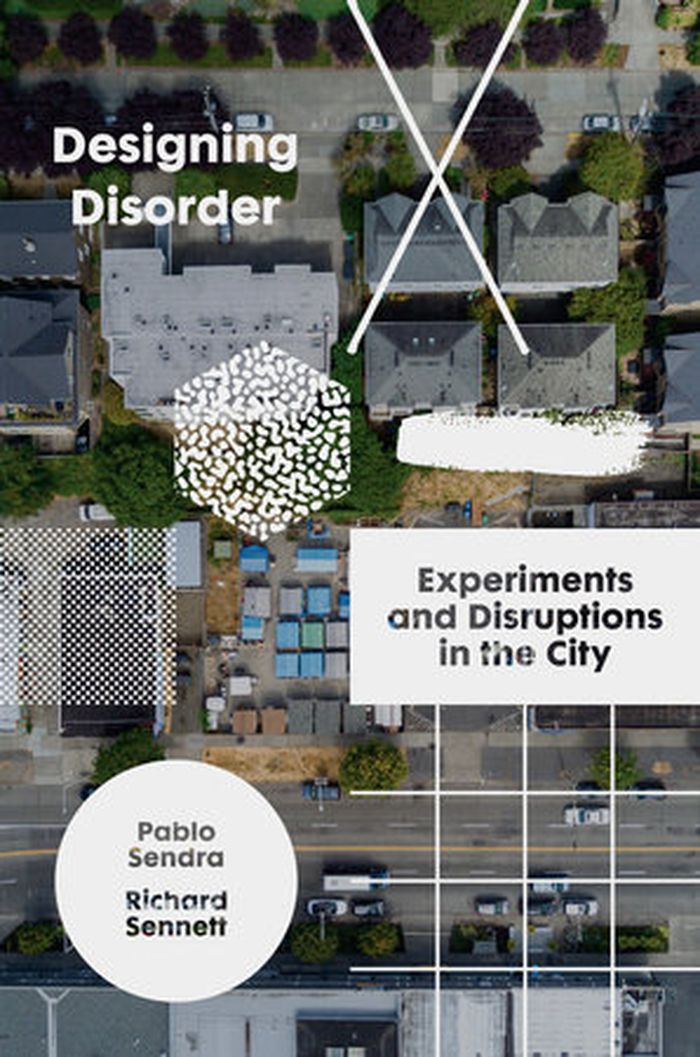
Designing disorder: experiments and disruptions in the city
Actions:
Prix:
$33.95
(disponible sur commande)
Résumé:
A manifesto for the Open City: vibrant, disordered, adaptable. In 1970 Richard Sennett published the ground breaking ''The uses of disorder,'' that the ideal of a planned and ordered city was flawed, likely to produce a fragile, restrictive urban environment. Fifty years later, Sennett returns to these still fertile ideas and alongside campaigner and architect, Pablo Sendra, sets out an agenda for the design and ethics of the Open City. The public spaces of our cities are under siege from planners, privatisation and increased surveillance. Our streets are becoming ever more lifeless and ordered. What is to be done? Can disorder be designed? Is it possible to maintain the public realm as a flexible space that adapts over time? In this provocative essay Sendra and Sennett propose a reorganisation of how we think and plan the social life of our cities. What the authors call 'Infrastructures of disorder' combine architecture, politics, urban planning and activism in order to develop places that nurture rather than stifle, bring together rather than divide up, remain open to change rather than closed off. The book proves that ideas of disorder are still some of the most radical and transformative in debates on 21st century cities.
Designing disorder: experiments and disruptions in the city
Actions:
Prix:
$33.95
(disponible sur commande)
Résumé:
A manifesto for the Open City: vibrant, disordered, adaptable. In 1970 Richard Sennett published the ground breaking ''The uses of disorder,'' that the ideal of a planned and ordered city was flawed, likely to produce a fragile, restrictive urban environment. Fifty years later, Sennett returns to these still fertile ideas and alongside campaigner and architect, Pablo Sendra, sets out an agenda for the design and ethics of the Open City. The public spaces of our cities are under siege from planners, privatisation and increased surveillance. Our streets are becoming ever more lifeless and ordered. What is to be done? Can disorder be designed? Is it possible to maintain the public realm as a flexible space that adapts over time? In this provocative essay Sendra and Sennett propose a reorganisation of how we think and plan the social life of our cities. What the authors call 'Infrastructures of disorder' combine architecture, politics, urban planning and activism in order to develop places that nurture rather than stifle, bring together rather than divide up, remain open to change rather than closed off. The book proves that ideas of disorder are still some of the most radical and transformative in debates on 21st century cities.
Classification:
livres
livres
Publication:
avril 2020
avril 2020
Sujet:
Théorie de l’urbanisme
Théorie de l’urbanisme
Classification:
livres
livres
Prix:
$34.95
(disponible en magasin)
Résumé:
National historic sites commemorate decisive moments in the making of Canada. But seen through an environmental lens, these sites become artifacts of a bigger story: the occupation and transformation of nature into nation. In an age of pressing discussions about environmental sustainability, there is a growing need to know more about the history of our relationship with(...)
$34.95
(disponible en magasin)
Résumé:
National historic sites commemorate decisive moments in the making of Canada. But seen through an environmental lens, these sites become artifacts of a bigger story: the occupation and transformation of nature into nation. In an age of pressing discussions about environmental sustainability, there is a growing need to know more about the history of our relationship with(...)
Titre:
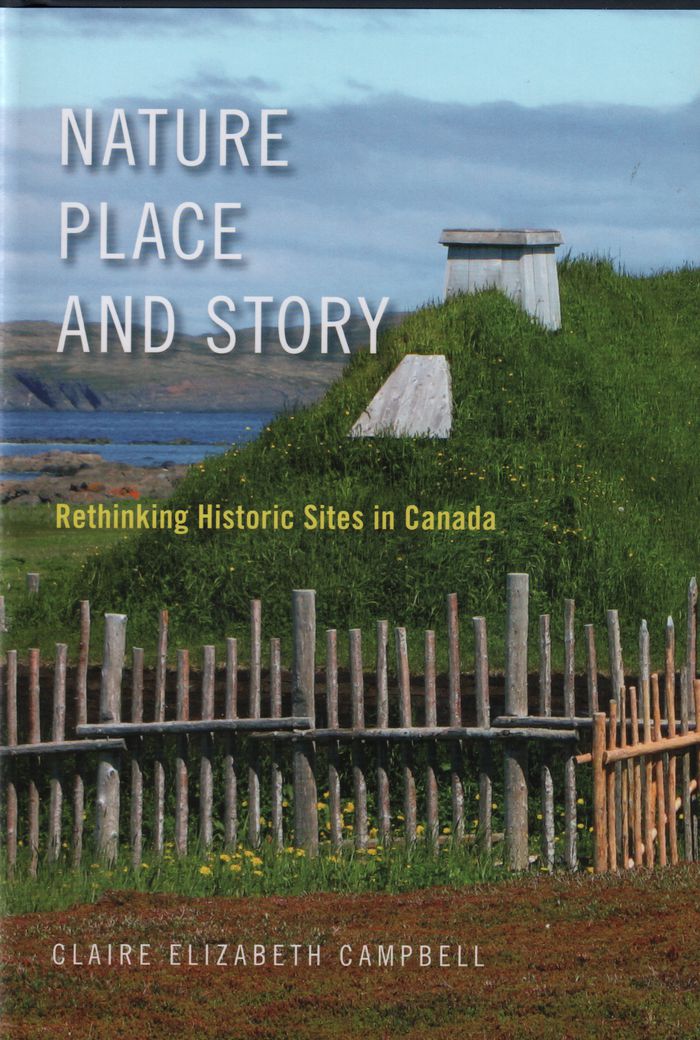
Nature, place, and story: rethinking historic sites in Canada
Actions:
Prix:
$34.95
(disponible en magasin)
Résumé:
National historic sites commemorate decisive moments in the making of Canada. But seen through an environmental lens, these sites become artifacts of a bigger story: the occupation and transformation of nature into nation. In an age of pressing discussions about environmental sustainability, there is a growing need to know more about the history of our relationship with the natural world and what lessons these places of public history, regional identity, and national narrative can teach us. "Nature, place, and story" provides new interpretations for five of Canada’s largest and most iconic historic sites (two of which are UNESCO World Heritage Sites): L’Anse aux Meadows, Newfoundland; Grand Pré, Nova Scotia; Fort William, Ontario; the Forks of the Red River, Manitoba; and the Bar U Ranch, Alberta. At each location, Claire Campbell rewrites public history as environmental history, revealing the country’s debt to the power and fragility of the natural world, and the relevance of the past to understanding climate change, agricultural sustainability, wilderness protection, urban reclamation, and fossil fuel extraction. From the medieval Atlantic to modern ranchlands, environmental history speaks directly to contemporary questions about the health of Canada’s habitat. Bringing together public and environmental history in an entirely new way, "Nature, place, and story" is a lively and ambitious call for a fresh perspective on natural heritage.
Nature, place, and story: rethinking historic sites in Canada
Actions:
Prix:
$34.95
(disponible en magasin)
Résumé:
National historic sites commemorate decisive moments in the making of Canada. But seen through an environmental lens, these sites become artifacts of a bigger story: the occupation and transformation of nature into nation. In an age of pressing discussions about environmental sustainability, there is a growing need to know more about the history of our relationship with the natural world and what lessons these places of public history, regional identity, and national narrative can teach us. "Nature, place, and story" provides new interpretations for five of Canada’s largest and most iconic historic sites (two of which are UNESCO World Heritage Sites): L’Anse aux Meadows, Newfoundland; Grand Pré, Nova Scotia; Fort William, Ontario; the Forks of the Red River, Manitoba; and the Bar U Ranch, Alberta. At each location, Claire Campbell rewrites public history as environmental history, revealing the country’s debt to the power and fragility of the natural world, and the relevance of the past to understanding climate change, agricultural sustainability, wilderness protection, urban reclamation, and fossil fuel extraction. From the medieval Atlantic to modern ranchlands, environmental history speaks directly to contemporary questions about the health of Canada’s habitat. Bringing together public and environmental history in an entirely new way, "Nature, place, and story" is a lively and ambitious call for a fresh perspective on natural heritage.
Classification:
livres
livres
Publication:
août 2017
août 2017
Sujet:
Architecture du Canada
Architecture du Canada
Classification:
livres
livres

Actions:
Prix:
$48.00
(disponible sur commande)
Résumé:
Is there a cultural logic of what we have come to call the information age? Have the technologies and techniques centered on the computer provided not only tools but also the metaphors through which we now understand the social and economic formation of our world? In Control, Seb Franklin addresses the conditions of knowledge that make the concept of the "information(...)
$48.00
(disponible sur commande)
Résumé:
Is there a cultural logic of what we have come to call the information age? Have the technologies and techniques centered on the computer provided not only tools but also the metaphors through which we now understand the social and economic formation of our world? In Control, Seb Franklin addresses the conditions of knowledge that make the concept of the "information(...)
Titre:
Control: digitality as cultural logic
Actions:
Prix:
$48.00
(disponible sur commande)
Résumé:
Is there a cultural logic of what we have come to call the information age? Have the technologies and techniques centered on the computer provided not only tools but also the metaphors through which we now understand the social and economic formation of our world? In Control, Seb Franklin addresses the conditions of knowledge that make the concept of the "information economy" possible while at the same time obscuring its effects on material social spaces. In so doing, Franklin traces three intertwined threads: the relationships among information, labor, and social management that emerged in the nineteenth century; the mid-twentieth-century diffusion of computational metaphors; and the appearance of informatic principles in certain contemporary socioeconomic and cultural practices. Drawing on critical theory, media theory, and the history of science, Franklin names control as the episteme grounding late capitalism. Beyond any specific device or set of technically mediated practices, digitality functions within this episteme as the logical basis for reshaped concepts of labor, subjectivity, and collectivity, as well as for the intensification of older modes of exclusion and dispossession. In tracking the pervasiveness of this logical mode into the present, Franklin locates the cultural traces of control across a diverse body of objects and practices, from cybernetics to economic theory and management styles, and from concepts of language and subjectivity to literary texts, films, and video games.
Control: digitality as cultural logic
Actions:
Prix:
$48.00
(disponible sur commande)
Résumé:
Is there a cultural logic of what we have come to call the information age? Have the technologies and techniques centered on the computer provided not only tools but also the metaphors through which we now understand the social and economic formation of our world? In Control, Seb Franklin addresses the conditions of knowledge that make the concept of the "information economy" possible while at the same time obscuring its effects on material social spaces. In so doing, Franklin traces three intertwined threads: the relationships among information, labor, and social management that emerged in the nineteenth century; the mid-twentieth-century diffusion of computational metaphors; and the appearance of informatic principles in certain contemporary socioeconomic and cultural practices. Drawing on critical theory, media theory, and the history of science, Franklin names control as the episteme grounding late capitalism. Beyond any specific device or set of technically mediated practices, digitality functions within this episteme as the logical basis for reshaped concepts of labor, subjectivity, and collectivity, as well as for the intensification of older modes of exclusion and dispossession. In tracking the pervasiveness of this logical mode into the present, Franklin locates the cultural traces of control across a diverse body of objects and practices, from cybernetics to economic theory and management styles, and from concepts of language and subjectivity to literary texts, films, and video games.
Classification:
livres
livres
Publication:
novembre 2015
novembre 2015
Classification:
livres
livres
Actions:
Prix:
$67.00
(disponible sur commande)
Résumé:
Jan van Toorn is one of the most significant and influential Dutch graphic designers to have emerged since the early 1960s. While graphic design often does little more than give unthinking visual form to the status quo, Van Toorn focused on meaning rather than smooth stylistic expression and developed critical alternatives to the usual design world conventions. Van(...)
$67.00
(disponible sur commande)
Résumé:
Jan van Toorn is one of the most significant and influential Dutch graphic designers to have emerged since the early 1960s. While graphic design often does little more than give unthinking visual form to the status quo, Van Toorn focused on meaning rather than smooth stylistic expression and developed critical alternatives to the usual design world conventions. Van(...)
Titre:
Jan Van Toorn critical practice
Actions:
Prix:
$67.00
(disponible sur commande)
Résumé:
Jan van Toorn is one of the most significant and influential Dutch graphic designers to have emerged since the early 1960s. While graphic design often does little more than give unthinking visual form to the status quo, Van Toorn focused on meaning rather than smooth stylistic expression and developed critical alternatives to the usual design world conventions. Van Toorn aligned himself with the reflexive tradition of art and communication exemplified by Brecht and Godard. His designs persistently call attention to their status as visual contrivances, obliging the viewer to make an effort to process their complexities. Van Toorn wanted the public to measure the motives of both the client and the designer who mediates the client’s message against their own experiences of the world. He hoped in this way to stimulate a more active and sceptical view of art, communication, media ownership and society. Projects such as Van Toorn’s posters and catalogues for the Van Abbemuseum in Eindhoven and his long-running series of calendars for the printing firm Mart.Spruijt are powerful demonstrations of graphic design used as a means of commentary and as a tool of critique. Later, as director of the Jan van Eyck Academy, Van Toorn drew together all the strands of his critical practice into a multi-levelled educational initiative that urged designers to think harder about design’s role in shaping contemporary reality.
Jan Van Toorn critical practice
Actions:
Prix:
$67.00
(disponible sur commande)
Résumé:
Jan van Toorn is one of the most significant and influential Dutch graphic designers to have emerged since the early 1960s. While graphic design often does little more than give unthinking visual form to the status quo, Van Toorn focused on meaning rather than smooth stylistic expression and developed critical alternatives to the usual design world conventions. Van Toorn aligned himself with the reflexive tradition of art and communication exemplified by Brecht and Godard. His designs persistently call attention to their status as visual contrivances, obliging the viewer to make an effort to process their complexities. Van Toorn wanted the public to measure the motives of both the client and the designer who mediates the client’s message against their own experiences of the world. He hoped in this way to stimulate a more active and sceptical view of art, communication, media ownership and society. Projects such as Van Toorn’s posters and catalogues for the Van Abbemuseum in Eindhoven and his long-running series of calendars for the printing firm Mart.Spruijt are powerful demonstrations of graphic design used as a means of commentary and as a tool of critique. Later, as director of the Jan van Eyck Academy, Van Toorn drew together all the strands of his critical practice into a multi-levelled educational initiative that urged designers to think harder about design’s role in shaping contemporary reality.
Classification:
livres
livres
Publication:
janvier 1900, Rotterdam
janvier 1900, Rotterdam
Classification:
livres
livres
Actions:
Prix:
$35.95
(disponible sur commande)
Résumé:
Drawing on fifteen years of field research in Las Vegas, anthropologist Natasha Dow Schüll shows how the mechanical rhythm of electronic gambling pulls players into a trancelike state they call the "machine zone," in which daily worries, social demands, and even bodily awareness fade away. Once in the zone, gambling addicts play not to win but simply to keep playing, for(...)
$35.95
(disponible sur commande)
Résumé:
Drawing on fifteen years of field research in Las Vegas, anthropologist Natasha Dow Schüll shows how the mechanical rhythm of electronic gambling pulls players into a trancelike state they call the "machine zone," in which daily worries, social demands, and even bodily awareness fade away. Once in the zone, gambling addicts play not to win but simply to keep playing, for(...)
Titre:
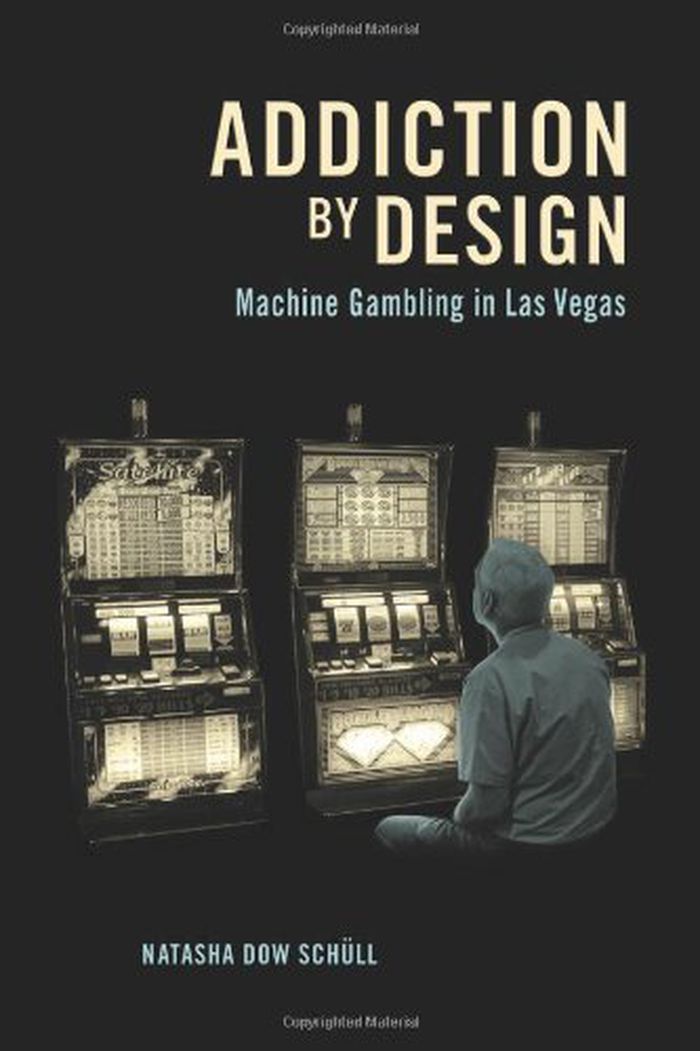
Addiction by design: machine gambling in Las Vegas
Actions:
Prix:
$35.95
(disponible sur commande)
Résumé:
Drawing on fifteen years of field research in Las Vegas, anthropologist Natasha Dow Schüll shows how the mechanical rhythm of electronic gambling pulls players into a trancelike state they call the "machine zone," in which daily worries, social demands, and even bodily awareness fade away. Once in the zone, gambling addicts play not to win but simply to keep playing, for as long as possible?even at the cost of physical and economic exhaustion. In continuous machine play, gamblers seek to lose themselves while the gambling industry seeks profit. Schüll describes the strategic calculations behind game algorithms and machine ergonomics, casino architecture and "ambience management," player tracking and cash access systems?all designed to meet the market's desire for maximum "time on device." Her account moves from casino floors into gamblers' everyday lives, from gambling industry conventions and Gamblers Anonymous meetings to regulatory debates over whether addiction to gambling machines stems from the consumer, the product, or the interplay between the two. ''Addiction by design'' is a compelling inquiry into the intensifying traffic between people and machines of chance, offering clues to some of the broader anxieties and predicaments of contemporary life. At stake in Schüll's account of the intensifying traffic between people and machines of chance is a blurring of the line between design and experience, profit and loss, control and compulsion.
Addiction by design: machine gambling in Las Vegas
Actions:
Prix:
$35.95
(disponible sur commande)
Résumé:
Drawing on fifteen years of field research in Las Vegas, anthropologist Natasha Dow Schüll shows how the mechanical rhythm of electronic gambling pulls players into a trancelike state they call the "machine zone," in which daily worries, social demands, and even bodily awareness fade away. Once in the zone, gambling addicts play not to win but simply to keep playing, for as long as possible?even at the cost of physical and economic exhaustion. In continuous machine play, gamblers seek to lose themselves while the gambling industry seeks profit. Schüll describes the strategic calculations behind game algorithms and machine ergonomics, casino architecture and "ambience management," player tracking and cash access systems?all designed to meet the market's desire for maximum "time on device." Her account moves from casino floors into gamblers' everyday lives, from gambling industry conventions and Gamblers Anonymous meetings to regulatory debates over whether addiction to gambling machines stems from the consumer, the product, or the interplay between the two. ''Addiction by design'' is a compelling inquiry into the intensifying traffic between people and machines of chance, offering clues to some of the broader anxieties and predicaments of contemporary life. At stake in Schüll's account of the intensifying traffic between people and machines of chance is a blurring of the line between design and experience, profit and loss, control and compulsion.
Classification:
livres
livres
Publication:
mai 2014
mai 2014
Sujet:
Théorie du design
Théorie du design
Classification:
livres
livres
Titre:
Paper graveyards
Paper graveyards
Actions:
Prix:
$65.95
(disponible sur commande)
Résumé:
''Paper Graveyards'' is neither a work of traditional art history nor one of literary criticism. It is not strictly a history of ideas either, notwithstanding its very obvious erudition. Rather, in drawing upon all of these methods and approaches—and with extraordinary attention to language and style—Cadava’s writing examines the spectacular explosion of images during the(...)
$65.95
(disponible sur commande)
Résumé:
''Paper Graveyards'' is neither a work of traditional art history nor one of literary criticism. It is not strictly a history of ideas either, notwithstanding its very obvious erudition. Rather, in drawing upon all of these methods and approaches—and with extraordinary attention to language and style—Cadava’s writing examines the spectacular explosion of images during the(...)
Titre:
Paper graveyards
Actions:
Prix:
$65.95
(disponible sur commande)
Résumé:
''Paper Graveyards'' is neither a work of traditional art history nor one of literary criticism. It is not strictly a history of ideas either, notwithstanding its very obvious erudition. Rather, in drawing upon all of these methods and approaches—and with extraordinary attention to language and style—Cadava’s writing examines the spectacular explosion of images during the last twenty years as a prompt to discuss not simply specific images but the role and place of these images in our everyday life. Considering work by Félix Nadar, Roland Barthes, Leon Golub, Nancy Spero, Fazal Sheikh, Susan Meiselas, and others, Cadava delineates different modes of reading that, taking their point of departure from the conviction that the past, the present, and the future are always bound together, provide us with a training manual of sorts for understanding visual material in the twenty-first century. In the process, these generously illustrated essays actively expand our sense of literacy by reconstructing the networks of relations that inhabit the plural worlds of images, and create a critical genealogy of what we still call “an image,” even when, with every day that passes, we perhaps understand less and less what this might mean.
Paper graveyards
Actions:
Prix:
$65.95
(disponible sur commande)
Résumé:
''Paper Graveyards'' is neither a work of traditional art history nor one of literary criticism. It is not strictly a history of ideas either, notwithstanding its very obvious erudition. Rather, in drawing upon all of these methods and approaches—and with extraordinary attention to language and style—Cadava’s writing examines the spectacular explosion of images during the last twenty years as a prompt to discuss not simply specific images but the role and place of these images in our everyday life. Considering work by Félix Nadar, Roland Barthes, Leon Golub, Nancy Spero, Fazal Sheikh, Susan Meiselas, and others, Cadava delineates different modes of reading that, taking their point of departure from the conviction that the past, the present, and the future are always bound together, provide us with a training manual of sorts for understanding visual material in the twenty-first century. In the process, these generously illustrated essays actively expand our sense of literacy by reconstructing the networks of relations that inhabit the plural worlds of images, and create a critical genealogy of what we still call “an image,” even when, with every day that passes, we perhaps understand less and less what this might mean.
Classification:
livres
livres
Publication:
octobre 2021
octobre 2021
Sujet:
Théorie de l’art
Théorie de l’art
Classification:
livres
livres
Actions:
Prix:
$149.00
(disponible sur commande)
Résumé:
What do phenomena like sprawl, generic city or urban segregation have in common with the concept of the city? This is not an easy question. It is nevertheless the inquiry this book is based on, mainly because of the bewilderment we feel when faced with these phenomena that are spread throughout the urban world and constitute a tall order for our concepts of the city.(...)
$149.00
(disponible sur commande)
Résumé:
What do phenomena like sprawl, generic city or urban segregation have in common with the concept of the city? This is not an easy question. It is nevertheless the inquiry this book is based on, mainly because of the bewilderment we feel when faced with these phenomena that are spread throughout the urban world and constitute a tall order for our concepts of the city.(...)
Titre:
Fundamental Trends in City Development
Actions:
Prix:
$149.00
(disponible sur commande)
Résumé:
What do phenomena like sprawl, generic city or urban segregation have in common with the concept of the city? This is not an easy question. It is nevertheless the inquiry this book is based on, mainly because of the bewilderment we feel when faced with these phenomena that are spread throughout the urban world and constitute a tall order for our concepts of the city. Expressions like discomposed city, generic city and segregated city refer to entities that share the loss of the city as a space of communication and social interaction and as the space of the public sphere. In order to explore what we call the city adrift, certain positions of scholars of the city are analysed, using the utopia as an analytical category and referring to three kinds the conservative utopia, liquidatory utopia and resistant utopia which can perhaps significantly distinguish the different positions on current spatial trends of the city and, more generally, the phenomena emerging in the urban world. This book investigates how the city can be re-established as the space of dialogue and communication, how the spatial conditions of the public sphere can be created and the city retrieved, and what the features might be of a city retrieved and restored to its citizens. The author adopts the concept of externity as an innovative element for the project for the city, a constituent feature of all those situations traditionally considered non-functional, therefore external, to our contemporary post-cities, which are consigned to us adrift through decomposition, genericity and segregation.
Fundamental Trends in City Development
Actions:
Prix:
$149.00
(disponible sur commande)
Résumé:
What do phenomena like sprawl, generic city or urban segregation have in common with the concept of the city? This is not an easy question. It is nevertheless the inquiry this book is based on, mainly because of the bewilderment we feel when faced with these phenomena that are spread throughout the urban world and constitute a tall order for our concepts of the city. Expressions like discomposed city, generic city and segregated city refer to entities that share the loss of the city as a space of communication and social interaction and as the space of the public sphere. In order to explore what we call the city adrift, certain positions of scholars of the city are analysed, using the utopia as an analytical category and referring to three kinds the conservative utopia, liquidatory utopia and resistant utopia which can perhaps significantly distinguish the different positions on current spatial trends of the city and, more generally, the phenomena emerging in the urban world. This book investigates how the city can be re-established as the space of dialogue and communication, how the spatial conditions of the public sphere can be created and the city retrieved, and what the features might be of a city retrieved and restored to its citizens. The author adopts the concept of externity as an innovative element for the project for the city, a constituent feature of all those situations traditionally considered non-functional, therefore external, to our contemporary post-cities, which are consigned to us adrift through decomposition, genericity and segregation.
Classification:
livres
livres
Publication:
décembre 2007
décembre 2007
Sujet:
Théorie de l’urbanisme
Théorie de l’urbanisme
Classification:
livres
livres
Titre:
Obsidian situations
Obsidian situations
Actions:
Prix:
$20.00
(disponible en magasin)
Résumé:
Tricia Middleton’s debut verse-novel brings the artist’s genius for summoning the psychic life of the object world to the page, here trading in the resonant material vocabulary that she has honed to perfection conjuring the wayward spirits of late-stage capitalism in sculptural form, for the equally resplendent wordplay of incisive observational poetry. Ostensibly set(...)
$20.00
(disponible en magasin)
Résumé:
Tricia Middleton’s debut verse-novel brings the artist’s genius for summoning the psychic life of the object world to the page, here trading in the resonant material vocabulary that she has honed to perfection conjuring the wayward spirits of late-stage capitalism in sculptural form, for the equally resplendent wordplay of incisive observational poetry. Ostensibly set(...)
Titre:
Obsidian situations
Actions:
Prix:
$20.00
(disponible en magasin)
Résumé:
Tricia Middleton’s debut verse-novel brings the artist’s genius for summoning the psychic life of the object world to the page, here trading in the resonant material vocabulary that she has honed to perfection conjuring the wayward spirits of late-stage capitalism in sculptural form, for the equally resplendent wordplay of incisive observational poetry. Ostensibly set in present-day Paris, ''Obsidian situations'' spans centuries, telling a story about the epigenetics of suffering, survival, and redemption in social and cultural form. Alternating between myriad personae—sometimes artist or artwork, poet or amorphous cloud—the anonymous, decidedly female, narrator that serves as our guide to the city of light channels the souls of works of art and ideas, of artists, philosophers, courtesans and, most heartrending of all, des Enfants-Trouvés through incantatory soliloquies that call to account the half-life of Enlightenment ideals propping up the soft and saggy moral economy of the L’age Anthropocentric. As a force of self-definition and a body objectified—and so subject to the same degradation as any and all things—our champion encounters ‘situations’ that are in equal parts hilarious and heartbreaking, horrifying and wretched, breathtakingly beautiful, poignant, and mad. It’s a world of museums and collectors, artists and curators, lovers and mothers, daughters and others, charged with desire and repulsion, longing and rejection, death and devastation that, ironically, can only be transformed in art and in poetry and in dreams.
Obsidian situations
Actions:
Prix:
$20.00
(disponible en magasin)
Résumé:
Tricia Middleton’s debut verse-novel brings the artist’s genius for summoning the psychic life of the object world to the page, here trading in the resonant material vocabulary that she has honed to perfection conjuring the wayward spirits of late-stage capitalism in sculptural form, for the equally resplendent wordplay of incisive observational poetry. Ostensibly set in present-day Paris, ''Obsidian situations'' spans centuries, telling a story about the epigenetics of suffering, survival, and redemption in social and cultural form. Alternating between myriad personae—sometimes artist or artwork, poet or amorphous cloud—the anonymous, decidedly female, narrator that serves as our guide to the city of light channels the souls of works of art and ideas, of artists, philosophers, courtesans and, most heartrending of all, des Enfants-Trouvés through incantatory soliloquies that call to account the half-life of Enlightenment ideals propping up the soft and saggy moral economy of the L’age Anthropocentric. As a force of self-definition and a body objectified—and so subject to the same degradation as any and all things—our champion encounters ‘situations’ that are in equal parts hilarious and heartbreaking, horrifying and wretched, breathtakingly beautiful, poignant, and mad. It’s a world of museums and collectors, artists and curators, lovers and mothers, daughters and others, charged with desire and repulsion, longing and rejection, death and devastation that, ironically, can only be transformed in art and in poetry and in dreams.
Classification:
livres
livres
Publication:
janvier 2023
janvier 2023
Sujet:
Littérature et poésie
Littérature et poésie
Classification:
livres
livres
Titre:
The coming insurrection
The coming insurrection
Actions:
Prix:
$19.95
(disponible sur commande)
Résumé:
The Coming Insurrection is an eloquent call to arms arising from the recent waves of social contestation in France and Europe. Written by the anonymous Invisible Committee in the vein of Guy Debord — and with comparable elegance — it has been proclaimed a manual for terrorism by the French government (who recently arrested its alleged authors). One of its members more(...)
$19.95
(disponible sur commande)
Résumé:
The Coming Insurrection is an eloquent call to arms arising from the recent waves of social contestation in France and Europe. Written by the anonymous Invisible Committee in the vein of Guy Debord — and with comparable elegance — it has been proclaimed a manual for terrorism by the French government (who recently arrested its alleged authors). One of its members more(...)
Titre:
The coming insurrection
Actions:
Prix:
$19.95
(disponible sur commande)
Résumé:
The Coming Insurrection is an eloquent call to arms arising from the recent waves of social contestation in France and Europe. Written by the anonymous Invisible Committee in the vein of Guy Debord — and with comparable elegance — it has been proclaimed a manual for terrorism by the French government (who recently arrested its alleged authors). One of its members more adequately described the group as "the name given to a collective voice bent on denouncing contemporary cynicism and reality." The Coming Insurrection is a strategic prescription for an emergent war-machine to "spread anarchy and live communism." Written in the wake of the riots that erupted throughout the Paris suburbs in the fall of 2005 and presaging more recent riots and general strikes in France and Greece, The Coming Insurrection articulates a rejection of the official Left and its reformist agenda, aligning itself instead with the younger, wilder forms of resistance that have emerged in Europe around recent struggles against immigration control and the "war on terror." Hot-wired to the movement of '77 in Italy, its preferred historical reference point, The Coming Insurrection formulates an ethics that takes as its starting point theft, sabotage, the refusal to work, and the elaboration of collective, self-organized forms-of-life. It is a philosophical statement that addresses the growing number of those — in France, in the United States, and elsewhere — who refuse the idea that theory, politics, and life are separate realms.
The coming insurrection
Actions:
Prix:
$19.95
(disponible sur commande)
Résumé:
The Coming Insurrection is an eloquent call to arms arising from the recent waves of social contestation in France and Europe. Written by the anonymous Invisible Committee in the vein of Guy Debord — and with comparable elegance — it has been proclaimed a manual for terrorism by the French government (who recently arrested its alleged authors). One of its members more adequately described the group as "the name given to a collective voice bent on denouncing contemporary cynicism and reality." The Coming Insurrection is a strategic prescription for an emergent war-machine to "spread anarchy and live communism." Written in the wake of the riots that erupted throughout the Paris suburbs in the fall of 2005 and presaging more recent riots and general strikes in France and Greece, The Coming Insurrection articulates a rejection of the official Left and its reformist agenda, aligning itself instead with the younger, wilder forms of resistance that have emerged in Europe around recent struggles against immigration control and the "war on terror." Hot-wired to the movement of '77 in Italy, its preferred historical reference point, The Coming Insurrection formulates an ethics that takes as its starting point theft, sabotage, the refusal to work, and the elaboration of collective, self-organized forms-of-life. It is a philosophical statement that addresses the growing number of those — in France, in the United States, and elsewhere — who refuse the idea that theory, politics, and life are separate realms.
Classification:
livres
livres
Publication:
novembre 2012
novembre 2012
Sujet:
Social
Social
Classification:
livres
livres
Actions:
Prix:
$83.00
(disponible sur commande)
Résumé:
The ecological approach to building is the great untold story in the architectural history of the past century. This book is essential reading for architects and students. As an urgent wake-up call on the state of our built environment, it will be of interest to everyone who cares about the future of our planet. In the past, many of the key tenets of the ecological(...)
$83.00
(disponible sur commande)
Résumé:
The ecological approach to building is the great untold story in the architectural history of the past century. This book is essential reading for architects and students. As an urgent wake-up call on the state of our built environment, it will be of interest to everyone who cares about the future of our planet. In the past, many of the key tenets of the ecological(...)
Titre:
Ecological architecture : a critical history
Actions:
Prix:
$83.00
(disponible sur commande)
Résumé:
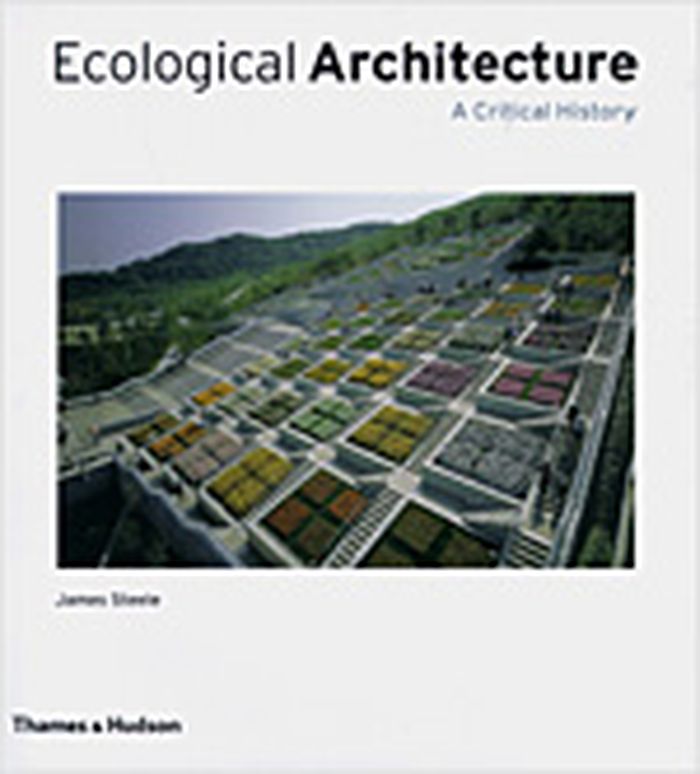
The ecological approach to building is the great untold story in the architectural history of the past century. This book is essential reading for architects and students. As an urgent wake-up call on the state of our built environment, it will be of interest to everyone who cares about the future of our planet. In the past, many of the key tenets of the ecological philosophy - sustainability, energy efficiency, harmonious relationship with the environment - appeared to stand contrast to the sweep of science-led ‘progress’ that characterized the modern movement. Today, however, past visionaries are vindicated and yesterday’s eccentricities are today’s legal requirements: every architect has an obligation to the environment as well as to his or her client. After an introduction to the terminology of ecological architecture - including terms such as ‘green’ and ‘sustainable’, ’Part one’ identifies recurring themes in ecological architecture. ‘Part two’ features twenty-five case studies each focusing on a specific architect, movement or topic. Some of the names are familiar in this context - Rasem Badran, Hassan Fathy - but there are also plenty of surprises - Le Corbusier, Buckminster Fuller, Rudolf Schindler. ‘Part three’ looks to the future as ecological architecture struggles to deal with global urbanization.
Ecological architecture : a critical history
Actions:
Prix:
$83.00
(disponible sur commande)
Résumé:
The ecological approach to building is the great untold story in the architectural history of the past century. This book is essential reading for architects and students. As an urgent wake-up call on the state of our built environment, it will be of interest to everyone who cares about the future of our planet. In the past, many of the key tenets of the ecological philosophy - sustainability, energy efficiency, harmonious relationship with the environment - appeared to stand contrast to the sweep of science-led ‘progress’ that characterized the modern movement. Today, however, past visionaries are vindicated and yesterday’s eccentricities are today’s legal requirements: every architect has an obligation to the environment as well as to his or her client. After an introduction to the terminology of ecological architecture - including terms such as ‘green’ and ‘sustainable’, ’Part one’ identifies recurring themes in ecological architecture. ‘Part two’ features twenty-five case studies each focusing on a specific architect, movement or topic. Some of the names are familiar in this context - Rasem Badran, Hassan Fathy - but there are also plenty of surprises - Le Corbusier, Buckminster Fuller, Rudolf Schindler. ‘Part three’ looks to the future as ecological architecture struggles to deal with global urbanization.
Classification:
livres
livres
Publication:
octobre 2005, London
octobre 2005, London
Sujet:
Architecture écologique
Architecture écologique


