


2140 Résultats
Classification:
livres
livres
Titre:
Privacy a manifesto
Privacy a manifesto
Actions:
Prix:
$24.95
(disponible sur commande)
Résumé:
What ever happened to privacy? The simple right to be left alone? Surveillance cameras track our movements. Governments monitor our phone calls, e-mails, and Internet habits. Insurance companies know what drugs we take. Banks and credit agencies keep tabs on our smallest purchases. And new technologies - which gather, store, and share information as never before - have(...)
$24.95
(disponible sur commande)
Résumé:
What ever happened to privacy? The simple right to be left alone? Surveillance cameras track our movements. Governments monitor our phone calls, e-mails, and Internet habits. Insurance companies know what drugs we take. Banks and credit agencies keep tabs on our smallest purchases. And new technologies - which gather, store, and share information as never before - have(...)
Titre:
Privacy a manifesto
Actions:
Prix:
$24.95
(disponible sur commande)
Résumé:
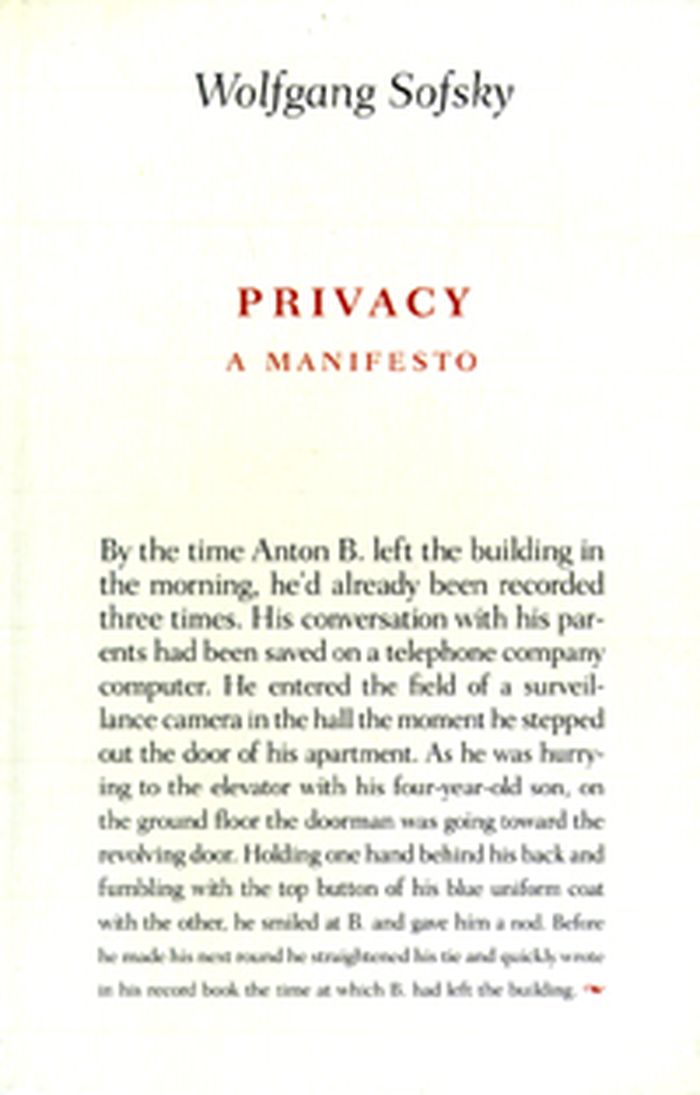
What ever happened to privacy? The simple right to be left alone? Surveillance cameras track our movements. Governments monitor our phone calls, e-mails, and Internet habits. Insurance companies know what drugs we take. Banks and credit agencies keep tabs on our smallest purchases. And new technologies - which gather, store, and share information as never before - have made all of this possible. But, as the acclaimed social thinker Wolfgang Sofsky shows in this brief and powerful defense of privacy, neither technology nor fears of terrorism deserve all the blame. Rather, through indifference and the desire for attention, we have been accomplices in the loss of our privacy. When we aren't resigning ourselves to privacy's disappearance as the inevitable price of living in a new age, we are eagerly embracing opportunities to divulge personal information to people we know - and, increasingly, to people we don't. Dramatically demonstrating how much privacy we have already surrendered, Sofsky describes a day in the life of an average modern citizen - in other words, a person under almost constant scrutiny. He also briefly traces the changing status of privacy from ancient Rome to today, explains how liberty and freedom of thought depend on privacy, and points to some of the places where privacy is under greatest threat, from health to personal space. Privacy is a timely and compelling reminder of just how important privacy is - and just how devastating its loss would be.
Privacy a manifesto
Actions:
Prix:
$24.95
(disponible sur commande)
Résumé:
What ever happened to privacy? The simple right to be left alone? Surveillance cameras track our movements. Governments monitor our phone calls, e-mails, and Internet habits. Insurance companies know what drugs we take. Banks and credit agencies keep tabs on our smallest purchases. And new technologies - which gather, store, and share information as never before - have made all of this possible. But, as the acclaimed social thinker Wolfgang Sofsky shows in this brief and powerful defense of privacy, neither technology nor fears of terrorism deserve all the blame. Rather, through indifference and the desire for attention, we have been accomplices in the loss of our privacy. When we aren't resigning ourselves to privacy's disappearance as the inevitable price of living in a new age, we are eagerly embracing opportunities to divulge personal information to people we know - and, increasingly, to people we don't. Dramatically demonstrating how much privacy we have already surrendered, Sofsky describes a day in the life of an average modern citizen - in other words, a person under almost constant scrutiny. He also briefly traces the changing status of privacy from ancient Rome to today, explains how liberty and freedom of thought depend on privacy, and points to some of the places where privacy is under greatest threat, from health to personal space. Privacy is a timely and compelling reminder of just how important privacy is - and just how devastating its loss would be.
Classification:
livres
livres
Publication:
octobre 2008, Princeton, Oxford
octobre 2008, Princeton, Oxford
Sujet:
Théorie/ philosophie
Théorie/ philosophie
Classification:
livres
livres
Actions:
Prix:
$39.00
(disponible sur commande)
Résumé:
Since they were first established in the 1880s, children’s summer camps have touched the lives of millions of people. Although the camping experience has a special place in the popular imagination, few scholars have given serious thought to this peculiarly American phenomenon. Why were summer camps created? What concerns and ideals motivated their founders? Whom did they(...)
$39.00
(disponible sur commande)
Résumé:
Since they were first established in the 1880s, children’s summer camps have touched the lives of millions of people. Although the camping experience has a special place in the popular imagination, few scholars have given serious thought to this peculiarly American phenomenon. Why were summer camps created? What concerns and ideals motivated their founders? Whom did they(...)
Titre:
A manufactured wilderness: summer camps and the shaping of american youth
Actions:
Prix:
$39.00
(disponible sur commande)
Résumé:
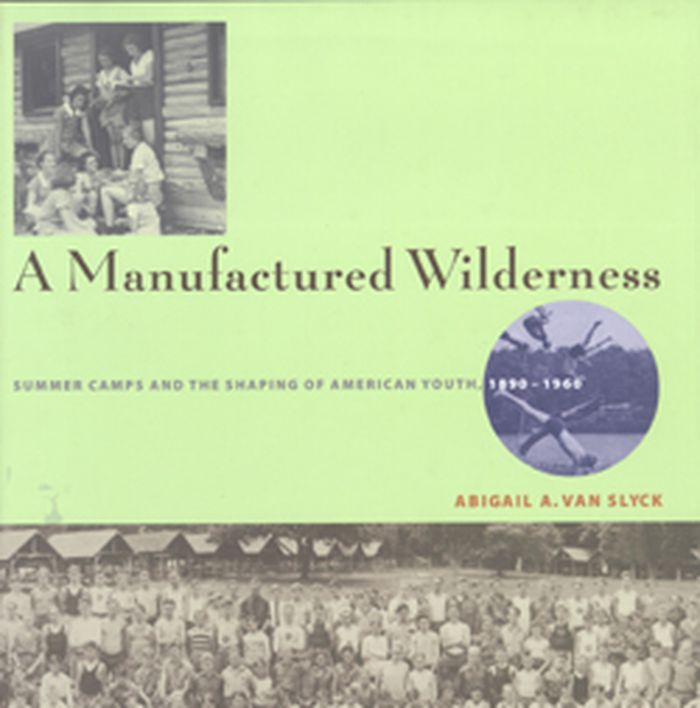
Since they were first established in the 1880s, children’s summer camps have touched the lives of millions of people. Although the camping experience has a special place in the popular imagination, few scholars have given serious thought to this peculiarly American phenomenon. Why were summer camps created? What concerns and ideals motivated their founders? Whom did they serve? How did they change over time? What factors influenced their design? To answer these and many other questions, Abigail A. Van Slyck trains an informed eye on the most visible and evocative aspect of camp life: its landscape and architecture. She argues that summer camps delivered much more than a simple encounter with the natural world. Instead, she suggests, camps provided a man-made version of wilderness, shaped by middle-class anxieties about gender roles, class tensions, race relations, and modernity and its impact on the lives of children. Following a fascinating history of summer camps and a wide-ranging overview of the factors that led to their creation, Van Slyck examines the intersections of the natural landscape with human-built forms and social activities. In particular, she addresses changing attitudes toward such subjects as children’s health, sanitation, play, relationships between the sexes, Native American culture, and evolving ideas about childhood. Generously illustrated with period photographs, maps, plans, and promotional images of camps throughout North America, A Manufactured Wilderness is the first book to offer a thorough consideration of the summer camp environment.
A manufactured wilderness: summer camps and the shaping of american youth
Actions:
Prix:
$39.00
(disponible sur commande)
Résumé:
Since they were first established in the 1880s, children’s summer camps have touched the lives of millions of people. Although the camping experience has a special place in the popular imagination, few scholars have given serious thought to this peculiarly American phenomenon. Why were summer camps created? What concerns and ideals motivated their founders? Whom did they serve? How did they change over time? What factors influenced their design? To answer these and many other questions, Abigail A. Van Slyck trains an informed eye on the most visible and evocative aspect of camp life: its landscape and architecture. She argues that summer camps delivered much more than a simple encounter with the natural world. Instead, she suggests, camps provided a man-made version of wilderness, shaped by middle-class anxieties about gender roles, class tensions, race relations, and modernity and its impact on the lives of children. Following a fascinating history of summer camps and a wide-ranging overview of the factors that led to their creation, Van Slyck examines the intersections of the natural landscape with human-built forms and social activities. In particular, she addresses changing attitudes toward such subjects as children’s health, sanitation, play, relationships between the sexes, Native American culture, and evolving ideas about childhood. Generously illustrated with period photographs, maps, plans, and promotional images of camps throughout North America, A Manufactured Wilderness is the first book to offer a thorough consideration of the summer camp environment.
Classification:
livres
livres
Publication:
octobre 2006, Minnesota
octobre 2006, Minnesota
Sujet:
Théorie de l’architecture
Théorie de l’architecture
Classification:
livres
livres

Titre:
Data feminism
Data feminism
Actions:
Prix:
$39.95
(disponible sur commande)
Résumé:
Today, data science is a form of power. It has been used to expose injustice, improve health outcomes, and topple governments. But it has also been used to discriminate, police, and surveil. This potential for good, on the one hand, and harm, on the other, makes it essential to ask: Data science by whom? Data science for whom? Data science with whose interests in mind?(...)
$39.95
(disponible sur commande)
Résumé:
Today, data science is a form of power. It has been used to expose injustice, improve health outcomes, and topple governments. But it has also been used to discriminate, police, and surveil. This potential for good, on the one hand, and harm, on the other, makes it essential to ask: Data science by whom? Data science for whom? Data science with whose interests in mind?(...)
Publication:
mars 2020
mars 2020
Titre:
Data feminism
Actions:
Prix:
$39.95
(disponible sur commande)
Résumé:
Today, data science is a form of power. It has been used to expose injustice, improve health outcomes, and topple governments. But it has also been used to discriminate, police, and surveil. This potential for good, on the one hand, and harm, on the other, makes it essential to ask: Data science by whom? Data science for whom? Data science with whose interests in mind? The narratives around big data and data science are overwhelmingly white, male, and techno-heroic. In ''Data feminism,'' Catherine D'Ignazio and Lauren Klein present a new way of thinking about data science and data ethics—one that is informed by intersectional feminist thought. Illustrating data feminism in action, D'Ignazio and Klein show how challenges to the male/female binary can help challenge other hierarchical (and empirically wrong) classification systems. They explain how, for example, an understanding of emotion can expand our ideas about effective data visualization, and how the concept of invisible labor can expose the significant human efforts required by our automated systems. And they show why the data never, ever ''speak for themselves.'' ''Data feminism'' offers strategies for data scientists seeking to learn how feminism can help them work toward justice, and for feminists who want to focus their efforts on the growing field of data science. But ''Data feminism'' is about much more than gender. It is about power, about who has it and who doesn't, and about how those differentials of power can be challenged and changed.
Data feminism
Actions:
Prix:
$39.95
(disponible sur commande)
Résumé:
Today, data science is a form of power. It has been used to expose injustice, improve health outcomes, and topple governments. But it has also been used to discriminate, police, and surveil. This potential for good, on the one hand, and harm, on the other, makes it essential to ask: Data science by whom? Data science for whom? Data science with whose interests in mind? The narratives around big data and data science are overwhelmingly white, male, and techno-heroic. In ''Data feminism,'' Catherine D'Ignazio and Lauren Klein present a new way of thinking about data science and data ethics—one that is informed by intersectional feminist thought. Illustrating data feminism in action, D'Ignazio and Klein show how challenges to the male/female binary can help challenge other hierarchical (and empirically wrong) classification systems. They explain how, for example, an understanding of emotion can expand our ideas about effective data visualization, and how the concept of invisible labor can expose the significant human efforts required by our automated systems. And they show why the data never, ever ''speak for themselves.'' ''Data feminism'' offers strategies for data scientists seeking to learn how feminism can help them work toward justice, and for feminists who want to focus their efforts on the growing field of data science. But ''Data feminism'' is about much more than gender. It is about power, about who has it and who doesn't, and about how those differentials of power can be challenged and changed.
Classification:
livres
livres
Publication:
mars 2020
mars 2020
Classification:
livres
livres
Titre:
Massive change
Massive change
Actions:
Prix:
$39.95
(disponible sur commande)
Résumé:
"Massive Change" is a modern illustrated primer on the new inventions, technologies, and events that are affecting the human race worldwide. The book is a part of a broader research project by Bruce Mau Design intended to provoke debate and discussion about the future of design culture, broadly defined as the “familiar objects and techniques that are transforming our(...)
$39.95
(disponible sur commande)
Résumé:
"Massive Change" is a modern illustrated primer on the new inventions, technologies, and events that are affecting the human race worldwide. The book is a part of a broader research project by Bruce Mau Design intended to provoke debate and discussion about the future of design culture, broadly defined as the “familiar objects and techniques that are transforming our(...)
Publication:
novembre 2004, New York
novembre 2004, New York
Titre:
Massive change
Actions:
Prix:
$39.95
(disponible sur commande)
Résumé:
"Massive Change" is a modern illustrated primer on the new inventions, technologies, and events that are affecting the human race worldwide. The book is a part of a broader research project by Bruce Mau Design intended to provoke debate and discussion about the future of design culture, broadly defined as the “familiar objects and techniques that are transforming our lives.” In essays, interviews, and provocative imagery aimed at a broad audience, "Massive Change" explores the changing force of design in the contemporary world, and in doing so expands the definition of design to include the built environment, transportation technologies, revolutionary materials, energy and information systems, and living organisms. The book is divided into 11 heavily illustrated sections covering major areas of change in contemporary society — such as urbanism and architecture, the military, health and living, and wealth and politics. Each section intersperses intriguing documentary images with a general introductory essay, extended captions, and interviews with leading thinkers, including engineers, designers, philosophers, scientists, architects, artists, and writers. Concluding the book is a graphic timeline of significant inventions and world events from 10,000 B.C. to the present. "Massive Change" is a well designed, intelligent, visually provocative exploration of the myriad subjects percolating through popular culture: those we read about in magazines and on Web sites but rarely understand in any meaningful way. It poses the question: “Now that the human race can do almost anything, what will we do next?” Accompanies the internationally touring exhibition produced by Bruce Mau and his Institute without Borders.
Massive change
Actions:
Prix:
$39.95
(disponible sur commande)
Résumé:
"Massive Change" is a modern illustrated primer on the new inventions, technologies, and events that are affecting the human race worldwide. The book is a part of a broader research project by Bruce Mau Design intended to provoke debate and discussion about the future of design culture, broadly defined as the “familiar objects and techniques that are transforming our lives.” In essays, interviews, and provocative imagery aimed at a broad audience, "Massive Change" explores the changing force of design in the contemporary world, and in doing so expands the definition of design to include the built environment, transportation technologies, revolutionary materials, energy and information systems, and living organisms. The book is divided into 11 heavily illustrated sections covering major areas of change in contemporary society — such as urbanism and architecture, the military, health and living, and wealth and politics. Each section intersperses intriguing documentary images with a general introductory essay, extended captions, and interviews with leading thinkers, including engineers, designers, philosophers, scientists, architects, artists, and writers. Concluding the book is a graphic timeline of significant inventions and world events from 10,000 B.C. to the present. "Massive Change" is a well designed, intelligent, visually provocative exploration of the myriad subjects percolating through popular culture: those we read about in magazines and on Web sites but rarely understand in any meaningful way. It poses the question: “Now that the human race can do almost anything, what will we do next?” Accompanies the internationally touring exhibition produced by Bruce Mau and his Institute without Borders.
Classification:
livres
livres
Publication:
novembre 2004, New York
novembre 2004, New York
Classification:
livres
livres
Titre:
Dialogues in public art
Dialogues in public art
Actions:
Prix:
$71.95
(disponible sur commande)
Résumé:
By the 1990s, public art had evolved far beyond the lonely monument on an open plaza. Now public artists might design the entire plaza, create an event to alter the social dynamics of an urban environment, or help to reconstruct a neighborhood. Dialogues in Public Art (...)
$71.95
(disponible sur commande)
Résumé:
By the 1990s, public art had evolved far beyond the lonely monument on an open plaza. Now public artists might design the entire plaza, create an event to alter the social dynamics of an urban environment, or help to reconstruct a neighborhood. Dialogues in Public Art (...)
Titre:
Dialogues in public art
Actions:
Prix:
$71.95
(disponible sur commande)
Résumé:
By the 1990s, public art had evolved far beyond the lonely monument on an open plaza. Now public artists might design the entire plaza, create an event to alter the social dynamics of an urban environment, or help to reconstruct a neighborhood. Dialogues in Public Art presents a rich blend of interviews with the people who create and experience public art--from an artist who mounted three bronze sculptures in the South Bronx to the bureaucrat who led the fight to have them removed; from an artist who describes his work as a "cancer" on architecture to a pair of architects who might agree with him; from an artist who formed a coalition to convert twenty-two derelict row houses into an art center/community revitalization project to a young woman who got her life back on track while living in one of the converted houses. The twenty interviews are divided into four parts: Controversies in Public Art, Experiments in Public Art as Architecture and Urban Planning, Dialogues on Dialogue-Based Public Art Projects, and Public Art for Public Health. Tom Finkelpearl's introductory essay provides a concise overview of changing attitudes toward the city as the site of public art. Interviewees: Vito Acconci, John Ahearn, David Avalos, Denise Scott Brown, Rufus L. Chaney, Mel Chin, Douglas Crimp, Paulo Freire, Andrew Ginzel, Linnea Glatt, Louis Hock, Ron Jensen, Kristin Jones, Maya Lin, Rick Lowe, Jackie McLean, Frank Moore, Jagoda Przybylak, Assata Shakur, Michael Singer, Elizabeth Sisco, Arthur Symes, Mierle Laderman Ukeles, Robert Venturi, Krzysztof Wodiczko.
Dialogues in public art
Actions:
Prix:
$71.95
(disponible sur commande)
Résumé:
By the 1990s, public art had evolved far beyond the lonely monument on an open plaza. Now public artists might design the entire plaza, create an event to alter the social dynamics of an urban environment, or help to reconstruct a neighborhood. Dialogues in Public Art presents a rich blend of interviews with the people who create and experience public art--from an artist who mounted three bronze sculptures in the South Bronx to the bureaucrat who led the fight to have them removed; from an artist who describes his work as a "cancer" on architecture to a pair of architects who might agree with him; from an artist who formed a coalition to convert twenty-two derelict row houses into an art center/community revitalization project to a young woman who got her life back on track while living in one of the converted houses. The twenty interviews are divided into four parts: Controversies in Public Art, Experiments in Public Art as Architecture and Urban Planning, Dialogues on Dialogue-Based Public Art Projects, and Public Art for Public Health. Tom Finkelpearl's introductory essay provides a concise overview of changing attitudes toward the city as the site of public art. Interviewees: Vito Acconci, John Ahearn, David Avalos, Denise Scott Brown, Rufus L. Chaney, Mel Chin, Douglas Crimp, Paulo Freire, Andrew Ginzel, Linnea Glatt, Louis Hock, Ron Jensen, Kristin Jones, Maya Lin, Rick Lowe, Jackie McLean, Frank Moore, Jagoda Przybylak, Assata Shakur, Michael Singer, Elizabeth Sisco, Arthur Symes, Mierle Laderman Ukeles, Robert Venturi, Krzysztof Wodiczko.
Classification:
livres
livres
Publication:
mai 2000, Cambridge
mai 2000, Cambridge
Classification:
livres
livres
Titre:
The minimum dwelling
The minimum dwelling
Actions:
Prix:
$96.00
(disponible en magasin)
Résumé:
Karel Teige (1900–1951), one of the most important figures of avant-garde modernism of the 1920s and 1930s, influenced virtually every area of art, design, and urban thinking in his native Czechoslovakia. His "Minimum dwelling", originally published in Czech in 1932, and appearing now for the first time in English, is one of the landmark architectural books of the(...)
$96.00
(disponible en magasin)
Résumé:
Karel Teige (1900–1951), one of the most important figures of avant-garde modernism of the 1920s and 1930s, influenced virtually every area of art, design, and urban thinking in his native Czechoslovakia. His "Minimum dwelling", originally published in Czech in 1932, and appearing now for the first time in English, is one of the landmark architectural books of the(...)
Titre:
The minimum dwelling
Actions:
Prix:
$96.00
(disponible en magasin)
Résumé:
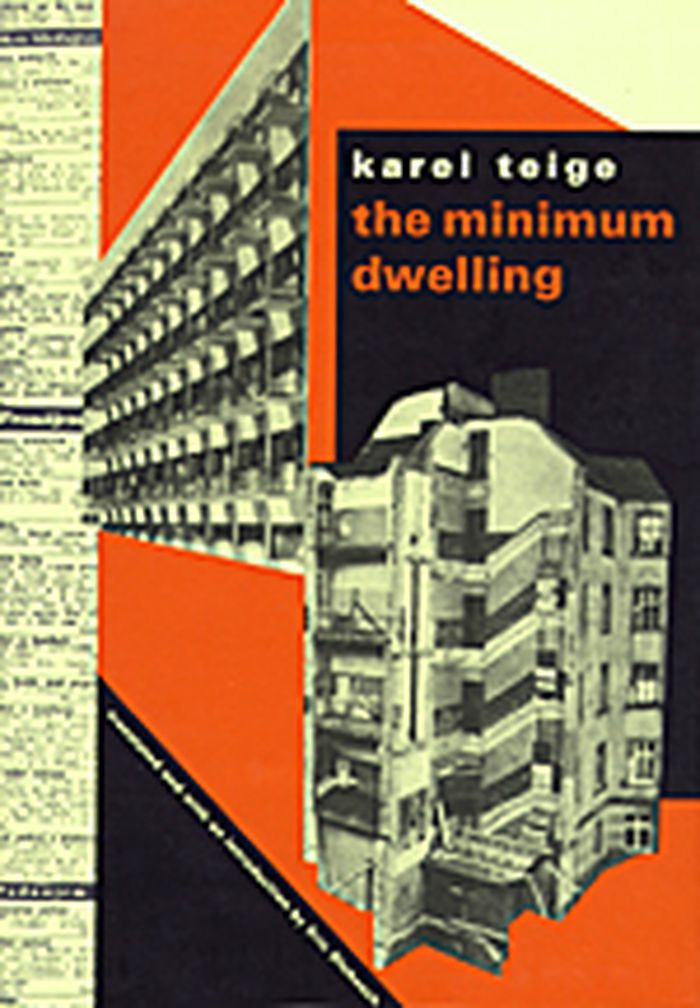
Karel Teige (1900–1951), one of the most important figures of avant-garde modernism of the 1920s and 1930s, influenced virtually every area of art, design, and urban thinking in his native Czechoslovakia. His "Minimum dwelling", originally published in Czech in 1932, and appearing now for the first time in English, is one of the landmark architectural books of the twentieth century. "The minimum dwelling" is not just a book on architecture, but also a blueprint for a new way of living. It calls for a radical rethinking of domestic space and of the role of modern architecture in the planning, design, and construction of new dwelling types for the proletariat. Teige shows how Gropius, Le Corbusier, Mies van der Rohe, and others designed little more than new versions of baroque palaces, mainly for the new financial aristocracy. Teige envisioned the minimum dwelling not as a reduced version of a bourgeois apartment or rural cottage, but as a wholly new dwelling type built on the cooperation of architects, sociologists, economists, health officials, physicians, social workers, politicians, and trade unionists. The book covers many subjects that are still of great relevance. Of particular interest are Teige’s rejection of traditional notions of the kitchen as the core of family-centered plans and of marriage as the foundation of modern cohabitation. He describes alternative lifestyles and new ways of cohabitation of sexes, generations, and classes. The detailed programmatic chapters on collective housing remain far ahead of current thinking, and his comments on collective dwelling presage communal living experiments of the 1960s and 1970s, as well as the communal facilities in contemporary condominium buildings and retirement communities. Translated and introduced by Eric Dluhosch.
The minimum dwelling
Actions:
Prix:
$96.00
(disponible en magasin)
Résumé:
Karel Teige (1900–1951), one of the most important figures of avant-garde modernism of the 1920s and 1930s, influenced virtually every area of art, design, and urban thinking in his native Czechoslovakia. His "Minimum dwelling", originally published in Czech in 1932, and appearing now for the first time in English, is one of the landmark architectural books of the twentieth century. "The minimum dwelling" is not just a book on architecture, but also a blueprint for a new way of living. It calls for a radical rethinking of domestic space and of the role of modern architecture in the planning, design, and construction of new dwelling types for the proletariat. Teige shows how Gropius, Le Corbusier, Mies van der Rohe, and others designed little more than new versions of baroque palaces, mainly for the new financial aristocracy. Teige envisioned the minimum dwelling not as a reduced version of a bourgeois apartment or rural cottage, but as a wholly new dwelling type built on the cooperation of architects, sociologists, economists, health officials, physicians, social workers, politicians, and trade unionists. The book covers many subjects that are still of great relevance. Of particular interest are Teige’s rejection of traditional notions of the kitchen as the core of family-centered plans and of marriage as the foundation of modern cohabitation. He describes alternative lifestyles and new ways of cohabitation of sexes, generations, and classes. The detailed programmatic chapters on collective housing remain far ahead of current thinking, and his comments on collective dwelling presage communal living experiments of the 1960s and 1970s, as well as the communal facilities in contemporary condominium buildings and retirement communities. Translated and introduced by Eric Dluhosch.
Classification:
livres
livres
Publication:
mai 2002, Cambridge, Mass.
mai 2002, Cambridge, Mass.
Sujet:
Théorie de l’architecture
Théorie de l’architecture
Classification:
livres
livres
Actions:
Prix:
$14.00
(disponible sur commande)
Résumé:
Admired by Marx and Engels, the Surrealists, the Situationists, Walter Benjamin and Roland Barthes, the great utopian socialist Charles Fourier (1772-1837) has been many things to many people: a proto-feminist, a Surrealist ancestor, a cantankerous cosmologist, a social critic and humorist and to this day one of France's truest visionary thinkers. He was also, as this(...)
$14.00
(disponible sur commande)
Résumé:
Admired by Marx and Engels, the Surrealists, the Situationists, Walter Benjamin and Roland Barthes, the great utopian socialist Charles Fourier (1772-1837) has been many things to many people: a proto-feminist, a Surrealist ancestor, a cantankerous cosmologist, a social critic and humorist and to this day one of France's truest visionary thinkers. He was also, as this(...)
Titre:
The hierarchies of cuckoldry and bankruptcy
Actions:
Prix:
$14.00
(disponible sur commande)
Résumé:
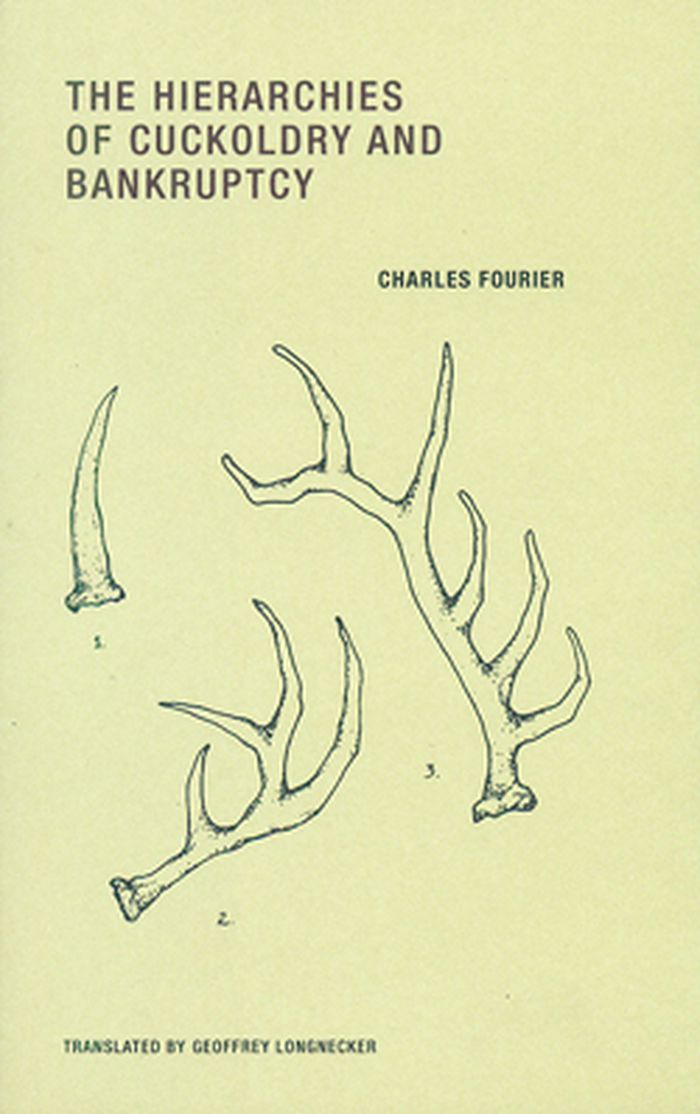
Admired by Marx and Engels, the Surrealists, the Situationists, Walter Benjamin and Roland Barthes, the great utopian socialist Charles Fourier (1772-1837) has been many things to many people: a proto-feminist, a Surrealist ancestor, a cantankerous cosmologist, a social critic and humorist and to this day one of France's truest visionary thinkers. He was also, as this volume demonstrates, a maniacal taxonomist. In this zoological guidebook to cuckoldry and commerce, Fourier offers a caustic critique of the bankruptcy of marriage and the prostitution of the economy, and the hypocrisies of a civilization that over-regulates sexual congress while allowing the financial sector to screw over the public. Gathered together here for the first time are Fourier's two “Hierarchies” --humorously regimented parades of civilization's cheaters and cheated-on in the domestic sphere of sex and the economic sphere of buying and selling commodities. “The Hierarchy of Cuckoldry” --translated into English for the first time--presents 72 species of the male cuckold, ranging from such “common class” cases as the Health-Conscious Cuckolds, to the short-horned Sympathetic, Optimist and Mystical Cuckolds, and the Long-horned varieties of the Irate, Disgraced and Posthumous Cuckolds. For Fourier, these amount to 72 manifestations of women's “secret insurrection” against the institution of marriage. “The Hierarchy of Bankruptcy” presents 36 species of the fraudulent bankrupt: a range of Light, Grandiose, and Contemptible shades of financial manipulators who force creditors, cities and even nations to bail them out of ultimately profitable bankruptcies. In these attacks on the morality of monogamy and the perils of laissez-faire capitalism, Fourier's “Hierarchies” resonate uncannily with our contemporary world.
The hierarchies of cuckoldry and bankruptcy
Actions:
Prix:
$14.00
(disponible sur commande)
Résumé:
Admired by Marx and Engels, the Surrealists, the Situationists, Walter Benjamin and Roland Barthes, the great utopian socialist Charles Fourier (1772-1837) has been many things to many people: a proto-feminist, a Surrealist ancestor, a cantankerous cosmologist, a social critic and humorist and to this day one of France's truest visionary thinkers. He was also, as this volume demonstrates, a maniacal taxonomist. In this zoological guidebook to cuckoldry and commerce, Fourier offers a caustic critique of the bankruptcy of marriage and the prostitution of the economy, and the hypocrisies of a civilization that over-regulates sexual congress while allowing the financial sector to screw over the public. Gathered together here for the first time are Fourier's two “Hierarchies” --humorously regimented parades of civilization's cheaters and cheated-on in the domestic sphere of sex and the economic sphere of buying and selling commodities. “The Hierarchy of Cuckoldry” --translated into English for the first time--presents 72 species of the male cuckold, ranging from such “common class” cases as the Health-Conscious Cuckolds, to the short-horned Sympathetic, Optimist and Mystical Cuckolds, and the Long-horned varieties of the Irate, Disgraced and Posthumous Cuckolds. For Fourier, these amount to 72 manifestations of women's “secret insurrection” against the institution of marriage. “The Hierarchy of Bankruptcy” presents 36 species of the fraudulent bankrupt: a range of Light, Grandiose, and Contemptible shades of financial manipulators who force creditors, cities and even nations to bail them out of ultimately profitable bankruptcies. In these attacks on the morality of monogamy and the perils of laissez-faire capitalism, Fourier's “Hierarchies” resonate uncannily with our contemporary world.
Classification:
livres
livres
Publication:
octobre 2011
octobre 2011
Sujet:
Théorie/ philosophie
Théorie/ philosophie
Classification:
livres
livres
Actions:
Prix:
$26.95
(disponible sur commande)
Résumé:
Rapid urban growth and suburban sprawl have heightened concern in many quarters about sustainable development. Are economic growth and environmental health always mutually exclusive goals? Nearly everyone would choose to pursue both given the chance, but many believe that it would be overly optimistic — perhaps naïve — to expect both. "Green city" proponents, however, do(...)
$26.95
(disponible sur commande)
Résumé:
Rapid urban growth and suburban sprawl have heightened concern in many quarters about sustainable development. Are economic growth and environmental health always mutually exclusive goals? Nearly everyone would choose to pursue both given the chance, but many believe that it would be overly optimistic — perhaps naïve — to expect both. "Green city" proponents, however, do(...)
Titre:
Green cities : urban growth and the environment
Actions:
Prix:
$26.95
(disponible sur commande)
Résumé:
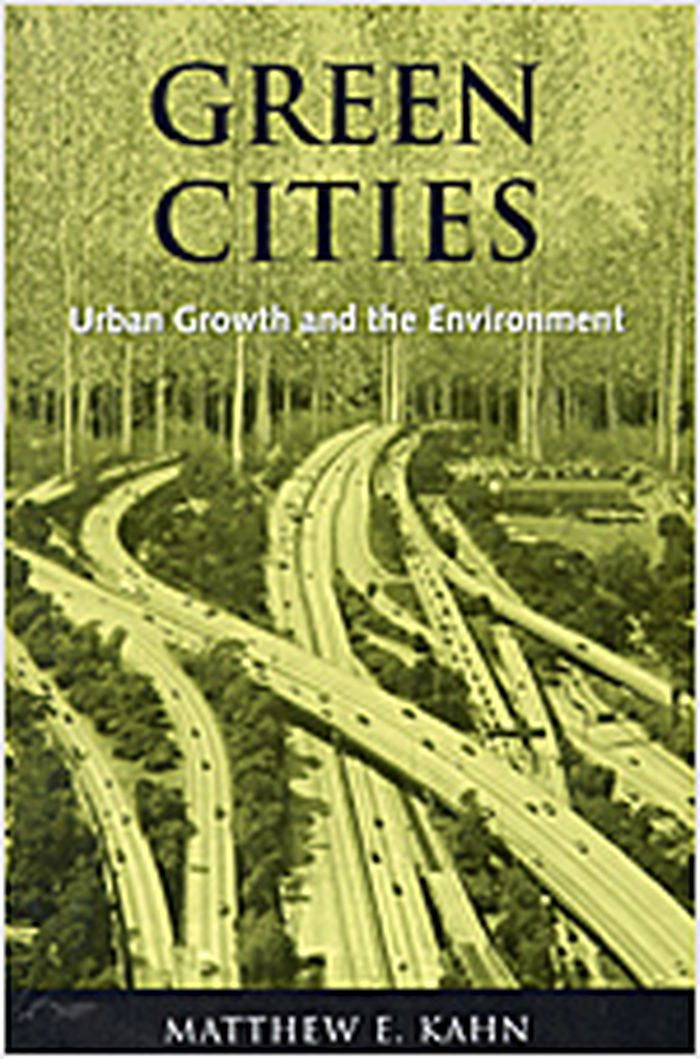
Rapid urban growth and suburban sprawl have heightened concern in many quarters about sustainable development. Are economic growth and environmental health always mutually exclusive goals? Nearly everyone would choose to pursue both given the chance, but many believe that it would be overly optimistic — perhaps naïve — to expect both. "Green city" proponents, however, do hope to realize both ambitions. What exactly is a green city? What does it mean to say that San Francisco is greener than Houston, or that Vancouver is a green city while Beijing is not? When does urban growth lower environmental quality, and when does it produce environmental gains? These are the questions that drive this smart and engaging book. In "Green cities", Matthew Kahn surveys the burgeoning economic literature on the environmental consequences of urban growth. He discusses the environmental Kuznets curve, which theorizes that the relationship between environmental quality and per capita income follows a bell-shaped curve. The heart of the book unpacks and expands this notion by tracing the environmental effects of economic growth, population growth, and suburban sprawl. Kahn considers how cities can deal with the environmental challenges produced by growth. His concluding chapter addresses the role of cities in promoting climate change and asks how cities in turn are likely to be affected by this trend. Kahn considers the evidence for and against rival perspectives throughout the book. Despite being labeled as purveyors of a "dismal science," economists are often quite optimistic about the relationship between urban development and the environment. In contrast, many ecologists remain wary of the environmental consequences of free-market growth. "Green cities" does not try to settle this dispute. Instead, it marshals data and arguments to convey the excitement of an ongoing debate, enabling readers to formulate well-informed opinions and priorities on this critically important issue.
Green cities : urban growth and the environment
Actions:
Prix:
$26.95
(disponible sur commande)
Résumé:
Rapid urban growth and suburban sprawl have heightened concern in many quarters about sustainable development. Are economic growth and environmental health always mutually exclusive goals? Nearly everyone would choose to pursue both given the chance, but many believe that it would be overly optimistic — perhaps naïve — to expect both. "Green city" proponents, however, do hope to realize both ambitions. What exactly is a green city? What does it mean to say that San Francisco is greener than Houston, or that Vancouver is a green city while Beijing is not? When does urban growth lower environmental quality, and when does it produce environmental gains? These are the questions that drive this smart and engaging book. In "Green cities", Matthew Kahn surveys the burgeoning economic literature on the environmental consequences of urban growth. He discusses the environmental Kuznets curve, which theorizes that the relationship between environmental quality and per capita income follows a bell-shaped curve. The heart of the book unpacks and expands this notion by tracing the environmental effects of economic growth, population growth, and suburban sprawl. Kahn considers how cities can deal with the environmental challenges produced by growth. His concluding chapter addresses the role of cities in promoting climate change and asks how cities in turn are likely to be affected by this trend. Kahn considers the evidence for and against rival perspectives throughout the book. Despite being labeled as purveyors of a "dismal science," economists are often quite optimistic about the relationship between urban development and the environment. In contrast, many ecologists remain wary of the environmental consequences of free-market growth. "Green cities" does not try to settle this dispute. Instead, it marshals data and arguments to convey the excitement of an ongoing debate, enabling readers to formulate well-informed opinions and priorities on this critically important issue.
Classification:
livres
livres
Publication:
août 2006, Washington, D.C.
août 2006, Washington, D.C.
Sujet:
Théorie de l’urbanisme
Théorie de l’urbanisme
Classification:
livres
livres
Titre:
The place we live
The place we live
Actions:
Prix:
$42.00
(disponible sur commande)
Résumé:
The year 2008 has witnessed a major shift in the way people across the world live: for the first time in human history more people live in cities than in rural areas. This triumph of the urban, however, does not entirely represent progress, as the number of people living in urban slums—often in abject conditions—will soon exceed one billion. From 2005 to 2007 Jonas(...)
$42.00
(disponible sur commande)
Résumé:
The year 2008 has witnessed a major shift in the way people across the world live: for the first time in human history more people live in cities than in rural areas. This triumph of the urban, however, does not entirely represent progress, as the number of people living in urban slums—often in abject conditions—will soon exceed one billion. From 2005 to 2007 Jonas(...)
Titre:
The place we live
Actions:
Prix:
$42.00
(disponible sur commande)
Résumé:
The year 2008 has witnessed a major shift in the way people across the world live: for the first time in human history more people live in cities than in rural areas. This triumph of the urban, however, does not entirely represent progress, as the number of people living in urban slums—often in abject conditions—will soon exceed one billion. From 2005 to 2007 Jonas Bendiksen documented life in the slums of four different cities: Nairobi, Kenya; Mumbai, India; Jakarta, Indonesia; and Caracas, Venezuela. His lyrical images capture the diversity of personal histories and outlooks found in these dense neighborhoods that, despite commonly held assumptions, are not simply places of poverty and misery. Yet, slum residents continuously face enormous challenges, such as the lack of health care, sanitation, and electricity. The Places We Live includes twenty double-gatefold images, each representing an individual home and its denizen’s story. Through its innovative design and experiential approach, The Places We Live brings the modern-day Dickensian reality of these individuals into sharp focus. Artist / Writer Biography A member of Magnum Photos, Jonas Bendiksen (born in Tønsberg, Norway, 1977) has received numerous awards, including the 2003 Infinity Award from the International Center of Photography and first prize in the Pictures of the Year International Awards. His photographs have appeared in National Geographic, Geo , Newsweek, and the Sunday Times Magazine, among other publications. His bestselling first book, Satellites: Photographs from the Fringes of the Former Soviet Union, was published in 2006 by Aperture. In 2007, the Paris Review received a National Magazine Award for Bendiksen’s project The Places We Live. Philip Gourevitch (introduction) is editor of the Paris Review and author of Standard Operating Procedure (a collaboration with Errol Morris) and We Wish to Inform You That Tomorrow We Will Be Killed With Our Families: Stories from Rwanda.
The place we live
Actions:
Prix:
$42.00
(disponible sur commande)
Résumé:
The year 2008 has witnessed a major shift in the way people across the world live: for the first time in human history more people live in cities than in rural areas. This triumph of the urban, however, does not entirely represent progress, as the number of people living in urban slums—often in abject conditions—will soon exceed one billion. From 2005 to 2007 Jonas Bendiksen documented life in the slums of four different cities: Nairobi, Kenya; Mumbai, India; Jakarta, Indonesia; and Caracas, Venezuela. His lyrical images capture the diversity of personal histories and outlooks found in these dense neighborhoods that, despite commonly held assumptions, are not simply places of poverty and misery. Yet, slum residents continuously face enormous challenges, such as the lack of health care, sanitation, and electricity. The Places We Live includes twenty double-gatefold images, each representing an individual home and its denizen’s story. Through its innovative design and experiential approach, The Places We Live brings the modern-day Dickensian reality of these individuals into sharp focus. Artist / Writer Biography A member of Magnum Photos, Jonas Bendiksen (born in Tønsberg, Norway, 1977) has received numerous awards, including the 2003 Infinity Award from the International Center of Photography and first prize in the Pictures of the Year International Awards. His photographs have appeared in National Geographic, Geo , Newsweek, and the Sunday Times Magazine, among other publications. His bestselling first book, Satellites: Photographs from the Fringes of the Former Soviet Union, was published in 2006 by Aperture. In 2007, the Paris Review received a National Magazine Award for Bendiksen’s project The Places We Live. Philip Gourevitch (introduction) is editor of the Paris Review and author of Standard Operating Procedure (a collaboration with Errol Morris) and We Wish to Inform You That Tomorrow We Will Be Killed With Our Families: Stories from Rwanda.
Classification:
livres
livres
Publication:
août 2008, New York
août 2008, New York
Sujet:
Monographies photo
Monographies photo
Classification:
livres
livres
Actions:
Prix:
$28.00
(disponible en magasin)
Résumé:
Over the past several decades, globalization has homogenized what we eat, and done so ruthlessly. The numbers are stark: Of the roughly six thousand different plants once consumed by human beings, only nine remain major staples today. Just three of these—rice, wheat, and corn—now provide fifty percent of all our calories.The source of much of the world’s food—seeds—is(...)
$28.00
(disponible en magasin)
Résumé:
Over the past several decades, globalization has homogenized what we eat, and done so ruthlessly. The numbers are stark: Of the roughly six thousand different plants once consumed by human beings, only nine remain major staples today. Just three of these—rice, wheat, and corn—now provide fifty percent of all our calories.The source of much of the world’s food—seeds—is(...)
Titre:
Eating to extinction: the world's rarest foods and why we need to save them
Actions:
Prix:
$28.00
(disponible en magasin)
Résumé:
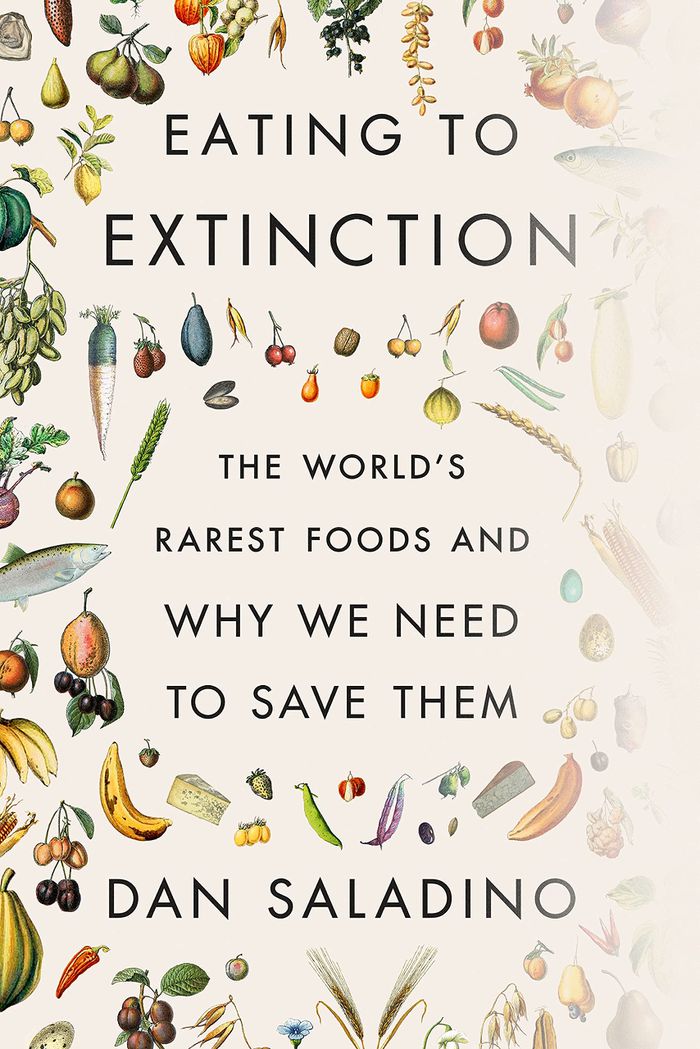
Over the past several decades, globalization has homogenized what we eat, and done so ruthlessly. The numbers are stark: Of the roughly six thousand different plants once consumed by human beings, only nine remain major staples today. Just three of these—rice, wheat, and corn—now provide fifty percent of all our calories.The source of much of the world’s food—seeds—is mostly in the control of just four corporations. Ninety-five percent of milk consumed in the United States comes from a single breed of cow. Half of all the world’s cheese is made with bacteria or enzymes made by one company. And one in four beers drunk around the world is the product of one brewer. When we lose diversity and foods become endangered, we not only risk the loss of traditional foodways, but also of flavors, smells, and textures that may never be experienced again. And the consolidation of our food has other steep costs, including a lack of resilience in the face of climate change, pests, and parasites. Our food monoculture is a threat to our health—and to the planet. In ''Eating to Extinction'', the BBC food journalist Dan Saladino travels the world to experience and document our most at-risk foods before it’s too late. He tells the fascinating stories of the people who continue to cultivate, forage, hunt, cook, and consume what the rest of us have forgotten or didn’t even know existed. Take honey—not the familiar product sold in plastic bottles, but the wild honey gathered by the Hadza people of East Africa, whose diet consists of eight hundred different plants and animals and who communicate with birds in order to locate bees’ nests. Or consider murnong—once the staple food of Aboriginal Australians, this small root vegetable with the sweet taste of coconut is undergoing a revival after nearly being driven to extinction. And in Sierra Leone, there are just a few surviving stenophylla trees, a plant species now considered crucial to the future of coffee.
Eating to extinction: the world's rarest foods and why we need to save them
Actions:
Prix:
$28.00
(disponible en magasin)
Résumé:
Over the past several decades, globalization has homogenized what we eat, and done so ruthlessly. The numbers are stark: Of the roughly six thousand different plants once consumed by human beings, only nine remain major staples today. Just three of these—rice, wheat, and corn—now provide fifty percent of all our calories.The source of much of the world’s food—seeds—is mostly in the control of just four corporations. Ninety-five percent of milk consumed in the United States comes from a single breed of cow. Half of all the world’s cheese is made with bacteria or enzymes made by one company. And one in four beers drunk around the world is the product of one brewer. When we lose diversity and foods become endangered, we not only risk the loss of traditional foodways, but also of flavors, smells, and textures that may never be experienced again. And the consolidation of our food has other steep costs, including a lack of resilience in the face of climate change, pests, and parasites. Our food monoculture is a threat to our health—and to the planet. In ''Eating to Extinction'', the BBC food journalist Dan Saladino travels the world to experience and document our most at-risk foods before it’s too late. He tells the fascinating stories of the people who continue to cultivate, forage, hunt, cook, and consume what the rest of us have forgotten or didn’t even know existed. Take honey—not the familiar product sold in plastic bottles, but the wild honey gathered by the Hadza people of East Africa, whose diet consists of eight hundred different plants and animals and who communicate with birds in order to locate bees’ nests. Or consider murnong—once the staple food of Aboriginal Australians, this small root vegetable with the sweet taste of coconut is undergoing a revival after nearly being driven to extinction. And in Sierra Leone, there are just a few surviving stenophylla trees, a plant species now considered crucial to the future of coffee.
Classification:
livres
livres
Publication:
janvier 2023
janvier 2023
Sujet:
Bouffe
Bouffe


