


2142 Résultats
Classification:
livres
livres
Actions:
Prix:
$97.95
(disponible sur commande)
Résumé:
Architecte, théoricien, urbaniste et écrivain, Jozsef Vago travaille à Budapest (1900-1919, 1926-1940), à Rome (1919-1926) et à Genève (1927-1935), avant de s'établir en France (1940-1947). Jeune diplômé, il s'engage dans la Sécession hongroise fondée par Odon Lechner et s'attache, comme de nombreux architectes de sa génération, à élaborer un nouveau langage architectural(...)
$97.95
(disponible sur commande)
Résumé:
Architecte, théoricien, urbaniste et écrivain, Jozsef Vago travaille à Budapest (1900-1919, 1926-1940), à Rome (1919-1926) et à Genève (1927-1935), avant de s'établir en France (1940-1947). Jeune diplômé, il s'engage dans la Sécession hongroise fondée par Odon Lechner et s'attache, comme de nombreux architectes de sa génération, à élaborer un nouveau langage architectural(...)
Titre:
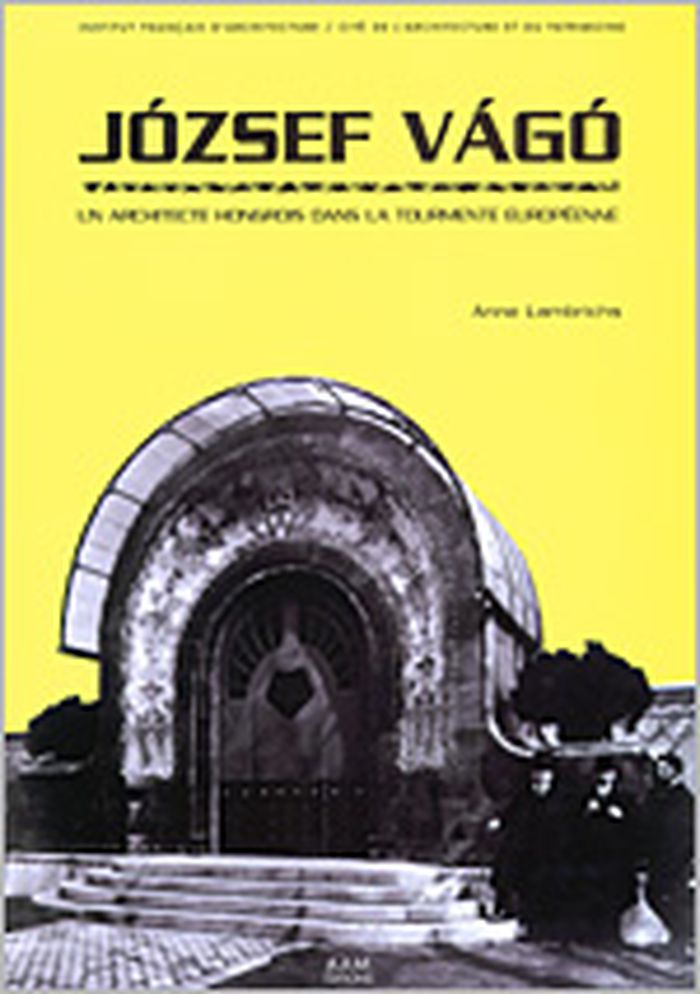
Jozsef Vago 1877-1947 : un architecte hongrois dans la tourmente européenne
Actions:
Prix:
$97.95
(disponible sur commande)
Résumé:
Architecte, théoricien, urbaniste et écrivain, Jozsef Vago travaille à Budapest (1900-1919, 1926-1940), à Rome (1919-1926) et à Genève (1927-1935), avant de s'établir en France (1940-1947). Jeune diplômé, il s'engage dans la Sécession hongroise fondée par Odon Lechner et s'attache, comme de nombreux architectes de sa génération, à élaborer un nouveau langage architectural national qui valorise la culture populaire. Jozsef Vago est aujourd'hui considéré comme l'une des figures de proue du renouveau architectural hongrois. Ses réalisations à Budapest entre 1903 et 1914, fleurons d'architecture " nationale " imprégnés de modernisme viennois, témoignent de son ouverture vers l'Occident et de son attention à la question sociale. Membre du Werkbund, engagé pendant la période révolutionnaire de 1918-1919, il est contraint d'émigrer en Italie lors de l'arrivée au pouvoir de l'amiral Horthy. Installé à Rome entre 1920 et 1926, il tente en vain de s'intégrer à la profession : il élabore des nouvelles typologies d'habitat social pour les cités-jardins romaines, publie de nombreux projets sous le nom de " Giuseppe Vago ", mais ne parvient à obtenir qu'une seule commande à Rome. Sans ressources, confronté à la xénophobie et au fascisme, il se réinstalle à Budapest, où il se voit empêché d'exercer par l'Ordre des architectes hongrois, créé en 1926. Sa victoire au concours du palais de la Société des Nations à Genève en 1927 inaugure une nouvelle phase de sa carrière. Ses démêlés avec ses associés - Henri-Paul Nénot, Jules Flegenheimer, Camille Lefèvre et Carlo Broggi - et avec Le Corbusier au cours de la réalisation du projet l'incitent, dans les années trente et quarante, à prendre part au débat architectural européen, à entamer une importante œuvre de critique et à élaborer une véritable philosophie de l'architecture et de l'urbanisme. Combattant les positions de l'avant-garde architecturale - et notamment de Le Corbusier -, il tente d'établir une synthèse entre les idéaux de l'Art nouveau et du modernisme, estimant que l'architecte doit s'efforcer de répondre aux aspirations sociales et économiques du Mouvement moderne sans pour autant renoncer au " superflu ", c'est-à-dire à la qualité artistique et à l'ornementation. Cette recherche, qui apparaît dans son ouvrage théorique À travers les villes (1930) et dans son projet d'urbanisation de Budapest (1933-1937), trouve son aboutissement dans son projet théorique de reconstruction opposé aux préceptes des CIAM et de la Charte d'Athènes : la Ville de l'Avenir (1940-1945)
Jozsef Vago 1877-1947 : un architecte hongrois dans la tourmente européenne
Actions:
Prix:
$97.95
(disponible sur commande)
Résumé:
Architecte, théoricien, urbaniste et écrivain, Jozsef Vago travaille à Budapest (1900-1919, 1926-1940), à Rome (1919-1926) et à Genève (1927-1935), avant de s'établir en France (1940-1947). Jeune diplômé, il s'engage dans la Sécession hongroise fondée par Odon Lechner et s'attache, comme de nombreux architectes de sa génération, à élaborer un nouveau langage architectural national qui valorise la culture populaire. Jozsef Vago est aujourd'hui considéré comme l'une des figures de proue du renouveau architectural hongrois. Ses réalisations à Budapest entre 1903 et 1914, fleurons d'architecture " nationale " imprégnés de modernisme viennois, témoignent de son ouverture vers l'Occident et de son attention à la question sociale. Membre du Werkbund, engagé pendant la période révolutionnaire de 1918-1919, il est contraint d'émigrer en Italie lors de l'arrivée au pouvoir de l'amiral Horthy. Installé à Rome entre 1920 et 1926, il tente en vain de s'intégrer à la profession : il élabore des nouvelles typologies d'habitat social pour les cités-jardins romaines, publie de nombreux projets sous le nom de " Giuseppe Vago ", mais ne parvient à obtenir qu'une seule commande à Rome. Sans ressources, confronté à la xénophobie et au fascisme, il se réinstalle à Budapest, où il se voit empêché d'exercer par l'Ordre des architectes hongrois, créé en 1926. Sa victoire au concours du palais de la Société des Nations à Genève en 1927 inaugure une nouvelle phase de sa carrière. Ses démêlés avec ses associés - Henri-Paul Nénot, Jules Flegenheimer, Camille Lefèvre et Carlo Broggi - et avec Le Corbusier au cours de la réalisation du projet l'incitent, dans les années trente et quarante, à prendre part au débat architectural européen, à entamer une importante œuvre de critique et à élaborer une véritable philosophie de l'architecture et de l'urbanisme. Combattant les positions de l'avant-garde architecturale - et notamment de Le Corbusier -, il tente d'établir une synthèse entre les idéaux de l'Art nouveau et du modernisme, estimant que l'architecte doit s'efforcer de répondre aux aspirations sociales et économiques du Mouvement moderne sans pour autant renoncer au " superflu ", c'est-à-dire à la qualité artistique et à l'ornementation. Cette recherche, qui apparaît dans son ouvrage théorique À travers les villes (1930) et dans son projet d'urbanisation de Budapest (1933-1937), trouve son aboutissement dans son projet théorique de reconstruction opposé aux préceptes des CIAM et de la Charte d'Athènes : la Ville de l'Avenir (1940-1945)
Classification:
livres
livres
Publication:
mars 2003, Bruxelles
mars 2003, Bruxelles
Sujet:
Architecture, monographies
Architecture, monographies
Classification:
livres
livres
Prix:
$29.95
(disponible sur commande)
Résumé:
Van Alen Institute mounted the exhibition "Renewing, Rebuilding, Remembering" to demonstrate how cities, after incomparable loss of people and places, find ways to plan, design, and reconstruct the life of the city. The book is both a catalogue and a special edition of our series of "Van Alen Reports," the publication both documents the exhibit and expands on it with(...)
$29.95
(disponible sur commande)
Résumé:
Van Alen Institute mounted the exhibition "Renewing, Rebuilding, Remembering" to demonstrate how cities, after incomparable loss of people and places, find ways to plan, design, and reconstruct the life of the city. The book is both a catalogue and a special edition of our series of "Van Alen Reports," the publication both documents the exhibit and expands on it with(...)
Titre:
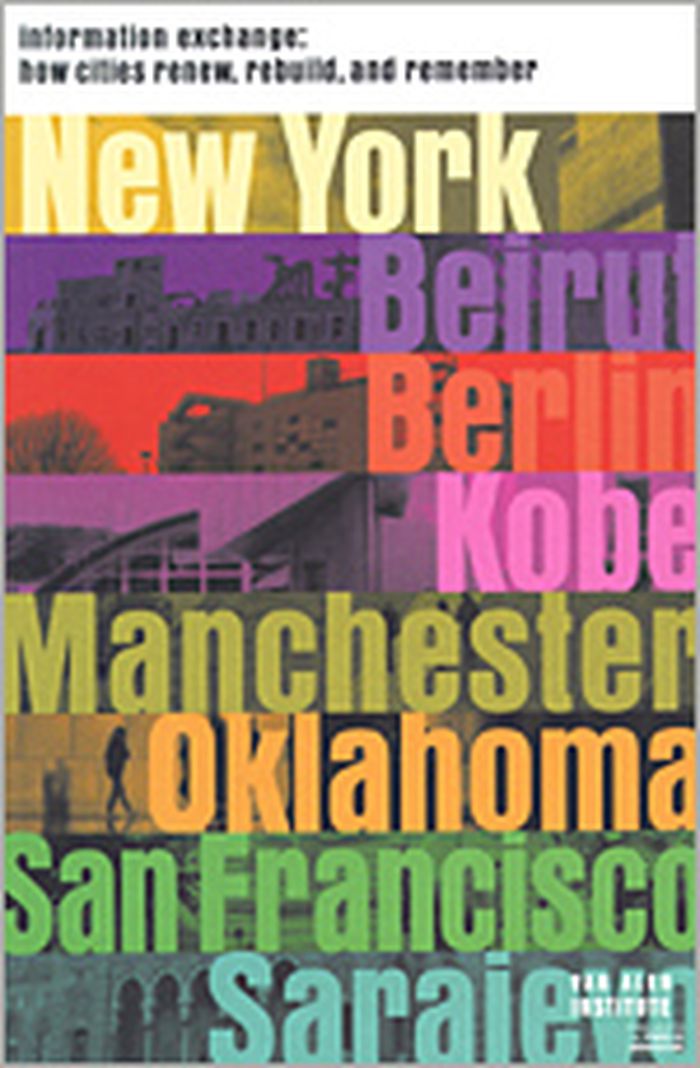
Information exchange : how cities renew, rebuild, and remember
Actions:
Prix:
$29.95
(disponible sur commande)
Résumé:
Van Alen Institute mounted the exhibition "Renewing, Rebuilding, Remembering" to demonstrate how cities, after incomparable loss of people and places, find ways to plan, design, and reconstruct the life of the city. The book is both a catalogue and a special edition of our series of "Van Alen Reports," the publication both documents the exhibit and expands on it with personal essays, articles and interviews. The point of the exhibition was not to compare catastrophes, but to compare, contrast, and try to explicate and understand initiatives, projects, plans, and actions that took place after the bomb, the earthquake, the war. After that, what worked, what would they do differently, what mattered right away, what mattered for the long-term? In October, the Institute put out a call for ideas for the exhibit. Students, designers, planners, artists, professors, photographers, public officials and a wide range of respondents from around the world were generous in suggesting places, projects, issues, and designs that were telling for the future of New York. From this response and ongoing research, the Institute chose to focus on specific processes and projects in seven cities. In Beirut, a public art installation that progressed through the city was a first step in reclaiming its war-torn districts, and the Lebanese capital has continued not only with master plans and major new developments, but also with works such as the Garden of Forgiveness, grappling with a hard history to contemplate. In Berlin, a center for information about the city and its reconstruction rose above the ruins of the Berlin Wall, half a century after the city had been devastated and divided. In San Francisco, an earthquake left the elevated highway downtown in such precarious decision that the city decided to tear it down-and implement a long-held dream of reopening the city to the waterfront. In Kobe, where an earthquake resulted not only in billions of dollars of damage to infrastructure, but also in a terrible loss of life, architects responded with an outpouring of energy to survey the damage and construct innovative emergency housing, proving the old adage that necessity is the mother of invention. In addition, they strove to understand the disaster, building a museum about, and at, the geological fault that brought down so much of their city. Manchester had a terrorist attack in the mid-1990s, and rebuilt its center city better than before, as well as setting up an institute for the study of cities around the world, to better understand that the life of the city and its public realm can not be taken for granted. So, too, did Oklahoma City, where a public process led to an international design competition for a memorial, and the city has rebuilt itself around it. Sarajevo, after years of civil war, pulled together its citizens through restoring the landmarks of their public life.
Information exchange : how cities renew, rebuild, and remember
Actions:
Prix:
$29.95
(disponible sur commande)
Résumé:
Van Alen Institute mounted the exhibition "Renewing, Rebuilding, Remembering" to demonstrate how cities, after incomparable loss of people and places, find ways to plan, design, and reconstruct the life of the city. The book is both a catalogue and a special edition of our series of "Van Alen Reports," the publication both documents the exhibit and expands on it with personal essays, articles and interviews. The point of the exhibition was not to compare catastrophes, but to compare, contrast, and try to explicate and understand initiatives, projects, plans, and actions that took place after the bomb, the earthquake, the war. After that, what worked, what would they do differently, what mattered right away, what mattered for the long-term? In October, the Institute put out a call for ideas for the exhibit. Students, designers, planners, artists, professors, photographers, public officials and a wide range of respondents from around the world were generous in suggesting places, projects, issues, and designs that were telling for the future of New York. From this response and ongoing research, the Institute chose to focus on specific processes and projects in seven cities. In Beirut, a public art installation that progressed through the city was a first step in reclaiming its war-torn districts, and the Lebanese capital has continued not only with master plans and major new developments, but also with works such as the Garden of Forgiveness, grappling with a hard history to contemplate. In Berlin, a center for information about the city and its reconstruction rose above the ruins of the Berlin Wall, half a century after the city had been devastated and divided. In San Francisco, an earthquake left the elevated highway downtown in such precarious decision that the city decided to tear it down-and implement a long-held dream of reopening the city to the waterfront. In Kobe, where an earthquake resulted not only in billions of dollars of damage to infrastructure, but also in a terrible loss of life, architects responded with an outpouring of energy to survey the damage and construct innovative emergency housing, proving the old adage that necessity is the mother of invention. In addition, they strove to understand the disaster, building a museum about, and at, the geological fault that brought down so much of their city. Manchester had a terrorist attack in the mid-1990s, and rebuilt its center city better than before, as well as setting up an institute for the study of cities around the world, to better understand that the life of the city and its public realm can not be taken for granted. So, too, did Oklahoma City, where a public process led to an international design competition for a memorial, and the city has rebuilt itself around it. Sarajevo, after years of civil war, pulled together its citizens through restoring the landmarks of their public life.
Classification:
livres
livres
Publication:
mars 2003, New York
mars 2003, New York
Sujet:
Théorie de l’urbanisme
Théorie de l’urbanisme


