


13023 Résultats
Niveau de description archivistique:
Projet
Projet
Numéro de référence:
AP111.S1.D2
Description:
Le dossier est constitué de photographies relatives au projet du 'McCormick Dam'.
AP111.S1.D2
Description:
Le dossier est constitué de photographies relatives au projet du 'McCormick Dam'.
Personnes et institutions:
Date:
1956-1958
1956-1958
Titre:
Barrage McCormick sur la rivière Manicouagan, à l'ouest de Baie Comeau, Québec
Actions:
AP111.S1.D2
Description:
Le dossier est constitué de photographies relatives au projet du 'McCormick Dam'.
Barrage McCormick sur la rivière Manicouagan, à l'ouest de Baie Comeau, Québec
Actions:
AP111.S1.D2
Description:
Le dossier est constitué de photographies relatives au projet du 'McCormick Dam'.
Niveau de description archivistique:
Dossier 2
Dossier 2
Date:
1956-1958
1956-1958
Personnes et institutions:
Niveau de description archivistique:
Projet
Projet
Numéro de référence:
AP178.S1.1968.PR03
Description:
This project series documents the Arranjo Urbanístico para a Av. D. Afonso Henriques, in Porto, Portugal. The avenue is also known as Avenida da Ponte. While the records were held in the office’s archives this project was assigned the number 32/60. The office assigned the date 1968 for this project. The project consisted of an urban plan for this historic part of the city. It was done in relation to the Edifício de Escritórios na Av. D. Afonso Henriques (see project series AP178.S1.1968.PR02 described in this fonds). In the 1940s, demolition created a rupture with the remaining buildings, including the Porto Cathedral. Since the 1950s, there have been several studies and proposals to rearrange this part of the city. Siza’s plan was the first to be accepted by the city council in 1968. The project consisted of a new layout for the Avenue D. Afonso Henriques, the connection between the Luis I Bridge to the D. Pedro Square and the São Bento Railway Station. The intention of the project was also to reduce traffic. The project was not realized. Siza also proposed a new design in 2001 for the site across the avenue from this one, known as Avenida da Ponte II. This included a museum, library, stores, parking, and houses. This project related to the building Casa Dos 24 Fernando Távora. The scheme was not realized. Documenting the Arranjo Urbanistico are studies and site plans. For correspondence, project documentation and drawings related to this project see project series Edifício de Escritórios na Av. D. Afonso Henriques, Avenida da Ponte AP178.S1.1968.PR02.
AP178.S1.1968.PR03
Description:
This project series documents the Arranjo Urbanístico para a Av. D. Afonso Henriques, in Porto, Portugal. The avenue is also known as Avenida da Ponte. While the records were held in the office’s archives this project was assigned the number 32/60. The office assigned the date 1968 for this project. The project consisted of an urban plan for this historic part of the city. It was done in relation to the Edifício de Escritórios na Av. D. Afonso Henriques (see project series AP178.S1.1968.PR02 described in this fonds). In the 1940s, demolition created a rupture with the remaining buildings, including the Porto Cathedral. Since the 1950s, there have been several studies and proposals to rearrange this part of the city. Siza’s plan was the first to be accepted by the city council in 1968. The project consisted of a new layout for the Avenue D. Afonso Henriques, the connection between the Luis I Bridge to the D. Pedro Square and the São Bento Railway Station. The intention of the project was also to reduce traffic. The project was not realized. Siza also proposed a new design in 2001 for the site across the avenue from this one, known as Avenida da Ponte II. This included a museum, library, stores, parking, and houses. This project related to the building Casa Dos 24 Fernando Távora. The scheme was not realized. Documenting the Arranjo Urbanistico are studies and site plans. For correspondence, project documentation and drawings related to this project see project series Edifício de Escritórios na Av. D. Afonso Henriques, Avenida da Ponte AP178.S1.1968.PR02.
Personnes et institutions:
Date:
1968
1968
Titre:
Arranjo Urbanístico para a Av. D. Afonso Henriques, Avenida da Ponte, [Urban planning for Av. D. Afonso Henriques, "Avenida da Ponte"], Porto, Portugal (1968)
Actions:
AP178.S1.1968.PR03
Description:
This project series documents the Arranjo Urbanístico para a Av. D. Afonso Henriques, in Porto, Portugal. The avenue is also known as Avenida da Ponte. While the records were held in the office’s archives this project was assigned the number 32/60. The office assigned the date 1968 for this project. The project consisted of an urban plan for this historic part of the city. It was done in relation to the Edifício de Escritórios na Av. D. Afonso Henriques (see project series AP178.S1.1968.PR02 described in this fonds). In the 1940s, demolition created a rupture with the remaining buildings, including the Porto Cathedral. Since the 1950s, there have been several studies and proposals to rearrange this part of the city. Siza’s plan was the first to be accepted by the city council in 1968. The project consisted of a new layout for the Avenue D. Afonso Henriques, the connection between the Luis I Bridge to the D. Pedro Square and the São Bento Railway Station. The intention of the project was also to reduce traffic. The project was not realized. Siza also proposed a new design in 2001 for the site across the avenue from this one, known as Avenida da Ponte II. This included a museum, library, stores, parking, and houses. This project related to the building Casa Dos 24 Fernando Távora. The scheme was not realized. Documenting the Arranjo Urbanistico are studies and site plans. For correspondence, project documentation and drawings related to this project see project series Edifício de Escritórios na Av. D. Afonso Henriques, Avenida da Ponte AP178.S1.1968.PR02.
Arranjo Urbanístico para a Av. D. Afonso Henriques, Avenida da Ponte, [Urban planning for Av. D. Afonso Henriques, "Avenida da Ponte"], Porto, Portugal (1968)
Actions:
AP178.S1.1968.PR03
Description:
This project series documents the Arranjo Urbanístico para a Av. D. Afonso Henriques, in Porto, Portugal. The avenue is also known as Avenida da Ponte. While the records were held in the office’s archives this project was assigned the number 32/60. The office assigned the date 1968 for this project. The project consisted of an urban plan for this historic part of the city. It was done in relation to the Edifício de Escritórios na Av. D. Afonso Henriques (see project series AP178.S1.1968.PR02 described in this fonds). In the 1940s, demolition created a rupture with the remaining buildings, including the Porto Cathedral. Since the 1950s, there have been several studies and proposals to rearrange this part of the city. Siza’s plan was the first to be accepted by the city council in 1968. The project consisted of a new layout for the Avenue D. Afonso Henriques, the connection between the Luis I Bridge to the D. Pedro Square and the São Bento Railway Station. The intention of the project was also to reduce traffic. The project was not realized. Siza also proposed a new design in 2001 for the site across the avenue from this one, known as Avenida da Ponte II. This included a museum, library, stores, parking, and houses. This project related to the building Casa Dos 24 Fernando Távora. The scheme was not realized. Documenting the Arranjo Urbanistico are studies and site plans. For correspondence, project documentation and drawings related to this project see project series Edifício de Escritórios na Av. D. Afonso Henriques, Avenida da Ponte AP178.S1.1968.PR02.
Niveau de description archivistique:
Project
Project
Date:
1968
1968
Personnes et institutions:
Classification:
photographies
photographies
Actions:
Numéro de référence:
PH1989:0150
Description:
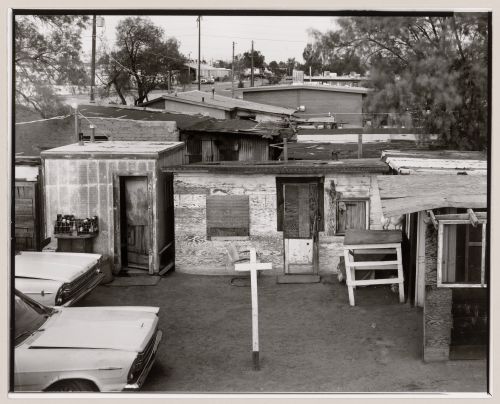
One of a series of forty-four photographs of the Yaqui community of Old Pascua by Lorne Greenberg. The photographs document the relationship of household and church in the Yaqui community. The photographs were exhibited at the Arizona State Museum in 1983. The CCA collection includes ten photographs from the series (PH1989:0147 - PH1989:0156). In 1978, the San Ignacio Yaqui Council applied for Community Development Block Grants (CDBG), which had been established by the United States Government in 1974. The community first received CDBG funding in 1979/1980. Since that time, most of the owner-occupied houses in Pascua Village have been torn down and new homes have been built.
PH1989:0150
Description:
One of a series of forty-four photographs of the Yaqui community of Old Pascua by Lorne Greenberg. The photographs document the relationship of household and church in the Yaqui community. The photographs were exhibited at the Arizona State Museum in 1983. The CCA collection includes ten photographs from the series (PH1989:0147 - PH1989:0156). In 1978, the San Ignacio Yaqui Council applied for Community Development Block Grants (CDBG), which had been established by the United States Government in 1974. The community first received CDBG funding in 1979/1980. Since that time, most of the owner-occupied houses in Pascua Village have been torn down and new homes have been built.
Personnes et institutions:
Sujet:
architecture
architecture
Date:
1981
1981
Titre:
View of cross in yard seen from roof, Old Pascua, Tucson, Arizona, United States (from a series documenting the Yaqui community of Old Pascua)
Actions:
PH1989:0150
Description:
One of a series of forty-four photographs of the Yaqui community of Old Pascua by Lorne Greenberg. The photographs document the relationship of household and church in the Yaqui community. The photographs were exhibited at the Arizona State Museum in 1983. The CCA collection includes ten photographs from the series (PH1989:0147 - PH1989:0156). In 1978, the San Ignacio Yaqui Council applied for Community Development Block Grants (CDBG), which had been established by the United States Government in 1974. The community first received CDBG funding in 1979/1980. Since that time, most of the owner-occupied houses in Pascua Village have been torn down and new homes have been built.
View of cross in yard seen from roof, Old Pascua, Tucson, Arizona, United States (from a series documenting the Yaqui community of Old Pascua)
Actions:
PH1989:0150
Description:
One of a series of forty-four photographs of the Yaqui community of Old Pascua by Lorne Greenberg. The photographs document the relationship of household and church in the Yaqui community. The photographs were exhibited at the Arizona State Museum in 1983. The CCA collection includes ten photographs from the series (PH1989:0147 - PH1989:0156). In 1978, the San Ignacio Yaqui Council applied for Community Development Block Grants (CDBG), which had been established by the United States Government in 1974. The community first received CDBG funding in 1979/1980. Since that time, most of the owner-occupied houses in Pascua Village have been torn down and new homes have been built.
Classification:
photographies
photographies
Date:
1981
1981
Personnes et institutions:
Sujet:
architecture
architecture
Classification:
photographies
photographies
Actions:
Numéro de référence:
PH1989:0151
Description:
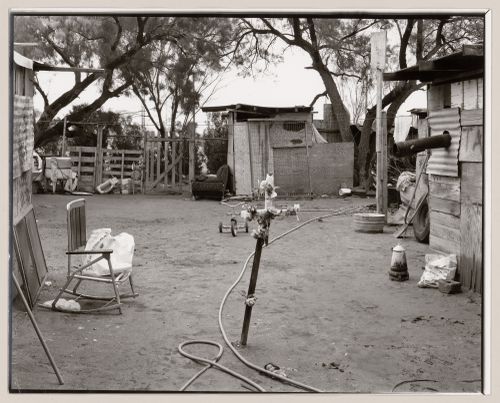
One of a series of forty-four photographs of the Yaqui community of Old Pascua by Lorne Greenberg. The photographs document the relationship of household and church in the Yaqui community. The photographs were exhibited at the Arizona State Museum in 1983. The CCA collection includes ten photographs from the series (PH1989:0147 - PH1989:0156). In 1978, the San Ignacio Yaqui Council applied for Community Development Block Grants (CDBG), which had been established by the United States Government in 1974. The community first received CDBG funding in 1979/1980. Since that time, most of the owner-occupied houses in Pascua Village have been torn down and new homes have been built.
PH1989:0151
Description:
One of a series of forty-four photographs of the Yaqui community of Old Pascua by Lorne Greenberg. The photographs document the relationship of household and church in the Yaqui community. The photographs were exhibited at the Arizona State Museum in 1983. The CCA collection includes ten photographs from the series (PH1989:0147 - PH1989:0156). In 1978, the San Ignacio Yaqui Council applied for Community Development Block Grants (CDBG), which had been established by the United States Government in 1974. The community first received CDBG funding in 1979/1980. Since that time, most of the owner-occupied houses in Pascua Village have been torn down and new homes have been built.
Personnes et institutions:
Sujet:
architecture
architecture
Date:
1981
1981
Titre:
View of cross decorated with flowers in yard, Old Pascua, Tucson, Arizona, United States (from a series documenting the Yaqui community of Old Pascua)
Actions:
PH1989:0151
Description:
One of a series of forty-four photographs of the Yaqui community of Old Pascua by Lorne Greenberg. The photographs document the relationship of household and church in the Yaqui community. The photographs were exhibited at the Arizona State Museum in 1983. The CCA collection includes ten photographs from the series (PH1989:0147 - PH1989:0156). In 1978, the San Ignacio Yaqui Council applied for Community Development Block Grants (CDBG), which had been established by the United States Government in 1974. The community first received CDBG funding in 1979/1980. Since that time, most of the owner-occupied houses in Pascua Village have been torn down and new homes have been built.
View of cross decorated with flowers in yard, Old Pascua, Tucson, Arizona, United States (from a series documenting the Yaqui community of Old Pascua)
Actions:
PH1989:0151
Description:
One of a series of forty-four photographs of the Yaqui community of Old Pascua by Lorne Greenberg. The photographs document the relationship of household and church in the Yaqui community. The photographs were exhibited at the Arizona State Museum in 1983. The CCA collection includes ten photographs from the series (PH1989:0147 - PH1989:0156). In 1978, the San Ignacio Yaqui Council applied for Community Development Block Grants (CDBG), which had been established by the United States Government in 1974. The community first received CDBG funding in 1979/1980. Since that time, most of the owner-occupied houses in Pascua Village have been torn down and new homes have been built.
Classification:
photographies
photographies
Date:
1981
1981
Personnes et institutions:
Sujet:
architecture
architecture
Classification:
photographies
photographies
Actions:
Numéro de référence:
PH1989:0154
Description:
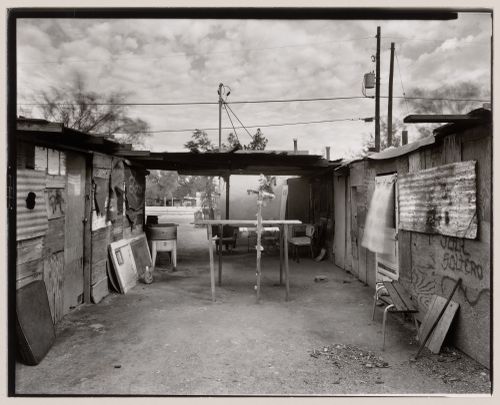
One of a series of forty-four photographs of the Yaqui community of Old Pascua by Lorne Greenberg. The photographs document the relationship of household and church in the Yaqui community. The photographs were exhibited at the Arizona State Museum in 1983. The CCA collection includes ten photographs from the series (PH1989:0147 - PH1989:0156). In 1978, the San Ignacio Yaqui Council applied for Community Development Block Grants (CDBG), which had been established by the United States Government in 1974. The community first received CDBG funding in 1979/1980. Since that time, most of the owner-occupied houses in Pascua Village have been torn down and new homes have been built.
PH1989:0154
Description:
One of a series of forty-four photographs of the Yaqui community of Old Pascua by Lorne Greenberg. The photographs document the relationship of household and church in the Yaqui community. The photographs were exhibited at the Arizona State Museum in 1983. The CCA collection includes ten photographs from the series (PH1989:0147 - PH1989:0156). In 1978, the San Ignacio Yaqui Council applied for Community Development Block Grants (CDBG), which had been established by the United States Government in 1974. The community first received CDBG funding in 1979/1980. Since that time, most of the owner-occupied houses in Pascua Village have been torn down and new homes have been built.
Personnes et institutions:
Sujet:
architecture
architecture
Date:
1981
1981
Titre:
View of double cross decorated with artificial flowers, Old Pascua, Tucson, Arizona, United States (from a series documenting the Yaqui community of Old Pascua)
Actions:
PH1989:0154
Description:
One of a series of forty-four photographs of the Yaqui community of Old Pascua by Lorne Greenberg. The photographs document the relationship of household and church in the Yaqui community. The photographs were exhibited at the Arizona State Museum in 1983. The CCA collection includes ten photographs from the series (PH1989:0147 - PH1989:0156). In 1978, the San Ignacio Yaqui Council applied for Community Development Block Grants (CDBG), which had been established by the United States Government in 1974. The community first received CDBG funding in 1979/1980. Since that time, most of the owner-occupied houses in Pascua Village have been torn down and new homes have been built.
View of double cross decorated with artificial flowers, Old Pascua, Tucson, Arizona, United States (from a series documenting the Yaqui community of Old Pascua)
Actions:
PH1989:0154
Description:
One of a series of forty-four photographs of the Yaqui community of Old Pascua by Lorne Greenberg. The photographs document the relationship of household and church in the Yaqui community. The photographs were exhibited at the Arizona State Museum in 1983. The CCA collection includes ten photographs from the series (PH1989:0147 - PH1989:0156). In 1978, the San Ignacio Yaqui Council applied for Community Development Block Grants (CDBG), which had been established by the United States Government in 1974. The community first received CDBG funding in 1979/1980. Since that time, most of the owner-occupied houses in Pascua Village have been torn down and new homes have been built.
Classification:
photographies
photographies
Date:
1981
1981
Personnes et institutions:
Sujet:
architecture
architecture
Classification:
dessins, documents textuels, graphique, photographies
dessins, documents textuels, graphique, photographies
Actions:
Numéro de référence:
DR1989:0026:001-051
Description:
- This group is comprised of drawings and photographs for Francis Fowke's winning entry in the 1864 competition for the Natural History and Patent Museums, South Kensington, London, and correspondence and pamphlets related to John Liddell's subsequent claim (1866) of sole authorship of the external treatment of Fowke's design. A hand-coloured reprographic copy (DR1989:0026:005) is apparently an elevation for Fowke's final design for the Natural History and Patent Museum, and a photograph of the section through the Patent Museum (DR1989:0026:001) is also possibly for Fowke's final design. Other drawings (DR1989:0026:003, DR1989:0026:006, and DR1989:0026:007 R/V) and another photograph (DR1989:0026:002) are possibly for preliminary designs for the competition. Many of the letters are by John Liddell to the First Commissioner of Works (W.F. Cowper and later, Lord John Manners), and Alfred Waterhouse asserting his claim to authorship of the external treatment of Fowke's design (DR1989:0026:013, DR1989:0026:015, DR1989:0026:017, DR1989:0026:029, DR1989:0026:031-33, DR1989:0026:036, DR1989:0026:040). The First Commissioner's secretaries' replies to these are also included (DR1989:0026:016, DR1989:0026:035, DR1989:0026:041-043). Liddell compiled many of these letters, as well as some not included in this group, into a pamphlet in order to publicize his case (DR1989:0026:020, DR1989:0026:023-24, DR1989:0026:026-27, DR1989:0026:039, DR1989:0026:044-045). There are ten copies of this transcribed correspondence as well letters to the editors of four London newspapers (DR1989:0026:022, DR1989:0026:025, DR1989:0026:028, DR1989:0026:030, DR1989:0026:051). Also included is Liddell's correspondence to two of the competition judges (DR1989:0026:019, DR1989:0026:037, DR1989:0026:038) and several Members of Parliament (DR1989:0026:014, DR1989:0026:018, DR1989:0026:021, DR1989:0026:034) solicting support for his claims. A letter from Fowke to Liddell accompanies the payment of Liddell's portion of the competition premium (DR1989:0026:009). Three letters discuss a recommendation for Liddell from Sir Henry Cole (DR1989:0026:010-012). Pamphlets include two copies of pamphlets (one incomplete) published in 1863 by the House of Commons describing Sir Richard Owens' ideas for the Natural History Museum, with hand-coloured plans and sections drawn by Sir Henry A. Hunt and printed by Henry Hansard (DR1989:0026:046-47); two copies of the competition guidelines, each annotated with sketches, probably by Fowke and Liddell (DR1989:0026:048-049); and two copies of the description of Fowke's design, one with his motto and modifications (DR1989:0026:050 ?). The tabletop designs on the verso of some of the sketches date to 1907 and are unrelated to the other material in the collection (DR1989:0026:006 R/V and DR1989:0026:007 R/V).
DR1989:0026:001-051
Description:
- This group is comprised of drawings and photographs for Francis Fowke's winning entry in the 1864 competition for the Natural History and Patent Museums, South Kensington, London, and correspondence and pamphlets related to John Liddell's subsequent claim (1866) of sole authorship of the external treatment of Fowke's design. A hand-coloured reprographic copy (DR1989:0026:005) is apparently an elevation for Fowke's final design for the Natural History and Patent Museum, and a photograph of the section through the Patent Museum (DR1989:0026:001) is also possibly for Fowke's final design. Other drawings (DR1989:0026:003, DR1989:0026:006, and DR1989:0026:007 R/V) and another photograph (DR1989:0026:002) are possibly for preliminary designs for the competition. Many of the letters are by John Liddell to the First Commissioner of Works (W.F. Cowper and later, Lord John Manners), and Alfred Waterhouse asserting his claim to authorship of the external treatment of Fowke's design (DR1989:0026:013, DR1989:0026:015, DR1989:0026:017, DR1989:0026:029, DR1989:0026:031-33, DR1989:0026:036, DR1989:0026:040). The First Commissioner's secretaries' replies to these are also included (DR1989:0026:016, DR1989:0026:035, DR1989:0026:041-043). Liddell compiled many of these letters, as well as some not included in this group, into a pamphlet in order to publicize his case (DR1989:0026:020, DR1989:0026:023-24, DR1989:0026:026-27, DR1989:0026:039, DR1989:0026:044-045). There are ten copies of this transcribed correspondence as well letters to the editors of four London newspapers (DR1989:0026:022, DR1989:0026:025, DR1989:0026:028, DR1989:0026:030, DR1989:0026:051). Also included is Liddell's correspondence to two of the competition judges (DR1989:0026:019, DR1989:0026:037, DR1989:0026:038) and several Members of Parliament (DR1989:0026:014, DR1989:0026:018, DR1989:0026:021, DR1989:0026:034) solicting support for his claims. A letter from Fowke to Liddell accompanies the payment of Liddell's portion of the competition premium (DR1989:0026:009). Three letters discuss a recommendation for Liddell from Sir Henry Cole (DR1989:0026:010-012). Pamphlets include two copies of pamphlets (one incomplete) published in 1863 by the House of Commons describing Sir Richard Owens' ideas for the Natural History Museum, with hand-coloured plans and sections drawn by Sir Henry A. Hunt and printed by Henry Hansard (DR1989:0026:046-47); two copies of the competition guidelines, each annotated with sketches, probably by Fowke and Liddell (DR1989:0026:048-049); and two copies of the description of Fowke's design, one with his motto and modifications (DR1989:0026:050 ?). The tabletop designs on the verso of some of the sketches date to 1907 and are unrelated to the other material in the collection (DR1989:0026:006 R/V and DR1989:0026:007 R/V).
Personnes et institutions:
Sujet:
architecture
architecture
Date:
drawings executed between 1864 and 1907
drawings executed between 1864 and 1907
Titre:
Documents and drawings related to the winning entry in the 1864 competition for a Natural History Museum and Patent Museum, South Kensington, London, England
Actions:
DR1989:0026:001-051
Description:
- This group is comprised of drawings and photographs for Francis Fowke's winning entry in the 1864 competition for the Natural History and Patent Museums, South Kensington, London, and correspondence and pamphlets related to John Liddell's subsequent claim (1866) of sole authorship of the external treatment of Fowke's design. A hand-coloured reprographic copy (DR1989:0026:005) is apparently an elevation for Fowke's final design for the Natural History and Patent Museum, and a photograph of the section through the Patent Museum (DR1989:0026:001) is also possibly for Fowke's final design. Other drawings (DR1989:0026:003, DR1989:0026:006, and DR1989:0026:007 R/V) and another photograph (DR1989:0026:002) are possibly for preliminary designs for the competition. Many of the letters are by John Liddell to the First Commissioner of Works (W.F. Cowper and later, Lord John Manners), and Alfred Waterhouse asserting his claim to authorship of the external treatment of Fowke's design (DR1989:0026:013, DR1989:0026:015, DR1989:0026:017, DR1989:0026:029, DR1989:0026:031-33, DR1989:0026:036, DR1989:0026:040). The First Commissioner's secretaries' replies to these are also included (DR1989:0026:016, DR1989:0026:035, DR1989:0026:041-043). Liddell compiled many of these letters, as well as some not included in this group, into a pamphlet in order to publicize his case (DR1989:0026:020, DR1989:0026:023-24, DR1989:0026:026-27, DR1989:0026:039, DR1989:0026:044-045). There are ten copies of this transcribed correspondence as well letters to the editors of four London newspapers (DR1989:0026:022, DR1989:0026:025, DR1989:0026:028, DR1989:0026:030, DR1989:0026:051). Also included is Liddell's correspondence to two of the competition judges (DR1989:0026:019, DR1989:0026:037, DR1989:0026:038) and several Members of Parliament (DR1989:0026:014, DR1989:0026:018, DR1989:0026:021, DR1989:0026:034) solicting support for his claims. A letter from Fowke to Liddell accompanies the payment of Liddell's portion of the competition premium (DR1989:0026:009). Three letters discuss a recommendation for Liddell from Sir Henry Cole (DR1989:0026:010-012). Pamphlets include two copies of pamphlets (one incomplete) published in 1863 by the House of Commons describing Sir Richard Owens' ideas for the Natural History Museum, with hand-coloured plans and sections drawn by Sir Henry A. Hunt and printed by Henry Hansard (DR1989:0026:046-47); two copies of the competition guidelines, each annotated with sketches, probably by Fowke and Liddell (DR1989:0026:048-049); and two copies of the description of Fowke's design, one with his motto and modifications (DR1989:0026:050 ?). The tabletop designs on the verso of some of the sketches date to 1907 and are unrelated to the other material in the collection (DR1989:0026:006 R/V and DR1989:0026:007 R/V).
Documents and drawings related to the winning entry in the 1864 competition for a Natural History Museum and Patent Museum, South Kensington, London, England
Actions:
DR1989:0026:001-051
Description:
- This group is comprised of drawings and photographs for Francis Fowke's winning entry in the 1864 competition for the Natural History and Patent Museums, South Kensington, London, and correspondence and pamphlets related to John Liddell's subsequent claim (1866) of sole authorship of the external treatment of Fowke's design. A hand-coloured reprographic copy (DR1989:0026:005) is apparently an elevation for Fowke's final design for the Natural History and Patent Museum, and a photograph of the section through the Patent Museum (DR1989:0026:001) is also possibly for Fowke's final design. Other drawings (DR1989:0026:003, DR1989:0026:006, and DR1989:0026:007 R/V) and another photograph (DR1989:0026:002) are possibly for preliminary designs for the competition. Many of the letters are by John Liddell to the First Commissioner of Works (W.F. Cowper and later, Lord John Manners), and Alfred Waterhouse asserting his claim to authorship of the external treatment of Fowke's design (DR1989:0026:013, DR1989:0026:015, DR1989:0026:017, DR1989:0026:029, DR1989:0026:031-33, DR1989:0026:036, DR1989:0026:040). The First Commissioner's secretaries' replies to these are also included (DR1989:0026:016, DR1989:0026:035, DR1989:0026:041-043). Liddell compiled many of these letters, as well as some not included in this group, into a pamphlet in order to publicize his case (DR1989:0026:020, DR1989:0026:023-24, DR1989:0026:026-27, DR1989:0026:039, DR1989:0026:044-045). There are ten copies of this transcribed correspondence as well letters to the editors of four London newspapers (DR1989:0026:022, DR1989:0026:025, DR1989:0026:028, DR1989:0026:030, DR1989:0026:051). Also included is Liddell's correspondence to two of the competition judges (DR1989:0026:019, DR1989:0026:037, DR1989:0026:038) and several Members of Parliament (DR1989:0026:014, DR1989:0026:018, DR1989:0026:021, DR1989:0026:034) solicting support for his claims. A letter from Fowke to Liddell accompanies the payment of Liddell's portion of the competition premium (DR1989:0026:009). Three letters discuss a recommendation for Liddell from Sir Henry Cole (DR1989:0026:010-012). Pamphlets include two copies of pamphlets (one incomplete) published in 1863 by the House of Commons describing Sir Richard Owens' ideas for the Natural History Museum, with hand-coloured plans and sections drawn by Sir Henry A. Hunt and printed by Henry Hansard (DR1989:0026:046-47); two copies of the competition guidelines, each annotated with sketches, probably by Fowke and Liddell (DR1989:0026:048-049); and two copies of the description of Fowke's design, one with his motto and modifications (DR1989:0026:050 ?). The tabletop designs on the verso of some of the sketches date to 1907 and are unrelated to the other material in the collection (DR1989:0026:006 R/V and DR1989:0026:007 R/V).
Classification:
dessins, documents textuels, graphique, photographies
dessins, documents textuels, graphique, photographies
Date:
drawings executed between 1864 and 1907
drawings executed between 1864 and 1907
Personnes et institutions:
Sujet:
architecture
architecture
Classification:
photographies
photographies
Actions:
Numéro de référence:
PH1989:0149
Description:
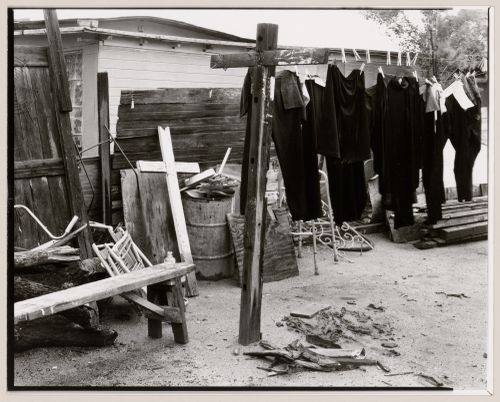
One of a series of forty-four photographs of the Yaqui community of Old Pascua by Lorne Greenberg. The photographs document the relationship of household and church in the Yaqui community. The photographs were exhibited at the Arizona State Museum in 1983. The CCA collection includes ten photographs from the series (PH1989:0147 - PH1989:0156). In 1978, the San Ignacio Yaqui Council applied for Community Development Block Grants (CDBG), which had been established by the United States Government in 1974. The community first received CDBG funding in 1979/1980. Since that time, most of the owner-occupied houses in Pascua Village have been torn down and new homes have been built.
PH1989:0149
Description:
One of a series of forty-four photographs of the Yaqui community of Old Pascua by Lorne Greenberg. The photographs document the relationship of household and church in the Yaqui community. The photographs were exhibited at the Arizona State Museum in 1983. The CCA collection includes ten photographs from the series (PH1989:0147 - PH1989:0156). In 1978, the San Ignacio Yaqui Council applied for Community Development Block Grants (CDBG), which had been established by the United States Government in 1974. The community first received CDBG funding in 1979/1980. Since that time, most of the owner-occupied houses in Pascua Village have been torn down and new homes have been built.
Personnes et institutions:
Sujet:
architecture
architecture
Date:
1980
1980
Titre:
View of clothesline showing clothes drying with cross on the left, Old Pascua, Tucson, Arizona, United States (from a series documenting the Yaqui community of Old Pascua)
Actions:
PH1989:0149
Description:
One of a series of forty-four photographs of the Yaqui community of Old Pascua by Lorne Greenberg. The photographs document the relationship of household and church in the Yaqui community. The photographs were exhibited at the Arizona State Museum in 1983. The CCA collection includes ten photographs from the series (PH1989:0147 - PH1989:0156). In 1978, the San Ignacio Yaqui Council applied for Community Development Block Grants (CDBG), which had been established by the United States Government in 1974. The community first received CDBG funding in 1979/1980. Since that time, most of the owner-occupied houses in Pascua Village have been torn down and new homes have been built.
View of clothesline showing clothes drying with cross on the left, Old Pascua, Tucson, Arizona, United States (from a series documenting the Yaqui community of Old Pascua)
Actions:
PH1989:0149
Description:
One of a series of forty-four photographs of the Yaqui community of Old Pascua by Lorne Greenberg. The photographs document the relationship of household and church in the Yaqui community. The photographs were exhibited at the Arizona State Museum in 1983. The CCA collection includes ten photographs from the series (PH1989:0147 - PH1989:0156). In 1978, the San Ignacio Yaqui Council applied for Community Development Block Grants (CDBG), which had been established by the United States Government in 1974. The community first received CDBG funding in 1979/1980. Since that time, most of the owner-occupied houses in Pascua Village have been torn down and new homes have been built.
Classification:
photographies
photographies
Date:
1980
1980
Personnes et institutions:
Sujet:
architecture
architecture
Classification:
photographies
photographies
Actions:
Numéro de référence:
PH1989:0148
Description:
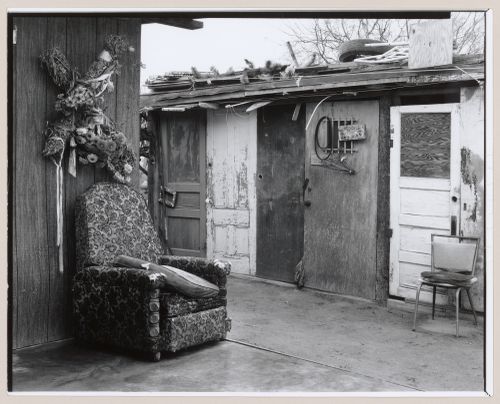
One of a series of forty-four photographs of the Yaqui community of Old Pascua by Lorne Greenberg. The photographs document the relationship of household and church in the Yaqui community. The photographs were exhibited at the Arizona State Museum in 1983. The CCA collection includes ten photographs from the series (PH1989:0147 - PH1989:0156). In 1978, the San Ignacio Yaqui Council applied for Community Development Block Grants (CDBG), which had been established by the United States Government in 1974. The community first received CDBG funding in 1979/1980. Since that time, most of the owner-occupied houses in Pascua Village have been torn down and new homes have been built.
PH1989:0148
Description:
One of a series of forty-four photographs of the Yaqui community of Old Pascua by Lorne Greenberg. The photographs document the relationship of household and church in the Yaqui community. The photographs were exhibited at the Arizona State Museum in 1983. The CCA collection includes ten photographs from the series (PH1989:0147 - PH1989:0156). In 1978, the San Ignacio Yaqui Council applied for Community Development Block Grants (CDBG), which had been established by the United States Government in 1974. The community first received CDBG funding in 1979/1980. Since that time, most of the owner-occupied houses in Pascua Village have been torn down and new homes have been built.
Personnes et institutions:
Sujet:
architecture
architecture
Date:
1980
1980
Titre:
View of cross decorated with flowers hung above upholstered chair in outdoor space, Old Pascua, Tucson, Arizona, United States (from a series documenting the Yaqui community of Old Pascua)
Actions:
PH1989:0148
Description:
One of a series of forty-four photographs of the Yaqui community of Old Pascua by Lorne Greenberg. The photographs document the relationship of household and church in the Yaqui community. The photographs were exhibited at the Arizona State Museum in 1983. The CCA collection includes ten photographs from the series (PH1989:0147 - PH1989:0156). In 1978, the San Ignacio Yaqui Council applied for Community Development Block Grants (CDBG), which had been established by the United States Government in 1974. The community first received CDBG funding in 1979/1980. Since that time, most of the owner-occupied houses in Pascua Village have been torn down and new homes have been built.
View of cross decorated with flowers hung above upholstered chair in outdoor space, Old Pascua, Tucson, Arizona, United States (from a series documenting the Yaqui community of Old Pascua)
Actions:
PH1989:0148
Description:
One of a series of forty-four photographs of the Yaqui community of Old Pascua by Lorne Greenberg. The photographs document the relationship of household and church in the Yaqui community. The photographs were exhibited at the Arizona State Museum in 1983. The CCA collection includes ten photographs from the series (PH1989:0147 - PH1989:0156). In 1978, the San Ignacio Yaqui Council applied for Community Development Block Grants (CDBG), which had been established by the United States Government in 1974. The community first received CDBG funding in 1979/1980. Since that time, most of the owner-occupied houses in Pascua Village have been torn down and new homes have been built.
Classification:
photographies
photographies
Date:
1980
1980
Personnes et institutions:
Sujet:
architecture
architecture
Classification:
photographies
photographies
Actions:
Numéro de référence:
PH1989:0156
Description:
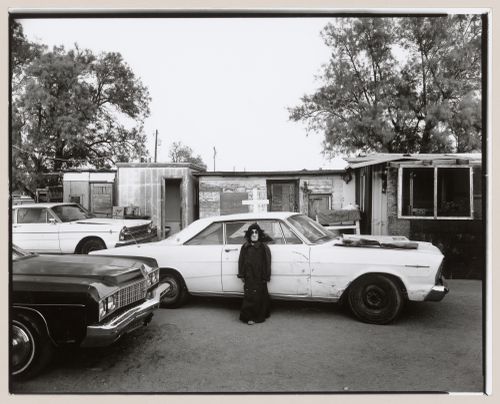
One of a series of forty-four photographs of the Yaqui community of Old Pascua by Lorne Greenberg. The photographs document the relationship of household and church in the Yaqui community. The photographs were exhibited at the Arizona State Museum in 1983. The CCA collection includes ten photographs from the series (PH1989:0147 - PH1989:0156). In 1978, the San Ignacio Yaqui Council applied for Community Development Block Grants (CDBG), which had been established by the United States Government in 1974. The community first received CDBG funding in 1979/1980. Since that time, most of the owner-occupied houses in Pascua Village have been torn down and new homes have been built.
PH1989:0156
Description:
One of a series of forty-four photographs of the Yaqui community of Old Pascua by Lorne Greenberg. The photographs document the relationship of household and church in the Yaqui community. The photographs were exhibited at the Arizona State Museum in 1983. The CCA collection includes ten photographs from the series (PH1989:0147 - PH1989:0156). In 1978, the San Ignacio Yaqui Council applied for Community Development Block Grants (CDBG), which had been established by the United States Government in 1974. The community first received CDBG funding in 1979/1980. Since that time, most of the owner-occupied houses in Pascua Village have been torn down and new homes have been built.
Personnes et institutions:
Sujet:
architecture
architecture
Date:
1981
1981
Titre:
View of child wearing Halloween costume in front of car in yard with cross, Old Pascua, Tucson, Arizona, United States (from a series documenting the Yaqui community of Old Pascua)
Actions:
PH1989:0156
Description:
One of a series of forty-four photographs of the Yaqui community of Old Pascua by Lorne Greenberg. The photographs document the relationship of household and church in the Yaqui community. The photographs were exhibited at the Arizona State Museum in 1983. The CCA collection includes ten photographs from the series (PH1989:0147 - PH1989:0156). In 1978, the San Ignacio Yaqui Council applied for Community Development Block Grants (CDBG), which had been established by the United States Government in 1974. The community first received CDBG funding in 1979/1980. Since that time, most of the owner-occupied houses in Pascua Village have been torn down and new homes have been built.
View of child wearing Halloween costume in front of car in yard with cross, Old Pascua, Tucson, Arizona, United States (from a series documenting the Yaqui community of Old Pascua)
Actions:
PH1989:0156
Description:
One of a series of forty-four photographs of the Yaqui community of Old Pascua by Lorne Greenberg. The photographs document the relationship of household and church in the Yaqui community. The photographs were exhibited at the Arizona State Museum in 1983. The CCA collection includes ten photographs from the series (PH1989:0147 - PH1989:0156). In 1978, the San Ignacio Yaqui Council applied for Community Development Block Grants (CDBG), which had been established by the United States Government in 1974. The community first received CDBG funding in 1979/1980. Since that time, most of the owner-occupied houses in Pascua Village have been torn down and new homes have been built.
Classification:
photographies
photographies
Date:
1981
1981
Personnes et institutions:
Sujet:
architecture
architecture
Classification:
dessins, documents textuels, oeuvres d'art
dessins, documents textuels, oeuvres d'art

Actions:
Numéro de référence:
DR1974:0002:012:001-049
Description:
- This album contains student drawings by Hubert Rohault de Fleury executed at the École spéciale de peinture, sculpture et architecture, Paris (1798-1802), including drawings for the Grand Prix Competitions of 1800, 1801 and 1802, the Concours d'essai, the Concours d'émulation of 1800 and 1801, and other undetermined competitions. The drawings illustrate all stages of the design and competition process, ranging from preliminary sketches and esquisses to finished renderings, but do not include the renderings submitted to the Grand Prix Competitions. Drawings for the conversion of the Église de la Madeleine into a Temple de la Gloire (ca. 1806-1807) include line and wash drawings. Hubert's 1800 Grand Prix entry for an École nationale des beaux-arts was awarded the "deuxième Grand Prix" and this album includes: the esquisse; a handwritten copy of the programme; 11 large-scale line drawings - sections, elevations, and details of the ornamentation (DR1974:0002:012:008 R; DR1974:0002:012:012 R; DR1974:0002:012:037, DR1974:0002:012:039, DR1974:0002:012:041 - DR1974:0002:012:049). Two other drawings depict an École des beaux-arts, but they do not conform to the esquisse of Hubert's 1800 Grand Prix entry (DR1974:0002:012:012 V and DR1974:0002:012:013). Hubert's 1801 Grand Prix entry for a forum or public square dedicated to peace, is represented by the esquisse and four elevations, one coloured with wash (DR1974:0002:012:009 R/V - DR1974:0002:012:011 R). Studies of triumphal arches, probably relate to this project (DR1974:0002:012:011 V). Hubert's winning 1802 Grand Prix entry for a public fair with a hall for the exhibition of products of industry located on the banks of a large river is represented by an elevation and sectional elevation for the esquisse; 3 prints; finished plans, one of which is possibly part of the esquisse; elevations; sectional elevations; and one section (DR1974:0002:012:001 R/V - DR1974:0002:012:006 R/V:001-004). Three drawings which are apparently for public fairs are perhaps studies for the 1802 Grand Prix Competition (DR1974:0002:012:007 R:001-003). Also included are Hubert's entries in the Concours d'essai for each of these Grand Prix Competitions. The presence of "devises" on several drawings indicates they are the submitted competition entries: a school or college for the Concours d'émulation of 25 June 1801, for which Rohault de Fleury won a medal, a temple, a lycée, an opera house, a public bath, a sepulchral chapel, and possibly an exchange. An uncharacteristic nocturnal elevation is possibly for a cenotaph dedicated to Isaac Newton (DR1974:0002:012:014). Rohault de Fleury's design for the conversion of the Église de la Madeleine is represented by two plans (one with an elevation) drawn on engraved plans of the Madeleine, three sketch plans, a section, an elevation of a capital and other ornamentation, and an engraved plan of the designs by Pierre Contant d'Ivry and Guillaume Martin Couture for the same project.
DR1974:0002:012:001-049
Description:
- This album contains student drawings by Hubert Rohault de Fleury executed at the École spéciale de peinture, sculpture et architecture, Paris (1798-1802), including drawings for the Grand Prix Competitions of 1800, 1801 and 1802, the Concours d'essai, the Concours d'émulation of 1800 and 1801, and other undetermined competitions. The drawings illustrate all stages of the design and competition process, ranging from preliminary sketches and esquisses to finished renderings, but do not include the renderings submitted to the Grand Prix Competitions. Drawings for the conversion of the Église de la Madeleine into a Temple de la Gloire (ca. 1806-1807) include line and wash drawings. Hubert's 1800 Grand Prix entry for an École nationale des beaux-arts was awarded the "deuxième Grand Prix" and this album includes: the esquisse; a handwritten copy of the programme; 11 large-scale line drawings - sections, elevations, and details of the ornamentation (DR1974:0002:012:008 R; DR1974:0002:012:012 R; DR1974:0002:012:037, DR1974:0002:012:039, DR1974:0002:012:041 - DR1974:0002:012:049). Two other drawings depict an École des beaux-arts, but they do not conform to the esquisse of Hubert's 1800 Grand Prix entry (DR1974:0002:012:012 V and DR1974:0002:012:013). Hubert's 1801 Grand Prix entry for a forum or public square dedicated to peace, is represented by the esquisse and four elevations, one coloured with wash (DR1974:0002:012:009 R/V - DR1974:0002:012:011 R). Studies of triumphal arches, probably relate to this project (DR1974:0002:012:011 V). Hubert's winning 1802 Grand Prix entry for a public fair with a hall for the exhibition of products of industry located on the banks of a large river is represented by an elevation and sectional elevation for the esquisse; 3 prints; finished plans, one of which is possibly part of the esquisse; elevations; sectional elevations; and one section (DR1974:0002:012:001 R/V - DR1974:0002:012:006 R/V:001-004). Three drawings which are apparently for public fairs are perhaps studies for the 1802 Grand Prix Competition (DR1974:0002:012:007 R:001-003). Also included are Hubert's entries in the Concours d'essai for each of these Grand Prix Competitions. The presence of "devises" on several drawings indicates they are the submitted competition entries: a school or college for the Concours d'émulation of 25 June 1801, for which Rohault de Fleury won a medal, a temple, a lycée, an opera house, a public bath, a sepulchral chapel, and possibly an exchange. An uncharacteristic nocturnal elevation is possibly for a cenotaph dedicated to Isaac Newton (DR1974:0002:012:014). Rohault de Fleury's design for the conversion of the Église de la Madeleine is represented by two plans (one with an elevation) drawn on engraved plans of the Madeleine, three sketch plans, a section, an elevation of a capital and other ornamentation, and an engraved plan of the designs by Pierre Contant d'Ivry and Guillaume Martin Couture for the same project.
Personnes et institutions:
Sujet:
architecture, architecture temporaire, urbanisme
architecture, architecture temporaire, urbanisme
Date:
drawings executed 1800-1807, manuscripts between 1800 and 1802, published 1806
drawings executed 1800-1807, manuscripts between 1800 and 1802, published 1806
Titre:
Album of student drawings for architectural competitions held at the École spéciale de peinture, sculpture et architecture and drawings for the conversion of the Église de la Madeleine into a Temple de la Gloire, Paris
Actions:
DR1974:0002:012:001-049
Description:
- This album contains student drawings by Hubert Rohault de Fleury executed at the École spéciale de peinture, sculpture et architecture, Paris (1798-1802), including drawings for the Grand Prix Competitions of 1800, 1801 and 1802, the Concours d'essai, the Concours d'émulation of 1800 and 1801, and other undetermined competitions. The drawings illustrate all stages of the design and competition process, ranging from preliminary sketches and esquisses to finished renderings, but do not include the renderings submitted to the Grand Prix Competitions. Drawings for the conversion of the Église de la Madeleine into a Temple de la Gloire (ca. 1806-1807) include line and wash drawings. Hubert's 1800 Grand Prix entry for an École nationale des beaux-arts was awarded the "deuxième Grand Prix" and this album includes: the esquisse; a handwritten copy of the programme; 11 large-scale line drawings - sections, elevations, and details of the ornamentation (DR1974:0002:012:008 R; DR1974:0002:012:012 R; DR1974:0002:012:037, DR1974:0002:012:039, DR1974:0002:012:041 - DR1974:0002:012:049). Two other drawings depict an École des beaux-arts, but they do not conform to the esquisse of Hubert's 1800 Grand Prix entry (DR1974:0002:012:012 V and DR1974:0002:012:013). Hubert's 1801 Grand Prix entry for a forum or public square dedicated to peace, is represented by the esquisse and four elevations, one coloured with wash (DR1974:0002:012:009 R/V - DR1974:0002:012:011 R). Studies of triumphal arches, probably relate to this project (DR1974:0002:012:011 V). Hubert's winning 1802 Grand Prix entry for a public fair with a hall for the exhibition of products of industry located on the banks of a large river is represented by an elevation and sectional elevation for the esquisse; 3 prints; finished plans, one of which is possibly part of the esquisse; elevations; sectional elevations; and one section (DR1974:0002:012:001 R/V - DR1974:0002:012:006 R/V:001-004). Three drawings which are apparently for public fairs are perhaps studies for the 1802 Grand Prix Competition (DR1974:0002:012:007 R:001-003). Also included are Hubert's entries in the Concours d'essai for each of these Grand Prix Competitions. The presence of "devises" on several drawings indicates they are the submitted competition entries: a school or college for the Concours d'émulation of 25 June 1801, for which Rohault de Fleury won a medal, a temple, a lycée, an opera house, a public bath, a sepulchral chapel, and possibly an exchange. An uncharacteristic nocturnal elevation is possibly for a cenotaph dedicated to Isaac Newton (DR1974:0002:012:014). Rohault de Fleury's design for the conversion of the Église de la Madeleine is represented by two plans (one with an elevation) drawn on engraved plans of the Madeleine, three sketch plans, a section, an elevation of a capital and other ornamentation, and an engraved plan of the designs by Pierre Contant d'Ivry and Guillaume Martin Couture for the same project.
Album of student drawings for architectural competitions held at the École spéciale de peinture, sculpture et architecture and drawings for the conversion of the Église de la Madeleine into a Temple de la Gloire, Paris
Actions:
DR1974:0002:012:001-049
Description:
- This album contains student drawings by Hubert Rohault de Fleury executed at the École spéciale de peinture, sculpture et architecture, Paris (1798-1802), including drawings for the Grand Prix Competitions of 1800, 1801 and 1802, the Concours d'essai, the Concours d'émulation of 1800 and 1801, and other undetermined competitions. The drawings illustrate all stages of the design and competition process, ranging from preliminary sketches and esquisses to finished renderings, but do not include the renderings submitted to the Grand Prix Competitions. Drawings for the conversion of the Église de la Madeleine into a Temple de la Gloire (ca. 1806-1807) include line and wash drawings. Hubert's 1800 Grand Prix entry for an École nationale des beaux-arts was awarded the "deuxième Grand Prix" and this album includes: the esquisse; a handwritten copy of the programme; 11 large-scale line drawings - sections, elevations, and details of the ornamentation (DR1974:0002:012:008 R; DR1974:0002:012:012 R; DR1974:0002:012:037, DR1974:0002:012:039, DR1974:0002:012:041 - DR1974:0002:012:049). Two other drawings depict an École des beaux-arts, but they do not conform to the esquisse of Hubert's 1800 Grand Prix entry (DR1974:0002:012:012 V and DR1974:0002:012:013). Hubert's 1801 Grand Prix entry for a forum or public square dedicated to peace, is represented by the esquisse and four elevations, one coloured with wash (DR1974:0002:012:009 R/V - DR1974:0002:012:011 R). Studies of triumphal arches, probably relate to this project (DR1974:0002:012:011 V). Hubert's winning 1802 Grand Prix entry for a public fair with a hall for the exhibition of products of industry located on the banks of a large river is represented by an elevation and sectional elevation for the esquisse; 3 prints; finished plans, one of which is possibly part of the esquisse; elevations; sectional elevations; and one section (DR1974:0002:012:001 R/V - DR1974:0002:012:006 R/V:001-004). Three drawings which are apparently for public fairs are perhaps studies for the 1802 Grand Prix Competition (DR1974:0002:012:007 R:001-003). Also included are Hubert's entries in the Concours d'essai for each of these Grand Prix Competitions. The presence of "devises" on several drawings indicates they are the submitted competition entries: a school or college for the Concours d'émulation of 25 June 1801, for which Rohault de Fleury won a medal, a temple, a lycée, an opera house, a public bath, a sepulchral chapel, and possibly an exchange. An uncharacteristic nocturnal elevation is possibly for a cenotaph dedicated to Isaac Newton (DR1974:0002:012:014). Rohault de Fleury's design for the conversion of the Église de la Madeleine is represented by two plans (one with an elevation) drawn on engraved plans of the Madeleine, three sketch plans, a section, an elevation of a capital and other ornamentation, and an engraved plan of the designs by Pierre Contant d'Ivry and Guillaume Martin Couture for the same project.
Classification:
dessins, documents textuels, oeuvres d'art
dessins, documents textuels, oeuvres d'art
Date:
drawings executed 1800-1807, manuscripts between 1800 and 1802, published 1806
drawings executed 1800-1807, manuscripts between 1800 and 1802, published 1806
Personnes et institutions:
Sujet:
architecture, architecture temporaire, urbanisme
architecture, architecture temporaire, urbanisme


