


26363 Résultats
Classification:
documents textuels
documents textuels
Numéro de référence:
AP178.S1.1991.PR01.031.3
Description:
Original file title: Vitra 2 This file includes correspondence with GPf.
AP178.S1.1991.PR01.031.3
Description:
Original file title: Vitra 2 This file includes correspondence with GPf.
Personnes et institutions:
Date:
1991-1992
1991-1992
Titre:
Correspondence and project documentation, Vitra International, Weil am Rhein, Germany (folder 3 of 3)
Actions:
AP178.S1.1991.PR01.031.3
Description:
Original file title: Vitra 2 This file includes correspondence with GPf.
Correspondence and project documentation, Vitra International, Weil am Rhein, Germany (folder 3 of 3)
Actions:
AP178.S1.1991.PR01.031.3
Description:
Original file title: Vitra 2 This file includes correspondence with GPf.
Classification:
documents textuels
documents textuels
Date:
1991-1992
1991-1992
Personnes et institutions:
Classification:
documents textuels
documents textuels
Numéro de référence:
AP178.S1.1991.PR01.032.1
Description:
Original file title: Vitra. Vitra (International AG, Hen (3)
AP178.S1.1991.PR01.032.1
Description:
Original file title: Vitra. Vitra (International AG, Hen (3)
Personnes et institutions:
Date:
1992-1993
1992-1993
Titre:
Correspondence and project documentation, Vitra International, Weil am Rhein, Germany (folder 1 of 3)
Actions:
AP178.S1.1991.PR01.032.1
Description:
Original file title: Vitra. Vitra (International AG, Hen (3)
Correspondence and project documentation, Vitra International, Weil am Rhein, Germany (folder 1 of 3)
Actions:
AP178.S1.1991.PR01.032.1
Description:
Original file title: Vitra. Vitra (International AG, Hen (3)
Classification:
documents textuels
documents textuels
Date:
1992-1993
1992-1993
Personnes et institutions:
Classification:
documents textuels
documents textuels
Numéro de référence:
AP178.S1.1991.PR01.032.2
Description:
Original file title: Vitra. Vitra (International AG, Hen (3)
AP178.S1.1991.PR01.032.2
Description:
Original file title: Vitra. Vitra (International AG, Hen (3)
Personnes et institutions:
Date:
1992-1993
1992-1993
Titre:
Correspondence and project documentation, Vitra International, Weil am Rhein, Germany (folder 2 of 3)
Actions:
AP178.S1.1991.PR01.032.2
Description:
Original file title: Vitra. Vitra (International AG, Hen (3)
Correspondence and project documentation, Vitra International, Weil am Rhein, Germany (folder 2 of 3)
Actions:
AP178.S1.1991.PR01.032.2
Description:
Original file title: Vitra. Vitra (International AG, Hen (3)
Classification:
documents textuels
documents textuels
Date:
1992-1993
1992-1993
Personnes et institutions:
Classification:
documents textuels
documents textuels
Numéro de référence:
AP178.S1.1991.PR01.032.3
Description:
Original file title: Vitra. Vitra (International AG, Hen (3)
AP178.S1.1991.PR01.032.3
Description:
Original file title: Vitra. Vitra (International AG, Hen (3)
Personnes et institutions:
Date:
1992-1993
1992-1993
Titre:
Correspondence and project documentation, Vitra International, Weil am Rhein, Germany (folder 3 of 3)
Actions:
AP178.S1.1991.PR01.032.3
Description:
Original file title: Vitra. Vitra (International AG, Hen (3)
Correspondence and project documentation, Vitra International, Weil am Rhein, Germany (folder 3 of 3)
Actions:
AP178.S1.1991.PR01.032.3
Description:
Original file title: Vitra. Vitra (International AG, Hen (3)
Classification:
documents textuels
documents textuels
Date:
1992-1993
1992-1993
Personnes et institutions:
Classification:
dessins
dessins
Numéro de référence:
AP056.S1.1999.PR01.021
AP056.S1.1999.PR01.021
Personnes et institutions:
Date:
2000
2000
Classification:
dessins
dessins
Date:
2000
2000
Personnes et institutions:
Niveau de description archivistique:
Sous-série
Sous-série
Numéro de référence:
AP178.S1.1980.PR02.SS2
Description:
This project subseries documents the residential complex Bonjour Tristesse after Siza won the competition for Block 121. While the records were held in the office’s archives this project was assigned the number 2/80 A. Drawings in this subseries show changes between the competition entry for Bonjour Tristesse and the built project. For instance, drawings depict the decision to reduce the number of floors, as well as Siza’s proposal to preserve the ground floor shops that remained from the previous building. Other changes documented include changes in the number of staircases as well the omission of an entrance ramp. Documenting this project subseries are sketches, studies, plans, elevations, and details. There are photographs, negatives, and slides that show the construction site and the building during and after construction. There are also photographs and negatives of the model for Bonjour Tristesse. For correspondence and project documentation see the project series.
AP178.S1.1980.PR02.SS2
Description:
This project subseries documents the residential complex Bonjour Tristesse after Siza won the competition for Block 121. While the records were held in the office’s archives this project was assigned the number 2/80 A. Drawings in this subseries show changes between the competition entry for Bonjour Tristesse and the built project. For instance, drawings depict the decision to reduce the number of floors, as well as Siza’s proposal to preserve the ground floor shops that remained from the previous building. Other changes documented include changes in the number of staircases as well the omission of an entrance ramp. Documenting this project subseries are sketches, studies, plans, elevations, and details. There are photographs, negatives, and slides that show the construction site and the building during and after construction. There are also photographs and negatives of the model for Bonjour Tristesse. For correspondence and project documentation see the project series.
Personnes et institutions:
Date:
circa 1981-2005
circa 1981-2005
Titre:
Edificio de Apartamentos Bonjour Tristesse [Bonjour Tristesse residential complex], Berlin, Germany (1980-1984)
Actions:
AP178.S1.1980.PR02.SS2
Description:
This project subseries documents the residential complex Bonjour Tristesse after Siza won the competition for Block 121. While the records were held in the office’s archives this project was assigned the number 2/80 A. Drawings in this subseries show changes between the competition entry for Bonjour Tristesse and the built project. For instance, drawings depict the decision to reduce the number of floors, as well as Siza’s proposal to preserve the ground floor shops that remained from the previous building. Other changes documented include changes in the number of staircases as well the omission of an entrance ramp. Documenting this project subseries are sketches, studies, plans, elevations, and details. There are photographs, negatives, and slides that show the construction site and the building during and after construction. There are also photographs and negatives of the model for Bonjour Tristesse. For correspondence and project documentation see the project series.
Edificio de Apartamentos Bonjour Tristesse [Bonjour Tristesse residential complex], Berlin, Germany (1980-1984)
Actions:
AP178.S1.1980.PR02.SS2
Description:
This project subseries documents the residential complex Bonjour Tristesse after Siza won the competition for Block 121. While the records were held in the office’s archives this project was assigned the number 2/80 A. Drawings in this subseries show changes between the competition entry for Bonjour Tristesse and the built project. For instance, drawings depict the decision to reduce the number of floors, as well as Siza’s proposal to preserve the ground floor shops that remained from the previous building. Other changes documented include changes in the number of staircases as well the omission of an entrance ramp. Documenting this project subseries are sketches, studies, plans, elevations, and details. There are photographs, negatives, and slides that show the construction site and the building during and after construction. There are also photographs and negatives of the model for Bonjour Tristesse. For correspondence and project documentation see the project series.
Niveau de description archivistique:
Project
Project
Date:
circa 1981-2005
circa 1981-2005
Personnes et institutions:
Classification:
photographies
photographies
Titre:
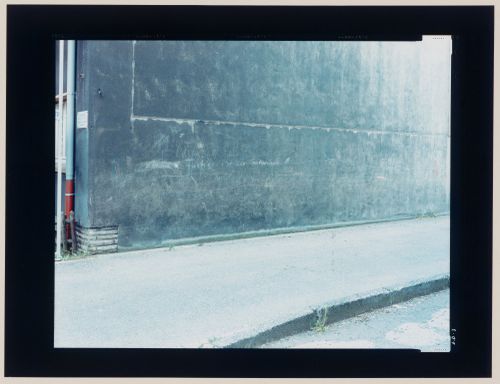
View of a wall with graffiti and a sidewalk, Essen, Germany (from the series "In between cities")
View of a wall with graffiti and a sidewalk, Essen, Germany (from the series "In between cities")
Actions:
Numéro de référence:
PH2003:0073
PH2003:0073
Personnes et institutions:
Sujet:
architecture
architecture
Date:
August 1993
August 1993
Titre:
View of a wall with graffiti and a sidewalk, Essen, Germany (from the series "In between cities")
Actions:
PH2003:0073
View of a wall with graffiti and a sidewalk, Essen, Germany (from the series "In between cities")
Actions:
PH2003:0073
Classification:
photographies
photographies
Date:
August 1993
August 1993
Personnes et institutions:
Sujet:
architecture
architecture
Classification:
photographies
photographies
Titre:
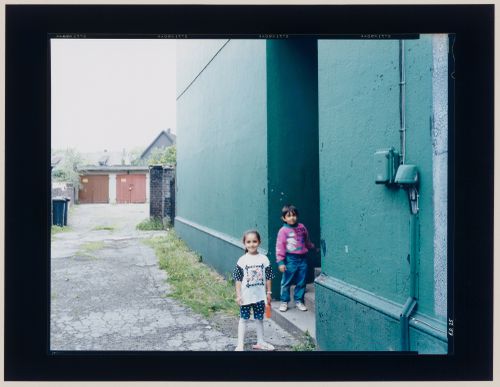
View of two children at the entrance to a garage, Germany (from the series "In between cities")
View of two children at the entrance to a garage, Germany (from the series "In between cities")
Actions:
Numéro de référence:
PH2003:0074
PH2003:0074
Personnes et institutions:
Sujet:
architecture
architecture
Date:
1993
1993
Titre:
View of two children at the entrance to a garage, Germany (from the series "In between cities")
Actions:
PH2003:0074
View of two children at the entrance to a garage, Germany (from the series "In between cities")
Actions:
PH2003:0074
Classification:
photographies
photographies
Date:
1993
1993
Personnes et institutions:
Sujet:
architecture
architecture
Niveau de description archivistique:
Projet
Projet
Numéro de référence:
AP178.S1.1998.PR10
Description:
This project series documents the Pavilhão de Portugal na Expo Hannover 2000 in Hannover, Germany. While the records were held in the office’s archives this project was assigned the number 112/90. The office assigned the date 1999 for this project The project, a collaboration with Eduardo Souto de Moura, was for the Portuguese pavilion at Expo 2000 in Hannover. The exterior of the pavillion was made of natural materials including cork, limestone, and tiles. The use of expanded cork was symbolic, as Portugal is the principal producer worldwide. The building could be dismantled and was moved from Hannover and rebuilt in Coimbra in 2002. It was renamed Pavilhão Centro de Portugal and served as a venue for concerts, exhibitions and other cultural events. Documenting this project are sketches and elevations. Textual materials include documentation about the reconstruction in Coimbra. Photographic material documents the built project.
AP178.S1.1998.PR10
Description:
This project series documents the Pavilhão de Portugal na Expo Hannover 2000 in Hannover, Germany. While the records were held in the office’s archives this project was assigned the number 112/90. The office assigned the date 1999 for this project The project, a collaboration with Eduardo Souto de Moura, was for the Portuguese pavilion at Expo 2000 in Hannover. The exterior of the pavillion was made of natural materials including cork, limestone, and tiles. The use of expanded cork was symbolic, as Portugal is the principal producer worldwide. The building could be dismantled and was moved from Hannover and rebuilt in Coimbra in 2002. It was renamed Pavilhão Centro de Portugal and served as a venue for concerts, exhibitions and other cultural events. Documenting this project are sketches and elevations. Textual materials include documentation about the reconstruction in Coimbra. Photographic material documents the built project.
Personnes et institutions:
Date:
1998-2001
1998-2001
Titre:
Pavilhão de Portugal na Expo Hannover 2000 [Portugal pavillon, Expo Hannover 2000], Hannover, Germany (1998)
Actions:
AP178.S1.1998.PR10
Description:
This project series documents the Pavilhão de Portugal na Expo Hannover 2000 in Hannover, Germany. While the records were held in the office’s archives this project was assigned the number 112/90. The office assigned the date 1999 for this project The project, a collaboration with Eduardo Souto de Moura, was for the Portuguese pavilion at Expo 2000 in Hannover. The exterior of the pavillion was made of natural materials including cork, limestone, and tiles. The use of expanded cork was symbolic, as Portugal is the principal producer worldwide. The building could be dismantled and was moved from Hannover and rebuilt in Coimbra in 2002. It was renamed Pavilhão Centro de Portugal and served as a venue for concerts, exhibitions and other cultural events. Documenting this project are sketches and elevations. Textual materials include documentation about the reconstruction in Coimbra. Photographic material documents the built project.
Pavilhão de Portugal na Expo Hannover 2000 [Portugal pavillon, Expo Hannover 2000], Hannover, Germany (1998)
Actions:
AP178.S1.1998.PR10
Description:
This project series documents the Pavilhão de Portugal na Expo Hannover 2000 in Hannover, Germany. While the records were held in the office’s archives this project was assigned the number 112/90. The office assigned the date 1999 for this project The project, a collaboration with Eduardo Souto de Moura, was for the Portuguese pavilion at Expo 2000 in Hannover. The exterior of the pavillion was made of natural materials including cork, limestone, and tiles. The use of expanded cork was symbolic, as Portugal is the principal producer worldwide. The building could be dismantled and was moved from Hannover and rebuilt in Coimbra in 2002. It was renamed Pavilhão Centro de Portugal and served as a venue for concerts, exhibitions and other cultural events. Documenting this project are sketches and elevations. Textual materials include documentation about the reconstruction in Coimbra. Photographic material documents the built project.
Niveau de description archivistique:
Project
Project
Date:
1998-2001
1998-2001
Personnes et institutions:
Classification:
photographies
photographies
Actions:
Numéro de référence:
PH1981:0111
PH1981:0111
Personnes et institutions:
Date:
ca. 1930
ca. 1930
Classification:
photographies
photographies
Date:
ca. 1930
ca. 1930
Personnes et institutions:


