


2314 Résultats
Classification:
livres
livres
Actions:
Prix:
$62.95
(disponible sur commande)
Résumé:
This is a manual investigating the subject of urban ecology and systemic development from the perspective of architectural design. It sets out to explore two main goals: to discuss the contemporary relevance of a systemic practice to architectural design, and to share a toolbox of informational design protocols developed to describe the city as a territory of(...)
$62.95
(disponible sur commande)
Résumé:
This is a manual investigating the subject of urban ecology and systemic development from the perspective of architectural design. It sets out to explore two main goals: to discuss the contemporary relevance of a systemic practice to architectural design, and to share a toolbox of informational design protocols developed to describe the city as a territory of(...)
Publication:
août 2012
août 2012
Titre:
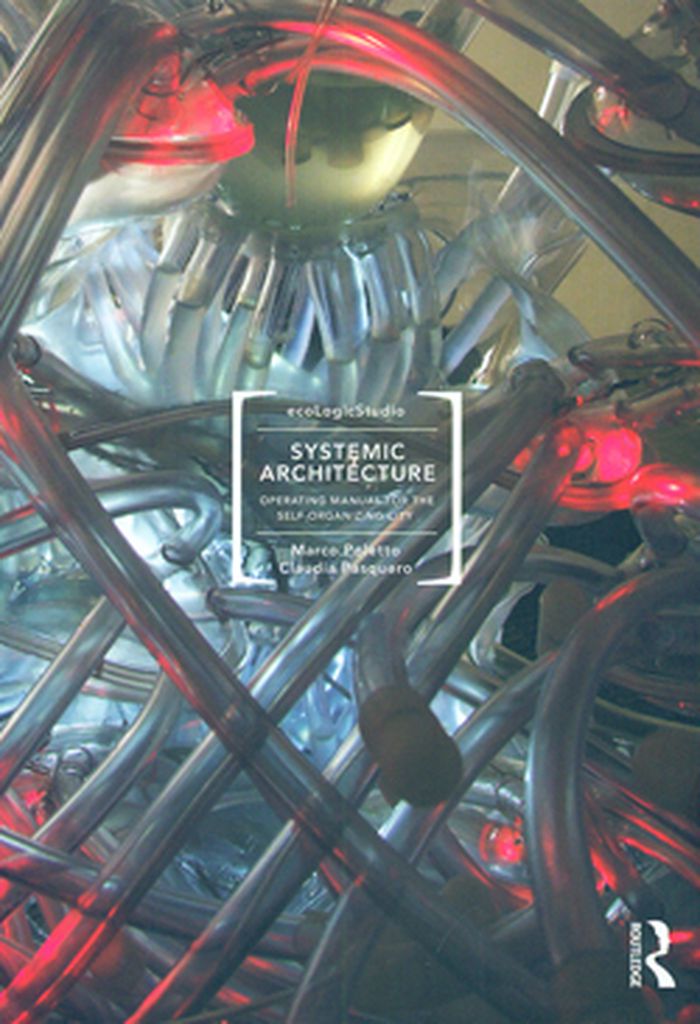
Systemic architecture : operating manual for the self-organizing city
Actions:
Prix:
$62.95
(disponible sur commande)
Résumé:
This is a manual investigating the subject of urban ecology and systemic development from the perspective of architectural design. It sets out to explore two main goals: to discuss the contemporary relevance of a systemic practice to architectural design, and to share a toolbox of informational design protocols developed to describe the city as a territory of self-organization. Collecting together nearly a decade of design experiments by the authors and their practice, ecoLogicStudio, the book discusses key disciplinary definitions such as ecologic urbanism, algorithmic architecture, bottom-up or tactical design, behavioural space and the boundary of the natural and the artificial realms within the city and architecture.
Systemic architecture : operating manual for the self-organizing city
Actions:
Prix:
$62.95
(disponible sur commande)
Résumé:
This is a manual investigating the subject of urban ecology and systemic development from the perspective of architectural design. It sets out to explore two main goals: to discuss the contemporary relevance of a systemic practice to architectural design, and to share a toolbox of informational design protocols developed to describe the city as a territory of self-organization. Collecting together nearly a decade of design experiments by the authors and their practice, ecoLogicStudio, the book discusses key disciplinary definitions such as ecologic urbanism, algorithmic architecture, bottom-up or tactical design, behavioural space and the boundary of the natural and the artificial realms within the city and architecture.
Classification:
livres
livres
Publication:
août 2012
août 2012
Classification:
livres
livres

Actions:
Prix:
$40.00
(disponible sur commande)
Résumé:
Covering 825 species, Trees of Eastern North America presents all the native and naturalized trees of the eastern United States and Canada as far west as the Great Plains-including those species found only in tropical and subtropical Florida and northernmost Canada-the book features superior descriptions; thousands of color paintings by David More that illustrate(...)
$40.00
(disponible sur commande)
Résumé:
Covering 825 species, Trees of Eastern North America presents all the native and naturalized trees of the eastern United States and Canada as far west as the Great Plains-including those species found only in tropical and subtropical Florida and northernmost Canada-the book features superior descriptions; thousands of color paintings by David More that illustrate(...)
Titre:
Trees of Eastern North America
Actions:
Prix:
$40.00
(disponible sur commande)
Résumé:
Covering 825 species, Trees of Eastern North America presents all the native and naturalized trees of the eastern United States and Canada as far west as the Great Plains-including those species found only in tropical and subtropical Florida and northernmost Canada-the book features superior descriptions; thousands of color paintings by David More that illustrate important visual details; range maps that provide a thumbnail view of distribution for each native species; "Quick ID" summaries; a user-friendly layout; scientific and common names; the latest taxonomy; information on the most recently naturalized species; keys to leaves and twigs; and an introduction to tree identification, forest ecology, and plant classification and structure.
Trees of Eastern North America
Actions:
Prix:
$40.00
(disponible sur commande)
Résumé:
Covering 825 species, Trees of Eastern North America presents all the native and naturalized trees of the eastern United States and Canada as far west as the Great Plains-including those species found only in tropical and subtropical Florida and northernmost Canada-the book features superior descriptions; thousands of color paintings by David More that illustrate important visual details; range maps that provide a thumbnail view of distribution for each native species; "Quick ID" summaries; a user-friendly layout; scientific and common names; the latest taxonomy; information on the most recently naturalized species; keys to leaves and twigs; and an introduction to tree identification, forest ecology, and plant classification and structure.
Classification:
livres
livres
Publication:
mai 2014
mai 2014
Sujet:
Jardins
Jardins
Classification:
livres
livres
Actions:
Exemplaires:
Description:
514 pages : numerous illustrations (chiefly color), plans ; 29 cm
Description:
514 pages : numerous illustrations (chiefly color), plans ; 29 cm
Auteur:
Sujet:
Publication:
Zürich : Park Books, [2026], ©2026
Zürich : Park Books, [2026], ©2026
Titre:
Meditations in entropy : the work of Kashef Chowdhury / URBANA / with essays by Kenneth Frampton, Ainun Nishat, Robert McCarter, William J.R. Curtis, Philip Ursprung ; photographs by Hélène Binet.
Actions:
Exemplaires:
Description:
514 pages : numerous illustrations (chiefly color), plans ; 29 cm
Meditations in entropy : the work of Kashef Chowdhury / URBANA / with essays by Kenneth Frampton, Ainun Nishat, Robert McCarter, William J.R. Curtis, Philip Ursprung ; photographs by Hélène Binet.
Actions:
Exemplaires:
Description:
514 pages : numerous illustrations (chiefly color), plans ; 29 cm
Classification:
livres
livres
Publication:
Zürich : Park Books, [2026], ©2026
Zürich : Park Books, [2026], ©2026
Auteur:
Sujet:
Classification:
livres
livres
Actions:
Exemplaires:
Description:
ix, 302 pages : illustrations, maps ; 24 cm
Description:
ix, 302 pages : illustrations, maps ; 24 cm
Auteur:
Sujet:
Publication:
Pittsburgh, Pa. : University of Pittsburgh Press, ©2012.
Pittsburgh, Pa. : University of Pittsburgh Press, ©2012.
Titre:
Urban rivers : remaking rivers, cities, and space in Europe and North America / edited by Stephane Castonguay and Matthew Evenden.
Actions:
Exemplaires:
Description:
ix, 302 pages : illustrations, maps ; 24 cm
Urban rivers : remaking rivers, cities, and space in Europe and North America / edited by Stephane Castonguay and Matthew Evenden.
Actions:
Exemplaires:
Description:
ix, 302 pages : illustrations, maps ; 24 cm
Classification:
livres
livres
Publication:
Pittsburgh, Pa. : University of Pittsburgh Press, ©2012.
Pittsburgh, Pa. : University of Pittsburgh Press, ©2012.
Auteur:
Sujet:
Classification:
livres
livres
Actions:
Exemplaires:
Description:
763 pages : illustrations (chiefly color), maps, plans ; 24 cm
Description:
763 pages : illustrations (chiefly color), maps, plans ; 24 cm
Auteur:
Sujet:
Publication:
Berlin : Sternberg Press, ©2014.
Berlin : Sternberg Press, ©2014.
Titre:
Forensis : the architecture of public truth / [a project by Forensic Architecture, Centre for Research Architecture, Department of Visual Cultures, Goldsmiths, University of London].
Actions:
Exemplaires:
Description:
763 pages : illustrations (chiefly color), maps, plans ; 24 cm
Forensis : the architecture of public truth / [a project by Forensic Architecture, Centre for Research Architecture, Department of Visual Cultures, Goldsmiths, University of London].
Actions:
Exemplaires:
Description:
763 pages : illustrations (chiefly color), maps, plans ; 24 cm
Classification:
livres
livres
Publication:
Berlin : Sternberg Press, ©2014.
Berlin : Sternberg Press, ©2014.
Auteur:
Sujet:
Classification:
livres
livres
Titre:
The museum of capitalism
The museum of capitalism
Actions:
Prix:
$45.00
(disponible en magasin)
Résumé:
This speculative institution views the present and recent past from the implied perspective of a future society in which our economic and political system is memorialized, and subjected to the museological gaze. Sketches and renderings of exhibits and artifacts, combined with relevant quotations from historical sources, are interspersed with speculative essays on the(...)
$45.00
(disponible en magasin)
Résumé:
This speculative institution views the present and recent past from the implied perspective of a future society in which our economic and political system is memorialized, and subjected to the museological gaze. Sketches and renderings of exhibits and artifacts, combined with relevant quotations from historical sources, are interspersed with speculative essays on the(...)
Publication:
septembre 2017
septembre 2017
Titre:
The museum of capitalism
Actions:
Prix:
$45.00
(disponible en magasin)
Résumé:
This speculative institution views the present and recent past from the implied perspective of a future society in which our economic and political system is memorialized, and subjected to the museological gaze. Sketches and renderings of exhibits and artifacts, combined with relevant quotations from historical sources, are interspersed with speculative essays on the intersections of ecology, race, museology, historiography, economics and politics. Included are representations of artworks and museum exhibits created by artists Oliver Ressler, Sayler/Morris, Dread Scott, Temporary Services, and others, original Isotype graphics drawn from the museum’s lexicon of “capitalisms,” and texts from Lucy Lippard, Lester K. Spence, T.J. Demos, Chantal Mouffe, McKenzie Wark and Kim Stanley Robinson, among others.
The museum of capitalism
Actions:
Prix:
$45.00
(disponible en magasin)
Résumé:
This speculative institution views the present and recent past from the implied perspective of a future society in which our economic and political system is memorialized, and subjected to the museological gaze. Sketches and renderings of exhibits and artifacts, combined with relevant quotations from historical sources, are interspersed with speculative essays on the intersections of ecology, race, museology, historiography, economics and politics. Included are representations of artworks and museum exhibits created by artists Oliver Ressler, Sayler/Morris, Dread Scott, Temporary Services, and others, original Isotype graphics drawn from the museum’s lexicon of “capitalisms,” and texts from Lucy Lippard, Lester K. Spence, T.J. Demos, Chantal Mouffe, McKenzie Wark and Kim Stanley Robinson, among others.
Classification:
livres
livres
Publication:
septembre 2017
septembre 2017
Classification:
périodiques
périodiques
Titre:
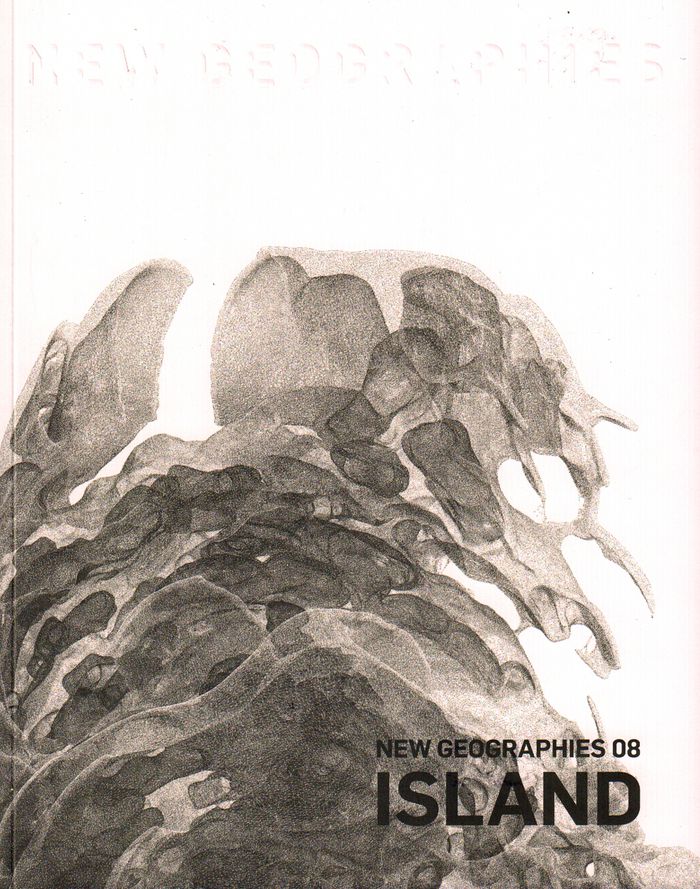
New Geographies 8: Island
New Geographies 8: Island
Actions:
Prix:
$34.95
(disponible sur commande)
Résumé:
As a master metaphor, the island has been a fecund source of inspiration across many domains. From More’s Utopia to Darwin’s evolutionary theory to Ungers’s archipelago, insights derived from “island thinking” are commonly extrapolated across diverse scales and fields. ''New Geographies 8'' proposes an epistemological pulse between, on the one hand, the ultimate loss of(...)
$34.95
(disponible sur commande)
Résumé:
As a master metaphor, the island has been a fecund source of inspiration across many domains. From More’s Utopia to Darwin’s evolutionary theory to Ungers’s archipelago, insights derived from “island thinking” are commonly extrapolated across diverse scales and fields. ''New Geographies 8'' proposes an epistemological pulse between, on the one hand, the ultimate loss of(...)
Titre:
New Geographies 8: Island
Actions:
Prix:
$34.95
(disponible sur commande)
Résumé:
As a master metaphor, the island has been a fecund source of inspiration across many domains. From More’s Utopia to Darwin’s evolutionary theory to Ungers’s archipelago, insights derived from “island thinking” are commonly extrapolated across diverse scales and fields. ''New Geographies 8'' proposes an epistemological pulse between, on the one hand, the ultimate loss of the exterior implied in planetary upscaling of territorial interpretations (toward an idea of the world as a whole) and, on the other hand, the need to rearrange new boundaries in an environment viewed through the process-oriented lens of ecology. An “atlas” of islands, New Geographies, 8 explores the new limits of islandness and gathers examples to reassert its relevance for design disciplines.
New Geographies 8: Island
Actions:
Prix:
$34.95
(disponible sur commande)
Résumé:
As a master metaphor, the island has been a fecund source of inspiration across many domains. From More’s Utopia to Darwin’s evolutionary theory to Ungers’s archipelago, insights derived from “island thinking” are commonly extrapolated across diverse scales and fields. ''New Geographies 8'' proposes an epistemological pulse between, on the one hand, the ultimate loss of the exterior implied in planetary upscaling of territorial interpretations (toward an idea of the world as a whole) and, on the other hand, the need to rearrange new boundaries in an environment viewed through the process-oriented lens of ecology. An “atlas” of islands, New Geographies, 8 explores the new limits of islandness and gathers examples to reassert its relevance for design disciplines.
Classification:
périodiques
périodiques
Publication:
novembre 2016
novembre 2016
Sujet:
Revues
Revues
Classification:
livres
livres
Actions:
Prix:
$99.00
(disponible sur commande)
Résumé:
The designer, author and design activist Victor J. Papanek anticipated an understanding of design as a tool for political change and social good that is more relevant today than ever. He was one of the first designers in the mainstream arena to critically question design's social and ecological consequences, introducing a new set of ethical questions into the design(...)
$99.00
(disponible sur commande)
Résumé:
The designer, author and design activist Victor J. Papanek anticipated an understanding of design as a tool for political change and social good that is more relevant today than ever. He was one of the first designers in the mainstream arena to critically question design's social and ecological consequences, introducing a new set of ethical questions into the design(...)
Sujet:
Théorie du design
Théorie du design
Publication:
novembre 2018
novembre 2018
Titre:
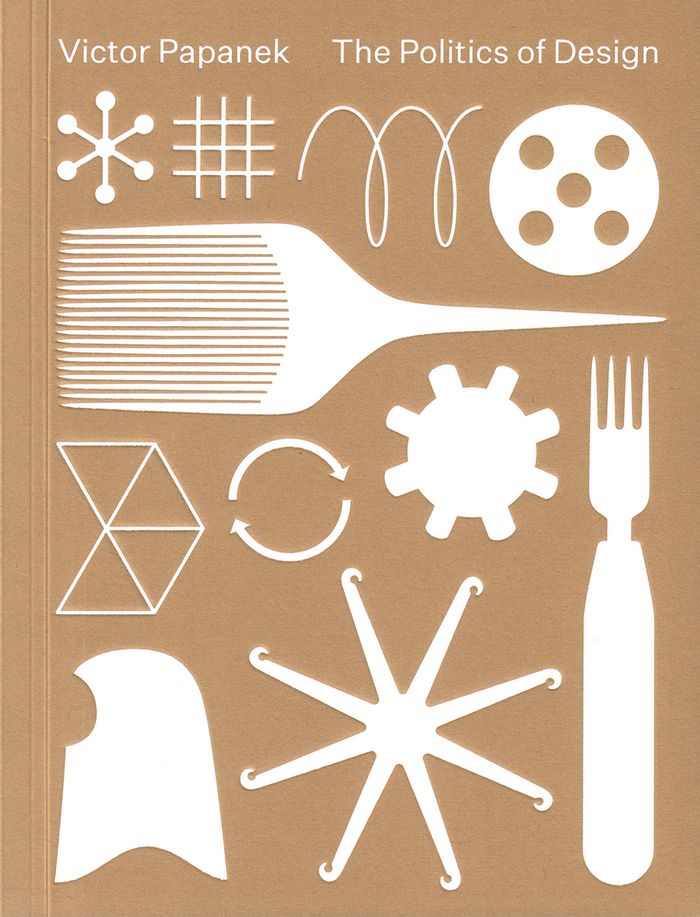
Victor Papanek: the politics of design
Actions:
Prix:
$99.00
(disponible sur commande)
Résumé:
The designer, author and design activist Victor J. Papanek anticipated an understanding of design as a tool for political change and social good that is more relevant today than ever. He was one of the first designers in the mainstream arena to critically question design's social and ecological consequences, introducing a new set of ethical questions into the design field. "Victor Papanek: The Politics of Design" presents an encompassing overview of Papanek's oeuvre, at the heart of which stood his preoccupation with the socially marginalized and his commitment to the interests of areas then called the Third World, as well as his involvement in the fields of ecology, bionics, sustainability and anti-consumerism.
Victor Papanek: the politics of design
Actions:
Prix:
$99.00
(disponible sur commande)
Résumé:
The designer, author and design activist Victor J. Papanek anticipated an understanding of design as a tool for political change and social good that is more relevant today than ever. He was one of the first designers in the mainstream arena to critically question design's social and ecological consequences, introducing a new set of ethical questions into the design field. "Victor Papanek: The Politics of Design" presents an encompassing overview of Papanek's oeuvre, at the heart of which stood his preoccupation with the socially marginalized and his commitment to the interests of areas then called the Third World, as well as his involvement in the fields of ecology, bionics, sustainability and anti-consumerism.
Classification:
livres
livres
Publication:
novembre 2018
novembre 2018
Sujet:
Théorie du design
Théorie du design
Classification:
livres
livres
Actions:
Prix:
$34.95
(disponible sur commande)
Résumé:
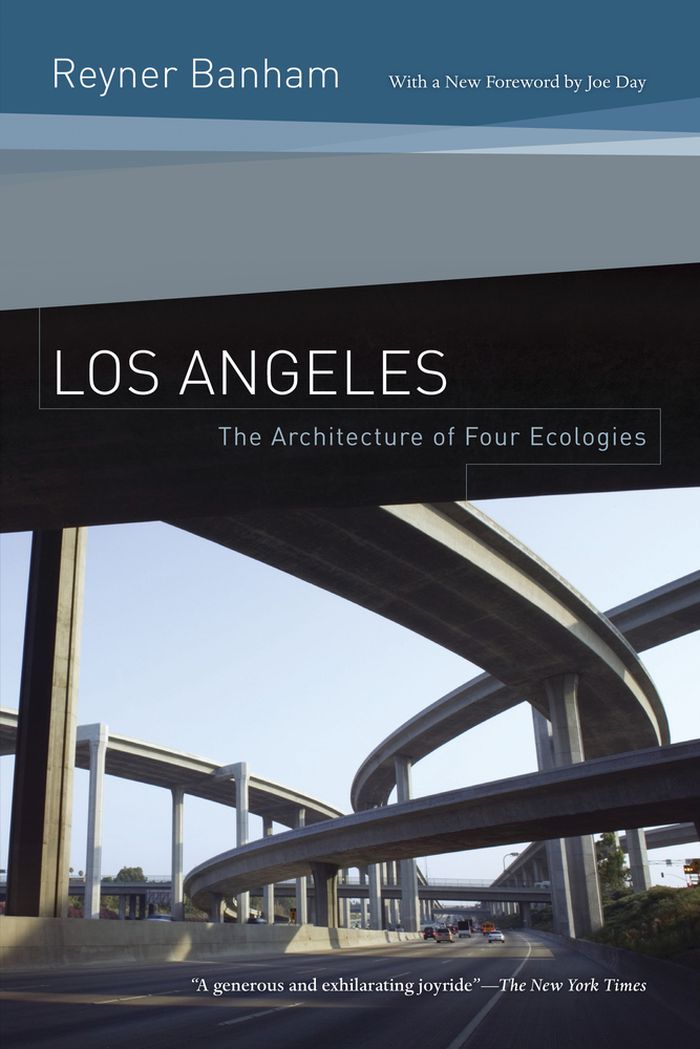
Reyner Banham examined the built environment of Los Angeles in a way no architectural historian before him had done, looking with fresh eyes at its manifestations of popular taste and industrial ingenuity, as well as its more traditional modes of residential and commercial building. His construct of "four ecologies" examined the ways Angelenos relate to the beach, the(...)
$34.95
(disponible sur commande)
Résumé:
Reyner Banham examined the built environment of Los Angeles in a way no architectural historian before him had done, looking with fresh eyes at its manifestations of popular taste and industrial ingenuity, as well as its more traditional modes of residential and commercial building. His construct of "four ecologies" examined the ways Angelenos relate to the beach, the(...)
Titre:
Los Angeles: the architecture of four ecologies
Actions:
Prix:
$34.95
(disponible sur commande)
Résumé:
Reyner Banham examined the built environment of Los Angeles in a way no architectural historian before him had done, looking with fresh eyes at its manifestations of popular taste and industrial ingenuity, as well as its more traditional modes of residential and commercial building. His construct of "four ecologies" examined the ways Angelenos relate to the beach, the freeways, the flatlands, and the foothills. Banham delighted in this mobile city and identified it as an exemplar of the posturban future. In a spectacular new foreword, architect and scholar Joe Day explores how the structure of Los Angeles, the concept of "ecology," and the relevance of Banham's ideas have changed over the past thirty-five years.
Los Angeles: the architecture of four ecologies
Actions:
Prix:
$34.95
(disponible sur commande)
Résumé:
Reyner Banham examined the built environment of Los Angeles in a way no architectural historian before him had done, looking with fresh eyes at its manifestations of popular taste and industrial ingenuity, as well as its more traditional modes of residential and commercial building. His construct of "four ecologies" examined the ways Angelenos relate to the beach, the freeways, the flatlands, and the foothills. Banham delighted in this mobile city and identified it as an exemplar of the posturban future. In a spectacular new foreword, architect and scholar Joe Day explores how the structure of Los Angeles, the concept of "ecology," and the relevance of Banham's ideas have changed over the past thirty-five years.
Classification:
livres
livres
Publication:
mars 2009
mars 2009
Sujet:
Théorie de l’urbanisme
Théorie de l’urbanisme
Classification:
livres
livres

Actions:
Prix:
$80.00
(disponible sur commande)
Résumé:
Plunge into the ancestral water wisdom that could reshape all our futures. This book reveals how Indigenous innovations—like floating farms, tidal fish traps, and aquifer recharge systems—have sustained civilizations for millennia by working with nature, not against it. Far from relics, these systems offer dynamic, adaptable solutions for the climate crisis of today.(...)
$80.00
(disponible sur commande)
Résumé:
Plunge into the ancestral water wisdom that could reshape all our futures. This book reveals how Indigenous innovations—like floating farms, tidal fish traps, and aquifer recharge systems—have sustained civilizations for millennia by working with nature, not against it. Far from relics, these systems offer dynamic, adaptable solutions for the climate crisis of today.(...)
Titre:
Lo-TEK Water: A field guide for TEKnology
Actions:
Prix:
$80.00
(disponible sur commande)
Résumé:
Plunge into the ancestral water wisdom that could reshape all our futures. This book reveals how Indigenous innovations—like floating farms, tidal fish traps, and aquifer recharge systems—have sustained civilizations for millennia by working with nature, not against it. Far from relics, these systems offer dynamic, adaptable solutions for the climate crisis of today. Structured to bridge past and future, the author Julia Watson dissolves the divide between technology and ecology, between ancestral wisdom and digital innovation. The TEKnological Renaissance it celebrates redefines water as an intelligent force that can shape resilient cities and landscapes. Aquatic infrastructure is reframed—from extractive and industrial into regenerative and evolving—designed to sustain life for generations.
Lo-TEK Water: A field guide for TEKnology
Actions:
Prix:
$80.00
(disponible sur commande)
Résumé:
Plunge into the ancestral water wisdom that could reshape all our futures. This book reveals how Indigenous innovations—like floating farms, tidal fish traps, and aquifer recharge systems—have sustained civilizations for millennia by working with nature, not against it. Far from relics, these systems offer dynamic, adaptable solutions for the climate crisis of today. Structured to bridge past and future, the author Julia Watson dissolves the divide between technology and ecology, between ancestral wisdom and digital innovation. The TEKnological Renaissance it celebrates redefines water as an intelligent force that can shape resilient cities and landscapes. Aquatic infrastructure is reframed—from extractive and industrial into regenerative and evolving—designed to sustain life for generations.
Classification:
livres
livres
Publication:
décembre 2025
décembre 2025
Sujet:
Architecture autochtone
Architecture autochtone


