


2285 Résultats
Classification:
livres
livres
Titre:
Threads talks series
Threads talks series
Actions:
Prix:
$29.95
(disponible en magasin)
Résumé:
THREADS, a series of talks devoted to the art of the book, includes poets, artists, and publishers. It explores and enriches relationships between various strands of book culture that are often approached in isolation: poetry and writing; visual and performing arts; collaboration; design; printing; independent publishing; literary history; critical theory; and material(...)
$29.95
(disponible en magasin)
Résumé:
THREADS, a series of talks devoted to the art of the book, includes poets, artists, and publishers. It explores and enriches relationships between various strands of book culture that are often approached in isolation: poetry and writing; visual and performing arts; collaboration; design; printing; independent publishing; literary history; critical theory; and material(...)
Titre:
Threads talks series
Actions:
Prix:
$29.95
(disponible en magasin)
Résumé:
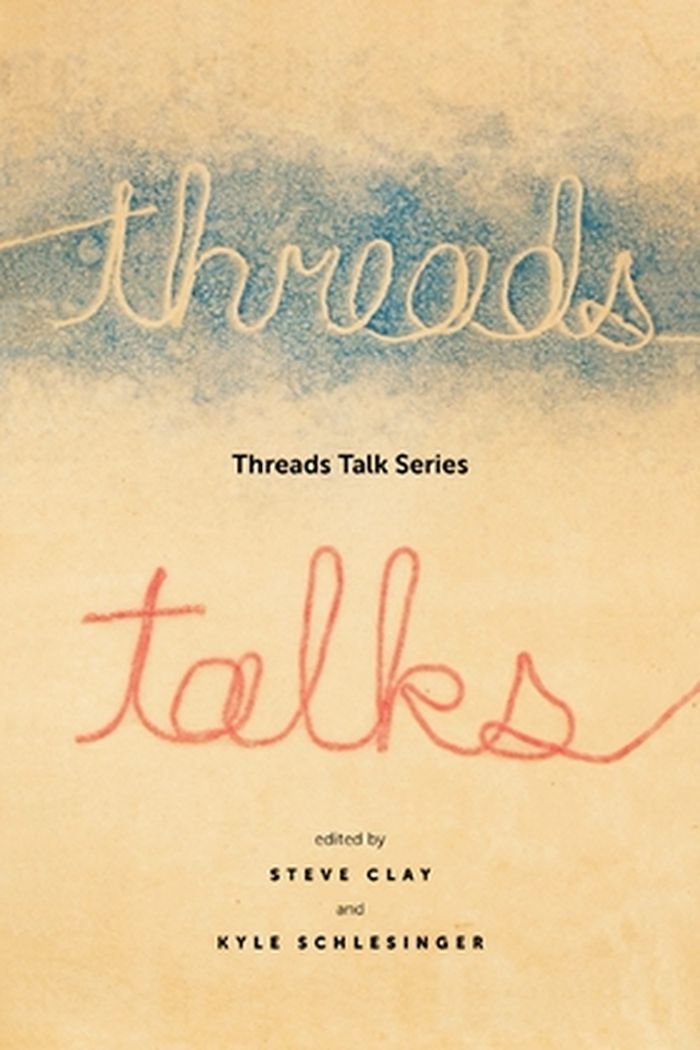
THREADS, a series of talks devoted to the art of the book, includes poets, artists, and publishers. It explores and enriches relationships between various strands of book culture that are often approached in isolation: poetry and writing; visual and performing arts; collaboration; design; printing; independent publishing; literary history; critical theory; and material culture. The premise for the series was very similar to the kind of interdisciplinary approach to the book that has interested us all along. A book is never more successful than the relationship between its parts; the philosophical and material connections between writing, art, design, typography, translation, and distribution is more significant than excellence in any isolated area. The talks were originally recorded before a small studio audience, then made available to the public on PennSound, and are now collected here in written form for the first time. THREADS began in March 2009 and concluded in October 2012. There were twelve speakers: Alan Loney; Charles Alexander; Simon Cutts; Buzz Spector; Jerome Rothenberg; Cecilia Vicuna; Jen Bervin; Kathleen Walkup; Johanna Drucker; Keith Smith; Richard Minsky; and Emily McVarish."
Threads talks series
Actions:
Prix:
$29.95
(disponible en magasin)
Résumé:
THREADS, a series of talks devoted to the art of the book, includes poets, artists, and publishers. It explores and enriches relationships between various strands of book culture that are often approached in isolation: poetry and writing; visual and performing arts; collaboration; design; printing; independent publishing; literary history; critical theory; and material culture. The premise for the series was very similar to the kind of interdisciplinary approach to the book that has interested us all along. A book is never more successful than the relationship between its parts; the philosophical and material connections between writing, art, design, typography, translation, and distribution is more significant than excellence in any isolated area. The talks were originally recorded before a small studio audience, then made available to the public on PennSound, and are now collected here in written form for the first time. THREADS began in March 2009 and concluded in October 2012. There were twelve speakers: Alan Loney; Charles Alexander; Simon Cutts; Buzz Spector; Jerome Rothenberg; Cecilia Vicuna; Jen Bervin; Kathleen Walkup; Johanna Drucker; Keith Smith; Richard Minsky; and Emily McVarish."
Classification:
livres
livres
Publication:
mars 2016
mars 2016
Classification:
livres
livres

Titre:
Hall of best knowledge
Hall of best knowledge
Actions:
Prix:
$21.95
(disponible sur commande)
Résumé:
Ray Fenwick has pioneered his own medium of storytelling, one best described as "typographical comics." Hall of Best Knowledge is presented as a handsome, personal journal written by an unnamed voice, referred to only as "The Author." Little is known about him; he makes occasional, derogatory references to a twin brother and younger sibling, but reveals little else. He(...)
$21.95
(disponible sur commande)
Résumé:
Ray Fenwick has pioneered his own medium of storytelling, one best described as "typographical comics." Hall of Best Knowledge is presented as a handsome, personal journal written by an unnamed voice, referred to only as "The Author." Little is known about him; he makes occasional, derogatory references to a twin brother and younger sibling, but reveals little else. He(...)
Titre:
Hall of best knowledge
Actions:
Prix:
$21.95
(disponible sur commande)
Résumé:
Ray Fenwick has pioneered his own medium of storytelling, one best described as "typographical comics." Hall of Best Knowledge is presented as a handsome, personal journal written by an unnamed voice, referred to only as "The Author." Little is known about him; he makes occasional, derogatory references to a twin brother and younger sibling, but reveals little else. He clearly fashions himself a genius, writing with a faux-aristocratic air, and it is presumably his belief in his own genius that leads him to want to share his knowledge with the world. Each page features information such as "It hardly needs mentioning that riding a pony is no intellectual triumph.... If riding a pony is so fantastic, why have I never read of any renowned pony-riding genius? It is because such a person does not exist, making it a foolish waste of time unworthy of attention." These pearls of wisdom are lettered in an elegant, almost obsessive fashion, entirely hand-crafted and bedecked with Ionic columns and fleurs-de-lis.
Hall of best knowledge
Actions:
Prix:
$21.95
(disponible sur commande)
Résumé:
Ray Fenwick has pioneered his own medium of storytelling, one best described as "typographical comics." Hall of Best Knowledge is presented as a handsome, personal journal written by an unnamed voice, referred to only as "The Author." Little is known about him; he makes occasional, derogatory references to a twin brother and younger sibling, but reveals little else. He clearly fashions himself a genius, writing with a faux-aristocratic air, and it is presumably his belief in his own genius that leads him to want to share his knowledge with the world. Each page features information such as "It hardly needs mentioning that riding a pony is no intellectual triumph.... If riding a pony is so fantastic, why have I never read of any renowned pony-riding genius? It is because such a person does not exist, making it a foolish waste of time unworthy of attention." These pearls of wisdom are lettered in an elegant, almost obsessive fashion, entirely hand-crafted and bedecked with Ionic columns and fleurs-de-lis.
Classification:
livres
livres
Publication:
avril 2008, Washinton
avril 2008, Washinton
Sujet:
Illustration
Illustration
Classification:
livres
livres
Actions:
Prix:
$45.00
(disponible sur commande)
Résumé:
Of the fifty religious buildings discussed in this book, only a precious few remain standing despite the fact that Montreal boasts one of the largest and most eclectic groupings of Georgian and Victorian structures of any city in North America. Following the British conquest of New France in 1759 a remarkable series of transformations took place in the small,(...)
$45.00
(disponible sur commande)
Résumé:
Of the fifty religious buildings discussed in this book, only a precious few remain standing despite the fact that Montreal boasts one of the largest and most eclectic groupings of Georgian and Victorian structures of any city in North America. Following the British conquest of New France in 1759 a remarkable series of transformations took place in the small,(...)
Titre:
Montréal, city of spires: church architecture during the British colonial period 1760-1860
Actions:
Prix:
$45.00
(disponible sur commande)
Résumé:
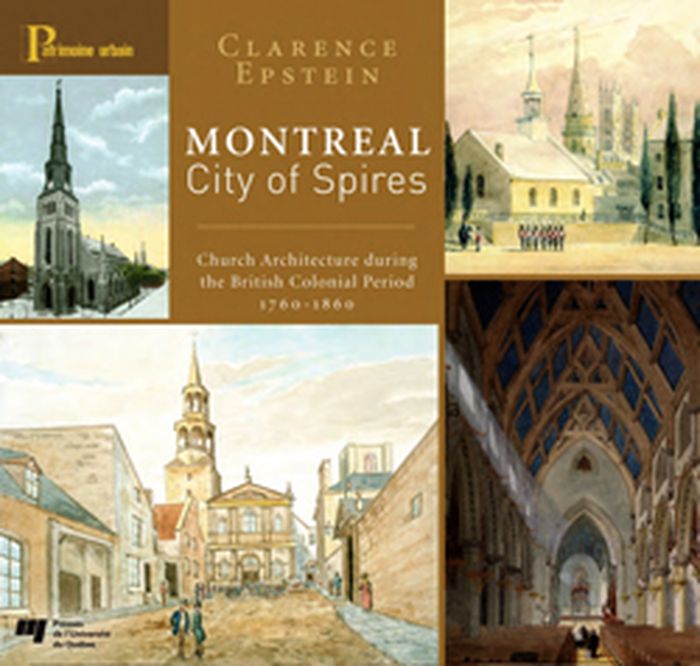
Of the fifty religious buildings discussed in this book, only a precious few remain standing despite the fact that Montreal boasts one of the largest and most eclectic groupings of Georgian and Victorian structures of any city in North America. Following the British conquest of New France in 1759 a remarkable series of transformations took place in the small, Catholic trading town of Montreal. Given the diversity of settlers forced to live side by side, the new church buildings that were to rise became strategic public spaces, meeting places as well as power bases. It was no wonder that by the time Mark Twain toured Canada’s first metropolis in the 1880s, he found that one could not throw a brick in the place without breaking a church window. By addressing the social, religious and architectural issues surrounding these colonial-era structures, it will become apparent that Montreal was at once a shining jewel in England’s imperial crown, a chief outpost of Catholicism in the New World, as well as the British North American headquarters for more than a dozen independent congregations.
Montréal, city of spires: church architecture during the British colonial period 1760-1860
Actions:
Prix:
$45.00
(disponible sur commande)
Résumé:
Of the fifty religious buildings discussed in this book, only a precious few remain standing despite the fact that Montreal boasts one of the largest and most eclectic groupings of Georgian and Victorian structures of any city in North America. Following the British conquest of New France in 1759 a remarkable series of transformations took place in the small, Catholic trading town of Montreal. Given the diversity of settlers forced to live side by side, the new church buildings that were to rise became strategic public spaces, meeting places as well as power bases. It was no wonder that by the time Mark Twain toured Canada’s first metropolis in the 1880s, he found that one could not throw a brick in the place without breaking a church window. By addressing the social, religious and architectural issues surrounding these colonial-era structures, it will become apparent that Montreal was at once a shining jewel in England’s imperial crown, a chief outpost of Catholicism in the New World, as well as the British North American headquarters for more than a dozen independent congregations.
Classification:
livres
livres
Publication:
avril 2012
avril 2012
Sujet:
Architecture de Montréal
Architecture de Montréal
Classification:
livres
livres
Titre:
Philippe Parreno: C.H.Z.
Philippe Parreno: C.H.Z.
Actions:
Prix:
$50.00
(disponible sur commande)
Résumé:
Renowned for his sophisticated ruminations on nature and artifice, character and its construction, and the transformative lens of history and nostalgia, Philippe Parreno (born 1964) created C.H.Z. in a zone between science and fiction. According to NASA, any planet hospitable to life will most likely orbit a pair of dwarf stars in a Continuously Habitable Zone. The effect(...)
$50.00
(disponible sur commande)
Résumé:
Renowned for his sophisticated ruminations on nature and artifice, character and its construction, and the transformative lens of history and nostalgia, Philippe Parreno (born 1964) created C.H.Z. in a zone between science and fiction. According to NASA, any planet hospitable to life will most likely orbit a pair of dwarf stars in a Continuously Habitable Zone. The effect(...)
Publication:
septembre 2012
septembre 2012
Titre:
Philippe Parreno: C.H.Z.
Actions:
Prix:
$50.00
(disponible sur commande)
Résumé:
Renowned for his sophisticated ruminations on nature and artifice, character and its construction, and the transformative lens of history and nostalgia, Philippe Parreno (born 1964) created C.H.Z. in a zone between science and fiction. According to NASA, any planet hospitable to life will most likely orbit a pair of dwarf stars in a Continuously Habitable Zone. The effect of multiple stars is black vegetation. Working with landscape architect Bas Smets, the artist painstakingly constructed a garden of black plants on the side of a mountain in Portugal, where the garden continues to flourish outside the framework of an art object; Parreno then shot a poetic, abstract film in that alien landscape, rendering the territory inescapably cinematic. C.H.Z. features the artist’s dark, impasto ink drawings, which functioned as a storyboard for the cinematographer Darius Khondji, as well as sequences of stills of the seven stages of the film. Parreno’s reflections and commentary are featured alongside the images and paired with comprehensive essay by Nancy Spector, deputy director and chief curator of the Guggenheim Museum, New York.
Philippe Parreno: C.H.Z.
Actions:
Prix:
$50.00
(disponible sur commande)
Résumé:
Renowned for his sophisticated ruminations on nature and artifice, character and its construction, and the transformative lens of history and nostalgia, Philippe Parreno (born 1964) created C.H.Z. in a zone between science and fiction. According to NASA, any planet hospitable to life will most likely orbit a pair of dwarf stars in a Continuously Habitable Zone. The effect of multiple stars is black vegetation. Working with landscape architect Bas Smets, the artist painstakingly constructed a garden of black plants on the side of a mountain in Portugal, where the garden continues to flourish outside the framework of an art object; Parreno then shot a poetic, abstract film in that alien landscape, rendering the territory inescapably cinematic. C.H.Z. features the artist’s dark, impasto ink drawings, which functioned as a storyboard for the cinematographer Darius Khondji, as well as sequences of stills of the seven stages of the film. Parreno’s reflections and commentary are featured alongside the images and paired with comprehensive essay by Nancy Spector, deputy director and chief curator of the Guggenheim Museum, New York.
Classification:
livres
livres
Publication:
septembre 2012
septembre 2012
Classification:
périodiques
périodiques
Titre:
CLOG 5: National Mall
CLOG 5: National Mall
Actions:
Prix:
$18.00
(disponible en magasin)
Résumé:
In 2009, nearly two million people gathered on the National Mall to witness the inauguration of the forty-fourth President of the United States, Barack Obama. Almost fifty years ago on the same grounds, Martin Luther King, Jr. delivered his "I Have a Dream" speech. "America's Front Lawn," the National Mall was not only designed for large political and social gatherings(...)
$18.00
(disponible en magasin)
Résumé:
In 2009, nearly two million people gathered on the National Mall to witness the inauguration of the forty-fourth President of the United States, Barack Obama. Almost fifty years ago on the same grounds, Martin Luther King, Jr. delivered his "I Have a Dream" speech. "America's Front Lawn," the National Mall was not only designed for large political and social gatherings(...)
Titre:
CLOG 5: National Mall
Actions:
Prix:
$18.00
(disponible en magasin)
Résumé:
In 2009, nearly two million people gathered on the National Mall to witness the inauguration of the forty-fourth President of the United States, Barack Obama. Almost fifty years ago on the same grounds, Martin Luther King, Jr. delivered his "I Have a Dream" speech. "America's Front Lawn," the National Mall was not only designed for large political and social gatherings but also to collect and showcase America's culture. Located in the heart of Washington D.C., the Mall is an historic yet evolving example of urban design. Visited annually by approximately thirty million people, the Mall is also a victim of its own success as its grounds and monuments have been steadily eroded by overcrowding in addition to budgetary and administrative pressures. In response to this decline, the newly-formed Trust for the National Mall recently sponsored a competition to redesign key areas of the National Mall. It's time to critically discuss the space that perhaps more than any other reflects what the nation was, is, and wants to be - the National Mall.
CLOG 5: National Mall
Actions:
Prix:
$18.00
(disponible en magasin)
Résumé:
In 2009, nearly two million people gathered on the National Mall to witness the inauguration of the forty-fourth President of the United States, Barack Obama. Almost fifty years ago on the same grounds, Martin Luther King, Jr. delivered his "I Have a Dream" speech. "America's Front Lawn," the National Mall was not only designed for large political and social gatherings but also to collect and showcase America's culture. Located in the heart of Washington D.C., the Mall is an historic yet evolving example of urban design. Visited annually by approximately thirty million people, the Mall is also a victim of its own success as its grounds and monuments have been steadily eroded by overcrowding in addition to budgetary and administrative pressures. In response to this decline, the newly-formed Trust for the National Mall recently sponsored a competition to redesign key areas of the National Mall. It's time to critically discuss the space that perhaps more than any other reflects what the nation was, is, and wants to be - the National Mall.
Classification:
périodiques
périodiques
Publication:
janvier 2013
janvier 2013
Sujet:
Revues
Revues
Classification:
livres
livres
Actions:
Prix:
$150.00
(disponible sur commande)
Résumé:
Large-size working drawings are the foundation of any architectural process and 'key' to practical construction of a building, yet very little has been written and published about the architect's quintessential tool. This new book bridges this gap, as it draws on a vast collection of working drawings from many centuries, held by the Department of Architecture at ETH(...)
$150.00
(disponible sur commande)
Résumé:
Large-size working drawings are the foundation of any architectural process and 'key' to practical construction of a building, yet very little has been written and published about the architect's quintessential tool. This new book bridges this gap, as it draws on a vast collection of working drawings from many centuries, held by the Department of Architecture at ETH(...)
Titre:
The working drawing: the architect's tool
Actions:
Prix:
$150.00
(disponible sur commande)
Résumé:
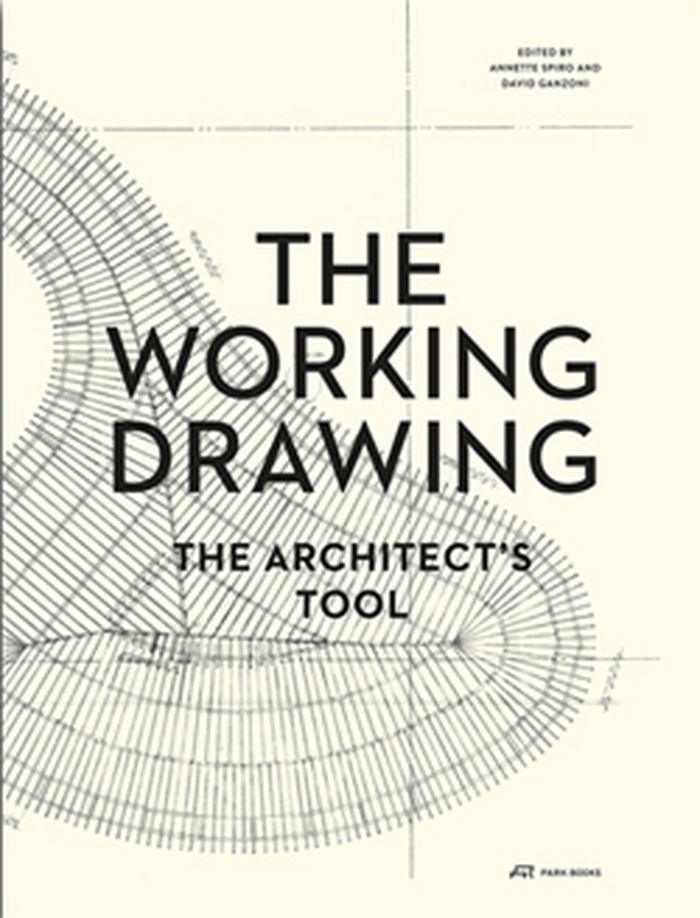
Large-size working drawings are the foundation of any architectural process and 'key' to practical construction of a building, yet very little has been written and published about the architect's quintessential tool. This new book bridges this gap, as it draws on a vast collection of working drawings from many centuries, held by the Department of Architecture at ETH Zurich. This is a collection of plans for a wide range of architectural projects and features many representational techniques. Providing a comprehensive record, around a hundred of the collection's highlights through five centuries, are arranged by category allowing for direct comparison. All plans are depicted entirely in colour on large-size spreads and fold-outs. Full catalogue details are provided for each drawing. Various topics are covered in essays by expert authors, which compliment the images. Featured architects include respected names such as Francesco Borromini, Gottfried Semper, Ludwig Mies van der Rohe, Le Corbusier, Eero Saarinen, Jorn Utzon, Alvaro Siza, Rafael Moneo, Herzog & de Meuron, Peter Zumthor, Diller Scofidio or Caruso St. John.
The working drawing: the architect's tool
Actions:
Prix:
$150.00
(disponible sur commande)
Résumé:
Large-size working drawings are the foundation of any architectural process and 'key' to practical construction of a building, yet very little has been written and published about the architect's quintessential tool. This new book bridges this gap, as it draws on a vast collection of working drawings from many centuries, held by the Department of Architecture at ETH Zurich. This is a collection of plans for a wide range of architectural projects and features many representational techniques. Providing a comprehensive record, around a hundred of the collection's highlights through five centuries, are arranged by category allowing for direct comparison. All plans are depicted entirely in colour on large-size spreads and fold-outs. Full catalogue details are provided for each drawing. Various topics are covered in essays by expert authors, which compliment the images. Featured architects include respected names such as Francesco Borromini, Gottfried Semper, Ludwig Mies van der Rohe, Le Corbusier, Eero Saarinen, Jorn Utzon, Alvaro Siza, Rafael Moneo, Herzog & de Meuron, Peter Zumthor, Diller Scofidio or Caruso St. John.
Classification:
livres
livres
Publication:
février 2014
février 2014
Sujet:
Dessin d’architecture
Dessin d’architecture
Classification:
livres
livres
Titre:
Elements
Elements
Actions:
Prix:
$190.00
(disponible sur commande)
Résumé:
Architecture is a strange mixture of persistence and flux, an amalgamation of elements - some that have been around for over 5,000 years and others that were (re)invented yesterday. The fact that these elements change independently of each other, according to different cycles and economies, and for different reasons, turns each building into a complex collage of the(...)
$190.00
(disponible sur commande)
Résumé:
Architecture is a strange mixture of persistence and flux, an amalgamation of elements - some that have been around for over 5,000 years and others that were (re)invented yesterday. The fact that these elements change independently of each other, according to different cycles and economies, and for different reasons, turns each building into a complex collage of the(...)
Titre:
Elements
Actions:
Prix:
$190.00
(disponible sur commande)
Résumé:
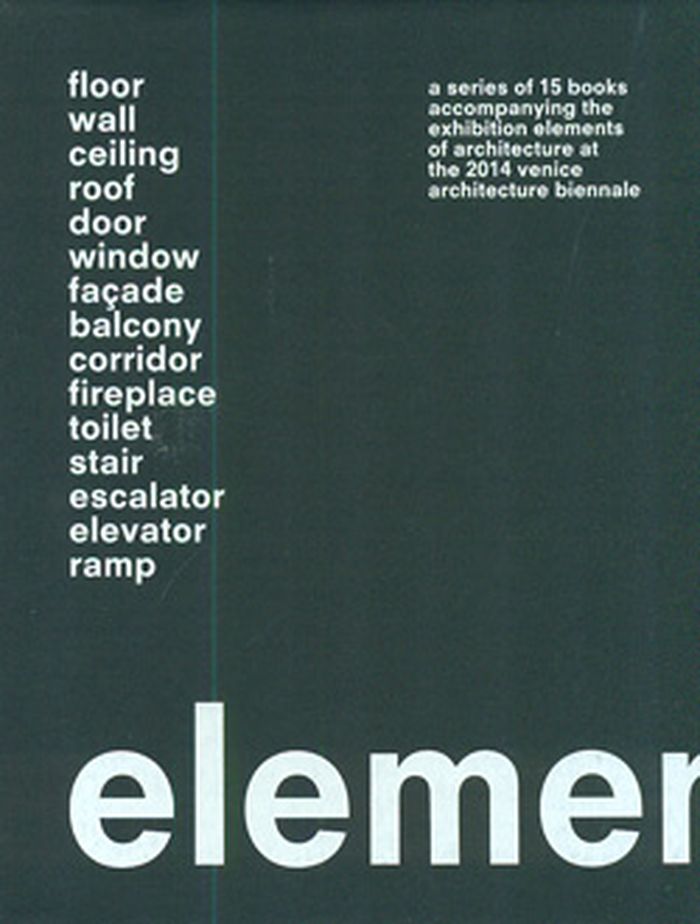
Architecture is a strange mixture of persistence and flux, an amalgamation of elements - some that have been around for over 5,000 years and others that were (re)invented yesterday. The fact that these elements change independently of each other, according to different cycles and economies, and for different reasons, turns each building into a complex collage of the archaic and the current, the site-specific and the standard, mechanical smoothness and the spontaneous. Only by looking at the elements under a wide lens can we recognize the cultural preferences, forgotten symbolism, technological advances, mutations triggered by intensifying global exchange, climatic adaptions, political calculations, regulatory requirements, new digital regimes, and, somewhere in the mix - the ideas of the architect that constitute the practice of architecture today. A collection of these essential elements into 15 books in a package launched at the 2014 Venice Biennale that allows us to look through a microscope at the real fundamentals of our buildings and see again the essential design techniques used by any architect, anywhere, anytime.
Elements
Actions:
Prix:
$190.00
(disponible sur commande)
Résumé:
Architecture is a strange mixture of persistence and flux, an amalgamation of elements - some that have been around for over 5,000 years and others that were (re)invented yesterday. The fact that these elements change independently of each other, according to different cycles and economies, and for different reasons, turns each building into a complex collage of the archaic and the current, the site-specific and the standard, mechanical smoothness and the spontaneous. Only by looking at the elements under a wide lens can we recognize the cultural preferences, forgotten symbolism, technological advances, mutations triggered by intensifying global exchange, climatic adaptions, political calculations, regulatory requirements, new digital regimes, and, somewhere in the mix - the ideas of the architect that constitute the practice of architecture today. A collection of these essential elements into 15 books in a package launched at the 2014 Venice Biennale that allows us to look through a microscope at the real fundamentals of our buildings and see again the essential design techniques used by any architect, anywhere, anytime.
Classification:
livres
livres
Publication:
septembre 2014
septembre 2014
Sujet:
Architecture, monographies
Architecture, monographies
Classification:
livres
livres

Actions:
Prix:
$22.00
(disponible sur commande)
Résumé:
The internet does not exist. Maybe it did exist only a short time ago, but now it only remains as a blur, a cloud, a friend, a deadline, a redirect, or a 404. If it ever existed, we couldn't see it. Because it has no shape. It has no face, just this name that describes everything and nothing at the same time. Yet we are still trying to climb onboard, to get inside, to be(...)
$22.00
(disponible sur commande)
Résumé:
The internet does not exist. Maybe it did exist only a short time ago, but now it only remains as a blur, a cloud, a friend, a deadline, a redirect, or a 404. If it ever existed, we couldn't see it. Because it has no shape. It has no face, just this name that describes everything and nothing at the same time. Yet we are still trying to climb onboard, to get inside, to be(...)
Titre:
E-Flux journal: the internet does not exist
Actions:
Prix:
$22.00
(disponible sur commande)
Résumé:
The internet does not exist. Maybe it did exist only a short time ago, but now it only remains as a blur, a cloud, a friend, a deadline, a redirect, or a 404. If it ever existed, we couldn't see it. Because it has no shape. It has no face, just this name that describes everything and nothing at the same time. Yet we are still trying to climb onboard, to get inside, to be part of the network, to get in on the language game, to show up on searches, to appear to exist. But we will never get inside of something that isn t there. All this time we ve been bemoaning the death of any critical outside position, we should have taken a good look at information networks. Just try to get in. You can t. Networks are all edges, as Bruno Latour points out. We thought there were windows but actually they re mirrors. And in the meantime we are being faced with more and more not just information, but the world itself.
E-Flux journal: the internet does not exist
Actions:
Prix:
$22.00
(disponible sur commande)
Résumé:
The internet does not exist. Maybe it did exist only a short time ago, but now it only remains as a blur, a cloud, a friend, a deadline, a redirect, or a 404. If it ever existed, we couldn't see it. Because it has no shape. It has no face, just this name that describes everything and nothing at the same time. Yet we are still trying to climb onboard, to get inside, to be part of the network, to get in on the language game, to show up on searches, to appear to exist. But we will never get inside of something that isn t there. All this time we ve been bemoaning the death of any critical outside position, we should have taken a good look at information networks. Just try to get in. You can t. Networks are all edges, as Bruno Latour points out. We thought there were windows but actually they re mirrors. And in the meantime we are being faced with more and more not just information, but the world itself.
Classification:
livres
livres
Publication:
juillet 2015
juillet 2015
Sujet:
Théorie/ philosophie
Théorie/ philosophie
Classification:
livres
livres
Actions:
Prix:
$54.50
(disponible en magasin)
Résumé:
In recent years risography has captured the attention of printers and artists, especially in independent and self-publishing circles, given the technical and visual qualities it offers. Varied and vivid spot colors, the warmth of the finishes, and occasional imperfections in uniformity and register are just some of these attractive features. Designed mainly for(...)
$54.50
(disponible en magasin)
Résumé:
In recent years risography has captured the attention of printers and artists, especially in independent and self-publishing circles, given the technical and visual qualities it offers. Varied and vivid spot colors, the warmth of the finishes, and occasional imperfections in uniformity and register are just some of these attractive features. Designed mainly for(...)
Titre:
Riso art: A creative's guide to mastering risography
Actions:
Prix:
$54.50
(disponible en magasin)
Résumé:
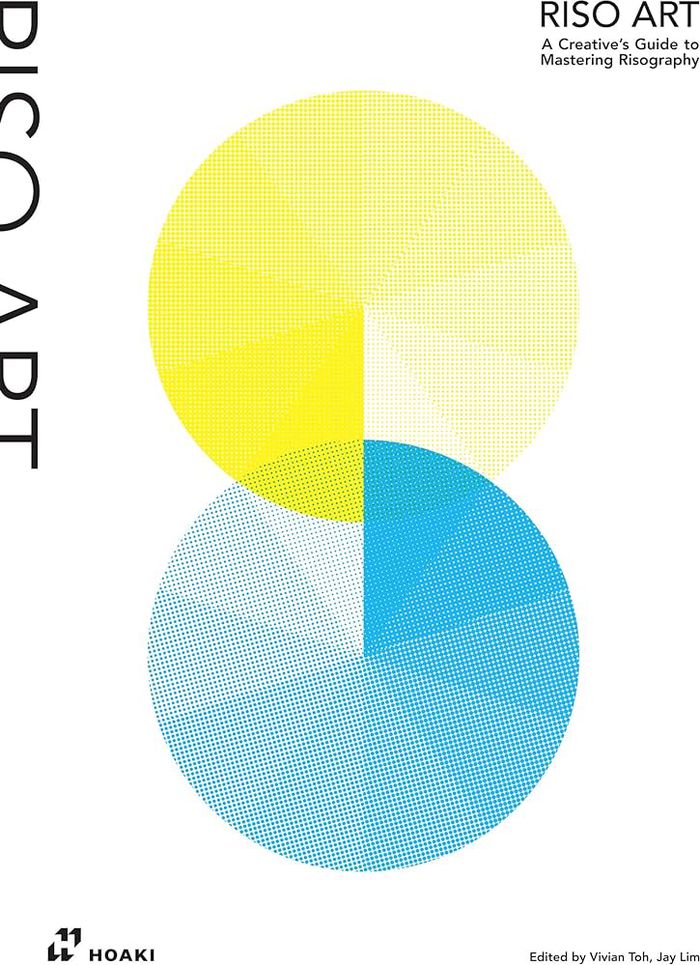
In recent years risography has captured the attention of printers and artists, especially in independent and self-publishing circles, given the technical and visual qualities it offers. Varied and vivid spot colors, the warmth of the finishes, and occasional imperfections in uniformity and register are just some of these attractive features. Designed mainly for high-volume photocopying and printing, Risographs are far less expensive than conventional photocopy machines and laser or ink printers. Rich in illustrations, pictures, detailed instructions and infographics, this practical guide to Risograph printing will teach readers how to set up a Risograph, how to prepare files to print, how to make overprints and knockouts, how to choose paper, how to handle freshly printed works, what ink to use and about any additional equipment they will need to become a Riso master. An ideal primer for novice users of a Riso printer, readers will also learn how to apply artistic printing techniques that will allow them to print with brighter, more expressive, saturated colors that, unlike photocopy ink, do not fade over time. The book also includes profiles of notable printers, with one featured work of Riso art and the printing technique used.
Riso art: A creative's guide to mastering risography
Actions:
Prix:
$54.50
(disponible en magasin)
Résumé:
In recent years risography has captured the attention of printers and artists, especially in independent and self-publishing circles, given the technical and visual qualities it offers. Varied and vivid spot colors, the warmth of the finishes, and occasional imperfections in uniformity and register are just some of these attractive features. Designed mainly for high-volume photocopying and printing, Risographs are far less expensive than conventional photocopy machines and laser or ink printers. Rich in illustrations, pictures, detailed instructions and infographics, this practical guide to Risograph printing will teach readers how to set up a Risograph, how to prepare files to print, how to make overprints and knockouts, how to choose paper, how to handle freshly printed works, what ink to use and about any additional equipment they will need to become a Riso master. An ideal primer for novice users of a Riso printer, readers will also learn how to apply artistic printing techniques that will allow them to print with brighter, more expressive, saturated colors that, unlike photocopy ink, do not fade over time. The book also includes profiles of notable printers, with one featured work of Riso art and the printing technique used.
Classification:
livres
livres
Publication:
mai 2023
mai 2023
Classification:
livres
livres
Actions:
Prix:
$80.00
(disponible sur commande)
Résumé:
In this radical rethinking of the art of Louise Nevelson (1899–1988), Julia Bryan-Wilson provides a long-overdue critical account of a signature figure in postwar sculpture. A Ukraine-born Jewish immigrant, Nevelson persevered in the male-dominated New York art world. Nonetheless, her careful procedures of construction—in which she assembled found pieces of wood into(...)
$80.00
(disponible sur commande)
Résumé:
In this radical rethinking of the art of Louise Nevelson (1899–1988), Julia Bryan-Wilson provides a long-overdue critical account of a signature figure in postwar sculpture. A Ukraine-born Jewish immigrant, Nevelson persevered in the male-dominated New York art world. Nonetheless, her careful procedures of construction—in which she assembled found pieces of wood into(...)
Titre:
Louise Nevelson Sculpture: Drag, color, join, face
Actions:
Prix:
$80.00
(disponible sur commande)
Résumé:
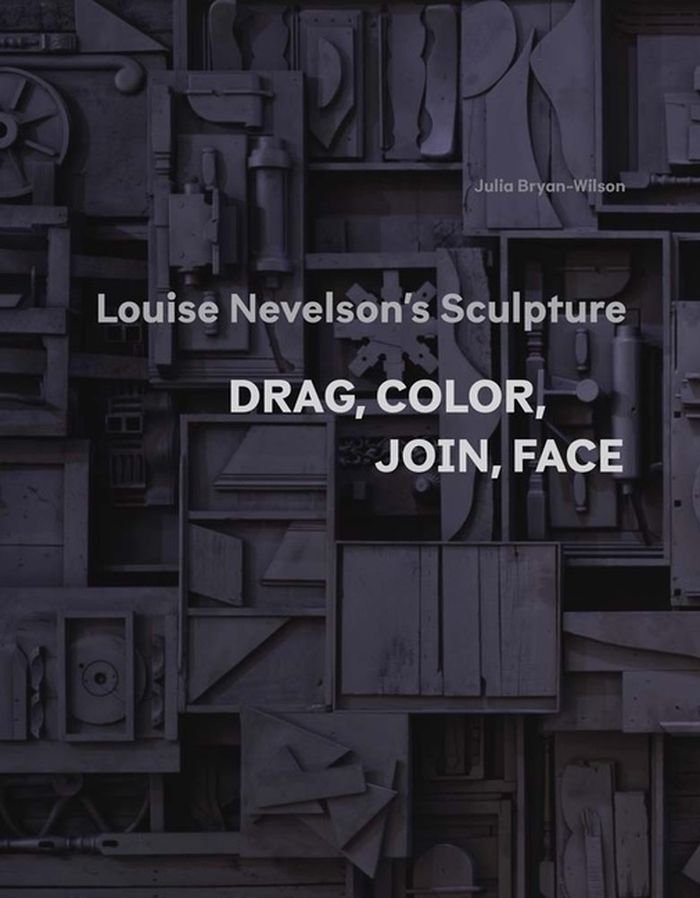
In this radical rethinking of the art of Louise Nevelson (1899–1988), Julia Bryan-Wilson provides a long-overdue critical account of a signature figure in postwar sculpture. A Ukraine-born Jewish immigrant, Nevelson persevered in the male-dominated New York art world. Nonetheless, her careful procedures of construction—in which she assembled found pieces of wood into elaborate structures, usually painted black—have been little studied. Organized around a series of key operations in Nevelson’s own process (dragging, coloring, joining, and facing), the book comprises four slipcased, individually bound volumes that can be read in any order. Both form and content thus echo Nevelson’s own modular sculptures, the gridded boxes of which the artist herself rearranged. Exploring how Nevelson’s making relates to domesticity, racialized matter, gendered labor, and the environment, Bryan-Wilson offers a sustained examination of the social and political implications of Nevelson’s art. The author also approaches Nevelson’s sculptures from her own embodied subjectivity as a queer feminist scholar. She forges an expansive art history that places Nevelson’s assemblages in dialogue with a wide array of marginalized worldmaking and underlines the artist’s proclamation of allegiance to blackness.
Louise Nevelson Sculpture: Drag, color, join, face
Actions:
Prix:
$80.00
(disponible sur commande)
Résumé:
In this radical rethinking of the art of Louise Nevelson (1899–1988), Julia Bryan-Wilson provides a long-overdue critical account of a signature figure in postwar sculpture. A Ukraine-born Jewish immigrant, Nevelson persevered in the male-dominated New York art world. Nonetheless, her careful procedures of construction—in which she assembled found pieces of wood into elaborate structures, usually painted black—have been little studied. Organized around a series of key operations in Nevelson’s own process (dragging, coloring, joining, and facing), the book comprises four slipcased, individually bound volumes that can be read in any order. Both form and content thus echo Nevelson’s own modular sculptures, the gridded boxes of which the artist herself rearranged. Exploring how Nevelson’s making relates to domesticity, racialized matter, gendered labor, and the environment, Bryan-Wilson offers a sustained examination of the social and political implications of Nevelson’s art. The author also approaches Nevelson’s sculptures from her own embodied subjectivity as a queer feminist scholar. She forges an expansive art history that places Nevelson’s assemblages in dialogue with a wide array of marginalized worldmaking and underlines the artist’s proclamation of allegiance to blackness.
Classification:
livres
livres
Publication:
juin 2023
juin 2023


