


2296 Résultats
Classification:
livres
livres
Titre:
The house next door
The house next door
Actions:
Prix:
$19.99
(disponible sur commande)
Résumé:
One house, then another, is built off in the distance. Then a road is paved through his field, and more and more houses appear all around. The house closes his shutters to wait out this alarming development. But in the dark, the house notices he is no longer pushed by the snowdrifts or battered by spring storms. And when he peeks open a shutter, he sees the house next(...)
$19.99
(disponible sur commande)
Résumé:
One house, then another, is built off in the distance. Then a road is paved through his field, and more and more houses appear all around. The house closes his shutters to wait out this alarming development. But in the dark, the house notices he is no longer pushed by the snowdrifts or battered by spring storms. And when he peeks open a shutter, he sees the house next(...)
Titre:
The house next door
Actions:
Prix:
$19.99
(disponible sur commande)
Résumé:
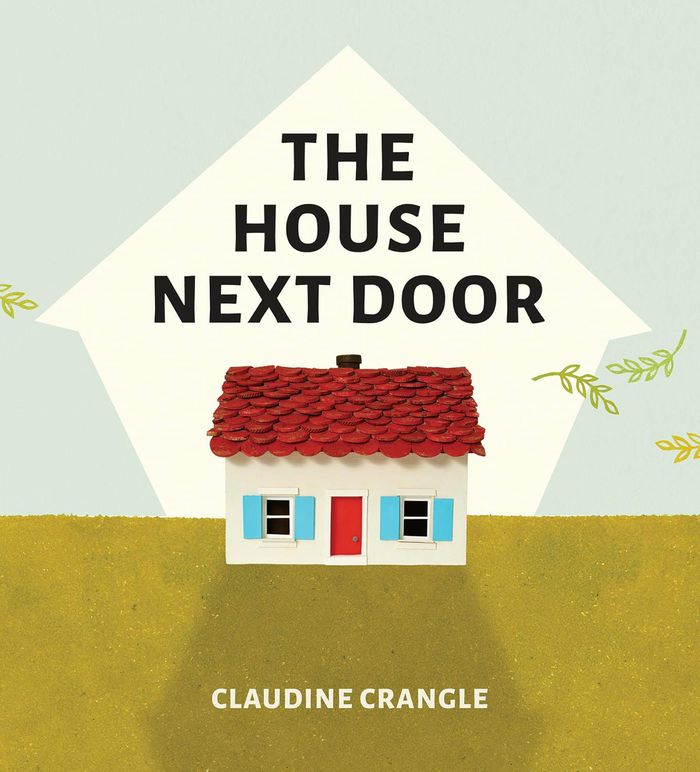
One house, then another, is built off in the distance. Then a road is paved through his field, and more and more houses appear all around. The house closes his shutters to wait out this alarming development. But in the dark, the house notices he is no longer pushed by the snowdrifts or battered by spring storms. And when he peeks open a shutter, he sees the house next door glowing with a golden light. Just like his. Throwing open his shutters, he finds himself surrounded by a diverse neighborhood of homes. Together, they look forward to seeing what the wind will blow in next. With great wit and an eye-popping use of cardboard, paint and fabric, multimedia artist Claudine Crangle explores our fear of difference through the viewpoint of a small country house beset by urbanization. But not everything that’s new is bad, as the little farmhouse learns in this timely and hopeful picture book about embracing the changes in life we can’t control.
The house next door
Actions:
Prix:
$19.99
(disponible sur commande)
Résumé:
One house, then another, is built off in the distance. Then a road is paved through his field, and more and more houses appear all around. The house closes his shutters to wait out this alarming development. But in the dark, the house notices he is no longer pushed by the snowdrifts or battered by spring storms. And when he peeks open a shutter, he sees the house next door glowing with a golden light. Just like his. Throwing open his shutters, he finds himself surrounded by a diverse neighborhood of homes. Together, they look forward to seeing what the wind will blow in next. With great wit and an eye-popping use of cardboard, paint and fabric, multimedia artist Claudine Crangle explores our fear of difference through the viewpoint of a small country house beset by urbanization. But not everything that’s new is bad, as the little farmhouse learns in this timely and hopeful picture book about embracing the changes in life we can’t control.
Classification:
livres
livres
Publication:
août 2021
août 2021
Sujet:
Littérature jeunesse
Littérature jeunesse
Classification:
livres
livres
Prix:
$68.95
(disponible sur commande)
Résumé:
You may have found an old Konica at the thrift store or inherited a Leica, or you may be one of the many younger photographers who are being drawn to analogue for the first time, as a way to enrich and expand their practice. In either case, this book provides all the information needed to help you understand your camera and get out and start using it. The fundamental(...)
$68.95
(disponible sur commande)
Résumé:
You may have found an old Konica at the thrift store or inherited a Leica, or you may be one of the many younger photographers who are being drawn to analogue for the first time, as a way to enrich and expand their practice. In either case, this book provides all the information needed to help you understand your camera and get out and start using it. The fundamental(...)
Titre:
Analogue photography: Refence manual for shooting film
Actions:
Prix:
$68.95
(disponible sur commande)
Résumé:
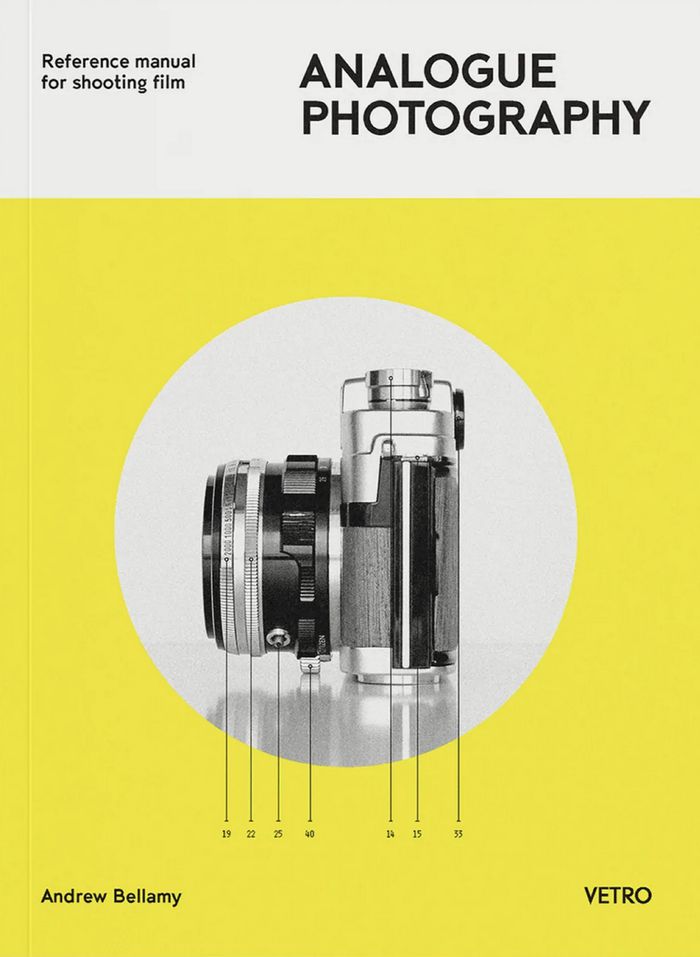
You may have found an old Konica at the thrift store or inherited a Leica, or you may be one of the many younger photographers who are being drawn to analogue for the first time, as a way to enrich and expand their practice. In either case, this book provides all the information needed to help you understand your camera and get out and start using it. The fundamental technical sides of both cameras and photography are covered. There are, however, no tips on how to take "better" photos, no sections on lines and shapes, silhouettes, texture or composition. This is purely a technical manual: once you have mastered the mechanics of photography, you will have total creative control over your camera, a tool for taking photos exactly as you want them. Whether as a primer or a reference manual, this is the perfect book to (re)kindle your love of analogue photography.
Analogue photography: Refence manual for shooting film
Actions:
Prix:
$68.95
(disponible sur commande)
Résumé:
You may have found an old Konica at the thrift store or inherited a Leica, or you may be one of the many younger photographers who are being drawn to analogue for the first time, as a way to enrich and expand their practice. In either case, this book provides all the information needed to help you understand your camera and get out and start using it. The fundamental technical sides of both cameras and photography are covered. There are, however, no tips on how to take "better" photos, no sections on lines and shapes, silhouettes, texture or composition. This is purely a technical manual: once you have mastered the mechanics of photography, you will have total creative control over your camera, a tool for taking photos exactly as you want them. Whether as a primer or a reference manual, this is the perfect book to (re)kindle your love of analogue photography.
Classification:
livres
livres
Publication:
janvier 2017
janvier 2017
Sujet:
Théorie de la photographie
Théorie de la photographie
Classification:
livres
livres
Actions:
Prix:
$32.95
(disponible sur commande)
Résumé:
In "The surrounds" renowned urbanist AbdouMaliq Simone offers a new theorization of the interface of the urban and the political. Working at the intersection of Black studies, urban theory, and decolonial and Islamic thought, Simone centers the surrounds—those urban spaces beyond control and capture that exist as a locus of rebellion and invention. He shows that even in(...)
$32.95
(disponible sur commande)
Résumé:
In "The surrounds" renowned urbanist AbdouMaliq Simone offers a new theorization of the interface of the urban and the political. Working at the intersection of Black studies, urban theory, and decolonial and Islamic thought, Simone centers the surrounds—those urban spaces beyond control and capture that exist as a locus of rebellion and invention. He shows that even in(...)
Titre:
The surrounds: Urban life within and beyond capture
Actions:
Prix:
$32.95
(disponible sur commande)
Résumé:
In "The surrounds" renowned urbanist AbdouMaliq Simone offers a new theorization of the interface of the urban and the political. Working at the intersection of Black studies, urban theory, and decolonial and Islamic thought, Simone centers the surrounds—those urban spaces beyond control and capture that exist as a locus of rebellion and invention. He shows that even in clearly defined city environments, whether industrial, carceral, administrative, or domestic, residents use spaces for purposes they were not designed for: schools become housing, markets turn into classrooms, tax offices transform into repair shops. The surrounds, Simone contends, are where nothing fits according to design. They are where forgotten and marginalized populations invent new relations and ways of living and being, continuously reshaping what individuals and collectives can do. Focusing less on what new worlds may come to be and more on what people are creating now, Simone shows how the surrounds are an integral part of the expansiveness of urban imagination.
The surrounds: Urban life within and beyond capture
Actions:
Prix:
$32.95
(disponible sur commande)
Résumé:
In "The surrounds" renowned urbanist AbdouMaliq Simone offers a new theorization of the interface of the urban and the political. Working at the intersection of Black studies, urban theory, and decolonial and Islamic thought, Simone centers the surrounds—those urban spaces beyond control and capture that exist as a locus of rebellion and invention. He shows that even in clearly defined city environments, whether industrial, carceral, administrative, or domestic, residents use spaces for purposes they were not designed for: schools become housing, markets turn into classrooms, tax offices transform into repair shops. The surrounds, Simone contends, are where nothing fits according to design. They are where forgotten and marginalized populations invent new relations and ways of living and being, continuously reshaping what individuals and collectives can do. Focusing less on what new worlds may come to be and more on what people are creating now, Simone shows how the surrounds are an integral part of the expansiveness of urban imagination.
Classification:
livres
livres
Publication:
juin 2022
juin 2022
Sujet:
Théorie de l’urbanisme
Théorie de l’urbanisme
Classification:
livres
livres
Prix:
$33.95
(disponible sur commande)
Résumé:
Across five centuries of Russian history, Russian leaders have used architecture to project unity, identity, and power. Church architecture has inspired national cohesion and justified political control while representing the claims of religion in brick, wood, and stone. The architectural vocabulary of the Soviet state celebrated industrialization, mechanization, and(...)
$33.95
(disponible sur commande)
Résumé:
Across five centuries of Russian history, Russian leaders have used architecture to project unity, identity, and power. Church architecture has inspired national cohesion and justified political control while representing the claims of religion in brick, wood, and stone. The architectural vocabulary of the Soviet state celebrated industrialization, mechanization, and(...)
Sujet:
Histoire jusqu’à 1900
Histoire jusqu’à 1900
Publication:
mai 2003, Ithaca and London
mai 2003, Ithaca and London
Titre:
Architectures of Russian identity 1500 to the present
Actions:
Prix:
$33.95
(disponible sur commande)
Résumé:
Across five centuries of Russian history, Russian leaders have used architecture to project unity, identity, and power. Church architecture has inspired national cohesion and justified political control while representing the claims of religion in brick, wood, and stone. The architectural vocabulary of the Soviet state celebrated industrialization, mechanization, and communal life. Buildings and landscapes have expressed utopian urges as well as lofty spiritual goals. Country houses and memorials have encoded their own messages. In Architectures of Russian Identity, James Cracraft and Daniel Rowland gather a group of authors from a wide variety of backgrounds—including history and architectural history, linguistics, literary studies, geography, and political science—to survey the political and symbolic meanings of many different kinds of structures. Fourteen heavily illustrated chapters demonstrate the remarkable fertility of the theme of architecture, broadly defined, for a range of fields dealing with Russia and its surrounding territories. The authors engage key terms in contemporary historiography—identity, nationality, visual culture—and assess the applications of each in Russian contexts.
Architectures of Russian identity 1500 to the present
Actions:
Prix:
$33.95
(disponible sur commande)
Résumé:
Across five centuries of Russian history, Russian leaders have used architecture to project unity, identity, and power. Church architecture has inspired national cohesion and justified political control while representing the claims of religion in brick, wood, and stone. The architectural vocabulary of the Soviet state celebrated industrialization, mechanization, and communal life. Buildings and landscapes have expressed utopian urges as well as lofty spiritual goals. Country houses and memorials have encoded their own messages. In Architectures of Russian Identity, James Cracraft and Daniel Rowland gather a group of authors from a wide variety of backgrounds—including history and architectural history, linguistics, literary studies, geography, and political science—to survey the political and symbolic meanings of many different kinds of structures. Fourteen heavily illustrated chapters demonstrate the remarkable fertility of the theme of architecture, broadly defined, for a range of fields dealing with Russia and its surrounding territories. The authors engage key terms in contemporary historiography—identity, nationality, visual culture—and assess the applications of each in Russian contexts.
Classification:
livres
livres
Publication:
mai 2003, Ithaca and London
mai 2003, Ithaca and London
Sujet:
Histoire jusqu’à 1900
Histoire jusqu’à 1900
Classification:
livres
livres
Prix:
$46.95
(disponible sur commande)
Résumé:
Ces actes rendent compte des réflexions soulevées lors du colloque international "Facadisme et identité urbaine" organisé par la Direction de l'architecture et du patrimoine et Icomos international, en janvier 1999 à Paris. L'ouvrage pose le problème du développement du façadisme en Europe et au-delà, et analyse les expériences mises en place pour en conserver la(...)
$46.95
(disponible sur commande)
Résumé:
Ces actes rendent compte des réflexions soulevées lors du colloque international "Facadisme et identité urbaine" organisé par la Direction de l'architecture et du patrimoine et Icomos international, en janvier 1999 à Paris. L'ouvrage pose le problème du développement du façadisme en Europe et au-delà, et analyse les expériences mises en place pour en conserver la(...)
Publication:
janvier 2001, Paris
janvier 2001, Paris
Titre:
Façadisme et identité urbaine - Façadism and urban identity
Actions:
Prix:
$46.95
(disponible sur commande)
Résumé:
Ces actes rendent compte des réflexions soulevées lors du colloque international "Facadisme et identité urbaine" organisé par la Direction de l'architecture et du patrimoine et Icomos international, en janvier 1999 à Paris. L'ouvrage pose le problème du développement du façadisme en Europe et au-delà, et analyse les expériences mises en place pour en conserver la maîtrise dans le centre des villes. Articulé autour de trois grands axes, il explore les différents aspects de l'histoire du traitement des façades et de leurs fonctions. These proceedings give an account of the issues raised during the international conference "Façadism and Urban Identity" organized by the Department of Architecture and Heritage and Icomos International during January 1999 in Paris. Putting forward the question of the development of façadism in Europe and beyond, this work also analyses the measures adopted to bring it under control in the city centres. Centred on three main themes, various aspects in the history of the treatment of façades and their function are explored.
Façadisme et identité urbaine - Façadism and urban identity
Actions:
Prix:
$46.95
(disponible sur commande)
Résumé:
Ces actes rendent compte des réflexions soulevées lors du colloque international "Facadisme et identité urbaine" organisé par la Direction de l'architecture et du patrimoine et Icomos international, en janvier 1999 à Paris. L'ouvrage pose le problème du développement du façadisme en Europe et au-delà, et analyse les expériences mises en place pour en conserver la maîtrise dans le centre des villes. Articulé autour de trois grands axes, il explore les différents aspects de l'histoire du traitement des façades et de leurs fonctions. These proceedings give an account of the issues raised during the international conference "Façadism and Urban Identity" organized by the Department of Architecture and Heritage and Icomos International during January 1999 in Paris. Putting forward the question of the development of façadism in Europe and beyond, this work also analyses the measures adopted to bring it under control in the city centres. Centred on three main themes, various aspects in the history of the treatment of façades and their function are explored.
Classification:
livres
livres
Publication:
janvier 2001, Paris
janvier 2001, Paris
Classification:
livres
livres
Titre:
Videotape: Object lessons
Videotape: Object lessons
Actions:
Prix:
$21.95
(disponible sur commande)
Résumé:
Over the span of a single decade, VHS technology changed the relationship between privacy and entertainment, pried open the closed societies behind the Iron Curtain, and then sank back into oblivion. Its meteoric rise and fall encapsulated the dynamics of the '80s and foreshadowed the seismic cultural shifts to come after the Cold War. In the West, its advent deepened the(...)
$21.95
(disponible sur commande)
Résumé:
Over the span of a single decade, VHS technology changed the relationship between privacy and entertainment, pried open the closed societies behind the Iron Curtain, and then sank back into oblivion. Its meteoric rise and fall encapsulated the dynamics of the '80s and foreshadowed the seismic cultural shifts to come after the Cold War. In the West, its advent deepened the(...)
Publication:
septembre 2025
septembre 2025
Titre:
Videotape: Object lessons
Actions:
Prix:
$21.95
(disponible sur commande)
Résumé:
Over the span of a single decade, VHS technology changed the relationship between privacy and entertainment, pried open the closed societies behind the Iron Curtain, and then sank back into oblivion. Its meteoric rise and fall encapsulated the dynamics of the '80s and foreshadowed the seismic cultural shifts to come after the Cold War. In the West, its advent deepened the trends of the age: individualism, consumerism, the fragmentation of society, and the consolidation of corporate power in the entertainment industry and its victory over the regulatory powers of the state. In the East, it encouraged new forms of socialization and economic exchanges, while announcing the gradual crumbling of government control over the imagination of the people. By the mid-1990s, the VHS format was displaced by the DVD. The DVD would eventually give way to streaming. Yet the cultural legacy of the videotape continues to inform our relationship to technology, privacy, and to entertainment.
Videotape: Object lessons
Actions:
Prix:
$21.95
(disponible sur commande)
Résumé:
Over the span of a single decade, VHS technology changed the relationship between privacy and entertainment, pried open the closed societies behind the Iron Curtain, and then sank back into oblivion. Its meteoric rise and fall encapsulated the dynamics of the '80s and foreshadowed the seismic cultural shifts to come after the Cold War. In the West, its advent deepened the trends of the age: individualism, consumerism, the fragmentation of society, and the consolidation of corporate power in the entertainment industry and its victory over the regulatory powers of the state. In the East, it encouraged new forms of socialization and economic exchanges, while announcing the gradual crumbling of government control over the imagination of the people. By the mid-1990s, the VHS format was displaced by the DVD. The DVD would eventually give way to streaming. Yet the cultural legacy of the videotape continues to inform our relationship to technology, privacy, and to entertainment.
Classification:
livres
livres
Publication:
septembre 2025
septembre 2025
Classification:
livres
livres
Actions:
Prix:
$36.00
(disponible sur commande)
Résumé:
Dump or rich source – the "free materials" discovered on the street, on wasteland and on building site rubbish dumps and recycled by Martin Kaltwasser and Folke Köbberling experience incredible metamorphoses. Pavilions, villages of huts and even whole houses are appearing over night. Since 2002 the artists have been using public space as their field of experiment in(...)
$36.00
(disponible sur commande)
Résumé:
Dump or rich source – the "free materials" discovered on the street, on wasteland and on building site rubbish dumps and recycled by Martin Kaltwasser and Folke Köbberling experience incredible metamorphoses. Pavilions, villages of huts and even whole houses are appearing over night. Since 2002 the artists have been using public space as their field of experiment in(...)
Sujet:
Architecture écologique
Architecture écologique
Publication:
mars 2007, Berlin
mars 2007, Berlin
Titre:
Ressource stadt/City as a resource : one man's trash is another man's treasure
Actions:
Prix:
$36.00
(disponible sur commande)
Résumé:
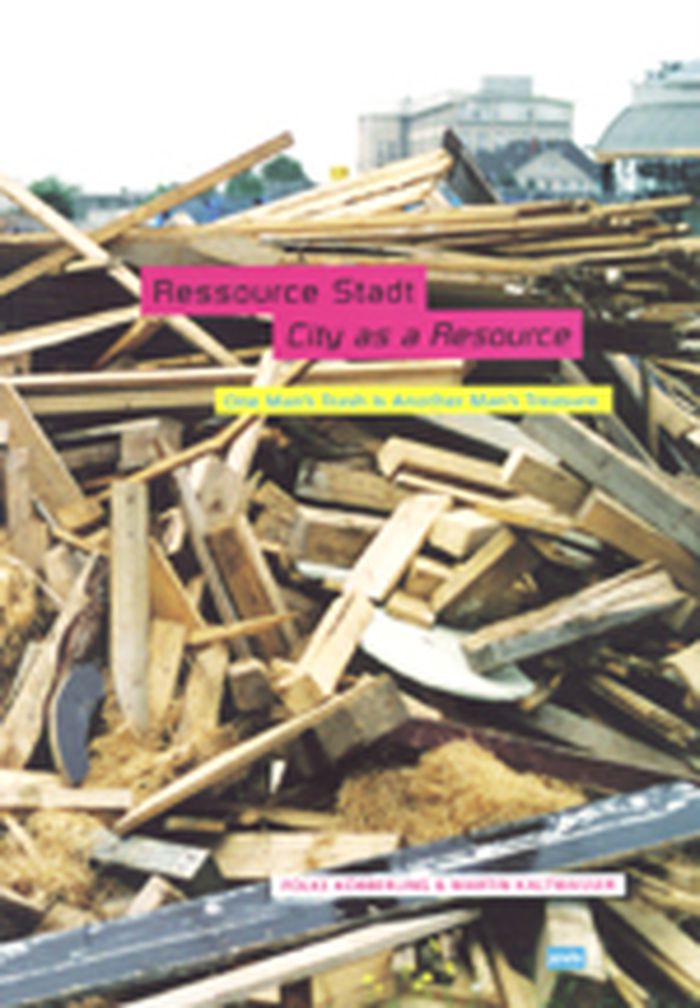
Dump or rich source – the "free materials" discovered on the street, on wasteland and on building site rubbish dumps and recycled by Martin Kaltwasser and Folke Köbberling experience incredible metamorphoses. Pavilions, villages of huts and even whole houses are appearing over night. Since 2002 the artists have been using public space as their field of experiment in projects on the use of (free) resources. In installations, exhibitions and most frequently, in actual interventions they question the conditions of urban life determined by privatisation and economisation. Through realised projects the book reveals simple ways of livening up and re-appropriating the " City as a Resource" and thus offers new components in an alternative to conventional urban planning. Köbberling and Kaltwasser propose informal and self-organised structures rather than the usual methods emphasising control, security and as much marketing as possible. Their approach demonstrates that often – with the help of their own clever building logistics – a huge impact may be made with a minimum of financing.
Ressource stadt/City as a resource : one man's trash is another man's treasure
Actions:
Prix:
$36.00
(disponible sur commande)
Résumé:
Dump or rich source – the "free materials" discovered on the street, on wasteland and on building site rubbish dumps and recycled by Martin Kaltwasser and Folke Köbberling experience incredible metamorphoses. Pavilions, villages of huts and even whole houses are appearing over night. Since 2002 the artists have been using public space as their field of experiment in projects on the use of (free) resources. In installations, exhibitions and most frequently, in actual interventions they question the conditions of urban life determined by privatisation and economisation. Through realised projects the book reveals simple ways of livening up and re-appropriating the " City as a Resource" and thus offers new components in an alternative to conventional urban planning. Köbberling and Kaltwasser propose informal and self-organised structures rather than the usual methods emphasising control, security and as much marketing as possible. Their approach demonstrates that often – with the help of their own clever building logistics – a huge impact may be made with a minimum of financing.
Classification:
livres
livres
Publication:
mars 2007, Berlin
mars 2007, Berlin
Sujet:
Architecture écologique
Architecture écologique
Classification:
livres
livres
Actions:
Prix:
$26.00
(disponible sur commande)
Résumé:
A fresh interpretation of Jeremy Bentham, finding that his “radical foolery” embodied a social ethics that was revolutionary for its time. Jeremy Bentham (1748–1832) is best remembered today as the founder of utilitarianism (a philosophy infamously abused by the Victorians) and the conceiver of the Panopticon, the circular prison house in which all prisoners could be(...)
$26.00
(disponible sur commande)
Résumé:
A fresh interpretation of Jeremy Bentham, finding that his “radical foolery” embodied a social ethics that was revolutionary for its time. Jeremy Bentham (1748–1832) is best remembered today as the founder of utilitarianism (a philosophy infamously abused by the Victorians) and the conceiver of the Panopticon, the circular prison house in which all prisoners could be(...)
Titre:
The radical fool of capitalism: on Jeremy Bentham, the Panopticon, and the auto-icon
Actions:
Prix:
$26.00
(disponible sur commande)
Résumé:
A fresh interpretation of Jeremy Bentham, finding that his “radical foolery” embodied a social ethics that was revolutionary for its time. Jeremy Bentham (1748–1832) is best remembered today as the founder of utilitarianism (a philosophy infamously abused by the Victorians) and the conceiver of the Panopticon, the circular prison house in which all prisoners could be seen by an unseen observer—later seized upon by Michel Foucault as the apotheosis of the neoliberal control society. In this volume in the Untimely Meditation series, Christian Welzbacher offers a new interpretation of Bentham, arguing that his “radical foolery” (paraphrasing Goethe's characterization of Bentham) actually embodied a social ethics that was new for its time and demands proper historical contextualization rather than retroactive analysis from the vantage point of late capitalism. Welzbacher provides just such an analysis, offering an account of the two great utilitarian projects that occupied Bentham all his life: the Panopticon and the Auto-Icon.
The radical fool of capitalism: on Jeremy Bentham, the Panopticon, and the auto-icon
Actions:
Prix:
$26.00
(disponible sur commande)
Résumé:
A fresh interpretation of Jeremy Bentham, finding that his “radical foolery” embodied a social ethics that was revolutionary for its time. Jeremy Bentham (1748–1832) is best remembered today as the founder of utilitarianism (a philosophy infamously abused by the Victorians) and the conceiver of the Panopticon, the circular prison house in which all prisoners could be seen by an unseen observer—later seized upon by Michel Foucault as the apotheosis of the neoliberal control society. In this volume in the Untimely Meditation series, Christian Welzbacher offers a new interpretation of Bentham, arguing that his “radical foolery” (paraphrasing Goethe's characterization of Bentham) actually embodied a social ethics that was new for its time and demands proper historical contextualization rather than retroactive analysis from the vantage point of late capitalism. Welzbacher provides just such an analysis, offering an account of the two great utilitarian projects that occupied Bentham all his life: the Panopticon and the Auto-Icon.
Classification:
livres
livres
Publication:
avril 2018
avril 2018
Sujet:
Théorie/ philosophie
Théorie/ philosophie
Classification:
livres
livres
Prix:
$52.95
(disponible sur commande)
Résumé:
"A House for My Mother" features 25 houses designed over the last 50 years by various architects for their mothers, fathers, in-laws, and extended families. Included are the well-known works of recognized designers as well as early works from promising young (...)
$52.95
(disponible sur commande)
Résumé:
"A House for My Mother" features 25 houses designed over the last 50 years by various architects for their mothers, fathers, in-laws, and extended families. Included are the well-known works of recognized designers as well as early works from promising young (...)
Titre:
A house for my mother : architects build for their families
Actions:
Prix:
$52.95
(disponible sur commande)
Résumé:
"A House for My Mother" features 25 houses designed over the last 50 years by various architects for their mothers, fathers, in-laws, and extended families. Included are the well-known works of recognized designers as well as early works from promising young architects. Extensive interviews with the architects and their families reveal the various joys and difficulties of these very personal commissions. The houses offer innovative and affordable designs, in a variety of styles and building materials, for homes ranging from city dwellings to beach houses and mountain retreats. As the architects were generally given broad control over the design, these homes showcase the ideas that characterize their work. The architects in this collection include Natalye Appel, Peter Bohlin, Walter Chatham, Charles Gwathmey, Steven Izenour, Donna Kacmar, Robert Kahn, Mark and Jean Larson, Joanna Lombard and Denis Hector, Robert Luchetti, Suzanne Martinson, Richard Meier, Charles Menefee, Mark Simon, Laurinda Spear and Bernardo Fort-Brescia, Robert Venturi, and Paul Westlake.
A house for my mother : architects build for their families
Actions:
Prix:
$52.95
(disponible sur commande)
Résumé:
"A House for My Mother" features 25 houses designed over the last 50 years by various architects for their mothers, fathers, in-laws, and extended families. Included are the well-known works of recognized designers as well as early works from promising young architects. Extensive interviews with the architects and their families reveal the various joys and difficulties of these very personal commissions. The houses offer innovative and affordable designs, in a variety of styles and building materials, for homes ranging from city dwellings to beach houses and mountain retreats. As the architects were generally given broad control over the design, these homes showcase the ideas that characterize their work. The architects in this collection include Natalye Appel, Peter Bohlin, Walter Chatham, Charles Gwathmey, Steven Izenour, Donna Kacmar, Robert Kahn, Mark and Jean Larson, Joanna Lombard and Denis Hector, Robert Luchetti, Suzanne Martinson, Richard Meier, Charles Menefee, Mark Simon, Laurinda Spear and Bernardo Fort-Brescia, Robert Venturi, and Paul Westlake.
Classification:
livres
livres
Publication:
mai 1999, New York
mai 1999, New York
Sujet:
Architecture résidentielle
Architecture résidentielle
Classification:
livres
livres
Actions:
Prix:
$55.95
(disponible en magasin)
Résumé:
If participation has been an ideal in politics since ancient democracy, in art it became central only with the avant-gardes emerging from WWI and the Russian Revolution. Politics and aesthetics are still catching up with each other. In the 21st century, since the revolutionary unrest of the 1960s, participation in art and architecture has lost its utopian glow and become(...)
$55.95
(disponible en magasin)
Résumé:
If participation has been an ideal in politics since ancient democracy, in art it became central only with the avant-gardes emerging from WWI and the Russian Revolution. Politics and aesthetics are still catching up with each other. In the 21st century, since the revolutionary unrest of the 1960s, participation in art and architecture has lost its utopian glow and become(...)
Titre:
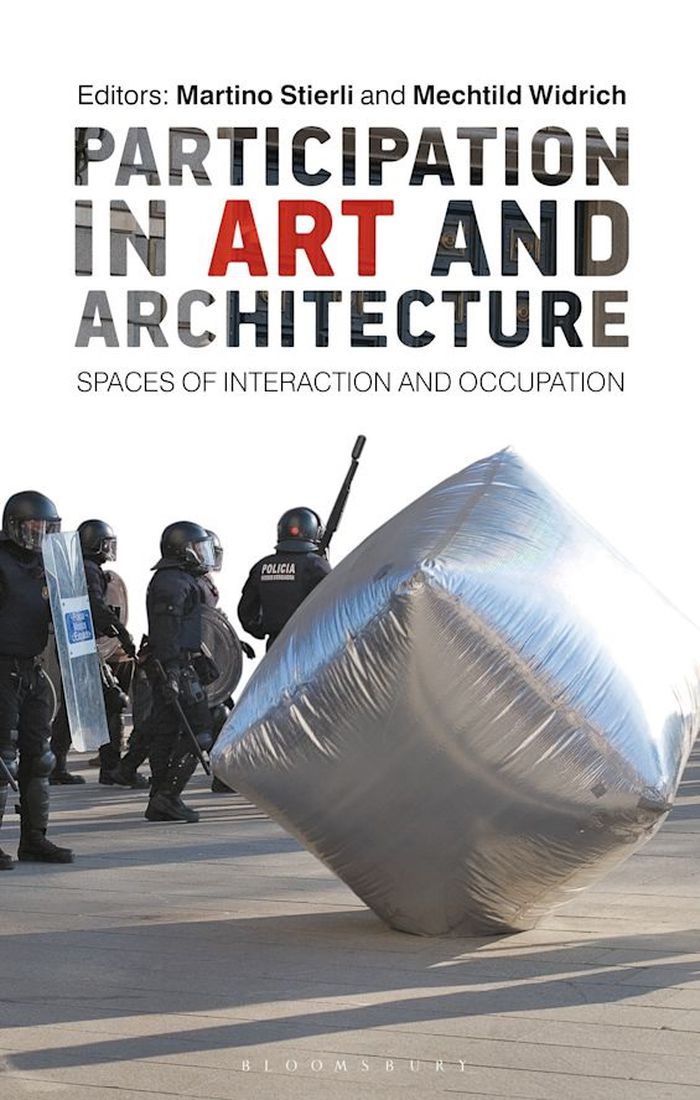
Participation in art and architecture: Spaces of interaction and occupation
Actions:
Prix:
$55.95
(disponible en magasin)
Résumé:
If participation has been an ideal in politics since ancient democracy, in art it became central only with the avant-gardes emerging from WWI and the Russian Revolution. Politics and aesthetics are still catching up with each other. In the 21st century, since the revolutionary unrest of the 1960s, participation in art and architecture has lost its utopian glow and become the focus of a fierce debate: does 'participatory' art and architecture shape social reality, or is it shaped by it? Contemporary critics see in participation only technocratic control, while others embrace it as a viable politics in an era of global capitalism. This innovative book breaks the impasse by looking at how participants themselves exert power, rather than being victimized or liberated from it. From artists hijacking Google Earth to protesters setting up a museum of the revolution in Cairo, art, architecture and daily life are explored in their participatory dimension.
Participation in art and architecture: Spaces of interaction and occupation
Actions:
Prix:
$55.95
(disponible en magasin)
Résumé:
If participation has been an ideal in politics since ancient democracy, in art it became central only with the avant-gardes emerging from WWI and the Russian Revolution. Politics and aesthetics are still catching up with each other. In the 21st century, since the revolutionary unrest of the 1960s, participation in art and architecture has lost its utopian glow and become the focus of a fierce debate: does 'participatory' art and architecture shape social reality, or is it shaped by it? Contemporary critics see in participation only technocratic control, while others embrace it as a viable politics in an era of global capitalism. This innovative book breaks the impasse by looking at how participants themselves exert power, rather than being victimized or liberated from it. From artists hijacking Google Earth to protesters setting up a museum of the revolution in Cairo, art, architecture and daily life are explored in their participatory dimension.
Classification:
livres
livres
Publication:
juillet 2022
juillet 2022


