


2285 Résultats
Classification:
livres
livres
Actions:
Prix:
$39.95
(disponible sur commande)
Résumé:
A city of immense literary mystique, Prague has inspired writers across the centuries with its beauty, cosmopolitanism, and tragic history. Envisioning the ancient city in central Europe as a multilayered text, or palimpsest, that has been constantly revised and rewritten — from the medieval and Renaissance chroniclers who legitimized the city’s foundational origins to(...)
$39.95
(disponible sur commande)
Résumé:
A city of immense literary mystique, Prague has inspired writers across the centuries with its beauty, cosmopolitanism, and tragic history. Envisioning the ancient city in central Europe as a multilayered text, or palimpsest, that has been constantly revised and rewritten — from the medieval and Renaissance chroniclers who legitimized the city’s foundational origins to(...)
Titre:
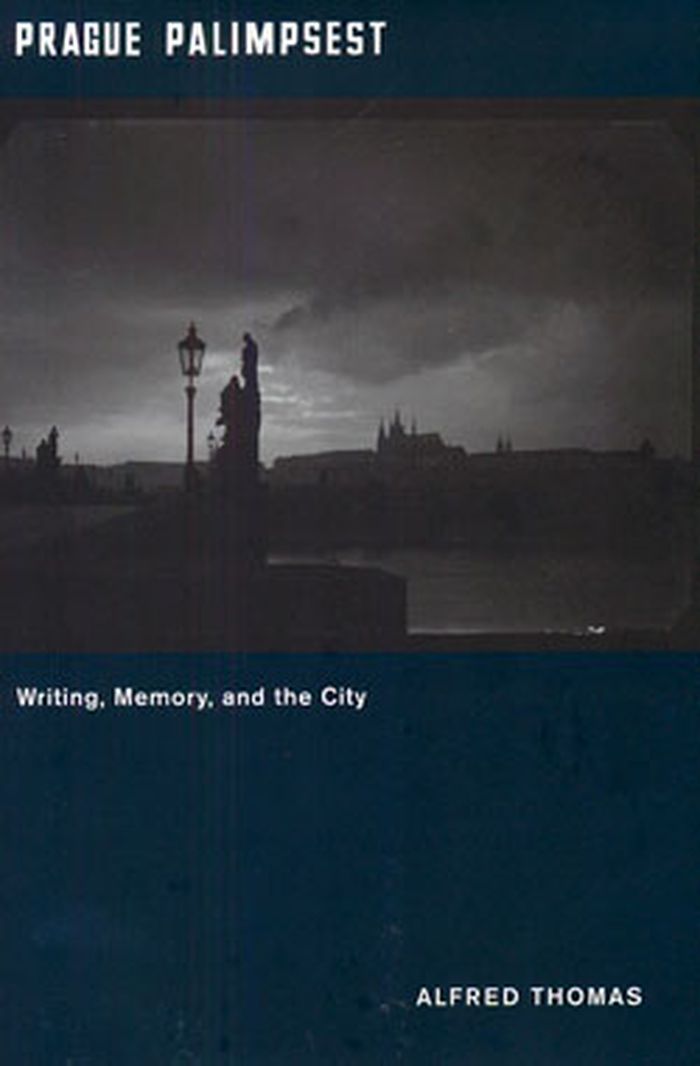
Prague palimpsest : writing, memory, and the city
Actions:
Prix:
$39.95
(disponible sur commande)
Résumé:
A city of immense literary mystique, Prague has inspired writers across the centuries with its beauty, cosmopolitanism, and tragic history. Envisioning the ancient city in central Europe as a multilayered text, or palimpsest, that has been constantly revised and rewritten — from the medieval and Renaissance chroniclers who legitimized the city’s foundational origins to the modernists of the early twentieth century who established its reputation as the new capital of the avant-garde — Alfred Thomas argues that Prague has become a paradoxical site of inscription and effacement, of memory and forgetting, a utopian link to the prewar and pre-Holocaust European past and a dystopia of totalitarian amnesia. Considering a wide range of writers, including the city’s most famous son, Franz Kafka, Prague Palimpsest reassesses the work of poets and novelists such as Bohumil Hrabal, Milan Kundera, Gustav Meyrink, Jan Neruda, Vítzslav Nezval, and Rainer Maria Rilke and engages with other famous authors who “wrote” Prague, including Guillaume Apollinaire, Ingeborg Bachmann, Albert Camus, Paul Celan, and W. G. Sebald. The result is a comparative, interdisciplinary study that helps to explain why Prague—more than any other major European city—has haunted the cultural and political imagination of the West.
Prague palimpsest : writing, memory, and the city
Actions:
Prix:
$39.95
(disponible sur commande)
Résumé:
A city of immense literary mystique, Prague has inspired writers across the centuries with its beauty, cosmopolitanism, and tragic history. Envisioning the ancient city in central Europe as a multilayered text, or palimpsest, that has been constantly revised and rewritten — from the medieval and Renaissance chroniclers who legitimized the city’s foundational origins to the modernists of the early twentieth century who established its reputation as the new capital of the avant-garde — Alfred Thomas argues that Prague has become a paradoxical site of inscription and effacement, of memory and forgetting, a utopian link to the prewar and pre-Holocaust European past and a dystopia of totalitarian amnesia. Considering a wide range of writers, including the city’s most famous son, Franz Kafka, Prague Palimpsest reassesses the work of poets and novelists such as Bohumil Hrabal, Milan Kundera, Gustav Meyrink, Jan Neruda, Vítzslav Nezval, and Rainer Maria Rilke and engages with other famous authors who “wrote” Prague, including Guillaume Apollinaire, Ingeborg Bachmann, Albert Camus, Paul Celan, and W. G. Sebald. The result is a comparative, interdisciplinary study that helps to explain why Prague—more than any other major European city—has haunted the cultural and political imagination of the West.
Classification:
livres
livres
Publication:
octobre 2010
octobre 2010
Sujet:
Architecture et l'imaginaire
Architecture et l'imaginaire
Classification:
livres
livres
Actions:
Prix:
$70.50
(disponible sur commande)
Résumé:
Architects have long operated based on the assumption that a building is 'complete' once construction has finished. Striving to create a perfect building, they wish for it to stay in its original state indefinitely, viewing any subsequent alterations as unintended effects or the results of degeneration. The ideal is for a piece of architecture to remain permanently(...)
$70.50
(disponible sur commande)
Résumé:
Architects have long operated based on the assumption that a building is 'complete' once construction has finished. Striving to create a perfect building, they wish for it to stay in its original state indefinitely, viewing any subsequent alterations as unintended effects or the results of degeneration. The ideal is for a piece of architecture to remain permanently(...)
Titre:
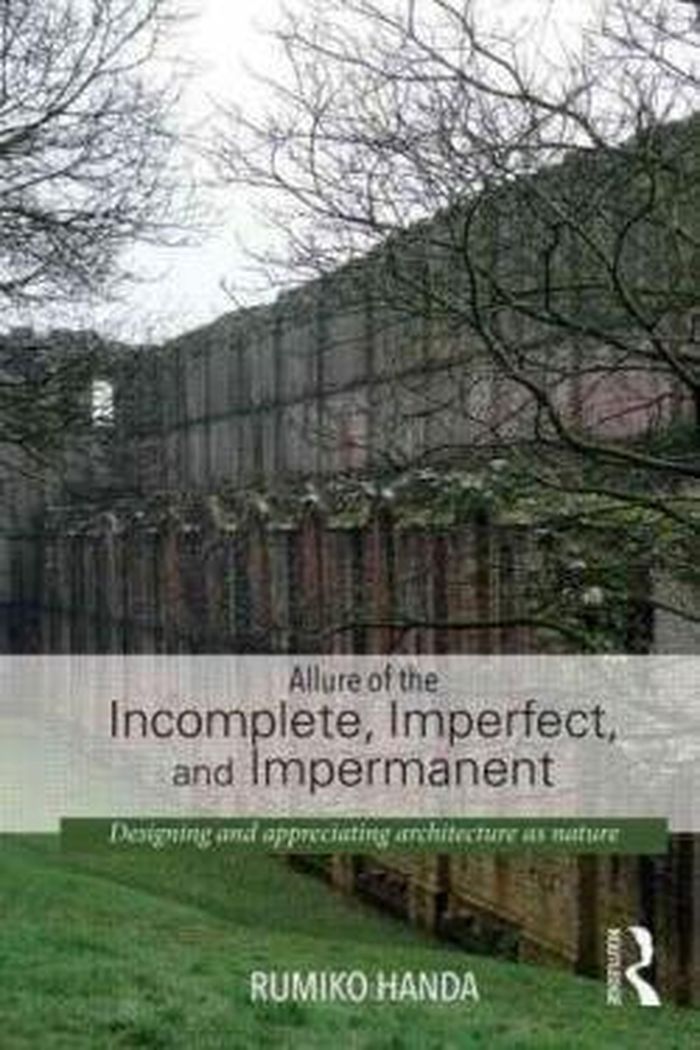
Allure of the incomplete, imperfect, and impermanent: designing and appreciating architecture as nature
Actions:
Prix:
$70.50
(disponible sur commande)
Résumé:
Architects have long operated based on the assumption that a building is 'complete' once construction has finished. Striving to create a perfect building, they wish for it to stay in its original state indefinitely, viewing any subsequent alterations as unintended effects or the results of degeneration. The ideal is for a piece of architecture to remain permanently perfect and complete. This contrasts sharply with reality where changes take place as people move in, requirements change, events happen, and building materials are subject to wear and tear. Rumiko Handa argues it is time to correct this imbalance. Using examples ranging from the Roman Coliseum to Japanese tea rooms, she draws attention to an area that is usually ignored: the allure of incomplete, imperfect and impermanent architecture. By focusing on what happens to buildings after they are ‘complete’, she shows that the ‘afterlife’ is in fact the very ‘life’ of a building. However, the book goes beyond theoretical debate. Addressing professionals as well as architecture students and educators, it persuades architects of the necessity to anticipate possible future changes and to incorporate these into their original designs.
Allure of the incomplete, imperfect, and impermanent: designing and appreciating architecture as nature
Actions:
Prix:
$70.50
(disponible sur commande)
Résumé:
Architects have long operated based on the assumption that a building is 'complete' once construction has finished. Striving to create a perfect building, they wish for it to stay in its original state indefinitely, viewing any subsequent alterations as unintended effects or the results of degeneration. The ideal is for a piece of architecture to remain permanently perfect and complete. This contrasts sharply with reality where changes take place as people move in, requirements change, events happen, and building materials are subject to wear and tear. Rumiko Handa argues it is time to correct this imbalance. Using examples ranging from the Roman Coliseum to Japanese tea rooms, she draws attention to an area that is usually ignored: the allure of incomplete, imperfect and impermanent architecture. By focusing on what happens to buildings after they are ‘complete’, she shows that the ‘afterlife’ is in fact the very ‘life’ of a building. However, the book goes beyond theoretical debate. Addressing professionals as well as architecture students and educators, it persuades architects of the necessity to anticipate possible future changes and to incorporate these into their original designs.
Classification:
livres
livres
Publication:
janvier 2015
janvier 2015
Sujet:
Théorie du paysage
Théorie du paysage
Classification:
livres
livres
Actions:
Prix:
$60.00
(disponible sur commande)
Résumé:
At first sight, reality appears chaotic and anarchic. If events have any kind of logic to them, it lies well hidden behind an overlay of banality so thick as to make it invisible. And yet, at certain exceptional moments, life slackens and reveals itself. The automaton allows its innards be glimpsed, and its mechanism becomes momentarily evident as the logic of chaos. In(...)
$60.00
(disponible sur commande)
Résumé:
At first sight, reality appears chaotic and anarchic. If events have any kind of logic to them, it lies well hidden behind an overlay of banality so thick as to make it invisible. And yet, at certain exceptional moments, life slackens and reveals itself. The automaton allows its innards be glimpsed, and its mechanism becomes momentarily evident as the logic of chaos. In(...)
Titre:
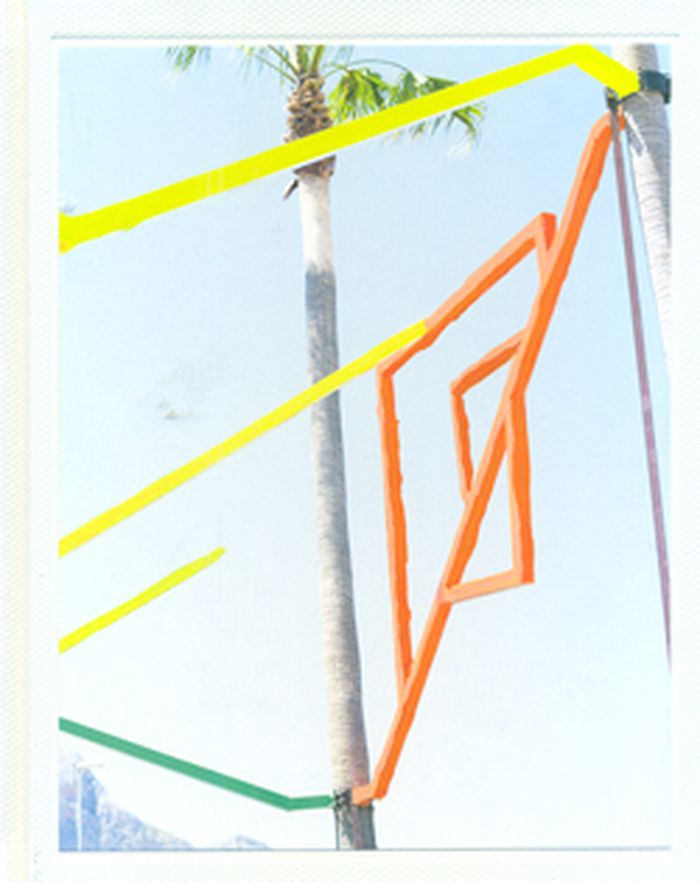
Ricardo Cases: el porqué de las naranjas
Actions:
Prix:
$60.00
(disponible sur commande)
Résumé:
At first sight, reality appears chaotic and anarchic. If events have any kind of logic to them, it lies well hidden behind an overlay of banality so thick as to make it invisible. And yet, at certain exceptional moments, life slackens and reveals itself. The automaton allows its innards be glimpsed, and its mechanism becomes momentarily evident as the logic of chaos. In his new work, El porqué de la naranjas, Spanish photographer Ricardo Cases does not document the surface symptoms of reality, but instead renders the non-visible, the mechanistic. In his immediate surroundings – the fertile region of Levante in Spain – the photographer reveals ephemeral moments that might otherwise go unnoticed. Out on the streets he sets out to make visible the laws that regulate the universe, hunting down the elementary participles in the same vein as a nuclear physicist attempting to identify the Higgs particle. Cases uses the landscape as a laboratory, a place where these mechanisms can manifest themselves freely. The work is not a portrait of Levante itself, but of the spirit of Levante, and thus of the spirit of Spain as a whole.
Ricardo Cases: el porqué de las naranjas
Actions:
Prix:
$60.00
(disponible sur commande)
Résumé:
At first sight, reality appears chaotic and anarchic. If events have any kind of logic to them, it lies well hidden behind an overlay of banality so thick as to make it invisible. And yet, at certain exceptional moments, life slackens and reveals itself. The automaton allows its innards be glimpsed, and its mechanism becomes momentarily evident as the logic of chaos. In his new work, El porqué de la naranjas, Spanish photographer Ricardo Cases does not document the surface symptoms of reality, but instead renders the non-visible, the mechanistic. In his immediate surroundings – the fertile region of Levante in Spain – the photographer reveals ephemeral moments that might otherwise go unnoticed. Out on the streets he sets out to make visible the laws that regulate the universe, hunting down the elementary participles in the same vein as a nuclear physicist attempting to identify the Higgs particle. Cases uses the landscape as a laboratory, a place where these mechanisms can manifest themselves freely. The work is not a portrait of Levante itself, but of the spirit of Levante, and thus of the spirit of Spain as a whole.
Classification:
livres
livres
Publication:
novembre 2014
novembre 2014
Sujet:
Monographies photo
Monographies photo
Classification:
périodiques
périodiques
Titre:
Discourse studies.
Discourse studies.
Actions:
Description:
1 online resource
Auteur:
Sujet:
Publication:
London : SAGE Publications
London : SAGE Publications
Classification:
périodiques
périodiques
Publication:
London : SAGE Publications
London : SAGE Publications
Auteur:
Sujet:
Classification:
livres
livres
Titre:
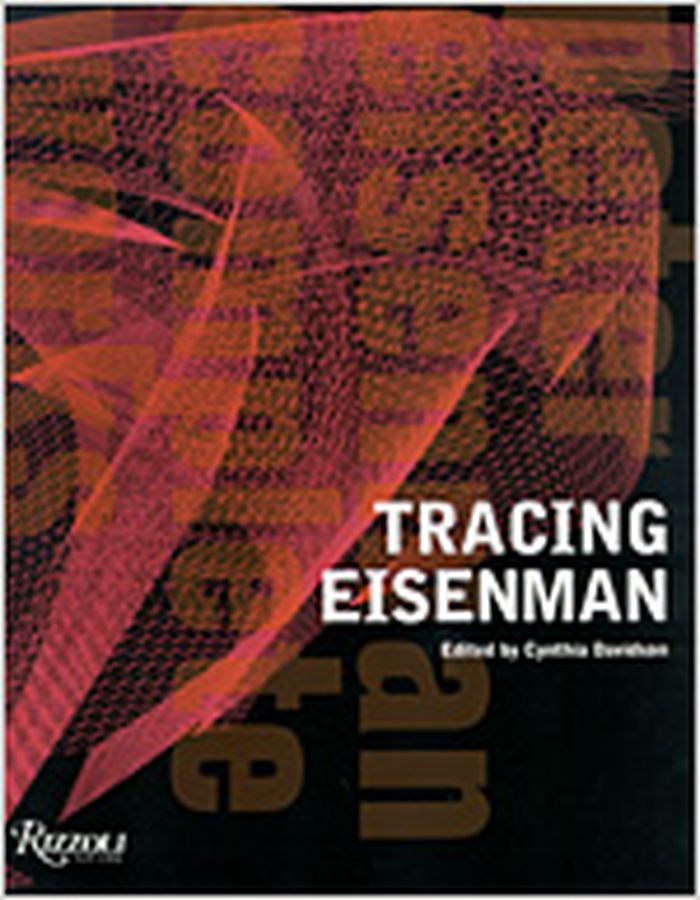
Tracing Eisenman
Tracing Eisenman
Actions:
Prix:
$100.00
(disponible sur commande)
Résumé:
Perhaps more than any other architect practicing today, Peter Eisenman has made a career out of devising a dialectic of oppositions in architecture. With references to societal alienation and existing architectural forms, his work derives much from Friedrich Nietzsche, Noam Chomsky, and Jacques Derrida. He led the loosely knit group of architects known as "The New York(...)
$100.00
(disponible sur commande)
Résumé:
Perhaps more than any other architect practicing today, Peter Eisenman has made a career out of devising a dialectic of oppositions in architecture. With references to societal alienation and existing architectural forms, his work derives much from Friedrich Nietzsche, Noam Chomsky, and Jacques Derrida. He led the loosely knit group of architects known as "The New York(...)
Titre:
Tracing Eisenman
Actions:
Prix:
$100.00
(disponible sur commande)
Résumé:
Perhaps more than any other architect practicing today, Peter Eisenman has made a career out of devising a dialectic of oppositions in architecture. With references to societal alienation and existing architectural forms, his work derives much from Friedrich Nietzsche, Noam Chomsky, and Jacques Derrida. He led the loosely knit group of architects known as "The New York Five" (which included John Hejduk, Michael Graves, Charles Gwathmey, and Richard Meier), who made an effort to introduce a theory and artistry of modernist architecture as rigorous as that of the European avant-garde. This is the first comprehensive single-volume overview ever published on Eisenman's buildings and projects, from his first work, House I (1960), to his most recent projects, currently under construction in Spain and Germany. The book includes all the projects Eisenman has created, with essays from international architects and critics, including Greg Lynn, Sanford Kwinter, and Stan Allen.Eisenman currently teaches at New York's Cooper Union and at Princeton University. He has designed a wide range of projects, including the Wexner Center at Ohio State University, which received a 1993 National Honor Award from the American Institute of Architects, and the Holocaust Memorial in Berlin, which opened in spring 2005.
Tracing Eisenman
Actions:
Prix:
$100.00
(disponible sur commande)
Résumé:
Perhaps more than any other architect practicing today, Peter Eisenman has made a career out of devising a dialectic of oppositions in architecture. With references to societal alienation and existing architectural forms, his work derives much from Friedrich Nietzsche, Noam Chomsky, and Jacques Derrida. He led the loosely knit group of architects known as "The New York Five" (which included John Hejduk, Michael Graves, Charles Gwathmey, and Richard Meier), who made an effort to introduce a theory and artistry of modernist architecture as rigorous as that of the European avant-garde. This is the first comprehensive single-volume overview ever published on Eisenman's buildings and projects, from his first work, House I (1960), to his most recent projects, currently under construction in Spain and Germany. The book includes all the projects Eisenman has created, with essays from international architects and critics, including Greg Lynn, Sanford Kwinter, and Stan Allen.Eisenman currently teaches at New York's Cooper Union and at Princeton University. He has designed a wide range of projects, including the Wexner Center at Ohio State University, which received a 1993 National Honor Award from the American Institute of Architects, and the Holocaust Memorial in Berlin, which opened in spring 2005.
Classification:
livres
livres
Publication:
octobre 2006, New York
octobre 2006, New York
Sujet:
Architecture, monographies
Architecture, monographies
Classification:
livres
livres
Actions:
Exemplaires:
Description:
xvi, 406 pages : illustrations (some color) ; 29 cm.
Description:
xvi, 406 pages : illustrations (some color) ; 29 cm.
Auteur:
Sujet:
Publication:
Austin : University of Texas Press, [2014]
Austin : University of Texas Press, [2014]
Titre:
Modern architecture in Latin America : art, technology, and utopia / Luis E. Carranza and Fernando Luiz Lara ; foreword by Jorge Francisco Liernur.
Actions:
Exemplaires:
Description:
xvi, 406 pages : illustrations (some color) ; 29 cm.
Modern architecture in Latin America : art, technology, and utopia / Luis E. Carranza and Fernando Luiz Lara ; foreword by Jorge Francisco Liernur.
Actions:
Exemplaires:
Description:
xvi, 406 pages : illustrations (some color) ; 29 cm.
Classification:
livres
livres
Publication:
Austin : University of Texas Press, [2014]
Austin : University of Texas Press, [2014]
Auteur:
Sujet:
Classification:
livres
livres
Titre:
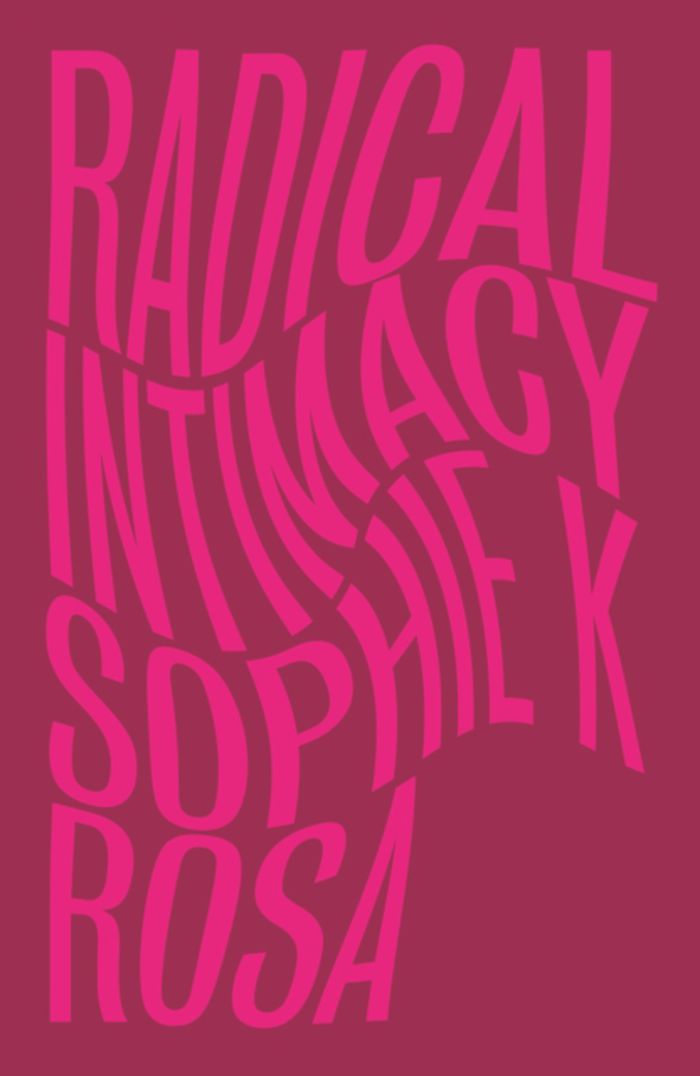
Radical intimacy
Radical intimacy
Actions:
Prix:
$29.95
(disponible en magasin)
Résumé:
Capitalist ideology wants us to believe that there is an optimal way to live. 'Making connections' means networking for work. Our emotional needs are to be fulfilled by a single romantic partner, and self-care equates to taking personal responsibility for our suffering. We must be productive and heterosexual, we must have babies and buy a house. But the kicker is most(...)
$29.95
(disponible en magasin)
Résumé:
Capitalist ideology wants us to believe that there is an optimal way to live. 'Making connections' means networking for work. Our emotional needs are to be fulfilled by a single romantic partner, and self-care equates to taking personal responsibility for our suffering. We must be productive and heterosexual, we must have babies and buy a house. But the kicker is most(...)
Titre:
Radical intimacy
Actions:
Prix:
$29.95
(disponible en magasin)
Résumé:
Capitalist ideology wants us to believe that there is an optimal way to live. 'Making connections' means networking for work. Our emotional needs are to be fulfilled by a single romantic partner, and self-care equates to taking personal responsibility for our suffering. We must be productive and heterosexual, we must have babies and buy a house. But the kicker is most people cannot and do not want to achieve all, or any of these life goals. Instead we are left feeling atomised, exhausted and disempowered. ''Radical intimacy'' shows that it doesn't need to be this way. A punchy and impassioned account of inspiring ideas about alternative ways to live, Sophie K Rosa demands we use our radical imagination to discover a new form of intimacy and to transform our personal lives and in turn society as a whole. Including critiques of the 'wellness' industry that ignores rising poverty rates, the mental health crisis and racist and misogynist state violence; transcending love and sex under capitalism to move towards feminist, decolonial and queer thinking; asking whether we should abolish the family; interrogating the framing of ageing and death and much more, ''Radical intimacy'' is the compassionate antidote to a callous society.
Radical intimacy
Actions:
Prix:
$29.95
(disponible en magasin)
Résumé:
Capitalist ideology wants us to believe that there is an optimal way to live. 'Making connections' means networking for work. Our emotional needs are to be fulfilled by a single romantic partner, and self-care equates to taking personal responsibility for our suffering. We must be productive and heterosexual, we must have babies and buy a house. But the kicker is most people cannot and do not want to achieve all, or any of these life goals. Instead we are left feeling atomised, exhausted and disempowered. ''Radical intimacy'' shows that it doesn't need to be this way. A punchy and impassioned account of inspiring ideas about alternative ways to live, Sophie K Rosa demands we use our radical imagination to discover a new form of intimacy and to transform our personal lives and in turn society as a whole. Including critiques of the 'wellness' industry that ignores rising poverty rates, the mental health crisis and racist and misogynist state violence; transcending love and sex under capitalism to move towards feminist, decolonial and queer thinking; asking whether we should abolish the family; interrogating the framing of ageing and death and much more, ''Radical intimacy'' is the compassionate antidote to a callous society.
Classification:
livres
livres
Publication:
avril 2023
avril 2023
Sujet:
Social
Social
Classification:
livres
livres
Titre:
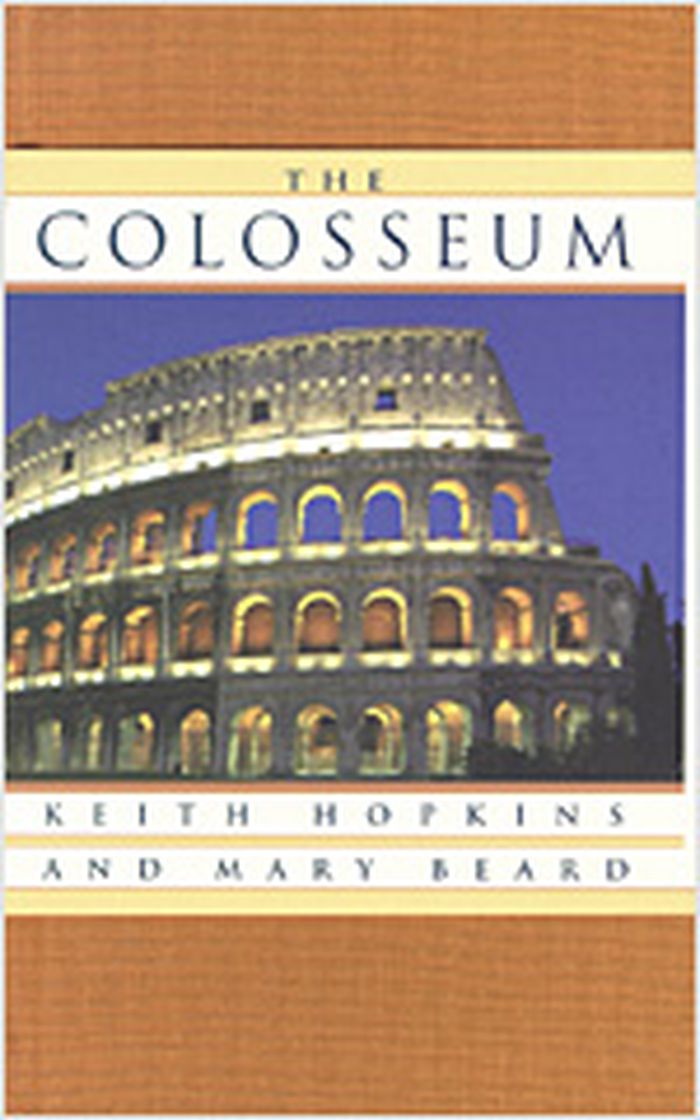
The colosseum
The colosseum
Actions:
Prix:
$24.95
(disponible sur commande)
Résumé:
Byron and Hitler were equally entranced by Rome's most famous monument, the Colosseum. Mid-Victorians admired the hundreds of varieties of flowers in its crannies and occasionally shuddered at its reputation for contagion, danger, and sexual temptation. Today it is the highlight of a tour of Italy for more than three million visitors a year, a concert arena for the likes(...)
$24.95
(disponible sur commande)
Résumé:
Byron and Hitler were equally entranced by Rome's most famous monument, the Colosseum. Mid-Victorians admired the hundreds of varieties of flowers in its crannies and occasionally shuddered at its reputation for contagion, danger, and sexual temptation. Today it is the highlight of a tour of Italy for more than three million visitors a year, a concert arena for the likes(...)
Titre:
The colosseum
Actions:
Prix:
$24.95
(disponible sur commande)
Résumé:
Byron and Hitler were equally entranced by Rome's most famous monument, the Colosseum. Mid-Victorians admired the hundreds of varieties of flowers in its crannies and occasionally shuddered at its reputation for contagion, danger, and sexual temptation. Today it is the highlight of a tour of Italy for more than three million visitors a year, a concert arena for the likes of Paul McCartney, and a national symbol of opposition to the death penalty. Its ancient history is chockfull of romantic but erroneous myths. There is no evidence that any gladiator ever said "Hail Caesar, those about to die..." and we know of not one single Christian martyr who met his finish here. Yet the reality is much stranger than the legend as the authors, two prominent classical historians, explain in this absorbing account. We learn the details of how the arena was built and at what cost; we are introduced to the emperors who sometimes fought in gladiatorial games staged at the Colosseum; and we take measure of the audience who reveled in, or opposed, these games. The authors also trace the strange afterlife of the monument--as fortress, shrine of martyrs, church, and glue factory. Why are we so fascinated with this arena of death?
The colosseum
Actions:
Prix:
$24.95
(disponible sur commande)
Résumé:
Byron and Hitler were equally entranced by Rome's most famous monument, the Colosseum. Mid-Victorians admired the hundreds of varieties of flowers in its crannies and occasionally shuddered at its reputation for contagion, danger, and sexual temptation. Today it is the highlight of a tour of Italy for more than three million visitors a year, a concert arena for the likes of Paul McCartney, and a national symbol of opposition to the death penalty. Its ancient history is chockfull of romantic but erroneous myths. There is no evidence that any gladiator ever said "Hail Caesar, those about to die..." and we know of not one single Christian martyr who met his finish here. Yet the reality is much stranger than the legend as the authors, two prominent classical historians, explain in this absorbing account. We learn the details of how the arena was built and at what cost; we are introduced to the emperors who sometimes fought in gladiatorial games staged at the Colosseum; and we take measure of the audience who reveled in, or opposed, these games. The authors also trace the strange afterlife of the monument--as fortress, shrine of martyrs, church, and glue factory. Why are we so fascinated with this arena of death?
Classification:
livres
livres
Publication:
novembre 2005, Cambridge
novembre 2005, Cambridge
Sujet:
Histoire jusqu’à 1900
Histoire jusqu’à 1900
Classification:
livres
livres

Actions:
Prix:
$60.00
(disponible en magasin)
Résumé:
Paul Hutchinson’s work (b. Berlin, 1987; lives and works in Berlin) conveys an intimate and unvarnished perspective, rendering the imperfections, incidental details, and human facets of urban culture. Fleeting moments and encounters often act as a base for his critical photographic practice. The central protagonists in his most recent project, titled Stadt für Alle(...)
$60.00
(disponible en magasin)
Résumé:
Paul Hutchinson’s work (b. Berlin, 1987; lives and works in Berlin) conveys an intimate and unvarnished perspective, rendering the imperfections, incidental details, and human facets of urban culture. Fleeting moments and encounters often act as a base for his critical photographic practice. The central protagonists in his most recent project, titled Stadt für Alle(...)
Titre:
Paul Hutchinson: Stadt fur alle
Actions:
Prix:
$60.00
(disponible en magasin)
Résumé:
Paul Hutchinson’s work (b. Berlin, 1987; lives and works in Berlin) conveys an intimate and unvarnished perspective, rendering the imperfections, incidental details, and human facets of urban culture. Fleeting moments and encounters often act as a base for his critical photographic practice. The central protagonists in his most recent project, titled Stadt für Alle (transl. City for All), are countless cranes, excavators, and construction signs. They are the tools that power the remaking of any city’s urban fabric – here Berlin mostly sets the example. Building pits constitute the foundation for farewells and new beginnings. Advertising banners for luxury developments vie against protest placards hanging limply on the façades of older buildings. The artist has compiled a pictorial atlas that prompts reflections on the transformation of the city and thereby gives form to the advancing gentrification, the constant feeling of threat and the increasing loss of inner-city street culture. Hutchinson’s writing complements the deft visual analysis of these processes: "The way you look at me, smiling while I’m losing my vision" is one such observation that, in conjunction with his images, opens up a space for interpretation and a probing inquiry into what urban life will mean in the future.
Paul Hutchinson: Stadt fur alle
Actions:
Prix:
$60.00
(disponible en magasin)
Résumé:
Paul Hutchinson’s work (b. Berlin, 1987; lives and works in Berlin) conveys an intimate and unvarnished perspective, rendering the imperfections, incidental details, and human facets of urban culture. Fleeting moments and encounters often act as a base for his critical photographic practice. The central protagonists in his most recent project, titled Stadt für Alle (transl. City for All), are countless cranes, excavators, and construction signs. They are the tools that power the remaking of any city’s urban fabric – here Berlin mostly sets the example. Building pits constitute the foundation for farewells and new beginnings. Advertising banners for luxury developments vie against protest placards hanging limply on the façades of older buildings. The artist has compiled a pictorial atlas that prompts reflections on the transformation of the city and thereby gives form to the advancing gentrification, the constant feeling of threat and the increasing loss of inner-city street culture. Hutchinson’s writing complements the deft visual analysis of these processes: "The way you look at me, smiling while I’m losing my vision" is one such observation that, in conjunction with his images, opens up a space for interpretation and a probing inquiry into what urban life will mean in the future.
Classification:
livres
livres
Publication:
septembre 2020
septembre 2020
Sujet:
Monographies photo
Monographies photo
Classification:
livres
livres
Titre:
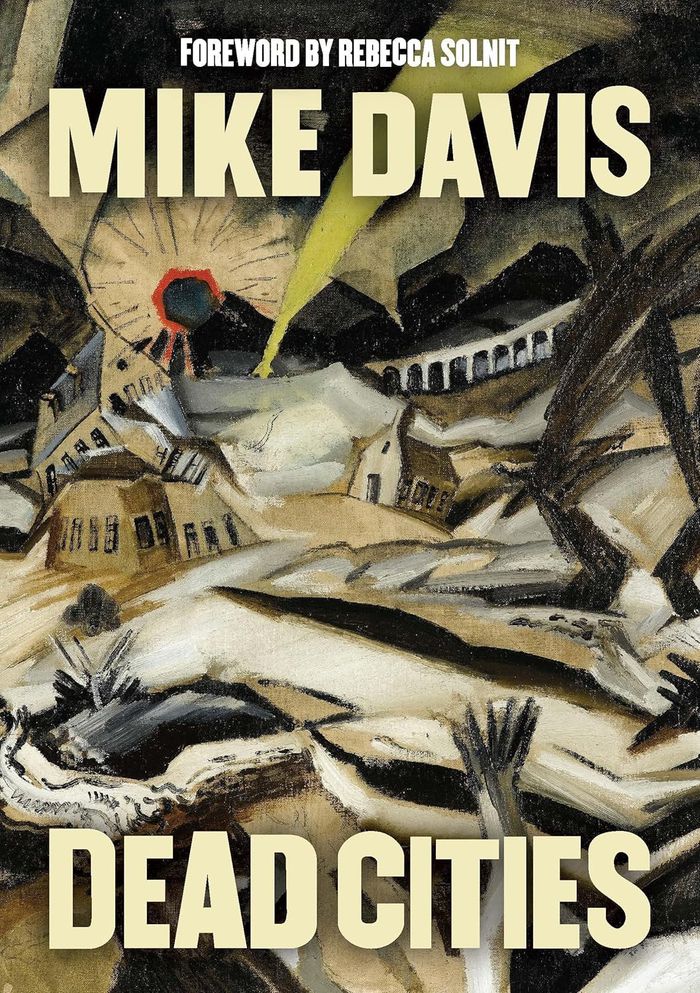
Dead cities and other tales
Dead cities and other tales
Actions:
Prix:
$38.95
(disponible sur commande)
Résumé:
For the late great Mike Davis, the ravaging of the climate by capital—and his prescient analysis of its consequences for those of us left to deal with the resulting crises—was always a central part of his urban geography. In these wide ranging, incisive, and hauntingly relevant essays, Davis asks us to consider what we would find if we put a microscope to the ruins of(...)
$38.95
(disponible sur commande)
Résumé:
For the late great Mike Davis, the ravaging of the climate by capital—and his prescient analysis of its consequences for those of us left to deal with the resulting crises—was always a central part of his urban geography. In these wide ranging, incisive, and hauntingly relevant essays, Davis asks us to consider what we would find if we put a microscope to the ruins of(...)
Titre:
Dead cities and other tales
Actions:
Prix:
$38.95
(disponible sur commande)
Résumé:
For the late great Mike Davis, the ravaging of the climate by capital—and his prescient analysis of its consequences for those of us left to deal with the resulting crises—was always a central part of his urban geography. In these wide ranging, incisive, and hauntingly relevant essays, Davis asks us to consider what we would find if we put a microscope to the ruins of Metropolis, and provides a riveting account of the disasters—natural, man-made, and those (as in the case of climate calamity) where the distinction is impossible to make—that he finds on the other end. He begins his examination by sifting through the rubble of the twin towers in the wake of 9/11, presciently identifying the seeds of war already germinating in the scorched soil of ground zero, and closes by considering how little prepared our hollowed out urban infrastructure is to deal with shocks of any kind, be they from car bombs or ice storms. In between we are treated to tours of blasted wastelands where American generals built and destroyed replicas of Berlin, glimpses of Las Vegas’s penchant for annihilating its own best-known landmarks, and other riveting tales of the dialectic between nature and the city.
Dead cities and other tales
Actions:
Prix:
$38.95
(disponible sur commande)
Résumé:
For the late great Mike Davis, the ravaging of the climate by capital—and his prescient analysis of its consequences for those of us left to deal with the resulting crises—was always a central part of his urban geography. In these wide ranging, incisive, and hauntingly relevant essays, Davis asks us to consider what we would find if we put a microscope to the ruins of Metropolis, and provides a riveting account of the disasters—natural, man-made, and those (as in the case of climate calamity) where the distinction is impossible to make—that he finds on the other end. He begins his examination by sifting through the rubble of the twin towers in the wake of 9/11, presciently identifying the seeds of war already germinating in the scorched soil of ground zero, and closes by considering how little prepared our hollowed out urban infrastructure is to deal with shocks of any kind, be they from car bombs or ice storms. In between we are treated to tours of blasted wastelands where American generals built and destroyed replicas of Berlin, glimpses of Las Vegas’s penchant for annihilating its own best-known landmarks, and other riveting tales of the dialectic between nature and the city.
Classification:
livres
livres
Publication:
octobre 2024
octobre 2024
Sujet:
Théorie de l’urbanisme
Théorie de l’urbanisme


