


299 Résultats
Classification:
livres
livres
Actions:
Prix:
$27.95
(disponible sur commande)
Résumé:
Rethinking the significance of films including "Pillow Talk," "Rear Window," and "The Seven Year Itch," Pamela Robertson Wojcik examines the popularity of the "apartment plot," her term for stories in which the apartment functions as a central narrative device. From the baby boom years into the 1970s, the apartment plot was not only key to films; it also surfaced in TV(...)
$27.95
(disponible sur commande)
Résumé:
Rethinking the significance of films including "Pillow Talk," "Rear Window," and "The Seven Year Itch," Pamela Robertson Wojcik examines the popularity of the "apartment plot," her term for stories in which the apartment functions as a central narrative device. From the baby boom years into the 1970s, the apartment plot was not only key to films; it also surfaced in TV(...)
Publication:
novembre 2010
novembre 2010
Titre:
The apartment plot : urban living in American film and popular culture, 1945 to 1975
Actions:
Prix:
$27.95
(disponible sur commande)
Résumé:
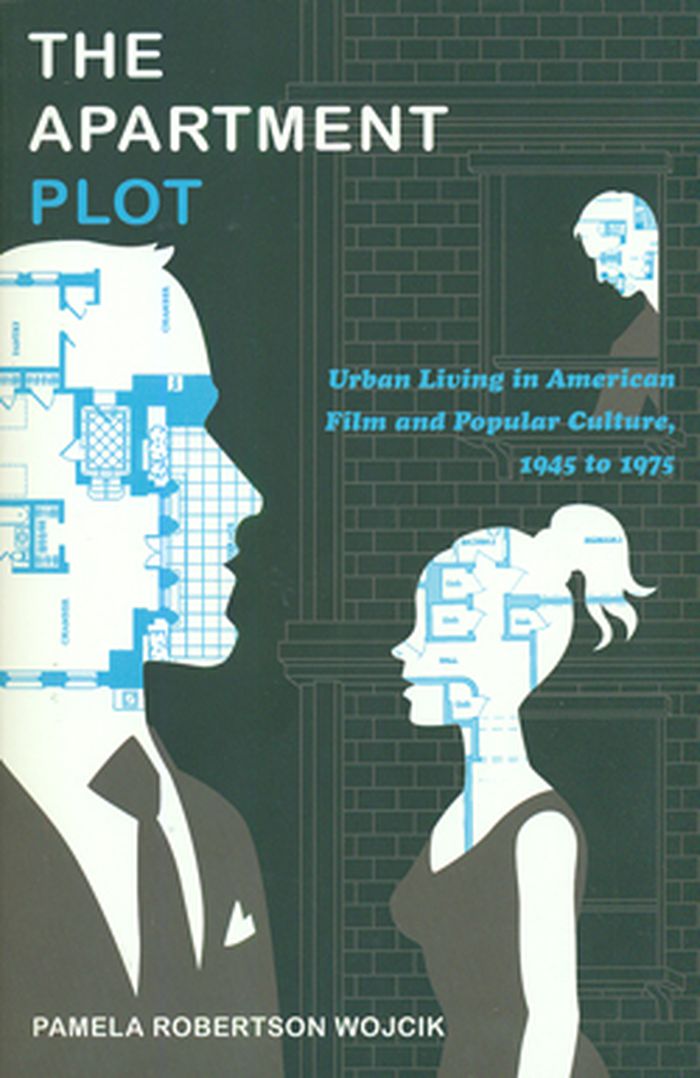
Rethinking the significance of films including "Pillow Talk," "Rear Window," and "The Seven Year Itch," Pamela Robertson Wojcik examines the popularity of the "apartment plot," her term for stories in which the apartment functions as a central narrative device. From the baby boom years into the 1970s, the apartment plot was not only key to films; it also surfaced in TV shows, Broadway plays, literature, and comic strips, from "The Honeymooners" and" The Mary Tyler Moore Show "to" Subways are for Sleeping "and" Apartment 3-G." By identifying the apartment plot as a film genre, Wojcik reveals affinities between movies generally viewed as belonging to such distinct genres as film noir, romantic comedy, and melodrama. She analyzes the apartment plot as part of a mid-twentieth-century urban discourse, showing how it offers a vision of home centered on values of community, visibility, contact, mobility, impermanence, and porousness that contrasts with views of home as private, stable, and family-based.
The apartment plot : urban living in American film and popular culture, 1945 to 1975
Actions:
Prix:
$27.95
(disponible sur commande)
Résumé:
Rethinking the significance of films including "Pillow Talk," "Rear Window," and "The Seven Year Itch," Pamela Robertson Wojcik examines the popularity of the "apartment plot," her term for stories in which the apartment functions as a central narrative device. From the baby boom years into the 1970s, the apartment plot was not only key to films; it also surfaced in TV shows, Broadway plays, literature, and comic strips, from "The Honeymooners" and" The Mary Tyler Moore Show "to" Subways are for Sleeping "and" Apartment 3-G." By identifying the apartment plot as a film genre, Wojcik reveals affinities between movies generally viewed as belonging to such distinct genres as film noir, romantic comedy, and melodrama. She analyzes the apartment plot as part of a mid-twentieth-century urban discourse, showing how it offers a vision of home centered on values of community, visibility, contact, mobility, impermanence, and porousness that contrasts with views of home as private, stable, and family-based.
Classification:
livres
livres
Publication:
novembre 2010
novembre 2010
Classification:
livres
livres
Actions:
Prix:
$32.95
(disponible sur commande)
Résumé:
Dystopic imagery has figured prominently in modern depictions of the urban landscape. The city is often portrayed as a terrifying world of darkness, crisis, and catastrophe. Noir Urbanisms traces the history of the modern city through its critical representations in art, cinema, print journalism, literature, sociology, and architecture. It focuses on visual forms of(...)
$32.95
(disponible sur commande)
Résumé:
Dystopic imagery has figured prominently in modern depictions of the urban landscape. The city is often portrayed as a terrifying world of darkness, crisis, and catastrophe. Noir Urbanisms traces the history of the modern city through its critical representations in art, cinema, print journalism, literature, sociology, and architecture. It focuses on visual forms of(...)
Titre:
Noir urbanisms: Dystopic images of the modern city
Actions:
Prix:
$32.95
(disponible sur commande)
Résumé:
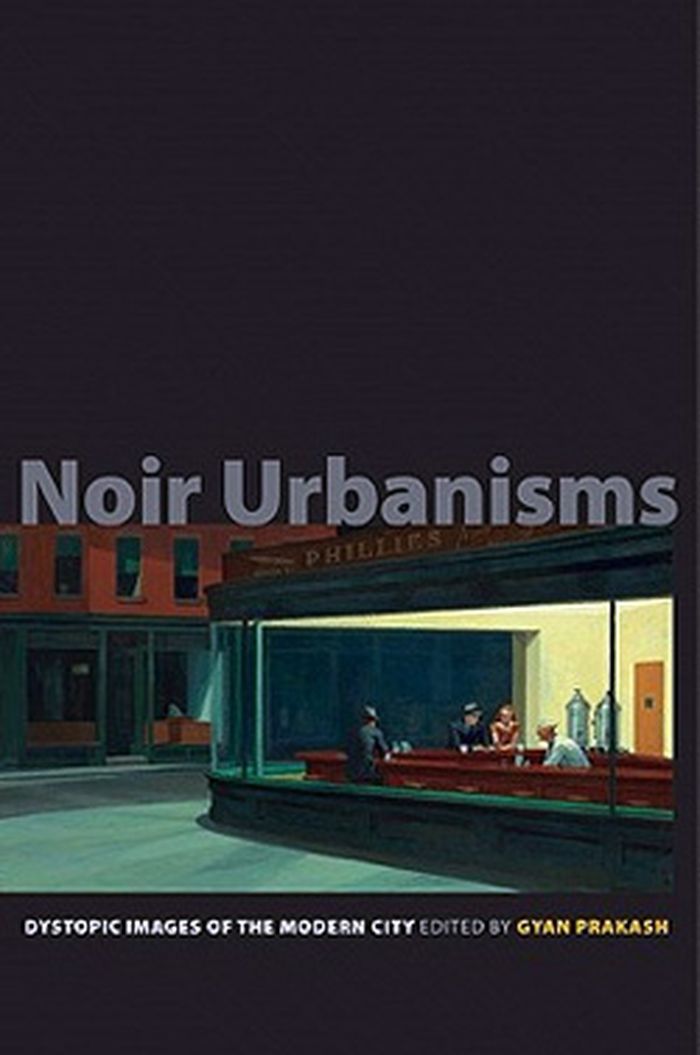
Dystopic imagery has figured prominently in modern depictions of the urban landscape. The city is often portrayed as a terrifying world of darkness, crisis, and catastrophe. Noir Urbanisms traces the history of the modern city through its critical representations in art, cinema, print journalism, literature, sociology, and architecture. It focuses on visual forms of dystopic representation--because the history of the modern city is inseparable from the production and circulation of images--and examines their strengths and limits as urban criticism. Contributors explore dystopic images of the modern city in Germany, Mexico, Japan, India, South Africa, China, and the United States. Their topics include Weimar representations of urban dystopia in Fritz Lang's 1927 film Metropolis; 1960s modernist architecture in Mexico City; Hollywood film noir of the 1940s and 1950s; the recurring fictional destruction of Tokyo in postwar Japan's sci-fi doom culture; the urban fringe in Bombay cinema; fictional explorations of urban dystopia in postapartheid Johannesburg; and Delhi's out-of-control and media-saturated urbanism in the 1980s and 1990s. What emerges in Noir Urbanisms is the unsettling and disorienting alchemy between dark representations and the modern urban experience.
Noir urbanisms: Dystopic images of the modern city
Actions:
Prix:
$32.95
(disponible sur commande)
Résumé:
Dystopic imagery has figured prominently in modern depictions of the urban landscape. The city is often portrayed as a terrifying world of darkness, crisis, and catastrophe. Noir Urbanisms traces the history of the modern city through its critical representations in art, cinema, print journalism, literature, sociology, and architecture. It focuses on visual forms of dystopic representation--because the history of the modern city is inseparable from the production and circulation of images--and examines their strengths and limits as urban criticism. Contributors explore dystopic images of the modern city in Germany, Mexico, Japan, India, South Africa, China, and the United States. Their topics include Weimar representations of urban dystopia in Fritz Lang's 1927 film Metropolis; 1960s modernist architecture in Mexico City; Hollywood film noir of the 1940s and 1950s; the recurring fictional destruction of Tokyo in postwar Japan's sci-fi doom culture; the urban fringe in Bombay cinema; fictional explorations of urban dystopia in postapartheid Johannesburg; and Delhi's out-of-control and media-saturated urbanism in the 1980s and 1990s. What emerges in Noir Urbanisms is the unsettling and disorienting alchemy between dark representations and the modern urban experience.
Classification:
livres
livres
Publication:
octobre 2010
octobre 2010
Classification:
livres
livres
Actions:
Prix:
$29.95
(disponible sur commande)
Résumé:
Berlin's history of conflict, violence, and transformation has created an arena of particular urban surfaces, from which the present-day city and its layered, wounded past are projected simultaneously. In this publication, cultural historian Stephen Barber explores the intimate connections between those surfaces and the works of art and film that have both incised(...)
$29.95
(disponible sur commande)
Résumé:
Berlin's history of conflict, violence, and transformation has created an arena of particular urban surfaces, from which the present-day city and its layered, wounded past are projected simultaneously. In this publication, cultural historian Stephen Barber explores the intimate connections between those surfaces and the works of art and film that have both incised(...)
Titre:
The walls of Berlin: urban surfaces, art, film
Actions:
Prix:
$29.95
(disponible sur commande)
Résumé:
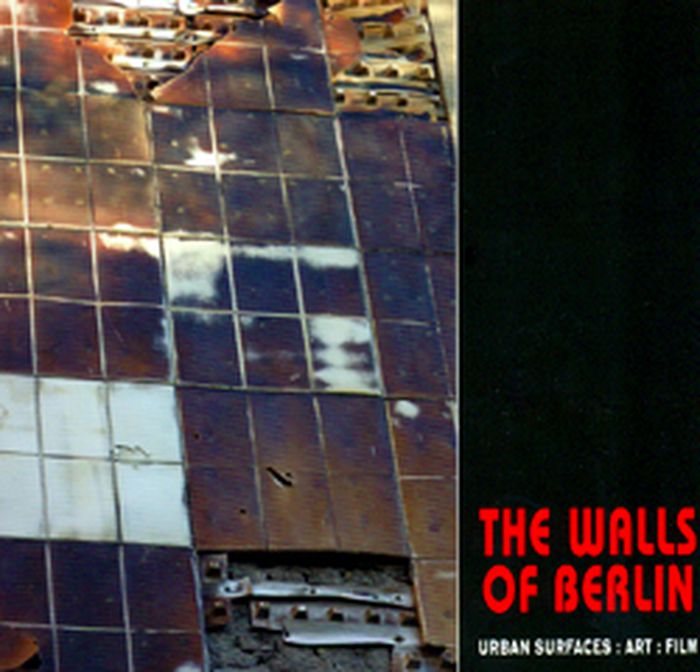
Berlin's history of conflict, violence, and transformation has created an arena of particular urban surfaces, from which the present-day city and its layered, wounded past are projected simultaneously. In this publication, cultural historian Stephen Barber explores the intimate connections between those surfaces and the works of art and film that have both incised Berlin's urban screens and been inspired by them. Drawing on a vast range of material - from the first films of Berlin in the 1890s to the city's place in contemporary digital art - this book takes the form of a series of image-propelled journeys across the face of Berlin and through its urban histories, excavating the ricochets among the city, art, and film. In Barber's hands, Berlin's walls become apertures that mediate the city's preoccupations and manias, damage and scars, strata and outgrowths, sexual obsessions, and urban vanishings. The Walls of Berlin is a cultural history of the city's memories-as well as its acts of forgetting-that illuminates overlooked spaces and the sensory presences that inhabit them.
The walls of Berlin: urban surfaces, art, film
Actions:
Prix:
$29.95
(disponible sur commande)
Résumé:
Berlin's history of conflict, violence, and transformation has created an arena of particular urban surfaces, from which the present-day city and its layered, wounded past are projected simultaneously. In this publication, cultural historian Stephen Barber explores the intimate connections between those surfaces and the works of art and film that have both incised Berlin's urban screens and been inspired by them. Drawing on a vast range of material - from the first films of Berlin in the 1890s to the city's place in contemporary digital art - this book takes the form of a series of image-propelled journeys across the face of Berlin and through its urban histories, excavating the ricochets among the city, art, and film. In Barber's hands, Berlin's walls become apertures that mediate the city's preoccupations and manias, damage and scars, strata and outgrowths, sexual obsessions, and urban vanishings. The Walls of Berlin is a cultural history of the city's memories-as well as its acts of forgetting-that illuminates overlooked spaces and the sensory presences that inhabit them.
Classification:
livres
livres
Publication:
juin 2011
juin 2011
Classification:
livres
livres
Titre:
World film locations: Tokyo
World film locations: Tokyo
Actions:
Prix:
$20.00
(disponible sur commande)
Résumé:
World Film Locations: Tokyo gives readers a kaleidoscopic view of one of the world's most complex and exciting cities through the lens of world cinema. 50 scenes from classic and contemporary films explore how motion pictures have shaped the role of Tokyo in our collective consciousness, as well as how these cinematic moments reveal aspects of the life and culture of a(...)
$20.00
(disponible sur commande)
Résumé:
World Film Locations: Tokyo gives readers a kaleidoscopic view of one of the world's most complex and exciting cities through the lens of world cinema. 50 scenes from classic and contemporary films explore how motion pictures have shaped the role of Tokyo in our collective consciousness, as well as how these cinematic moments reveal aspects of the life and culture of a(...)
Titre:
World film locations: Tokyo
Actions:
Prix:
$20.00
(disponible sur commande)
Résumé:
World Film Locations: Tokyo gives readers a kaleidoscopic view of one of the world's most complex and exciting cities through the lens of world cinema. 50 scenes from classic and contemporary films explore how motion pictures have shaped the role of Tokyo in our collective consciousness, as well as how these cinematic moments reveal aspects of the life and culture of a city that are often hidden from view.
World film locations: Tokyo
Actions:
Prix:
$20.00
(disponible sur commande)
Résumé:
World Film Locations: Tokyo gives readers a kaleidoscopic view of one of the world's most complex and exciting cities through the lens of world cinema. 50 scenes from classic and contemporary films explore how motion pictures have shaped the role of Tokyo in our collective consciousness, as well as how these cinematic moments reveal aspects of the life and culture of a city that are often hidden from view.
Classification:
livres
livres
Publication:
août 2011
août 2011
Classification:
livres
livres
Prix:
$52.00
(disponible sur commande)
Résumé:
This publication is a catalogue of an ambitious project that celebrates the obsessions that lie behing some of cinema's most iconic on-screen moments. The idea of the thirty obsessions gets inspiration from Persol's handcrafted thirty-step process. They will be presented in three years -ten per year- in major cities worldwide. The first ones, presented in this(...)
$52.00
(disponible sur commande)
Résumé:
This publication is a catalogue of an ambitious project that celebrates the obsessions that lie behing some of cinema's most iconic on-screen moments. The idea of the thirty obsessions gets inspiration from Persol's handcrafted thirty-step process. They will be presented in three years -ten per year- in major cities worldwide. The first ones, presented in this(...)
Titre:
Magnificient obsessions: Persol, cinema and craftsmanship
Actions:
Prix:
$52.00
(disponible sur commande)
Résumé:
This publication is a catalogue of an ambitious project that celebrates the obsessions that lie behing some of cinema's most iconic on-screen moments. The idea of the thirty obsessions gets inspiration from Persol's handcrafted thirty-step process. They will be presented in three years -ten per year- in major cities worldwide. The first ones, presented in this volume, have been exhibited in New York, Paris and Milan.
Magnificient obsessions: Persol, cinema and craftsmanship
Actions:
Prix:
$52.00
(disponible sur commande)
Résumé:
This publication is a catalogue of an ambitious project that celebrates the obsessions that lie behing some of cinema's most iconic on-screen moments. The idea of the thirty obsessions gets inspiration from Persol's handcrafted thirty-step process. They will be presented in three years -ten per year- in major cities worldwide. The first ones, presented in this volume, have been exhibited in New York, Paris and Milan.
Classification:
livres
livres
Publication:
novembre 2011
novembre 2011
Classification:
livres
livres
Actions:
Prix:
$29.00
(disponible sur commande)
Résumé:
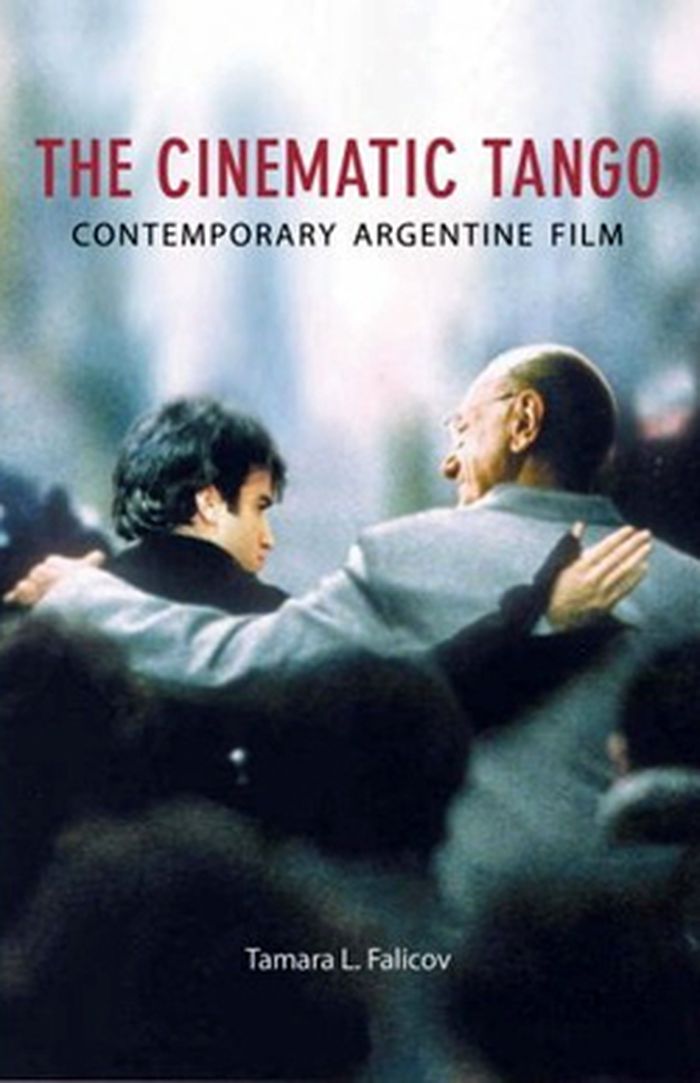
The Cinematic Tango explores the cultural politics of over sixty years of filmmaking in Argentina. From the 1940s when film was a successful studio product to the 1980s post-dictatorship period when national cinema was utilized as a public relations tool, Tamara L. Falicov explores how national culture on film has been shaped, articulated, and debated. She provides(...)
$29.00
(disponible sur commande)
Résumé:
The Cinematic Tango explores the cultural politics of over sixty years of filmmaking in Argentina. From the 1940s when film was a successful studio product to the 1980s post-dictatorship period when national cinema was utilized as a public relations tool, Tamara L. Falicov explores how national culture on film has been shaped, articulated, and debated. She provides(...)
Titre:
The cinematic tango: contemporary Argentine film
Actions:
Prix:
$29.00
(disponible sur commande)
Résumé:
The Cinematic Tango explores the cultural politics of over sixty years of filmmaking in Argentina. From the 1940s when film was a successful studio product to the 1980s post-dictatorship period when national cinema was utilized as a public relations tool, Tamara L. Falicov explores how national culture on film has been shaped, articulated, and debated. She provides in-depth analysis of Argentina's contemporary period, when financial incentives led to the production of commercial "blockbusters" as well as new opportunities for first-time directors, sparking a surge of low-budget, independent filmmaking.
The cinematic tango: contemporary Argentine film
Actions:
Prix:
$29.00
(disponible sur commande)
Résumé:
The Cinematic Tango explores the cultural politics of over sixty years of filmmaking in Argentina. From the 1940s when film was a successful studio product to the 1980s post-dictatorship period when national cinema was utilized as a public relations tool, Tamara L. Falicov explores how national culture on film has been shaped, articulated, and debated. She provides in-depth analysis of Argentina's contemporary period, when financial incentives led to the production of commercial "blockbusters" as well as new opportunities for first-time directors, sparking a surge of low-budget, independent filmmaking.
Classification:
livres
livres
Publication:
janvier 2012
janvier 2012
Classification:
livres
livres
Actions:
Prix:
$42.95
(disponible sur commande)
Résumé:
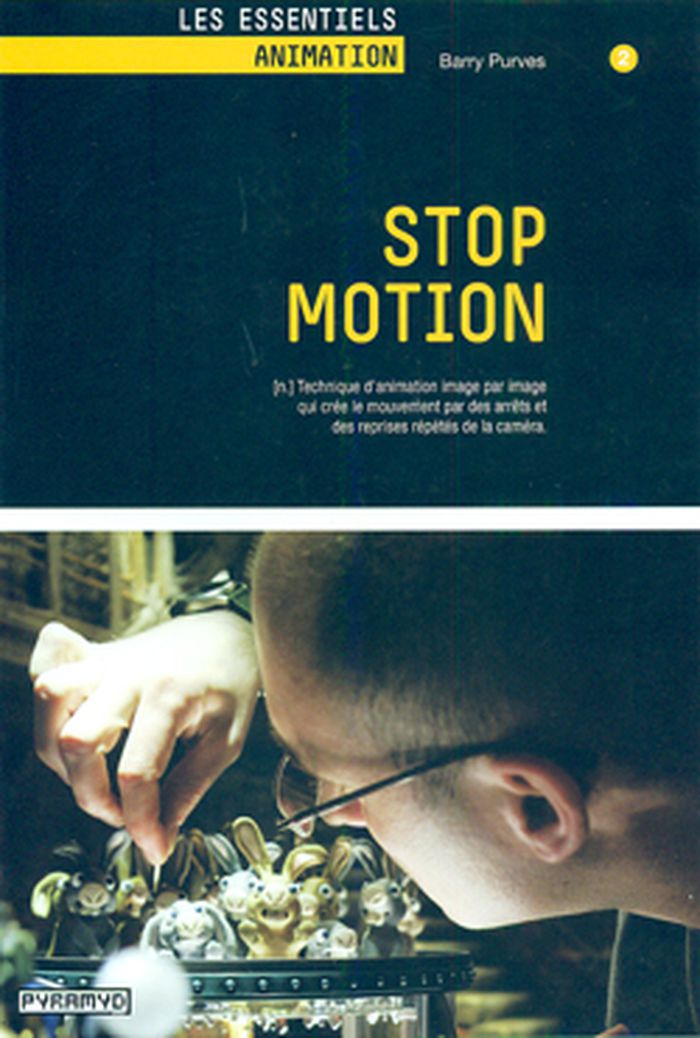
Technique d’animation image par image, le stop motion fascine, attire et intrigue. Cet ouvrage présente cet art centenaire qui permet d’insuffler la vie et le mouvement à des objets inanimés. Pas à pas, il nous entraîne dans les coulisses des films, détaillant les aspects techniques du tournage et dévoilant les secrets de création des décors et des marionnettes.
$42.95
(disponible sur commande)
Résumé:
Technique d’animation image par image, le stop motion fascine, attire et intrigue. Cet ouvrage présente cet art centenaire qui permet d’insuffler la vie et le mouvement à des objets inanimés. Pas à pas, il nous entraîne dans les coulisses des films, détaillant les aspects techniques du tournage et dévoilant les secrets de création des décors et des marionnettes.
Titre:
Les essentiels de l'animation: stop motion
Actions:
Prix:
$42.95
(disponible sur commande)
Résumé:
Technique d’animation image par image, le stop motion fascine, attire et intrigue. Cet ouvrage présente cet art centenaire qui permet d’insuffler la vie et le mouvement à des objets inanimés. Pas à pas, il nous entraîne dans les coulisses des films, détaillant les aspects techniques du tournage et dévoilant les secrets de création des décors et des marionnettes.
Les essentiels de l'animation: stop motion
Actions:
Prix:
$42.95
(disponible sur commande)
Résumé:
Technique d’animation image par image, le stop motion fascine, attire et intrigue. Cet ouvrage présente cet art centenaire qui permet d’insuffler la vie et le mouvement à des objets inanimés. Pas à pas, il nous entraîne dans les coulisses des films, détaillant les aspects techniques du tournage et dévoilant les secrets de création des décors et des marionnettes.
Classification:
livres
livres
Publication:
janvier 2012
janvier 2012
Classification:
livres
livres
Titre:
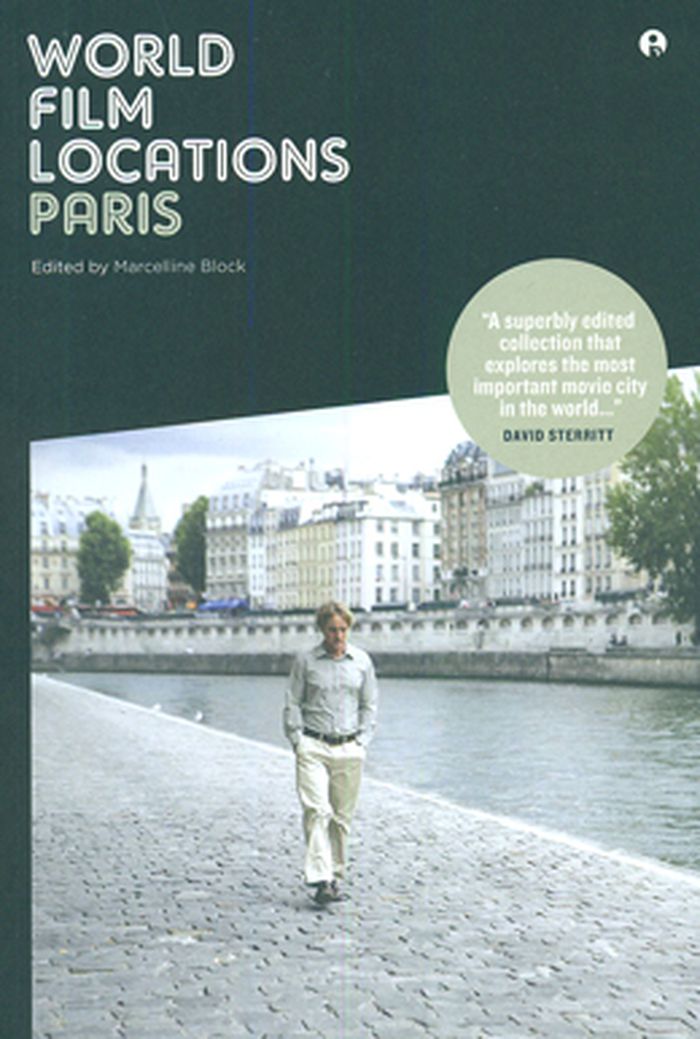
World film locations: Paris
World film locations: Paris
Actions:
Prix:
$18.95
(disponible sur commande)
Résumé:
Reviewers consider cinematic movements and genres such as Poetic Realism; the New Wave; the Left Bank Group; cinéma-vérité; the Cinéma du Look, while essays foreground contributions from francophone African directors, émigré filmmakers, and the occasionally demonized Paris of some of Claire Denis’ films. Screengrabs illustrate the importance of location, while(...)
$18.95
(disponible sur commande)
Résumé:
Reviewers consider cinematic movements and genres such as Poetic Realism; the New Wave; the Left Bank Group; cinéma-vérité; the Cinéma du Look, while essays foreground contributions from francophone African directors, émigré filmmakers, and the occasionally demonized Paris of some of Claire Denis’ films. Screengrabs illustrate the importance of location, while(...)
Titre:
World film locations: Paris
Actions:
Prix:
$18.95
(disponible sur commande)
Résumé:
Reviewers consider cinematic movements and genres such as Poetic Realism; the New Wave; the Left Bank Group; cinéma-vérité; the Cinéma du Look, while essays foreground contributions from francophone African directors, émigré filmmakers, and the occasionally demonized Paris of some of Claire Denis’ films. Screengrabs illustrate the importance of location, while contemporary photographs coincide with cinematic narratives set in the storied City of Light.
World film locations: Paris
Actions:
Prix:
$18.95
(disponible sur commande)
Résumé:
Reviewers consider cinematic movements and genres such as Poetic Realism; the New Wave; the Left Bank Group; cinéma-vérité; the Cinéma du Look, while essays foreground contributions from francophone African directors, émigré filmmakers, and the occasionally demonized Paris of some of Claire Denis’ films. Screengrabs illustrate the importance of location, while contemporary photographs coincide with cinematic narratives set in the storied City of Light.
Classification:
livres
livres
Publication:
mars 2012
mars 2012
Classification:
livres
livres
Actions:
Prix:
$44.95
(disponible sur commande)
Résumé:
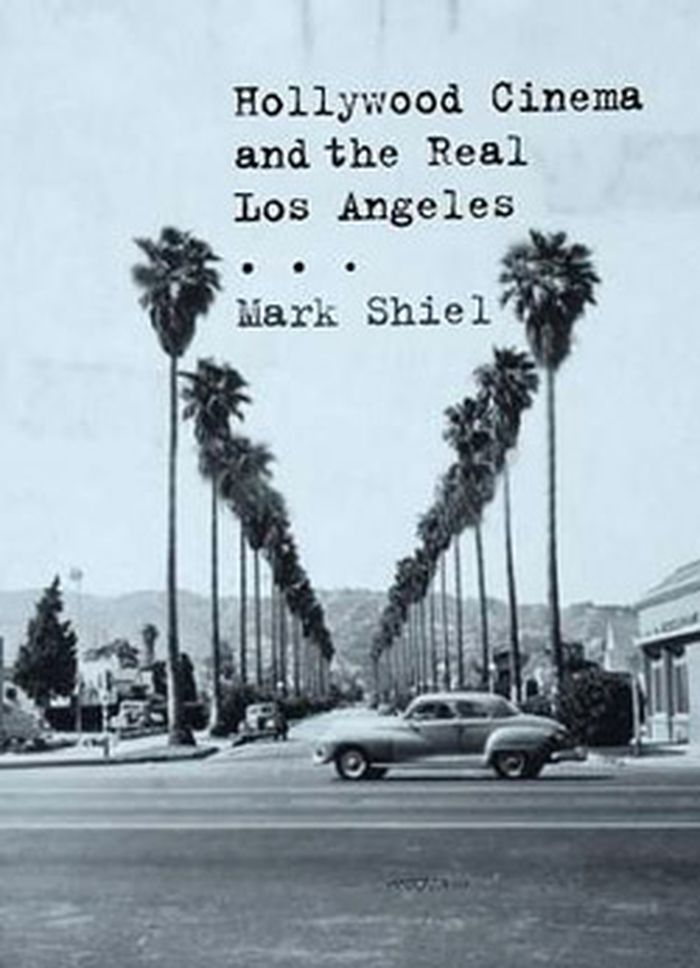
Hollywood Cinema and the Real Los Angeles traces the interaction of the real city, its movie business, and filmed image, focusing on the crucial period from the construction of the first studios in the 1910s to the decline of the studio system fifty years later. As Los Angeles gradually became one of the ten largest cities in the world, the film industry made key(...)
$44.95
(disponible sur commande)
Résumé:
Hollywood Cinema and the Real Los Angeles traces the interaction of the real city, its movie business, and filmed image, focusing on the crucial period from the construction of the first studios in the 1910s to the decline of the studio system fifty years later. As Los Angeles gradually became one of the ten largest cities in the world, the film industry made key(...)
Titre:
Hollywood cinema and the real Los Angeles
Actions:
Prix:
$44.95
(disponible sur commande)
Résumé:
Hollywood Cinema and the Real Los Angeles traces the interaction of the real city, its movie business, and filmed image, focusing on the crucial period from the construction of the first studios in the 1910s to the decline of the studio system fifty years later. As Los Angeles gradually became one of the ten largest cities in the world, the film industry made key contributions to its rapid growth and frequent crises in economic, social, political and cultural life. Whether filmmakers engaged with the real city on location or recreated it on a studio set, Los Angeles shaped the films that were made there and circulated influentially worldwide. The book pays particular attention to early cinema, slapstick comedy, movies about the movies and film noir, which are each explored in new ways, with an emphasis on urban and architectural space and its representation, as well as filmmaking style and technique.
Hollywood cinema and the real Los Angeles
Actions:
Prix:
$44.95
(disponible sur commande)
Résumé:
Hollywood Cinema and the Real Los Angeles traces the interaction of the real city, its movie business, and filmed image, focusing on the crucial period from the construction of the first studios in the 1910s to the decline of the studio system fifty years later. As Los Angeles gradually became one of the ten largest cities in the world, the film industry made key contributions to its rapid growth and frequent crises in economic, social, political and cultural life. Whether filmmakers engaged with the real city on location or recreated it on a studio set, Los Angeles shaped the films that were made there and circulated influentially worldwide. The book pays particular attention to early cinema, slapstick comedy, movies about the movies and film noir, which are each explored in new ways, with an emphasis on urban and architectural space and its representation, as well as filmmaking style and technique.
Classification:
livres
livres
Publication:
avril 2012
avril 2012
Classification:
livres
livres
Actions:
Prix:
$24.95
(disponible en magasin)
Résumé:
For more than 30 years, internationally renowned moving image artists and designers the Quay Brothers have been in the avant-garde of stop-motion puppet animation. Creating work in the tradition of Czech Surrealists Jan Svankmajer and Jiri Trnka, Russian animator Yuri Norstein and Polish animator Walerian Borowczyk, the twin brothers practice a design aesthetic influenced(...)
$24.95
(disponible en magasin)
Résumé:
For more than 30 years, internationally renowned moving image artists and designers the Quay Brothers have been in the avant-garde of stop-motion puppet animation. Creating work in the tradition of Czech Surrealists Jan Svankmajer and Jiri Trnka, Russian animator Yuri Norstein and Polish animator Walerian Borowczyk, the twin brothers practice a design aesthetic influenced(...)
Titre:
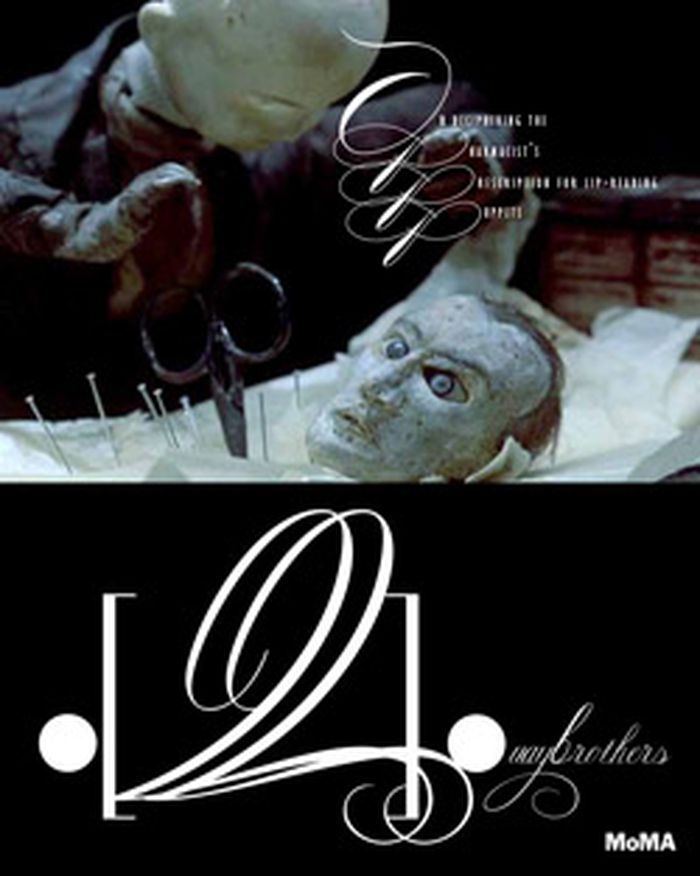
Quay Brothers: on deciphering the pharmacist’s prescription for lip-reading puppets
Actions:
Prix:
$24.95
(disponible en magasin)
Résumé:
For more than 30 years, internationally renowned moving image artists and designers the Quay Brothers have been in the avant-garde of stop-motion puppet animation. Creating work in the tradition of Czech Surrealists Jan Svankmajer and Jiri Trnka, Russian animator Yuri Norstein and Polish animator Walerian Borowczyk, the twin brothers practice a design aesthetic influenced by the graphic surrealism of Polish poster artists of the 1950s and 1960s. Since 1971, they have produced more than 45 moving images, including features, music videos, dance films and documentaries, and have designed sets and projections for opera, drama and concert performances. Published to accompany an exhibition at The Museum of Modern Art, this publication presents their films as well as previously unseen moving image works and graphic design, drawings, typography and notebooks for films.
Quay Brothers: on deciphering the pharmacist’s prescription for lip-reading puppets
Actions:
Prix:
$24.95
(disponible en magasin)
Résumé:
For more than 30 years, internationally renowned moving image artists and designers the Quay Brothers have been in the avant-garde of stop-motion puppet animation. Creating work in the tradition of Czech Surrealists Jan Svankmajer and Jiri Trnka, Russian animator Yuri Norstein and Polish animator Walerian Borowczyk, the twin brothers practice a design aesthetic influenced by the graphic surrealism of Polish poster artists of the 1950s and 1960s. Since 1971, they have produced more than 45 moving images, including features, music videos, dance films and documentaries, and have designed sets and projections for opera, drama and concert performances. Published to accompany an exhibition at The Museum of Modern Art, this publication presents their films as well as previously unseen moving image works and graphic design, drawings, typography and notebooks for films.
Classification:
livres
livres
Publication:
août 2012
août 2012


