


2309 Résultats
Classification:
livres
livres
Titre:
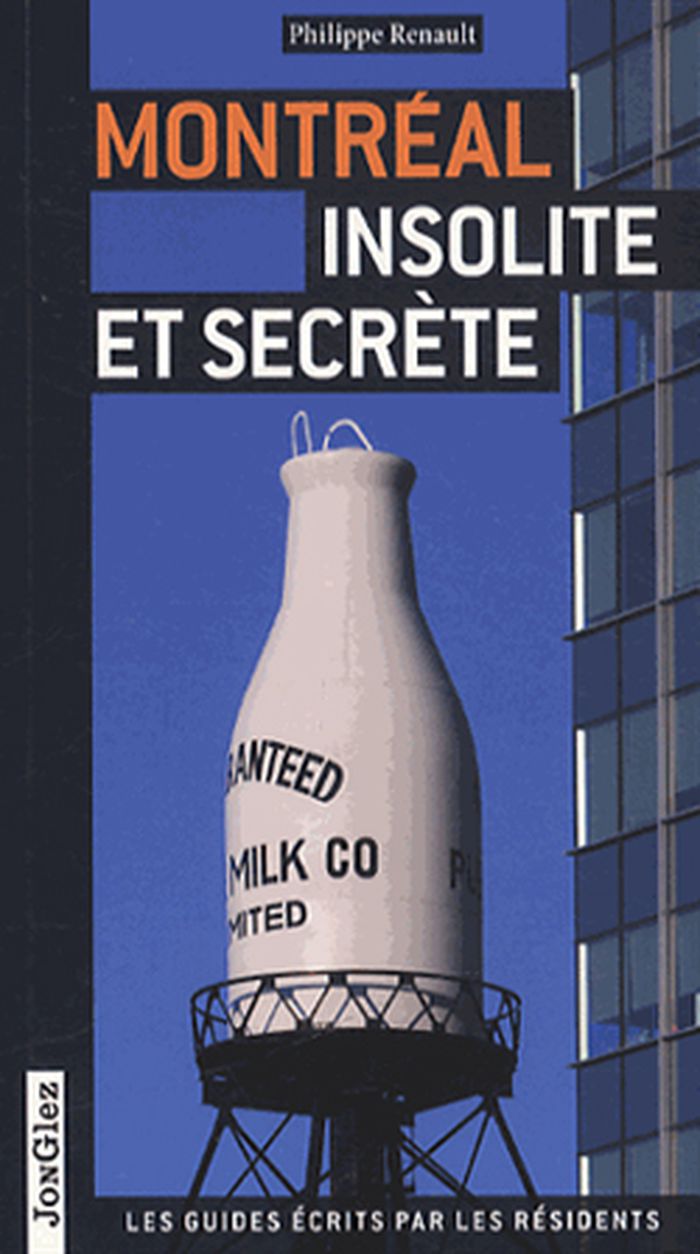
Montréal insolite et secrète
Montréal insolite et secrète
Actions:
Prix:
$24.95
(disponible sur commande)
Résumé:
Une grue géante dans un supermarché, un portrait de Mussolini dans la Petite Italie, un monument à l'homme le plus fort du monde, du catch dans une église, faire du surf sur le Saint-Laurent, une bouteille de lait géante, une station-service construite par le célèbre architecte Mies van der Rohe... Loin des foules et des clichés habituels, Montréal ne révèle ses trésors(...)
$24.95
(disponible sur commande)
Résumé:
Une grue géante dans un supermarché, un portrait de Mussolini dans la Petite Italie, un monument à l'homme le plus fort du monde, du catch dans une église, faire du surf sur le Saint-Laurent, une bouteille de lait géante, une station-service construite par le célèbre architecte Mies van der Rohe... Loin des foules et des clichés habituels, Montréal ne révèle ses trésors(...)
Titre:
Montréal insolite et secrète
Actions:
Prix:
$24.95
(disponible sur commande)
Résumé:
Une grue géante dans un supermarché, un portrait de Mussolini dans la Petite Italie, un monument à l'homme le plus fort du monde, du catch dans une église, faire du surf sur le Saint-Laurent, une bouteille de lait géante, une station-service construite par le célèbre architecte Mies van der Rohe... Loin des foules et des clichés habituels, Montréal ne révèle ses trésors cachés qu'aux résidents et aux voyageurs qui savent sortir des sentiers battus. Un guide indispensable pour ceux qui pensaient bien connaître Montréal ou pour ceux qui souhaitent découvrir l'autre visage de la ville.
Montréal insolite et secrète
Actions:
Prix:
$24.95
(disponible sur commande)
Résumé:
Une grue géante dans un supermarché, un portrait de Mussolini dans la Petite Italie, un monument à l'homme le plus fort du monde, du catch dans une église, faire du surf sur le Saint-Laurent, une bouteille de lait géante, une station-service construite par le célèbre architecte Mies van der Rohe... Loin des foules et des clichés habituels, Montréal ne révèle ses trésors cachés qu'aux résidents et aux voyageurs qui savent sortir des sentiers battus. Un guide indispensable pour ceux qui pensaient bien connaître Montréal ou pour ceux qui souhaitent découvrir l'autre visage de la ville.
Classification:
livres
livres
Publication:
mai 2013
mai 2013
Sujet:
Architecture de Montréal
Architecture de Montréal
Classification:
livres
livres
Actions:
Prix:
$48.95
(disponible sur commande)
Résumé:
In Arlesheim near Basel, Switzerland, the architects Klaus Schuldt and Andreas Scheiwiller have constructed five two-storey villas on a communal plot of land - it is no coincidence that their minimalist appearances are reminiscent of the style developed by Ludwig Mies van der Rohe in the 1920s. Yet it is not just the variation of architectonic elements but also the(...)
$48.95
(disponible sur commande)
Résumé:
In Arlesheim near Basel, Switzerland, the architects Klaus Schuldt and Andreas Scheiwiller have constructed five two-storey villas on a communal plot of land - it is no coincidence that their minimalist appearances are reminiscent of the style developed by Ludwig Mies van der Rohe in the 1920s. Yet it is not just the variation of architectonic elements but also the(...)
Titre:
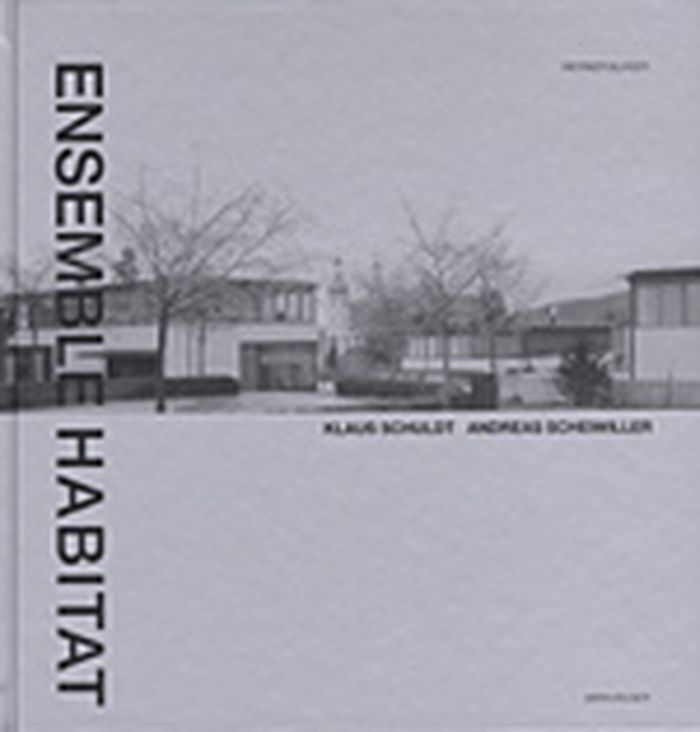
Ensemble Habitat : five villas by Klaus Schuldt and Andreas Scheiwiller
Actions:
Prix:
$48.95
(disponible sur commande)
Résumé:
In Arlesheim near Basel, Switzerland, the architects Klaus Schuldt and Andreas Scheiwiller have constructed five two-storey villas on a communal plot of land - it is no coincidence that their minimalist appearances are reminiscent of the style developed by Ludwig Mies van der Rohe in the 1920s. Yet it is not just the variation of architectonic elements but also the arrangement of these houses on this rural site which make "Ensemble Habitat" so interesting. Striking a careful balance between the individual and the general, between diversity and simplicity, this small group of houses can be justifiably considered exemplary.
Ensemble Habitat : five villas by Klaus Schuldt and Andreas Scheiwiller
Actions:
Prix:
$48.95
(disponible sur commande)
Résumé:
In Arlesheim near Basel, Switzerland, the architects Klaus Schuldt and Andreas Scheiwiller have constructed five two-storey villas on a communal plot of land - it is no coincidence that their minimalist appearances are reminiscent of the style developed by Ludwig Mies van der Rohe in the 1920s. Yet it is not just the variation of architectonic elements but also the arrangement of these houses on this rural site which make "Ensemble Habitat" so interesting. Striking a careful balance between the individual and the general, between diversity and simplicity, this small group of houses can be justifiably considered exemplary.
Classification:
livres
livres
Publication:
mars 2002, Basel
mars 2002, Basel
Sujet:
Architecture, monographies
Architecture, monographies
Classification:
livres
livres
Actions:
Prix:
$38.95
(disponible sur commande)
Résumé:
"La idea construída" réunit les textes les plus intéressants de Campo Baeza, dans lesquels il exprime sa conception de l'architecture. C'est à travers des plans et des textes que l'architecte dévoile les clés de son travail. « Merci à Mies Van der Rohe ou à Le Corbusier pour leurs écrits passionnants qui éclairent leurs oeuvres. Je voudrais donc que l'on comprenne(...)
$38.95
(disponible sur commande)
Résumé:
"La idea construída" réunit les textes les plus intéressants de Campo Baeza, dans lesquels il exprime sa conception de l'architecture. C'est à travers des plans et des textes que l'architecte dévoile les clés de son travail. « Merci à Mies Van der Rohe ou à Le Corbusier pour leurs écrits passionnants qui éclairent leurs oeuvres. Je voudrais donc que l'on comprenne(...)
Titre:
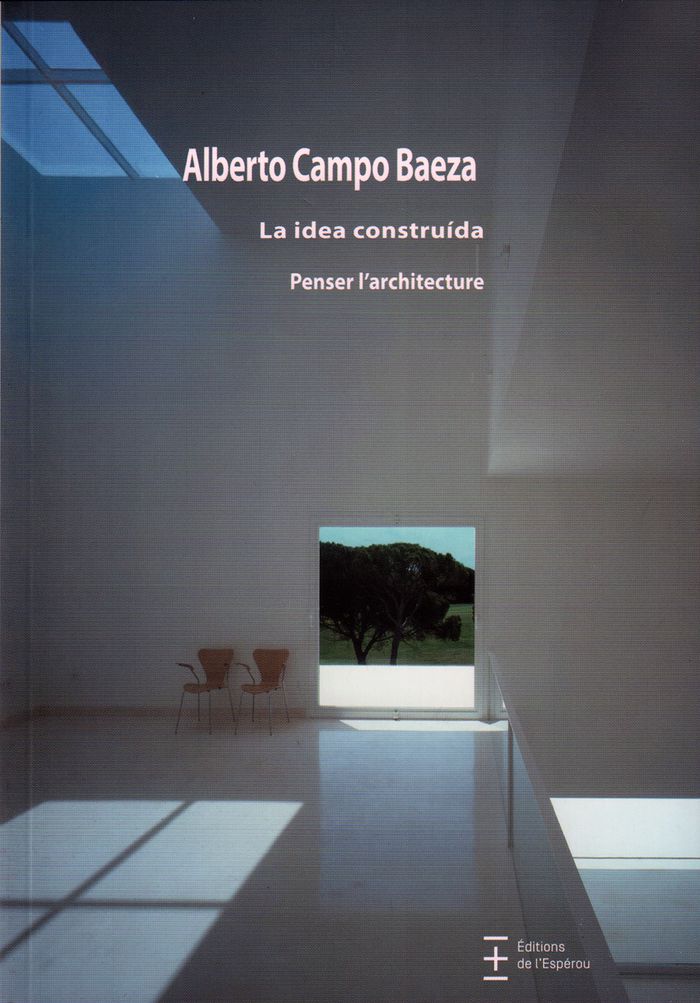
La idea construída / penser l'architecture
Actions:
Prix:
$38.95
(disponible sur commande)
Résumé:
"La idea construída" réunit les textes les plus intéressants de Campo Baeza, dans lesquels il exprime sa conception de l'architecture. C'est à travers des plans et des textes que l'architecte dévoile les clés de son travail. « Merci à Mies Van der Rohe ou à Le Corbusier pour leurs écrits passionnants qui éclairent leurs oeuvres. Je voudrais donc que l'on comprenne aujourd'hui ensemble tous ces textes. Exprimer clairement ses intentions c'est aussi révéler le sens de l'architecture. Si les idées exprimées deviennent réalité construite c'est preuve qu'elles sont valables et que les mots ne sont pas vains. »
La idea construída / penser l'architecture
Actions:
Prix:
$38.95
(disponible sur commande)
Résumé:
"La idea construída" réunit les textes les plus intéressants de Campo Baeza, dans lesquels il exprime sa conception de l'architecture. C'est à travers des plans et des textes que l'architecte dévoile les clés de son travail. « Merci à Mies Van der Rohe ou à Le Corbusier pour leurs écrits passionnants qui éclairent leurs oeuvres. Je voudrais donc que l'on comprenne aujourd'hui ensemble tous ces textes. Exprimer clairement ses intentions c'est aussi révéler le sens de l'architecture. Si les idées exprimées deviennent réalité construite c'est preuve qu'elles sont valables et que les mots ne sont pas vains. »
Classification:
livres
livres
Publication:
novembre 2014
novembre 2014
Sujet:
Architecture, monographies
Architecture, monographies
Classification:
livres
livres
Actions:
Prix:
$28.95
(disponible sur commande)
Résumé:
A giant crane in a supermarket, a portrait of Mussolini in Little Italy, Canada’s only Coadaist temple, a monument to the world’s strongest man, wrestling in a church, surfing on the Saint Lawrence River, a giant milk bottle, a gas station built by famous architect Mies van der Rohe… and much more. Far from the crowds and the usual clichés, Montreal only reveals its(...)
$28.95
(disponible sur commande)
Résumé:
A giant crane in a supermarket, a portrait of Mussolini in Little Italy, Canada’s only Coadaist temple, a monument to the world’s strongest man, wrestling in a church, surfing on the Saint Lawrence River, a giant milk bottle, a gas station built by famous architect Mies van der Rohe… and much more. Far from the crowds and the usual clichés, Montreal only reveals its(...)
Titre:
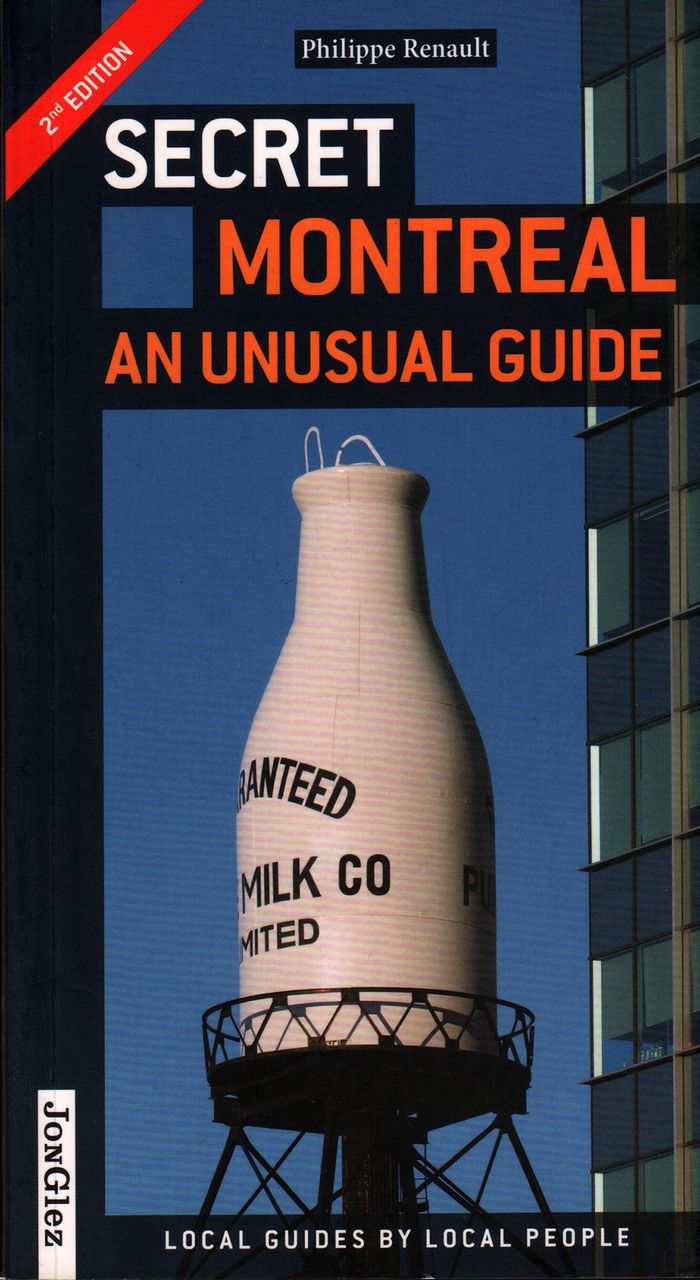
Secret Montreal: an unusual guide
Actions:
Prix:
$28.95
(disponible sur commande)
Résumé:
A giant crane in a supermarket, a portrait of Mussolini in Little Italy, Canada’s only Coadaist temple, a monument to the world’s strongest man, wrestling in a church, surfing on the Saint Lawrence River, a giant milk bottle, a gas station built by famous architect Mies van der Rohe… and much more. Far from the crowds and the usual clichés, Montreal only reveals its hidden treasures to residents and visitors who venture off the beaten track. An indispensable guide for those who thought they knew Montreal well or those wishing to discover another facet of the city.
Secret Montreal: an unusual guide
Actions:
Prix:
$28.95
(disponible sur commande)
Résumé:
A giant crane in a supermarket, a portrait of Mussolini in Little Italy, Canada’s only Coadaist temple, a monument to the world’s strongest man, wrestling in a church, surfing on the Saint Lawrence River, a giant milk bottle, a gas station built by famous architect Mies van der Rohe… and much more. Far from the crowds and the usual clichés, Montreal only reveals its hidden treasures to residents and visitors who venture off the beaten track. An indispensable guide for those who thought they knew Montreal well or those wishing to discover another facet of the city.
Classification:
livres
livres
Publication:
juin 2014
juin 2014
Sujet:
Architecture de Montréal
Architecture de Montréal
Classification:
livres
livres
Actions:
Prix:
$98.00
(disponible sur commande)
Résumé:
This special issue of a+u includes the following residential buildings: Hvitträsk, 1903 /Saarinen, Lindgren, Gesellius Robie House, 1910 /Frank Lloyd Wright Scheu House, 1912 /Adolf Loos (...)
$98.00
(disponible sur commande)
Résumé:
This special issue of a+u includes the following residential buildings: Hvitträsk, 1903 /Saarinen, Lindgren, Gesellius Robie House, 1910 /Frank Lloyd Wright Scheu House, 1912 /Adolf Loos (...)
Publication:
mai 2000, Tokyo
mai 2000, Tokyo
Titre:
Visions of the real : modern houses in the 20th century : volume 1, 1900-1949
Actions:
Prix:
$98.00
(disponible sur commande)
Résumé:
This special issue of a+u includes the following residential buildings: Hvitträsk, 1903 /Saarinen, Lindgren, Gesellius Robie House, 1910 /Frank Lloyd Wright Scheu House, 1912 /Adolf Loos Une Petite Maison, 1923 /Le Corbusier Rietveld-Schröder House, 1924 /Gerrit Thomas Rietveld How House, 1925 /Rudolph Schindler Melnikov House, 1929 /Konstantin Melnikov Tugendhat House, 1930 /Ludwig Mies van der Rohe Maison de Verre, 1931 /Pierre Chareau Dammann House, 1932 /Arne Korsmo Schminke House, 1933 /Hans Scharoun Summer House, 1937 /Gunnar Asplund Gropius House, 1937 /Walter Gropius House over the Brook, 1945 /Amancio Williams Kaufmann Desert House, 1946 /Richard Neutra Maison Curutchet, 1949 /Le Corbusier
Visions of the real : modern houses in the 20th century : volume 1, 1900-1949
Actions:
Prix:
$98.00
(disponible sur commande)
Résumé:
This special issue of a+u includes the following residential buildings: Hvitträsk, 1903 /Saarinen, Lindgren, Gesellius Robie House, 1910 /Frank Lloyd Wright Scheu House, 1912 /Adolf Loos Une Petite Maison, 1923 /Le Corbusier Rietveld-Schröder House, 1924 /Gerrit Thomas Rietveld How House, 1925 /Rudolph Schindler Melnikov House, 1929 /Konstantin Melnikov Tugendhat House, 1930 /Ludwig Mies van der Rohe Maison de Verre, 1931 /Pierre Chareau Dammann House, 1932 /Arne Korsmo Schminke House, 1933 /Hans Scharoun Summer House, 1937 /Gunnar Asplund Gropius House, 1937 /Walter Gropius House over the Brook, 1945 /Amancio Williams Kaufmann Desert House, 1946 /Richard Neutra Maison Curutchet, 1949 /Le Corbusier
Classification:
livres
livres
Publication:
mai 2000, Tokyo
mai 2000, Tokyo
Classification:
livres
livres
Prix:
$44.00
(disponible sur commande)
Résumé:
First published in 1923, the journal G: Material zur Elementaren Gestaltung helped shape a new phase in the history of the European avant-garde. Founded by Hans Richter, a pioneer of abstract animated film, G featured works by some of the important names in the advanced cultures of Europe: Hans Arp, Walter Benjamin, Theo van Doesburg, Viking Eggeling, Naum Gabo, Werner(...)
$44.00
(disponible sur commande)
Résumé:
First published in 1923, the journal G: Material zur Elementaren Gestaltung helped shape a new phase in the history of the European avant-garde. Founded by Hans Richter, a pioneer of abstract animated film, G featured works by some of the important names in the advanced cultures of Europe: Hans Arp, Walter Benjamin, Theo van Doesburg, Viking Eggeling, Naum Gabo, Werner(...)
Titre:
G: An avant-garde journal of art, architecture, design, and film
Actions:
Prix:
$44.00
(disponible sur commande)
Résumé:
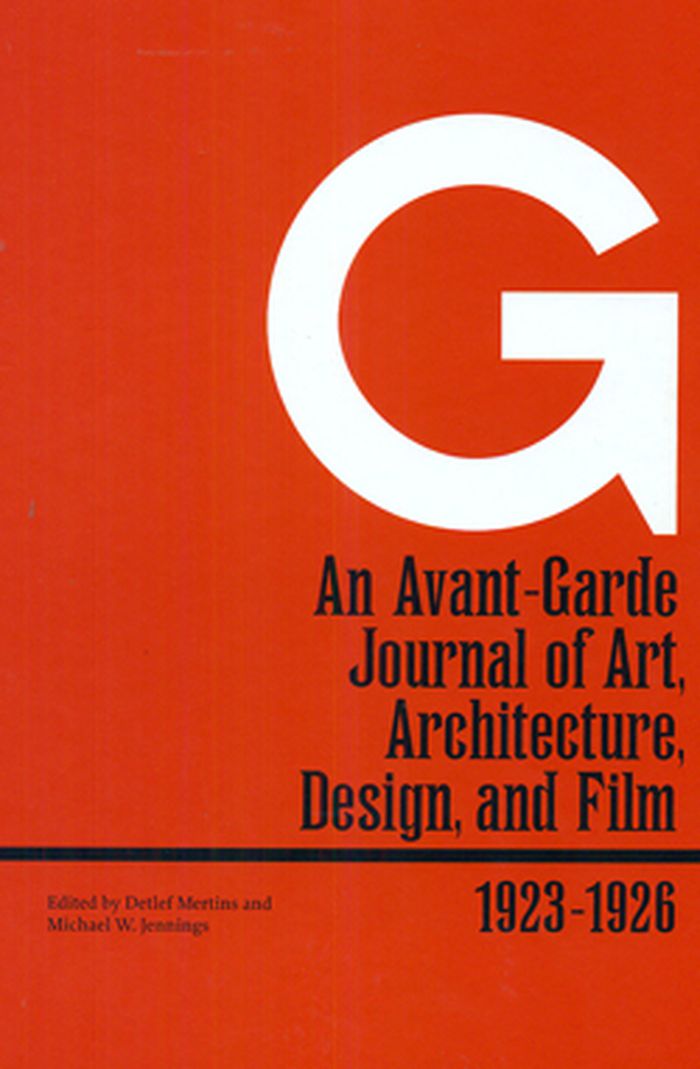
First published in 1923, the journal G: Material zur Elementaren Gestaltung helped shape a new phase in the history of the European avant-garde. Founded by Hans Richter, a pioneer of abstract animated film, G featured works by some of the important names in the advanced cultures of Europe: Hans Arp, Walter Benjamin, Theo van Doesburg, Viking Eggeling, Naum Gabo, Werner Graeff, George Grosz, Hugo Häring, Raoul Hausmann, Ludwig Hilberseimer, Frederick Kiesler, El Lissitzky, Ludwig Mies van der Rohe, Antoine Pevsner, Man Ray, and Tristan Tzara. This edition, the first in English translation, preserves the original design by Lissitzky, Richter, and Graeff, and includes essays that explore the role of the journal in its time and in relation to contemporary culture.
G: An avant-garde journal of art, architecture, design, and film
Actions:
Prix:
$44.00
(disponible sur commande)
Résumé:
First published in 1923, the journal G: Material zur Elementaren Gestaltung helped shape a new phase in the history of the European avant-garde. Founded by Hans Richter, a pioneer of abstract animated film, G featured works by some of the important names in the advanced cultures of Europe: Hans Arp, Walter Benjamin, Theo van Doesburg, Viking Eggeling, Naum Gabo, Werner Graeff, George Grosz, Hugo Häring, Raoul Hausmann, Ludwig Hilberseimer, Frederick Kiesler, El Lissitzky, Ludwig Mies van der Rohe, Antoine Pevsner, Man Ray, and Tristan Tzara. This edition, the first in English translation, preserves the original design by Lissitzky, Richter, and Graeff, and includes essays that explore the role of the journal in its time and in relation to contemporary culture.
Classification:
livres
livres
Publication:
décembre 2010
décembre 2010
Sujet:
Théorie/ philosophie
Théorie/ philosophie
Classification:
livres
livres
Prix:
$47.00
(disponible sur commande)
Résumé:
"The Iconic House" features over one hundred of the most important and influential houses designed and built since 1900. With seminal works by Le Corbusier, Frank Lloyd Wright, and Mies van der Rohe, as well as modern-day greats like Tadao Ando, Rem Koolhaas, and Herzog & de Meuron, this book brings to life a stunning array of architectural masterpieces. Wide-ranging in(...)
$47.00
(disponible sur commande)
Résumé:
"The Iconic House" features over one hundred of the most important and influential houses designed and built since 1900. With seminal works by Le Corbusier, Frank Lloyd Wright, and Mies van der Rohe, as well as modern-day greats like Tadao Ando, Rem Koolhaas, and Herzog & de Meuron, this book brings to life a stunning array of architectural masterpieces. Wide-ranging in(...)
Titre:
The iconic house: architectural masterworks since 1900
Actions:
Prix:
$47.00
(disponible sur commande)
Résumé:
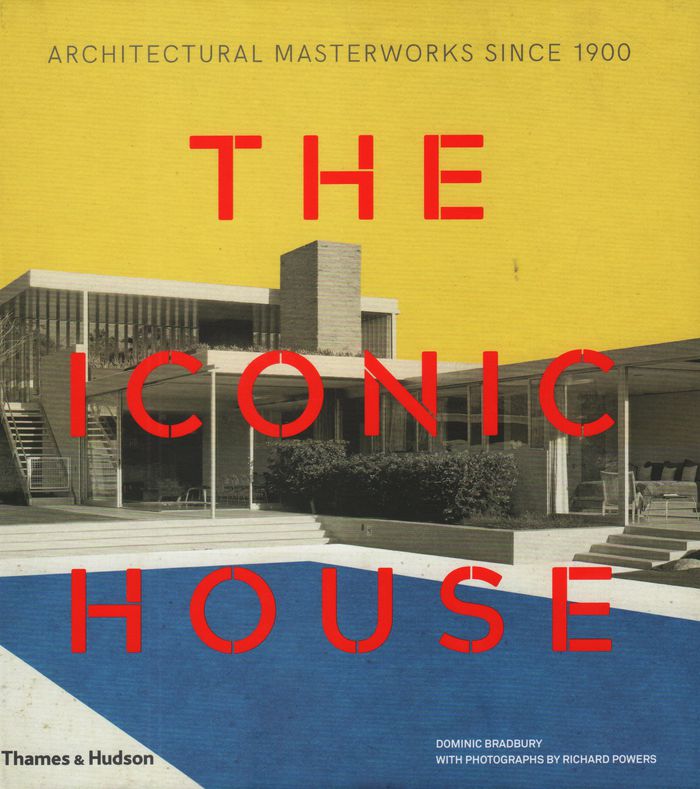
"The Iconic House" features over one hundred of the most important and influential houses designed and built since 1900. With seminal works by Le Corbusier, Frank Lloyd Wright, and Mies van der Rohe, as well as modern-day greats like Tadao Ando, Rem Koolhaas, and Herzog & de Meuron, this book brings to life a stunning array of architectural masterpieces. Wide-ranging in both geographical scope and artistic style, the houses share an appreciation of local materials and building traditions and a careful understanding of clients’ needs. Each house, however, is the result of a unique approach that makes it groundbreaking for its time.
The iconic house: architectural masterworks since 1900
Actions:
Prix:
$47.00
(disponible sur commande)
Résumé:
"The Iconic House" features over one hundred of the most important and influential houses designed and built since 1900. With seminal works by Le Corbusier, Frank Lloyd Wright, and Mies van der Rohe, as well as modern-day greats like Tadao Ando, Rem Koolhaas, and Herzog & de Meuron, this book brings to life a stunning array of architectural masterpieces. Wide-ranging in both geographical scope and artistic style, the houses share an appreciation of local materials and building traditions and a careful understanding of clients’ needs. Each house, however, is the result of a unique approach that makes it groundbreaking for its time.
Classification:
livres
livres
Publication:
octobre 2018
octobre 2018
Sujet:
Architecture résidentielle
Architecture résidentielle
Classification:
périodiques
périodiques
Actions:
Prix:
$60.00
(disponible sur commande)
Résumé:
The taste for industrial aesthetics, just one of many reasons for the popularity of industrial conversions today, saw its beginnings during the age of post-war modernism, popularised by architects such as Le Corbusier, Gropius, and Mies van der Rohe. Yet the trend to rethink industrial structures also signals the imbalance of production and consumption that has arisen(...)
$60.00
(disponible sur commande)
Résumé:
The taste for industrial aesthetics, just one of many reasons for the popularity of industrial conversions today, saw its beginnings during the age of post-war modernism, popularised by architects such as Le Corbusier, Gropius, and Mies van der Rohe. Yet the trend to rethink industrial structures also signals the imbalance of production and consumption that has arisen(...)
Titre:
C3 special : post-industrial conversions
Actions:
Prix:
$60.00
(disponible sur commande)
Résumé:
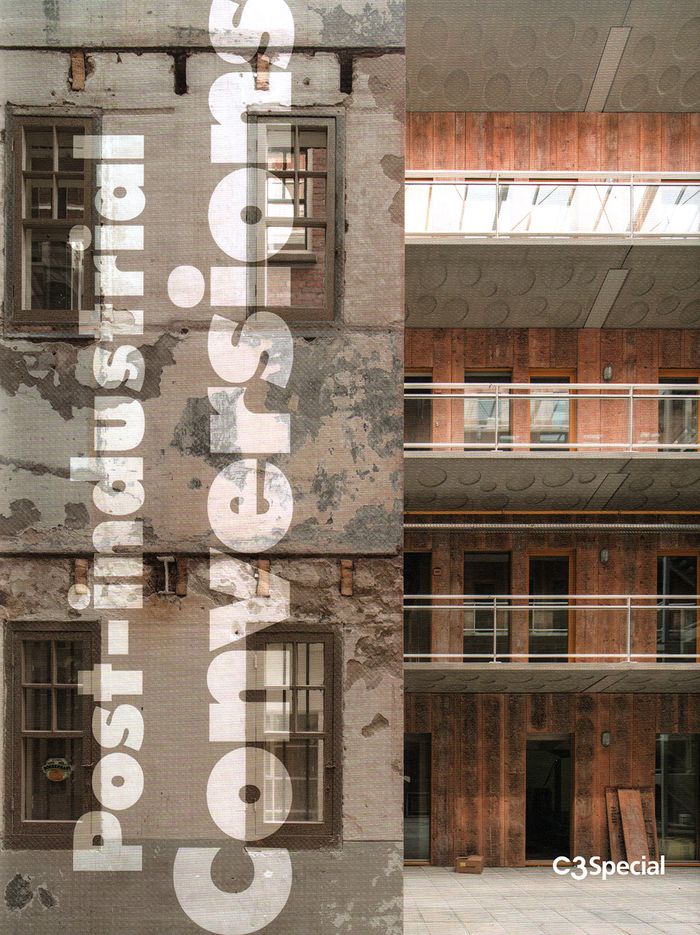
The taste for industrial aesthetics, just one of many reasons for the popularity of industrial conversions today, saw its beginnings during the age of post-war modernism, popularised by architects such as Le Corbusier, Gropius, and Mies van der Rohe. Yet the trend to rethink industrial structures also signals the imbalance of production and consumption that has arisen since the 1970s. Currently, however, rehabilitation initiatives are bringing production back to the city through projects like the thirteen examples in this special issue. Included are the Baltic Station Market by KOKO architects, Zeitz MOCAA by Heatherwick Studio, Malmö Market Hall by Wingårdh, and The Silo by COBE.
C3 special : post-industrial conversions
Actions:
Prix:
$60.00
(disponible sur commande)
Résumé:
The taste for industrial aesthetics, just one of many reasons for the popularity of industrial conversions today, saw its beginnings during the age of post-war modernism, popularised by architects such as Le Corbusier, Gropius, and Mies van der Rohe. Yet the trend to rethink industrial structures also signals the imbalance of production and consumption that has arisen since the 1970s. Currently, however, rehabilitation initiatives are bringing production back to the city through projects like the thirteen examples in this special issue. Included are the Baltic Station Market by KOKO architects, Zeitz MOCAA by Heatherwick Studio, Malmö Market Hall by Wingårdh, and The Silo by COBE.
Classification:
périodiques
périodiques
Publication:
mai 2018
mai 2018
Sujet:
Revues
Revues
Classification:
livres
livres
Titre:
The University of Chicago
The University of Chicago
Actions:
Prix:
$32.50
(disponible en magasin)
Résumé:
Designed in the English Gothic style of its time, the original campus, planned by Chicago architect Henry Ives Cobb, had a commonality of vision that made it equal in quality to the finest in America. As the traditional reliance on the Gothic gave way to modernist styles, the campus was expanded with buildings by such notable architects as Eero Saarinen, Mies van(...)
$32.50
(disponible en magasin)
Résumé:
Designed in the English Gothic style of its time, the original campus, planned by Chicago architect Henry Ives Cobb, had a commonality of vision that made it equal in quality to the finest in America. As the traditional reliance on the Gothic gave way to modernist styles, the campus was expanded with buildings by such notable architects as Eero Saarinen, Mies van(...)
Publication:
février 2006, New York
février 2006, New York
Titre:
The University of Chicago
Actions:
Prix:
$32.50
(disponible en magasin)
Résumé:
Designed in the English Gothic style of its time, the original campus, planned by Chicago architect Henry Ives Cobb, had a commonality of vision that made it equal in quality to the finest in America. As the traditional reliance on the Gothic gave way to modernist styles, the campus was expanded with buildings by such notable architects as Eero Saarinen, Mies van der Rohe, Frank Lloyd Wright, and Walter Netsch. The university's most recent additions include Cesar Pelli's 2003 Gerald Ratner Athletics Center and Rafael Vi–oly's Graduate School of Business complex. Beautifully photographed in full color, the guide presents an architectural walk of this campus distinguished by landmark buildings.
The University of Chicago
Actions:
Prix:
$32.50
(disponible en magasin)
Résumé:
Designed in the English Gothic style of its time, the original campus, planned by Chicago architect Henry Ives Cobb, had a commonality of vision that made it equal in quality to the finest in America. As the traditional reliance on the Gothic gave way to modernist styles, the campus was expanded with buildings by such notable architects as Eero Saarinen, Mies van der Rohe, Frank Lloyd Wright, and Walter Netsch. The university's most recent additions include Cesar Pelli's 2003 Gerald Ratner Athletics Center and Rafael Vi–oly's Graduate School of Business complex. Beautifully photographed in full color, the guide presents an architectural walk of this campus distinguished by landmark buildings.
Classification:
livres
livres
Publication:
février 2006, New York
février 2006, New York
Classification:
livres
livres
Actions:
Prix:
$17.00
(disponible sur commande)
Résumé:
Héritier des contreplongées spiralées du Monument à la IIIe Internationale de Tatline (1919-1920) et contemporain de la créativité filmique d'Octobre (1927), de La Ligne générale (1929) et de deux projets inachevés, Capital (1927-1928) et Glass House (1926-1930), ce dernier aurait dû mettre en abyme l'Architecture et le Cinéma. Fils de l'architecte Mikhaïl Eisenstein(...)
$17.00
(disponible sur commande)
Résumé:
Héritier des contreplongées spiralées du Monument à la IIIe Internationale de Tatline (1919-1920) et contemporain de la créativité filmique d'Octobre (1927), de La Ligne générale (1929) et de deux projets inachevés, Capital (1927-1928) et Glass House (1926-1930), ce dernier aurait dû mettre en abyme l'Architecture et le Cinéma. Fils de l'architecte Mikhaïl Eisenstein(...)
Titre:
La Glass House de Sergeï Eisenstein
Actions:
Prix:
$17.00
(disponible sur commande)
Résumé:
Héritier des contreplongées spiralées du Monument à la IIIe Internationale de Tatline (1919-1920) et contemporain de la créativité filmique d'Octobre (1927), de La Ligne générale (1929) et de deux projets inachevés, Capital (1927-1928) et Glass House (1926-1930), ce dernier aurait dû mettre en abyme l'Architecture et le Cinéma. Fils de l'architecte Mikhaïl Eisenstein (1867-1920), Sergueï Eisenstein (1898-1948) réinvente la transparence de l’« espace cinématographique » (le tournage d'intérieurs, la pellicule, la projection). Mais comme constructiviste et homme de théâtre, il entendait également scénariser la dystopie capitaliste par le biais d’une transformation sociale inspirée par les tours de verre de Mies van der Rohe et Frank Lloyd Wright.
La Glass House de Sergeï Eisenstein
Actions:
Prix:
$17.00
(disponible sur commande)
Résumé:
Héritier des contreplongées spiralées du Monument à la IIIe Internationale de Tatline (1919-1920) et contemporain de la créativité filmique d'Octobre (1927), de La Ligne générale (1929) et de deux projets inachevés, Capital (1927-1928) et Glass House (1926-1930), ce dernier aurait dû mettre en abyme l'Architecture et le Cinéma. Fils de l'architecte Mikhaïl Eisenstein (1867-1920), Sergueï Eisenstein (1898-1948) réinvente la transparence de l’« espace cinématographique » (le tournage d'intérieurs, la pellicule, la projection). Mais comme constructiviste et homme de théâtre, il entendait également scénariser la dystopie capitaliste par le biais d’une transformation sociale inspirée par les tours de verre de Mies van der Rohe et Frank Lloyd Wright.
Classification:
livres
livres
Publication:
novembre 2017
novembre 2017
Sujet:
Architecture, monographies
Architecture, monographies


