


2391 Résultats
Classification:
livres
livres

Prix:
$20.00
(disponible sur commande)
Résumé:
Driven by the central question "What are we learning from artists today?" the second volume of ''A series of open questions'' is informed by themes found in the work of Trinh T. Minh-ha, such as cultural hybridization and fluidity of identity, digital and migratory aesthetics, memory and landscape, decentered realities, feminist approaches to storytelling, meditations on(...)
$20.00
(disponible sur commande)
Résumé:
Driven by the central question "What are we learning from artists today?" the second volume of ''A series of open questions'' is informed by themes found in the work of Trinh T. Minh-ha, such as cultural hybridization and fluidity of identity, digital and migratory aesthetics, memory and landscape, decentered realities, feminist approaches to storytelling, meditations on(...)
Titre:
Why are they so afraid of the lotus?: A series of open questions
Actions:
Prix:
$20.00
(disponible sur commande)
Résumé:
Driven by the central question "What are we learning from artists today?" the second volume of ''A series of open questions'' is informed by themes found in the work of Trinh T. Minh-ha, such as cultural hybridization and fluidity of identity, digital and migratory aesthetics, memory and landscape, decentered realities, feminist approaches to storytelling, meditations on death and myth, post-coloniality and decolonization, and women's work as related to cultural politics. The contributions to ''Why are they so afraid of the lotus?'' embody Trinh's own weariness around categorization and investigate the ways production can come from and be based in positions of unknowing.
Why are they so afraid of the lotus?: A series of open questions
Actions:
Prix:
$20.00
(disponible sur commande)
Résumé:
Driven by the central question "What are we learning from artists today?" the second volume of ''A series of open questions'' is informed by themes found in the work of Trinh T. Minh-ha, such as cultural hybridization and fluidity of identity, digital and migratory aesthetics, memory and landscape, decentered realities, feminist approaches to storytelling, meditations on death and myth, post-coloniality and decolonization, and women's work as related to cultural politics. The contributions to ''Why are they so afraid of the lotus?'' embody Trinh's own weariness around categorization and investigate the ways production can come from and be based in positions of unknowing.
Classification:
livres
livres
Publication:
juillet 2021
juillet 2021
Sujet:
Social
Social
Classification:
livres
livres
Titre:
Michiel Kluiters: Doorways
Michiel Kluiters: Doorways
Actions:
Prix:
$52.00
(disponible sur commande)
Résumé:
With this publication, visual artist Michiel Kluiters investigates how space (or spatiality) works in photography and how it can become an instrument for narration. A series of photographed spaces open up a dialogue and hint at intimate stories. Walls appear roughly textured, seeming to address the tactile rather than visual sense. The pictured spaces look like unfinished(...)
$52.00
(disponible sur commande)
Résumé:
With this publication, visual artist Michiel Kluiters investigates how space (or spatiality) works in photography and how it can become an instrument for narration. A series of photographed spaces open up a dialogue and hint at intimate stories. Walls appear roughly textured, seeming to address the tactile rather than visual sense. The pictured spaces look like unfinished(...)
Titre:
Michiel Kluiters: Doorways
Actions:
Prix:
$52.00
(disponible sur commande)
Résumé:
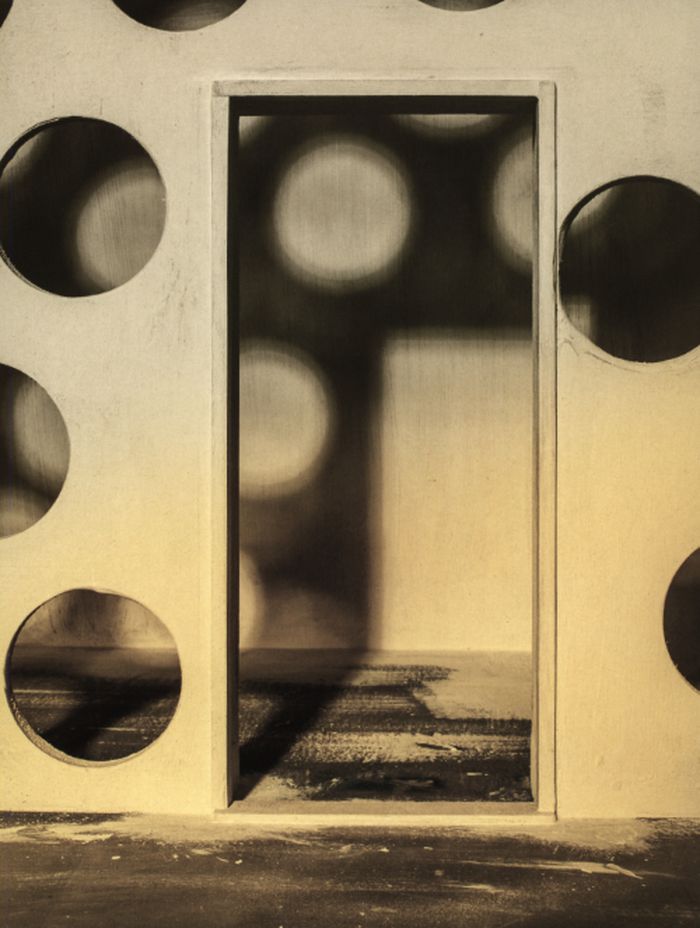
With this publication, visual artist Michiel Kluiters investigates how space (or spatiality) works in photography and how it can become an instrument for narration. A series of photographed spaces open up a dialogue and hint at intimate stories. Walls appear roughly textured, seeming to address the tactile rather than visual sense. The pictured spaces look like unfinished buildings or abandoned ruins, either still under construction or already in decline. Kluiters instils these images with a temporal sense, leaving an unanswered promise of eventual fulfilment or a lingering memory of an irrevocable epoch. We must wonder, is this a possible dystopian future or the remnants of a utopian past?
Michiel Kluiters: Doorways
Actions:
Prix:
$52.00
(disponible sur commande)
Résumé:
With this publication, visual artist Michiel Kluiters investigates how space (or spatiality) works in photography and how it can become an instrument for narration. A series of photographed spaces open up a dialogue and hint at intimate stories. Walls appear roughly textured, seeming to address the tactile rather than visual sense. The pictured spaces look like unfinished buildings or abandoned ruins, either still under construction or already in decline. Kluiters instils these images with a temporal sense, leaving an unanswered promise of eventual fulfilment or a lingering memory of an irrevocable epoch. We must wonder, is this a possible dystopian future or the remnants of a utopian past?
Classification:
livres
livres
Publication:
octobre 2022
octobre 2022
Sujet:
Monographies photo
Monographies photo
Classification:
livres
livres
Titre:
Michael Schirner : bye bye
Michael Schirner : bye bye
Actions:
Prix:
$65.00
(disponible en magasin)
Résumé:
“My art is not my work; you are the creator of your image in your head. I do not exist at all.” Those are the words of Michael Schirner, Germany’s “pope of advertising.” In his oeuvre, Schirner treats the visual worlds of mass culture and high culture as well as the perception of images communicated via media. He does not create new images. His images are images about(...)
$65.00
(disponible en magasin)
Résumé:
“My art is not my work; you are the creator of your image in your head. I do not exist at all.” Those are the words of Michael Schirner, Germany’s “pope of advertising.” In his oeuvre, Schirner treats the visual worlds of mass culture and high culture as well as the perception of images communicated via media. He does not create new images. His images are images about(...)
Titre:
Michael Schirner : bye bye
Actions:
Prix:
$65.00
(disponible en magasin)
Résumé:
“My art is not my work; you are the creator of your image in your head. I do not exist at all.” Those are the words of Michael Schirner, Germany’s “pope of advertising.” In his oeuvre, Schirner treats the visual worlds of mass culture and high culture as well as the perception of images communicated via media. He does not create new images. His images are images about images. Magazines, newspapers, films, television, the internet, advertising, and art are his image archives. Schirner works and reworks that which is stored in our collective memory. The goal of his work is to make the invisible visible.
Michael Schirner : bye bye
Actions:
Prix:
$65.00
(disponible en magasin)
Résumé:
“My art is not my work; you are the creator of your image in your head. I do not exist at all.” Those are the words of Michael Schirner, Germany’s “pope of advertising.” In his oeuvre, Schirner treats the visual worlds of mass culture and high culture as well as the perception of images communicated via media. He does not create new images. His images are images about images. Magazines, newspapers, films, television, the internet, advertising, and art are his image archives. Schirner works and reworks that which is stored in our collective memory. The goal of his work is to make the invisible visible.
Classification:
livres
livres
Publication:
juillet 2010
juillet 2010
Sujet:
Monographies photo
Monographies photo
Classification:
livres
livres
Prix:
$55.00
(disponible sur commande)
Résumé:
Since 1986, Dutch artist Mark Manders has been developing an ongoing project titled Self-Portrait as a Building. Taking the form of sculptures, installations, drawings and projections, these works map Manders' artistic persona through the conceptual model of a built edifice, in the fashion of the Renaissance memory theater. Inspired by writings on this subject and by(...)
$55.00
(disponible sur commande)
Résumé:
Since 1986, Dutch artist Mark Manders has been developing an ongoing project titled Self-Portrait as a Building. Taking the form of sculptures, installations, drawings and projections, these works map Manders' artistic persona through the conceptual model of a built edifice, in the fashion of the Renaissance memory theater. Inspired by writings on this subject and by(...)
Publication:
novembre 2010
novembre 2010
Titre:
Mark Manders: Parallel occurrences / documented assignments
Actions:
Prix:
$55.00
(disponible sur commande)
Résumé:
Since 1986, Dutch artist Mark Manders has been developing an ongoing project titled Self-Portrait as a Building. Taking the form of sculptures, installations, drawings and projections, these works map Manders' artistic persona through the conceptual model of a built edifice, in the fashion of the Renaissance memory theater. Inspired by writings on this subject and by other literature, Manders' earliest works in this project were primarily written, but over time, Manders found ways to deploy everyday three-dimensional objects--epoxy figures, animals, teabags, pencils, household furniture--to build a portrait of his own mind as an architectural space. This publication accompanies the first North American touring exhibition of Manders' work.
Mark Manders: Parallel occurrences / documented assignments
Actions:
Prix:
$55.00
(disponible sur commande)
Résumé:
Since 1986, Dutch artist Mark Manders has been developing an ongoing project titled Self-Portrait as a Building. Taking the form of sculptures, installations, drawings and projections, these works map Manders' artistic persona through the conceptual model of a built edifice, in the fashion of the Renaissance memory theater. Inspired by writings on this subject and by other literature, Manders' earliest works in this project were primarily written, but over time, Manders found ways to deploy everyday three-dimensional objects--epoxy figures, animals, teabags, pencils, household furniture--to build a portrait of his own mind as an architectural space. This publication accompanies the first North American touring exhibition of Manders' work.
Classification:
livres
livres
Publication:
novembre 2010
novembre 2010
Classification:
audio
audio
Titre:
Slodown.
Slodown.
Actions:
Description:
1 online resource.
Auteur:
Sujet:
Publication:
[Place of publication not identified] : Talk is Cheap, 2020.
[Place of publication not identified] : Talk is Cheap, 2020.
Classification:
audio
audio
Publication:
[Place of publication not identified] : Talk is Cheap, 2020.
[Place of publication not identified] : Talk is Cheap, 2020.
Auteur:
Sujet:
Classification:
livres
livres
Exemplaires:
Description:
160 pages : illustrations (some color) ; 29 cm
Description:
160 pages : illustrations (some color) ; 29 cm
Auteur:
Sujet:
Publication:
London : Phaidon, 1998.
London : Phaidon, 1998.
Titre:
Stan Douglas / Scott Watson, Diana Thater, Carol J. Clover.
Actions:
Exemplaires:
Description:
160 pages : illustrations (some color) ; 29 cm
Stan Douglas / Scott Watson, Diana Thater, Carol J. Clover.
Actions:
Exemplaires:
Description:
160 pages : illustrations (some color) ; 29 cm
Classification:
livres
livres
Publication:
London : Phaidon, 1998.
London : Phaidon, 1998.
Auteur:
Sujet:
Classification:
livres
livres
Prix:
$75.00
(disponible sur commande)
Résumé:
Over the past decade installation art has achieved mainstream status within contemporary visual culture. Its ubiquitous presence has given rise to new terms that redefine the art form and impact not just on art, but also on international fashion shows, movie design, and club culture. This volume surveys how installation has evolved, embracing often unexpected media, and(...)
$75.00
(disponible sur commande)
Résumé:
Over the past decade installation art has achieved mainstream status within contemporary visual culture. Its ubiquitous presence has given rise to new terms that redefine the art form and impact not just on art, but also on international fashion shows, movie design, and club culture. This volume surveys how installation has evolved, embracing often unexpected media, and(...)
Publication:
octobre 2003, London
octobre 2003, London
Titre:
Installation art in the new millenium : the empire of the senses
Actions:
Prix:
$75.00
(disponible sur commande)
Résumé:
Over the past decade installation art has achieved mainstream status within contemporary visual culture. Its ubiquitous presence has given rise to new terms that redefine the art form and impact not just on art, but also on international fashion shows, movie design, and club culture. This volume surveys how installation has evolved, embracing often unexpected media, and its far-reaching influence worldwide. The new "immersive" installation reflects a desire for sensual pleasure, as the viewer is totally enveloped in a hermetic and narcissistic artwork, as illustrated by the American artist Doug Aitken and the Japanese artist Kazuo Katase, among others. New dynamics have developed between the artist and institutions, and installation is more than ever an open-ended experiment that transforms the museum into a cultural laboratory, as seen in the work of Hans Haacke. Installation refuses to accept fixed boundaries, and practitioners, such as the Mexican Jose Dávila, are now looking to forge relationships on a global level, collaborating with specialists in other non-art areas. In a rapidly changing world, time and memory become key concerns, and artists such as Christian Boltanksi and Damien Hirst prefer to construct their own spaces of memory. The culmination of these processes has made the audience itself the key site of the installation as witnessed in the works of Vanessa Beecroft, Gary Hill, Mariko Mori, and Bill Viola. This astonishing process returns us to the body, to the spectator, a space that is both sentient and active, the "empire of the senses."
Installation art in the new millenium : the empire of the senses
Actions:
Prix:
$75.00
(disponible sur commande)
Résumé:
Over the past decade installation art has achieved mainstream status within contemporary visual culture. Its ubiquitous presence has given rise to new terms that redefine the art form and impact not just on art, but also on international fashion shows, movie design, and club culture. This volume surveys how installation has evolved, embracing often unexpected media, and its far-reaching influence worldwide. The new "immersive" installation reflects a desire for sensual pleasure, as the viewer is totally enveloped in a hermetic and narcissistic artwork, as illustrated by the American artist Doug Aitken and the Japanese artist Kazuo Katase, among others. New dynamics have developed between the artist and institutions, and installation is more than ever an open-ended experiment that transforms the museum into a cultural laboratory, as seen in the work of Hans Haacke. Installation refuses to accept fixed boundaries, and practitioners, such as the Mexican Jose Dávila, are now looking to forge relationships on a global level, collaborating with specialists in other non-art areas. In a rapidly changing world, time and memory become key concerns, and artists such as Christian Boltanksi and Damien Hirst prefer to construct their own spaces of memory. The culmination of these processes has made the audience itself the key site of the installation as witnessed in the works of Vanessa Beecroft, Gary Hill, Mariko Mori, and Bill Viola. This astonishing process returns us to the body, to the spectator, a space that is both sentient and active, the "empire of the senses."
Classification:
livres
livres
Publication:
octobre 2003, London
octobre 2003, London
Classification:
livres
livres
Titre:
On European ground
On European ground
Actions:
Prix:
$45.00
(disponible sur commande)
Résumé:
A profound visual meditation on the trauma that scars twentieth-century Europe, Alan Cohen's "On European Ground" considers the battlefields of World War I, the Nazi death camps, and the Berlin Wall, and records the distance between what we remember about these places and what we can (...)
$45.00
(disponible sur commande)
Résumé:
A profound visual meditation on the trauma that scars twentieth-century Europe, Alan Cohen's "On European Ground" considers the battlefields of World War I, the Nazi death camps, and the Berlin Wall, and records the distance between what we remember about these places and what we can (...)
Titre:
On European ground
Actions:
Prix:
$45.00
(disponible sur commande)
Résumé:
A profound visual meditation on the trauma that scars twentieth-century Europe, Alan Cohen's "On European Ground" considers the battlefields of World War I, the Nazi death camps, and the Berlin Wall, and records the distance between what we remember about these places and what we can still observe in them today. By walking these sites and photographing the very ground in which their history has dissolved, Cohen opens a space for reflection on their complex gravity and legacy. Cohen's images achieve a solemn beauty even as they engage history at its most topical. Pictures of trenches and bunkers at the battlefields of Somme and Verdun explore the tension between the violence of the past and the inscrutability of its remnants. Photographs from the grounds of Dachau and Auschwitz solicit a provocative dialogue between the ordinariness of these sites today and their haunting memory. They teach us, as the New Art Examiner notes, "that the living perceptual connection to the Holocaust is vanishing." Images of the Berlin Wall show only the footprint of the barricade that once separated two hostile ideologies. They record the physical erosion and looming disappearance of the Wall while capturing its reappearance as a memorialized abstraction. Accompanying the photographs in On European Ground are essays by Sander Gilman and Jonathan Bordo, as well as an interview with Cohen by critic Roberta Smith of the New York Times. The essays present both an introduction to and aesthetic analysis of Cohen's work, while the interview discusses the intractable problems of history and memory that his photographs so uniquely capture.
On European ground
Actions:
Prix:
$45.00
(disponible sur commande)
Résumé:
A profound visual meditation on the trauma that scars twentieth-century Europe, Alan Cohen's "On European Ground" considers the battlefields of World War I, the Nazi death camps, and the Berlin Wall, and records the distance between what we remember about these places and what we can still observe in them today. By walking these sites and photographing the very ground in which their history has dissolved, Cohen opens a space for reflection on their complex gravity and legacy. Cohen's images achieve a solemn beauty even as they engage history at its most topical. Pictures of trenches and bunkers at the battlefields of Somme and Verdun explore the tension between the violence of the past and the inscrutability of its remnants. Photographs from the grounds of Dachau and Auschwitz solicit a provocative dialogue between the ordinariness of these sites today and their haunting memory. They teach us, as the New Art Examiner notes, "that the living perceptual connection to the Holocaust is vanishing." Images of the Berlin Wall show only the footprint of the barricade that once separated two hostile ideologies. They record the physical erosion and looming disappearance of the Wall while capturing its reappearance as a memorialized abstraction. Accompanying the photographs in On European Ground are essays by Sander Gilman and Jonathan Bordo, as well as an interview with Cohen by critic Roberta Smith of the New York Times. The essays present both an introduction to and aesthetic analysis of Cohen's work, while the interview discusses the intractable problems of history and memory that his photographs so uniquely capture.
Classification:
livres
livres
Publication:
avril 2001, Chicago
avril 2001, Chicago
Classification:
livres
livres

Titre:
Vanishing British Columbia
Vanishing British Columbia
Actions:
Prix:
$39.95
(disponible sur commande)
Résumé:
The old buildings and historic places of British Columbia form a kind of “roadside memory,” a tangible link with stories of settlement, change, and abandonment that reflect the great themes of our history. With small towns declining and old rural properties changing, so little of the history of these places has been recorded in museums or archives, and so much of it may(...)
$39.95
(disponible sur commande)
Résumé:
The old buildings and historic places of British Columbia form a kind of “roadside memory,” a tangible link with stories of settlement, change, and abandonment that reflect the great themes of our history. With small towns declining and old rural properties changing, so little of the history of these places has been recorded in museums or archives, and so much of it may(...)
Sujet:
Architecture du Canada
Architecture du Canada
Publication:
octobre 2005, Vancouver Toronto Seattle
octobre 2005, Vancouver Toronto Seattle
Titre:
Vanishing British Columbia
Actions:
Prix:
$39.95
(disponible sur commande)
Résumé:
The old buildings and historic places of British Columbia form a kind of “roadside memory,” a tangible link with stories of settlement, change, and abandonment that reflect the great themes of our history. With small towns declining and old rural properties changing, so little of the history of these places has been recorded in museums or archives, and so much of it may disappear as families disperse and memories dim. More than a decade ago, Michael Kluckner began painting these dots on his personal map of the province in a watercolour sketchbook. In 1999, after he put a few of the sketches on his website, a network of correspondents emerged that eventually led him to the family letters, photo albums, and memories – all from a disappearing era of the province. Vanishing British Columbia is a record of these places and the stories they tell. It combines engaging and insightful historical commentary with over 160 of the author’s original paintings. It has an exceptional assortment of historic imagery, including old postcards, architectural plans, and photographs. The study of roadside memory demonstrates the visceral connection that people, especially those who are part of the rural-to-urban diaspora of modern times, have for the sites of their family memories. On a grander scale this approach leads to a broader understanding of more abstract historical themes and of the province’s history and culture. It also presents a compelling argument for stewardship of regional history in the face of urbanization and globalization.
Vanishing British Columbia
Actions:
Prix:
$39.95
(disponible sur commande)
Résumé:
The old buildings and historic places of British Columbia form a kind of “roadside memory,” a tangible link with stories of settlement, change, and abandonment that reflect the great themes of our history. With small towns declining and old rural properties changing, so little of the history of these places has been recorded in museums or archives, and so much of it may disappear as families disperse and memories dim. More than a decade ago, Michael Kluckner began painting these dots on his personal map of the province in a watercolour sketchbook. In 1999, after he put a few of the sketches on his website, a network of correspondents emerged that eventually led him to the family letters, photo albums, and memories – all from a disappearing era of the province. Vanishing British Columbia is a record of these places and the stories they tell. It combines engaging and insightful historical commentary with over 160 of the author’s original paintings. It has an exceptional assortment of historic imagery, including old postcards, architectural plans, and photographs. The study of roadside memory demonstrates the visceral connection that people, especially those who are part of the rural-to-urban diaspora of modern times, have for the sites of their family memories. On a grander scale this approach leads to a broader understanding of more abstract historical themes and of the province’s history and culture. It also presents a compelling argument for stewardship of regional history in the face of urbanization and globalization.
Classification:
livres
livres
Publication:
octobre 2005, Vancouver Toronto Seattle
octobre 2005, Vancouver Toronto Seattle
Sujet:
Architecture du Canada
Architecture du Canada
Classification:
livres
livres
Titre:
Bark
Bark
Actions:
Prix:
$23.00
(disponible sur commande)
Résumé:
On a visit to Auschwitz-Birkenau, Georges Didi-Huberman tears three pieces of bark from birch trees on the edge of the site. Looking at these pieces after his return home, he sees them as letters, a flood, a path, time, memory, flesh. The bark serves as a springboard to Didi-Huberman’s meditations on his visit, recorded in this spare, poetic, and powerful book. Bark is a(...)
$23.00
(disponible sur commande)
Résumé:
On a visit to Auschwitz-Birkenau, Georges Didi-Huberman tears three pieces of bark from birch trees on the edge of the site. Looking at these pieces after his return home, he sees them as letters, a flood, a path, time, memory, flesh. The bark serves as a springboard to Didi-Huberman’s meditations on his visit, recorded in this spare, poetic, and powerful book. Bark is a(...)
Titre:
Bark
Actions:
Prix:
$23.00
(disponible sur commande)
Résumé:
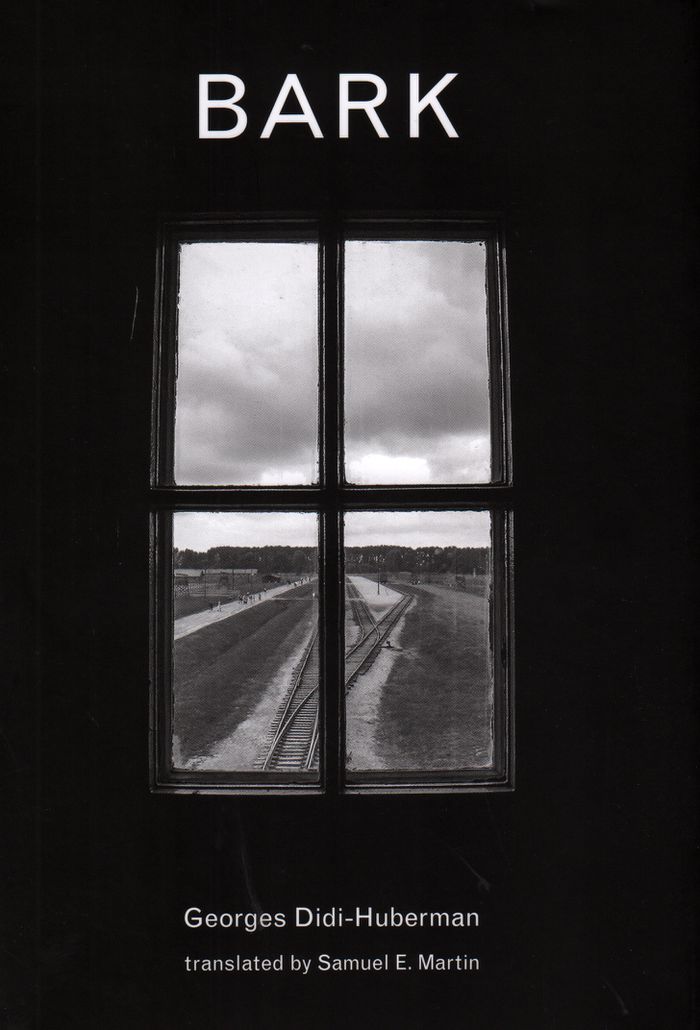
On a visit to Auschwitz-Birkenau, Georges Didi-Huberman tears three pieces of bark from birch trees on the edge of the site. Looking at these pieces after his return home, he sees them as letters, a flood, a path, time, memory, flesh. The bark serves as a springboard to Didi-Huberman’s meditations on his visit, recorded in this spare, poetic, and powerful book. Bark is a personal account, drawing not on the theoretical apparatus of scholarship but on Didi-Huberman’s own history, memory, and knowledge. The text proceeds as a series of reflections, accompanied by Didi-Huberman’s photographs of the visit. The photographs are not meant to be art—Didi-Huberman confesses that he “photographed practically everything without looking”—but approach it nevertheless. Didi-Huberman tells us that his grandparents died at Auschwitz, but his account is more universal than biographical. As he walks from place to place, he observes that in German birches are birken; Birkenau designates the meadow where the birches grow. Didi-Huberman sees and photographs the “reconstructed” execution wall; the floors of the crematorium, forgotten witnesses to killing; and the birch trees, lovely but also resembling prison bars. Taking his own photographs, he thinks of the famous photographs taken in 1944 by a member of the Sonderkommando, the only photographic documentation of the camp before the Germans destroyed it, hoping to hide the evidence of their crimes. Didi-Huberman notices a “bizarre proliferation of white flowers on the exact spot of the cremation pits.” The dead are not departed.
Bark
Actions:
Prix:
$23.00
(disponible sur commande)
Résumé:
On a visit to Auschwitz-Birkenau, Georges Didi-Huberman tears three pieces of bark from birch trees on the edge of the site. Looking at these pieces after his return home, he sees them as letters, a flood, a path, time, memory, flesh. The bark serves as a springboard to Didi-Huberman’s meditations on his visit, recorded in this spare, poetic, and powerful book. Bark is a personal account, drawing not on the theoretical apparatus of scholarship but on Didi-Huberman’s own history, memory, and knowledge. The text proceeds as a series of reflections, accompanied by Didi-Huberman’s photographs of the visit. The photographs are not meant to be art—Didi-Huberman confesses that he “photographed practically everything without looking”—but approach it nevertheless. Didi-Huberman tells us that his grandparents died at Auschwitz, but his account is more universal than biographical. As he walks from place to place, he observes that in German birches are birken; Birkenau designates the meadow where the birches grow. Didi-Huberman sees and photographs the “reconstructed” execution wall; the floors of the crematorium, forgotten witnesses to killing; and the birch trees, lovely but also resembling prison bars. Taking his own photographs, he thinks of the famous photographs taken in 1944 by a member of the Sonderkommando, the only photographic documentation of the camp before the Germans destroyed it, hoping to hide the evidence of their crimes. Didi-Huberman notices a “bizarre proliferation of white flowers on the exact spot of the cremation pits.” The dead are not departed.
Classification:
livres
livres
Publication:
octobre 2017
octobre 2017
Sujet:
Théorie/ philosophie
Théorie/ philosophie


