


2285 Résultats
Classification:
livres
livres

Titre:
Chris Marker Staring Back
Chris Marker Staring Back
Actions:
Prix:
$29.95
(disponible sur commande)
Résumé:
This title features photographs by one of French cinema's most influential and enigmatic artists.Any new film and any new book by French filmmaker Chris Marker is an event. Marker gave film lovers one of their most memorable experiences with "La Jetee" (1962) - a time-travel montage set after a nuclear war that inspired Terry Gilliam's "Twelve Monkeys" (1995). His still(...)
$29.95
(disponible sur commande)
Résumé:
This title features photographs by one of French cinema's most influential and enigmatic artists.Any new film and any new book by French filmmaker Chris Marker is an event. Marker gave film lovers one of their most memorable experiences with "La Jetee" (1962) - a time-travel montage set after a nuclear war that inspired Terry Gilliam's "Twelve Monkeys" (1995). His still(...)
Titre:
Chris Marker Staring Back
Actions:
Prix:
$29.95
(disponible sur commande)
Résumé:
This title features photographs by one of French cinema's most influential and enigmatic artists.Any new film and any new book by French filmmaker Chris Marker is an event. Marker gave film lovers one of their most memorable experiences with "La Jetee" (1962) - a time-travel montage set after a nuclear war that inspired Terry Gilliam's "Twelve Monkeys" (1995). His still camerawork is not as well known, but Marker has been taking photographs as long as he has been making films. "Staring Back" presents 200 black-and-white photographs from Marker's personal archives, taken from 1952 to 2006. Some of the photographs are related to his classic films (which include "Le Jetee", "Sans Soleil", "Cuba Si!", and "The Case of the Grinning Cat"), others are portraits of famous faces (Simone Signoret, Akira Kurosawa), but most are pictures of people Marker has encountered as he has traveled the world (an extra who appeared in Kurosawa's "Ran", a woman seen on a street in Siberia).The central section of the book contains a series of photographs documenting political protests Marker has witnessed, including the march on the Pentagon in 1967, the events of May 1968 in Paris, and the tumultuous 2006 demonstrations protesting the French government's proposed employment policies.
Chris Marker Staring Back
Actions:
Prix:
$29.95
(disponible sur commande)
Résumé:
This title features photographs by one of French cinema's most influential and enigmatic artists.Any new film and any new book by French filmmaker Chris Marker is an event. Marker gave film lovers one of their most memorable experiences with "La Jetee" (1962) - a time-travel montage set after a nuclear war that inspired Terry Gilliam's "Twelve Monkeys" (1995). His still camerawork is not as well known, but Marker has been taking photographs as long as he has been making films. "Staring Back" presents 200 black-and-white photographs from Marker's personal archives, taken from 1952 to 2006. Some of the photographs are related to his classic films (which include "Le Jetee", "Sans Soleil", "Cuba Si!", and "The Case of the Grinning Cat"), others are portraits of famous faces (Simone Signoret, Akira Kurosawa), but most are pictures of people Marker has encountered as he has traveled the world (an extra who appeared in Kurosawa's "Ran", a woman seen on a street in Siberia).The central section of the book contains a series of photographs documenting political protests Marker has witnessed, including the march on the Pentagon in 1967, the events of May 1968 in Paris, and the tumultuous 2006 demonstrations protesting the French government's proposed employment policies.
Classification:
livres
livres
Publication:
octobre 2007, Cambridge
octobre 2007, Cambridge
Sujet:
Monographies photo
Monographies photo
Classification:
livres
livres
Titre:
Elvis road
Elvis road
Actions:
Prix:
$26.95
(disponible sur commande)
Résumé:
This long, speechless comic is read as one 20-ft fold-out page; it's half Saul Steinberg on drugs, half insane doodle. Porn shops, playgrounds and sports arenas mix in the crowded urban scene, where everyone seems to be going somewhere, really desperate, or about to do something wicked and fun. Strange vehicles crowd the road, which serves up race cars, tanks, and a huge(...)
$26.95
(disponible sur commande)
Résumé:
This long, speechless comic is read as one 20-ft fold-out page; it's half Saul Steinberg on drugs, half insane doodle. Porn shops, playgrounds and sports arenas mix in the crowded urban scene, where everyone seems to be going somewhere, really desperate, or about to do something wicked and fun. Strange vehicles crowd the road, which serves up race cars, tanks, and a huge(...)
Titre:
Elvis road
Actions:
Prix:
$26.95
(disponible sur commande)
Résumé:
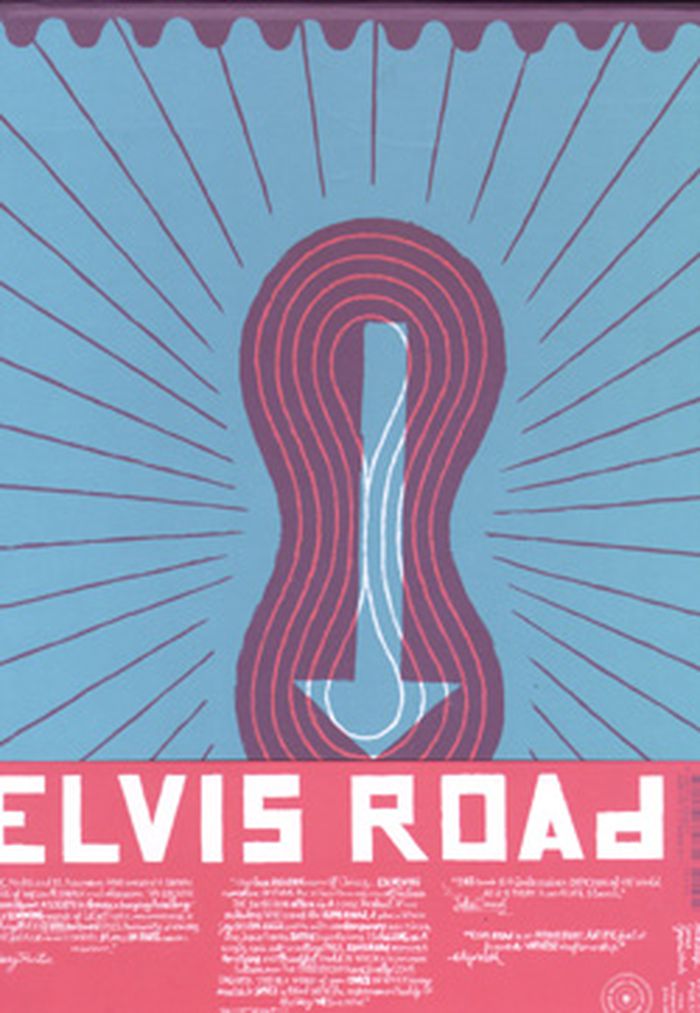
This long, speechless comic is read as one 20-ft fold-out page; it's half Saul Steinberg on drugs, half insane doodle. Porn shops, playgrounds and sports arenas mix in the crowded urban scene, where everyone seems to be going somewhere, really desperate, or about to do something wicked and fun. Strange vehicles crowd the road, which serves up race cars, tanks, and a huge "parfum" tanker truck in one long traffic jam. The simple line drawings use images from World War II, as well as from underground comics of the late '60s through to the present (any references to superheroes and Disney-like characters are purely ironic). The depictions of Klansmen and Nazis seem part of the social critique, perhaps reinforcing the underlying idea that life stuffed to the gills with items that fulfill our every need is itself a form of fascism. There's always something new to see, and much occurs in the cramped spaces, such as when a happy cop ushers small creatures into a theme park called "Cuteland," or when fascist worshipers are hit by a flaming asteroid that leaves a trail of yogurt in which people drown. A strong art-book that's actually a lot of fun.
Elvis road
Actions:
Prix:
$26.95
(disponible sur commande)
Résumé:
This long, speechless comic is read as one 20-ft fold-out page; it's half Saul Steinberg on drugs, half insane doodle. Porn shops, playgrounds and sports arenas mix in the crowded urban scene, where everyone seems to be going somewhere, really desperate, or about to do something wicked and fun. Strange vehicles crowd the road, which serves up race cars, tanks, and a huge "parfum" tanker truck in one long traffic jam. The simple line drawings use images from World War II, as well as from underground comics of the late '60s through to the present (any references to superheroes and Disney-like characters are purely ironic). The depictions of Klansmen and Nazis seem part of the social critique, perhaps reinforcing the underlying idea that life stuffed to the gills with items that fulfill our every need is itself a form of fascism. There's always something new to see, and much occurs in the cramped spaces, such as when a happy cop ushers small creatures into a theme park called "Cuteland," or when fascist worshipers are hit by a flaming asteroid that leaves a trail of yogurt in which people drown. A strong art-book that's actually a lot of fun.
Classification:
livres
livres
Publication:
janvier 1900, Oakland
janvier 1900, Oakland
Classification:
livres
livres
Actions:
Prix:
$73.95
(disponible sur commande)
Résumé:
Standing on Mont Ventoux near Avignon, the fourteenth-century poet Petrarch experienced an entirely new sensation that he described as 'stepping out of time and space'. On the mountain's summit he was as far as he could be from the 'world's stage all around'. The huge distance reduced reference points to insignificant specks down below, and everything in the panorama(...)
$73.95
(disponible sur commande)
Résumé:
Standing on Mont Ventoux near Avignon, the fourteenth-century poet Petrarch experienced an entirely new sensation that he described as 'stepping out of time and space'. On the mountain's summit he was as far as he could be from the 'world's stage all around'. The huge distance reduced reference points to insignificant specks down below, and everything in the panorama(...)
Titre:
The invented land : a bird's-eye view of Dutch landscape architecture
Actions:
Prix:
$73.95
(disponible sur commande)
Résumé:
Standing on Mont Ventoux near Avignon, the fourteenth-century poet Petrarch experienced an entirely new sensation that he described as 'stepping out of time and space'. On the mountain's summit he was as far as he could be from the 'world's stage all around'. The huge distance reduced reference points to insignificant specks down below, and everything in the panorama seemed motionless, dispelling any notion of time. Petrarch had placed himself outside reality. That is what makes aerial photography so fascinating, writes Clemens M. Steenbergen, professor of landscape architecture at Delft University of Technology, in his introduction. The higher the viewpoint the greater the visual control and the more abstract the image. We can see whether a landscape has been shaped by man or is pure nature, how space and mass form one composition. Aerial photographer and landscape architect Peter van Bolhuis captures on camera the Dutch landscape: areas devoted to agriculture, forestry, nature, infrastructure and urban development. The pictures show us the achievements of a half century of landscape architecture. We see a landscape in which everything is precisely measured and demarcated, everything is planned and calculated, with no space left unattended. We see, writes Tracy Metz in one of the essays, 'a landscape that is the sum of negotiations about ever smaller parts'.
The invented land : a bird's-eye view of Dutch landscape architecture
Actions:
Prix:
$73.95
(disponible sur commande)
Résumé:
Standing on Mont Ventoux near Avignon, the fourteenth-century poet Petrarch experienced an entirely new sensation that he described as 'stepping out of time and space'. On the mountain's summit he was as far as he could be from the 'world's stage all around'. The huge distance reduced reference points to insignificant specks down below, and everything in the panorama seemed motionless, dispelling any notion of time. Petrarch had placed himself outside reality. That is what makes aerial photography so fascinating, writes Clemens M. Steenbergen, professor of landscape architecture at Delft University of Technology, in his introduction. The higher the viewpoint the greater the visual control and the more abstract the image. We can see whether a landscape has been shaped by man or is pure nature, how space and mass form one composition. Aerial photographer and landscape architect Peter van Bolhuis captures on camera the Dutch landscape: areas devoted to agriculture, forestry, nature, infrastructure and urban development. The pictures show us the achievements of a half century of landscape architecture. We see a landscape in which everything is precisely measured and demarcated, everything is planned and calculated, with no space left unattended. We see, writes Tracy Metz in one of the essays, 'a landscape that is the sum of negotiations about ever smaller parts'.
Classification:
livres
livres
Publication:
décembre 2004, Wageningen, Netherlands
décembre 2004, Wageningen, Netherlands
Sujet:
Jardins
Jardins
Classification:
livres
livres
Actions:
Prix:
$27.95
(disponible en magasin)
Résumé:
We barely talk about them and seldom know their names. Philosophy has always overlooked them; even biology considers them as mere decoration on the tree of life. And yet plants give life to the Earth: they produce the atmosphere that surrounds us, they are the origin of the oxygen that animates us. Plants embody the most direct, elementary connection that life can(...)
$27.95
(disponible en magasin)
Résumé:
We barely talk about them and seldom know their names. Philosophy has always overlooked them; even biology considers them as mere decoration on the tree of life. And yet plants give life to the Earth: they produce the atmosphere that surrounds us, they are the origin of the oxygen that animates us. Plants embody the most direct, elementary connection that life can(...)
Publication:
décembre 2018
décembre 2018
Titre:
The life of plants: A metaphysics of mixture
Actions:
Prix:
$27.95
(disponible en magasin)
Résumé:
We barely talk about them and seldom know their names. Philosophy has always overlooked them; even biology considers them as mere decoration on the tree of life. And yet plants give life to the Earth: they produce the atmosphere that surrounds us, they are the origin of the oxygen that animates us. Plants embody the most direct, elementary connection that life can establish with the world. In this highly original book, Emanuele Coccia argues that, as the very creator of atmosphere, plants occupy the fundamental position from which we should analyze all elements of life. From this standpoint, we can no longer perceive the world as a simple collection of objects or as a universal space containing all things, but as the site of a veritable metaphysical mixture. Since our atmosphere is rendered possible through plants alone, life only perpetuates itself through the very circle of consumption undertaken by plants. In other words, life exists only insofar as it consumes other life, removing any moral or ethical considerations from the equation. In contrast to trends of thought that discuss nature and the cosmos in general terms, Coccia’s account brings the infinitely small together with the infinitely big, offering a radical redefinition of the place of humanity within the realm of life.
The life of plants: A metaphysics of mixture
Actions:
Prix:
$27.95
(disponible en magasin)
Résumé:
We barely talk about them and seldom know their names. Philosophy has always overlooked them; even biology considers them as mere decoration on the tree of life. And yet plants give life to the Earth: they produce the atmosphere that surrounds us, they are the origin of the oxygen that animates us. Plants embody the most direct, elementary connection that life can establish with the world. In this highly original book, Emanuele Coccia argues that, as the very creator of atmosphere, plants occupy the fundamental position from which we should analyze all elements of life. From this standpoint, we can no longer perceive the world as a simple collection of objects or as a universal space containing all things, but as the site of a veritable metaphysical mixture. Since our atmosphere is rendered possible through plants alone, life only perpetuates itself through the very circle of consumption undertaken by plants. In other words, life exists only insofar as it consumes other life, removing any moral or ethical considerations from the equation. In contrast to trends of thought that discuss nature and the cosmos in general terms, Coccia’s account brings the infinitely small together with the infinitely big, offering a radical redefinition of the place of humanity within the realm of life.
Classification:
livres
livres
Publication:
décembre 2018
décembre 2018
Classification:
livres
livres
Actions:
Prix:
$44.95
(disponible sur commande)
Résumé:
CIAM (Congrès Internationaux d'Architecture Moderne), founded in Switzerland in 1928, was an avant-garde association of architects intended to advance both modernism and internationalism in architecture. CIAM saw itself as an elite group revolutionizing architecture to serve the interests of society. Its members included some of the best-known architects of the twentieth(...)
$44.95
(disponible sur commande)
Résumé:
CIAM (Congrès Internationaux d'Architecture Moderne), founded in Switzerland in 1928, was an avant-garde association of architects intended to advance both modernism and internationalism in architecture. CIAM saw itself as an elite group revolutionizing architecture to serve the interests of society. Its members included some of the best-known architects of the twentieth(...)
Sujet:
Théorie de l’urbanisme
Théorie de l’urbanisme
Publication:
octobre 2002, Cambridge, Massachusetts
octobre 2002, Cambridge, Massachusetts
Titre:
The CIAM discourse on urbanism, 1928-1960
Actions:
Prix:
$44.95
(disponible sur commande)
Résumé:
CIAM (Congrès Internationaux d'Architecture Moderne), founded in Switzerland in 1928, was an avant-garde association of architects intended to advance both modernism and internationalism in architecture. CIAM saw itself as an elite group revolutionizing architecture to serve the interests of society. Its members included some of the best-known architects of the twentieth century, such as Le Corbusier, Walter Gropius, and Richard Neutra, but also hundreds of others who looked to it for doctrines on how to shape the urban environment in a rapidly changing world. In this first book-length history of the organization, architectural historian Eric Mumford focuses on CIAM's discourse to trace the development and promotion of its influential concept of the "Functional City." He views official doctrines and pronouncements in relation to the changing circumstances of the members, revealing how CIAM in the 1930s began to resemble a kind of syndicalist party oriented toward winning over any suitable authority, regardless of political orientation. Mumford also looks at CIAM's efforts after World War II to find a new basis for a socially engaged architecture and describes the attempts by the group of younger members called Team 10 to radically revise CIAM's mission in the 1950s, efforts that led to the organization's dissolution in 1959.
The CIAM discourse on urbanism, 1928-1960
Actions:
Prix:
$44.95
(disponible sur commande)
Résumé:
CIAM (Congrès Internationaux d'Architecture Moderne), founded in Switzerland in 1928, was an avant-garde association of architects intended to advance both modernism and internationalism in architecture. CIAM saw itself as an elite group revolutionizing architecture to serve the interests of society. Its members included some of the best-known architects of the twentieth century, such as Le Corbusier, Walter Gropius, and Richard Neutra, but also hundreds of others who looked to it for doctrines on how to shape the urban environment in a rapidly changing world. In this first book-length history of the organization, architectural historian Eric Mumford focuses on CIAM's discourse to trace the development and promotion of its influential concept of the "Functional City." He views official doctrines and pronouncements in relation to the changing circumstances of the members, revealing how CIAM in the 1930s began to resemble a kind of syndicalist party oriented toward winning over any suitable authority, regardless of political orientation. Mumford also looks at CIAM's efforts after World War II to find a new basis for a socially engaged architecture and describes the attempts by the group of younger members called Team 10 to radically revise CIAM's mission in the 1950s, efforts that led to the organization's dissolution in 1959.
Classification:
livres
livres
Publication:
octobre 2002, Cambridge, Massachusetts
octobre 2002, Cambridge, Massachusetts
Sujet:
Théorie de l’urbanisme
Théorie de l’urbanisme
Classification:
livres
livres
Titre:
World City
World City
Actions:
Prix:
$29.99
(disponible sur commande)
Résumé:
Cities around the world are striving to be global. This book tells the story of one of them, and in so doing raises questions which are essential for all cities. These questions concern identity, place, and political responsibility in the changing geographies of our times. The book also tells the story of the rise of a new class, of deepening inequality, and of the(...)
$29.99
(disponible sur commande)
Résumé:
Cities around the world are striving to be global. This book tells the story of one of them, and in so doing raises questions which are essential for all cities. These questions concern identity, place, and political responsibility in the changing geographies of our times. The book also tells the story of the rise of a new class, of deepening inequality, and of the(...)
Sujet:
Théorie de l’architecture
Théorie de l’architecture
Publication:
septembre 2007, Cambridge, Malden
septembre 2007, Cambridge, Malden
Titre:
World City
Actions:
Prix:
$29.99
(disponible sur commande)
Résumé:
Cities around the world are striving to be global. This book tells the story of one of them, and in so doing raises questions which are essential for all cities. These questions concern identity, place, and political responsibility in the changing geographies of our times. The book also tells the story of the rise of a new class, of deepening inequality, and of the geographical imaginations that are mobilised to legitimate the increasing dominance of these powerful metropoles. In so doing, it sets the global city in its wider geographical and political context. World City focuses its account on London, one of the greatest of these global cities. London is a city of delight and of creativity, of the generation of vast wealth and of acute poverty. It also presides over a country increasingly divided between North and South and over a neo-liberal form of globalisation the deregulation, financialisation and commercialisation of all aspects of life that results in an evermore unequal world.World City explores how we can understand this complex narrative and asks a question that should be asked of any city: what does this place stand for? This book will appeal to students of human geography, politics and sociology as well as to the general reader.
World City
Actions:
Prix:
$29.99
(disponible sur commande)
Résumé:
Cities around the world are striving to be global. This book tells the story of one of them, and in so doing raises questions which are essential for all cities. These questions concern identity, place, and political responsibility in the changing geographies of our times. The book also tells the story of the rise of a new class, of deepening inequality, and of the geographical imaginations that are mobilised to legitimate the increasing dominance of these powerful metropoles. In so doing, it sets the global city in its wider geographical and political context. World City focuses its account on London, one of the greatest of these global cities. London is a city of delight and of creativity, of the generation of vast wealth and of acute poverty. It also presides over a country increasingly divided between North and South and over a neo-liberal form of globalisation the deregulation, financialisation and commercialisation of all aspects of life that results in an evermore unequal world.World City explores how we can understand this complex narrative and asks a question that should be asked of any city: what does this place stand for? This book will appeal to students of human geography, politics and sociology as well as to the general reader.
Classification:
livres
livres
Publication:
septembre 2007, Cambridge, Malden
septembre 2007, Cambridge, Malden
Sujet:
Théorie de l’architecture
Théorie de l’architecture
Classification:
livres
livres
Actions:
Prix:
$54.95
(disponible en magasin)
Résumé:
Arriving in the United States in 1914, Viennese-born Paul T. Frankl (1886-1958) brought with him an outsider's fresh perspective and an enthusiasm for forging a uniquely American design aesthetic. In the years between the two world wars he, more than any other designer, helped shape the distinctive look of American modernism. This authoritative book draws on an extensive(...)
$54.95
(disponible en magasin)
Résumé:
Arriving in the United States in 1914, Viennese-born Paul T. Frankl (1886-1958) brought with him an outsider's fresh perspective and an enthusiasm for forging a uniquely American design aesthetic. In the years between the two world wars he, more than any other designer, helped shape the distinctive look of American modernism. This authoritative book draws on an extensive(...)
Titre:
Paul T. Frankl and modern American design
Actions:
Prix:
$54.95
(disponible en magasin)
Résumé:
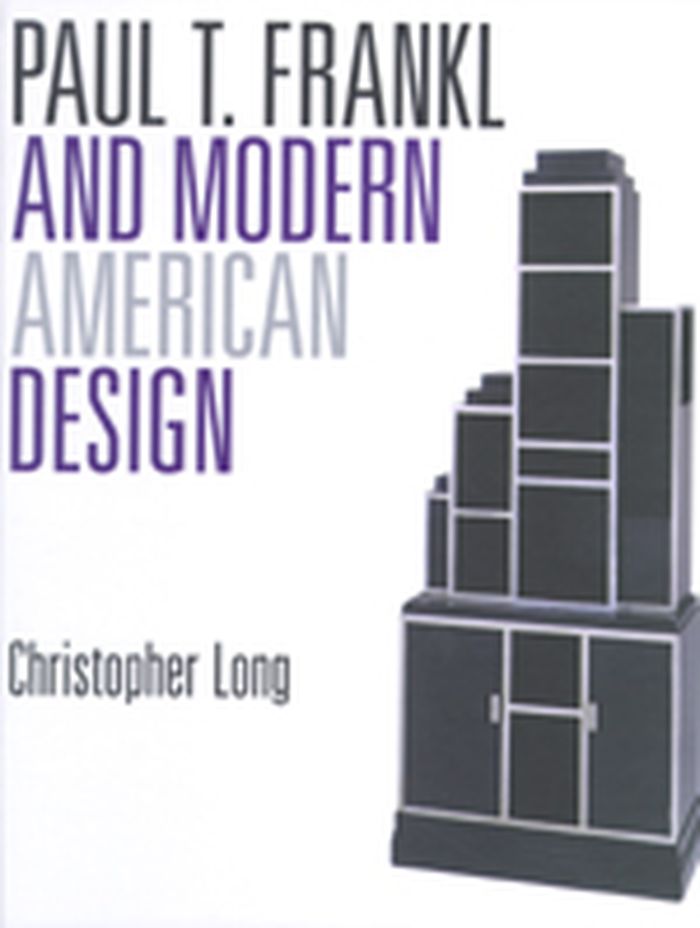
Arriving in the United States in 1914, Viennese-born Paul T. Frankl (1886-1958) brought with him an outsider's fresh perspective and an enthusiasm for forging a uniquely American design aesthetic. In the years between the two world wars he, more than any other designer, helped shape the distinctive look of American modernism. This authoritative book draws on an extensive collection of unpublished documents and family papers and photographs to provide the first full account of Frankl's life and ideas. The book also explores the history of modern American design and the extent of Frankl's influence on its trajectory. In the early 1920s, Frankl opened a New York City shop that became an epicentre of American modernism. Over the next decades, his work encompassed everything from individual pieces of furniture and decorative accessories to entire interiors, and his style continuously evolved, from early 'Skyscraper' furniture to relaxed and casual designs favoured by the Hollywood elite in the 1930s to manufactured pieces for the mass market in the 1950s. The book charts the impact of Frankl's ideas on merchants and consumers, on his fellow designers, and on the changing look of American homes and workplaces. With close to 170 illustrations, "Paul T. Frankl and Modern American Design" is an essential reference on 20th-century design.
Paul T. Frankl and modern American design
Actions:
Prix:
$54.95
(disponible en magasin)
Résumé:
Arriving in the United States in 1914, Viennese-born Paul T. Frankl (1886-1958) brought with him an outsider's fresh perspective and an enthusiasm for forging a uniquely American design aesthetic. In the years between the two world wars he, more than any other designer, helped shape the distinctive look of American modernism. This authoritative book draws on an extensive collection of unpublished documents and family papers and photographs to provide the first full account of Frankl's life and ideas. The book also explores the history of modern American design and the extent of Frankl's influence on its trajectory. In the early 1920s, Frankl opened a New York City shop that became an epicentre of American modernism. Over the next decades, his work encompassed everything from individual pieces of furniture and decorative accessories to entire interiors, and his style continuously evolved, from early 'Skyscraper' furniture to relaxed and casual designs favoured by the Hollywood elite in the 1930s to manufactured pieces for the mass market in the 1950s. The book charts the impact of Frankl's ideas on merchants and consumers, on his fellow designers, and on the changing look of American homes and workplaces. With close to 170 illustrations, "Paul T. Frankl and Modern American Design" is an essential reference on 20th-century design.
Classification:
livres
livres
Publication:
mai 2007, New Haven / London
mai 2007, New Haven / London
Sujet:
Design, monographies
Design, monographies
Classification:
livres
livres
Titre:
What comes after farce?
What comes after farce?
Actions:
Prix:
$33.95
(disponible sur commande)
Résumé:
If farce follows tragedy, what follows farce? Where does the double predicament of a post-truth and post-shame politics leave artists and critics on the left? How to demystify a hegemonic order that dismisses its own contradictions? How to belittle a political elite that cannot be embarrassed, or to mock party leaders who thrive on the absurd? How to out-dada President(...)
$33.95
(disponible sur commande)
Résumé:
If farce follows tragedy, what follows farce? Where does the double predicament of a post-truth and post-shame politics leave artists and critics on the left? How to demystify a hegemonic order that dismisses its own contradictions? How to belittle a political elite that cannot be embarrassed, or to mock party leaders who thrive on the absurd? How to out-dada President(...)
Titre:
What comes after farce?
Actions:
Prix:
$33.95
(disponible sur commande)
Résumé:
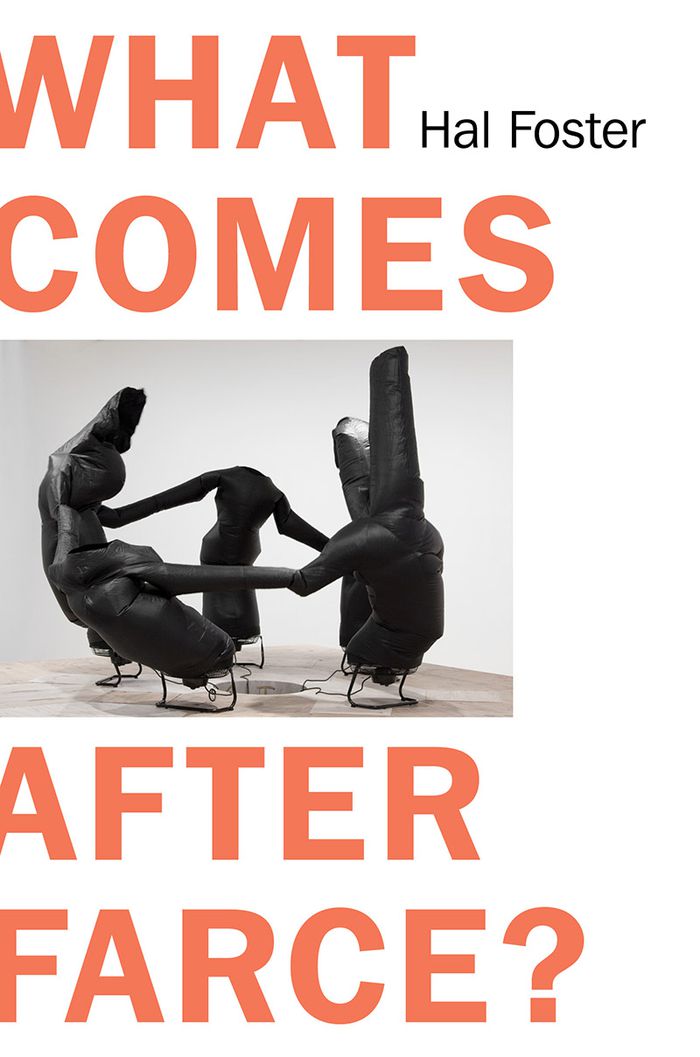
If farce follows tragedy, what follows farce? Where does the double predicament of a post-truth and post-shame politics leave artists and critics on the left? How to demystify a hegemonic order that dismisses its own contradictions? How to belittle a political elite that cannot be embarrassed, or to mock party leaders who thrive on the absurd? How to out-dada President Ubu? And, in any event, why add outrage to a media economy that thrives on the same? 'What Comes After Farce?' comments on shifts in art, criticism, and fiction in the face of the current regime of war, surveillance, extreme inequality, and media disruption. A first section focuses on the cultural politics of emergency since 9/11, including the use and abuse of trauma, paranoia, and kitsch. A second reviews the neoliberal makeover of art institutions during the same period. Finally, a third section surveys transformations in media as reflected in recent art, film, and fiction. Among the phenomena explored here are “machine vision” (images produced by machines for other machines without a human interface),“operational images” (images that do not represent the world so much as intervene in it), and the algorithmic scripting of information so pervasive in our everyday lives.
What comes after farce?
Actions:
Prix:
$33.95
(disponible sur commande)
Résumé:
If farce follows tragedy, what follows farce? Where does the double predicament of a post-truth and post-shame politics leave artists and critics on the left? How to demystify a hegemonic order that dismisses its own contradictions? How to belittle a political elite that cannot be embarrassed, or to mock party leaders who thrive on the absurd? How to out-dada President Ubu? And, in any event, why add outrage to a media economy that thrives on the same? 'What Comes After Farce?' comments on shifts in art, criticism, and fiction in the face of the current regime of war, surveillance, extreme inequality, and media disruption. A first section focuses on the cultural politics of emergency since 9/11, including the use and abuse of trauma, paranoia, and kitsch. A second reviews the neoliberal makeover of art institutions during the same period. Finally, a third section surveys transformations in media as reflected in recent art, film, and fiction. Among the phenomena explored here are “machine vision” (images produced by machines for other machines without a human interface),“operational images” (images that do not represent the world so much as intervene in it), and the algorithmic scripting of information so pervasive in our everyday lives.
Classification:
livres
livres
Publication:
juin 2020
juin 2020
Sujet:
Théorie/ philosophie
Théorie/ philosophie
Classification:
livres
livres
Prix:
$33.00
(disponible sur commande)
Résumé:
Architecture, we like to believe, is an elevated art form that shapes the world as it pleases. Four Walls and a Roof challenges this notion, presenting a candid account of what it is really like to work as an architect. Drawing on his own tragicomic experiences in the field, Reinier de Graaf reveals the world of contemporary architecture in vivid snapshots: from suburban(...)
$33.00
(disponible sur commande)
Résumé:
Architecture, we like to believe, is an elevated art form that shapes the world as it pleases. Four Walls and a Roof challenges this notion, presenting a candid account of what it is really like to work as an architect. Drawing on his own tragicomic experiences in the field, Reinier de Graaf reveals the world of contemporary architecture in vivid snapshots: from suburban(...)
Titre:
Four walls and a roof: the complex nature of a simple profession
Actions:
Prix:
$33.00
(disponible sur commande)
Résumé:
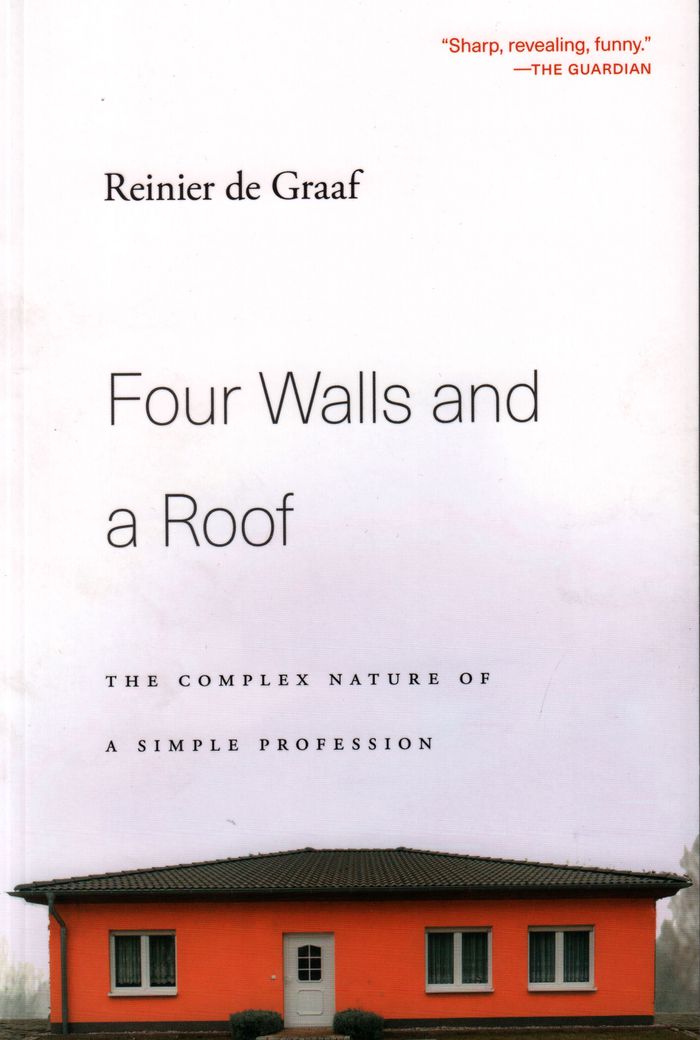
Architecture, we like to believe, is an elevated art form that shapes the world as it pleases. Four Walls and a Roof challenges this notion, presenting a candid account of what it is really like to work as an architect. Drawing on his own tragicomic experiences in the field, Reinier de Graaf reveals the world of contemporary architecture in vivid snapshots: from suburban New York to the rubble of northern Iraq, from the corridors of wealth in London, Moscow, and Dubai to garbage-strewn wastelands that represent the demolished hopes of postwar social housing. We meet oligarchs determined to translate ambitions into concrete and steel, developers for whom architecture is mere investment, and the layers of politicians, bureaucrats, consultants, and mysterious hangers-on who lie between any architectural idea and the chance of its execution. Four Walls and a Roof tells the story of a profession buffeted by external forces that determine—at least as much as individual inspiration—what architects design. Perhaps the most important myth debunked is success itself. To achieve anything, architects must serve the powers they strive to critique, finding themselves in a perpetual conflict of interest. Together, architects, developers, politicians, and consultants form an improvised world of contest and compromise that none alone can control.
Four walls and a roof: the complex nature of a simple profession
Actions:
Prix:
$33.00
(disponible sur commande)
Résumé:
Architecture, we like to believe, is an elevated art form that shapes the world as it pleases. Four Walls and a Roof challenges this notion, presenting a candid account of what it is really like to work as an architect. Drawing on his own tragicomic experiences in the field, Reinier de Graaf reveals the world of contemporary architecture in vivid snapshots: from suburban New York to the rubble of northern Iraq, from the corridors of wealth in London, Moscow, and Dubai to garbage-strewn wastelands that represent the demolished hopes of postwar social housing. We meet oligarchs determined to translate ambitions into concrete and steel, developers for whom architecture is mere investment, and the layers of politicians, bureaucrats, consultants, and mysterious hangers-on who lie between any architectural idea and the chance of its execution. Four Walls and a Roof tells the story of a profession buffeted by external forces that determine—at least as much as individual inspiration—what architects design. Perhaps the most important myth debunked is success itself. To achieve anything, architects must serve the powers they strive to critique, finding themselves in a perpetual conflict of interest. Together, architects, developers, politicians, and consultants form an improvised world of contest and compromise that none alone can control.
Classification:
livres
livres
Publication:
octobre 2019
octobre 2019
Sujet:
Théorie de l’architecture
Théorie de l’architecture
Classification:
livres
livres
Actions:
Prix:
$240.00
(disponible sur commande)
Résumé:
“Everything important that I have done can be put into a little suitcase," Duchamp said in 1952: finally, that suitcase is accessible to all. One of the most important and enigmatic pieces of modernist art, Boîte-en-valise was assembled by Marcel Duchamp between 1935 and 1941. The portable suitcase contains "the sum of his artistic work" up to that point. Perhaps in(...)
$240.00
(disponible sur commande)
Résumé:
“Everything important that I have done can be put into a little suitcase," Duchamp said in 1952: finally, that suitcase is accessible to all. One of the most important and enigmatic pieces of modernist art, Boîte-en-valise was assembled by Marcel Duchamp between 1935 and 1941. The portable suitcase contains "the sum of his artistic work" up to that point. Perhaps in(...)
Titre:
Marcel Duchamp: Museum in a box
Actions:
Prix:
$240.00
(disponible sur commande)
Résumé:
“Everything important that I have done can be put into a little suitcase," Duchamp said in 1952: finally, that suitcase is accessible to all. One of the most important and enigmatic pieces of modernist art, Boîte-en-valise was assembled by Marcel Duchamp between 1935 and 1941. The portable suitcase contains "the sum of his artistic work" up to that point. Perhaps in premonition of the coming war, and over years without a fixed address, Duchamp reproduced his work in a format that enabled him to easily transport his "complete works" at any time. Though the artist eventually made 300 copies of his box, many are behind glass in museums and private collections. This is the first ever reinterpretation of the legendary book-object, conceptualized by French artist Mathieu Mercier and now available to a broader audience. At once a work in and of itself, and a reproduction in the Duchampian spirit, this miniature museum contains 81 reproductions of Duchamp's creations, including the famous "Fountain," "Nude Descending a Staircase" and the "Large Glass." Mercier has reproduced the bulk of the contents of Duchamp's original box in paper form, designing everything to scale. Playful and accessible, the "Boîte" reflects Duchamp's desire to display his works outside the museum and gallery system.
Marcel Duchamp: Museum in a box
Actions:
Prix:
$240.00
(disponible sur commande)
Résumé:
“Everything important that I have done can be put into a little suitcase," Duchamp said in 1952: finally, that suitcase is accessible to all. One of the most important and enigmatic pieces of modernist art, Boîte-en-valise was assembled by Marcel Duchamp between 1935 and 1941. The portable suitcase contains "the sum of his artistic work" up to that point. Perhaps in premonition of the coming war, and over years without a fixed address, Duchamp reproduced his work in a format that enabled him to easily transport his "complete works" at any time. Though the artist eventually made 300 copies of his box, many are behind glass in museums and private collections. This is the first ever reinterpretation of the legendary book-object, conceptualized by French artist Mathieu Mercier and now available to a broader audience. At once a work in and of itself, and a reproduction in the Duchampian spirit, this miniature museum contains 81 reproductions of Duchamp's creations, including the famous "Fountain," "Nude Descending a Staircase" and the "Large Glass." Mercier has reproduced the bulk of the contents of Duchamp's original box in paper form, designing everything to scale. Playful and accessible, the "Boîte" reflects Duchamp's desire to display his works outside the museum and gallery system.
Classification:
livres
livres
Publication:
mars 2016
mars 2016


