


2285 Résultats
Classification:
livres
livres
Prix:
$63.00
(disponible sur commande)
Résumé:
This book, which accompanies a major exhibition at the Center for New Art and Media (ZKM) in Karlsruhe, Germany, invokes three disparate realms in which images have assumed the role of cultural weapons. Monotheistic religions, scientific theories, and contemporary arts have struggled with the contradictory urge to produce and also destroy images and emblems. Moving(...)
$63.00
(disponible sur commande)
Résumé:
This book, which accompanies a major exhibition at the Center for New Art and Media (ZKM) in Karlsruhe, Germany, invokes three disparate realms in which images have assumed the role of cultural weapons. Monotheistic religions, scientific theories, and contemporary arts have struggled with the contradictory urge to produce and also destroy images and emblems. Moving(...)
Sujet:
Théorie de l’architecture
Théorie de l’architecture
Publication:
juillet 2002, Cambridge, Mass.
juillet 2002, Cambridge, Mass.
Titre:
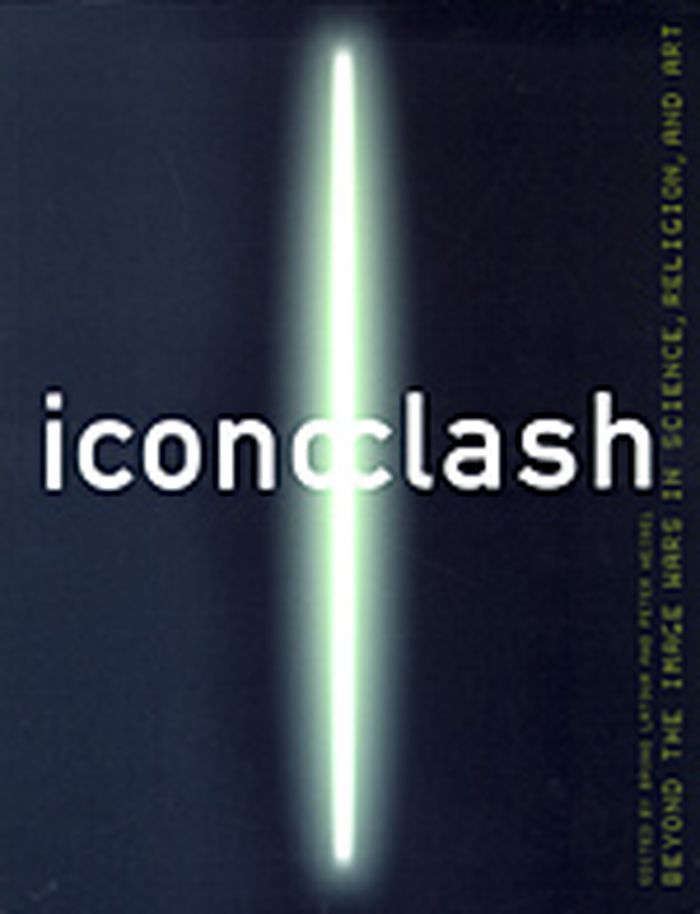
Iconoclash : beyond the image wars in science, religion, and art
Actions:
Prix:
$63.00
(disponible sur commande)
Résumé:
This book, which accompanies a major exhibition at the Center for New Art and Media (ZKM) in Karlsruhe, Germany, invokes three disparate realms in which images have assumed the role of cultural weapons. Monotheistic religions, scientific theories, and contemporary arts have struggled with the contradictory urge to produce and also destroy images and emblems. Moving beyond the image wars, ICONOCLASH shows that image destruction has always coexisted with a cascade of image production, visible in traditional Christian images as well as in scientific laboratories and the various experiments of contemporary art, music, cinema, and architecture. While iconoclasts have struggled against icon worshippers, another history of iconophily has always been at work. Investigating this alternative to the Western obsession with image worship and destruction allows useful comparisons with other cultures, in which images play a very different role. ICONOCLASH offers a variety of experiments on how to suspend the iconoclastic gesture and to renew the movement of images against any freeze-framing. The book includes major works by Art & Language, Willi Baumeister, Christian Boltanski, Daniel Buren, Lucas Cranach, Max Dean, Marcel Duchamp, Albrecht Dürer, Lucio Fontana, Francisco Goya, Hans Haacke, Richard Hamilton, Young Hay, Arata Isozaki, Asger Jorn, Martin Kippenberger, Imi Knoebel, Komar & Melamid, Joseph Kosuth, Gordon Matta-Clark, Tracey Moffat, Nam June Paik, Sigmar Polke, Stephen Prina, Man Ray, Sophie Ristelhueber, Hiroshi Sugimoto, and many others.
Iconoclash : beyond the image wars in science, religion, and art
Actions:
Prix:
$63.00
(disponible sur commande)
Résumé:
This book, which accompanies a major exhibition at the Center for New Art and Media (ZKM) in Karlsruhe, Germany, invokes three disparate realms in which images have assumed the role of cultural weapons. Monotheistic religions, scientific theories, and contemporary arts have struggled with the contradictory urge to produce and also destroy images and emblems. Moving beyond the image wars, ICONOCLASH shows that image destruction has always coexisted with a cascade of image production, visible in traditional Christian images as well as in scientific laboratories and the various experiments of contemporary art, music, cinema, and architecture. While iconoclasts have struggled against icon worshippers, another history of iconophily has always been at work. Investigating this alternative to the Western obsession with image worship and destruction allows useful comparisons with other cultures, in which images play a very different role. ICONOCLASH offers a variety of experiments on how to suspend the iconoclastic gesture and to renew the movement of images against any freeze-framing. The book includes major works by Art & Language, Willi Baumeister, Christian Boltanski, Daniel Buren, Lucas Cranach, Max Dean, Marcel Duchamp, Albrecht Dürer, Lucio Fontana, Francisco Goya, Hans Haacke, Richard Hamilton, Young Hay, Arata Isozaki, Asger Jorn, Martin Kippenberger, Imi Knoebel, Komar & Melamid, Joseph Kosuth, Gordon Matta-Clark, Tracey Moffat, Nam June Paik, Sigmar Polke, Stephen Prina, Man Ray, Sophie Ristelhueber, Hiroshi Sugimoto, and many others.
Classification:
livres
livres
Publication:
juillet 2002, Cambridge, Mass.
juillet 2002, Cambridge, Mass.
Sujet:
Théorie de l’architecture
Théorie de l’architecture
Classification:
livres
livres
Titre:
Arcade 20.3 spring 2002
Arcade 20.3 spring 2002
Actions:
Prix:
$7.95
(disponible sur commande)
Résumé:
A hodge-podge: fiction, photos, poetry, catalogs, historical facts, a cartoon—the narrowly objective hard by the expansively subjective. The plurality of genres pleased me. Any account of our territory bereft of, say, facts, poetry, projections, wild speculation, polemics, or sketchy memory, would seem to me to be fatally compromised. As the Office for Soft Architecture(...)
$7.95
(disponible sur commande)
Résumé:
A hodge-podge: fiction, photos, poetry, catalogs, historical facts, a cartoon—the narrowly objective hard by the expansively subjective. The plurality of genres pleased me. Any account of our territory bereft of, say, facts, poetry, projections, wild speculation, polemics, or sketchy memory, would seem to me to be fatally compromised. As the Office for Soft Architecture(...)
Titre:
Arcade 20.3 spring 2002
Actions:
Prix:
$7.95
(disponible sur commande)
Résumé:
A hodge-podge: fiction, photos, poetry, catalogs, historical facts, a cartoon—the narrowly objective hard by the expansively subjective. The plurality of genres pleased me. Any account of our territory bereft of, say, facts, poetry, projections, wild speculation, polemics, or sketchy memory, would seem to me to be fatally compromised. As the Office for Soft Architecture puts it in their Fourth Walk: “[We] painted the place in the polis of the sour heat and the pulse beneath our coats, the specific entry of our exhalations and words into the atmosphere…Our method was patience. We would slowly absorb each image until we were what we had deliberately chosen to become. Of course then we ourselves were the documents; we acquired a fragility. Hello my Delicate we would repeat when we met by chance in the streets under the rows of posters Hello my Delicate.” Matthew Stadler is a novelist and essayist whose writing about design has appeared in Nest magazine, Wiederhal, Frieze, The Guardian, and The Seattle Times. He is the editor of Clear Cut Press, a new publishing and distribution company based in Astoria, OR. editor@clearcutpress.com. Tae Won Yu is an artist working in Olympia, Washington. His previous projects include designs for Built To Spill, photographs for Nest magazine, and illlustrations for The Stranger.
Arcade 20.3 spring 2002
Actions:
Prix:
$7.95
(disponible sur commande)
Résumé:
A hodge-podge: fiction, photos, poetry, catalogs, historical facts, a cartoon—the narrowly objective hard by the expansively subjective. The plurality of genres pleased me. Any account of our territory bereft of, say, facts, poetry, projections, wild speculation, polemics, or sketchy memory, would seem to me to be fatally compromised. As the Office for Soft Architecture puts it in their Fourth Walk: “[We] painted the place in the polis of the sour heat and the pulse beneath our coats, the specific entry of our exhalations and words into the atmosphere…Our method was patience. We would slowly absorb each image until we were what we had deliberately chosen to become. Of course then we ourselves were the documents; we acquired a fragility. Hello my Delicate we would repeat when we met by chance in the streets under the rows of posters Hello my Delicate.” Matthew Stadler is a novelist and essayist whose writing about design has appeared in Nest magazine, Wiederhal, Frieze, The Guardian, and The Seattle Times. He is the editor of Clear Cut Press, a new publishing and distribution company based in Astoria, OR. editor@clearcutpress.com. Tae Won Yu is an artist working in Olympia, Washington. His previous projects include designs for Built To Spill, photographs for Nest magazine, and illlustrations for The Stranger.
Classification:
livres
livres
Publication:
mars 2002, Seattle
mars 2002, Seattle
Sujet:
livres soldés
livres soldés
Classification:
livres
livres

Titre:
Planet of slums
Planet of slums
Actions:
Prix:
$25.00
(disponible sur commande)
Résumé:
Urban theorist Davis takes a global approach to documenting the astonishing depth of squalid poverty that dominates the lives of the planet's increasingly urban population, detailing poor urban communities from Cape Town and Caracas to Casablanca and Khartoum. Davis argues health, justice and social issues associated with gargantuan slums (the largest, in Mexico City, has(...)
$25.00
(disponible sur commande)
Résumé:
Urban theorist Davis takes a global approach to documenting the astonishing depth of squalid poverty that dominates the lives of the planet's increasingly urban population, detailing poor urban communities from Cape Town and Caracas to Casablanca and Khartoum. Davis argues health, justice and social issues associated with gargantuan slums (the largest, in Mexico City, has(...)
Titre:
Planet of slums
Actions:
Prix:
$25.00
(disponible sur commande)
Résumé:
Urban theorist Davis takes a global approach to documenting the astonishing depth of squalid poverty that dominates the lives of the planet's increasingly urban population, detailing poor urban communities from Cape Town and Caracas to Casablanca and Khartoum. Davis argues health, justice and social issues associated with gargantuan slums (the largest, in Mexico City, has an estimated population of 4 million) get overlooked in world politics: "The demonizing rhetorics of the various international 'wars' on terrorism, drugs, and crime are so much semantic apartheid: they construct epistemological walls around gecekondus, favelas, and chawls that disable any honest debate about the daily violence of economic exclusion." Though Davis focuses on individual communities, he presents statistics showing the skyrocketing population and number of "megaslums" (informally, "stinking mountains of shit" or, formally, "when shanty-towns and squatter communities merge in continuous belts of informal housing and poverty, usually on the urban periphery") since the 1960s. Layered over the hard numbers are a fascinating grid of specific area studies and sub-topics ranging from how the Olympics has spurred the forceful relocation of thousands (and, sometimes, hundreds of thousands) of the urban poor, to the conversion of formerly second world countries to third world status. Davis paints a bleak picture of the upward trend in urbanization and maintains a stark outlook for slum-dwellers' futures
Planet of slums
Actions:
Prix:
$25.00
(disponible sur commande)
Résumé:
Urban theorist Davis takes a global approach to documenting the astonishing depth of squalid poverty that dominates the lives of the planet's increasingly urban population, detailing poor urban communities from Cape Town and Caracas to Casablanca and Khartoum. Davis argues health, justice and social issues associated with gargantuan slums (the largest, in Mexico City, has an estimated population of 4 million) get overlooked in world politics: "The demonizing rhetorics of the various international 'wars' on terrorism, drugs, and crime are so much semantic apartheid: they construct epistemological walls around gecekondus, favelas, and chawls that disable any honest debate about the daily violence of economic exclusion." Though Davis focuses on individual communities, he presents statistics showing the skyrocketing population and number of "megaslums" (informally, "stinking mountains of shit" or, formally, "when shanty-towns and squatter communities merge in continuous belts of informal housing and poverty, usually on the urban periphery") since the 1960s. Layered over the hard numbers are a fascinating grid of specific area studies and sub-topics ranging from how the Olympics has spurred the forceful relocation of thousands (and, sometimes, hundreds of thousands) of the urban poor, to the conversion of formerly second world countries to third world status. Davis paints a bleak picture of the upward trend in urbanization and maintains a stark outlook for slum-dwellers' futures
Classification:
livres
livres
Publication:
août 2007, London New York
août 2007, London New York
Sujet:
Théorie de l’urbanisme
Théorie de l’urbanisme
Classification:
livres
livres
Prix:
$55.50
(disponible sur commande)
Résumé:
Human obsolescence is imminent. The factories of the future will be dark, staffed by armies of tireless robots. The hospitals of the future will have fewer doctors, depending instead on cloud-based AI to diagnose patients and recommend treatments. The homes of the future will anticipate our wants and needs and provide all the entertainment, food, and distraction we could(...)
$55.50
(disponible sur commande)
Résumé:
Human obsolescence is imminent. The factories of the future will be dark, staffed by armies of tireless robots. The hospitals of the future will have fewer doctors, depending instead on cloud-based AI to diagnose patients and recommend treatments. The homes of the future will anticipate our wants and needs and provide all the entertainment, food, and distraction we could(...)
Titre:
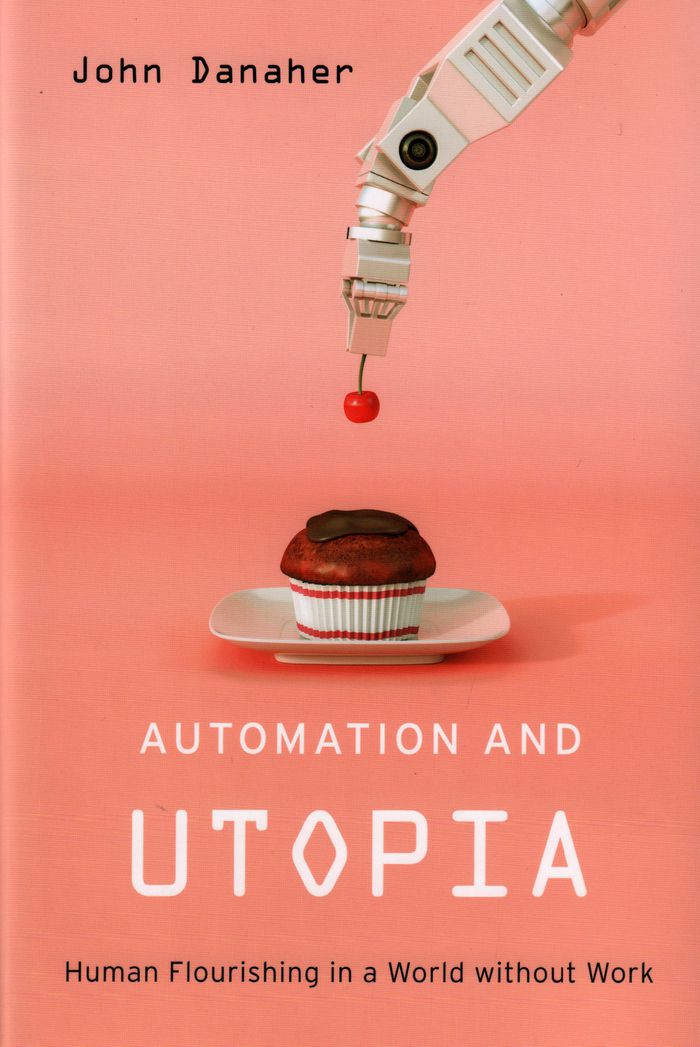
Automation and utopia: human flourishing in a world without work
Actions:
Prix:
$55.50
(disponible sur commande)
Résumé:
Human obsolescence is imminent. The factories of the future will be dark, staffed by armies of tireless robots. The hospitals of the future will have fewer doctors, depending instead on cloud-based AI to diagnose patients and recommend treatments. The homes of the future will anticipate our wants and needs and provide all the entertainment, food, and distraction we could ever desire. To many, this is a depressing prognosis, an image of civilization replaced by its machines. But what if an automated future is something to be welcomed rather than feared? Work is a source of misery and oppression for most people, so shouldn’t we do what we can to hasten its demise? Automation and Utopia makes the case for a world in which, free from need or want, we can spend our time inventing and playing games and exploring virtual realities that are more deeply engaging and absorbing than any we have experienced before, allowing us to achieve idealized forms of human flourishing. The idea that we should “give up” and retreat to the virtual may seem shocking, even distasteful. But John Danaher urges us to embrace the possibilities of this new existence. The rise of automating technologies presents a utopian moment for humankind, providing both the motive and the means to build a better future.
Automation and utopia: human flourishing in a world without work
Actions:
Prix:
$55.50
(disponible sur commande)
Résumé:
Human obsolescence is imminent. The factories of the future will be dark, staffed by armies of tireless robots. The hospitals of the future will have fewer doctors, depending instead on cloud-based AI to diagnose patients and recommend treatments. The homes of the future will anticipate our wants and needs and provide all the entertainment, food, and distraction we could ever desire. To many, this is a depressing prognosis, an image of civilization replaced by its machines. But what if an automated future is something to be welcomed rather than feared? Work is a source of misery and oppression for most people, so shouldn’t we do what we can to hasten its demise? Automation and Utopia makes the case for a world in which, free from need or want, we can spend our time inventing and playing games and exploring virtual realities that are more deeply engaging and absorbing than any we have experienced before, allowing us to achieve idealized forms of human flourishing. The idea that we should “give up” and retreat to the virtual may seem shocking, even distasteful. But John Danaher urges us to embrace the possibilities of this new existence. The rise of automating technologies presents a utopian moment for humankind, providing both the motive and the means to build a better future.
Classification:
livres
livres
Publication:
septembre 2019
septembre 2019
Sujet:
Théorie de l’architecture
Théorie de l’architecture
Classification:
livres
livres
Titre:
David Freund: gas stop
David Freund: gas stop
Actions:
Prix:
$162.50
(disponible sur commande)
Résumé:
In the twentieth century, any American driver or passenger would stop at gas stations at least weekly, and not just for gas. Gas stations were also oases offering food and drink, car repairs, directions, maps and, importantly, bathrooms. Yet, beyond their appreciation as roadside novelties, their offerings to American culture, landscape and history have been little(...)
$162.50
(disponible sur commande)
Résumé:
In the twentieth century, any American driver or passenger would stop at gas stations at least weekly, and not just for gas. Gas stations were also oases offering food and drink, car repairs, directions, maps and, importantly, bathrooms. Yet, beyond their appreciation as roadside novelties, their offerings to American culture, landscape and history have been little(...)
Titre:
David Freund: gas stop
Actions:
Prix:
$162.50
(disponible sur commande)
Résumé:
In the twentieth century, any American driver or passenger would stop at gas stations at least weekly, and not just for gas. Gas stations were also oases offering food and drink, car repairs, directions, maps and, importantly, bathrooms. Yet, beyond their appreciation as roadside novelties, their offerings to American culture, landscape and history have been little photographed. From 1978 to 1981, David Freund analyzed the culture, architecture and landscape of gas stations in more than forty states. The photographs show customers and workers in postures and actions peculiar to gassing up, or just hanging out. Architecture and signage, both corporate and vernacular, beckon passing drivers. Regional landscapes hold and surround gas stations, each with its own landscape of designed plantings or scrappy volunteers. Stations were also outposts for American networks other than petroleum, seen in telephone booths, mailboxes and powerlines. These and all that surrounds them spark recognition and recollection, accruing as elements of a nonlinear American narrative. While Freund’s primary concern is for his photographs to engage and surprise, he acknowledges nostalgia and uses it to imbue his subjects with a compelling sense of belonging. Of more than 200,000 gas stations in the United States at the time of this project, today they and their roles are mostly gone, existing now in memory and in this work. Four hardcover books housed in a slipcase
David Freund: gas stop
Actions:
Prix:
$162.50
(disponible sur commande)
Résumé:
In the twentieth century, any American driver or passenger would stop at gas stations at least weekly, and not just for gas. Gas stations were also oases offering food and drink, car repairs, directions, maps and, importantly, bathrooms. Yet, beyond their appreciation as roadside novelties, their offerings to American culture, landscape and history have been little photographed. From 1978 to 1981, David Freund analyzed the culture, architecture and landscape of gas stations in more than forty states. The photographs show customers and workers in postures and actions peculiar to gassing up, or just hanging out. Architecture and signage, both corporate and vernacular, beckon passing drivers. Regional landscapes hold and surround gas stations, each with its own landscape of designed plantings or scrappy volunteers. Stations were also outposts for American networks other than petroleum, seen in telephone booths, mailboxes and powerlines. These and all that surrounds them spark recognition and recollection, accruing as elements of a nonlinear American narrative. While Freund’s primary concern is for his photographs to engage and surprise, he acknowledges nostalgia and uses it to imbue his subjects with a compelling sense of belonging. Of more than 200,000 gas stations in the United States at the time of this project, today they and their roles are mostly gone, existing now in memory and in this work. Four hardcover books housed in a slipcase
Classification:
livres
livres
Publication:
janvier 2017
janvier 2017
Sujet:
Monographies photo
Monographies photo
Classification:
livres
livres
Titre:
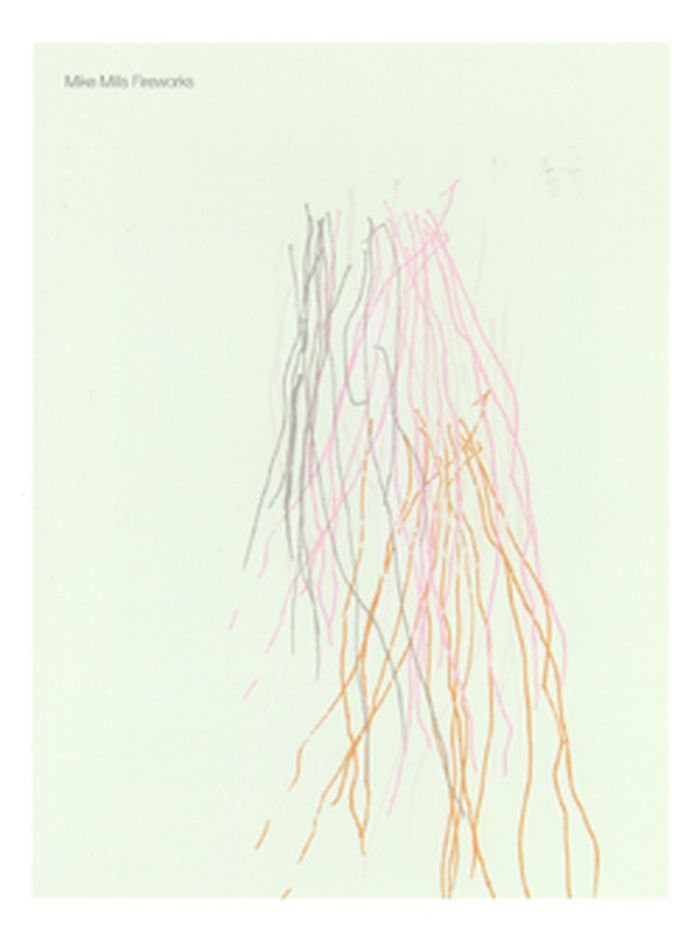
Mike Mills : fireworks
Mike Mills : fireworks
Actions:
Prix:
$17.99
(disponible sur commande)
Résumé:
"Some things that may or may not relate to these drawings: A professional suggested I take anti-depressants. I declined. About the same time I started drawing fireworks. I didn’t know what they meant or why I was drawing them. I was confused and embarrassed by this lack of meaning, but they kept coming. I could draw them no matter how I felt. I read that fireworks were(...)
$17.99
(disponible sur commande)
Résumé:
"Some things that may or may not relate to these drawings: A professional suggested I take anti-depressants. I declined. About the same time I started drawing fireworks. I didn’t know what they meant or why I was drawing them. I was confused and embarrassed by this lack of meaning, but they kept coming. I could draw them no matter how I felt. I read that fireworks were(...)
Titre:
Mike Mills : fireworks
Actions:
Prix:
$17.99
(disponible sur commande)
Résumé:
"Some things that may or may not relate to these drawings: A professional suggested I take anti-depressants. I declined. About the same time I started drawing fireworks. I didn’t know what they meant or why I was drawing them. I was confused and embarrassed by this lack of meaning, but they kept coming. I could draw them no matter how I felt. I read that fireworks were first used in China in the 12th century to scare away negative spirits. I envied a world that not only recognized spirits, but scared the negative ones away with small man made explosions. About the same time, I read in a magazine that antidepressants have a hard time performing better than the placebo pills they are tested against. Scientist cannot explain it, but almost as many people who take the fake pills say they feel relief from their depression. The blood flow in their brains actually changes in the same positive way that it does for the people who take the real pills. I felt a connection between the Chinese fireworks and the placebo effect, and some relief in all the things we don’t understand. At some point the fireworks grew more and more abstract, and messy, and complicated, and I became if not content then at least willing to make things that didn’t have any apparent meaning." Mike Mills
Mike Mills : fireworks
Actions:
Prix:
$17.99
(disponible sur commande)
Résumé:
"Some things that may or may not relate to these drawings: A professional suggested I take anti-depressants. I declined. About the same time I started drawing fireworks. I didn’t know what they meant or why I was drawing them. I was confused and embarrassed by this lack of meaning, but they kept coming. I could draw them no matter how I felt. I read that fireworks were first used in China in the 12th century to scare away negative spirits. I envied a world that not only recognized spirits, but scared the negative ones away with small man made explosions. About the same time, I read in a magazine that antidepressants have a hard time performing better than the placebo pills they are tested against. Scientist cannot explain it, but almost as many people who take the fake pills say they feel relief from their depression. The blood flow in their brains actually changes in the same positive way that it does for the people who take the real pills. I felt a connection between the Chinese fireworks and the placebo effect, and some relief in all the things we don’t understand. At some point the fireworks grew more and more abstract, and messy, and complicated, and I became if not content then at least willing to make things that didn’t have any apparent meaning." Mike Mills
Classification:
livres
livres
Publication:
janvier 1900, Zürich
janvier 1900, Zürich
Classification:
livres
livres
Prix:
$38.50
(disponible sur commande)
Résumé:
A celebrated figure in myth, song, and story, the nightingale has captivated the imagination for millennia, its complex song evoking a prism of human emotions,-from melancholy to joy, from the fear of death to the immortality of art. As philosopher and musician David Rothenberg shows in this searching and personal new book, the nightingale's song is so peculiar in part(...)
$38.50
(disponible sur commande)
Résumé:
A celebrated figure in myth, song, and story, the nightingale has captivated the imagination for millennia, its complex song evoking a prism of human emotions,-from melancholy to joy, from the fear of death to the immortality of art. As philosopher and musician David Rothenberg shows in this searching and personal new book, the nightingale's song is so peculiar in part(...)
Titre:
Nightingales in Berlin: searching for the perfect sound
Actions:
Prix:
$38.50
(disponible sur commande)
Résumé:
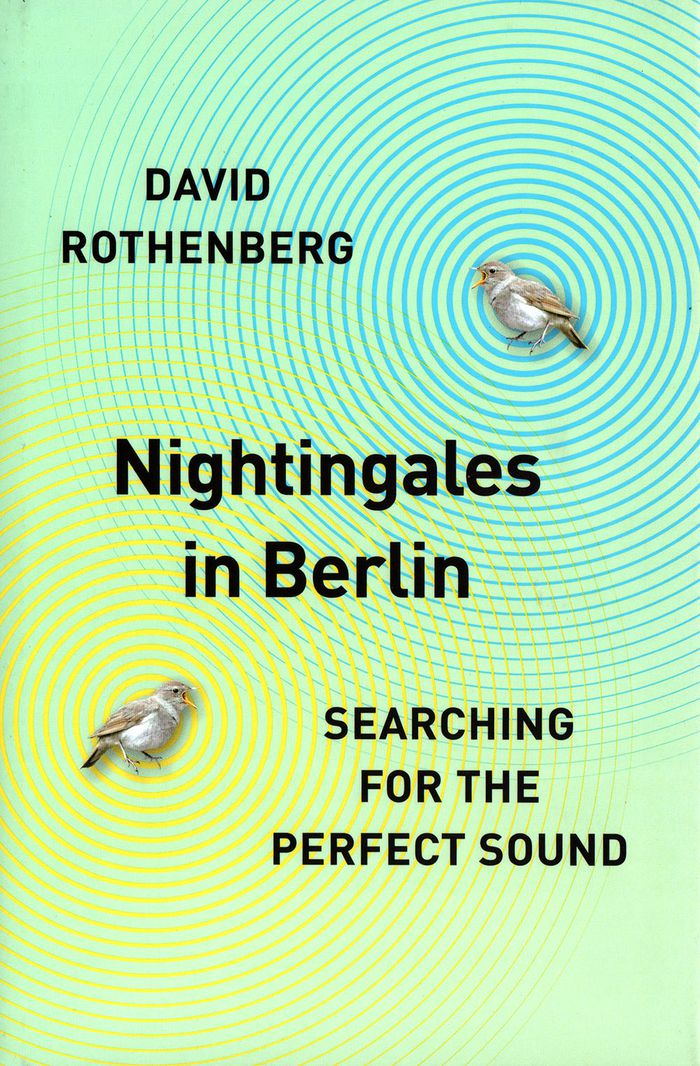
A celebrated figure in myth, song, and story, the nightingale has captivated the imagination for millennia, its complex song evoking a prism of human emotions,-from melancholy to joy, from the fear of death to the immortality of art. As philosopher and musician David Rothenberg shows in this searching and personal new book, the nightingale's song is so peculiar in part because it reflects our own cacophony back at us. As vocal learners, nightingales acquire their music through the world around them, singing amidst the sounds of humanity in all its contradictions of noise and beauty, hard machinery and soft melody. Rather than try to capture a sound not made for us to understand, Rothenberg seeks these musical creatures out, clarinet in tow, and makes a new sound with them. He takes us to the urban landscape of Berlin—longtime home to nightingale colonies where the birds sing ever louder in order to be heard—and invites us to listen in on their remarkable collaboration as birds and instruments riff off of each other's sounds. Through dialogue, travel records, sonograms, tours of Berlin's city parks, and musings on the place animal music occupies in our collective imagination, Rothenberg takes us on a quest for a new sonic alchemy, a music impossible for any one species to make alone.
Nightingales in Berlin: searching for the perfect sound
Actions:
Prix:
$38.50
(disponible sur commande)
Résumé:
A celebrated figure in myth, song, and story, the nightingale has captivated the imagination for millennia, its complex song evoking a prism of human emotions,-from melancholy to joy, from the fear of death to the immortality of art. As philosopher and musician David Rothenberg shows in this searching and personal new book, the nightingale's song is so peculiar in part because it reflects our own cacophony back at us. As vocal learners, nightingales acquire their music through the world around them, singing amidst the sounds of humanity in all its contradictions of noise and beauty, hard machinery and soft melody. Rather than try to capture a sound not made for us to understand, Rothenberg seeks these musical creatures out, clarinet in tow, and makes a new sound with them. He takes us to the urban landscape of Berlin—longtime home to nightingale colonies where the birds sing ever louder in order to be heard—and invites us to listen in on their remarkable collaboration as birds and instruments riff off of each other's sounds. Through dialogue, travel records, sonograms, tours of Berlin's city parks, and musings on the place animal music occupies in our collective imagination, Rothenberg takes us on a quest for a new sonic alchemy, a music impossible for any one species to make alone.
Classification:
livres
livres
Publication:
mai 2019
mai 2019
Sujet:
Théorie du paysage
Théorie du paysage
Classification:
livres
livres

Actions:
Prix:
$48.00
(disponible sur commande)
Résumé:
Is there a cultural logic of what we have come to call the information age? Have the technologies and techniques centered on the computer provided not only tools but also the metaphors through which we now understand the social and economic formation of our world? In Control, Seb Franklin addresses the conditions of knowledge that make the concept of the "information(...)
$48.00
(disponible sur commande)
Résumé:
Is there a cultural logic of what we have come to call the information age? Have the technologies and techniques centered on the computer provided not only tools but also the metaphors through which we now understand the social and economic formation of our world? In Control, Seb Franklin addresses the conditions of knowledge that make the concept of the "information(...)
Titre:
Control: digitality as cultural logic
Actions:
Prix:
$48.00
(disponible sur commande)
Résumé:
Is there a cultural logic of what we have come to call the information age? Have the technologies and techniques centered on the computer provided not only tools but also the metaphors through which we now understand the social and economic formation of our world? In Control, Seb Franklin addresses the conditions of knowledge that make the concept of the "information economy" possible while at the same time obscuring its effects on material social spaces. In so doing, Franklin traces three intertwined threads: the relationships among information, labor, and social management that emerged in the nineteenth century; the mid-twentieth-century diffusion of computational metaphors; and the appearance of informatic principles in certain contemporary socioeconomic and cultural practices. Drawing on critical theory, media theory, and the history of science, Franklin names control as the episteme grounding late capitalism. Beyond any specific device or set of technically mediated practices, digitality functions within this episteme as the logical basis for reshaped concepts of labor, subjectivity, and collectivity, as well as for the intensification of older modes of exclusion and dispossession. In tracking the pervasiveness of this logical mode into the present, Franklin locates the cultural traces of control across a diverse body of objects and practices, from cybernetics to economic theory and management styles, and from concepts of language and subjectivity to literary texts, films, and video games.
Control: digitality as cultural logic
Actions:
Prix:
$48.00
(disponible sur commande)
Résumé:
Is there a cultural logic of what we have come to call the information age? Have the technologies and techniques centered on the computer provided not only tools but also the metaphors through which we now understand the social and economic formation of our world? In Control, Seb Franklin addresses the conditions of knowledge that make the concept of the "information economy" possible while at the same time obscuring its effects on material social spaces. In so doing, Franklin traces three intertwined threads: the relationships among information, labor, and social management that emerged in the nineteenth century; the mid-twentieth-century diffusion of computational metaphors; and the appearance of informatic principles in certain contemporary socioeconomic and cultural practices. Drawing on critical theory, media theory, and the history of science, Franklin names control as the episteme grounding late capitalism. Beyond any specific device or set of technically mediated practices, digitality functions within this episteme as the logical basis for reshaped concepts of labor, subjectivity, and collectivity, as well as for the intensification of older modes of exclusion and dispossession. In tracking the pervasiveness of this logical mode into the present, Franklin locates the cultural traces of control across a diverse body of objects and practices, from cybernetics to economic theory and management styles, and from concepts of language and subjectivity to literary texts, films, and video games.
Classification:
livres
livres
Publication:
novembre 2015
novembre 2015
Classification:
livres
livres

Actions:
Prix:
$30.00
(disponible sur commande)
Résumé:
Issue 101 of Texte zur Kunst takes “Polarities” as its theme—a term that in the first degree we associate with what’s unfolding around us right now: ideological polarization, from Pegida to Donald Trump. In turn, this issue looks to the macro conditions in which art critical and art historical discourses are currently being formed, and within which they will need to(...)
$30.00
(disponible sur commande)
Résumé:
Issue 101 of Texte zur Kunst takes “Polarities” as its theme—a term that in the first degree we associate with what’s unfolding around us right now: ideological polarization, from Pegida to Donald Trump. In turn, this issue looks to the macro conditions in which art critical and art historical discourses are currently being formed, and within which they will need to(...)
Titre:
Texte zur Kunst 101: Polarities
Actions:
Prix:
$30.00
(disponible sur commande)
Résumé:
Issue 101 of Texte zur Kunst takes “Polarities” as its theme—a term that in the first degree we associate with what’s unfolding around us right now: ideological polarization, from Pegida to Donald Trump. In turn, this issue looks to the macro conditions in which art critical and art historical discourses are currently being formed, and within which they will need to position themselves. What’s particularly striking, we argue, is that this trend toward polarization is happening despite the popular tendency, in recent decades, to speak of increased unification. How, then, can such polarization be reconciled with the dominant, and inherently continuous, neoliberal system—one characterized by the global economy’s promise of inclusiveness; utopian visions of peace (if not survival) via the “singularity” of screen, mind, and body; and a European Union as project of post-Soviet unification, striving to push all conflict to its periphery? What do we make of this growing difference between the ideals of technological/smooth space (where the art world often resides, swiftly neutralizing any resistance as “content”) and the broadening expanses of material unrest? Could the image of polarization be something not to avoid but to engage, at least as a potentially generative model, for understanding true opposition within a continuous system—for times that are anything but free from ideological division?
Texte zur Kunst 101: Polarities
Actions:
Prix:
$30.00
(disponible sur commande)
Résumé:
Issue 101 of Texte zur Kunst takes “Polarities” as its theme—a term that in the first degree we associate with what’s unfolding around us right now: ideological polarization, from Pegida to Donald Trump. In turn, this issue looks to the macro conditions in which art critical and art historical discourses are currently being formed, and within which they will need to position themselves. What’s particularly striking, we argue, is that this trend toward polarization is happening despite the popular tendency, in recent decades, to speak of increased unification. How, then, can such polarization be reconciled with the dominant, and inherently continuous, neoliberal system—one characterized by the global economy’s promise of inclusiveness; utopian visions of peace (if not survival) via the “singularity” of screen, mind, and body; and a European Union as project of post-Soviet unification, striving to push all conflict to its periphery? What do we make of this growing difference between the ideals of technological/smooth space (where the art world often resides, swiftly neutralizing any resistance as “content”) and the broadening expanses of material unrest? Could the image of polarization be something not to avoid but to engage, at least as a potentially generative model, for understanding true opposition within a continuous system—for times that are anything but free from ideological division?
Classification:
livres
livres
Publication:
mars 2016
mars 2016
Sujet:
Revues
Revues
Classification:
périodiques
périodiques
Actions:
Prix:
$44.00
(disponible sur commande)
Résumé:
The city has become an important new starting point in the quest for architecture. At a time of extreme urbanisation, unharnessed urban growth has led many architects to rethink the way that buildings are designed for the global metropolis. It is no longer practical or desirable to impose the standardised, idealized planning of the 20th century. Rather than viewing the(...)
$44.00
(disponible sur commande)
Résumé:
The city has become an important new starting point in the quest for architecture. At a time of extreme urbanisation, unharnessed urban growth has led many architects to rethink the way that buildings are designed for the global metropolis. It is no longer practical or desirable to impose the standardised, idealized planning of the 20th century. Rather than viewing the(...)
Titre:
AD- City catalyst: design architecture in the age of extreme urbanisation
Actions:
Prix:
$44.00
(disponible sur commande)
Résumé:
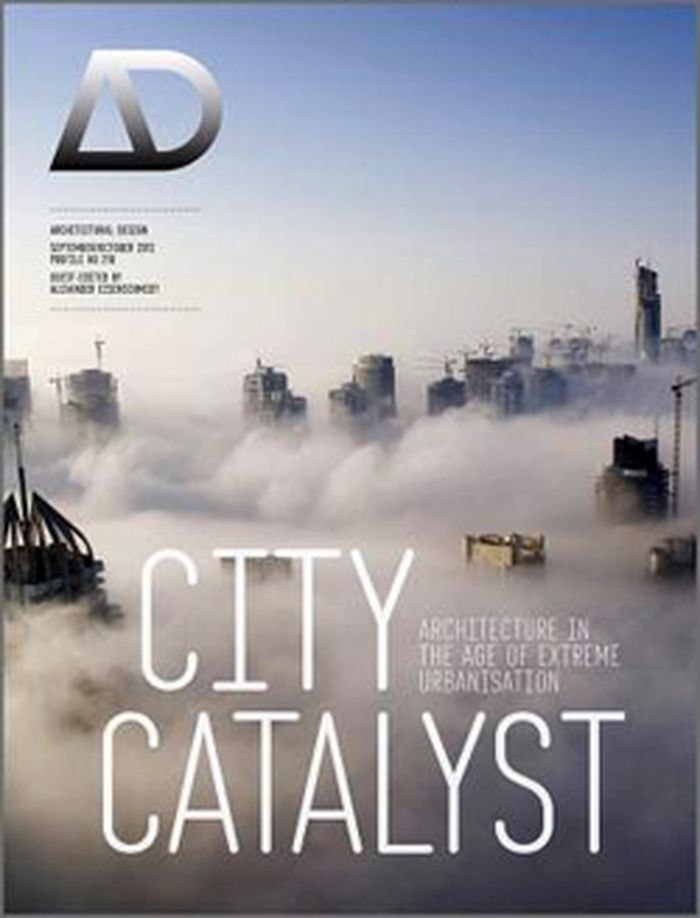
The city has become an important new starting point in the quest for architecture. At a time of extreme urbanisation, unharnessed urban growth has led many architects to rethink the way that buildings are designed for the global metropolis. It is no longer practical or desirable to impose the standardised, idealized planning of the 20th century. Rather than viewing the city as a fixed entity, architects are now seeking direct inspiration from the existing urban environment and learning from its ever-changing state that resists predetermination. The city, in all its complexity, has become a realm of invention and a space for possibilities where new designs can be tested. This is as apparent in the work that architects are undertaking in the informal settlements, or favelas, of Latin America, as in the more regulated spaces of Chicago, London or Tokyo. Favouring an inclusive way of viewing the city, no aspect of the urban world is any longer rejected outright, and architects and urban designers instead find potential and learn from the underlying dynamics of the contemporary city. This attitude highlights the generative capacities of the city and finds new ways of engaging it. At the very least, it advances an architectural thinking that engages the city on its own ground, abets its potential and seeks opportunities in the existing condition.
AD- City catalyst: design architecture in the age of extreme urbanisation
Actions:
Prix:
$44.00
(disponible sur commande)
Résumé:
The city has become an important new starting point in the quest for architecture. At a time of extreme urbanisation, unharnessed urban growth has led many architects to rethink the way that buildings are designed for the global metropolis. It is no longer practical or desirable to impose the standardised, idealized planning of the 20th century. Rather than viewing the city as a fixed entity, architects are now seeking direct inspiration from the existing urban environment and learning from its ever-changing state that resists predetermination. The city, in all its complexity, has become a realm of invention and a space for possibilities where new designs can be tested. This is as apparent in the work that architects are undertaking in the informal settlements, or favelas, of Latin America, as in the more regulated spaces of Chicago, London or Tokyo. Favouring an inclusive way of viewing the city, no aspect of the urban world is any longer rejected outright, and architects and urban designers instead find potential and learn from the underlying dynamics of the contemporary city. This attitude highlights the generative capacities of the city and finds new ways of engaging it. At the very least, it advances an architectural thinking that engages the city on its own ground, abets its potential and seeks opportunities in the existing condition.
Classification:
périodiques
périodiques
Publication:
octobre 2012
octobre 2012
Sujet:
Revues
Revues


