


2298 Résultats
Classification:
livres
livres
Actions:
Prix:
$30.00
(disponible sur commande)
Résumé:
Parks are importantly fertile places to talk about land. Whether its big national parks, provincial campgrounds, isolated conservation areas, destination parks, or humble urban patches of grass, we tend to speak of parks as unqualified goods. People think of parks as public or common land, and it is a common belief that parks are the best uses of land and are good for(...)
$30.00
(disponible sur commande)
Résumé:
Parks are importantly fertile places to talk about land. Whether its big national parks, provincial campgrounds, isolated conservation areas, destination parks, or humble urban patches of grass, we tend to speak of parks as unqualified goods. People think of parks as public or common land, and it is a common belief that parks are the best uses of land and are good for(...)
Titre:
On this patch of grass: city parks and the politics of occupied land
Actions:
Prix:
$30.00
(disponible sur commande)
Résumé:
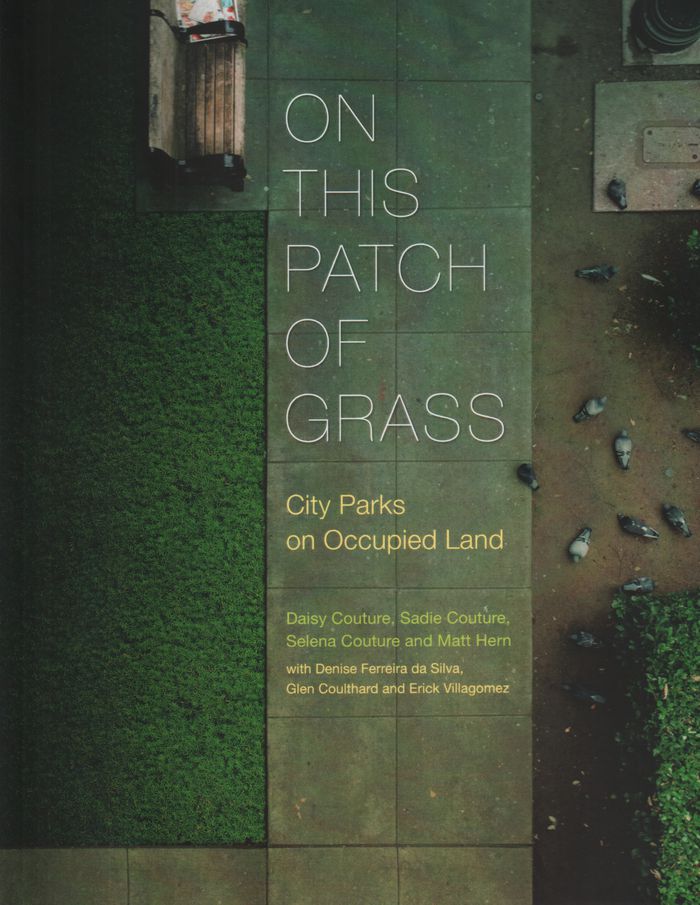
Parks are importantly fertile places to talk about land. Whether its big national parks, provincial campgrounds, isolated conservation areas, destination parks, or humble urban patches of grass, we tend to speak of parks as unqualified goods. People think of parks as public or common land, and it is a common belief that parks are the best uses of land and are good for everyone. But no park is innocent. Parks are lionized as "natural oases," and urban parks as "pure nature" in the midst of the city -- but that's absurd. Parks are as "natural" as the roads or buildings around them, and just as political. Every park in North America is performing modernity and settler colonialism everyday. Furthermore, parks are not private property, but while they are called ''public'', they are highly regulated spaces that normatively demand and closely control behaviours. Parks are a certain kind of property, and thus creations of law, and they are subject to all kinds of presumptions about what parks are for, and what kinds of people should be doing what kinds of things in them. Parks- as they are currently constituted- are colonial enterprises.
On this patch of grass: city parks and the politics of occupied land
Actions:
Prix:
$30.00
(disponible sur commande)
Résumé:
Parks are importantly fertile places to talk about land. Whether its big national parks, provincial campgrounds, isolated conservation areas, destination parks, or humble urban patches of grass, we tend to speak of parks as unqualified goods. People think of parks as public or common land, and it is a common belief that parks are the best uses of land and are good for everyone. But no park is innocent. Parks are lionized as "natural oases," and urban parks as "pure nature" in the midst of the city -- but that's absurd. Parks are as "natural" as the roads or buildings around them, and just as political. Every park in North America is performing modernity and settler colonialism everyday. Furthermore, parks are not private property, but while they are called ''public'', they are highly regulated spaces that normatively demand and closely control behaviours. Parks are a certain kind of property, and thus creations of law, and they are subject to all kinds of presumptions about what parks are for, and what kinds of people should be doing what kinds of things in them. Parks- as they are currently constituted- are colonial enterprises.
Classification:
livres
livres
Publication:
novembre 2018
novembre 2018
Sujet:
Théorie du paysage
Théorie du paysage
Classification:
livres
livres
Prix:
$37.00
(disponible sur commande)
Résumé:
In this timely and enlightening book, the bestselling author of Deep Work introduces a philosophy for technology use that has already improved countless lives. Digital minimalists are all around us. They're the calm, happy people who can hold long conversations without furtive glances at their phones. They can get lost in a good book, a woodworking project, or a(...)
$37.00
(disponible sur commande)
Résumé:
In this timely and enlightening book, the bestselling author of Deep Work introduces a philosophy for technology use that has already improved countless lives. Digital minimalists are all around us. They're the calm, happy people who can hold long conversations without furtive glances at their phones. They can get lost in a good book, a woodworking project, or a(...)
Titre:
Digital minimalism: choosing a focused life in a noisy world
Actions:
Prix:
$37.00
(disponible sur commande)
Résumé:
In this timely and enlightening book, the bestselling author of Deep Work introduces a philosophy for technology use that has already improved countless lives. Digital minimalists are all around us. They're the calm, happy people who can hold long conversations without furtive glances at their phones. They can get lost in a good book, a woodworking project, or a leisurely morning run. They can have fun with friends and family without the obsessive urge to document the experience. They stay informed about the news of the day, but don't feel overwhelmed by it. They don't experience "fear of missing out" because they already know which activities provide them meaning and satisfaction. Now, Newport gives us a name for this quiet movement, and makes a persuasive case for its urgency in our tech-saturated world. Common sense tips, like turning off notifications, or occasional rituals like observing a digital sabbath, don't go far enough in helping us take back control of our technological lives, and attempts to unplug completely are complicated by the demands of family, friends and work. What we need instead is a thoughtful method to decide what tools to use, for what purposes, and under what conditions.
Digital minimalism: choosing a focused life in a noisy world
Actions:
Prix:
$37.00
(disponible sur commande)
Résumé:
In this timely and enlightening book, the bestselling author of Deep Work introduces a philosophy for technology use that has already improved countless lives. Digital minimalists are all around us. They're the calm, happy people who can hold long conversations without furtive glances at their phones. They can get lost in a good book, a woodworking project, or a leisurely morning run. They can have fun with friends and family without the obsessive urge to document the experience. They stay informed about the news of the day, but don't feel overwhelmed by it. They don't experience "fear of missing out" because they already know which activities provide them meaning and satisfaction. Now, Newport gives us a name for this quiet movement, and makes a persuasive case for its urgency in our tech-saturated world. Common sense tips, like turning off notifications, or occasional rituals like observing a digital sabbath, don't go far enough in helping us take back control of our technological lives, and attempts to unplug completely are complicated by the demands of family, friends and work. What we need instead is a thoughtful method to decide what tools to use, for what purposes, and under what conditions.
Classification:
livres
livres
Publication:
février 2019
février 2019
Sujet:
Théorie/ philosophie
Théorie/ philosophie
Classification:
livres
livres

Prix:
$25.00
(disponible sur commande)
Résumé:
Sound can be deployed to produce discomfort, express a threat, or create an ambience of fear or dread - to produce a bad vibe. Sonic weapons of this sort include the “psychoacoustic correction” aimed at Panama strongman Manuel Noriega by the U.S. Army and at the Branch Davidians in Waco by the FBI, sonic booms (or “sound bombs”) over the Gaza Strip, and high-frequency rat(...)
$25.00
(disponible sur commande)
Résumé:
Sound can be deployed to produce discomfort, express a threat, or create an ambience of fear or dread - to produce a bad vibe. Sonic weapons of this sort include the “psychoacoustic correction” aimed at Panama strongman Manuel Noriega by the U.S. Army and at the Branch Davidians in Waco by the FBI, sonic booms (or “sound bombs”) over the Gaza Strip, and high-frequency rat(...)
Titre:
Sonic warfare : sound, affect, and the ecology of fear
Actions:
Prix:
$25.00
(disponible sur commande)
Résumé:
Sound can be deployed to produce discomfort, express a threat, or create an ambience of fear or dread - to produce a bad vibe. Sonic weapons of this sort include the “psychoacoustic correction” aimed at Panama strongman Manuel Noriega by the U.S. Army and at the Branch Davidians in Waco by the FBI, sonic booms (or “sound bombs”) over the Gaza Strip, and high-frequency rat repellants used against teenagers in malls. At the same time, artists and musicians generate intense frequencies in the search for new aesthetic experiences and new ways of mobilizing bodies in rhythm. In Sonic Warfare, Steve Goodman explores these uses of acoustic force and how they affect populations. Traversing philosophy, science, fiction, aesthetics, and popular culture, he maps a (dis)continuum of vibrational force, encompassing police and military research into acoustic means of crowd control, the corporate deployment of sonic branding, and the intense sonic encounters of sound art and music culture. Goodman concludes with speculations on the not yet heard - the concept of unsound, which relates to both the peripheries of auditory perception and the unactualized nexus of rhythms and frequencies within audible bandwidths
Sonic warfare : sound, affect, and the ecology of fear
Actions:
Prix:
$25.00
(disponible sur commande)
Résumé:
Sound can be deployed to produce discomfort, express a threat, or create an ambience of fear or dread - to produce a bad vibe. Sonic weapons of this sort include the “psychoacoustic correction” aimed at Panama strongman Manuel Noriega by the U.S. Army and at the Branch Davidians in Waco by the FBI, sonic booms (or “sound bombs”) over the Gaza Strip, and high-frequency rat repellants used against teenagers in malls. At the same time, artists and musicians generate intense frequencies in the search for new aesthetic experiences and new ways of mobilizing bodies in rhythm. In Sonic Warfare, Steve Goodman explores these uses of acoustic force and how they affect populations. Traversing philosophy, science, fiction, aesthetics, and popular culture, he maps a (dis)continuum of vibrational force, encompassing police and military research into acoustic means of crowd control, the corporate deployment of sonic branding, and the intense sonic encounters of sound art and music culture. Goodman concludes with speculations on the not yet heard - the concept of unsound, which relates to both the peripheries of auditory perception and the unactualized nexus of rhythms and frequencies within audible bandwidths
Classification:
livres
livres
Publication:
octobre 2012
octobre 2012
Sujet:
Acoustique
Acoustique
Classification:
livres
livres
Actions:
Prix:
$32.95
(disponible sur commande)
Résumé:
Dystopic imagery has figured prominently in modern depictions of the urban landscape. The city is often portrayed as a terrifying world of darkness, crisis, and catastrophe. Noir Urbanisms traces the history of the modern city through its critical representations in art, cinema, print journalism, literature, sociology, and architecture. It focuses on visual forms of(...)
$32.95
(disponible sur commande)
Résumé:
Dystopic imagery has figured prominently in modern depictions of the urban landscape. The city is often portrayed as a terrifying world of darkness, crisis, and catastrophe. Noir Urbanisms traces the history of the modern city through its critical representations in art, cinema, print journalism, literature, sociology, and architecture. It focuses on visual forms of(...)
Titre:
Noir urbanisms: Dystopic images of the modern city
Actions:
Prix:
$32.95
(disponible sur commande)
Résumé:
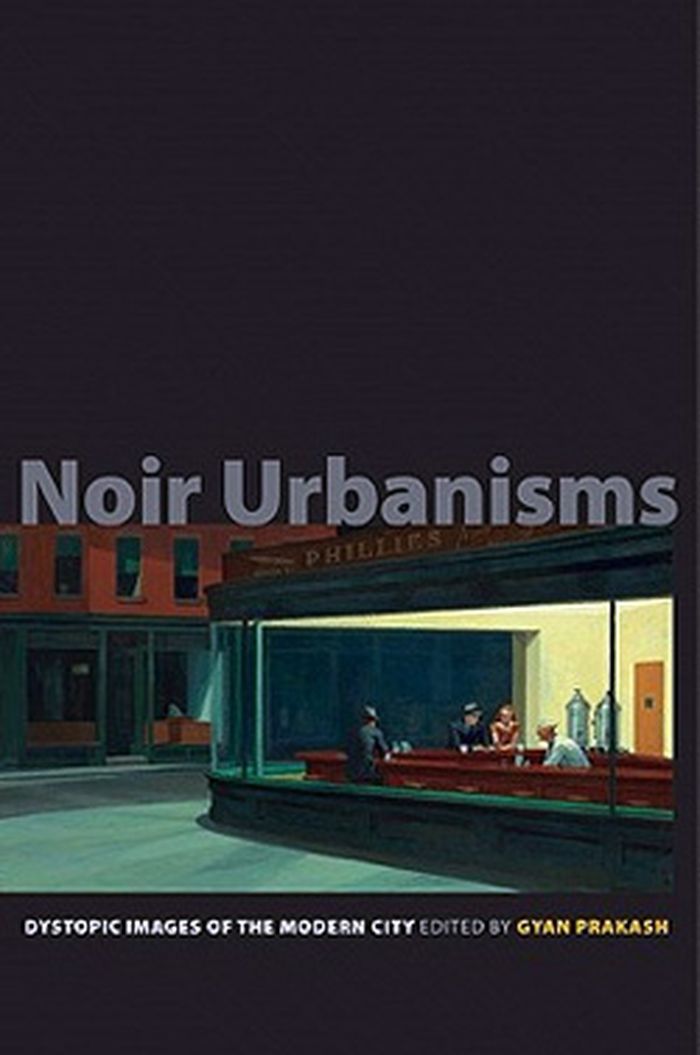
Dystopic imagery has figured prominently in modern depictions of the urban landscape. The city is often portrayed as a terrifying world of darkness, crisis, and catastrophe. Noir Urbanisms traces the history of the modern city through its critical representations in art, cinema, print journalism, literature, sociology, and architecture. It focuses on visual forms of dystopic representation--because the history of the modern city is inseparable from the production and circulation of images--and examines their strengths and limits as urban criticism. Contributors explore dystopic images of the modern city in Germany, Mexico, Japan, India, South Africa, China, and the United States. Their topics include Weimar representations of urban dystopia in Fritz Lang's 1927 film Metropolis; 1960s modernist architecture in Mexico City; Hollywood film noir of the 1940s and 1950s; the recurring fictional destruction of Tokyo in postwar Japan's sci-fi doom culture; the urban fringe in Bombay cinema; fictional explorations of urban dystopia in postapartheid Johannesburg; and Delhi's out-of-control and media-saturated urbanism in the 1980s and 1990s. What emerges in Noir Urbanisms is the unsettling and disorienting alchemy between dark representations and the modern urban experience.
Noir urbanisms: Dystopic images of the modern city
Actions:
Prix:
$32.95
(disponible sur commande)
Résumé:
Dystopic imagery has figured prominently in modern depictions of the urban landscape. The city is often portrayed as a terrifying world of darkness, crisis, and catastrophe. Noir Urbanisms traces the history of the modern city through its critical representations in art, cinema, print journalism, literature, sociology, and architecture. It focuses on visual forms of dystopic representation--because the history of the modern city is inseparable from the production and circulation of images--and examines their strengths and limits as urban criticism. Contributors explore dystopic images of the modern city in Germany, Mexico, Japan, India, South Africa, China, and the United States. Their topics include Weimar representations of urban dystopia in Fritz Lang's 1927 film Metropolis; 1960s modernist architecture in Mexico City; Hollywood film noir of the 1940s and 1950s; the recurring fictional destruction of Tokyo in postwar Japan's sci-fi doom culture; the urban fringe in Bombay cinema; fictional explorations of urban dystopia in postapartheid Johannesburg; and Delhi's out-of-control and media-saturated urbanism in the 1980s and 1990s. What emerges in Noir Urbanisms is the unsettling and disorienting alchemy between dark representations and the modern urban experience.
Classification:
livres
livres
Publication:
octobre 2010
octobre 2010
Classification:
livres
livres
Actions:
Exemplaires:
Description:
303 pages : illustrations (some color) ; 28 cm
Description:
303 pages : illustrations (some color) ; 28 cm
Auteur:
Sujet:
Publication:
Florence, Italy : Forma ; Rome : MAXXI, september 2022., ©2022
Florence, Italy : Forma ; Rome : MAXXI, september 2022., ©2022
Titre:
Technoscape : the architecture of engineers / edited by Maristella Casciato, Pippo Ciorra ; translations: Matteo Bugiolacchi, Eugénie Antoinette Goedheeer, Valentina Moriconi.
Actions:
Exemplaires:
Description:
303 pages : illustrations (some color) ; 28 cm
Technoscape : the architecture of engineers / edited by Maristella Casciato, Pippo Ciorra ; translations: Matteo Bugiolacchi, Eugénie Antoinette Goedheeer, Valentina Moriconi.
Actions:
Exemplaires:
Description:
303 pages : illustrations (some color) ; 28 cm
Classification:
livres
livres
Publication:
Florence, Italy : Forma ; Rome : MAXXI, september 2022., ©2022
Florence, Italy : Forma ; Rome : MAXXI, september 2022., ©2022
Auteur:
Sujet:
Classification:
livres
livres
Actions:
Exemplaires:
Description:
239 pages : illustrations en couleur, plans ; 30 x 30 cm
Description:
239 pages : illustrations en couleur, plans ; 30 x 30 cm
Auteur:
Sujet:
Publication:
[Lisboa, Portugal] : Técnica Livraria Edition, 2023
[Lisboa, Portugal] : Técnica Livraria Edition, 2023
Titre:
Álvaro Siza + António Madureira : house in Maia / editor, design and layout = editor, design e layout, Nuno Teixera (architect)
Actions:
Exemplaires:
Description:
239 pages : illustrations en couleur, plans ; 30 x 30 cm
Álvaro Siza + António Madureira : house in Maia / editor, design and layout = editor, design e layout, Nuno Teixera (architect)
Actions:
Exemplaires:
Description:
239 pages : illustrations en couleur, plans ; 30 x 30 cm
Classification:
livres
livres
Publication:
[Lisboa, Portugal] : Técnica Livraria Edition, 2023
[Lisboa, Portugal] : Técnica Livraria Edition, 2023
Auteur:
Sujet:
Classification:
livres
livres
Actions:
Exemplaires:
Description:
xi, 425 pages : illustrations, maps ; 24 cm
Description:
xi, 425 pages : illustrations, maps ; 24 cm
Auteur:
Sujet:
Publication:
London [England] : UCL Press, 1998.
London [England] : UCL Press, 1998.
Titre:
Landscape planning and environmental impact design / Tom Turner.
Actions:
Exemplaires:
Description:
xi, 425 pages : illustrations, maps ; 24 cm
Landscape planning and environmental impact design / Tom Turner.
Actions:
Exemplaires:
Description:
xi, 425 pages : illustrations, maps ; 24 cm
Classification:
livres
livres
Publication:
London [England] : UCL Press, 1998.
London [England] : UCL Press, 1998.
Auteur:
Sujet:
Classification:
livres
livres
Actions:
Prix:
$34.00
(disponible sur commande)
Résumé:
How can the different strands of modern architecture in Britain be understood? For many British people, it remains an alien cultural import and minority taste, yet British architecture has never stood higher in world esteem than at the close of the twentieth century. In this book Alan Powers shows how beneath today’s achievements in architecture, past conflicts have not(...)
$34.00
(disponible sur commande)
Résumé:
How can the different strands of modern architecture in Britain be understood? For many British people, it remains an alien cultural import and minority taste, yet British architecture has never stood higher in world esteem than at the close of the twentieth century. In this book Alan Powers shows how beneath today’s achievements in architecture, past conflicts have not(...)
Titre:
Britain : modern architecture in history
Actions:
Prix:
$34.00
(disponible sur commande)
Résumé:
How can the different strands of modern architecture in Britain be understood? For many British people, it remains an alien cultural import and minority taste, yet British architecture has never stood higher in world esteem than at the close of the twentieth century. In this book Alan Powers shows how beneath today’s achievements in architecture, past conflicts have not been resolved, as the country that invented industrial civilization has struggled to control its effect on cities and countryside. He examines developments and changes from 1900 to the present day in a series of thematic chapters, giving equal weight to technical, economic and moral aspects and demonstrating how architecture has responded to specific social needs and political pressures. Rather than giving a conventional account of stylistic tendencies, Powers listens to the arguments and conversations of the time in order to recapture the dominating issues of each decade, and locate the moments of transition in architecture and in the wider culture. Featuring more than 220 images, including both recent and historical photographs, "Britain" is an authoritative yet highly accessible account of twentieth-century British architecture. Giving due regard to the separate identities of England, Scotland and Wales, the book also adds a new and original dimension to the perennial problem of defining ‘Britain’ in the modern world.
Britain : modern architecture in history
Actions:
Prix:
$34.00
(disponible sur commande)
Résumé:
How can the different strands of modern architecture in Britain be understood? For many British people, it remains an alien cultural import and minority taste, yet British architecture has never stood higher in world esteem than at the close of the twentieth century. In this book Alan Powers shows how beneath today’s achievements in architecture, past conflicts have not been resolved, as the country that invented industrial civilization has struggled to control its effect on cities and countryside. He examines developments and changes from 1900 to the present day in a series of thematic chapters, giving equal weight to technical, economic and moral aspects and demonstrating how architecture has responded to specific social needs and political pressures. Rather than giving a conventional account of stylistic tendencies, Powers listens to the arguments and conversations of the time in order to recapture the dominating issues of each decade, and locate the moments of transition in architecture and in the wider culture. Featuring more than 220 images, including both recent and historical photographs, "Britain" is an authoritative yet highly accessible account of twentieth-century British architecture. Giving due regard to the separate identities of England, Scotland and Wales, the book also adds a new and original dimension to the perennial problem of defining ‘Britain’ in the modern world.
Classification:
livres
livres
Publication:
juillet 2006, London
juillet 2006, London
Classification:
livres
livres
Actions:
Prix:
$73.95
(disponible sur commande)
Résumé:
Standing on Mont Ventoux near Avignon, the fourteenth-century poet Petrarch experienced an entirely new sensation that he described as 'stepping out of time and space'. On the mountain's summit he was as far as he could be from the 'world's stage all around'. The huge distance reduced reference points to insignificant specks down below, and everything in the panorama(...)
$73.95
(disponible sur commande)
Résumé:
Standing on Mont Ventoux near Avignon, the fourteenth-century poet Petrarch experienced an entirely new sensation that he described as 'stepping out of time and space'. On the mountain's summit he was as far as he could be from the 'world's stage all around'. The huge distance reduced reference points to insignificant specks down below, and everything in the panorama(...)
Titre:
The invented land : a bird's-eye view of Dutch landscape architecture
Actions:
Prix:
$73.95
(disponible sur commande)
Résumé:
Standing on Mont Ventoux near Avignon, the fourteenth-century poet Petrarch experienced an entirely new sensation that he described as 'stepping out of time and space'. On the mountain's summit he was as far as he could be from the 'world's stage all around'. The huge distance reduced reference points to insignificant specks down below, and everything in the panorama seemed motionless, dispelling any notion of time. Petrarch had placed himself outside reality. That is what makes aerial photography so fascinating, writes Clemens M. Steenbergen, professor of landscape architecture at Delft University of Technology, in his introduction. The higher the viewpoint the greater the visual control and the more abstract the image. We can see whether a landscape has been shaped by man or is pure nature, how space and mass form one composition. Aerial photographer and landscape architect Peter van Bolhuis captures on camera the Dutch landscape: areas devoted to agriculture, forestry, nature, infrastructure and urban development. The pictures show us the achievements of a half century of landscape architecture. We see a landscape in which everything is precisely measured and demarcated, everything is planned and calculated, with no space left unattended. We see, writes Tracy Metz in one of the essays, 'a landscape that is the sum of negotiations about ever smaller parts'.
The invented land : a bird's-eye view of Dutch landscape architecture
Actions:
Prix:
$73.95
(disponible sur commande)
Résumé:
Standing on Mont Ventoux near Avignon, the fourteenth-century poet Petrarch experienced an entirely new sensation that he described as 'stepping out of time and space'. On the mountain's summit he was as far as he could be from the 'world's stage all around'. The huge distance reduced reference points to insignificant specks down below, and everything in the panorama seemed motionless, dispelling any notion of time. Petrarch had placed himself outside reality. That is what makes aerial photography so fascinating, writes Clemens M. Steenbergen, professor of landscape architecture at Delft University of Technology, in his introduction. The higher the viewpoint the greater the visual control and the more abstract the image. We can see whether a landscape has been shaped by man or is pure nature, how space and mass form one composition. Aerial photographer and landscape architect Peter van Bolhuis captures on camera the Dutch landscape: areas devoted to agriculture, forestry, nature, infrastructure and urban development. The pictures show us the achievements of a half century of landscape architecture. We see a landscape in which everything is precisely measured and demarcated, everything is planned and calculated, with no space left unattended. We see, writes Tracy Metz in one of the essays, 'a landscape that is the sum of negotiations about ever smaller parts'.
Classification:
livres
livres
Publication:
décembre 2004, Wageningen, Netherlands
décembre 2004, Wageningen, Netherlands
Sujet:
Jardins
Jardins
Classification:
livres
livres
Titre:
Machine à Amuser: the life and death of the Beistegui penthouse. Le Corbusier & Charles Jeanneret
Machine à Amuser: the life and death of the Beistegui penthouse. Le Corbusier & Charles Jeanneret
Actions:
Prix:
$86.00
(disponible sur commande)
Résumé:
What does it take to build not only a house but a machine for amusement? "In Machine à Amuser", Wim van den Bergh chronicles the genesis of the famous penthouse of French-born Mexican millionaire bachelor Charles de Beistegui. The penthouse was planned and constructed by Le Corbusier & Pierre Jeanneret and built on a rooftop site on the Champs-Élysées between 1929–1932.(...)
$86.00
(disponible sur commande)
Résumé:
What does it take to build not only a house but a machine for amusement? "In Machine à Amuser", Wim van den Bergh chronicles the genesis of the famous penthouse of French-born Mexican millionaire bachelor Charles de Beistegui. The penthouse was planned and constructed by Le Corbusier & Pierre Jeanneret and built on a rooftop site on the Champs-Élysées between 1929–1932.(...)
Titre:
Machine à Amuser: the life and death of the Beistegui penthouse. Le Corbusier & Charles Jeanneret
Actions:
Prix:
$86.00
(disponible sur commande)
Résumé:
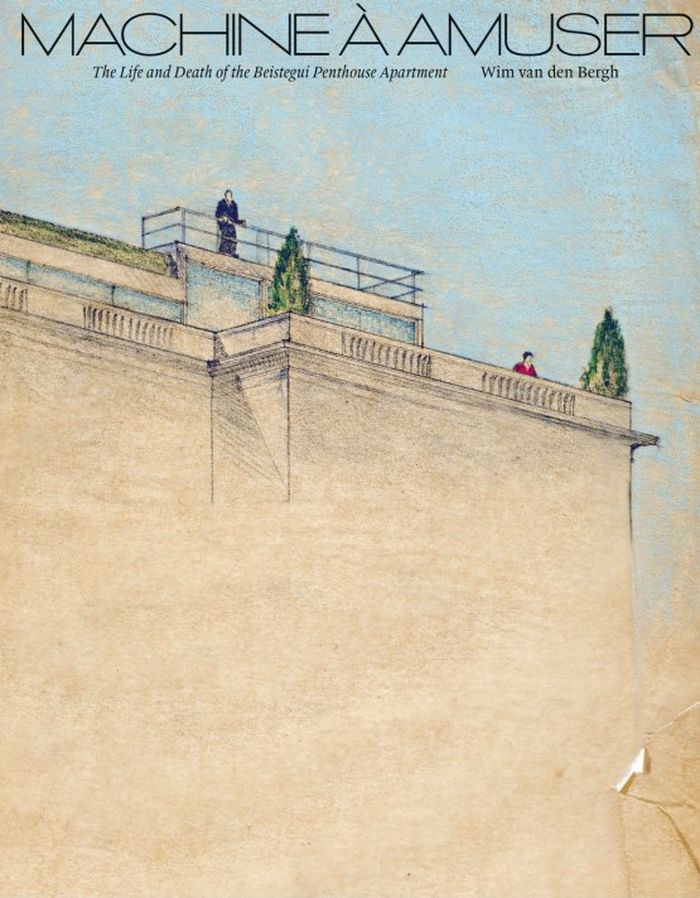
What does it take to build not only a house but a machine for amusement? "In Machine à Amuser", Wim van den Bergh chronicles the genesis of the famous penthouse of French-born Mexican millionaire bachelor Charles de Beistegui. The penthouse was planned and constructed by Le Corbusier & Pierre Jeanneret and built on a rooftop site on the Champs-Élysées between 1929–1932. Retracing the evolution of this icon of modern architecture from the initial competition between Gabriel Guevrekian, André Lurc¸at, and Le Corbusier & Pierre Jeanneret up to the executed version, van den Bergh tells the story of a client's ambition to build a house devoted to entertaining on one of the most well-heeled streets of Paris. "Machine à Amuser" also examines the cultural milieu of artists and patrons that surrounded Beistegui and which ultimately determined the apartment's conception and use, including its rococo and surrealist-inspired interior decor. Drawing on a panoply of archival material, van den Bergh narrates the tensions that arose between client and architects as each vied for creative control of the project. As the book shows, while Le Corbusier, with his cousin Pierre Jeanneret, remained the official architects of the penthouse, its famed interior was ultimately designed by the client, Charles de Beistegui.
Machine à Amuser: the life and death of the Beistegui penthouse. Le Corbusier & Charles Jeanneret
Actions:
Prix:
$86.00
(disponible sur commande)
Résumé:
What does it take to build not only a house but a machine for amusement? "In Machine à Amuser", Wim van den Bergh chronicles the genesis of the famous penthouse of French-born Mexican millionaire bachelor Charles de Beistegui. The penthouse was planned and constructed by Le Corbusier & Pierre Jeanneret and built on a rooftop site on the Champs-Élysées between 1929–1932. Retracing the evolution of this icon of modern architecture from the initial competition between Gabriel Guevrekian, André Lurc¸at, and Le Corbusier & Pierre Jeanneret up to the executed version, van den Bergh tells the story of a client's ambition to build a house devoted to entertaining on one of the most well-heeled streets of Paris. "Machine à Amuser" also examines the cultural milieu of artists and patrons that surrounded Beistegui and which ultimately determined the apartment's conception and use, including its rococo and surrealist-inspired interior decor. Drawing on a panoply of archival material, van den Bergh narrates the tensions that arose between client and architects as each vied for creative control of the project. As the book shows, while Le Corbusier, with his cousin Pierre Jeanneret, remained the official architects of the penthouse, its famed interior was ultimately designed by the client, Charles de Beistegui.
Classification:
livres
livres
Publication:
avril 2024
avril 2024
Sujet:
Architecture, monographies
Architecture, monographies


