


2310 Résultats
Classification:
livres
livres
Titre:
Islamabad today
Islamabad today
Actions:
Prix:
$39.95
(disponible en magasin)
Résumé:
In 1962, the architecture practice Ponti Fornaroli Rosselli was commissioned to design and build part of the Ministries area of the new capital of West Pakistan, Islamabad, which was under construction according to Constantinos Doxiadis and Robert Matthew's master plan. Fifteen hundred architecture drawings and less than two years later, the buildings were completed. At(...)
$39.95
(disponible en magasin)
Résumé:
In 1962, the architecture practice Ponti Fornaroli Rosselli was commissioned to design and build part of the Ministries area of the new capital of West Pakistan, Islamabad, which was under construction according to Constantinos Doxiadis and Robert Matthew's master plan. Fifteen hundred architecture drawings and less than two years later, the buildings were completed. At(...)
Titre:
Islamabad today
Actions:
Prix:
$39.95
(disponible en magasin)
Résumé:
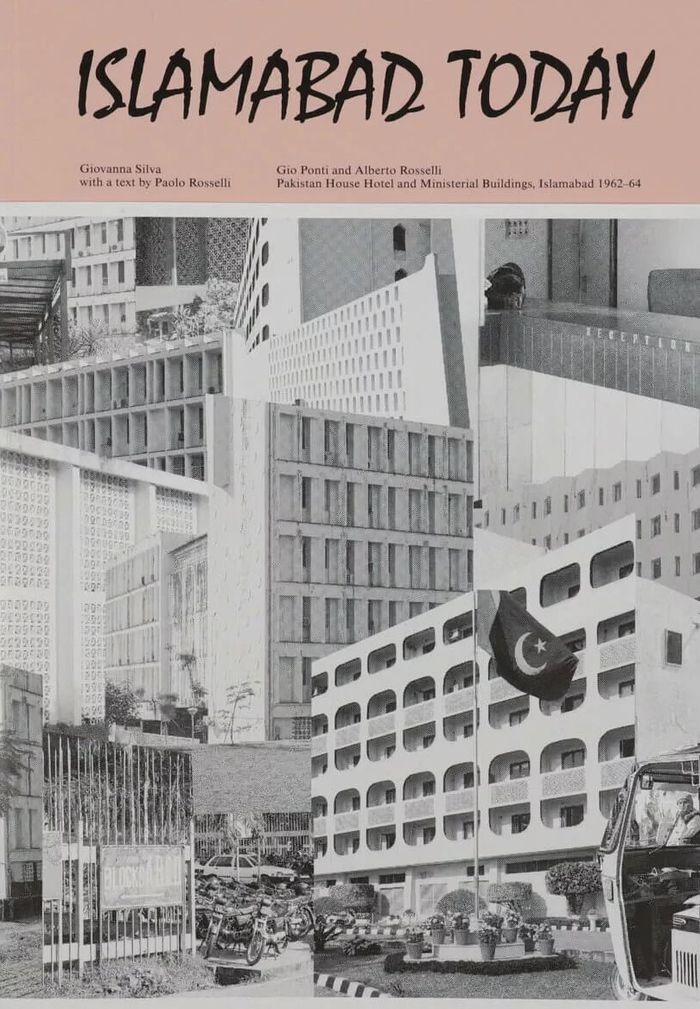
In 1962, the architecture practice Ponti Fornaroli Rosselli was commissioned to design and build part of the Ministries area of the new capital of West Pakistan, Islamabad, which was under construction according to Constantinos Doxiadis and Robert Matthew's master plan. Fifteen hundred architecture drawings and less than two years later, the buildings were completed. At some moments, five thousand workers were on site at the same time. Project manager Alberto Rosselli declared that the idea was not to transfer their Western knowledge to Pakistan, but to create a new Pakistan. Moved by this incredible project, where the personal stories of the Ponti and Rosselli families crossed paths against a backdrop of architectural and political history, Giovanna Silva traveled to Islamabad in 2020 with Paolo Rosselli, nephew of Gio Ponti and son of Alberto Rosselli. Silva's photographs show the buildings in their everyday public function, with a focus on the spaces as performed by their users. The book also features archival images of the building site and construction, and a narrative text by Paolo Rosselli tracing the story of the project and his reactions during his first visit to his father’s work in Islamabad.
Islamabad today
Actions:
Prix:
$39.95
(disponible en magasin)
Résumé:
In 1962, the architecture practice Ponti Fornaroli Rosselli was commissioned to design and build part of the Ministries area of the new capital of West Pakistan, Islamabad, which was under construction according to Constantinos Doxiadis and Robert Matthew's master plan. Fifteen hundred architecture drawings and less than two years later, the buildings were completed. At some moments, five thousand workers were on site at the same time. Project manager Alberto Rosselli declared that the idea was not to transfer their Western knowledge to Pakistan, but to create a new Pakistan. Moved by this incredible project, where the personal stories of the Ponti and Rosselli families crossed paths against a backdrop of architectural and political history, Giovanna Silva traveled to Islamabad in 2020 with Paolo Rosselli, nephew of Gio Ponti and son of Alberto Rosselli. Silva's photographs show the buildings in their everyday public function, with a focus on the spaces as performed by their users. The book also features archival images of the building site and construction, and a narrative text by Paolo Rosselli tracing the story of the project and his reactions during his first visit to his father’s work in Islamabad.
Classification:
livres
livres
Publication:
mai 2021
mai 2021
Sujet:
Monographies photo
Monographies photo
Classification:
livres
livres
Actions:
Exemplaires:
Description:
215 pages ; 19 cm
Description:
215 pages ; 19 cm
Auteur:
Sujet:
Publication:
[Paris, France] : Éditions Points ; [Saint-Ouen] : Bap!, Biennale d'architecture et de payage, Région Île-de-France ; Versailles : École nationale supérieure d'architecture, 2025., © mai 2025
[Paris, France] : Éditions Points ; [Saint-Ouen] : Bap!, Biennale d'architecture et de payage, Région Île-de-France ; Versailles : École nationale supérieure d'architecture, 2025., © mai 2025
Titre:
4 degrés Celsius entre toi et moi : pour une littérature climatique : nouvelles : inédit / sous la direction de Jean-Max Colard, Sana Frini, Philippe Rahm et Dominic Thomas ; [textes de] Aurélien Bellanger [et neuf autres]
Actions:
Exemplaires:
Description:
215 pages ; 19 cm
4 degrés Celsius entre toi et moi : pour une littérature climatique : nouvelles : inédit / sous la direction de Jean-Max Colard, Sana Frini, Philippe Rahm et Dominic Thomas ; [textes de] Aurélien Bellanger [et neuf autres]
Actions:
Exemplaires:
Description:
215 pages ; 19 cm
Classification:
livres
livres
Publication:
[Paris, France] : Éditions Points ; [Saint-Ouen] : Bap!, Biennale d'architecture et de payage, Région Île-de-France ; Versailles : École nationale supérieure d'architecture, 2025., © mai 2025
[Paris, France] : Éditions Points ; [Saint-Ouen] : Bap!, Biennale d'architecture et de payage, Région Île-de-France ; Versailles : École nationale supérieure d'architecture, 2025., © mai 2025
Auteur:
Sujet:
Classification:
livres
livres
Prix:
$60.00
(disponible sur commande)
Résumé:
This publication from acclaimed architect and critic Mohsen Mostafavi traces a theoretical and visual narrative through architecture's relationship with the colour black. Bringing together a rich inventory of images, it illuminates this connection by considering parallel developments in global art practices with references ranging from Japanese screens to Rothko, Adolf(...)
$60.00
(disponible sur commande)
Résumé:
This publication from acclaimed architect and critic Mohsen Mostafavi traces a theoretical and visual narrative through architecture's relationship with the colour black. Bringing together a rich inventory of images, it illuminates this connection by considering parallel developments in global art practices with references ranging from Japanese screens to Rothko, Adolf(...)
Titre:
The color black: Antinomies of a color in architecture and art
Actions:
Prix:
$60.00
(disponible sur commande)
Résumé:
This publication from acclaimed architect and critic Mohsen Mostafavi traces a theoretical and visual narrative through architecture's relationship with the colour black. Bringing together a rich inventory of images, it illuminates this connection by considering parallel developments in global art practices with references ranging from Japanese screens to Rothko, Adolf Loos to Norman Foster, Hans Holbein to Derek Jarman. Alongside these renowned touchpoints, Mostafavi draws on a little-known and highly distinctive text by the Marxist German art historian Max Raphael, based on a collection of historic paintings in the Metropolitan Museum of Art, New York. Contemporaneous with the evolution of black paintings by New York's Abstract Expressionists, Raphael's essay offers a drastically contrasting approach to the same multivalent subject. The book is completed by Rapahel's luminous essay, published in its entirety for the first time in an English translation by Pamela Johnston, as well as conversations with Swiss architect Peter Märkli, whose work with the colour black is informed by Raphael's writings, and Theaster Gates. By juxtaposing the present with the recent and distant past, this book provides a many-layered reading of the colour black ? and of colour more widely ? in relation to contemporary architectural thinking and practice.
The color black: Antinomies of a color in architecture and art
Actions:
Prix:
$60.00
(disponible sur commande)
Résumé:
This publication from acclaimed architect and critic Mohsen Mostafavi traces a theoretical and visual narrative through architecture's relationship with the colour black. Bringing together a rich inventory of images, it illuminates this connection by considering parallel developments in global art practices with references ranging from Japanese screens to Rothko, Adolf Loos to Norman Foster, Hans Holbein to Derek Jarman. Alongside these renowned touchpoints, Mostafavi draws on a little-known and highly distinctive text by the Marxist German art historian Max Raphael, based on a collection of historic paintings in the Metropolitan Museum of Art, New York. Contemporaneous with the evolution of black paintings by New York's Abstract Expressionists, Raphael's essay offers a drastically contrasting approach to the same multivalent subject. The book is completed by Rapahel's luminous essay, published in its entirety for the first time in an English translation by Pamela Johnston, as well as conversations with Swiss architect Peter Märkli, whose work with the colour black is informed by Raphael's writings, and Theaster Gates. By juxtaposing the present with the recent and distant past, this book provides a many-layered reading of the colour black ? and of colour more widely ? in relation to contemporary architectural thinking and practice.
Classification:
livres
livres
Publication:
septembre 2024
septembre 2024
Sujet:
Théorie de la photographie
Théorie de la photographie
Classification:
livres
livres
Actions:
Prix:
$24.95
(disponible sur commande)
Résumé:
L'urbanisation des territoires de transition entre la ville et la campagne ceux de la suburbia, est oublieuse de l'épaisseur du passé, des transformations complexes des sites, aussi bien que des représentations que l'on s'en fait. La notion de sub-urbanisme, définie par l'auteur comme une " subversion de l'urbanisme ", remet profondément en question un telle attitude.(...)
$24.95
(disponible sur commande)
Résumé:
L'urbanisation des territoires de transition entre la ville et la campagne ceux de la suburbia, est oublieuse de l'épaisseur du passé, des transformations complexes des sites, aussi bien que des représentations que l'on s'en fait. La notion de sub-urbanisme, définie par l'auteur comme une " subversion de l'urbanisme ", remet profondément en question un telle attitude.(...)
Titre:
L'art de la mémoire, le territoire et l'architecture
Actions:
Prix:
$24.95
(disponible sur commande)
Résumé:
L'urbanisation des territoires de transition entre la ville et la campagne ceux de la suburbia, est oublieuse de l'épaisseur du passé, des transformations complexes des sites, aussi bien que des représentations que l'on s'en fait. La notion de sub-urbanisme, définie par l'auteur comme une " subversion de l'urbanisme ", remet profondément en question un telle attitude. Cet essai plaide pour une démarche qui appréhenderait le site comme la matrice d'un projet explorant les multiples strates spatio-temporelles du territoire : l'architecture comme instrument de la mémoire et la mémoire comme matière de l'architecture. Quatre sources alimentent la démarche : les travaux de Frances Yates sur L'Art de la mémoire, consacrés aux pratiques mnémotechniques des anciens ; la "métaphore romaine" proposée par Sigmund Freud pour évoquer le mode de conservation du passé dans la structuration de la psyché ; la démarche de l'artiste américain Robert Smithson avec son concept de non-site ; et enfin le parc de Lancy réalisé dans la banlieue de Genève par l'architecte Georges Descombes. A l'instar du sub-urbanisme qu'elle entreprend d'illustrer, cette démon tration s'aventure dans l'épaisseur narrative des lieux, et invite le lecteur-visiteur à frayer son chemin à travers de nombreuses couches de mémoire et de culture. Le mot d'ordre est extrapolation.
L'art de la mémoire, le territoire et l'architecture
Actions:
Prix:
$24.95
(disponible sur commande)
Résumé:
L'urbanisation des territoires de transition entre la ville et la campagne ceux de la suburbia, est oublieuse de l'épaisseur du passé, des transformations complexes des sites, aussi bien que des représentations que l'on s'en fait. La notion de sub-urbanisme, définie par l'auteur comme une " subversion de l'urbanisme ", remet profondément en question un telle attitude. Cet essai plaide pour une démarche qui appréhenderait le site comme la matrice d'un projet explorant les multiples strates spatio-temporelles du territoire : l'architecture comme instrument de la mémoire et la mémoire comme matière de l'architecture. Quatre sources alimentent la démarche : les travaux de Frances Yates sur L'Art de la mémoire, consacrés aux pratiques mnémotechniques des anciens ; la "métaphore romaine" proposée par Sigmund Freud pour évoquer le mode de conservation du passé dans la structuration de la psyché ; la démarche de l'artiste américain Robert Smithson avec son concept de non-site ; et enfin le parc de Lancy réalisé dans la banlieue de Genève par l'architecte Georges Descombes. A l'instar du sub-urbanisme qu'elle entreprend d'illustrer, cette démon tration s'aventure dans l'épaisseur narrative des lieux, et invite le lecteur-visiteur à frayer son chemin à travers de nombreuses couches de mémoire et de culture. Le mot d'ordre est extrapolation.
Classification:
livres
livres
Publication:
octobre 2010
octobre 2010
Sujet:
Théorie de l’architecture
Théorie de l’architecture
Classification:
livres
livres

Actions:
Prix:
$22.95
(disponible sur commande)
Résumé:
Some central questions in the natural and social sciences can’t be answered by controlled laboratory experiments, often considered to be the hallmark of the scientific method. This impossibility holds for any science concerned with the past. In addition, many manipulative experiments, while possible, would be considered immoral or illegal. One has to devise other methods(...)
$22.95
(disponible sur commande)
Résumé:
Some central questions in the natural and social sciences can’t be answered by controlled laboratory experiments, often considered to be the hallmark of the scientific method. This impossibility holds for any science concerned with the past. In addition, many manipulative experiments, while possible, would be considered immoral or illegal. One has to devise other methods(...)
Titre:
Natural experiments of history
Actions:
Prix:
$22.95
(disponible sur commande)
Résumé:
Some central questions in the natural and social sciences can’t be answered by controlled laboratory experiments, often considered to be the hallmark of the scientific method. This impossibility holds for any science concerned with the past. In addition, many manipulative experiments, while possible, would be considered immoral or illegal. One has to devise other methods of observing, describing, and explaining the world. In the historical disciplines, a fruitful approach has been to use natural experiments or the comparative method. This book consists of eight comparative studies drawn from history, archeology, economics, economic history, geography, and political science. The studies cover a spectrum of approaches, ranging from a non-quantitative narrative style in the early chapters to quantitative statistical analyses in the later chapters. The studies range from a simple two-way comparison of Haiti and the Dominican Republic, which share the island of Hispaniola, to comparisons of 81 Pacific islands and 233 areas of India. The societies discussed are contemporary ones, literate societies of recent centuries, and non-literate past societies. Geographically, they include the United States, Mexico, Brazil, western Europe, tropical Africa, India, Siberia, Australia, New Zealand, and other Pacific islands. In an Afterword, the editors discuss how to cope with methodological problems common to these and other natural experiments of history.
Natural experiments of history
Actions:
Prix:
$22.95
(disponible sur commande)
Résumé:
Some central questions in the natural and social sciences can’t be answered by controlled laboratory experiments, often considered to be the hallmark of the scientific method. This impossibility holds for any science concerned with the past. In addition, many manipulative experiments, while possible, would be considered immoral or illegal. One has to devise other methods of observing, describing, and explaining the world. In the historical disciplines, a fruitful approach has been to use natural experiments or the comparative method. This book consists of eight comparative studies drawn from history, archeology, economics, economic history, geography, and political science. The studies cover a spectrum of approaches, ranging from a non-quantitative narrative style in the early chapters to quantitative statistical analyses in the later chapters. The studies range from a simple two-way comparison of Haiti and the Dominican Republic, which share the island of Hispaniola, to comparisons of 81 Pacific islands and 233 areas of India. The societies discussed are contemporary ones, literate societies of recent centuries, and non-literate past societies. Geographically, they include the United States, Mexico, Brazil, western Europe, tropical Africa, India, Siberia, Australia, New Zealand, and other Pacific islands. In an Afterword, the editors discuss how to cope with methodological problems common to these and other natural experiments of history.
Classification:
livres
livres
Publication:
avril 2011
avril 2011
Sujet:
Théorie de l’urbanisme
Théorie de l’urbanisme
Classification:
livres
livres
Actions:
Prix:
$60.50
(disponible sur commande)
Résumé:
9/10 Stock Orchard Street, colloquially known as the Straw House, is a house and an office designed by two architects for their own use. Completed in 2000, the buildings were experimental in design, execution and inhabitation, and have resisted categorization, challenged received wisdom and provoked debate, especially among architectural critics. With access to all(...)
$60.50
(disponible sur commande)
Résumé:
9/10 Stock Orchard Street, colloquially known as the Straw House, is a house and an office designed by two architects for their own use. Completed in 2000, the buildings were experimental in design, execution and inhabitation, and have resisted categorization, challenged received wisdom and provoked debate, especially among architectural critics. With access to all(...)
Titre:
Around & About: Stock Orchard Street
Actions:
Prix:
$60.50
(disponible sur commande)
Résumé:
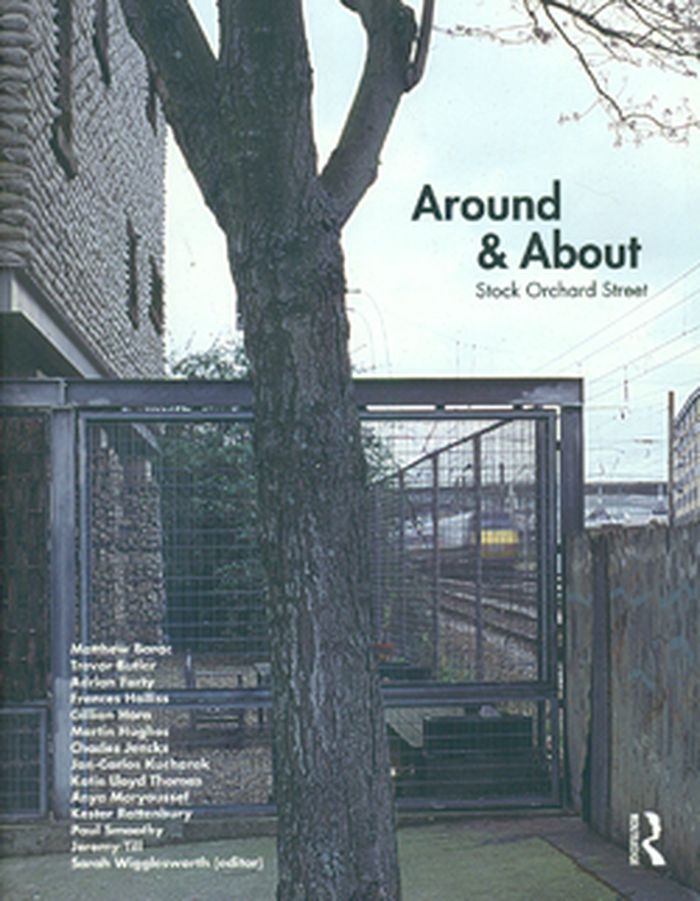
9/10 Stock Orchard Street, colloquially known as the Straw House, is a house and an office designed by two architects for their own use. Completed in 2000, the buildings were experimental in design, execution and inhabitation, and have resisted categorization, challenged received wisdom and provoked debate, especially among architectural critics. With access to all the material records of the project, this book responds to that debate by presenting multi-faceted narratives from a wide range of writers that have been invited to reflect both positively and negatively on what the buildings represent and how they have performed. Using the buildings as the central case study, it situates them in a broader cultural context, revealing the breadth of conversations and issues engaged by architecture. Highly illustrated with original material, including the authors’ own drawings and with specially-commissioned photographs, this book discusses theory, practice, ethics, material culture, the media, narrative, feminism, sustainability and construction, offering illuminating and sometimes surprising conclusions relevant to lay, professional and academic readers. While offering a wide ranging set of approaches and critiques of its subject, this book provides a unique insight into a building’s conception, construction and reception, and in turn facilitates the engagement with the issues facing architectural practice today.
Around & About: Stock Orchard Street
Actions:
Prix:
$60.50
(disponible sur commande)
Résumé:
9/10 Stock Orchard Street, colloquially known as the Straw House, is a house and an office designed by two architects for their own use. Completed in 2000, the buildings were experimental in design, execution and inhabitation, and have resisted categorization, challenged received wisdom and provoked debate, especially among architectural critics. With access to all the material records of the project, this book responds to that debate by presenting multi-faceted narratives from a wide range of writers that have been invited to reflect both positively and negatively on what the buildings represent and how they have performed. Using the buildings as the central case study, it situates them in a broader cultural context, revealing the breadth of conversations and issues engaged by architecture. Highly illustrated with original material, including the authors’ own drawings and with specially-commissioned photographs, this book discusses theory, practice, ethics, material culture, the media, narrative, feminism, sustainability and construction, offering illuminating and sometimes surprising conclusions relevant to lay, professional and academic readers. While offering a wide ranging set of approaches and critiques of its subject, this book provides a unique insight into a building’s conception, construction and reception, and in turn facilitates the engagement with the issues facing architectural practice today.
Classification:
livres
livres
Publication:
mars 2011
mars 2011
Sujet:
Architecture, monographies
Architecture, monographies
Classification:
livres
livres
Actions:
Prix:
$83.00
(disponible sur commande)
Résumé:
"The Unseen Eye" presents a idiosyncratic and compelling collection of photographs assembled around a particular theme: in each image, the gaze of the subject is averted, the face obscured or the eyes firmly closed. The pictures present a catalog of anti-portraiture, characterized at first glance by what its subjects conceal, not by what the camera reveals. Amassed over(...)
$83.00
(disponible sur commande)
Résumé:
"The Unseen Eye" presents a idiosyncratic and compelling collection of photographs assembled around a particular theme: in each image, the gaze of the subject is averted, the face obscured or the eyes firmly closed. The pictures present a catalog of anti-portraiture, characterized at first glance by what its subjects conceal, not by what the camera reveals. Amassed over(...)
Titre:
The unseen eye: photographs from the unconscious
Actions:
Prix:
$83.00
(disponible sur commande)
Résumé:
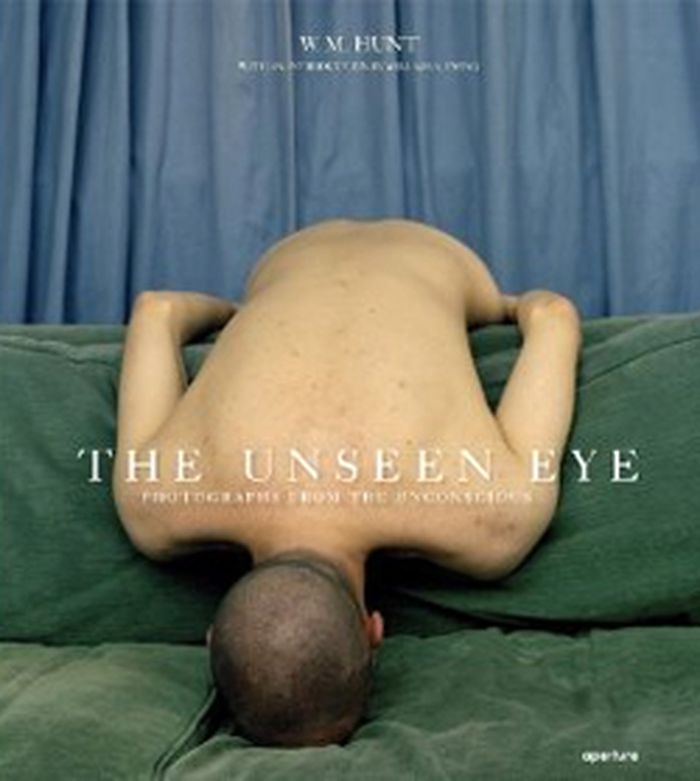
"The Unseen Eye" presents a idiosyncratic and compelling collection of photographs assembled around a particular theme: in each image, the gaze of the subject is averted, the face obscured or the eyes firmly closed. The pictures present a catalog of anti-portraiture, characterized at first glance by what its subjects conceal, not by what the camera reveals. Amassed over the course of 30 years by New York collector W.M. Hunt, the collection includes works by masters such as Richard Avedon, Diane Arbus, Imogen Cunningham, William Klein, Robert Mapplethorpe and Robert Frank, as well as works by lesser-known artists and vernacular images. Hunt's instinctive pursuit of striking images has resulted in a collection that manages to evoke a picture of humanity from birth to death, with all the associated nuances of memory, wit, eroticism, fear, grief and horror. More than 350 evocative and frequently surreal images are brilliantly sequenced in this volume; the cumulative effect is unnerving and riveting. Most critically, the images are drawn together by the narrative of the collector himself, in a highly personal monologue that weaves throughout the book, in which Hunt offers his own perceptive responses to the images he has gathered over many years. The result is a series of surprising epiphanies about how and why one collects.
The unseen eye: photographs from the unconscious
Actions:
Prix:
$83.00
(disponible sur commande)
Résumé:
"The Unseen Eye" presents a idiosyncratic and compelling collection of photographs assembled around a particular theme: in each image, the gaze of the subject is averted, the face obscured or the eyes firmly closed. The pictures present a catalog of anti-portraiture, characterized at first glance by what its subjects conceal, not by what the camera reveals. Amassed over the course of 30 years by New York collector W.M. Hunt, the collection includes works by masters such as Richard Avedon, Diane Arbus, Imogen Cunningham, William Klein, Robert Mapplethorpe and Robert Frank, as well as works by lesser-known artists and vernacular images. Hunt's instinctive pursuit of striking images has resulted in a collection that manages to evoke a picture of humanity from birth to death, with all the associated nuances of memory, wit, eroticism, fear, grief and horror. More than 350 evocative and frequently surreal images are brilliantly sequenced in this volume; the cumulative effect is unnerving and riveting. Most critically, the images are drawn together by the narrative of the collector himself, in a highly personal monologue that weaves throughout the book, in which Hunt offers his own perceptive responses to the images he has gathered over many years. The result is a series of surprising epiphanies about how and why one collects.
Classification:
livres
livres
Publication:
septembre 2011
septembre 2011
Sujet:
Photographie- collections
Photographie- collections
Classification:
livres
livres
Actions:
Prix:
$39.99
(disponible sur commande)
Résumé:
Why Don't American Cities Burn? traces the collision of urban transformation with the rightward-moving social politics of late twentieth- and early twenty-first-century America. He shows how the bifurcation of black social structures produced a new African American inequality and traces the shift from images of a pathological black "underclass" to praise of the(...)
$39.99
(disponible sur commande)
Résumé:
Why Don't American Cities Burn? traces the collision of urban transformation with the rightward-moving social politics of late twentieth- and early twenty-first-century America. He shows how the bifurcation of black social structures produced a new African American inequality and traces the shift from images of a pathological black "underclass" to praise of the(...)
Titre:
Why don't American cities burn?
Actions:
Prix:
$39.99
(disponible sur commande)
Résumé:
Why Don't American Cities Burn? traces the collision of urban transformation with the rightward-moving social politics of late twentieth- and early twenty-first-century America. He shows how the bifurcation of black social structures produced a new African American inequality and traces the shift from images of a pathological black "underclass" to praise of the entrepreneurial poor who take advantage of new technologies of poverty work to find the beginning of the path to the middle class. He explores the reasons American cities since the early 1970s have remained relatively free of collective violence while black men in bleak inner-city neighborhoods have turned their rage inward on one another rather than on the agents and symbols of a culture and political economy that exclude them. The book ends with a meditation on how the political left and right have come to believe that urban transformation is inevitably one of failure and decline abetted by the response of government to deindustrialization, poverty, and race. How, Katz asks, can we construct a new narrative that acknowledges the dark side of urban history even as it demonstrates the capacity of government to address the problems of cities and their residents? How can we create a politics of modest hope?
Why don't American cities burn?
Actions:
Prix:
$39.99
(disponible sur commande)
Résumé:
Why Don't American Cities Burn? traces the collision of urban transformation with the rightward-moving social politics of late twentieth- and early twenty-first-century America. He shows how the bifurcation of black social structures produced a new African American inequality and traces the shift from images of a pathological black "underclass" to praise of the entrepreneurial poor who take advantage of new technologies of poverty work to find the beginning of the path to the middle class. He explores the reasons American cities since the early 1970s have remained relatively free of collective violence while black men in bleak inner-city neighborhoods have turned their rage inward on one another rather than on the agents and symbols of a culture and political economy that exclude them. The book ends with a meditation on how the political left and right have come to believe that urban transformation is inevitably one of failure and decline abetted by the response of government to deindustrialization, poverty, and race. How, Katz asks, can we construct a new narrative that acknowledges the dark side of urban history even as it demonstrates the capacity of government to address the problems of cities and their residents? How can we create a politics of modest hope?
Classification:
livres
livres
Publication:
octobre 2011
octobre 2011
Sujet:
Théorie de l’urbanisme
Théorie de l’urbanisme
Classification:
livres
livres

Titre:
Francesca Woodman's notebook
Francesca Woodman's notebook
Actions:
Prix:
$49.95
(disponible sur commande)
Résumé:
The American photographer Francesca Woodman (1958-1981) spent a brief portion of her childhood in the countryside around Florence, living with her parents in an old farm whose dilapidated interiors were later to influence the backdrops of her mesmerizing self-portraits. In 1977 she returned to Italy, studying in Rome on a year-long RISD honors program. During this tenure,(...)
$49.95
(disponible sur commande)
Résumé:
The American photographer Francesca Woodman (1958-1981) spent a brief portion of her childhood in the countryside around Florence, living with her parents in an old farm whose dilapidated interiors were later to influence the backdrops of her mesmerizing self-portraits. In 1977 she returned to Italy, studying in Rome on a year-long RISD honors program. During this tenure,(...)
Titre:
Francesca Woodman's notebook
Actions:
Prix:
$49.95
(disponible sur commande)
Résumé:
The American photographer Francesca Woodman (1958-1981) spent a brief portion of her childhood in the countryside around Florence, living with her parents in an old farm whose dilapidated interiors were later to influence the backdrops of her mesmerizing self-portraits. In 1977 she returned to Italy, studying in Rome on a year-long RISD honors program. During this tenure, Woodman found five tattered school exercise books, printed in 1906, side-stapled and inscribed in fine cursive penmanship with notes from physics lectures or poems in English and Italian. To these evocative objects, Woodman--already fully formed as the photographer we recognize and admire today--added her characteristic black-and-white photographs, either as small paper prints or as prints made on transparent film that allows the writing beneath to show through, further embellishing them with her own captions or remarks. This facsimile edition of one of these notebooks was selected for publication by Woodman's mother and father as an artist's book of particular beauty and revelatory content that provides unprecedented insight into the emphatically narrative logic of Woodman's photography. Housed in a lightweight printed box, it includes an afterword by George Woodman, Francesca's father, that contextualizes the work within the photographer's artist's book production.
Francesca Woodman's notebook
Actions:
Prix:
$49.95
(disponible sur commande)
Résumé:
The American photographer Francesca Woodman (1958-1981) spent a brief portion of her childhood in the countryside around Florence, living with her parents in an old farm whose dilapidated interiors were later to influence the backdrops of her mesmerizing self-portraits. In 1977 she returned to Italy, studying in Rome on a year-long RISD honors program. During this tenure, Woodman found five tattered school exercise books, printed in 1906, side-stapled and inscribed in fine cursive penmanship with notes from physics lectures or poems in English and Italian. To these evocative objects, Woodman--already fully formed as the photographer we recognize and admire today--added her characteristic black-and-white photographs, either as small paper prints or as prints made on transparent film that allows the writing beneath to show through, further embellishing them with her own captions or remarks. This facsimile edition of one of these notebooks was selected for publication by Woodman's mother and father as an artist's book of particular beauty and revelatory content that provides unprecedented insight into the emphatically narrative logic of Woodman's photography. Housed in a lightweight printed box, it includes an afterword by George Woodman, Francesca's father, that contextualizes the work within the photographer's artist's book production.
Classification:
livres
livres
Publication:
mars 2012
mars 2012
Classification:
livres
livres
Prix:
$45.95
(disponible sur commande)
Résumé:
Today, R. M. Schindler's Kings Road House is celebrated as an icon of early modern architecture, but this wasn't the case when it was finished in 1922. Though Schindler and his wife Pauline recognized its genius early on, its radical appearance was - and remains - incomprehensible to many. This book is an incisive examination of the house, placing it in the context of the(...)
$45.95
(disponible sur commande)
Résumé:
Today, R. M. Schindler's Kings Road House is celebrated as an icon of early modern architecture, but this wasn't the case when it was finished in 1922. Though Schindler and his wife Pauline recognized its genius early on, its radical appearance was - and remains - incomprehensible to many. This book is an incisive examination of the house, placing it in the context of the(...)
Titre:
Schindler, Kings Road, and Southern California modernism
Actions:
Prix:
$45.95
(disponible sur commande)
Résumé:
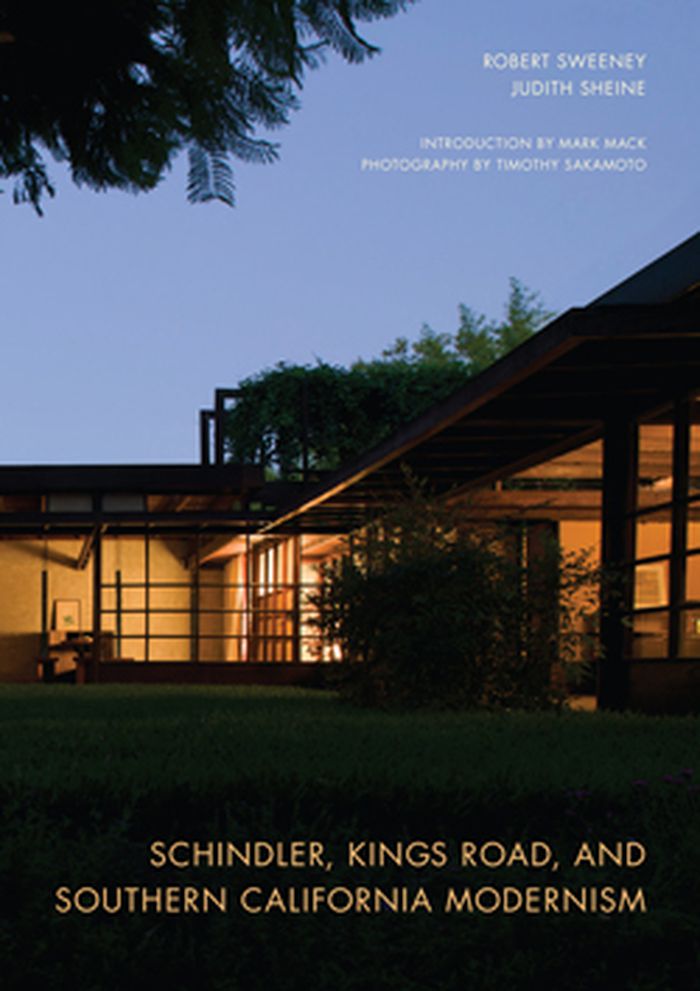
Today, R. M. Schindler's Kings Road House is celebrated as an icon of early modern architecture, but this wasn't the case when it was finished in 1922. Though Schindler and his wife Pauline recognized its genius early on, its radical appearance was - and remains - incomprehensible to many. This book is an incisive examination of the house, placing it in the context of the architect's career and clarifying its influence on modern architecture and its practitioners. Little-known aspects of Schindler's life, his relationship with his mentors, and the development of his unique theories about space enrich the narrative. Robert Sweeney focuses on the construction of the house and the people who lived, worked, and performed there, demonstrating the building's significance in the social history of Southern California. He includes new research on Schindler's educational and personal background in Vienna and a discussion of the critical influence of Pauline Schindler in formulating the social underpinnings of the house. Judith Sheine's essay places the house in the context of Schindler's career, in which it established the basis of the spatial development of his work. She also examines the influence of the house on the work of numerous architects from Frank Lloyd Wright to Frank Gehry.
Schindler, Kings Road, and Southern California modernism
Actions:
Prix:
$45.95
(disponible sur commande)
Résumé:
Today, R. M. Schindler's Kings Road House is celebrated as an icon of early modern architecture, but this wasn't the case when it was finished in 1922. Though Schindler and his wife Pauline recognized its genius early on, its radical appearance was - and remains - incomprehensible to many. This book is an incisive examination of the house, placing it in the context of the architect's career and clarifying its influence on modern architecture and its practitioners. Little-known aspects of Schindler's life, his relationship with his mentors, and the development of his unique theories about space enrich the narrative. Robert Sweeney focuses on the construction of the house and the people who lived, worked, and performed there, demonstrating the building's significance in the social history of Southern California. He includes new research on Schindler's educational and personal background in Vienna and a discussion of the critical influence of Pauline Schindler in formulating the social underpinnings of the house. Judith Sheine's essay places the house in the context of Schindler's career, in which it established the basis of the spatial development of his work. She also examines the influence of the house on the work of numerous architects from Frank Lloyd Wright to Frank Gehry.
Classification:
livres
livres
Publication:
octobre 2012
octobre 2012
Sujet:
Architecture, monographies
Architecture, monographies


