


2632 Résultats
Classification:
livres
livres
Prix:
$52.00
(disponible sur commande)
Résumé:
A photographic survey of Soviet-era playgrounds found in former members of the USSR, such as Ukraine, Lithuania, Latvia, Estonia, Russia, Belarus, Kazakhstan, Tajikistan, and Uzbekistan. Through five chapters containing more than 150 photographs, the book documents the mass-produced, yet diverse play equipment installed in the communal spaces of socialist-era housing(...)
$52.00
(disponible sur commande)
Résumé:
A photographic survey of Soviet-era playgrounds found in former members of the USSR, such as Ukraine, Lithuania, Latvia, Estonia, Russia, Belarus, Kazakhstan, Tajikistan, and Uzbekistan. Through five chapters containing more than 150 photographs, the book documents the mass-produced, yet diverse play equipment installed in the communal spaces of socialist-era housing(...)
Titre:
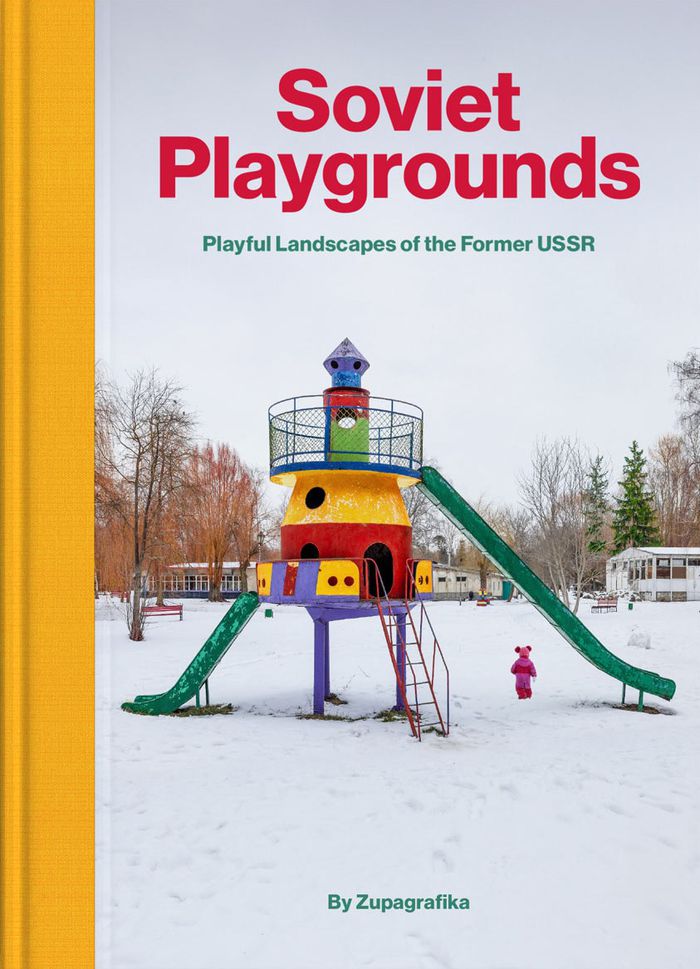
Soviet playgrounds: Playful landscapes of the former USSR
Actions:
Prix:
$52.00
(disponible sur commande)
Résumé:
A photographic survey of Soviet-era playgrounds found in former members of the USSR, such as Ukraine, Lithuania, Latvia, Estonia, Russia, Belarus, Kazakhstan, Tajikistan, and Uzbekistan. Through five chapters containing more than 150 photographs, the book documents the mass-produced, yet diverse play equipment installed in the communal spaces of socialist-era housing estates, such as rocket slides and earth-shaped climbers, spaceships and animal-themed ladders, cosmic roundabouts and bizarre objects that would probably raise safety concerns nowadays. From Riga to Dushanbe and all the way from Kyiv to Vladivostok, children dreamt of becoming cosmonauts, and enjoyed the many space-themed playscapes which had proliferated since the onset of the Cold War era. While some are still in use, others are slowly disappearing to make way for modern equipment, or, more recently, being destroyed during the Russian invasion of Ukraine, becoming only a faint memory of a Soviet childhood. Includes a foreword by the Ukrainian urban planner Mykola Gorokhov and informative maps of the playgrounds featured in every chapter. Pictures were taken by Zupagrafika, with contributions by local photographers.
Soviet playgrounds: Playful landscapes of the former USSR
Actions:
Prix:
$52.00
(disponible sur commande)
Résumé:
A photographic survey of Soviet-era playgrounds found in former members of the USSR, such as Ukraine, Lithuania, Latvia, Estonia, Russia, Belarus, Kazakhstan, Tajikistan, and Uzbekistan. Through five chapters containing more than 150 photographs, the book documents the mass-produced, yet diverse play equipment installed in the communal spaces of socialist-era housing estates, such as rocket slides and earth-shaped climbers, spaceships and animal-themed ladders, cosmic roundabouts and bizarre objects that would probably raise safety concerns nowadays. From Riga to Dushanbe and all the way from Kyiv to Vladivostok, children dreamt of becoming cosmonauts, and enjoyed the many space-themed playscapes which had proliferated since the onset of the Cold War era. While some are still in use, others are slowly disappearing to make way for modern equipment, or, more recently, being destroyed during the Russian invasion of Ukraine, becoming only a faint memory of a Soviet childhood. Includes a foreword by the Ukrainian urban planner Mykola Gorokhov and informative maps of the playgrounds featured in every chapter. Pictures were taken by Zupagrafika, with contributions by local photographers.
Classification:
livres
livres
Publication:
septembre 2022
septembre 2022
Sujet:
Modernisme
Modernisme
Classification:
livres
livres
Actions:
Exemplaires:
Description:
227 pages : : illustrations (some color) ; 27 cm
Description:
227 pages : : illustrations (some color) ; 27 cm
Auteur:
Sujet:
- Church architecture Russia (Federation) Pictorial works.,
- Church architecture Soviet Union Pictorial works.,
- Architecture chrétienne URSS Ouvrages illustrés.,
- Church architecture,
- Russia (Federation) Pictorial works.,
- Russia (Federation),
- Pictorial works
Publication:
Leningrad : Izdatelʹstvo "Avrora", 1974.
Leningrad : Izdatelʹstvo "Avrora", 1974.
Titre:
Золотое кольцо / Ф. Кудрявцев ; [фото Ирины Стин ; перевод Г. Стрелковой] = The golden ring / F. Kudriavtsev. Zolotoe kolʹt︠s︡o / F. Kudri︠a︡vt︠s︡ev ; [foto Iriny Stin ; perevod G. Strelkovoĭ] = The golden ring / F. Kudriavtsev.
Actions:
Exemplaires:
Description:
227 pages : : illustrations (some color) ; 27 cm
Золотое кольцо / Ф. Кудрявцев ; [фото Ирины Стин ; перевод Г. Стрелковой] = The golden ring / F. Kudriavtsev. Zolotoe kolʹt︠s︡o / F. Kudri︠a︡vt︠s︡ev ; [foto Iriny Stin ; perevod G. Strelkovoĭ] = The golden ring / F. Kudriavtsev.
Actions:
Exemplaires:
Description:
227 pages : : illustrations (some color) ; 27 cm
Classification:
livres
livres
Publication:
Leningrad : Izdatelʹstvo "Avrora", 1974.
Leningrad : Izdatelʹstvo "Avrora", 1974.
Auteur:
Sujet:
- Church architecture Russia (Federation) Pictorial works.,
- Church architecture Soviet Union Pictorial works.,
- Architecture chrétienne URSS Ouvrages illustrés.,
- Church architecture,
- Russia (Federation) Pictorial works.,
- Russia (Federation),
- Pictorial works
Classification:
livres
livres
Prix:
$47.50
(disponible sur commande)
Résumé:
"Moscow: a guide to Soviet modernist architecture 1955-1991" provides descriptions of almost 100 buildings from the most underrated period of Soviet architecture. This is the first guide to bring together the architecture made during the three decades between Khrushchev and Gorbachev, from the naive modernism of the "thaw" of the late 1950s through postmodernism.(...)
$47.50
(disponible sur commande)
Résumé:
"Moscow: a guide to Soviet modernist architecture 1955-1991" provides descriptions of almost 100 buildings from the most underrated period of Soviet architecture. This is the first guide to bring together the architecture made during the three decades between Khrushchev and Gorbachev, from the naive modernism of the "thaw" of the late 1950s through postmodernism.(...)
Publication:
septembre 2019
septembre 2019
Titre:
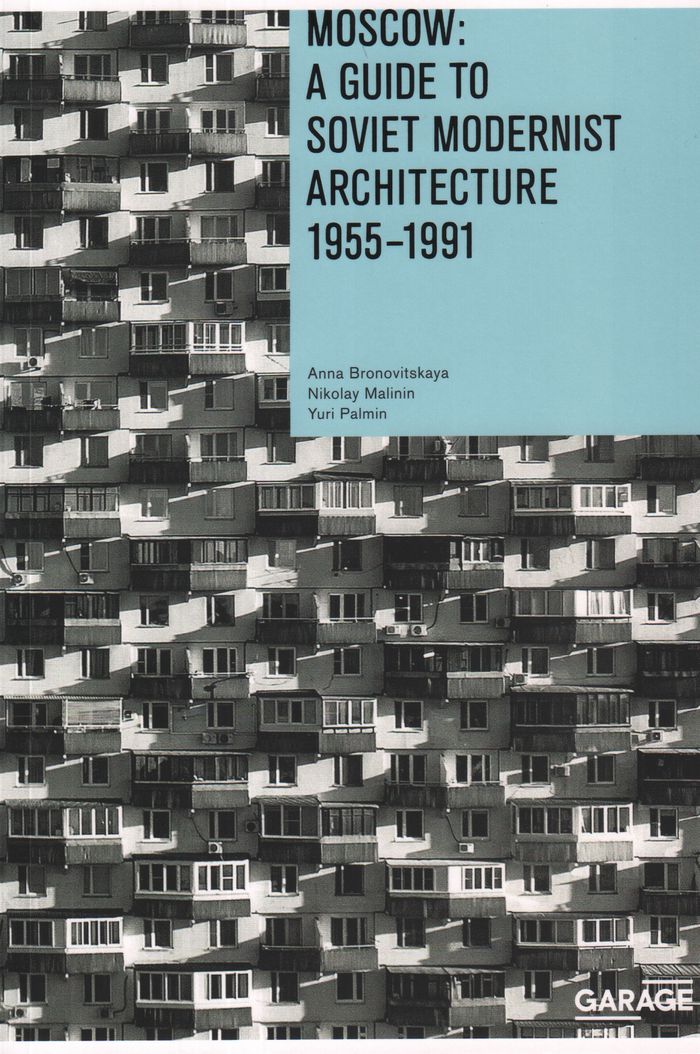
Moscow: a guide to Soviet modernist architecture 1955-1991
Actions:
Prix:
$47.50
(disponible sur commande)
Résumé:
"Moscow: a guide to Soviet modernist architecture 1955-1991" provides descriptions of almost 100 buildings from the most underrated period of Soviet architecture. This is the first guide to bring together the architecture made during the three decades between Khrushchev and Gorbachev, from the naive modernism of the "thaw" of the late 1950s through postmodernism. Buildings include the Palace of Youth, the Rossiya cinema, the Pioneer Palace, the Ostankino TV Tower, the TASS headquarters, the "golden brains" of the Academy of Sciences and less well-known structures such as the House of New Life and the Lenin Komsomol Automobile Plant Museum. The authors situate Moscow's postwar architecture within the historical and political context of the Soviet Union, while also referencing developments in international architecture of the period.
Moscow: a guide to Soviet modernist architecture 1955-1991
Actions:
Prix:
$47.50
(disponible sur commande)
Résumé:
"Moscow: a guide to Soviet modernist architecture 1955-1991" provides descriptions of almost 100 buildings from the most underrated period of Soviet architecture. This is the first guide to bring together the architecture made during the three decades between Khrushchev and Gorbachev, from the naive modernism of the "thaw" of the late 1950s through postmodernism. Buildings include the Palace of Youth, the Rossiya cinema, the Pioneer Palace, the Ostankino TV Tower, the TASS headquarters, the "golden brains" of the Academy of Sciences and less well-known structures such as the House of New Life and the Lenin Komsomol Automobile Plant Museum. The authors situate Moscow's postwar architecture within the historical and political context of the Soviet Union, while also referencing developments in international architecture of the period.
Classification:
livres
livres
Publication:
septembre 2019
septembre 2019
Classification:
livres
livres
Actions:
Exemplaires:
Description:
176 pages : illustrations (chiefly color) ; 21 cm
Description:
176 pages : illustrations (chiefly color) ; 21 cm
Auteur:
Sujet:
- Architecture History.,
- Architecture Histoire.,
- Architecture.,
- History.,
- Architecture and Planning.
Publication:
London : Laurence King Publishing, 2017., ©2017
London : Laurence King Publishing, 2017., ©2017
Titre:
What's so great about the Eiffel Tower? : 70 questions that will change the way you think about architecture / Jonathan Glancey.
Actions:
Exemplaires:
Description:
176 pages : illustrations (chiefly color) ; 21 cm
What's so great about the Eiffel Tower? : 70 questions that will change the way you think about architecture / Jonathan Glancey.
Actions:
Exemplaires:
Description:
176 pages : illustrations (chiefly color) ; 21 cm
Classification:
livres
livres
Publication:
London : Laurence King Publishing, 2017., ©2017
London : Laurence King Publishing, 2017., ©2017
Auteur:
Sujet:
- Architecture History.,
- Architecture Histoire.,
- Architecture.,
- History.,
- Architecture and Planning.
Classification:
livres
livres
Actions:
Exemplaires:
Description:
108 pages, [1] folded leaf of plates : illustrations ; 18 cm
Description:
108 pages, [1] folded leaf of plates : illustrations ; 18 cm
Auteur:
- Kemenov, V. S.,
- Arkin, D. E.,
- OGIZ (Firm : Soviet Union). Sektor partiĭnoĭ i komsomolʹskoĭ literatury.
Sujet:
- Clubhouses Russia (Federation) Moscow.,
- Architecture, Modern 20th century.,
- Public architecture Russia (Federation) Moscow.,
- Architecture, Modern.,
- Club-houses Russie Moscou.,
- Architecture 20e siècle.,
- Architecture publique Russie Moscou.,
- Buildings,
- Clubhouses,
- Public architecture,
- Moscow (Russia) Buildings, structures, etc.,
- Russia (Federation) Moscow
Publication:
Moscow : Ogiz-isogiz, 1932.
Moscow : Ogiz-isogiz, 1932.
Titre:
10 рабочих клубов Москвы : архитектура клубного здания / [redaktor V.S. Kemenov and others]. 10 rabochikh klubov Moskvy : arkhitektura klubnogo zdanii︠a︡ / [redaktor V.S. Kemenov and others].
Actions:
Exemplaires:
Description:
108 pages, [1] folded leaf of plates : illustrations ; 18 cm
10 рабочих клубов Москвы : архитектура клубного здания / [redaktor V.S. Kemenov and others]. 10 rabochikh klubov Moskvy : arkhitektura klubnogo zdanii︠a︡ / [redaktor V.S. Kemenov and others].
Actions:
Exemplaires:
Description:
108 pages, [1] folded leaf of plates : illustrations ; 18 cm
Classification:
livres
livres
Publication:
Moscow : Ogiz-isogiz, 1932.
Moscow : Ogiz-isogiz, 1932.
Auteur:
- Kemenov, V. S.,
- Arkin, D. E.,
- OGIZ (Firm : Soviet Union). Sektor partiĭnoĭ i komsomolʹskoĭ literatury.
Sujet:
- Clubhouses Russia (Federation) Moscow.,
- Architecture, Modern 20th century.,
- Public architecture Russia (Federation) Moscow.,
- Architecture, Modern.,
- Club-houses Russie Moscou.,
- Architecture 20e siècle.,
- Architecture publique Russie Moscou.,
- Buildings,
- Clubhouses,
- Public architecture,
- Moscow (Russia) Buildings, structures, etc.,
- Russia (Federation) Moscow
Classification:
livres
livres
Actions:
Exemplaires:
Description:
222 pages : illustrations ; 23 cm
Description:
222 pages : illustrations ; 23 cm
Auteur:
- Avrutin, I︠U︡. E. (I︠U︡liĭ Efremovich),
- T︠S︡entralʹnyĭ nauchno-issledovatelʹskiĭ institut tipovogo i ėksperimentalʹnogo proektirovanii︠a︡ zhilishcha Gosgrazhdanstroi︠a︡ (Soviet Union)
Sujet:
- Roofs.,
- Precast concrete construction.,
- Roofing.,
- Toits.,
- Construction en béton préfabriqué.,
- roofs.
Publication:
Moskva : Izd-vo lit-ry po stroitelʹstvu i arkhitekture, 1965.
Moskva : Izd-vo lit-ry po stroitelʹstvu i arkhitekture, 1965.
Titre:
Сборные железобетонные крыши для массового строительства / Ю.Е. Аврутин [and others]. Sbornye zhelezobetonnye kryshi dli︠a︡ massovogo stroitelʹstva / I︠U︡.E. Avrutin [and others].
Actions:
Exemplaires:
Description:
222 pages : illustrations ; 23 cm
Сборные железобетонные крыши для массового строительства / Ю.Е. Аврутин [and others]. Sbornye zhelezobetonnye kryshi dli︠a︡ massovogo stroitelʹstva / I︠U︡.E. Avrutin [and others].
Actions:
Exemplaires:
Description:
222 pages : illustrations ; 23 cm
Classification:
livres
livres
Publication:
Moskva : Izd-vo lit-ry po stroitelʹstvu i arkhitekture, 1965.
Moskva : Izd-vo lit-ry po stroitelʹstvu i arkhitekture, 1965.
Auteur:
- Avrutin, I︠U︡. E. (I︠U︡liĭ Efremovich),
- T︠S︡entralʹnyĭ nauchno-issledovatelʹskiĭ institut tipovogo i ėksperimentalʹnogo proektirovanii︠a︡ zhilishcha Gosgrazhdanstroi︠a︡ (Soviet Union)
Sujet:
- Roofs.,
- Precast concrete construction.,
- Roofing.,
- Toits.,
- Construction en béton préfabriqué.,
- roofs.
Classification:
graphique
graphique
Actions:
Exemplaires:
Description:
16 posters : col. ; 59 x 42 cm.
Description:
16 posters : col. ; 59 x 42 cm.
Sujet:
- Flags Soviet Union.,
- Flags Azerbaijan.,
- Flags Armenia (Republic),
- Flags Belarus.,
- Flags Georgia (Republic),
- Flags Estonia.,
- Flags Kazakhastan.,
- Flags Kyrgyzstan.,
- Flags Russia (Federation) Lifli︠a︡ndskai︠a︡ gubernīi︠a︡.,
- Flags Lithuania.,
- Flags Moldova.,
- Flags Russia (Federation),
- Flags Tajikistan.,
- Flags Turkmenistan.,
- Flags Uzbekistan.,
- Flags Ukraine.,
- Devices (Heraldry) Soviet Union.,
- Devices (Heraldry) Azerbaijan.,
- Devices (Heraldry) Armenia (Republic),
- Devices (Heraldry) Belarus.,
- Devices (Heraldry) Georgia (Republic),
- Devices (Heraldry) Estonia.,
- Devices (Heraldry) Kazakhstan.,
- Devices (Heraldry) Kyrgyzstan.,
- Devices (Heraldry) Russia (Federation) Lifli︠a︡ndskai︠a︡ gubernīi︠a︡.,
- Devices (Heraldry) Lithuania.,
- Devices (Heraldry) Moldova.,
- Devices (Heraldry) Russia (Federation),
- Devices (Heraldry) Tajikistan.,
- Devices (Heraldry) Turkmenistan.,
- Devices (Heraldry) Uzbekistan.,
- Devices (Heraldry) Ukraine.,
- Drapeaux URSS.,
- Drapeaux Azerbaïdjan.,
- Drapeaux Arménie.,
- Drapeaux Biélorussie.,
- Drapeaux Géorgie (République),
- Drapeaux Estonie.,
- Drapeaux Lituanie.,
- Drapeaux Moldavie.,
- Drapeaux Russie.,
- Drapeaux Tadjikistan.,
- Drapeaux Turkménistan.,
- Drapeaux Ouzbékistan.,
- Drapeaux Ukraine.,
- Meubles (Héraldique) URSS.,
- Meubles (Héraldique) Azerbaïdjan.,
- Meubles (Héraldique) Arménie.,
- Meubles (Héraldique) Biélorussie.,
- Meubles (Héraldique) Géorgie (République),
- Meubles (Héraldique) Estonie.,
- Meubles (Héraldique) Kazakhstan.,
- Meubles (Héraldique) Lituanie.,
- Meubles (Héraldique) Moldavie.,
- Meubles (Héraldique) Russie.,
- Meubles (Héraldique) Tadjikistan.,
- Meubles (Héraldique) Turkménistan.,
- Meubles (Héraldique) Ouzbékistan.,
- Meubles (Héraldique) Ukraine.,
- Devices (Heraldry),
- Flags,
- Armenia (Republic),
- Azerbaijan,
- Belarus,
- Estonia,
- Georgia (Republic),
- Kazakhstan,
- Kyrgyzstan,
- Lithuania,
- Moldova,
- Russia (Federation),
- Russia (Federation) Lifli︠a︡ndskai︠a︡ gubernīi︠a︡,
- Soviet Union,
- Tajikistan,
- Turkmenistan,
- Ukraine,
- Uzbekistan,
- Posters.
Publication:
Moskva : Sov. khudozhnik, 1967.
Moskva : Sov. khudozhnik, 1967.
Titre:
Государственный герб и государственный... Gosudarstvennyĭ gerb i gosudarstvennyĭ...
Actions:
Exemplaires:
Description:
16 posters : col. ; 59 x 42 cm.
Государственный герб и государственный... Gosudarstvennyĭ gerb i gosudarstvennyĭ...
Actions:
Exemplaires:
Description:
16 posters : col. ; 59 x 42 cm.
Classification:
graphique
graphique
Publication:
Moskva : Sov. khudozhnik, 1967.
Moskva : Sov. khudozhnik, 1967.
Sujet:
- Flags Soviet Union.,
- Flags Azerbaijan.,
- Flags Armenia (Republic),
- Flags Belarus.,
- Flags Georgia (Republic),
- Flags Estonia.,
- Flags Kazakhastan.,
- Flags Kyrgyzstan.,
- Flags Russia (Federation) Lifli︠a︡ndskai︠a︡ gubernīi︠a︡.,
- Flags Lithuania.,
- Flags Moldova.,
- Flags Russia (Federation),
- Flags Tajikistan.,
- Flags Turkmenistan.,
- Flags Uzbekistan.,
- Flags Ukraine.,
- Devices (Heraldry) Soviet Union.,
- Devices (Heraldry) Azerbaijan.,
- Devices (Heraldry) Armenia (Republic),
- Devices (Heraldry) Belarus.,
- Devices (Heraldry) Georgia (Republic),
- Devices (Heraldry) Estonia.,
- Devices (Heraldry) Kazakhstan.,
- Devices (Heraldry) Kyrgyzstan.,
- Devices (Heraldry) Russia (Federation) Lifli︠a︡ndskai︠a︡ gubernīi︠a︡.,
- Devices (Heraldry) Lithuania.,
- Devices (Heraldry) Moldova.,
- Devices (Heraldry) Russia (Federation),
- Devices (Heraldry) Tajikistan.,
- Devices (Heraldry) Turkmenistan.,
- Devices (Heraldry) Uzbekistan.,
- Devices (Heraldry) Ukraine.,
- Drapeaux URSS.,
- Drapeaux Azerbaïdjan.,
- Drapeaux Arménie.,
- Drapeaux Biélorussie.,
- Drapeaux Géorgie (République),
- Drapeaux Estonie.,
- Drapeaux Lituanie.,
- Drapeaux Moldavie.,
- Drapeaux Russie.,
- Drapeaux Tadjikistan.,
- Drapeaux Turkménistan.,
- Drapeaux Ouzbékistan.,
- Drapeaux Ukraine.,
- Meubles (Héraldique) URSS.,
- Meubles (Héraldique) Azerbaïdjan.,
- Meubles (Héraldique) Arménie.,
- Meubles (Héraldique) Biélorussie.,
- Meubles (Héraldique) Géorgie (République),
- Meubles (Héraldique) Estonie.,
- Meubles (Héraldique) Kazakhstan.,
- Meubles (Héraldique) Lituanie.,
- Meubles (Héraldique) Moldavie.,
- Meubles (Héraldique) Russie.,
- Meubles (Héraldique) Tadjikistan.,
- Meubles (Héraldique) Turkménistan.,
- Meubles (Héraldique) Ouzbékistan.,
- Meubles (Héraldique) Ukraine.,
- Devices (Heraldry),
- Flags,
- Armenia (Republic),
- Azerbaijan,
- Belarus,
- Estonia,
- Georgia (Republic),
- Kazakhstan,
- Kyrgyzstan,
- Lithuania,
- Moldova,
- Russia (Federation),
- Russia (Federation) Lifli︠a︡ndskai︠a︡ gubernīi︠a︡,
- Soviet Union,
- Tajikistan,
- Turkmenistan,
- Ukraine,
- Uzbekistan,
- Posters.
Classification:
livres
livres

Actions:
Prix:
$47.95
(disponible sur commande)
Résumé:
This volume is the first comparative parallel study of Soviet architecture and planning to create a narrative arc across a vast geography. The narrative binds together three critical industrial-residential projects in Baku, Magnitogorsk, and Kharkiv, built during the first fifteen years of the Soviet project and followed attentively worldwide after the collapse of(...)
$47.95
(disponible sur commande)
Résumé:
This volume is the first comparative parallel study of Soviet architecture and planning to create a narrative arc across a vast geography. The narrative binds together three critical industrial-residential projects in Baku, Magnitogorsk, and Kharkiv, built during the first fifteen years of the Soviet project and followed attentively worldwide after the collapse of(...)
Titre:
Spatial Revolution: Architecture and planning in the early Soviet Union
Actions:
Prix:
$47.95
(disponible sur commande)
Résumé:
This volume is the first comparative parallel study of Soviet architecture and planning to create a narrative arc across a vast geography. The narrative binds together three critical industrial-residential projects in Baku, Magnitogorsk, and Kharkiv, built during the first fifteen years of the Soviet project and followed attentively worldwide after the collapse of capitalist markets in 1929. The book answers important questions of how the first Soviet industrialization drive was a catalyst for construction of thousands of new enterprises on remote sites across the Eurasian continent, an effort that spread to far-flung sites in other socialist states—and capitalist welfare states—for decades to follow.
Spatial Revolution: Architecture and planning in the early Soviet Union
Actions:
Prix:
$47.95
(disponible sur commande)
Résumé:
This volume is the first comparative parallel study of Soviet architecture and planning to create a narrative arc across a vast geography. The narrative binds together three critical industrial-residential projects in Baku, Magnitogorsk, and Kharkiv, built during the first fifteen years of the Soviet project and followed attentively worldwide after the collapse of capitalist markets in 1929. The book answers important questions of how the first Soviet industrialization drive was a catalyst for construction of thousands of new enterprises on remote sites across the Eurasian continent, an effort that spread to far-flung sites in other socialist states—and capitalist welfare states—for decades to follow.
Classification:
livres
livres
Publication:
février 2022
février 2022
Sujet:
Modernisme
Modernisme
Classification:
livres
livres
Prix:
$50.95
(disponible sur commande)
Résumé:
Covering the first decades of the Soviet Union, from the Civil War to the end of Stalin's Second Five-Year Plan in the 1930s, the graphic works in this volume provide a remarkable overview of design during one of this century's most politically turbulent and artistically active periods. This book is the catalogue to an exhibition at Columbia University's Miriam(...)
$50.95
(disponible sur commande)
Résumé:
Covering the first decades of the Soviet Union, from the Civil War to the end of Stalin's Second Five-Year Plan in the 1930s, the graphic works in this volume provide a remarkable overview of design during one of this century's most politically turbulent and artistically active periods. This book is the catalogue to an exhibition at Columbia University's Miriam(...)
Titre:
Building the collective : Soviet graphic design 1917-1937
Actions:
Prix:
$50.95
(disponible sur commande)
Résumé:
Covering the first decades of the Soviet Union, from the Civil War to the end of Stalin's Second Five-Year Plan in the 1930s, the graphic works in this volume provide a remarkable overview of design during one of this century's most politically turbulent and artistically active periods. This book is the catalogue to an exhibition at Columbia University's Miriam and Ira D. Wallach Art Gallery.
Building the collective : Soviet graphic design 1917-1937
Actions:
Prix:
$50.95
(disponible sur commande)
Résumé:
Covering the first decades of the Soviet Union, from the Civil War to the end of Stalin's Second Five-Year Plan in the 1930s, the graphic works in this volume provide a remarkable overview of design during one of this century's most politically turbulent and artistically active periods. This book is the catalogue to an exhibition at Columbia University's Miriam and Ira D. Wallach Art Gallery.
Classification:
livres
livres
Publication:
avril 1996, New York
avril 1996, New York
Classification:
livres
livres
Prix:
$20.95
(disponible sur commande)
Résumé:
In this Eurasian post-Soviet space, we try to find the continuities with Communism - if there are any - and the remnants of revolutions both distant and recent. Instead of a wistful journey through ruins, this intends to be an engaged travelogue, a subjective, personal Marxist Humanist guidebook to somewhere that actually exists, but which is constantly haunted by what it(...)
$20.95
(disponible sur commande)
Résumé:
In this Eurasian post-Soviet space, we try to find the continuities with Communism - if there are any - and the remnants of revolutions both distant and recent. Instead of a wistful journey through ruins, this intends to be an engaged travelogue, a subjective, personal Marxist Humanist guidebook to somewhere that actually exists, but which is constantly haunted by what it(...)
Titre:
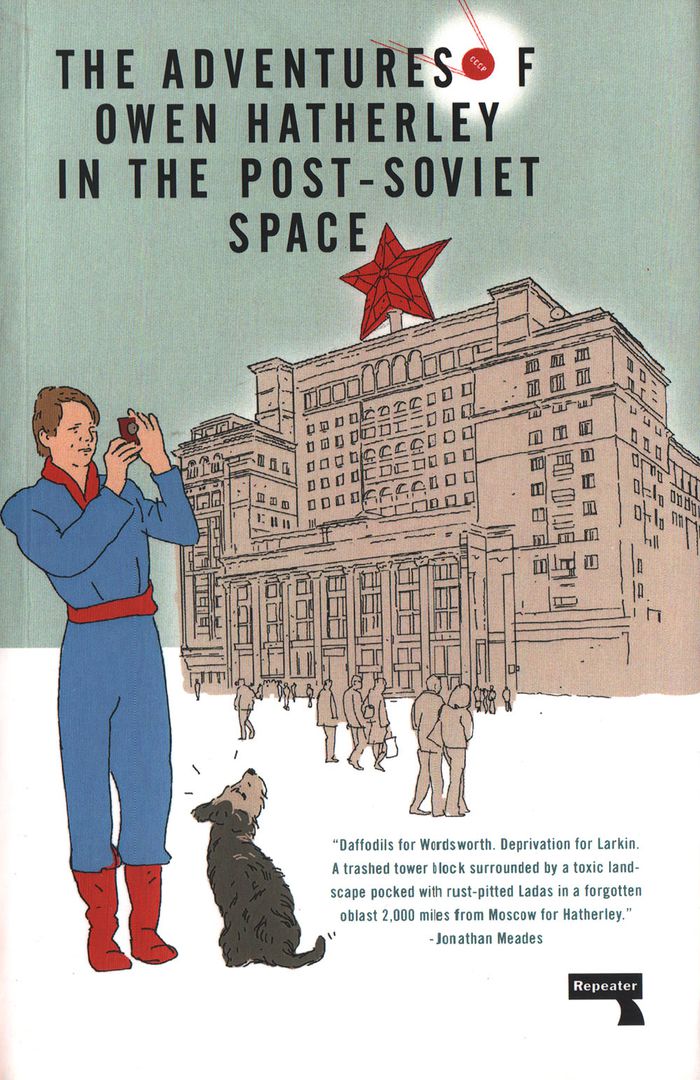
The adventures of Owen Hatherley In the post-soviet space
Actions:
Prix:
$20.95
(disponible sur commande)
Résumé:
In this Eurasian post-Soviet space, we try to find the continuities with Communism - if there are any - and the remnants of revolutions both distant and recent. Instead of a wistful journey through ruins, this intends to be an engaged travelogue, a subjective, personal Marxist Humanist guidebook to somewhere that actually exists, but which is constantly haunted by what it didn't become, whether a real Communist utopia or a successful or fair capitalism. In the course of this transcontinental account of what used to be the Soviet Union and is now a patchwork of EU democracies, neoliberal dictatorships and Soviet nostalgic enclaves (often found in the same countries) we might just find the outlines of a way of building cities that is a powerful alternative, both in the past and present.
The adventures of Owen Hatherley In the post-soviet space
Actions:
Prix:
$20.95
(disponible sur commande)
Résumé:
In this Eurasian post-Soviet space, we try to find the continuities with Communism - if there are any - and the remnants of revolutions both distant and recent. Instead of a wistful journey through ruins, this intends to be an engaged travelogue, a subjective, personal Marxist Humanist guidebook to somewhere that actually exists, but which is constantly haunted by what it didn't become, whether a real Communist utopia or a successful or fair capitalism. In the course of this transcontinental account of what used to be the Soviet Union and is now a patchwork of EU democracies, neoliberal dictatorships and Soviet nostalgic enclaves (often found in the same countries) we might just find the outlines of a way of building cities that is a powerful alternative, both in the past and present.
Classification:
livres
livres
Publication:
novembre 2018
novembre 2018
Sujet:
Expositions en cours
Expositions en cours


