


2298 Résultats
Classification:
livres
livres
Actions:
Exemplaires:
Description:
135 pages : illustrations (chiefly color), facsimile, plans, portraits ; 31 cm
Description:
135 pages : illustrations (chiefly color), facsimile, plans, portraits ; 31 cm
Auteur:
Sujet:
Publication:
Paris : Flammarion, [2021], ©2021
Paris : Flammarion, [2021], ©2021
Titre:
Le palais et le jardin du Luxembourg : le Sénat de la République / textes, Olivier Chartier.
Actions:
Exemplaires:
Description:
135 pages : illustrations (chiefly color), facsimile, plans, portraits ; 31 cm
Le palais et le jardin du Luxembourg : le Sénat de la République / textes, Olivier Chartier.
Actions:
Exemplaires:
Description:
135 pages : illustrations (chiefly color), facsimile, plans, portraits ; 31 cm
Classification:
livres
livres
Publication:
Paris : Flammarion, [2021], ©2021
Paris : Flammarion, [2021], ©2021
Auteur:
Sujet:
Classification:
livres
livres
Titre:
Discrimination by Design : A Feminist Critique of the Man-Made Environment / Leslie Kanes Weisman.
Discrimination by Design : A Feminist Critique of the Man-Made Environment / Leslie Kanes Weisman.
Actions:
Exemplaires:
Description:
x, 190 pages : illustrations ; 24 cm
Description:
x, 190 pages : illustrations ; 24 cm
Auteur:
Sujet:
Publication:
Urbana : University of Illinois Press, ©1992.
Urbana : University of Illinois Press, ©1992.
Titre:
Discrimination by Design : A Feminist Critique of the Man-Made Environment / Leslie Kanes Weisman.
Actions:
Exemplaires:
Description:
x, 190 pages : illustrations ; 24 cm
Discrimination by Design : A Feminist Critique of the Man-Made Environment / Leslie Kanes Weisman.
Actions:
Exemplaires:
Description:
x, 190 pages : illustrations ; 24 cm
Classification:
livres
livres
Publication:
Urbana : University of Illinois Press, ©1992.
Urbana : University of Illinois Press, ©1992.
Auteur:
Sujet:
Classification:
livres
livres
Actions:
Exemplaires:
Description:
216 pages : illustrations (some colour) ; 22 cm
Description:
216 pages : illustrations (some colour) ; 22 cm
Auteur:
Sujet:
Publication:
Montréal (Québec) : Écosociété, [2022], ©2022
Montréal (Québec) : Écosociété, [2022], ©2022
Titre:
La caution verte : le désengagement de l'État québécois en environnement / Louis-Gilles Francoeur ; avec la collaboration de Jonathan Ramacieri ; préface de Robert Laplante.
Actions:
Exemplaires:
Description:
216 pages : illustrations (some colour) ; 22 cm
La caution verte : le désengagement de l'État québécois en environnement / Louis-Gilles Francoeur ; avec la collaboration de Jonathan Ramacieri ; préface de Robert Laplante.
Actions:
Exemplaires:
Description:
216 pages : illustrations (some colour) ; 22 cm
Classification:
livres
livres
Publication:
Montréal (Québec) : Écosociété, [2022], ©2022
Montréal (Québec) : Écosociété, [2022], ©2022
Auteur:
Sujet:
Classification:
livres
livres
Actions:
Prix:
$39.95
(disponible sur commande)
Résumé:
In this contribution to contemporary media studies, acclaimed theorist Francesco Casetti advances a provocative hypothesis: instead of being prostheses that expand or extend our perceptions, modern screen-based media are in fact apparatuses that shelter and protect us from exposure to the world. Rather than bringing us closer to external reality, dominant forms of visual(...)
$39.95
(disponible sur commande)
Résumé:
In this contribution to contemporary media studies, acclaimed theorist Francesco Casetti advances a provocative hypothesis: instead of being prostheses that expand or extend our perceptions, modern screen-based media are in fact apparatuses that shelter and protect us from exposure to the world. Rather than bringing us closer to external reality, dominant forms of visual(...)
Titre:
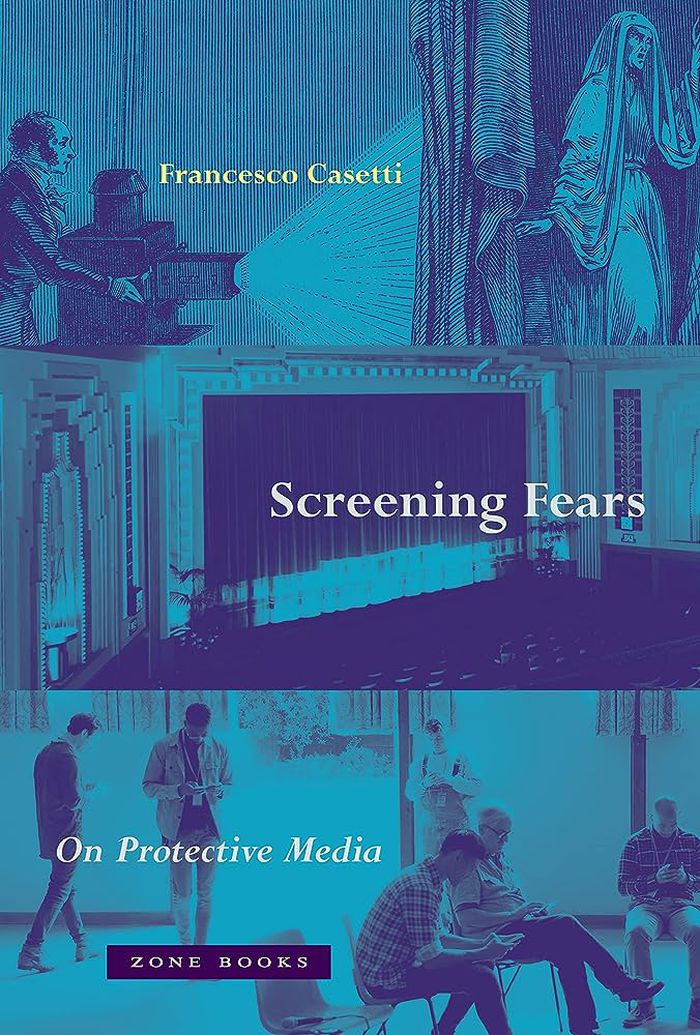
Screening fears: On protective media
Actions:
Prix:
$39.95
(disponible sur commande)
Résumé:
In this contribution to contemporary media studies, acclaimed theorist Francesco Casetti advances a provocative hypothesis: instead of being prostheses that expand or extend our perceptions, modern screen-based media are in fact apparatuses that shelter and protect us from exposure to the world. Rather than bringing us closer to external reality, dominant forms of visual media function as barriers or enclosures that defend against the apparent threats and dangers that seem increasingly to surround us. Working with an original historical overview that begins with the Phantasmagoria of the late eighteenth century, then the shared interior spaces of the movie theater in the early to mid-twentieth century, and finally the solitary digital milieus of the present, Casetti traces the outlines of the protective 'bubbles' that disconnect us from our immediate surroundings. To be provided with a shield of immunity to the hazards and uncertainties of the world while experiencing them at a safe remove might seem a positive development. But, he asks, what if these media, instead of providing invulnerability, ensnare individuals in a suffocating enclosure? What if, in their effort to keep reality under control, they exercise a violence equal to that of the dangers they resist? In a dialectical exercise, and through a vivid range of cultural artifacts, ''Screening fears'' traces the emergence of modern protective media and the way they changed our forms of mediation with the world in which we live.
Screening fears: On protective media
Actions:
Prix:
$39.95
(disponible sur commande)
Résumé:
In this contribution to contemporary media studies, acclaimed theorist Francesco Casetti advances a provocative hypothesis: instead of being prostheses that expand or extend our perceptions, modern screen-based media are in fact apparatuses that shelter and protect us from exposure to the world. Rather than bringing us closer to external reality, dominant forms of visual media function as barriers or enclosures that defend against the apparent threats and dangers that seem increasingly to surround us. Working with an original historical overview that begins with the Phantasmagoria of the late eighteenth century, then the shared interior spaces of the movie theater in the early to mid-twentieth century, and finally the solitary digital milieus of the present, Casetti traces the outlines of the protective 'bubbles' that disconnect us from our immediate surroundings. To be provided with a shield of immunity to the hazards and uncertainties of the world while experiencing them at a safe remove might seem a positive development. But, he asks, what if these media, instead of providing invulnerability, ensnare individuals in a suffocating enclosure? What if, in their effort to keep reality under control, they exercise a violence equal to that of the dangers they resist? In a dialectical exercise, and through a vivid range of cultural artifacts, ''Screening fears'' traces the emergence of modern protective media and the way they changed our forms of mediation with the world in which we live.
Classification:
livres
livres
Publication:
août 2023
août 2023
Sujet:
Théorie/ philosophie
Théorie/ philosophie
Classification:
livres
livres
Prix:
$43.50
(disponible sur commande)
Résumé:
When Lenin asked, "Who will beat whom?" (Kto kogo?), he had no plan to wage revolutionary class war in culture. Many young Communists thought differently, however. Seeking in the name of the proletariat to wrest "cultural hegemony" from the intelligentsia, they turned culture into a battlefield in the 1920s. But was this, as Communist militants thought, a genuine class(...)
$43.50
(disponible sur commande)
Résumé:
When Lenin asked, "Who will beat whom?" (Kto kogo?), he had no plan to wage revolutionary class war in culture. Many young Communists thought differently, however. Seeking in the name of the proletariat to wrest "cultural hegemony" from the intelligentsia, they turned culture into a battlefield in the 1920s. But was this, as Communist militants thought, a genuine class(...)
Titre:
The cultural front: power and culture in Revolutionary Russia
Actions:
Prix:
$43.50
(disponible sur commande)
Résumé:
When Lenin asked, "Who will beat whom?" (Kto kogo?), he had no plan to wage revolutionary class war in culture. Many young Communists thought differently, however. Seeking in the name of the proletariat to wrest "cultural hegemony" from the intelligentsia, they turned culture into a battlefield in the 1920s. But was this, as Communist militants thought, a genuine class struggle between "proletarian" Communists and the "bourgeois" intelligentsia? Or was it, as the intelligentsia believed, an onslaught by the ruling Communist Party on the eternal principles of cultural autonomy and intellectual freedom? In this volume, one of the foremost historians of the Soviet Union chronicles the fierce battle on "the cultural front" from the October Revolution through the Stalinist 1930s. Sheila Fitzpatrick brings together ten of her essays- two previously unpublished and all revised for inclusion here- which illuminate key arenas of the prolonged struggle over cultural values and institutional control. Individual essays deal with such major issues as the Cultural Revolution, the formation of the new Stalinist elite, and socialist realism, as well as recounting colorful episodes including the uproar over Shostakovich's opera Lady Macbeth of the Mtsensk District, arguments over sexual mores, and the new consumerism of the 1930s. Closely examining the cultural elites and orthodoxies that developed under Stalin, Fitzpatrick offers a provocative reinterpretation of the struggle's final outcome in which the intelligentsia, despite its loss of autonomy and the debasement of its culture, emerged as a partial victor.
The cultural front: power and culture in Revolutionary Russia
Actions:
Prix:
$43.50
(disponible sur commande)
Résumé:
When Lenin asked, "Who will beat whom?" (Kto kogo?), he had no plan to wage revolutionary class war in culture. Many young Communists thought differently, however. Seeking in the name of the proletariat to wrest "cultural hegemony" from the intelligentsia, they turned culture into a battlefield in the 1920s. But was this, as Communist militants thought, a genuine class struggle between "proletarian" Communists and the "bourgeois" intelligentsia? Or was it, as the intelligentsia believed, an onslaught by the ruling Communist Party on the eternal principles of cultural autonomy and intellectual freedom? In this volume, one of the foremost historians of the Soviet Union chronicles the fierce battle on "the cultural front" from the October Revolution through the Stalinist 1930s. Sheila Fitzpatrick brings together ten of her essays- two previously unpublished and all revised for inclusion here- which illuminate key arenas of the prolonged struggle over cultural values and institutional control. Individual essays deal with such major issues as the Cultural Revolution, the formation of the new Stalinist elite, and socialist realism, as well as recounting colorful episodes including the uproar over Shostakovich's opera Lady Macbeth of the Mtsensk District, arguments over sexual mores, and the new consumerism of the 1930s. Closely examining the cultural elites and orthodoxies that developed under Stalin, Fitzpatrick offers a provocative reinterpretation of the struggle's final outcome in which the intelligentsia, despite its loss of autonomy and the debasement of its culture, emerged as a partial victor.
Classification:
livres
livres
Publication:
octobre 1992
octobre 1992
Sujet:
Expositions en cours
Expositions en cours
Classification:
livres
livres
Actions:
Prix:
$55.00
(disponible sur commande)
Résumé:
People in trouble laughing pushed to the ground. Soldiers leaning, pointing, reaching. Woman sweeping. Balloons escaping. Coffin descending. Boys standing. Grieving. Chair balancing. Children smoking. Embracing. Creatures barking. Cars burning. Helicopters hovering. Faces. Human figures. Shapes. Birds. Structures left standing and falling... The Belfast Exposed Archive(...)
$55.00
(disponible sur commande)
Résumé:
People in trouble laughing pushed to the ground. Soldiers leaning, pointing, reaching. Woman sweeping. Balloons escaping. Coffin descending. Boys standing. Grieving. Chair balancing. Children smoking. Embracing. Creatures barking. Cars burning. Helicopters hovering. Faces. Human figures. Shapes. Birds. Structures left standing and falling... The Belfast Exposed Archive(...)
Titre:
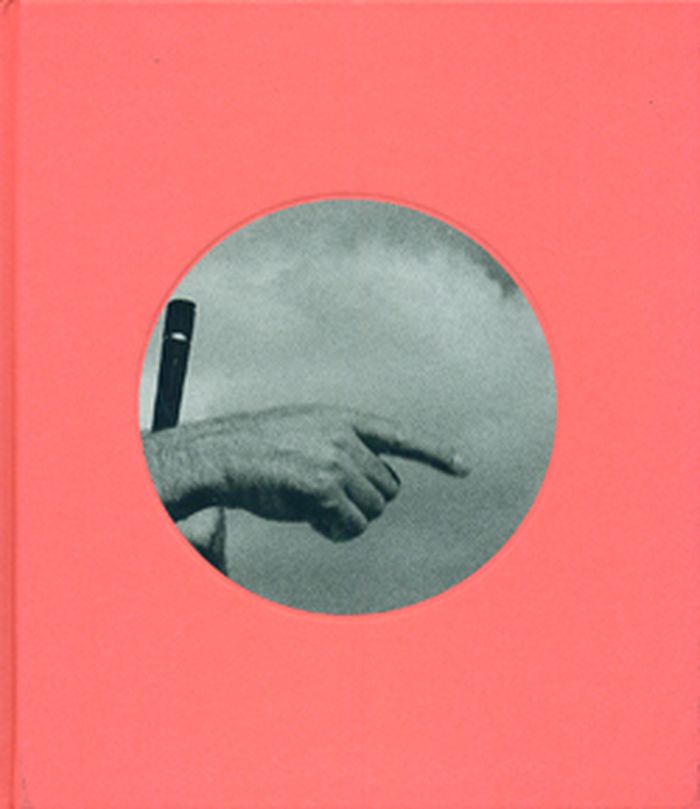
Adam Broomberg & Oliver Chanarin : people in trouble pushed to the ground
Actions:
Prix:
$55.00
(disponible sur commande)
Résumé:
People in trouble laughing pushed to the ground. Soldiers leaning, pointing, reaching. Woman sweeping. Balloons escaping. Coffin descending. Boys standing. Grieving. Chair balancing. Children smoking. Embracing. Creatures barking. Cars burning. Helicopters hovering. Faces. Human figures. Shapes. Birds. Structures left standing and falling... The Belfast Exposed Archive occupies a small room on the first floor at 23 Donegal Street and contains over 14,000 black-and-white contact sheets, documenting the Troubles in Northern Ireland. These are photographs taken by professional photo-journalists and 'civilian' photographers, chronicling protests, funerals and acts of terrorism as well as the more ordinary stuff of life: drinking tea; kissing girls; watching trains. Belfast Exposed was founded in 1983 as a response to concern over the careful control of images depicting British military activity during the Troubles. The marks on the surface of the contact strips – across the image itself – allude to the presence of many visitors. These include successive archivists, who have ordered, catalogued and re-catalogued this jumble of images. For many years the archive was also made available to members of the public, and sometimes they would deface their own image with a marker pen, ink or scissors. So, in addition to the marks made by generations of archivists, photo editors, legal aides and activists, the traces of these very personal obliterations are also visible. They are the gestures of those who wished to remain anonymous.
Adam Broomberg & Oliver Chanarin : people in trouble pushed to the ground
Actions:
Prix:
$55.00
(disponible sur commande)
Résumé:
People in trouble laughing pushed to the ground. Soldiers leaning, pointing, reaching. Woman sweeping. Balloons escaping. Coffin descending. Boys standing. Grieving. Chair balancing. Children smoking. Embracing. Creatures barking. Cars burning. Helicopters hovering. Faces. Human figures. Shapes. Birds. Structures left standing and falling... The Belfast Exposed Archive occupies a small room on the first floor at 23 Donegal Street and contains over 14,000 black-and-white contact sheets, documenting the Troubles in Northern Ireland. These are photographs taken by professional photo-journalists and 'civilian' photographers, chronicling protests, funerals and acts of terrorism as well as the more ordinary stuff of life: drinking tea; kissing girls; watching trains. Belfast Exposed was founded in 1983 as a response to concern over the careful control of images depicting British military activity during the Troubles. The marks on the surface of the contact strips – across the image itself – allude to the presence of many visitors. These include successive archivists, who have ordered, catalogued and re-catalogued this jumble of images. For many years the archive was also made available to members of the public, and sometimes they would deface their own image with a marker pen, ink or scissors. So, in addition to the marks made by generations of archivists, photo editors, legal aides and activists, the traces of these very personal obliterations are also visible. They are the gestures of those who wished to remain anonymous.
Classification:
livres
livres
Publication:
juin 2012
juin 2012
Sujet:
Photographie- collections
Photographie- collections
Classification:
livres
livres
Titre:
The coming insurrection
The coming insurrection
Actions:
Prix:
$19.95
(disponible sur commande)
Résumé:
The Coming Insurrection is an eloquent call to arms arising from the recent waves of social contestation in France and Europe. Written by the anonymous Invisible Committee in the vein of Guy Debord — and with comparable elegance — it has been proclaimed a manual for terrorism by the French government (who recently arrested its alleged authors). One of its members more(...)
$19.95
(disponible sur commande)
Résumé:
The Coming Insurrection is an eloquent call to arms arising from the recent waves of social contestation in France and Europe. Written by the anonymous Invisible Committee in the vein of Guy Debord — and with comparable elegance — it has been proclaimed a manual for terrorism by the French government (who recently arrested its alleged authors). One of its members more(...)
Titre:
The coming insurrection
Actions:
Prix:
$19.95
(disponible sur commande)
Résumé:
The Coming Insurrection is an eloquent call to arms arising from the recent waves of social contestation in France and Europe. Written by the anonymous Invisible Committee in the vein of Guy Debord — and with comparable elegance — it has been proclaimed a manual for terrorism by the French government (who recently arrested its alleged authors). One of its members more adequately described the group as "the name given to a collective voice bent on denouncing contemporary cynicism and reality." The Coming Insurrection is a strategic prescription for an emergent war-machine to "spread anarchy and live communism." Written in the wake of the riots that erupted throughout the Paris suburbs in the fall of 2005 and presaging more recent riots and general strikes in France and Greece, The Coming Insurrection articulates a rejection of the official Left and its reformist agenda, aligning itself instead with the younger, wilder forms of resistance that have emerged in Europe around recent struggles against immigration control and the "war on terror." Hot-wired to the movement of '77 in Italy, its preferred historical reference point, The Coming Insurrection formulates an ethics that takes as its starting point theft, sabotage, the refusal to work, and the elaboration of collective, self-organized forms-of-life. It is a philosophical statement that addresses the growing number of those — in France, in the United States, and elsewhere — who refuse the idea that theory, politics, and life are separate realms.
The coming insurrection
Actions:
Prix:
$19.95
(disponible sur commande)
Résumé:
The Coming Insurrection is an eloquent call to arms arising from the recent waves of social contestation in France and Europe. Written by the anonymous Invisible Committee in the vein of Guy Debord — and with comparable elegance — it has been proclaimed a manual for terrorism by the French government (who recently arrested its alleged authors). One of its members more adequately described the group as "the name given to a collective voice bent on denouncing contemporary cynicism and reality." The Coming Insurrection is a strategic prescription for an emergent war-machine to "spread anarchy and live communism." Written in the wake of the riots that erupted throughout the Paris suburbs in the fall of 2005 and presaging more recent riots and general strikes in France and Greece, The Coming Insurrection articulates a rejection of the official Left and its reformist agenda, aligning itself instead with the younger, wilder forms of resistance that have emerged in Europe around recent struggles against immigration control and the "war on terror." Hot-wired to the movement of '77 in Italy, its preferred historical reference point, The Coming Insurrection formulates an ethics that takes as its starting point theft, sabotage, the refusal to work, and the elaboration of collective, self-organized forms-of-life. It is a philosophical statement that addresses the growing number of those — in France, in the United States, and elsewhere — who refuse the idea that theory, politics, and life are separate realms.
Classification:
livres
livres
Publication:
novembre 2012
novembre 2012
Sujet:
Social
Social
Classification:
livres
livres
Actions:
Description:
1 online resource
Auteur:
Sujet:
Publication:
London : Open Humanities Press, 2021.
London : Open Humanities Press, 2021.
Titre:
A stubborn fury : how writing works in elitist Britain / Gary Hall.
Actions:
Description:
1 online resource
A stubborn fury : how writing works in elitist Britain / Gary Hall.
Actions:
Description:
1 online resource
Classification:
livres
livres
Publication:
London : Open Humanities Press, 2021.
London : Open Humanities Press, 2021.
Auteur:
Sujet:
Classification:
livres
livres
Titre:
Laure Tiberghien
Laure Tiberghien
Actions:
Prix:
$65.00
(disponible en magasin)
Résumé:
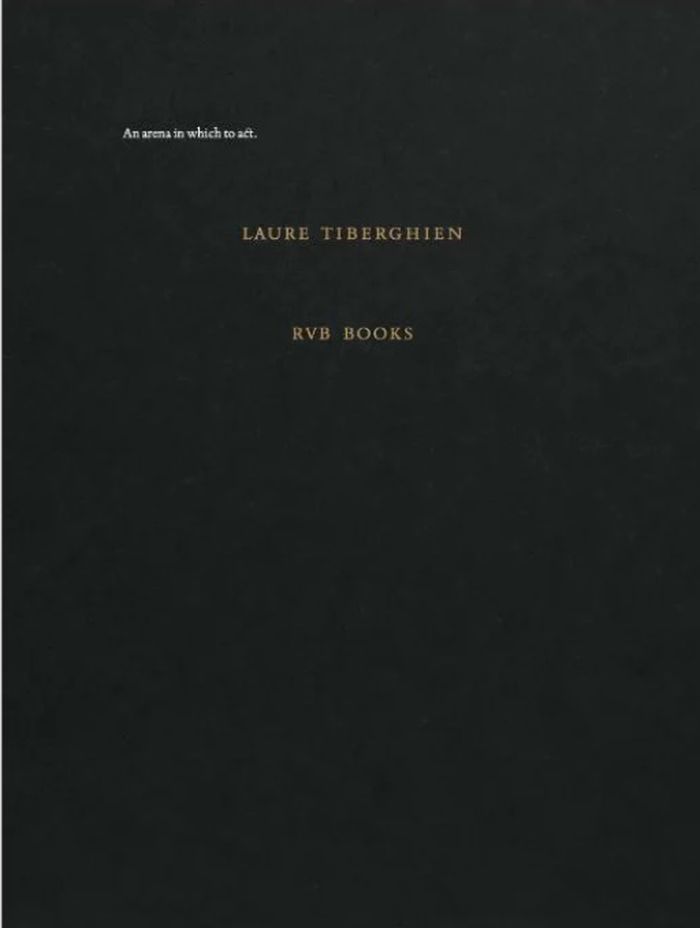
This book is the first monograph to be published on the artist Laure Tiberghien. It brings together 84 prints, allowing the reader to gain an appreciation of 10 years of work and experimentation. Tiberghien is intrigued by the visual and plastic aspects of photography and enjoys exploring the inventive potential of this medium. She has developed a process avoiding the use(...)
$65.00
(disponible en magasin)
Résumé:
This book is the first monograph to be published on the artist Laure Tiberghien. It brings together 84 prints, allowing the reader to gain an appreciation of 10 years of work and experimentation. Tiberghien is intrigued by the visual and plastic aspects of photography and enjoys exploring the inventive potential of this medium. She has developed a process avoiding the use(...)
Titre:
Laure Tiberghien
Actions:
Prix:
$65.00
(disponible en magasin)
Résumé:
This book is the first monograph to be published on the artist Laure Tiberghien. It brings together 84 prints, allowing the reader to gain an appreciation of 10 years of work and experimentation. Tiberghien is intrigued by the visual and plastic aspects of photography and enjoys exploring the inventive potential of this medium. She has developed a process avoiding the use of the camera that takes its place within a long lineage of experimentation in photography, which has notably given rise to Anna Atkins’ cyanotypes and Man Ray’s Rayographs. Produced through the combination of chemistry, light and time, her ''abstract'' photographs emerge from a masterful approach to composition, whereby colours are organized after having been tested first to obtain the desired tone relationships. The surface, in this case the type of paper selected, also plays a primordial role. For example, Cibachrome results in a ''wet'' effect and very dense colours whereas a metallic paper offers a more electric result. If at times she may leave things open to accident or chance, while giving life to shapes and colours Tiberghien has put in place a procedure, through her constant testing, that although far from mechanical affords her control over the result. All the pieces she produces in this manner are necessarily unique, another feature her art shares with painting. The book’s design, by the studio SP Millot, arrays the text of the essay by Erik Verhagen across its pages, in a way that punctuates the images just as the images propel the text.
Laure Tiberghien
Actions:
Prix:
$65.00
(disponible en magasin)
Résumé:
This book is the first monograph to be published on the artist Laure Tiberghien. It brings together 84 prints, allowing the reader to gain an appreciation of 10 years of work and experimentation. Tiberghien is intrigued by the visual and plastic aspects of photography and enjoys exploring the inventive potential of this medium. She has developed a process avoiding the use of the camera that takes its place within a long lineage of experimentation in photography, which has notably given rise to Anna Atkins’ cyanotypes and Man Ray’s Rayographs. Produced through the combination of chemistry, light and time, her ''abstract'' photographs emerge from a masterful approach to composition, whereby colours are organized after having been tested first to obtain the desired tone relationships. The surface, in this case the type of paper selected, also plays a primordial role. For example, Cibachrome results in a ''wet'' effect and very dense colours whereas a metallic paper offers a more electric result. If at times she may leave things open to accident or chance, while giving life to shapes and colours Tiberghien has put in place a procedure, through her constant testing, that although far from mechanical affords her control over the result. All the pieces she produces in this manner are necessarily unique, another feature her art shares with painting. The book’s design, by the studio SP Millot, arrays the text of the essay by Erik Verhagen across its pages, in a way that punctuates the images just as the images propel the text.
Classification:
livres
livres
Publication:
septembre 2023
septembre 2023
Sujet:
Monographies photo
Monographies photo
Classification:
livres
livres
Prix:
$46.50
(disponible sur commande)
Résumé:
This lavishly illustrated book looks at the art and architecture of episcopal palaces as expressions of power and ideology. Tracing the history of the bishop's residence in the urban centers of northern Italy over the Middle Ages, Maureen C. Miller asks why this once rudimentary and highly fortified structure called a domus became a complex and elegant "palace" (palatium)(...)
$46.50
(disponible sur commande)
Résumé:
This lavishly illustrated book looks at the art and architecture of episcopal palaces as expressions of power and ideology. Tracing the history of the bishop's residence in the urban centers of northern Italy over the Middle Ages, Maureen C. Miller asks why this once rudimentary and highly fortified structure called a domus became a complex and elegant "palace" (palatium)(...)
Titre:
The bishop's palace : architecture & authority in medieval Italy
Actions:
Prix:
$46.50
(disponible sur commande)
Résumé:
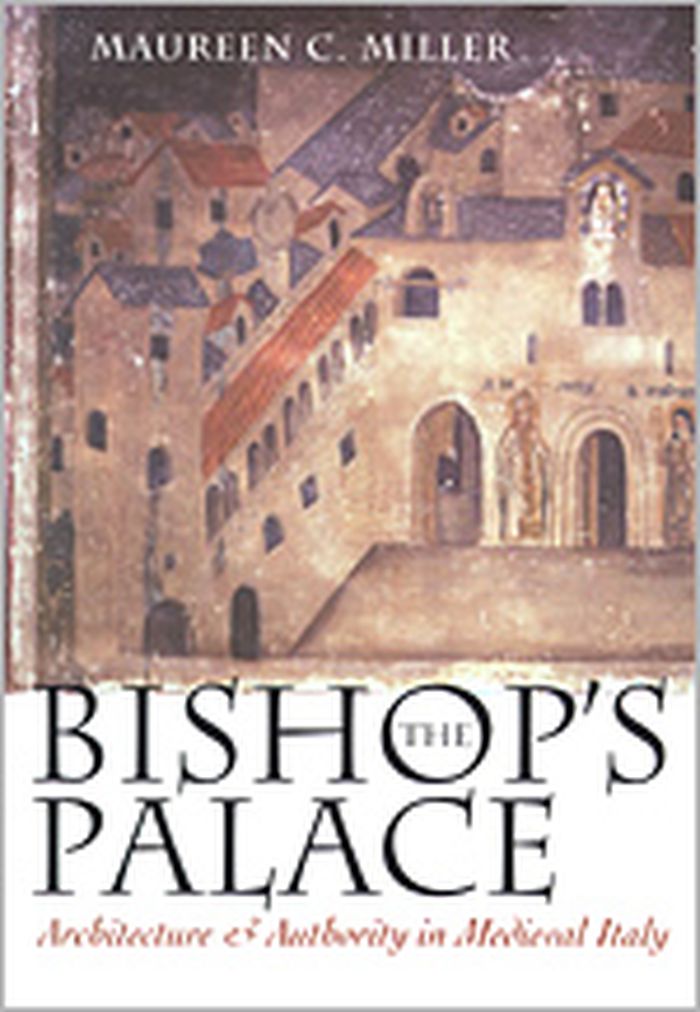
This lavishly illustrated book looks at the art and architecture of episcopal palaces as expressions of power and ideology. Tracing the history of the bishop's residence in the urban centers of northern Italy over the Middle Ages, Maureen C. Miller asks why this once rudimentary and highly fortified structure called a domus became a complex and elegant "palace" (palatium) by the late twelfth century. Miller argues that the change reflects both the emergence of a distinct clerical culture and the attempts of bishops to maintain authority in public life. She relates both to the Gregorian reform movement, which set new standards for clerical deportment and at the same time undercut episcopal claims to secular power. As bishops lost temporal authority in their cities to emerging communal governments, they compensated architecturally and competed with the communes for visual and spatial dominance in the urban center. This rivalry left indelible marks on the layout and character of Italian cities. Moreover, Miller contends, this struggle for power had highly significant, but mixed, results for western Christianity. On the one hand, as bishops lost direct governing authority in their cities, they devised ways to retain status, influence, and power through cultural practices. This response to loss was highly creative. On the other hand, their loss of secular control led bishops to emphasize their spiritual powers and to use them to obtain temporal ends. The coercive use of spiritual authority contributed to the emergence of a "persecuting society" in the central Middle Ages.
The bishop's palace : architecture & authority in medieval Italy
Actions:
Prix:
$46.50
(disponible sur commande)
Résumé:
This lavishly illustrated book looks at the art and architecture of episcopal palaces as expressions of power and ideology. Tracing the history of the bishop's residence in the urban centers of northern Italy over the Middle Ages, Maureen C. Miller asks why this once rudimentary and highly fortified structure called a domus became a complex and elegant "palace" (palatium) by the late twelfth century. Miller argues that the change reflects both the emergence of a distinct clerical culture and the attempts of bishops to maintain authority in public life. She relates both to the Gregorian reform movement, which set new standards for clerical deportment and at the same time undercut episcopal claims to secular power. As bishops lost temporal authority in their cities to emerging communal governments, they compensated architecturally and competed with the communes for visual and spatial dominance in the urban center. This rivalry left indelible marks on the layout and character of Italian cities. Moreover, Miller contends, this struggle for power had highly significant, but mixed, results for western Christianity. On the one hand, as bishops lost direct governing authority in their cities, they devised ways to retain status, influence, and power through cultural practices. This response to loss was highly creative. On the other hand, their loss of secular control led bishops to emphasize their spiritual powers and to use them to obtain temporal ends. The coercive use of spiritual authority contributed to the emergence of a "persecuting society" in the central Middle Ages.
Classification:
livres
livres
Publication:
décembre 2002, Ithaca, N.Y.
décembre 2002, Ithaca, N.Y.
Sujet:
Histoire jusqu’à 1900
Histoire jusqu’à 1900


